Showing posts sorted by relevance for query raw combat analysis. Sort by date Show all posts

Sensei's Critique: World Vale Tudo Championship 10 - A Raw Glimpse into Combat's Unfettered Chaos

Welcome, seekers of truth and practitioners of the Way. Today, we turn our gaze not to the serene dojo, nor the disciplined katas, but to the brutal, untamed arena of the World Vale Tudo Championship 10. This event, held in Recife, Brazil, on May 27, 2000, wasn't merely a competition; it was a testament to a time when the lines between martial arts, combat sports, and sheer survival were blurred to a razor's edge. For those who believe that the essence of combat lies in its rawest form, this event offers a compelling, if sometimes unsettling, spectacle. You are watching the World Vale Tudo Championship 10 (2000), a relic from a bygone era of combat, published on March 27, 2022. This is not just a blog; it is a digital dojo, dedicated to being the most comprehensive and up-to-date resource for all things Budo and Martial Arts.

Table of Contents

Introduction: The Spectacle of Vale Tudo

The World Vale Tudo Championship (WVC) was a pioneer in mixed martial arts, predating many of the organizations we know today. WVC 10, subtitled "Demolition Day," embodies the spirit of this era. Forget the Marquess of Queensberry rules for a moment; Vale Tudo was about testing fighters in a no-holds-barred environment. This wasn't about points or penalties; it was about submission, knockout, or survival. For the uninitiated, it can be jarring. For those steeped in martial tradition, it offers a stark reminder of what happens when the "art" is stripped away, leaving only the "martial." The very nature of Vale Tudo forces a critical examination of what constitutes effective fighting. It’s a crucible where every technique, every strategy, and every ounce of physical and mental fortitude is put to the ultimate test. This event, in particular, showcases a range of fighters, from seemingly unpolished brawlers to individuals exhibiting glimmers of disciplined martial skill.

Match Breakdown: A Symphony of Savage Encounters

WVC 10 presented a card filled with raw, unadulterated combat. While official run times can vary, the schedule presented offers a glimpse into the brutal structure of the event:
  • Joao Batista vs. Carlos Alberto (3:48): The opener, setting the tone for the day's brutality. Expect aggression and a fight to establish dominance early.
  • Luiz Firmino vs. Reginaldo Santana (12:39): Firmino would go on to become a prominent figure in the WVC, and his performances often showcased a blend of striking and grappling.
  • Sergey Bychkov vs. Antonio Conceição (18:52): A clash of styles, likely pitting Bychkov's presumed European combat background against Conceição's Brazilian roots.
  • Eli Soares vs. Luis Oliveira (42:17): Soares is another name that echoes through WVC history, often associated with tenacity and a never-say-die attitude.
  • Marcelo Belmiro vs. Sergey Zavadsky (47:10): A heavyweight clash that promises power and a test of resilience.
  • Luiz Firmino vs. Sergey Bychkov (55:33): A pivotal bout, potentially a semi-final or a major clash, highlighting Firmino's progression.
  • Eli Soares vs. Marcelo Belmiro (1:38:05): Another significant encounter, pitting two fighters known for their toughness against each other.
  • Eli Soares vs. Luiz Firmino (2:08:48): The grand finale. This would likely be the championship bout, where the ultimate victor of "Demolition Day" would be crowned.
Each fight in Vale Tudo is a narrative. It’s about more than just the exchange of blows; it's about strategy, adaptation, and the psychological battle waged between two individuals under immense pressure. Analyzing these bouts reveals not just fighting techniques, but the very core of human resilience and the primal instinct to overcome.

Analysis of Combat: Beyond Technique, Lies Will

What does an event like WVC 10 teach us from a martial perspective? It forces us to confront the fundamental purpose of combat. While modern MMA has evolved with sophisticated training regimens, weight classes, and rule sets, Vale Tudo strips it down. Here, the "art" often takes a backseat to sheer grit and the ability to endure punishment. Observe the fighters: are they utilizing refined martial arts principles, or are they relying on raw power and aggression? You will see techniques that, while perhaps not textbook perfect, are brutally effective in a no-rules environment. A well-timed leg kick, a tenacious sprawl, a submission locked in with relentless pressure – these are the elements that define victory here.
"The supreme art of war is to subdue the enemy without fighting." - Sun Tzu, The Art of War. While WVC 10 is the antithesis of this, understanding *why* these fighters engage in such raw combat can offer insights into the unbroken will that Sun Tzu valued.
The physical conditioning required for such prolonged, no-holds-barred engagements is immense. Fighters must possess not only skill but also an indomitable spirit, a refusal to yield. This mental fortitude, this unshakeable resolve, is a crucial component of any martial discipline, whether practiced in a dojo or an octagon.

Historical Context: The Unchained Era

The late 1990s and early 2000s were a formative period for mixed martial arts. Organizations like the WVC played a vital role in shaping the sport, providing a platform for fighters to explore the boundaries of combat. This was an era of experimentation, where fighters from diverse martial backgrounds clashed, and the effectiveness of each art was tested in a real-world scenario. Unlike today's highly regulated sport, Vale Tudo events were often characterized by their lack of strict rules. This rawness is what made them both compelling and controversial. It was a reflection of combat in its most primal form, a stark contrast to the more structured martial arts traditions. Understanding this context is key to appreciating the significance of WVC 10. It was a stepping stone, a wild frontier that paved the way for the modern MMA landscape.

Sensei's Verdict: Is it True Budo?

This is where the polemic begins. Is World Vale Tudo Championship 10 a display of Budo, the "Martial Way"? In its purest definition, Budo encompasses not just fighting technique but also spiritual development, discipline, and ethical conduct. WVC 10, by its very nature, prioritizes the "martial" aspect to an extreme degree. There's a brutal honesty to Vale Tudo: the winner is the one who overcomes. However, it often lacks the philosophical depth, the emphasis on self-improvement, and the respect for one's opponent that are cornerstones of traditional Budo. While fighters demonstrate incredible courage and skill, the context is less about refining the self and more about dominating another. I would label WVC 10 not as Budo, but as **"Primal Combat: A Study in Unfiltered Fighting Spirit."** It's a crucial historical document for understanding the evolution of combat sports, a raw exhibition of human will, but it doesn't embody the complete philosophical and ethical framework that defines true Budo. It is, however, an invaluable lesson in the sheer application of force and the unyielding spirit required to win when all else is stripped away. It certainly earns a **"Cinturón Negro en Coraje Brutal"** for its participants and its historical significance in the raw evolution of combat.

Training Essentials for the Aspiring Warrior

To train effectively for combat, whether it's in a regulated sport or for self-defense, the right equipment is crucial. While WVC 10 might have featured minimal gear, modern training requires a focus on safety and progression.
  • High-Quality MMA Gloves: Essential for striking training and sparring, offering protection for your hands and your training partners. Look for gloves around 6-8oz for drills and sparring.
  • Shin Guards: Crucial for Muay Thai, Kickboxing, and MMA training to protect against powerful kicks.
  • Mouthguard: Non-negotiable for any combat sport training to protect your teeth and jaw.
  • Groin Protector: Vital for protecting sensitive areas during sparring or intense drills.
  • Training Mat/Tatami: For safe practice of grappling, throws, and ground techniques.
  • Durable Training Apparel: Comfortable shorts and rash guards that allow for a full range of motion.
Investing in proper gear is an investment in your training longevity and safety. It allows you to push your limits with confidence.

Frequently Asked Questions

  • What does "Vale Tudo" mean?
    "Vale Tudo" is Portuguese for "Anything Goes." It signifies a no-holds-barred fighting style and competition.
  • Is Vale Tudo still practiced today?
    While the original, unregulated Vale Tudo is rare, its spirit lives on in modern Mixed Martial Arts (MMA), which has adopted and adapted many of its core principles under a more structured rule set.
  • What martial arts were typically seen in Vale Tudo?
    Fighters often came from backgrounds such as Brazilian Jiu-Jitsu, Luta Livre, Boxing, Kickboxing, and various Karate styles, blending their disciplines in the ring.
  • Why was Vale Tudo controversial?
    The lack of rules, including prohibitions on eye-gouging or biting in some events, and the potential for severe injury, made it a controversial spectacle for many.

Deeper Dive into the Warrior's Path

To truly understand the martial path, one must explore its diverse facets. Here are some resources to deepen your knowledge and training:

Reflection of the Sensei: Your Next Step

We have witnessed the raw, unbridled power of WVC 10. But I ask you this: In the pursuit of effectiveness, have we lost something vital? Is the relentless drive for victory at any cost truly the pinnacle of martial development, or is it a dangerous detour from the path of true self-mastery? Consider where the true "win" lies – in the submission of an opponent, or in the conquest of one's own limitations and imperfections. GEMINI_METADESC: Dive deep into the raw combat of World Vale Tudo Championship 10 with Sensei's critical analysis. Explore its place in martial arts history and its controversial legacy.

STREETBEEFS | DEAGLE vs SENSATION: A Critical Look at Raw, Unsanctioned Combat

Introduction: The Allure of the Raw

Hello and welcome, warriors and scholars of the martial way. Today, we delve into a realm that often exists on the fringes of formal martial arts, yet captures a primal fascination: raw, unsanctioned combat. You are watching STREETBEEFS | DEAGLE vs SENSATION, a clash published on May 16, 2022. This is not your typical dojo lecture; it's a deep dive into the very essence of conflict, survival, and the spectacle that arises from it. My purpose here is not merely to recount an event, but to dissect its underlying currents, its appeal, and its place within the broader tapestry of human confrontation.

The world of martial arts, while often elevated to philosophical heights, stems from a fundamental need: to defend oneself, to overcome an adversary, or simply to test one's limits. STREETBEEFS, in its own chaotic way, taps into this primal energy. But does it represent a genuine outlet, or a dangerous descent into barbarism? Let us explore.

The Streetbeefs Philosophy: From Backyard Brawls to Organized Chaos

Founded by SCARFACE, the Streetbeefs initiative presents itself as a solution to localized disputes, moving confrontations from the realm of lethal weaponry and gang violence to a more controlled, albeit still wild, environment. The New York Times documentary "Guns to Gloves" and an appearance in ESPN THE MAGAZINE highlight the perceived significance of this endeavor. Scarface's stated mission is clear: provide an arena where individuals can settle disagreements with bare fists (or gloves, at least), under the watchful eye of a referee and a crowd, thereby avoiding jail time or worse.

This philosophy is built on several pillars:

  • Conflict Resolution: Offering an alternative to lethal violence for settling disputes.
  • Sport and Entertainment: Providing a spectacle for viewers, blurring the lines between genuine beef and pure sport.
  • Community and Brotherhood: Fostering bonds among participants, creating a safer outlet for aggression.

The claim that "ALL STREETBEEFS MATCHES ARE AMATEUR EXHIBITIONS" and are "100% LEGAL" with participants being 18 or older attempts to legitimize an inherently volatile enterprise. It’s an interesting paradox: formalizing an informal, often dangerous, human behavior. This approach, while undeniably engaging, raises critical questions about its true impact and its relationship with the disciplined world of traditional martial arts.

"After years of watching people in my area severely hurt each other over various disputes, I decided to offer a solution." - SCARFACE, Founder of Streetbeefs

Deagle vs. Sensation: Analyzing the Confrontation

The specific bout between Deagle and Sensation, while not detailed in its technical execution here, represents the core offering of Streetbeefs. In the absence of detailed fight analysis, we must infer the nature of such contests. These are not typically clashes of highly refined martial arts techniques. Instead, they often embody a raw, unbridled form of combat, closer to a street brawl than a disciplined boxing match or an MMA bout.

Expectations for such a fight would include:

  • Primal Aggression: A high degree of ferocity driven by genuine animosity or the desire to prove oneself.
  • Basic Striking: Likely a focus on punching and perhaps some rudimentary kicking, without the sophisticated combinations or defensive layers seen in trained fighters.
  • Limited Grappling: While some wrestling or clinching might occur, advanced ground fighting techniques are typically absent.
  • Heart and Determination: Often, the outcome is decided by sheer will and the ability to withstand punishment.

The 'entertainment' value stems precisely from this rawness. It's a visceral experience, unpolished and unpredictable. This is what draws viewers in, and what separates it from the more structured, rule-bound sports like boxing or MMA, let alone the philosophical depth of traditional Karate or Judo.

Authenticity vs. Spectacle: Where Does the Line Blur?

This is where the core of our critical analysis lies. Streetbeefs claims to offer both genuine disputes and purely sporting contests. This duality is problematic. When "REAL beef" meets "PURELY FOR SPORT," the environment becomes inherently unpredictable. The presence of genuine animosity can escalate a situation beyond the intended sporting rules, increasing the risk of severe injury or uncontrolled violence.

From a martial arts perspective, there's a significant difference between combat for sport and combat born of desperation or malice. True martial arts training instills discipline, control, and respect – principles often absent in raw street fighting. The very act of "putting gloves on" doesn't automatically transform a street fight into a sporting contest; it merely adds a layer of protection and a referee to an otherwise chaotic exchange.

The question we must ask is: Does Streetbeefs truly deter violence, or does it merely provide a more palatable, televised outlet for it? While it may prevent some instances of extreme violence, it also undeniably glorifies and profits from it. This is a delicate ethical tightrope, and one that traditional martial arts masters have historically navigated with extreme caution, emphasizing the development of character alongside combat skill.

"Some matches are purely for sport, some are REAL beef, and ALL are entertaining." - Streetbeefs Statement

The "entertainment" aspect, while driving the platform's success, risks trivializing the potential harm involved. It commodifies conflict, turning genuine human struggles into content. This is a stark contrast to the ethos of Budo, which emphasizes self-improvement and the refinement of character through hardship, not merely the spectacle of it.

Equipment Essential for Your Training

While Streetbeefs focuses on raw, often unequipped (beyond gloves) combat, dedicated martial artists understand the value of proper training gear. Investing in the right equipment not only enhances performance but also ensures safety. For those looking to train seriously, consider these:

  • Quality Sparring Gloves: Essential for boxing, kickboxing, and MMA training. Look for 16oz gloves for general sparring to provide adequate padding.
  • Mouthguard: Non-negotiable for any combat sport to protect your teeth and jaw.
  • Shin Guards: Crucial for Muay Thai, kickboxing, and MMA training to protect against hard kicks.
  • Headgear: Recommended for high-impact sparring sessions to reduce the risk of concussions and facial injuries.
  • Durable Training Uniforms (Gi/Kimono): For grappling arts like Judo, BJJ, and traditional Karate, a sturdy uniform is key. A double-weave Gi is excellent for Judo, while a reinforced cotton/poly blend is ideal for Karate.
  • Training Mats: For home practice of techniques, especially grappling or falling (ukemi).

Sensei's Verdict: Entertainment or Escalation?

Streetbeefs presents a fascinating, albeit concerning, phenomenon. It highlights a fundamental aspect of human nature: the drive to compete and resolve conflict, often through physical means. Scarface's endeavor provides a structured, albeit rough, outlet that may indeed save lives by offering an alternative to more lethal forms of confrontation. The emphasis on participants being over 18 and the presence of referees contribute to a veneer of organization.

However, as a martial arts critic and practitioner, I must caution against conflating this with genuine martial arts training or sport. The lack of formal technique, the potential for uncontrolled aggression stemming from "real beef," and the commodification of conflict for entertainment purposes are significant drawbacks. It risks glorifying violence rather than channeling it constructively.

Is it entertaining? Undeniably, for a certain audience. Does it offer a legitimate martial art? No. Does it potentially reduce real-world violence? Perhaps, in some cases, but it also risks normalizing and amplifying it for spectators. It's a grey area, leaning heavily towards raw spectacle with dangerous undertones.

Rating: "Raw Footage" – Captures an unvarnished reality, but lacks technical refinement and ethical clarity.

Frequently Asked Questions

What is Streetbeefs?
Streetbeefs is an organization founded by Scarface that organizes unsanctioned fights, often between individuals with genuine disputes, in a controlled environment to offer an alternative to lethal violence.
Are Streetbeefs fights legal?
The organization claims all matches are legal amateur exhibitions with participants over 18. However, the legality of such events can vary significantly by location and specific circumstances.
How does Streetbeefs differ from professional MMA or boxing?
Streetbeefs focuses on raw, often untrained combatants settling disputes, with less emphasis on formal technique, rules, and fighter safety compared to professional MMA or boxing organizations.
Does Streetbeefs promote violence?
While aiming to reduce lethal violence, Streetbeefs profits from and showcases raw combat, which can be seen by some as promoting or glorifying aggression.

Further Exploration on Your Path

To continue your journey in understanding the breadth of combat and martial philosophy, explore these related topics:

Sensei's Reflection: Your Next Step

We have witnessed the raw, untamed energy of conflict in STREETBEEFS | DEAGLE vs SENSATION. It is a mirror reflecting a darker side of human nature, yet also a testament to the enduring need to resolve disputes. But is this the path of a warrior, or simply a descent into primal chaos for entertainment? Does offering a "safer" outlet for aggression truly address the root cause, or merely redirect it into a more palatable spectacle?

Now, I pose this to you: In your own life, when faced with conflict, do you seek disciplined resolution, controlled engagement, or do you feel the pull of raw, unthinking confrontation? Reflect on the difference between a controlled strike in a dojo, meant to hone skill and respect, and a wild swing born of rage. Where does true strength lie?

``` GEMINI_METADESC: Critical martial arts analysis of STREETBEEFS | DEAGLE vs SENSATION. Examining the raw combat, its philosophy, and its controversial place in conflict resolution and entertainment.

Sol El vs. The Brazilian Beast: A Deep Dive into the Raw Power of Street Beefs (SBWC17)

The air crackles with anticipation. Two warriors, Sol El and the imposing Brazilian Beast, stand poised, their eyes locked in a primal dance of challenge. This isn't the polished octagon of the UFC; this is the raw, unadulterated crucible of Street Beefs, specifically SBWC17, held at The Smoke Ranch. As a lifelong student and ardent critic of all things martial, I’m here to dissect this encounter, not just as a spectacle, but as a testament to the enduring spirit of combat. My journey through the vast landscape of martial arts has taught me that true understanding often lies beyond the controlled environments of dojos and training halls. It’s in the raw, unfiltered expression of will and technique that we sometimes glimpse the essence of conflict. Today, we delve into the heart of SBWC17, a battle that promises ferocity, and perhaps, a few uncomfortable truths about what it means to fight.

Table of Contents

The Unscripted Arena: Beyond the Dojo Walls

Street Beefs is a phenomenon. It strips away the rules, the regulations, and the often-celebrated safety nets of professional combat sports. It’s a return to the primal urge to test oneself, a modern gladiatorial arena where courage is measured in heartbeats per minute and skill is forged under immense pressure. While some decry it as barbaric, I see a raw, unfiltered expression of the martial spirit. It’s a crucible where every fiber of one’s being is tested. The very act of participating in such an event requires a certain courage, a willingness to face not just an opponent, but also the inherent unpredictability of an unregulated fight. This is where the concept of Budo, the Way of the Warrior, is put to its ultimate test. Is it about honor and discipline, or simply the will to conquer? Street Beefs forces us to confront these questions head-on.

Sol El vs. The Beast: A Clash of Contrasts

On one side, we have Sol El. The name itself suggests a certain brightness, perhaps a flicker of speed or technical acumen. Without prior knowledge of his background, we can only speculate. Is he a striker? A grappler? Does he bring a refined martial art to this unrefined arena? Opposing him is the "Brazilian Beast." The moniker speaks volumes. It evokes images of raw power, aggressive physicality, and the often-celebrated fighting spirit of Brazilian combat sports, whether it be the thunderous power of a Muay Thai fighter or the suffocating control of a Jiu-Jitsu practitioner. The contrast is palpable: the "Sun" against the "Beast." This is the kind of narrative that fuels the fire of any combat encounter.

Analysis of the Fight: Technique and Temperament

The true measure of any martial encounter, regardless of the setting, lies in the observable execution of technique and the manifestation of a warrior's temperament. In the raw environment of Street Beefs, fundamentals are amplified, and mental fortitude becomes as crucial as physical prowess. One must observe: * **Stance and Footwork**: How do Sol El and the Brazilian Beast position themselves? Is their base solid, allowing for quick movements and balance, or are they exposed? Effective footwork in any fighting discipline is the foundation upon which all other techniques are built. A weak foundation leads to a swift downfall. * **Striking Selection**: What types of strikes are being employed? Are they powerful, committed blows, or are they tentative jabs? The effectiveness of punches, kicks, elbows, and knees in a street-oriented environment often favors concussive power and simplicity over complex combinations. * **Defensive Measures**: How do they evade or block incoming attacks? Are they relying on raw toughness, or do they exhibit signs of learned defensive skills like parrying, slipping, or checking kicks? In the absence of rules, a well-timed evasion can be more valuable than a counter-attack. * **Close-Quarters Combat**: If the fight goes to grappling range, how do they manage the clinch? Are they attempting takedowns? If so, what kind? What is their ground game like, if any? The transition from striking to grappling is often the most decisive phase of a fight. * **Resilience and Composure**: This is perhaps the most critical element. How do they react when they take a solid hit? Do they falter, or do they push forward with renewed determination? The ability to maintain composure under fire, to ignore pain and fear, is the hallmark of a true fighter. A momentary lapse in concentration can be fatal in a real confrontation. The interaction between these elements will reveal the deeper story of the fight. Is it a display of raw, untamed aggression, or are there glimpses of disciplined technique shining through the chaos?
"In combat, the hand that holds the sword is less important than the mind that guides it." - Miyamoto Musashi (paraphrased)

The Spirit of Street Beefs: Raw Budo or Just a Scrap?

This is where the polemic truly ignites. Critics will argue that Street Beefs, with its lack of rules and protective gear, is merely glorified backyard brawling. They’ll point to the potential for serious injury and the absence of the ethical frameworks that define traditional martial arts. And on a surface level, their arguments have merit. However, to dismiss it entirely is to ignore the fundamental human drive to test oneself in the face of adversity. Budo, in its most distilled form, is about confronting one's own limitations, pushing beyond perceived boundaries, and understanding the nature of conflict, both internal and external. Street Beefs, in its brutal honesty, strips away the pleasantries and presents a stark, unvarnished reality of combat. Are the participants driven by honor? By a desire for self-improvement? Or simply by the thrill of aggression? The answer is likely a complex tapestry of all these motivations, woven together by the unique circumstances of the event. It’s a space where the theoretical lessons of the dojo meet the unpredictable chaos of uncontrolled conflict.

Veredicto del Sensei: What Does SBWC17 Teach Us?

SBWC17, featuring Sol El versus the Brazilian Beast, serves as a potent, albeit rough, reminder of the fundamental aspects of combat. It’s a spectacle that bypasses the elaborate rulesets of modern combat sports and harks back to a more elemental form of challenge. While I wouldn't recommend emulating the conditions of Street Beefs for training purposes—safety and proper instruction are paramount—the underlying principles are undeniable. The fight highlights the importance of raw courage, the ability to withstand pressure, and the decisive impact of fundamental fighting skills. It forces us to question what truly defines a warrior. Is it adherence to a code, or the sheer will to overcome? **Cinturón Negro en Realismo Crudo.**

Equipment Essential for Your Training

While Street Beefs operates in an environment devoid of standard equipment, proper training for any combat discipline necessitates the right gear. Investing in quality equipment is not a luxury; it's a necessity for safety, effectiveness, and progression.
  • Sparring Gloves: For any striking-based art, 16oz sparring gloves are a must. They protect your hands and your partner's head.
  • Mouthguard: A well-fitting mouthguard is non-negotiable. It protects your teeth, jaw, and can even mitigate concussive forces to the brain.
  • Shin Guards: Essential for kickboxing and Muay Thai training to prevent injuries during sparring and heavy bag work.
  • Judo Gi or BJJ Gi: For grappling arts like Judo and Brazilian Jiu-Jitsu, a durable, double-weave gi is crucial. Look for brands known for their longevity under strain.
  • Training Mats: If you're practicing throws or ground techniques at home, proper floor mats are vital to prevent injury.

Preguntas Frecuentes

  • What is Street Beefs (SBWC)?
    Street Beefs is an organization that hosts unsanctioned, often bare-knuckle or lightly-gloved, street fights, emphasizing raw combat and challenging participants to test their mettle without the strict rules of professional combat sports.
  • Is Street Beefs considered a martial art?
    While it showcases elements of fighting and combat, Street Beefs is generally not considered a martial art in the traditional sense due to its lack of structured curriculum, ethical code, and safety protocols. It’s more of an extreme combat spectacle.
  • What are the risks associated with fights like those in SBWC?
    The risks are significant and include severe lacerations, broken bones, concussions, and potentially life-threatening injuries, as participants often lack proper protective gear and medical oversight.
  • How does the "Brazilian Beast" moniker reflect fighting styles?
    This nickname typically implies a fighter with formidable power, aggression, and a style possibly influenced by Brazilian combat sports like Brazilian Jiu-Jitsu or Muay Thai, known for their effectiveness and intensity.

Para Profundizar en tu Camino

"The supreme art of war is to subdue the enemy without fighting." - Sun Tzu, The Art of War. While Street Beefs embraces the fight, Sun Tzu reminds us of the ultimate strategic wisdom.

Reflexión del Sensei: Tu Próximo Paso

Sol El vs. the Brazilian Beast. A battle for the ages, or simply a raw display of human aggression? Does the unscripted nature of Street Beefs reveal a purer form of the warrior's spirit, or does it expose the dangers of unchecked conflict? Consider this: In the controlled environment of your dojo, how do you truly prepare for the unpredictable chaos that lies beyond its walls? And more importantly, are you training to fight, or are you training to *win*—whatever the circumstances may demand?

PRIDE FC 22: Beasts from the East 2 - A Martial Critic's Deep Dive into a Modern Combat Epic

Welcome, warriors and students of the Way, to a dissection not merely of a sporting event, but of a pivotal moment in the evolution of modern combat. You are watching *PRIDE FC 22: Beasts from the East 2*, an event that, on September 29, 2002, unleashed a torrent of raw power and tactical brilliance upon the Nagoya Rainbow Hall. Published on June 2, 2022, this is more than just a record; it's a living testament to the brutal ballet that is professional mixed martial arts. Prepare yourselves, for we are about to peer into the heart of the beast.

Table of Contents

Introduction: The Dawn of a New Combat Era

Hello and welcome to Budo and Martial Arts. You are watching PRIDE FC 22 - Beasts from the East 2 (2002), an event published on June 2, 2022. Welcome to the most complete and updated martial arts blog on the internet. The martial world is a vast ocean, and while the shores of traditional karate, judo, and kung fu have been charted for centuries, new continents of combat are constantly being discovered. PRIDE FC wasn't just a promotion; it was a crucible where diverse martial disciplines were forged into a new, explosive art form. This event, *Beasts from the East 2*, was a prime example, showcasing a roster of fighters who embodied the very essence of combat prowess. But what truly separates these warriors from mere brawlers? It's the underlying principles, the mental fortitude, the *Budo* spirit, even in its most modern, high-octane manifestation.

The Genesis of PRIDE FC: A Clash of Cultures and Combat

Before we delve into the specific bouts, it's crucial to understand the landscape. PRIDE FC emerged from Japan, a nation with a profound martial heritage. It was a stage where Western wrestling met Eastern striking, where submission grappling found its ultimate test against powerful knockouts. Unlike many of its contemporaries, PRIDE embraced the spectacle, the larger-than-life personalities, and the sheer, unadulterated ferocity that defined combat sports in the early 2000s. This event, held in Nagoya, was a testament to that philosophy, bringing together a melting pot of styles and nations, each fighter a representative of their own unique martial journey. The energy in the Nagoya Rainbow Hall on that day was palpable, a testament to the growing global fascination with the organized chaos of MMA.

Fight Analysis: Kevin Randleman vs. Michiyoshi Ohara - The Powerbomb Prelude

The card kicks off with a bang: Kevin Randleman vs. Michiyoshi Ohara. Randleman, a powerhouse collegiate wrestler, was known for his explosive athleticism and devastating slams. Ohara, a judoka and sambist, brought a different kind of power to the ring. This fight, though short (6:46), set the tone. Randleman's ability to transition from striking to takedowns, culminating in his notorious slams, was a preview of the physical dominance that would define his PRIDE career. While Ohara attempted to impose his grappling, Randleman's sheer strength and drive to finish proved overwhelming. It was a stark reminder that in MMA, the ability to dictate where the fight takes place, and how, is paramount.
"The supreme art of war is to subdue the enemy without fighting." - Sun Tzu, The Art of War. While Sun Tzu spoke of strategy, Randleman demonstrated that in MMA, a decisive, overwhelming physical action *can* be the "subduing" that ends the conflict before it truly begins.

Fight Analysis: Guy Mezger vs. Yoshihisa Yamamoto - The Veteran's Grasp

Next, we see Guy Mezger facing Yoshihisa Yamamoto (39:59). Mezger, a seasoned veteran from the early days of MMA, brought a wealth of experience in striking and submission grappling. Yamamoto, a Japanese fighter with a background in judo and karate, was known for his resilience. This bout showcased the chess match that MMA can become. Mezger used his striking to set up his takedowns, controlling the pace and looking for openings. Yamamoto, however, displayed incredible toughness, weathering Mezger's offense and looking for his own counter-attacks. The fight eventually went to the judges, highlighting Mezger's control and Yamamoto's enduring spirit. It’s a bout that emphasizes the importance of patience and strategic accumulation of advantage in a longer fight.

Fight Analysis: Anderson Silva vs. Alexander Otsuka - The Spider's Web Begins to Form

At 1:09:29, we witness a young Anderson Silva taking on Alexander Otsuka. This fight is particularly fascinating through the lens of history. Even at this stage, Silva's fluidity and striking accuracy were evident. His ability to weave in and out of range, using feints and dynamic kicks, was already a hallmark. Otsuka, a fighter known for his grit and submission skills, represented a significant challenge. Silva's victory here was a powerful statement, hinting at the superstardom that awaited him. The way Silva managed distance and landed precise shots, breaking down his opponent's defense before securing the finish, was a masterclass in striking fundamentals applied to the chaotic MMA environment. This wasn't just a win; it was a declaration of intent from a future legend.

Fight Analysis: Paulo Filho vs. Akira Shoji - Submission Mastery

Following that, at 1:41:41, we have Paulo Filho against Akira Shoji. Filho, a Brazilian Jiu-Jitsu prodigy, was a submission specialist. Shoji, a Japanese fighter known for his toughness and Muay Thai base, presented a challenge that required tactical brilliance rather than brute force. This fight was a prime example of grappling dominance. Filho systematically worked his way into dominant positions, using his Brazilian Jiu-Jitsu expertise to control Shoji and ultimately secure a submission. It’s a vital lesson for aspiring grapplers: understanding leverage, body mechanics, and patience can overcome even the most tenacious of opponents. The precision of Filho's transitions and final lock was a testament to the effectiveness of well-honed submission techniques.

Fight Analysis: Heath Herring vs. Yuriy Kochkine - The "Texas Crazy Horse" Stampede

At 1:49:54, the "Texas Crazy Horse," Heath Herring, enters the ring against Yuriy Kochkine. Herring was known for his aggressive, crowd-pleasing style, often involving wild exchanges and powerful strikes. Kochkine, a Russian fighter with a background in combat sambo, brought a dangerous blend of striking and grappling. This fight was a display of raw aggression and power. Herring's Muay Thai-infused striking and takedown defense were put to the test, but his signature style, characterized by relentless pressure and heavy hands, ultimately prevailed. It’s a fight that exemplifies the heart and determination required to compete at this level, where sheer will can often be as potent a weapon as technique.

Fight Analysis: Mario Sperry vs. Andrei Kopylov - The Brazilian Jiu-Jitsu Dominance

Moving on to 2:03:38, we have Mario Sperry facing Andrei Kopylov. Sperry, another prominent figure from the Brazilian Jiu-Jitsu scene, was a master of ground fighting. Kopylov, a Russian fighter, was known for his striking prowess and sambo background. This bout was a stylistic clash that highlighted the effectiveness of ground-based martial arts. Sperry's ability to control the grappling exchanges and exploit transitions was evident throughout the fight. He used his superior mat skills to nullify Kopylov's striking threat and eventually secure a victory through submission. This fight underscores the importance of understanding grappling mechanics, as it can be the deciding factor in MMA bouts.

Fight Analysis: Quinton "Rampage" Jackson vs. Igor Vovchanchyn - A War of Attrition

At 2:20:42, we witness what many consider a legendary clash: Quinton "Rampage" Jackson vs. Igor Vovchanchyn. Both fighters were renowned for their devastating power and aggressive fighting styles. Vovchanchyn, a fearsome striker with a sambo background, was a PRIDE legend. "Rampage" Jackson, a powerful wrestler and striker, was emerging as a major force. This fight was a brutal war, a true test of wills. Both fighters exchanged heavy blows, with takedown attempts and scrambles adding to the intensity. It was a back-and-forth affair that showcased the resilience and heart of both competitors. Ultimately, Jackson secured the victory, but the fight left an indelible mark on the history of MMA. This is the kind of fight that makes you appreciate the sheer physical and mental fortitude required to step into the ring.
"In the heat of battle, you cannot be concerned with what might happen. You must act. You must commit." - A sentiment embodied by both Jackson and Vovchanchyn in their relentless exchange.

Fight Analysis: Ryan Gracie vs. Shungo Oyama - The Gracie Legacy in Action

Finally, at 2:34:28, the card concludes with Ryan Gracie vs. Shungo Oyama. As a member of the legendary Gracie family, Ryan carried the torch of Brazilian Jiu-Jitsu and its effectiveness in combat. Oyama, a Japanese fighter, represented the diverse martial arts landscape of PRIDE. This bout was a demonstration of the Gracie Jiu-Jitsu philosophy: control the fight on the ground and exploit the opponent's weaknesses. Ryan Gracie's tactical approach, focused on clinching and grappling, eventually led to a submission victory. It was a fitting end to a card that showcased a variety of martial disciplines, proving that the Gracie lineage's impact on combat sports was profound and enduring.

The Spirit of Budo in MMA: Beyond the Knockout

Now, some might scoff. "Where is the *Budo*," they might ask, "in this modern spectacle?" I say to you: it is everywhere, for those with eyes to see. *Budo* is not merely about tradition; it is about the cultivation of character through rigorous training and the pursuit of mastery. In MMA, we see this in the dedication of fighters like Anderson Silva, honing his striking with relentless precision. We see it in the submission artistry of Paulo Filho, a testament to years spent perfecting the craft of grappling. We see it in the sheer resilience of fighters like Igor Vovchanchyn, who absorb punishment and continue to fight with unwavering resolve. The discipline to cut weight, the mental fortitude to step into the cage knowing you might face pain, the respect shown to opponents even after a fierce battle – these are all threads of *Budo* woven into the fabric of modern combat. This event, *PRIDE FC 22*, was a vibrant canvas illustrating the evolution of martial practice. It showed that while the methods evolve, the core tenets of courage, discipline, and the pursuit of excellence remain timeless. The fighters are not just combatants; they are modern-day samurai, gladiators, and warriors, each bringing their unique heritage and skill set to the ultimate test.

Veredicto del Sensei: A Blueprint for Modern Warriors

*PRIDE FC 22: Beasts from the East 2* is more than just a collection of fights; it's a historical document of a golden era in MMA. It showcases a diverse array of martial arts talent, from Olympic-level wrestlers and submission experts to seasoned strikers. The event successfully blended the raw spectacle PRIDE was known for with genuine martial artistry. The pacing of the card, the caliber of the fights, and the presence of emerging and established legends make it a must-watch for any serious student of combat sports. **Cinturón Negro en Legacy and Raw Combat.**

Equipo Esencial para tu Entrenamiento

To emulate the dedication of these fighters, a solid training regimen is crucial. Here's some equipment that will serve you well:
  • Guantes de MMA: Essential for striking and grappling without hindering submissions. Look for durable, well-padded options.
  • Protector bucal: Non-negotiable for safety during sparring.
  • Espilleras y protectores de empeine: Protect your lower legs and feet during striking drills.
  • Kimono de Judo o Jiu-Jitsu: For ground grappling training. A durable, double-weave Gi is recommended for longevity.
  • Esterillas o tatami: Crucial for safe falling and grappling practice.
  • Comba de saltar: For improving footwork, conditioning, and explosive power.

Guía de Entrenamiento: Desarrollando la Resiliencia del Guerrero

To truly absorb the lessons of PRIDE FC 22, one must train not just the body, but the mind and spirit. Here’s a basic framework for developing the kind of resilience seen in these bouts:
  1. Calentamiento Dinámico (15 minutos): Prioritize mobility and explosive movements. Think jumping jacks, high knees, butt kicks, arm circles, leg swings, and light jogging.
  2. Striking Drills (20 minutos): Focus on fundamental punches, kicks, and knee strikes. Practice combinations with a partner or on heavy bags. Emphasize proper form and power generation from the hips.
  3. Wrestling & Takedown Practice (20 minutos): Work on basic takedowns (single leg, double leg) and defensive sprawl techniques. If you have a partner, practice controlled takedown attempts and defenses.
  4. Grappling & Submission Drills (30 minutos): Focus on positional control (mount, side control, guard) and basic submissions like armbars and chokes. Work from safe positions to build technique and control.
  5. Conditioning Circuit (15 minutos): Incorporate exercises like burpees, push-ups, squats, and sit-ups with minimal rest. This builds the stamina needed for prolonged combat.
  6. Cool-down & Stretching (10 minutos): Static stretching to improve flexibility and aid recovery. Hold each stretch for 30 seconds.
  7. Mental Fortitude Exercise: End each session with 5 minutes of focused breathing or meditation. Visualize success and resilience.
Remember, consistency is key. Aim to train at least 3-4 times a week, gradually increasing the intensity and duration as your conditioning improves.

Preguntas Frecuentes

  • Q: Was PRIDE FC 22 a significant event in MMA history?
    A: Yes, PRIDE FC 22 was part of a highly influential era for mixed martial arts, showcasing top talent and contributing to the sport's global growth.
  • Q: What martial arts styles were most prominent in PRIDE FC 22?
    A: The event featured a diverse mix, including wrestling, judo, sambo, Brazilian Jiu-Jitsu, Muay Thai, and karate, reflecting the cross-disciplinary nature of MMA.
  • Q: How did PRIDE FC differ from modern MMA organizations?
    A: PRIDE was known for its unique ruleset (e.g., soccer kicks on downed opponents), emphasis on ring entrances, and larger roster of international stars, creating a distinct spectacle.
  • Q: Is Kevin Randleman's slam still considered one of the most powerful in MMA?
    A: Absolutely. Randleman's slams, particularly his signature "Randleplex," are legendary and remain some of the most impactful takedowns ever seen in MMA.
  • Q: Can I still watch PRIDE FC 22?
    A: Full fights and highlights are often available on platforms like YouTube and specialized MMA streaming services, though licensing can vary.

Para Profundizar en tu Camino

Embarking on the path of martial arts is a lifelong journey. To continue your exploration and understanding of the martial world, I recommend delving into these related topics:

Reflexión del Sensei: Tu Próximo Paso

You have witnessed the raw power, the calculated strategy, and the indomitable spirit displayed at PRIDE FC 22. But watching is passive. The true lesson lies not in spectating, but in embodying. Ask yourself: When faced with an overwhelming opponent, whether in the ring or in life, do you resort to chaos, or do you find your center? Do you rely solely on brute force, or do you weave in the precision of technique, the wisdom of experience, and the quiet strength of your spirit? The next step is not merely to train harder, but to train smarter, to train with intention. Analyze your own approach to challenges. Where do you falter? Where can you integrate the lessons of these warriors into your own daily practice? The arena of life demands just as much courage and skill as any fighting ring. What will be your decisive move? GEMINI_METADESC: An in-depth martial arts critique of PRIDE FC 22: Beasts from the East 2, analyzing key fights, fighter techniques, and the enduring spirit of Budo in modern combat sports.

Budo & Martial Arts: Streetbeefs | Bobby Knuckles vs. Ronan - A Raw Look at Settling Disputes**

Welcome, warriors, to another profound exploration within the hallowed halls of Budo and Martial Arts. Today, we descend into a realm that often blurs the lines between sport, necessity, and raw human conflict: the world of unsanctioned, yet legally framed, combat. We're dissecting the phenomenon of Streetbeefs, specifically focusing on the bout between Bobby Knuckles and Ronan. But this isn't just about a single fight. It's about the underlying philosophy, the desperate need for an outlet, and the potent questions it raises about conflict resolution in the modern age.

The Genesis of Streetbeefs: From Beefs to Gloves

The genesis of Streetbeefs, as articulated by its founder, Scarface, is rooted in a grim observation: escalating disputes in his community were leading to severe, often life-altering, violence. The documentary "Guns to Gloves" and features in ESPN The Magazine paint a picture of a man seeking a practical, albeit unconventional, solution. The core concept is deceptively simple: replace the chaos of knives, guns, and gang-involved brawls with a regulated, one-on-one, gloved confrontation. This isn't merely about entertainment; it's presented as a vital societal pressure valve.

The website and associated social media channels, including those of @Lord Besteban, are not just platforms for promoting fights. They are the nexus of this burgeoning community, a digital extension of what Scarface terms "Satan's Backyard." The explicit statement that "OUR MATCHES ARE 100% LEGAL. ALL PARTICIPANTS MUST BE 18 OR OLDER" is crucial. It frames Streetbeefs not as lawlessness, but as a managed, albeit raw, form of conflict resolution operating within the letter, if not always the spirit, of the law. The aim is to de-escalate, to offer an alternative that prevents fatalities and incarceration, fostering instead camaraderie and understanding—a true #BUDO in its most primal sense of disciplined action.

Analyzing Bobby Knuckles vs. Ronan: Beyond the Brawl

While the original content provides the names of the combatants, Bobby Knuckles and Ronan, and the context of their bout being published on May 23, 2020, a deeper martial arts analysis requires more than just the event details. We must infer the nature of the confrontation. Streetbeefs, by its very definition, often pits individuals with genuine personal grievances against each other. This isn't a meticulously trained sparring session; it's a crucible where raw aggression meets the necessity of imposed rules.

In a fight like Bobby Knuckles vs. Ronan, we would typically observe a blend of styles. Given the promotion's focus on boxing and MMA elements, expect to see rudimentary boxing techniques, perhaps some wild grappling exchanges, and a heavy emphasis on heart and conditioning. The term "Bobby Knuckles" itself evokes images of untrained, powerful strikes – a testament to raw power rather than refined technique. Ronan, by contrast, might represent a slightly more controlled, yet equally determined, approach. The "purely for sport" matches stand apart from "REAL beef," and it's the latter that offers the most potent, if brutal, insight into human conflict.

The effectiveness of such bouts lies not in the technical brilliance of the participants, but in their resolve and ability to withstand pressure. We see a raw display of #combat, where mental fortitude is as critical as physical prowess. The lack of extensive martial arts training in many participants means that fundamental principles of distance, timing, and defense often take a backseat to sheer will and the adrenaline of the moment. This is where the spectacle becomes both compelling and concerning.

"I've settled hundreds of disputes in our area with this method, and hope to settle THOUSANDS more, all while entertaining my viewers." - Scarface, Streetbeefs Founder

The Philosophical Underpinnings: A Safer Outlet?

The core philosophy behind Streetbeefs presents a fascinating paradox. On one hand, it champions discipline and regulated conflict, moving away from lethal weapons and indiscriminate violence. On the other, it inherently relies on aggression and confrontation. This is where the discussion transcends mere #fight analysis and delves into the realm of #martialphilosophy.

Is Streetbeefs a legitimate evolution of conflict resolution, a modern interpretation of dueling, or simply a way to monetize aggression? Scarface's intention to "provide a safer outlet for aggressive young men and women to solve disagreements without killing each other or going 2 jail" is a noble goal. It acknowledges the primal need for dominance and resolution that traditional martial arts also seek to address, albeit through a more structured and ethical framework. The emphasis on forming bonds and lasting friendships within the "club" suggests a community aspect that goes beyond the individual bouts.

However, one must question the long-term impact. Does offering a regulated outlet for aggression truly neutralize it, or does it simply provide a platform for its expression, potentially glorifying it? This is a debate that resonates deeply within the martial arts community. While traditional #BUDO emphasizes self-control, humility, and the avoidance of conflict where possible, Streetbeefs operates on the premise that conflict is inevitable and must be channeled. The question remains: does channeling it through a spectacle truly diminish its destructive potential, or merely reframe it?

Cultural Impact and the Spectacle

Streetbeefs has carved out a significant niche online, attracting viewers drawn to the raw, unvarnished nature of these encounters. The mention of being featured in The New York Times and ESPN The Magazine underscores its cultural resonance. It taps into a primal fascination with combat, a theme as old as humanity itself. The "Satan's Backyard" moniker, the "Demon Boys Boxing" channels, and the explicit merchandise all contribute to a distinct aesthetic – one that leans into the darker, more visceral aspects of human nature.

The fusion of genuine disputes with entertainment is a potent combination. It offers viewers a glimpse into conflict resolution stripped bare of professional sports' polish. While some matches are "purely for sport," the inclusion of "REAL beef" injects a level of consequence and emotional intensity that professional fights often struggle to replicate. This rawness is, undoubtedly, a major draw for its audience. The **#BUDOYArtesMarciales** blog aims to dissect such phenomena, understanding the motivations behind them and their place within the broader landscape of martial arts and combat sports.

This phenomenon also raises questions about the ethics of spectating. Are we merely passive observers, or do we, by consuming and sharing this content, inadvertently encourage such confrontations? The line between observing a societal pressure release and endorsing potentially harmful behavior is fine and often blurred in the digital age. The **#CommunityOfWarriors** spirit Scarface cultivates might be genuine, but it exists within a framework that is inherently confrontational.

Training Considerations for Unsanctioned Combat

For those who find themselves drawn to participating in events like Streetbeefs, or even those who wish to understand the demands, specific training considerations arise. While formal martial arts training is beneficial, the environment of Streetbeefs often requires a different kind of preparation.

1. Conditioning is King: Without the refined techniques of professional fighters, endurance and sheer physical grit become paramount. High-intensity interval training (HIIT) and extensive cardiovascular work are essential. Think of the type of **#conditioning** that prepares you for prolonged, intense effort rather than technical exchanges.

2. Basic Striking Proficiency: While formal technique might be secondary, knowing how to throw a basic punch (jab, cross, hook) and avoid being hit effectively is crucial. Boxing fundamentals are invaluable here. The concept of "knowing your limits" is vital, understanding when to press and when to conserve energy.

3. Mental Fortitude: This is perhaps the most critical element. The ability to manage adrenaline, overcome fear, and push through pain is developed through consistent practice and by confronting one's own limitations. This is where the spiritual development aspect of martial arts, even in this raw form, comes into play. The **#MentalGame** is everything.

4. Understanding the Ruleset: Each Streetbeefs event operates under specific rules. Understanding these—what's allowed, what's forbidden, the referee's role—is non-negotiable. This is the most basic form of respecting the discipline, even if it's a discipline forged in backyard brawls.

Essential Equipment for Your Training

While Streetbeefs often emphasizes raw confrontation, proper equipment is non-negotiable for safety and performance, both in training and in actual bouts. For those serious about preparing for such encounters, or even for general **#MartialArtsTraining**, the following are essential:

  • Boxing Gloves (16oz Recommended): For sparring and actual bouts. Lighter gloves increase the risk of injury for both participants. These are crucial for reducing knockout power slightly and protecting hands.
  • Mouthguard: Absolutely essential to protect your teeth, jaw, and prevent concussions. A custom-fitted mouthguard is ideal.
  • Groin Protector (Cup): In any combat sport, protecting this vulnerable area is paramount.
  • Hand Wraps: Worn under boxing gloves, these provide crucial support to the wrist and hand bones, preventing fractures and sprains.
  • Shin Guards: If incorporating kicks or MMA-style sparring, these protect against bruising and cuts.
  • Headgear: For high-impact sparring, headgear can significantly reduce the risk of cuts and superficial injuries.
  • Durable Training Attire: Comfortable shorts and t-shirts that allow for a full range of motion are necessary.

Investing in quality **#MartialArtsMerchandise** and training gear is not a luxury; it is a fundamental aspect of responsible training and injury prevention. This is where the practical side of **#BUDO** meets the reality of **#combat**.

Veredicto del Sensei: Brutal Honesty or Necessary Evil?

Streetbeefs presents a complex ethical and philosophical challenge. On one hand, Scarface's initiative is a bold attempt to mitigate the lethal consequences of street violence by offering a controlled, albeit raw, alternative. The commitment to legality and participant safety (within the context of a fight) is commendable. It provides an outlet, a community, and a spectacle that undeniably entertains.

However, as a practitioner and student of true #Budo, I must remain critical. The glorification of violence, even when regulated, is a slippery slope. While it may prevent some deaths, does it truly instill the principles of self-control, humility, and the avoidance of conflict that are the cornerstones of traditional martial arts? The emphasis on "winning the beef" rather than mastering oneself is a significant divergence. It’s a raw, often brutal, testament to human nature's need to resolve disputes, but it lacks the deep ethical framework that defines martial arts as a path to self-improvement.

Streetbeefs offers a fascinating case study in conflict resolution and the primal appeal of combat. It is, in its own way, a form of #fight culture, raw and unfiltered. But it is not, by any traditional definition, a martial art. It is a necessary evil for some, perhaps, but a far cry from the disciplined pursuit of perfection that defines the true martial path.

Rating: 3 out of 5 **"Gloves of Necessity"** - Necessary for its intended purpose, but lacking the soul of martial arts.

Frequently Asked Questions

What is the main purpose of Streetbeefs?

The main purpose of Streetbeefs, according to its founder, is to provide a legal and safer alternative for individuals with disputes to settle their differences through one-on-one combat, thereby reducing real-world violence involving weapons and gangs.

Are Streetbeefs matches professional fights?

No, Streetbeefs matches are described as amateur exhibitions. While participants may have some fighting experience, they are not professional athletes in the traditional sense, and the events are not sanctioned professional sporting contests.

What kind of training is recommended for Streetbeefs participants?

Participants are recommended to focus on raw conditioning, basic boxing and MMA techniques, mental fortitude to handle adrenaline and fear, and a thorough understanding of the specific event rules.

How does Streetbeefs differ from traditional martial arts?

Traditional martial arts focus on self-improvement, discipline, humility, and conflict avoidance. Streetbeefs focuses on channeling aggression to resolve disputes through combat, prioritizing an outlet for conflict over the broader philosophical development of the individual.

To Further Your Journey

``` GEMINI_METADESC: Explore the raw reality of Streetbeefs with Bobby Knuckles vs. Ronan. An in-depth analysis from a martial arts perspective on conflict, sport, and the Budo spirit.

Hexo vs. Bam Bam at SBWC17: A Warrior's Analysis of Raw Combat

Ah, the primal call of combat. You've stumbled upon a raw, unvarnished display of what happens when two warriors step into the arena, seeking to prove their mettle. This is not the choreographed ballet of a kung fu film, nor the strategic chess match of elite MMA. This is STREETBEEFS, and Hexo versus Bam Bam is its latest testament. Welcome, practitioners, to Budo and Martial Arts, where we dissect not just techniques, but the very spirit of conflict.

The Primal Arena: STREETBEEFS Unveiled

STREETBEEFS. The name itself evokes a visceral image. It's a platform that strips away the gloss of professional sports, presenting combat in its most elemental form. This isn't about point systems or judges' scorecards; it's about direct confrontation, often fueled by raw courage and perhaps a touch of desperation. Hexo vs. Bam Bam at SBWC17 is a prime example. The date, June 11, 2022, marks another chapter in this ongoing saga of unsanctioned bouts. As a critic of martial arts, whether in film or reality, I approach such displays with a dual perspective: appreciating the courage while analyzing the effectiveness and underlying principles, or lack thereof.

Many of you might be drawn here by the sheer spectacle, the "what if" of ordinary individuals stepping into a fight. Others might be searching for validation of a particular style or simply curious about the limits of human aggression. Your intention, budoka, is valid. But to truly understand, we must look beyond the surface-level brutality. We must ask: what can we learn from this?

Beyond the Brawl: A Technical Breakdown

Let's be brutally honest. If you're looking for textbook technique, you might be disappointed. STREETBEEFS is less about perfect form and more about application under duress. In this Hexo vs. Bam Bam encounter, we likely witnessed a chaotic blend of instinct and rudimentary offense. There might have been wild swings, desperate clinches, and perhaps a few well-timed, albeit unpolished, strikes.

Was there refined footwork? Probably not. Did Hexo or Bam Bam execute a textbook roundhouse kick with proper hip rotation? Unlikely. The goal here is not aesthetic perfection, but dominance. We must analyze the *intent* behind the movements:

  • Offensive Momentum: Who pressed forward? Who dictated the pace? Even without perfect technique, the ability to advance and force your opponent backward is a significant advantage.
  • Defensive Awareness: Were they able to block, parry, or evade effectively? Or was it a slugfest where both fighters absorbed punishment? Survival instinct plays a huge role here, often overriding trained defensive measures.
  • Power Generation: While technique refines power, raw power can still be effective. Did either fighter possess a notable advantage in sheer force?
  • Endurance: How long could they maintain their offensive output? Fighting is physically demanding, and the ability to last longer can turn the tide, even against a more skilled opponent.

The "street" in STREETBEEFS means the rules are often fluid, and the environment unforgiving. This isn't a controlled sparring session. It's a test of grit, where a single well-placed, albeit crude, strike can end the contest. We observe the "what works" rather than the "how it should be done."

"The supreme art of war is to subdue the enemy without fighting." - Sun Tzu, The Art of War. While STREETBEEFS is the antithesis of this, it reminds us that combat is the last resort. Yet, when fighting is unavoidable, the principles of control and effectiveness remain paramount, even in their most basic form.

The Underlying Philosophy: What This Combat Truly Represents

Beyond the punches and grunts, what does a platform like STREETBEEFS truly signify? It taps into a primal human need for validation, for proving oneself. In a world that can often feel abstract and detached, physical confrontation offers a clear, undeniable measure of strength, courage, and resilience. It's a modern manifestation of ancient rites of passage, where individuals test their mettle against peers.

Is this Budo? In its purest, most disciplined form, perhaps not. Budo, the Way of the Warrior, emphasizes not just combat skill but moral and spiritual development. It's about self-mastery, discipline, respect, and the cultivation of inner strength. STREETBEEFS often lacks these formal elements. However, it *does* showcase other aspects of the warrior spirit:

  • Courage (勇 - Yū): Stepping into any fight requires immense bravery. The willingness to face fear and engage is a fundamental trait of any warrior.
  • Willpower (意志 - Ishi): The determination to continue, to push through pain and exhaustion, is a powerful force.
  • Authenticity: There's a raw honesty to these encounters. No hidden agendas, just a direct test of who prevails.

This raises a critical question for practitioners: How do we reconcile the disciplined pursuit of a martial art with the raw, often chaotic, nature of real conflict? Can the spirit of STREETBEEFS – the directness, the courage – be integrated into a more refined practice? Or are they fundamentally incompatible?

Lessons for the Dojo: Applying the Streetbeefs Ethos

While we wouldn't recommend replicating these unsanctioned bouts, the Hexo vs. Bam Bam encounter offers valuable, albeit harsh, lessons for those who train:

  1. The Importance of Pressure Testing: Even if your techniques are polished, can they hold up under genuine stress? SPARRING, especially with intensity, is crucial. This doesn't mean reckless abandon, but controlled pressure that simulates real-world scenarios.
  2. Grit Over Polish: Sometimes, pure determination can overcome superior technique. Cultivating mental toughness, the ability to keep going when you're tired, hurt, or losing, is as vital as any physical skill.
  3. Simplicity is Key: In a chaotic situation, complex techniques often fail. Mastering fundamental, high-percentage moves that are difficult to defend against can be more effective than flashy, intricate sequences.
  4. Awareness of the Unpredictable: Real fights are rarely fair. Be prepared for opponents who don't follow rules, who might use unconventional tactics or possess surprising strength. This reinforces the need for comprehensive self-defense training.

A dedicated martial artist must always seek to bridge the gap between the dojo and the street. This means training not just for perfection, but for effectiveness under the harshest conditions. It means developing not just skill, but the unyielding spirit to use it when necessary.

Essential Gear for the Aspiring Warrior

While STREETBEEFS often features minimal gear, serious martial artists understand the value of appropriate equipment for training and safety. Investing in quality gear is an investment in your progress and well-being.

  • High-Quality Training Gloves: For any striking art, proper gloves protect your hands and your training partners. Consider 10-16oz sparring gloves for varied training intensities.
  • Durable Kimono/Gi: For arts like Judo, Jiu-Jitsu, or Karate, a sturdy, well-fitting Gi is essential. Look for double-weave fabrics for longevity in grappling arts.
  • Mouthguard: Non-negotiable for any striking or sparring activity. A custom-fitted mouthguard offers the best protection.
  • Shin Guards: Crucial for kickboxing and Muay Thai training to prevent injuries during leg kick exchanges.
  • Headgear: Protect your most valuable asset. Good headgear can significantly reduce the impact of blows to the head during sparring.

Remember, the right equipment not only enhances safety but can also improve your performance and confidence on the mats.

Sensei's Verdict: Raw Heart, Unrefined Skill

Hexo vs. Bam Bam at SBWC17 is a raw, unfiltered look at combat. It showcases immense courage and a primal will to compete. However, from a martial arts perspective, it lacks the technical refinement, discipline, and ethical framework that define true Budo. It's a testament to human aggression and the desire to prove oneself, but it's far from a masterclass in martial science.

Verdict: A testament to raw courage, but lacking in martial artistry. Worth watching for insight into unfiltered combat, but not for technical instruction.

Frequently Asked Questions

  • What is STREETBEEFS?
    STREETBEEFS is an organization that hosts unsanctioned, often bare-knuckle or minimally-gloved, street fights between individuals. It focuses on raw, unfiltered combat outside of traditional sporting regulations.
  • Is STREETBEEFS considered a martial art?
    No, STREETBEEFS is not a martial art. While it involves combat, it typically lacks the structured training, philosophical underpinnings, and emphasis on discipline and self-mastery that define martial arts like Karate, Judo, or Kung Fu.
  • What are the risks involved in STREETBEEFS?
    The risks are extremely high due to the lack of safety regulations, often minimal protective gear, and the unpredictable nature of the fights. Injuries can be severe, including broken bones, concussions, and other serious trauma.
  • Can I learn effective self-defense from watching STREETBEEFS?
    While you might observe moments of raw effectiveness, it is generally not advisable to learn self-defense from platforms like STREETBEEFS. Real self-defense requires structured training in techniques that prioritize de-escalation, escape, and control, often taught by certified instructors in a safe environment.

To Deepen Your Path

This encounter between Hexo and Bam Bam is a stark reminder that the battlefield takes many forms. Whether in the disciplined dojo or the chaotic arena, the warrior's journey is one of constant learning, adaptation, and unwavering spirit. The techniques may differ, the rules may bend, but the core tenets of courage and perseverance remain.

Sensei's Reflection: Your Next Step

You've witnessed a raw display of human conflict. Now, ask yourself: When faced with a challenge, whether physical or metaphorical, do you seek the cleanest, most efficient path to victory, or do you rely on brute force and sheer will? How will you integrate the lessons of raw courage with the discipline of perfected technique in your own journey?

``` GEMINI_METADESC: Explore the raw combat of Hexo vs. Bam Bam at SBWC17. A martial arts Sensei analyzes the fight's technique, philosophy, and lessons for your own training.

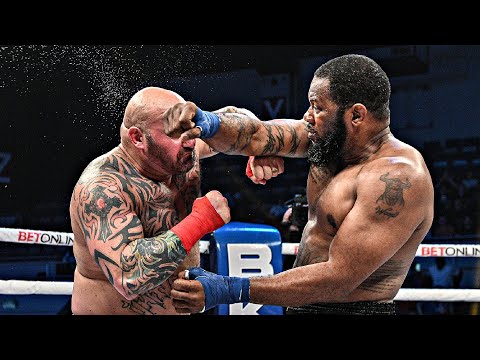
The Unforeseen Warrior: Analyzing the BKFC Upset of Burns vs. Tate

What is called by many as the biggest upset in BKFC! Josh Burns faced Frank Tate in the main event from BKFC 17! This contest wasn't just a display of raw power, but a stark reminder that in the unyielding arena of combat sports, the script can be rewritten in an instant. The very notion of an "upset" challenges our preconceived notions of dominance and can ignite fierce debate among fight enthusiasts. Does it diminish the victor's skill, or highlight the underdog's hidden potential? The roar of the crowd, the clash of bare knuckles, the visceral drama of the BKFC – it all coalesces into a spectacle that demands our attention, especially from a martial arts perspective. Beyond the spectacle, however, lies the deeper narrative of strategy, resilience, and the ever-present possibility of the unexpected. This bout, in particular, serves as a potent case study.

A Shifting Landscape: BKFC and the Art of Bare-Knuckle Combat

BKFC, or Bare Knuckle Fighting Championship, has carved a unique niche in the modern combat sports landscape. It strips away the layers of protective gear, leaving only the fundamental elements of striking and defense. This raw, unadulterated form of combat, while perhaps not as technically intricate as some traditional martial arts, demands a different kind of courage and precision. The stakes are undeniably higher with every landed blow. The fight between Josh Burns and Frank Tate was a pivotal moment, not just for the participants, but for the perception of the sport itself. When an outcome defies expectations, it forces us to re-evaluate what we understand about skill, preparation, and the unpredictable nature of a fight. This is where the true art of combat analysis begins – looking beyond the result to understand the "how" and "why."

The Main Event: Tate's Challenge and Burns' Resilience

The original fight card for BKFC 17 featured Joey Beltran against Frank Tate in the main event. However, the narrative that truly captured the imagination, and indeed caused a stir, was the performance of Josh Burns. When an underdog like Burns steps into the ring against a seemingly more favored opponent, the underlying narrative often centers on their journey, their training, and their unwavering belief.
The question that lingers is not just *who* won, but *how* they navigated the complexities of the fight. Did Burns employ a specific strategy learned from years of dedicated entrenamiento? Did Tate underestimate the raw grit and ki that Burns brought to the ring? These are the dialogues we must engage in to truly appreciate the martial spirit at play.

Unpacking the Tactics: What We Saw in the Ring

While the original broadcast might have focused on the shock value, a deeper martial arts analysis can reveal the tactical nuances. For instance, how did Burns manage distance? What was his defensive posture against Tate's offensive flurries? In bare-knuckle boxing, timing, head movement, and the ability to absorb punishment are as crucial as the power of a punch. Consider the principles derived from historical martial arts. The ability to adapt to an opponent's strengths and exploit their weaknesses is a timeless lesson. A fighter who can maintain composure under pressure, even when seemingly outmatched, demonstrates a profound level of mental fortitude – a core tenet of BUDO.
"The supreme art of war is to subdue the enemy without fighting." - Sun Tzu. While this fight was a physical contest, the psychological battle leading up to and during the bout is equally significant. Burns' victory could be seen as a triumph of mental preparation as much as physical prowess.

The "Upset" Factor: More Than Just a Surprise

The term "upset" in combat sports often carries a dual meaning. On one hand, it signifies a deviation from predicted outcomes, exciting the purists and casual observers alike. On the other, it can prompt a critical re-examination of the fighters involved and the very nature of prediction in combat. Could this have been an instance where years of disciplined artes marciales training, perhaps in a less publicized discipline, gave Burns an edge in resilience or adaptability that was underestimated? We must always consider that the journey to the ring is rarely as straightforward as a win-loss record suggests.

Training Regimens and Philosophical Underpinnings

Understanding the training methodologies behind fighters like Burns and Tate is key to appreciating their performances. While BKFC focuses on striking, the underlying conditioning, agility drills, and mental preparation are often drawn from a broader spectrum of martial arts principles. A fighter might possess the raw power for a knockout, but without the discipline to maintain a consistent training regimen, the ability to absorb pressure, and the mental clarity to execute a plan, that power can be rendered ineffective. This is where the philosophy of BUDO – the way of the warrior – comes into play, emphasizing not just physical skill but character development and self-mastery.

The Role of Strategy in Bare-Knuckle Combat

In a sport where a single punch can end the fight, strategy is paramount. It's not just about throwing heavy shots; it's about setting traps, controlling the center of the ring, and managing energy reserves. The fight between Burns and Tate likely involved a complex dance of offensive and defensive maneuvers, perhaps influenced by different martial backgrounds. If Tate relied on a particular offensive style, how did Burns counter it? Did he employ footwork reminiscent of traditional boxing or perhaps incorporate evasive techniques more akin to some Karate or Jiu-Jitsu defensive postures? Analyzing these elements allows us to move beyond mere spectacle and into the realm of genuine martial arts analysis.

Beyond the BKFC Ring: Lessons for All Practitioners

The "upset" in this BKFC bout offers valuable lessons for anyone involved in martial arts or combat sports:
  • The Underdog Factor: Never underestimate the power of preparation, heart, and a well-executed strategy.
  • Adaptability is Key: The ability to adjust one's approach mid-fight can be the difference between victory and defeat.
  • Mental Fortitude: The psychological aspect of combat is as crucial as the physical. Staying calm under pressure is a hallmark of a seasoned warrior.
  • The Ever-Evolving Nature of Combat: What we consider an "upset" today might be the norm tomorrow as fighters continue to innovate and push boundaries.
This fight serves as a potent reminder that in the dynamic world of combat sports, the unexpected is always a possibility. It’s this unpredictability that fuels our passion and keeps us engaged, eager to witness the next chapter unfold.

Veredicto del Sensei: ¿Merece la pena?

This BKFC bout, particularly the narrative surrounding Josh Burns' performance, is a fascinating case study in combat sports dynamics. While not a traditional martial arts contest in the vein of Karate or Judo, it showcases the raw, unadulterated application of striking power and resilience under extreme pressure. The "upset" factor adds a layer of intrigue that sparks debate. For those interested in the broader spectrum of combat and the psychology of fighting, it's a compelling watch. It reminds us that heart, grit, and a sound strategy can often overcome perceived disadvantages. Calificación: Cinturón Negro en Psicología del Combate

Equipo Esencial para tu Entrenamiento

While BKFC is bare-knuckle, many practitioners looking to improve their striking and conditioning might benefit from specific gear.
  • Hand Wraps: Essential for protecting your knuckles and wrists during any striking training.
  • Boxing Gloves: For sparring sessions, 14-16oz gloves are standard for safety.
  • Mouthguard: Non-negotiable for any form of combat or high-impact training to protect your teeth and jaw.
  • Jump Rope: A classic tool for improving cardiovascular fitness, agility, and footwork – fundamental for any fighter.
  • Duffel Bag: To carry all your essential entrenamiento gear to the gym or dojo.

Recursos para Profundizar

To further understand the nuances of combat sports and martial philosophy:
  • Explore the history of striking arts in our article on Karate.
  • Delve into the mental game with our insights on BUDO and the warrior's spirit.
  • Discover the tactical side of Artes Marciales Mixtas.

Preguntas Frecuentes

What is BKFC?

BKFC stands for Bare Knuckle Fighting Championship, a professional combat sports promotion that features boxing matches with no gloves.

What makes a fight an "upset"?

An upset occurs when a competitor who is considered the underdog, often with lower odds or a less impressive record, defeats a favored opponent.

Is bare-knuckle fighting a martial art?

While BKFC is a form of combat sport, traditional martial arts like Karate, Judo, or Kung Fu often involve a broader philosophical and technical scope, including forms, weapon training, and defensive principles beyond pure striking.

How important is conditioning in BKFC?

Crucial. Without gloves, fighters must rely on precise power and defense. Excellent cardiovascular conditioning and the ability to absorb impact are vital for lasting through rounds.

Where can I watch BKFC fights?

BKFC events are typically available via pay-per-view through their official website or other designated streaming platforms.

Para Profundizar en tu Camino

"Victory is reserved for those who are willing to pay the price." - Bruce Lee. This adage resonates deeply when analyzing any combat sport, especially one as demanding as bare-knuckle fighting. The price is paid in sweat, discipline, and an unwavering commitment to one's craft.

Reflexión del Sensei: Tu Próximo Paso

The echoes of the crowd may fade, but the lessons learned in the crucible of combat endure. This BKFC bout, with its unexpected twist, serves as a powerful metaphor for life. Are you the favorite, coasting on past glories, or the underdog, honing your skills in the shadows, ready to seize your moment? In your training, in your challenges, in your daily life – how do you prepare for the fight that no one sees coming? ``` GEMINI_METADESC: Analyze the BKFC upset of Josh Burns vs. Frank Tate from a martial arts perspective. Explore strategy, conditioning, and the true meaning of an upset in combat sports.