Showing posts sorted by date for query Kyokushin Karate MMA. Sort by relevance Show all posts

The Undeniable Power of Kyokushin Karate: More Than Just a Documentary

Welcome, fellow seekers of the Way. You arrive at BYAM Budo y Artes Marciales not merely by chance, but by a shared pursuit of something profound – the essence of martial arts. Today, we strip away the polished veneer of typical documentaries to confront the raw, unadulterated truth of Kyokushin Karate. Forget mere entertainment; we are here to dissect its strength, its rigorous philosophy, and the transformative fire it ignites within its practitioners. Prepare yourselves, for this is not a passive viewing; it is an immersion into the heart of combat sports, the depth of martial philosophy, and the tangible reality of training.

I. The Unyielding Essence of Kyokushin Karate

Let's address the elephant in the room immediately. When we speak of "The Strongest Karate," we are not exaggerating. Kyokushin, translating to "the ultimate truth" in Japanese, is not a style for the faint of heart. Forged by the legendary Masutatsu Oyama, its very name is a testament to its demanding nature. This is not about flashy kata performed in a sterile dojo; this is about forging physical and mental fortitude through relentless dedication. Its techniques are honed in the crucible of full-contact sparring and brutal training regimens that would break lesser men. Oyama understood that true strength isn't just about throwing punches; it's about developing the unyielding spirit, the Seishin, that allows a warrior to stand firm against any adversity.

Think about it: when you hear the term "Kyokushin," what comes to mind? Likely images of bone-jarring roundhouse kicks, powerful punches, and intense, unyielding sparring matches. This is the stark reality of Oyama's vision. He sought to create a martial art that tested the limits of human endurance, a discipline that would not only teach combat effectiveness but also instill an unbreakable will. This emphasis on realism, on facing an opponent with full commitment, is what separates Kyokushin from many other forms that prioritize form over function. It's a stark reminder that in the face of true conflict, there is no room for pretense.

"The difference between a hobby and a calling is the level of sacrifice you are willing to make." - A principle deeply ingrained in Kyokushin training.

This commitment to "ultimate truth" means confronting one's own limitations, pushing past perceived barriers, and emerging stronger. The rigorous Kihon (basics), the demanding Kata (forms), and the sheer intensity of Kumite (sparring) all serve a singular purpose: to build a warrior from the inside out.

II. The Warrior's Mindset: Embracing the Martial Philosophy

But Kyokushin Karate is far more than a mere combat system. It is a profound vehicle for self-discovery, a living embodiment of the Budo spirit. The principles etched into the dojo walls – humility, respect, perseverance, and self-control – are not abstract concepts. They are the very bedrock upon which a Kyokushin practitioner builds their character. This philosophy transcends the physical exchanges; it is a guide for navigating the complexities of life itself.

Consider the weight of Osu! – the all-encompassing expression of respect, gratitude, and perseverance. It’s not just a word; it’s a commitment. It’s what you utter when you’re tired, when you’re sore, when you want to quit but choose not to. This constant reinforcement of mental toughness, coupled with the respect shown to instructors and fellow students, cultivates a warrior's mindset. You learn to face challenges head-on, not with aggression, but with calm resolve. This is the essence of martial philosophy, a concept often lost in the modern world's pursuit of superficial victories.

The development of Zanshin (awareness) and Mushin (no-mind state) are not merely training goals; they are pathways to a more balanced and conscious existence. When you can react instinctively yet calmly under pressure, whether in a sparring match or a stressful life situation, you have truly begun to understand Kyokushin's deeper teachings. This journey fosters a profound sense of self-awareness, harmonizing the mind, body, and spirit – a balance that is increasingly rare in our chaotic world.

"The mind must be stilled. Only then can the body move with true purpose." - A foundational principle in the study of martial arts strategy.

III. Kyokushin's Impact on the Global Combat Sports Arena

Kyokushin Karate's uncompromising approach has undeniably left an indelible mark on the landscape of combat sports. It's a discipline that has consistently produced individuals with exceptional physical conditioning, mental fortitude, and a deep understanding of striking dynamics. These practitioners, forged in the intense environment of Kyokushin kumite, have translated their skills onto stages worldwide, proving the efficacy of their training.

We've seen Kyokushin exponents excel in various full-contact disciplines, often demonstrating superior conditioning and a never-say-die attitude. Their resilience in the face of powerful opponents and their ability to absorb punishment while continuing to fight are hallmarks of their training. Think of the famous historical bouts and the sheer grit displayed by these fighters. This raw, electrifying spectacle continues to captivate audiences, offering a compelling demonstration of martial arts prowess in its most direct and challenging form. The influence of Kyokushin's full-contact ethos can be seen, whether directly or indirectly, in many modern combat sports, pushing the boundaries of what athletes are capable of.

Whether it's through direct competition or the influence of their fighting spirit, Kyokushin Karate continues to enrich the world of combat sports, offering a testament to the power of dedicated, full-contact training. It’s a constant reminder that strength forged in truth can overcome many obstacles.

IV. Forging Bonds: The Kyokushin Karate Community

Here at BYAM Budo y Artes Marciales, we understand that the martial journey is rarely a solitary one. The dojo is a microcosm of society, a place where bonds are forged through shared sweat, mutual respect, and common goals. The Kyokushin Karate community is a prime example of this – a global network of individuals united by a passion for this demanding art.

This isn't just about training partners; it's about building a support system. In the shared struggle of pushing limits, enduring difficult training sessions, and learning from mistakes, friendships and a profound sense of camaraderie develop. This shared experience extends beyond the dojo itself. Online forums, social media groups, and gatherings all contribute to a vibrant tapestry of connection. It's a place where knowledge is exchanged, encouragement is freely given, and the principles of Budo are lived out collectively. You are never truly alone on this path.

We aim to be a nexus for these connections, a place where enthusiasts of Kyokushin and other martial disciplines can converge. By engaging in discussions, sharing personal experiences – the triumphs and the setbacks – we can all learn and grow. This collective effort nurtures not only individual progress but also a deeper, collective understanding and appreciation of the martial arts. Join us, and discover the strength that comes from being part of something greater than yourself.

V. Gear Up for Glory: Essential Kyokushin Merchandise

Our commitment to your martial arts journey extends beyond mere philosophical discourse. We believe that the right equipment can significantly enhance your training experience and serve as a constant reminder of your dedication. That’s why we offer a curated selection of high-quality Kyokushin merchandise and related gear.

From durable training uniforms that withstand the rigors of intense practice to comfortable apparel that embodies the spirit of the warrior, each item is selected with purpose. We offer books that delve deeper into Kyokushin's history and philosophy, training aids that can supplement your dojo practice, and accessories that let you carry the martial spirit with you every day. Think of it as arming yourself, not just for the physical fight, but for the mental and spiritual one as well.

For those serious about their Kyokushin training, consider investing in a high-quality Kyokushin gi. A well-made uniform is crucial for both comfort and durability during intense sparring sessions. Beyond the gi, explore our range of training equipment designed to help you hone your techniques, such as focus mitts for speed and accuracy drills, or even a makiwara to build devastating power. Supporting our platform through these purchases not only equips you for your path but also allows us to continue providing valuable content and fostering the martial arts community.

Equipo Esencial para tu Entrenamiento

  • Kyokushin Gi (Uniforme): Busca un tejido resistente y un corte que permita una amplia movilidad. Doble tejido es ideal para la durabilidad.
  • Guantes de Sparring (14-16oz): Esenciales para la seguridad durante el kumite.
  • Protector Bucal: No negociable para cualquier tipo de sparring.
  • Espinilleras y Empeineras: Recomendadas para entrenamiento de contacto completo.
  • Libros sobre Kyokushin y Budo: Para complementar tu aprendizaje técnico y filosófico.

Conclusion

Kyokushin Karate is far more than a martial art; it is a transformative way of life. It is a discipline that instills unwavering discipline, profound resilience, and an indomitable spirit. Through its practice, we uncover our innermost strength, empowering us not just to face challenges, but to conquer them with grace and steely determination. Join us at BYAM Budo y Artes Marciales, where we don't just discuss the beauty of martial arts; we celebrate its power, foster a thriving community, and provide the resources to enrich your personal martial arts journey. Together, let us embrace the raw power of Kyokushin Karate and embark on an enduring path of self-discovery and ultimate mastery.

Preguntas Frecuentes

  • What makes Kyokushin Karate different from other Karate styles? Kyokushin is distinct due to its emphasis on full-contact sparring with minimal protective gear, its rigorous physical conditioning, and its philosophical commitment to "the ultimate truth" in combat and life.
  • Is Kyokushin Karate suitable for beginners? Yes, Kyokushin offers specialized beginner classes designed to gradually introduce practitioners to its demanding techniques and philosophy, focusing on safety and foundational skills.
  • What are the main benefits of practicing Kyokushin Karate? Benefits include enhanced physical fitness, improved discipline and self-control, increased mental toughness, boosted confidence, and a deep understanding of respect and perseverance.
  • Can Kyokushin Karate be used for self-defense? Absolutely. The full-contact nature of Kyokushin training directly prepares practitioners for realistic self-defense scenarios, emphasizing practical application and resilience.

Reflexión del Sensei: Tu Próximo Paso

You have absorbed the essence, the philosophy, and the undeniable power of Kyokushin. Now, consider this: How does the "ultimate truth" of Kyokushin manifest not just in the dojo, but in the mundane moments of your daily life? Are you truly living with the discipline, respect, and perseverance you claim to embody?

For further exploration into the world of martial arts and combat sports, check out these related articles:

``` ```json { "@context": "http://schema.org", "@type": "FAQPage", "mainEntity": [ { "@type": "Question", "name": "What makes Kyokushin Karate different from other Karate styles?", "acceptedAnswer": { "@type": "Answer", "text": "Kyokushin is distinct due to its emphasis on full-contact sparring with minimal protective gear, its rigorous physical conditioning, and its philosophical commitment to \"the ultimate truth\" in combat and life." } }, { "@type": "Question", "name": "Is Kyokushin Karate suitable for beginners?", "acceptedAnswer": { "@type": "Answer", "text": "Yes, Kyokushin offers specialized beginner classes designed to gradually introduce practitioners to its demanding techniques and philosophy, focusing on safety and foundational skills." } }, { "@type": "Question", "name": "What are the main benefits of practicing Kyokushin Karate?", "acceptedAnswer": { "@type": "Answer", "text": "Benefits include enhanced physical fitness, improved discipline and self-control, increased mental toughness, boosted confidence, and a deep understanding of respect and perseverance." } }, { "@type": "Question", "name": "Can Kyokushin Karate be used for self-defense?", "acceptedAnswer": { "@type": "Answer", "text": "Absolutely. The full-contact nature of Kyokushin training directly prepares practitioners for realistic self-defense scenarios, emphasizing practical application and resilience." } } ] }

¿Es el Karate Kyokushin un Camino Efectivo hacia la Maestría Marcial? Análisis Crítico del "Oleaje de Oyama"

¿Alguna vez te has detenido a observar el fragor de un combate de Karate Kyokushin y te has preguntado si toda esa intensidad, todo ese contacto pleno, es realmente el camino más directo hacia la eficacia marcial? Muchos llegan a nuestro dojo buscando respuestas, pero la mayoría trae consigo un bagaje de mitos y malentendidos. Hoy, vamos a desmantelar algunos de ellos y a examinar si el legado del Gran Maestro Masutatsu Oyama sigue resonando con la misma fuerza en el vertiginoso mundo de las artes marciales modernas, especialmente frente a titanes como el MMA.

El Karate Kyokushin, a menudo percibido como la vanguardia del karate de contacto pleno, es un bastión de disciplina y resistencia. Pero, ¿es esta dureza una virtud incondicional o puede convertirse en un arma de doble filo si no se entiende su contexto filosófico y práctico? Mi propia travesía, marcada por innumerables sudorosas sesiones de entrenamiento y el eco de los golpes resonando en el dojo, me ha enseñado que la respuesta es mucho más compleja de lo que aparenta.

Introducción Crítica: Más Allá del Contacto Pleno

El mundo de las artes marciales es un tapiz intrincado, tejido con hilos de tradición, innovación y, a menudo, de simplificación excesiva. El Karate Kyokushin, fundado por el legendario Masutatsu Oyama, se presenta con una imagen de brutalidad controlada, un estilo que abraza el combate de contacto pleno como piedra angular. Pero, ¿es esta adhesión inquebrantable al contacto la clave de su efectividad, o es una de las muchas herramientas en su arsenal, a menudo magnificada en detrimento de otros aspectos cruciales?

Mi propio viaje marcial me ha llevado a través de diversas disciplinas, y el Kyokushin dejó una marca indeleble. La dureza de sus entrenamientos es innegable, forjando cuerpos y mentes capaces de soportar una presión considerable. Sin embargo, mi experiencia me dicta que la verdadera maestría no reside únicamente en la capacidad de recibir y dar golpes con fuerza bruta, sino en la comprensión profunda de cuándo y cómo aplicar cada técnica. El Kyokushin ofrece una plataforma excepcional para esto, pero es fundamental no caer en la trampa de reducirlo a un mero ejercicio de resistencia.

Los Pilares del Kyokushin: Filosofía de la Dureza y la Superación

El Karate Kyokushin, traducido a menudo como "la asociación de la verdad última", se cimienta sobre principios que trascienden la mera técnica física. El Gran Maestro Oyama infundió en su estilo una filosofía de superación personal arraigada en la disciplina férrea y el coraje de enfrentar la adversidad de frente. La famosa frase, "El Karate-Do es una búsqueda para perfeccionar el carácter", resuena con particular fuerza en el Kyokushin, donde el contacto pleno en el kumite se convierte en un espejo que refleja las debilidades y fortalezas del practicante.

Esta filosofía se manifiesta en la exigencia de los entrenamientos, en la prohibición de ataques a la cabeza con las manos (lo que promueve una defensa sólida y el uso de otras armas corporales), y en la cultura de respeto y humildad que debe permear el dojo. No se trata solo de ser "duro", sino de usar esa dureza como catalizador para el crecimiento interior. La resistencia al dolor, la capacidad de levantarse tras una caída, la concentración bajo presión; estos son los frutos tangibles de un entrenamiento dedicado bajo el paraguas del Kyokushin. A menudo veo practicantes de otros estilos, que evitan el contacto real, quedar desconcertados ante la intensidad. ¿Es esa desconexión un fallo de sus métodos o una validación del Kyokushin?

"El Karate-Do es una búsqueda para perfeccionar el carácter. El entrenamiento constante es la llave. La fuerza física y la agudeza mental son el resultado." - Masutatsu Oyama (adaptado)

La disciplina es el aceite que mantiene en movimiento la maquinaria del Kyokushin. Desde la formalidad de los saludos hasta la rigurosidad de los katas, cada aspecto del entrenamiento está diseñado para moldear no solo el cuerpo, sino también la mente. Esta autodisciplina es una semilla que, una vez plantada, germina en todas las facetas de la vida del practicante, demostrando que el Karate Kyokushin es mucho más que un deporte de combate.

El Kumite Kyokushin: Un Análisis del Combate de Contacto Pleno

La joya de la corona del Karate Kyokushin es, sin duda, su kumite. A diferencia de muchos estilos de Karate que emplean un contacto ligero o preestablecido (go-hon kumite, ippon kumite), el Kyokushin practica el jiyu kumite con contacto pleno. Esto significa que los golpes y patadas se lanzan con potencia y se conectan, buscando el efecto buscado, pero siempre dentro de un marco de control y reglas específicas.

¿Qué implica esto en la práctica?:

  • Potencia Real: Los golpes no son meras demostraciones; deben tener la intención de causar impacto. Esto enseña al practicante a lanzar técnicas con autoridad y a anticipar la fuerza real de un oponente.
  • Resistencia Física: El contacto continuo exige una resistencia cardiovascular y muscular excepcional. Los peleadores deben ser capaces de mantener un ritmo alto bajo asalto.
  • Técnicas Amplias: Incluye golpes con puño, patadas a la cabeza y al cuerpo, y patadas bajas (geri). Sorprendentemente, también se permiten algunas técnicas de derribo y agarre limitado, lo que le da una dimensión más tridimensional que el karate tradicional de "sólo golpeo".
  • Defensa Activa: Ante la ausencia de ataques a la cabeza con la mano, los practicantes desarrollan una defensa sólida basada en el bloqueo, la absorción de impactos y los movimientos de cabeza y cuerpo.

Sin embargo, aquí es donde surgen las críticas y los debates. ¿Es este estilo de combate, al no permitir ataques directos a la cabeza con el puño, una preparación incompleta para un combate callejero o incluso para el MMA, donde dichos ataques son la norma? Algunos argumentan que la necesidad de absorber golpes en el cuerpo o de esquivar ataques a la cabeza promueve una defensa más robusta y una mayor capacidad de "aguantar" el castigo. Otros, sin embargo, ven una limitación inherente.

La verdad, como suele suceder, es matizada. El Kyokushin enseña a lidiar con la presión del impacto de una manera que pocos estilos pueden igualar. La capacidad de mantener la compostura y seguir atacando mientras se recibe un golpe en el torso es una habilidad de combate invaluable. No obstante, para una aplicación total en el MMA, la integración de técnicas específicas para la cabeza y el juego de suelo se vuelve indispensable.

Desarrollo Físico y Mental: El Crisol del Entrenamiento

Mi propia experiencia en el Kyokushin fue una metamorfosis. Los entrenamientos son, para ser franco, brutales. Las sesiones de kihon (técnicas básicas) se extienden hasta el agotamiento. El cardio se lleva al límite. Y el kumite, el kumite es un horno donde se forja el acero de la voluntad. He visto a muchos llegar con grandes aspiraciones y ser forzados a confrontar sus propias limitaciones, sus miedos, su tendencia a rendirse.

Los beneficios físicos son evidentes:

  • Resistencia Cardiovascular: Los combates prolongados y los ejercicios de alta intensidad garantizan un corazón de hierro.
  • Fuerza y Potencia: El énfasis en la técnica correcta y el lanzamiento de golpes con todo el cuerpo desarrollan una potencia explosiva.
  • Flexibilidad y Agilidad: Las patadas, especialmente las altas, y los movimientos de evasión promueven una buena movilidad articular y agilidad.
  • Tolerancia al Dolor y Resiliencia: El contacto pleno enseña a manejar el dolor y a seguir adelante a pesar de la incomodidad, una habilidad vital en cualquier aspecto desafiante de la vida.

Pero es el desarrollo mental lo que realmente distingue al Kyokushin. La autodisciplina no es una opción, es un requisito. La perseverancia se cultiva gota a gota, golpe a golpe. Te enseñan a caer y a levantarte, no solo físicamente, sino figuradamente. En momentos de adversidad, ese recuerdo del entrenamiento riguroso, de las veces que pensaste que no podías más pero lo hiciste, se convierte en un ancla de fortaleza. Esta es la esencia de la superación personal que Oyama buscaba inculcar.

"La fuerza no viene de la capacidad física. Viene de una voluntad indomable." - Mahatma Gandhi (Adaptado al contexto marcial)

Este entrenamiento integral, que golpea tanto el cuerpo como el espíritu, es lo que confiere al practicante de Kyokushin una mentalidad de guerrero, preparada no solo para el combate, sino para los desafíos inherentes a la existencia humana.

Kyokushin vs. MMA: ¿Una Batalla de Estilos o una Sinergia Inesperada?

Aquí es donde el debate se enciende. Muchos aficionados al MMA ven el Karate Kyokushin como un estilo "limitado" debido a la prohibición de ataques a la cabeza con el puño y su enfoque predominantemente en el combate de pie. "¿Cómo puede ser efectivo contra un luchador de Jiu-Jitsu brasileño en el suelo, o contra un boxeador que lanza jabs y ganchos a la cara?", preguntan con razón.

Mi respuesta: el Kyokushin no fue diseñado para ser MMA, pero ofrece herramientas formidables que pueden integrarse perfectamente.

  • Potencia de Golpeo: Los peleadores de Kyokushin desarrollan una potencia de golpeo y patada considerable. Un Mae Geri (patada frontal) o un Mawashi Geri (patada circular) lanzados con la intención Kyokushin pueden ser devastadores contra el cuerpo, las piernas o incluso el brazo que bloquea.
  • Resistencia al Dolor: La capacidad de absorber golpes, especialmente en el torso, es crucial en MMA. Un peleador de Kyokushin suele tener una mayor tolerancia al castigo, lo que le permite seguir presionando.
  • Condición Física: La resistencia cardiovascular y la potencia muscular que se desarrollan en el Kyokushin son excepcionales, ideales para mantener un ritmo alto en un combate de MMA.
  • Mentalidad: La dureza mental, la determinación y la capacidad de superar el dolor son activos invaluables en el MMA.

Históricamente, peleadores como Georges St-Pierre han mostrado la influencia del karate de contacto en su juego. Si bien un practicante de Kyokushin puro podría enfrentar desafíos contra un especialista en grappling o un boxeador consumado sin entrenamiento adicional en esas áreas, la base que ofrece el Kyokushin es sólida. La clave está en la versatilidad y la voluntad de integrar, no en la exclusión. Muchos peleadores de MMA han descubierto el valor de las patadas potentes del Kyokushin o su inquebrantable temple. No es una competencia de "esto contra aquello", sino una apreciación de las fortalezas que cada arte aporta.

Debemos considerar que el MMA moderno es una síntesis, y el Kyokushin es una fuente de potencia y resiliencia que puede enriquecer esa síntesis. **El Karate Kyokushin no es un sustituto del MMA, pero es un componente potentísimo y valioso.**

Defensa Personal: ¿Realidad vs. Ideal en el Kyokushin?

Cuando hablamos de defensa personal, el debate sobre el Kyokushin se vuelve aún más agudo. Por un lado, el contacto pleno y la dureza mental entrenada parecen ser la receta perfecta para una confrontación real. Por otro, las reglas del dojo, que excluyen los golpes a la cabeza con la mano, y la falta de entrenamiento en agarres y lucha en el suelo, presentan lagunas evidentes.

Mi perspectiva es la siguiente: el Kyokushin proporciona una base física y mental para la defensa personal que pocos estilos igualan. La capacidad de generar potencia con golpes y patadas, la resistencia para soportar un ataque inicial, y la fortaleza mental para no ceder ante el miedo, son activos incalculables. Un practicante de Kyokushin puede, con alta probabilidad, incapacitar a un agresor con una patada bien colocada en el muslo o el cuerpo. El combate cuerpo a cuerpo, el manejo de la distancia, y la capacidad de mantener la calma bajo estrés son lecciones aprendidas en el dojo.

Sin embargo, la defensa personal real rara vez se desarrolla en un ring con reglas. Los agresores no avisan, atacan de forma impredecible y a menudo con desventajas físicas o en inferioridad numérica. Aquí es donde el Kyokushin puede quedarse corto si no se complementa:

  • Ataques a la Cabeza: La falta de entrenamiento en recibir y lanzar golpes de puño a la cabeza es una omisión significativa.
  • Lucha en el Suelo (Grappling): La mayoría de los altercados reales terminan en el suelo. Un conocimiento, aunque sea básico, de cómo defenderse de un ataque en esta posición es vital. El Kyokushin tradicional ofrece poco en este aspecto.
  • Armas y Múltiples Oponentes: El dojo no suele preparar para escenarios que involucran armas o múltiples atacantes.

Por lo tanto, mientras que el Kyokushin es una excelente base para desarrollar la fortaleza y el coraje necesarios en la defensa personal, los practicantes deben ser conscientes de sus limitaciones. La integración de técnicas específicas para la defensa contra golpes a la cabeza, agarres y, si es posible, algún conocimiento de grappling, lo convertiría en un sistema de defensa personal mucho más completo. Es un punto crucial que a menudo se pasa por alto en la veneración del contacto pleno.

Veredicto del Sensei: ¿Un Camino Hacia la Maestría?

Entonces, ¿funciona el Karate Kyokushin? La respuesta es un rotundo sí, pero con matices importantes. Si tu objetivo es desarrollar una resistencia física y mental formidable, una disciplina férrea, y una potencia de golpeo significativa, el Kyokushin es un camino directo y exigente.

Si buscas una preparación "completa" para el MMA sin añadir entrenamiento adicional, o una solución mágica para todas las situaciones de defensa personal, podrías encontrar que el Kyokushin, por sí solo, tiene huecos. Sin embargo, la base que ofrece es de una solidez asombrosa. La dureza, la perseverancia y la capacidad de enfrentar el dolor son lecciones universales que trascienden cualquier disciplina específica.

Mi veredicto: Cinturón Negro en Resistencia y Determinación, Marrón en Aplicación Integral para MMA y Defensa Personal (sin complementos).

El Karate Kyokushin es una escuela de vida. Te enseña sobre ti mismo, te obliga a crecer y te equipa con herramientas para enfrentar no solo oponentes, sino los desafíos inherentes a la existencia. Su legado de dureza y verdad sigue siendo relevante, siempre y cuando se aborde con una mente abierta y un deseo de integrar sus lecciones en un panorama marcial más amplio.

Equipo Esencial para tu Entrenamiento Kyokushin

Para embarcarte en el riguroso camino del Karate Kyokushin, necesitas el equipo adecuado que te proteja y te permita entrenar con eficacia. Aquí tienes una guía de lo esencial:

  • Gi (Kimono) de Karate: Busca un gi resistente, de algodón grueso (doble tejido si es posible), que pueda soportar los rigores del kumite y el entrenamiento constante.
  • Protectores Bucales: Indispensables para proteger tus dientes y mandíbula durante el sparring.
  • Guantes de Boxeo/MMA (Opcional para entrenamiento específico): Si bien el Kyokushin no usa guantes en el kumite tradicional, pueden ser útiles para entrenamientos de saco o para prepararte para sesiones de cross-training en MMA. Elige guantes de unos 10-12 oz para protección general.
  • Vendajes para Manos: Cruciales para proteger tus muñecas y nudillos durante golpes potentes.
  • Pantalones de Karate Resistentes: A menudo, los pantalones de los gis de Kyokushin son más reforzados para permitir patadas bajas y movimientos amplios.
  • Shin Guards (Espinilleras) y Empeineras (Opcional para kumite competitivo): Algunas escuelas pueden requerirlas para entrenamientos de kumite con contacto, aunque en competición oficial de Kyokushin no se usan la mayoría de protecciones.

Invierte en equipo de calidad, ya que será tu mejor aliado para mantenerte seguro y enfocado en tu desarrollo marcial.

Guía de Entrenamiento: Los Fundamentos del Kyokushin

El Kyokushin se construye sobre una base sólida de técnicas fundamentales. Aquí tienes un esquema para un entrenamiento básico, centrado en los principios del estilo:

  1. Calentamiento (10-15 min):
    • Cardio ligero: Trote, jumping jacks, saltos de cuerda.
    • Movilidad articular: Rotaciones de cuello, hombros, caderas, rodillas, tobillos.
    • Estiramientos dinámicos: Brazos, piernas, tronco.
  2. Kihon (Técnicas Básicas) (20-30 min):
    • Posiciones: Zenkutsu Dachi (posición adelante), Kokutsu Dachi (posición atrás), Kiba Dachi (posición a caballo). Practica la correcta transferencia de peso y el centro de gravedad bajo.
    • Bloqueos: Gedan Barai (bloqueo bajo), Jodan Uke (bloqueo alto), Soto Uke (bloqueo exterior). Enfócate en la rigidez y la trayectoria corta y directa.
    • Golpes de Puño: Choku Tsuki (puño recto frontal), Gyaku Tsuki (puño recto cruzado). Busca la rotación de cadera y la extensión completa.
    • Patadas: Mae Geri (frontal), Mawashi Geri (circular), Mikazuki Geri (media luna). Trabaja la elevación de la rodilla y la explosividad en el impacto.

    Práctica: Realiza cada técnica 10-20 repeticiones por lado en cada posición.

  3. Kata (Formas) (15-20 min):

    Elige un kata fundamental como Taikyoku Sono Ichi, Ni, San y practícalo con enfoque en la precisión de cada movimiento, la respiración (ibuki) y la potencia (kime) en el golpe final.

  4. Kumite (Combate) (20-30 min):

    Ejercicios de Reflejos y Ataque/Defensa:

    • Sanbon Kumite: Ataque de tres pasos (ej: tres golpes de puño seguido de bloqueo y contraataque).
    • Gohon Kumite: Ataque de cinco pasos.
    • Jiyu Kumite (Sparring): Combate libre con contacto controlado. Enfócate en mantener una guardia alta, moverte constantemente y aplicar las técnicas aprendidas. Recuerda las reglas del Kyokushin: no puñetazos a la cara, sí patadas a la cabeza y al cuerpo, y derribos permitidos.
  5. Acondicionamiento Físico (10-15 min):

    Flexiones, sentadillas, abdominales, ejercicios de core, y estiramientos estáticos para mejorar la recuperación y la flexibilidad.

  6. Enfriamiento y Meditación (5 min):

    Respiración profunda, relajación y un momento de reflexión sobre el entrenamiento.

Este es un ejemplo básico. Adapta la intensidad y duración según tu nivel y las indicaciones de tu instructor.

Preguntas Frecuentes

¿El Karate Kyokushin es peligroso? Como cualquier arte marcial de contacto, existe un riesgo inherente de lesiones. Sin embargo, el Kyokushin se practica bajo reglas estrictas y con un fuerte énfasis en el control. Las lesiones graves son menos comunes que en otros deportes de combate de alto impacto, pero pueden ocurrir. Un buen instructor y el uso de equipo de protección adecuado minimizan los riesgos.

¿Necesito experiencia previa en artes marciales para empezar Kyokushin? No. El Karate Kyokushin es accesible para principiantes. Los dojos suelen tener programas diseñados para enseñar los fundamentos a personas sin experiencia previa.

¿El Kyokushin enseña lucha en el suelo (grappling)? Tradicionalmente, el Kyokushin se centra en el combate de pie y solo incluye derribos limitados. No enseña técnicas de sumisión o lucha en el suelo de manera extensiva como lo hacen el Judo o el Jiu-Jitsu brasileño. Si buscas eso, deberías considerar un entrenamiento complementario.

¿Puedo usar el Karate Kyokushin para defensa personal? Sí, pero con consideraciones. Proporciona una base sólida en resistencia física, mentalidad de lucha y potencia de golpeo. Sin embargo, para una defensa personal completa, es recomendable complementar el entrenamiento con técnicas específicas para ataques a la cabeza, agarres y situaciones de múltiples oponentes.

¿Cuál es la diferencia principal entre Kyokushin y otros estilos de Karate? La principal diferencia radica en el kumite de contacto pleno. Mientras que muchos otros estilos practican formas de sparring más ligeras o preestablecidas, el Kyokushin permite golpes y patadas contundentes conectando. Además, el Kyokushin tiene un enfoque más amplio en la resistencia física y mental a través de entrenamientos extremadamente duros.

Para Profundizar en tu Camino

Si el Karate Kyokushin ha capturado tu interés, te animo a explorar más a fondo:

Reflexión del Sensei: Tu Próximo Paso

Hemos desgranado la esencia del Karate Kyokushin, sus fortalezas indomables y sus áreas de potencial mejora. Hemos visto cómo la dureza y la resistencia forjan un carácter inquebrantable, pero también hemos reconocido que la maestría marcial completa requiere una visión más amplia, una síntesis de lo mejor de cada arte.

Ahora te toca a ti:

¿Te conformas con la fuerza de un solo pilar, o buscas construir un templo marcial completo, integrando el oleaje del Kyokushin con las mareas de otras disciplinas? ¿Dónde reside, en tu opinión, el verdadero equilibrio entre la pureza de un estilo y la adaptabilidad del guerrero moderno?

Comparte tus pensamientos y defiende tu posición. Que el debate comience en los comentarios.

``` ```json { "@context": "https://schema.org", "@type": "FAQPage", "mainEntity": [ { "@type": "Question", "name": "¿El Karate Kyokushin es peligroso?", "acceptedAnswer": { "@type": "Answer", "text": "Como cualquier arte marcial de contacto, existe un riesgo inherente de lesiones. Sin embargo, el Kyokushin se practica bajo reglas estrictas y con un fuerte énfasis en el control. Las lesiones graves son menos comunes que en otros deportes de combate de alto impacto, pero pueden ocurrir. Un buen instructor y el uso de equipo de protección adecuado minimizan los riesgos." } }, { "@type": "Question", "name": "¿Necesito experiencia previa en artes marciales para empezar Kyokushin?", "acceptedAnswer": { "@type": "Answer", "text": "No. El Karate Kyokushin es accesible para principiantes. Los dojos suelen tener programas diseñados para enseñar los fundamentos a personas sin experiencia previa." } }, { "@type": "Question", "name": "¿El Kyokushin enseña lucha en el suelo (grappling)?", "acceptedAnswer": { "@type": "Answer", "text": "Tradicionalmente, el Kyokushin se centra en el combate de pie y solo incluye derribos limitados. No enseña técnicas de sumisión o lucha en el suelo de manera extensiva como lo hacen el Judo o el Jiu-Jitsu brasileño. Si buscas eso, deberías considerar un entrenamiento complementario." } }, { "@type": "Question", "name": "¿Puedo usar el Karate Kyokushin para defensa personal?", "acceptedAnswer": { "@type": "Answer", "text": "Sí, pero con consideraciones. Proporciona una base sólida en resistencia física, mentalidad de lucha y potencia de golpeo. Sin embargo, para una defensa personal completa, es recomendable complementar el entrenamiento con técnicas específicas para ataques a la cabeza, agarres y situaciones de múltiples oponentes." } }, { "@type": "Question", "name": "¿Cuál es la diferencia principal entre Kyokushin y otros estilos de Karate?", "acceptedAnswer": { "@type": "Answer", "text": "La principal diferencia radica en el kumite de contacto pleno. Mientras que muchos otros estilos practican formas de sparring más ligeras o preestablecidas, el Kyokushin permite golpes y patadas contundentes conectando. Además, el Kyokushin tiene un enfoque más amplio en la resistencia física y mental a través de entrenamientos extremadamente duros." } } ] }

Busting the Myths: What Young Men Get Wrong About Street Fights

The raw, untamed energy of a street fight. For many young men, it's a concept steeped in a dangerous cocktail of adrenaline, bravado, and a primal urge to assert dominance. It’s a narrative often fueled by cinematic explosions and whispered legends. But this romanticized notion is a minefield of misconceptions, leaving those who believe them vulnerable to severe consequences. As a Budo practitioner and instructor, I've witnessed the fallout from these misguided beliefs far too often. Today, we confront these dangerous myths head-on, not to glorify violence, but to arm you with the truth and the wisdom to avoid it. Are you ready to understand what truly matters when the stakes are real?

Myth 1: Size and Strength Reign Supreme

This is, without a doubt, the most pervasive and potentially lethal myth. The young male psyche is often saturated with the idea that a larger frame and brute force are the ultimate arbiters of a fight's outcome. They envision themselves as titans, crushing lesser opponents with sheer power. But I ask you: have you ever seen a seasoned fighter get blindsided by someone smaller, faster, and more technically adept?

In the crucible of a real confrontation, while size and strength offer *an* advantage, they are far from the decisive factors. The true warriors understand that technique, experience, and crucially, mental fortitude, are the pillars upon which victory rests. Consider the devastating effectiveness of a Judo throw – leverage and timing trumping raw mass. Think of the precision of a Kyokushin Karate strike, delivered with controlled explosiveness, capable of incapacitating a larger foe.

"Strategy without tactics is the slowest route to victory. Tactics without strategy is the noise before defeat." - Sun Tzu. In a street fight, superior technique *is* the superior tactic, often born from strategic understanding of leverage and timing, rendering brute force irrelevant.

This is where the discipline of martial arts becomes not just beneficial, but essential. Learning proper techniques allows you to harness the physics of movement, using your opponent's weight and momentum against them. Through rigorous sparring, you develop the invaluable skill of fight analysis in real-time, learning to read an opponent's intentions before they even fully manifest. And perhaps most importantly, through dedicated mental training, you cultivate the calm focus required to think, react, and survive under duress – a quality utterly absent in a purely brute-force approach.

Myth 2: Knockouts Are the Only Path to Victory

The silver screen bombards us with images of dramatic knockouts – the one-punch K.O., the spinning heel kick that ends it all. This cinematic spectacle breeds the dangerous illusion that fights are won solely through devastating strikes. Young men often fantasize about landing the "money punch" that ends the confrontation instantly. But let me be clear: real-world confrontations are rarely as clean or as dramatic.

The truth is, a fight ending in a clean knockout is statistically rare and often attributable to a lucky shot rather than superior skill. More commonly, street fights devolve into chaotic brawls where injuries are sustained by both parties, and the aggressor is not necessarily the victor. The most effective and reliable path to neutralizing a threat is not through spectacular violence, but through incapacitation.

This is where the intricate world of grappling and submission techniques, honed in arts like BJJ, Judo, and Aikido, proves its worth. Joint locks, chokes, and throws are designed to control and disable an opponent with far greater efficiency and less risk of unpredictable escalation than relying solely on strikes. Mastering these techniques requires discipline, precision, and an understanding of anatomy and leverage – skills forged in the dojo, not on the street.

"The supreme art of war is to subdue the enemy without fighting." - Sun Tzu. While not always possible on the street, the principle extends to minimizing damage and achieving control swiftly, a hallmark of effective grappling.

Relying solely on striking is like bringing a knife to a gunfight – it leaves you dangerously incomplete. The ability to transition from a striking range to a control-based scenario, or to defend effectively against a grappling attack, is paramount. This is the essence of well-rounded martial arts training.

Myth 3: Going Solo is the Ultimate Test of Courage

There's a certain narrative of lone wolf heroism that appeals to the young male ego – the idea that facing multiple opponents alone is the ultimate display of courage and martial prowess. It paints a picture of a solitary warrior, standing defiant against overwhelming odds. This romantic ideal, however, is a perilous fallacy.

In reality, a street fight is not a tournament bracket. It's an unpredictable, often chaotic, and dangerous environment. While courage is admirable, recklessness is not. The presence of allies, friends, or even a supportive group can be an enormous deterrent and a crucial source of backup. A united front can dissuade potential aggressors before a confrontation even begins.

However, this is not an endorsement of mob mentality or gratuitous violence. The objective is safety and de-escalation, not gang warfare. The presence of a group should serve to de-escalate, to provide witnesses, or to ensure that a situation does not spiral out of control. Using group strength to unjustly overwhelm an opponent is not courage; it is bullying.

The true measure of a warrior's strength lies in their ability to assess a situation, to use their voice and intellect to defuse conflict, and to resort to physical means only as an absolute last resort. This principle is deeply embedded in the philosophy of Budo, which emphasizes self-mastery and the avoidance of unnecessary conflict. Learning de-escalation techniques and assertive communication is as vital a skill as any self-defense technique.

Veredicto del Sensei: Avoiding the Pitfalls

Let me be unequivocal: engaging in a street fight is almost never the wise or honorable path. The risks – severe injury, legal repercussions, emotional trauma – far outweigh any perceived 'victory.' The focus for any young man should be on cultivating themselves into a better, more capable individual, not on preparing for imaginary battles.

This means prioritizing the development of genuine skills: the physical discipline of martial arts, the mental resilience fostered by overcoming challenges, and the social intelligence required for effective communication and conflict resolution. True strength isn't about winning fights; it's about developing the wisdom and skill to navigate life's challenges, including avoiding unnecessary confrontations altogether. The goal is not to become a brawler, but a resilient, capable individual.

Practical Training: Building a Real Defense

If your goal is genuine self-improvement and preparedness, then direct your energy towards foundational training. This isn't about learning 'street fighting,' but about building a robust physical and mental foundation that can serve you in all aspects of life, including the unlikely event of needing to defend yourself.

  1. Foundational Striking: Focus on solid Karate or Kickboxing principles. Learn proper footwork, stance, and the mechanics of core strikes like punches and kicks. Practice these diligently to build power and accuracy.
  2. Control and Submission: Integrate Brazilian Jiu-Jitsu or Judo into your training. Learning to control an opponent on the ground, execute basic throws, and apply fundamental submissions like an armbar or choke is crucial for neutralizing threats efficiently.
  3. Situational Awareness: Train your mind to be constantly aware of your surroundings. Practice recognizing potential threats and understanding escape routes. This is a mental skill that requires conscious effort, not just physical conditioning.
  4. De-escalation Drills: Role-play potential confrontation scenarios with training partners. Practice assertive communication, setting boundaries, and walking away. This is often the most critical 'technique' in preventing a fight.
  5. Sparring with Purpose: Engage in controlled sparring sessions that simulate different ranges and scenarios. The aim is not to win, but to learn, adapt, and understand distance, timing, and reaction under pressure.

Frequently Asked Questions

Q1: Is it true that a smaller person can beat a bigger person with martial arts?

Yes, it is absolutely possible. While size and strength offer advantages, superior technique, speed, timing, and strategy can often overcome them. Martial arts train you to exploit an opponent's weaknesses and leverage your own strengths effectively, regardless of size disparity.

Q2: Should I learn multiple martial arts styles?

For comprehensive self-defense and personal development, cross-training in multiple disciplines is highly recommended. Styles like Karate/Kickboxing for striking, and Judo/BJJ for grappling, offer a well-rounded skill set. However, focus on mastering the fundamentals of one or two arts before spreading yourself too thin.

Q3: Is it better to learn self-defense from a movie or a real instructor?

A real, qualified instructor is infinitely better. Movies are for entertainment; they are not instructional tools. They often depict unrealistic techniques and scenarios. A qualified instructor provides structured training, feedback, and a safe environment to learn practical, effective skills.

Q4: What's the best martial art for self-defense?

There isn't one single "best" art. The most effective approach is often a combination that includes striking (like Muay Thai, Kickboxing, or Karate) and grappling (like Judo or BJJ). Crucially, effective self-defense also incorporates situational awareness and de-escalation skills, which are taught across many disciplines but require dedicated focus.

To Deepen Your Path

  • BUDO Philosophy: Understanding the Way of the Warrior
  • Self-Defense: Principles Beyond Techniques
  • Karate vs. MMA: A Clash of Worlds?

In conclusion, the battlefield of the street is a treacherous place, littered with the wreckage of myth-driven bravado. The true path forward lies not in seeking confrontation, but in cultivating the inner and outer strength to navigate life with skill, wisdom, and resilience. Remember, winning a fight is often about mastering yourself, not an opponent.

Reflexión del Sensei: Tu Próximo Paso

You've seen the myths dismantled. Now, look within. Which of these dangerous misconceptions has, even subtly, influenced your own perception of conflict or strength? Is it your size, your striking power, your willingness to stand alone? Confront that illusion in your mind and decide, consciously, to pursue *real* mastery over perceived dominance. How will you actively dismantle this myth within yourself, starting today?

El Movimiento del Dragón: Desarrollando la Espalda y el Espíritu del Guerrero

¿Sientes que tu poder se diluye como el agua, sin la fuerza centrípeta para anclar tus golpes? ¿Buscas una espalda que no solo proyecte fuerza física, sino también la resonancia del espíritu marcial? Muchos llegan al dojo buscando "el mejor ejercicio para la espalda", creyendo erróneamente que la respuesta se encuentra en rutinas de gimnasio genéricas. Permíteme decirte algo, budoka: la fuerza de tu columna vertebral es el reflejo de tu propia columna moral y tu conexión con el universo marcial. En este camino, no solo construimos músculos, forjamos el carácter.
La práctica de las artes marciales, cuando se aborda con la profundidad que merece, trasciende el mero desarrollo físico. Es una alquimia que transforma el cuerpo y la mente, alineando tu energía vital (el **Ki**) con la intención de tus movimientos. Una espalda robusta y bien trabajada es la base de la potencia en un **pull-up** (dominada), la estabilidad en un **remo con barra**, y la conexión profunda necesaria para ejecutar un **O-soto-gari** con la autoridad de un maestro, no de un novato. Pero, ¿cómo podemos integrar este desarrollo físico con la esencia del **Budo**? ¿Cómo podemos asegurarnos de que nuestra búsqueda de fuerza en la espalda no se convierta en un ejercicio aislado, sino en una extensión de nuestro camino marcial?

Tabla de Contenidos

Introducción al Movimiento del Dragón

La fuerza de la espalda, en el contexto de las artes marciales, no es solo un asunto de bíceps y dorsales. Es la fuente de tu potencia de giro, la raíz de tu estabilidad al recibir un ataque y el ancla que te permite proyectar tu energía con precisión. Imagina la potencia de un dragón: su movimiento es fluido, poderoso y emanana de su núcleo, su columna vertebral. Ese es el "Movimiento del Dragón" que buscamos. Tradicionalmente, artes como el **Karate**, el **Judo** y el **Aikido** exigen una espalda fuerte. En el Karate, la potencia de un golpe de puño o una patada se origina en la torsión del tronco, anclada por una espalda firme. En el Judo, la capacidad de proyectar a un oponente (nage-waza) depende de la fuerza de tus caderas y tu espalda para generar el "kuzushi" (desequilibrio). Incluso en el **Kyokushin Karate**, conocido por su dureza y el énfasis en el **combate** directo, una espalda resistente es vital para absorber y entregar golpes.

Ejercicios Fundamentales para la Espalda en el Budo

Si bien la práctica marcial en sí misma es el mejor "ejercicio", hay movimientos específicos que amplifican este desarrollo. No se trata de levantar pesas hasta el agotamiento sin propósito, sino de realizar movimientos que mejoren tu capacidad de **combate** y tu conexión con los principios del **Budo**.
  • Dominadas (Pull-ups y Chin-ups): Estos son los reyes indiscutibles para la musculatura dorsal. Las dominadas (agarre prono) enfatizan los dorsales y los músculos del antebrazo, esenciales para la potencia de tracción en **lucha** y agarres. Los chin-ups (agarre supino) involucran más los bíceps y el dorsal ancho, cruciales para tirar y controlar a un oponente en el **grappling**. Para un practicante serio, dominar estas técnicas es tan fundamental como aprender un kata.
  • Remo con Barra (Barbell Rows): Este ejercicio simula la acción de tirar de un oponente o de un arma. Trabaja el dorsal ancho, el trapecio y los romboides, mejorando la fuerza de la parte media de la espalda y la postura. Asegúrate de mantener una espalda recta y un core activado; la forma es más importante que la carga.
  • Peso Muerto (Deadlifts): Aunque es un ejercicio de cuerpo completo, el peso muerto es un constructor de potencia masiva para la cadena posterior, incluyendo la espalda baja. La capacidad de levantar peso del suelo con control, manteniendo la columna neutra, es una habilidad transferible a casi cualquier arte marcial, desde el **Judo** hasta el **MMA**.
  • Ejercicios de Tracción con Polea (Lat Pulldowns): Para aquellos que aún no dominan las dominadas, las poleas ofrecen una alternativa adaptable. Permiten controlar la resistencia y enfocarse en el movimiento de tirar, imitando la acción de derribo o control en muchas disciplinas.
Estos ejercicios no son un fin en sí mismos, sino herramientas para potenciar tu práctica marcial.

La Esencia del Combate Integrada en tu Entrenamiento

La diferencia entre un culturista y un artista marcial radica en la aplicación y la intención. Un movimiento de tracción realizado con la mentalidad de desequilibrar a un oponente, o de proteger tu línea central, es marcial. Un **remo con barra** ejecutado con la disciplina del **Karate-do**, cada repetición como un golpe de puño enfocado, es budo. Piensa en los movimientos de tu arte marcial:
"La verdadera fuerza reside no en la masa muscular, sino en la conexión entre el cuerpo, la mente y el espíritu. Un movimiento inútil es una oportunidad perdida."
Incorpora esta mentalidad: * **Enfócate en la Postura y el Equilibrio**: Cada ejercicio debe realizarse con la conciencia de mantener una base sólida y una columna vertebral erguida, similar a la postura de guardia en **Artes Marciales Mixtas (MMA)** o la estabilidad en el **Judo**. * **Simula Movimientos de Combate**: Al hacer ejercicios de tracción, imagina que estás jalando a un adversario hacia ti para un derribo o control. Al hacer peso muerto, concibe la fuerza necesaria para levantar y mantener la calma bajo presión. * **Controla el Movimiento**: La velocidad sin control es peligrosa. Cada repetición debe ser deliberada, enfatizando la contracción muscular y la conexión mente-músculo, no la mera repetición por completar una serie.

Yoga y Meditación para la Columna Vertebral del Guerrero

No todo es fuerza bruta. La flexibilidad y la movilidad de la espalda son cruciales para la prevención de lesiones y la ejecución fluida de técnicas. Aquí es donde el yoga y la meditación, disciplinas intrínsecamente ligadas al desarrollo marcial, brillan. El **yoga**, con sus posturas (asanas) diseñadas para mejorar la flexibilidad y la fuerza del core, complementa perfectamente el entrenamiento de resistencia. * Postura de la Cobra (Bhujangasana): Abre el pecho y fortalece la parte baja de la espalda, mejorando la lordosis natural y contrarrestando las horas pasadas encorvado. * Postura del Guerrero II (Virabhadrasana II): Aunque se enfoca en las piernas, la estabilidad y la alineación del torso son fundamentales, enseñando la importancia de la base y el equilibrio. * Postura del Arco (Dhanurasana): Estira intensamente la columna vertebral y fortalece la espalda, mejorando la flexibilidad necesaria para movimientos dinámicos y para absorber impactos. La **meditación**, por su parte, aunque no trabaja directamente los músculos, fortalece la columna vertebral en un sentido más profundo: la resiliencia mental y la capacidad de mantener la calma bajo presión. Un guerrero con una espalda físicamente fuerte pero mentalmente frágil es un guerrero incompleto. La meditación, como el **Zazen** o la meditación de atención plena, te enseña a controlar tu mente, a observar tus pensamientos sin reaccionar impulsivamente, una habilidad vital en cualquier situación de **combate** o defensa personal.

La Disciplina como Piedra Angular

Permíteme ser claro: la clave para desarrollar una espalda fuerte y, más importante aún, un espíritu de guerrero inquebrantable, es la **disciplina**. La constancia en el entrenamiento, la adherencia a un plan, la voluntad de seguir practicando incluso cuando la motivación flaquea – eso es lo que distingue a un campeón de un aspirante.
"El camino del guerrero es difícil, pero cada paso dado con determinación te acerca a tu meta. La debilidad no reside en el tropiezo, sino en la negación a levantarse."
La disciplina se forja en cada repetición bien hecha, en cada sesión de entrenamiento completada, en cada estiramiento realizado con consciencia. Es la suma de pequeños esfuerzos consistentes lo que lleva a grandes resultados.

Equipo Esencial para tu Entrenamiento

Para optimizar tu entrenamiento y asegurar la seguridad y efectividad, considera el siguiente equipo:
  • Barra de Dominadas para Puerta o Estación Independiente: Fundamental para desarrollar la fuerza de tracción en casa.
  • Mancuernas y/o Barra con Discos: Imprescindibles para ejercicios como remo, peso muerto y variaciones.
  • Esterilla de Yoga: Para tus prácticas de yoga y meditación, proporcionando comodidad y agarre.
  • Guantes de Boxeo y/o MMA: Si bien no son directamente para la espalda, son esenciales para el entrenamiento de **combate** general y te mantienen enfocado en el arte marcial.
  • Kimono de Artes Marciales (Gi): El uniforme tradicional, que puede añadir resistencia y un elemento de **BUDO** a tus ejercicios de agarre y movimiento si lo usas durante entrenamientos específicos.

Para Profundizar en tu Camino

El desarrollo de la fuerza física y espiritual es un viaje continuo. Te invito a explorar más sobre los principios que rigen el camino marcial:

Preguntas Frecuentes

  • ¿Cuánto tiempo tardaré en notar resultados en mi espalda?
    Los resultados varían según la genética, la dieta y la consistencia de tu entrenamiento. Sin embargo, con una práctica disciplinada, deberías empezar a notar mejoras en fuerza y resistencia en 4-6 semanas.
  • ¿Es suficiente con entrenar solo la espalda?
    Absolutamente no. Un programa de entrenamiento equilibrado que incluya entrenamiento de cuerpo completo y, sobre todo, la práctica de tu arte marcial principal, es crucial para evitar desequilibrios musculares y maximizar tu potencial.
  • ¿Debo incluir ejercicios de peso muerto si tengo problemas de espalda?
    Si tienes problemas de espalda preexistentes, es imperativo consultar a un profesional de la salud o a un fisioterapeuta antes de incorporar el peso muerto o cualquier otro ejercicio de alta intensidad. La técnica es primordial.
  • ¿Cómo puedo mejorar mi Ki para mis movimientos?
    El desarrollo del Ki está intrínsecamente ligado a la meditación, la respiración consciente y la práctica sincera de tu arte marcial. Enfócate en la conexión mente-cuerpo y la intención detrás de cada movimiento.

Reflexión del Sensei: Tu Próximo Paso

Hemos desentrañado cómo la fuerza de tu espalda es un pilar fundamental en tu camino marcial, un reflejo de tu conexión con el **Budo**. No se trata solo de la estética, sino de la funcionalidad, la potencia y la resiliencia que necesitas para enfrentar cualquier desafío, dentro y fuera del tatami. Ahora, la pregunta que te lanzo, como un kiai resonante: **¿Estás entrenando tu espalda para ser un arma de destrucción o un ancla de estabilidad y poder controlado? ¿Tu espalda te impulsa hacia adelante, o te frena con debilidades ocultas?** Reflexiona sobre ello, y más importante aún, actúa.

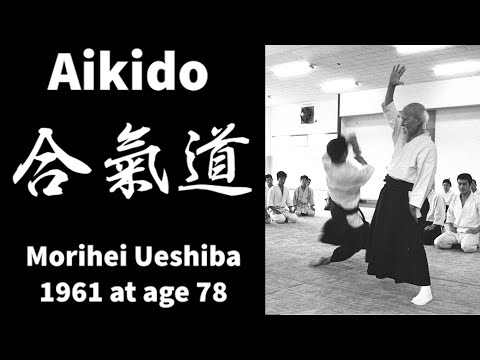
Aikido's Essence: Analyzing O'Sensei Ueshiba's 1961 Masterclass

Introduction: A Glimpse into the Soul of Budo

This rare 1961 footage, capturing a 78-year-old Morihei Ueshiba, the revered founder of Aikido, is far more than just a martial arts demonstration. It's a profound window into the very essence of Budo, a concept that transcends mere physical combat. Many today, particularly those drawn to the explosive dynamism of MMA or the brutal efficiency of Kyokushin Karate, might question the relevance of Aikido's fluid movements. Does its emphasis on blending and redirection hold water in a world that often values brute force? Let me tell you, this video is the answer. It's a masterclass in principles that are eternally valid, not just for the dojo, but for life itself. We will dissect this gem, exploring Ueshiba's techniques, his philosophy, and the enduring legacy of Budo.

Ueshiba in Action: The Art of Blending and Redirecting

Watching Ueshiba Sensei at this advanced age is awe-inspiring. His movements, while perhaps not possessing the raw power of a younger man, are imbued with an almost supernatural grace and precision. The documentary showcases his mastery of Aikido techniques – the effortless throws, the seemingly gentle yet devastating joint locks. He doesn't meet force with force; instead, he becomes one with his attacker's energy, subtly redirecting their momentum. This is the core of Aikido, and it's a principle that many arts, even the fiercely competitive BJJ or Judo, can learn from. The seemingly passive nature of his defense is, in reality, a highly active and intelligent application of physics and timing. He demonstrates that true strength lies not in overpowering an opponent, but in understanding and harmonizing with their movements. Have you ever sparred with someone who just seems to *flow* with your attacks, nullifying them before they even land? That's the echo of Ueshiba Sensei's teaching.
"The true meaning of martial arts is to unify the world." - Morihei Ueshiba

The Philosophy of Aikido: Harmony, Compassion, and Unity

Beyond the physical application, Ueshiba Sensei's words in this documentary reveal a philosophy that is both deeply spiritual and remarkably practical. He speaks of Aikido not as a means of destruction, but as a path to reconciliation. Harmony, balance, and compassion are not mere buzzwords here; they are the foundational pillars of his art. This stands in stark contrast to some of the more combative depictions of martial arts in popular culture, where violence is often glorified without consequence. Ueshiba's vision is one of connection, of resolving conflict not through aggression, but through understanding and empathy. It’s a message that resonates even more powerfully today, in our often fragmented and contentious world. This philosophy is the very heart of BUDO, the "Way of the Warrior," which demands not just martial prowess but moral integrity.

Budo: More Than Just Fighting

The term Budo itself is crucial here. It's not simply "martial arts" in the Western sense. It encompasses the entire way of life, the philosophy of the warrior, drawing heavily from principles like Bushido. This means more than just mastering techniques for a fight. It's about self-cultivation, rigorous discipline, and unwavering honor. Ueshiba Sensei embodies this perfectly. His practice was a lifelong dedication to refining not just his body, but his mind and spirit. The documentary offers a fleeting glimpse, but it's enough to understand that for masters like him, the training never truly ends. It's a constant pursuit of self-improvement, a journey that shapes one's character in profound ways.
"The martial way is a thing of daily practice. It is a continuous process of refinement. The master is simply a student who never quit." - Attributed to various martial arts masters

Training and Self-Cultivation: The Path to Inner Peace

The practice of martial arts, as exemplified by Ueshiba's Aikido, is a powerful tool for inner growth. It offers a structured path to control one's ego, to confront and overcome fear and anger, and to cultivate a deep sense of inner peace. This isn't just about learning to defend yourself physically; it's about building mental resilience. The physical demands – improving fitness, flexibility, and coordination – are significant, but the mental benefits are arguably even greater. In a world rife with stress and anxiety, the discipline and focus required in martial arts training provide an invaluable sanctuary. It's a lifelong pursuit, a journey of personal development that extends far beyond the dojo mats. The principles learned in Karate, Judo, or Aikido can positively impact every facet of life.

Veredicto del Sensei: A Timeless Testament

This 1961 documentary is not just a historical artifact; it's a living testament to the enduring power of Budo. Ueshiba Sensei, even at 78, displays a level of mastery that transcends time and style. While the martial arts landscape has evolved dramatically, with hyper-realistic sports like MMA and UFC capturing global attention, the core principles demonstrated here remain vital. The emphasis on harmony, respect, and self-cultivation is a counterbalance to the often aggressive narratives surrounding combat sports. This film is essential viewing for anyone who seeks a deeper understanding of martial arts, not just as a means of fighting, but as a path to becoming a better human being. Rating: 10/10 Cinturones Negros en Sabiduría y Maestría.

Essential Equipment for Your Training

To embark on your own martial arts journey, whether it's Aikido, Karate, Judo, or any other discipline, the right equipment is essential. At BYAM Budo y Artes Marciales, we understand the needs of practitioners at all levels.
  • Gi (Uniforme): A durable, comfortable Gi is fundamental. For arts like Judo and Aikido, a heavier weave might be preferred for grip resistance.
  • Protective Gear: Depending on your style, consider sparring headgear, mouthguards, and shin guards for safe combat training.
  • Training Mats (Tatami): Essential for safe practice of throws and falls, especially in arts like Judo and Aikido.
  • Training Weapons: For specific disciplines, wooden bokken (swords) or jo (staffs) are necessary.
Investing in quality gear enhances your training experience and ensures safety. Explore our range of Martial Arts Merchandise to find what you need.

Frequently Asked Questions

  • What is Budo? Budo is a Japanese term that refers to the systematic practice of martial arts, emphasizing not only combat techniques but also spiritual and moral development.
  • Is Aikido effective for self-defense? Yes, Aikido's principles of blending, redirection, and using an attacker's momentum can be highly effective for self-defense, though its effectiveness in highly aggressive scenarios is a subject of ongoing debate.
  • What is the difference between Budo and Bushido? Bushido is the code of honor and conduct of the samurai warrior class, while Budo is the broader term encompassing the practices and philosophies of martial arts derived from that warrior tradition.
  • How can martial arts training improve mental health? Through discipline, focus, stress reduction techniques, and the cultivation of inner peace and self-control.

For a Deeper Dive into Your Path

Reflexión del Sensei: Tu Próximo Paso

Ueshiba Sensei demonstrated that true mastery lies in harmonization, not domination. In a world that often rewards aggression and competition, can you find the strength in yielding? Can you apply the principles of blending and redirecting not just against a physical opponent, but against the challenges and conflicts of your daily life? The video is a lesson; your response to its message is the application. ```json { "@context": "https://schema.org", "@type": "FAQPage", "mainEntity": [ { "@type": "Question", "name": "What is Budo?", "acceptedAnswer": { "@type": "Answer", "text": "Budo is a Japanese term that refers to the systematic practice of martial arts, emphasizing not only combat techniques but also spiritual and moral development." } }, { "@type": "Question", "name": "Is Aikido effective for self-defense?", "acceptedAnswer": { "@type": "Answer", "text": "Yes, Aikido's principles of blending, redirection, and using an attacker's momentum can be highly effective for self-defense, though its effectiveness in highly aggressive scenarios is a subject of ongoing debate." } }, { "@type": "Question", "name": "What is the difference between Budo and Bushido?", "acceptedAnswer": { "@type": "Answer", "text": "Bushido is the code of honor and conduct of the samurai warrior class, while Budo is the broader term encompassing the practices and philosophies of martial arts derived from that warrior tradition." } }, { "@type": "Question", "name": "How can martial arts training improve mental health?", "acceptedAnswer": { "@type": "Answer", "text": "Through discipline, focus, stress reduction techniques, and the cultivation of inner peace and self-control." } } ] }

Budo's True Warriors: 6 Undeniable Signs You're More Than Just a Fighter

Martial arts. The very word evokes images of disciplined warriors, breathtaking techniques, and ancient traditions. For centuries, disciplines like Karate, Taekwondo, Judo, and Jiu-Jitsu have shaped not just bodies, but spirits across the globe. Yet, in the crucible of combat and competition, a critical distinction emerges: the difference between a mere 'fighter' and a 'true martial artist'. The latter transcends the physical exchange, embodying the profound principles of Budo – a way of life, a path of constant self-cultivation. Are you just engaging in combat, or are you truly walking the path? Let us examine the signs, the undeniable hallmarks, that separate the skilled combatant from the authentic martial artist.

The Unseen Strength: Humility

Many enter the martial world driven by ego, a desire to prove their superiority. This is the mark of a fighter. A true martial artist, however, carries their victories with quiet grace and their defeats with profound reflection. Humility is not weakness; it is the bedrock upon which true mastery is built. Such individuals harbor a deep respect for their training partners and opponents, understanding that each encounter is an opportunity to learn and refine. They recognize that the journey of martial arts is a lifelong pursuit, an endless horizon of self-improvement. They know that every Black Belt started as a white belt, and that even the most accomplished master has more to discover. This internal acknowledgment prevents arrogance and fosters continuous growth.

"Mastering others is strength. Mastering yourself is true power." - Lao Tzu

Think about your last sparring session. Did you focus on dominating, or on understanding your opponent's movements and your own reactions? The answer reveals much.

Master of the Self: Self-Control

The heat of a fierce exchange, the adrenaline surge, the frustration of a missed technique – these are the moments that test the mettle of any combatant. A fighter might lash out, become reckless, or crumble under pressure. A true martial artist, however, possesses formidable self-control. Their discipline extends beyond the dojo walls; it is an intrinsic part of their being. They understand that raw emotion is a chaotic force that clouds judgment and leads to critical errors. By mastering their emotions, they maintain clarity, precision, and strategic thinking, even when pushed to their limits. This mastery allows them to respond rather than react, to choose the most effective course of action rather than being swept away by impulse.

Consider the famed discipline of Kyokushin Karate. Its practitioners are trained to endure immense physical and mental pressure, not by succumbing to pain, but by harnessing their inner fortitude. This is self-control in action.

The Sacred Fire: Respect for the Art

Fighters often view martial arts solely as a means to an end – victory, self-defense, or physical conditioning. A true martial artist, however, views their chosen discipline as something sacred. They delve into its origins, study its history, understand its cultural context, and honor its traditions. This deep appreciation for the art itself transforms practice from mere repetition into a ritual of reverence. They understand that the techniques and philosophies passed down through generations are not arbitrary; they are the distilled wisdom of countless practitioners who faced similar challenges. This respect fuels their dedication and ensures they preserve and transmit the essence of the art, not just its physical manifestations.

Are you merely learning moves, or are you seeking to understand the lineage and philosophy behind them? A quick search for the history of Aikido or the development of Karate can offer profound insights into this respect.

Body and Mind: The Dual Pursuit of Fitness

Physical prowess is undoubtedly crucial in any martial pursuit. A fighter understands the necessity of a strong physique. But a true martial artist recognizes that their body is merely the vessel for their art; it must be both a powerful weapon and a finely tuned instrument. This requires holistic physical and mental fitness. They engage in rigorous training not just to build muscle or endurance, but to enhance coordination, agility, speed, and resilience. Simultaneously, they cultivate their mental faculties – sharpening focus, improving strategic thinking, and building mental toughness. This dual pursuit ensures they are not only capable of delivering powerful strikes or executing complex techniques but are also mentally prepared to adapt, strategize, and overcome any obstacle.

This integrated approach mirrors the philosophy behind many Budo disciplines, where the mind and body are seen as interconnected pathways to mastery.

The Unyielding Spirit: Perseverance

The path of the martial artist is rarely smooth. There will be plateaus, injuries, setbacks, and moments of doubt. A fighter might quit when faced with overwhelming adversity. A true martial artist embodies perseverance. They understand that struggle is not an endpoint but a catalyst for growth. They greet challenges not with despair, but with determination. Each failed attempt, each painful defeat, becomes a lesson learned, a stepping stone towards eventual success. This resilience, this refusal to surrender, is a testament to their inner strength and their unwavering commitment to the journey. They understand that true mastery is forged in the fires of hardship.

Think of the legendary careers of fighters like Jon Jones or Cyril Gane; their resilience in the face of intense pressure and competition is a prime example of this principle.

The Warrior's Heart: Kindness and Compassion

Perhaps the most profound differentiator: a fighter might wield their skills for dominance or personal gain. A true martial artist, however, understands that power comes with responsibility. They possess a heart of kindness and compassion. Their skills are honed not for wanton aggression, but for the protection of others and the betterment of the world. They use their abilities judiciously, never seeking to inflict unnecessary harm. They embody the principle that true strength lies not in the ability to destroy, but in the capacity to protect and uplift. This ethical compass guides their actions both inside and outside the dojo, making them not just skilled practitioners, but positive forces in society.

"The object of the do is to seek perfection of character." - Jigoro Kano

This sentiment is echoed across many martial traditions, emphasizing that the ultimate goal of training is personal development and service to others.

Gear Up for Your Journey

To truly embody the principles of Budo, the right equipment can be an invaluable ally. Whether you are honing your striking power, refining your grappling, or maintaining your physical and mental conditioning, quality gear makes a difference. Consider investing in:

  • Durable Uniforms (Gi/Kimono): Essential for traditional arts like Judo and Karate. Look for materials that can withstand rigorous training, such as a double-weave Judo gi or a sturdy Karate gi.
  • Protective Sparring Gear: For arts involving full contact, investing in high-quality MMA gloves, headgear, and shin guards is paramount for safe and effective training.
  • Training Equipment: A good quality punching bag or a makiwara can significantly improve your striking power and technique at home.
  • Comfortable Training Apparel: For conditioning or arts that require more freedom of movement, comfortable and breathable training shorts and t-shirts are a must.

At BYAM Budo y Artes Marciales, we understand the importance of quality gear. Explore our extensive collection of uniforms, protective equipment, and training accessories designed to support your journey towards martial arts mastery.

Frequently Asked Questions

What is Budo?

Budo, literally meaning "martial way," refers to the philosophies and practices of Japanese martial arts that focus on self-cultivation, discipline, and spiritual development, beyond mere combat effectiveness. It's a way of life.

Is there a difference between a fighter and a martial artist?

Yes, significantly. A fighter primarily focuses on winning combat encounters. A true martial artist integrates the physical skills with ethical principles, self-discipline, humility, and continuous personal growth, viewing their art as a path to self-perfection.

Can anyone become a true martial artist?

Absolutely. While talent can play a role, the core of being a true martial artist lies in the consistent application of principles like humility, self-control, respect, perseverance, and compassion. It's a journey available to anyone dedicated to the path.

How important is physical fitness in Budo?

Extremely important, but it's only half the equation. Budo emphasizes both physical conditioning (strength, speed, endurance, agility) and mental conditioning (focus, strategy, emotional control, resilience). One without the other is incomplete.

Can martial arts principles be applied outside of training?

Indeed. The principles of Budo – discipline, respect, perseverance, humility – are designed to be integrated into all aspects of life, leading to personal growth and a more positive impact on the world.

For Deeper Exploration on Your Path

Reflexion del Sensei: Your Next Step

We've examined the qualities that elevate a practitioner from a mere combatant to a true martial artist. Now, look inward. Are you merely going through the motions, or are you striving for genuine embodiment? If you recognize yourself in these signs, how can you further cultivate them in your daily life, both on and off the mat? If you see the fighter, what specific, actionable steps can you take starting *today* to nurture the seeds of Budo within you?

``` ```json { "@context": "https://schema.org", "@type": "FAQPage", "mainEntity": [ { "@type": "Question", "name": "What is Budo?", "acceptedAnswer": { "@type": "Answer", "text": "Budo, literally meaning \"martial way,\" refers to the philosophies and practices of Japanese martial arts that focus on self-cultivation, discipline, and spiritual development, beyond mere combat effectiveness. It's a way of life." } }, { "@type": "Question", "name": "Is there a difference between a fighter and a martial artist?", "acceptedAnswer": { "@type": "Answer", "text": "Yes, significantly. A fighter primarily focuses on winning combat encounters. A true martial artist integrates the physical skills with ethical principles, self-discipline, humility, and continuous personal growth, viewing their art as a path to self-perfection." } }, { "@type": "Question", "name": "Can anyone become a true martial artist?", "acceptedAnswer": { "@type": "Answer", "text": "Absolutely. While talent can play a role, the core of being a true martial artist lies in the consistent application of principles like humility, self-control, respect, perseverance, and compassion. It's a journey available to anyone dedicated to the path." } }, { "@type": "Question", "name": "How important is physical fitness in Budo?", "acceptedAnswer": { "@type": "Answer", "text": "Extremely important, but it's only half the equation. Budo emphasizes both physical conditioning (strength, speed, endurance, agility) and mental conditioning (focus, strategy, emotional control, resilience). One without the other is incomplete." } }, { "@type": "Question", "name": "Can martial arts principles be applied outside of training?", "acceptedAnswer": { "@type": "Answer", "text": "Indeed. The principles of Budo – discipline, respect, perseverance, humility – are designed to be integrated into all aspects of life, leading to personal growth and a more positive impact on the world." } } ] }