Showing posts sorted by relevance for query makiwara training. Sort by date Show all posts

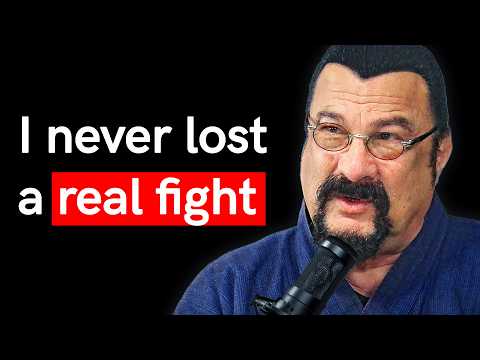
Mastering the Art of Striking: A Day Training with Steven Seagal

The pursuit of martial arts mastery is a lifelong endeavor, a relentless journey that demands dedication, discipline, and an open mind. Today, we delve into an experience that bridges the gap between traditional philosophy and practical application, a day spent training with a figure who has brought the spirit of martial arts to global prominence: Steven Seagal. This isn't just about mimicking techniques; it's about understanding the underlying principles, the historical context, and the practical implications that define a true warrior. Our exploration begins with a hands-on approach, a method as old as combat itself: conditioning. Imagine receiving a *makiwara*, a traditional Japanese punching board, to toughen your hands and knuckles. This is not merely a tool; it is a testament to the importance of practical, tangible training in developing the warrior's physique and resilience. While Aikido, Seagal's primary art, is often celebrated for its circular, flowing movements and joint locks, it's crucial to recognize that its roots in Japanese Jiu-Jitsu encompass a far broader spectrum of combat.
"The true warrior is the one who understands that the art of war is about strategy, adaptation, and the unyielding will to survive, regardless of the terrain." - A paraphrased wisdom echoed in the halls of Budo.
This brings us to a critical distinction. Unlike the intricate submission grappling of Brazilian Jiu-Jitsu (BJJ), Seagal's approach, drawing from his extensive background, emphasizes the striking arts. Why this divergence? Consider the historical battlefield. A samurai, heavily armored and engaged in a skirmish, would find himself at a grave disadvantage if the fight devolved to the ground. The focus, therefore, was on incapacitating the opponent swiftly and decisively, standing. This principle, honed over centuries, remains a cornerstone of many traditional martial disciplines, highlighting the evolution of martial arts based on their original context of application.
The debate between ground fighting and striking, often seen in modern mixed martial arts (MMA), is not new. It is a reflection of different martial philosophies and objectives. While BJJ champions the art of the controlled takedown and submission, arts like Karate, Taekwondo, and the striking aspects of Aikido, as demonstrated by Seagal, prioritize effective stand-up combat. This difference in emphasis shapes the training methodology, the strategic thinking, and ultimately, the outcome of a confrontation.

Table of Contents

The Seagal Training Experience

This encounter wasn't just about witnessing a demonstration; it was an immersion into a day of rigorous training with Steven Seagal. His approach, deeply rooted in traditional martial arts, provides a unique lens through which to view the evolution of combat. It's a reminder that while styles may differ, the core principles of discipline, physical conditioning, and mental fortitude remain universal. The experience underscored the importance of practical, hands-on training that prepares the body for the demands of combat, whether on the mat or in a more dynamic confrontation.

The Makiwara: A Testament to Resilience

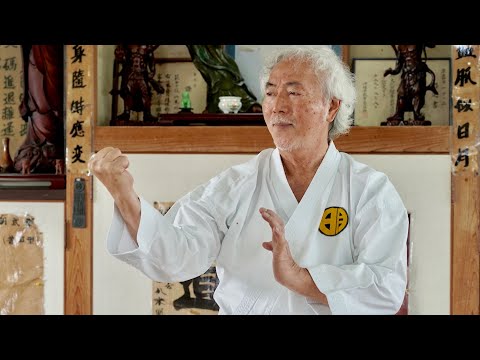
The act of being presented with a *makiwara* is significant. This seemingly simple tool is a cornerstone of hand and knuckle conditioning in many Okinawan Karate and Japanese martial arts. Its purpose is not to develop power in the way a heavy bag does, but to systematically condition the bones, tendons, and ligaments of the striking surfaces. Through repetitive, controlled strikes, practitioners build resilience, enabling them to deliver powerful blows without sustaining injury. It’s a practice that demands patience and consistency, embodying the martial principle of gradual improvement. This conditioning is vital for any art that emphasizes striking, ensuring that the tools of offense can withstand the impact of their own use.

Beyond Aikido: Striking in the Seagal Method

While Steven Seagal is internationally recognized for his mastery and promotion of Aikido, his personal practice is a testament to a broader martial arts philosophy. Aikido, as taught by its founder Morihei Ueshiba, indeed incorporates striking elements, often referred to as *atemi*. However, the emphasis in many Aikido dojos tends to be on evasion, joint manipulation, and throws. Seagal's training, informed by his deep understanding of Japanese Jiu-Jitsu and other arts, often places a more pronounced focus on the effectiveness of punches and kicks. This is not a contradiction but an expansion, demonstrating how a martial artist can integrate diverse techniques to create a comprehensive combat system. It highlights the versatility required in real-world self-defense situations where an opponent's actions dictate the necessary response.

Samurai on the Battlefield: Ground vs. Stand-up

The distinction drawn between Seagal's striking-focused approach and Brazilian Jiu-Jitsu's grappling dominance is deeply rooted in historical context. Imagine the Japanese samurai of feudal eras. Clad in heavy armor, often on horseback, and engaged in pitched battles, the goal was to neutralize threats quickly. A prolonged ground struggle would be impractical, even suicidal. The emphasis was on decisive strikes, disarms, and controlling distance to maintain an advantage. Brazilian Jiu-Jitsu, conversely, evolved from Judo’s groundwork and was refined in a context where practitioners might not be encumbered by armor or facing multiple armed opponents simultaneously. Its genius lies in its ability to allow a smaller, weaker individual to control and submit a larger, stronger one on the ground. However, the battlefield pragmatism of the samurai suggests that prioritizing stand-up combat and striking provides a more universally applicable skill set for a wider range of dangerous scenarios. This historical perspective is crucial for understanding the strategic underpinnings of different martial disciplines.
"The ultimate aim of martial arts is not victory or defeat, but the perfection of the character of its practitioners." - A timeless principle that transcends technique.

The Epic Surprise: A Warrior's Revelation

The day concluded with a surprise that underscored the dynamic nature of martial arts and the importance of preparedness. While the exact nature of this surprise is best witnessed firsthand, it serves as a powerful reminder that the journey of martial arts is filled with unexpected lessons and profound insights. It’s a testament to the fact that even seasoned practitioners can be humbled and enlightened by new experiences and perspectives. Keep watching, as the final moments reveal a truly epic encounter, a culmination of the day's training and a fitting end to an extraordinary martial arts journey.

Equipment Essential for Your Training

To truly embody the spirit of the warrior and condition your body for the demands of martial arts, having the right equipment is crucial. While the *makiwara* is a specialized tool, there are other essentials that can significantly enhance your training.
  • Traditional Makiwara: For dedicated hand and knuckle conditioning, essential for striking arts.
  • Heavy Bags: Ideal for developing power, endurance, and practicing combinations.
  • Sparring Gear: Headgear, mouthguards, chest protectors, and shin guards are vital for safe, effective sparring.
  • Dojo Uniform (Gi/Kimono): A durable, well-fitting uniform is fundamental for most traditional martial arts training. Look for double-weave cotton for Judo or sturdy cotton for Karate.
  • Hand Wraps: Crucial for protecting your wrists and hands when using punching bags or during striking drills.
  • Training Mats (Tatami): For safe practice of falls, groundwork, and throws, especially important if you are exploring grappling or more dynamic techniques.

Training Guide: Mastering the Makiwara

The *makiwara* is more than just a board; it's a teacher. Proper technique is paramount to avoid injury and maximize conditioning.
  1. Setup: Securely mount the *makiwara* at a height that allows you to strike it with a proper extension of your arm, typically chest or head height. Ensure it has a slight give but is firm.
  2. Stance and Posture: Adopt a stable fighting stance, ensuring your weight is balanced and your core is engaged.
  3. The Strike: Focus on delivering controlled, sharp strikes using the correct part of your fist – typically the first two knuckles. Imagine snapping the punch into the board rather than pushing into it.
  4. Breathing and Kiai: Exhale sharply with each strike, accompanied by a *kiai* (shout). This engages your core and amplifies the power of the strike.
  5. Repetition: Begin with short sessions, perhaps 10-15 strikes per hand. Gradually increase the number of strikes and the intensity as your hands and knuckles adapt. Listen to your body; rest is crucial for recovery and adaptation.
  6. Vary the Angles: Once comfortable, practice strikes from different angles – straight punches, forehand strikes, and backhand strikes – to develop well-rounded conditioning.

Frequently Asked Questions

  • Is Aikido only about joint locks and throws?
    While known for these techniques, Aikido incorporates striking (*atemi*) and has principles applicable to stand-up combat, though its emphasis often lies elsewhere.
  • How does the *makiwara* help in combat?
    The *makiwara* conditions the bones, tendons, and ligaments of the hands and knuckles, reducing the risk of injury during powerful strikes and increasing their effectiveness.
  • Is ground fighting essential for all martial artists?
    It is highly beneficial for self-defense and sport, but its necessity depends on the specific art and its historical context. For historical battlefield arts, stand-up combat often took precedence.
  • What is the difference between Japanese Jiu-Jitsu and Brazilian Jiu-Jitsu?
    While both share roots, BJJ heavily emphasizes ground grappling and submissions, whereas traditional Japanese Jiu-Jitsu typically includes more striking, throwing, and joint-locking techniques effective in stand-up combat.

Deepen Your Understanding of the Warrior's Path

The pursuit of knowledge in martial arts is a continuous journey. To further your understanding and refine your practice, explore these related topics:

Reflexión del Sensei: Tu Próximo Paso

This day with Steven Seagal is a microcosm of the martial artist's journey: embracing tradition while adapting to reality. The *makiwara* teaches us patience and resilience. The distinction between ground and stand-up combat forces us to question the context of application. The surprise ending reminds us that growth often comes from the unexpected. So, I ask you: When faced with an opponent, or indeed, a challenge in life, do you focus solely on the art you know best, or are you prepared to adapt your strategy based on the terrain, your tools, and the ultimate objective? Is your training preparing you for the battlefield as it was, or as it is? Discuss. GEMINI_METADESC: Train for a day with Steven Seagal, exploring Aikido, striking, and the historical context of samurai combat. Learn about makiwara conditioning and the philosophy of Budo.

Mas Oyama: The "Godhand" Who Redefined Karate's Limits

A Force of Nature: Introducing Mas Oyama

Hello and welcome, aspiring warriors and seasoned practitioners, to Budo and Martial Arts. Today, we delve into the annals of martial history to confront a figure whose legend looms as large as his physical presence: Mas Oyama. His name is synonymous with the raw, uncompromising spirit of full-contact karate. But was he merely a showman, or a true embodiment of Budo? Prepare yourselves, for we dissect the life and legacy of a man who pushed the boundaries of human potential, earning the thunderous moniker "Godhand." This is not just a story of a karate master; it's a testament to the relentless pursuit of strength, both physical and spiritual.

From Korea to Karate's Pinnacle

Born Choi Young-Eui in 1923 in Korea, Mas Oyama's journey into the martial world began at a tender age. His early training, reportedly in Korean martial arts and later under the tutelage of Gichin Funakoshi, the father of modern Shotokan Karate, laid the foundational stones of his formidable skill. But Oyama was never one to tread the conventional path. His insatiable hunger for self-improvement and his innate combative spirit drove him to seek out the most rigorous training methods available. He emigrated to Japan, a nation deeply entrenched in martial traditions, and began to forge his own unique path within the diverse landscape of Japanese martial arts.

Forging Kyokushin: The Birth of Full Contact

The true metamorphosis of Mas Oyama occurred with the establishment of his own style: Kyokushin Karate. The word "Kyokushin" itself translates to "ultimate truth," a fitting descriptor for a system that stripped away the non-essentials and focused on pure, unadulterated combat effectiveness. In an era where many karate styles emphasized kata and pre-arranged sparring, Oyama championed full contact – the unyielding clash of power, technique, and will, with knockouts not only permitted but expected. This radical approach was a seismic shift, resonating with those who sought a martial art grounded in practical application and genuine toughness. Kyokushin became more than just a style; it became a philosophy of life, demanding unwavering dedication and the courage to face adversity head-on.
"Karate is a form of daily training to become strong, not just for fighting." - Mas Oyama

The Myth and The Man: Fighting Bulls

Perhaps the most sensationalized aspect of Oyama's legend is his infamous series of fights against live bulls. He reportedly faced over 50 bulls, breaking horns with bare hands and, in many instances, subduing them with a single, decisive blow. Was this an act of bravado or a profound statement on the efficacy of his Kyokushin techniques? From a martial perspective, these demonstrations, while extreme, served to visually underscore the immense power and precision Oyama had cultivated. They were a stark illustration of his philosophy: that a true martial artist, through rigorous training, could achieve extraordinary feats of strength and control. This wasn't just about brute force; it was about applying focused energy, a principle central to many martial traditions, taken here to its absolute zenith.

The Crucible of Training: Pushing Beyond Human Limits

The "Godhand" moniker wasn't bestowed lightly. Mas Oyama's training regimen was legendary for its severity. He subjected his body to incredible stress, enduring countless repetitions of kicks, punches, and blocks against makiwara (striking pads), and honing his conditioning through grueling physical exercises. He practiced in harsh environments, from icy rivers to desolate mountains, all to temper his spirit and physical resilience. This relentless self-discipline, the willingness to endure pain and push past perceived limits, is the very essence of true martial arts training. It's a concept many modern practitioners, perhaps accustomed to more comfortable training environments, might struggle to fully grasp. Oyama's approach was a brutal, uncompromising path to self-mastery.
"The ultimate aim of Karate is to be strong, not only physically but also mentally and spiritually. The ultimate aim of Karate is to be strong, not only physically but also mentally and spiritually." - Mas Oyama

The Enduring Legacy of the "Godhand"

Mas Oyama's influence extends far beyond the dojo. Kyokushin Karate has spread across the globe, fostering a community of dedicated practitioners who embody his spirit of perseverance. His emphasis on full contact fighting paved the way for modern combat sports and continues to challenge individuals to test their limits in the most direct way possible. He proved that a single individual, armed with unwavering conviction and a brutal training regimen, could fundamentally alter the landscape of martial arts. His legacy is not just in the techniques or the style, but in the mindset he instilled: one of indomitable will and the pursuit of absolute truth through combat.

Sensei's Verdict: A Titan of the Martial World

Mas Oyama was more than a martial artist; he was a force of nature, a living embodiment of Budo's demanding spirit. His Kyokushin style, with its emphasis on full contact, challenged conventional wisdom and produced incredibly tough, resilient fighters. The legendary tales of fighting bulls, while perhaps embellished, served as powerful symbols of his extreme dedication to pushing the human body and spirit to their absolute limits. He wasn't just teaching karate; he was demonstrating the profound transformation that can occur when one dedicates themselves entirely to a martial path. Sensei's Rating: A true Karate "10th Dan" in Impact and Legacy. A Masterclass in Dedication.

Essential Training Gear for the Dedicated Practitioner

To emulate even a fraction of Oyama's dedication, having the right equipment is paramount. While Oyama himself often trained with minimal gear, relying on his body's resilience, modern practitioners benefit from specialized equipment to train safely and effectively.
  • Durable Karate Gi: Look for a heavy-duty, double-weave or triple-weave Gi that can withstand the rigors of intense kumite and striking drills. Brands known for robust construction are ideal for styles like Kyokushin.
  • Makiwara: An essential tool for developing power and conditioning the hands and forearms. Ensure you have a well-mounted makiwara for effective striking practice.
  • 16oz Sparring Gloves: For full-contact sparring, proper hand protection is non-negotiable. 16oz gloves offer excellent cushioning for both the wearer and their partner.
  • Groin Protector: In any full-contact training, safeguarding vital areas is crucial.
  • Mouthguard: Essential for protecting your teeth and jaw during sparring.
  • Shin Guards: Particularly useful for practicing kicks and absorbing impact during sparring.
For those interested in high-quality Karate merchandise, exploring reputable martial arts suppliers will offer a range of options to suit your training needs.

Training to Build Your Own "Godhand"

While replicating Oyama's feats is beyond most, the principles behind his training can guide your own journey. This is not about fighting bulls, but about cultivating inner strength and physical resilience.
  1. Commit to Full Contact Sparring (Safely): If your style allows, engage in controlled, full-contact sparring under the supervision of experienced instructors. This is the crucible where techniques are tested and true resilience is forged.
  2. Develop a Ruthless Conditioning Routine: Incorporate exercises that build explosive power and endurance. Think burpees, plyometrics, intense cardio, and strength training focused on functional movements.
  3. Practice Striking Drills Daily: Regular, focused practice on striking pads (makiwara) or heavy bags is crucial for developing power, speed, and conditioning your striking surfaces. Ensure proper technique to avoid injury.
  4. Embrace Mental Toughness: Visualize success, push through discomfort during training, and learn to remain calm under pressure. Meditation and mindfulness can be powerful tools here.
  5. Build Physical Resilience: While Oyama pushed extremes, a consistent routine of stretching and mobility work can help prevent injuries and improve your body's ability to handle stress.
  6. Seek Directness: Apply the "ultimate truth" principle. Focus on techniques that are proven effective and eliminate what is unnecessary.

Frequently Asked Questions

  • What is Kyokushin Karate?
    Kyokushin Karate is a style of full-contact karate founded by Masutatsu Oyama. It emphasizes practical application, full-force sparring, and rigorous physical and mental conditioning.
  • Was Mas Oyama really able to fight bulls?
    Yes, Mas Oyama famously fought and subdued numerous bulls as part of his extreme demonstrations of power and courage. While the exact details and outcomes are often debated, the core of these events is widely accepted as fact.
  • Is Kyokushin Karate still practiced today?
    Absolutely. Kyokushin remains one of the most popular full-contact karate styles worldwide, with numerous organizations and dojos continuing its tradition.
  • What does "Godhand" mean in relation to Mas Oyama?
    The nickname "Godhand" was given to Mas Oyama due to his extraordinary strength, power, and the seemingly superhuman feats he accomplished, particularly his ability to break bull horns with his bare hands.
  • How did Mas Oyama train?
    Oyama's training was famously rigorous, involving thousands of repetitions of techniques, intense physical conditioning, and enduring harsh environmental challenges to build both physical and mental fortitude.

Deepen Your Understanding

Explore these essential topics to further your martial arts journey:

Reflection of the Sensei: Your Next Step

Oyama's life was a stark confrontation with limits – his own, and those society placed upon human capability. He didn't just practice karate; he *lived* it with an intensity that few can comprehend. Now, I pose this to you: In the face of your own perceived limitations, whether in the dojo, in your work, or in your personal life, do you retreat into comfort, or do you embrace the "ultimate truth" and confront adversity with unyielding spirit? Where do *you* find the strength to push beyond what you believe is possible? ``` GEMINI_METADESC: Explore the life and legacy of Mas Oyama, the founder of Kyokushin Karate, known as 'Godhand' for his incredible strength and his legendary bull fights.

Okinawa Karate: The Lethal Edge of Ancient Mastery

Are we truly honest about the martial arts we practice? Do we pursue the path of self-improvement and true combat effectiveness, or are we merely performing a dance for an audience? The echoes of Okinawa Karate carry a weight of history, a legacy forged in survival, not sport. It’s a lineage that whispers of techniques so potent, so refined, that they were once considered too dangerous for widespread dissemination. Today, we peel back the layers of tradition to confront the raw, unadulterated power of this ancient discipline.

The Okinawan Secret: More Than Just Kata

When we speak of Okinawa Karate, we often conjure images of rigorous kata, precise movements passed down through generations. But to relegate this art to mere physical conditioning or a series of choreographed forms is to miss its very soul. The true Okinawan Karate master doesn't just perform kata; they embody them. Each movement, each breath, is imbued with a purpose that transcends aesthetic appeal. It’s about cultivating kime – a explosive, focused power that can incapacitate an opponent in a single, decisive blow. This is not about winning points in a competition; this is about ending conflict decisively. The emphasis is on efficiency, on economy of motion, delivering maximum impact with minimum effort.

The history of Okinawa Karate is deeply intertwined with the island's unique socio-political climate, periods of prohibition on weapons forcing its populace to develop highly effective unarmed combat systems for self-preservation. This context is crucial. It explains the development of techniques that target vital points, leverage body mechanics for maximum force generation, and employ deceptive strategies. Unlike arts that evolved in more peaceful eras, Okinawa Karate retained a primal edge, a directness born of necessity.

"The ultimate aim of martial arts is not victory or defeat, but the perfection of one's character." - Gichin Funakoshi

The Philosophy of Kesshu: The Root of Lethality

Lethality in Okinawa Karate isn't just about physical strength; it's deeply rooted in mental and spiritual discipline. The concept of Kesshu (in some contexts, relating to the root of the technique or the flow of energy) is paramount. Masters train not just their bodies, but their minds to achieve a state of unwavering focus. This means developing Mushin – "no mind" – a state where the practitioner reacts instinctively, without conscious thought, to the threat.

The training often involves developing what we might call "internal power," but this is not mystical energy in the sense often portrayed in popular cinema. It's about the synergistic application of breath control, precise body alignment, and the ability to generate explosive power from the core through the limbs. Consider the development of a powerful punch. It’s not just arm strength; it's the rotation of the hips, the stability of the stance, the coiling and uncoiling of the torso, and the final, focused impact at the moment of contact.

The philosophy extends beyond the dojo. True martial artists cultivate humility, respect, and an understanding that power should only be used as a last resort. However, when that resort is reached, the ability to defend oneself and one's loved ones must be absolute. This is the paradox: the pursuit of peace through the mastery of conflict.

Combative Principles in Practice

Let's talk about practicality. What makes Okinawa Karate techniques so effective in a real confrontation?

  • Directness: Techniques are designed to strike vital areas with power and precision. There are no wasted movements.
  • Economy of Motion: A single, powerful strike can end a confrontation. This is the essence of kime.
  • Rootedness and Stability: Strong stances (dachi) provide a stable base, allowing for the generation of immense power and resistance to throws or takedowns.
  • Leverage and Body Mechanics: Masters understand how to use their entire body as a weapon, maximizing force without relying solely on brute strength.
  • Adaptability: While kata appear rigid, they contain principles that can be adapted to fluid, unpredictable combat situations.

Consider a basic punch. In many modern interpretations, it might be a quick jab. In traditional Okinawa Karate, a punch is often delivered with the full body, sinking the hips, rotating the core, and snapping the fist into the target with maximum impact. This is the difference between a tap and a knockout blow.

The Role of the Makiwara

No discussion of Okinawa Karate's lethal edge is complete without mentioning the makiwara. This seemingly simple striking post is not just for building calluses; it's a tool for developing the specific type of power and focus required for effective striking. Striking the makiwara correctly teaches:

  • Correct form and hip rotation: It forces you to use your whole body to generate power.
  • Impact conditioning: It hardens the hands and forearms, preparing them for the rigors of combat.
  • Developing Kime: The recoil of the makiwara teaches you to snap your fist back quickly after impact, essential for rapid follow-up strikes and true concussive power.
  • Mental Fortitude: Consistent, disciplined training with the makiwara builds mental toughness and resilience.

The sound of a well-struck makiwara is a testament to focused power. It's a sound that resonates with generations of masters who understood that true strength comes from disciplined, repeated practice.

Okinawa Karate vs. Modern Combat: Relevance or Relic?

This is where the controversy often ignites. Some argue that traditional arts like Okinawa Karate are relics, ill-suited for the dynamic, multi-disciplinary nature of modern Artes Marciales Mixtas (MMA). They point to the lack of ground fighting or grappling in many traditional styles.

However, to dismiss Okinawa Karate is to misunderstand its core principles. The *effectiveness* of its techniques – the ability to deliver debilitating strikes, to create distance, and to maintain structural integrity – remains incredibly relevant. While MMA incorporates grappling, the ability to strike with devastating power from a standing position is still a fight-ending skill. Many MMA fighters incorporate elements of Karate into their striking arsenals. The question is not whether Karate can beat MMA, but rather, do the principles of Okinawa Karate – the focus, the power, the efficiency – still hold weight? My answer is a resounding yes. The key is how one trains and interprets these ancient principles in the modern era.

A master of Okinawa Karate, trained in the application of its techniques for self-defense, can be a formidable opponent. The techniques are not designed for points; they are designed to end a threat.

Veredicto del Sensei: Is Okinawa Karate Still a True Lethal Art?

The "lethal skills" of Okinawa Karate are not a secret formula hidden away; they are the result of decades, even centuries, of focused, disciplined, and often brutal training. The danger lies not in the art itself, but in the mastery of its principles. A practitioner who understands kime, who has honed their strikes on the makiwara, and who embodies the philosophy of decisive action, possesses a potent skill set.

The question of "lethality" is always contextual. In a life-or-death situation, any art that effectively neutralizes a threat can be considered lethal. Okinawa Karate, with its emphasis on powerful strikes to vital areas and efficient application of force, certainly qualifies. It’s an art where less is often more, and a single, perfectly executed technique can have devastating consequences. It requires rigorous training, deep understanding, and a respect for the power it imparts.

Cinturón Negro en Potencia de Impacto.

Equipo Esencial para tu Entrenamiento

While many aspects of Okinawa Karate can be trained with minimal equipment, certain items are crucial for developing the full potential of the art, especially its combative elements. Investing in quality gear not only enhances your training but also protects you.

  • Makiwara: An absolute essential for developing striking power and conditioning. Look for adjustable or traditional styles based on your preference and available space.
  • Karate Gi: A durable, high-quality gi is vital. For traditional Okinawa Karate, a heavier, double-weave cotton gi provides better durability and allows for more dynamic movement. Brands known for traditional martial arts uniforms are recommended.
  • Hand Wraps and Training Gloves: Essential for protecting your hands when using the makiwara or engaging in sparring sessions, even those focused on striking.
  • Focus Mitts and Thai Pads: Useful for partner drills to practice combinations, power generation, and accuracy.
  • Wooden Dummy (Mokuso): While not strictly Okinawan, a wooden dummy can be an excellent tool for practicing close-range techniques, transitions, and body mechanics.

Consider exploring Karate Merchandise that reflects the tradition and quality you seek.

Guía de Entrenamiento: Kihon no Kime (The Principle of Focus)

Mastering Kime is a journey, not a destination. This exercise focuses on developing that explosive, unified power.

  1. Stance and Rooting: Begin in a stable, grounded stance like a sankaku-dachi or zenkutsu-dachi. Feel your connection to the ground. Your weight should be balanced, allowing for power generation from your lower body.
  2. Body Coil: As you prepare to strike, subtly coil your torso. This involves rotating your hips and shoulders slightly in the opposite direction of your strike, storing potential energy. Imagine winding a spring.
  3. Breath Control: Coordinate your breath with the movement. A sharp exhalation, often a "kiai" (shout), should coincide with the moment of impact. This sharp breath helps to tighten the core and focus energy.
  4. The Strike: Extend your chosen technique (e.g., a straight punch, a reverse punch) with speed and intention. The power originates from the ground, travels through your hips and torso, and is delivered explosively through your striking limb.
  5. The "Snap" at Impact: This is the essence of Kime. At the precise moment of impact, your body should feel like it's "snapping" into the target. The strike is delivered with full commitment, but then immediately retracted. This is not a push; it's a focused, penetrating strike.
  6. Retraction and Recovery: Immediately after impact, snap your limb back to a guarded position. This rapid retraction is crucial for maintaining balance and preparing for follow-up techniques.
  7. Repetition and Refinement: Practice this motion hundreds, even thousands, of times. Focus on feeling the power build from your feet up to your fist. Record yourself to check your form, hip rotation, and the explosive quality of your strike.

This fundamental practice, applied across all striking techniques, is the bedrock of Okinawa Karate's effectiveness.

Preguntas Frecuentes (FAQ)

Q: Is Okinawa Karate dangerous for beginners?
A: Like any potent martial art, it requires proper instruction and respect. While techniques can be lethal, training is typically progressive, focusing on safety and gradual skill development under a qualified instructor.

Q: Can Okinawa Karate be used for self-defense today?
A: Absolutely. Its principles of directness, efficiency, and powerful striking are highly relevant for real-world self-defense scenarios.

Q: What is the difference between Okinawa Karate and mainland Japanese Karate?
A: Okinawa Karate is the root, often retaining more traditional methods, emphasis on combat application, and specific training tools like the makiwara. Mainland Karate evolved, incorporating different emphases and competitive structures.

Q: Do I need to be strong to practice Okinawa Karate?
A: While strength is beneficial, Okinawa Karate emphasizes leverage, body mechanics, and technique over brute force. Proper training allows practitioners of all sizes to develop formidable power.

Para Profundizar en tu Camino

  • Karate Kyokushin: Explore another potent Karate style known for its full-contact approach.
  • Artes Marciales: Broaden your understanding of the martial landscape.
  • Defensa Personal: Understand the practical applications of martial skills.

Reflexión del Sensei: Tu Próximo Paso

The power of Okinawa Karate is not a mystical secret; it is forged in discipline, intention, and the relentless pursuit of perfection. The question is not whether these skills are still relevant, but whether YOU have the dedication to pursue them with the same spirit as the ancient masters. Are you training to impress, or are you training to survive? Are your techniques sharp enough to be decisive, or are they merely motions?

Now, go to your training space. Pick up a striking implement, or simply stand in your foundational stance. Breathe. Focus. And ask yourself: what is the true purpose of my practice? What is the 'kime' in your every movement?

``` GEMINI_METADESC: Explore the devastating effectiveness and ancient mastery of Okinawa Karate. Discover the lethal techniques, philosophy, and rigorous training that make it a true martial art.

Budo's Verdict: Is BKFC 20's "Unbelievable Power" a True Display of Martial Spirit?

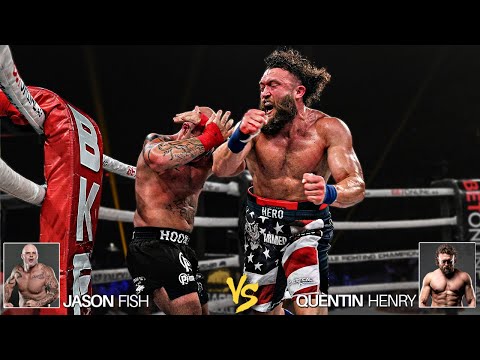
The roar of the crowd, the glint of sweat under the lights, the raw, unadulterated combat. Bare-knuckle boxing, especially within organizations like BKFC (Bare Knuckle Fighting Championship), often presents itself as the purest distillation of fighting. But when we, as practitioners and students of the martial arts, look beyond the spectacle, what do we truly see? Is it a demonstration of honed skill and warrior spirit, or merely a primal clash devoid of the deeper principles that define true Budo? This isn't merely about judging a fight; it's about dissecting its essence through the lens of martial philosophy. Jason Fish vs. Quentin Henry at BKFC 20 – the title itself promises "Unbelievable Power." But power, as any true martial artist knows, is a multifaceted concept. It’s not just brute force; it's the calculated application of energy, the strategic mind, and the unshakeable spirit. Today, we delve into whether this particular bout, and by extension, BKFC itself, truly embodies the martial ethos we hold dear.

The "Unbelievable Power" of BKFC: Spectacle vs. Substance

The very premise of BKFC is captivating for its simplicity: two individuals, bare fists, and an octagon. It strips away the layers of gloves, padding, and often, the more intricate techniques seen in MMA or traditional martial arts. This rawness is undeniably compelling, drawing in crowds with the visceral thrill of immediate, impactful exchanges. The title "Unbelievable Power" points directly to this appeal. However, from a martial arts perspective, this simplification raises critical questions. Does the absence of rules governing certain strikes, the lack of grappling to the same extent as MMA, or the sheer focus on striking with bare knuckles, diminish the martial artistry on display? Or does it elevate it by demanding a different, perhaps more primal, form of skill and resilience? We must ask ourselves: where does the "martial" in martial arts lie? Is it solely in the technique, the historical lineage, or the philosophical underpinnings? Or can it be found in the courage to face an opponent with minimal protection, the resilience to absorb punishment, and the sheer will to overcome?

Quentin Henry's Path: More Than Just a Striker?

The mention of Quentin Henry returning to action brings forth a narrative of a fighter continuing his journey. The original post highlights his upcoming fight against Chris Sarro at BKFC Fight Night Jackson. While the provided text focuses heavily on the event's fight card and ticketing information, it prompts us to consider Henry's background and how his style might fit within the broader spectrum of combat sports. Is Henry a pure brawler, relying on raw power? Or does he possess a foundation in traditional martial arts or boxing that allows for strategic application of force? The effectiveness of bare-knuckle fighting often depends on a fighter's ability to manage distance, cut off the ring, and deliver devastating blows while minimizing damage to themselves. This requires a sophisticated understanding of timing, angles, and defensive awareness—elements that are cornerstones of many martial disciplines. The upcoming BKFC Fight Night Jackson, featuring bouts like Elvin Britto vs. Kaleb Harris for the welterweight championship and Alan Belcher vs. Bobo O'Bannon, promises a full evening of combat. While the provided text lists the participants, it offers little insight into their individual martial journeys or stylistic nuances. This is where our critical eye as martial artists must engage.

The Philosophy of the Bare Fist: A Deeper Dive

The act of fighting with bare fists carries a historical weight. Before the advent of modern boxing gloves, combatants relied on their natural weapons – their fists. This era demanded not only strength but also an exceptional understanding of anatomy, joint manipulation (even within striking), and a profound mental fortitude. Many traditional martial arts, while not directly advocating bare-knuckle fighting as a primary discipline, share common principles: * **Discipline (`Shugyo`)**: The rigorous training and self-control required to hone skills and master one's own impulses. * **Courage (`Yuuki`)**: The mental bravery to face danger and adversity. * **Resilience (`Gaman`)**: The ability to endure hardship and persevere. * **Respect (`Rei`)**: Acknowledging the opponent and the value of the struggle. When we watch a BKFC bout, we should look for these elements. Is there a palpable sense of discipline in the fighters' movements? Do they exhibit genuine courage under fire? Can they show resilience when facing adversity? Is there an underlying respect for the combat itself, even in its most brutal form?

Fighting Styles and Their Application: BKFC vs. Traditional Arts

The contrast between BKFC and styles like Karate, Judo, Taekwondo, or even MMA is stark. * **Karate (`空手`)**: Emphasizes striking with precision, often with linear movements and powerful focus (`kime`). Traditional Karate training heavily involves `kata` (forms) which, when practiced correctly, develop balance, coordination, and the application of techniques for self-defense. * **Judo (`柔道`)**: Focuses on throws, grappling, and submission holds. Its core principle is "maximum efficiency, minimum effort," using an opponent's momentum against them. * **Taekwondo (`태권도`)**: Renowned for its dynamic kicking techniques, emphasizing speed, agility, and power. * **MMA (`Mixed Martial Arts`)**: Seeks to integrate striking, wrestling, and submission grappling, creating a well-rounded combatant. BKFC, by removing gloves and de-emphasizing grappling, shifts the balance heavily towards striking power and durability. A fighter who excels in BKFC might have a background in boxing, Muay Thai, or even certain Karate styles known for hard conditioning and powerful strikes. However, the lack of glove protection fundamentally alters the dynamics of striking. A perfectly placed punch with a bare knuckle can inflict far more severe damage than with a gloved fist, leading to quicker stoppages and potentially more career-ending injuries. This raises a pertinent question: **Does the heightened risk in BKFC elevate the martial spirit, or does it border on recklessness when not accompanied by a deeper philosophical framework?**
"The true warrior is the one who has conquered himself, not the one who has conquered his enemies." - Ancient Martial Proverb
This quote underscores a fundamental principle: the greatest battles are often internal. While BKFC showcases external battles with incredible intensity, the true measure of martial spirit lies in how fighters conduct themselves both in and out of the ring, and how they apply the lessons learned from combat to their lives.

Training for the Bare-Knuckle Arena: A Different Kind of Discipline

The training regimen for a BKFC fighter would undoubtedly differ from that of a traditional martial artist. While techniques like punching and blocking are universal, the emphasis would likely be on: * **Hand Conditioning**: Strengthening the bones, knuckles, and tendons of the hands through specialized exercises like hitting heavy bags, makiwara training (though carefully, to avoid injury), and gripping exercises. * **Toughness and Durability (`Nintai`)**: Building an exceptional pain threshold and the ability to continue fighting effectively even when injured. This often involves intense sparring and conditioning drills that push the limits of physical and mental endurance. * **Ring Generalship**: Mastering the art of controlling the space, cutting off escape routes, and dictating the pace of the fight—crucial when grappling is limited. * **Strategic Striking**: Developing the ability to land powerful, fight-ending blows with bare fists, often requiring precise timing and accuracy.

Equipment Essentials for Your Training (Beyond the BKFC Ring)

While BKFC fighters embrace the bare fist, aspiring martial artists in other disciplines require specific gear. Investing in quality equipment is not a sign of weakness, but a testament to your commitment to serious training and safety. * **Durable Training Uniform**: For disciplines like Karate or Judo, a sturdy `gi` (uniform) is essential. Look for `double-weave` or `heavyweight` options for longevity, especially if you engage in grappling or intense `kata` practice. For striking arts, comfortable and flexible training attire is key. * **Protective Gear**: When sparring in striking arts, **mouthguards** are non-negotiable. Shin guards, headgear, and **sparring gloves** (appropriate weight for your discipline, e.g., 16oz gloves for boxing/MMA sparring) are vital for preventing injuries and allowing for realistic training. * **Training Tools**: A **makiwara** can be beneficial for developing hand conditioning in striking arts, but it must be used with proper technique to avoid injury. For grappling, a **training dummy** or **partner** is indispensable. * **Footwear**: Depending on your discipline, you might need specialized shoes for grip and ankle support, or train barefoot to develop proprioception and connection with the ground.

Training Guide: Developing "Fight Night" Resilience (Safe Practice)

While we are analyzing BKFC, the principles of resilience and mental toughness are transferable. Here’s a guide to developing these qualities safely within your own martial arts training.
  1. Mental Preparation: The Power of Visualization
    Before each training session, visualize yourself successfully executing techniques, overcoming challenges, and maintaining composure under pressure. Imagine the scenario you are training for and how you will respond with calm focus.
  2. Conditioning for Stamina: Building Your Engine
    Incorporate high-intensity interval training (HIIT) and cardiovascular exercises like running or skipping rope into your routine. The goal is to build an aerobic base that allows you to perform at your peak throughout a round or a longer encounter.
  3. Sparring with Purpose: Beyond Just Hitting
    Approach sparring not as a competition, but as a learning opportunity. Focus on specific techniques, defensive strategies, or maintaining a particular fighting range. Communicate with your training partner about what you aim to achieve.
  4. Endurance Drills: Pushing Your Limits Safely
    Incorporate drills that simulate fatigue. For example, perform a demanding exercise (like burpees or push-ups) and immediately transition into practicing a technique. This teaches your body and mind to function effectively even when tired.
  5. Active Recovery and Mindfulness: The Importance of Rest
    After intense sessions, prioritize active recovery (light stretching, foam rolling) and mindfulness exercises. This aids muscle repair and sharpens mental focus, preventing burnout.

Veredicto del Sensei: BKFC 20 - A Spectacle of Power, But Where is the Budo?

BKFC 20, and the BKFC promotion in general, undeniably delivers on its promise of "Unbelievable Power." The raw, unvarnished exchanges are a testament to the courage and resilience of the fighters who step into the ring with bare fists. Quentin Henry and his contemporaries demonstrate a remarkable capacity to endure and inflict damage, showcasing a primal form of combat prowess. However, from the perspective of a martial arts scholar and practitioner, the "Budo" is largely absent. The emphasis is overwhelmingly on the physical clash and the spectacle of impact, rather than the cultivation of character, the development of a disciplined mind, or the nuanced application of techniques honed over centuries. While courage and resilience are certainly present, they are not yet fully integrated with the philosophical depth that defines true martial arts. It is a powerful display of combat, yes, but the deeper currents of martial philosophy remain largely untapped. **Cinturón Negro en Potencia Bruta, Cinturón Blanco en Budo.**

Preguntas Frecuentes

Is BKFC considered a martial art?
BKFC is a form of combat sport, specifically bare-knuckle boxing. While it requires significant skill, discipline, and courage, it typically focuses on striking with bare fists and lacks the extensive philosophical and technical breadth found in traditional martial arts like Karate, Judo, or Kung Fu.
What are the key differences between BKFC and traditional martial arts?
The primary differences lie in the ruleset and the emphasis. BKFC emphasizes striking with bare knuckles, prioritizing power and durability, with limited grappling. Traditional martial arts often incorporate a wider range of techniques (striking, grappling, throws, submissions), focus on philosophical development, self-improvement, and a broader definition of combat effectiveness.
Can bare-knuckle boxing teach discipline?
Yes, any disciplined training regimen, including bare-knuckle boxing, can teach discipline. However, the depth and breadth of self-discipline cultivated through traditional martial arts, encompassing mental, physical, and ethical development, is often more comprehensive.
What skills are most important for a BKFC fighter?
Key skills include raw punching power, exceptional durability and pain tolerance, effective footwork and ring generalship, defensive awareness to avoid damage, and the mental fortitude to fight through adversity.

Para Profundizar en tu Camino

Reflexión del Sensei: Tu Próximo Paso

The arena of BKFC demands raw courage and an extraordinary capacity to withstand punishment. You've seen the power, the directness, the unbridled combat. But now, turn your gaze inward. When you face your own challenges, whether in training or in life, do you summon this same primal force? Or do you seek a deeper wellspring of strength – one forged not just in the heat of battle, but in the quiet discipline of daily practice, in the unwavering pursuit of self-mastery? What does "Unbelievable Power" truly mean to *you*? ``` GEMINI_METADESC: A critical analysis of BKFC 20's "Unbelievable Power" from a martial arts perspective. Exploring the display of combat spirit versus true Budo principles.

Kyokushin Karate: More Than Just a Punch – A Deep Dive into its Core Principles

What truly defines an art form? Is it merely the spectacle of its execution, the raw power displayed in a single, decisive blow? Or is it the underlying philosophy, the discipline etched into the very soul of its practitioners? When we speak of Kyokushin Karate, we often see images of bone-crushing punches and devastating kicks, a testament to its reputation as a full-contact discipline. But to stop there is to miss the essence, the profound Budo spirit that Mas Oyama painstakingly forged into this martial art. Are you truly ready to understand Kyokushin, or are you content to merely admire its surface?

This article delves beyond the highlight reels, dissecting the foundational principles, the historical context, and the philosophical underpinnings that make Kyokushin Karate a singular path for self-mastery. We will explore how this discipline, born from the ashes of war and the wisdom of ancient warriors, continues to shape martial artists into individuals of strength, resilience, and unwavering character.

The Genesis of Kyokushin: Mas Oyama's Vision

To comprehend Kyokushin, one must first understand its architect, Masutatsu Oyama. Born Choi Yeong-eui in Korea during a turbulent period, Oyama's journey was one of relentless pursuit. He trained in various martial arts, including Korean Karate and Taekwondo, before dedicating himself to Japanese Karate under the tutelage of Gichin Funakoshi, the father of modern Karate. However, Oyama felt that existing Karate styles had become too focused on form and less on practical application. He yearned for a return to the roots of Budo, a path where martial arts were a vehicle for forging character, not just a sport.

After intensive training in the mountains of Japan, a period of profound asceticism and self-discovery, Oyama emerged with a revolutionary vision: Kyokushin. The name itself, "Kyokushin," translates to "ultimate truth" or "the association of the ultimate truth." This wasn't just about physical confrontation; it was about seeking truth through rigorous training and pushing the human spirit to its absolute limits.

He established the first Honbu (headquarters) in 1953, and the Kyokushin kaikan (international headquarters) was officially founded in 1964. Oyama's approach was radical: he advocated for full-contact sparring with minimal protective gear, believing that true martial spirit could only be cultivated through direct, unadulterated combat. This philosophy set Kyokushin apart, demanding immense courage and resilience from its adherents.

"The name Kyokushin signifies the ultimate truth. It is the aim of this organization to lead its disciples to the ultimate truth through the rigorous training of martial arts." - Mas Oyama

The Unyielding Spirit: Bushido's Echo in Kyokushin

Kyokushin Karate is intrinsically linked to the ancient warrior code of Bushido. The principles of Bushido – such as loyalty, honor, self-discipline, respect, courage, and benevolence – are not merely ideals but practical guides for living. In Kyokushin, these virtues are cultivated through every aspect of training:

  • Osu (押忍): More than just a greeting or a shout of exertion, "Osu" embodies perseverance, respect, and fortitude. It's a constant reminder to push forward, to endure, and to maintain a respectful demeanor even under duress. It signifies acknowledging the opponent and oneself, embracing the challenge.
  • Seishin (精神) - Spirit/Mind: The mental aspect of Kyokushin is paramount. The ability to remain calm under pressure, to focus intent, and to overcome fear are as crucial as any physical technique. This mental resilience is honed through intense conditioning, meditation, and the constant confrontation with one's own limitations.
  • Rei (礼) - Respect: Respect for the dojo, the instructors, fellow students, and the art itself is non-negotiable. This is demonstrated through bowing, proper etiquette, and a humble attitude towards learning. This principle extends beyond the dojo, influencing how practitioners interact with the world.
  • Mushin (無心) - No Mind: While often associated with Zen Buddhism, the concept of "Mushin" is vital in Kyokushin. It describes a state of heightened awareness where the mind is free from conscious thought, allowing for instinctive reactions and fluid execution. This is the ultimate goal of practice: to act without hesitation or doubt.

The path of Kyokushin is a path of self-improvement, not solely of defeating others. It is about facing yourself in the mirror of combat and emerging stronger, both physically and mentally. This is the true "ultimate truth" Oyama sought to impart.

Pillars of Power: Stances, Strikes, and the Full-Contact Philosophy

Kyokushin's technical repertoire, while drawing from Karate's roots, is distinctively pragmatic and powerful. The emphasis is on direct, effective techniques designed to incapacitate an opponent. Key elements include:

  • Stances (Tachi): Kyokushin utilizes strong, grounded stances such as Sanchin dachi (three-part stance), Zenkutsu dachi (forward stance), and Kokutsu dachi (back stance). These provide stability and power generation. The Sanchin dachi, in particular, is trained with immense focus, developing core strength, breath control, and unwavering balance.
  • Strikes (Uchi & Tsuki): Punches like the Gyaku-tsuki (reverse punch) and Oi-tsuki (lunge punch) are fundamental. However, Kyokushin is renowned for its powerful low kicks (Gedan mawashi-geri) which are aimed below the belt, a deliberate departure from many Karate styles that focus on high kicks. The objective is to disable an opponent's mobility and power base.
  • Blocks (Uke): Defensive techniques are robust and designed to absorb or deflect powerful blows. Emphasis is placed on strong, committed blocks that often transition seamlessly into counter-attacks.
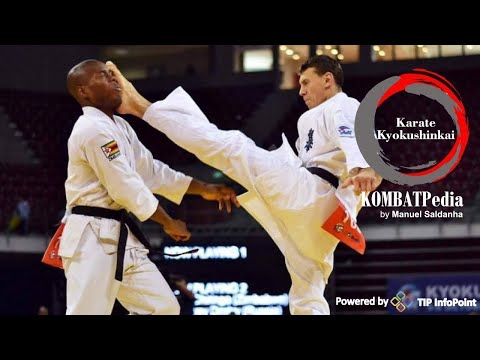
  • Full-Contact Sparring (Kumite): This is the hallmark of Kyokushin. Unlike sport Karate with its limited contact, Kyokushin kumite allows for full power punches and kicks, with the exception of strikes to the head during regular sparring (though head kicks are permitted in some tournament formats, and historically, Oyama himself fought bears with his bare hands, a testament to his extreme approach). This demands exceptional physical conditioning and mental fortitude, as practitioners learn to absorb and deliver powerful blows.

The technical application in Kyokushin is built on the understanding that the body is a unified weapon. Every stance, every strike, is imbued with intent and powered by the entire physique, driven by a well-controlled breath and an iron will. This is not about flashy movements; it's about raw, unadulterated effectiveness.

Kata: The Mirror of Mastery

Kata are the choreographed forms that preserve the techniques and strategies of Karate. In Kyokushin, while the focus is heavily on kumite, kata remain integral to the training system. Each kata represents a duel against multiple imaginary opponents, a silent dialogue with the past.

Practicing Kyokushin kata involves:

  • Precision: Executing each movement with sharpness, power, and correct form.
  • Timing: Understanding the rhythm and flow of the techniques.
  • Breathing: Integrating deep abdominal breathing (Iki) with physical exertion, building internal power (Ki).
  • Intent (Kime): Infusing each technique with focused energy, simulating a real combat situation.

Through kata, practitioners refine their body mechanics, develop coordination, improve balance, and cultivate the mental focus that is essential for effective kumite. They are the living history of the art, a testament to the wisdom passed down through generations.

Kumite: The Crucible of Character

If kata is the silent study, then kumite is the roaring exam. In Kyokushin, kumite is not merely a sparring match; it is a profound test of character. The full-contact nature forces practitioners to confront their fears, their weaknesses, and their physical limits head-on. It is in the crucible of kumite that the principles of Budo are truly forged.

Kumite teaches invaluable lessons:

  • Resilience: Learning to stand up after being knocked down, both literally and figuratively.
  • Control: The ability to deliver powerful blows while maintaining restraint, a crucial element of martial ethics.
  • Adaptability: Responding effectively to an opponent's strategies and adapting one's own tactics in real-time.
  • Humility: Accepting defeat with grace and learning from every encounter.

The rigorous sparring sessions, including the legendary "100 Man Kumite" undertaken by Oyama and his senior students, are designed to push individuals beyond what they believe is possible, unlocking reserves of strength and determination they never knew they possessed. This is where true growth occurs.

The Rigors of Training: More Than Physical Prowess

Training in Kyokushin is demanding, often described as brutally effective. It’s a holistic approach that goes far beyond punching and kicking:

  1. Physical Conditioning: Intense cardiovascular training, strength building (often through bodyweight exercises and partner drills), and flexibility work are essential. This isn't about looking good; it's about building a body capable of withstanding and delivering immense impact.
  2. Technical Practice: Constant repetition of stances, strikes, blocks, and kata to achieve mastery.
  3. Sparring (Kumite): Regular, often intense, sparring sessions to apply techniques under pressure.
  4. Mental Training: Developing focus, discipline, and emotional control through meditation, breathing exercises, and the inherent challenges of training.
  5. Makiwara Training: Striking a padded post (makiwara) to develop power, conditioning the hands and forearms, and improving impact technique.

This comprehensive approach ensures that practitioners develop not just a skilled body, but also an indomitable spirit. The training is designed to break down ego and rebuild character on a foundation of strength and humility.

Kyokushin in the Modern Arena: Relevance and Evolution

In an era dominated by mixed martial arts (MMA) and a plethora of specialized combat sports, Kyokushin Karate might seem like a relic of the past. However, its core principles remain incredibly relevant. While many MMA fighters incorporate striking techniques from various Karate styles, the Kyokushin practitioner brings a unique blend of:

  • Unmatched physical conditioning and toughness.
  • Powerful, direct striking offense.
  • Exceptional low-kick effectiveness.
  • A mental fortitude forged through extreme full-contact sparring.

The debate continues regarding the direct applicability of Kyokushin in a no-holds-barred MMA environment, particularly concerning the lack of head punches in traditional sparring and grappling. However, the discipline's emphasis on spirit, resilience, and unwavering commitment to pushing one's limits transcends any specific ruleset. Many MMA fighters who have trained in Kyokushin, such as Cyril Gane and others, credit its rigorous training with building their fundamental toughness and mental resolve. It provides a potent foundation, even if it requires adaptation to other combat systems. The question isn't whether Kyokushin *can* compete, but rather how its practitioners adapt and integrate its powerful ethos into diverse combative landscapes.

Equipment Essentials for Your Training

While Kyokushin emphasizes training with minimal gear for kumite, certain items are crucial for effective and safe practice:

  • Kyokushin Gi: A durable, heavyweight uniform designed for the rigors of full-contact training. Look for a double-stitched or reinforced model for longevity.
  • Mouthguard: Essential for all sparring sessions to protect your teeth and jaw.
  • Groin Protector: Recommended for all male practitioners during sparring.
  • Hand Wraps: To support the wrists and knuckles during intense striking practice and sparring.
  • Sparring Gloves (Optional/Contextual): While traditional Kyokushin sparring is bare-knuckle, some dojos or specific training scenarios might utilize light, padded sparring gloves for added protection, especially for beginners.
  • Shin Guards (Optional/Contextual): For heavy kicking drills or specific sparring sessions where leg conditioning is prioritized.

Investing in quality gear ensures that your training is safe and that your uniform can withstand the intensity of Kyokushin practice. For those looking for top-tier apparel, consider searching for brands specializing in karate merchandise or durable martial arts uniforms.

Frequently Asked Questions

What is the core philosophy of Kyokushin Karate?

The core philosophy is "Ultimate Truth," emphasizing rigorous physical and mental training to achieve self-perfection, cultivate character, and develop an unbreakable spirit through full-contact combat.

Is Kyokushin Karate dangerous?

As a full-contact martial art, Kyokushin carries inherent risks of injury. However, training is conducted under strict supervision, with an emphasis on control, respect, and safety protocols to mitigate these risks.

Can I start Kyokushin Karate at any age?

Yes, Kyokushin can be practiced by individuals of all ages. While children and adults will have different training intensities and focus areas, the fundamental principles of discipline and self-improvement are universal.

What is the difference between Kyokushin and other Karate styles?

The primary difference lies in the full-contact nature of Kyokushin kumite, allowing powerful, unpulled strikes and kicks, unlike many sport Karate styles that employ point-based or limited-contact sparring.

Does Kyokushin Karate include grappling?

Traditional Kyokushin Karate focuses primarily on striking techniques (punches, kicks, and blocks). While some practitioners may incorporate elements of grappling or self-defense, it is not a core component of the standard curriculum.

For Deeper Exploration on Your Path

Reflection of the Sensei: Your Next Step

We have explored the powerful depths of Kyokushin Karate, moving beyond the raw power to uncover the philosophical bedrock and the unyielding spirit. You've seen how Mas Oyama's vision transcended mere combat, aiming to forge individuals of integrity and strength. But knowledge is merely potential until it is acted upon. Do the principles of "Osu," self-discipline, and the relentless pursuit of truth resonate with your own aspirations? Or does the idea of full-contact sparring ignite a fear you haven't yet conquered? Is it the sheer physical challenge that calls to you, or the promise of inner transformation?

Consider this: In your own life, where do you currently shy away from the "ultimate truth" of your own limitations? What "full-contact" challenge, be it physical, mental, or emotional, are you avoiding? And how will you embody the spirit of "Osu" to face it? Your answer, and your subsequent action, will reveal your true readiness to embrace the path of Budo.

``` GEMINI_METADESC: Explore the profound principles of Kyokushin Karate, from its Budo philosophy and Mas Oyama's vision to its rigorous full-contact training and enduring relevance.

The Man Who Possessed the Most Devastating Fists in History

"The supreme art of war is to subdue the enemy without fighting." - Sun Tzu, The Art of War. Though Sun Tzu spoke of strategy, the power of the fist, when wielded with precision and intent, can be the ultimate argument in a physical confrontation. But who truly stands out in the annals of martial history for their sheer destructive power?

Hello and welcome to Budo & Martial Arts, the most comprehensive and up-to-date martial arts blog on the internet. Today, we delve into a topic that ignites debate among practitioners and fans alike: the ultimate fist. We're not just talking about brute force; we're dissecting the anatomy of power, the psychology behind it, and the historical figures who embodied it. Prepare yourselves, for this lesson will not be for the faint of heart.

Many names might spring to mind: Mike Tyson, a whirlwind of destruction in boxing; Bruce Lee, whose "one-inch punch" remains legendary; perhaps even figures from ancient legends. But our focus today is on a man whose fists were less a weapon and more an extension of a profound philosophical and physical discipline. We're exploring the legacy of **Mas Oyama**, the indomitable founder of Kyokukushin Karate.

The Genesis of Unrivaled Power: Mas Oyama's Path

Masutatsu "Mas" Oyama (born Choi Yeong-eui) wasn't just a martial artist; he was a force of nature. His journey into the depths of martial arts began in Korea, where he studied various styles before moving to Japan. It was in Japan that his legend truly began to forge, shaped by an almost ascetic dedication to training and a burning desire to understand the absolute limits of the human body and spirit.

His early training in Karate, particularly in the Shotokan style under Gichin Funakoshi, laid the foundation. However, Oyama felt that traditional Karate, while effective, lacked the brutal realism and self-testing required to truly embody the spirit of Budo. He sought to push beyond theoretical application and into the realm of practical, undeniable power. This led him to undertake intense, solitary training in the mountains of Japan, a period often referred to as his "retrieval" or "reclusion" phase.

During this time, Oyama subjected himself to grueling physical conditioning, involving thousands of punches and kicks daily, meditation, and the study of Zen philosophy. He famously practiced breaking rocks, bottles, and, most notably, bull horns with his bare hands. This wasn't mere showmanship; it was a calculated process of honing his body into a weapon capable of delivering devastating blows. His objective was to develop a Karate style that was a pure fighting art, stripped of all non-essentials – a style that could be tested in real combat.

Kyokukushin Karate: The Embodiment of Oyama's Philosophy

The result of Oyama's relentless pursuit was Kyokukushin Karate, meaning "the ultimate truth in Karate." This style is renowned for its full-contact fighting rules, demanding incredible physical and mental fortitude from its practitioners. Unlike many other Karate styles that employ point-scoring or controlled sparring, Kyokukushin sanctions direct, hard-hitting combat, with techniques allowed to the body and head (though head punches are prohibited in competition to reduce concussions, a pragmatic adjustment that still maintains a high level of physicality). The emphasis is on conditioning the body to withstand powerful strikes and developing techniques that can end a fight decisively.

Oyama's philosophy was simple yet profound: true martial arts must be tested. He famously stated, "Karate is for fighting. It is not a religion. It is not a game." This conviction fueled his legendary challenges, including his fights against bulls, where he would aim to disable the animal with a single decisive blow. These events, while controversial, served to popularize his style and demonstrate the raw power he believed was inherent in dedicated martial arts training.

The Power of the Fists: Technique and Conditioning

What made Oyama's fists so legendary? It was a combination of factors, honed through decades of rigorous, almost superhuman dedication:

  • Extreme Conditioning: Oyama's training was notoriously brutal. He would condition his hands, knuckles, and forearms relentlessly, often by striking makiwara (striking boards) and heavy bags for hours on end. This toughened the bones and connective tissues, making his hands incredibly resilient and capable of delivering immense impact force without injury.
  • Scientific Application of Force: While rooted in tradition, Oyama's approach was also scientifically minded. He understood leverage, body mechanics, and the generation of power through hip rotation and the entire body's kinetic chain. His punches were not just arm extensions; they were explosive movements originating from the ground up.
  • Mental Fortitude (Mushin): Perhaps the most critical element was his mental state. Oyama trained to achieve "Mushin" – a state of no-mind or emptiness, where the practitioner acts instinctively and without hesitation or fear. This allowed him to unleash his power with absolute focus and commitment, unburdened by doubt.
  • The "Iron Fist" Technique: While no single "secret technique" existed, the cumulative effect of his conditioning and understanding of force led to what many described as an "iron fist." This wasn't a specific punch, but rather the characteristic hardness and devastating impact of all his strikes.

Challenging the Modern Martial Arts Landscape

In today's world, where mixed martial arts (MMA) dominate the combat sports landscape, it's easy to dismiss older, single-discipline approaches. However, the principles embodied by Mas Oyama and Kyokukushin Karate remain profoundly relevant. MMA fighters today, like **Jon Jones** or **Cyril Gane**, understand the critical importance of conditioning and the ability to deliver powerful strikes. While the rules and techniques may differ, the underlying pursuit of peak physical and mental performance is identical.

Consider the devastating low kicks of **Emanuel Augustus** or the sheer knockout power displayed by fighters in events like **UFC 283**. This power doesn't come from wishful thinking; it's the product of countless hours in the gym, pushing physical and mental boundaries. Oyama's legacy serves as a stark reminder that dedicated, hard-hitting training can forge power that transcends specific styles.

The debates around the effectiveness of traditional martial arts versus modern MMA are ongoing. Some argue that styles like Kyokukushin, with its emphasis on raw power and conditioning, possess elements that are timeless. Others point to the evolution of combat, where a broader skillset is necessary. But what is undeniable is that the spirit of Mas Oyama – the pursuit of self-mastery through relentless training and the courage to face any challenge – is a cornerstone of all authentic martial arts.

Veredicto del Sensei: ¿Merece la pena?

Mas Oyama and Kyokukushin Karate are not just about breaking boards or fighting bulls; they are a testament to human potential. The "fists" that were most powerful were not merely physical instruments, but embodiments of unwavering discipline, philosophical depth, and a willingness to face hardship head-on. Oyama didn't just possess powerful fists; he forged them through a lifetime dedicated to the ultimate truth of martial arts. His legacy continues to inspire fighters to push their limits and understand that true power comes from within, honed through dedication and an unbreakable spirit. Kyokukushin stands as a pillar of authentic martial endeavor, a direct challenge to complacency.

Equipo Esencial para tu Entrenamiento

To truly understand and emulate the spirit of relentless training that Mas Oyama championed, certain equipment is crucial. While Oyama himself often relied on the bare minimum to test his own capabilities, modern practitioners can benefit from tools that enhance safety, conditioning, and skill development:

  • Heavy Bag: Essential for developing power, speed, and stamina in your punches and kicks. Look for a durable bag that can withstand intense training sessions.
  • Makiwara: While challenging to find commercially, a makiwara is vital for conditioning the hands and knuckles, as Oyama did. Ensure proper technique to avoid injury.
  • Karate Gi (Kimono): A sturdy, double-weave gi, like those favored in Kyokukushin, can withstand the rigors of full-contact training and grappling. Karate merchandise often features high-quality gis designed for durability.
  • Protective Gear: For sparring, especially when starting, items like MMA gloves (16oz for sparring), shin guards, and groin protectors are indispensable for safety.
  • Training Mats: If you're practicing groundwork or conditioning exercises, good quality mats provide cushioning and prevent injuries.

Guía de Entrenamiento: Desarrollando tu "Puño de Hierro"

Emulating Mas Oyama's power requires a multi-faceted approach. Here's a breakdown of training principles:

  1. Base Conditioning: Start with foundational fitness. Focus on cardiovascular endurance through running or at-home workouts with no equipment, and build strength with bodyweight exercises.
  2. Punching Technique and Power Generation: Study the mechanics of a proper punch. Focus on hip rotation, grounding, and snapping the fist through the target. Practice with focus mitts and a heavy bag.
  3. Hand and Forearm Conditioning: Begin cautiously. Start by striking a padded makiwara or a sturdy heavy bag. Gradually increase intensity and frequency. Gradually introduce knuckle push-ups. Always listen to your body and prioritize safety.
  4. Mental Training (Mushin and Zanshin): Incorporate meditation and mindfulness practices. Zazen meditation can help cultivate the stillness and focus required for Mushin. Practicing forms (Katas) with full intent and awareness helps develop Zanshin (lingering awareness).
  5. Full Contact Sparring (with caution): Once you have a solid foundation, engage in controlled sparring sessions. Under the guidance of experienced instructors, this is where you learn to apply your power effectively and develop combat awareness. This is the core of Kyokushin training.

Preguntas Frecuentes

¿Fue Mas Oyama realmente invencible en combate?

Mas Oyama participated in many challenging bouts and demonstrations throughout his life. While he was an exceptionally powerful and skilled martial artist, the concept of "invincible" is often a mythologized ideal. His true strength lay in his dedication to pushing his limits and his ability to overcome immense physical and mental challenges.

¿Se permite el contacto total en Kyokukushin Karate?

Yes, Kyokukushin is known for its full-contact sparring. However, certain techniques, like head punches, are prohibited in competition to ensure fighter safety. The emphasis is on powerful, decisive strikes to the body and legs, demanding extreme conditioning.

¿Cómo puedo desarrollar la dureza en mis manos sin lesionarme?

Start slowly and gradually. Begin with conditioning exercises like knuckle push-ups on soft surfaces. Progress to striking a heavy bag with proper technique. If you acquire a makiwara, use it with extreme caution and follow expert guidance. Always warm up thoroughly and listen to your body. Pain is a signal to stop or adjust.

¿Son relevantes las técnicas de un solo estilo como Kyokukushin en el MMA moderno?

The principles of conditioning, power generation, and mental fortitude taught in Kyokukushin are highly relevant. While MMA requires a broader range of skills (grappling, wrestling), the ability to deliver devastating strikes and withstand punishment, as perfected in Kyokukushin, remains a crucial component of success.

¿Qué significa "ultimate truth" en Kyokukushin?

"Kyokushin" translates to "the ultimate truth." For Oyama, this ultimate truth referred to the pure, unadulterated essence of Karate as a fighting art, tested and proven through rigorous physical and mental discipline, stripped of all non-essential elements.

Para Profundizar en tu Camino

If you like what we do and want to support TRUE martial arts, we invite you to visit our store to buy exclusive content and merchandise. Follow us on social networks and do not forget to visit our main page. We also invite you to visit our other blogs.

Follow me on Facebook: Hugo Van Damme Sports.

Follow me on Twitter: Hugo Van Damme Sports.

"The more you sweat in training, the less you bleed in battle." - This adage, though not directly attributed to Oyama, perfectly encapsulates the philosophy behind his relentless pursuit of physical and mental conditioning.

Reflexión del Sensei: Tu Próximo Paso

Mas Oyama's "iron fists" were not a gift of nature, but a product of extraordinary will and discipline. Now, I ask you: What are you truly willing to sacrifice in your training to achieve your own "ultimate truth"? Are you content with mere technique, or do you seek the power that comes from forging yourself in the fires of adversity? Your answer will define your path.

``` GEMINI_METADESC: Explore the legendary power of Mas Oyama's fists and Kyokukushin Karate. Discover the training, philosophy, and combat effectiveness that made him a martial arts icon.