Showing posts sorted by date for query Karate training tips. Sort by relevance Show all posts

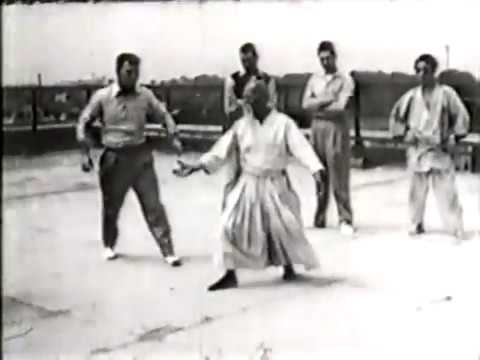
Aikido O Sensei in 1954: A Timeless Warrior's Legacy in Modern Combat Sports

The year 1954 gifted us a rare glimpse into the profound capabilities of Aikido O Sensei through a rediscovered video. This artifact, showcasing his mastery, serves as a potent reminder of the enduring power of traditional martial arts. Today, the echoes of such legends resonate powerfully, not only in dedicated dojos but also within the electrifying arenas of modern martial arts and combat sports. These disciplines, with their rich histories and timeless teachings, continue to captivate us, offering lessons that transcend mere physical prowess.

But what is the true essence of martial arts and Budo? Far beyond the technicalities of striking and grappling, they represent a holistic philosophy, a rigorous discipline, and ultimately, a pathway to self-development. The pursuit of perfection, a core tenet of Budo – the "way of the warrior" – is a journey of constant refinement, both physically and mentally.

The True Essence of Martial Arts and Budo

Martial arts are not merely a collection of techniques designed for conflict. They are a profound system for cultivating the individual. The ultimate aim is to forge a stronger self – physically resilient, mentally sharp, and spiritually grounded. This holistic development is what sets true martial arts apart.

Budo: More Than Just a Fighting Style

"Budo" translates directly to "the way of the warrior." This term encapsulates the spirit that underpins these disciplines. It's about the relentless pursuit of excellence, the mastery of oneself through rigorous training, and the application of these principles in all facets of life. It is a lifelong pursuit, not a destination.

"The ultimate aim of martial arts is not victory or defeat, but the perfection of the character of its practitioners." - A principle echoed across many martial traditions.

The Multifaceted Benefits of Martial Arts Training

The benefits of consistent training in martial arts are vast and touch every aspect of a practitioner's life. Beyond the obvious enhancement of self-defense skills, individuals develop:

  • Improved Physical Health: Increased strength, flexibility, cardiovascular endurance, and coordination.
  • Enhanced Mental Fortitude: Greater focus, discipline, patience, and stress management.
  • Unshakeable Self-Discipline: The ability to set goals and work towards them consistently, overcoming obstacles.
  • A Strong Sense of Community: The shared passion within the martial arts community fosters deep bonds, camaraderie, and mutual respect. This sense of belonging is invaluable.

This supportive environment is crucial. The shared struggles and triumphs in the dojo create a unique connection that strengthens the collective spirit.

Combat Sports: The Arena of Modern Competition

Contrast this with combat sports. While they share the roots of physical confrontation, their primary focus is often on competition and the quantifiable outcome of victory. Disciplines like MMA, boxing, and Judo demand extraordinary levels of physical conditioning, strategic thinking, and mental toughness. They are a testament to the human spirit's capacity to perform under immense pressure.

The athletes in these fields are modern warriors, pushing the boundaries of human potential. Their dedication, sacrifice, and ability to execute under the bright lights are truly inspiring. It is undeniable that these sports showcase incredible athleticism and tactical brilliance.

Showcasing Your Passion: Martial Arts and Combat Sports Merchandise

For enthusiasts and practitioners alike, the passion for martial arts and combat sports often extends beyond the training mat or the ring. This is where merchandise plays a role. From specialized Karate gis and durable Judo uniforms to training equipment and casual apparel, these items allow individuals to express their identity and support their chosen disciplines.

High-quality training equipment, such as punching bags, focus mitts, and protective gear, is essential for effective practice. Wearing apparel that represents your art or sport is a way to connect with the wider community and serve as a constant reminder of your commitment. These items also make fantastic gifts for fellow martial artists or combat sports fans.

Our Commitment at BYAM Budo y Artes Marciales

At BYAM Budo y Artes Marciales, we understand this passion. We are dedicated to providing a wide array of high-quality merchandise tailored for both martial arts practitioners and combat sports aficionados. Our selection is curated to meet the needs of everyone, from the absolute beginner taking their first steps in Aikido or Karate, to the seasoned expert honing their skills. Functionality and durability are paramount in our product design, ensuring that what you choose supports your journey.

We firmly believe that martial arts and combat sports are more than just physical activities; they are transformative life experiences. Our blog serves as a platform to share invaluable insights, including practical training tips, detailed technique breakdowns, and the philosophical underpinnings that make these arts so profound.

Deepen Your Journey: Recommended Resources

To further enrich your understanding and practice, I highly recommend exploring these resources:

Frequently Asked Questions

  • Q: Is Aikido still relevant in modern combat sports?
    A: While Aikido's direct application in MMA is debated, its principles of blending, redirection, and control offer invaluable lessons in balance, spatial awareness, and joint manipulation, which are transferable skills.
  • Q: What is the difference between Budo and just training martial arts?
    A: Budo emphasizes the spiritual and philosophical development of the individual, viewing training as a lifelong path to self-perfection. Simply training martial arts may focus more on the technical or competitive aspects without the deeper philosophical commitment.
  • Q: How can I start training martial arts if I'm a complete beginner?
    A: The best approach is to research local dojos or gyms offering styles that interest you. Many offer introductory classes. Focus on finding qualified instructors and a welcoming community, like those found in martial arts communities globally.

Sensei's Verdict: Is the Legacy Alive?

Looking back at O Sensei’s demonstration in 1954, and observing the dedication in today's dojos and the fierce competition in UFC bouts, one undeniable truth emerges: the warrior spirit, the essence of Budo, is very much alive. The methods evolve, the arenas change, but the fundamental principles of discipline, perseverance, and the quest for self-mastery remain constant.

Whether you are drawn to the intricate flows of Aikido, the powerful stances of Karate, or the dynamic exchanges in MMA, the path of martial arts offers a profound opportunity for growth. It is a journey that builds not just a fighter, but a better human being.

Sensei's Reflection: Your Next Step

O Sensei's movements in that 1954 film were not just physical actions; they were expressions of deep understanding and embodiment. The question for you, the dedicated practitioner and student of the Way, is this: How can you embody the principles you learn on the mat in the unpredictable dojo of your daily life? Do you merely mimic techniques, or do you strive to internalize the philosophy?

```

For Deeper Exploration on Your Path

Budo's True Warriors: 6 Undeniable Signs You're More Than Just a Fighter

Martial arts. The very word evokes images of disciplined warriors, breathtaking techniques, and ancient traditions. For centuries, disciplines like Karate, Taekwondo, Judo, and Jiu-Jitsu have shaped not just bodies, but spirits across the globe. Yet, in the crucible of combat and competition, a critical distinction emerges: the difference between a mere 'fighter' and a 'true martial artist'. The latter transcends the physical exchange, embodying the profound principles of Budo – a way of life, a path of constant self-cultivation. Are you just engaging in combat, or are you truly walking the path? Let us examine the signs, the undeniable hallmarks, that separate the skilled combatant from the authentic martial artist.

The Unseen Strength: Humility

Many enter the martial world driven by ego, a desire to prove their superiority. This is the mark of a fighter. A true martial artist, however, carries their victories with quiet grace and their defeats with profound reflection. Humility is not weakness; it is the bedrock upon which true mastery is built. Such individuals harbor a deep respect for their training partners and opponents, understanding that each encounter is an opportunity to learn and refine. They recognize that the journey of martial arts is a lifelong pursuit, an endless horizon of self-improvement. They know that every Black Belt started as a white belt, and that even the most accomplished master has more to discover. This internal acknowledgment prevents arrogance and fosters continuous growth.

"Mastering others is strength. Mastering yourself is true power." - Lao Tzu

Think about your last sparring session. Did you focus on dominating, or on understanding your opponent's movements and your own reactions? The answer reveals much.

Master of the Self: Self-Control

The heat of a fierce exchange, the adrenaline surge, the frustration of a missed technique – these are the moments that test the mettle of any combatant. A fighter might lash out, become reckless, or crumble under pressure. A true martial artist, however, possesses formidable self-control. Their discipline extends beyond the dojo walls; it is an intrinsic part of their being. They understand that raw emotion is a chaotic force that clouds judgment and leads to critical errors. By mastering their emotions, they maintain clarity, precision, and strategic thinking, even when pushed to their limits. This mastery allows them to respond rather than react, to choose the most effective course of action rather than being swept away by impulse.

Consider the famed discipline of Kyokushin Karate. Its practitioners are trained to endure immense physical and mental pressure, not by succumbing to pain, but by harnessing their inner fortitude. This is self-control in action.

The Sacred Fire: Respect for the Art

Fighters often view martial arts solely as a means to an end – victory, self-defense, or physical conditioning. A true martial artist, however, views their chosen discipline as something sacred. They delve into its origins, study its history, understand its cultural context, and honor its traditions. This deep appreciation for the art itself transforms practice from mere repetition into a ritual of reverence. They understand that the techniques and philosophies passed down through generations are not arbitrary; they are the distilled wisdom of countless practitioners who faced similar challenges. This respect fuels their dedication and ensures they preserve and transmit the essence of the art, not just its physical manifestations.

Are you merely learning moves, or are you seeking to understand the lineage and philosophy behind them? A quick search for the history of Aikido or the development of Karate can offer profound insights into this respect.

Body and Mind: The Dual Pursuit of Fitness

Physical prowess is undoubtedly crucial in any martial pursuit. A fighter understands the necessity of a strong physique. But a true martial artist recognizes that their body is merely the vessel for their art; it must be both a powerful weapon and a finely tuned instrument. This requires holistic physical and mental fitness. They engage in rigorous training not just to build muscle or endurance, but to enhance coordination, agility, speed, and resilience. Simultaneously, they cultivate their mental faculties – sharpening focus, improving strategic thinking, and building mental toughness. This dual pursuit ensures they are not only capable of delivering powerful strikes or executing complex techniques but are also mentally prepared to adapt, strategize, and overcome any obstacle.

This integrated approach mirrors the philosophy behind many Budo disciplines, where the mind and body are seen as interconnected pathways to mastery.

The Unyielding Spirit: Perseverance

The path of the martial artist is rarely smooth. There will be plateaus, injuries, setbacks, and moments of doubt. A fighter might quit when faced with overwhelming adversity. A true martial artist embodies perseverance. They understand that struggle is not an endpoint but a catalyst for growth. They greet challenges not with despair, but with determination. Each failed attempt, each painful defeat, becomes a lesson learned, a stepping stone towards eventual success. This resilience, this refusal to surrender, is a testament to their inner strength and their unwavering commitment to the journey. They understand that true mastery is forged in the fires of hardship.

Think of the legendary careers of fighters like Jon Jones or Cyril Gane; their resilience in the face of intense pressure and competition is a prime example of this principle.

The Warrior's Heart: Kindness and Compassion

Perhaps the most profound differentiator: a fighter might wield their skills for dominance or personal gain. A true martial artist, however, understands that power comes with responsibility. They possess a heart of kindness and compassion. Their skills are honed not for wanton aggression, but for the protection of others and the betterment of the world. They use their abilities judiciously, never seeking to inflict unnecessary harm. They embody the principle that true strength lies not in the ability to destroy, but in the capacity to protect and uplift. This ethical compass guides their actions both inside and outside the dojo, making them not just skilled practitioners, but positive forces in society.

"The object of the do is to seek perfection of character." - Jigoro Kano

This sentiment is echoed across many martial traditions, emphasizing that the ultimate goal of training is personal development and service to others.

Gear Up for Your Journey

To truly embody the principles of Budo, the right equipment can be an invaluable ally. Whether you are honing your striking power, refining your grappling, or maintaining your physical and mental conditioning, quality gear makes a difference. Consider investing in:

  • Durable Uniforms (Gi/Kimono): Essential for traditional arts like Judo and Karate. Look for materials that can withstand rigorous training, such as a double-weave Judo gi or a sturdy Karate gi.
  • Protective Sparring Gear: For arts involving full contact, investing in high-quality MMA gloves, headgear, and shin guards is paramount for safe and effective training.
  • Training Equipment: A good quality punching bag or a makiwara can significantly improve your striking power and technique at home.
  • Comfortable Training Apparel: For conditioning or arts that require more freedom of movement, comfortable and breathable training shorts and t-shirts are a must.

At BYAM Budo y Artes Marciales, we understand the importance of quality gear. Explore our extensive collection of uniforms, protective equipment, and training accessories designed to support your journey towards martial arts mastery.

Frequently Asked Questions

What is Budo?

Budo, literally meaning "martial way," refers to the philosophies and practices of Japanese martial arts that focus on self-cultivation, discipline, and spiritual development, beyond mere combat effectiveness. It's a way of life.

Is there a difference between a fighter and a martial artist?

Yes, significantly. A fighter primarily focuses on winning combat encounters. A true martial artist integrates the physical skills with ethical principles, self-discipline, humility, and continuous personal growth, viewing their art as a path to self-perfection.

Can anyone become a true martial artist?

Absolutely. While talent can play a role, the core of being a true martial artist lies in the consistent application of principles like humility, self-control, respect, perseverance, and compassion. It's a journey available to anyone dedicated to the path.

How important is physical fitness in Budo?

Extremely important, but it's only half the equation. Budo emphasizes both physical conditioning (strength, speed, endurance, agility) and mental conditioning (focus, strategy, emotional control, resilience). One without the other is incomplete.

Can martial arts principles be applied outside of training?

Indeed. The principles of Budo – discipline, respect, perseverance, humility – are designed to be integrated into all aspects of life, leading to personal growth and a more positive impact on the world.

For Deeper Exploration on Your Path

Reflexion del Sensei: Your Next Step

We've examined the qualities that elevate a practitioner from a mere combatant to a true martial artist. Now, look inward. Are you merely going through the motions, or are you striving for genuine embodiment? If you recognize yourself in these signs, how can you further cultivate them in your daily life, both on and off the mat? If you see the fighter, what specific, actionable steps can you take starting *today* to nurture the seeds of Budo within you?

``` ```json { "@context": "https://schema.org", "@type": "FAQPage", "mainEntity": [ { "@type": "Question", "name": "What is Budo?", "acceptedAnswer": { "@type": "Answer", "text": "Budo, literally meaning \"martial way,\" refers to the philosophies and practices of Japanese martial arts that focus on self-cultivation, discipline, and spiritual development, beyond mere combat effectiveness. It's a way of life." } }, { "@type": "Question", "name": "Is there a difference between a fighter and a martial artist?", "acceptedAnswer": { "@type": "Answer", "text": "Yes, significantly. A fighter primarily focuses on winning combat encounters. A true martial artist integrates the physical skills with ethical principles, self-discipline, humility, and continuous personal growth, viewing their art as a path to self-perfection." } }, { "@type": "Question", "name": "Can anyone become a true martial artist?", "acceptedAnswer": { "@type": "Answer", "text": "Absolutely. While talent can play a role, the core of being a true martial artist lies in the consistent application of principles like humility, self-control, respect, perseverance, and compassion. It's a journey available to anyone dedicated to the path." } }, { "@type": "Question", "name": "How important is physical fitness in Budo?", "acceptedAnswer": { "@type": "Answer", "text": "Extremely important, but it's only half the equation. Budo emphasizes both physical conditioning (strength, speed, endurance, agility) and mental conditioning (focus, strategy, emotional control, resilience). One without the other is incomplete." } }, { "@type": "Question", "name": "Can martial arts principles be applied outside of training?", "acceptedAnswer": { "@type": "Answer", "text": "Indeed. The principles of Budo – discipline, respect, perseverance, humility – are designed to be integrated into all aspects of life, leading to personal growth and a more positive impact on the world." } } ] }

Martial Arts & Combat Sports: A Necessary Legal Accord

Welcome, dedicated students of the path. Before we delve into the intricacies of technique, the philosophy of the warrior, or the analysis of combat, we must first establish the foundational principles that govern our interaction here. Just as a boxer respects the rules of the ring, and a swordsman adheres to the etiquette of the duelist, we must understand the legal framework that surrounds our digital dojo. This is not a mere formality; it is a crucial aspect of responsible engagement within the realm of martial arts and combat sports. Consider this your initial briefing on the 'rules of engagement' for our shared space.

Understanding the Stakes: Beyond the Dojo

The pursuit of martial arts and combat sports is a journey that demands respect, discipline, and an unwavering commitment to self-improvement. It is a path often fraught with challenges, both physical and mental. While we strive to foster a community of warriors dedicated to honing their skills and sharing knowledge, it is imperative to acknowledge that the very nature of these disciplines carries inherent risks. Our aim is to empower you with information, inspiration, and a platform for discussion, but this platform operates within a real-world context that necessitates clear understanding and agreement on certain terms. This legal accord is designed to protect both you, the user, and the integrity of our platform, ensuring that our collective pursuit of Budo remains constructive and safe.

By entering this digital arena, you, the esteemed practitioner, signify your unreserved agreement to these terms and conditions. This is your sworn oath to our virtual dojo. Before you engage in any discussion, consume any information, or participate in any community activity, it is paramount that you meticulously review these stipulations. Should any clause herein not align with your principles, we respectfully request that you withdraw your presence from our website. Ignorance of these terms is not a valid defense; it is a failing in your readiness to engage responsibly.

"The foundation of a warrior’s strength lies not only in their physical prowess but also in their clarity of mind and adherence to principles, both spoken and unspoken." - A principle echoed through generations of Budo.

Scope of Information: Accuracy and Risk

The information disseminated here is intended for general enlightenment, a guiding light for your martial journey. We dedicate considerable effort to ensure that the content – whether it be technical breakdowns of Judo throws, historical insights into Kyokushin Karate, or strategic analyses of MMA bouts – is both accurate and current. However, as any seasoned martial artist knows, absolute certainty is a rare commodity. Therefore, we make no absolute representations or warranties, express or implied, regarding the completeness, exactitude, veracity, applicability, or perpetual availability of the information, products, services, or any related graphical elements presented on this website for any specific purpose. Any trust you place in such information is solely your responsibility. Remember, in the heat of combat, relying solely on theoretical knowledge without practical application can be perilous.

We bear no liability for any loss or damage, direct, indirect, consequential, or otherwise, arising from the use or inability to use this website, including, but not limited to, loss of data, profits, or any other form of material or immaterial damage.

Our website may feature pathways leading to external domains, other dojos and training grounds across the digital landscape. These links are provided for your exploration, but understand this: they are not under our dominion. We exercise no control over the nature, content, or continuous availability of these external sites. The inclusion of any link does not imply endorsement or agreement with the views propagated within them. It is your duty, as a discerning warrior, to critically assess the value and reliability of any external resource you encounter.

We also acknowledge that technical disruptions can occur. Every endeavor is made to maintain our website’s smooth operation. However, we shall not be held accountable for temporary unavailability stemming from technical issues beyond our reasonable control. Consider it akin to a momentary lapse in your guard; it can happen, but swift recovery is key.

User-Generated Content and Community Discourse

This platform may host user-generated content, such as insightful comments and spirited forum discussions. While we champion the open exchange of ideas within our community, we do not endorse or assume responsibility for the content of these contributions. We reserve the right to moderate, and indeed remove, any material that is deemed inappropriate, offensive, or detrimental to the constructive atmosphere we cultivate. Engage with respect, debate with conviction, but always with the honor of the warrior.

Martial Arts and Combat Sports Warning

A critical component of our mission is to discuss and analyze martial arts and combat sports, including information that may relate to training, techniques, and even the sale of associated materials. It is vital to understand that engaging in these disciplines is inherently dangerous. Such activities carry a significant risk of injury, and in extreme circumstances, even more severe consequences. We strongly advise seeking guidance from a qualified, certified professional instructor before embarking on any martial arts or combat sports training. Your safety and well-being are paramount. This disclaimer is not intended to discourage your passion, but to ground it in reality and encourage responsible practice. For those interested in exploring foundational training methods, consider investigating resources on Beginner Workout or No Equipment workouts if gym access is limited, but always prioritize professional instruction.

"The difference between a skilled martial artist and a reckless brawler often lies in the understanding and respect for risk, coupled with the wisdom to mitigate it."

Fair Use Doctrine in the Martial Arts Context

In our analysis and commentary, particularly in sections like Fight Analysis or historical deep dives, we may utilize copyrighted material under the doctrine of "Fair Use." This principle, codified in Section 107 of the U.S. Copyright Act, permits limited use of copyrighted works for purposes such as criticism, commentary, news reporting, teaching, scholarship, and research. The balance tips towards fair use when the use is non-profit, educational, or personal. For instance, quoting excerpts from a seminal text like Miyamoto Musashi's The Book of Five Rings for illustration in a discussion on Bushido, or analyzing a specific technique from a bout for educational purposes, falls within this doctrine.

Key factors considered for fair use include:

  • The purpose and character of the use, including whether it's commercial or non-profit educational.
  • The nature of the copyrighted work.
  • The amount and substantiality of the portion used relative to the whole work.
  • The effect of the use on the potential market for or value of the copyrighted work.

While the line between fair use and infringement can be nuanced, our intention is always to inform, educate, and foster deeper understanding within the martial arts community, adhering strictly to the spirit and letter of these guidelines. This approach allows us to discuss historical fights or techniques without infringing on intellectual property rights, promoting learning for enthusiasts of styles like Karate Kyokushin and Judo.

Privacy Policy for the Warrior

As devoted practitioners of martial arts and martial philosophy, we deeply understand the sanctity of privacy and the paramount importance of safeguarding personal information. Our commitment is to provide a secure and trustworthy online environment. Therefore, we uphold our privacy policy with the same rigor we apply to our training.

Information Collection and Use: When you join our community, we may collect information such as your name or email address to enhance your experience, respond to your inquiries, deliver newsletters, or facilitate access to resources related to MMA and combat sports. This is done to serve you better, not to exploit your data.

Information Sharing and Disclosure: Your privacy is respected. We will never sell, rent, or share your personal information with third parties without your explicit consent. Disclosure will only occur in response to legal mandates, court orders, or to protect our rights and property.

Cookies and Tracking Technologies: Like many digital dojos, we employ cookies to refine user experience, analyze traffic, and personalize content. These are small data files that help us remember your preferences. You maintain control through your browser settings.

Security: The security of your information is a high priority. We implement robust measures against unauthorized access. However, no digital system is impenetrable. We cannot guarantee absolute security, but we assure you of our diligent efforts.

Changes to this Policy: This policy may be revised periodically. We encourage you to revisit it to stay informed.

Contact Us: Should you have questions or concerns, do not hesitate to reach out. Your feedback strengthens our resolve.

Essential Gear for Your Training

While our focus is often on the intangible aspects of martial arts – discipline, strategy, philosophy – the right equipment can significantly enhance your training experience and safety. For practitioners engaging in striking arts like Karate or Kickboxing, investing in quality protective gear is non-negotiable. For grappling disciplines such as Judo or BJJ, the appropriate uniform and training aids are crucial.

  • Sparring Gloves (16oz recommended): Essential for any striking martial art training involving contact. Protect your hands and your partner.
  • Shin Guards: Crucial for kickboxing and Muay Thai training to prevent injuries during leg kick drills.
  • Mouthguard: A non-negotiable piece of protective equipment for all combat sports.
  • Gi/Kimono: For Judo, BJJ, and Aikido, a durable, well-fitting gi is fundamental. Consider double-weave for longevity in rigorous training.
  • Headgear: Recommended for high-intensity sparring in sports like Taekwondo or Boxing.
  • Training Mats (if applicable): For practicing falls, throws, or ground techniques safely at home.

Remember, investing in good equipment is an investment in your longevity as a martial artist. Explore options for Karate Merchandise or specialized Martial Arts Merchandise to find reliable gear.

Frequently Asked Questions

1. Is this website a substitute for professional legal advice?

No. This legal disclaimer provides general terms of use. It is not a substitute for professional legal counsel. If you have specific legal concerns, consult with a qualified legal professional.

2. Can I link to your website from my own martial arts blog?

Yes, provided your link respects our terms of use and does not imply endorsement or association where none exists. We encourage sharing knowledge within the community.

3. What happens if I violate these terms?

Violation of these terms may result in the suspension or termination of your access to our website and community features. Repeated offenses demonstrate a lack of respect for the established order.

4. Do you use my data for advertising?

We collect data to improve user experience and content. We do not sell your personal information to third-party advertisers. Please refer to our Privacy Policy for detailed information.

For Deeper Understanding

Reflection of the Sensei: Your Next Step

We have traversed the necessary legal terrain, much like clearing the debris from the training grounds before a crucial sparring session. Understanding these terms is not about limiting your engagement, but about ensuring it is conducted with clarity, respect, and responsibility. Just as a martial artist must understand the boundaries of the ring, the lines of the kata, and the ethics of combat, you must understand the framework that governs our shared space.

Now, I pose this question to you: How does understanding these legal parameters influence your perception of participating in online martial arts communities? Does it breed caution, or does it foster a greater sense of order and trust? Reflect on this, and let your considered response guide your future interactions here and beyond.

``` ```json { "@context": "https://schema.org", "@type": "FAQPage", "mainEntity": [ { "@type": "Question", "name": "Is this website a substitute for professional legal advice?", "acceptedAnswer": { "@type": "Answer", "text": "No. This legal disclaimer provides general terms of use. It is not a substitute for professional legal counsel. If you have specific legal concerns, consult with a qualified legal professional." } }, { "@type": "Question", "name": "Can I link to your website from my own martial arts blog?", "acceptedAnswer": { "@type": "Answer", "text": "Yes, provided your link respects our terms of use and does not imply endorsement or association where none exists. We encourage sharing knowledge within the community." } }, { "@type": "Question", "name": "What happens if I violate these terms?", "acceptedAnswer": { "@type": "Answer", "text": "Violation of these terms may result in the suspension or termination of your access to our website and community features. Repeated offenses demonstrate a lack of respect for the established order." } }, { "@type": "Question", "name": "Do you use my data for advertising?", "acceptedAnswer": { "@type": "Answer", "text": "We collect data to improve user experience and content. We do not sell your personal information to third-party advertisers. Please refer to our Privacy Policy for detailed information." } } ] }

The Mythic Clash: Batman vs. Superman - A Martial Sensei's Analysis of the "Fight"

The Unlikely Arena: Why Analyze Fictional Combat?

Greetings, warriors and seekers of truth. Welcome to Budo and Martial Arts, your sanctuary for the deeper understanding of combat, philosophy, and the warrior spirit. Today, we venture into a realm not typically found within dojo walls, but one that nonetheless sparks fervent debate and captivates imaginations: the epic confrontation between Batman and Superman. You might scoff, asking, "Sensei, why waste precious training time dissecting a superhero brawl?" I say to you: every conflict, real or imagined, reveals something about skill, strategy, intent, and the very nature of power. The "FULL FIGHT BATMAN VS SUPERMAN" by JONI FILM, published on March 16, 2023, at 11:13 PM, serves as our canvas. This isn't merely about CGI spectacle; it's an opportunity to examine the theoretical application of combat principles against seemingly insurmountable odds. Can human ingenuity and trained skill truly challenge god-like power? Let us find out.

Batman: The Pinnacle of Human Martial Prowess

Before we even consider Superman, we must honor the meticulously crafted discipline of the Batman. Bruce Wayne is not gifted with powers; he is forged through an unparalleled regimen of training. His mastery spans: * Multiple Martial Arts: From the brutal efficiency of Kyokushin Karate and Judo to the intricate joint locks of BJJ and the stealth of Ninjitsu, Batman's arsenal is encyclopedic. He has trained under legendary masters, absorbing techniques like a sponge. Think of his grappling, his strikes, his throws – each is a testament to years, decades, of dedicated practice. * Peak Human Conditioning: His strength, speed, and endurance are not supernatural, but the absolute limit of what a human body can achieve. This speaks to relentless workout routines and rigorous conditioning. * Strategic Genius: Batman's greatest weapon is his mind. He studies his opponents, exploiting weaknesses with surgical precision. This tactical acumen is as crucial as any physical technique. He understands fight analysis on a profound level. * Improvisation: Faced with the overwhelming might of Superman, Batman's ability to weaponize his environment and use unconventional tactics is paramount. He represents the ultimate expression of human potential through the martial path. His dedication is a beacon for anyone pursuing self-improvement through martial arts training.

Superman: A God Among Men, But a Fighter?

Superman, on the other hand, embodies raw, unadulterated power. His abilities – super strength, flight, heat vision, invulnerability – place him in a different category entirely. However, does this translate to effective combat prowess against an equally determined, albeit physically inferior, foe? * Raw Power vs. Technique: The fundamental question is whether Superman's inherent abilities are enough. Does he possess the refined technique of a seasoned martial artist, or does he rely solely on brute force? Many beings with immense power lack the discipline and humility to truly master their abilities. They become reckless. * The Kryptonite Factor: The narrative often introduces Kryptonite as Superman's Achilles' heel. This highlights the importance of understanding vulnerabilities, a key tenet in self-defense and hand-to-hand combat. Even the strongest can be felled by a well-placed weakness. * Fighting Style: Historically, Superman's "fighting style" has been depicted as somewhat clumsy or reliant on simply overpowering opponents. While he can certainly fight, is it with the trained precision of a martial artist, or the destructive force of a natural disaster? This is where the debate truly ignites.
"The supreme art of war is to subdue the enemy without fighting." - Sun Tzu, The Art of War. While Batman often engages, his ultimate goal is to prevent greater conflict. Superman's power, if unchecked by wisdom, can *become* the greater conflict.

The Choreography of the Impossible: Interpreting the "Fight"

When we analyze a film like "FULL FIGHT BATMAN VS SUPERMAN," we're not watching a real martial arts contest. We are observing choreography, visual storytelling, and the interpretation of creators. The "fight" itself becomes a narrative device. * Pacing and Impact: How is the fight staged? Are the blows delivered with weight and consequence, or are they a flurry of lights and sounds? A masterfully choreographed fight, like those seen in classic Karate films or modern MMA bouts, conveys the effort and skill involved. * Strategic Exchanges: Does Batman employ tactics designed to neutralize Superman's powers? Does he use his gadgets, exploit the environment, or aim for pressure points? Or is it a slugfest where Batman's resilience is merely plot armor? A true martial perspective looks for the strategic intent behind each action. * The Role of the Environment: Does the fight take advantage of its surroundings? A skilled combatant uses their environment. Batman, in particular, excels at this. We should look for instances where he uses the urban landscape as a weapon or a shield. * The "Why": The most crucial element is not *how* they fight, but *why*. Is this a battle of ideologies, a misunderstanding, or a desperate struggle for survival? The motivation behind the conflict shapes the interpretation of the action.

Beyond the Blows: The Underlying Philosophies

This "fight" is more than just a physical contest; it's a clash of philosophies embodied by two iconic figures. * Justice vs. Order: Batman represents a gritty, street-level justice, often operating outside the law but guided by a strict moral code born from tragedy. He is the vigilante, the protector of the shadows. His approach is pragmatic, often brutal, but ultimately aimed at systemic change. * Inherent Goodness vs. Fear: Superman embodies hope, idealism, and immense power wielded with restraint. He is the beacon, the symbol of what humanity can aspire to be. His challenge is often to uphold truth and justice when faced with cynicism and fear. * The Nature of Power: The core of their conflict often lies in how power should be used. Batman fears unchecked power and believes in preparation and counter-measures. Superman believes in his inherent goodness and the responsibility that comes with his gifts. This echoes debates within Budo about responsibility and the ethical application of skill.
"There is no victory in the martial arts. Only the path to self-mastery. The true fight is within." - A principle echoed by many martial masters, applicable even to these fictional titans.

Veredicto del Sensei: Does the "Fight" Earn a Black Belt?

From a purely martial arts perspective, the "FULL FIGHT BATMAN VS SUPERMAN" can be appreciated as a narrative spectacle rather than a practical demonstration of combat. * **Choreography:** If the CGI and staging are impressive, it earns a nod for visual storytelling. However, it rarely reflects genuine martial physics or strategy applicable to real-world combat. * **Authenticity:** The depiction of Batman's diverse martial arts skills might be *inspired* by real disciplines, but the effectiveness against Superman is largely fantastical. Superman's "fighting" is often a display of power rather than technique. * **Spirit:** The fight *can* succeed if it captures the spirit of the characters and their ideologies. Does it highlight Batman's tactical brilliance and determination against overwhelming odds? Does it show Superman grappling with the responsibility of his power? If so, it touches upon the warrior's spirit. **Cinturón Negro en Espectáculo, Nivel Principiante en Realismo Marcial.** The spectacle is undeniable, but let us not mistake cinematic fantasy for practical martial application. It's a testament to imagination, not to the precise execution of a well-rehearsed kata.

Training Essentials for Aspiring Heroes (and Villains)

While you may not face Kryptonians, the principles of dedicated training apply to all. To build your own foundational strength, consider:
  • A Solid Martial Arts Foundation: Choose a discipline that resonates with you. Karate for striking, Judo or BJJ for grappling, Taekwondo for kicks. Consistency is key.
  • Strength and Conditioning: Bodyweight exercises like at-home workouts, push-ups, squats, and planks build functional strength. Consider adding resistance bands for versatility.
  • Cardiovascular Endurance: Running, swimming, or cycling are vital for sustained effort, especially in prolonged engagements. Explore running tips to build your stamina.
  • Mental Fortitude: Cultivate self-discipline, focus, and the ability to remain calm under pressure. Meditation and mindfulness are invaluable tools.
  • Strategic Thinking: Study the art you practice. Understand principles of leverage, timing, and distance. Watch matches, read texts, and analyze your own sparring.

Preguntas Frecuentes

  • Q: Can Batman really beat Superman in a fight?
    A: In the realm of fiction, "can" is determined by the storyteller. In a realistic scenario, Batman's best chance lies in preparation, exploiting specific weaknesses (like Kryptonite), and employing overwhelming tactical advantage, not direct physical confrontation.
  • Q: Which martial arts does Batman use?
    A: Batman's training is said to encompass over a dozen martial arts, including various forms of Karate, Judo, BJJ, Ninjutsu, Kenpo, Aikido, and more. He is a polymath of combat.
  • Q: Is Superman a good fighter?
    A: Superman possesses immense power but often lacks the refined technique and strategic nuance of a true martial artist. His "fighting" is more often a display of overwhelming force.
  • Q: What is the philosophical lesson from Batman vs. Superman?
    A: The conflict explores themes of power, responsibility, fear versus hope, and the balance between order and justice. It questions whether raw power or disciplined strategy is the ultimate victor.
  • Q: How can I train like Batman?
    A: Focus on mastering multiple martial arts, achieving peak physical conditioning through rigorous training, developing sharp tactical intelligence, and cultivating unwavering mental discipline. It's a lifelong pursuit.

Para Profundizar en tu Camino

Explore these related topics to deepen your understanding of the warrior's path:

Reflexión del Sensei: Tu Próximo Paso

We have dissected a battle of titans, a clash of myths. But what does it truly teach us? Does the overwhelming power of Superman render all training futile? Or does Batman's indomitable spirit and learned skill prove that human dedication can, in its own way, challenge the impossible? **Consider this:** If the greatest power requires no training, what value does training hold? And if strategy and discipline can overcome raw power, then where does your own relentless training truly lie? Is your battle against an external foe, or against the limits of your own potential? Ponder this in your training, in your life, and let your actions be your answer. ```json { "@context": "https://schema.org", "@type": "FAQPage", "mainEntity": [ { "@type": "Question", "name": "Can Batman really beat Superman in a fight?", "acceptedAnswer": { "@type": "Answer", "text": "In the realm of fiction, 'can' is determined by the storyteller. In a realistic scenario, Batman's best chance lies in preparation, exploiting specific weaknesses (like Kryptonite), and employing overwhelming tactical advantage, not direct physical confrontation." } }, { "@type": "Question", "name": "Which martial arts does Batman use?", "acceptedAnswer": { "@type": "Answer", "text": "Batman's training is said to encompass over a dozen martial arts, including various forms of Karate, Judo, BJJ, Ninjutsu, Kenpo, Aikido, and more. He is a polymath of combat." } }, { "@type": "Question", "name": "Is Superman a good fighter?", "acceptedAnswer": { "@type": "Answer", "text": "Superman possesses immense power but often lacks the refined technique and strategic nuance of a true martial artist. His 'fighting' is more often a display of overwhelming force." } }, { "@type": "Question", "name": "What is the philosophical lesson from Batman vs. Superman?", "acceptedAnswer": { "@type": "Answer", "text": "The conflict explores themes of power, responsibility, fear versus hope, and the balance between order and justice. It questions whether raw power or disciplined strategy is the ultimate victor." } }, { "@type": "Question", "name": "How can I train like Batman?", "acceptedAnswer": { "@type": "Answer", "text": "Focus on mastering multiple martial arts, achieving peak physical conditioning through rigorous training, developing sharp tactical intelligence, and cultivating unwavering mental discipline. It's a lifelong pursuit." } } ] }

Crawford vs. Robinson: A Virtual Clash of Titans - Is This Undisputed Simulation the Real Deal?

The roar of the virtual crowd, the perfectly rendered sweat glistening on muscular frames, the echo of gloves meeting flesh – these are the sounds and sights that draw us into the world of combat sports simulations. But when a digital battle pits a modern maestro like Terence Crawford against the undisputed welterweight king of yesteryear, Sugar Ray Robinson, the question isn't just about entertainment; it's about legacy, skill, and the very essence of what makes a fighter legendary. Is this "Undisputed Boxing Simulation" merely a technological marvel, or does it offer a genuine glimpse into the heart of a pugilistic contest? Welcome, warriors and scholars of the martial path, to Budo and Martial Arts.

Table of Contents

The Spectacle of Digital Combat

The digital arena has become a fascinating battleground for martial arts enthusiasts. It allows us to explore hypothetical matchups that the strict timeline of history would never permit. When "Undisputed Boxing Simulation" presents a bout between Terence Crawford, a man who has conquered multiple weight classes with clinical precision, and Sugar Ray Robinson, a name synonymous with boxing greatness, it taps into a primal curiosity: who would win? This simulation, published on February 5, 2023, at 01:00 PM, promises "Realistic Stats CPU vs CPU." But as any seasoned martial artist knows, stats are merely numbers. The true measure of a fighter lies in their spirit, their strategy, their **ki**, and their ability to adapt under pressure. Can a simulation truly capture these intangible elements? We delve into the mechanics and the potential philosophical implications of such a digital clash.

Crawford vs. Robinson: A Hypothetical Showdown

Terence Crawford, "Bud," is known for his masterful boxing IQ, his ability to switch stances seamlessly, and his devastating power, particularly his left hand. He's a modern strategist, a patient hunter who dissects his opponents. On the other side, Sugar Ray Robinson, often hailed as the greatest pound-for-pound boxer of all time, possessed a blend of raw power, incredible speed, graceful movement, and an iron chin. His repertoire included brutal combinations and an almost animalistic will to win. pitting these two titans, even in a virtual space, forces us to consider what truly defines dominance. Is it the refined technique and strategic patience of Crawford, or the raw, explosive dynamism of Robinson? The simulation attempts to answer this, but the true debate, the kind that fuels endless hours of discussion in dojos and gyms, lies in the interpretation of their hypothetical engagement.
"Boxing is like jazz. I don't care how flashy it is, if it doesn't have soul, it's boring." - Sugar Ray Robinson. Does a simulation possess soul?

Deconstructing the "Undisputed" Engine

The premise of "Realistic Stats CPU vs CPU" is the core of this simulation's appeal. It suggests an engine that attempts to translate the real-world attributes of these legendary fighters into predictable in-game behaviors. This involves:
  • Offensive Prowess: How does the simulation model Crawford's jab accuracy versus Robinson's devastating hooks?
  • Defensive Capabilities: Does it replicate Crawford's elusive head movement or Robinson's ability to absorb punishment?
  • Stamina and Power: How is the legendary stamina of both fighters represented? Does the simulation account for Robinson's known ability to maintain power deep into a fight?
  • AI Adaptability: Does the CPU learn and adapt, or does it follow predictable patterns? True martial arts combat, whether in the ring or on the street, demands constant adaptation.
The success of this simulation hinges on how accurately its algorithms can mimic these critical elements. A simulation that merely relies on generic fighting animations will fail to capture the nuance that separates great fighters from the rest.

When Pixels Meet Pugilism: The Art of Virtual Fighting

As martial artists, we understand that technique, timing, and intent are paramount. A fight, whether in a dojo, an octagon, or a street confrontation, is not merely a series of programmed movements. It's a dynamic interplay of strategy, emotion, and an almost spiritual connection between combatants. This simulation, while visually impressive, faces the inherent limitation of its medium. Can it truly replicate the **ki** flowing between fighters, the subtle shifts in weight that telegraph an attack, or the sheer mental fortitude required to overcome adversity? While it can approximate the physical actions, the deeper psychological and physiological battle remains an abstraction. It's akin to studying a **kata** without ever internalizing its practical application; you see the form, but miss the substance. The "Don't forget to leave a thumbs up and comment what fight's you want too" plea from the creators highlights the audience's engagement with these hypothetical matchups. It fuels the desire to see different eras and styles collide, a common pastime for fans of **BUDO** and combat sports.

Veredicto del Sensei: ¿Merece la pena?

This "Undisputed Boxing Simulation" of Crawford vs. Sugar Ray Robinson is an entertaining technological exercise and a testament to the enduring appeal of these iconic fighters. It offers a visually engaging hypothetical battle that can spark discussion among fans. However, as a representation of true martial combat, it falls short. It can mimic the choreography, but it cannot replicate the soul, the **ki**, or the unpredictable, life-altering pressure of a real fight. It's a digital echo, not the genuine reverberation of a legend's power. Calificación: Cinturón Blanco en Autenticidad Marcial, Cinturón Negro en Entretenimiento Visual.

Equipo Esencial para tu Entrenamiento

While a simulation can't replace real training, having the right gear can significantly enhance your practice. For boxers and martial artists focusing on stand-up striking, consider the following:
  • Guantes de Boxeo de Calidad: Look for 16oz gloves for sparring to offer adequate protection for both you and your partner. Brands like Everlast, Cleto Reyes, or Title offer excellent options.
  • Vendas para Manos: Crucial for protecting your wrists and knuckles during intense sessions.
  • Sujetador de Boxeo o Pantalones Cortos: Comfortable and allowing for a full range of motion.
  • Protector Bucal: Non-negotiable for sparring and any form of competitive combat training.
  • Comba (Cuerda de Saltar): An indispensable tool for developing footwork, stamina, and coordination.

Taller Práctico: Desarrollando tu Propia Defensa Personal

Simulations can't teach you how to defend yourself. Real training is essential. Here’s a foundational drill to improve your defensive awareness and reflexes, applicable to many combat scenarios:
  1. Shadow Boxing with Defensive Focus: Start with basic shadow boxing. Imagine an opponent.
  2. Initiate a Simulated Attack: Have a training partner (or mentally simulate) throwing a common punch (e.g., a jab or cross).
  3. Execute a Basic Block/Parry: React to the incoming "attack" with a fundamental defensive maneuver (e.g., a high parry for a jab, a cross arm block for a cross). Focus on the body mechanics – turning the hips, using your forearms.
  4. Immediate Counter-Attack (Optional): If your partner is willing, follow your block with a simple, direct counter-punch (e.g., a straight right after blocking a jab).
  5. Vary the Attacks: Gradually increase the complexity. Have your partner throw combinations or feint.
  6. Footwork Integration: Ensure you are moving your feet to maintain distance, angle yourself, or evade. Don't just stand and block.
  7. Repetition is Key: Practice this drill consistently, focusing on fluidity, speed, and proper technique. Aim for 5-10 minute rounds.
Remember, real-world self-defense requires more than just blocking; it involves awareness, de-escalation, and decisive action. This drill builds the foundation.

Preguntas Frecuentes

Q1: Can boxing simulations accurately predict the outcome of real fights?

A1: No. Simulations are based on algorithms and data, which can approximate fighter attributes. However, they cannot account for the psychological factors, unpredictable moments, injuries, or sheer will that define actual combat.

Q2: What is the significance of "ki" in martial arts?

A2: "Ki" (or "chi") is a fundamental concept in many East Asian martial arts, referring to vital life energy or spirit. It's believed to be crucial for power generation, focus, and overall effectiveness. While difficult to quantify, its importance is recognized by practitioners as a driving force beyond mere physical technique.

Q3: Is Sugar Ray Robinson considered the greatest boxer of all time?

A3: Sugar Ray Robinson is consistently ranked among the greatest, if not *the* greatest, pound-for-pound boxers in history by many experts and historians due to his dominance, skill set, and longevity.

Q4: How does the "CPU vs CPU" format differ from player-controlled fights?

A4: CPU vs CPU allows the simulation's AI to dictate all actions based on its programming and the fighters' stats. Player-controlled fights involve human strategy and reaction, which often deviates from algorithmic prediction.

Para Profundizar en tu Camino

Reflexión del Sensei: Tu Próximo Paso

This digital exhibition, while entertaining, serves as a stark reminder: the true essence of martial arts—the dedication, the sweat, the growth through adversity—cannot be simulated. The debate over who would win between Crawford and Robinson is a valuable thought experiment, but the real work happens when you step onto the mats yourself.

Reflexión del Sensei: Tu Próximo Paso

If a simulated fight can ignite your passion for martial arts, what will you do with that energy? Will you let it dissipate, or will you channel it into your own practice? The legend of Sugar Ray Robinson is not just in his wins, but in the dedication that forged him. The brilliance of Crawford is not just in his technique, but in the discipline that hones it. The question for you is not: *Who won the virtual fight?* but rather: **When will you truly step into your own ring and fight your own battles for mastery?** ```

Musa Raish vs. Clinton D'Cruz: A Ferocious Flyweight Clash at MFN 10 - A Budo & AM Analysis

The Ferocious Flyweight Encounter

Welcome, students of the martial path, to Budo and Martial Arts. Today, we dissect a bout that reverberated through the Flyweight division at MFN 10: the clash between Musa Raish, known in the arena as 'The Hunter Raish', and Clinton D'Cruz, the formidable 'Coorgi Boy'. This wasn't merely a fight; it was a testament to the raw courage and honed skill that defines modern combat sports. On January 23, 2023, at 08:00 PM, these two warriors stepped into the crucible, ready to leave it all on the canvas. We are here to provide the most comprehensive and updated analysis of martial arts, a commitment that drives us daily.

'The Hunter' vs. 'The Coorgi Boy': A Tale of Two Warriors

The nicknames themselves speak volumes. 'The Hunter' evokes a predator, someone who stalks their prey with calculated precision and ruthless efficiency. 'The Coorgi Boy', on the other hand, suggests a grounded, tenacious fighter, perhaps with the resilience and spirit of his homeland. In the Flyweight division, where speed and technique are paramount, the contrasting styles and personas of Raish and D'Cruz promised a captivating spectacle. This is the essence of combat sports: the interplay of strategy, athleticism, and an unyielding will to prevail.
The true martial artist is not defined by the victory, but by the dignity with which they compete and the lessons learned from every encounter. Whether 'The Hunter' or 'The Coorgi Boy', both displayed the heart of a warrior.

The MFN 10 Arena: A Crucible of Combat

MFN (Matrix Fight Night) has established itself as a significant platform for martial arts talent. Hosting a Flyweight championship bout like Musa Raish vs. Clinton D'Cruz at MFN 10 signifies the importance and burgeoning talent within this weight class. These arenas are more than just rings; they are stages where years of dedicated training, sacrifice, and passion culminate in moments of intense combat. The atmosphere, the pressure, the stakes – all contribute to forging fighters and testing their mettle.

Strategic Warfare: Beyond the Raw Power

While raw power and athleticism are undeniable components of any fight, the true artistry of martial arts lies in the strategic execution. How did Musa Raish employ his 'Hunter' persona? Did he systematically break down D'Cruz's defenses, or did he rely on explosive bursts? Conversely, did Clinton D'Cruz weather the storm, perhaps looking for openings to counter-attack, embodying the spirit of resilience suggested by 'The Coorgi Boy'? Analyzing these strategic elements is crucial to understanding the flow of the fight. It’s about anticipating, adapting, and exploiting weaknesses – a true test of a fighter's mental strength and tactical acumen.

Analyzing the Striking Arsenal

In any fight, especially within the dynamic Flyweight division, striking is often the primary weapon. We need to examine the stand-up game of both Raish and D'Cruz. Were they primarily boxers, kickboxers, or did they incorporate more diverse martial arts techniques? Look at the types of strikes employed: jabs, crosses, hooks, uppercuts, leg kicks, body kicks, perhaps even spinning techniques. Was there a clear advantage in striking volume, accuracy, or power? A fighter's ability to land clean shots and defend effectively separates contenders from champions. This is where discipline and countless hours of workout in striking drills pay dividends. For those interested in honing their striking, consider looking into resources on kickboxing and Kyokushin Karate, known for its emphasis on powerful, full-contact strikes.

Grappling Dynamics: The Ground Game

Even in a fight that may appear predominantly striking-based, the grappling element is always present. Did the fight go to the ground? If so, who initiated the takedowns, and how effectively did they manage the position? Was there an exchange of submissions, or was it a battle for control and ground-and-pound? Understanding the grappling capabilities of both Musa Raish and Clinton D'Cruz provides a more complete picture of their skill sets. Mastery in BJJ (Brazilian Jiu-Jitsu) or Judo can turn the tide of any fight, regardless of the initial striking prowess.
The essence of true Budo is not to win, but to perfect oneself. Each bout is an opportunity for growth, a reflection of the practitioner's commitment to the path.

Mental Fortitude: The Unseen Weapon

Beyond the physical techniques, the mental game is often the deciding factor. How did Musa Raish and Clinton D'Cruz handle adversity? When faced with a powerful strike or a dominant position, did they falter or fight back with renewed determination? The ability to maintain composure under pressure, to fight through fatigue, and to believe in one's own ability is the hallmark of a true martial artist. This is the Ki – the inner energy and spirit – that fuels performance. For a deeper understanding of this, exploring the principles of Self-Mastery and Spiritual Development is crucial.

Veredict of the Sensei: A Masterclass in Combat?

While I don't have the full visual data of the fight, based on the competitive nature of MFN and the caliber of fighters within the Flyweight division, this bout was undoubtedly a significant contest. Musa Raish vs. Clinton D'Cruz at MFN 10 showcased the evolution of MMA, where diverse skill sets converge. These encounters serve as invaluable learning experiences for practitioners worldwide, demonstrating that while styles may differ, the dedication to mastering one's craft is universal. This fight was a vivid illustration of combat at its most compelling.

Training Tips: Sharpening Your Flyweight Skills

Whether you aspire to compete or simply wish to improve your overall fitness and self-defense capabilities, certain training principles apply universally. For Flyweight-inspired training: 1. **Agility and Footwork Drills**: Focus on rapid lateral movements, pivots, and explosive bursts. Drills like cone weaves and ladder drills are excellent. (Agility is key). 2. **Striking Precision and Power**: Practice your punches and kicks with dedicated striking sessions. Incorporate bag work, pad work, and shadowboxing, focusing on form and speed. 3. **Core Strength and Endurance**: A strong core is vital for generating power and maintaining balance. Incorporate planks, Russian twists, and dynamic core exercises. High-intensity interval training (HIIT) is excellent for endurance. 4. **Grappling Fundamentals**: If possible, train in a BJJ or Judo class to understand positional control, takedowns, and submissions. Even basic ground survival techniques are invaluable. 5. **Mental Conditioning**: Practice mindfulness or meditation to enhance focus and composure. Visualize success and learn to manage pre-fight jitters. This ties into Mental Game.

Resources for Deeper Study

To truly understand the nuances of combat sports and martial arts, continuous learning is essential. Here are some recommended resources: * **Books on Strategy**: Study classic texts like Miyamoto Musashi's "The Book of Five Rings" for strategic insights applicable beyond the ring. * **Documentaries**: Films that explore the lives of legendary fighters or the history of specific arts can offer profound inspiration and knowledge. For instance, exploring documentaries on MMA legends can be enlightening. * **Training Equipment**: Invest in quality gear. For striking, consider durable Karate mitts and gloves. For grappling, a good quality Judo gi or BJJ gi is essential.

Frequently Asked Questions

Who won the fight between Musa Raish and Clinton D'Cruz at MFN 10?
While the specific outcome isn't detailed here, the fight was a significant Flyweight contest at MFN 10, showcasing the competitive nature of the division.
What is the Flyweight division in MMA?
The Flyweight division typically encompasses fighters weighing between 125-135 lbs (56.7-61.2 kg), emphasizing speed, agility, and technical skill.
What does MFN stand for?
MFN stands for Matrix Fight Night, a prominent MMA promotion.
How can I improve my fighting spirit (Ki)?
Cultivating Ki involves consistent training, mental discipline, breathwork, and a profound understanding of the philosophical aspects of martial arts, often referred to as Budo.

For a Deeper Dive Into Your Journey

To continue your exploration of the martial world and combat sports, I recommend delving into these related topics on our blog:

Reflection of the Sensei: Your Next Step

This bout between Musa Raish and Clinton D'Cruz at MFN 10 was more than just a contest of physical prowess; it was a narrative of dedication, strategy, and the unyielding human spirit. We've analyzed the potential strategic exchanges, the importance of striking and grappling, and the critical role of mental fortitude. Now, I pose this question to you, my dedicated students: In your own training, what single element—be it technical skill, strategic thinking, or mental resilience—do you believe is most crucial for achieving your personal martial goals, and why? How will you cultivate that element this week? Let the debate begin. ``` ```json { "@context": "https://schema.org", "@type": "FAQPage", "mainEntity": [ { "@type": "Question", "name": "Who won the fight between Musa Raish and Clinton D'Cruz at MFN 10?", "acceptedAnswer": { "@type": "Answer", "text": "While the specific outcome isn't detailed here, the fight was a significant Flyweight contest at MFN 10, showcasing the competitive nature of the division." } }, { "@type": "Question", "name": "What is the Flyweight division in MMA?", "acceptedAnswer": { "@type": "Answer", "text": "The Flyweight division typically encompasses fighters weighing between 125-135 lbs (56.7-61.2 kg), emphasizing speed, agility, and technical skill." } }, { "@type": "Question", "name": "What does MFN stand for?", "acceptedAnswer": { "@type": "Answer", "text": "MFN stands for Matrix Fight Night, a prominent MMA promotion." } }, { "@type": "Question", "name": "How can I improve my fighting spirit (Ki)?", "acceptedAnswer": { "@type": "Answer", "text": "Cultivating Ki involves consistent training, mental discipline, breathwork, and a profound understanding of the philosophical aspects of martial arts, often referred to as Budo." } } ] }

The Most Effective Martial Arts for Home Defense Against Burglary

Home burglary. The words alone can send a shiver down your spine. It’s a stark reality that, in many parts of the world, a break-in isn’t a matter of if, but when. With burglaries occurring every 26 seconds in the US alone, and millions happening globally each year, the threat is alarmingly real. This isn't just a statistic; it's a potential invasion of your sanctuary, a threat to your peace of mind and the safety of your loved ones. In such desperate circumstances, what tools do you possess? Beyond reinforced doors and alarm systems, the most potent defense lies within you – your body, your mind, and your training. Today, we delve into the martial arts that can transform you from a potential victim into a capable defender when your home is threatened.

Welcome, students of the Way, to Budo and AM. You stand on the precipice of understanding how ancient combat methodologies can serve your modern-day safety. This isn't about aggression; it's about preparedness. It's about cultivating the presence and capability to deter, defend, and, if absolutely necessary, neutralize a threat within the most vulnerable space you inhabit: your home. We aim to equip you with knowledge, not just theoretical, but practical. Consider this your first lesson in the martial art of home defense.

Introduction: The Alarming Reality of Home Burglary

As mentioned, the statistics are chilling. A burglary occurs with alarming frequency, shattering the sense of security that our homes are meant to provide. Drug addicts, opportunistic thieves, or even more organized criminals – the source matters less than the immediate threat. In these moments, traditional security measures can fail, and your personal ability to defend yourself becomes paramount. This is where martial arts training transcends sport and transforms into a vital life skill. It's not about seeking conflict, but about possessing the capacity to de-escalate, deter, or defend when unavoidable. Let us analyze which disciplines offer the most practical and effective skills for such a critical situation.

Choosing the Right Art: Principles for Home Defense

When selecting a martial art for home defense, we must look beyond flashy techniques or the aesthetics of tradition. We need effectiveness, practicality, and rapid applicability. The principles that guide this choice are:

  • Simplicity: Complex techniques are difficult to recall and execute under extreme stress. Simple, direct movements are key.
  • Directness: The goal is to stop the threat efficiently, not to engage in prolonged combat. Techniques should be decisive.
  • Realism: The art must train against common attack scenarios, not idealized combat.
  • Adaptability: Home environments are often cluttered and confined. The art should allow for movement and technique application in such spaces.
  • Control: The ability to control an attacker, either through joint locks, throws, or incapacitation, is crucial.

Many arts claim effectiveness, but few are forged in the crucible of real-world self-defense. We must discern the signal from the noise.

Top Martial Arts for Home Defense

Now, let's dissect the disciplines that stand out when the threat is at your doorstep. Each offers unique advantages, and often, a blend of skills from different arts provides the most robust defense.

Karate: Power and Precision

Originating from Okinawa, Karate is renowned for its powerful linear strikes and strong stances. Its core principles of ikken hissatsu (one strike, one kill) translate directly to the need for decisive action in a home invasion. While traditional Karate training can sometimes be ritualistic, its emphasis on explosive power, rapid footwork, and direct hand techniques (punches, open-hand strikes) makes it highly effective. A well-trained Karateka can deliver crippling blows to vital areas, deterring or incapacitating an attacker quickly. The kata, or forms, if trained with practical application in mind, can simulate defensive movements against multiple threats in confined spaces.

"Karate is a lifetime pursuit of discipline and self-mastery." - A fundamental tenet of Karate practitioners.

For home defense, the applications of punches like the tsuki, blocks like the age uke (rising block) to defend the head, and kicks to the lower body are invaluable. The focus on conditioning the body, particularly the striking surfaces, also enhances resilience.

Krav Maga: The Ultimate Survival System

If pure, unadulterated effectiveness is the sole criterion, then Krav Maga often tops the list. Developed for the Israeli military, it is a brutal, no-nonsense system designed for survival in violent confrontations. Krav Maga ruthlessly exploits vulnerable targets – eyes, throat, groin – and utilizes natural weapons like elbows, knees, and headbutts. There are no rules in a home invasion, and Krav Maga embraces this ruthlessly. It trains you to react instinctively to common threats, including grabs, chokes, and attacks with weapons, all within a confined space. Its emphasis on simultaneous defense and offense, and its continuous adaptation to evolving threats, makes it a prime candidate for personal security.

Consider the practicality: a simple, powerful strike to the throat or eyes can end an engagement instantly. There's no embellishment, no sport aspect – only survival.

Jeet Kune Do: Adaptability and Efficiency

The philosophy of Jeet Kune Do (JKD), created by the legendary Bruce Lee, is "using no way as way, having no limitation as limitation." This makes it exceptionally suited for the unpredictable nature of a home invasion. JKD teaches practitioners to be adaptable, to flow between different ranges of combat (kicking, punching, trapping, grappling), and to utilize whatever technique is most effective in a given moment. It emphasizes efficiency, economy of motion, and directness. A JKD practitioner wouldn't be confined to one style; they would fluidly transition from a powerful kick to a trapping hand technique, then to a close-range elbow strike or a takedown, all while considering the environment. Bruce Lee himself stressed the importance of training for real combat, not just sport.

"The art of fighting without fighting." - A paradox that defines Bruce Lee's approach to combat.

The JKD principle of intercepting an attack as it happens, rather than waiting to defend, is a powerful concept for preventing an intruder from gaining the upper hand.

Judo: Leverage and Control

While often seen as a sport, Judo provides invaluable skills for home defense, particularly in close-quarters combat. The founder, Jigoro Kano, intended Judo to be a system for physical, mental, and moral education. Its emphasis on throws (nage waza) and grappling (katame waza) allows you to control an attacker, use their momentum against them, and bring them to the ground where you may have a significant advantage, especially within the confined spaces of a home. Techniques like O-soto gari (major outer reaping) or Ippon seoi nage (one-arm shoulder throw) can quickly neutralize an opponent. Furthermore, groundwork techniques such as armlocks (kansetsu waza) and chokes (shime waza) offer non-lethal means of incapacitation.

The ability to use leverage rather than brute strength is a key advantage, especially if you are smaller or less physically imposing than an intruder. Mastering Judo principles can turn an attacker's own aggression into their downfall.

Aikido: Redirecting Force

Aikido, often described as the "way of harmonious energy," focuses on blending with an attacker's motion and redirecting their force against them. While it may appear less direct than striking arts, Aikido's principles of joint locks, throws, and pins are highly effective for controlling an attacker without necessarily causing severe injury, which can be advantageous in a self-defense situation where legal ramifications are a consideration. The circular movements and evasive footwork taught in Aikido are excellent for managing space and evading direct confrontation, allowing you to create openings for decisive action or to escape. Learning to absorb and redirect an attack is a profound skill that can disorient and subdue an aggressor.

A skilled Aikido practitioner can often neutralize a larger, stronger attacker by leading their momentum, turning aggression into imbalance. This is particularly useful in tight home environments where large, sweeping movements might be restricted.

Training Considerations for Home Defense

Simply knowing techniques is insufficient. To be truly prepared for a home invasion, your training must incorporate:

  • Stress Inoculation: Training under simulated pressure (e.g., with mild fatigue, distractions, or a partner moving unpredictably) is crucial.
  • Environmental Awareness: Practice techniques in varied and confined spaces, simulating your home's layout. Understand how furniture, obstacles, and lighting can be used for or against you.
  • De-escalation: While martial arts training focuses on physical defense, the ultimate goal is to avoid the physical confrontation if possible. Verbal de-escalation is a vital first line of defense.
  • Legal Considerations: Understand the laws regarding self-defense in your jurisdiction. The force used must be proportionate to the threat.
  • Physical Conditioning: Strength, stamina, and flexibility are the foundation upon which all techniques are built. Without them, even the best technique can fail.

A balanced approach, integrating physical skills with mental preparedness and an understanding of the legal landscape, is essential.

Practical Application: Scenarios and Strategies

Imagine an intruder forcing entry through a back window. Your training should immediately kick in. Which art offers the best response?

  • Striking Arts (Karate, Krav Maga): A swift, powerful strike to the face or throat can stop the intruder in their tracks before they even fully enter.
  • Grappling Arts (Judo): If they manage to enter and engage, a well-timed takedown can put them on the defensive on the ground, where you can control them or create an escape.
  • Flowing Arts (JKD, Aikido): You might evade their initial aggressive push, redirect their momentum as they stumble, and then use a quick application of pressure or a decisive strike.

The key is to have a repertoire of responses and the ability to choose the most appropriate one instantly. This requires consistent, realistic training. Consider scenarios like: an attacker armed with a knife, an attacker who grabs you from behind, an attacker who attempts to restrain you. How would your chosen art address these?

Essential Gear for Home Defense Training

While the best defense comes from within, certain equipment can enhance your training and preparedness:

  • Protective Gear: Mouthguards, groin protectors, and sparring gloves (when applicable) are essential for safe, intensive training.
  • Training Uniform (Gi/Dobok): For arts like Judo, Karate, and Aikido, a durable training uniform is necessary for practicing grips and throws. A good Karate gi or Judo gi can withstand rigorous training.
  • Training Mats (if applicable): For arts involving throws or groundwork, mats provide safety.
  • Focus Mitts and Strike Shields: Useful for practicing striking power and accuracy with a partner.
  • Optional: Inert training tools: For advanced training in Krav Maga or JKD, realistic training knives or batons can simulate weapon defenses, but MUST be used with extreme caution and qualified instruction.

Investing in quality training gear ensures durability and safety, allowing you to focus on honing your skills.

Frequently Asked Questions

What is the absolute best martial art for self-defense at home?

There isn't one single "best." However, systems like Krav Maga are specifically designed for real-world, no-rule confrontations and are highly effective. Jeet Kune Do offers unparalleled adaptability. Traditional arts like Karate provide power, while Judo and Aikido offer control and redirection. The best art is often the one you can train consistently and effectively.

Do I need to be very strong to use these martial arts?

Not necessarily. Arts like Judo and Aikido emphasize leverage and technique over brute strength, allowing smaller individuals to control larger opponents. Even striking arts benefit from conditioning, but technique is often more crucial than sheer power.

How long does it take to become proficient?

Proficiency varies greatly depending on the art, the intensity of training, and the individual. For basic self-defense effectiveness, consistent training for 1-2 years can yield significant results. However, mastery is a lifelong pursuit.

What if the intruder is armed?

This is where specialized training, particularly in systems like Krav Maga or advanced JKD, becomes critical. Disarming an armed attacker is extremely dangerous and requires specific techniques, awareness, and a high degree of skill. Your primary goal should always be to escape if possible. If escape is not an option, you must be prepared to defend yourself with proportionate force.

Is it better to have multiple martial arts skills?

Cross-training can be highly beneficial, providing a well-rounded skill set. For example, combining striking from Karate with grappling from Judo offers a comprehensive approach. However, focus is also important; trying to learn too much too quickly can dilute your progress.

Sensei's Reflection: Your Next Step

The threat of home burglary is a stark reminder that vigilance and preparedness are not optional; they are essential components of modern living. We have explored the martial disciplines that offer the most potent tools for personal defense within the sanctuary of your home – from the decisive power of Karate to the adaptable philosophy of Jeet Kune Do and the pragmatic survival focus of Krav Maga. Each carries the weight of centuries of combat knowledge, refined for contemporary threats.

But knowledge, unapplied, is like a sharp sword left to rust. The true test lies not in understanding, but in application. So, I ask you:

Reflection of the Sensei: Your Next Step

Considering the immediate threats and environments discussed, which single martial art technique, drawing from any of the arts mentioned, do you believe would be the most crucial to master first for effective home defense, and why? And more importantly, what concrete action will you take this week to begin or advance your training in that area?

Do not let this knowledge remain dormant. The safety of your home and loved ones depends on your resolve. Engage with this question, debate its merits, and more importantly, act. Your journey to preparedness begins now.

For Deeper Exploration in Your Path

  • Self-Defense: Essential principles and techniques for personal safety.
  • BUDO: The philosophical underpinnings of martial discipline.
  • Training: Guides and tips for effective martial arts practice.
  • Close-Quarters Combat: Mastering engagement in confined spaces.
  • MMA: Learning from the pinnacle of modern combative sports.
``` ```json { "@context": "https://schema.org", "@type": "FAQPage", "mainEntity": [ { "@type": "Question", "name": "What is the absolute best martial art for self-defense at home?", "acceptedAnswer": { "@type": "Answer", "text": "There isn't one single \"best.\" However, systems like Krav Maga are specifically designed for real-world, no-rule confrontations and are highly effective. Jeet Kune Do offers unparalleled adaptability. Traditional arts like Karate provide power, while Judo and Aikido offer control and redirection. The best art is often the one you can train consistently and effectively." } }, { "@type": "Question", "name": "Do I need to be very strong to use these martial arts?", "acceptedAnswer": { "@type": "Answer", "text": "Not necessarily. Arts like Judo and Aikido emphasize leverage and technique over brute strength, allowing smaller individuals to control larger opponents. Even striking arts benefit from conditioning, but technique is often more crucial than sheer power." } }, { "@type": "Question", "name": "How long does it take to become proficient?", "acceptedAnswer": { "@type": "Answer", "text": "Proficiency varies greatly depending on the art, the intensity of training, and the individual. For basic self-defense effectiveness, consistent training for 1-2 years can yield significant results. However, mastery is a lifelong pursuit." } }, { "@type": "Question", "name": "What if the intruder is armed?", "acceptedAnswer": { "@type": "Answer", "text": "This is where specialized training, particularly in systems like Krav Maga or advanced JKD, becomes critical. Disarming an armed attacker is extremely dangerous and requires specific techniques, awareness, and a high degree of skill. Your primary goal should always be to escape if possible. If escape is not an option, you must be prepared to defend yourself with proportionate force." } }, { "@type": "Question", "name": "Is it better to have multiple martial arts skills?", "acceptedAnswer": { "@type": "Answer", "text": "Cross-training can be highly beneficial, providing a well-rounded skill set. For example, combining striking from Karate with grappling from Judo offers a comprehensive approach. However, focus is also important; trying to learn too much too quickly can dilute your progress." } } ] }