Showing posts sorted by date for query different martial arts. Sort by relevance Show all posts

The Undeniable Power of Kyokushin Karate: More Than Just a Documentary

Welcome, fellow seekers of the Way. You arrive at BYAM Budo y Artes Marciales not merely by chance, but by a shared pursuit of something profound – the essence of martial arts. Today, we strip away the polished veneer of typical documentaries to confront the raw, unadulterated truth of Kyokushin Karate. Forget mere entertainment; we are here to dissect its strength, its rigorous philosophy, and the transformative fire it ignites within its practitioners. Prepare yourselves, for this is not a passive viewing; it is an immersion into the heart of combat sports, the depth of martial philosophy, and the tangible reality of training.

I. The Unyielding Essence of Kyokushin Karate

Let's address the elephant in the room immediately. When we speak of "The Strongest Karate," we are not exaggerating. Kyokushin, translating to "the ultimate truth" in Japanese, is not a style for the faint of heart. Forged by the legendary Masutatsu Oyama, its very name is a testament to its demanding nature. This is not about flashy kata performed in a sterile dojo; this is about forging physical and mental fortitude through relentless dedication. Its techniques are honed in the crucible of full-contact sparring and brutal training regimens that would break lesser men. Oyama understood that true strength isn't just about throwing punches; it's about developing the unyielding spirit, the Seishin, that allows a warrior to stand firm against any adversity.

Think about it: when you hear the term "Kyokushin," what comes to mind? Likely images of bone-jarring roundhouse kicks, powerful punches, and intense, unyielding sparring matches. This is the stark reality of Oyama's vision. He sought to create a martial art that tested the limits of human endurance, a discipline that would not only teach combat effectiveness but also instill an unbreakable will. This emphasis on realism, on facing an opponent with full commitment, is what separates Kyokushin from many other forms that prioritize form over function. It's a stark reminder that in the face of true conflict, there is no room for pretense.

"The difference between a hobby and a calling is the level of sacrifice you are willing to make." - A principle deeply ingrained in Kyokushin training.

This commitment to "ultimate truth" means confronting one's own limitations, pushing past perceived barriers, and emerging stronger. The rigorous Kihon (basics), the demanding Kata (forms), and the sheer intensity of Kumite (sparring) all serve a singular purpose: to build a warrior from the inside out.

II. The Warrior's Mindset: Embracing the Martial Philosophy

But Kyokushin Karate is far more than a mere combat system. It is a profound vehicle for self-discovery, a living embodiment of the Budo spirit. The principles etched into the dojo walls – humility, respect, perseverance, and self-control – are not abstract concepts. They are the very bedrock upon which a Kyokushin practitioner builds their character. This philosophy transcends the physical exchanges; it is a guide for navigating the complexities of life itself.

Consider the weight of Osu! – the all-encompassing expression of respect, gratitude, and perseverance. It’s not just a word; it’s a commitment. It’s what you utter when you’re tired, when you’re sore, when you want to quit but choose not to. This constant reinforcement of mental toughness, coupled with the respect shown to instructors and fellow students, cultivates a warrior's mindset. You learn to face challenges head-on, not with aggression, but with calm resolve. This is the essence of martial philosophy, a concept often lost in the modern world's pursuit of superficial victories.

The development of Zanshin (awareness) and Mushin (no-mind state) are not merely training goals; they are pathways to a more balanced and conscious existence. When you can react instinctively yet calmly under pressure, whether in a sparring match or a stressful life situation, you have truly begun to understand Kyokushin's deeper teachings. This journey fosters a profound sense of self-awareness, harmonizing the mind, body, and spirit – a balance that is increasingly rare in our chaotic world.

"The mind must be stilled. Only then can the body move with true purpose." - A foundational principle in the study of martial arts strategy.

III. Kyokushin's Impact on the Global Combat Sports Arena

Kyokushin Karate's uncompromising approach has undeniably left an indelible mark on the landscape of combat sports. It's a discipline that has consistently produced individuals with exceptional physical conditioning, mental fortitude, and a deep understanding of striking dynamics. These practitioners, forged in the intense environment of Kyokushin kumite, have translated their skills onto stages worldwide, proving the efficacy of their training.

We've seen Kyokushin exponents excel in various full-contact disciplines, often demonstrating superior conditioning and a never-say-die attitude. Their resilience in the face of powerful opponents and their ability to absorb punishment while continuing to fight are hallmarks of their training. Think of the famous historical bouts and the sheer grit displayed by these fighters. This raw, electrifying spectacle continues to captivate audiences, offering a compelling demonstration of martial arts prowess in its most direct and challenging form. The influence of Kyokushin's full-contact ethos can be seen, whether directly or indirectly, in many modern combat sports, pushing the boundaries of what athletes are capable of.

Whether it's through direct competition or the influence of their fighting spirit, Kyokushin Karate continues to enrich the world of combat sports, offering a testament to the power of dedicated, full-contact training. It’s a constant reminder that strength forged in truth can overcome many obstacles.

IV. Forging Bonds: The Kyokushin Karate Community

Here at BYAM Budo y Artes Marciales, we understand that the martial journey is rarely a solitary one. The dojo is a microcosm of society, a place where bonds are forged through shared sweat, mutual respect, and common goals. The Kyokushin Karate community is a prime example of this – a global network of individuals united by a passion for this demanding art.

This isn't just about training partners; it's about building a support system. In the shared struggle of pushing limits, enduring difficult training sessions, and learning from mistakes, friendships and a profound sense of camaraderie develop. This shared experience extends beyond the dojo itself. Online forums, social media groups, and gatherings all contribute to a vibrant tapestry of connection. It's a place where knowledge is exchanged, encouragement is freely given, and the principles of Budo are lived out collectively. You are never truly alone on this path.

We aim to be a nexus for these connections, a place where enthusiasts of Kyokushin and other martial disciplines can converge. By engaging in discussions, sharing personal experiences – the triumphs and the setbacks – we can all learn and grow. This collective effort nurtures not only individual progress but also a deeper, collective understanding and appreciation of the martial arts. Join us, and discover the strength that comes from being part of something greater than yourself.

V. Gear Up for Glory: Essential Kyokushin Merchandise

Our commitment to your martial arts journey extends beyond mere philosophical discourse. We believe that the right equipment can significantly enhance your training experience and serve as a constant reminder of your dedication. That’s why we offer a curated selection of high-quality Kyokushin merchandise and related gear.

From durable training uniforms that withstand the rigors of intense practice to comfortable apparel that embodies the spirit of the warrior, each item is selected with purpose. We offer books that delve deeper into Kyokushin's history and philosophy, training aids that can supplement your dojo practice, and accessories that let you carry the martial spirit with you every day. Think of it as arming yourself, not just for the physical fight, but for the mental and spiritual one as well.

For those serious about their Kyokushin training, consider investing in a high-quality Kyokushin gi. A well-made uniform is crucial for both comfort and durability during intense sparring sessions. Beyond the gi, explore our range of training equipment designed to help you hone your techniques, such as focus mitts for speed and accuracy drills, or even a makiwara to build devastating power. Supporting our platform through these purchases not only equips you for your path but also allows us to continue providing valuable content and fostering the martial arts community.

Equipo Esencial para tu Entrenamiento

  • Kyokushin Gi (Uniforme): Busca un tejido resistente y un corte que permita una amplia movilidad. Doble tejido es ideal para la durabilidad.
  • Guantes de Sparring (14-16oz): Esenciales para la seguridad durante el kumite.
  • Protector Bucal: No negociable para cualquier tipo de sparring.
  • Espinilleras y Empeineras: Recomendadas para entrenamiento de contacto completo.
  • Libros sobre Kyokushin y Budo: Para complementar tu aprendizaje técnico y filosófico.

Conclusion

Kyokushin Karate is far more than a martial art; it is a transformative way of life. It is a discipline that instills unwavering discipline, profound resilience, and an indomitable spirit. Through its practice, we uncover our innermost strength, empowering us not just to face challenges, but to conquer them with grace and steely determination. Join us at BYAM Budo y Artes Marciales, where we don't just discuss the beauty of martial arts; we celebrate its power, foster a thriving community, and provide the resources to enrich your personal martial arts journey. Together, let us embrace the raw power of Kyokushin Karate and embark on an enduring path of self-discovery and ultimate mastery.

Preguntas Frecuentes

  • What makes Kyokushin Karate different from other Karate styles? Kyokushin is distinct due to its emphasis on full-contact sparring with minimal protective gear, its rigorous physical conditioning, and its philosophical commitment to "the ultimate truth" in combat and life.
  • Is Kyokushin Karate suitable for beginners? Yes, Kyokushin offers specialized beginner classes designed to gradually introduce practitioners to its demanding techniques and philosophy, focusing on safety and foundational skills.
  • What are the main benefits of practicing Kyokushin Karate? Benefits include enhanced physical fitness, improved discipline and self-control, increased mental toughness, boosted confidence, and a deep understanding of respect and perseverance.
  • Can Kyokushin Karate be used for self-defense? Absolutely. The full-contact nature of Kyokushin training directly prepares practitioners for realistic self-defense scenarios, emphasizing practical application and resilience.

Reflexión del Sensei: Tu Próximo Paso

You have absorbed the essence, the philosophy, and the undeniable power of Kyokushin. Now, consider this: How does the "ultimate truth" of Kyokushin manifest not just in the dojo, but in the mundane moments of your daily life? Are you truly living with the discipline, respect, and perseverance you claim to embody?

For further exploration into the world of martial arts and combat sports, check out these related articles:

``` ```json { "@context": "http://schema.org", "@type": "FAQPage", "mainEntity": [ { "@type": "Question", "name": "What makes Kyokushin Karate different from other Karate styles?", "acceptedAnswer": { "@type": "Answer", "text": "Kyokushin is distinct due to its emphasis on full-contact sparring with minimal protective gear, its rigorous physical conditioning, and its philosophical commitment to \"the ultimate truth\" in combat and life." } }, { "@type": "Question", "name": "Is Kyokushin Karate suitable for beginners?", "acceptedAnswer": { "@type": "Answer", "text": "Yes, Kyokushin offers specialized beginner classes designed to gradually introduce practitioners to its demanding techniques and philosophy, focusing on safety and foundational skills." } }, { "@type": "Question", "name": "What are the main benefits of practicing Kyokushin Karate?", "acceptedAnswer": { "@type": "Answer", "text": "Benefits include enhanced physical fitness, improved discipline and self-control, increased mental toughness, boosted confidence, and a deep understanding of respect and perseverance." } }, { "@type": "Question", "name": "Can Kyokushin Karate be used for self-defense?", "acceptedAnswer": { "@type": "Answer", "text": "Absolutely. The full-contact nature of Kyokushin training directly prepares practitioners for realistic self-defense scenarios, emphasizing practical application and resilience." } } ] }

Takanoyama Shuntarō: The "Small But Mighty" Master of Judo Throws in Sumo

Introduction: The Anomaly of Takanoyama

Have you ever watched a martial artist, seemingly outmatched by their opponent's size and strength, still emerge victorious? This isn't magic; it's the elegant application of technique, timing, and an indomitable spirit. In the world of Sumo, a sport often defined by sheer mass, one wrestler stood out, not for his bulk, but for his brilliance. Takanoyama Shuntarō, hailing from the Czech Republic, shattered expectations, proving that in combat, as in life, technique and tenacity can indeed conquer brute force. This analysis dives deep into his arsenal, dissecting the throws that made him a beloved figure and a testament to the "small but mighty" principle.

Takanoyama's Unique Journey: Defying Sumo's Giants

Takanoyama Shuntarō, born Martin Koselecta, carved a unique path in the hallowed dohyo of professional Sumo. As a European venturing into a deeply traditional Japanese sport, he faced an uphill battle from the outset. The average weight of a top-division Makuuchi wrestler often exceeds 150 kg. Takanoyama, however, consistently competed in the 80-100 kg range. This stark physical disparity could have been a career-ending limitation. Instead, it became his greatest teacher, forcing him to hone an exceptional understanding of leverage, timing, and evasive footwork. His speed and mastery of judo principles, a natural fit for his agile frame, allowed him to outmaneuver and defeat opponents who dwarfed him. He wasn't just a novelty; he was a strategic genius on the mat.

Technique Breakdown: The Arsenal of a Smaller Wrestler

The brilliance of Takanoyama lay in his ability to execute techniques that maximized his advantages while neutralizing his opponents' size. He didn't rely on overwhelming power; he employed precision and speed. Let's examine some of his signature finishes that consistently saw him victorious:

Kote-nage (Armlock Throw)

Takanoyama's kote-nage was a masterclass in deception and leverage. The core of this technique involves establishing a firm grip on the opponent's wrist (kote). From there, instead of forcing the throw, he artfully used the opponent's own forward momentum or attempted forward movement against them. A swift rotation of his body, combined with a pulling action on the captured wrist, redirected their energy, causing them to lose balance and be thrown over his back or to the side. This is a classic judo throw, but Takanoyama's execution, particularly the precise timing and angle, made it devastatingly effective against larger sumo wrestlers.

Koshi-guruma (Hip Wheel)

Another technique that highlights his judo background is the koshi-guruma. This throw involves wrapping one of Takanoyama's legs around the opponent's hip, creating a fulcrum. With a simultaneous pull forward and a powerful twist of his torso, he would elevate and unbalance his opponent, using his hip as the pivot point. The momentum generated would send the larger wrestler crashing down. The effectiveness here lies in getting the leg placement correct and generating the rotational force quickly, preventing the opponent from stabilizing or counteracting.

Oshi-dashi (Push Out)

While Takanoyama excelled in throwing techniques, his oshi-dashi, or push out, was a pure display of his speed and agility. This technique requires an explosive burst of energy to drive the opponent backward. Takanoyama, with his lighter frame, could generate rapid forward pressure. He would use quick, powerful shoves, often targeting the opponent's upper body and shoulders, to force them out of the ring. His ability to maintain balance and drive forward while his opponent was attempting to resist or counter was crucial to its success. It’s a testament to his conditioning and lower body strength.

Sukuinage (Beltless Arm Throw)

This technique, often seen in judo, involves an arm throw where the grip is established differently, often without a traditional belt grip. Takanoyama would secure a grip on his opponent's arm and, using a scooping motion with his body, throw them over his hip. The key here is to get under the opponent's center of gravity and use their own weight to complete the throw. His agility allowed him to make the necessary adjustments to create the throwing angle, turning a potential disadvantage into an offensive opportunity. It’s a dynamic throw that requires excellent body control.

Uchimuso (Inner Thigh Throw)

Takanoyama's mastery of judo skills shone through in his uchimuso. This throw involves attacking the opponent's legs or inner thigh area. He would use his grappling ability to secure a grip, often on the opponent's leg or gi near the thigh. With a precise hip movement and a lifting or sweeping action, he would unbalance the opponent, using their own forward pressure or stability against them. This technique requires significant timing and the ability to get low and deep, something Takanoyama was adept at, allowing him to execute it even against much larger opponents.

Beyond Technique: The Mental Game

What truly set Takanoyama apart, and what offers the most profound lessons for any martial artist, was his mental fortitude. He entered a sport steeped in tradition, where size was king, and had to overcome not only his physical limitations but also potential cultural barriers. His ability to persevere through rigorous training, maintain focus, and execute complex techniques under pressure is a testament to his inner strength and dedication. He proved that a warrior's heart and a sharp mind are often more critical than sheer physical dominance.

"In the martial path, it is not the size of the warrior that matters, but the size of their heart."

This adage resonates deeply when we consider Takanoyama's career. He embodied this philosophy, turning perceived weaknesses into strengths through sheer willpower and intelligent application of skill.

Lessons for Every Budoka: Perseverance and Adaptability

The journey of Takanoyama Shuntarō offers invaluable lessons for every practitioner of martial arts, regardless of their style or size. His career is a powerful reminder that:

  • Technique over Brute Force: Superior technique, timing, and leverage can overcome significant size and strength disparities.
  • Adaptability is Key: Understanding your own physical attributes and adapting your strategy and techniques accordingly is crucial for success.
  • Mental Strength is Paramount: True mastery is forged not just in the body, but in the mind. Perseverance, discipline, and a positive attitude are essential tools.
  • Embrace Challenges: Difficulties, whether physical limitations or external obstacles, can be catalysts for growth and innovation.

As martial artists, we face our own challenges, whether it's mastering a difficult technique breakdown, improving our mental strength, or simply staying dedicated. Takanoyama’s story encourages us to push past our perceived limits and continually refine our skills and our spirit.

Cross-Training: Expanding Your Martial Horizon

While Takanoyama's primary discipline was Sumo, his effective use of judo principles demonstrates the power of cross-training. For martial artists today, broadening one's skillset beyond a single discipline is not just beneficial, it's increasingly essential. Exploring different combat sports and martial arts can:

  • Introduce new strategic perspectives.
  • Develop different physical attributes (e.g., grappling, striking, flexibility).
  • Enhance problem-solving skills on the mat.
  • Provide a more well-rounded understanding of combat.

Whether it's incorporating Judo throws into your BJJ, understanding striking principles from Kickboxing for your Muay Thai training, or learning defensive strategies from Aikido, the martial world is interconnected. Embracing this diversity makes you a more complete and adaptable fighter.

Essential Gear for Your Training

To effectively train in disciplines like Judo, Sumo, or any other martial art, having the right equipment is crucial. For Judo practitioners, a high-quality Judo gi is paramount. Look for a durable, double-weave gi that can withstand the rigors of throws and grappling. For those interested in simulating Sumo or practicing specific throwing drills, sturdy mats are essential for safety. Consider investing in:

  • High-Quality Judo Gi: Look for brands known for durability and fit. A good gi enhances grip and withstands pulling forces.
  • Training Mats: Essential for safe practice of throws, falls (ukemi), and groundwork.
  • Wrestling Shoes: For styles that require precise footwork and grip on the mat.
  • Resistance Bands: Excellent for strength and conditioning, mimicking pulling and pushing motions relevant to grappling.

Exploring gear can also lead you to discover resources like specialized training manuals or online courses focused on specific technique breakdowns.

Frequently Asked Questions

What made Takanoyama unique in Sumo?

Takanoyama Shuntarō was unique due to his significantly smaller stature compared to his peers, competing between 80-100 kg in a sport dominated by wrestlers over 150 kg. He compensated with exceptional speed, agility, and judo-based techniques.

What are some key Judo techniques Takanoyama utilized?

He effectively employed techniques such as Kote-nage (armlock throw), Koshi-guruma (hip wheel), Sukuinage (beltless arm throw), and Uchimuso (inner thigh throw), adapting them for the Sumo ring.

How did Takanoyama overcome his size disadvantage?

He leveraged his speed, agility, and precise execution of Judo throws. His strategy focused on outmaneuvering opponents, using their momentum against them, and exploiting openings rather than relying on brute strength.

What broader lessons can martial artists learn from Takanoyama?

Martial artists can learn about the importance of technical mastery, adaptability, mental fortitude, perseverance in the face of adversity, and the strategic advantage of speed and timing over sheer size.

For Deeper Insight

Sensei's Reflection: Your Next Step

Takanoyama's story is more than just a series of successful throws; it's a living testament to the power of a determined spirit. He demonstrated that the physical ring of a dojo, or the clay of the dohyo, is but one arena. The true battlefield often lies within, where the fight against doubt and limitation is waged. Ask yourself:

"When faced with an opponent, or a challenge, that seems insurmountable due to size or perceived advantage, do you instinctively shrink, or do you instinctively seek the angle, the leverage, the technique that will allow you to prevail?"

Reflect on this. True martial arts mastery isn't just about knowing techniques; it's about embodying the spirit to apply them when it matters most. Now, let your actions speak louder than your thoughts.

```

Busting the Myths: What Young Men Get Wrong About Street Fights

The raw, untamed energy of a street fight. For many young men, it's a concept steeped in a dangerous cocktail of adrenaline, bravado, and a primal urge to assert dominance. It’s a narrative often fueled by cinematic explosions and whispered legends. But this romanticized notion is a minefield of misconceptions, leaving those who believe them vulnerable to severe consequences. As a Budo practitioner and instructor, I've witnessed the fallout from these misguided beliefs far too often. Today, we confront these dangerous myths head-on, not to glorify violence, but to arm you with the truth and the wisdom to avoid it. Are you ready to understand what truly matters when the stakes are real?

Myth 1: Size and Strength Reign Supreme

This is, without a doubt, the most pervasive and potentially lethal myth. The young male psyche is often saturated with the idea that a larger frame and brute force are the ultimate arbiters of a fight's outcome. They envision themselves as titans, crushing lesser opponents with sheer power. But I ask you: have you ever seen a seasoned fighter get blindsided by someone smaller, faster, and more technically adept?

In the crucible of a real confrontation, while size and strength offer *an* advantage, they are far from the decisive factors. The true warriors understand that technique, experience, and crucially, mental fortitude, are the pillars upon which victory rests. Consider the devastating effectiveness of a Judo throw – leverage and timing trumping raw mass. Think of the precision of a Kyokushin Karate strike, delivered with controlled explosiveness, capable of incapacitating a larger foe.

"Strategy without tactics is the slowest route to victory. Tactics without strategy is the noise before defeat." - Sun Tzu. In a street fight, superior technique *is* the superior tactic, often born from strategic understanding of leverage and timing, rendering brute force irrelevant.

This is where the discipline of martial arts becomes not just beneficial, but essential. Learning proper techniques allows you to harness the physics of movement, using your opponent's weight and momentum against them. Through rigorous sparring, you develop the invaluable skill of fight analysis in real-time, learning to read an opponent's intentions before they even fully manifest. And perhaps most importantly, through dedicated mental training, you cultivate the calm focus required to think, react, and survive under duress – a quality utterly absent in a purely brute-force approach.

Myth 2: Knockouts Are the Only Path to Victory

The silver screen bombards us with images of dramatic knockouts – the one-punch K.O., the spinning heel kick that ends it all. This cinematic spectacle breeds the dangerous illusion that fights are won solely through devastating strikes. Young men often fantasize about landing the "money punch" that ends the confrontation instantly. But let me be clear: real-world confrontations are rarely as clean or as dramatic.

The truth is, a fight ending in a clean knockout is statistically rare and often attributable to a lucky shot rather than superior skill. More commonly, street fights devolve into chaotic brawls where injuries are sustained by both parties, and the aggressor is not necessarily the victor. The most effective and reliable path to neutralizing a threat is not through spectacular violence, but through incapacitation.

This is where the intricate world of grappling and submission techniques, honed in arts like BJJ, Judo, and Aikido, proves its worth. Joint locks, chokes, and throws are designed to control and disable an opponent with far greater efficiency and less risk of unpredictable escalation than relying solely on strikes. Mastering these techniques requires discipline, precision, and an understanding of anatomy and leverage – skills forged in the dojo, not on the street.

"The supreme art of war is to subdue the enemy without fighting." - Sun Tzu. While not always possible on the street, the principle extends to minimizing damage and achieving control swiftly, a hallmark of effective grappling.

Relying solely on striking is like bringing a knife to a gunfight – it leaves you dangerously incomplete. The ability to transition from a striking range to a control-based scenario, or to defend effectively against a grappling attack, is paramount. This is the essence of well-rounded martial arts training.

Myth 3: Going Solo is the Ultimate Test of Courage

There's a certain narrative of lone wolf heroism that appeals to the young male ego – the idea that facing multiple opponents alone is the ultimate display of courage and martial prowess. It paints a picture of a solitary warrior, standing defiant against overwhelming odds. This romantic ideal, however, is a perilous fallacy.

In reality, a street fight is not a tournament bracket. It's an unpredictable, often chaotic, and dangerous environment. While courage is admirable, recklessness is not. The presence of allies, friends, or even a supportive group can be an enormous deterrent and a crucial source of backup. A united front can dissuade potential aggressors before a confrontation even begins.

However, this is not an endorsement of mob mentality or gratuitous violence. The objective is safety and de-escalation, not gang warfare. The presence of a group should serve to de-escalate, to provide witnesses, or to ensure that a situation does not spiral out of control. Using group strength to unjustly overwhelm an opponent is not courage; it is bullying.

The true measure of a warrior's strength lies in their ability to assess a situation, to use their voice and intellect to defuse conflict, and to resort to physical means only as an absolute last resort. This principle is deeply embedded in the philosophy of Budo, which emphasizes self-mastery and the avoidance of unnecessary conflict. Learning de-escalation techniques and assertive communication is as vital a skill as any self-defense technique.

Veredicto del Sensei: Avoiding the Pitfalls

Let me be unequivocal: engaging in a street fight is almost never the wise or honorable path. The risks – severe injury, legal repercussions, emotional trauma – far outweigh any perceived 'victory.' The focus for any young man should be on cultivating themselves into a better, more capable individual, not on preparing for imaginary battles.

This means prioritizing the development of genuine skills: the physical discipline of martial arts, the mental resilience fostered by overcoming challenges, and the social intelligence required for effective communication and conflict resolution. True strength isn't about winning fights; it's about developing the wisdom and skill to navigate life's challenges, including avoiding unnecessary confrontations altogether. The goal is not to become a brawler, but a resilient, capable individual.

Practical Training: Building a Real Defense

If your goal is genuine self-improvement and preparedness, then direct your energy towards foundational training. This isn't about learning 'street fighting,' but about building a robust physical and mental foundation that can serve you in all aspects of life, including the unlikely event of needing to defend yourself.

  1. Foundational Striking: Focus on solid Karate or Kickboxing principles. Learn proper footwork, stance, and the mechanics of core strikes like punches and kicks. Practice these diligently to build power and accuracy.
  2. Control and Submission: Integrate Brazilian Jiu-Jitsu or Judo into your training. Learning to control an opponent on the ground, execute basic throws, and apply fundamental submissions like an armbar or choke is crucial for neutralizing threats efficiently.
  3. Situational Awareness: Train your mind to be constantly aware of your surroundings. Practice recognizing potential threats and understanding escape routes. This is a mental skill that requires conscious effort, not just physical conditioning.
  4. De-escalation Drills: Role-play potential confrontation scenarios with training partners. Practice assertive communication, setting boundaries, and walking away. This is often the most critical 'technique' in preventing a fight.
  5. Sparring with Purpose: Engage in controlled sparring sessions that simulate different ranges and scenarios. The aim is not to win, but to learn, adapt, and understand distance, timing, and reaction under pressure.

Frequently Asked Questions

Q1: Is it true that a smaller person can beat a bigger person with martial arts?

Yes, it is absolutely possible. While size and strength offer advantages, superior technique, speed, timing, and strategy can often overcome them. Martial arts train you to exploit an opponent's weaknesses and leverage your own strengths effectively, regardless of size disparity.

Q2: Should I learn multiple martial arts styles?

For comprehensive self-defense and personal development, cross-training in multiple disciplines is highly recommended. Styles like Karate/Kickboxing for striking, and Judo/BJJ for grappling, offer a well-rounded skill set. However, focus on mastering the fundamentals of one or two arts before spreading yourself too thin.

Q3: Is it better to learn self-defense from a movie or a real instructor?

A real, qualified instructor is infinitely better. Movies are for entertainment; they are not instructional tools. They often depict unrealistic techniques and scenarios. A qualified instructor provides structured training, feedback, and a safe environment to learn practical, effective skills.

Q4: What's the best martial art for self-defense?

There isn't one single "best" art. The most effective approach is often a combination that includes striking (like Muay Thai, Kickboxing, or Karate) and grappling (like Judo or BJJ). Crucially, effective self-defense also incorporates situational awareness and de-escalation skills, which are taught across many disciplines but require dedicated focus.

To Deepen Your Path

  • BUDO Philosophy: Understanding the Way of the Warrior
  • Self-Defense: Principles Beyond Techniques
  • Karate vs. MMA: A Clash of Worlds?

In conclusion, the battlefield of the street is a treacherous place, littered with the wreckage of myth-driven bravado. The true path forward lies not in seeking confrontation, but in cultivating the inner and outer strength to navigate life with skill, wisdom, and resilience. Remember, winning a fight is often about mastering yourself, not an opponent.

Reflexión del Sensei: Tu Próximo Paso

You've seen the myths dismantled. Now, look within. Which of these dangerous misconceptions has, even subtly, influenced your own perception of conflict or strength? Is it your size, your striking power, your willingness to stand alone? Confront that illusion in your mind and decide, consciously, to pursue *real* mastery over perceived dominance. How will you actively dismantle this myth within yourself, starting today?

The Divine Techniques of Morihei Ueshiba: Aikido's Pinnacle or a Philosopher's Dream?

The Enigma of Aikido's Founder

Aikido. The very name conjures images of graceful, seemingly effortless movements that neutralize aggression without inflicting unnecessary harm. It's a martial art that has captivated practitioners worldwide, promising not just self-defense, but a path toward inner peace and universal harmony. But how much of this ideal is rooted in practical application, and how much is a philosophical construct? At its heart stands its founder, O Sensei Morihei Ueshiba, a man whose martial journey spanned decades, culminating in what many consider the zenith of his art: the "divine techniques." But were these techniques truly divine in their efficacy, or merely the sublime expressions of a martial philosopher in his twilight years? Let's dissect this, for the path of Budo is rarely as simple as it appears.
Born in 1883 and passing in 1969, Ueshiba's life was a crucible where the fire of myriad martial arts—including Daito-ryu Aiki-jujutsu, Yagyu Shinkage-ryu, and even tenets from Shintoism and Omoto-kyo—were forged into the unique art of Aikido. His vision transcended mere combat; he aimed to create an art that could protect both oneself and one's attacker, fostering a spirit of reconciliation. This lofty goal, however, inevitably raises questions. Can an art so focused on peace truly stand against the brutal realities of conflict? And what of these celebrated "divine techniques"?

The Twilight Years: Crafting Divine Techniques (1962-1969)

It is during the final seven years of his life, from 1962 to 1969, that O Sensei Morihei Ueshiba is said to have perfected what are now termed the "divine techniques." This period is often viewed as the culmination of his life's work, a time when his understanding of Aikido reached its most profound level. These weren't new styles, but rather refinements and deeper expressions of existing principles, imbued with an almost ethereal quality. These techniques are characterized by their exceptional fluidity, a seamless integration of movement and intention that appears almost magical to the untrained eye. The practitioner seems to flow around an attack, redirecting the aggressor's force with minimal physical exertion. It’s easy to see why the term "divine" was applied. It suggests a level of mastery that transcends the ordinary, a harmony between spirit, mind, and body that few martial artists ever achieve. But let us not be swayed solely by the poetic descriptions. Every martial technique, divine or otherwise, must possess a foundation in practical mechanics. These late-stage techniques, while beautiful, demand an extraordinary level of internalized principles. They are the result of decades of relentless training, a deep understanding of biomechanics, and, crucially, a profound connection to the attacker's intent and energy.

The Essence of Blending: Beyond Mere Self-Defense

At the core of Aikido, and particularly within these "divine techniques," lies the principle of *aiki*—often translated as "joining energy" or "harmony of spirit." This is not about brute force against brute force. Instead, it's about understanding the attacker's momentum, intention, and center of gravity, then subtly guiding them to their own detriment. Ueshiba's genius was in systematizing this into a practical art form. The divine techniques elevate this concept. They are not simply counters; they are demonstrations of how to become one with the attacker's movement. Imagine water flowing around a rock, or wind bending a reed—the Aikidoka, through these techniques, becomes an extension of the attacker's force, not an obstacle. This requires an almost predictive quality, an ability to sense the incoming attack before it fully materializes and to position oneself to redirect it. This is where the philosophical and the practical converge. To achieve this seamless redirection, the practitioner must cultivate a state of *mushin*—a "no-mind" or mind free from ego, fear, and distraction. Without this mental clarity, the subtle adjustments and precise timing required for these techniques become impossible. The divine techniques, therefore, are not just physical movements; they are exercises in mindfulness and spiritual development.
"The Art of Peace is not a weapon or an engine of destruction. It is a means of bringing about reconciliation and harmony, a way to achieve unity with the universe." - Morihei Ueshiba

More Than Movement: Aikido as a Martial Philosophy

O Sensei Ueshiba himself referred to Aikido as a "martial philosophy." This isn't hyperbole; it's central to understanding his creation. While many martial arts focus on the objective of defeating an opponent, Ueshiba's aim was broader: to cultivate a spirit that could resolve conflict without violence, or at least with minimal harm. The ultimate goal was not to win a fight, but to win the peace. The "divine techniques" embody this philosophy. They are designed to neutralize an opponent's aggression by unbalancing them, controlling them, or guiding them to the ground, often leaving them unharmed but incapacitated. This requires an immense amount of control and understanding—control over one's own body and mind, and an understanding of the attacker's biomechanics and psychology. Is this idealism? Perhaps. In the heat of a life-or-death struggle, the refined principles of Aikido might seem like a distant dream. However, the practice itself cultivates attributes that are invaluable in any situation: discipline, awareness, composure under pressure, and a respect for oneself and others. These are the true "divine" aspects of the art, transcending any specific physical movement.

The Question of Effectiveness: Divine Techniques in the Crucible

This is where the debate often ignites. Critics, particularly from the realm of more direct combat sports like MMA or traditional Karate, question the practical applicability of Aikido's higher forms, especially against determined, uncooperative attackers. "Can these flowing movements truly stop a punch or a kick from someone who isn't blending?" they ask. It’s a fair question, and one that O Sensei Ueshiba himself grappled with, albeit from a different perspective. His focus was on creating a *better* way, a way that reflected a more evolved human spirit. The effectiveness of the divine techniques hinges on several factors: the practitioner's skill level, the attacker's compliance (or lack thereof), and the context of the encounter. In a dojo setting, with a willing *uke* (attacker) practicing techniques, the divine movements are undeniably beautiful and effective. They demonstrate profound principles of leverage, timing, and body mechanics. However, translating this into a chaotic street fight is another matter entirely. The sheer commitment to peaceful resolution might be a disadvantage against an adversary intent on causing harm.
"Aikido is not about fighting. It is about resolving conflict without unnecessary harm. It is a path of peace." - Morihei Ueshiba (paraphrased)
Some argue that the core principles of unbalancing and redirecting can be adapted, but the exquisite fluidity of the "divine" forms is most potent when there's a degree of synergy with the attacker. This doesn't negate their value; it simply places them within a specific context. The true test lies not just in execution, but in understanding *when* and *how* to apply these principles.

Mastering the Flow: What it Takes to Execute Ueshiba's Vision

Executing Ueshiba's divine techniques is not a matter of simply memorizing movements. It requires a deep integration of mind, body, and spirit. Here's a breakdown of the essential elements:
  1. Centering and Grounding: The practitioner must establish a stable center (hara) and maintain a strong connection to the ground. This provides the base from which to absorb and redirect force.
  2. Body Structure and Movement: Learn to move as a single unit, utilizing the entire body's power rather than isolated limbs. This involves proper posture, hip rotation, and footwork (*taisabaki*).
  3. Sensing the Attack: Develop the ability to perceive the attacker's intention, energy, and timing. This often comes through extensive practice and sensitivity drills.
  4. Blending and Redirection: Rather than meeting force with force, learn to blend with the attacker's line of movement, becoming an extension of their energy. This allows for effortless redirection.
  5. Timing and Kuzushi: Mastering the art of unbalancing the attacker (*kuzushi*) at the precise moment is critical. This often involves subtle shifts in weight or posture.
  6. Spirit and Intention: Cultivate a calm, focused mind (*mushin*). The intention should always be to neutralize the threat, not to dominate or harm.
  7. Breath Control: Synchronizing breath with movement enhances power, fluidity, and mental clarity.
These are not steps to be ticked off a list; they are principles to be embodied through years of dedicated training. The path to mastering these techniques is long, demanding patience, perseverance, and a willingness to constantly learn and refine.

BYAM Budo & Artes Marciales: Equipping the Aikidoka

Understanding the philosophy and mechanics of Aikido is one thing; training effectively is another. At BYAM Budo & Artes Marciales, we recognize the dedication required to walk the path of Budo. Whether you are delving into the intricacies of O Sensei's divine techniques or just beginning your journey, the right equipment can make a significant difference. We are committed to providing practitioners with high-quality gear that supports their training. From durable kimonos designed to withstand the rigors of grappling and throws, to essential accessories that aid in practice and conditioning, our selection aims to empower your martial arts journey. We believe that quality training tools should be accessible, enabling more individuals to pursue the transformative benefits of martial arts like Aikido.

Veredicto del Sensei: ¿Un Arte Sagrado o un Sueño Filosófico?

The "divine techniques" of Morihei Ueshiba are undeniably a beautiful and profound expression of martial art principles. They represent a pinnacle of Aikido's development, emphasizing harmony, control, and the resolution of conflict. However, to label them purely "divine" without acknowledging the rigorous physical and mental discipline required, or to ignore the perennial debate about their practical efficacy in extreme situations, would be a disservice to critical analysis. Are they a practical self-defense system for every scenario? Perhaps not in their purest, most flowing form against a wholly aggressive opponent. But as a method of cultivating awareness, control, and a philosophy of peace, they are unparalleled. Ueshiba’s legacy is not just in the techniques, but in the ethical and spiritual framework he built around them. **Calificación:** ⭐ ⭐ ⭐ ⭐ (4 de 5 Estrellas) - Un Arte Sublime con Profundas Implicaciones Filosóficas, Requiere Contexto para la Aplicación Práctica.

Frequently Asked Questions

What makes Aikido's "divine techniques" so special?

These techniques, developed in the later years of O Sensei Morihei Ueshiba's life, are characterized by exceptional fluidity, grace, and efficiency, seemingly neutralizing an attacker's energy with minimal effort by blending movements.

Are these techniques practical for self-defense in real-world situations?

Their effectiveness is debated. While they demonstrate profound principles of leverage and timing, their fluid nature is often most potent against attackers who offer some degree of cooperation or predictability. In chaotic, high-aggression scenarios, adaptation might be necessary.

What is the role of philosophy in Aikido's divine techniques?

Aikido is fundamentally a martial philosophy. The divine techniques embody O Sensei's vision of peace and harmony, aiming to resolve conflict without unnecessary harm, promoting self-mastery and respect for the attacker.

How does one train to perform these techniques?

Mastering them requires years of dedicated practice focused on centering, precise body movement, sensitivity to the attacker's energy, effective blending and redirection (*kuzushi*), and cultivating a calm, focused mind (*mushin*).

What kind of equipment is recommended for Aikido training?

A high-quality, durable kimono (gi) is essential. Training shoes or bare feet are common. Some practitioners also use wooden weapons like the *bokken* (sword) and *jo* (staff) for supplementary training, as they help develop principles applicable to empty-hand techniques.

Further Exploration

``` ```json { "@context": "http://schema.org", "@type": "FAQPage", "mainEntity": [ { "@type": "Question", "name": "What makes Aikido's 'divine techniques' so special?", "acceptedAnswer": { "@type": "Answer", "text": "These techniques, developed in the later years of O Sensei Morihei Ueshiba's life, are characterized by exceptional fluidity, grace, and efficiency, seemingly neutralizing an attacker's energy with minimal effort by blending movements." } }, { "@type": "Question", "name": "Are these techniques practical for self-defense in real-world situations?", "acceptedAnswer": { "@type": "Answer", "text": "Their effectiveness is debated. While they demonstrate profound principles of leverage and timing, their fluid nature is often most potent against attackers who offer some degree of cooperation or predictability. In chaotic, high-aggression scenarios, adaptation might be necessary." } }, { "@type": "Question", "name": "What is the role of philosophy in Aikido's divine techniques?", "acceptedAnswer": { "@type": "Answer", "text": "Aikido is fundamentally a martial philosophy. The divine techniques embody O Sensei's vision of peace and harmony, aiming to resolve conflict without unnecessary harm, promoting self-mastery and respect for the attacker." } }, { "@type": "Question", "name": "How does one train to perform these techniques?", "acceptedAnswer": { "@type": "Answer", "text": "Mastering them requires years of dedicated practice focused on centering, precise body movement, sensitivity to the attacker's energy, effective blending and redirection (kuzushi), and cultivating a calm, focused mind (mushin)." } }, { "@type": "Question", "name": "What kind of equipment is recommended for Aikido training?", "acceptedAnswer": { "@type": "Answer", "text": "A high-quality, durable kimono (gi) is essential. Training shoes or bare feet are common. Some practitioners also use wooden weapons like the bokken (sword) and jo (staff) for supplementary training, as they help develop principles applicable to empty-hand techniques." } } ] }

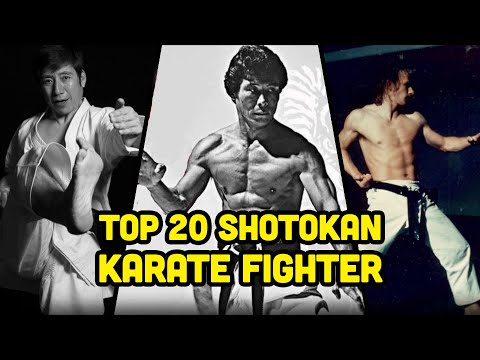
The Pantheon of Shotokan: Unveiling the Top 20 Masters Who Defined Budo

The air in the dojo crackles with a silent intensity. It's the hum of discipline, the echo of countless hours spent honing the body and mind. Shotokan Karate, a name synonymous with power, precision, and an unbroken lineage stretching back to the dawn of modern martial arts, is more than just a fighting style; it's a philosophy etched in motion. But who are the titans, the individuals whose very names evoke awe and respect within the hallowed halls of Budo? Who are the fighters who didn't just practice Shotokan, but embodied its spirit, pushing its boundaries and leaving an indelible mark on the world of martial arts? This is not merely a list; it is an investigation into the soul of a discipline that has shaped warriors and fostered self-mastery for generations.

The Genesis of Shotokan Greatness

Shotokan Karate, a cornerstone of modern martial arts, didn't spring into existence fully formed. It was forged in the crucible of Okinawa, refined by visionary masters, and disseminated across the globe by dedicated practitioners. Its very name, "Shoto," meaning "waving pine," reflects the serene yet powerful nature that its founder, Gichin Funakoshi, sought to instill. When we speak of the "greatest fighters," we're not just referring to those who dominated competitions, but to individuals who exemplified the highest ideals of Shotokan: technical brilliance, unwavering spirit, and a profound commitment to the principles of Budo.

But let's cut through the polite introductions. Are we talking about pure sport Karate, or does the definition of "fighter" encompass those who preserved the art's combative integrity? The line can blur, and it's precisely this tension that makes dissecting Shotokan's legacy so compelling. In this deep dive, we will not shy away from controversy, but rather embrace it, for it is through rigorous debate that true understanding is born.

The Pillars: Funakoshi and Nakayama

No discussion of Shotokan greatness can begin without acknowledging its spiritual and practical architects. Gichin Funakoshi (1868-1957) is, without question, the linchpin. His journey from Okinawa to mainland Japan, introducing *Te* (hand techniques) as Karate, fundamentally altered the martial landscape. Funakoshi wasn't just a fighter; he was a philosopher-warrior who translated the raw effectiveness of Okinawan fighting into a structured system, emphasizing the moral and ethical dimensions alongside the physical.

"Karate is not a copy of other arts, just as the pine is not a copy of the willow. Its strength is not merely in its execution, but in its perfection." - Gichin Funakoshi

His student, Masatoshi Nakayama (1913-1987), inherited this monumental task. Nakayama was the organizational genius and the driving force behind the Japan Karate Association (JKA). He not only codified the techniques and katas, ensuring a degree of standardization that allowed Shotokan to spread universally, but he also championed the competitive aspect, recognizing its power in testing and refining techniques under pressure. Nakayama's vision was pragmatic: to ensure Shotokan's relevance and effectiveness in a changing world. His influence on competitive Karate is undeniable.

Masters of the Golden Age

The decades following Funakoshi and Nakayama's foundational work saw an explosion of talent. These were the men who took the established framework and infused it with their unique fire, forging careers that would inspire generations. The late 20th century, in particular, was a fertile period for Shotokan fighters who excelled not only in kata but in the intense, high-speed combat of kumite.

We speak of:

  • Hirokazu Kanazawa (b. 1931): A student of Nakayama, Kanazawa is a legend for his technical prowess and dynamic energy. His mastery of both kata and kumite, coupled with his extensive international teaching, solidified his place in history. His influence transcends mere fighting; he is an educator of Budo.
  • Taiji Kase (1935-2004): Known for his powerful techniques and dynamic stances, Kase was another prominent figure within the JKA. He later developed his own style, encouraging innovation while staying true to Shotokan principles. His approach to the art was often described as forceful and direct, reflecting a deep understanding of combat application.
  • Hidetaka Nishiyama (1928-2008): A student of Funakoshi, Nishiyama was instrumental in establishing Karate in the United States and was a key figure in the formation of the International Traditional Karate Federation (ITKF). He advocated for Karate as a path to self-development, not just a fighting sport.
  • Keinosuke Enoeda (1935-1993): Often dubbed the "Tiger of Shotokan," Enoeda was renowned for his incredible speed, powerful techniques, and fierce fighting spirit. His presence on the mat was electrifying, a true testament to the combative potential of Shotokan.

These names, and many others like Tetsuhiko Asai, Takashi Mikami, and Yoshiaki Ushiro, represent a golden era where the theoretical principles of Shotokan were put to the ultimate test in live combat scenarios, both in dojo sparring and international tournaments. Their dedication to rigorous training, often involving punishing physical conditioning and repetitive drilling, is a lesson in itself. Are you putting in that level of commitment, or are you content with superficial understanding?

Contemporary Icons and Their Legacies

While the "golden age" produced many legends, the evolution of Shotokan has continued. Modern fighters, often competing in highly specialized sport Karate circuits, continue to push the envelope. Names like Antonio Oliva, Shinji Nagaki, and Toru Shimizu have carved out significant legacies. Their ability to adapt Shotokan's principles to the demands of modern competition, where milliseconds matter and strategy is paramount, is a testament to the art's enduring viability.

However, a word of caution: does the intense focus on sport Karate sometimes dilute the deeper philosophical aspects that Funakoshi emphasized? This is a question that sparks heated debate in martial arts circles. Some argue that the scoring system and rulesets can inadvertently encourage techniques that are less effective in a real self-defense scenario, while others contend that competitive pressure refines techniques to their most efficient form. Where do you stand on this crucial distinction?

The Philosophical Underpinnings of Mastery

To truly understand the "greatest" Shotokan fighters, one must look beyond their physical prowess. At its heart, Shotokan is a discipline rooted in the principles of Budo – the Way of the Warrior. This path emphasizes not only the combat skills but also moral development, mental fortitude, and spiritual growth. Concepts like Mushin (no mind), Zanshin (continuous awareness), and Fudoshin (immovable mind) are not mere buzzwords; they are the guiding principles that separate a mere fighter from a true martial artist.

"The ultimate aim of Karate is not winning or losing, but the perfection of the human character." - Gichin Funakoshi

The dedication required to achieve mastery in Shotokan is immense. It demands not only physical training but also deep introspection and an unwavering commitment to self-improvement. This is where the true "fighting" occurs – the internal battle against one's own limitations, fears, and ego. It is this internal struggle that, when conquered, allows the external techniques to flow with true power and purpose. Think of the discipline required for Kyokushin Karate's legendary conditioning; Shotokan, while different in its expression, demands a similar internal fortitude.

Sharpening Your Own Blade: Training for Excellence

The path to becoming a formidable Shotokan practitioner, whether for competition or personal development, is paved with consistent and intelligent training. While the specific techniques and approaches of the masters differ, certain core principles remain universal:

  1. Master the Fundamentals: Do not underestimate the power of the basics. Perfect your stances (dachi), punches (tsuki), blocks (uke), and kicks (geri). This is the bedrock upon which all advanced techniques are built.
  2. Kata as a Blueprint: Treat each kata not as a dance, but as a detailed combat simulation. Understand the bunkai (applications) behind every movement. Practice it repeatedly until the techniques become instinctive.
  3. Kumite Dynamics: Engage in sparring (kumite) with a focus on strategy, timing, and control. Seek partners who challenge you, forcing you to adapt and think on your feet. Learn from both your successes and your failures.
  4. Physical Conditioning is Non-Negotiable: Develop explosive power, endurance, and flexibility. Incorporate cardiovascular training, strength conditioning, and flexibility exercises into your routine. The body is the weapon; it must be honed.
  5. Mental Fortitude is Key: Cultivate focus, discipline, and resilience. Practice meditation or mindfulness techniques to enhance your awareness and composure under pressure.

Remember, the journey is as important as the destination. The greatest fighters weren't born; they were made through relentless dedication. Are you willing to make that commitment?

Essential Gear for the Dedicated Budoka

While Shotokan Karate can be practiced with minimal equipment, certain items can significantly enhance your training experience and help you emulate the dedication of the masters.

  • Karategi (Uniform): A high-quality, durable Karategi is essential. Look for one made from heavy-duty cotton that can withstand the rigors of intense training and frequent washing. Brands like Karate Merchandise or specific Kyokushin Gi manufacturers often offer excellent options.
  • Karate Belt: As you progress, your belt signifies your level of dedication and understanding. Ensure it's securely tied – a loose belt is a sign of a loose mind.
  • Mouthguard: For sparring (kumite), a properly fitting mouthguard is non-negotiable for protecting your teeth and jaw.
  • Groin Protector: Essential for protecting against accidental strikes during sparring.
  • Training Mats (optional): If you're practicing at home, especially dynamic techniques or falling drills, padded mats can provide a safer training environment and reduce the risk of injury.

Sensei's Verdict: The Enduring Impact

The concept of a definitive "Top 20" is inherently subjective, a testament to the diverse interpretations and expressions of Shotokan Karate throughout history. What unites these masters, from the foundational figures like Funakoshi and Nakayama to the titans of competition like Enoeda and Kanazawa, is their unwavering commitment to the art. They didn't just perform techniques; they lived the philosophy. They demonstrated that Shotokan Karate is a powerful combative system, a rigorous physical discipline, and a profound path to personal growth. Their legacies are not merely in the records they set, but in the countless practitioners they have inspired to take up the mantle of Budo.

Score: Black Belt in Legacy and Influence

Frequently Asked Questions

Who is considered the founder of Shotokan Karate?
Gichin Funakoshi is widely regarded as the founder of Shotokan Karate. He introduced the style from Okinawa to mainland Japan.
What is the difference between Shotokan and other Karate styles?
Shotokan is characterized by its deep stances, powerful linear techniques, and emphasis on strong fundamental movements. While all Karate styles share common roots, Shotokan's specific approach to stances, kihon (basics), and kata differentiates it.
Is Shotokan Karate effective for self-defense?
Yes, Shotokan Karate, when practiced with a focus on practical application and combative principles, can be highly effective for self-defense. However, like any art, its effectiveness depends on the practitioner's training, intent, and understanding of real-world situations.
What does "Budo" mean in the context of Shotokan?
Budo translates to "the Way of the Warrior." In Shotokan, it signifies that the practice of Karate extends beyond physical techniques to encompass discipline, respect, mental fortitude, and personal development.

Deeper Dives into the Budo Path

The journey into the world of Shotokan and the broader martial arts landscape is continuous. For those seeking to deepen their understanding and connect with a vibrant community, the following resources are invaluable:

  • Explore the foundational principles of martial philosophy in our article on BUDO.
  • Understand the physical demands and strategic nuances of modern combat in our analysis of Artes Marciales Mixtas.
  • Discover the importance of mental resilience and self-mastery in our guide to Self Improvement.

In conclusion, Shotokan Karate stands as a monumental pillar in the edifice of martial arts. The fighters we have highlighted are not just practitioners; they are custodians of a legacy, warriors who have not only mastered technique but have also illuminated the profound philosophical depths of this ancient art form. Their dedication serves as a perpetual challenge to us all: to pursue not just strength, but wisdom; not just victory, but character.

Reflexión del Sensei: Tu Próximo Paso

You have walked through the hallowed halls, glimpsed the faces of legends. But true understanding does not come from observation alone. It is forged in sweat, in frustration, in the relentless pursuit of perfection. Now, tell me: which of these masters' spirits resonates most deeply with your own martial aspirations? And more importantly, what single, concrete action will you take today to embody a fraction of their dedication in your own training? The path is yours to walk, but the first step must be taken with intention.

The Unveiled Truths: Decoding Knife Fighting Concepts from Ancient Arts to Modern Combat

The glint of steel, the dance of survival. Knife fighting, a brutal and often misunderstood facet of combat, has echoed through history. But how do we reconcile the raw, primal nature of blade combat with the structured discipline of martial arts? This isn't about flashy moves for the silver screen; it's about understanding principles that have preserved lives for centuries.

Many approach knife fighting seeking a quick fix, a secret technique. I tell you now, the true strength lies not in a single move, but in the unwavering foundation of one's martial spirit and the intelligent application of time-tested principles. Are you ready to look beyond the superficial and delve into the heart of effective blade combat?

Ancient Roots and Modern Interpretations

The video you're referring to, filmed over five years ago, isn't merely a demonstration; it's a bridge connecting eras. It showcases how concepts honed in the crucible of historical combat continue to resonate. We speak of traditions like Historic European Martial Arts (HEMA), with its sword and dagger work, and the intricate, often deadly, systems found within old-school Japanese Martial Arts such as Tantojutsu (the art of the dagger) and Aikijujutsu.

These ancient disciplines were not born in sterile dojos but in the harsh realities of self-preservation, warfare, and duels. They emphasized efficiency, economy of motion, and an understanding of anatomy and leverage that is timeless. The application of armor in historical combat forced practitioners to develop techniques that could overcome these defenses, techniques that, when stripped of their historical context and adapted, remain incredibly relevant.

"The supreme art of war is to subdue the enemy without fighting." - Sun Tzu, The Art of War. While this adage speaks of strategy, it also underscores the ultimate goal: survival. In knife combat, preventing the engagement is the highest victory.

The essence of these old ways was often about controlling the weapon arm, creating openings through precise timing and movement, and exploiting vulnerabilities with devastating effect. AARES Combatives Research's contribution lies in reinterpreting these principles for a contemporary audience, demonstrating their application in modern scenarios, often within the context of armored training – a critical element for safe and effective skill development.

AARES Combatives Research: A Modern Master's Perspective

AARES Combatives Research, the expert behind this valuable resource, understood a crucial truth: martial arts are not static relics. They are living, evolving disciplines. His instructional project, aimed at military and law enforcement personnel, was not about creating aggressive fighters, but about imparting a functional understanding of extreme close-quarters combat. The success of such a project speaks volumes about the clarity and efficacy of his methodology.

His modern application of ancient knife fighting concepts is a testament to his deep understanding. He doesn't just show *how* to use a knife; he teaches *why* certain movements are effective, drawing parallels to the strategic thinking embedded in HEMA and Japanese traditions. This approach elevates the material from mere technique demonstration to a comprehensive lesson in martial philosophy.

This focus on modern application is vital. The battlefield, the street, or even a training scenario presents unique challenges. Understanding how historical masters dealt with similar problems – be it an armored opponent or a grappling entanglement involving a blade – provides a robust framework for developing adaptable skills. The insights offered are not just about self-defense but about a deeper comprehension of BUDO and the warrior's mindset.

Core Principles: Stance, Footwork, and Disarming

At the heart of any effective combat system, especially one involving such a lethal tool as a knife, lie fundamental principles. The video meticulously emphasizes these:

  1. Strong Stance and Body Positioning: This is the bedrock. A proper stance provides stability, allowing for explosive movement and effective defense. It’s not just about planting your feet; it's about presenting a difficult target while maintaining the ability to generate power and shift angles rapidly. Think of the rootedness of a Karate practitioner or the balanced mobility of a Judoka.
  2. Agile Footwork: In knife combat, distance management is paramount. Your feet are your first line of defense and offense. The ability to move in, out, and laterally with speed and precision can mean the difference between life and death. This is where concepts from Aikido, with its emphasis on circular movement and evasion, or the dynamic footwork seen in MMA, become incredibly relevant.
  3. Disarming Techniques: While often sensationalized, disarming is a high-risk, high-reward maneuver. It requires impeccable timing, understanding of leverage, and a willingness to enter a dangerous range. The principles are rooted in joint locks, redirection of force, and simultaneous attack and defense – concepts present in various martial arts disciplines, from Judo throws to BJJ submissions, adapted for the presence of a blade.
  4. Defense Against an Armed Attacker: This encompasses a holistic approach. It involves awareness, de-escalation (if possible), creating distance, and if conflict is unavoidable, understanding how to disrupt the attacker's balance and weapon control. This is where the tactical thinking from Self Defense training meets the practical application of martial skills.

The video does an excellent job of breaking down these elements, showing how they interrelate. It’s a clear demonstration that effective fight is not just about brute force, but about intelligence, technique, and the ability to execute under pressure.

The Philosophy of Training: Beyond the Blade

What truly sets apart a martial artist from someone who merely knows a few moves is the underlying philosophy. AARES Combatives Research’s work implicitly touches upon this. The commitment to creating instructional content, the methodical approach to teaching, and the emphasis on understanding the *why* behind techniques all point to a deeper dedication to the artes marciales.

Knife fighting training, especially when incorporating armored drills, teaches invaluable lessons about:

  • Risk Assessment: Understanding the inherent dangers involved and learning to mitigate them.
  • Precision and Control: The necessity of exact movements to avoid catastrophic error.
  • Mindset Under Pressure: Maintaining calm and tactical thinking when faced with extreme threat. This is the core of Mental Game development.
  • Adaptability: Recognizing that no two encounters are identical and requiring the ability to adjust strategies on the fly.
"Even in the deadliest of encounters, the mind must be a calm ocean, reflecting the sky with perfect clarity." - A principle passed down through generations of BUDO practitioners.

This comprehensive approach transforms the practitioner. It’s not just about learning to fight with a knife; it’s about developing resilience, discipline, and a profound respect for the tools and techniques of combat. The value extends far beyond the combative application, fostering personal growth and Self Improvement.

Essential Equipment for Your Training

Engaging with knife fighting concepts, especially those involving live blades or armored sparring, requires specific safety and training equipment. Investing in the right gear is not a luxury; it is a necessity for safe and effective practice.

  • Training Knives: Made from durable, yet blunted materials (like rubber or hardened plastic), these are essential for practicing techniques without causing injury. Look for models that mimic the weight and balance of real blades.
  • Protective Gear: When engaging in any form of sparring, especially with training knives, protective gear is non-negotiable. This includes:
    • Headgear: To protect against impacts.
    • Groin Protector: Essential for all male practitioners.
    • Hand/Forearm Protection: Padded gloves and guards to absorb impact and prevent abrasions.
    • Body Armor/Padded Suits: For armored drills, specific padded suits or vests designed to simulate blunt force trauma are crucial. These are vital for practicing techniques that involve close contact and weapon retention/acquisition.
  • First Aid Kit: Always have a comprehensive first aid kit readily accessible during any training session.

For those interested in specific brands or types, consulting with experienced instructors or reputable Martial Arts Merchandise suppliers can provide tailored recommendations based on the specific training methodology you are following.

Frequently Asked Questions

What is Tantojutsu?

Tantojutsu is a traditional Japanese martial art focused on the use of the tanto, a short sword or dagger. It often emphasizes close-quarters combat, joint locks, and grappling techniques adapted for situations involving a blade.

Is knife fighting practical for self-defense?

While the video demonstrates practical applications, engaging in knife combat is inherently dangerous. The focus in self-defense should always be on avoiding conflict, de-escalation, and escape. If avoidance is impossible, then the principles of defense, which may include disarming or using a weapon if legally justified and ethically sound, become critical. However, training for such scenarios requires expert guidance and safety precautions.

How does armor change knife fighting techniques?

Armor necessitates different approaches. Direct thrusts might be ineffective against heavier protection, pushing practitioners to focus on vital points, joint manipulation, or grappling to create openings. It also forces a greater understanding of leverage and control to overcome the defender's mobility limitations.

Are old martial arts concepts still relevant today?

Absolutely. The core principles of movement, timing, leverage, and understanding human anatomy are universal and timeless. Modern martial arts and combative systems often reinterpret and adapt these ancient concepts to contemporary threats and training methodologies.

Further Learning on Your Path

The journey into understanding the intricacies of martial arts is a continuous one. To deepen your knowledge and broaden your perspective, explore these related topics:

Veredicto del Sensei: ¿Merece la pena?

Este análisis de las técnicas de lucha con cuchillo, arraigado en la sabiduría de las artes marciales históricas y presentado a través de una lente moderna, es un recurso de valor incalculable. No se trata de glorificar la violencia, sino de comprender las realidades del combate y honrar la disciplina que requiere. AARES Combatives Research ha creado una obra que va más allá de la mera instrucción técnica; es una lección de historia marcial, estrategia y mentalidad. Si buscas una comprensión profunda y matizada de cómo los principios antiguos se aplican a las amenazas modernas, este contenido es un Cinturón Negro en Divulgación Marcial.

Reflexión del Sensei: Tu Próximo Paso

Ahora, te enfrentas a esta sabiduría. Las técnicas están ahí, los principios están expuestos. Pero la verdadera maestría no se encuentra en la observación pasiva, sino en la aplicación activa. ¿Cómo integrarás la lección de la simplicidad estratégica en tu propio entrenamiento, sea cual sea el arte que practiques? ¿Te detendrás a considerar la raíz histórica de tus movimientos o te conformarás con la superficie? El camino del guerrero exige una curiosidad insaciable y una reflexión constante. Considera esto: ¿cuál es el 'arma' más peligrosa que llevas contigo, y cómo la has estado entrenando?

Para Profundizar en tu Camino