Showing posts sorted by relevance for query zen buddhism. Sort by date Show all posts

Samurai's Edge: Beyond the Katana - An In-Depth Look at Ancient Warrior Weapons and Philosophy

The allure of the samurai is undeniable, a potent blend of martial prowess, disciplined spirit, and iconic weaponry. But to truly grasp their essence, we must look beyond the romanticized image of the katana and delve into the intricate world of their tools and the philosophy that guided their use. This exploration isn't merely an academic exercise in history; it's a profound lesson in strategy, self-mastery, and the enduring principles that shape effective combat.

The Samurai's Arsenal: More Than Just Swords

While the katana, with its elegant curve and legendary sharpness, often steals the spotlight, the samurai's arsenal was far more diverse and strategically employed. Understanding these weapons reveals not just their tactical needs but also the adaptability and foresight required on the battlefield.
  • Yumi (Bow): The primary ranged weapon of the samurai, the yumi, was a powerful composite bow, often asymmetrical, requiring immense strength and skill to master. Its effectiveness in early samurai warfare cannot be overstated, allowing warriors to engage from a distance, disrupt enemy formations, and provide crucial support. The discipline required to become proficient with the yumi mirrors the patience and focus demanded in other aspects of samurai training.
  • Yari (Spear): A versatile polearm, the yari came in various lengths and configurations. It was instrumental in close-quarters combat, particularly for foot soldiers forming defensive lines against cavalry charges. Its reach provided a significant advantage, and its straightforward design emphasized direct, powerful thrusts.
  • Naginata: This polearm, featuring a curved blade at the end of a pole, was particularly favored by warrior monks and women of samurai families. It offered a balance of reach and cutting power, effective against both armed and unarmed opponents. The graceful, sweeping motions of the naginata demand a fluid, coordinated body movement, much like certain katas in Karate or empty-hand techniques in Kung Fu.
  • Tanto: A dagger or knife, the tanto served as a backup weapon, used for close-in fighting when other weapons were lost or impractical. It also played a significant role in ritual suicide (seppuku), underscoring its deep cultural and symbolic importance.
  • Kusarigama: A truly unique weapon, the kusarigama consisted of a sickle attached to a chain with a weight at the end. This allowed for a devastating combination of entangling and striking. The user could swing the weighted chain to distract or disable an opponent, then follow up with the sickle. Mastering this weapon requires exceptional dexterity and a sophisticated understanding of timing and distance.
The choice of weapon was rarely arbitrary. It depended on the battlefield, the opponent, and the samurai's role within the larger conflict. This pragmatic approach to warfare is a lesson for all martial artists: understand your tools, your environment, and your limitations.

The Philosophy of the Sword: Bushido and the Way of the Warrior

The samurai's commitment to their weapons was deeply intertwined with the ethical and spiritual code of Bushido (武士道), the Way of the Warrior. This unwritten code emphasized virtues such as loyalty, self-discipline, courage, honor, and compassion. The sword, as the soul of the samurai, was not merely a tool of destruction but an extension of the warrior's moral compass.
"The sword is the soul of the samurai." - A common Japanese proverb.
This proverb encapsulates the profound connection between the warrior and his primary weapon. The way a samurai wielded his sword reflected his inner state, his training, and his adherence to Bushido. A skilled swordsman was not just technically proficient; he was also morally upright, his actions guided by a sense of duty and righteousness. This concept resonates deeply within various martial traditions. Consider the principle of Mushin (無心), "no mind," a state of mental clarity and spontaneity crucial in combat. A samurai in Mushin reacted instinctively, without hesitation or fear, his actions pure and efficient. This state is cultivated through rigorous training and deep philosophical understanding, not just physical repetition.

Katsu Jin Ken vs. Setsu Jin Ken: The Sword for Life vs. the Sword for Death

A critical distinction within the philosophy of swordsmanship is the concept of Katsu Jin Ken (活人剣), the "life-giving sword," and Setsu Jin Ken (殺人剣), the "life-taking sword."
  • Setsu Jin Ken: This is the sword used with the intent to kill, to destroy an enemy on the battlefield. It is direct, brutal, and focused on incapacitation or death.
  • Katsu Jin Ken: This is a more advanced concept, where the sword is used with the intent to subdue, to neutralize without necessarily killing, or even to guide an opponent toward better conduct. It requires immense control and a higher level of spiritual development. A true master of the sword, it is said, can win a battle without drawing blood.
This duality teaches us that true martial skill is not solely about aggression. It's about understanding the full spectrum of combat – from necessary force to ultimate restraint. It’s about wielding power responsibly, a lesson applicable far beyond the battlefield, in everyday life and personal growth.

Training and Discipline: The Path to Mastery

Becoming a samurai was a lifelong commitment to rigorous training and unwavering discipline. The physical conditioning was intense, but the mental and spiritual development was paramount.

The Daily Grind: Beyond the Flashy Techniques

The daily training of a samurai involved:
  1. Kenjutsu (剣術 - Sword Art): Practicing forms (kata), sparring, and honing the muscle memory and reflexes necessary for effective swordsmanship.
  2. Sojutsu (槍術 - Spear Art): Mastering the use of the spear in various combat scenarios.
  3. Kyujutsu (弓術 - Archery Art): Developing accuracy, power, and consistency with the bow.
  4. Physical Conditioning: Strength training, endurance exercises, and agility drills to ensure peak physical readiness.
  5. Mental Fortitude: Meditation (often Zen Buddhism influenced), strategic study, and cultivating a calm, resolute mindset.
The emphasis was always on repetition, refinement, and the relentless pursuit of perfection. A single sloppy movement, a moment of lost focus, could be fatal. This dedication to practice is a cornerstone of all high-level martial arts training.
"I fear not the man who has practiced 10,000 kicks once, but I fear the man who has practiced 10,000 kicks, 10,000 times." - Bruce Lee (though not a samurai, this quote embodies the spirit of relentless practice).
The samurai understood that true skill is forged through thousands of hours of dedicated practice, often in conditions that would break the uncommitted.

The Samurai in Modern Martial Arts: Echoes of the Past

While the samurai era has long passed, their legacy endures. The principles of Bushido, the emphasis on discipline, respect, and self-improvement, are fundamental to many modern martial arts, including Karate, Judo, and Kendo.
  • Kendo (剣道): Directly translates to "The Way of the Sword" and is a direct descendant of samurai swordsmanship. Practitioners use bamboo swords (shinai) and protective armor (bogu) to engage in simulated combat, emphasizing discipline, spirit, and precise technique.
  • Karate: While originating in Okinawa and evolving through various influences, Karate shares many philosophical underpinnings with Bushido, particularly in its emphasis on discipline (Kihon, Kata), respect for the sensei and training partners, and the pursuit of self-perfection. The concept of "Karate ni sente nashi" (There is no first attack in Karate) reflects a defensive and principled approach akin to the samurai's code.
  • Iaido (居合道): The art of drawing the sword, cutting, and re-sheathing, Iaido focuses on the precise and controlled movements of drawing the katana, often performed as solo forms (kata). It emphasizes mental focus, grace, and the readiness to defend.
The spirit of the samurai, with its blend of martial excellence and ethical conduct, continues to inspire and guide practitioners seeking not just to fight, but to grow as individuals.

Veredicto del Sensei: ¿Merece la pena el estudio del Samurai?

Absolutely. Studying the samurai and their weaponry is far more than a historical curiosity. It's a masterclass in martial philosophy, strategic thinking, and the cultivation of character. The samurai's arsenal, their adherence to Bushido, and their rigorous training methods offer invaluable lessons for any practitioner of martial arts today. They teach us that true strength lies not just in physical power, but in discipline, integrity, and a profound understanding of oneself and one's purpose.

Equipo Esencial para tu Entrenamiento

While direct samurai weaponry is not practical for most modern dojos, certain training tools and apparel are essential for dedicated practice in arts influenced by this warrior tradition.
  • Shinai (Bamboo Sword): Crucial for Kendo practice, allowing for safe, full-contact sparring.
  • Bokken (Wooden Sword): Used in Karate, Aikido, and other arts for practicing sword techniques and forms without live blades.
  • Iaido/Aikido Uniforms: Traditional uniforms provide the necessary freedom of movement and respect for practice.
  • Protective Gear (Bogu): For Kendo practitioners, essential for safe engagement.
  • Dojo Subscription/Membership: Access to qualified instruction is paramount. Consider looking for local Kendo, Iaido, or Karate dojos.
  • Books on Bushido and Samurai History: For understanding the philosophical underpinnings, I highly recommend works by Miyamoto Musashi and Nitobe Inazo.

Guía de Entrenamiento: Cultivando la Concentración del Guerrero

This exercise aims to build the mental focus and calm required by a samurai.
  1. Find a Quiet Space: Locate an area free from distractions. This could be your training mat, a quiet room at home, or even a peaceful spot outdoors.
  2. Assume a Stable Posture: Sit or stand in a natural, relaxed, yet upright posture. For seated meditation, the seiza (kneeling) position is traditional, but any comfortable, stable position will suffice.
  3. Focus on Your Breath: Close your eyes gently and bring your attention to your breath. Notice the sensation of air entering and leaving your nostrils or the rise and fall of your abdomen. Do not force your breathing; simply observe it.
  4. Acknowledge Wandering Thoughts: Your mind will inevitably wander. When you notice your thoughts drifting (to tomorrow's training, a disagreement, or a pleasant memory), acknowledge the thought without judgment and gently guide your attention back to your breath.
  5. Practice Patience and Consistency: This is not about achieving a completely blank mind, but about developing the ability to refocus repeatedly. Aim for 5-10 minutes daily, gradually increasing the duration as you become more comfortable.
  6. Integrate with Movement (Optional): After meditation, practice a few basic movements from your martial art (e.g., a simple stance, a basic strike, or a drawing motion with an imaginary sword). Try to maintain the same level of present-moment awareness.

Preguntas Frecuentes

  • What was the primary role of the samurai in Japanese society?
    Samurai were the military nobility and officer caste of medieval and early-modern Japan. They served as warriors, administrators, and protectors of their lords (daimyo).
  • Is Bushido still relevant today?
    Yes, the principles of Bushido – loyalty, honor, self-discipline, courage, and compassion – remain highly relevant and are often integrated into the philosophies of modern martial arts and leadership training.
  • Besides the katana, what other weapons were commonly used by samurai?
    Samurai commonly used the yumi (bow), yari (spear), naginata (polearm), and tanto (dagger), among others, depending on the context of the battle.
  • How did Zen Buddhism influence samurai philosophy?
    Zen Buddhism heavily influenced samurai by teaching principles of mindfulness, detachment from worldly desires and fears, and the importance of living fully in the present moment – crucial for combat effectiveness and mental fortitude.
  • Are there any modern martial arts directly descended from samurai fighting styles?
    Yes, Kendo (the Way of the Sword) and Iaido (the art of sword drawing) are direct descendants. Many principles and philosophies from samurai traditions are also deeply embedded in arts like Karate and Aikido.

Para Profundizar en tu Camino

The samurai were more than just warriors; they were embodiments of discipline, philosophy, and a profound connection to their craft. Their legacy serves as a powerful reminder that true mastery is a journey of the mind, body, and spirit.

Reflexión del Sensei: Tu Próximo Paso

If a samurai’s life was a constant negotiation between the blade’s edge and the spirit’s depth, what is your daily practice teaching you about the edge of your own potential and the depth of your character? Are you merely training your body, or are you forging your soul?

``` ```json { "@context": "https://schema.org", "@type": "FAQPage", "mainEntity": [ { "@type": "Question", "name": "What was the primary role of the samurai in Japanese society?", "acceptedAnswer": { "@type": "Answer", "text": "Samurai were the military nobility and officer caste of medieval and early-modern Japan. They served as warriors, administrators, and protectors of their lords (daimyo)." } }, { "@type": "Question", "name": "Is Bushido still relevant today?", "acceptedAnswer": { "@type": "Answer", "text": "Yes, the principles of Bushido – loyalty, honor, self-discipline, courage, and compassion – remain highly relevant and are often integrated into the philosophies of modern martial arts and leadership training." } }, { "@type": "Question", "name": "Besides the katana, what other weapons were commonly used by samurai?", "acceptedAnswer": { "@type": "Answer", "text": "Samurai commonly used the yumi (bow), yari (spear), naginata (polearm), and tanto (dagger), among others, depending on the context of the battle." } }, { "@type": "Question", "name": "How did Zen Buddhism influence samurai philosophy?", "acceptedAnswer": { "@type": "Answer", "text": "Zen Buddhism heavily influenced samurai by teaching principles of mindfulness, detachment from worldly desires and fears, and the importance of living fully in the present moment – crucial for combat effectiveness and mental fortitude." } }, { "@type": "Question", "name": "Are there any modern martial arts directly descended from samurai fighting styles?", "acceptedAnswer": { "@type": "Answer", "text": "Yes, Kendo (the Way of the Sword) and Iaido (the art of sword drawing) are direct descendants. Many principles and philosophies from samurai traditions are also deeply embedded in arts like Karate and Aikido." } } ] }
Shorinji Kempo's Kagami Biraki 2022: A Deep Dive into the Art of the Warrior Monk

An Introduction to the Kagami Biraki

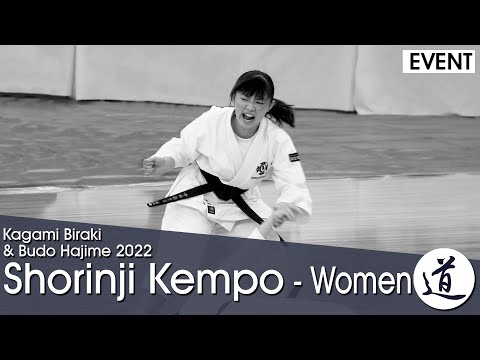
The Kagami Biraki ceremony, translating literally to "opening the mirror," is a cornerstone of Japanese martial arts tradition, deeply intertwined with the spirit of renewal and dedication. Held annually, it marks not just the passage of time but a symbolic recommitment to the rigorous path of Budo. This year, at the hallowed Nippon Budokan, the 2022 Kagami Biraki, coupled with the Budo Hajime (the year's first martial practice), offered a profound spectacle. At its heart were the breathtaking demonstrations, particularly the Women's Kumi Embu featuring Nakata Serina, Ikkyu, and Takahashi Mana, Ikkyu. But is this mere performance, or a window into the very soul of martial endeavor? Join me as we dissect this event, not just as spectators, but as practitioners seeking to understand the deeper currents of the martial way.

Shorinji Kempo: Beyond the Demonstration

Shorinji Kempo, often misunderstood as simply another form of Karate or Kung Fu, possesses a unique philosophical and technical foundation. Founded by Doshin So, it draws heavily from both the Shaolin tradition of China and Zen Buddhism, emphasizing not just physical combat prowess but also the cultivation of mental fortitude and moral character. The "Kumi Embu" – a paired, choreographed form of defense and attack – is a critical element of their practice. It’s designed to showcase the dynamic interplay of offense and defense, the principles of timing, distance, and power generation, all while adhering to strict ethical guidelines. The demonstration at Kagami Biraki 2022 provided a vivid illustration of these principles. The fluidity, the precision, and the palpable energy emanating from Nakata Serina, Ikkyu, and Takahashi Mana, Ikkyu, were not accidental. They were the result of countless hours of dedicated training, a testament to the efficacy of their system.
"The true warrior is one who has mastered not only the body, but the mind. For in the heat of battle, it is the mind that dictates the action, and the body that follows." - A principle echoed in the training of Shorinji Kempo.

Deconstructing the Kumi Embu: Strategy and Spirit

The Women's Kumi Embu, as presented by Nakata Serina and her partners, transcended a simple display of techniques. It was a narrative, a dialogue between two practitioners where every movement carried intent and consequence. Observe the initial stance: a posture of readiness, not aggression. The movements that followed—the strikes, blocks, and joint manipulations—were executed with a controlled ferocity. This wasn't about brute strength; it was about efficiency, about using the opponent's momentum against them, a concept central to many traditional martial arts and a key element in understanding effective defensa personal. The synchronized nature of the Kumi Embu highlights the importance of timing and coordination, essential skills that translate directly into live sparring and, for some, into the high-pressure world of MMA or kickboxing. A crucial aspect often missed by the untrained eye is the adherence to form. While live combat is unpredictable, the Kumi Embu rigorously trains specific scenarios, embedding fundamental principles into muscle memory. This disciplined approach ensures that when faced with genuine threat, the practitioner can react instinctively and effectively, a core tenet of BUDO.

The Significance of Kagami Biraki and Budo Hajime

The Kagami Biraki, or "opening the mirror," ceremony has deep historical roots, originating from the samurai era. The "mirror" symbolizes truth, clarity, and self-reflection. By symbolically "opening" it at the start of the year, practitioners engage in introspection, acknowledging past lessons and preparing for future challenges. The accompanying Budo Hajime, the year's inaugural practice session, solidifies this commitment. Imagine the Nippon Budokan, a prestigious venue steeped in martial history, filled with practitioners from various disciplines, all coming together for this first training. This collective practice underscores the unity and shared spirit that binds the diverse world of Japanese martial arts. While the traditional Oshiruko kai (sweet bean soup with mochi) was canceled due to pandemic protocols, the core essence of shared experience and renewed dedication remained palpable. This shared spirit is what fuels the Martial Arts Community globally.
"The way of the warrior is to become one with the opponent, to understand their intentions before they are even fully formed." - A concept fundamental to the flow of Kumi Embu and the philosophy of many artes marciales.
The connection between historical reconstruction (often with armor) and live demonstrations by the "official Budo" disciplines demonstrates a respect for lineage, linking the past to the present. It’s a powerful reminder that these are not mere sports, but living traditions passed down through generations.

Veredict of the Sensei: A Glimpse into True Budo

The Women's Kumi Embu at Kagami Biraki 2022 was more than just a visually impressive display; it was an embodiment of Shorinji Kempo's core tenets. Nakata Serina, Ikkyu, and Takahashi Mana, Ikkyu, showcased not only technical proficiency but also the discipline, grace, and "spirit" that define true Budo. While a single demonstration can never fully capture the depth of an art form, this performance served as an excellent introduction, highlighting the system's practical applications and its philosophical underpinnings. For practitioners, it’s a source of inspiration. For those curious, it’s an invitation to explore the rich world of martial arts beyond the stereotype of simple fighting. This event, despite its limitations due to external circumstances, powerfully conveyed the enduring legacy and evolving practice of traditional Japanese martial arts. **Rating:** A Strong Display of Discipline and Skill.

Training Your Mind and Body: Principles of Shorinji Kempo

While we can't replicate the intensity of a live Kagami Biraki demonstration at home without proper guidance, the principles embodied can be integrated into our training.
  1. Cultivate Awareness (Zanshin): After every technique, whether in kata or sparring, maintain a state of awareness. This is not just physical; it's mental readiness. Practice this by holding your guard for a few extra seconds after a drill.
  2. Focus on Efficiency: Shorinji Kempo, like many effective martial arts, emphasizes minimal effort for maximum effect. When practicing strikes or blocks, focus on generating power from your core, not just your limbs. Consider basic power generation drills.
  3. Develop a Strong Stance: A solid foundation is paramount. Practice holding stances like the Kamae (ready stance) for extended periods, feeling the grounding and stability. This builds leg strength essential for grappling and powerful striking.
  4. Embrace the Philosophy: Remember that Shorinji Kempo, and Budo in general, is about self-improvement. Dedicate time to understanding the philosophical aspects. This mental aspect is as crucial as physical conditioning. Consider reading about Bushido or Zen Buddhism.
  5. Partner Drills (if possible): If you train with a partner, focus on synchronized movements in basic drills, emphasizing control and precision over speed. This builds the foundation for more complex interactions seen in Kumi Embu.

Essential Equipment for Your Training

While Shorinji Kempo can be practiced with minimal equipment, certain items can enhance your training experience and safety.
  • Dōgi (Uniform): A durable and comfortable uniform is crucial for free movement and to withstand the rigors of training. Look for a traditional Karate Gi or a specific Shorinji Kempo Gi if available. For general martial arts training, consider kimonos with a good weight for durability.
  • Hand/Foot Protection (Optional, depending on school): Some training methods, especially those involving light contact or specific drills, might benefit from padded gloves or foot protection. This is particularly relevant if you ever venture into sparring.
  • Training Mats (for home practice): If you practice solo routines at home, especially those involving falling techniques, puzzle mats can provide a safer surface.
  • Reference Books/Videos: While live instruction is best, supplementary materials can deepen your understanding. Look for reputable books on Shorinji Kempo techniques and philosophy.

Frequently Asked Questions

Q: What is the main difference between Shorinji Kempo and Karate?
A: While both are Japanese martial arts, Shorinji Kempo has a stronger emphasis on its philosophical and spiritual aspects, rooted in Buddhism and Shaolin Kung Fu. It also incorporates techniques for both offense and defense, often practiced in pairs (Kumi Embu), with a focus on striking, throwing, and joint locks.

Q: Is Shorinji Kempo effective for self-defense?
A: Yes, Shorinji Kempo is designed to be a practical martial art for self-defense. Its curriculum includes techniques that address common attack scenarios, emphasizing the use of technique and timing over brute force.

Q: What does "Kumi Embu" mean?
A: Kumi Embu translates to "paired practice" or "group practice" of embu (forms). It's a pre-arranged sequence of techniques performed by two or more practitioners, demonstrating offensive and defensive maneuvers in a coordinated fashion.

Q: How important is the philosophical aspect in Shorinji Kempo?
A: The philosophy is central to Shorinji Kempo. It's often described as "a way to train the spirit" as much as the body. The goal is not just to become a skilled fighter, but to develop a strong moral character and contribute positively to society.

For Deeper Exploration of Your Path

To truly grasp the breadth of martial arts and their cultural significance, further study is essential. Explore these related topics:
  • BUDO and its influence across martial disciplines.
  • The history and techniques of Shaolin Kung Fu.
  • Understanding Aikido: Philosophy and Practice.
  • The role of Kyokushin Karate in building mental fortitude.
"The martial way is not about fighting. It is about the path to self-mastery." - A sentiment that resonates across all genuine martial traditions.

Reflection of the Sensei: Your Next Step

Witnessing the Kagami Biraki demonstration prompts a vital question: are we merely admiring the performance, or are we internalizing the principles? The dedication seen in Nakata Serina, Ikkyu, and Takahashi Mana, Ikkyu, is a mirror reflecting our own commitment. How do you intend to "open the mirror" of your own martial journey this year? Will you strive for mere superficial technique, or will you embrace the deeper philosophy that transforms a fighter into a warrior of spirit and intellect? The choice, and the practice, is yours. GEMINI_METADESC: Explore the Shorinji Kempo demonstration at Kagami Biraki 2022: technique, philosophy, and the spirit of Budo. Learn about Kumi Embu and its cultural significance.

The Unbeatable Fist: Why Shaolin Monks Are More Than Just Superhuman

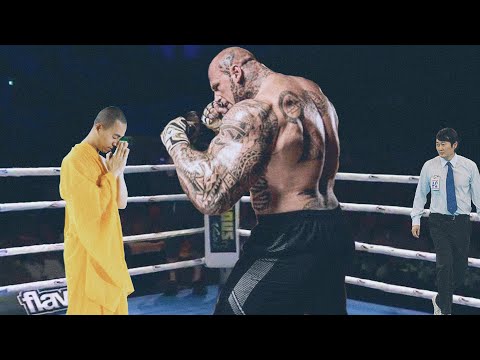
The Shaolin Temple. The very name conjures images of warriors defying gravity, their bodies honed into weapons through centuries of relentless discipline. We've all seen the movies, the documentaries, the viral clips of monks performing feats that seem to bend the very laws of nature. But are they truly superhuman, or is there a deeper, more profound truth behind their legendary prowess? This is not merely about brute strength; it's about a philosophy, a training regimen, and a spiritual connection that few can comprehend. Today, we delve into what makes the Shaolin monk a formidable force, a warrior whose mastery extends beyond mere combat.

The Myth of Superhuman Strength

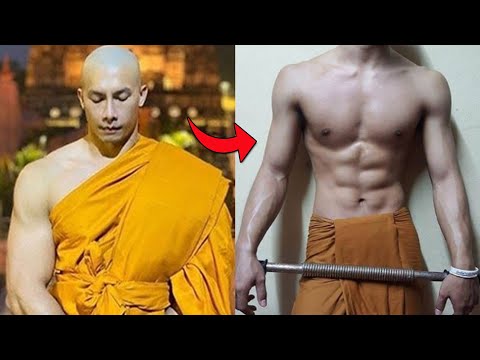
We often marvel at the incredible displays of power and agility from Shaolin monks – the ability to withstand strikes that would fell an ordinary man, the flexibility to contort their bodies in impossible ways, the sheer speed and precision of their movements. This perception of "superhuman" ability is understandable, fueled by sensationalized media and genuine awe. However, as practitioners of the martial arts, we know that true mastery is built on a foundation of rigorous training, not magic. The question isn't *if* they are superhuman, but *how* they achieve such extraordinary levels of human potential. This requires an understanding of their unique philosophy and an unwavering commitment to a demanding path.

In the world of martial arts, we seek efficiency, effectiveness, and a deep understanding of the human body and spirit. The Shaolin tradition embodies these principles to an extreme degree. It is not merely about fighting; it is a way of life, a spiritual discipline that shapes the practitioner from the inside out. When we look at the monks, we are not seeing aliens; we are seeing the absolute pinnacle of human dedication and specialized training.

The Core of Shaolin: Beyond the Physical

The Shaolin martial arts are inextricably linked to Chan Buddhism (Zen Buddhism in Japan). This philosophical underpinning is crucial. It's not just about learning to punch, kick, or break boards; it's about cultivating inner peace, compassion, and a profound connection to the present moment. This is where concepts like Mu (emptiness) and Xin (mind) become paramount. The goal is not to develop aggression, but to achieve a state of serene awareness where action arises naturally and effectively from a calm, centered mind.

"To conquer 1000 enemies in 1000 battles is not the height of skill. To subdue the enemy without fighting is the height of skill." - A principle deeply embedded in Shaolin philosophy, echoing the wisdom of Sun Tzu.

This philosophy directly influences their training. A monk's life is one of balance: periods of intense physical exertion are interspersed with deep meditation and contemplation. This duality is what allows them to push their physical limits while maintaining mental clarity and emotional control. The physical is a tool to achieve spiritual and mental mastery, and vice versa. This integrated approach is what gives them their remarkable resilience and strategic thinking, even in the heat of combat.

The Unrelenting Path: Shaolin Training

The physical training of Shaolin monks is legendary and notoriously rigorous. It is designed not just to build strength and speed, but also to develop incredible bone density, tendon strength, and resilience to pain. This is achieved through:

  • Extensive Conditioning: Daily routines involve thousands of repetitions of basic stances, kicks, punches, and forms. This builds muscular endurance and strength.
  • Iron Palm Training: A series of techniques where monks repeatedly strike specific surfaces (like sandbags, rice, or wooden posts) to toughen the skin, flesh, and bones of their hands. This is a long, arduous process that can take years to master.
  • Stance Training (Zhan Zhuang): Holding static postures for extended periods. This builds immense leg strength, core stability, and mental fortitude. It's a cornerstone of developing internal power.
  • Flexibility and Agility Drills: Extreme stretching and acrobatic movements to ensure fluidity, evasiveness, and the ability to perform dynamic techniques.
  • Weapons Training: Proficiency with traditional Shaolin weapons like the staff (gun), spear (qiang), and sword (jian) adds another layer to their combat readiness.

The sheer volume of training is staggering. A typical day for a Shaolin disciple can begin before dawn and continue until late at night, encompassing hours of physical conditioning, form practice, meditation, and philosophical study. This isn't just a hobby; it's their entire life's dedication. This extreme dedication explains their extraordinary physical capabilities, which often appear superhuman to outsiders.

The Power of the Mind: Meditation and Focus

Perhaps the most crucial, yet often overlooked, element of Shaolin power is their mental discipline. The rigorous meditation practices are not just for spiritual enlightenment; they are a form of advanced mental training.

  • Concentration: Monks learn to focus their attention to an unparalleled degree, blocking out distractions and maintaining complete awareness of their surroundings and their own bodies.
  • Pain Tolerance: Through deep meditative states, they can alter their perception of pain, allowing them to endure physical hardship that would incapacitate others.
  • Qi Cultivation: While controversial in the West, the Shaolin practice of cultivating and directing internal energy (Qi) is believed to enhance physical performance, resilience, and healing. This involves breath control and specific meditative techniques.
  • Emotional Control: By mastering their emotions, they can act decisively and rationally, even under extreme duress, avoiding the panic or rage that often compromises an untrained individual.

This mental fortitude, combined with their physical conditioning, creates a practitioner who is not only incredibly strong and agile but also mentally unshakeable. They can remain calm and focused in the chaos of a fight, making strategic decisions and executing techniques with precision.

Shaolin in the Modern Arena

The question often arises: how does the traditional Shaolin style fare against modern combat sports like MMA? While direct comparisons are complex, the core principles of Shaolin training – discipline, conditioning, mental fortitude, and effective striking – are timeless. Many MMA fighters incorporate elements that echo Shaolin philosophy, such as intense conditioning, focus on breath, and mental resilience.

However, modern combat sports emphasize specific rule sets and direct confrontation, which differs from the broader self-defense and spiritual development goals of Shaolin. A Shaolin monk trained in the traditional way might not immediately excel in an MMA octagon without specific adaptation, and vice versa. Yet, the underlying potential for mastery, honed through their unique path, is undeniable. The discipline and resilience they cultivate are assets in any competitive or combative environment. For instance, the conditioning and focus required for Shaolin's iron palm training could translate into powerful, precise strikes in a striking-focused discipline.

"The warrior learns to flow like water, to adapt to any situation, to strike with the precision of a falling leaf, and to stand firm like a mountain." - A reflection on the adaptability central to martial traditions.

Sensei's Verdict: An Unbeatable Legacy

Are Shaolin monks superhuman? No, they are the pinnacle of human potential, realized through an extraordinary fusion of philosophy, rigorous physical conditioning, and profound mental discipline. Their "superhuman" feats are the product of a lifetime of unwavering dedication to a holistic martial path. They demonstrate what the human body and mind are capable of when pushed to their absolute limits, guided by ancient wisdom.

Sensei's Verdict: A Masterclass in Human Potential

Rating: 10th Degree Black Belt in Discipline

Essential Training Resources

While you might not be training to become a Shaolin monk, the principles of dedication and discipline are universal. To support your own martial journey, consider these essential resources:

  • High-Quality Uniform (Gi/Kimono): A durable, comfortable uniform is essential for any martial art. Look for double-weave fabrics for durability in arts like Judo or BJJ, and breathable cotton for Karate or Taekwondo.
  • Training Mats: For home practice, especially for grappling arts or falls, protective mats are crucial to prevent injuries.
  • Focus Mitts and Punching Bags: For striking practice, these are invaluable tools to develop power, speed, and accuracy.
  • Books on Martial Philosophy: Texts like "The Book of Five Rings" by Miyamoto Musashi or works on Zen Buddhism offer profound insights that complement physical training.
  • Online Training Courses: Many reputable martial arts schools now offer online resources for technique breakdowns and conditioning.

Frequently Asked Questions

Are Shaolin monks real?

Yes, the Shaolin Temple is a real Buddhist monastery in China, and it is renowned for its martial arts tradition. While the level of dedication and skill varies among practitioners, the tradition itself is authentic.

Can anyone learn Shaolin Kung Fu?

Basic Shaolin Kung Fu forms and exercises are accessible to most people with dedication. However, achieving the extreme levels of conditioning and skill seen in advanced disciples requires a lifetime of commitment, often starting from a very young age, and living within the temple environment.

How long does it take to develop Iron Palm?

Developing significant proficiency and resilience in Iron Palm typically takes many years, often a decade or more, of consistent, diligent practice. It's a slow, gradual process of toughening the tissues.

Is Shaolin martial arts effective in a street fight?

Shaolin training instills discipline, powerful striking, excellent conditioning, and mental resilience, all of which are highly beneficial for self-defense. While specific techniques might need adaptation for the unpredictable nature of a street encounter, the fundamental skills and mental fortitude are invaluable.

What is the main philosophy behind Shaolin martial arts?

The core philosophy integrates Chan Buddhist principles with martial training. It emphasizes inner peace, discipline, awareness, and the development of the mind and spirit alongside the body, aiming for self-mastery rather than aggression.

Deepen Your Path

To truly understand the depth of martial traditions, explore these related topics:

The path of the martial artist is a lifelong journey of learning, adaptation, and self-discovery. The Shaolin monks stand as a testament to what can be achieved through unwavering commitment. Their strength is not inherent; it is forged through relentless effort, guided by ancient wisdom.

Sensei's Reflection: Your Next Step

Consider this: What "superhuman" ability within yourself are you neglecting to train? Is it physical endurance, mental focus, or the discipline to show up day after day? The Shaolin monk's journey begins with a single step, a single stance, a single breath. Your journey is no different. What is the first, small, yet significant step you will take today to unlock your own untapped potential?

``` GEMINI_METADESC: Explore the legendary Shaolin monks: their rigorous training, profound Buddhist philosophy, and mental discipline that forge their "superhuman" martial arts prowess.

Shaolin Kung Fu: Myth vs. Reality - The Monk's Training Revealed

The mystique of Shaolin Temple martial arts has captivated imaginations for centuries. Tales of monks performing superhuman feats of strength, agility, and combat prowess fill our popular culture. But how much of this is genuine martial tradition, and how much is cinematic embellishment designed for dramatic effect? As a lifelong student and critic of the martial world, I've seen countless portrayals that blur the lines between fact and fantasy. Today, we delve into the heart of Shaolin, separating the wheat from the chaff, and examining what true monk training entails, beyond the spectacle.

The Allure of Shaolin

The image of the Shaolin monk is iconic: tonsured heads, flowing robes, and an almost supernatural command over their bodies. This perception is largely thanks to cinematic masterpieces and legends that have permeated global consciousness. But for those who seek true martial understanding, the question remains: what is the essence of Shaolin's combat efficacy? Is it a secret martial art, passed down through generations of enlightened warriors, or a meticulously honed discipline rooted in Buddhist principles and rigorous physical conditioning? We will explore the historical context, the philosophical underpinnings, and the practical training that defines the Shaolin legacy.

Historical Origins: From Monks to Masters

The history of Shaolin martial arts is as complex as it is debated. While popular legend attributes its founding to Bodhidharma, an Indian monk who arrived at the Shaolin Temple in the 5th century AD, historical consensus suggests a more nuanced development. Bodhidharma is credited with introducing Chan (Zen) Buddhism, and some accounts mention him teaching exercises to his monks to combat lethargy and strengthen their bodies for meditation. These early exercises, likely derived from Indian yoga and other forms of movement, are considered the embryonic stage of Shaolin Kung Fu.

Over centuries, Shaolin monks were exposed to various fighting styles brought by visitors and through their own need for self-defense in a turbulent China. The Temple, being a significant religious and sometimes political entity, faced threats that necessitated martial proficiency. This environment fostered a unique synthesis of Buddhist philosophy, physical conditioning, and practical combat techniques. The term "Kung Fu" itself refers to any skill achieved through hard work and practice, not exclusively martial arts. However, Shaolin Kung Fu became synonymous with a sophisticated and effective system of combat.

"The ultimate aim of martial arts is not to be the best, but to be better than your former self." - A principle echoed in both Budo and Shaolin teachings.

The Philosophy of the Fist: Budo Meets Buddhism

At its core, Shaolin martial arts are not merely about fighting; they are an extension of Buddhist philosophy. The discipline, patience, compassion, and mindfulness cultivated in meditation are directly applied to combat training. The concept of Mushin (no-mind) – a state of intuitive action where the mind is free from distracting thoughts – is paramount. This is achieved through relentless practice until movements become second nature, an automatic response to any situation.

The training aims to harmonize the body, mind, and spirit. Physical prowess is developed alongside moral and ethical fortitude. Shaolin monks often practice techniques that mimic animal movements (e.g., the Crane, the Tiger, the Monkey), not just for their tactical advantage but also to embody the inherent characteristics of these creatures – their balance, power, and adaptability. This holistic approach ensures that martial ability serves a higher purpose, rather than being wielded for aggression or ego.

The Rigors of Shaolin Training: More Than Just Kicks

Forget the effortless leaps and impossible strikes seen in movies. The reality of Shaolin monk training is one of grueling, repetitive, and often painful dedication. A typical day begins before dawn, with hours dedicated to:

  1. Meditation: To cultivate mental clarity, focus, and spiritual awareness.
  2. Stance Training (Zhan Zhuang): Holding specific postures for extended periods to build foundational strength, stability, and internal energy (Qi). This is the bedrock of many Shaolin forms.
  3. Basic Techniques: Repetitive drilling of punches, blocks, kicks, and footwork until they are ingrained into muscle memory.
  4. Forms (Taolu): Complex sequences of movements that combine offensive and defensive techniques. These are practiced meticulously to refine timing, precision, and power.
  5. Conditioning: Intense physical exercises to build strength, stamina, flexibility, and resilience. This includes impact training, such as striking wooden dummies or even makiwara-like targets, which many modern Karate practitioners also utilize.
  6. Sparring (Sanshou/Sanda): Controlled application of techniques against a partner, emphasizing practical combat scenarios.

The legendary iron-body conditioning, often depicted as monks being able to withstand incredible blows, is developed through years of specialized exercises and striking practice. It’s not about invulnerability, but about toughening the body to absorb impact and deliver powerful strikes.

Shaolin Styles: A Multifaceted Arsenal

Shaolin Kung Fu is not a monolithic style but an umbrella term encompassing numerous systems developed over centuries. Some of the most prominent include:

  • Shaolin Long Fist (Chang Quan): Characterized by long, sweeping movements, wide stances, and powerful, direct techniques.
  • Shaolin Short Fist (Duan Quan): Focuses on close-range combat, rapid-fire punches, and efficient movements.
  • Shaolin Tiger Style: Emphasizes powerful stances, clawing hand techniques, and aggressive attacks.
  • Shaolin Crane Style: Known for its balance, precise footwork, and evasive maneuvers, with movements mimicking the grace and reach of a crane.
  • Shaolin Leopard Style: Focuses on speed, agility, and deceptive movements, often employing quick strikes and sweeps.
  • Shaolin Snake Style: Utilizes fluid, coiling movements, swift strikes, and evasive evasions.

The diversity of styles reflects the adaptive nature of Shaolin martial arts, catering to different body types, temperaments, and combat situations. This variety also contrasts with more singular styles like Judo or Taekwondo, which have a more defined focus.

Shaolin in Film: The Spectacle and the Substance

Cinema has been both a boon and a bane for Shaolin martial arts. Films like "The 36th Chamber of Shaolin" and Jet Li's "Shaolin Temple" series brought the magic of Shaolin to a global audience, inspiring millions to pursue martial arts. However, these portrayals often magnify the fantastical elements: exaggerated sound effects, gravity-defying leaps, and impossible feats of endurance.

While these films capture the spirit of dedication and the visual spectacle, they can sometimes overshadow the fundamental principles of effective combat. A masterfully choreographed fight scene in MMA, like those seen in the UFC, might lack the aesthetic flair of a Kung Fu film, but it is a direct demonstration of practical application under pressure. The "realism" versus "cinematic flourish" debate is a constant one in martial arts critique. Is it more valuable to see a perfectly executed kata that demonstrates principles, or a brutal, effective exchange that settles a contest? I argue that true mastery lies in the ability to translate the principles, however visually complex or simple, into effective action.

"The essence of martial arts is not in the techniques, but in the spirit with which they are applied." - Bruce Lee, who drew inspiration from many Eastern martial traditions.

The Modern Shaolin: Adaptation and Authenticity

Today, the Shaolin Temple continues to train monks in its martial traditions, but it has also adapted to the modern world. Shaolin disciples often participate in international demonstrations, competitions, and even form part of performance troupes. This global outreach allows for the dissemination of their art but also raises questions about authenticity.

The emergence of competitive Sanda (Chinese kickboxing), which is a modern sport derived from Shaolin techniques, has provided a platform for monks to showcase their skills in a rule-based combat environment. While Sanda is a legitimate evolution, it's crucial to distinguish it from the traditional, holistic training of the Shaolin monk dedicated to spiritual enlightenment as much as martial prowess. The pursuit of winning medals in Sanda is different from the pursuit of self-mastery through arduous, meditative practice.

For practitioners seeking authentic Shaolin training, it's vital to find reputable schools that emphasize not only the physical techniques but also the underlying philosophy and discipline. This might involve seeking out lineages directly connected to the Temple or instructors who have undergone rigorous traditional training.

Essential Equipment for Your Training

While Shaolin training can be performed with minimal equipment, certain items can enhance your practice and reflect the spirit of martial arts dedication. For those looking to deepen their training, consider the following:

  • Durable Training Uniform (Gongfu Suit): A comfortable, breathable uniform that allows for a full range of motion.
  • Training Mat: For floor exercises, meditation, and impact absorption during dynamic movements.
  • Punching Mitts and Focus Mitts: Essential for partner drills and refining striking accuracy and power.
  • Wooden Dummy (Mook Jong): A classic tool for practicing close-range techniques, footwork, and generating power, common in Wing Chun but also used in modified forms in other styles.
  • Meditation Cushion (Zafu): To aid in comfortable and sustained meditation sessions.

For those interested in traditional conditioning, a Karate-style makiwara or a heavy bag can be valuable for developing striking power and resilience, much like the monks of old.

Frequently Asked Questions

What is the primary difference between Shaolin Kung Fu and other martial arts like Karate or Judo?

Shaolin Kung Fu is a broad system encompassing numerous styles, emphasizing adaptability and often incorporating a deep philosophical and spiritual component tied to Buddhism. Karate focuses on striking with linear power, while Judo emphasizes throws and grappling. The holistic approach, integrating spiritual development with combat, is a distinguishing feature of traditional Shaolin training.

Can anyone learn Shaolin Kung Fu, or is it exclusive to monks?

While the monks at Shaolin Temple have a unique path, Shaolin Kung Fu is accessible to lay practitioners worldwide. Many reputable schools and masters teach its principles and techniques outside the Temple.

Are the superhuman feats seen in Shaolin movies real?

The "superhuman" feats in films are heavily exaggerated for entertainment. While Shaolin monks achieve incredible physical conditioning, dexterity, and skill through decades of training, they do not possess supernatural abilities. The films use wirework, editing, and artistic license.

What is Sanda?

Sanda, also known as Chinese kickboxing, is a modern combat sport derived from traditional Shaolin and other Chinese martial arts. It combines punching, kicking, and sweeping techniques with a focus on competitive application under specific rules.

To Dive Deeper Into Your Path

Sensei's Reflection: Your Next Step

The Shaolin monk's path is one of unwavering discipline, profound introspection, and martial mastery. It teaches us that true strength lies not in the force of a single blow, but in the persistent refinement of body and mind. The legends are entertaining, but the reality of their training is a testament to human potential achieved through dedication.

Reflection of the Sensei: Your Next Step

Consider this: if a monk dedicates years to perfecting a single stance until it becomes an extension of their spirit, what small, consistent effort can you apply to your own martial journey today that will yield significant results tomorrow? Is it an extra five minutes of stretching, a deeper focus during a kata, or a moment of mindful breathing before your next sparring session? Identify that one element, and commit to it with the same dedication the Shaolin monk shows to his practice.

``` GEMINI_METADESC: Uncover the truth behind Shaolin Kung Fu. Explore its historical roots, rigorous training, and philosophical depth beyond the cinematic myths.

UFC Vegas 46 Free Fight: Calvin Kattar vs. Shane Burgos - A Masterclass in Striking and Resilience

Greetings, warriors of the mat and disciples of the combative arts! Your Sensei is here, not to dissect the philosophical nuances of Zen Buddhism today, but to delve into a realm where strategy meets raw power, where technique triumphs over brute force, and where the human spirit is tested under the crucible of combat. We're talking about Mixed Martial Arts, specifically, the electrifying clash between Calvin Kattar and Shane Burgos at UFC Vegas 46. This isn't just a "free fight" video; it's a testament to the evolution of striking in modern combat sports, a practical lesson for any aspiring fighter, and a spectacle that deserves our analytical gaze.

The Unveiling of UFC Vegas 46

UFC Vegas 46, a card brimming with potential, was headlined by a bout that promised technical fireworks: Calvin Kattar against Giga Chikadze. However, before we look at the future, the UFC often gifts us with glimpses into the past – "Free Fights" that serve as appetizers and educational tools. This particular offering, the clash between Calvin Kattar and Shane Burgos, is far more than just a prelude; it's a standalone lesson in martial efficacy.

Calvin Kattar vs. Shane Burgos: The Unfolding Narrative

The fight you're about to witness is a rematch born from a previous encounter. At UFC 220, in his home state of Massachusetts, Calvin Kattar secured a crucial victory, a third-round knockout against the tenacious Shane Burgos. This wasn't just a win; it was a statement of intent, showcasing Kattar's mettle and his ability to finish a dangerous opponent. Now, Kattar was set to face the formidable Giga Chikadze. But why revisit Burgos? Because this fight exemplifies the kind of grit and skill that defines elite featherweights and, by extension, any serious practitioner of martial arts.

Technical Analysis: The Precision of the Striker

Let's strip away the spectacle and focus on the mechanics. Calvin Kattar is a testament to the power of fundamental boxing, refined within the complex ecosystem of MMA. His boxing pedigree is undeniable. Notice his footwork: it's not flashy, but it's economical and purposeful, allowing him to maintain optimal range for his jab and cross. His jab is a piston, a tool for measuring distance, setting up power shots, and disrupting his opponent's rhythm. Observe how he utilizes it to control the center of the octagon – a cardinal rule in any striking-based combat.

Burgos, on the other hand, is a fighter who thrives on pressure and volume. He’s known for his relentless forward movement and his ability to absorb punishment while dishing it out. In this fight, you'll see him trying to close the distance, to tie Kattar up, and to land his own hooks. However, Kattar's defensive awareness and ability to strike on the exit are key.

"The superior fighter is the one who can adapt and overcome. Boxing fundamentals, when applied correctly in MMA, are a powerful weapon." - Sensei (paraphrased from countless observations)

Kattar's ability to land clean, powerful shots while simultaneously defending himself is what sets him apart. He doesn't waste energy. Every punch, every movement, has a purpose. This is the essence of efficiency, a concept deeply ingrained in the philosophy of Budo. It's not about throwing a hundred punches; it's about landing ten that count. This fight showcases Kattar's commitment to that principle.

Grit and Resilience: The Heart of a Warrior

While Kattar's striking is the star, we cannot overlook Shane Burgos's heart. He weathered significant storms, absorbing shots that would have sent lesser men to the canvas. His ability to continue pressing forward, to look for openings even when hurt, speaks volumes about his warrior spirit. This is where the mental game, the *seishin* (spirit), becomes paramount. In the heat of battle, when the body is pushed to its limits, it is the mind, the will, that often dictates the outcome.

This fight demonstrates that even in a sport where technique is king, sheer determination and the refusal to quit are equally vital. It’s a reminder that physical prowess is only one component; the indomitable will to persevere is the bedrock upon which true martial artists are built.

Philosophical Underpinnings: The Budo Connection

Why do we, as martial artists, analyze fights like this? Because within the controlled chaos of the octagon lie principles that transcend sport. Budo, the "way of the warrior," emphasizes not just combat effectiveness but also self-discipline, respect, and continuous self-improvement. This fight embodies several key tenets:

  • Zanshin (Remaining Mind/Awareness): Kattar's constant awareness of Burgos's threat, even when he seemed to have the upper hand.
  • Mushin (No Mind/Mind Without Thought): The ability to react instinctively and effectively under pressure, a state achieved through rigorous training.
  • Seiryoku Zenyo (Maximum Efficiency, Minimum Effort): Kattar's precise, economical striking.

This fight is a practical application of these ancient principles. It shows how a modern combatant, through dedicated practice and a clear understanding of strategy, can embody the spirit of Budo.

Sensei's Verdict: A Study in Combat Efficiency

This bout between Calvin Kattar and Shane Burgos, particularly their previous encounter where Kattar secured the KO, is a prime example of disciplined striking within the MMA context. Kattar showcased textbook boxing, leveraging his reach and precision to systematically break down his opponent. His ability to mix power shots with intelligent feints and defensive maneuvering is a masterclass.

While Burgos displayed immense heart and resilience, Kattar's technical superiority and strategic execution were evident. The fight is a valuable study for anyone looking to improve their stand-up game. It highlights the importance of range control, effective combinations, and maintaining composure under duress.

"The ultimate aim of martial arts is not victory or defeat, but the perfection of one's character." - Jigoro Kano, Founder of Judo. This fight, in its display of skill and spirit, serves this purpose for both combatants and spectators.

Equipment Essential for Your Training

To emulate the technical prowess seen in bouts like Kattar vs. Burgos, dedicated training is non-negotiable. Here's some equipment that can aid your journey:

  • Boxing Gloves: For striking practice, sparring, and bag work. 16oz gloves are standard for sparring, offering ample protection for both partners.
  • Hand Wraps: Essential for wrist and hand support during any intense striking session.
  • Mouthguard: Non-negotiable for sparring and competition to protect your teeth and jaw.
  • Shin Guards: Crucial for kickboxing and MMA training to prevent injuries during sparring.
  • Heavy Bag or Speed Bag: For developing power, speed, and endurance.
  • Kimono (Gi): While this fight is primarily striking, a good quality double weave judo gi or a durable MMA gi can be useful for grappling conditioning and takedown defense drills, crucial components of MMA.

Training Guide: Developing Your Striking Defense

Mastering striking isn't just about offense; defense is paramount. Here’s a fundamental drill to enhance your defensive capabilities, inspired by the resilience shown in this fight:

  1. Stance and Guard: Begin in a balanced fighting stance. Keep your lead hand up to protect your face and your rear hand slightly lower, ready to parry or block. Maintain a stable base.
  2. Partner Drill (Shadow Boxing with a Partner): With a partner who is also in a fighting stance, face each other at a safe distance. Your partner will throw *controlled* jabs and crosses towards your head and body.
  3. Blocking Techniques:
    • High Guard: Use your forearms to block headshots.
    • Body Shots: Tuck your elbows in to protect your ribs and solar plexus.
    • Parrying: Use a sharp, quick movement of your hand to deflect incoming punches off to the side.
  4. Head Movement: Practice subtle slips (moving your head off-line from the punch) and bobs (bending at the knees to duck under punches). Keep your chin tucked.
  5. Footwork for Defense: Learn to step back or sideways to evade punches. Combine this with head movement for maximum effect.
  6. Active Defense: After blocking or evading, immediately counter with a controlled strike (e.g., a jab, a straight right) to punish your partner's offensive commitment.
  7. Repetition: Perform this drill for 3-5 rounds, focusing on smooth transitions between blocking, evading, and countering. Gradually increase the speed and complexity of the attacks.

Remember: The goal is not to stop every punch, but to minimize damage and create opportunities to retaliate. This drill builds reflexes and reinforces the importance of a tight defense.

Frequently Asked Questions

What was the result of Calvin Kattar vs. Shane Burgos at UFC 220?

Calvin Kattar defeated Shane Burgos via third-round knockout at UFC 220.

Is this fight available to watch?

Yes, as indicated by the "Free Fight" title, this bout is typically made available for viewing by the UFC, often before a subsequent fight involving one of the participants.

What makes Calvin Kattar a dangerous striker?

Kattar possesses excellent fundamental boxing skills, a powerful jab, precise combinations, and the ability to maintain composure and technical execution under pressure.

What is Budo?

Budo is a Japanese term that translates to "the way of the warrior." It encompasses the traditional martial arts of Japan, emphasizing not only combat techniques but also the philosophical and spiritual development of the practitioner.

Further Exploration

To continue your journey into the world of martial arts and combat sports, explore these related topics:

Reflexión del Sensei: Tu Próximo Paso

This fight, like any high-level contest, offers more than just entertainment. It's a tangible representation of dedication, skill, and the warrior's spirit. Kattar's disciplined striking, Burgos's unwavering heart – what aspect of their performance resonates most with your own training? Are you prioritizing precision over volume? Are you cultivating the mental fortitude to push through adversity? Or are you neglecting your defense in the pursuit of offensive fireworks?

Consider this: In the quiet of your dojo or training space, when the noise of the crowd fades, what truly separates the practitioner from the pretender? Is it the flash, or the fundamental strength forged through relentless, intelligent effort? Your answer, and more importantly, your subsequent actions, will define your path.

``` GEMINI_METADESC: An in-depth martial arts analysis of the UFC Vegas 46 Free Fight between Calvin Kattar and Shane Burgos, focusing on striking technique, resilience, and Budo principles.

Okinawan Karate: More Than Just Strikes - A Deep Dive into the Warrior's Path

In the vast universe of martial arts, the profound legacy of Japan stretches its influence far beyond the iconic shores of Okinawan Karate. While Karate stands as a titan, it is but one star in a constellation of disciplines that have ignited passion in enthusiasts across the globe. Alongside the thunderous power of Okinawan Karate, we find the yielding strength of Judo, the circular grace of Aikido, and the disciplined precision of Kendo. What binds these diverse arts? A common thread, as potent as any physical technique: their unwavering emphasis on spiritual development. Practitioners are not merely acquiring the tools of combat; they are embarking on a quest to sculpt better individuals, refined souls. Join us, students, on a journey through the profound philosophies and rigorous practices that forge the very essence of the martial arts world.

The Legacy Beyond Okinawa

The influence of Japanese martial arts is undeniable, a testament to centuries of refinement and philosophical depth. Many practitioners begin their journey with a single art, perhaps drawn by the dynamic movements of Karate or the strategic throws of Judo. However, a true appreciation for Budo, the "Way of Martial Arts," reveals a rich tapestry of interconnected principles.

The Way of the Warrior: A Life Philosophy

Is martial arts merely about fighting? A dangerous misconception, and one that undermines the very soul of Budo. True martial arts encompasses far more than mere physical combat; it is a comprehensive way of life. The real essence lies not in the blow landed, but in the continuous pursuit of self-improvement, the cultivation of unwavering character, and the profound journey of spiritual growth. The ancient samurai warriors, masters of their craft and their minds, understood this interconnectedness intimately. Their training was a holistic endeavor, seeking the perfect harmony of mind, body, and spirit. This timeless philosophy continues to resonate, shaping the teachings and the very spirit of various martial arts disciplines today.

"The warrior is one who digests his experiences and is not discouraged by them." - Miyamoto Musashi, The Book of Five Rings

Okinawan Karate: A Legacy Unparalleled

Among the most iconic martial arts to emerge from Japan, Okinawan Karate stands with a legacy that traces its proud roots back to the Ryukyu Kingdom. Renowned for its emphasis on explosive, powerful strikes delivered with fluid, almost dance-like movements, this discipline embodies the indomitable spirit and resilience of the Okinawan people. Practitioners of Karate do not merely acquire formidable self-defense skills; they cultivate profound virtues: unwavering discipline, deep-seated respect for their peers and instructors, and the tenacious spirit of perseverance in the face of adversity.

The sheer effectiveness of Karate's striking techniques, from the devastating Uraken (reverse punch) to the precise Gedan Barai (downward block), is legendary. Yet, beneath the surface of these physical applications lies a deep philosophical wellspring. The rigorous repetition of kata—prearranged forms that simulate combat—is not just muscle memory training; it is a meditative practice, a way to ingrain principles of balance, timing, and intention.

The Spiritual Essence of Martial Arts

In the disciplined world of martial arts, physical techniques are inextricably intertwined with deep, foundational spiritual principles. Ancient traditions, notably the profound philosophies of Zen Buddhism and the naturalistic reverence of Shintoism, have deeply influenced the philosophical underpinnings of these arts. Practices such as mindful meditation (Zazen), controlled breathing exercises (Kokyu ho), and pervasive mindfulness are not mere add-ons; they are integral components of many martial arts training regimens. These practices are the crucible in which practitioners forge mental fortitude, sharpen unwavering focus, and cultivate profound self-awareness.

Consider the concept of Mushin, the "no-mind" state often sought in Karate and other arts. It is not about being empty-headed, but about achieving a state of spontaneous, uninhibited action, free from conscious thought or fear. This is the spiritual essence—the ability to react instinctively and effectively under pressure. This state is cultivated through thousands of hours of dedicated practice and introspective training.

Unveiling the "Ways of the Warrior"

Beyond the striking prowess of Okinawan Karate, a pantheon of other esteemed "ways of the warrior" have garnered international acclaim and devoted followings. Judo, masterfully originating from Jigoro Kano's vision, champions the principle of "Seiryoku Zenyo" – maximum efficiency with minimal effort. It teaches us how to use an opponent's strength and momentum against them, a profound lesson in leverage and strategy.

Then there is Aikido, the art of peaceful harmony, founded by the legendary Morihei Ueshiba. Aikido’s philosophy centers on blending with and redirecting an opponent's energy, neutralizing aggression without causing undue harm. It is a testament to the principle that true strength lies not in brute force, but in adaptability and control.

And we cannot forget Kendo, the "way of the sword." This discipline meticulously preserves the spirit and techniques of the ancient samurai through rigorous, disciplined training, steeped in tradition and unwavering respect for the weapon and the opponent.

Martial Arts as a Path to Personal Growth

To engage with martial arts is to embark on a profoundly transformative journey. It is an experience that molds individuals, forging them into disciplined, confident, and compassionate human beings. The relentless pursuit of perfection in technique, coupled with the deep commitment to self-improvement, transcends the confines of the dojo and permeates every aspect of a practitioner's life. Martial arts offer a holistic approach to personal development, instilling invaluable virtues that positively influence relationships, career paths, and overall well-being.

The lessons learned on the mat – patience, perseverance, humility – are directly applicable to challenges faced off the mat. Facing a difficult boss? Remember the patience required to master a complex kata. Dealing with a personal setback? Recall the resilience built from countless sparring sessions and the commitment to rise after being thrown. This is the true power of Budo.

Building a Thriving Martial Arts Community

Martial arts not only bestow invaluable physical and mental benefits upon their practitioners but also cultivate a powerful sense of camaraderie and belonging. By training together, side-by-side, artists develop deep, enduring bonds, sharing hard-won experiences and offering unwavering support to one another on their individual paths. This interconnectedness fosters a vibrant, dynamic community where knowledge, wisdom, and mutual respect are continuously exchanged, enriching the journey for every single person involved.

A strong martial arts community provides a crucial support system. In moments of doubt or struggle, the encouragement of fellow practitioners can be the difference between quitting and pushing through. Sharing insights on techniques, discussing philosophical quandaries, and celebrating each other's progress builds a collective strength that empowers everyone.

Unlocking the Warrior Within

Embracing the path of martial arts is, in essence, an act of unlocking the latent, often untapped, potential residing within each individual. Through unwavering dedication, relentless perseverance, and an unyielding commitment to lifelong learning, practitioners embark on a profoundly transformative journey that extends far beyond mere physical techniques. The true, potent power lies in the awakening of the warrior within—an individual who embodies unwavering discipline, profound humility, and unshakeable determination in all endeavors.

Veredict of the Sensei: Does Okinawan Karate Live Up to the Hype?

This exploration into Okinawan Karate and its place within the broader martial arts landscape reveals an art form steeped in history, discipline, and profound philosophy. The documentary, while not explicitly reviewed here, sets the stage for understanding Karate's global impact. From the rigorous physicality to the mental fortitude it cultivates, Karate offers a complete system for self-development. However, like all martial arts, its true value lies in the practitioner's commitment to its underlying principles.

Rating: Cinturón Negro en Profundidad Filosófica

Essential Equipment for Your Training

While the spirit of the warrior can be honed with minimal equipment, certain items can significantly enhance your training experience and safety, particularly for Okinawan Karate and related disciplines:

  • Karate Gi: Look for a durable, comfortable Karate Gi made from cotton or a poly-cotton blend. A heavier gi is often preferred for competitive Karate and provides better durability for intense training.
  • Karate Belt: A sturdy Karate belt (Obi) is essential. Start with a white belt and progress through the ranks as you master techniques and demonstrate understanding of the principles.
  • Mouthguard: For sparring sessions (kumite), a well-fitting mouthguard is crucial to protect your teeth and jaw.
  • Groin Protector: Safety first. A groin protector is highly recommended for all male practitioners engaging in sparring.
  • Optional: Karate Training Mitts/Pads: For partner drills, training mitts and pads can be useful for practicing strikes safely and effectively.

For those interested in Judo, a robust Judo Gi (often heavier and designed for gripping) is essential. For Kendo, specialized protective gear and a bamboo sword (Shinai) are necessary.

Frequently Asked Questions

Is Okinawan Karate effective for self-defense?
Yes, Okinawan Karate, particularly styles that emphasize practical application and sparring, can be very effective for self-defense. Its focus on powerful strikes, blocks, and evasive movements provides a solid foundation.
What is the main difference between Karate and Judo?
Karate primarily focuses on striking techniques (punches, kicks, blocks), while Judo emphasizes grappling, throwing, and submission techniques. Both share a common emphasis on discipline and character development.
Can beginners start with any martial art?
Absolutely. Most martial arts schools are welcoming to beginners and offer foundational classes. The key is to find an art and an instructor that resonate with your personal goals and learning style.
How important is meditation in martial arts?
Meditation, or similar mindfulness practices, is highly important in many martial arts as it helps develop focus, emotional control, mental clarity, and a deeper understanding of oneself, which are all crucial for effective technique and personal growth.

Deepen Your Journey

To truly grasp the breadth and depth of the martial path, I encourage you to explore these related areas:

Reflection of the Sensei: Your Next Step

We have traversed the landscape of Okinawan Karate and its kin, glimpsing the profound philosophy that underpins these ancient disciplines. We've seen that the true battle is not against an external foe, but against the limitations within oneself. Now, I pose this question to you, my students:

When you bow at the end of training, are you bowing to your opponent, your instructor, or are you bowing to the improved version of yourself that you are striving to become? What does that bow truly signify in your life outside the dojo?

Ponder this. Discuss it. Let it fuel your practice. The journey of the warrior is a continuous one, and the deepest lessons are often found in the quiet moments of reflection.

``` ```json { "@context": "https://schema.org", "@type": "FAQPage", "mainEntity": [ { "@type": "Question", "name": "Is Okinawan Karate effective for self-defense?", "acceptedAnswer": { "@type": "Answer", "text": "Yes, Okinawan Karate, particularly styles that emphasize practical application and sparring, can be very effective for self-defense. Its focus on powerful strikes, blocks, and evasive movements provides a solid foundation." } }, { "@type": "Question", "name": "What is the main difference between Karate and Judo?", "acceptedAnswer": { "@type": "Answer", "text": "Karate primarily focuses on striking techniques (punches, kicks, blocks), while Judo emphasizes grappling, throwing, and submission techniques. Both share a common emphasis on discipline and character development." } }, { "@type": "Question", "name": "Can beginners start with any martial art?", "acceptedAnswer": { "@type": "Answer", "text": "Absolutely. Most martial arts schools are welcoming to beginners and offer foundational classes. The key is to find an art and an instructor that resonate with your personal goals and learning style." } }, { "@type": "Question", "name": "How important is meditation in martial arts?", "acceptedAnswer": { "@type": "Answer", "text": "Meditation, or similar mindfulness practices, is highly important in many martial arts as it helps develop focus, emotional control, mental clarity, and a deeper understanding of oneself, which are all crucial for effective technique and personal growth." } } ] }