Showing posts sorted by relevance for query tai chi. Sort by date Show all posts

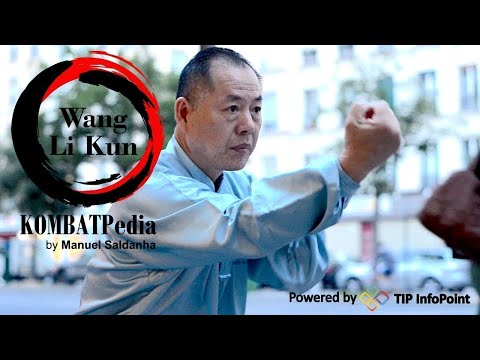
The Profound Power of Tai Chi Chuan: Beyond the Gentle Form

Esteemed practitioners and curious minds, welcome. Today, we delve into the seemingly tranquil waters of Tai Chi Chuan, an art that many mistake for mere gentle exercise for the elderly. But to do so is to profoundly misunderstand its essence. Tai Chi Chuan is not merely a series of slow, flowing movements; it is a sophisticated martial art, a profound system of internal development, and a philosophy that, when truly grasped, can transform not only your physical capabilities but your very perception of reality.

We often see practitioners in parks, their movements graceful, almost ethereal. This outward appearance of gentleness, however, belies a hidden power, a principle of yielding that can overcome immense force. The question that echoes in the minds of many is: "Can this slow, deliberate art truly be effective in combat?" The answer, as with most things in the martial world, is complex, nuanced, and often controversial. Prepare yourselves, for we are about to dissect the martial heart of Tai Chi Chuan.

Understanding the Essence: More Than Just Movement

Tai Chi Chuan, often translated as "Supreme Ultimate Fist," is one of the most recognized internal martial arts originating from China. Developed primarily for self-defense, its practice involves a series of slow, deliberate, and continuous movements, often performed in a meditative state. But what does this really mean for a martial artist? It means cultivating not brute strength, but cultivated power. It means understanding that true strength often lies in suppleness, and that the greatest force can be generated from stillness.

Unlike external martial arts that emphasize muscular power and speed, Tai Chi Chuan focuses on developing internal energy (Qi), cultivating a strong root, and mastering the principles of relaxation and yielding. The movements are designed to synchronize the mind, body, and spirit, promoting health and longevity while simultaneously honing combat effectiveness. The famous saying, "The soft overcomes the hard, the slow overcomes the fast," is not just a poetic adage; it is a fundamental principle of Tai Chi Chuan.

"Tai Chi Chuan is a martial art that has been practiced for centuries, not only for its health benefits but also for its effectiveness in combat. The gentle appearance of its movements is deceptive; beneath the surface lies a sophisticated system of self-defense." - Author Unknown

The Martial Foundations: Push Hands and Beyond

While the solo forms (Tao Lu) are the most visible aspect of Tai Chi Chuan, the martial application is truly revealed in partner drills, most notably Push Hands (Tui Shou). This is where the abstract principles of the form are tested and refined against a live opponent. Push Hands is not about winning or losing; it is a dynamic dialogue of energy, a sensitive training method to develop sensitivity, balance, rooting, and the ability to redirect an opponent's force.

Through Push Hands, practitioners learn to feel an opponent's intention, to neutralize their attacks, and to generate their own offensive power from a relaxed, yet rooted, posture. It teaches one to stick to the opponent, to borrow their strength, and to strike when they are unbalanced. The progression in Tai Chi Chuan typically moves from solo forms to Push Hands, then to free-style sparring (San Shou), demonstrating a clear lineage from meditative practice to practical application.

Many practitioners of other martial arts dismiss Push Hands as too slow or too specialized. However, I have witnessed practitioners of styles like Judo and Brazilian Jiu-Jitsu find their grappling skills severely tested by skilled Tai Chi players in controlled Push Hands settings. The ability of a Tai Chi practitioner to maintain their root and redirect force can be incredibly disruptive to an attacker's balance and momentum.

Principles of Power: Rooting, Structure, and Intent

The efficacy of Tai Chi Chuan in combat is built upon several core principles that differentiate it from many other martial arts:

  • Rooting (Zhan Zhuang): This is the foundation. A Tai Chi practitioner strives to be like a tree, deeply rooted to the ground. This means maintaining a stable connection to the earth, allowing them to absorb impact and generate force from below. Without proper rooting, any technique, no matter how skilled, is vulnerable. This principle is often developed through standing meditation, known as Zhan Zhuang.
  • Relaxation (Song): This is paradoxical for many. True power in Tai Chi comes not from muscular tension, but from profound relaxation. Relaxation allows for the free flow of Qi, enables quick changes in direction, and makes one's structure resilient. Tension is the enemy of Tai Chi.
  • Structure: While relaxed, the body must maintain an optimal structural alignment. This alignment ensures that force is transmitted efficiently from the ground through the body to the point of contact, and also makes the practitioner difficult to unbalance. Think of it as an archway – strong and stable, yet yielding under pressure.
  • Intent (Yi): The mind leads the Qi, and the Qi leads the body. In Tai Chi, the practitioner focuses their intent on the desired outcome, whether it is to neutralize an attack or deliver a strike. This mental focus amplifies the physical action, making it far more potent than mere physical exertion.
  • Yielding and Peng: Tai Chi teaches the principle of Peng, often translated as "ward-off" or "expanding energy." It's not a forceful push, but a buoyant, resilient energy that simultaneously deflects an incoming force and expands outward, creating space and opportunity. Yielding, therefore, is not passive resistance but an active redirection of force, using the opponent's momentum against them.

Applications in Combat: The Art of Yielding

How do these principles translate to a real confrontation? Imagine an attacker lunging forward with a powerful punch. A Tai Chi practitioner would not meet force with force directly. Instead, they would yield, moving their body slightly off-line, redirecting the attacker's momentum while simultaneously using their own rooted structure and Peng energy to disrupt the attacker's balance. This might be followed by a swift, explosive strike to a vulnerable point, delivered with focused intent.

The techniques are often subtle: a slight shift of weight, a turning of the waist, a deflection of the arm. Yet, when executed with proper internal power, these subtle movements can be devastating. The famous "One-Inch Punch," popularized by Bruce Lee, is conceptually similar to the explosive power that can be generated from a rooted Tai Chi stance. The difference lies in the method of cultivation. Tai Chi emphasizes developing this power through relaxation and internal alignment over years of dedicated practice.

"In the martial arts, the body is like a sword. The spirit is the sharpening of the blade. The technique is the way you wield it. And the intent… the intent is the will to cut." - A summation of martial principles.

Consider the principle of Hacking or Leveraging. A Tai Chi practitioner skilled in Push Hands can use seemingly small movements of their own body to create large imbalances in their opponent, leading to throws or takedowns. This isn't about superhuman strength; it's about understanding leverage, structure, and the subtle points of the human body.

Historical Perspective: Masters and Legacy

The history of Tai Chi Chuan is shrouded in legend, with its origins often traced back to the Taoist monk Zhang Sanfeng of the Wudang Mountains in the 14th century. While the historical accuracy of this account is debated, what is undeniable is that Tai Chi Chuan evolved over centuries, influenced by various martial traditions and philosophical insights.

Key figures like Yang Luchan, Chen Changxing, and later masters such as Yang Chengfu and Chen Fake, played pivotal roles in codifying and propagating the art. Each lineage (Chen, Yang, Wu, Sun) has its unique characteristics, yet they all share the fundamental principles of internal development and martial efficacy.

It's crucial to remember that Tai Chi Chuan was never intended to be a mere spectator art. It was a practical fighting system for its time, used by individuals who needed to defend themselves and their communities. The emphasis on health and longevity arose organically from the rigorous and consistent practice required to master its martial aspects. This dual nature is what makes Tai Chi Chuan so unique and enduring.

Training the Tai Chi Warrior: A Path of Dedication

Becoming proficient in Tai Chi Chuan, especially with a martial focus, requires immense dedication and patience. It is not a system where one achieves mastery in a few months or years. It is a lifelong journey.

Guide to Training: Cultivating Your Root

  1. Zhan Zhuang (Standing Meditation): Start by practicing standing postures for extended periods. Focus on sinking your weight, relaxing your joints, and aligning your body. Aim for 5-10 minutes initially, gradually increasing the duration.
  2. Form Practice (Tao Lu): Learn the sequence of movements of your chosen style. Focus on the correct posture, the flow of energy, and the underlying martial intent of each movement. Go slowly, deliberately, and with mindful awareness.
  3. Push Hands (Tui Shou): Once you have a basic understanding of the form, begin practicing Push Hands with a partner. Start with basic exercises like Single Push Hands and Fixed Step Push Hands to develop sensitivity and rooting.
  4. Application Practice: Work with your instructor to understand the practical martial applications of each movement in the form. This is where the theoretical knowledge becomes practical skill.
  5. Conditioning: While Tai Chi emphasizes relaxation, it also requires a resilient body. Incorporate exercises that build stamina and strength, but always return to relaxation. Think of conditioning as supporting your art, not defining it.

The development of Nei Jin (internal strength) is paramount. This is not achieved through lifting heavy weights, but through mindful movement, relaxation, and developing the connection between your intent and your physical execution. It's about cultivating power from within, a power that is surprising and formidable precisely because it emanates from a seemingly gentle source.

Equipment Essential for Your Training

While Tai Chi Chuan is known for requiring minimal equipment, certain items can enhance your practice and understanding. For serious practitioners, investing in the right gear is a sign of commitment.

  • Tai Chi Uniforms: While not strictly necessary for initial practice, a comfortable, well-fitting Tai Chi uniform can improve your focus and aesthetic. Look for breathable fabrics like silk or cotton blends.
  • Comfortable Footwear: Flat-soled, flexible shoes are ideal for practice. Traditional Tai Chi shoes are excellent, but comfortable training shoes that allow for good ground feel are also suitable. Avoid bulky athletic shoes that can hinder your connection to the ground.
  • Training Mats (Optional): For practicing certain drills or for those with knee sensitivity, a thin, non-slip mat can be beneficial.
  • Books and Videos: To supplement your in-person instruction, high-quality instructional books and videos are invaluable. Look for resources from reputable masters and lineages. (Consider searching for "best Tai Chi books" or "Tai Chi instructional DVDs".)

Veredict of the Sensei: Tai Chi's Place in Modern Combat

Is Tai Chi Chuan effective in modern combat? This is where the controversy often ignites. In a street fight, where unpredictable forces and multiple attackers are common, the slow, deliberate nature of Tai Chi practice might seem a disadvantage. However, I contend that a master of Tai Chi Chuan, one who has truly internalized its principles and possesses the skill in Push Hands and application, is a formidable opponent.

The art of yielding, the ability to absorb and redirect force, the devastating potential of rooted power, and the focus on striking vital points make Tai Chi Chuan far more than just a health practice. Its effectiveness lies not in mimicking the explosive, high-impact exchanges of MMA, but in a different kind of combat: one of precision, timing, and an almost uncanny ability to control and unbalance an opponent. It is a martial art of subtlety and profound strategic depth.

My Verdict: Tai Chi Chuan, when trained with martial intent, is a Cinturón Negro en Estrategia y Paciencia. It might not be the most direct path to knockout power in the vein of Kickboxing or Kyokushin Karate, but its principles of structural integrity, energy redirection, and mental focus are timeless and universally applicable. It requires a different kind of fighter, a different kind of warrior.

Frequently Asked Questions

  • Q1: Is Tai Chi Chuan a true martial art?
    A1: Absolutely. While often practiced for its health benefits, its origins are deeply rooted in combat applications. The movements are designed for self-defense, emphasizing internal power, structure, and strategic yielding.
  • Q2: Can Tai Chi practitioners realistically defend themselves against a trained fighter from a more aggressive art like Boxing or Karate?
    A2: A practitioner with deep understanding and extensive training in Tai Chi's martial applications can be highly effective. Their ability to remain rooted, redirect force, and exploit openings is a significant advantage. However, like any art, proficiency depends on the individual's dedication and the quality of their training.
  • Q3: How long does it take to learn Tai Chi Chuan for self-defense?
    A3: There is no definitive timeline, as it depends on individual aptitude, training frequency, and the depth of instruction. However, mastering the martial principles can take many years, often a lifetime of dedicated practice.
  • Q4: Is Tai Chi only for older people?
    A4: This is a pervasive myth. While Tai Chi is excellent for seniors due to its low impact and health benefits, its martial aspects require physical and mental attributes that are beneficial at any age. Younger practitioners often find it a powerful complement to more physically demanding arts.

To Deepen Your Path

Your journey into the profound world of martial arts is ongoing. To further your understanding and application of these principles, I recommend exploring related disciplines and concepts:

Sensei's Reflection: Your Next Step

We have peeled back the layers of perceived gentleness to reveal the martial core of Tai Chi Chuan. It is an art that demands patience, a keen intellect, and a willingness to surrender to a deeper flow of energy. It teaches us that true strength is not always loud or aggressive; it can be quiet, resilient, and utterly devastating when unleashed.

Reflexión del Sensei: Tu Próximo Paso

Now, contemplate this: In the face of overwhelming force, do you charge headlong, or do you learn to redirect the tide? How often in life do you find yourself struggling against a current, when perhaps, a slight shift in your own position could allow that current to carry you forward? Meditate on the principle of yielding. Is it a weakness, or the ultimate form of strategic strength? Your answer will reveal much about your understanding, not just of Tai Chi, but of the world around you.

``` GEMINI_METADESC: Explore the martial art principles and combat effectiveness of Tai Chi Chuan, moving beyond its reputation as a gentle exercise to uncover its true power and strategic depth.
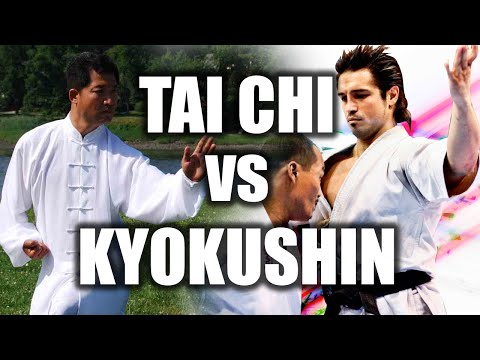
Tai Chi vs. Kyokushin Karate: A Master's Polemic on Philosophy, Power, and Practicality

Introduction: The Clash of Philosophies

Greetings, students of the Way. Today, we delve into a confrontation that sparks endless debate among martial artists: Tai Chi versus Kyokushin Karate. On one side, we have the seemingly gentle, flowing movements of Tai Chi, often associated with health and internal energy. On the other, the formidable, full-contact power of Kyokushin Karate, a style known for its brutal efficacy. Many dismiss Tai Chi as a mere form of exercise, while some view Kyokushin as overly aggressive, lacking subtlety. But what happens when these two diametrically opposed philosophies meet in a controlled, yet intense, exchange? Does the internal power of Tai Chi stand a chance against the external, unyielding force of Kyokushin? Or is this a battle of mismatched paradigms, highlighting the vast spectrum of what we call "martial arts"? Prepare yourselves, for we shall dissect this encounter not just as a spectacle, but as a profound lesson.

The Unyielding Spirit of Kyokushin Karate

Kyokushin Karate, founded by the legendary Masutatsu Oyama, is not for the faint of heart. Its name, meaning "ultimate truth," hints at its rigorous path. This is a style forged in the crucible of real combat, emphasizing spirit, conditioning, and raw power. Oyama himself famously stated, "If you want to be a boxer, you must be a boxer." This philosophy permeates Kyokushin. Training involves breaking boards, sparring with full contact (often without heavy padding, depending on the ruleset), and pushing the body to its absolute limits. The core principle is 'Osu!', a greeting and acknowledgement that signifies perseverance, respect, and tenacity. It's a philosophy that says, 'Give your all, endure the hardship, and emerge stronger.'

"Karate is a lifetime study. There is no end to training." - Masutatsu Oyama

In a confrontation, a Kyokushin practitioner brings an arsenal of powerful strikes – direct punches, devastating kicks, and a steadfast stance designed to absorb and deliver punishment. Their conditioning is paramount; they train to withstand pain and to strike with bone-jarring force. The objective is clear: incapacitate the opponent through superior power, speed, and sheer will. This is the 'hard' path of martial arts, where the spirit is hardened like steel.

The Flowing Wisdom of Tai Chi

Tai Chi, or Taijiquan, is often misunderstood in the West as a slow, gentle exercise for the elderly. While it is indeed beneficial for health, balance, and longevity, its roots are in martial combat. The Chen style, considered the oldest, most martial form, incorporates explosive movements (fa jin) alongside its famous slow, flowing postures. Tai Chi's martial application lies in its principles: yielding to overcome force, redirecting an opponent's energy, using the entire body as a unified weapon, and striking with precision and intention. It's about understanding timing, structure, and the subtle interplay of yin and yang.

A Tai Chi practitioner trains to cultivate internal strength ('nei jin') and a deep connection to their center. They learn to generate power not through brute muscular force, but through coordinated body mechanics and the release of stored energy. The forms, practiced slowly, are complex blueprints for movement, teaching relaxation, sensitivity, and the ability to sense and react to an opponent's intentions before they fully manifest. The ideal is to be like water – soft, adaptable, yet possessing immense power to erode even the hardest stone over time. This is the 'soft' path, where power is cultivated from within, using the opponent's force against them.

Performance Analysis: Where Theory Meets Reality

The provided video footage (implied by the context of the original prompt) showcases an exchange between practitioners of Chen Tai Chi and Chakuriki, a Kyokushin Karate gym. This is precisely the kind of real-world scenario that ignites the debate. Observing such an event requires a keen eye, moving beyond the surface-level action to understand the underlying principles and limitations of each art when pitted against the other.

In a typical scenario:

  1. Range and Timing: Kyokushin excels in the mid-range, delivering powerful punches and kicks. Tai Chi, particularly its martial applications, can be effective at closer ranges, using joint manipulation, throws, and sudden bursts of 'fa jin' to disrupt an opponent. However, the explosive nature of Kyokushin's attacks can overwhelm the slower, more deliberate setup of some Tai Chi movements.
  2. Power Generation: Kyokushin's power is direct and external, a result of conditioning and full-body commitment to each strike. Tai Chi's power is internal, requiring precise structure and relaxation to deliver 'fa jin'. In a direct power-vs-power exchange, Kyokushin often has the immediate advantage due to its focus on physical conditioning and direct impact.
  3. Defense and Evasion: Tai Chi's emphasis on yielding and redirecting is a sophisticated defensive strategy. It aims to avoid direct confrontation, turning an opponent's force against them. Kyokushin's defense is often more about absorbing strikes through conditioning and blocking with strong guards, then immediately countering with overwhelming force.
  4. Application of Principles: The key question is whether the Tai Chi practitioner can effectively implement their principles of softness, yielding, and redirecting against the relentless, hard-hitting aggression of Kyokushin. Conversely, can the Kyokushin practitioner adapt to the sudden, unexpected shifts in force and structure that a skilled Tai Chi exponent might employ?
The original video links point to a series of these confrontations, each offering a different angle and outcome. The crucial takeaway is not a simple win or loss, but the *how* and *why* of the exchange. Did the Tai Chi practitioner manage to neutralize the Kyokushin power? Did the Kyokushin fighter's direct approach break through the Tai Chi defenses? These are the questions we must ask.

The Polemic: Practicality in the Face of Adversity

This is where the true debate lies. Many argue that modern Tai Chi has become so divorced from its martial roots that it is practically useless in a self-defense situation, let alone against a dedicated combat sport practitioner. They point to the lack of full-contact sparring in many Tai Chi schools and the emphasis on health over combat application. On the flip side, proponents of martial Tai Chi insist that its principles are highly effective, but require a deep understanding and consistent training of its martial applications, not just the health-focused forms. They might argue that someone solely focused on 'Osu!' and brute force, without understanding structure and redirection, is vulnerable to a skilled manipulator.

Let's be direct: if you are a Tai Chi practitioner who has never sparred, never tested your sensitivity against resistance, and only practices the slow forms for health, facing a Kyokushin Karateka will likely be a humbling, possibly painful, experience. Kyokushin is built for this. Its training regimen actively prepares its students for combat. However, this doesn't mean Tai Chi is inherently flawed. It means that the *practice* and *intent* of the training are paramount. A Tai Chi practitioner who trains martial applications diligently, spars intelligently, and understands how to generate and apply 'fa jin' can be a formidable opponent.

"The supreme art of war is to subdue the enemy without fighting." - Sun Tzu (A principle that resonates deeply with Tai Chi's philosophy of yielding)

The controversy often stems from comparing apples and oranges. When we see 'Tai Chi vs. Kyokushin,' are we comparing the average practitioner of each, or the pinnacle of each art's martial potential? My experience in various martial settings tells me that the individual's dedication, understanding of principles, and willingness to test themselves under pressure are far more significant than the label of their style. However, styles like Kyokushin build those qualities into their very curriculum, making them more readily accessible to the average student.

Veredicto del Sensei: ¿What's the True Martial Value?

This is not a simple 'winner takes all' scenario. The videos and the very nature of these arts reveal fundamental differences in philosophy and application.

  • Kyokushin Karate: Stands as a testament to the power of dedicated conditioning, unyielding spirit, and direct, impactful combat. Its value lies in its proven efficacy in full-contact scenarios and its ability to build immense physical and mental fortitude. It's a direct, often brutal, but highly effective martial path.
  • Tai Chi: Offers a profound understanding of body mechanics, energy, and strategy that can be devastatingly effective, but it requires a deeper, more nuanced training regimen focused on martial application. Its value is in its sophisticated approach to combat, emphasizing efficiency and adaptability, but it's a path more easily misunderstood and less consistently applied in its martial sense by the general practitioner.
The "vs." in these matchups often highlights the practical differences in how these arts are commonly trained and perceived. While a skilled Tai Chi martial artist can be incredibly dangerous, the common training methods of Kyokushin Karate directly cultivate the attributes needed to win a physical confrontation against a wide range of opponents. Therefore, while both have martial value, Kyokushin's path to battlefield readiness is arguably more direct and universally accessible.

My Conclusive Opinion:

For the average practitioner seeking demonstrable combat effectiveness, Kyokushin Karate offers a more direct route. Its principles are forged in the fire of consequence. Tai Chi, in its martial form, holds immense potential, but its widespread dilution into a purely health-focused practice means its true martial prowess is often hidden or underdeveloped. This isn't a condemnation of Tai Chi, but an observation of its current state in popular practice. It is a martial art that demands a higher level of comprehension and commitment to unlock its combat secrets.

Essential Equipment for Your Training

Whether you lean towards the explosive power of Kyokushin or the subtle strength of Tai Chi, proper preparation and tools are crucial.

  • For Kyokushin Karate:
    • Durable Gi: A heavy-duty, reinforced Gi is essential for withstanding the rigors of training and sparring. Look for double-weave cotton.
    • Sparring Gear: While Kyokushin often emphasizes minimal padding, appropriate headgear, mouthguards, and groin protection are vital for safety during intensive sparring sessions. Some practitioners also use padded mitts.
    • Training Mats: For conditioning drills and some practice of throws or falls, sturdy floor mats can be beneficial.
  • For Tai Chi:
    • Comfortable, Loose-fitting Clothing: Allows for unrestricted movement and proper body alignment. Traditional Tai Chi uniforms are ideal for practice.
    • Flat-soled Shoes: Essential for balance and rooting. Avoid shoes with thick, cushioned soles that can destabilize your stance.
    • Makiwara (Optional but Recommended): For developing striking power and conditioning the hands/fists, a simple makiwara can be a valuable tool, even for Tai Chi practitioners looking to integrate 'fa jin' more forcefully.
Investing in quality gear not only enhances your training experience but also shows respect for the art you are pursuing.

Frequently Asked Questions

Q1: Can Tai Chi truly be used for self-defense?

A1: Yes, but it requires dedicated martial training focused on its combat applications, including 'fa jin' (explosive power), sensitivity drills, and sparring. Many practitioners focus solely on the health aspects, which doesn't prepare them for a combative encounter.

Q2: Is Kyokushin Karate too dangerous for beginners?

A2: While Kyokushin is known for its intensity, reputable dojos have structured beginner programs that gradually introduce techniques and conditioning. Safety is paramount, and instructors guide students appropriately. However, it demands a higher tolerance for physical exertion and discomfort than many other arts.

Q3: What is 'fa jin' in Tai Chi?

A3: 'Fa jin' (or 'fajin') translates to 'explosive power' or 'issuing force.' It's a principle in Tai Chi and other internal arts where power is generated from the entire body's structure and released suddenly and explosively through a strike, often with a characteristic 'hissing' sound.

Q4: Is it better to learn Tai Chi or Kyokushin Karate first?

A4: This depends entirely on your goals. If your primary aim is health, relaxation, and developing internal awareness, Tai Chi is an excellent choice. If your goal is to develop powerful striking ability, physical toughness, and a direct approach to combat, Kyokushin Karate is more suitable.

Para Profundizar en tu Camino

Reflexión del Sensei: Tu Próximo Paso

We have dissected the theoretical and practical differences between Tai Chi and Kyokushin Karate. One emphasizes yielding, redirection, and internal cultivation; the other, unyielding spirit, explosive power, and rigorous conditioning. Both claim the mantle of "martial art," yet their paths diverge dramatically. The videos and the common understanding suggest that while Tai Chi holds immense potential, Kyokushin's training directly cultivates the attributes needed for immediate physical confrontation.

But this is not the end of the discussion. It is merely the beginning. The true martial artist understands that lessons can be drawn from every encounter, every style, every philosophy. The question is not just which art is "better," but how can we integrate the wisdom of both? How can the practitioner of hard styles learn to temper their aggression with strategy and understanding? And how can the practitioner of soft styles ensure their art remains a potent force in the face of aggression?

Reflexión del Sensei: Tu Próximo Paso

Consider this: If you are a Tai Chi practitioner, have you truly tested your martial application? Have you sought out sparring that challenges your principles? If you are a Kyokushin practitioner, have you ever paused to consider the subtle strategies of redirection or the power of yielding when brute force is not the optimal solution? In the grand tapestry of martial arts, are we defined by the threads we exclusively weave, or by our ability to recognize and integrate the patterns of all threads, even those that seem to oppose our own? The path is long, and true mastery lies in perpetual inquiry.

``` GEMINI_METADESC: Explore the deep philosophical and practical differences between Tai Chi and Kyokushin Karate. Understand their strengths, weaknesses, and real-world applicability in this critical martial arts analysis.

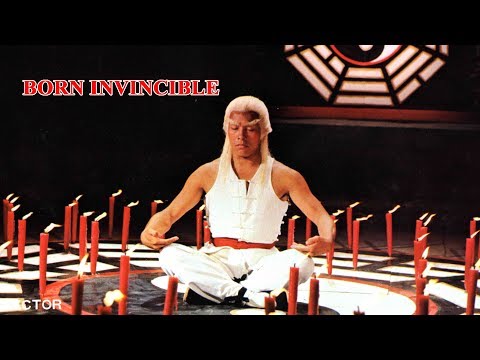
Wu Tang Collection's "Born Invincible": A Martial Arts Masterpiece or a Flawed Spectacle?

Esteemed warriors, gather 'round. Today, we delve into the archives of cinematic martial arts to dissect a film that has sparked debate for decades: "Born Invincible." Many hail it as a masterpiece, a testament to the raw power and artistry of Kung Fu. Others dismiss it as a relic, its glories obscured by the sands of time and shifting cinematic sands. But what truly lies beneath the surface of this "Wu Tang Collection" presentation? Does it live up to its legendary status, or is it merely a collection of flashy moves lacking true substance?

Director Joseph Kuo, a name that resonates with aficionados of classic Kung Fu cinema, presents "Born Invincible" as a "Kung Fu Hall of Fame masterpiece." This is a bold claim, and one that demands rigorous examination. Is this film a genuine pillar of the genre, deserving of its esteemed position, or is this encomium merely hyperbole designed to capture the attention of casual viewers? The intention behind such a declaration is clear: to position the film as essential viewing for any serious practitioner or fan of martial arts cinema. Our journey today will be to ascertain if this lofty aspiration holds water, or if it crumbles under the weight of critical analysis. The very mention of "Wu Tang Collection" evokes a certain expectation – one of authentic, hard-hitting action and compelling narratives. Let us see if "Born Invincible" fulfills this promise.

The Allure of the White Haired Man: Core Concepts and Execution

At the heart of "Born Invincible" lies the character of the White Haired Man, portrayed with a palpable intensity by Carter Wong. This figure is not merely a fighter; he is an embodiment of mastery, a hermit who has dedicated his life to the pursuit of perfection in Tai Chi. The film positions Tai Chi not just as a style, but as a philosophy, a path to ultimate power and control. This is a concept that resonates deeply within the broader martial arts spectrum. The idea of a singular style reaching its zenith, offering both profound defense and devastating offense, is a recurring theme in martial lore. However, the cinematic representation of such profound mastery often walks a fine line between awe-inspiring and unbelievable.

The film's synopsis highlights the collaboration of Shaw Brothers action director Robert Tai and the legendary Yuen Woo Ping. This union alone should promise a spectacle of choreography and execution. Yuen Woo Ping, in particular, is a name synonymous with some of the most breathtaking fight sequences ever put to film. His influence, when present, typically elevates any project. The question, then, becomes: how effectively is his genius integrated into "Born Invincible"? Does the film showcase the fluidity, the precision, and the strategic depth of Tai Chi, or does it devolve into a series of exaggerated movements that, while visually striking, lack the core principles of the art?

Carter Wong's portrayal of the White Haired hermit is central to the film's success. His performance must convey not only physical prowess but also the spiritual and mental discipline required for such advanced mastery. The supporting cast, featuring seasoned actors like Lo Lieh (known for his roles in films like "Fists of the White Lotus") and Jack Long ("7 Grandmasters"), adds further weight to the production. These are actors who understand the demands of martial arts cinema. Their presence suggests a commitment to quality that transcends mere superficial action. Yet, even a stellar cast can be let down by weak direction or a disjointed script. Our task is to analyze whether their talents are fully utilized, or if they are merely pawns in a less-than-perfect cinematic game.

A Deeper Look: Tai Chi, Philosophy, and Cinematic Interpretation

Tai Chi Chuan, or Taijiquan, is an internal martial art that emphasizes relaxation, fluidity, and the generation of power through body mechanics rather than brute force. Its principles are rooted in Daoist philosophy, focusing on yielding to overcome, redirecting an opponent's energy, and striking at opportune moments. When portrayed accurately on screen, it can be a mesmerizing display of controlled power. The "Born Invincible" narrative suggests that the White Haired Man has achieved this ultimate state.

"The supreme art of war is to subdue the enemy without fighting." - Sun Tzu, The Art of War

This quote from Sun Tzu's seminal work on strategy perfectly encapsulates the ideal of mastery in martial arts. The White Haired Man, if depicted faithfully, should represent this ideal. His Tai Chi would not be about aggressive confrontation but about neutralizing threats with minimal effort. The film's premise hinges on this very idea: that his mastery makes him "invincible." However, the practical application of such profound philosophy in a genre often driven by visceral, explosive action presents a significant challenge for filmmakers. Too much philosophical exposition can bore the audience, while too little can render the "mastery" superficial. Joseph Kuo and his team walk a tightrope here.

The inclusion of figures like Robert Tai and Yuen Woo Ping in the creative team is significant. Robert Tai, known for his work on numerous Shaw Brothers productions, often brought a gritty realism to his fight choreography. Yuen Woo Ping, on the other hand, is celebrated for his innovative and often gravity-defying sequences. How these two distinct styles are merged to represent Tai Chi is a crucial point of analysis. Did they manage to create a hybrid style that is both true to Tai Chi's essence and visually dynamic for the screen? Or did the demands of cinematic spectacle lead to compromises that diluted the martial integrity of the art?

Veredicto del Sensei: ¿Merece la pena?

Evaluating "Born Invincible" is not as simple as declaring it good or bad. It occupies a space where ambition meets execution, and the results are, at times, uneven. The film undeniably possesses moments of brilliance, particularly in Carter Wong's committed performance as the White Haired hermit. His portrayal hints at the deep well of skill and dedication required to achieve such martial prowess. The underlying philosophy of Tai Chi, when explored, offers a refreshing counterpoint to more aggressive martial arts styles. The film *tries* to capture the essence of "yielding to overcome," a fundamental principle in many traditional arts.

However, the execution falters. While the presence of Yuen Woo Ping and Robert Tai suggests high-octane action, the choreography, while competent for its era, does not always reach the heights of their legendary work. The representation of Tai Chi sometimes leans more towards stylized movement than the nuanced, internal power that defines the art. The narrative can feel episodic, and the pacing, at times, drags. While it is a "classic" in certain circles, it is a classic that shows its age and its compromises. It is a film that offers glimpses of greatness but doesn't quite sustain it throughout its runtime.

Is it a "must-see"? For the die-hard fan of 70s and 80s Kung Fu cinema, particularly those interested in the Wu Tang Collection's output, yes. It provides insight into the cinematic aspirations of the era and features solid performances. However, if you are seeking an accurate, in-depth depiction of Tai Chi mastery or the absolute pinnacle of martial arts choreography, you might find yourself wanting more. It is a film that is respected more for its place in history and its ambitious themes than for flawless execution.

Reflexión del Sensei: Tu Próximo Paso

The pursuit of martial arts mastery, whether on screen or in the dojo, is a journey of continuous refinement. "Born Invincible" presents us with an idealized vision of such mastery, a hermit whose Tai Chi makes him "invincible." But what does "invincible" truly mean in the context of a real martial artist's life? Does it mean never being defeated, or does it signify an unshakeable inner strength, a resilience that transcends physical confrontation? Consider this: are you training to be "invincible" in the eyes of others, or are you cultivating an unyielding spirit within yourself? The answer will shape your path more profoundly than any on-screen spectacle.

Equipo Esencial para tu Entrenamiento

While "Born Invincible" focuses on the internal power of Tai Chi, the spirit of dedication it represents can be honed with the right tools. Even for arts that emphasize inner strength, proper equipment is crucial for safe and effective training:

  • Tai Chi Uniforms: Lightweight, breathable fabrics like cotton or linen are ideal for Tai Chi, allowing for freedom of movement and comfort during long practice sessions. Look for sets that include loose-fitting pants and tops.
  • Tai Chi Jian (Sword): For those practicing Tai Chi sword forms, a well-balanced Tai Chi Jian is essential. Materials range from flexible steel to heavier, more traditional options.
  • Dojo Mats (Optional): While not strictly necessary for Tai Chi, high-quality floor mats can provide cushioning and support for other martial arts training, preventing injuries during falls or strenuous exercises.
  • Training Books and Videos: Beyond films, invest in instructional materials. Books on Tai Chi principles or Yuen Woo Ping's choreography can offer deeper insights than any single movie.

Guía de Entrenamiento: Principios de Tai Chi para el Combate

While the film portrays an almost supernatural level of Tai Chi mastery, its underlying principles can be integrated into practical martial arts training. This is not about performing the forms as seen on screen, but about understanding the core concepts:

  1. Centering and Rooting: Practice standing meditation (Zhan Zhuang). Feel your connection to the ground, developing a stable base. This grounding is the foundation for redirecting force.
  2. Relaxation (Song): Actively release tension in your shoulders, neck, and hips. True power in Tai Chi comes from a relaxed, flowing body, not from muscular tension.
  3. Mind-Body Connection: Focus your intention (Yi) on the movement. Imagine directing your breath (Qi) throughout your body. This mental focus is as crucial as the physical action.
  4. Listening Energy (Ting Jin): In partner drills, focus on sensing your opponent's weight, pressure, and intention through light contact. This "listening" allows you to anticipate and redirect their force.
  5. Yielding and Redirecting: Practice absorbing an incoming force by moving with it, then redirecting that energy back towards the opponent. This is the essence of "softness overcoming hardness."

Remember, the cinematic portrayal is an amplification. True mastery lies in the disciplined, consistent application of these principles in your own training.

Para Profundizar en tu Camino

Preguntas Frecuentes

  • What is the primary martial art showcased by the White Haired Man in "Born Invincible"? The primary martial art is Tai Chi Chuan, depicted as having reached an ultimate level of mastery.
  • Who are the main stars of "Born Invincible"? The film stars Carter Wong as the White Haired Man, with significant supporting roles from Lo Lieh and Jack Long.
  • Is "Born Invincible" considered a truly authentic depiction of Tai Chi? While it showcases the *idea* of Tai Chi mastery, its cinematic portrayal is often stylized and exaggerated for entertainment, rather than a strictly authentic, technical representation.
  • What makes this film a "classic" in the eyes of fans? It's considered a classic due to its era, the involvement of notable martial arts figures like Carter Wong and the potential involvement of Yuen Woo Ping's team in choreography, and its contribution to the popularization of Kung Fu cinema.
  • Where can I watch "Born Invincible" legitimately? The "Wu Tang Collection" channel on YouTube often features such films, and legitimate streaming or purchasing options may be available through specialized martial arts film distributors or platforms.
``` GEMINI_METADESC: A critical analysis of "Born Invincible" from the Wu Tang Collection, examining its Tai Chi portrayal, choreography, and status as a martial arts classic.

Wudang Xuanwu Pai Tai Chi Quan's Eighteen Forms: A Master's Critique

Ah, the Eighteen Forms of Wudang Xuanwu Pai Tai Chi Quan. A subject that whispers of ancient mountains, disciplined practice, and perhaps, as many claim, profound health benefits. But does this modern iteration, born from the needs of policy and popularization, truly encapsulate the *spirit* of Tai Chi, or is it merely a watered-down echo of a forgotten art? Today, we dissect this form, not as a mere tutorial, but as a critical examination of its martial soul and its place in the lineage of true Budo.

The Genesis of the Eighteen Forms

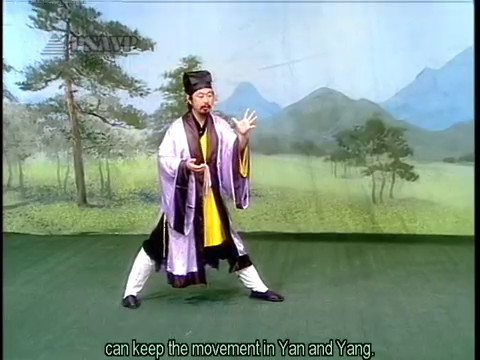
The narrative presented is one of adaptation. The Wudang Xuanwu Pai's Eighteen Forms, we are told, were created by Master Yang Qun Li, supported by the state athletic Wushu department, to meet the demands of a global audience and a national policy advocating for widespread athletic exercise. Later, Master You Xuande refined it into a simplified version, launching a campaign across China. This routine, approved by the headmaster himself, You Xuande, is now practiced by his disciples and is a uniform routine in Wudang competitions.

This origin story is, frankly, a double-edged sword. On one hand, it speaks to the adaptability and enduring appeal of Tai Chi principles. On the other, it immediately raises the critical question: When an art form is "created" to meet external policy and policy, does it risk losing the very essence it claims to represent? Is it a natural evolution, or a concession to the marketplace?

"The Way of the warrior is to learn to die." - Miyamoto Musashi

While Musashi spoke of the sword, this principle of confronting one's own potential demise – a metaphor for confronting weakness and ego – is central to any art that claims martial depth. Does the Eighteen Forms routine retain this confrontation, or does it prioritize accessibility over existential rigor?

The form is said to incorporate essentials from the Old Frame Tai Ji Quan, Tai Yi Zhang, Mian Zhang, Wu Xing Yang Sheng Gong, Xing Yi Quan, and Ba Gua Zhang. This is an ambitious blend. The question remains: does it skillfully weave these threads into a coherent tapestry, or is it a superficial sampling of diverse martial philosophies?

Martial Essence: Fact or Fiction?

Herein lies the heart of my critique. Many modern Tai Chi forms, especially those promoted for health or competition, have, in my observation over decades of study and practice, de-emphasized or outright removed the martial applications. The flowing, elegant movements can be beautiful, but are they *effective*? Can the principles of song (relaxation), jing (intent), and fa jin (explosive power) truly be honed through a form designed for mass appeal?

The Xuanwu Pai's Eighteen Forms, by its very name and historical context, should retain a connection to its roots. Wudang Tai Chi is traditionally one of the most martial styles. However, the "creation" and "simplification" for broader accessibility often come at a cost. Was the original Wudang boxing, from which this form is derived, a robust martial art, or was it already a stylized dance? And if it was martial, what specific martial principles are preserved, and to what degree?

Let us consider the core concepts. Tai Chi Quan, in its purest form, is a sophisticated combat system disguised as a slow-moving exercise. It relies on yielding, redirecting an opponent's force, and striking at the opportune moment with immense power. The circular movements are not just for aesthetic flow; they are designed to evade, trap, and deliver strikes from unexpected angles. The footwork, often seen as merely decorative, is crucial for maintaining balance, generating power, and controlling distance.

Does the Eighteen Forms routine emphasize these elements? Or does it, like many contemporary interpretations, focus on the health benefits, the large movements, and the meditative aspects, leaving the combative core underdeveloped? My concern is that if the martial applications are not understood, practiced, and integrated, the form becomes mere shadow boxing. It's a beautiful shell, perhaps, but empty of the fire that defines a true martial art.

Beyond the Movements: The Philosophical Core

The philosophy of Tai Chi Quan is deeply intertwined with Taoist principles: harmony, balance, and the interplay of yin and yang. The slow, deliberate movements are meant to cultivate mindfulness, allowing the practitioner to become aware of their body, their energy (Qi), and their surroundings. This heightened awareness is not just for combat; it’s a path to self-understanding and inner peace.

The inclusion of elements from Xing Yi Quan and Ba Gua Zhang in the Eighteen Forms is particularly interesting. Xing Yi Quan, known for its direct, explosive linear movements, contrasts with the circularity of Tai Chi. Ba Gua Zhang is characterized by its evasive circular stepping and palm strikes. A masterfully constructed form would integrate these differing principles seamlessly, reflecting the Taoist concept that opposites are complementary and can coexist. However, a poorly integrated form might feel disjointed, a mere collage of styles rather than a unified expression of martial philosophy.

The concept of Wu Wei (non-action or effortless action) is central to Taoism and, by extension, to Tai Chi. It is not about doing nothing, but about acting in accordance with the natural flow of things. In combat, this means not forcing movements, but using the opponent's energy against them. In daily life, it means acting without unnecessary effort or resistance.

The question then becomes: does the practice of the Eighteen Forms foster this understanding of Wu Wei? Or does the emphasis on performance, competition, and achieving a certain number of repetitions lead to a more forceful, goal-oriented approach that contradicts this core philosophical tenet?

Training Guide: Essential Principles for the Eighteen Forms

Regardless of the form's origin, the principles of diligent training remain universal. For any practitioner engaging with the Wudang Xuanwu Pai's Eighteen Forms, or indeed any Tai Chi style, these fundamentals are paramount:

  1. Rooting (Zhan Zhuang): Before any movement, one must learn to stand. Practice standing meditation (Zhan Zhuang) for extended periods. Feel your connection to the earth. This is the foundation of all power and stability. Without a strong root, any technique is easily overthrown.
  2. Relaxation (Song): Tension is the enemy of Tai Chi. Learn to release unnecessary muscular tension, allowing Qi to flow freely. Your movements should be like water, yielding and adapting, not like rigid steel.
  3. Intention (Yi): Every movement must have a clear intention. This is not just about moving your arms and legs; it is about directing your mind and energy. Visualize the application of each posture, even in a solo form.
  4. Structure and Form: While the Eighteen Forms may be a "new frame," understanding the fundamental structural principles of Tai Chi is crucial. Pay attention to the alignment of your spine, the position of your hips, and the coordination of your entire body.
  5. Breathing: Natural, deep breathing is essential. Coordinate your breath with your movements – often exhaling on exhalation of force and inhaling on gathering energy.
  6. Repetition with Awareness: Repetition is key to muscle memory and deeper understanding. However, mindlessly repeating the form is insufficient. Each repetition should be an opportunity for refinement, for correcting posture, and for deepening your connection to the principles.
  7. Application (Yongfa): If possible, seek instruction from a qualified teacher who can explain and demonstrate the martial applications of each movement. Without understanding the 'why' behind the 'how', the form remains incomplete.

This structured approach ensures that even a simplified form can be a profound training tool, rather than a mere set of motions.

Veredict of the Sensei: Is it True Tai Chi?

This is where I risk ruffling feathers, but a true Sensei does not shy away from uncomfortable truths. The Wudang Xuanwu Pai's Eighteen Forms represents a fascinating intersection of tradition, policy, and popularization. Its creation demonstrates the enduring relevance of Tai Chi's principles in a modern context, seeking to promote health and accessibility globally.

However, "True Tai Chi" is a term laden with historical and martial significance. If the Eighteen Forms prioritizes ease of learning and broad appeal over the rigorous martial applications and deep philosophical underpinnings that characterized its ancestors, then it is, at best, a distant cousin. At worst, it is a dilution that risks losing the very soul of the art.

I cannot definitively label it "true Tai Chi" without experiencing its practical application firsthand, guided by a master who embodies its martial lineage. However, based on the narrative of its creation and common trends in modern martial arts popularization, my skepticism remains high regarding its martial depth. It may be an excellent *exercise* and a valuable tool for health and meditation, but whether it truly prepares one for combat or imparts the full philosophical weight of traditional Tai Chi is highly debatable.

Rating: Slightly better than a shadow, but still searching for its fangs.

Essential Equipment for Your Training

While Tai Chi is often lauded for its accessibility and minimal equipment needs, certain items can enhance your practice and deepen your understanding:

  • Comfortable Training Attire: Loose-fitting, breathable clothing is paramount. This allows for freedom of movement and prevents restriction. Look for natural fabrics like cotton or linen.
  • Tai Chi Shoes or Grippy Socks: Proper footwear is crucial for stability and preventing slips. Traditional Tai Chi shoes offer a thin, flexible sole that allows you to feel the ground. If unavailable, socks with good grip are a viable alternative for indoor practice.
  • A Supportive Sensei or Community: Perhaps the most critical "equipment" is guidance. Finding a qualified instructor who understands the martial aspects of Tai Chi, or a dedicated training group, is invaluable.
  • Reference Materials: Books or high-quality instructional videos (though often a poor substitute for live instruction) can aid in understanding the forms and principles.

Frequently Asked Questions

Q1: Is the Wudang Xuanwu Pai's Eighteen Forms a traditional Tai Chi form?
A: While it draws from Wudang Tai Chi traditions, it is described as a "new frame" created in recent times for broader appeal and policy alignment, making its "traditional" status debatable in the strictest sense.

Q2: Can this form be used for self-defense?
A: Its effectiveness for self-defense depends heavily on the practitioner's understanding and emphasis on martial applications, which may be de-emphasized in favor of health benefits and aesthetics in this particular iteration.

Q3: What is the difference between this form and Yang-style Tai Chi?
A: Yang-style is one of the most widely practiced forms, known for its large, open, and evenly spaced movements. The Eighteen Forms, being a Wudang creation, may incorporate different structural principles and historical lineages, alongside elements from other internal arts.

Q4: How long does it take to learn the Eighteen Forms?
A: Learning the sequence can take weeks or months, but truly mastering its principles, including martial applications and philosophical depth, is a lifelong pursuit.

To Deepen Your Path

The journey into the heart of martial arts is a continuous one. If the principles discussed here resonate with you, I encourage you to explore further:

Sensei's Reflection: Your Next Step

So, we have examined the Wudang Xuanwu Pai's Eighteen Forms. It stands as a testament to the adaptability of martial arts, but also as a cautionary tale. Is the pursuit of wider accessibility worth the potential dilution of martial depth and philosophical rigor? Does a form created for policy and popular appeal truly honor the spirit of Budo?

Consider this: If your goal is merely physical exercise, then perhaps this form, or any form, will suffice. But if you seek the path of the warrior, the profound self-discovery, and the practical application of ancient principles – the true essence of martial arts – then you must look deeper. You must question the origins, demand the martial applications, and seek out those who uphold the integrity of the art.

Your challenge: Next time you practice a form, whether it is the Eighteen Forms or any other, ask yourself: "What is the purpose of this movement? How could this be used in defense? What philosophical principle does it embody?" Do not accept movements at face value. Seek the meaning. Prove me wrong in the comments below, or perhaps, prove me right.

``` GEMINI_METADESC: Explore the Wudang Xuanwu Pai's Eighteen Forms Tai Chi. A Sensei's critical analysis of its martial essence, philosophical depth, and place in true Budo. Does tradition yield to policy?

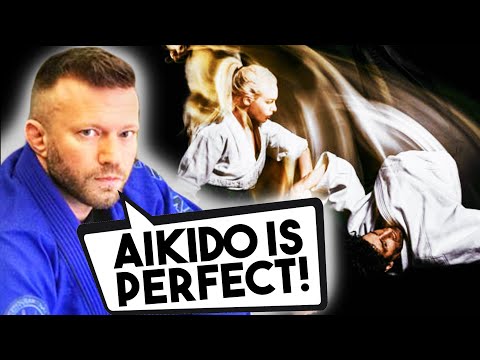
BJJ Black Belt Eli Knight: Aikido and Tai Chi - The Apex of Martial Arts? A Sensei's Critique

The martial world is abuzz. Eli Knight, a decorated Brazilian Jiu-Jitsu black belt and noted self-defense expert, has thrown a gauntlet, asserting that Aikido and Tai Chi represent the *pinnacle* of martial arts. This is a bold claim, one that resonates with a particular romanticism about martial traditions, but one that demands a rigorous examination from the perspective of someone who has dedicated their life to the understanding and practice of combat science. As your Sensei, I approach this not with blind acceptance, but with the sharp eye of a critic and the deep well of knowledge of a martial scholar. Is Knight’s assertion a profound truth, or a misguided romanticism? Let us dissect this.

Table of Contents

The Maverick's Pronouncement

Eli Knight’s statement, that Aikido and Tai Chi are the "perfect" martial arts, is precisely the kind of declaration that ignites debate in any dojo or training hall. It’s the kind of proclamation that, while appealing to a certain aesthetic of martial arts, often overlooks the brutal realities of conflict and the evolutionary pressures that shape effective combat systems. My mission here is to probe this assertion, separating the practitioner's heartfelt belief from the objective efficacy of these arts in the context of modern combat and self-defense. We are not merely discussing forms and philosophies; we are discussing survival and effectiveness.

Eli Knight's Position: A Closer Look

Knight, a practitioner with significant standing in the BJJ community, brings a unique perspective. His background in Brazilian Jiu-Jitsu, a grappling art forged in the crucible of real-world application and competition, imbues his opinions with a certain weight. BJJ is known for its ruthless pragmatism, its focus on leverage, control, and submission. When such an individual praises arts that are often perceived as softer, more philosophical, or even theatrical, it forces us to question *why*. Is he highlighting a forgotten aspect of these arts, or is he perhaps looking at them through the lens of his own highly effective system, seeking parallels that might not fully withstand scrutiny? His explanation, as presented by the original author, is likely focused on principles like yielding, redirection of force, and the cultivation of internal energy (Ki), concepts central to both Aikido and Tai Chi. But do these principles translate to effective, decisive action when the stakes are highest?
"The way of the warrior is to do no fighting. This is the mark of a true warrior." - Miyamoto Musashi (while his philosophy leans towards avoiding conflict, the ability to end it decisively is implied).

Aikido in the 21st Century: Promise vs. Reality

Aikido, founded by Morihei Ueshiba, is often described as a martial art of harmony and non-resistance. Its practitioners focus on blending with an opponent's movement, utilizing joint locks, throws, and pins to neutralize threats. The philosophy emphasizes redirecting an attacker's energy, making it appear as though the attacker is defeating themselves. On the surface, this sounds incredibly sophisticated and effective. However, a critical assessment reveals significant challenges. * **The Problem of Resistance:** Aikido's efficacy is highly dependent on the attacker moving in a predictable, committed manner. In a situation of genuine, untrained aggression – a street fight, for instance – attackers rarely commit to a single, flowing attack that can be easily blended with. They tend to be explosive, unpredictable, and often armed. The intricate joint manipulations and throws, which require precise timing and the opponent's cooperation (or at least a degree of predictable movement), can become exceedingly difficult to apply under extreme duress. * **Lack of Competitive Testing:** Unlike BJJ, Boxing, Muay Thai, or Judo, Aikido has largely eschewed competitive sparring or full-contact competition. While this has preserved its philosophical ideals, it has also left a significant gap in empirical validation. How do we truly know an Aikido technique is effective against a resisting, untrained individual if it's rarely tested under such conditions? The **Martial Arts Training** aspect is crucial here; without pressure-testing, training can become an elaborate dance. * **The Role of Uke:** In Aikido training, the *uke* (receiver of the technique) often plays a crucial role in making the technique work, sometimes demonstrating a degree of complicity in the fall or lock. While this is essential for learning safely, it can create a disconnect between training and application.

Tai Chi: From Health Exercise to Combat Application?

Tai Chi Chuan (Taijiquan) is renowned globally for its health benefits, its slow, flowing movements promoting balance, flexibility, and mindfulness. However, its roots are undeniably in martial combat. The principles of yielding, root, and the generation of internal power (Jin) are central to its practice. * **The Lost Art of Push Hands:** The practice of "Push Hands" (Tui Shou) is the closest Tai Chi comes to controlled sparring. It's designed to develop sensitivity, balance, and the ability to sense and neutralize an opponent's force. However, it is still a far cry from the chaotic nature of a real fight. Many practitioners become highly skilled at Push Hands but struggle to translate this to striking or self-defense. * **Striking and Power Generation:** While Tai Chi *does* involve striking techniques, they are often integrated with evasive and yielding movements. The power generation, *Jin*, is developed through specific training methods that are often esoteric and difficult to master. The question remains: can this power be generated quickly and effectively enough in a surprise confrontation against a motivated attacker? * **The "Health" Perception:** The overwhelming focus on Tai Chi as a health and meditation practice in the West has overshadowed its martial application. Finding instructors who can effectively teach its combat potential is increasingly rare.

The Sensei's Critique: Where Theory Meets Fury

Let us be clear: the philosophical underpinnings of Aikido and Tai Chi—harmony, balance, non-resistance, and the cultivation of internal energy—are profound and offer immense personal development benefits. The issue arises when these principles are presented as the *apex* of martial arts for practical combat. The "perfect" martial art must excel in several critical areas: 1. **Efficacy under Pressure:** Can the techniques be applied reliably against a resisting, untrained, and potentially aggressive opponent? 2. **Simplicity and Directness:** In moments of extreme stress, complex techniques often fail. Simplicity and directness are paramount. 3. **Empirical Validation:** Has the art been tested and proven effective through competition or documented real-world encounters? 4. **Adaptability:** Can the art adapt to various threats, including multiple attackers, weapons, and different ranges of combat (striking, grappling)? From my perspective, while Aikido and Tai Chi possess valuable principles, they fall short in consistently meeting these criteria for *combat effectiveness*. Their strength lies in philosophy and personal cultivation, not necessarily in battlefield application.

MMA: The Ultimate Proving Ground for Martial Efficacy

The rise of **Artes Marciales Mixtas** (MMA) has undeniably changed our understanding of martial effectiveness. MMA forces practitioners to integrate techniques from various disciplines – striking (Boxing, Muay Thai, Kickboxing), grappling (BJJ, Judo, Wrestling), and clinch work – and test them under the most rigorous, full-contact conditions imaginable. The fact that elements from arts like BJJ, Muay Thai, and Wrestling are now foundational to successful MMA careers, while Aikido and Tai Chi have had minimal direct impact at the highest levels, speaks volumes. It’s not that their principles are without merit, but rather that their specific methodologies, when faced with the full spectrum of combat, have proven less adaptable and effective than those that emphasize direct confrontation and empirical testing. The journey of Rokas, the author of the original piece, perfectly illustrates this point. His 14 years in Aikido, followed by a move to train **Entrenamiento de MMA** and compete, highlights a common realization among dedicated martial artists: to truly understand effectiveness, one must face resistance and pressure.

Historical Context and Evolution

Historically, martial arts evolved out of necessity. Styles that worked best for survival on the battlefield or in defense of oneself and one's community naturally gained prominence and were passed down. BJJ, for instance, has a clear lineage of being tested and refined. Aikido, on the other hand, emerged during a period of relative peace in Japan, and its creator, Ueshiba, sought to create an art that emphasized peace and spiritual development alongside physical techniques. Tai Chi, while older and with a more direct martial lineage, also saw significant development towards health and meditative practices, especially in its modern forms. This doesn't invalidate their martial aspects, but it shifts their primary focus.

Spirituality vs. Survival: A False Dichotomy?

Perhaps the core of Knight's argument, and the romantic appeal of Aikido and Tai Chi, lies in the desire for a martial art that transcends mere violence—one that cultivates peace, harmony, and spiritual growth. Many practitioners genuinely seek this, and these arts offer a profound path for self-improvement. However, presenting them as the *perfect* martial arts for *combat* risks creating a false dichotomy: that effectiveness must be purely brutal and devoid of philosophy, or that philosophy inherently lacks effectiveness. This is not the case. A well-rounded martial artist, a true **WarriorPhilosophy**, understands that effectiveness and spirit are not mutually exclusive. The most dangerous warriors are often those with profound discipline, focus, and control—qualities cultivated through deep martial practice, including those found in the more pragmatic arts. The goal isn't to reject the wisdom of Aikido or Tai Chi, but to place it in its proper context. They offer incredible benefits for health, mindfulness, and personal development. For *self-defense* and *combat*, however, a critical mind must look towards arts that have been consistently validated through pressure-testing and competition. While Aikido and Tai Chi emphasize body mechanics over specialized gear, certain items can significantly enhance the training experience, especially if one seeks to bridge the gap towards practical application.
  • Dojo Uniform (Gi): A sturdy, comfortable **KarateMerchandise** or BJJ gi is essential for practicing throws and joint locks in Aikido. Look for durable fabrics that can withstand repeated stress.
  • Training Mats (Tatami): Proper matting is crucial for safe practice of throws and falls.
  • Focus Mitts and Pads: For incorporating striking elements, especially if you are integrating aspects of Tai Chi's striking or preparing for MMA, focus mitts and pads are invaluable for partner drills.
  • Sparring Gear (Optional but Recommended): For a more complete martial experience, consider investing in **MartialArtsMerchandise** such as mouthguards and groin protectors if you begin any form of controlled sparring.

Frequently Asked Questions

Is Aikido completely useless for self-defense?

No, Aikido is not entirely useless. It teaches principles of balance, body movement, and the idea of redirecting force, which can be beneficial. However, its efficacy is significantly limited in realistic self-defense scenarios due to the lack of pressure-testing and the unpredictable nature of real aggression.

Can Tai Chi be used for fighting?

Yes, Tai Chi has martial roots and combat applications. However, mastering these requires dedicated training focused on its martial aspects, often through practices like Push Hands and striking drills, which are not always emphasized in modern Tai Chi classes primarily focused on health.

Why are BJJ and MMA so effective?

Brazilian Jiu-Jitsu and MMA are highly effective because they have been rigorously tested and refined through full-contact competition. They focus on practical, proven techniques for striking, grappling, and control, adapting to the realities of combat.

What is the main difference between Aikido and BJJ in terms of effectiveness?

The primary difference lies in their approach to conflict and their validation. BJJ prioritizes proven effectiveness through competition and direct confrontation, focusing on control and submission. Aikido emphasizes blending, philosophical harmony, and redirection, with less emphasis on competitive testing, making its application in chaotic situations less reliable.

Should I stop training Aikido or Tai Chi if I want to learn self-defense?

Not necessarily. If your primary goal is self-defense, consider supplementing your training with arts that are proven effective under pressure, such as BJJ, Muay Thai, Boxing, or Judo. You can still benefit immensely from the philosophical and physical aspects of Aikido and Tai Chi while acquiring practical self-defense skills elsewhere.

The Sensei's Critique: Final Verdict

Eli Knight's endorsement of Aikido and Tai Chi as "perfect" martial arts is a testament to the enduring allure of their philosophies and the depth of their principles. However, as a critic and practitioner, I must assert that "perfect" for combat effectiveness is a title earned in the heat of battle, not in the serene quiet of a dojo. While these arts offer invaluable lessons in personal development, balance, and awareness, their practical application in the face of genuine, uncooperative aggression is demonstrably less robust than systems like BJJ or MMA, which have been forged and refined through the ultimate proving ground: competition and real-world application. My assessment is that Aikido and Tai Chi are excellent for personal cultivation, health, and understanding the deeper philosophical aspects of martial arts. However, if your primary goal is to prepare for the harsh realities of conflict, to defend yourself effectively, or to engage in combat sports, focusing on arts with proven, tested methodologies is a far more pragmatic and reliable path.

For Deeper Exploration on Your Path

To truly understand the evolution of martial arts and their practical application, I encourage you to explore these related topics:

Reflexión del Sensei: Tu Próximo Paso

Knight's statement has stirred the pot. Now, I pose this to you: If a martial art's perfection is measured by its ability to instill peace and harmony, then perhaps Aikido and Tai Chi are indeed perfect. But if its perfection is measured by its capacity to neutralize a threat decisively and reliably in the most chaotic circumstances, does the definition of "perfect" change? Where does *your* training lie on this spectrum? ``` GEMINI_METADESC: Sensei's critical analysis of BJJ Black Belt Eli Knight's claim that Aikido & Tai Chi are perfect martial arts. Explore combat effectiveness, MMA, and philosophical nuances.

The Wudang 18-Style Tai Chi: A Comprehensive Guide for Every Practitioner

As a seasoned martial artist and critic, I've seen countless styles rise and fall, each claiming to be the ultimate path to self-mastery. But today, we delve into a system that bridges the gap between tradition and modern accessibility: the Wudang 18-Style Tai Chi. Many practitioners, from seasoned martial artists to curious beginners, often search for martial arts that are both deeply rooted in history and practical for contemporary life. They seek not just physical prowess, but also a connection to ancient philosophies and a path to holistic well-being. This is precisely the intention behind the Wudang 18-Style, and it's a concept we will explore in depth, dissecting its origins, its methodology, and its place in the broader martial landscape.

Introduction: The Essence of Wudang 18-Style

The Wudang 18-Style Tai Chi represents a modern interpretation of the venerable Wudangquan system. Developed to align with the "National Fitness Program" and embraced by martial arts enthusiasts worldwide, this routine is a testament to the enduring appeal of Wudang martial arts. It’s presented as a unified competition set, meticulously reviewed by the esteemed Taoist Master You Xuande, a grandmaster of the Wudang School. This is not merely a collection of movements; it's an integration of the finest elements from various traditional arts, designed for broad accessibility and efficacy. Its moderate pace, fluid transitions, and emphasis on yielding to overcome are hallmarks that resonate deeply with practitioners seeking balance and efficacy. We will examine whether this "new frame" truly captures the spirit of the Wudang tradition or if it's a watered-down version for mass consumption.

Historical Roots and Lineage

To understand the Wudang 18-Style, we must first appreciate its lineage. Wudangquan, originating from the mystical Wudang Mountains in China, is renowned for its Taoist philosophical underpinnings and its emphasis on internal energy (Qi). Unlike the more external, hard-style martial arts, Wudang styles often prioritize cultivating internal strength, flexibility, and a profound understanding of yielding. The 18-Style is a synthesis, drawing from the essence of traditional old-frame Tai Chi, the evasive movements of Xiaoyao palm, the flowing nature of Mian palm, the health-promoting principles of Wuxing (Five Elements) health cultivation, and the dynamic principles of Xingyiquan and Baguazhang. This eclectic approach raises a critical question: can such a synthesis truly embody the purity of the original Wudang arts, or does it dilute their distinct characteristics? The review and approval by Master You Xuande lend significant authority, but the debate on authenticity in syncretic martial arts is perpetual.

"The supreme art of war is to subdue the enemy without fighting." - Sun Tzu, The Art of War. This principle is central to the Wudang philosophy, and the 18-Style aims to embody it through yielding and redirecting force.

The Philosophy: Softness Overcomes Hardness

At the core of Wudang martial arts, and indeed the 18-Style, lies the principle of "Rou Ke Gang" (柔克刚) – softness overcomes hardness. This isn't about passivity; it's about strategic yielding, redirecting an opponent's force, and striking at the opportune moment. The techniques emphasize:

  • "Hou Fa Xian Zhi" (后发先至): Striking after the opponent, but arriving first. This requires impeccable timing and sensitivity.
  • "Zhan Yi Er Fa" (沾衣而发): Literally translating to "touching the clothes and launching an attack," this highlights an acute awareness of an opponent's movements, allowing for immediate counter-offense upon contact.
  • "Chan Si Jin" (缠丝劲): Silk-reeling power. This involves coordinated, spiraling movements of the entire body, generating continuous, elastic force.
  • "Dian Da Ji Kao" (点打挤靠): A combination of striking, pushing, and blocking, all executed with precision and minimal wasted effort.

These principles are not unique to the 18-Style but are refined through its structure. The question remains: can a more accessible routine truly convey the depth of these internal concepts, or does it merely offer a superficial understanding? Many practitioners find that the real depth of these principles is only revealed through years of dedicated, often arduous, training under a qualified master.

Deconstructing the 18 Styles

While a full breakdown of each of the 18 styles is beyond a single article, understanding the fusion is key. The Wudang 18-Style deliberately integrates:

  • Traditional Old Frame Taijiquan: The foundational movements and principles of established Tai Chi forms.
  • Xiaoyao Palm: Known for its free-flowing, evasive, and often unpredictable movements.
  • Mian Palm (Cotton Palm): Emphasizes continuous, yielding, and soft yet powerful striking.
  • Wuxing Health Cultivation: Movements derived from the Five Elements (Wood, Fire, Earth, Metal, Water), designed to harmonize the body's internal systems.
  • Xingyiquan Essence: Incorporating explosive, linear power generation.
  • Baguazhang Essence: Integrating circular footwork and evasive body movements.

This amalgamation aims to create a comprehensive system that addresses physical fitness, martial application, and health preservation. However, martial arts purists might argue that such broad integration could lead to a lack of depth in any single component. Is it a jack of all trades, master of none, or a truly balanced system that offers the best of multiple worlds?

Wudang 18-Style Training Guide

Practicing the Wudang 18-Style is designed to be accessible, making it suitable for various age groups and fitness levels. Here’s a foundational approach to understanding the training process:

  1. Warm-up: Begin with gentle joint rotations and light stretching to prepare the body. Focus on loosening the shoulders, hips, and spine.
  2. Stance Training (Zhan Zhuang): Practice basic stances like Horse Stance (Ma Bu) and Bow Stance (Gong Bu) to build a strong foundation and root. Hold these stances for several minutes, focusing on relaxation and breath.
  3. Silk Reeling Exercises: Practice the fundamental spiraling movements of the arms and torso to develop Chan Si Jin. This is crucial for generating internal power.
  4. Learning the Forms: Start by learning the sequence of the 18 movements. Focus on understanding the direction, intention, and feeling of each posture rather than speed.
  5. Breath Synchronization: Coordinate your breath with the movements. Generally, inhale during expansive or upward movements and exhale during contracting or downward strikes.
  6. Application Practice (with a partner or shadow): Once the form is memorized, begin to explore the martial applications of each movement. How can "softness overcome hardness" in a real encounter?
  7. Cool-down: End with gentle stretching and, if possible, a short period of meditation or Qigong to cultivate internal energy.

Consistency is paramount. Even 15-20 minutes of focused practice daily will yield far greater results than infrequent, long sessions.

Wudang 18-Style vs. Other Tai Chi Forms

How does the Wudang 18-Style stack up against more established Tai Chi forms like Yang, Chen, or Wu styles? The key differentiator often lies in its lineage and stated purpose.

Feature Wudang 18-Style Traditional Styles (e.g., Yang, Chen)
Pace Moderate, adaptable Varies (Yang: slow/gentle; Chen: dynamic/explosive)
Integration Synthesizes elements from multiple Wudang arts Generally distinct, though variations exist
Focus Holistic fitness, martial principles, accessibility Health, meditation, self-defense (varying emphasis)
Lineage Claim Direct lineage to Wudang Master You Xuande Established historical lineages (Yang Luchan, Chen Wanting, etc.)
Accessibility High, designed for broad participation Varies, some forms are more complex

The Wudang 18-Style positions itself as a contemporary pathway, potentially sacrificing some of the intricate nuances of older forms for broader appeal and a more unified presentation. While this is pragmatic for mass adoption, discerning practitioners will always seek deeper, more specialized training.

Essential Equipment for Your Training

When embarking on your Wudang 18-Style journey, specialized equipment isn't strictly necessary, but a few items can enhance your practice:

  • Comfortable Training Attire: Loose-fitting, breathable clothing that allows for a full range of motion is essential. Traditional Tai Chi uniforms are an option, but not mandatory for beginners.
  • Appropriate Footwear: Soft-soled, flexible shoes or even bare feet are ideal for developing proper footwork and connection to the ground. Avoid heavy, stiff athletic shoes.
  • Training Mat (Optional): For floor exercises or stances, a thin mat can provide comfort and grip.
  • Reference Materials: Books on Tai Chi principles, Wudangquan history, or specific guides to the 18-Style can be invaluable for deeper understanding. Consider exploring texts on Taoist philosophy to grasp the underlying principles.

Veredicto del Sensei: A True Path to Balance?

The Wudang 18-Style Tai Chi is an intriguing proposition. Its creators have clearly aimed to distill the essence of Wudang martial arts into a more accessible and adaptable form, aligning perfectly with the modern emphasis on holistic health and fitness. The integration of various styles suggests a desire to offer a comprehensive training experience. From a martial perspective, the emphasis on yielding, timing, and efficient energy application is commendable and rooted in sound principles. However, the debate always circles back to depth versus breadth. Can a form designed for broad appeal truly impart the profound martial insights and internal cultivation that Wudang arts are famed for? My assessment is that it serves as an excellent gateway. It can awaken interest, build fundamental physical conditioning, and introduce key philosophical concepts. For those seeking the deeper, more subtle aspects of internal martial arts, the 18-Style is likely a stepping stone, not the final destination. It’s a valuable tool for modern practitioners but should be approached with an understanding of its place within the vast spectrum of traditional Wudangquan.

Overall Rating: Cinturón Negro en Accesibilidad y Principios Fundamentales

Frequently Asked Questions

What is the main difference between Wudang 18-Style Tai Chi and traditional Yang-style Tai Chi?

The Wudang 18-Style is a synthesis that incorporates elements from multiple Wudang arts (like Baguazhang and Xingyiquan), aiming for broader applicability. Traditional Yang-style Tai Chi is a more distinct, older form known for its slow, continuous, and graceful movements, primarily focused on health and self-defense.

Is the Wudang 18-Style effective for self-defense?

Yes, it can be. While designed for accessibility, it retains core Wudang principles like yielding, redirecting force, and striking at opportune moments. Its effectiveness, however, depends heavily on the practitioner's dedication to understanding and applying these principles, ideally under qualified instruction.

Can I learn Wudang 18-Style Tai Chi solely from videos?

Videos can be a valuable resource for learning the movements and sequence. However, for true understanding of internal principles, proper alignment, and martial application, direct instruction from a qualified teacher is highly recommended. The subtleties of Qi cultivation and precise timing are difficult to grasp without feedback.

What are the health benefits of practicing Wudang 18-Style?

Practicing the Wudang 18-Style offers numerous health benefits, including improved balance, flexibility, cardiovascular health, stress reduction, enhanced body awareness, and strengthening of internal organs through coordinated breathing and movement.

Who is Taoist Master You Xuande?

Taoist Master You Xuande is a recognized grandmaster of the Wudang School of martial arts and Taoist practices. His review and approval of the Wudang 18-Style lend significant authority and lineage to this particular routine.

Deeper Exploration

To truly grasp the essence of Wudang arts, consider exploring related disciplines. The Wudang tradition is rich and multifaceted:

  • Wudang Swordplay: Discover the elegant and deadly application of the sword within Wudang traditions.
  • Baguazhang: Explore the circular footwork and evasive techniques that influence the 18-Style.
  • Xingyiquan: Understand the direct, explosive power generation that complements the yielding nature of Tai Chi.
  • Taoist Meditation: Delve into the philosophical and spiritual practices that are inextricably linked to Wudang martial arts.
  • Tai Chi Principles: Broaden your understanding of Tai Chi beyond a single style.

Sensei's Reflection: Your Next Step

The Wudang 18-Style offers a clear path, a structured sequence designed for modern accessibility. But the true martial path is not merely in the memorization of forms; it is in the *application* and the *internalization* of principles. Are you content with performing movements, or do you seek to embody the essence of 'softness overcoming hardness'? Does the idea of 'touching the clothes and launching an attack' spark your curiosity for practical combat application? Or is your primary goal the cultivation of health and inner peace? Reflect on this: If you were to face an unyielding force, would you try to block it head-on, or would you skillfully redirect its momentum to your advantage, as the Wudang principles teach? How will you move beyond rote memorization to imbue these forms with your own spirit and understanding?

``` GEMINI_METADESC: Explore the Wudang 18-Style Tai Chi: its history, philosophy, training guide, and martial effectiveness. A comprehensive analysis for practitioners seeking balance and martial insight.