Showing posts sorted by relevance for query book on striking technique. Sort by date Show all posts

Giga Chikadze vs. Edson Barboza: A Masterclass in Striking - Deconstructing the Knockout at UFC Vegas 35

Introduction: The Clash of Titans

This analysis dissects the pivotal bout between Giga Chikadze and Edson Barboza at UFC Vegas 35, a fight that culminated in a spectacular third-round knockout for Chikadze and earned him Performance of the Night honors. While this fight itself is a modern spectacle of striking prowess, its true value lies in what it teaches us about the principles that underpin all martial arts. Many will watch this purely for the violence, the spectacle of the KO. But a true student of the warrior's path sees more: they see strategy, discipline, timing, and the embodiment of countless hours of dedicated entrenamiento. This isn't just a UFC fight; it's a living testament to the evolution of combat sports and a rich ground for understanding the very essence of artes marciales. The question is not merely "who won?", but "what can we *learn* from how they fought?".

Fighter Analysis: Chikadze's Precision vs. Barboza's Power

Edson Barboza, a veteran known for his devastating kicks and elusive movement, represents a formidable challenge for any striker. His long tenure in the UFC is a testament to his skill, resilience, and ability to consistently deliver highlight-reel finishes. Barboza's style is characterized by a fluid, almost dance-like motion, often utilizing spinning techniques and sharp, unexpected combinations. He embodies a certain flair that, while aesthetically pleasing, can sometimes be a double-edged sword, leaving openings if not executed with perfect timing. On the other side stands Giga Chikadze, a product of the modern MMA striking era, often referred to as "The Karate Kid." Chikadze’s background in Kyokushin Karate is evident in his powerful, linear techniques and his incredible composure under pressure. His approach is more economical, yet devastatingly effective. He possesses exceptional timing, sharp counter-striking ability, and a seemingly unbreakable mental fortitude – a true hallmark of a disciplined Martial Artist. He doesn't waste movement; every strike, every defense, is purposeful.
"The key to victory lies not in the power of your strike, but in the precision and timing with which it lands." - A principle echoed by many masters, and so clearly demonstrated here.
The pre-fight narrative often focused on Barboza's experience and explosive power against Chikadze's rising momentum and technical striking. This was a classic clash: the established artist against the new wave, raw power versus refined technique.

Round by Round: The Tactical Battle

The initial rounds of the Chikadze vs. Barboza fight were a tactical chess match, a dance of feints, probes, and measured exchanges. Barboza, as expected, looked to establish his range with sharp kicks, testing Chikadze's defenses and looking for opportunities to land his signature techniques. He moved fluidly, his footwork keeping him just out of reach of Chikadze's power shots. Chikadze, however, remained remarkably calm. He absorbed Barboza's early pressure with a tight guard, systematically dissecting Barboza's rhythm. He wasn't trying to match Barboza's volume; instead, he was looking for the perfect opening. His body kicks landed with purpose, and his jabs began to find their mark more consistently. The key for Chikadze was his ability to anticipate Barboza's movements, a skill honed through countless hours of sparring and a deep understanding of striking dynamics. This wasn't just reacting; this was proactive defense and calculated offense.

The Finishing Blow: Anatomy of a Knockout

The third round saw Chikadze begin to assert his dominance more overtly. He had successfully weathered Barboza’s storm and began to exploit the openings created by Barboza’s more predictable patterns. The knockout wasn't born from a wild flurry, but from a precise combination that showcased Chikadze’s mastery. After a brief exchange where Chikadze landed a solid right hand, Barboza attempted to retort with a hook. Chikadze, with impeccable timing, slipped the punch and countered with a brutal right hand that landed flush on Barboza's chin. The power and accuracy were immense. Barboza crumpled to the canvas, momentarily stunned. Chikadze followed up with a final, decisive strike to ensure the finish.
"The true fighter is not one who never falls, but one who rises every time they fall. Barboza has risen countless times, but on this night, Chikadze's precision was absolute."
This finish wasn't a lucky shot. It was the culmination of strategic pressure, superior timing, and the effective application of striking fundamentals. It highlighted Chikadze's ability to capitalize on even the slightest mistake, a lesson vital for any combate practitioner. It’s a perfect example of how effective defense, specifically slipping a punch, directly leads to a fight-ending offense.

Martial Philosophy in the Octagon: Beyond the Technique

While the spectacle of a knockout is undeniably thrilling, the underlying philosophies of the martial arts are what truly elevate such contests. Chikadze’s victory is not just a display of physical prowess, but a reflection of mental discipline, patience, and the ability to remain centered under immense pressure. His background in Karate, particularly Kyokushin, emphasizes full contact, resilience, and the development of an unbreakable spirit. This fight showcases the practical application of concepts like *Mushin* (no-mind), where the fighter acts instinctively and without conscious thought, a state achieved through rigorous training. Barboza, despite the loss, still exemplifies the spirit of the warrior. His willingness to engage, to push forward, and to showcase his skills at the highest level is commendable. The respect shown between fighters after such intense bouts is a crucial aspect of the warrior code, a reminder that beneath the competition lies a shared journey of self-improvement.

Sensei's Verdict: A Testament to Striking Mastery

The fight between Giga Chikadze and Edson Barboza at UFC Vegas 35 was more than just a quick finish; it was a strategic masterpiece by Chikadze. He weathered Barboza's storm, adapted, and executed with surgical precision. The knockout was a direct result of his patience, superior timing, and technical brilliance. This fight is an excellent case study for anyone looking to improve their striking, demonstrating the power of calculated offense born from solid defense. **Sensei's Rating:** * **Coreography & Technique:** Cinturón Negro en Precisión. * **Martial Spirit & Composure:** Cinturón Negro Honorario. * **Overall Impact:** Un Espectáculo Educativo. This fight is a must-watch for anyone interested in the art of striking in MMA. It proves that in the modern martial arts landscape, technique, strategy, and mental fortitude are paramount.

Training Regimen for Elite Strikers

To emulate the precision and power displayed by fighters like Chikadze, a comprehensive training regimen is essential. This involves not just striking practice, but a holistic approach to physical and mental conditioning. 1. **Striking Fundamentals:** Focus on mastering basic punches (jab, cross, hook, uppercut) and kicks (front kick, roundhouse kick, side kick). Practice these techniques relentlessly on pads, heavy bags, and with shadowboxing, ensuring proper form and power generation. 2. **Footwork and Agility:** Agility drills are crucial for creating angles, evading strikes, and maintaining balance. Incorporate ladder drills, cone drills, and plyometric exercises to improve explosiveness and quickness. This is where drills focused on Agility and speed come into play. 3. **Sparring (Light and Technical):** Regular sparring sessions are vital for developing timing, distance management, and reading your opponent. Start with light-contact sparring to focus on technique and gradually increase intensity, always prioritizing safety. 4. **Strength and Conditioning:** Building functional strength is key. Focus on compound movements like squats, deadlifts, push-ups, and pull-ups. Cardiovascular endurance is also critical; incorporate HIIT (High-Intensity Interval Training) and steady-state cardio to build the stamina needed for multiple rounds. 5. **Flexibility and Mobility:** A good range of motion enhances kicking techniques and reduces the risk of injury. Incorporate dynamic stretching before workouts and static stretching post-workout, along with regular yoga or mobility exercises to improve Flexibility. 6. **Mental Training:** Develop discipline through meditation, visualization, and setting clear goals. Learning to stay calm under pressure is as important as any physical technique. This directly ties into developing MentalGame and InnerStrength.

Resources for the Aspiring Warrior

To further your understanding and training, consider these resources:
  • High-Quality Training Gear: Invest in durable KarateMerchandise or MMA gloves suitable for intense Kickboxing and sparring. Look for brands known for their quality and protection.
  • Books on Martial Arts Philosophy: Explore classics like Miyamoto Musashi's "The Book of Five Rings" or texts on Bushido to deepen your understanding of the WarriorPhilosophy.
  • Online Training Platforms: Many platforms offer instructional videos from elite athletes and coaches, covering everything from basic techniques to advanced strategies.

Frequently Asked Questions

  • What martial art background does Giga Chikadze have? Giga Chikadze has a strong background in Kyokushin Karate and Muay Thai, which heavily influences his striking style in MMA.
  • How long was the fight between Chikadze and Barboza? The fight concluded at 1:44 of the third round.
  • Did this fight earn Chikadze any special honors? Yes, Giga Chikadze earned the Performance of the Night bonus for his spectacular knockout victory over Edson Barboza.
  • What is the significance of "Performance of the Night"? It's an award given by the UFC to fighters who deliver exceptionally exciting or dominant performances, often associated with impressive finishes.

To Delve Deeper into Your Journey

* Fight Analysis: Understanding the Tactics of MMA Champions * The Martial Arts Journey: From Beginner to Black Belt * Self-Defense: Principles Beyond Techniques

Sensei's Reflection: Your Next Step

Chikadze’s victory over Barboza serves as a potent reminder that in the martial arts, as in life, patience, precision, and unwavering focus are often more powerful than raw aggression. You have witnessed a master technician dismantle a seasoned warrior. Now, ask yourself: When you face your own challenges, whether in the dojo, the ring, or in the everyday currents of life, are you the one orchestrating the dance with calculated precision, or are you merely reacting to the rhythm of external forces? Reflect on where your own timing and precision can be sharpened.

Now, it is your turn. Do you agree with my analysis, or do you believe the outcome was merely luck? Does Barboza's experience still hold weight in your eyes? Prove your point in the comments below.

``` GEMINI_METADESC: Analyze the Giga Chikadze vs. Edson Barboza UFC fight, dissecting striking techniques, martial philosophy, and the knockout at UFC Vegas 35. Learn from a Sensei's perspective.
The Devastating Art of the TKO: How Overeem Mastered Lesnar and Taught Us About Fight Evolution

The Unveiling of a New Predator in the Octagon

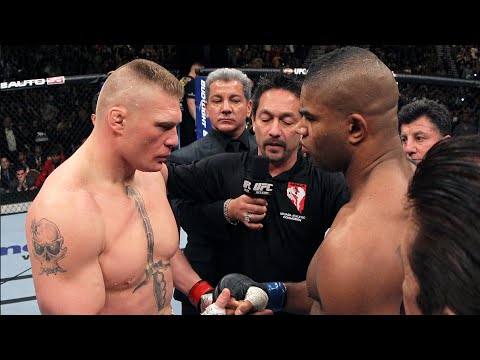
On a night etched in the annals of combat sports history, December 30, 2011, a new titan strode into the Ultimate Fighting Championship. It wasn't merely a debut; it was a declaration of war. Alistair Overeem, a behemoth of striking prowess and a veteran of countless battles across multiple disciplines, stepped into the Octagon to face Brock Lesnar, a former NCAA champion and the UFC's then-undisputed heavyweight king. The air in the MGM Grand Garden Arena crackled with anticipation. This wasn't just a fight; it was a clash of titans, a referendum on the evolving landscape of mixed martial arts.

Many saw this as the ultimate test for Overeem. Could his vaunted Muay Thai and kickboxing pedigree withstand the sheer brute force and wrestling might of Lesnar? The result wasn't just a win; it was a brutal dissection, a masterclass in heavyweight striking that would forever change how we perceived the division.

The Philosophy of the Finishing Blow: Beyond Mere Victory

In the grand tapestry of martial arts, victory is but one thread. The true artistry lies in the kime, the decisive moment of impact, the clean finish. Alistair Overeem's performance against Brock Lesnar at UFC 141 was not just about accumulating points or surviving rounds; it was about the art of the knockout, the TKO (Technical Knockout), and what it signifies about a fighter's mastery.

A TKO is more than just rendering an opponent unconscious. It is a testament to precision, timing, and the ability to exploit an opponent's weaknesses with surgical accuracy. It speaks to a fighter's understanding of anatomy, leverage, and the psychological aspect of combat. Overeem, a student of striking arts like Muay Thai and a practitioner who has honed his skills against the best in the world, embodied this philosophy. His approach to Lesnar was not one of brute force against brute force, but of calculated power meeting calculated defense. He understood that in heavyweight MMA, a single, well-placed strike could end the contest instantly. This isn't the chaotic brawl of untrained individuals; this is the refined violence of practiced warriors.

"The ultimate aim of martial arts is not victory or defeat, but the perfection of the character of its practitioners." - Gichin Funakoshi (often attributed, though the spirit resonates)

Overeem's approach demonstrated this principle. He didn't just aim to win; he aimed to dominate, to prove his superiority in a decisive manner. The efficiency of his strikes, the controlled aggression, and the ultimate finish were all reflections of his dedication to the martial path, a path that emphasizes not just fighting, but the refinement of technique and mental fortitude.

The Fight Breakdown: A Symphony of Strikes

From the opening bell, Overeem established his dominance. While Lesnar, a formidable presence known for his wrestling and raw power, came forward with intent, Overeem remained calm, a statue of controlled aggression. The initial exchanges were tense, with both fighters probing, aware of the devastating power each possessed.

Then, it happened. Overeem began to unleash his arsenal. A knee to the body, a hallmark of his striking, seemed to visibly affect Lesnar. The former champion, usually so robust, showed signs of distress. Overeem, a master of reading his opponents, sensed the opportunity. He didn't rush; he stalked. He followed up with a barrage of precise punches. The third landed with thunderous impact, sending Lesnar staggering back towards the cage.

The referee, sensing the danger, stepped in. The official time was 2:26 of the first round. Overeem had arrived, and he had done so with a statement. The TKO wasn't just a win; it was a tactical masterpiece, showcasing Overeem's superior striking technique and his ability to deliver fight-ending power.

This fight was a prime example of the evolution of heavyweight combat. While Lesnar represented raw power and a dominant wrestling base, Overeem showcased the efficacy of refined striking techniques, particularly the use of knees and punches to systematically break down an opponent. It highlighted how well-rounded fighters, those who can seamlessly blend different martial arts disciplines, often hold the advantage.

The Importance of the TKO in Modern Combat Sports

In sports like Judo or Brazilian Jiu-Jitsu, the focus might be on submissions or throws. In Karate or Taekwondo, it's about point-scoring or specific, often highly stylized, techniques. However, in the crucible of MMA, the TKO stands as a brutal, yet elegant, arbiter of skill. It’s a testament to a fighter's ability to:

  • Control Distance: Overeem kept Lesnar at the ideal range for his strikes.
  • Expose Weaknesses: The body shot clearly compromised Lesnar's ability to defend.
  • Execute with Precision: The final punches were not wild swings but targeted, impactful blows.
  • Understand Timing: Overeem capitalized on Lesnar's moments of vulnerability.

The TKO forces fighters to be well-versed in striking, as well as grappling. A fighter who can only grapple may find themselves overwhelmed by a superior striker, and vice-versa. This is why systems like MMA, which blend striking and grappling, have become so dominant. They demand a holistic approach to combat, forcing practitioners to develop a comprehensive skillset. The Overeem vs. Lesnar fight is a perfect illustration of this principle in action.

Equipment Essential for Your Striking Training

To emulate the precision and power displayed by fighters like Alistair Overeem, proper training equipment is not just beneficial; it's crucial. Investing in the right gear can significantly enhance your development and, more importantly, keep you safe.

  • Boxing Gloves: Essential for any striking art. For sparring, 16oz gloves are generally recommended to protect both you and your training partners. For heavy bag work, 12oz or 14oz can be used.
  • Hand Wraps: Always wear hand wraps underneath your gloves to protect your metacarpals and wrists from injury.
  • Shin Guards: If you are training kickboxing or Muay Thai, quality shin guards are a must for protecting your shins during sparring and pad work.
  • Mouthguard: Non-negotiable for any combat sport. Protect your teeth and jaw.
  • Groin Protector: Essential for protecting a vulnerable area during intense training sessions.
  • Training Partner: While not equipment, a dedicated and skilled training partner is arguably the most important element for improving your fighting skills.
  • Heavy Bag: For developing power and stamina.
  • Focus Mitts and Thai Pads: For partner drills, improving accuracy, speed, and reaction time.

For those looking to get started, consider exploring quality karate merchandise, even if your primary focus is striking. Many brands offer versatile training gear suitable for various disciplines.

Training Guide: The Striking Combination for Power and Precision

Developing fight-ending combinations requires practice and understanding. Here’s a fundamental drill inspired by the principles demonstrated by Overeem:

  1. Start in your fighting stance: Feet shoulder-width apart, lead foot slightly forward, knees slightly bent, hands guarding your head.
  2. Execute a Lead Hook: Rotate your hips and shoulders, bringing your lead hand in a sweeping motion to strike your imaginary opponent. Focus on hip rotation for power.
  3. Transition to a Rear Straight Punch: As your lead hand retracts, immediately bring your rear hand forward in a straight line, again using hip rotation for maximum force.
  4. Follow with a Lead Knee: As you bring your rear hand back to guard, step forward with your lead foot and bring your lead knee up sharply towards the opponent's midsection. Imagine driving the knee through the target.
  5. Maintain Guard: Throughout the combination, keep your other hand protecting your head to defend against counters.
  6. Practice with Flow: The key is to make the transitions seamless, like a flowing river, not a series of disjointed movements.
  7. Repetition: Perform this combination 10-15 times on each side, focusing on technique, speed, and power. Gradually increase the intensity.
  8. Sparring Application: Once comfortable, practice this combination during light sparring, looking for openings to land it effectively. Remember, timing and reading your opponent are as crucial as the technique itself.

Remember, this is a simplified drill. A true martial artist spends years refining these basic movements, adding feints, level changes, and defensive maneuvers to create a truly formidable arsenal. Exploring resources on MMA training can provide further insights.

"The way of the warrior is to fight as if you are fighting for your life, and to die as if you are already dead." - Miyamoto Musashi, The Book of Five Rings

This quote from Musashi emphasizes the mindset required for decisive action. In combat, hesitation is fatal. Overeem's decisive finishing of Lesnar exemplifies this warrior spirit – acting with unwavering conviction when the opportunity arises.

For Deeper Insights into Combat Strategy

The fight between Overeem and Lesnar is a microcosm of larger themes in martial arts. To truly understand the depth of combat strategy, consider exploring these related topics:

Frequently Asked Questions

What was the significance of Alistair Overeem's win over Brock Lesnar?

It marked Overeem's dominant arrival in the UFC heavyweight division, signaling him as a major contender and showcasing his elite striking ability against a former champion. It also highlighted the evolving nature of heavyweight MMA, where well-rounded striking could overcome brute force.

What is a TKO in MMA?

A TKO (Technical Knockout) occurs when the referee stops the fight because one fighter is deemed unable to intelligently defend themselves, even if they are not fully unconscious. This can be due to strikes, injury, or corner stoppage.

How did Alistair Overeem's striking compare to Brock Lesnar's strengths?

Overeem possessed superior striking technique, precision, and power, particularly with his knees and punches. Lesnar's strength lay in his wrestling and physical power. In this fight, Overeem's striking proved to be the decisive factor.

What martial arts disciplines influenced Alistair Overeem's style?

Overeem is renowned for his extensive background in Muay Thai, kickboxing, and also has experience in Brazilian Jiu-Jitsu and wrestling, making him a very well-rounded mixed martial artist.

How has the heavyweight division in MMA evolved since this fight?

The division has continued to emphasize well-roundedness, with fighters needing strong grappling and striking skills to succeed. While raw power remains a factor, technical proficiency and strategic striking have become increasingly important.

Reflection of the Sensei: Your Next Move?

We have dissected the raw power, the tactical brilliance, and the philosophical underpinnings of that pivotal night. Overeem didn't just defeat Lesnar; he offered a compelling argument for the supremacy of refined striking in the heavyweight division. But arguments are made in words, fights are won through action. Now, I pose this to you, my student:

Consider your own training. Are you merely going through the motions, or are you striving for that decisive kime in every technique, in every drill, in every moment of application? Are you a craftsman, meticulously honing your skills, or simply a participant? The Octagon, the dojo, the street – they are all stages for the expression of your commitment. Do you seek merely to survive, or to impose your will with decisive clarity? Reflect deeply. Your next step is determined by your answer.

``` GEMINI_METADESC: Analyze Alistair Overeem's TKO victory over Brock Lesnar at UFC 141. Explore the philosophy of the knockout, striking techniques, and the evolution of heavyweight MMA.

Mastering the Streets: The Top 5 Martial Arts for Self-Defense and Street Fighting

Anyone can embark on the journey of martial arts and reap its profound benefits. From the youngest child to the most seasoned elder, the disciplines offer a path to sustained health and vitality. But the allure of martial arts extends far beyond mere physical conditioning. It's a crucible where discipline, humility, and the essential skill of self-preservation are forged. At its very core, the genesis of many martial arts lies in the primal need for self-defense – the ability to protect oneself against an aggressor. While countless styles exist, numbering in the hundreds, perhaps even thousands, we have distilled this vast ocean of combat knowledge into a critical examination of five styles that, in our expert opinion, stand at the apex of effectiveness for real-world conflict. Prepare for a ranking that moves from the least efficient to the most potent on the unforgiving streets.

The Core of Combat: Why Self-Defense Matters

Let's be blunt: the world is not a dojo. While the discipline and technical prowess honed in martial arts training are invaluable, the realities of street conflict are chaotic, unpredictable, and often brutal. Unlike a controlled sparring match with rules and referees, a street confrontation can involve multiple attackers, weapons, and a complete disregard for fair play. This is where the distinction between sport martial arts and practical self-defense becomes starkly apparent. The primary objective on the street is not to score points or impress a judge, but to survive. It’s about neutralizing a threat as efficiently and quickly as possible, then disengaging. This fundamental difference dictates which styles and techniques are truly "best" for survival.

"The supreme art of war is to subdue the enemy without fighting." - Sun Tzu, The Art of War. While this philosophical approach is paramount, understanding how to fight is a non-negotiable last resort.

Many traditional martial arts, while rich in history and philosophy, may not directly translate to the high-stress, low-rule environment of street fighting. Their techniques might be too complex, require too much setup, or rely on compliance from an opponent that a street attacker will never offer. The ultimate goal of martial arts training, especially for self-defense, is to cultivate a state of awareness and readiness, not just physical capability. This means understanding de-escalation, situational awareness, and when to fight versus when to flee – often, the wisest choice is to avoid conflict altogether. But if avoidance fails, you must be prepared.

The Apex Predators: Our Top 5 Street-Ready Styles

The following are our meticulously selected top five martial arts styles, ranked not by popularity or historical significance alone, but by their proven efficacy in realistic self-defense scenarios. This ranking is based on extensive analysis of their core principles, common training methodologies, and documented effectiveness in real-world situations.

#5: Muay Thai - The Art of Eight Limbs

Originating from Thailand, Muay Thai is renowned as the "Art of Eight Limbs" because it utilizes punches, kicks, elbow strikes, and knee strikes, along with clinch work. Its raw power and directness make it a formidable striking art.

  • Strengths: Devastating offensive capabilities with elbows and knees, effective clinch control for close-range attacks, high conditioning standards leading to superior stamina.
  • Weaknesses: Limited ground fighting techniques, less emphasis on defensive grappling or escaping holds, can be overly offensive in situations requiring measured defense.

While Muay Thai is a brutal striking art, its effectiveness on the street is significantly amplified when its practitioners are also proficient in other ranges of combat, particularly grappling. Imagine a Muay Thai fighter landing devastating kicks and knees, only to be taken down by an opponent skilled in Brazilian Jiu-Jitsu. The effectiveness is undeniable, but it is not a complete system on its own for all street scenarios.

#4: Brazilian Jiu-Jitsu (BJJ) - The Ground Game King

Developed from Judo and traditional Japanese Jujutsu, BJJ focuses on ground fighting, emphasizing leverage and technique to control and submit opponents, regardless of size or strength. It’s a cornerstone of modern Mixed Martial Arts.

  • Strengths: Unparalleled effectiveness in controlling and submitting opponents on the ground, leverages technique over brute force, excellent for individuals of smaller stature against larger aggressors.
  • Weaknesses: Less effective against multiple attackers, limited striking defense (unless cross-trained), situations where the fight ends quickly on the feet or the opponent refuses to engage on the ground can neutralize its advantage.

The Gracie family’s legendary demonstrations proved BJJ’s worth against practitioners of other arts. However, a street fight rarely stays on the ground, especially if there are bystanders or the attacker doesn't want to be subdued. BJJ excels when you can dictate where the fight takes place, but the street offers no such luxury. It's indispensable for one-on-one encounters on the ground, but lacks the striking prowess needed for standing confrontations.

#3: Krav Maga - The No-Nonsense System

Developed for the Israeli military, Krav Maga is a practical, reality-based self-defense system that emphasizes instinctual movements, aggression, and simultaneous defense and offense. It's less a sport and more a survival methodology.

  • Strengths: Focuses on real-world scenarios, including defenses against weapons (knives, sticks, firearms), simultaneous attack and defense, dirty fighting tactics (eye gouges, groin strikes), and a strong emphasis on situational awareness and de-escalation.
  • Weaknesses: Can be less refined in terms of technique compared to traditional martial arts, potential for injury due to its aggressive nature, lacks the sporting aspect which can hinder development of technical perfection through competition.
"In the street, you don't get a second chance to learn your mistake." - A common adage in Krav Maga circles. This highlights the system's direct, unforgiving approach.

Krav Maga’s philosophy is simple: survive. It takes effective techniques from various martial arts and adapts them for maximum efficiency under extreme stress. Its training often simulates high-pressure environments, making practitioners more resilient to the shock and adrenaline of a real attack. This is perhaps the closest system to pure street effectiveness, devoid of sporting constraints.

#2: Boxing - The Sweet Science of Striking

Boxing, often called "The Sweet Science," focuses exclusively on punching with speed, power, and precision. Its practitioners develop exceptional footwork, head movement, and defensive skills.

  • Strengths: Incredible development of punching power, speed, and accuracy; superior defensive skills through footwork and head movement; excellent cardiovascular conditioning; teaches discipline and mental toughness.
  • Weaknesses: Completely lacks kicking, grappling, or defense against low attacks; vulnerable to opponents who can close the distance and clinch or take the fight to the ground.

The power and precision of a trained boxer are undeniable. Their ability to generate force and control distance with their hands is unparalleled. However, relying solely on boxing for self-defense is like bringing a knife to a gunfight if your opponent can kick or grapple. It's a critical component of striking, but rarely a complete solution in isolation for the unpredictable nature of street encounters.

#1: Mixed Martial Arts (MMA) - The Ultimate Hybrid

MMA is not a traditional martial art but a combat sport that allows a wide array of fighting techniques, drawing from various disciplines including striking (boxing, Muay Thai, Karate), grappling (BJJ, Wrestling, Judo), and clinch work.

  • Strengths: Develops well-rounded fighters proficient in striking, grappling, and transitions between them; teaches adaptability and problem-solving in combat; mirrors the unpredictability of real fights more closely than single-discipline arts.
  • Weaknesses: Often focuses on sport rules which may not apply to street scenarios (e.g., no striking downed opponents, weight classes); can still lack specific weapon defense training unless integrated.

MMA’s rise in popularity is directly attributable to its proven effectiveness. By training in multiple disciplines, MMA fighters are prepared for almost any situation. They can strike with devastating power, defend takedowns, control opponents on the ground, and transition seamlessly between ranges. While sport rules differ from street rules, the underlying skills—adaptability, resilience, and a comprehensive understanding of combat dynamics—make MMA the most potent foundation for real-world self-defense. An MMA practitioner has likely encountered and trained for more types of attacks and scenarios than a specialist in a single art.

Training for the Streets: Essential Principles

Regardless of the style you choose, effective self-defense training must incorporate several key elements:

  1. Situational Awareness: Learn to recognize potential threats and avoid dangerous situations. This is the first and most crucial line of defense.
  2. De-escalation: Develop verbal skills to defuse tense confrontations before they turn physical.
  3. Physical Conditioning: Build stamina, strength, and agility. A street fight can be a marathon, not a sprint. Focus on conditioning that mimics the demands of combat.
  4. Sparring Under Pressure: Regularly engage in controlled sparring that simulates the stress and unpredictability of a real encounter. This is vital for testing techniques and building mental fortitude.
  5. Weapon Defense: If possible, seek training that specifically addresses defense against common weapons like knives and sticks.
  6. Multiple Attacker Training: While challenging to simulate safely, understanding principles for dealing with more than one assailant is critical for street survival.

Gear Up: Essential Training Equipment

To train effectively and safely, consider the following:

  • Quality Gloves: For striking arts like boxing or Muay Thai, invest in durable MMA gloves or boxing gloves (14-16oz for general training, lighter for specific drills).
  • Mouthguard: Absolutely essential to protect your teeth and jaw during any form of sparring.
  • Headgear: Crucial for reducing the impact of blows during sparring sessions to prevent concussions and other injuries.
  • Shin Guards: For arts involving kicks, like Muay Thai or Kickboxing, these are vital for preventing painful injuries.
  • Groin Protector: A non-negotiable piece of safety equipment for all male practitioners, especially when sparring.
  • Grappling Dummy or Partner: Essential for practicing throws, takedowns, submissions, and ground control in arts like BJJ or Judo.
  • Durable Training Uniform (Gi/Kimono): For Judo or Jiu-Jitsu, a high-quality, double-weave judo kimono will withstand rigorous training.

Veredicto del Sensei: Street Smarts or Dojo Dreams?

The debate between the efficacy of traditional martial arts versus modern combat systems for street defense is as old as the arts themselves. My verdict is clear and unwavering: for pure, unadulterated street survival, systems that prioritize reality-based training, multiple ranges of combat, and weapon defense hold the undeniable edge. While the elegance and philosophical depth of arts like Karate or Aikido are invaluable for personal development and discipline, their direct applicability on a chaotic street can be limited without significant cross-training or adaptation. Boxing provides potent striking, BJJ dominates the ground, and Muay Thai brings devastating power. However, it is the integration of these elements, as seen in MMA, or the pragmatic, survival-focused approach of Krav Maga, that truly prepares an individual for the worst-case scenarios. Don't just train a martial art; train to survive.

Frequently Asked Questions

What is the single most important skill for street self-defense?

Situational awareness. Being aware of your surroundings and potential threats allows you to avoid conflict before it begins, which is always the most effective form of self-defense.

Can traditional martial arts like Karate be effective for street fighting?

While Karate teaches valuable principles like discipline and powerful strikes, its sport-oriented nature and lack of grappling or weapon defense training mean it's often insufficient on its own for street scenarios. Cross-training with other arts is highly recommended.

Is it better to train striking or grappling for self-defense?

Both are crucial. A well-rounded fighter needs proficiency in both striking (like boxing or Muay Thai) and grappling (like BJJ or Wrestling) to handle various situations effectively. MMA training integrates both.

How important is physical conditioning for street fighting?

Extremely important. Street fights can be physically demanding and last longer than expected. Superior conditioning can give you a significant advantage in stamina and resilience.

What about defending against multiple attackers?

This is one of the most dangerous scenarios. Training often focuses on creating space, targeting the most immediate threat, and using mobility to try and escape or isolate attackers. There are no guaranteed techniques, only principles to increase your odds.

Further Reading on Your Path

"It is the mind that makes a man fight and win. It is the mind that has felt the enemy's strength and weakness. It is the mind that can turn weakness into strength, and confusion into victory." - Miyamoto Musashi, The Book of Five Rings.

Reflection of the Sensei: Your Next Step

We’ve dissected the styles, weighed their strengths, and acknowledged their limitations in the crucible of street conflict. But knowledge without application is merely intellectual vanity. So, I ask you:

If you were to face an unavoidable confrontation right now, which of your current skills would serve you best, and more importantly, what is the single, most actionable step you will take *this week* to bridge the gap between your current capabilities and the harsh realities we've discussed?

The path to genuine self-defense is a lifelong commitment, not a weekend seminar. Do not let this be another fleeting thought. The streets wait for no one. Prove your intentions with action.

``` GEMINI_METADESC: Explore the top 5 martial arts for effective self-defense and street fighting, ranked by real-world efficiency. Learn essential training principles and gear recommendations.

Beyond the Knuckles: A Martial Sensei's Critique of KnuckleMania II

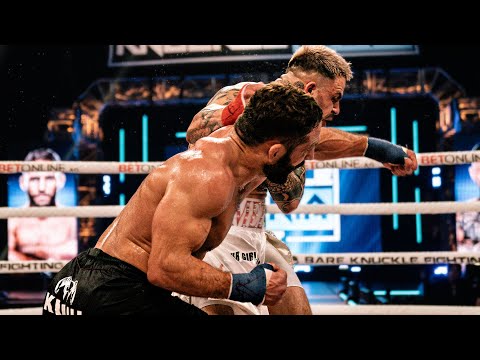
The roar of the crowd, the raw aggression, the glint of sweat under the lights – combat sports ignite a primal fascination within us. But as practitioners of the martial arts, we seek more than just a spectacle of violence. We look for technique, strategy, discipline, and the embodiment of principles honed over centuries. KnuckleMania II, a bare-knuckle boxing event, presents a unique canvas for this examination. While on the surface it appears to be a brutal display, how does it truly align with the deeper philosophies of the martial path? This is not merely a recap; it's a dissection from the perspective of one who has dedicated their life to the study and practice of combat in its purest forms.

The Primal Arena: Understanding Bare-Knuckle Combat

The allure of bare-knuckle fighting is undeniable. It strips away the cushioned barrier of gloves, demanding an unvarnished display of striking power and pain tolerance. But is this raw form of combat an evolution or a regression? From a martial arts standpoint, the absence of protective gear introduces a critical variable: increased risk of severe injury, not just to the opponent, but to the fighter themselves. This amplifies the importance of precision and control, even in its most ferocious state. We must ask: are the fighters at KnuckleMania II employing techniques born from a lineage of combat mastery, or are they simply unleashing brute force?
The historical context of bare-knuckle boxing is steeped in a time before modern sporting regulations, where survival and dominance were paramount. Examining this event through the lens of Budo, the Japanese concept of the martial way, requires us to consider the ethical implications and the development of character, not just the efficacy of a punch.

Deconstructing the Violence: Technique and Strategy at KnuckleMania II

Let us move beyond the initial shock value. When we analyze the action from KnuckleMania II, what do we truly see? Are there well-executed combinations, defensive maneuvers, and tactical approaches to distance and timing? Or is it a chaotic exchange of hooks and straights with little regard for form? True martial arts training emphasizes principles that transcend the specific tools used. For example, the concept of BJJ grappling, while different in application, shares the goal of efficient, controlled leverage. Similarly, a powerful Karate punch is not just about muscle, but about hip rotation, body alignment, and focused intent. Bare-knuckle boxing, by its nature, favors power and durability. However, even within this format, superior technique should theoretically prevail. A fighter who understands angles, footwork, and the art of drawing out an opponent's attack while capitalizing on openings will always have an advantage over someone who relies solely on aggression. We look for evidence of such strategic thinking. Were there moments of calculated defense, like slipping a punch or parrying with a forearm (though risky without gloves)? Did fighters demonstrate an understanding of body mechanics to maximize power and minimize self-inflicted damage? The difference between a street brawl and a martial contest lies in this intentionality and refined execution.
"Mastery of any art form, martial or otherwise, is not about the ferocity of the strike, but the precision and intent behind it." - A common sentiment echoing through dojos worldwide.
The original source materials (which seem to be promotional for the event) urge viewers to "drop us a LIKE & crack the SUBSCRIBE button today for more non-stop action!" This highlights the event's primary goal: entertainment and audience engagement. While there's nothing inherently wrong with that, it frames the combat as a product rather than a demonstration of martial principles. The true martial artist finds value not just in the victory, but in the journey of self-refinement that the struggle provides.

The Spirit of the Warrior: Where Discipline Meets Aggression

The term "warrior spirit" is often invoked in combat sports. But what does it truly signify? In the context of traditional martial arts, it embodies courage, perseverance, humility, and a profound respect for one's opponent and the art itself. It’s about facing fear head-on, not with recklessness, but with controlled intent and unwavering resolve. Watching KnuckleMania II, we must discern if this spirit is present. Is there a visible respect between the combatants, even amidst the intensity? Does the outcome, win or lose, lead to a demonstration of character? A true warrior understands that defeat is a teacher, an opportunity for growth. The unbridled aggression seen in bare-knuckle bouts can sometimes overshadow this crucial element. Is it controlled aggression, fueled by strategy and discipline, or is it simply raw, unchanneled rage? The date of the event, February 19th, 2022, places it within a modern landscape of combat sports where spectacle often takes precedence. Yet, the core principles remain: the test of will, the refinement of skill, and the confrontation with one's own limitations. The question is whether the format itself, the bare-knuckle aspect, enhances or detracts from the development of these martial qualities.

Beyond the Fight: Lessons for the Modern Martial Artist

What can we, as dedicated practitioners of the martial arts, learn from an event like KnuckleMania II? Firstly, it serves as a potent reminder of the fundamental importance of self-defense and the physical and mental fortitude required to engage in combat. It underscores the value of conditioning and the sheer grit needed to withstand punishment. Secondly, it highlights the critical role of technique. While power is a significant factor in bare-knuckle boxing, a fighter who lacks fundamental striking mechanics is at a severe disadvantage and risks injury. This reinforces the teachings we receive in our dojos: the importance of proper stance, balance, and power generation through the core. Even for those who never intend to compete, these principles are vital for effective technique and injury prevention. Moreover, it prompts a contemplation of the "why" behind our training. Is it solely for self-defense, for competition, or for personal development? The martial path is often a journey of self-mastery, a continuous process of learning and growth. Even observing a discipline as seemingly straightforward as bare-knuckle boxing can offer insights into human resilience, the psychology of conflict, and the sheer will to overcome.
"The character of a warrior is forged not in the victory, but in the crucible of adversity faced with integrity." - A timeless truth applicable to all martial disciplines.

Veredicto del Sensei: Is KnuckleMania II a True Test of Martial Prowess?

KnuckleMania II, in its purest form, is a demonstration of striking power and resilience in a bare-knuckle boxing context. From a strictly technical martial arts perspective, it showcases an element of combat – the punch – but it largely bypasses the broader spectrum of skills found in most martial arts, such as grappling, defensive strategies beyond blocking, and the intricate footwork of many traditional styles. Is it a test of martial prowess? Partially. It undeniably tests a fighter's heart, chin, and striking ability. However, it lacks the multi-faceted challenge that many martial arts present. It is more akin to a specialized discipline than a comprehensive martial system. Think of it this way: a master of Kyokushin Karate might be highly effective in a striking-only scenario, but their training encompasses more than just punches and kicks; it includes conditioning, philosophy, and sometimes even elements of close-range combat. KnuckleMania II focuses intensely on one aspect. Therefore, as a pure martial arts critique, I would grade it: **Cinturón Negro en Coraje y Potencia Cruda.** **Falla en la Integralidad de las Artes Marciales.** It is an exciting spectacle of human will and striking power, but it is not a complete representation of the martial way.

Essential Training Gear for Striking Disciplines

While KnuckleMania II celebrates the raw power of striking without gloves, a responsible martial artist understands the importance of proper gear for safe and effective training. Investing in the right equipment is not just about comfort; it's about maximizing your learning potential and preventing injuries that could derail your progress. Here's a foundational list of equipment essential for anyone serious about striking disciplines like boxing, kickboxing, Muay Thai, or Karate: * **Boxing Gloves:** Essential for sparring. Look for gloves appropriate for your discipline (e.g., 16oz for general sparring, lighter for bag work). Brands like Title, Everlast, or Rival offer good options. * **Hand Wraps:** Crucial for protecting your wrists and knuckles underneath the gloves during any striking activity. * **Mouthguard:** Non-negotiable for sparring and competition. Protects your teeth, jaw, and brain from impact. * **Groin Protector (Cup):** Especially important for male practitioners during sparring to protect against accidental low blows. * **Shin Guards:** Vital for kickboxing and Muay Thai to protect your shins from kicks and impact during sparring. * **Headgear:** Necessary for high-impact sparring sessions to reduce the risk of cuts, bruises, and concussions. * **Training Partner:** While not gear, a reliable and skilled training partner is perhaps the most important element for progression. * **Punching Bag / Heavy Bag:** For developing power, speed, and endurance. * **Speed Bag:** For improving hand-eye coordination and rhythm. * **Jump Rope:** An excellent tool for conditioning, footwork, and agility. For those interested in exploring the history and philosophy of striking arts, consider these resources: * **Books:** * "The Book of Five Rings" by Miyamoto Musashi (BUDO, Strategy) * "Budo: The Martial Ways of Japan" by various authors (Philosophy, Japanese Martial Arts) * **Online Courses:** Look for reputable instructors offering courses on specific striking techniques or martial philosophy.

Preguntas Frecuentes

* **What is bare-knuckle boxing, and how does it differ from traditional boxing?** Bare-knuckle boxing is a form of boxing where participants fight without gloves, relying solely on their bare fists. This inherently makes it more dangerous, increasing the risk of hand injuries for the fighter and severe lacerations for the opponent. Traditional boxing, on the other hand, mandates the use of padded gloves to offer some protection. * **Can techniques from bare-knuckle boxing be applied to self-defense?** Some fundamental striking principles, like the importance of power generation through body mechanics and the ability to withstand impact, are transferable. However, the extreme risk of hand injury in bare-knuckle fighting makes it ill-suited as a primary model for self-defense, where preserving your ability to fight and function is paramount. Many martial arts offer safer and more comprehensive self-defense strategies. * **Is fighting bare-knuckle considered a martial art?** While it is a form of combat sport, whether it qualifies as a "martial art" is debatable and depends on one's definition. If a martial art is defined by a comprehensive system of techniques, philosophy, and character development, bare-knuckle boxing, focused primarily on unadorned striking, is often considered more of a combat sport or discipline rather than a full-fledged martial art. * **What are the risks associated with bare-knuckle fighting?** The risks are substantial and include severe hand fractures (broken metacarpals, knuckles), lacerations on the knuckles and hands, potential for deeper tissue damage, and of course, the inherent risks of any combat sport, such as concussions, facial injuries, and other trauma.

Para Profundizar en tu Camino

* MMA vs. Boxing: Una Comparación Técnica y Filosófica * El Espíritu del Samurai: Principios del BUDO que Transcienden el Combate * Análisis de Combate: ¿Son los Golpes Desnudos una Muestra de Fuerza Bruta o de Habilidad Refinada?

Reflexión del Sensei: Tu Próximo Paso

You've seen the raw intensity, the unyielding fists, the spectacle of KnuckleMania II. But the true measure of a martial artist is not solely in the force of their blows, nor in the roar of the crowd. It lies in the discipline to train, the humility to learn, and the wisdom to apply what is learned not just in combat, but in life. Now, I ask you: When faced with your own "KnuckleMania" – the challenges, the obstacles, the moments that demand courage – will you unleash blind aggression, or will you channel the refined technique, the controlled spirit, and the unwavering resolve that defines a true warrior? The answer lies not on the canvas, but within. GEMINI_METADESC: A martial arts Sensei critically analyzes KnuckleMania II, evaluating bare-knuckle boxing techniques, warrior spirit, and its place within the broader martial arts philosophy.

The Unvarnished Truth: Which Martial Arts Reign Supreme in a Real Fight?

Ah, the age-old question that echoes through dojos and training halls across the globe: If the blood truly runs hot and the stakes are real, which martial art offers the most brutal, effective edge? Many believe they have the definitive answer, and frankly, the list of contenders is as long as a shogun's beard. Each discipline, forged in the crucible of necessity and tradition, brings its own distinct flavour of violence to the table. But is effectiveness measured solely in knockouts and broken bones, or is there a deeper current running beneath the surface?

Let us not mince words. The desire to know which art offers the most "bang for your buck" in a life-or-death scenario is primal. It’s a question born from a fundamental human instinct for survival and, let's be honest, a touch of bravado. But before we dive headfirst into the fray, let’s challenge the premise itself. Is there truly a single "most effective" martial art, or are we looking at a complex interplay of technique, strategy, temperament, and sheer luck?

Understanding "Effectiveness": Beyond the Ring

The notion of "effectiveness" is a slippery eel. In a sanctioned MMA bout, effectiveness is measured by rules, judges, and the singular goal of victory within that defined space. But in a true street fight – a chaotic, unpredictable maelstrom where rules cease to exist and survival is the only prize – effectiveness morphs into something far more visceral. It’s about de-escalation first, incapacitation second, and escape third. A technique that ends a fight instantly is effective. One that allows you to create distance and flee is equally effective. One that leads to a prolonged, messy engagement might be the least effective of all.

The crucial distinction lies between sport and survival. Sport teaches you how to win within a system. Survival teaches you how to live when the system collapses. The arts that truly excel in the latter often prioritize:

  • Simplicity: Complex techniques are prone to failure under stress.
  • Directness: Blunt force trauma is often the quickest path to resolution.
  • Adaptability: The ability to switch between striking and grappling is paramount.
  • Situational Awareness: Understanding your environment and your opponent's intentions is as vital as any punch or kick.

Many modern martial arts, unfortunately, have become so sport-oriented that they have lost touch with this raw, primal effectiveness. They teach you how to score points, not how to end a threat. This is a dangerous misconception that we, as practitioners of the martial path, must constantly guard against.

The Striking Contenders: Standing and Delivering

When we talk about standing engagements, the hands and feet become our primary weapons. Several arts stand out for their brutal efficiency:

  • Boxing: The "Sweet Science." Pure, unadulterated punching power, head movement, and footwork honed to a razor's edge. Boxers know how to generate concussive force and absorb punishment. Their focus on the head and upper body makes them formidable, though they often lack kicking or grappling defense. The simplicity of its objective – hit and don't get hit – makes it incredibly potent.
  • Muay Thai: The "Art of Eight Limbs." This Thai national sport is a savage display of kicks, punches, knees, and elbow strikes, combined with devastating clinch work. The ability to strike with shins, elbows, and knees adds layers of brutal effectiveness that few other arts can match. Its conditioning is legendary, forging fighters with incredible resilience.
  • Kickboxing (various styles): Encompassing disciplines like Dutch kickboxing and American kickboxing, these arts blend powerful punches with dynamic kicks. They offer a robust striking arsenal, often with a strong emphasis on power and aggression.
  • Kyokushin Karate: While often seen as a traditional art, its full-contact nature and emphasis on powerful, direct strikes, including to the body (mawashi geri to the ribs or thighs), make it incredibly effective in a raw confrontation. The rigorous conditioning and mental fortitude required to endure its training translate directly to battlefield resilience.

These arts teach you to end a fight quickly with devastating strikes. However, they often leave practitioners vulnerable if the fight goes to the ground. The saying goes, "A boxer who knows how to wrestle is a nightmare. A wrestler who knows how to box is a problem."

The Grappling Giants: Taking it to the Ground

What happens when the striking fails, or when an opponent closes the distance? This is where grappling arts shine, turning brute strength into leverage and control:

  • Brazilian Jiu-Jitsu (BJJ): The undisputed king of ground fighting. BJJ’s efficacy lies in its ability to allow a smaller, weaker individual to control and submit a larger, stronger opponent using joint locks and chokeholds. In a street fight, being taken to the ground is often a death sentence if you don't know how to handle it. BJJ provides that crucial defense and offensive capability. The focus on submissions is a direct way to neutralize a threat without necessarily causing lethal damage, a key aspect of street effectiveness.
  • Wrestling (Freestyle & Greco-Roman): The foundation of many grappling arts. Wrestlers possess incredible strength, balance, and the ability to control an opponent’s body. Their takedowns are brutal and effective, and their top control is suffocating. While they lack submissions, their ability to dictate where the fight takes place (on the mat) and their sheer physical dominance are undeniable assets.
  • Judo: Known for its spectacular throws (nage-waza) and groundwork (ne-waza). Judo practitioners are masters of balance and leverage, capable of throwing an opponent with immense force. Once on the ground, they can transition into submissions or pins. The emphasis on using an opponent’s weight and momentum against them is a core principle of efficient combat.

These arts are paramount for surviving the inevitable clinch and the ground. A skilled grappler can end a fight with a submission, rendering the opponent unconscious or incapacitated without resorting to strikes, which can be messy and unpredictable on uneven terrain.

The Hybrid Threats: Where Worlds Collide

The most dangerous fighters, both in sport and on the street, are often those who can blend striking and grappling seamlessly. This is where the modern landscape of combat sports truly reveals its effectiveness:

  • Mixed Martial Arts (MMA): By definition, MMA integrates techniques from various martial arts. An MMA fighter is trained to strike, grapple, defend takedowns, and survive on the ground. This cross-training makes them incredibly well-rounded and adaptable to almost any situation. The strategic evolution of MMA has led to fighters who understand how to transition between ranges effectively, exploiting an opponent’s weaknesses.
  • Combat Sambo: A Russian martial art that combines striking (similar to Muay Thai) with grappling (including leg locks, which are often absent in Judo or BJJ). It was developed for military purposes, meaning its focus is squarely on practical, brutal effectiveness. Its practitioners are known for their aggression and their ability to transition fluidly between standing and ground combat.

These hybrid arts recognize that a real fight is rarely confined to a single range. The fighter who can dictate the terms of engagement, whether standing or on the ground, holds a significant advantage.

Philosophy Over Technique: The Mind of the Warrior

But what about the arts that emphasize something beyond physical technique? Disciplines like Aikido, Kung Fu, or traditional Karate often get dismissed by pragmatists. However, their value lies not just in the physical moves, but in the underlying philosophy and mental training:

  • Aikido: While often criticized for its lack of sparring, Aikido teaches principles of blending with an attacker's motion, redirecting force, and using joint locks and throws for control. Its true strength lies in developing spatial awareness, centeredness, and the ability to remain calm under pressure. The philosophical emphasis on conflict resolution, rather than outright destruction, is a profound aspect of effectiveness in de-escalation.
  • Traditional Karate / Kung Fu: Many traditional styles, when trained with intent and historical context, emphasize discipline, focus, power generation (kime), and the development of an unshakeable spirit (fudoshin). While specific techniques might seem archaic, the core principles of strong stances, direct attacks, and unwavering resolve are timeless. The mental toughness forged through relentless conditioning and kata practice is a formidable asset.
"The supreme art of war is to subdue the enemy without fighting." - Sun Tzu, The Art of War. This principle is the pinnacle of martial effectiveness.

The ability to project confidence, to de-escalate through presence, or to strike with decisive intent born from inner calm is a potent, often underestimated, aspect of "effectiveness."

What the Masters Say: Ancient Wisdom for Modern Brawls

Great masters throughout history have grappled with this very question. Miyamoto Musashi, in his seminal The Book of Five Rings, emphasizes strategy, adaptability, and understanding the nuances of combat across different "paths." He famously stated:

"There are five paths, five places, five ways of training, and five kinds of timing. You must study all of these thoroughly. If you Lighten your heart, you can understand the world."

This speaks to a holistic approach, not just mere technique. Bruce Lee, a proponent of Jeet Kune Do (The Way of the Intercepting Fist), famously advocated for "using no way as way, having no limitation as limitation." He rejected rigid styles, urging practitioners to absorb what is useful, reject what is useless, and add what is uniquely their own. His philosophy champions:

  • Formlessness: Adapting to the opponent and situation, rather than adhering to rigid forms.
  • Directness: Striking the shortest distance between two points.
  • Efficiency: Using the least amount of energy for maximum effect.

Lee's approach is arguably the epitome of practical, street-effective martial arts – a constant evolution and adaptation tailored to the individual and the threat.

Your Training Journey: Finding Your Own Path

So, to return to the initial question: what is the most effective martial art for a real fight? The honest, albeit frustrating, answer is: it depends.

It depends on YOU.

  • Your Physique: Are you naturally strong and stocky, or lean and agile?
  • Your Temperament: Are you aggressive and direct, or calm and strategic?
  • Your Environment: Do you live in a dense urban area, or a more open rural setting?
  • Your Training: How consistently and realistically are you training?

Boxing teaches you to end a fight with your fists. BJJ teaches you to end it on the ground. Muay Thai teaches you to end it with every limb. Wrestling teaches you to control it entirely. But MMA or Combat Sambo teaches you to do all of the above.

However, the truly "most effective" path is one that combines:

  1. A solid foundation in a relevant art (be it striking, grappling, or a hybrid).
  2. Realistic sparring and pressure testing that simulates chaotic environments.
  3. A strong mental game: situational awareness, emotional control, and the will to survive.
  4. The willingness to adapt and learn, incorporating what is effective from other disciplines.

Therefore, instead of seeking the "best" art, seek the best training. Find a reputable school that emphasizes practical application, realistic sparring, and the development of a resilient mind and body. Whether it's a dedicated Brazilian Jiu-Jitsu academy, a no-nonsense Muay Thai gym, an MMA facility, or even a traditional school that incorporates realistic sparring and self-defense applications, your commitment to training is the ultimate determinant of effectiveness.

Veredicto del Sensei: ¿Merece la pena?

The quest for the "most effective" martial art is a siren's call, often leading to endless debates and rigid dogma. The truth, however, is far more nuanced and personal. While arts like Muay Thai, Boxing, Brazilian Jiu-Jitsu, Wrestling, MMA, and Combat Sambo demonstrably offer direct, brutal efficacy in physical confrontations due to their focus on power, control, and realistic application, their effectiveness is amplified, or diminished, by the practitioner's dedication, mindset, and the context of the encounter. Traditional arts, while perhaps less direct in their immediate combative application for sport, forge invaluable mental fortitude, discipline, and awareness. Ultimately, the "most effective" martial art is not a style on a shelf, but the one you train diligently, realistically, and with a warrior's spirit. Effectiveness is forged, not found.

Calificación del Sensei: Cinturón Negro en Realismo Práctico

Equipo Esencial para tu Entrenamiento

To truly test and refine the effectiveness of any martial art, proper training equipment is indispensable. Investing in the right gear not only enhances safety but also allows for more rigorous and realistic practice.

  • Guantes de Boxeo/MMA: Essential for any striking art. For boxing, 12-16oz is standard for sparring. For MMA, 4-6oz gloves allow for grappling while still offering some protection.
  • Casco de Entrenamiento: Crucial for head protection during sparring in striking arts and MMA.
  • Espinilleras: Protect your shins and your partner's safety during kicking drills and sparring in arts like Muay Thai or Kickboxing.
  • Kimono/Gi: Required for disciplines like Judo, Brazilian Jiu-Jitsu, and some Karate styles. A durable, double-weave gi is recommended for grappling arts to withstand the stress. Look for brands offering Karate merchandise or dedicated BJJ gis.
  • Protector Bucal: Non-negotiable for protecting your teeth and jaw in any combat sport with striking.
  • Esparcidores/Mitts: Partner training tools for developing speed, accuracy, and power in strikes.
  • Rodilleras y Coderas: Useful for protecting joints during grappling and ground work, especially for beginners.
  • Esterillas de Entrenamiento (Tatami): For grappling arts, these provide a safe and consistent surface for practice.

Remember, quality equipment is an investment in your safety and your progression. Don't compromise when it comes to protecting yourself during intense entrenamiento.

Frequently Asked Questions

¿Es el Karate efectivo en una pelea real?
El Karate tradicional, cuando se entrena con un enfoque realista y se complementa con sparring, puede ser muy efectivo. Sus principios de golpes potentes y posturas sólidas son valiosos. Sin embargo, la falta de entrenamiento de agarre y lucha en el suelo en muchos dojos puede ser una limitación significativa.
¿Sirve el Aikido para defenderse en la calle?
El Aikido enseña valiosos principios de control de movimiento y desvío de fuerza, pero su eficacia en una confrontación real y violenta es muy debatida. La falta de sparring contra oponentes resistentes y la naturaleza de sus técnicas a menudo las hacen difíciles de aplicar bajo estrés extremo. Su mayor valor puede residir en el desarrollo mental y la evitación de conflictos.
¿Qué arte marcial es mejor para una persona pequeña?
Las artes que enfatizan la técnica sobre la fuerza bruta son generalmente las más recomendables para individuos más pequeños. El Brazilian Jiu-Jitsu, el Judo y ciertas formas de Kung Fu o Jeet Kune Do se centran en la palanca, el timing y el uso del peso del oponente, lo que permite a un individuo más pequeño dominar a uno más grande.
¿Es el MMA la forma más efectiva de arte marcial?
El MMA es el sistema de combate más completo y probado en escenarios deportivos, ya que integra las disciplinas más efectivas de golpeo y lucha. Su eficacia en la calle es alta debido a su enfoque integral, pero siempre debe complementarse con una fuerte conciencia situacional y la capacidad de de-escalar.

Para Profundizar en tu Camino

Reflection of the Sensei: Your Next Step

We've dissected the effectiveness of various martial arts, from the brutal efficiency of Muay Thai to the subtle redirection of Aikido. We've acknowledged the hybrid power of MMA and the strategic depth of ancient texts. But knowledge without application is like a sword left to rust. So, I pose this to you, the dedicated student:

If you were forced into a real confrontation right now, with no time to train further, which single principle or technique from any martial art would you rely on most, and why? How do you bridge the gap between the controlled environment of the dojo and the chaotic reality of the street?

Your answer will reveal your true understanding. Discuss amongst yourselves.

``` GEMINI_METADESC: Explore the truth about martial arts effectiveness in real fights. From striking to grappling, discover which styles truly equip you for survival beyond the dojo.

1 Punch KO! Full Fight: Famez vs. Clown [Paul Teague] - A Martial Perspective

"The brutal simplicity of bare-knuckle fighting – a true test of spirit. But does spectacle overshadow substance? Today, we dissect a bout that promises raw power and, perhaps, a deeper lesson."

Introduction: The Raw Appeal of Bare Knuckle

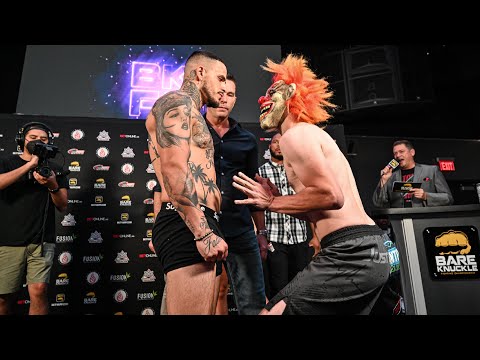
The allure of bare-knuckle boxing is undeniable. It strips combat down to its primal essence: two individuals, unprotected hands, and the will to prevail. In an era saturated with highly stylized martial arts and intricate grappling techniques, the raw, unadulterated violence of BKFC offers a stark contrast. But as a student of the martial way, I must ask: what can we truly learn from such contests beyond the visceral thrill? Today, we dissect the bout between Famez and Paul "Clown" Teague, not just as a highlight reel moment, but as a potential teaching ground for principles that transcend the ring. We'll also look ahead to KnuckleMania II, examining the card through the lens of martial philosophy and the pursuit of true mastery. Is this the epitome of combat, or a mere echo of the warrior's spirit?

Fight Analysis: Famez vs. Paul Teague

Famez, as the promotional material suggests, wasted little time in dispatching Paul Teague at BKFC 18. This wasn't a prolonged strategic chess match; it was a swift, decisive encounter. The heated weigh-in confrontation hinted at animosity, and the fight itself delivered on the promise of aggression. Famez demonstrated a clear intention to end the contest quickly, utilizing aggressive striking to overwhelm his opponent. Teague, unfortunately, was unable to withstand the initial onslaught. This highlights a crucial aspect of combat sports: the importance of a strong opening and the ability to withstand early pressure. In many traditional arts, such as Kyokushin Karate or Judo, the opening moments are critical for establishing dominance or setting up dominant techniques. Here, Famez seized the initiative with unbridled force.

"The moment of victory is not found in the crowd's roar, but in the quiet certainty of a well-executed plan." - A lesson often learned too late.

While the fight was short, it serves as a potent reminder that superior power, speed, and a clear offensive mindset can be overwhelming. The effectiveness of Famez's strategy lies in its directness. There was no feinting, no probing; it was a direct assault designed to end the fight. This mirrors the concept of Budo, the martial way, where efficiency and directness are paramount. However, the question remains: was this a display of superior martial skill, or simply a mismatch in power and readiness?

KnuckleMania II Card Breakdown: More Than Just Fights

Looking ahead to KnuckleMania II, the event promises a spectacle. The lineup is packed with recognizable names and intriguing matchups. The headliner, "Platinum" Mike Perry, making his highly anticipated BKFC debut against Julian Lane, speaks volumes about the promotion's draw. Luis Palomino defending his 155lb championship against Martin Brown, and the women's title fight between Britain Hart and Christine Ferea, all add significant weight to the card.

However, the bout that directly follows from our initial focus is Chad "Money" Mendes making his BKFC debut against the hometown favorite, "Famez." Mendes, a seasoned MMA fighter, transitioning to bare-knuckle is a significant event. His career in organizations like the UFC has showcased his wrestling prowess and powerful striking. His entry into this new discipline begs the question: how will his skills translate when the gloves are off and the stakes are raised? Will his grappling background, so crucial in MMA, offer an advantage, or will he be susceptible to the raw power of bare-knuckle specialists?

The full card includes:

  • Mike Perry vs. Julian Lane
  • Luis Palomino vs. Martin Brown (Championship Fight)
  • Britain Hart {Beltran} vs. Christine Ferea (Championship Fight)
  • Chad Mendes vs. Famez
  • + 9 additional bare knuckle bouts

The event is scheduled for Saturday, February 19th, at the Hard Rock Hotel & Casino in Hollywood, Florida. Doors open at 5:30 PM EST, with the first bout commencing at 6:30 PM EST. This meticulously planned event highlights the professionalization of bare-knuckle fighting, transforming it from an underground activity into a mainstream sporting spectacle. This mirrors the evolution of many martial arts, from battlefield necessities to regulated sports with clear rules and championship structures.

Martial Principles in the Pugilistic Arena

While BKFC operates with a different rule set than traditional martial arts, certain principles remain universally applicable. The emphasis on striking, especially with bare fists, demands impeccable timing, precision, and the ability to absorb impact. This brings to mind the devastating power generated in systems like Kyokushin Karate, where full contact is the norm. The concept of Ki, or internal energy, often spoken of in Eastern martial arts, can be seen manifested in the explosive power generated by a fighter like Famez. It’s not just about muscle; it’s about channeling intent and force through the body.

"True martial skill is not merely the ability to strike, but the wisdom to know when and how to strike with maximum effect, and equally, when not to strike at all." - A profound truth often tested in the heat of combat.

The transition of fighters like Chad Mendes from MMA to bare-knuckle is fascinating. It forces them to adapt their strategy. The commitment to hand conditioning, which is often overlooked in glove-wearing combat sports, becomes paramount. A fighter needs to develop resilient hands capable of delivering power without self-injury. This is where conditioning techniques, perhaps even inspired by ancient practices like striking a makiwara, become relevant. While Judo focuses on throws and Brazilian Jiu-Jitsu on groundwork, striking arts like Kickboxing and Karate share a common ground with bare-knuckle in the emphasis on striking efficacy. Yet, BKFC adds an element of raw vulnerability that few other sports can match.

Equipment & Resources for the Discerning Warrior

While BKFC is defined by the *lack* of gloves, the pursuit of martial excellence often involves specific tools. For those who appreciate the striking aspect of combat and wish to build power and resilience, certain equipment is invaluable. Building a solid foundation requires not just dedication, but the right gear to support your training.

  • Hand Wraps: Even in bare-knuckle, proper hand wrapping (though not for padding in the traditional sense) can aid in grip and prevent minor abrasions during intense training sessions.
  • Punching Mitts: Essential for developing accuracy and power with a partner. Look for durable, well-padded mitts that absorb impact effectively.
  • Heavy Bag: A staple for any striking art. Choose a bag appropriate for your strength and intended use – heavier bags for power, lighter for speed and combinations.
  • Sparring Gloves (for other disciplines): If you cross-train in boxing, kickboxing, or MMA, investing in quality sparring gloves (14-16oz) is crucial for safe practice.
  • Books on Martial Philosophy: To truly understand the 'why' behind the 'what,' delve into classic texts. Miyamoto Musashi's "The Book of Five Rings" or works on Bushido offer timeless wisdom applicable far beyond the ring.

Training Drill: Developing Striking Power

Mastering impactful strikes, whether bare-knuckle or gloved, requires dedicated practice. This drill focuses on building explosive power and core engagement, principles fundamental to all striking arts.

  1. Warm-up (5-10 minutes): Light cardio (jogging in place, jumping jacks) and dynamic stretching (arm circles, torso twists, leg swings).
  2. Power Stance Practice: Stand with feet shoulder-width apart, knees slightly bent, core engaged. Practice rotating your hips and torso explosively, visualizing delivering a powerful punch. Focus on the kinetic chain – transferring energy from the ground, through your legs, hips, core, and finally into your fist.
  3. Heavy Bag Punches (Sets of 5-10): Execute powerful, committed punches (jabs, crosses, hooks, uppercuts) into a heavy bag. Aim for maximum impact on each strike. Focus on snapping the punch out and retracting quickly, maintaining a tight core. Rest for 30-60 seconds between sets. Perform 3-5 sets.
  4. Medicine Ball Slams: Hold a medicine ball overhead, stand with feet shoulder-width apart, and explosively slam the ball onto the ground in front of you, engaging your entire body. This mimics the full-body power generation needed for a knockout punch. Perform 3 sets of 8-12 repetitions.
  5. Shadow Boxing with Power Emphasis: Engage in shadow boxing, but focus on making each punch feel heavy and impactful. Exaggerate the hip rotation and body transfer. Visualize an opponent and practice your combinations with intent.
  6. Cool-down (5 minutes): Static stretching, holding each stretch for 20-30 seconds. Focus on shoulders, chest, back, and legs.

Remember, consistency is key. Integrate this drill into your routine 2-3 times per week. Proper form and technique are more important than raw power, especially when training without gloves to avoid injury.

Sensei's Verdict: Spectacle or Substance?

The bout between Famez and Paul Teague, and indeed the entire BKFC phenomenon, exists in a fascinating space. On one hand, it delivers an undeniable raw spectacle. The immediacy of bare-knuckle combat, the visible commitment, and the potential for a single, fight-ending blow are captivating. Famez’s swift victory is a testament to aggressive execution. However, from a martial arts perspective, it’s crucial to differentiate between raw fighting and refined martial skill. While BKFC showcases aggression and resilience, it often lacks the strategic depth, technical variety, and philosophical underpinnings found in disciplines like Aikido, Judo, or traditional Karate. The focus is primarily on one aspect of combat: striking with fists. The transition of fighters like Chad Mendes highlights the adaptability required, but also the potential limitations when facing opponents who have honed their skills specifically for this brutal environment.

Sensei's Rating: 3.5 out of 5 Caged Fists (High on Spectacle and Rawness, Moderate on Tactical Depth)

It’s an entertaining display of human will and the desire to overcome, but perhaps not the zenith of martial prowess. The real "knockout" comes when spectacle meets substance, and that's a balance BKFC is still striving to perfect.

Frequently Asked Questions

What is BKFC?

BKFC stands for Bare Knuckle Fighting Championships. It's a combat sports promotion that hosts professional fights where competitors fight with bare fists, following a specific set of rules.

Is bare-knuckle boxing a martial art?

While bare-knuckle boxing is a form of combat, it is generally considered a sport rather than a complete martial art. Traditional martial arts often encompass a broader philosophy, self-defense applications, and a wider range of techniques (kicks, throws, joint locks) beyond just punching. However, it undeniably tests fundamental combat attributes like courage, power, and resilience.

What is the difference between BKFC and boxing?

The primary difference is the absence of gloves in BKFC. Boxers wear padded gloves to protect their hands and reduce the impact on their opponents, while BKFC fighters fight with unprotected fists, leading to a more brutal and potentially faster-paced contest with a higher risk of hand injury.

How did Famez defeat Paul Teague?

Famez secured a quick victory over Paul Teague at BKFC 18, seemingly by overwhelming him with aggressive strikes early in the fight, leading to a stoppage.

Deepen Your Journey

To continue exploring the rich tapestry of martial arts and combat sports, consider these related topics:

Reflection of the Sensei: Your Next Step

This bout, like many in the raw world of bare-knuckle, was swift. But speed in combat can be both a weapon and a blinding force. Did Famez's efficiency stem from superior preparation, or from Teague's unpreparedness? In your own training, how do you differentiate between explosive power and sustained, intelligent pressure? When faced with an overwhelming force, do you seek to meet it head-on, or to redirect its energy with greater finesse?

``` GEMINI_METADESC: An in-depth martial arts analysis of the Famez vs. Paul Teague bare-knuckle fight and the upcoming KnuckleMania II card, exploring principles of combat, strategy, and the spirit of the warrior.