Showing posts sorted by relevance for query conditioning. Sort by date Show all posts

Muay Thai Strength and Conditioning: Forge Your Body for the Art of Eight Limbs

My friends, the art of Muay Thai, the "Art of Eight Limbs," is a brutal and beautiful dance of destruction and resilience. It demands not only technical prowess but a physical foundation forged in the fires of rigorous conditioning. Many beginners are drawn to the devastating power of the elbow, the crushing force of the knee, or the sweeping elegance of a kick, but neglect the engine that drives these weapons: the body itself. Today, we delve into the crucial realm of strength and conditioning specifically tailored for the aspiring Muay Thai practitioner. Forget half-measures; this is about building a warrior's physique capable of withstanding and delivering punishment.

The journey into Muay Thai, like any profound martial pursuit, begins with a solid understanding of its core principles and a commitment to building a body that can execute them. What are the fundamental pillars upon which a Muay Thai fighter stands? It's a potent blend of striking technique, defensive awareness, strategic acumen, and, critically, raw physical conditioning. This is not merely about lifting weights; it's about developing explosive power, unwavering endurance, and the structural integrity to absorb impact. Without this foundation, even the most skilled technician is a house built on sand, vulnerable to the first strong gust.

The Pillars of Muay Thai Conditioning

Muay Thai is unique. It integrates punches, kicks, elbows, and knees, demanding a versatile physical capability. Therefore, a beginner's conditioning program must address several key areas:

  • Explosive Power: The ability to generate maximum force in a short amount of time for strikes.
  • Muscular Endurance: The capacity to repeat high-intensity movements over several rounds.
  • Cardiovascular Fitness: Essential for maintaining performance throughout a fight.
  • Core Strength: The nexus of all power generation and transfer in striking.
  • Flexibility and Mobility: Crucial for executing high kicks and preventing injuries.
  • Grip Strength: Often overlooked, but vital for clinching and controlling an opponent.

The philosophy behind Muay Thai conditioning is one of practical application. Every drill, every lift, every run should serve a direct purpose in making you a more effective Nak Muay (Muay Thai practitioner). It's not about vanity; it's about function. My own training under revered masters has taught me that the body must become a finely tuned instrument, capable of both delivering a devastating blow and absorbing the counter with stoic resolve.

"The strength of the body is the foundation of all martial arts. Without it, technique is merely an idea, not a reality." - Anonymous Master

Developing Explosive Striking Power

True Muay Thai power doesn't just come from brute strength; it comes from the kinetic chain, from the ground up, with the core acting as the critical link. For beginners, focus on compound movements that mimic the rotational and linear forces used in striking.

  • Medicine Ball Throws: Rotational throws against a wall engage the obliques and back, mimicking the torque of a punch or kick. Start with lighter balls and focus on speed and form.
  • Kettlebell Swings: Develops explosive hip power, which is fundamental to kicking and generating force. Master the hip-hinge movement first.
  • Plyometric Push-ups: Builds explosive upper body power. Variations include clap push-ups or standard plyo push-ups.
  • Jump Squats: Focuses on explosive leg power, essential for driving through kicks and generating power from the base.

Remember, the goal here is not just to lift heavy, but to move weight with speed and control. This translates directly to the impact of your strikes. Think of a whip – it's the speed of the tip, not the thickness of the handle, that delivers the sting.

Cultivating Unrelenting Endurance

A fight, especially in Muay Thai, is a war of attrition. Rounds can be intense, with little respite. Building stamina is paramount. This involves both cardiovascular and muscular endurance.

  • Roadwork: The traditional staple of fighters for a reason. Long, steady-state runs build an aerobic base. Incorporate interval training (sprints followed by recovery) to improve anaerobic capacity, crucial for explosive exchanges.
  • Jumping Rope: An excellent cardiovascular workout that also improves footwork, coordination, and calf strength. Aim for longer durations as you progress.
  • High-Intensity Interval Training (HIIT): Short bursts of intense exercise followed by brief recovery periods. This can include exercises like burpees, mountain climbers, or sprints.
  • Bodyweight Circuits: Perform a series of exercises (e.g., push-ups, squats, lunges, burpees) back-to-back with minimal rest. This builds muscular endurance under fatigue.

Consistency is key. Even 20-30 minutes of dedicated conditioning most days will yield significant results. Don't fall into the trap of only training what you enjoy; train what you need. If your gas tank is empty, your best technique will fail you.

Building Resilience: Injury Prevention

The Art of Eight Limbs is demanding, and injuries can derail your progress. Conditioning is not just about offense; it's about building a robust body that can withstand the rigors of training and competition.

  • Dynamic Stretching: Before training, perform movements that take your joints through their range of motion (leg swings, arm circles, torso twists). This prepares the muscles and reduces the risk of strains.
  • Static Stretching: After training, hold stretches for major muscle groups to improve flexibility and aid recovery. Focus on hips, hamstrings, and shoulders.
  • Core Strengthening: A strong core protects the spine and helps transfer force efficiently. Exercises like planks, side planks, and bird-dogs are invaluable.
  • Balance Training: Single-leg exercises, like single-leg squats or standing on one leg while performing other movements, improve proprioception and stability, crucial for executing kicks and avoiding falls.

Listen to your body. Pushing through genuine pain is foolish bravado; it's a fast track to a lengthy layoff. Learn the difference between discomfort from exertion and the sharp warning of an impending injury. A wise fighter knows when to push and when to recover.

Sample Beginner Muay Thai Conditioning Routine

This is a sample routine. Adjust weights, repetitions, and rest periods based on your current fitness level. Always prioritize proper form over quantity.

  1. Warm-up (5-10 minutes): Light jogging, jumping jacks, dynamic stretches (leg swings, arm circles).
  2. Explosive Power (3 sets of 8-10 reps):
    • Kettlebell Swings
    • Medicine Ball Rotational Throws (per side)
  3. Muscular Endurance Circuit (3 rounds, 30 seconds work / 15 seconds rest between exercises, 1 minute rest between rounds):
    • Push-ups
    • Bodyweight Squats
    • Mountain Climbers
    • Lunges (alternating legs)
  4. Cardiovascular Burst (15 minutes):
    • Jumping Rope (2 minutes on, 30 seconds rest)
    • Sprint intervals (e.g., 30 seconds sprint, 60 seconds walk/jog) - 5 repetitions
  5. Core & Stability (3 sets):
    • Plank (hold for 30-60 seconds)
    • Bird-Dog (10 reps per side)
    • Side Plank (hold for 30 seconds per side)
  6. Cool-down (5-10 minutes): Static stretching (focus on hamstrings, quads, hips, shoulders).

For those seeking more advanced routines or specific drills, resources abound. While this covers the fundamentals, exploring techniques and advanced conditioning is vital. For instance, you might find value in looking at advanced MMA conditioning or specific kickboxing drills to supplement your Muay Thai training. The principles often overlap, but the application can differ.

Essential Gear for Your Conditioning Journey

While Muay Thai conditioning can be done with minimal equipment, a few items can significantly enhance your training:

  • Durable Skipping Rope: Essential for cardiovascular work and footwork.
  • Kettlebells: Versatile for explosive hip movements and overall strength. Start with a moderate weight (e.g., 16kg for men, 10-12kg for women) and progress.
  • Medicine Ball: Ideal for developing rotational power and core strength. Choose a weight that allows for explosive movement without compromising form.
  • Comfortable Training Apparel: Breathable clothing that allows for a full range of motion is crucial.
  • Good Quality Training Shoes: For running and explosive movements, proper footwear can prevent injuries.
  • Optional: Resistance Bands: Can be used for dynamic warm-ups, rehabilitation, and adding resistance to bodyweight exercises.

Investing in quality Muay Thai equipment for your actual martial arts training is equally important, but for conditioning, focus on tools that build power, endurance, and resilience.

Frequently Asked Questions

Is Muay Thai conditioning suitable for absolute beginners?

Yes, this routine is designed for beginners. Focus on mastering the basic movements and gradually increasing intensity and duration. It's crucial to build a solid base before attempting more advanced exercises.

How often should I perform these conditioning workouts?

For beginners, 2-3 conditioning sessions per week, separate from your Muay Thai technical training, is a good starting point. Ensure you have rest days for recovery.

What's the difference between Muay Thai conditioning and general fitness?

Muay Thai conditioning is specific. It prioritizes explosive power, high levels of muscular and cardiovascular endurance, and resilience against the unique stresses of striking, clinching, and defensive maneuvers characteristic of Muay Thai.

How important is the clinch in conditioning?

The clinch is a demanding aspect of Muay Thai that requires immense grip strength, core stability, and muscular endurance in the neck, shoulders, and back. While not directly addressed in every beginner routine, incorporating grip-strengthening exercises and neck bridges will be beneficial.

Can I do this conditioning at home without a gym?

Absolutely. The sample routine focuses heavily on bodyweight exercises, kettlebells, and medicine balls, which are manageable for a home setup. Jumping rope requires minimal space.

For Profundizar en tu Camino

Veredicto del Sensei: ¿Merece la pena?

Building a formidable physique through dedicated strength and conditioning is not optional for anyone serious about Muay Thai; it is the bedrock upon which all technique and strategy are built. This guide provides the essential roadmap for beginners to forge the physical resilience and power needed to thrive. Neglecting conditioning is akin to a swordsman polishing his blade while his arm remains weak and unsteady. Do not make that mistake. Train smart, train hard, and you will see the Art of Eight Limbs truly come alive through you.

Reflexión del Sensei: Tu Próximo Paso

Now, observe your own body. Where are its current limitations? Does your breath falter too soon? Do your limbs feel heavy and slow when you try to strike with power? Do you feel the pang of a nagging injury threatening to stop you? Identify one specific area of your conditioning that needs the most attention and commit to improving it this week. The path to becoming a true Nak Muay is paved with sweat, discipline, and a relentless pursuit of self-mastery, both in technique and in the vessel that carries it.

``` GEMINI_METADESC: Forge your body for Muay Thai! This guide details essential strength & conditioning for beginners, building power, endurance, and resilience for the Art of Eight Limbs.

Kyokushin Karate vs. Muay Thai: A Budo Master's Analysis of Striking Prowess

Osu!

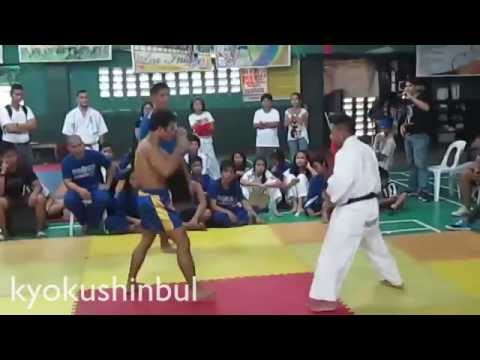
Today, we confront a question that ignites the dojo floor and echoes in the minds of many martial artists: How does the unyielding spirit and foundational power of Kyokushin Karate stand against the relentless, devastating efficacy of Muay Thai? This isn't merely a theoretical debate; it's a clash of philosophies, training methodologies, and raw combat application. We've seen glimpses of this, like the legendary encounters featuring figures such as Sensei Artemio Mancol of Kyokushin Philippines facing Muay Thai practitioners. The question is not if one art is "better," but how their distinct approaches to combat fare when directly contrasted.

The Core Philosophies: Resilience vs. Ruthlessness

At its heart, martial arts training is a journey of self-discovery and self-mastery. Kyokushin, founded by Masutatsu Oyama, embodies the principle of Osu – perseverance, resilience, and unwavering spirit. It emphasizes full-contact sparring with minimal protection, forging mental fortitude and physical toughness. The goal is not just to win, but to become a stronger individual through rigorous challenge. This philosophy cultivates a deep, grounded power, a resilience akin to ancient oak.

Muay Thai, the national sport of Thailand, is often dubbed the "Art of Eight Limbs" due to its use of fists, elbows, knees, and shins. Its history is steeped in battlefield application, evolving into a highly effective combat sport. The philosophy here is direct and brutal: to inflict damage, control the clinch, and break down the opponent efficiently. It's a pragmatic, battle-hardened art that prioritizes devastating impact and tactical aggression.

"Karate is a study in power, the ultimate application of force. Muay Thai is the ultimate expression of that force, refined for brutal efficiency."

Kyokushin: The Way of the Ultimate Truth

Kyokushin Karate is characterized by its emphasis on spirit, discipline, and physical conditioning. Its practitioners develop incredible leg strength and power through relentless kicking drills and conditioning exercises. The iconic 1000-man kumite is a testament to this dedication, pushing the limits of human endurance and mental strength. Techniques are often direct, powerful, and delivered with a strong emphasis on body conditioning, especially the shins and forearms, to withstand impact.

A core tenet is the development of a strong, unbroken spirit. This is cultivated through harsh training, constant sparring (kumite), and the strict adherence to dojo etiquette. The spiritual development is as crucial as the physical. Techniques are not merely movements; they are expressions of a hardened will. Concepts like Mushin (no-mind) are sought, where actions flow instinctively without conscious thought, born from thousands of hours of repetition and genuine combat experience.

Key Tenets of Kyokushin:

  • Osu: The spirit of perseverance, respect, and determination.
  • Full Contact Kumite: Sparring with minimal protective gear to simulate real combat.
  • Physical Conditioning: Intense training of the entire body, focusing on leg and shin conditioning.
  • Spiritual Development: Cultivating mental fortitude, humility, and discipline.
  • Simplicity and Power: Techniques are direct, powerful, and designed for maximum impact.

Muay Thai: The Art of Eight Limbs

Muay Thai is celebrated for its comprehensive arsenal. The strategic use of punches, kicks (particularly the roundhouse kick delivered with the shin), elbows, and knee strikes, combined with devastating clinch work, makes it a formidable striking art. The conditioning is intense and geared towards power, speed, and the ability to absorb and deliver punishment. Practitioners develop exceptionally strong shins, capable of delivering bone-shattering kicks.

Unlike the sometimes rigid stances of traditional Karate, Muay Thai often involves a more fluid, evasive stance, allowing for quick movement and rapid attacks. The clinch is a critical element, where fighters grapple, deliver knees and elbows, and wear down their opponents. This makes Muay Thai a complete striking system, adaptable to various ranges of combat.

Key Principles of Muay Thai:

  • Art of Eight Limbs: Maximizing offensive and defensive tools with fists, elbows, knees, and shins.
  • Clinch Work: Dominating the opponent in close-range grappling situations.
  • Devastating Kicks: Powerful roundhouse kicks delivered with the shin for maximum impact.
  • Aggressive Offense: Constant pressure and a focus on overwhelming the opponent.
  • Adaptability: Effective in both striking exchanges and close-quarters combat.

Striking Analysis: Power, Speed, and Application

In a direct confrontation, the differences in striking become apparent. Kyokushin strikes, particularly punches and kicks, are trained for devastating power. The emphasis on hip rotation and a stable base generates immense force behind each blow. However, the lack of open-hand techniques and a more restricted kicking repertoire (compared to Muay Thai's wide range) can be a limiting factor against a skilled Muay Thai practitioner.

Muay Thai excels in variety and speed of striking. The lightning-fast jab, the powerful roundhouse, the vicious elbow strikes, and the piercing knee strikes offer a diverse offensive threat. A key difference lies in the *intent*. Kyokushin aims to incapacitate through power and spirit. Muay Thai aims to break down the opponent, often targeting specific areas like the legs, ribs, and head with a relentless barrage.

Comparison of Striking:

  • Power: Both arts possess immense power, but Kyokushin's power is often more grounded and explosive, while Muay Thai's is more about rapid, cumulative damage.
  • Variety: Muay Thai has a significant advantage in the variety of strikes available (elbows, knees, varied kicks).
  • Speed: Muay Thai often appears faster due to its emphasis on fluid transitions and evasive footwork.
  • Targeting: Kyokushin focuses on direct, powerful strikes, while Muay Thai often employs strategic targeting to weaken the opponent over time.

Defensive Strategies: Blocking, Evasion, and Absorption

Kyokushin Karate's defense relies heavily on strong blocks, parries, and a resilient stance. Practitioners train to absorb blows, especially to the body and legs, developing a remarkable pain tolerance. The philosophy is often to stand your ground and meet force with force. This can be effective but can also lead to absorbing more damage than necessary if the opponent is skilled at feinting or changing attack angles.

Muay Thai incorporates sophisticated defensive techniques, including catching kicks, checking leg kicks with hardened shins, slipping punches, and using elbows and knees to deter close-range attacks. The clinch also serves as a defensive mechanism, allowing a fighter to stall, reset, or deliver counter-attacks. The ability to "check" kicks with their shin is a hallmark of Muay Thai defense, turning an offensive weapon into a defensive barrier.

"In combat, a defense that relies solely on absorption is a failing defense. True mastery lies in deflection, evasion, and the opportune counter."

Conditioning and Training Regimens

The training regimens are worlds apart, yet both forge warriors. Kyokushin's training is brutal and repetitive, focusing on building raw strength, stamina, and an unshakeable will. This includes extensive basic training (kihon), kata, and, most importantly, kumite. The emphasis on conditioning the body – especially the shins, forearms, and torso – to withstand heavy blows is paramount. This might include hitting makiwara, striking heavy bags, and endurance exercises.

Muay Thai conditioning is equally rigorous, but with a distinct focus. It involves intense roadwork, shadowboxing, bag work, pad work (focus mitts and Thai pads), and sparring. A significant portion of training is dedicated to developing the "eight limbs" and the clinch. Strength and conditioning often include bodyweight exercises, explosive movements, and core work, all designed to maximize power and resilience for the specific demands of Muay Thai fighting.

Training Regimen Differences:

  • Kyokushin: Emphasis on Kihon, Kata, Kumite, and intense body conditioning.
  • Muay Thai: Emphasis on Pad Work, Bag Work, Clinch Training, and explosive conditioning.

Combative Scenarios: Where Styles Collide

In a hypothetical matchup between a top Kyokushin Karateka and a top Muay Thai fighter, several factors would come into play:

  • Range: Muay Thai fighters are generally more comfortable at all ranges, especially close. Kyokushin practitioners might prefer a slightly more distanced striking exchange.
  • Kicking Game: Muay Thai's shin-to-shin kicks are designed to wear down the opponent's legs, while Kyokushin's kicks, though powerful, might not have the same debilitating effect if the Muay Thai fighter can check them effectively.
  • Hands and Elbows: Muay Thai's use of elbows and a wider variety of punching combinations could pose a significant threat.
  • Clinch: This is a clear advantage for Muay Thai. A Kyokushin practitioner would need to develop strong defenses against clinching or find a way to escape it quickly.
  • Spirit: This is where Kyokushin could shine. The sheer willpower and refusal to quit, the essence of Osu, could see a Kyokushin fighter endure tremendous pressure.

The outcome would likely depend on the specific individuals, their training levels, and their ability to adapt. A Kyokushin fighter who has trained extensively in cross-training or has faced diverse styles might fare better. Similarly, a Muay Thai fighter with a strong defensive structure and mental resilience could counter the power of Kyokushin.

Veredicto del Sensei: ¿Merece la pena?

This stylistic comparison is not about declaring a definitive "winner." It is about understanding the strengths and weaknesses of each art. Kyokushin Karate offers unparalleled resilience, mental fortitude, and grounded power, forged through rigorous, full-contact training. Muay Thai provides a devastatingly effective, versatile striking arsenal honed on the battlefield and refined in the ring.

If your goal is to develop unwavering spirit, immense physical toughness, and a foundational power that can withstand anything, Kyokushin is a path of profound transformation. If you seek a practical, aggressive striking system with a wide array of weapons and proven effectiveness in combat sports, Muay Thai is an excellent choice. Many a martial artist today benefits from cross-training, drawing the best from systems like these to create a more complete fighter.

Cinturón Negro en Resistencia y Poder vs. Maestría en el Arte de los Ocho Miembros. Ambas son dignas de estudio.

Equipo Esencial para tu Entrenamiento

While the spirit of Kyokushin thrives on simplicity, and Muay Thai emphasizes bare-knuckle effectiveness, certain equipment can significantly enhance your training:

  • Guantes de entrenamiento: Para sparring en Kyokushin, guantes ligeros pero protectores son útiles. Para Muay Thai, guantes de 14-16oz son estándar para sparring, y guantes más ligeros para trabajo de saco y pads.
  • Espinilleras: Absolutamente esenciales para Muay Thai para proteger tus espinillas y las de tu compañero durante el entrenamiento de patadas. En Kyokushin, se utilizan para proteger durante el sparring intenso si es permitido por el dojo.
  • Bucal: Imprescindible para cualquier tipo de sparring para proteger tus dientes y mandíbula.
  • Kimono de Karate/Gi: Para la práctica de Kyokushin, un Gi resistente es fundamental. Busca uno de doble tejido (#KarateMerchandise, #MartialArtsMerchandise).
  • Vendajes para manos: Cruciales para proteger tus muñecas y nudillos durante el entrenamiento de boxeo y Muay Thai.

Guía de Entrenamiento: El "Push-Up" de Kyokushin para Resistencia

This exercise is a staple in many Kyokushin dojos to build explosive power and stamina. It simulates the controlled, powerful movements of Karate strikes.

  1. Positioning: Start in a standard push-up position, hands slightly wider than shoulder-width apart. Ensure your body forms a straight line from head to heels.
  2. The Drop: Lower your chest towards the floor, aiming to go as low as possible while maintaining control. Keep your elbows tucked slightly, not flared out wide.
  3. The Explosive Push: This is key. Instead of a standard push-up, push off the ground with enough force to lift your hands off the floor briefly. Aim for a distinct *clap* of your hands if you are advanced, or simply a clear separation from the ground.
  4. Controlled Landing: Absorb the impact of your landing by bending your elbows slightly. Do not let your body crash down.
  5. Repetition: Continue for a set number of repetitions or for a timed interval. Focus on quality over quantity.

This exercise, when done consistently, builds the explosive power needed for Kyokushin's signature strikes and enhances shoulder and chest endurance.

Preguntas Frecuentes

¿Es el Karate Kyokushin efectivo para defensa personal?
Sí, Kyokushin enseña principios de combate directo, resistencia al dolor y poder de impacto que son muy efectivos para la defensa personal. Su énfasis en el combate real (kumite) lo prepara para situaciones de estrés.

¿Puede un practicante de Muay Thai usar patadas bajas contra un Karateka Kyokushin?
Absolutamente. Las patadas bajas (low kicks) son una herramienta fundamental en Muay Thai, diseñadas para inmovilizar y debilitar al oponente. Un Karateka Kyokushin necesitaría desarrollar una defensa sólida contra ellas, ya sea bloqueando con las espinillas o aprendiendo a contraatacar.

¿Qué arte es más rápido, Kyokushin o Muay Thai?
Muay Thai a menudo parece más rápido debido a su fluidez, variedad de ataques y uso de combinaciones rápidas. Kyokushin se enfoca en la potencia y la intención detrás de cada golpe, lo que puede parecer menos "rápido" pero igualmente devastador.

¿Cuál es la principal diferencia filosófica entre ambos?
La principal diferencia radica en el énfasis. Kyokushin se centra en el desarrollo del espíritu indomable y la resiliencia a través de la superación personal. Muay Thai se enfoca en la eficacia pragmática y la dominación a través de un arsenal de técnicas letales.

Para Profundizar en tu Camino

Reflexión del Sensei: Tu Próximo Paso

Has contemplado las fortaleques de dos titanes del combate: la férrea voluntad de Kyokushin y la implacable precisión de Muay Thai. Ahora, la pregunta que resuena en el silencio de tu dojo personal es: ¿Cómo integras estas lecciones, no solo en tu entrenamiento físico, sino en la batalla diaria contra tus propias limitaciones y miedos? ¿Serás tú la roca inamovible o la tormenta imparable?

``` GEMINI_METADESC: Analyze the striking prowess, philosophies, and training of Kyokushin Karate vs. Muay Thai. Discover their strengths, weaknesses, and combative applications from a Budo master's perspective.

The Ultimate 10-Minute Full-Body Finisher: A Martial Sensei's Analysis

Greetings, aspiring warriors and dedicated practitioners! Sensei here, ready to dissect another facet of physical and mental conditioning that echoes the principles of Budo. Today, we're not exploring the ancient katas of Karate or the intricate throws of Judo. Instead, we're confronting a modern challenge: a 10-minute full-body "finisher" workout. Many of you might stumble upon this seeking to extract every last drop of energy after a primary training session, or perhaps as a standalone, time-efficient method to ignite your metabolism. My intention today is to analyze this routine not just as a fitness regimen, but as a potential tool within the broader spectrum of martial arts training.

Introduction: The Purpose of a Finisher

The very concept of a "finisher" implies a final, intense push. In the context of martial arts, this echoes the spirit of kiai – the unifying shout that accompanies a powerful technique, expending the last reserves of energy. This particular workout, presented by Juice & Toya, promises a full-body engagement within a stringent 10-minute timeframe. They emphasize its efficacy as a time-efficient fat and calorie burner. From a martial perspective, this translates to enhancing stamina and developing the ability to maintain intensity even when fatigued – a critical factor in extended sparring sessions or demanding combat scenarios.

The inclusion of modifications by "Toya" is crucial. It addresses the fundamental principle that true mastery lies not in performing a single difficult feat, but in adapting techniques to individual capabilities and limitations. Whether you are a seasoned black belt or a beginner taking your first steps on the Martial Arts Journey, the ability to perform exercises with proper form, even in a modified state, is paramount. The absence of prescribed breaks is a direct challenge, demanding a level of mental fortitude akin to pushing through the final moments of a tough match.

This isn't merely about burning calories; it's about forging resilience. It's about teaching the body and mind to function under duress. This is the essence of conditioning that supports the more technical aspects of martial arts. Let's delve deeper.

Understanding the Exercises: Form and Function

While the original content doesn't detail the specific exercises, a typical 10-minute full-body finisher often includes compound movements that engage multiple muscle groups simultaneously. These could range from:

  • Burpees: A classic full-body exercise combining a squat, plank, and push-up, demanding explosive power and cardiovascular endurance.
  • Squat Jumps: Engaging the lower body with explosive power, improving leg strength and dynamic flexibility.
  • Push-ups (or variations): Crucial for upper body strength, particularly in the chest, shoulders, and triceps, vital for striking and grappling.
  • Mountain Climbers: A core-engaging exercise that also elevates the heart rate, mimicking the rapid footwork seen in many martial arts.
  • High Knees: Excellent for cardiovascular conditioning and developing explosive hip flexors, essential for kicks and quick movements.

The effectiveness of these, or any exercises within the routine, hinges entirely on proper form. As my instructors always stressed, "A technique performed poorly is not a technique at all, but a dangerous habit." Maintaining core engagement, controlled movements, and avoiding strain are non-negotiable. The modifications offered are not signs of weakness, but intelligent adaptations to ensure that the stimulus is applied effectively and safely. This is akin to learning the fundamental principles of a Judo throw before attempting it with full force – understanding the mechanics ensures effectiveness and prevents injury.

"The spirit of martial arts is not about being the strongest, but about being the most resilient." - Unknown Warrior Philosopher

The "no breaks" approach is a direct test of mental fortitude. It forces the practitioner to confront discomfort and push past perceived limits. This mental conditioning is as vital as the physical. It's the difference between yielding under pressure and standing firm, a lesson deeply embedded in the philosophy of BUDO.

The Martial Connection: Conditioning for Combat Readiness

How does a high-intensity interval training (HIIT) finisher relate to traditional martial arts? The answer lies in the physiological demands of combat. Real fights, whether in a dojo, ring, or unfortunately, on the street, are rarely predictable, perfectly paced affairs. They are often characterized by bursts of intense activity interspersed with moments of tension, followed by more explosive action. This is precisely what a finisher workout aims to simulate.

  • Cardiovascular Endurance: The ability to sustain effort without fatiguing is paramount. This finisher directly challenges your aerobic and anaerobic thresholds, improving your capacity to deliver techniques repeatedly and defend effectively.
  • Muscular Endurance: Holding a defensive stance, executing multiple strikes, or grappling for an extended period requires muscles that can resist fatigue. Compound movements in a finisher build this resilience.
  • Explosive Power: Many martial arts techniques, from a powerful Karate punch to a swift Judo throw, require explosive, dynamic movements. Exercises like squat jumps and burpees train this crucial element.
  • Mental Toughness: Pushing through the 10 minutes without breaks, as encouraged by the original content, builds the mental fortitude to endure pain, fatigue, and pressure – qualities essential for any warrior. This mirrors the SelfMastery cultivated through rigorous training.

Consider the demands of MMA. Fighters are expected to transition seamlessly between striking and grappling, often at a very high intensity. A finisher workout can provide a foundational level of conditioning that supports these diverse demands. Similarly, for practitioners of more traditional arts, it can enhance the explosiveness of techniques and the ability to maintain composure and power throughout a prolonged demonstration or match. It's about ensuring that when the moment demands your absolute best, you have the physical and mental reserves to deliver.

Practical Application: Integrating the Finisher

The original source suggests using this 10-minute routine as a "finisher" following a primary workout. This is a sound strategy. Think of it as adding the final sharp edge to a blade. If you've completed your technical drilling in Karate Kyokushin or your groundwork in BJJ, this routine can then deplete your remaining energy stores, further challenging your conditioning.

Integration Strategies:

  1. Post-Technical Training: As suggested, after a session focused on skill acquisition (forms, drills, sparring techniques).
  2. Standalone Workout: On days when time is severely limited, this routine can serve as a complete, albeit short, workout, focusing on general conditioning.
  3. Warm-up Enhancement: While they recommend warming up *before* this, specific movements within the finisher could potentially be adapted for a dynamic warm-up, focusing on movement quality rather than exhaustion. (Caution advised here; consult with your instructor).

The key is to ensure this finisher complements, rather than detracts from, your primary martial arts training. It should build upon your foundation, not replace the core practice of your chosen art. A proper warm-up is indeed essential, as attempting high-intensity exercises without preparation is a recipe for injury. The link provided for a warm-up video is a good starting point, demonstrating a commitment to safety before intensity.

Equipment Essential for Your Training

While this specific finisher is likely designed for minimal equipment, a comprehensive martial arts training regimen benefits from certain key items. Investing wisely ensures both safety and effectiveness.

  • High-Quality Kimono/Gi: For Judo, Aikido, and traditional Karate, a durable, well-fitting Gi is essential. Look for double-weave fabrics for advanced practitioners or single-weave for beginners. This is more than just clothing; it's part of the tradition and provides a grip point for grappling.
  • Sparring Gear: Headgear, mouthguards, groin protectors, and shin/instep pads are crucial for safe sparring in arts like Karate, Taekwondo, and Kickboxing. Ensure they meet official safety standards.
  • Training Mats (Tatami/Puzzle Mats): For arts involving throws or groundwork (Judo, BJJ, Aikido), proper matting is indispensable for safe falls (ukemi) and practice.
  • Hand Wraps and Gloves: For striking arts, hand wraps protect your wrists and knuckles, and sparring gloves cushion impact. For striking-focused conditioning like bag work or pad drills, 10-14oz gloves are common.
  • Resistance Bands: Versatile for adding resistance to bodyweight exercises, enhancing strength and conditioning in a portable format.

For those looking to purchase Martial Arts Merchandise, always prioritize quality and functionality over flashy designs. The tools of your trade should support your development, not hinder it.

Veredict of the Sensei: A Modern Tool for the Warrior

This 10-minute full-body finisher, as presented by Juice & Toya, is a pragmatic and effective tool for enhancing physical conditioning. Its strength lies in its efficiency and its ability to push practitioners beyond their perceived limits, mirroring the mental and physical demands of martial combat.

Core Strengths:

  • Time Efficiency: Ideal for busy schedules.
  • Full-Body Engagement: Comprehensive conditioning.
  • Mental Fortitude: The "no breaks" challenge builds resilience.
  • Adaptability: Modifications ensure accessibility.

However, its value is maximized when integrated intelligently within a broader martial arts training program. It should serve as a supplement to technical skill development and foundational practice, not a replacement.

Rating: Cinturón Negro en Eficiencia de Combate

Frequently Asked Questions

  • Q: Can this 10-minute finisher replace my regular martial arts training?
    A: Absolutely not. This is a conditioning tool designed to supplement technical skill development and the core practice of your chosen art. It enhances physical capacity but does not teach martial techniques or strategy.
  • Q: What is the best way to warm up for this workout?
    A: A dynamic warm-up focusing on joint mobility and light cardiovascular activity is recommended. Examples include arm circles, leg swings, torso twists, and light jogging or jumping jacks for a few minutes. The provided YouTube link is a good resource.
  • Q: How often should I perform this finisher?
    A: For most practitioners, performing this finisher 2-3 times per week, ideally after their main training session, is sufficient. Listen to your body and ensure adequate recovery.
  • Q: What if I can't complete the full 10 minutes without stopping?
    A: That is perfectly normal, especially when starting. Take short, controlled pauses when needed. The goal is consistent effort and progressive improvement. The "no breaks" is a challenge, not a rigid rule that prevents progress. Focus on completing the work with good form.

Deepen Your Path

Sensei's Reflection: Your Next Step

This 10-minute finisher is a tool. A hammer can build a house or destroy it. Its value is determined by the wielder's intention and skill. You've seen how intense conditioning can mirror the demands of combat, forging both body and spirit. Now, I ask you:

When facing fatigue, whether in the dojo or in life, do you seek the nearest exit, or do you find that last reserve of strength, that unwavering spirit, to push forward? This finisher is merely a physical manifestation of that internal battle. What will you choose next?

``` GEMINI_METADESC: Analyze a 10-minute full-body finisher workout from a martial arts perspective. Sensei breaks down its effectiveness for conditioning, mental toughness, and integration into Budo training.

Low Impact Cardio: A 30-Minute Warrior's Workout for All Levels

The path of the warrior is not solely one of brutal confrontation, but also of disciplined self-improvement. Even in the modern dojo, where the clash of steel and the thud of flesh echo through the ages, the need for foundational conditioning remains paramount. This isn't about a mere "cardio workout"; it's about forging a resilient body, a core capable of enduring the rigors of training, and a spirit that remains unbroken even when fatigued.

The Warrior's Foundation: Beyond Mere Exercise

Many mistake the intense combat of martial arts for the entirety of its practice. They see the flying kicks, the lightning-fast strikes, and assume that's all there is. But before any warrior can stand on the battlefield, they must first build their fortress. This 30-minute session is not merely a "cardio workout" in the modern sense; it is a fundamental conditioning drill, designed to prepare the body for the demands of more specialized training. It's about cultivating stamina, building a resilient cardiovascular system, and igniting the inner fire that fuels every strike and parry. Daniel, our guide here, understands that true strength isn't just brute force; it's the ability to sustain effort, to endure. This is the essence of Budo, a principle that transcends the specific techniques of any single art. As the old masters taught, a strong foundation is the bedrock of all skill.

The Philosophy of Low Impact: Strength Without Strain

The term "low impact" might conjure images of gentle strolls, but for a martial artist, it signifies a critical tactical advantage: the ability to train intensely without incurring unnecessary wear and tear on the body. Joints are our allies, not adversaries to be battered and broken. This routine prioritizes movements that are efficient and effective, minimizing stress on the knees, ankles, and spine. It's about building functional strength and cardiovascular endurance that translates directly to the dojo or the ring. Think of it as honing your blade – you want it sharp and resilient, not chipped and brittle. This approach ensures longevity in your martial journey, allowing you to train harder and smarter for years to come. It’s the difference between a warrior who fights for a decade and one who burns out in two years.

Your 30-Minute Tactical Conditioning Drill

This session is structured as a series of interval drills, a common tactic in martial arts training to maximize effort in short bursts, mimicking the ebb and flow of combat. Each segment is designed to elevate your heart rate, stimulate the release of endorphins – those natural mood boosters and pain relievers – and burn calories efficiently. Remember, consistency is key. Applying this routine regularly will forge the endurance you need to outlast your opponent.

  1. Warm-up (5 Minutes): Essential for preparing the body. This includes dynamic stretches and light movements to increase blood flow and joint mobility. Never skip this phase; it's your first line of defense against injury.
  2. Interval Drills (20 Minutes): This is the core of the session. You'll engage in varied movements for specific durations, followed by short recovery periods. The intensity should be challenging but sustainable. Focus on maintaining proper form throughout.
    • Drill 1: High Knees (30 seconds ON, 30 seconds OFF)
    • Drill 2: Butt Kicks (30 seconds ON, 30 seconds OFF)
    • Drill 3: Jumping Jacks (30 seconds ON, 30 seconds OFF)
    • Drill 4: Modified Burpees (no push-up if preferred) (30 seconds ON, 30 seconds OFF)
    • Drill 5: Mountain Climbers (30 seconds ON, 30 seconds OFF)
    • Repeat this cycle 4 times.
  3. Cool-down (5 Minutes): Gentle stretching and breathing exercises to help your body recover and prevent stiffness. This phase is as crucial as the workout itself for long-term physical well-being.

Understanding the Drills: Power in Simplicity

Each drill, while seemingly basic, serves a distinct purpose in a martial artist's conditioning:

  • High Knees: Mimics the rapid footwork and driving leg power required for explosive movements, advances, and evasion. It builds hip flexor strength and core stability.
  • Butt Kicks: Focuses on hamstring engagement and the quick recoil of the leg, essential for powerful kicks and dynamic foot transitions.
  • Jumping Jacks: A classic for a reason. It's a full-body movement that raises the heart rate rapidly and improves coordination and stamina.
  • Modified Burpees: This compound movement engages multiple muscle groups, building functional strength and cardiovascular endurance. The low-impact modification ensures accessibility without sacrificing effectiveness. It's a test of grit.
  • Mountain Climbers: A superior exercise for core strength and stability, crucial for transferring power through the body during strikes and grappling.

The beauty of these drills lies in their universality. A Karateka can visualize snapping kicks, a Judoka can imagine explosive pulls, and a Muay Thai fighter can see the necessity of sustained knee strikes. The underlying physical attributes are the same.

"The supreme art of war is to subdue the enemy without fighting." - Sun Tzu, The Art of War. This doesn't mean avoiding conflict, but rather being so supremely prepared that the outcome is almost guaranteed before the first blow is struck. Conditioning is that preparation.

Sensei's Verdict: Is This a True Martial Conditioning Method?

From the perspective of a seasoned martial artist, this routine is a valuable component of a holistic training regimen. It’s not a substitute for specialized technique training – it won't teach you a perfect hip throw or a devastating elbow strike. However, it provides the foundational cardiovascular endurance and muscular resilience necessary to perform those techniques effectively and repeatedly. The "low impact" nature makes it accessible for beginners and those recovering from minor injuries, allowing them to maintain fitness without exacerbating problems. It successfully employs interval training, a method proven effective in combat sports for developing anaerobic and aerobic capacity. While the terminology is modern fitness-speak, the underlying principle – building a body that can withstand and deliver force – is as ancient as Budo itself.

Sensei's Rating: "Bronze Medal for Stamina" – A solid, accessible method for building the engine of a warrior, provided it's integrated with specific martial arts training.

Essential Gear for Your Training Path

While this workout requires minimal equipment, a few items can enhance your experience and support your long-term training:

  • Comfortable Workout Attire: Breathable fabrics that allow for a full range of motion.
  • Supportive Footwear: Shoes designed for cross-training or athletic activities to provide cushioning and stability.
  • Water Bottle: Staying hydrated is critical for performance and recovery.
  • Exercise Mat (Optional): For added comfort during floor exercises like mountain climbers and cool-down stretches.
  • Heart Rate Monitor (Optional): To precisely track your exertion levels and ensure you're training within your target zones.

Resources to Deepen Your Understanding

To truly integrate this conditioning into your martial arts journey, consider exploring these related areas:

  • Conditioning for Martial Arts: Learn advanced drills and strategies to build functional strength and endurance specific to combat sports.
  • The Philosophy of Budo: Understand the principles and ethics that guide the martial path beyond mere fighting techniques.
  • Self-Defense Techniques: Explore practical applications for real-world situations, where physical conditioning plays a vital role.
  • Kyokushin Karate Training: Witness a style that emphasizes full-contact sparring and demands exceptional physical conditioning.

Frequently Asked Questions

Can I really get fit in 30 minutes?

Yes, if the workout is structured effectively, like this interval-based session. Consistency over time is more important than the duration of a single session. This routine is designed for efficiency.

Is this workout safe for absolute beginners?

The "low impact" nature makes it safer than high-impact alternatives. However, it is crucial to listen to your body, maintain proper form, and consult a healthcare professional before starting any new exercise program, especially if you have pre-existing conditions.

How often should I do this workout?

For optimal results and to build a solid foundation, performing this routine 3-4 times per week is recommended. Ensure you incorporate rest days and your specific martial arts training into your schedule.

What's the difference between this and a specialized martial arts drill?

This is general conditioning; martial arts drills are technique-specific. Think of this as building the engine of a car, while martial arts drills are teaching you how to race that car – steering, braking, and navigating the track. Both are essential.

Can I modify this workout further?

Absolutely. You can adjust the work-to-rest ratios, increase the number of rounds, or substitute exercises with similar low-impact movements that target the same muscle groups. The key is to maintain intensity and proper form.

Para Profundizar en tu Camino

Sensei's Reflection: Your Next Move

The physical conditioning is but one aspect of the warrior's journey. This workout builds the vessel, but what will you fill it with? Will it be discipline, resilience, and unwavering spirit? Or will it be neglected, leaving your powerful engine to rust unused? The true measure of a martial artist is not just their ability to fight, but their commitment to constant self-improvement, both physically and mentally. This 30-minute drill is a tool, an opportunity. The question is:

When your body calls out in fatigue during sparring, is it a sign to quit, or a testament to the strength you have already cultivated?

Reflect on this. And then, commit to the next drill. Your journey demands it.

``` GEMINI_METADESC: Forge your warrior's body with this 30-minute low-impact cardio workout. Master endurance, build resilience, and enhance your martial arts training with this effective, interval-based conditioning.

The Man Who Possessed the Most Devastating Fists in History

"The supreme art of war is to subdue the enemy without fighting." - Sun Tzu, The Art of War. Though Sun Tzu spoke of strategy, the power of the fist, when wielded with precision and intent, can be the ultimate argument in a physical confrontation. But who truly stands out in the annals of martial history for their sheer destructive power?

Hello and welcome to Budo & Martial Arts, the most comprehensive and up-to-date martial arts blog on the internet. Today, we delve into a topic that ignites debate among practitioners and fans alike: the ultimate fist. We're not just talking about brute force; we're dissecting the anatomy of power, the psychology behind it, and the historical figures who embodied it. Prepare yourselves, for this lesson will not be for the faint of heart.

Many names might spring to mind: Mike Tyson, a whirlwind of destruction in boxing; Bruce Lee, whose "one-inch punch" remains legendary; perhaps even figures from ancient legends. But our focus today is on a man whose fists were less a weapon and more an extension of a profound philosophical and physical discipline. We're exploring the legacy of **Mas Oyama**, the indomitable founder of Kyokukushin Karate.

The Genesis of Unrivaled Power: Mas Oyama's Path

Masutatsu "Mas" Oyama (born Choi Yeong-eui) wasn't just a martial artist; he was a force of nature. His journey into the depths of martial arts began in Korea, where he studied various styles before moving to Japan. It was in Japan that his legend truly began to forge, shaped by an almost ascetic dedication to training and a burning desire to understand the absolute limits of the human body and spirit.

His early training in Karate, particularly in the Shotokan style under Gichin Funakoshi, laid the foundation. However, Oyama felt that traditional Karate, while effective, lacked the brutal realism and self-testing required to truly embody the spirit of Budo. He sought to push beyond theoretical application and into the realm of practical, undeniable power. This led him to undertake intense, solitary training in the mountains of Japan, a period often referred to as his "retrieval" or "reclusion" phase.

During this time, Oyama subjected himself to grueling physical conditioning, involving thousands of punches and kicks daily, meditation, and the study of Zen philosophy. He famously practiced breaking rocks, bottles, and, most notably, bull horns with his bare hands. This wasn't mere showmanship; it was a calculated process of honing his body into a weapon capable of delivering devastating blows. His objective was to develop a Karate style that was a pure fighting art, stripped of all non-essentials – a style that could be tested in real combat.

Kyokukushin Karate: The Embodiment of Oyama's Philosophy

The result of Oyama's relentless pursuit was Kyokukushin Karate, meaning "the ultimate truth in Karate." This style is renowned for its full-contact fighting rules, demanding incredible physical and mental fortitude from its practitioners. Unlike many other Karate styles that employ point-scoring or controlled sparring, Kyokukushin sanctions direct, hard-hitting combat, with techniques allowed to the body and head (though head punches are prohibited in competition to reduce concussions, a pragmatic adjustment that still maintains a high level of physicality). The emphasis is on conditioning the body to withstand powerful strikes and developing techniques that can end a fight decisively.

Oyama's philosophy was simple yet profound: true martial arts must be tested. He famously stated, "Karate is for fighting. It is not a religion. It is not a game." This conviction fueled his legendary challenges, including his fights against bulls, where he would aim to disable the animal with a single decisive blow. These events, while controversial, served to popularize his style and demonstrate the raw power he believed was inherent in dedicated martial arts training.

The Power of the Fists: Technique and Conditioning

What made Oyama's fists so legendary? It was a combination of factors, honed through decades of rigorous, almost superhuman dedication:

  • Extreme Conditioning: Oyama's training was notoriously brutal. He would condition his hands, knuckles, and forearms relentlessly, often by striking makiwara (striking boards) and heavy bags for hours on end. This toughened the bones and connective tissues, making his hands incredibly resilient and capable of delivering immense impact force without injury.
  • Scientific Application of Force: While rooted in tradition, Oyama's approach was also scientifically minded. He understood leverage, body mechanics, and the generation of power through hip rotation and the entire body's kinetic chain. His punches were not just arm extensions; they were explosive movements originating from the ground up.
  • Mental Fortitude (Mushin): Perhaps the most critical element was his mental state. Oyama trained to achieve "Mushin" – a state of no-mind or emptiness, where the practitioner acts instinctively and without hesitation or fear. This allowed him to unleash his power with absolute focus and commitment, unburdened by doubt.
  • The "Iron Fist" Technique: While no single "secret technique" existed, the cumulative effect of his conditioning and understanding of force led to what many described as an "iron fist." This wasn't a specific punch, but rather the characteristic hardness and devastating impact of all his strikes.

Challenging the Modern Martial Arts Landscape

In today's world, where mixed martial arts (MMA) dominate the combat sports landscape, it's easy to dismiss older, single-discipline approaches. However, the principles embodied by Mas Oyama and Kyokukushin Karate remain profoundly relevant. MMA fighters today, like **Jon Jones** or **Cyril Gane**, understand the critical importance of conditioning and the ability to deliver powerful strikes. While the rules and techniques may differ, the underlying pursuit of peak physical and mental performance is identical.

Consider the devastating low kicks of **Emanuel Augustus** or the sheer knockout power displayed by fighters in events like **UFC 283**. This power doesn't come from wishful thinking; it's the product of countless hours in the gym, pushing physical and mental boundaries. Oyama's legacy serves as a stark reminder that dedicated, hard-hitting training can forge power that transcends specific styles.

The debates around the effectiveness of traditional martial arts versus modern MMA are ongoing. Some argue that styles like Kyokukushin, with its emphasis on raw power and conditioning, possess elements that are timeless. Others point to the evolution of combat, where a broader skillset is necessary. But what is undeniable is that the spirit of Mas Oyama – the pursuit of self-mastery through relentless training and the courage to face any challenge – is a cornerstone of all authentic martial arts.

Veredicto del Sensei: ¿Merece la pena?

Mas Oyama and Kyokukushin Karate are not just about breaking boards or fighting bulls; they are a testament to human potential. The "fists" that were most powerful were not merely physical instruments, but embodiments of unwavering discipline, philosophical depth, and a willingness to face hardship head-on. Oyama didn't just possess powerful fists; he forged them through a lifetime dedicated to the ultimate truth of martial arts. His legacy continues to inspire fighters to push their limits and understand that true power comes from within, honed through dedication and an unbreakable spirit. Kyokukushin stands as a pillar of authentic martial endeavor, a direct challenge to complacency.

Equipo Esencial para tu Entrenamiento

To truly understand and emulate the spirit of relentless training that Mas Oyama championed, certain equipment is crucial. While Oyama himself often relied on the bare minimum to test his own capabilities, modern practitioners can benefit from tools that enhance safety, conditioning, and skill development:

  • Heavy Bag: Essential for developing power, speed, and stamina in your punches and kicks. Look for a durable bag that can withstand intense training sessions.
  • Makiwara: While challenging to find commercially, a makiwara is vital for conditioning the hands and knuckles, as Oyama did. Ensure proper technique to avoid injury.
  • Karate Gi (Kimono): A sturdy, double-weave gi, like those favored in Kyokukushin, can withstand the rigors of full-contact training and grappling. Karate merchandise often features high-quality gis designed for durability.
  • Protective Gear: For sparring, especially when starting, items like MMA gloves (16oz for sparring), shin guards, and groin protectors are indispensable for safety.
  • Training Mats: If you're practicing groundwork or conditioning exercises, good quality mats provide cushioning and prevent injuries.

Guía de Entrenamiento: Desarrollando tu "Puño de Hierro"

Emulating Mas Oyama's power requires a multi-faceted approach. Here's a breakdown of training principles:

  1. Base Conditioning: Start with foundational fitness. Focus on cardiovascular endurance through running or at-home workouts with no equipment, and build strength with bodyweight exercises.
  2. Punching Technique and Power Generation: Study the mechanics of a proper punch. Focus on hip rotation, grounding, and snapping the fist through the target. Practice with focus mitts and a heavy bag.
  3. Hand and Forearm Conditioning: Begin cautiously. Start by striking a padded makiwara or a sturdy heavy bag. Gradually increase intensity and frequency. Gradually introduce knuckle push-ups. Always listen to your body and prioritize safety.
  4. Mental Training (Mushin and Zanshin): Incorporate meditation and mindfulness practices. Zazen meditation can help cultivate the stillness and focus required for Mushin. Practicing forms (Katas) with full intent and awareness helps develop Zanshin (lingering awareness).
  5. Full Contact Sparring (with caution): Once you have a solid foundation, engage in controlled sparring sessions. Under the guidance of experienced instructors, this is where you learn to apply your power effectively and develop combat awareness. This is the core of Kyokushin training.

Preguntas Frecuentes

¿Fue Mas Oyama realmente invencible en combate?

Mas Oyama participated in many challenging bouts and demonstrations throughout his life. While he was an exceptionally powerful and skilled martial artist, the concept of "invincible" is often a mythologized ideal. His true strength lay in his dedication to pushing his limits and his ability to overcome immense physical and mental challenges.

¿Se permite el contacto total en Kyokukushin Karate?

Yes, Kyokukushin is known for its full-contact sparring. However, certain techniques, like head punches, are prohibited in competition to ensure fighter safety. The emphasis is on powerful, decisive strikes to the body and legs, demanding extreme conditioning.

¿Cómo puedo desarrollar la dureza en mis manos sin lesionarme?

Start slowly and gradually. Begin with conditioning exercises like knuckle push-ups on soft surfaces. Progress to striking a heavy bag with proper technique. If you acquire a makiwara, use it with extreme caution and follow expert guidance. Always warm up thoroughly and listen to your body. Pain is a signal to stop or adjust.

¿Son relevantes las técnicas de un solo estilo como Kyokukushin en el MMA moderno?

The principles of conditioning, power generation, and mental fortitude taught in Kyokukushin are highly relevant. While MMA requires a broader range of skills (grappling, wrestling), the ability to deliver devastating strikes and withstand punishment, as perfected in Kyokukushin, remains a crucial component of success.

¿Qué significa "ultimate truth" en Kyokukushin?

"Kyokushin" translates to "the ultimate truth." For Oyama, this ultimate truth referred to the pure, unadulterated essence of Karate as a fighting art, tested and proven through rigorous physical and mental discipline, stripped of all non-essential elements.

Para Profundizar en tu Camino

If you like what we do and want to support TRUE martial arts, we invite you to visit our store to buy exclusive content and merchandise. Follow us on social networks and do not forget to visit our main page. We also invite you to visit our other blogs.

Follow me on Facebook: Hugo Van Damme Sports.

Follow me on Twitter: Hugo Van Damme Sports.

"The more you sweat in training, the less you bleed in battle." - This adage, though not directly attributed to Oyama, perfectly encapsulates the philosophy behind his relentless pursuit of physical and mental conditioning.

Reflexión del Sensei: Tu Próximo Paso

Mas Oyama's "iron fists" were not a gift of nature, but a product of extraordinary will and discipline. Now, I ask you: What are you truly willing to sacrifice in your training to achieve your own "ultimate truth"? Are you content with mere technique, or do you seek the power that comes from forging yourself in the fires of adversity? Your answer will define your path.

``` GEMINI_METADESC: Explore the legendary power of Mas Oyama's fists and Kyokukushin Karate. Discover the training, philosophy, and combat effectiveness that made him a martial arts icon.