Showing posts sorted by date for query martial arts water bottles. Sort by relevance Show all posts

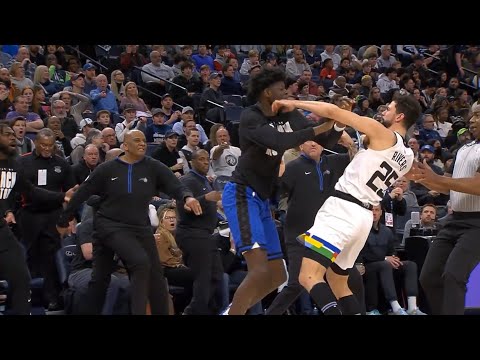
Mo Bamba and Austin Rivers: A Brawl or a Blueprint for Combat?

Introduction: The Court Erupts

Ah, the roar of the crowd, the tension in the air, the sudden eruption of... a fistfight between basketball players. Mo Bamba and Austin Rivers, names usually associated with skillful dribbling and strategic plays, found themselves in a chaotic altercation that saw multiple ejections. But as a lifelong practitioner and observer of the martial way, I must ask: was this truly a "fight," or merely a regrettable display of uncontrolled aggression? Does any element of true combat strategy, or the spirit of Budo, emerge from such a spectacle? Many of you clicked on this seeking raw, unadulterated combat footage. You might be expecting a breakdown of striking techniques, defensive maneuvers, or grappling exchanges. But let us be clear: what transpired on that court was less a testament to martial prowess and more a cautionary tale. Today, we dissect this event not as fans of NBA drama, but as students of conflict and the martial arts.

Before we dive into the "what," let's address the "why." Why do we, as martial artists, even bother analyzing a scuffle between athletes from a different discipline? Because the principles of conflict, control, and the mental fortitude required to face adversity are universal. The Budo encompasses more than just physical techniques; it's a philosophy, a way of life. And sometimes, observing what *not* to do is as instructive as witnessing true mastery.

So, settle in. Grab your water bottle – perhaps one of those durable martial arts-themed water bottles if you're serious about hydration during training. We are about to embark on a journey to find the flicker of martial insight, if any, within this basketball brawl.

Deconstructing the "Fight": Skill vs. Scuffle

Let's cut to the chase. Mo Bamba and Austin Rivers engaged in a physical confrontation. Ejections followed. But let's be honest, this wasn't Bruce Lee vs. Chuck Norris. This was two large individuals, fueled by adrenaline and perhaps ego, flailing at each other on a hardwood floor. From a technical standpoint, what did we witness?
  • Initiation: Heated words, shoving. Standard precursor to many physical altercations, not unique to any martial art but common in uncontrolled conflict.
  • Striking: Wild swings, mostly missing or glancing blows. There was no discernible form, no rooted stances, no strategic targeting of vital points. It resembled less a practiced strike from Karate or Boxing and more a desperate attempt to land any hit.
  • Grappling (Limited): Some pushing and clinching, but no effective takedowns or submissions you'd see in Judo or Brazilian Jiu-Jitsu. This wasn't about control or leverage; it was about staying upright or trying to pull the other person down ineffectively.
  • Defense: Minimal. Mostly reactive flailing or attempts to break away. The concept of 'receiving' a strike with structure or parrying effectively was absent.
This lack of refined technique is precisely why the concept of "ejections" is so prominent. In a true martial context, such uncontrolled aggression often leads to severe injury, or worse. The rules of basketball, like those in many combat sports, are designed to channel aggression into structured competition. When those rules break down, what's left is often chaotic and dangerous.
"The true warrior is the one who understands the difference between fighting and quarreling. One is a science, the other a disease." - Unknown Master
Compare this to the precision of a well-executed Karate Kata Bunkai, where every movement has a purpose, a defensive and offensive application honed over centuries. Or consider the intricate leverage and timing required for a simple Judo O Soto Gari. The Bamba-Rivers incident lacks this depth, this intentionality. It was a failure of emotional regulation, not a demonstration of martial skill.

The Spirit of the Warrior: Where Does This Fit?

This is where the core of my critique lies. The martial arts, at their heart, are about self-mastery. Concepts like Mushin (no-mind), Zanshin (awareness), and Fudoshin (immovable mind) are paramount. A true warrior cultivates these qualities to control not only their body but their emotions, especially under duress. What did Bamba and Rivers display?
  • Lack of Emotional Control: The aggression, while understandable in a heated moment, suggests a failure to regulate intense emotions. This is the antithesis of the disciplined mind cultivated in the dojo.
  • Absence of Strategy: There was no tactical thinking, no reading of the opponent's intent beyond immediate anger. A martial artist, even in a self-defense scenario, would assess, evade, and engage with purpose.
  • Focus on Retribution, Not Resolution: The "fight" seemed driven by a desire to retaliate rather than de-escalate or neutralize a threat effectively.
The philosophy of Budo teaches us that true strength lies not in the ability to inflict harm, but in the strength to control oneself. It's about humility, respect, and the understanding that violence is a last resort, to be employed with precision and necessity, not out of anger. This incident, unfortunately, showcased the opposite. Consider the teachings of Miyamoto Musashi in "The Book of Five Rings." While focused on swordsmanship, his principles of strategy, timing, and understanding the opponent's mind are universally applicable to any form of conflict. The heated exchange between Bamba and Rivers offers no such strategic depth. It's like comparing a toddler's tantrum to a master strategist's calculated move.

Applying the Lessons: Beyond the Basketball Court

So, if this wasn't a showcase of martial arts, what can we learn from it? Every event, even a regrettable one, offers lessons.

Guía de Entrenamiento: Desarrollando el Control Emocional

  1. Mindfulness y Meditación: Incorpora sesiones diarias de meditación Zazen or simply quiet breathing exercises. This builds a foundation for emotional awareness. Practice on a comfortable meditation cushion.
  2. Sparring Controlado: Engage in sparring sessions in your chosen art. The goal isn't to "win" at all costs, but to practice technique, timing, and crucially, to manage your emotional response when under pressure. Use proper sparring gear.
  3. Análisis de Conflictos: Watch martial arts films (critically, of course!) or analyze historical battles. Understand the strategies, the decision-making under pressure, and the outcomes.
  4. Enfrenta tus Miedos: Sometimes, the biggest fights are internal. Setting challenging but achievable goals, like mastering a new Aikido technique or completing a difficult running program (check out these running shoes for beginners), builds resilience.
  5. Estudio Filosófico: Read texts on Budo, Bushido, or Stoicism. Understanding the philosophical underpinnings of self-control is as vital as any physical drill.
The key takeaway isn't about learning to fight like Bamba or Rivers; it's about learning to *not* be like them when faced with provocation. It's about cultivating the inner strength that allows a martial artist to remain calm, centered, and strategic, even when challenged.

Veredicto del Sensei: A Disappointing Display

Let's be unequivocal. If this event were judged on martial merit, it would receive a resounding failure. Cinturón Blanco en Técnica, Cinturón Negro en Drama. While entertaining for those who enjoy sports drama, it offered virtually nothing of value from a martial arts perspective. It highlights the vast chasm between athletic competition with rules and genuine combat or disciplined martial practice. There was no "Kime" – no decisive, focused energy. Just raw, unfocused aggression that ultimately led to penalties and a tarnished reputation.

Equipo Esencial para tu Entrenamiento

While the Bamba-Rivers incident is a poor example of combat, proper training requires the right gear. Investing in quality equipment not only enhances your practice but also ensures safety.
  • Kimono/Gi: A durable Judo Gi for grappling arts or a sturdy Karate Gi for striking disciplines is fundamental.
  • Protective Gear: For sparring, essential items include 16oz MMA Gloves, headgear, mouthguards, and shin guards.
  • Training Weapons: If your art incorporates them, consider a wooden Bokken for sword practice or safe training Taekwondo Bo Staffs.
  • Mats: For styles involving throws or groundwork, high-quality MMA training mats are crucial for safe practice.
  • Focus Mitts & Pads: Excellent for partner drills to develop speed, accuracy, and power.
Remember, the tools are secondary to the training, but the right tools facilitate better and safer progress.

Preguntas Frecuentes

Q1: Was the Mo Bamba and Austin Rivers incident a real fight?
A1: They engaged in a physical altercation involving shoving and attempted striking. However, from a martial arts perspective, it lacked the technique, strategy, and control that define a true fight or disciplined combat.

Q2: Can basketball players use martial arts techniques in a game?
A2: While some players might have martial arts backgrounds, using overt techniques like punches or kicks would result in immediate fouls, technical fouls, or ejections, as it violates the rules of basketball.

Q3: What martial arts principles were absent in their altercation?
A3: Key absent principles include emotional regulation (Mushin, Fudoshin), strategic engagement, precise technique, and the overall philosophy of Budo which emphasizes self-mastery over uncontrolled aggression.

Q4: Should I try to fight like athletes if I get into an altercation?
A4: Absolutely not. The goal of martial arts training is to develop skills that allow you to de-escalate, defend yourself effectively and efficiently, and maintain control. The basketball incident is a poor model for self-defense.

Para Profundizar en tu Camino

Reflexión del Sensei: Tu Próximo Paso

We've dissected the Bamba-Rivers incident, not to shame the individuals, but to learn from the spectacle. It serves as a potent reminder that physical confrontation, stripped of discipline and philosophy, is merely chaos. True strength, the strength of the warrior, is forged in the crucible of self-control, honed through rigorous training, and guided by a deep respect for the principles of Budo.

Reflexión del Sensei: Tu Próximo Paso

Now, I ask you: In the heat of a challenging training session, or even in a moment of personal frustration outside the dojo, how do you embody the warrior's calm? When faced with provocation, do you react with uncontrolled emotion, or do you draw upon the inner stillness you cultivate? This is the real fight. How will you win it? ``` ```json { "@context": "https://schema.org", "@type": "FAQPage", "mainEntity": [ { "@type": "Question", "name": "Was the Mo Bamba and Austin Rivers incident a real fight?", "acceptedAnswer": { "@type": "Answer", "text": "They engaged in a physical altercation involving shoving and attempted striking. However, from a martial arts perspective, it lacked the technique, strategy, and control that define a true fight or disciplined combat." } }, { "@type": "Question", "name": "Can basketball players use martial arts techniques in a game?", "acceptedAnswer": { "@type": "Answer", "text": "Some players might have martial arts backgrounds, but using overt techniques like punches or kicks would result in immediate fouls, technical fouls, or ejections, as it violates the rules of basketball." } }, { "@type": "Question", "name": "What martial arts principles were absent in their altercation?", "acceptedAnswer": { "@type": "Answer", "text": "Key absent principles include emotional regulation (Mushin, Fudoshin), strategic engagement, precise technique, and the overall philosophy of Budo which emphasizes self-mastery over uncontrolled aggression." } }, { "@type": "Question", "name": "Should I try to fight like athletes if I get into an altercation?", "acceptedAnswer": { "@type": "Answer", "text": "Absolutely not. The goal of martial arts training is to develop skills that allow you to de-escalate, defend yourself effectively and efficiently, and maintain control. The basketball incident is a poor model for self-defense." } } ] }

The Unforeseen End: Kun Agüero's Career Cut Short, a Martial Artist's Perspective

The roar of the crowd, the thunder of anticipation, the sheer will to push beyond perceived limits – these are the hallmarks of any great warrior, whether on the football pitch or the dojo floor. But what happens when the body, the very instrument of a warrior's art, betrays them? Today, we delve into the story of Sergio "Kun" Agüero, a name synonymous with footballing brilliance, but one whose narrative holds a poignant lesson for all practitioners of martial disciplines.

Kun Agüero: The Football Warrior

Sergio Agüero was not merely a striker; he was a force of nature on the football field. His agility, speed, and lethal finishing ability made him a true predator in the penalty box. In many ways, his career mirrored the dedication and rigorous training demanded by any high-level martial art. His body was his primary tool, honed through countless hours of practice, tactical understanding, and sheer willpower. He understood the game, read its movements, and exploited its openings with the precision of a seasoned fighter.

We often see athletes at their peak, the embodiment of physical prowess. We rarely witness the unseen battles they fight with their own bodies, the constant strain, the micro-traumas that accumulate over years of intense physical exertion. Agüero's story, though rooted in football, resonates deeply within the martial arts community because it highlights the fragility of the human instrument, even when wielded by the extraordinary.

The Crippling Blow: Beyond the Pitch

The unfortunate incident that led to Agüero's premature retirement was a cardiac issue, a stark reminder that some battles are not won through sheer will or technical skill. While the direct cause was medical, the consequences were devastating for his athletic career. It was a sudden, unforeseen opponent that forced him off the field, a scenario that, while different in nature, echoes the abrupt halts that can occur in a martial artist's journey due to injury.

"The body is the temple of the spirit. If the temple is broken, how can the spirit truly reside within?" - A contemplation on the physical foundation of any discipline.

This wasn't a matter of being outmatched by an opponent in a fair contest. It was an internal failure, a critical malfunction that brought a career defined by peak physical performance to an abrupt and heartbreaking end. It raises questions about the ultimate price of pushing the human body to its absolute limits.

Martial Arts Parallel: Understanding the Body as a Weapon

In martial arts, our bodies are our weapons, our shields, and our tools for expression. From the bone-jarring power of a Kyokushin Karate tsuki to the fluid dynamics of a Judo nage-waza, every movement, every technique, relies on the intricate machinery of our physical form. We train to strengthen it, to increase its capacity, and to make it resilient. But resilience has its limits.

Consider the discipline of Karate. Practitioners spend years perfecting stances, strikes, and blocks, all while developing incredible physical conditioning. Similarly, in Judo, the throws and grappling techniques place immense stress on the body. Even seemingly less physically demanding arts, like some forms of Aikido, require precise body mechanics that can lead to injury if not executed or trained correctly. The inherent risk in pushing physical boundaries is a constant companion to the martial artist.

Agüero's situation forces us to confront the reality that even the most finely tuned athletic "weapon" can fail. It's a humbling perspective that reminds us that our pursuit of mastery is always intertwined with the inherent vulnerabilities of our biology.

The Concept of Mushin and Physical Limitations

The Japanese concept of Mushin (無心), often translated as "no mind" or "empty mind," is a state of high-level consciousness achieved in martial arts where the mind is free of thought and emotion, allowing for instinctive action. It's the state where a martial artist reacts perfectly without conscious deliberation.

However, achieving true Mushin is inextricably linked to the body's capacity. If the body is compromised, if pain or physical limitation interferes, this state becomes elusive. Agüero, at the moment of his physical crisis, was unable to act purely on instinct and training. His body's condition imposed a limitation that transcended the mental state required for peak performance. It's a profound realization: the mind may be willing, but the physical vessel must be able to obey.

"The martial way is a way of overcoming oneself." - Mas Oyama, founder of Kyokushin Karate. This self-overcoming often involves confronting our physical limitations.

This doesn't diminish the value of mental training or the pursuit of Mushin. Instead, it emphasizes the holistic nature of martial arts. The mind and body are not separate entities but a unified whole. A severe physical impediment is a stark barrier to that unity.

Lessons for the Budoka and Athlete

Agüero's story offers critical lessons for anyone committed to a path of physical discipline:

  • The Pinnacle is Precarious: Reaching the highest levels requires immense sacrifice and pushing boundaries. However, this also increases the risk of unseen failures.
  • Listen to Your Body: Ignoring warning signs, no matter how subtle, can have catastrophic consequences. Agüero's case, though specific, underscores the universal need for diligent self-monitoring.
  • Beyond Physical Prowess: True mastery involves understanding and respecting the body's limits. It's not just about how hard you can push, but also about knowing when to pull back or seek guidance.

For those who train in combat sports like MMA, BJJ, or Kickboxing, the understanding of physical limits is paramount. The constant sparring, the high-impact training – these demand an acute awareness of one's own physical state. Missing a subtle ache or ignoring persistent fatigue can lead to injuries that sideline an athlete for months, or in severe cases, end their career prematurely, much like the situation Agüero faced.

The Importance of Listening to Your Body

In the relentless pursuit of improvement, it's easy for athletes and martial artists to fall into the trap of "pushing through." While a certain level of discomfort is often part of growth, there's a critical distinction between beneficial discomfort and detrimental pain or physiological distress. Agüero's experience is a somber testament to what can happen when the body sends out critical signals that go unheeded or are inadequately addressed.

A disciplined martial artist trains not only their striking and grappling techniques but also their ability to sense their own physical condition. This involves understanding proper recovery, nutrition, and recognizing the difference between muscle soreness and a potential injury. It's a form of self-awareness that is as vital as any kata or sparring session.

Embracing Change and New Paths

While the end of an athletic career is undeniably painful, it does not have to be the end of a warrior's journey. Many great athletes and martial artists find new avenues to contribute their knowledge and passion. Agüero, though no longer on the field, can still be a significant figure, perhaps in coaching, punditry, or mentoring younger athletes. His experience, though tragic, provides a powerful narrative that can educate and inspire.

This transition is a universal challenge for those whose identities are deeply tied to their physical abilities. It requires immense mental fortitude and a willingness to redefine oneself. The principles learned in martial arts – discipline, resilience, adaptability – are precisely what are needed to navigate such profound life changes. The spirit of the warrior can find expression in many forms, even after the primary battlefield shifts.

Veredict of the Sensei: Kun Agüero's Legacy

Sergio Agüero's career was a masterclass in offensive prowess, a symphony of speed and skill. His abrupt retirement due to a critical health issue serves as a profound, albeit unfortunate, case study for all who engage in intense physical disciplines. It underscores that while dedication and talent can elevate us to extraordinary heights, we must remain acutely aware of our physical foundations. His story is a stark reminder from the world of 'battle' that sometimes, the most formidable opponent is internal, and the greatest wisdom lies in respecting the limits of our own 'weapon'. He earns a Cinturón Negro en Espíritu Combativo for his immense contributions and resilience, but his story is a cautionary tale that reminds us all of the delicate balance between pushing boundaries and preserving the vessel.

Equipment Essential for Your Training

While Agüero's story focuses on a health issue beyond typical training, maintaining optimal physical condition is crucial for all athletes and martial artists. Proper equipment not only enhances performance but also plays a vital role in injury prevention.

  • High-Quality Training Shoes: Essential for stability and impact absorption in sports like football and martial arts. Look for brands offering good arch support and cushioning.
  • Protective Gear: For combat sports like MMA, Kickboxing, or Karate, investing in quality sparring gloves, shin guards, and headgear is non-negotiable.
  • Compression Wear: Can aid in muscle recovery and provide a sense of support during strenuous workouts.
  • Hydration Systems: Staying properly hydrated is key to bodily function. Water bottles or hydration packs are essential for long training sessions.
  • Recovery Tools: Foam rollers and massage balls can be invaluable for self-myofascial release, helping to alleviate muscle soreness and prevent injuries.

FAQ

What was the specific medical issue that ended Kun Agüero's career?

Kun Agüero had to retire from professional football due to a cardiac arrhythmia, a heart condition that posed a serious risk to his life if he continued to play at an elite level.

How does Agüero's story relate to martial arts?

His story highlights the vulnerability of the human body, even in peak athletes. It serves as a reminder for martial artists about the importance of listening to their bodies, understanding their physical limits, and the potential consequences of pushing too hard without adequate care and recovery.

What is "Mushin" in martial arts?

Mushin, or "no mind," is a state of mental clarity in martial arts where one acts instinctively and without conscious thought, free from ego and distraction. Agüero's situation demonstrates how physical limitations can impede the realization of Mushin.

Can athletes recover from serious cardiac issues to resume sports?

In some cases, with proper medical management and significant lifestyle adjustments, individuals might engage in less strenuous physical activities. However, returning to elite-level professional sports, especially those with extreme physical demands like football or high-impact martial arts, is often deemed too risky after severe cardiac events.

Further Exploration on Your Path

Reflection of the Sensei: Your Next Step

Agüero's tale is not merely about football; it's a parable for the warrior's spirit facing the ultimate adversary – mortality and the body's inherent fragility. If your physical vessel is your sword, how do you maintain its edge without letting it shatter? Is true strength found only in pushing limits, or does it also lie in the wisdom to know when to sheath the sword and tend to the smithy?

``` GEMINI_METADESC: Explore Kun Agüero's career-ending cardiac issue through a martial arts lens. Learn about the body as a weapon, Mushin, and vital lessons for athletes and budokas.