Showing posts sorted by relevance for query aikido technique. Sort by date Show all posts

Steven Seagal's 1990 Aikido Seminar: A Critical Look Beyond the Hype

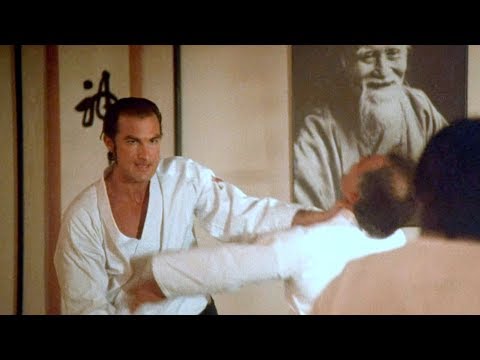
A pivotal moment in the public perception of Aikido, particularly in the West, often conjures images of its most famous, and perhaps most controversial, practitioner: Steven Seagal. The seminar held on July 7, 1990, in San Jose, California, presented an opportunity for many to witness Aikido firsthand, guided by a figure who had already achieved considerable cinematic fame. This event, assisted by the skilled Haruo Matsuoka Sensei, aimed to showcase the art's principles. But as a seasoned martial artist and critic, I must ask: beyond the celebrity aura, what did this demonstration truly impart about the essence of Aikido? Was it a genuine lesson in budo, or merely a performance for an eager audience?

Table of Contents

A Master's Shadow: Seagal and Aikido

The name Steven Seagal is inextricably linked with Aikido in the popular consciousness. His early career as an actor, often portraying stoic, supremely capable martial artists, introduced millions to the art. However, his personal journey and the authenticity of his Aikido practice have been subjects of considerable debate within martial arts circles. This 1990 seminar in San Jose provides a tangible point of reference to examine his demonstrated skill and teaching methodology at that time. While the original video, captured from Aikido of San Jose, offers a glimpse into the event, understanding its true martial value requires a critical eye, unclouded by the glamour of Hollywood.
"The true warrior is not afraid of criticism; they welcome it as a path to refinement." - Anonymous Budo Maxim

Aikido in the West: The 1990 Landscape

By 1990, Aikido had a solid, albeit niche, presence in the Western world. Established dojos were spreading O-Sensei Morihei Ueshiba's art, focusing on its philosophical underpinnings and flowing, circular movements. However, the emergence of figures like Seagal, who blended cinematic action with martial arts, created a dual perception: Aikido as a profound spiritual discipline and Aikido as a visually impressive, potentially combative art. This seminar, therefore, took place at a crucial juncture, where the art's traditional teaching was beginning to intersect with its more popularized, often dramatized, image.

Deconstructing the San Jose Seminar: Technique and Philosophy

Witnessing Seagal Sensei demonstrate Aikido, with Haruo Matsuoka Sensei serving as uke, offers insights into the technical execution and the underlying principles being conveyed. The core of Aikido lies in blending with an attacker's motion, redirecting their force, and applying joint locks or throws. A critical analysis would focus on:
  • Ukemi (Receiving Technique): How effectively did Matsuoka Sensei perform his rolls and falls? This is crucial for the safety and realism of the demonstration.
  • Nage Waza (Throwing Techniques): Were the throws fluid and efficient, demonstrating the principles of leverage and momentum, or did they appear forced?
  • Kansetsu Waza (Joint Locking Techniques): Were the locks applied with precision and control, emphasizing the disabling aspect without causing unnecessary injury?
  • Maai (Distance and Timing): Was there a clear understanding and demonstration of appropriate distance and split-second timing in the execution of techniques?
  • Zanshin (Awareness): Did Seagal Sensei exhibit continuous awareness and readiness, even after the completion of a technique?
It's vital to assess whether the techniques shown were applied with the groundedness and intentionality characteristic of traditional Aikido, or if they leaned towards a more performative, almost theatrical, execution. The transfer of energy, the subtle body mechanics, and the philosophical message of harmonizing with an opponent's aggression are often where the true depth of Aikido lies.

The Sensei's Scrutiny: Authenticity vs. Spectacle

The challenge with demonstrations by high-profile martial artists, especially those who have achieved fame through acting, is distinguishing between genuine martial skill and cinematic presentation. Seagal's presence in Hollywood inevitably brings a certain expectation of dynamism and visual impact. However, in a true martial arts seminar, the focus should be on clarity, precision, and the practical application of principles. Does the demonstration showcase techniques that would be effective against a resisting opponent, or are they modified for visual appeal? Is the emphasis on the philosophical aspects of Aikido – non-violence, harmony, and self-mastery – or is it on demonstrating power and dominance? These are the questions that separate a mere demonstration from a profound teaching moment.
"The Way of the Warrior is to be master of all things, not just of strength, but of skill, intelligence, and spirit." - Miyamoto Musashi, The Book of Five Rings

A Note on Ki: The Elusive Energy

The concept of 'Ki' (or 'Qi') is fundamental to many East Asian martial arts, including Aikido. It refers to a vital life force or energy that practitioners aim to cultivate and channel. In demonstrations, the manipulation of Ki can appear almost supernatural. While its existence and practical application are debated, true Aikido seeks to harness this internal energy for effective movement and technique. A discerning observer would look for signs of this internal cultivation in the practitioner's posture, breath control, and the seamless flow of movement, rather than just the external force applied.

Embodying Aikido Principles: Essential Drills

While we can analyze the seminar, the true spirit of Aikido is learned through practice. Here are fundamental drills to help you grasp core principles:
  1. Tai Sabaki Practice: Focus on footwork and body shifting. Practice moving your body as a whole unit, maintaining balance while evading imaginary attacks.
  2. Ukemi Training: Learn to fall safely. Start with simple forward and backward rolls, focusing on relaxation and dispersing impact.
  3. Suburi (Repetitive Practice): With a wooden sword (bokken), practice basic cuts and thrusts. This builds muscle memory and understanding of distance and timing.
  4. Aiki Taiso (Warm-up Exercises): These exercises are designed to loosen the body and develop coordination, preparing you for more complex techniques.
  5. Basic Blending: With a partner, practice gentle movements of blending and redirection. One person initiates a forward motion, and the other practices stepping offline and guiding that motion.

Essential Gear for Aikido Training

To properly engage with Aikido training, certain equipment is essential. While the art emphasizes minimal reliance on external tools, specific items facilitate learning and safety:
  • Aikidogi (Uniform): A sturdy, double-weave uniform is necessary for practice, especially for techniques involving grappling and throws. Look for reinforced stitching for durability.
  • Hakama: The traditional pleated trousers worn over the Aikidogi, often by senior students and instructors. They allow for greater freedom of movement during leg sweeps and add to the aesthetic of the art.
  • Bokken (Wooden Sword): Essential for practicing suburi and paired sword forms (Kendo-related training within Aikido).
  • Jo (Wooden Staff): Used for practicing staff techniques and blending drills.
  • Suburito: A heavier wooden sword for advanced strength and conditioning.

Veredicto del Sensei: Does Seagal's Aikido Hold Up?

Looking back at Seagal's 1990 seminar, it's clear he possessed a demonstrable knowledge of Aikido techniques. He showcased powerful throws and joint locks, often with his signature intensity. However, the question of authenticity in the context of budo is multifaceted. While he may have had the technical capability, the debate often centers on whether his approach prioritized the spiritual and philosophical dimensions of Aikido, or if it leaned more towards a combative, showman-like execution amplified by his cinematic persona. The depth of connection with his uke, the subtlety of energy transfer, and the embodiment of Aikido's principles of harmony are points of contention for many traditional practitioners. **Cinturón Negro en Ejecución, Cinturón Blanco en Filosofía.**

Frequently Asked Questions

What is the main difference between Seagal's Aikido and traditional Aikido?

The primary debate revolves around the emphasis. Traditional Aikido often stresses the philosophical aspects, harmony, and subtle energy. Seagal's public demonstrations sometimes appear more focused on raw power and definitive techniques, influenced by his cinematic career.

Was Haruo Matsuoka Sensei a legitimate instructor?

Yes, Haruo Matsuoka Sensei was a highly respected Aikido instructor and student of the renowned Koichi Tohei Sensei. His role as uke (receiver of techniques) in the seminar lent significant credibility to the event.

Can Aikido be used for self-defense?

Yes, Aikido techniques, particularly joint locks and throws, are designed for self-defense. However, their effectiveness in a real-world, uncooperative situation often depends on the practitioner's level of training, timing, and ability to apply principles under duress, which can be a challenge for many students.

Is Steven Seagal still practicing Aikido?

While Seagal was once a prominent figure in Aikido, his public involvement and teaching have significantly diminished over the years, with much of his focus shifting to his film career and other interests.

For Deeper Exploration

To truly understand the art, delve into its roots and variations:

Sensei's Reflection: Your Next Step

This seminar from 1990, while a glimpse into a specific moment in time, raises a timeless question for all martial artists: what defines genuine mastery? Is it the flawless execution of a technique, the authority of a famous name, or the embodiment of an art's deepest philosophical principles? When you watch demonstrations, whether of Aikido, Karate, or any other art, do you see the technique, or do you see the spirit? Now, the question is for you: Having considered the context and the critical perspective, what aspect of this seminar do you find most revealing about the true nature of martial arts instruction? Do you believe celebrity practitioners enhance or detract from the art they represent? Prove your point in the comments. ``` GEMINI_METADESC: Critically analyze Steven Seagal's 1990 Aikido seminar in San Jose. Examine technique, authenticity, and budo principles beyond the Hollywood persona.

Aikido: The Art of Harmonious Conflict and Its Place in the Modern Martial Landscape

Esteemed practitioners and aspiring warriors, gather 'round. Today, we embark on a journey into the fluid, philosophical realm of Aikido. But let us dispense with pleasantries and delve directly into the heart of the matter: Does this art, rooted in ancient principles of blending and redirecting, truly hold its ground in the face of modern combat's brutal pragmatism? Many dismiss it as overly spiritual, impractical, or even dangerous to the uninitiated. I stand here not to defend Aikido blindly, but to dissect its essence, challenge its practitioners, and perhaps, provoke those who have long relegated it to the realm of mere dance.

The Genesis of Harmony: Morihei Ueshiba's Vision

Aikido, often translated as "The Way of Harmonious Energy," was born from the genius of Morihei Ueshiba Sensei. This wasn't an evolution from a single ancient art, but rather a synthesis, a spiritual and physical revelation forged in the crucible of a turbulent Japan. Ueshiba Sensei, a master of several traditional martial arts, sought a path that transcended mere combat, aiming for self-mastery and the cultivation of peace, not just on the battlefield, but in the world. His vision was to create an art that could defend against any attack, not by meeting force with force, but by understanding, absorbing, and neutralizing it. This fundamental principle of awase (blending) is the bedrock upon which Aikido stands, a stark contrast to the confrontational nature of many combative disciplines.

"Aikido is not a martial art in the sense of fighting and defeating an opponent. It is an art of reconciling the world, of bringing harmony to humanity. It is a path of love." - Morihei Ueshiba

This profound philosophical underpinning is what often causes confusion and skepticism among those accustomed to the directness of, say, Karate's kiai or Judo's explosive throws. The objective is not to break the opponent, but to control them with minimal harm, leading them to a state of submission through a deeper understanding of their own imbalance. It’s a martial art that seeks to disarm not just the body, but also the aggressive intent.

The Philosophical Core: Beyond Physicality

To truly understand Aikido, one must look beyond the intricate joint locks (kansetsu-waza) and immobilizations (osae-komi-waza). Its true power lies in its philosophy, deeply intertwined with concepts like Mushin (no-mind), Fudoshin (immovable mind), and Zanshin (lingering mind/awareness). These are not mere buzzwords; they are the operational directives of an Aikidoka in motion. Mushin allows for spontaneous reaction, free from conscious thought, enabling the practitioner to flow with an attack rather than resist it. Fudoshin provides the mental fortitude to remain calm and centered, even when facing overwhelming force or unexpected movements. Zanshin ensures that one’s awareness remains active even after a technique has been executed, anticipating subsequent threats.

This emphasis on mental and spiritual development is what separates Aikido from many purely physical combat sports. While sports like MMA or Judo focus on victory and quantifiable metrics of success, Aikido’s ultimate aim is self-improvement and the fostering of a peaceful spirit. This doesn't negate its effectiveness as a self-defense system, but it recontextualizes its purpose. The goal is to win without fighting, to neutralize aggression through superior timing, positioning, and energetic redirection.

Technique Analysis: Blending, Redirecting, and Controlling

The techniques in Aikido, though seemingly complex, are built upon a few fundamental principles. The core is irimi (entering) and tenkan (turning), used in conjunction with the attacker’s force. Instead of blocking, an Aikidoka enters the line of attack, often blending their movement with the attacker's momentum. This allows them to redirect the force, throwing the attacker off balance. This is often achieved through circular movements, using the attacker's own energy against them.

Key techniques include:

  • Irimi-nage (Entering Throw): A fundamental technique where the practitioner enters at an angle to the attacker's force and redirects their momentum into a throw.
  • Kote-gaeshi (Wrist Turn): A common technique that applies pressure to the wrist and elbow, causing the attacker to fall.
  • Shiho-nage (Four Directions Throw): A versatile throw that controls the attacker's balance by manipulating their arms in multiple directions.
  • Kokyu-nage (Breath Throw): A technique that emphasizes the use of breath and internal energy to unbalance and throw an attacker, often appearing to require little physical strength.

The efficacy of these techniques relies heavily on timing, distance (maai), and the ability to read the attacker's intention (sen-su). Unlike striking arts where power often comes from explosiveness, Aikido's power is in its subtlety and its ability to exploit existing forces. It’s a chess match of movement and intention.

Aikido vs. Modern Combat: A Polemic

Now, let us address the elephant in the dojo. The question that echoes in the minds of many: "Can Aikido truly defend you in a street fight or a cage match?" This is where the controversy ignites. Critics argue that Aikido’s reliance on pre-arranged attacks (nage-waza), its lack of emphasis on striking, and its philosophical bent make it ill-suited for the chaotic, often brutal reality of unsolicited aggression. They point to the fact that an attacker rarely throws a perfectly telegraphed punch or grab that can be seamlessly blended with.

"If you meet an attacker head-on, you will be defeated. You must yield to overcome." - Morihei Ueshiba

I've seen practitioners of arts like Kyokushin Karate and Kickboxing dismantle this notion with the blunt force of a roundhouse kick, arguing that in a real confrontation, there is no "blending" – there is survival. They emphasize the need for conditioning, resilience, and the ability to deliver decisive blows. From this perspective, the philosophical nuances of Aikido can seem like a dangerous indulgence.

However, to dismiss Aikido entirely is to miss its unique strengths. Its emphasis on control and redirection can be incredibly effective against larger, stronger opponents. The joint locks, when applied correctly, can incapacitate without causing lethal damage. Furthermore, the mental discipline cultivated through Aikido training—the ability to remain calm under pressure, to read situations, and to act decisively—is an invaluable asset in any combative scenario, regardless of the specific techniques employed.

The crucial point, I believe, lies in how Aikido is trained and understood. If it is merely practiced as a series of choreographed movements devoid of practical application or realistic sparring (though true sparring in Aikido is a complex and often debated topic), then yes, it risks becoming a beautiful but ultimately ineffective art form. But when trained with an understanding of its principles, and perhaps cross-trained with other disciplines, its value becomes undeniable. It teaches body mechanics and spatial awareness that are universally applicable. It’s about understanding energy and movement, a principle that applies whether you are deflecting a punch or executing a O-soto-gari in Judo.

Consider the philosophy of Budo itself. It's not just about fighting; it's about the refinement of character through rigorous training. Aikido, in its purest form, embodies this ideal. It asks you to be strong enough to yield, calm enough to act, and wise enough to understand your opponent's intent.

Training Guide: Cultivating the Aikido Spirit

For those drawn to the path of Aikido, consistent and dedicated practice is paramount. Here’s a guide to cultivating the fundamental spirit:

  1. Master the Basics: Spend significant time practicing fundamental movements like tai sabaki (body movement), basic stances, and the core blending techniques (irimi and tenkan). Do not rush to complex throws.
  2. Focus on Connection: When practicing with a partner, focus on feeling their energy and intent. This is not about forcing the technique, but about guiding them seamlessly.
  3. Embrace Ukemi: As a uke (receiver of the technique), learning to fall safely and correctly (ukemi) is as vital as executing the throw as nage (thrower). Good ukemi allows for training at higher intensity and develops resilience.
  4. Cultivate Zanshin: After each technique, remain aware. Don't immediately relax or disengage. Maintain a state of readiness.
  5. Practice Stillness: Incorporate meditation (mokuso or zazen) into your training. This helps develop the mental focus and calmness essential for Aikido.
  6. Seek Understanding, Not Just Repetition: Ask "why" a technique works. Understand the biomechanics, the principles of balance, and the energetic flow.

Essential Gear for Your Training

The beauty of Aikido is its accessibility in terms of equipment. The focus is on the body and mind, not expensive gear. However, a few items will greatly enhance your training:

  • Aikidogi: A sturdy, traditional uniform designed for the rigors of grappling and throws. Look for a double-weave cotton for durability, especially if you plan to practice extensively.
  • Hakama: The traditional pleated trousers worn by higher-ranked practitioners. While not essential for beginners, it is an iconic part of the Aikido aesthetic and can aid in certain movements once mastered.
  • Obi (Belt): To denote rank, similar to other martial arts.
  • Wooden Sword (Bokken) and Staff (Jo): Many Aikido dojos incorporate training with these weapons to teach principles of distance, timing, and unified body movement that translate to empty-hand techniques.

Investing in quality Karate Merchandise can be a significant motivator, and similarly, a good Aikidogi represents commitment to your practice.

Sensei's Verdict: Is Aikido Truly Practical?

Herein lies the crux of my opinion. Aikido, as taught and practiced by many dedicated individuals, offers profound benefits for self-defense, physical conditioning, and mental fortitude. Its emphasis on blending and control provides unique advantages, particularly against larger assailants.

However, for Aikido to be considered truly practical in the broader sense of modern combative arts, several conditions must be met:

  1. Realistic Training: The training must incorporate elements that prepare practitioners for the unpredictable nature of violence, including robust ukemi and, where appropriate, drills that simulate stress.
  2. Cross-Training: While Aikido has its strengths, it is not a panacea. Cross-training with striking arts (Karate Community, Kickboxing) or grappling arts (BJJ, Judo) can fill potential gaps and provide a more comprehensive self-defense skillset.
  3. Mindset Adjustment: Practitioners must understand that while the ultimate goal may be harmony, the immediate goal in a self-defense situation is survival. This may, at times, require a more direct and forceful approach than traditional Aikido might initially suggest.

In conclusion: Aikido is practical, but its practicality is nuanced. It’s not a magical art that guarantees victory with a wave of the hand. It requires diligent training, a receptive mind, and an honest appraisal of its strengths and limitations. It excels at control, de-escalation, and incapacitating an opponent without necessarily seeking to inflict grievous harm. If trained correctly, with an eye towards its real-world applications, it is an invaluable martial discipline.

Rating:

Cinturón Negro en Filosofía y Control

Frequently Asked Questions

Can Aikido be used for self-defense against multiple attackers?

Aikido principles of blending and redirecting can be applied, but effectively defending against multiple attackers requires advanced skill, strategic positioning, and often, the ability to create space and escape rather than engaging each attacker individually. Cross-training is highly recommended for this scenario.

Is Aikido safe to practice?

Like all martial arts, Aikido carries inherent risks. However, when practiced under qualified instruction with a focus on safety and correct technique, and with a strong emphasis on ukemi (safe falling), it is considered a relatively safe art. The spiritual and philosophical aspects encourage practitioners to be mindful of their partner's well-being.

Do I need to be strong to practice Aikido?

No, strength is not a prerequisite. In fact, Aikido is designed to allow a smaller, weaker individual to control a larger, stronger opponent by using leverage, timing, and the attacker's own momentum. The training will build strength and coordination over time.

What is the difference between Aikido and Judo?

While both are Japanese martial arts that involve throws and joint locks, Judo focuses more on direct confrontation, competition, and takedowns, aiming to throw an opponent forcefully. Aikido emphasizes blending with the attacker's movement, redirection of energy, and control or immobilization rather than forceful throws, with a greater philosophical focus on harmony.

Deepen Your Path

To continue your exploration of the martial world and its profound impact, delve into these related topics:

Reflexión del Sensei: Tu Próximo Paso

We have dissected Aikido, examined its philosophical roots, and debated its practical application. But the true test of any martial art lies not in the dojo, but in the life it shapes. So, I pose this question to you, the dedicated student: If Aikido teaches us to harmonize with conflict, how can you apply this principle not just to a physical attack, but to the inevitable disagreements and challenges you face in your daily life? Do you confront them head-on, or do you seek the way of harmonious redirection?

``` GEMINI_METADESC: Sensei's critical analysis of Aikido: its philosophy, techniques, practicality in modern combat, and self-defense applications. A deep dive into the Art of Harmonious Conflict.

Ranking Aikido Techniques: A Critical Assessment from a Combat Perspective

The world of martial arts is vast and often shrouded in tradition. Within its many disciplines, Aikido stands out for its unique philosophy of blending with an attacker's force rather than confronting it directly. But what happens when the philosophical underpinnings of Aikido meet the harsh realities of combat? This is a question that many practitioners grapple with, and one that I, as a seasoned Sensei with a deep understanding of all martial disciplines, and my esteemed colleague Christopher Hein, a functional Aikido practitioner who has rigorously pressure-tested his art for over two decades, set out to explore.

Christopher Hein, a name synonymous with practical Aikido, and I, a former Aikido instructor who has since dedicated himself to the crucible of combat sports, convened for a critical session. Our mission: to dissect and rank Aikido's core techniques not just by their aesthetic form or theoretical efficacy, but by their potential effectiveness in a real-world confrontation. This isn't about disrespecting the art; it's about understanding its true application and limitations when the stakes are highest.

For those unfamiliar with Christopher Hein's work, his dedication to functional Aikido is evident. He doesn't shy away from the difficult questions, and his channel is a testament to his commitment to pressure-testing and refinement. You can explore his insights here: Christopher Hein's Channel.

How We Will Be Scoring the Techniques

Before we dive into the dissection, it's crucial to understand our methodology. Traditional Aikido often scores techniques based on flawless execution and the defender's ability to 'take the fall' (ukemi). However, in a combat scenario, the attacker is not necessarily cooperating, and the defender's primary goal is survival and neutralizing the threat, not aesthetic perfection. Therefore, our scoring system prioritizes:

  • Practicality: Can this technique be realistically applied against an uncooperative, resisting opponent?
  • Effectiveness: Does the technique reliably incapacitate or control the attacker?
  • Simplicity: Are the movements efficient and adaptable under duress? Complex sequences are often a liability.
  • Safety (for the defender): Does the technique leave the defender vulnerable to follow-up attacks?

We assigned scores on a scale, but remember, these are subjective evaluations based on extensive practical experience. They are meant to spark discussion, not to be absolute dogma.

Ikkyo Analysis

01:00 Ikkyo | Rokas' score

Ikkyo, the first foundational technique in Aikido, involves a forward breakfall posture, arm control, and a downward pressing motion. Theoretically, it teaches control over the opponent's balance and structure. However, in practice, especially against a resisting opponent, the specific angles and the required amount of precise control can be difficult to achieve. A common issue is the defender becoming too committed to the technique, leaving openings for counter-attacks. While the principle of controlling the elbow and shoulder is sound, its direct application often falters without significant adaptation. My score leans towards the lower end, emphasizing the difficulty of its execution under pressure.

01:33 Ikkyo | Christopher's score

Christopher Hein highlights the critical role of posture and footwork in making Ikkyo functional. He emphasizes that without maintaining a strong center and proper distancing, the technique collapses. His perspective often involves modifying the execution to incorporate more forceful movements, akin to grappling principles, to overcome resistance. He notes that while the basic form might seem awkward, its core elements—disrupting the opponent's structure and creating an imbalance—are crucial. Christopher's score reflects a slightly more optimistic view, provided the practitioner understands the underlying principles and is willing to adapt.

Nikyo Analysis

04:09 Nikyo | Rokas' score

Nikyo, with its wrist rotation and pressure on the ulnar nerve, is often considered a painful technique. The idea is to twist the opponent's wrist and arm inwards, forcing them to their knees. My experience has shown that while Nikyo can be painful, the leverage required to truly incapacitate a resisting opponent is significant. A determined attacker can often power through the initial stages, or the awkwardness of the wrist lock can expose the practitioner. It requires a very specific type of pressure that isn't always intuitive. My score reflects this challenge in achieving consistent, incapacitating force.

04:33 Nikyo | Chistopher's score

Christopher Hein often points out that Nikyo's effectiveness is heavily dependent on controlling the opponent's elbow and shoulder simultaneously. He stresses that the wrist rotation alone is rarely enough. The ability to apply a quick, sharp twist while maintaining structural integrity is key. His scoring acknowledges that while it might seem vulnerable, a well-timed and properly executed Nikyo can indeed be effective, particularly as a transition to other controls or throws. He believes practitioners often fail not because the technique is inherently flawed, but because their execution lacks the necessary commitment and understanding of biomechanics.

Sankyo Analysis

05:40 Sankyo | Rokas' score

Sankyo involves rotating the wrist and arm in a way that creates a painful pressure throughout the attacker's arm, from the fingers to the shoulder. The intent is to overwhelm the opponent's senses and force compliance. In training, it looks controlled and effective. However, in live scenarios, the precise application needed to generate sufficient pain to stop a determined attacker can be difficult. Much like Nikyo, there's a risk of the attacker overpowering the hold if the initial grip and pressure aren't perfect. My score considers the precision needed and the potential for the attacker to resist effectively.

06:13 Sankyo | Christopher's score

Christopher Hein views Sankyo as a technique that, when applied correctly, can be quite debilitating. He emphasizes that the effectiveness comes from the combination of pain compliance and disrupting the attacker's structural alignment. His approach often involves using Sankyo as a means to control the attacker's posture and then transitioning into a takedown or further control. He argues that many practitioners fail to generate the necessary pressure because they are not fully committing their body weight and structure to the hold. His score is more favorable, recognizing its potential when understood from a practical standpoint.

Irimi Nage Analysis

07:53 Irimi Nage | Rokas' score

Irimi Nage, often translated as "entering throw," involves entering the attacker's space and throwing them using body movement and leverage. It's a fundamental concept in Aikido. The beauty of Irimi Nage lies in its fluidity and ability to redirect force. However, the "entering" aspect can be dangerous if not timed perfectly; you can walk into a punch or grab. When executed well, it can be incredibly effective, leading to a quick takedown. My score reflects this duality: high potential but significant risk if timing and entry are poor.

08:33 Irimi Nage | Chistopher's score

Christopher Hein is a strong proponent of Irimi Nage, particularly variants that emphasize forward momentum and closing the distance. He sees it as a direct way to control an opponent's center and achieve a dominant position. His scoring reflects the idea that a well-executed Irimi Nage is devastating because it allows the practitioner to dictate the engagement. He often advocates for a more aggressive, less circular entry than sometimes taught, aiming to unbalance the opponent swiftly and decisively. His score is high, provided the practitioner masters the critical entry and body mechanics.

Kaiten Nage Analysis

09:16 Kaiten Nage | Rokas' score

Kaiten Nage, or "rolling throw," is a dynamic technique often involving a circular motion to throw the opponent. It's visually impressive and can be highly effective for generating rotational force. However, like many Aikido techniques, its successful execution often relies on the attacker's movement and commitment to the initial grab. In a chaotic street fight, creating that perfect 'roll' might be difficult, and the practitioner could find themselves off-balance. My score acknowledges its potential but also its reliance on specific conditions and the risk of misjudging the dynamic. It’s a technique that requires significant spatial awareness and timing.

10:25 Kaiten Nage | Chistopher's score

Christopher Hein often analyzes Kaiten Nage through the lens of body mechanics and momentum transfer. He sees its potential for quickly unbalancing an opponent and using their own forward momentum against them. He might adapt the entry or the grip to ensure better control throughout the rotation, making it more applicable against resistance. His perspective emphasizes using the technique not just as a throw, but as a method of positional control. His score, while considering the practical challenges, is generally positive, valuing the underlying principles of dynamic balance manipulation.

Yonkyo Analysis

13:24 Yonkyo | Rokas' score

Yonkyo, another wrist and arm control technique, focuses on applying pressure to the attacker's radial nerve through a specific grip and thumb pressure on the back of the hand. It's designed to be painful and difficult to resist. In practice, the fine motor control required for the thumb pressure can be challenging to maintain against a resisting opponent. If the pressure isn't exact, it can be ineffective. My score reflects the high degree of precision needed, which can be a significant hurdle in a dynamic encounter. It's a technique that demands extreme sensitivity and control.

13:52 Yonkyo | Chistopher's score

Christopher Hein often scrutinizes techniques like Yonkyo for their real-world applicability. He might look for ways to amplify the pressure or use it as a setup for a more forceful action. His evaluation would likely focus on whether the precision required can be reliably achieved and maintained. He might argue that the concept of nerve pressure is valid, but the specific application taught in many Aikido dojos needs adaptation to be truly effective against strong resistance. His score would depend heavily on the degree to which practitioners can apply consistent, painful pressure without compromising their own structure.

Juji Nage Analysis

15:56 Juji Nage | Rokas' score

Juji Nage, often involving crossed arm controls and throws, can be very effective in controlling an opponent's limbs and creating throwing opportunities. The principle of using opposing forces to destabilize is sound. However, the effectiveness can be reduced if the attacker resists strongly, creating a deadlock rather than a throw. My score considers the potential for mutual resistance and the need for precise timing to transition smoothly from control to throw. It's a technique that requires a good understanding of leverage and balance.

16:17 Juji Nage | Chistopher's score

Christopher Hein might view Juji Nage as a technique with strong potential, particularly in its ability to control an opponent's center of gravity and posture. He would likely focus on how to generate maximum leverage and ensure a dominant position throughout the execution. His assessment would consider how easily an attacker could break the grips or resist the throw, and he might suggest modifications to make it more robust. His score would be tied to its ability to consistently disrupt an opponent's balance and lead to a decisive outcome.

Veredicto del Sensei: ¿Merece la pena?

This critical examination of Aikido techniques, from the perspective of those who have lived and breathed both Aikido and combat sports, reveals a complex picture. Many Aikido techniques, when taught and practiced in a traditional, cooperative manner, possess a theoretical elegance that belies their practical application against genuine resistance. The core principles—blending, centering, controlling balance—are undeniably valuable.

However, the *execution* often falls short when pressure-tested. The required precision, the reliance on attacker compliance, and the potential for leaving oneself vulnerable are significant concerns. Techniques like Irimi Nage and Kaiten Nage, when understood and adapted with a combative mindset, show great promise. Others, like some of the finer nerve or wrist locks, demand a level of control and precision that is exceedingly difficult to achieve consistently in a chaotic, uncooperative encounter.

Is Aikido useless? Absolutely not. But practitioners must be brutally honest about what works and what doesn't. The true value of Aikido lies not in a rote memorization of techniques, but in the development of principles that can be *adapted* to various combative contexts. For those seeking direct, reliable self-defense, an unvarnished understanding of the shortcomings of traditional Aikido, combined with cross-training in more directly applicable arts like MMA or Kickboxing, is crucial. Aikido can provide invaluable insights into movement, leverage, and mindset, but it must be grounded in reality.

Overall Rating: Cinturón Negro en Filosofía, Marrón en Aplicación Directa sin Adaptación.

Equipo Esencial para tu Entrenamiento

Regardless of the art you study, the right equipment can significantly enhance your training experience and safety. For those looking to explore functional applications or cross-train:

  • Durable Gi (Kimono): Essential for grappling and many traditional arts. Look for double-weave kimonos for increased durability, especially if you plan on pressure testing. Karate merchandise and Judo gis are often good starting points for robust uniforms.
  • Sparring Gear: For any combat sports training (MMA, Kickboxing, BJJ), protective gear like headgear, shin guards, and mouthguards are non-negotiable for safety.
  • Training Mats (Tatami): Crucial for safe practice of throws and breakfalls, particularly for techniques like Irimi Nage and Kaiten Nage.
  • Focus Mitts and Punching Bags: Excellent tools for developing striking power and accuracy, fundamental skills often lacking in pure Aikido training.
  • Books on Budo and Combat Strategy: Deepen your theoretical understanding. Classics like Miyamoto Musashi's The Book of Five Rings offer timeless wisdom.

Preguntas Frecuentes

  • Is Aikido completely ineffective for self-defense? No, but its effectiveness is highly dependent on the practitioner's ability to adapt techniques, the attacker's compliance, and the specific context. Purely traditional practice often falls short.
  • What are the most practical Aikido techniques? Techniques that focus on entry, unbalancing, and forward momentum, like adapted versions of Irimi Nage and Kaiten Nage, tend to have higher practical potential.
  • Should I abandon Aikido if I want effective self-defense? Not necessarily. Cross-training in arts like MMA, BJJ, or Kickboxing can bridge the gap. Understanding the principles of Aikido can still be beneficial for movement and strategy.
  • How can I pressure test my Aikido techniques safely? Find a training partner who understands the risks, start slowly, and progressively increase resistance. Consider training with experienced individuals from other martial arts who can offer different perspectives.
  • What is the main difference between traditional Aikido and functional Aikido? Functional Aikido emphasizes pressure testing, adaptation for uncooperative opponents, and often incorporates principles from combat sports to ensure effectiveness in real-world scenarios.

Para Profundizar en tu Camino

Reflexión del Sensei: Tu Próximo Paso

We have dissected Aikido's techniques, exposing their strengths and, more critically, their weaknesses when measured against the unforgiving standard of combat. The wisdom of the ancients is profound, but wisdom without application is mere theory. True mastery lies in the constant, honest appraisal of one's skills and the relentless pursuit of what is real and effective.

Reflexión del Sensei: Tu Próximo Paso

Does the elegance of a perfectly executed technique matter if it fails you when you need it most? Or is the true art in adapting even the most theoretical movements to the raw, unscripted reality of conflict? Consider this: If your Aikido cannot face a determined punch or shove and provide a reliable solution, what is its ultimate purpose? Reflect on this, and then, commit to finding the truth in your own practice. The path to mastery is paved with uncomfortable questions.

``` GEMINI_METADESC: An in-depth analysis of Aikido techniques, critically evaluated by practitioners with extensive experience in both Aikido and combat sports. Discover which techniques hold up under pressure.

Aikido's Silent Thunder: Unveiling the Dynamic Power of Shirakawa Ryuji

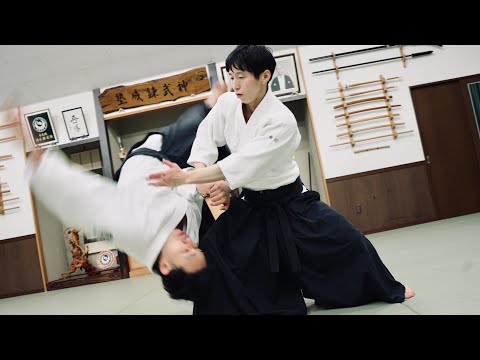
Welcome, warriors of the digital dojo! Today, we delve into the heart of Aikido, not just as a martial art, but as a philosophy, a dance, and a potent form of self-mastery. Many of you seek understanding, perhaps a way to refine your practice, or even to question the efficacy of techniques you’ve seen or learned. You might be wondering: "Is Aikido merely a beautiful spectacle, or does it possess a true combative edge?" Prepare yourselves, for we are about to dissect the dynamic training of Shirakawa Ryuji Shihan, a testament to Aikido's profound depth. The intention behind this exploration is clear: to bridge the gap between the perceived aestheticism of Aikido and its practical application, grounding it in the principles that govern all true martial endeavors. We will examine not just the movements, but the underlying strategy, the mental fortitude, and the spirit that elevates Shirakawa Ryuji's practice from mere technique to living art. For those interested in the raw power and nuanced strategies of combat, understanding Aikido's principles can unlock new perspectives, even if your primary focus lies elsewhere.

Table of Contents

Unveiling Shirakawa Ryuji: A 6th Dan Aikikai Master

Before we dissect the movements, we must understand the vessel. Shirakawa Ryuji Shihan, a 6th Dan Aikikai practitioner, is not merely an instructor; he is a living embodiment of the art he teaches. His YouTube channel, "Aikido Shinburenseijuku," offers a window into a practice honed over decades, characterized by fluidity, precision, and an undeniable power that belies its graceful appearance. This isn't about flashy kicks or bone-shattering strikes, but about redirecting force, neutralizing an opponent’s aggression, and asserting control through principles that resonate across various martial disciplines.

Key Information:

  • Master: Shirakawa Ryuji Shihan
  • Rank: Aikikai 6th Dan
  • Dojo: Aikido Shinburenseijuku
  • Visual Resource: [https://youtu.be/4ECPGURwyF4](https://youtu.be/4ECPGURwyF4)
  • Official HP: [https://ift.tt/SEXFmDi](https://ift.tt/SEXFmDi)

The Essence of Aikido: Beyond Form and Flurry

Many outside the Aikido community perceive it as lacking in practical application for self-defense, often deeming it too "soft" or "defensive." This, I believe, is a misunderstanding born from observing incomplete or decontextualized demonstrations. Aikido, at its core, is about harmonizing with an opponent’s energy, using their momentum against them. It’s not about meeting force with force, but about yielding, blending, and then striking or controlling with decisive efficiency. This principle of non-resistance, of yielding to overcome, is a profound concept that can be applied far beyond the dojo, even in the rough-and-tumble world of MMA or street confrontations.

The true power of Aikido lies in its circular movements, its joint manipulations, and its pressure point strikes – techniques designed to incapacitate rather than merely injure. It emphasizes the control of distance and timing, principles crucial in any form of combat. When executed by a master like Shirakawa Ryuji, the techniques appear effortless, a testament to rigorous training and a deep understanding of biomechanics.

"The ultimate aim of martial arts is not victory or defeat, but the perfection of the character of its practitioners." - O Sensei Morihei Ueshiba

This quote from Aikido's founder, Morihei Ueshiba, encapsulates the philosophical underpinnings. While Shirakawa Ryuji’s training displays incredible dynamism, it is rooted in this principle of self-perfection, not just aggression. The beauty you witness is a byproduct of efficiency and profound understanding. It is the beauty of a perfectly executed economy of motion, a hallmark of true mastery in any martial art.

Dynamic Training Principles: The Heartbeat of the Art

What makes Shirakawa Ryuji's training "dynamic and beautiful"? It's the seamless integration of several key principles:

  1. Irimi & Tenkan: The fundamental concepts of entering (Irimi) and turning/evading (Tenkan). These allow the practitioner to seamlessly blend with an attack, moving off the line of force rather than blocking it. This dynamic evasion is critical; it’s not about standing your ground, but about manipulating the space and the attacker’s balance.
  2. Ukemi: The art of receiving techniques safely. While often overlooked by external observers, a skilled Ukemi (falling/rolling) is as vital as the execution of a technique. It allows for safer, more intense training, enabling practitioners to push their limits and experience the full force of a technique without injury. The fluidity with which a Ukemi practitioner moves directly reflects the quality of the techniques applied against them.
  3. Zanshin: The state of continued awareness. After a technique is executed, the practitioner remains alert, aware of their surroundings and any potential follow-up attacks. This is crucial in any fight scenario, where a single moment of lapse in concentration can be fatal.
  4. Ki Projection: While often mystified, the concept of Ki (or energy) in Aikido refers to the focused intent and physical power channeled through precise body mechanics. Shirakawa Ryuji demonstrates a powerful projection of this energy, making his techniques appear overwhelmingly effective. It’s not magic; it’s the result of perfect structure and intent.

The "beauty" stems from the harmonious execution of these principles. There are no wasted movements. Each step, each turn, each hand movement serves a purpose. This economy of motion, combined with the explosive redirection of energy, creates a visual spectacle that is both powerful and aesthetically pleasing. It's the kind of mastery that makes you appreciate the artistry of Karate kata or the precision of Judo throws, albeit through a different lens.

Application in Modern Combat: A Sensei's Unvarnished Truth

Now, the question that always ignites debate: can Aikido defend you in a real confrontation? The direct answer, as with most martial arts, is nuanced. If we consider "real confrontation" to mean a chaotic street fight against multiple, untrained assailants with no rules, then NO single martial art is a guaranteed panacea. However, if we consider "real confrontation" as a situation requiring de-escalation, control, and neutralization of a threat, then Aikido offers potent tools.

The principles of Aikido – blending, redirecting, using an opponent's force – are universally applicable. A fighter who understands grappling, like those in Brazilian Jiu-Jitsu or MMA, uses similar principles of leverage and control. The difference lies in the Aikido practitioner's emphasis on striking vital points and joint locks as a means of immediate incapacitation, often without requiring prolonged ground fighting. Shirakawa Ryuji's training showcases the decisive nature of Aikido techniques when applied with correct timing and structure.

Is Aikido as "dynamic" as a Muay Thai kickboxing match? Perhaps not in terms of raw, percussive impact. But is it as effective in controlling a resisting opponent? Absolutely, when practiced by a skilled individual. The emphasis on timing and entering before an attack fully manifests is a concept invaluable in high-pressure situations, whether on the street or in a competitive UFC bout.

"In the heat of battle, simplicity often triumphs over complexity. Master one technique thoroughly, and you can face any opponent." - Miyamoto Musashi (paraphrased, reflecting core Bushido philosophy)

Shirakawa Ryuji's practice exemplifies this. While the movements are intricate, the underlying principles are remarkably simple and direct. This is the essence of Budo: the rigorous refinement of fundamental principles to achieve an effortless, decisive outcome.

Veredicto del Sensei: ¿Merece la pena?

Cinturón Negro en Maestría Cinematográfica Marcial.

The visual documentation of Shirakawa Ryuji Shihan’s Aikido is exceptional. It captures the essence of the art: its dynamic flow, its intricate beauty, and its underlying power. For practitioners of Aikido, this is an invaluable resource for deepening their understanding and refining their technique. For practitioners of other arts, it offers a crucial perspective on alternative methods of conflict resolution and the philosophical depth of Budo. It challenges preconceptions and demonstrates that "beauty" in martial arts is often synonymous with "efficiency." This is not just a demonstration; it's a masterclass in movement and intent.

Equipo Esencial para tu Entrenamiento

While Aikido is renowned for its minimal equipment requirements, the right gear can significantly enhance your training experience and safety. For dedicated practitioners, investing in quality items is a mark of respect for the art and yourself.

  • Aikidogi (Uniforme): A sturdy, double-weave Aikidogi is recommended for higher grades and rigorous training. For beginners, a standard single-weave gi is sufficient. Look for comfort and durability.
  • Hakama: Traditionally worn by senior students and instructors, the Hakama provides freedom of movement for sweeps and throws, while its pleats represent virtues like integrity and precision.
  • Tatami Mats: Essential for safe practice, especially for Ukemi. Ensure your dojo's mats are well-maintained.
  • Books on Budo Philosophy: Understanding the principles behind the techniques is paramount. Consider foundational texts on Bushido or specifically on Aikido philosophy.

For those looking to explore related disciplines, a robust Karate gi or high-quality Judo belts can also be valuable if you cross-train.

Guía de Entrenamiento: Principios Fundamentales de Aikido

While mastering Aikido requires dedicated instruction, here are fundamental principles to practice and contemplate:

  1. Postura y Equilibrio (Shizentai): Maintain a relaxed, upright posture with feet shoulder-width apart, knees slightly bent. Imagine your center (hara) is a stable anchor. Practice standing and moving in this posture without losing balance.
  2. Entrada Básica (Irimi): Practice stepping forward and slightly offline relative to an imaginary attacker. Your torso should rotate slightly, bringing your center to meet their force. Focus on moving *into* the attack's path, not against it.
  3. Círculos y Rotación (Tenkan): From your Shizentai, practice rotating your body around your center. This is often combined with Irimi. Imagine drawing a circular path with your hips and shoulders.
  4. Agarre (Tsukuri): Once you've entered and rotated, practice the initial engagement of the arm or wrist. This is the setup for the final technique (Kuzushi/Waza). Focus on gaining control of their structure.
  5. Proyección (Kake): This is the execution of the throw or joint lock. Practice the smooth, controlled application of force derived from your body’s rotation and leverage. Always practice with a cooperative partner and ensure they know how to take Ukemi.
  6. Meditación (Mokuso/Zazen): Incorporate short periods of quiet sitting to cultivate mental stillness and awareness. This is crucial for developing Zanshin and understanding the "Ki" aspect of Aikido.

Remember, these are basic building blocks. The true artistry comes from their fluid integration and adaptation to dynamic situations. This mirrors the disciplined approach needed in Kyokushin Karate or any serious training regimen.

Preguntas Frecuentes

  • ¿Es Aikido efectivo para la defensa personal en la calle?
    Aikido offers principles and techniques valuable for de-escalation and control, but its direct application in a chaotic street fight against multiple attackers depends heavily on the practitioner's skill, training environment, and the specific context. It is more about neutralizing a threat efficiently than engaging in prolonged combat.
  • ¿Cuál es la diferencia entre Aikido y Judo?
    While both Japanese arts involve throws and joint locks, Judo focuses more on competitive sport throwing and groundwork, emphasizing maximum efficiency with minimum effort in a sporting context. Aikido emphasizes blending with an attacker's motion, redirection, and often concludes with joint locks or pins rather than direct competitive sparring.
  • ¿Cuánto tiempo se tarda en ser competente en Aikido?
    Competency varies greatly. Achieving a foundational understanding may take 1-2 years of consistent practice, but true mastery is a lifelong pursuit, akin to the dedication required to reach high ranks in Taekwondo or Kendo.
  • ¿Se puede aprender Aikido solo viendo videos?
    Videos like Shirakawa Ryuji's are invaluable for understanding principles and observing technique, but they cannot replace hands-on instruction from a qualified Sensei. The nuances of timing, distance, and safe Ukemi require direct feedback.

Recursos para Profundizar en tu Camino

To truly grasp the depth of Aikido and Budo, immerse yourself in further study:

  • Explore more videos on the Aikido Shinburenseijuku YouTube channel.
  • Visit the official Aikido website for official rankings and information.
  • Read foundational texts on Budo philosophy, such as those related to Bushido or the teachings of O Sensei.
  • For those interested in combat application, research the principles of Self-Defense in various martial arts, including Defensa Personal.

Reflexión del Sensei: Tu Próximo Paso

Shirakawa Ryuji Shihan’s Aikido is a powerful reminder that martial arts are not static forms but living, breathing disciplines. The dynamism and beauty we witness are the fruits of rigorous, intelligent practice. The question remains: how do you integrate this understanding into your own journey, whether you practice Aikido, Karate, Judo, or any other path of combat?

Reflexión del Sensei: Tu Próximo Paso

If you truly seek to embody the principles of Aikido – or indeed, any martial art – you must ask yourself: Am I merely imitating movements, or am I striving to understand the underlying principles that make them potent? When faced with an 'attack,' whether physical or metaphorical, do you seek to meet force with resistance, or do you endeavor to find harmony and redirect the energy with wisdom and precision? The greatest opponent you will ever face is not a training partner, but your own limitations. Conquer those, and the external world becomes your training ground.

``` GEMINI_METADESC: Master Aikido's dynamic power with Shirakawa Ryuji Shihan. Explore principles, practical application, and the philosophy behind this beautiful martial art.

The Unseen Flow: Analyzing Suganuma Morito Shihan's 59th All Japan Aikido Demonstration

The Essence of Aikido: More Than Just a Demonstration

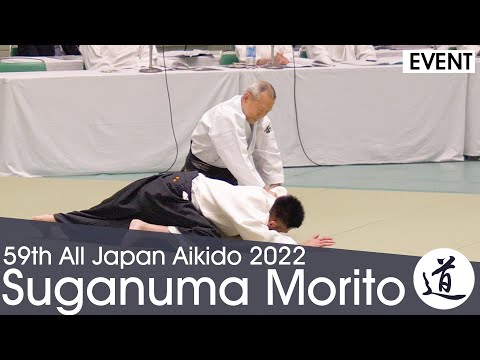
Hello and welcome, fellow travelers on the path of the martial way. Today, we delve into a performance that transcends mere exhibition. We dissect the 59th All Japan Aikido Demonstration featuring Suganuma Morito Shihan, a practitioner whose 8th Dan rank speaks volumes about a lifetime dedicated to the art. This isn't just about watching a series of movements; it's about understanding the philosophy woven into every throw, every joint lock, every evasion. In the world of martial arts, where brute force often seeks the spotlight, Aikido, as demonstrated by masters like Suganuma Shihan, offers a profound counterpoint – the power of yielding, the strategy of redirection, and the cultivation of inner harmony.

The question that often arises, even among seasoned martial artists from other disciplines, is: "What is the practical application of Aikido in a real-world confrontation?" It's a fair question, a challenge that demands a deeper look than a superficial glance. Is it merely an art of kata and forms, or does it harbor a genuine martial spirit capable of defending oneself? Today, we aim to illuminate this, analyzing not just the physical execution, but the underlying principles that make Aikido a unique and enduring martial art.

A Master's Precision: Deconstructing the Movements

Watching Suganuma Morito Shihan at the Nippon Budokan, surrounded by the gravitas of the 59th All Japan Aikido Demonstration, is to witness a master sculptor at work. The footage, presented in crisp 60fps, allows for an unparalleled appreciation of the subtle intricacies that define high-level Aikido. We observe the seamless transitions – the way the body moves as a single, unified entity, a principle deeply rooted in the concept of tai sabaki (body movement).

Notice the economy of motion. There are no wasted movements, no superfluous gestures. Each step, each turn of the wrist, is purposeful and directed. This is not the explosive power seen in Muay Thai or the raw grappling of Brazilian Jiu-Jitsu, but a fluid, circular energy. When Suganuma Shihan executes a technique like ikkyo (first teaching), it’s not a forceful wrenching of an arm. Instead, it’s a precise redirection of the attacker's own momentum, coupled with a subtle shift in body weight and an unbalancing principle that leads the opponent to the ground with minimal effort. This mastery of blending, of becoming one with the attacker's force, is the hallmark of true Aikido proficiency.

The effectiveness of these techniques, particularly in a self-defense scenario, lies in their deceptive simplicity. While a casual observer might dismiss them as overly complex or reliant on the attacker's cooperation, the reality is that the principles of kuzushi (unbalancing), tsukuri (entry/fitting in), and kake (execution) are universally applicable. Even against a resisting opponent, a well-timed and correctly applied unbalancing technique can create an opening for a decisive maneuver.

"Aikido is not a weapon to defeat the world. It is a means to cultivate the self to become a peacemaker." - Morihei Ueshiba

This quote from the founder, Morihei Ueshiba, encapsulates the philosophical underpinning of what we witness. The technical prowess on display is a manifestation of a deep internal cultivation. The demonstration, therefore, serves not just as a display of skill, but as a living testament to this philosophy.

Beyond the Technique: The 'Ki' in Motion

The word Ki (or Qi in Chinese) is often a point of contention and misunderstanding in the martial arts world. In Aikido, it is paramount. It refers to the vital energy, the life force that animates us. Suganuma Morito Shihan’s movements embody this. The fluidity and control are not merely physical; they are expressions of a cultivated Ki. The practitioner learns to extend their Ki through their movements, harmonizing with the attacker's energy rather than confronting it head-on.

This concept is crucial when considering the martial aspect. In striking arts like Karate, or grappling arts like Judo and BJJ, the emphasis is often on generating power through muscular force and physical conditioning. Aikido, however, introduces a layer of energetic influence. This doesn't negate the need for physical conditioning – far from it. A weak body cannot effectively channel or control Ki. However, it elevates the art beyond mere physicality. It suggests that true power comes from understanding and manipulating energetic principles, a concept echoed in various internal martial arts like Tai Chi and Baguazhang.

The demonstration highlights this by showing how a smaller individual can control a larger, stronger attacker. This is not magic; it is applied physics and energetic principle. The ability to seamlessly blend with an attack, to absorb and redirect its force, is a direct manifestation of harmonizing one's Ki with the opponent's. This is why, for practitioners of other martial arts, understanding Aikido can be transformative, offering new perspectives on movement, power, and conflict resolution.

Suganuma Morito Shihan: A Legacy in Motion

The Shoheijuku Dojo, under Suganuma Morito Shihan's guidance, is a renowned institution. The demonstration is not an isolated event but a culmination of years of dedicated training, teaching, and refinement. His 8th Dan rank is a testament to his deep understanding and contribution to the art of Aikido. The lineage of teachers and practitioners who have contributed to this art form is extensive, and Shihan Suganuma stands as a prominent figure in this lineage.

His past demonstrations, accessible through links provided, offer a longitudinal study of his martial journey. Observing the evolution of his technique, the deepening of his understanding, provides invaluable insights for any serious martial artist. It underscores the principle of Shuhari (learn, detach, transcend) – the journey of mastery that requires diligent practice, breaking free from rigid adherence, and finally, embodying the art to create one's own unique expression.

The 59th All Japan Aikido Demonstration was held at the historic Nippon Budokan, a venue synonymous with martial arts excellence. The date, May 28, 2022, places this performance within a contemporary context, showcasing that these traditional arts continue to thrive and evolve. The collaboration with Seido Co., Ltd. for the footage ensures that the visual quality does justice to the performance itself, allowing us to meticulously analyze the subtle nuances of each technique.

Sensei's Verdict: A Study in Martial Harmony

The 59th All Japan Aikido Demonstration, as performed by Suganuma Morito Shihan, is a masterclass in the art of Aikido. It effectively showcases the principles of blending, redirection, and unbalancing that are the cornerstones of this discipline. For practitioners of striking arts, it offers a vital lesson in managing distance, controlling an opponent’s center of gravity, and the power of circular movement. For grapplers, it highlights different pathways to control and submission that don't solely rely on static holds.

While the direct application of certain Aikido techniques in a chaotic street fight can be debated, the underlying principles of awareness, balance, and control are universally applicable for self-defense. The demonstration proves that Aikido is far from being a "non-martial" art; it is a sophisticated system of self-mastery that emphasizes harmony and efficient energy transfer.

Sensei's Rating: 9.5/10 - Cinturón Negro en Principios Marciales.

Training Insights for the Aspiring Aikidoka

To truly grasp the essence of what Suganuma Morito Shihan demonstrates, consistent and dedicated practice is non-negotiable. Here’s a breakdown of key areas to focus on:

  1. Ukemi (Receiving Techniques): Before learning to apply techniques, one must learn to fall safely. Develop strong, fluid ukemi to absorb throws and locks without injury. Practice rolling and breakfalls regularly.
  2. Kuzushi (Unbalancing): This is the foundation of every Aikido technique. Learn to disrupt your partner's balance through subtle body movements, footwork, and hand techniques. This requires sensitivity and timing, not brute force.
  3. Tai Sabaki (Body Movement): Develop efficient and evasive body movement. Learn to move off the line of attack, blending your body's angles with your partner's movements.
  4. Kokyu-ho (Breathing Power): Understand and practice breathing techniques that generate power and control. This involves extending your Ki through relaxed, yet focused, movements.
  5. Zanshin (Awareness): Cultivate a state of continuous awareness of your surroundings and your partner's intentions, even after a technique is completed.

These elements are interconnected and must be trained progressively. Seek qualified instruction; the principles are subtle and best learned under the guidance of an experienced teacher.

Essential Gear for Your Training

While Aikido is less gear-intensive than some other martial arts, the right attire can significantly enhance your training experience and safety:

  • Aikido Gi (Keikogi): A durable, double-weave or heavyweight single-weave Judo-style gi is recommended for most Aikido practice, especially for randori (free practice). Look for reinforced stitching in high-stress areas.
  • Hakama: The traditional pleated trousers worn by practitioners of 2nd Kyu and above. It aids in concealing footwork and adds a layer of tradition. Ensure proper fit and material.
  • Zori or Indoor Shoes: For moving around the dojo between practice mats.
  • Optional: Wooden Bokken and Jo: For practicing Aikido's weapons forms, which are integral to understanding empty-hand principles. Ensure they are made of suitable hardwood and are balanced.

Investing in quality gear is an investment in your training. For beginners, a sturdy Karate gi can suffice initially, but transitioning to a dedicated Aikido gi is advisable as you progress.

Frequently Asked Questions

Is Aikido effective for self-defense?

Aikido's effectiveness for self-defense is often debated. While it teaches principles of control and evasion, its direct application in a sudden, violent encounter can be challenging without extensive, realistic training. However, the cultivated awareness, balance, and ability to redirect aggression are invaluable defensive assets.

What is the main difference between Aikido and Judo?

While both arts originated from Japan and involve throws, Judo focuses on sport competition with an emphasis on throws and pins, aiming to score ippon. Aikido, on the other hand, is primarily a self-defense system that emphasizes blending with an attacker's force, joint locks, and immobilizations, with a strong philosophical component focusing on harmony and non-violence.

How long does it take to get a black belt in Aikido?

The timeline varies significantly depending on the individual's dedication, training frequency, and the specific organization's standards. Typically, it takes anywhere from 4 to 8 years of consistent practice to achieve the rank of Shodan (1st Dan black belt) in Aikido.

What does the term 'Shihan' mean?

"Shihan" is a Japanese term that translates roughly to "teacher" or "master." It is an honorific title awarded to highly accomplished martial artists, typically those holding a high rank (often 6th Dan or above) and who have demonstrated a profound understanding and contribution to their art.

To Deepen Your Path

The journey into the martial way is a continuous exploration. To further enrich your understanding, consider exploring related concepts and arts:

  • BUDO: Understanding the broader context of Japanese martial traditions.
  • Karate: Explore its historical roots and diverse styles.
  • Judo: Compare and contrast its principles with Aikido.
  • Ki: Delve deeper into the concept of vital energy across different martial arts.
  • Self-Defense: Examine various approaches to personal safety beyond specific martial arts styles.

Sensei's Reflection: Your Next Step

We have dissected the movements, contemplated the philosophy, and assessed the martial spirit. But theory without practice is like a sword without a blade. Suganuma Morito Shihan's demonstration is a potent reminder of the potential within the human body and spirit when harmonized. Now, I ask you: When faced with an imbalance in your own life – be it physical, mental, or emotional – do you confront it with direct force, or do you seek to understand its flow and redirect it with grace? Reflect on this, and let your actions be your answer.

``` GEMINI_METADESC: Analyze Suganuma Morito Shihan's masterful Aikido performance at the 59th All Japan Demonstration. Explore technical precision, philosophical depth, and martial application.

Aikido vs. MMA: A Sensei's Unvarnished Critique of Effectiveness

The ring. The cage. The street. Different arenas, yet the fundamental principles of combat often echo through them. But what happens when a philosophy born from self-mastery and harmony, like Aikido, faces the raw, unadulterated pragmatism of modern Mixed Martial Arts (MMA)? This is not a question for casual observation; it demands a deep dive, a critical lens forged in the fires of tradition and tempered by the realities of contemporary conflict. Today, we dissect this apparent dichotomy, not to dismiss, but to understand.
The early days of MMA were a brutal spectacle, a chaotic clash of styles where bouts were often decided in the blink of an eye. It was a proving ground, a crucible that forged a new breed of warrior. But that era, characterized by lightning-fast finishes and stylistic shock, has given way to a sophisticated sport. Modern MMA is a meticulously crafted fusion, a synthesis of the most potent elements drawn from wrestling, Judo, Sambo, Brazilian Jiu-Jitsu, Kickboxing, Boxing, and Muay Thai. This amalgamation has propelled it to global popularity, captivating millions with its blend of technique, strategy, and raw athleticism. ### Tabla de Contenidos

The Philosophy of Aikido: Harmony and Control

Aikido, often translated as "the Way of Harmonizing Energy," is a martial art deeply rooted in philosophical principles. Founded by Morihei Ueshiba, its essence lies not in confronting force with force, but in blending with an attacker's energy, redirecting their momentum, and neutralizing them with minimal harm. The techniques emphasize circular movements, joint locks (kansetsu-waza), throws (nage-waza), and pins (osaekomi-waza). The goal is not to injure, but to control, to achieve victory through redirection and strategic application of pressure. It is a path that seeks to cultivate inner peace, discipline, and a profound understanding of human interaction. > "Victory over yourself is the greatest victory." - Morihei Ueshiba This emphasis on harmony and self-control is profoundly admirable. In a self-defense context against a street aggressor—often characterized by uncontrolled aggression and a lack of sophisticated technique—Aikido can indeed be remarkably effective. A well-executed wrist throw or a swift pin can disarm a cocky attacker, stopping a confrontation before it escalates into a more dangerous situation. The art teaches practitioners to read an opponent's intent and to use their attacker's own power against them.

The Unforgiving Arena of MMA

Mixed Martial Arts, by its very definition, is an environment where diverse fighting styles converge. Unlike the singular focus of many traditional arts, MMA demands proficiency across striking, grappling, and positional control. Fighters are trained to deliver and absorb powerful strikes, to execute takedowns, to defend against them, and to navigate the complex landscape of ground fighting. The ruleset, while evolving, generally allows for a comprehensive engagement of combat skills. This multi-faceted nature is what makes MMA so compelling and, for practitioners of more specialized arts, so challenging to adapt to. The sport has evolved from a stylistic free-for-all to a highly technical discipline. Fighters now train holistically, understanding that weaknesses in one area can be ruthlessly exploited by an opponent skilled in another. The era of the "stylistic clash" has matured into a strategic battleground where complete martial artists thrive.

Aikido's Principles on the MMA Canvas: A Tactical Breakdown

Now, let us address the core question: how would Aikido fare within the structured chaos of an MMA bout? We must analyze its core principles against the demands of the cage. The philosophy of Aikido centers on blending and redirection. This is exceptionally potent when facing an opponent who is charging in wildly or attempting a single, committed attack. An Aikido practitioner trained to sense this momentum could potentially deflect a wild haymaker or redirect a charging opponent into a throw. The fluidity and circular motion are designed to unbalance and control. However, the MMA environment presents a different kind of challenge. Unlike a street confrontation where an attacker might be unskilled and predictable, MMA opponents are highly trained specialists, often with devastating striking power and robust grappling abilities.

The Critical Flaw: Deflecting Strikes

Herein lies Aikido's most significant hurdle in an MMA context: striking defense. While Aikido techniques often involve deflecting or evading an incoming strike as part of a larger movement to a throw or lock, they are rarely designed to absorb or counter a direct, powerful blow. In MMA, fighters train extensively to deliver and withstand strikes. Punches, kicks, elbows, and knees are integral weapons. An Aikido practitioner's typical defensive posture and movements, focused on evasion and redirection *into* a grappling exchange, can leave them dangerously exposed to the sheer impact of determined strikes. Imagine an attempt to blend with a jab; while the intent might be to control the arm, a skilled MMA fighter will follow through with power, potentially landing the punch before the blend is complete, or initiating a barrage of strikes that the Aikido technique is not designed to parry effectively. While some Aikido styles incorporate strikes (atemi), they are often secondary to the throws and locks, and not developed to the same level of offensive and defensive sophistication as those found in Muay Thai or Boxing. The risk of absorbing significant damage before successfully executing a technique is exceptionally high.

The Nuances of Control: Aikido vs. Ground Combat

Aikido excels in controlling an opponent once engaged, particularly in standing grappling situations. Joint locks like *ikkyo* or *shihonage* are designed to incapacitate or unbalance. Throws can take an opponent down effectively. However, MMA's grappling is a different beast. Brazilian Jiu-Jitsu and Sambo, staples of MMA, focus heavily on positional control and submissions on the ground. The objective in MMA grappling is not merely to *control* an opponent, but to advance position, achieve dominant grappling positions (like mount or side control), and secure submissions (chokes and joint locks that force a tap-out). An Aikido throw might bring an opponent down, but it doesn't inherently guarantee a dominant position. An MMA fighter trained in BJJ or Sambo would likely use that transition to immediately work for a superior position or a submission. Furthermore, the emphasis on breaking an opponent's structure and balance in Aikido is different from the pressure-based, submission-oriented approach of ground fighting in MMA. While an Aikido lock might be effective, an MMA fighter accustomed to defending against a wide array of submissions might have the tools and training to escape or counter it. The concept of *mushin* (no-mind) in Aikido is about detached awareness, but in MMA, focused aggression and offensive pressure are often paramount. The physical conditioning and resilience required for MMA grappling are also distinct. Fighters are conditioned to endure prolonged periods of intense grappling, to generate power from static positions, and to resist submission attempts.

Beyond Technique: The Mental Battlefield

> "Empty your mind, be formless. Shapeless, like water. If you put water into a cup, it becomes the cup. You put water into the bottle and it becomes the bottle. You put it in the teapot, it becomes the teapot. Now, water can flow or it can crash. Be water, my friend." - Bruce Lee This quote, though from Bruce Lee, resonates with the adaptability preached in many martial arts, including Aikido's call for harmony and fluidity. However, the mental fortitude required in MMA is a unique blend of aggression, resilience, and strategic calculation. Aikido cultivates mental calm and presence. This is invaluable. However, MMA demands the ability to remain calm *while* under immense physical duress, absorbing strikes, defending submissions, and managing fatigue. It requires a specific kind of aggression—not uncontrolled anger, but a focused, combative drive to impose one's will and achieve victory within the rules. The "no-mind" state in Aikido is about achieving a state of flow and awareness where actions are instinctive and unhindered by conscious thought. In MMA, this *mushin* must be coupled with an acute awareness of the opponent's strategy, the fight clock, and the fighter's own physical condition—a much more complex mental calculus.

Sensei's Verdict: Effectiveness in the Cage

Let's be direct. As a primary martial art for competition in MMA, Aikido, in its traditional form, presents significant challenges. Its strengths—harmony, redirection, control—are formidable in their intended context, particularly for self-defense against untrained assailants. However, the MMA arena is a different ecosystem. The lack of a robust, dedicated striking arsenal and the potential vulnerability to powerful, precise strikes pose a critical issue. Furthermore, while Aikido's grappling is effective for control and takedowns, it doesn't inherently prepare a practitioner for the submission-heavy, positionally complex world of modern MMA ground fighting. An MMA fighter with a solid foundation in BJJ or Wrestling would likely have a significant advantage in neutralizing Aikido techniques and imposing their own grappling dominance. Is Aikido entirely useless in MMA? No. A practitioner with exceptional timing, an uncanny ability to read an opponent, and perhaps complementary training in striking or ground work, might find ways to incorporate its principles. The ability to sense an opponent's movement and off-balance them is a universal martial principle. However, relying solely on traditional Aikido techniques would be akin to bringing a finely crafted sword to a gunfight. It's a beautiful tool, but perhaps not the right one for this specific battle. Aikido's true strength lies in its philosophical depth and its effectiveness in de-escalation and self-defense outside the competitive sports realm. It cultivates qualities of character—discipline, respect, self-awareness—that are invaluable to any martial artist, regardless of their chosen discipline.

Essential Training Gear for Your Journey

To embark on any martial arts journey, the right equipment is crucial. While Aikido traditionally emphasizes the *hakama* and *gi*, MMA requires a more specialized set of gear for training and competition.
  • MMA Gloves: Padded gloves are essential for sparring to protect your hands and your training partners. Look for gloves around 4-6oz for MMA-specific sparring.
  • Mouthguard: Non-negotiable for any form of sparring or live drilling to protect your teeth and jaw.
  • Groin Protector: A vital piece of safety equipment to prevent serious injury.
  • Shin Guards: Necessary for Muay Thai or Kickboxing drills to protect your shins from repeated impact.
  • Rash Guards and Spats: These form-fitting garments reduce friction during grappling, helping to prevent mat burns and allowing for smoother movement.
  • Wrestling Shoes (Optional): Some practitioners prefer wrestling shoes for improved grip and ankle support during grappling sessions.
  • High-Quality Gi or Kimono: For Judo or BJJ training, a durable, double-weave gi is paramount. Consider brands known for their longevity and fit, like KarateMerchandise or brands specializing in Judo uniforms.
For those interested in the philosophical aspects or history, investing in foundational texts is always wise. Books on Budo, the Warrior Philosophy, or biographies of martial arts masters can provide invaluable insights.

Frequently Asked Questions

Is Aikido completely useless in MMA?

Not entirely. Its principles of balance, redirection, and timing can be beneficial. However, as a primary system for MMA competition, it lacks crucial elements like dedicated striking offense/defense and ground submission specialization.

What are the main differences between Aikido and MMA grappling?

Aikido grappling focuses on joint locks, throws, and controlling an opponent to neutralize them, often with minimal damage. MMA grappling (BJJ, Sambo, Wrestling) emphasizes positional dominance, submissions (chokes, joint locks designed to force a tap), and ground-and-pound.

Can an Aikido practitioner effectively defend against MMA strikes?

This is a significant challenge. Traditional Aikido defense is not designed to absorb or effectively counter the power and variety of strikes found in MMA. While evasion is key, direct impact is a major risk.

What martial arts are considered most effective in MMA?

Currently, a strong base in Brazilian Jiu-Jitsu (for grappling), Muay Thai or Kickboxing (for striking), and Wrestling (for takedowns and takedown defense) forms the core of most successful MMA fighters.

Is Aikido still valuable for self-defense?

Absolutely. Aikido's focus on de-escalation, controlling an attacker, and using an opponent's energy makes it highly effective in many real-world self-defense scenarios, especially against untrained aggressors.

Deepen Your Understanding

To truly grasp the nuances of martial arts philosophy and its application in combat, exploration is key. Continue your journey with these related topics:

Sensei's Reflection: Your Next Step

We have dissected the formidable world of MMA and contrasted it with the elegant philosophy of Aikido. The cage demands a different kind of warrior, one forged in a crucible of diverse combat disciplines. Yet, the pursuit of martial arts is not solely about victory in competition. It is about self-improvement, discipline, and understanding. The question then becomes: What is your objective? Are you seeking to compete in a sport where raw pragmatism reigns, or are you pursuing a path of self-mastery and harmonious control? Perhaps the true answer lies not in choosing one over the other, but in understanding their respective strengths and appreciating the wisdom each offers.

Reflexión del Sensei: Tu Próximo Paso

If you were to step into an MMA octagon tomorrow with only your Aikido training, what single principle or technique would you rely on, and what is the greatest danger you would face? Reflect on this not just as a theoretical exercise, but as a lesson in the specificity of martial application. GEMINI_METADESC: A Sensei analyzes Aikido's effectiveness in MMA, debating its philosophy against the cage's reality. Discover the strengths and limitations of each.