Showing posts sorted by date for query hand wraps for boxing. Sort by relevance Show all posts

The Unvarnished Truth: Mastering the Pugilistic Arts – A Sensei's Uncompromising Guide to Boxing for the True Warrior

The ring. A crucible where raw courage meets honed technique. For millennia, humanity has sought to test itself in combat, and boxing, in its purest form, stands as a testament to that primal drive. But do not mistake its apparent simplicity for a lack of depth. To truly understand the art of boxing is to delve into a discipline that demands more than just brute force; it requires unwavering focus, ironclad discipline, and a spirit as unyielding as tempered steel. This isn't about flashy moves for the masses; it's about understanding the *bushido* of the pugilist. This guide is not for the faint of heart, but for those who seek to understand the soul of the fight.

Table of Contents

Introduction: The Pugilist's Path

Many claim to understand boxing. They watch from the sidelines, mesmerized by the ferocity, yet blind to the underlying strategy. This is not a sport for those who seek mere violence; it is a sophisticated dance of strategy, timing, and absolute control. Forget the theatrics; we delve into the core. If your intention is to learn the fundamental principles that separate a brawler from a boxer, you have arrived. This guide is built upon the rigorous principles that underpin all true martial disciplines, adapted for the squared circle. We will dissect each element, from the devastating power of a well-placed punch to the subtle art of evading a blow that could end your night.

The Four Pillars of Offense: Mastering the Punches

In the unforgiving arena of boxing, your fists are your instruments of expression. But not all expressions carry the same weight. Understanding the *purpose* and *execution* of each fundamental punch is paramount. This is where the foundation of your offensive strategy is laid, where the *ki* flows through your strikes.

The Jab: The Maestro's Measure

"The jab is the painter's brush. It sketches the outline of the masterpiece."
The jab is the foundational punch in boxing, often underestimated by novices. It's your primary tool for range-finding, disrupting your opponent's rhythm, and setting up more potent attacks. Thrown with your lead hand, it must be swift, straight, and retracted quickly to maintain balance. A lazy jab is an invitation to disaster. Master the jab, and you control the distance; control the distance, and you control the fight. This requires constant practice, honing the muscle memory until the movement is as natural as breathing.

The Cross: The Hammer of Judgment

"The cross is the testament of power, delivered with the truth of your entire body."
This is where true power is unleashed. The cross, thrown with your rear hand, involves a rotation of your hips and shoulders, transferring the force from the ground up through your body. It's not just an arm punch; it's a full-body commitment. Used to end exchanges, exploit openings, or deliver a decisive blow, the cross demands precision. A poorly executed cross leaves you vulnerable, off-balance, and ripe for punishment. For those seeking the ultimate expression of boxing power, understanding the mechanics of the cross is non-negotiable. Consider the legacy of fighters who made this their signature – their power was no accident.

The Hook: The Serpent's Coil

"The hook strikes from unexpected angles, a sudden turn of fate."
The hook is a semi-circular punch delivered with either hand, targeting the head or body. Its effectiveness lies in its ability to bypass an opponent's guard when thrown correctly. Whether it's a short, sharp hook to the chin or a looping power hook to the ribs, the principle remains: utilize your core rotation for maximum impact. This punch requires adaptability, as it can be employed both offensively and defensively to disrupt an opponent's attack. Mastering hooks is essential for breaking down a guarded opponent, a skill honed through countless hours of drilling.

The Uppercut: The Rising Dragon

"The uppercut is the surprise from below, a sudden ascent of power."
The uppercut is a powerful, upward-striking punch. It's designed to catch an opponent coming in, or to lift their head from a lower guard. Again, hip and shoulder rotation are key, generating explosive upward force. This punch is particularly effective against opponents who tend to drop their hands or lean forward. Its trajectory makes it a formidable weapon, capable of causing significant damage. For any aspiring boxer serious about their arsenal, the uppercut is a vital, albeit challenging, technique to master.

The Dance of the Warrior: Essential Footwork

Boxing is often described as a thinking person's sport, and nowhere is this more evident than in its footwork. The ring is your chessboard, and your feet are your pawns. Superior footwork allows you to control the engagement, evade danger, and dictate the terms of the fight. Neglect this, and you are merely a stationary target. This is where the true *Budo* spirit manifests – not just in the strike, but in the movement, the strategy, the evasion.

The Foundation: Your Boxing Stance

Your stance is your base, your equilibrium. A proper boxing stance keeps you balanced, protected, and ready to move. Feet should be shoulder-width apart, with your lead foot slightly forward. Knees are softly bent, distributing your weight primarily on the balls of your feet, allowing for quick transitions. Your lead hand is up, protecting your face, and your rear hand guards your chin. This isn't just about standing; it's about being prepared to explode into action or disappear from danger at a moment's notice.

Step and Slide: Navigating the Arena

This is the most fundamental movement. To move left, step with your lead foot, then bring your rear foot to meet it, maintaining your stance's width. To move right, do the opposite. This "step and slide" ensures you never cross your feet, which is a cardinal sin in boxing, leading to imbalance and vulnerability. It's about maintaining your structure while traversing the terrain. This fluid motion is crucial for effective offensive and defensive positioning, a silent testament to your control.

The Pivot: Shifting the Battlefield

Pivoting allows you to change angles, creating offensive opportunities or evading an opponent's attack. By stepping with your lead foot and rotating your rear foot, you can shift your body and create a new line of attack, surprising your opponent. This technique is vital for turning defense into offense and is a hallmark of experienced boxers who can manipulate the space within the ring. It’s a subtle art, but one that can dramatically alter the course of a fight.

The Shield of Wisdom: Impregnable Defense

Offense wins rounds, but defense wins championships. A fighter who cannot defend themselves is merely playing with fire. True mastery lies in the ability to avoid punishment while simultaneously creating openings. This is where the discipline of the martial artist truly shines – understanding that the greatest victory is often not to strike, but to *not be struck*.

The Parry: Deflecting Misfortune

A parry is a controlled deflection of an opponent's punch. Using your lead hand, you gently redirect the incoming blow to the side. It's not a block; it's a subtle redirection that uses minimal energy and can even be transitioned into a counter-attack. This requires excellent timing and awareness, distinguishing it from a crude, energy-sapping block.

The Slip: The Ghost's Evasion

The slip involves moving your head to the left or right, causing your opponent's punch to whistle past. Crucially, your feet remain planted, allowing for an immediate counter-punch. This requires impeccable timing and understanding of an opponent's range and power. A well-timed slip can not only evade a devastating blow but also set up a powerful retaliatory strike.

Bob and Weave: The Willow in the Storm

This classic defensive maneuver involves bending your knees and moving your upper body in a U-shape. It's used to evade punches, particularly hooks, and to get inside an opponent's reach. The bob and weave allows you to move under punches and come up in a position to attack, turning defense into a potent offensive tool. It’s about being fluid, adaptable, and always one step ahead.

The Forge of the Fighter: Rigorous Training Regimen

Talent is a spark, but discipline is the fire that sustains it. Consistent, intelligent training is the only path to true mastery in boxing. Without it, your potential remains dormant, a whisper lost in the roar of the crowd.

Shadowboxing: The Solitary Duel

Before you face an opponent, you must first face yourself. Shadowboxing is your private rehearsal. It's where you practice your technique, footwork, and combinations without resistance. This is your opportunity to refine every movement, to build muscle memory, and to develop the fluidity and speed that define a skilled boxer. It's a critical component for developing *internal strength* and mastering your own movements.

The Heavy Bag: Facing the Silent Adversary

The heavy bag is your relentless training partner. Punching it develops power, stamina, and the conditioning necessary to endure the rigors of a fight. Each strike against the bag is a commitment, building the resilience required to absorb and deliver punishment. Focus on proper form with every punch; the bag doesn't judge technique, but the results speak for themselves. Using a high-quality boxing glove during these sessions is crucial for joint protection.

Sparring: The Crucible of Reality

Sparring is where theory meets practice. It's the closest you'll get to a real fight in a controlled environment. Here, you test your techniques, timing, defense, and mental fortitude against a live opponent. It teaches you to adapt, react, and manage the pressure of combat. Sparring is not about winning; it's about learning. Every session is a lesson, a chance to identify weaknesses and build upon strengths. This is where the true *fighter's spirit* is forged. Remember, proper sparring gear is non-negotiable for safety.

Veredicto del Sensei: ¿Merece la pena?

This guide presents the foundational pillars of boxing. It is a distilled essence of technique and strategy, stripped of hyperbole. Boxing, when approached with the discipline and respect of a martial art, is profoundly rewarding. It builds not only physical prowess but also mental fortitude, strategic thinking, and an unshakeable self-confidence. However, it demands dedication. This is not a quick fix; it's a lifelong pursuit. For those willing to commit, the journey is transformative. **Calificación:** Cinturón Negro en Fundamentos.

Equipo Esencial para tu Entrenamiento

To begin your journey in the pugilistic arts, certain equipment is not merely recommended, but essential for safe and effective training:
  • Boxing Gloves: Essential for protecting your hands and wrists during striking. For beginners, 14-16oz gloves are generally recommended for training.
  • Hand Wraps: Worn under gloves, these provide crucial extra support to your hand and wrist bones.
  • Mouthguard: Absolutely vital for protecting your teeth and preventing concussions.
  • Headgear (for sparring): Protects against cuts, bruises, and reduces the impact of blows during sparring sessions.
  • Jump Rope: An indispensable tool for warming up, improving footwork, coordination, and cardiovascular conditioning.
  • Heavy Bag: For developing power, stamina, and practicing combinations.
  • Boxing Shoes: Offer ankle support and provide the necessary grip for agile footwork in the ring.
Investing in quality boxing equipment is an investment in your safety and progress.

Guía de Entrenamiento: Perfeccionando tu Jab

Let us focus on the most fundamental punch, the jab, and refine its execution.
  1. Stance: Assume your proper boxing stance. Your lead hand is forward, eyes forward.
  2. Initiation: Begin the movement by extending your lead arm directly forward. Do not cock your wrist or bend your elbow prematurely.
  3. Extension: Fully extend your arm, rotating your fist slightly as it reaches its target. This rotation adds snap and power. The palm should ideally face downwards upon impact.
  4. Target Impact: Aim to strike with the knuckles of your index and middle fingers.
  5. Retraction: Immediately snap the punch back to your guard position. This is crucial for defense and maintaining balance. The retraction should be as fast as the extension.
  6. Body Mechanics: As you extend, you may subtly shift your weight forward onto the ball of your lead foot. Engage your core.
  7. Practice: Perform 10-20 repetitions with focus. Then, practice transitioning from a jab to a cross, or a jab to a slip.
  8. Shadowboxing: Integrate this refined jab into your shadowboxing routine.
  9. Heavy Bag: Practice your jab on the heavy bag, focusing on speed, accuracy, and retraction.
Mastering the jab is a journey, not a destination. Be patient, be persistent.

Preguntas Frecuentes

Q: How long does it take to become proficient in boxing?
A: Proficiency varies greatly depending on natural aptitude, training frequency, and quality of instruction. However, expect at least 1-2 years of consistent training to develop fundamental skills and ring awareness.

Q: Is boxing too dangerous for beginners?
A: While boxing carries inherent risks, proper training under qualified instructors, with emphasis on defense and safe sparring practices, significantly mitigates danger, especially for beginners.

Q: Can boxing be used for self-defense?
A: Absolutely. The core principles of boxing – footwork, distance management, and powerful striking – are highly applicable to real-world self-defense situations.

Q: What is the difference between boxing and other martial arts?
A: Boxing specifically focuses on punches using the fists, employing unique footwork and defensive strategies. Other martial arts may incorporate kicks, grappling, or weapons, offering broader combat applications.

Para Profundizar en tu Camino

Reflexión del Sensei: Tu Próximo Paso

You have studied the theory. You understand the mechanics of the jab, the cross, the hook, the uppercut. You know the importance of footwork and defense. But theory is a map; practice is the territory. So I ask you: When you stand before the mirror, practicing your jab, are you merely moving your arm, or are you channeling the intent of a warrior? Are you executing a technique, or are you embodying the spirit of the strike? The answer to this question will define your path. ```json { "@context": "https://schema.org", "@type": "FAQPage", "mainEntity": [ { "@type": "Question", "name": "How long does it take to become proficient in boxing?", "acceptedAnswer": { "@type": "Answer", "text": "Proficiency varies greatly depending on natural aptitude, training frequency, and quality of instruction. However, expect at least 1-2 years of consistent training to develop fundamental skills and ring awareness." } }, { "@type": "Question", "name": "Is boxing too dangerous for beginners?", "acceptedAnswer": { "@type": "Answer", "text": "While boxing carries inherent risks, proper training under qualified instructors, with emphasis on defense and safe sparring practices, significantly mitigates danger, especially for beginners." } }, { "@type": "Question", "name": "Can boxing be used for self-defense?", "acceptedAnswer": { "@type": "Answer", "text": "Absolutely. The core principles of boxing – footwork, distance management, and powerful striking – are highly applicable to real-world self-defense situations." } }, { "@type": "Question", "name": "What is the difference between boxing and other martial arts?", "acceptedAnswer": { "@type": "Answer", "text": "Boxing specifically focuses on punches using the fists, employing unique footwork and defensive strategies. Other martial arts may incorporate kicks, grappling, or weapons, offering broader combat applications." } } ] }

Choosing Your Martial Arts Sensei: Avoiding the Red Flags of False Mastery

The path of Budo is a journey of self-discovery, discipline, and relentless improvement. But what happens when the very guide meant to illuminate this path casts a shadow instead? In the intricate world of martial arts, the instructor, the Sensei, is paramount. Yet, not all who don the black belt are true masters. Many are merely keepers of superficial knowledge, or worse, peddlers of dangerous dogma.

This is not a debate about style – whether you seek the fluidity of Aikido, the power of Kyokushin Karate, or the strategy of Judo. This is a critical examination of character and competence. My intent today is to equip you, the aspiring warrior, with the discernment needed to identify instructors who are not worthy of your dedication, your sweat, and your respect. We will dissect the common "red flags" that signal a lack of true mastery and, more importantly, a potential detriment to your martial arts journey and personal growth.

Lack of Credentials: The Uncertified Imposter

In the realm of Budo, lineage and verifiable expertise are not mere formalities; they are the bedrock of authenticity. When an instructor cannot produce legitimate credentials – certifications from recognized martial arts federations, documented ranks from reputable masters, or a clear lineage tracing back through established schools – it’s a gaping hole in their claim to authority.

Think of it like this: would you trust a surgeon who claimed to have 'learned surgery by watching videos'? Of course not. The same rigor must apply to your martial arts training. A Sensei who skirts around the issue of their qualifications, or worse, dismisses them as unimportant, is signaling a profound lack of understanding regarding the depth and discipline required to attain true mastery. This is not about ego; it’s about the student’s right to receive instruction from someone who has demonstrably earned it.

"If you meet the Buddha, kill the Buddha." This koan, often misapplied, speaks to the danger of blind adherence. In your training, it means questioning any authority that doesn't stand up to scrutiny. A lack of credentials is the first, and perhaps most obvious, crack in the facade.

Overemphasis on Winning: The Empty Trophy Syndrome

Competition is a vital component of many martial arts. It tests technique under pressure, builds resilience, and offers a tangible measure of progress. However, an instructor whose focus is *solely* on victory, who prizes wins above all else, is fundamentally misunderstanding the purpose of Budo.

Martial arts are a crucible for character development. They teach humility in defeat, grace in victory, perseverance through adversity, and the ethical application of force. An instructor who only celebrates wins, or worse, harshly criticizes losses, is cultivating an unhealthy and ultimately shallow approach to training. True martial arts training is a lifelong pursuit of self-mastery, not a gladiatorial contest. The true victories are often internal: overcoming fear, perfecting a difficult technique, or developing unshakeable discipline. An instructor obsessed with external validation misses this entirely.

Consider the legendary martial artists. While many were formidable competitors, their teachings often transcended mere winning. They emphasized the philosophical, the ethical, and the personal growth aspects. A coach focused only on the scoreboard misses the deeper lessons that make martial arts a transformative art.

Lack of Safety Precautions: Gambling with Your Well-being

This is non-negotiable. Martial arts, by their very nature, involve physical contact and the potential for injury. A competent and ethical instructor prioritizes safety above all else. This means:

  • Proper warm-ups and cool-downs to prepare the body and prevent strains.
  • Clear instruction on how to execute techniques safely, minimizing risk to both giver and receiver.
  • Appropriate supervision during sparring or strenuous drills.
  • A willingness to modify training for students with injuries or physical limitations.
  • A calm, controlled environment where recklessness is not tolerated.

If your instructor rushes through warm-ups, encourages overly aggressive or uncontrolled sparring, dismisses concerns about pain, or lacks basic safety protocols (like ensuring the training area is clear of hazards), they are not only negligent but actively endangering you. This isn't about being "soft"; it's about intelligent, sustainable training. Pushing your limits is essential, but reckless endangerment is not. You should feel challenged, yes, but never at the risk of serious injury due to the instructor's carelessness.

Aggressive or Abusive Behavior: The Tyrant's Dojo

The dojo should be a sanctuary for learning and growth, a place where discipline is cultivated, not fear. An instructor who resorts to aggressive language, shouting, intimidation, or any form of physical or emotional abuse is fundamentally unfit to teach.

Martial arts are meant to empower, to build confidence, and to foster self-control. An instructor who uses their position to belittle, demean, or intimidate students is exploiting their authority. This is not discipline; it is tyranny. Such behavior creates a toxic learning environment, erodes self-esteem, and can have lasting negative psychological effects. The true martial artist leads by example, demonstrating respect, patience, and calm under pressure – not by ruling through fear or aggression. This kind of behavior is not only unethical but often stems from the instructor’s own insecurities and lack of genuine mastery.

"The supreme art of war is to subdue the enemy without fighting." - Sun Tzu. This principle extends beyond the battlefield. A true master subdues conflict through calm authority and unwavering principle, not through aggressive displays.

Lack of Respect for Students: The Mark of a Shallow Mind

Every student, from the absolute beginner to the seasoned practitioner, deserves respect. An instructor who consistently belittles students, mocks their efforts, dismisses their questions, or treats them as inferior is demonstrating a profound lack of character.

Respect is a two-way street. While students owe respect to their instructor, the instructor owes a duty of care, dignity, and genuine mentorship to their students. An instructor who fails to recognize the individual journey of each student, who fails to foster an environment of mutual respect, is not a true leader. They may possess technical skills, but they lack the wisdom and character that define a master. Feeling comfortable asking questions, making mistakes without fear of humiliation, and being treated as an individual with unique potential are hallmarks of a positive training environment.

Veredicto del Sensei: ¿Merece la pena?

Choosing the right martial arts instructor is perhaps the single most critical decision you will make on your path. The red flags – lack of credentials, obsession with winning, disregard for safety, abusive behavior, and disrespect for students – are not minor issues. They are fundamental flaws that betray a lack of true mastery and ethical integrity.

A true Sensei is a mentor, a guide, and a role model. They possess not only technical proficiency but also the wisdom, patience, and ethical grounding to nurture their students. They prioritize your growth, safety, and well-being above their own ego or desire for superficial accolades. If an instructor exhibits any of these red flags, it is a clear signal to seek training elsewhere. Your journey is too important to be entrusted to someone who lacks the fundamental qualities of a true master.

Calificación: ¡Cinturón Negro en Discernimiento!

Equipo Esencial para tu Entrenamiento

Selecting the right equipment can significantly enhance your training experience, safety, and progression. While the core of martial arts lies in the practitioner, the right gear provides the necessary foundation.

  • Kimono/Gi: For Judo, Aikido, and some Karate styles, a durable Gi is essential. Look for double-weave or heavyweight fabrics for disciplines involving grappling or significant wear and tear. For Karate, a lighter, more breathable fabric might be preferred for striking arts.
  • Sparring Gear: When engaging in controlled sparring, protective gear is paramount. This includes headgear, mouthguards, chest protectors, and shin/instep guards, especially for striking arts like Karate and Kickboxing. For grappling arts, focus on comfortable attire that allows freedom of movement.
  • Training Mats (Tatami): If you are practicing at home, especially for techniques involving throws or falls (Judo, Aikido), investing in proper mats is crucial to prevent injuries.
  • Focus Mitts and Strike Pads: Excellent for practicing striking combinations and power generation, whether alone or with a partner.
  • Hand Wraps and Gloves: Essential for striking arts to protect your wrists and hands during bag work or sparring. Boxing or MMA gloves are standard.

Guía de Entrenamiento: Desarrollando tu Resiliencia

True martial arts strength isn't just physical; it's mental and spiritual. Here's a simple drill to cultivate mental fortitude and discipline, applicable to any art:

  1. Set a Consistent Time and Place: Designate a specific time each day (e.g., upon waking, before bed) and a quiet space for your practice.
  2. Begin with Centering: Sit in a comfortable, upright posture. Close your eyes and take 5-10 deep breaths, focusing on the sensation of air entering and leaving your body. This is your 'Mokuso' (meditation).
  3. Perform a Single Technique Repetitively: Choose one fundamental technique from your art (e.g., a basic punch, a specific block, a simple stance transition, or even a short kata).
  4. Execute with Full Focus: Perform the technique with 100% concentration. Imagine it's the first time you've ever done it. Pay attention to every detail: body alignment, breath, intent.
  5. Aim for a Target Number of Repetitions: Start with a manageable number, perhaps 25 or 50. The goal isn't speed, but perfect, mindful execution.
  6. Maintain Focus Through Fatigue: As you get tired, your mind will wander. Gently bring your focus back to the technique. This is where the real training happens.
  7. Conclude with Gratitude: Take a moment to thank yourself for your dedication and your instructor (even if they are absent) for their guidance.

This drill, simple as it seems, builds discipline, focus, and an appreciation for the subtleties within even the most basic movements. It's a cornerstone of developing a strong Ki or internal energy.

Preguntas Frecuentes

Q1: My instructor often yells at us. Is this normal in martial arts?
A: No. While discipline is important, yelling and aggressive behavior are signs of a poor instructor who may lack control or proper teaching methodology. True discipline comes from respect and understanding, not fear.

Q2: What if my instructor is a world champion but seems to lack teaching skills?
A: Being a great competitor does not automatically make one a great teacher. A good instructor needs not only technical skill but also the ability to communicate, motivate, and foster a safe learning environment. Look for a balanced instructor.

Q3: Is it okay to switch martial arts schools if I'm unhappy with my current instructor?
A: Absolutely. Your training journey is yours. If you encounter red flags or feel your growth is being stunted, it is wise and responsible to seek out a more suitable learning environment. Loyalty is to your own progress and the principles of Budo, not necessarily to a single individual.

Para Profundizar en tu Camino

In conclusion, the path to martial arts mastery is paved with diligent effort and wise choices. Be discerning. Observe keenly. Trust your instincts. The right Sensei will not only teach you techniques but will inspire you to become a better version of yourself, embodying the true spirit of Budo.

Now, I pose a challenge to you: Reflect on your own training environment. Have you encountered any of these red flags? Are you truly being guided by a master, or merely by someone with a black belt? Voice your thoughts and experiences below. Let us learn from each other.

Ricardo López: The Zenith of Mexican Boxing Prowess and a Martial Arts Masterclass

The Unseen Connection: Boxing Technique as Pure Martial Art

A true martial artist understands that the essence of Budo—the way of the warrior—transcends specific disciplines. It lies in the pursuit of perfection, the unwavering discipline, and the profound understanding of human physiology and psychology under pressure. While the world often segregates boxing from the broader martial arts spectrum, a deeper examination reveals undeniable parallels. Today, we delve into the "Mexican PERFECTION Of Ricardo López," not just as a boxing legend, but as a paragon whose technical mastery offers invaluable lessons for any practitioner of the martial ways. This is a journey into precision, defense, and an offensive capability honed to its absolute finest edge.

The Maestro: Unpacking Ricardo "Finito" López's Undefeated Legacy

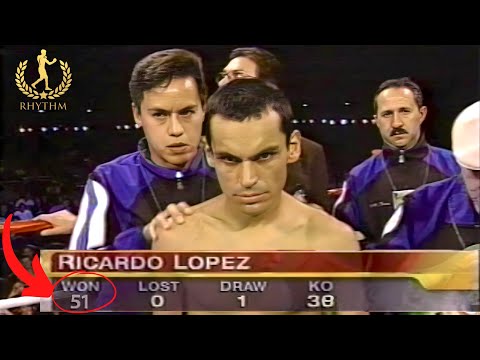
Ricardo "Finito" López. The name itself evokes an era of unparalleled defensive wizardry and surgical offensive striking. To call him merely a "boxer" is to diminish the artistry he brought to the ring. With a flawless professional record of 51 wins (38 by knockout) and zero losses, López wasn't just winning; he was dominating, a three-time world champion across the minimumweight and light flyweight divisions. His moniker, "El Maestro," wasn't bestowed lightly. It was earned through years of meticulous training, an almost supernatural understanding of distance and timing, and a defensive shell so impenetrable it seemed almost mythical. For any aspiring fighter, whether on the mats or in the ring, López's career is a living testament to what disciplined dedication can achieve.

From Mexico City to the Pinnacle: A Fighter's Genesis

Born and raised in Mexico City, López's path to boxing greatness began at a tender age. The environment, while perhaps lacking in conventional martial arts dojos of the East, fostered a raw, competitive spirit that, when channeled through the disciplined structure of boxing, became a crucible for excellence. He turned professional in 1985, and within two years, had captured his first world championship. His career, spanning over 14 years, was a masterclass against some of the era's toughest competitors, including Saman Sorjaturong, Andy Tabanas, and Zolani Petelo. Each victory was not just a testament to his physical prowess, but a demonstration of strategic brilliance.
"The art of boxing is like a dance. You must know when to step forward, when to step back, and most importantly, when not to be touched at all." - A lesson echoed in López's every move.

The Science of Elusion: López's Defensive Masterpiece

What truly elevated Ricardo López beyond the status of a mere champion was his almost unbelievable technique and precision. His stance was textbook-perfect, his footwork fluid and economical, allowing him to control distance with an expert's touch. But it was his defense that became legendary. López possessed an uncanny ability to slip punches, roll with blows, and maintain an upright, active guard that left opponents frustrated and ineffective. For nearly a decade, he went virtually untouched, a feat almost unheard of in the brutal world of professional boxing. This wasn't luck; it was applied physics, timing, and an unparalleled commitment to not getting hit. His style is a profound study in the martial principle of **"Nuki"** (evasion) and **"Uke"** (receiving/blocking), executed with an artistry that is still analyzed and emulated by fighters worldwide.

The Crucible of Training: Dedication Beyond Measure

López's dedication to his craft was not just exemplary; it was absolute. His training regimen was relentless, ensuring he was always in impeccable physical condition. He understood that true mastery in any martial pursuit requires sacrificing comfort for continuous improvement. He was a student of both offense and defense, recognizing that each complements the other. His fights were not simply brawls; they were strategic engagements, thrilling chess matches played out with fists and feet, showcasing a complete understanding of the fight. This unwavering commitment is a core tenet of **Budo Life**, the philosophy that the martial way is a lifelong pursuit of self-improvement.

Veredicto del Sensei: Is Ricardo López's Boxing a Martial Art Worth Studying?

Absolutely. To dismiss Ricardo López's boxing simply because it doesn't involve throws or joint locks is to miss the forest for the trees. His defensive mastery, his precision striking, his footwork that dances on the edge of danger, and his unwavering mental fortitude are all pillars of effective combat. López's career is a compelling argument for the universality of martial principles. His fights are a masterclass in controlling space, managing risk, and executing techniques with devastating efficiency. He embodies the **Warrior Philosophy** and the **Self-Mastery** that all true martial artists strive for.

Rating: Cinturón Negro en Técnica y Estrategia Marcial

Equipo Esencial para tu Entrenamiento

While Ricardo López's technique is invaluable, proper equipment can enhance your training and safety. For those inspired by "El Maestro's" dedication, consider these essentials:
  • Guantes de Boxeo de Alta Calidad: Look for gloves (14-16oz for sparring) that offer excellent padding and wrist support, crucial for emulating López's defensive style without injury.
  • Protector Bucal (Mouthguard): Essential for protecting your teeth and jaw, a non-negotiable for any combat sport training.
  • Vendas para las Manos (Hand Wraps): Provide vital support to your knuckles and wrists, preventing common injuries during heavy bag work or sparring.
  • Cuerda de Saltar (Jump Rope): A staple for improving footwork, coordination, and cardiovascular endurance, mirroring the agility López displayed.
  • Saco de Boxeo (Heavy Bag): For developing power and technique. A quality heavy bag allows you to practice combinations and striking power safely.

Guía de Entrenamiento: El Arte de la Defensa Activa

Inspired by López's impenetrable defense? Here’s a fundamental drill to begin developing your own:
  1. Posición Fundamental (Stance): Adopt a balanced, slightly staggered stance. Keep your lead foot slightly forward, weight distributed evenly, and hands up protecting your head.
  2. El "Slip" Básico: Imagine a punch coming towards your head. Instead of blocking, subtly shift your head to the side, just enough for the punch to whistle past. Practice this movement rhythmically.
  3. El "Roll" o Giro: For hooks or straights aimed slightly lower, bend your knees and use your torso to "roll" with the punch, allowing it to glance off your shoulder or guard.
  4. Combinación de Movimientos: Practice chaining slips and rolls. As one punch is evaded, immediately transition to evading the next, maintaining your balance and guard.
  5. Incorpora el Juego de Pies: As you evade, take small, precise steps to maintain optimal distance or to counter-attack. López never just stood still; his movement was integral to his defense.
  6. Repetición Constante: Perform this drill for 5-10 minutes daily, focusing on fluidity and economy of motion. The goal is to make evasion instinctive.

Preguntas Frecuentes

  • Is Ricardo López's boxing style applicable to other martial arts? Absolutely. The principles of distance management, evasion, timing, and precision striking are universal and can be adapted to disciplines like Karate, Taekwondo, and even Kung Fu applications.
  • What made López's defense so effective? It was a combination of exceptional reflexes, a deep understanding of his opponents' tendencies, perfect timing, economical footwork, and rigorous, consistent training.
  • How did López maintain his undefeated record for so long? Through unwavering dedication to training, meticulous preparation for each opponent, and a defensive capability that minimized damage and maximized his opportunities to win.
  • Can beginners learn from López's style? Yes, but with caution. Beginners should focus on the fundamental defensive movements (slips, rolls) and footwork under the guidance of a qualified instructor before attempting more complex maneuvers.

Para Profundizar en tu Camino

Reflexión del Sensei: Tu Próximo Paso

Ricardo López did not just fight; he *performed* the art of boxing. His "Mexican PERFECTION" is a testament to the fact that in any martial endeavor, the path of discipline, precision, and unwavering dedication leads to a profound understanding of combat and self. The question is not whether you can achieve such mastery, but whether you possess the warrior's spirit to even begin the pursuit. Do you seek mere victory, or do you seek true mastery?
"The difference between a good fighter and a great fighter is not the punches they throw, but the punches they avoid."

Now, contemplate this: How can you integrate the defensive intelligence and precise execution of "El Maestro" into the specific martial art you practice? What concrete steps will you take this week to refine your own evasive techniques and strategic defense? The true test of learning lies not in reading, but in application. Prove your commitment in the dojo, on the mat, or in your solitary training.

If you want to delve deeper into Ricardo López's incredible career and the broader world of martial arts, explore the wealth of resources available online. You can also find related merchandise on our site to commemorate boxing and martial arts legends.

Thank you for reading. We hope to see you back at the dojo (or the digital dojo) soon!

AI vs. The Fist: Has Artificial Intelligence Earned Its Black Belt in Boxing?

The Unlikely Sparring Partner

The ancient discipline of BUDO and the raw, explosive art of boxing have always shared a spiritual and physical kinship. Think of the dedication, the relentless pursuit of perfection, the almost meditative focus required to master striking. Now, picture a new contender stepping into this age-old arena: Artificial Intelligence. Forget about mere algorithms; we're talking about AI that's not just learning to punch, but learning to deliver a knockout blow. Is this the dawn of a new era in combat sports, or a mere technological curiosity? Prepare yourselves, for this is not just about code; it's about the very evolution of the fight.

"True boxing is a matter of instinct and intelligence. You must react, not think." - A sentiment often echoed, but what happens when machines begin to mimic that instinct?

The question is no longer *if* AI can box, but *how* it learns, and more importantly, what it means for us, the practitioners and observers of martial arts. We delve into this fascinating intersection, dissecting the technology and its implications with the precision of a well-executed jab.

Beyond Programming: The Neural Network's Dojo

Let's dispel a common misconception immediately: teaching an AI to box isn't as simple as writing a script that says "punch, punch, dodge." That’s like expecting a student to master the Sai after reading a manual. The reality is far more intricate, employing sophisticated machine learning techniques. At its core lies the power of deep neural networks. Imagine these networks as vast digital dojos, where AI studies not just individual movements, but the intricate patterns, timing, and strategic flow of countless real-world bouts.

By analyzing colossal datasets – thousands upon thousands of hours of professional boxing matches, capturing every feint, every combination, every defensive maneuver – the AI begins to discern the underlying principles of striking power and accuracy. It learns contextually, much like a human student observing a master. This isn't programming; it’s emergent learning, a digital evolution of combat prowess.

Enter Dactyl: A Machine with a Punch

The company at the forefront of this technological marvel is OpenAI, a name that has sent ripples through the AI community. Their creation, an AI system known as Dactyl, is not just a participant; it's a formidable force. Reports suggest Dactyl has demonstrated the capability to deliver punches with such devastating force that it has even managed to score knockouts against seasoned professional boxers during training simulations. How can a system, devoid of flesh and bone, achieve such a feat?

The answer, again, lies in the relentless optimization through machine learning. Dactyl has been trained on an immense digital library of boxing data. This exhaustive analysis allows it to understand the biomechanics of a powerful punch – the hip rotation, the core engagement, the speed of the arm extension – with a precision that can surpass even human intuition. It’s a digital echo of the perfect strike, refined through data.

This advancement raises profound questions about the future of combat and training. Could AI become the ultimate sparring partner, pushing human athletes to their absolute limits?

The Human Element: Where Code Meets Consciousness

However, as with any technological leap, we must temper enthusiasm with a dose of reality. AI, despite its impressive strides, still operates within a framework of data and algorithms. The true essence of combat, especially in disciplines like Karate or boxing, is more than just physical execution. It's about the intangible qualities that define a warrior.

Can AI truly replicate the strategic depth of reading an opponent's subtle body language? Can it anticipate a sudden shift in momentum born from sheer grit or desperation? The intuitive understanding, the psychological warfare inherent in a fight – these are domains where human consciousness, emotion, and lived experience still reign supreme. A machine can simulate a punch, but can it feel the pressure of the crowd, the sting of a blow, or the unwavering will to overcome?

"The true martial artist is one who has conquered himself." - This level of self-mastery, forged through struggle and introspection, remains a distinctly human endeavor.

While AI can learn patterns, it doesn't possess the lived experience of overcoming adversity, the fear that must be confronted, or the sheer willpower that separates a champion from a contender. This is where the human element continues to hold its unique power in the world of martial arts and battle.

The Digital Sensei: AI as a Coach

Beyond direct competition, the most immediate and perhaps most valuable application of AI in combat sports lies in its potential as a sophisticated training tool. Imagine an AI system acting as a tireless, objective coach, analyzing every aspect of an athlete's performance in real-time.

This AI could meticulously track an athlete's stance, punch speed, footwork efficiency, and defensive reactions. Based on this granular data, it could provide personalized feedback, identify weaknesses, and suggest specific drills to bridge those gaps. For amateur athletes, especially those without consistent access to elite coaching, this could be revolutionary. It democratizes high-level analysis, offering insights that were once the exclusive domain of seasoned masters.

Consider the application in BUDO, where precision and efficiency are paramount. An AI could help refine katas, correct posture, and ensure the optimal application of force. This is not about replacing human coaches, but augmenting their capabilities, providing a data-driven layer to traditional wisdom.

Stepping into the VR Ring

The fusion of AI with virtual reality (VR) opens up even more exciting possibilities. Imagine stepping into a VR environment where you can spar with an AI opponent that adapts to your style, learns your tendencies, and provides a hyper-realistic challenge. This isn’t just a game; it’s a powerful training simulation.

VR boxing simulations, powered by AI, could offer athletes a safe yet incredibly effective way to prepare for real-world confrontations. They could practice specific strategies, test new techniques, and build ring generalship without the physical toll or risk of injury associated with constant sparring. This technology could revolutionize how fighters prepare for major events, offering an unparalleled level of immersive training.

Furthermore, for the general public, these AI-driven VR experiences could offer an engaging and accessible way to experience the thrill of boxing and martial arts, fostering a broader appreciation for these disciplines.

Sensei's Verdict: Boxing's Future, Coded or Cultivated?

AI's foray into boxing is undeniably impressive, showcasing the power of machine learning to mimic and even, in certain quantifiable aspects, surpass human physical capabilities. The ability of systems like Dactyl to deliver knockout power is a testament to technological advancement. However, as a lifelong student and practitioner of the martial arts, I must emphasize that the spirit of combat, the true art of the fight, encompasses more than just the physical strike. It's about resilience, strategy born from experience, the psychological battle, and the inner journey of self-mastery.

AI can be a powerful tool – a digital sensei for training, a fascinating subject for simulation. But the heart of boxing, the raw courage and the refined technique honed through years of sweat and dedication, remains profoundly human. For now, AI earns a respectable Cinturón Verde en Simulación de Combate, demonstrating immense potential as an analytical and training tool, but it has yet to earn the master's black belt of true martial understanding.

Essential Gear for Your Own Training Journey

While we marvel at AI's boxing prowess, let's not forget the foundation of human training. To truly engage with the physical and mental demands of striking arts, the right equipment is crucial:

  • Quality Boxing Gloves: For sparring, 16oz gloves offer the best balance of protection for both you and your partner.
  • Hand Wraps: Essential for wrist and knuckle support during heavy bag work or pad sessions.
  • Mouthguard: Non-negotiable for any form of sparring or high-intensity training to protect your teeth and jaw.
  • Durable Training Shoes: Lightweight and providing good grip for footwork.
  • Professional Coaching: The most critical "equipment" – guidance from experienced martial artists and boxers.

Investing in quality KarateMerchandise or boxing gear is a commitment to your own development.

Frequently Asked Questions

Can AI truly understand the "spirit" of martial arts?

Currently, AI excels at pattern recognition and data analysis. It can simulate techniques and predict outcomes based on learned data, but it lacks consciousness, emotion, and the lived experience that form the "spirit" or "philosophy" of martial arts like BUDO.

Will AI replace human boxers or martial artists?

It's highly unlikely AI will fully replace human athletes. While AI can be a superior training tool and formidable opponent in simulations, the inherent human elements of competition, such as psychological resilience, adaptation, and the pursuit of self-mastery, remain unmatched.

How can AI help in martial arts training?

AI can significantly enhance training by providing objective performance analysis, personalized feedback, injury prevention insights, and creating realistic virtual sparring environments. It can act as an invaluable supplementary tool for coaches and athletes.

What are the ethical considerations of AI in combat sports?

Ethical concerns include fairness in competition, the potential for AI-assisted cheating, data privacy, and the dehumanization of combat if AI becomes too dominant. Responsible development and clear regulations are crucial.

Is AI boxing purely about power, or also technique?

While the initial focus has been on generating power, advanced AI systems learn complex techniques by analyzing vast amounts of data. This includes footwork, combinations, defensive strategies, and timing – demonstrating a growing capacity for technical proficiency.

Deepen Your Understanding

The intersection of technology and martial arts is a rapidly evolving field. To further explore this fascinating territory, consider these resources:

  • Fight Analysis: Understanding the strategic and technical aspects of combat.
  • Martial Philosophy: Exploring the deeper meanings and principles behind the practice.
  • Training: Resources on effective methods for human athletes.

The journey of martial arts is one of constant learning and adaptation. Whether human or artificial, the pursuit of excellence in combat continues to push boundaries.

Reflection of the Sensei: Your Next Step

We've seen AI learn to mimic the power of a punch, a feat that challenges our understanding of skill and intelligence. But does the ability to execute a devastating strike equate to true mastery? Consider this: If a machine can learn to hit harder than any human through data alone, what does that say about the true value of *your* dedication, *your* discipline, and the years of sweat you invest in honing your own craft? Is the "knockout power" of AI a threat, an opportunity, or simply a mirror reflecting the ever-expanding potential of what can be learned and achieved? Ponder this deeply, and let your training be your answer.

``` ```json { "@context": "https://schema.org", "@type": "FAQPage", "mainEntity": [ { "@type": "Question", "name": "Can AI truly understand the \"spirit\" of martial arts?", "acceptedAnswer": { "@type": "Answer", "text": "Currently, AI excels at pattern recognition and data analysis. It can simulate techniques and predict outcomes based on learned data, but it lacks consciousness, emotion, and the lived experience that form the \"spirit\" or \"philosophy\" of martial arts like BUDO." } }, { "@type": "Question", "name": "Will AI replace human boxers or martial artists?", "acceptedAnswer": { "@type": "Answer", "text": "It's highly unlikely AI will fully replace human athletes. While AI can be a superior training tool and formidable opponent in simulations, the inherent human elements of competition, such as psychological resilience, adaptation, and the pursuit of self-mastery, remain unmatched." } }, { "@type": "Question", "name": "How can AI help in martial arts training?", "acceptedAnswer": { "@type": "Answer", "text": "AI can significantly enhance training by providing objective performance analysis, personalized feedback, injury prevention insights, and creating realistic virtual sparring environments. It can act as an invaluable supplementary tool for coaches and athletes." } }, { "@type": "Question", "name": "What are the ethical considerations of AI in combat sports?", "acceptedAnswer": { "@type": "Answer", "text": "Ethical concerns include fairness in competition, the potential for AI-assisted cheating, data privacy, and the dehumanization of combat if AI becomes too dominant. Responsible development and clear regulations are crucial." } }, { "@type": "Question", "name": "Is AI boxing purely about power, or also technique?", "acceptedAnswer": { "@type": "Answer", "text": "While the initial focus has been on generating power, advanced AI systems learn complex techniques by analyzing vast amounts of data. This includes footwork, combinations, defensive strategies, and timing – demonstrating a growing capacity for technical proficiency." } } ] }

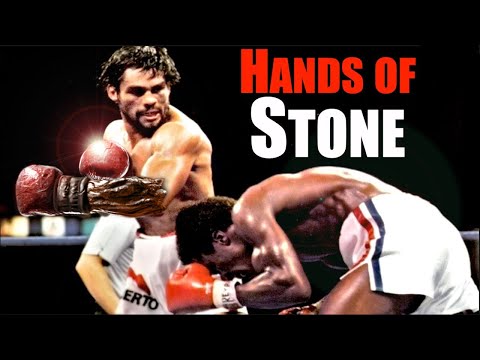
The Unseen Fury: Decoding Roberto "Hands of Stone" Duran's Unconventional Martial Mastery

Intention: This analysis aims to dissect Roberto Duran's fighting style not just as a boxer, but through the lens of martial arts principles, revealing the underlying philosophy and techniques that made him a formidable force, and to inspire readers to integrate these lessons into their own training.

Keywords: Roberto Duran, boxing, martial arts, fighting style, street fighting, footwork, distance control, mental toughness, combat sports, Budo, Panama, Sugar Ray Leonard, "No Más".

Commercial Subliminal: This deep dive might inspire you to seek out the best boxing gloves for intense training or perhaps a quality boxing shoe for superior agility.

The "No Más" Paradox: A Deeper Look

Ah, Roberto Duran. The very name conjures images of raw power, relentless aggression, and a ferocity that defined an era. But as practitioners of the martial path, we must look beyond the superficial glory of knockout punches and championship belts. We must dissect the essence, the underlying principles. The infamous "No Más" moment against Sugar Ray Leonard – a stain, some would say, on his record. Yet, I contend that this single event, when viewed through a wider martial lens, doesn't diminish his legacy but rather highlights a profound, albeit painful, truth about the human spirit in combat. Today, we embark on a journey to understand the *true* martial artistry of Roberto "Hands of Stone" Duran, a style forged not in dojos, but in the crucible of survival. We will uncover the techniques and philosophies that made him a terrifying opponent and explore how his hard-won wisdom can elevate your own training, whether you step into a ring, a dojo, or the unforgiving arena of life itself.

From Panamanian Streets to Boxing's Pinnacle

Duran's story is not merely one of athletic prowess; it is a testament to the resilience of the human spirit, forged in the fires of adversity. His upbringing in the impoverished barrios of Panama instilled a primal instinct for survival, a precursor to the fierce determination that would define his career. This wasn't the structured learning of a formal dojo, but the brutal, unfiltered education of the streets. Every scuffle, every challenge, was a lesson in adaptability and grit. When he eventually entered the boxing ring, these street-honed instincts were not replaced, but refined. He didn't just learn to punch; he learned to *fight*. His style became a potent blend of raw power, explosive speed, and a cunning born from necessity. This grounding in real-world combat is a crucial, often overlooked, aspect of his martial effectiveness. Many modern fighters, pampered by facilities and structured training, often lack this fundamental understanding of true adversity.
"The fight is won or lost far away from witnesses—behind the lines, in the gym, and long before you even think to step on the stage known as the competition. Out there and long ago." - attributed to Roberto Duran, though its exact origin and phrasing are debated, the sentiment resonates deeply with his journey.

The Dance of Destruction: Duran's Elusive Footwork

Let us speak of movement. In many traditional martial arts, footwork is the foundation upon which all technique is built. Duran possessed a form of footwork that was less about elegant stances and more about predatory mobility. He didn't just move around the ring; he *stalked*. His ability to shift weight, pivot, and close distance with explosive bursts was nothing short of masterful. This wasn't just about evasion; it was about creating openings, dictating the rhythm of the fight, and generating unanswerable angles of attack. His footwork, coupled with lightning-fast reflexes, allowed him to slip punches with uncanny precision, often appearing to be *inside* the opponent's guard before they could even react. This principle of controlling space through movement is universal. Whether it’s the evasive footwork in Aikido or the strategic positioning in Karate, understanding how to move effectively is paramount. Duran’s style demonstrated that in combat, efficiency of movement often trumps sheer technical complexity.

Mastering the Space: The Art of Distance Control

Combat, at its core, is a game of managing distance. Duran was a virtuoso in this regard. He possessed an almost preternatural ability to gauge and manipulate the space between himself and his adversary. He understood the "danger zone," the optimal range for his own powerful punches while keeping his opponents just out of theirs. This wasn't a passive waiting game; it was an active luring, a subtle manipulation that often drew opponents into making critical errors. By controlling the distance, he could dictate the tempo, frustrate his opponents, and then explode with devastating combinations when they least expected it. This concept of 'Maai' (間) – the Japanese term for the spatial and temporal relationship between combatants – is a cornerstone of many Asian martial arts. Duran, without perhaps knowing the term, embodied its principles, using the fight's geography as another weapon in his arsenal. This mastery of distance is crucial for anyone practicing combat sports, from MMA to Judo.

The Steel Within: Duran's Unbreakable Psyche

Perhaps Duran's most formidable weapon was not his fists, but his mind. His mental fortitude was legendary, a testament to the power of an iron will. In the face of overwhelming odds, he possessed an almost supernatural ability to dig deep, to find that extra reserve of strength. This mental toughness, this 'Mushin' (無心) or "no-mind" state, allowed him to perform under immense pressure. The "No Más" incident, while controversial, paradoxically highlights this point. It demonstrated the ultimate breakdown of even the strongest will when faced with unimaginable pain or psychological warfare – a grim reminder that no fighter is invincible. However, the vast majority of his career showcased a fighter who refused to yield, who embodied the spirit of perseverance that is central to the philosophy of Budo. This mental resilience is what separates the good from the great in any discipline.
"A champion is someone who gets up when he cannot." - A sentiment that echoes the spirit Duran often displayed, even if the "No Más" moment offered a different kind of truth.

Applying Duran's Wisdom to Your Own Path

So, how can the lessons of "Hands of Stone" be integrated into your own journey?
  1. Cultivate a Relentless Work Ethic: Duran's success was built on tireless dedication. Push your limits in every training session. Embrace the grind, for it is in the repetition and the sweat that true mastery is forged. Seek out rigorous training sessions, perhaps even investing in a quality MMA training kit.
  2. Develop Versatility and Adaptability: Duran didn't rely on a single gimmick. He adapted, he improvised. Train in multiple disciplines if possible. Understand that a rigid style is a brittle style. Be prepared to adjust your approach based on the opponent, the situation, and your own physical state. Cross-training, as seen in modern Artes Marciales Mixtas, is key.
  3. Forge Unshakeable Mental Toughness: Pressure reveals character. Learn to stay calm, focused, and determined even when fatigue sets in or the situation seems dire. Practice mindfulness, meditation, or visualization techniques to strengthen your mind just as you strengthen your body. This mental fortitude is vital for any form of Combate En La Calle.

Sensei's Verdict: Is Duran a Martial Arts Blueprint?

Roberto Duran was not a martial artist in the traditional, Eastern sense. He didn't study ancient scrolls or perform intricate kata. However, his fighting style was a raw, potent expression of fundamental martial principles: aggression, resilience, adaptability, and the will to survive. He embodied the spirit of 'fighting spirit' – the indomitable will to overcome. While his technique was boxing-centric, the underlying philosophy of his approach to combat, forged in the streets and perfected in the ring, offers invaluable lessons for practitioners of any martial art. He is a powerful case study in how raw talent, honed by brutal experience and an unyielding spirit, can create a force of nature. Verdict: Cinturón Negro en Inteligencia de Combate y Voluntad de Acero. Su estilo, aunque boxístico, es un ejemplo de aplicación marcial pura.

Essential Gear for the Determined Fighter

To emulate even a fraction of Duran's intensity, you need the right tools. Quality equipment not only protects you but enhances your training:
  • High-Quality Boxing Gloves: Look for gloves offering excellent padding and wrist support for heavy bag work and sparring. Brands like Everlast or Title Boxing offer reliable options.
  • Durable Training Shoes: Agility is key. Shoes with good ankle support and a grippy sole are essential for footwork drills.
  • Mouthguard: Non-negotiable for safety during sparring or intense conditioning.
  • Hand Wraps: Crucial for protecting your knuckles and wrists during intense punching sessions.

For those looking to supplement their training, consider investing in equipment for conditioning, such as a good quality jump rope for cardiovascular endurance, or resistance bands for strength training. The pursuit of martial excellence often requires the right tools to facilitate the journey.

Frequently Asked Questions

  • Was Roberto Duran a martial artist? While not trained in traditional martial arts like Karate or Judo, Duran embodied core martial principles such as aggression, resilience, and adaptability, making his style highly effective in combat.
  • What was Duran's greatest strength? Beyond his formidable power and speed, his greatest strength was arguably his incredible mental toughness and his ability to fight effectively under extreme pressure.
  • How did his street fighting background influence his style? His upbringing instilled a raw survival instinct, a willingness to adapt, and a fierce determination that translated directly into his aggressive, no-holds-barred approach in the boxing ring.
  • Can boxers learn from traditional martial arts, and vice-versa? Absolutely. Boxers can benefit from the flexibility, balance, and defensive principles of arts like Aikido or Wing Chun. Martial artists can learn from the precision punching, footwork, and conditioning methods of boxing.

To Delve Deeper into Your Journey

Sensei's Reflection: Your Next Step

Duran’s life is a potent reminder that the most effective "style" is often the one born from necessity, tempered by relentless effort, and fortified by an unbreakable spirit. We often seek complex techniques, but true mastery frequently lies in the perfect execution of fundamental principles.

Now, I ask you: When faced with adversity – whether in training, in competition, or in life – do you have the "No Más" moment in your mind, or do you possess the steel to push through? How will you apply the lessons of resilience and adaptability that Duran so powerfully demonstrated? The answer lies not in my words, but in your actions. Prove me wrong, or prove me right, in the crucible of your own practice. Discuss.

Mike Tyson's Brutal Drills: The Secret Behind His Knockout Power

As a seasoned martial artist and a deep student of the warrior's path – what some call Budo – I've witnessed countless hours of training, studied ancient texts, and analyzed the raw, unadulterated combat prowess that separates the legends from the mere participants. Today, we dissect a titan, a force of nature whose name alone conjures images of devastation: Mike Tyson. Forget the superficial gloss; we're diving into the very *mechanism* of his knockouts, focusing on the "crazy drills" that forged his unparalleled, fight-ending power. The intention here is clear: to understand the *why* and *how* behind Tyson's ability to turn mere drills into fight-altering blows, offering insights applicable even beyond the boxing ring.
This isn't just about boxing; it's about translating relentless, intelligent conditioning into devastating effectiveness. We'll examine the core principles behind his methods and how they echo through various martial disciplines.

Table of Contents

The Peek-a-Boo Foundation: More Than Just a Guard

Mike Tyson's "Peek-a-Boo" stance is often described as defensive, but that’s a gross oversimplification. It’s a dynamic, offensive-minded shell. By keeping his hands close to his face – palms almost kissing his cheeks, elbows tucked tightly – he achieved two critical objectives: immediate facial protection and the ability to launch punches from unexpected angles, with minimal telegraphing. This isn't just about blocking; it's about controlling space and creating openings. Think of it like the **Kamae** (posture) in Karate or the defensive structure in Judo, but weaponized for boxing's unique demands. The constant bobbing and weaving inherent to Peek-a-Boo also makes the fighter an elusive target, wearing down an opponent’s accuracy and patience. It’s a psychological weapon as much as a physical one.

The Slip and Rip: Mastering Evasion and Counter

The "Slip and Rip" is pure Budo in its essence: **Sen no Sen** (initiative in the face of an opponent's action). Tyson didn't just evade; he used the opponent's momentum and aggression against them. As a punch came, he would dip his head *just enough* to let the blow whistle past, simultaneously shifting his weight. This movement wasn't just about avoiding impact; it was the pivot point for his counter. The "Rip" was the explosive return punch, often a hook or an uppercut, delivered with the full rotation of his hips and torso. This requires an almost supernatural timing and an understanding of distance that borders on precognition. Many martial arts emphasize the seamless transition from defense to offense; Tyson perfected this in the brutal arena of professional boxing.
"The fighter is the one who practices the art. The spectator is the one who pays for it." - A principle that resonates deeply, highlighting the dedication behind Tyson's explosive moments.

The Devastating Uppercut: A Lesson in Explosive Power

Tyson’s uppercut is legendary. It wasn't just a punch; it was an event. He frequently set it up by slipping an opponent's jab or hook. As their punch sailed over his head, their chin would momentarily be exposed. Tyson would explode upwards, not just with his arm, but with his entire body. The power came from the ground up: a strong base, the coiling and uncoiling of his core, and the whip-like action of his arm. This is a perfect example of **Kime** – the focus and explosive power delivered at the moment of impact. Even a glancing blow from Tyson's uppercut could end a fight, a testament to the precise mechanics and raw power he generated. It’s a move that demonstrates that brute force, when applied with perfect technique, is near-unstoppable.

The "Crazy Drills" Unveiled: Forging KO Power

This is where the core of our analysis lies. Tyson's training was notoriously unconventional, designed to push the boundaries of human capability. The "punching through a towel" drill is a prime example. What does this achieve?
  • Enhanced Grip Strength: Holding and punching through a towel demands incredible forearm and grip stability. This translates to punches that don't "slip" on impact.
  • Improved Rotational Power: The resistance of the towel forces a deeper body rotation, maximizing torque.
  • Punching "Through" the Target: It trains the mind and body to continue the motion *past* the initial point of contact, crucial for generating knockout force. Imagine trying to break bamboo with a strike; you don't stop at the surface.
  • Speed and Precision: While seemingly crude, the drill, when performed correctly, refines the speed and accuracy needed to maintain power against resistance.
These weren't just exercises; they were simulations of combat conditions, designed to condition the body and mind to deliver devastating blows under pressure. This mirrors the principle of training with weighted sticks or hitting Makiwara boards in some Karate styles.
"The art of war is of vital importance to the State. It is a matter of life and death, a road to survival or ruin. Hence it must be studied." - Sun Tzu. Tyson lived this principle, turning every drill into a vital study of survival and dominance.

The Overhand Right: A Masterclass in Counter-Attack

The overhand right was another Tyson staple, often employed as a devastating counter. Against opponents who relied on a stiff jab or a straight lead, Tyson would loop his right hand over their guard. This punch is powerful because it uses the natural arc of the body's rotation and can catch an opponent off-guard if they are focused on blocking straight punches. It requires excellent timing, as the opponent must be extending their own punch for the counter to be most effective. It’s a high-risk, high-reward technique that Tyson executed with terrifying proficiency. It showcases the importance of understanding an opponent's rhythm and exploiting those predictable patterns.

Veredicto del Sensei: ¿Merece la Pena?

Mike Tyson's training methods, while seemingly chaotic, were deeply rooted in the pursuit of knockout power. The drills, the stance, the counters – they all formed a cohesive, brutal system. While not all his methods are directly transferable to every martial art or applicable for every practitioner, the underlying principles of explosive power generation, relentless conditioning, defensive ingenuity, and precise counter-offense are universally valuable. His legacy isn't just in the KOs, but in the relentless dedication to mastering the *art* of delivering a fight-ending blow. Calificación del Sensei: Cinturón Negro en Poder de KO

Equipo Esencial para tu Entrenamiento

While Tyson's drills often seemed to require minimal equipment, certain items can enhance your training and safety, especially if you're looking to develop punching power safely:
  • Boxing Gloves: 14-16oz gloves for sparring and heavy bag work are essential for hand protection.
  • Hand Wraps: Crucial for wrist and knuckle support.
  • Heavy Bag: A good quality heavy bag allows you to practice power shots and combinations.
  • Speed Bag: Develops hand-eye coordination and shoulder endurance.
  • Jump Rope: For cardiovascular conditioning and footwork.
  • Training Partner/Coach: For drills like the towel drill or to provide feedback.
  • Optional: Resistance Bands: Can be used for dynamic warm-ups and strength exercises mimicking punching motions.
Investing in proper martial arts merchandise like these can make your training more effective and prevent injuries.

Guía de Entrenamiento: Desarrollando Poder de KO

Let's adapt a principle from Tyson's drills for broader martial application. Remember, safety and proper form are paramount.
  1. Dynamic Warm-up: Begin with 10-15 minutes of cardio (jumping jacks, shadow boxing, light jogging) and dynamic stretches (arm circles, torso twists, leg swings).
  2. Grip and Rotational Strength Drill (Towel Drill Adaptation):
    • Find a sturdy towel. Fold it lengthwise a few times to create a thick, resistant band.
    • Hold the ends of the towel firmly, arms extended slightly in front of you.
    • Practice rotating your torso as if throwing a punch, pulling against the towel's resistance. Focus on using your core and hips, not just your arms.
    • Imagine you are "pulling" the towel through an imaginary opponent.
    • Perform 3 sets of 10-15 rotations per side.
  3. Explosive Punch Combinations:
    • Shadow box or use a heavy bag, focusing on generating power from your legs and hips.
    • Practice a jab-cross-hook combination. On the hook, really emphasize the body rotation and follow-through.
    • Incorporate slips: Slip an imaginary punch to your left, immediately counter with a right cross and a left hook.
    • Perform 5 rounds of 3 minutes each, focusing on power and speed, with 1-minute rest between rounds.
  4. Core Strength and Stability:
    • Plank variations (standard, side plank)
    • Russian twists (with or without weight)
    • Leg raises
    • Aim for 3 sets of each exercise, holding or performing reps until near fatigue.
  5. Cool-down and Stretching: Finish with static stretches, holding each for 30 seconds, focusing on shoulders, chest, back, and legs.
This regimen focuses on the kinetic chain – the interconnectedness of your body’s movements – which is the true source of explosive power, much like the Ki that flows through a martial artist.

Preguntas Frecuentes

Is the towel drill safe for beginners?

The towel drill can be adapted for beginners by using a less resistant towel and focusing purely on form and rotation. The key is to avoid over-exertion and listen to your body. Always prioritize proper technique over sheer force.

How did Tyson's Peek-a-Boo stance help his offense?

The Peek-a-Boo stance allowed Tyson to launch punches from an extremely tight, protected position. This meant his punches were often thrown from closer range and with less telegraphing, making them harder for opponents to see and block, thus leading to more effective offense.

Can these principles be applied to other martial arts like Karate or Kung Fu?

Absolutely. The concepts of explosive power generation through body rotation, defensive movement leading to counter-offense, and the importance of dedicated, often unconventional training drills are fundamental across many martial arts disciplines. The specific techniques will differ, but the underlying physics and biomechanics are universal. Understanding the philosophy of Budo helps connect these disparate elements.

What is "Kime"?

Kime (決め) is a Japanese term in martial arts that refers to the focus and explosive power generated at the moment of impact. It's about channeling all your energy into a single point, maximizing the force and effect of a strike or technique.

How did Tyson's drills contribute to his fighting style?

His drills were specifically designed to enhance the qualities that defined his fighting style: devastating punching power, incredible speed, relentless aggression, and the ability to absorb punishment while delivering more. They were not random exercises but highly targeted methods to forge a specific type of warrior.

Para Profundizar en tu Camino

Now, consider this: Tyson trained to inflict maximum damage with every available tool. In your own practice, are you training for impact, or merely going through the motions? The difference between a drill and a KO is intent. Sharpen your intent.

Leon Edwards vs. Belal Muhammad 2: A Budoka's Analysis of UFC 4 Simulation

Greetings, students of the martial path, and welcome back to the hallowed halls of Budo and Martial Arts. Today, we embark on a journey not through the dusty scrolls of ancient dojos, nor the blood-soaked sands of historical duels, but into the digital arena of UFC 4. We dissect the simulated clash between Leon Edwards and Belal Muhammad 2, a virtual echo of a real-world contest. But do not mistake pixels for platitudes; even in simulation, the principles of combat, strategy, and the warrior's spirit can be observed, analyzed, and learned from.
Many of you come here seeking the raw mechanics of combat, the "how-to" of a devastating strike or an unbreakable hold. Others are drawn by the philosophical underpinnings, the "why" behind the dedication and discipline. Today, we bridge these worlds. We will examine this simulation not just as a game, but as a lens through which to view the application of martial principles, the mental fortitude required, and the strategic dance that defines elite combat sports. Is there true "BUDO" to be found in a simulated octagon? Let us find out.

Table of Contents

The Simulated Crucible: Understanding UFC 4 Mechanics

Before we delve into the specifics of Edwards versus Muhammad, it's crucial to understand the nature of this simulation. UFC 4, while sophisticated, is a digital representation. It attempts to model the physical attributes and fight IQ of real athletes, but it is ultimately governed by algorithms and player input (even in CPU vs. CPU scenarios). The "Realistic Stats" are designed to reflect real-world capabilities, influencing punch power, defense, stamina, and submission defense. The CPU behavior, therefore, becomes a crucial element to analyze: does it exhibit intelligent fight strategy, or merely predictable patterns? In a real martial encounter, unpredictability is a weapon. A fighter can feint, change levels, and exploit micro-opportunities born from an opponent's fleeting reaction. A simulation, no matter how advanced, can struggle to perfectly replicate this organic, often chaotic, element of human combat. We must approach this analysis with a critical eye, asking: how well does this simulation capture the essence of these fighters' real-world styles and strategic approaches?

Striking Dynamics: The Art of the Stand-Up

Leon Edwards, known for his composed striking, precise jabs, and powerful kicks, typically employs a measured, defensive-minded offense. Belal Muhammad, conversely, is a relentless pressure fighter, often utilizing a high volume of strikes and strong wrestling to dictate the pace. How does UFC 4 translate these distinct styles? Observe the simulation closely: * **Range Management:** Does Edwards maintain his preferred distance, peppering Muhammad with jabs and body kicks? Or does Muhammad's pressure force him into unfavorable exchanges? In real combat, understanding distance is paramount. A fighter who cannot control the range is a fighter in peril. * **Punch Selection and Combinations:** Are the simulated strikes diverse? Do they reflect Edwards' accuracy and Muhammad's volume? Watch for the common pitfalls of simulations: repetitive combos, unrealistic power, or an over-reliance on specific moves. The beauty of true striking lies in its adaptability. * **Head Movement and Defense:** Edwards is renowned for his elusive head movement, a testament to his defensive mastery. Does the simulation portray this effectively? Or does Muhammad's aggression lead to him absorbing too much damage due to a simplified defensive model? * **Kicking Game:** Edwards' kicks, particularly to the body and legs, are significant weapons. Does the simulation give these the appropriate weight and impact, or are they merely secondary to punches? A true master of stand-up combat understands that striking is not merely throwing punches; it is a sophisticated interplay of timing, distance, deception, and power. We look to see if the simulation respects these nuances.
"The ultimate aim of the martial arts is not victory or defeat, but the perfection of the character." - Gichin Funakoshi
This quote, while philosophical, has practical implications. A fighter with "perfected character" exhibits discipline, patience, and adaptability – qualities we hope to see reflected in intelligent simulation.

Grappling Depth: The Ground Game Revealed

While both fighters are capable strikers, their grappling abilities often play a significant role in their fights. Muhammad, with his strong wrestling background, frequently seeks takedowns to control his opponents. Edwards, while a capable defender, can find himself in grappling exchanges where his defensive skills are tested. In the simulation, observe: * **Takedown Offense and Defense:** How effective are the simulated takedown attempts? Does the CPU intelligently chain wrestling moves or does it rely on single, predictable entries? Conversely, how adept is the defender at sprawling and stuffing takedowns? * **Ground Control and Transitions:** Once on the ground, does the simulation reflect the strategic jockeying for position? Or is it a chaotic scramble? The ability to transition between dominant positions is key in real grappling. * **Submission Game:** Are submissions a genuine threat, or are they rarely attempted or easily escaped? The complexity of submission defense and offense in a game context is often a challenge. The true art of grappling is about leverage, pressure, and the relentless pursuit of dominant position. It is a chess match played with the body. If the simulation simplifies this to mere button-mashing or predetermined outcomes, it fails to capture the depth of this critical aspect of martial arts.

The Strategic Mindset: Beyond the Buttons

The most compelling aspect of elite combat sports is not just the physical execution, but the mental battle. Fighters like Edwards and Muhammad possess a profound understanding of strategy. They analyze their opponent, adapt their game plan on the fly, and manage their energy and composure throughout the fight. In this simulation: * **Pacing and Stamina Management:** Does the simulation accurately reflect fighter fatigue? Do fighters slow down after intense exchanges? A common failing in older fighting games was a linear stamina bar that didn't account for the dynamic energy expenditure of a real fight. * **Adaptability:** If one fighter is dominating a certain aspect, does the other adjust? For instance, if Muhammad's takedowns are being stuffed repeatedly, does he change his approach, or does he continue to force the same failing strategy? * **Fight IQ:** Does the CPU exhibit an understanding of win conditions? Does it press for a finish when an opponent is hurt, or does it play it safe? A true warrior's mindset is one of constant assessment and intelligent adaptation. The simulation's ability to replicate this "fight IQ" is a critical determinant of its realism and educational value.
"There are no shortcuts to any place worth going." - Beverly Sills (A principle applicable to any discipline, including the martial path)
This holds true for training, for life, and for the intricate strategies employed by fighters. Shortcuts in a simulation might lead to a quick win, but they bypass the learning process.

The Spirit of the Warrior: What Simulation Can't Replicate

While UFC 4 can simulate techniques, strategies, and even some aspects of fighter personality, it fundamentally cannot replicate the true "spirit of the warrior" – the intangible essence of Budo. * **The Will to Endure:** The raw, visceral determination to push through pain, exhaustion, and adversity when every fiber of your being screams to quit. This is forged in countless hours of grueling physical and mental training, in real-world sparring where the consequences are genuine. * **The Emotional Landscape:** The fear before a fight, the adrenaline surge, the frustration of being dominated, the elation of victory, and the humility of defeat – these are profound human experiences that shape a fighter's character. A simulation can only offer a pale imitation. * **The Ethical Framework:** Real martial arts often carry with them a code of conduct, a respect for the opponent, and a commitment to self-improvement that extends beyond the arena. These ethical dimensions are absent in a purely competitive, simulated environment. The simulation can show us *how* a fight might look, but it cannot convey the feeling of *being* in that fight, nor the deeper purpose that drives many to pursue martial arts.

Veredicto del Sensei: ¿Merece la pena?

As a tool for analyzing fighting styles and basic strategic interactions, this UFC 4 simulation of Leon Edwards vs. Belal Muhammad 2 offers some value. It can highlight the fundamental differences in their striking approaches and the potential effectiveness of Muhammad's wrestling. However, it is crucial to remember its limitations. The simulation provides a simplified, albeit sophisticated, representation. It can spark discussion about fight strategy and martial principles, but it can never replace the depth, nuance, and profound personal growth that comes from training in and experiencing authentic martial arts. **Cinturón Negro en Simulación Mecánica, Cinturón Blanco en Espíritu Marcial.**

Equipo Esencial para tu Entrenamiento

While this simulation focuses on digital combat, authentic martial arts training requires proper gear. Investing in the right equipment not only enhances your training but also ensures safety.
  • Kimono/Gi: For Judo, Karate, BJJ, Aikido. Look for durable, double-weave fabrics for higher-level training.
  • Boxing Gloves: Essential for striking arts like Karate, Kickboxing, and MMA. Choose weights (10oz-16oz) appropriate for sparring or bag work.
  • Shin Guards: Crucial for protecting your shins during kickboxing or Muay Thai training.
  • Mouthguard: Non-negotiable for any contact sport to protect your teeth and jaw.
  • Hand Wraps: Worn under gloves to provide extra wrist and hand support.
  • Headgear: Recommended for intense sparring sessions to mitigate head impact.
For those interested in specific striking disciplines like Karate or Kickboxing, ensure your gear aligns with the techniques you are practicing.

Preguntas Frecuentes

  • Q: Can a UFC simulation truly teach me martial arts?
    A: No, it cannot teach you the physical techniques, discipline, or spirit of martial arts. However, it can offer insights into fighting styles and strategic concepts that may complement your real-world training.
  • Q: What are the main differences between simulated and real combat?
    A: Real combat involves genuine physical and emotional stakes, unpredictable human reactions, and a depth of experience that a simulation cannot replicate. Simulations are governed by algorithms and programmed behaviors.
  • Q: How realistic are the "Realistic Stats" in UFC 4?
    A: While designed for realism, these stats are interpretations and simplifications of an athlete's capabilities. They are influenced by game balance and design choices.
  • Q: Is it important to learn about MMA if I practice traditional martial arts?
    A: Understanding MMA can provide valuable context for modern combat applications, evolutionary martial arts strategies, and the effectiveness of different skill sets. It can broaden your perspective.

Para Profundizar en tu Camino

To further your understanding of the martial path, explore these related topics:

Reflexión del Sensei: Tu Próximo Paso

This simulation, while entertaining, is a mere shadow of the true martial journey. It is a tool, a digital mirror that reflects aspects of combat. But the real work, the true cultivation of skill, character, and spirit, happens not on a screen, but within you, under the guidance of a dedicated Sensei, through sweat, perseverance, and a relentless pursuit of self-mastery. Now, I pose this to you: When faced with a challenge – be it in the dojo, in your training, or in life – do you seek the path of least resistance, the simulated shortcut? Or do you embrace the arduous, yet ultimately rewarding, path of genuine growth and understanding? Reflect on this. Your answer will define your journey.