Showing posts sorted by date for query Mouthguard. Sort by relevance Show all posts

Okinawan Karate: More Than Just Strikes - A Deep Dive into the Warrior's Path

In the vast universe of martial arts, the profound legacy of Japan stretches its influence far beyond the iconic shores of Okinawan Karate. While Karate stands as a titan, it is but one star in a constellation of disciplines that have ignited passion in enthusiasts across the globe. Alongside the thunderous power of Okinawan Karate, we find the yielding strength of Judo, the circular grace of Aikido, and the disciplined precision of Kendo. What binds these diverse arts? A common thread, as potent as any physical technique: their unwavering emphasis on spiritual development. Practitioners are not merely acquiring the tools of combat; they are embarking on a quest to sculpt better individuals, refined souls. Join us, students, on a journey through the profound philosophies and rigorous practices that forge the very essence of the martial arts world.

The Legacy Beyond Okinawa

The influence of Japanese martial arts is undeniable, a testament to centuries of refinement and philosophical depth. Many practitioners begin their journey with a single art, perhaps drawn by the dynamic movements of Karate or the strategic throws of Judo. However, a true appreciation for Budo, the "Way of Martial Arts," reveals a rich tapestry of interconnected principles.

The Way of the Warrior: A Life Philosophy

Is martial arts merely about fighting? A dangerous misconception, and one that undermines the very soul of Budo. True martial arts encompasses far more than mere physical combat; it is a comprehensive way of life. The real essence lies not in the blow landed, but in the continuous pursuit of self-improvement, the cultivation of unwavering character, and the profound journey of spiritual growth. The ancient samurai warriors, masters of their craft and their minds, understood this interconnectedness intimately. Their training was a holistic endeavor, seeking the perfect harmony of mind, body, and spirit. This timeless philosophy continues to resonate, shaping the teachings and the very spirit of various martial arts disciplines today.

"The warrior is one who digests his experiences and is not discouraged by them." - Miyamoto Musashi, The Book of Five Rings

Okinawan Karate: A Legacy Unparalleled

Among the most iconic martial arts to emerge from Japan, Okinawan Karate stands with a legacy that traces its proud roots back to the Ryukyu Kingdom. Renowned for its emphasis on explosive, powerful strikes delivered with fluid, almost dance-like movements, this discipline embodies the indomitable spirit and resilience of the Okinawan people. Practitioners of Karate do not merely acquire formidable self-defense skills; they cultivate profound virtues: unwavering discipline, deep-seated respect for their peers and instructors, and the tenacious spirit of perseverance in the face of adversity.

The sheer effectiveness of Karate's striking techniques, from the devastating Uraken (reverse punch) to the precise Gedan Barai (downward block), is legendary. Yet, beneath the surface of these physical applications lies a deep philosophical wellspring. The rigorous repetition of kata—prearranged forms that simulate combat—is not just muscle memory training; it is a meditative practice, a way to ingrain principles of balance, timing, and intention.

The Spiritual Essence of Martial Arts

In the disciplined world of martial arts, physical techniques are inextricably intertwined with deep, foundational spiritual principles. Ancient traditions, notably the profound philosophies of Zen Buddhism and the naturalistic reverence of Shintoism, have deeply influenced the philosophical underpinnings of these arts. Practices such as mindful meditation (Zazen), controlled breathing exercises (Kokyu ho), and pervasive mindfulness are not mere add-ons; they are integral components of many martial arts training regimens. These practices are the crucible in which practitioners forge mental fortitude, sharpen unwavering focus, and cultivate profound self-awareness.

Consider the concept of Mushin, the "no-mind" state often sought in Karate and other arts. It is not about being empty-headed, but about achieving a state of spontaneous, uninhibited action, free from conscious thought or fear. This is the spiritual essence—the ability to react instinctively and effectively under pressure. This state is cultivated through thousands of hours of dedicated practice and introspective training.

Unveiling the "Ways of the Warrior"

Beyond the striking prowess of Okinawan Karate, a pantheon of other esteemed "ways of the warrior" have garnered international acclaim and devoted followings. Judo, masterfully originating from Jigoro Kano's vision, champions the principle of "Seiryoku Zenyo" – maximum efficiency with minimal effort. It teaches us how to use an opponent's strength and momentum against them, a profound lesson in leverage and strategy.

Then there is Aikido, the art of peaceful harmony, founded by the legendary Morihei Ueshiba. Aikido’s philosophy centers on blending with and redirecting an opponent's energy, neutralizing aggression without causing undue harm. It is a testament to the principle that true strength lies not in brute force, but in adaptability and control.

And we cannot forget Kendo, the "way of the sword." This discipline meticulously preserves the spirit and techniques of the ancient samurai through rigorous, disciplined training, steeped in tradition and unwavering respect for the weapon and the opponent.

Martial Arts as a Path to Personal Growth

To engage with martial arts is to embark on a profoundly transformative journey. It is an experience that molds individuals, forging them into disciplined, confident, and compassionate human beings. The relentless pursuit of perfection in technique, coupled with the deep commitment to self-improvement, transcends the confines of the dojo and permeates every aspect of a practitioner's life. Martial arts offer a holistic approach to personal development, instilling invaluable virtues that positively influence relationships, career paths, and overall well-being.

The lessons learned on the mat – patience, perseverance, humility – are directly applicable to challenges faced off the mat. Facing a difficult boss? Remember the patience required to master a complex kata. Dealing with a personal setback? Recall the resilience built from countless sparring sessions and the commitment to rise after being thrown. This is the true power of Budo.

Building a Thriving Martial Arts Community

Martial arts not only bestow invaluable physical and mental benefits upon their practitioners but also cultivate a powerful sense of camaraderie and belonging. By training together, side-by-side, artists develop deep, enduring bonds, sharing hard-won experiences and offering unwavering support to one another on their individual paths. This interconnectedness fosters a vibrant, dynamic community where knowledge, wisdom, and mutual respect are continuously exchanged, enriching the journey for every single person involved.

A strong martial arts community provides a crucial support system. In moments of doubt or struggle, the encouragement of fellow practitioners can be the difference between quitting and pushing through. Sharing insights on techniques, discussing philosophical quandaries, and celebrating each other's progress builds a collective strength that empowers everyone.

Unlocking the Warrior Within

Embracing the path of martial arts is, in essence, an act of unlocking the latent, often untapped, potential residing within each individual. Through unwavering dedication, relentless perseverance, and an unyielding commitment to lifelong learning, practitioners embark on a profoundly transformative journey that extends far beyond mere physical techniques. The true, potent power lies in the awakening of the warrior within—an individual who embodies unwavering discipline, profound humility, and unshakeable determination in all endeavors.

Veredict of the Sensei: Does Okinawan Karate Live Up to the Hype?

This exploration into Okinawan Karate and its place within the broader martial arts landscape reveals an art form steeped in history, discipline, and profound philosophy. The documentary, while not explicitly reviewed here, sets the stage for understanding Karate's global impact. From the rigorous physicality to the mental fortitude it cultivates, Karate offers a complete system for self-development. However, like all martial arts, its true value lies in the practitioner's commitment to its underlying principles.

Rating: Cinturón Negro en Profundidad Filosófica

Essential Equipment for Your Training

While the spirit of the warrior can be honed with minimal equipment, certain items can significantly enhance your training experience and safety, particularly for Okinawan Karate and related disciplines:

  • Karate Gi: Look for a durable, comfortable Karate Gi made from cotton or a poly-cotton blend. A heavier gi is often preferred for competitive Karate and provides better durability for intense training.
  • Karate Belt: A sturdy Karate belt (Obi) is essential. Start with a white belt and progress through the ranks as you master techniques and demonstrate understanding of the principles.
  • Mouthguard: For sparring sessions (kumite), a well-fitting mouthguard is crucial to protect your teeth and jaw.
  • Groin Protector: Safety first. A groin protector is highly recommended for all male practitioners engaging in sparring.
  • Optional: Karate Training Mitts/Pads: For partner drills, training mitts and pads can be useful for practicing strikes safely and effectively.

For those interested in Judo, a robust Judo Gi (often heavier and designed for gripping) is essential. For Kendo, specialized protective gear and a bamboo sword (Shinai) are necessary.

Frequently Asked Questions

Is Okinawan Karate effective for self-defense?
Yes, Okinawan Karate, particularly styles that emphasize practical application and sparring, can be very effective for self-defense. Its focus on powerful strikes, blocks, and evasive movements provides a solid foundation.
What is the main difference between Karate and Judo?
Karate primarily focuses on striking techniques (punches, kicks, blocks), while Judo emphasizes grappling, throwing, and submission techniques. Both share a common emphasis on discipline and character development.
Can beginners start with any martial art?
Absolutely. Most martial arts schools are welcoming to beginners and offer foundational classes. The key is to find an art and an instructor that resonate with your personal goals and learning style.
How important is meditation in martial arts?
Meditation, or similar mindfulness practices, is highly important in many martial arts as it helps develop focus, emotional control, mental clarity, and a deeper understanding of oneself, which are all crucial for effective technique and personal growth.

Deepen Your Journey

To truly grasp the breadth and depth of the martial path, I encourage you to explore these related areas:

Reflection of the Sensei: Your Next Step

We have traversed the landscape of Okinawan Karate and its kin, glimpsing the profound philosophy that underpins these ancient disciplines. We've seen that the true battle is not against an external foe, but against the limitations within oneself. Now, I pose this question to you, my students:

When you bow at the end of training, are you bowing to your opponent, your instructor, or are you bowing to the improved version of yourself that you are striving to become? What does that bow truly signify in your life outside the dojo?

Ponder this. Discuss it. Let it fuel your practice. The journey of the warrior is a continuous one, and the deepest lessons are often found in the quiet moments of reflection.

``` ```json { "@context": "https://schema.org", "@type": "FAQPage", "mainEntity": [ { "@type": "Question", "name": "Is Okinawan Karate effective for self-defense?", "acceptedAnswer": { "@type": "Answer", "text": "Yes, Okinawan Karate, particularly styles that emphasize practical application and sparring, can be very effective for self-defense. Its focus on powerful strikes, blocks, and evasive movements provides a solid foundation." } }, { "@type": "Question", "name": "What is the main difference between Karate and Judo?", "acceptedAnswer": { "@type": "Answer", "text": "Karate primarily focuses on striking techniques (punches, kicks, blocks), while Judo emphasizes grappling, throwing, and submission techniques. Both share a common emphasis on discipline and character development." } }, { "@type": "Question", "name": "Can beginners start with any martial art?", "acceptedAnswer": { "@type": "Answer", "text": "Absolutely. Most martial arts schools are welcoming to beginners and offer foundational classes. The key is to find an art and an instructor that resonate with your personal goals and learning style." } }, { "@type": "Question", "name": "How important is meditation in martial arts?", "acceptedAnswer": { "@type": "Answer", "text": "Meditation, or similar mindfulness practices, is highly important in many martial arts as it helps develop focus, emotional control, mental clarity, and a deeper understanding of oneself, which are all crucial for effective technique and personal growth." } } ] }
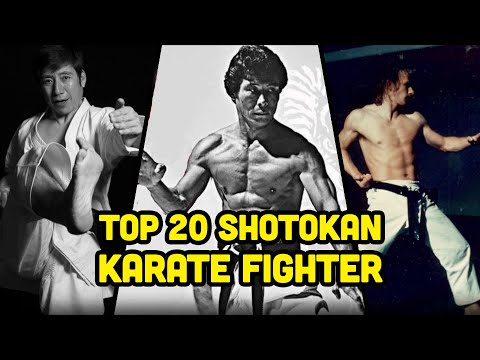

The Pantheon of Shotokan: Unveiling the Top 20 Masters Who Defined Budo

The air in the dojo crackles with a silent intensity. It's the hum of discipline, the echo of countless hours spent honing the body and mind. Shotokan Karate, a name synonymous with power, precision, and an unbroken lineage stretching back to the dawn of modern martial arts, is more than just a fighting style; it's a philosophy etched in motion. But who are the titans, the individuals whose very names evoke awe and respect within the hallowed halls of Budo? Who are the fighters who didn't just practice Shotokan, but embodied its spirit, pushing its boundaries and leaving an indelible mark on the world of martial arts? This is not merely a list; it is an investigation into the soul of a discipline that has shaped warriors and fostered self-mastery for generations.

The Genesis of Shotokan Greatness

Shotokan Karate, a cornerstone of modern martial arts, didn't spring into existence fully formed. It was forged in the crucible of Okinawa, refined by visionary masters, and disseminated across the globe by dedicated practitioners. Its very name, "Shoto," meaning "waving pine," reflects the serene yet powerful nature that its founder, Gichin Funakoshi, sought to instill. When we speak of the "greatest fighters," we're not just referring to those who dominated competitions, but to individuals who exemplified the highest ideals of Shotokan: technical brilliance, unwavering spirit, and a profound commitment to the principles of Budo.

But let's cut through the polite introductions. Are we talking about pure sport Karate, or does the definition of "fighter" encompass those who preserved the art's combative integrity? The line can blur, and it's precisely this tension that makes dissecting Shotokan's legacy so compelling. In this deep dive, we will not shy away from controversy, but rather embrace it, for it is through rigorous debate that true understanding is born.

The Pillars: Funakoshi and Nakayama

No discussion of Shotokan greatness can begin without acknowledging its spiritual and practical architects. Gichin Funakoshi (1868-1957) is, without question, the linchpin. His journey from Okinawa to mainland Japan, introducing *Te* (hand techniques) as Karate, fundamentally altered the martial landscape. Funakoshi wasn't just a fighter; he was a philosopher-warrior who translated the raw effectiveness of Okinawan fighting into a structured system, emphasizing the moral and ethical dimensions alongside the physical.

"Karate is not a copy of other arts, just as the pine is not a copy of the willow. Its strength is not merely in its execution, but in its perfection." - Gichin Funakoshi

His student, Masatoshi Nakayama (1913-1987), inherited this monumental task. Nakayama was the organizational genius and the driving force behind the Japan Karate Association (JKA). He not only codified the techniques and katas, ensuring a degree of standardization that allowed Shotokan to spread universally, but he also championed the competitive aspect, recognizing its power in testing and refining techniques under pressure. Nakayama's vision was pragmatic: to ensure Shotokan's relevance and effectiveness in a changing world. His influence on competitive Karate is undeniable.

Masters of the Golden Age

The decades following Funakoshi and Nakayama's foundational work saw an explosion of talent. These were the men who took the established framework and infused it with their unique fire, forging careers that would inspire generations. The late 20th century, in particular, was a fertile period for Shotokan fighters who excelled not only in kata but in the intense, high-speed combat of kumite.

We speak of:

  • Hirokazu Kanazawa (b. 1931): A student of Nakayama, Kanazawa is a legend for his technical prowess and dynamic energy. His mastery of both kata and kumite, coupled with his extensive international teaching, solidified his place in history. His influence transcends mere fighting; he is an educator of Budo.
  • Taiji Kase (1935-2004): Known for his powerful techniques and dynamic stances, Kase was another prominent figure within the JKA. He later developed his own style, encouraging innovation while staying true to Shotokan principles. His approach to the art was often described as forceful and direct, reflecting a deep understanding of combat application.
  • Hidetaka Nishiyama (1928-2008): A student of Funakoshi, Nishiyama was instrumental in establishing Karate in the United States and was a key figure in the formation of the International Traditional Karate Federation (ITKF). He advocated for Karate as a path to self-development, not just a fighting sport.
  • Keinosuke Enoeda (1935-1993): Often dubbed the "Tiger of Shotokan," Enoeda was renowned for his incredible speed, powerful techniques, and fierce fighting spirit. His presence on the mat was electrifying, a true testament to the combative potential of Shotokan.

These names, and many others like Tetsuhiko Asai, Takashi Mikami, and Yoshiaki Ushiro, represent a golden era where the theoretical principles of Shotokan were put to the ultimate test in live combat scenarios, both in dojo sparring and international tournaments. Their dedication to rigorous training, often involving punishing physical conditioning and repetitive drilling, is a lesson in itself. Are you putting in that level of commitment, or are you content with superficial understanding?

Contemporary Icons and Their Legacies

While the "golden age" produced many legends, the evolution of Shotokan has continued. Modern fighters, often competing in highly specialized sport Karate circuits, continue to push the envelope. Names like Antonio Oliva, Shinji Nagaki, and Toru Shimizu have carved out significant legacies. Their ability to adapt Shotokan's principles to the demands of modern competition, where milliseconds matter and strategy is paramount, is a testament to the art's enduring viability.

However, a word of caution: does the intense focus on sport Karate sometimes dilute the deeper philosophical aspects that Funakoshi emphasized? This is a question that sparks heated debate in martial arts circles. Some argue that the scoring system and rulesets can inadvertently encourage techniques that are less effective in a real self-defense scenario, while others contend that competitive pressure refines techniques to their most efficient form. Where do you stand on this crucial distinction?

The Philosophical Underpinnings of Mastery

To truly understand the "greatest" Shotokan fighters, one must look beyond their physical prowess. At its heart, Shotokan is a discipline rooted in the principles of Budo – the Way of the Warrior. This path emphasizes not only the combat skills but also moral development, mental fortitude, and spiritual growth. Concepts like Mushin (no mind), Zanshin (continuous awareness), and Fudoshin (immovable mind) are not mere buzzwords; they are the guiding principles that separate a mere fighter from a true martial artist.

"The ultimate aim of Karate is not winning or losing, but the perfection of the human character." - Gichin Funakoshi

The dedication required to achieve mastery in Shotokan is immense. It demands not only physical training but also deep introspection and an unwavering commitment to self-improvement. This is where the true "fighting" occurs – the internal battle against one's own limitations, fears, and ego. It is this internal struggle that, when conquered, allows the external techniques to flow with true power and purpose. Think of the discipline required for Kyokushin Karate's legendary conditioning; Shotokan, while different in its expression, demands a similar internal fortitude.

Sharpening Your Own Blade: Training for Excellence

The path to becoming a formidable Shotokan practitioner, whether for competition or personal development, is paved with consistent and intelligent training. While the specific techniques and approaches of the masters differ, certain core principles remain universal:

  1. Master the Fundamentals: Do not underestimate the power of the basics. Perfect your stances (dachi), punches (tsuki), blocks (uke), and kicks (geri). This is the bedrock upon which all advanced techniques are built.
  2. Kata as a Blueprint: Treat each kata not as a dance, but as a detailed combat simulation. Understand the bunkai (applications) behind every movement. Practice it repeatedly until the techniques become instinctive.
  3. Kumite Dynamics: Engage in sparring (kumite) with a focus on strategy, timing, and control. Seek partners who challenge you, forcing you to adapt and think on your feet. Learn from both your successes and your failures.
  4. Physical Conditioning is Non-Negotiable: Develop explosive power, endurance, and flexibility. Incorporate cardiovascular training, strength conditioning, and flexibility exercises into your routine. The body is the weapon; it must be honed.
  5. Mental Fortitude is Key: Cultivate focus, discipline, and resilience. Practice meditation or mindfulness techniques to enhance your awareness and composure under pressure.

Remember, the journey is as important as the destination. The greatest fighters weren't born; they were made through relentless dedication. Are you willing to make that commitment?

Essential Gear for the Dedicated Budoka

While Shotokan Karate can be practiced with minimal equipment, certain items can significantly enhance your training experience and help you emulate the dedication of the masters.

  • Karategi (Uniform): A high-quality, durable Karategi is essential. Look for one made from heavy-duty cotton that can withstand the rigors of intense training and frequent washing. Brands like Karate Merchandise or specific Kyokushin Gi manufacturers often offer excellent options.
  • Karate Belt: As you progress, your belt signifies your level of dedication and understanding. Ensure it's securely tied – a loose belt is a sign of a loose mind.
  • Mouthguard: For sparring (kumite), a properly fitting mouthguard is non-negotiable for protecting your teeth and jaw.
  • Groin Protector: Essential for protecting against accidental strikes during sparring.
  • Training Mats (optional): If you're practicing at home, especially dynamic techniques or falling drills, padded mats can provide a safer training environment and reduce the risk of injury.

Sensei's Verdict: The Enduring Impact

The concept of a definitive "Top 20" is inherently subjective, a testament to the diverse interpretations and expressions of Shotokan Karate throughout history. What unites these masters, from the foundational figures like Funakoshi and Nakayama to the titans of competition like Enoeda and Kanazawa, is their unwavering commitment to the art. They didn't just perform techniques; they lived the philosophy. They demonstrated that Shotokan Karate is a powerful combative system, a rigorous physical discipline, and a profound path to personal growth. Their legacies are not merely in the records they set, but in the countless practitioners they have inspired to take up the mantle of Budo.

Score: Black Belt in Legacy and Influence

Frequently Asked Questions

Who is considered the founder of Shotokan Karate?
Gichin Funakoshi is widely regarded as the founder of Shotokan Karate. He introduced the style from Okinawa to mainland Japan.
What is the difference between Shotokan and other Karate styles?
Shotokan is characterized by its deep stances, powerful linear techniques, and emphasis on strong fundamental movements. While all Karate styles share common roots, Shotokan's specific approach to stances, kihon (basics), and kata differentiates it.
Is Shotokan Karate effective for self-defense?
Yes, Shotokan Karate, when practiced with a focus on practical application and combative principles, can be highly effective for self-defense. However, like any art, its effectiveness depends on the practitioner's training, intent, and understanding of real-world situations.
What does "Budo" mean in the context of Shotokan?
Budo translates to "the Way of the Warrior." In Shotokan, it signifies that the practice of Karate extends beyond physical techniques to encompass discipline, respect, mental fortitude, and personal development.

Deeper Dives into the Budo Path

The journey into the world of Shotokan and the broader martial arts landscape is continuous. For those seeking to deepen their understanding and connect with a vibrant community, the following resources are invaluable:

  • Explore the foundational principles of martial philosophy in our article on BUDO.
  • Understand the physical demands and strategic nuances of modern combat in our analysis of Artes Marciales Mixtas.
  • Discover the importance of mental resilience and self-mastery in our guide to Self Improvement.

In conclusion, Shotokan Karate stands as a monumental pillar in the edifice of martial arts. The fighters we have highlighted are not just practitioners; they are custodians of a legacy, warriors who have not only mastered technique but have also illuminated the profound philosophical depths of this ancient art form. Their dedication serves as a perpetual challenge to us all: to pursue not just strength, but wisdom; not just victory, but character.

Reflexión del Sensei: Tu Próximo Paso

You have walked through the hallowed halls, glimpsed the faces of legends. But true understanding does not come from observation alone. It is forged in sweat, in frustration, in the relentless pursuit of perfection. Now, tell me: which of these masters' spirits resonates most deeply with your own martial aspirations? And more importantly, what single, concrete action will you take today to embody a fraction of their dedication in your own training? The path is yours to walk, but the first step must be taken with intention.

BJJ Crash Course: Mastering the Art of Ground Combat for Absolute Beginners

Ah, Brazilian Jiu-Jitsu. A realm where the earth itself becomes your adversary and your ally. Many approach the mats with a thirst for knowledge, a desire to conquer, yet they are often met with a deluge of jargon and complexity that can feel like an impassable tidal wave. You seek to understand BJJ, to navigate its intricate dance of leverage and control, but the sheer volume of information threatens to drown you before you even tie your white belt. Fear not, fledgling warrior. Today, we embark on a journey, not through endless videos or conflicting forums, but into the very heart of what makes BJJ a martial art unlike any other. This is not merely a guide; it is a foundational lesson from a Sensei who has seen countless beginners falter and, more importantly, flourish.

Table of Contents

What Exactly is Brazilian Jiu-Jitsu?

At its core, Brazilian Jiu-Jitsu is a martial art and combat sport system that emphasizes ground fighting and grappling. Its genesis lies in Judo, meticulously refined by the Gracie family in Brazil. Unlike striking-focused martial arts where distance and impact are paramount, BJJ shifts the battlefield to the ground. Here, strength and size become secondary to the art of leverage, technique, and understanding the human body's mechanics. It is a profound discipline that cultivates not only physical prowess but also acute mental fortitude, strategic thinking, and a deep sense of self-awareness. Many dismiss it as mere "wrestling," a superficial understanding that misses the intricate chess match unfolding on the mats. BJJ is about control, about suffocating an opponent's options until submission is the only recourse. It is the ultimate test of who understands the human form better, who can manipulate it more effectively.

"The BJJ practitioner's goal is not to inflict damage, but to control and neutralize their opponent through submission holds."

The beauty of BJJ lies in its democratic nature. As Helio Gracie famously stated, it was developed so that a smaller, weaker individual could defend themselves against a larger, stronger attacker. This principle holds true today. Regardless of your age, gender, or initial physical condition, with consistent dedication and intelligent training, proficiency is an achievable goal. It is a testament to the power of applied knowledge over brute force, a concept often forgotten in the modern pursuit of physical dominance.

Laying the Foundation: Your First Steps on the Mat

Embarking on your BJJ journey requires more than just enthusiasm; it demands prudence. The first, and perhaps most critical, step is finding a reputable academy. Do not be swayed by flashy advertising or the allure of a famous name alone. Seek out schools with experienced instructors who prioritize safety and proper technique. A good gym will offer beginner-friendly classes – often called "intro" or " Fundamentals" classes – where the curriculum is designed to introduce you to the core concepts without overwhelming you. Observe a class if possible. Is the atmosphere welcoming? Do students seem to be learning and supporting each other, or is it a cutthroat environment from day one? Remember, BJJ is a physical sport, and the risk of injury is real. A wise instructor will emphasize control, technique, and a gradual progression to prevent unnecessary harm. Inquire about their approach to injury prevention and their mat etiquette.

Consider the lineage and philosophy of the instructors. Are they promoting a balanced approach to BJJ, one that encompasses self-defense, sport grappling, and personal development? This is crucial for long-term growth.

Essential Gear: The Warrior's Uniform

Once you've found your training home, the next step is acquiring the necessary equipment. The cornerstone of traditional BJJ training is the gi (pronounced "gee"). This is not merely a uniform; it is an integral part of the art. Crafted from durable cotton weaves, the gi provides grips for both attacker and defender, influencing the dynamics of the fight. For beginners, a standard single-weave or lightweight double-weave gi is usually sufficient. As you progress, you might explore heavier weaves for durability or specific cuts for mobility. Attached to the gi is the belt, a visible representation of your journey. Starting at white, the belt system (white, blue, purple, brown, black) signifies mastery and experience. But before you even step onto the mats for your first roll, consider other protective gear. A mouthguard is non-negotiable for protecting your teeth and jaw. Similarly, a jockstrap with a cup offers vital protection for male practitioners. Some academies may also recommend shin guards or knee pads for specific drills. Investing in quality gear is an investment in your safety and longevity in the sport.

The Core Principles: Leverage Over Raw Power

This is where the magic of BJJ truly unfolds. The entire system is built upon the principle that a smaller, weaker person can successfully defend against a larger, stronger opponent by using proper technique and leverage. Think of a simple lever: a small amount of force applied at the correct point can move a much larger object. BJJ applies this to the human body. Instead of muscling through a position, you learn to use your hips, your base, and your opponent's own weight and momentum against them. This is why a wiry blue belt can often submit a powerful, untrained larger individual.

Key concepts to grasp early on include:

  • Hip Movement (Hips are Key): Your hips are your primary tool for creating angles, generating power, and escaping bad positions. Learning to shrimp, bridge, and swivel your hips is fundamental.
  • Base and Posture: In grappling, "base" refers to your stable structure, making it difficult for your opponent to unbalance you. "Posture" is maintaining an upright, strong frame, especially when on the bottom.
  • Connection: Maintaining a close connection with your opponent is vital for control and for preventing them from creating space to execute their own techniques.
"In BJJ, the difference between winning and losing often comes down to who understands leverage and body mechanics better, not who can lift more."

Understanding these principles will fundamentally change how you perceive combat. It's not about overpowering; it's about outsmarting, outmaneuvering, and out-understanding your opponent.

Understanding the Battlefield: Guard, Mount, and Back

BJJ strategy revolves around achieving and maintaining dominant positions while avoiding disadvantageous ones. There are three primary dominant positions that beginners must understand:

  • Guard: When you are on your back and your opponent is between your legs, you are in the guard position. This is a defensive position, but a skilled practitioner can use the guard offensively to sweep (reverse position) or submit their opponent. There are many variations, such as closed guard, open guard, and spider guard.
  • Mount: This is perhaps the most dominant position. You are on top of your opponent, sitting on their torso, facing their head. From mount, you have excellent control and numerous options for attacks like chokes and armbars. Maintaining good base is crucial to prevent your opponent from escaping.
  • Back Mount (Control of the Back): Having your opponent's back is considered the most dominant position in BJJ. You are behind them, with hooks (your legs) wrapped around their hips, controlling their posture and limiting their movement. From here, the Rear Naked Choke (RNC) is a highly effective submission.

Conversely, positions like being "stacked" in guard, being flattened out underneath side control, or being exposed in the turtle position are ones you'll want to escape as quickly as possible. Learning to transition between these positions efficiently is the essence of BJJ strategy.

Building Blocks: Essential BJJ Maneuvers

As mentioned, BJJ techniques can be broadly categorized. For a beginner, mastering the fundamentals is paramount. Trying to learn advanced techniques before you have a solid grasp of the basics is like trying to build a skyscraper on a foundation of sand – it will inevitably collapse.

Key Fundamental Techniques Include:

  • Takedowns: Safely bringing your opponent from a standing position to the ground. This could include basic Judo throws like O Goshi or Seoi Nage, or wrestling-style shots. The focus here is on control and not exposing yourself to danger.
  • Guard Passes: Techniques used to move from being controlled in your opponent's guard to a dominant position like side control or mount. Examples include the knee slice pass and the toreando pass.
  • Sweeps: Techniques used from the guard position to reverse your opponent and end up in a dominant position yourself. A basic scissor sweep or hip bump sweep are essential early learns.
  • Submissions: Techniques designed to force an opponent to tap out due to pain or the threat of injury. Fundamental submissions include the armbar (hyperextending the elbow), the kimura (a shoulder lock), and the triangle choke (using your legs to constrict blood flow to the brain). From the mount and back control, the cross-collar choke and Rear Naked Choke (RNC) are foundational.

Focus on understanding the setup, the execution, and the control principles behind each fundamental technique. Don't just memorize the movements; understand why they work.

The Dojo's Crucible: Drills, Sparring, and Growth

Your BJJ training will primarily consist of three components:

  • Drills: These are repetitive exercises designed to ingrain specific movements and techniques into your muscle memory. You might drill a guard pass 50 times with a partner, focusing on the precise footwork and body positioning. Drills build efficiency and technical accuracy.
  • Positional Sparring (Situational Sparring): Instead of a full, free-flowing roll, positional sparring focuses on specific scenarios. For example, you might start in mount and the defender's goal is to escape, while the attacker's goal is to maintain mount or advance to another dominant position. This allows for focused practice on specific situations without the pressure of a full match.
  • Live Sparring (Rolling): This is the application of all your learned techniques in a dynamic, unpredictable environment against resisting opponents. It's where you test your skills, discover your weaknesses, and learn to adapt. It’s crucial to roll with people of different sizes, skill levels, and styles. This is where true progress is made, but it must be done with control and respect. Remember the goal is to learn, not to "win" at all costs.

Consistency is the bedrock of progress in BJJ. Attending classes regularly, listening to your instructors, and approaching each session with a growth mindset are essential. BJJ is a marathon, not a sprint. Embrace the challenges, celebrate the small victories, and never stop learning.

Sensei's Verdict: Is BJJ for You?

Brazilian Jiu-Jitsu is a demanding yet profoundly rewarding martial art. It tests your physical limits, your strategic mind, and your resilience. If you seek a discipline that offers unparalleled self-defense capabilities, a comprehensive physical workout that builds functional strength and flexibility, and a mental challenge that fosters discipline, patience, and problem-solving skills, then BJJ is undoubtedly for you.

However, be prepared for the initial learning curve. You will be uncomfortable, you will get tangled, and you will be submitted – frequently. This is part of the process. The true value lies not in avoiding submission, but in learning from each instance, refining your technique, and developing the mental toughness to persevere. If you are willing to embrace the struggle, the growth potential is immense. It is a martial art that truly transforms individuals from the inside out.

"The mats do not lie. Your ego will be checked at the door. What remains is the honest pursuit of skill and understanding."

Essential Equipment for Your Training

To begin your BJJ journey effectively and safely, consider investing in the following:

  • A quality BJJ Gi: Look for durability and a comfortable fit. Brands like Fuji, Hayabusa, and Tatami offer excellent options for beginners and experienced practitioners alike.
  • Mouthguard: Essential for protecting your teeth and jaw during sparring. Custom-fitted mouthguards offer the best protection and comfort.
  • Protective Cup (for men): Crucial for safeguarding sensitive areas during grappling.
  • Flip-flops or sandals: For wearing outside the mats to maintain hygiene.
  • Gym Bag: To carry your gear.
  • Water Bottle: Staying hydrated is key during intense training sessions.

For those interested in no-gi grappling, which often uses shorts and a rashguard instead of a gi, consider investing in good grappling shorts and a compression rashguard for optimal fit and mobility.

Frequently Asked Questions

Is BJJ suitable for women?

Absolutely. BJJ was developed with the principle of a smaller person defending against a larger one, making it exceptionally well-suited for women. Many academies have a strong female presence, and women often excel due to their focus on technique and leverage.

How long does it take to get a blue belt?

This varies significantly by academy and individual progress, but typically ranges from 1 to 3 years of consistent training. Your instructor will promote you when they feel you have demonstrated sufficient technical knowledge and skill.

Do I need to be strong to start BJJ?

No. BJJ emphasizes technique and leverage over brute strength. While strength can be an advantage, it's the skillful application of techniques that truly determines success, especially against larger opponents.

What is the difference between BJJ and Judo?

While BJJ originated from Judo, it has evolved significantly. Judo focuses heavily on takedowns and standing throws, with limited ground fighting. BJJ places a much greater emphasis on ground grappling, positional control, and submission holds.

Is BJJ dangerous?

Like any physical combat sport, BJJ carries risks of injury. However, with proper instruction, a focus on safety, controlled sparring, and good mat etiquette, the risks can be significantly minimized. Most injuries occur due to ego-driven actions or lack of technical understanding.

Deepen Your Understanding

To continue your exploration of martial arts and combat, consider these related topics:

Sensei's Final Challenge

You now possess the foundational knowledge to step onto the mats with clarity. But knowledge without application is mere theory. The true learning begins when you face resistance, when you apply these principles under pressure.

My question to you is this: Will you be a practitioner who merely goes through the motions, or will you be a student who relentlessly seeks understanding? When faced with the discomfort of a submission or the frustration of a failed technique, will you crumble, or will you analyze, adapt, and rise stronger? The path of the martial artist is paved with these choices. Choose wisely, and demonstrate your commitment not with words, but with sweat and perseverance on the mats.

The Unvarnished Truth: Mastering the Pugilistic Arts – A Sensei's Uncompromising Guide to Boxing for the True Warrior

The ring. A crucible where raw courage meets honed technique. For millennia, humanity has sought to test itself in combat, and boxing, in its purest form, stands as a testament to that primal drive. But do not mistake its apparent simplicity for a lack of depth. To truly understand the art of boxing is to delve into a discipline that demands more than just brute force; it requires unwavering focus, ironclad discipline, and a spirit as unyielding as tempered steel. This isn't about flashy moves for the masses; it's about understanding the *bushido* of the pugilist. This guide is not for the faint of heart, but for those who seek to understand the soul of the fight.

Table of Contents

Introduction: The Pugilist's Path

Many claim to understand boxing. They watch from the sidelines, mesmerized by the ferocity, yet blind to the underlying strategy. This is not a sport for those who seek mere violence; it is a sophisticated dance of strategy, timing, and absolute control. Forget the theatrics; we delve into the core. If your intention is to learn the fundamental principles that separate a brawler from a boxer, you have arrived. This guide is built upon the rigorous principles that underpin all true martial disciplines, adapted for the squared circle. We will dissect each element, from the devastating power of a well-placed punch to the subtle art of evading a blow that could end your night.

The Four Pillars of Offense: Mastering the Punches

In the unforgiving arena of boxing, your fists are your instruments of expression. But not all expressions carry the same weight. Understanding the *purpose* and *execution* of each fundamental punch is paramount. This is where the foundation of your offensive strategy is laid, where the *ki* flows through your strikes.

The Jab: The Maestro's Measure

"The jab is the painter's brush. It sketches the outline of the masterpiece."
The jab is the foundational punch in boxing, often underestimated by novices. It's your primary tool for range-finding, disrupting your opponent's rhythm, and setting up more potent attacks. Thrown with your lead hand, it must be swift, straight, and retracted quickly to maintain balance. A lazy jab is an invitation to disaster. Master the jab, and you control the distance; control the distance, and you control the fight. This requires constant practice, honing the muscle memory until the movement is as natural as breathing.

The Cross: The Hammer of Judgment

"The cross is the testament of power, delivered with the truth of your entire body."
This is where true power is unleashed. The cross, thrown with your rear hand, involves a rotation of your hips and shoulders, transferring the force from the ground up through your body. It's not just an arm punch; it's a full-body commitment. Used to end exchanges, exploit openings, or deliver a decisive blow, the cross demands precision. A poorly executed cross leaves you vulnerable, off-balance, and ripe for punishment. For those seeking the ultimate expression of boxing power, understanding the mechanics of the cross is non-negotiable. Consider the legacy of fighters who made this their signature – their power was no accident.

The Hook: The Serpent's Coil

"The hook strikes from unexpected angles, a sudden turn of fate."
The hook is a semi-circular punch delivered with either hand, targeting the head or body. Its effectiveness lies in its ability to bypass an opponent's guard when thrown correctly. Whether it's a short, sharp hook to the chin or a looping power hook to the ribs, the principle remains: utilize your core rotation for maximum impact. This punch requires adaptability, as it can be employed both offensively and defensively to disrupt an opponent's attack. Mastering hooks is essential for breaking down a guarded opponent, a skill honed through countless hours of drilling.

The Uppercut: The Rising Dragon

"The uppercut is the surprise from below, a sudden ascent of power."
The uppercut is a powerful, upward-striking punch. It's designed to catch an opponent coming in, or to lift their head from a lower guard. Again, hip and shoulder rotation are key, generating explosive upward force. This punch is particularly effective against opponents who tend to drop their hands or lean forward. Its trajectory makes it a formidable weapon, capable of causing significant damage. For any aspiring boxer serious about their arsenal, the uppercut is a vital, albeit challenging, technique to master.

The Dance of the Warrior: Essential Footwork

Boxing is often described as a thinking person's sport, and nowhere is this more evident than in its footwork. The ring is your chessboard, and your feet are your pawns. Superior footwork allows you to control the engagement, evade danger, and dictate the terms of the fight. Neglect this, and you are merely a stationary target. This is where the true *Budo* spirit manifests – not just in the strike, but in the movement, the strategy, the evasion.

The Foundation: Your Boxing Stance

Your stance is your base, your equilibrium. A proper boxing stance keeps you balanced, protected, and ready to move. Feet should be shoulder-width apart, with your lead foot slightly forward. Knees are softly bent, distributing your weight primarily on the balls of your feet, allowing for quick transitions. Your lead hand is up, protecting your face, and your rear hand guards your chin. This isn't just about standing; it's about being prepared to explode into action or disappear from danger at a moment's notice.

Step and Slide: Navigating the Arena

This is the most fundamental movement. To move left, step with your lead foot, then bring your rear foot to meet it, maintaining your stance's width. To move right, do the opposite. This "step and slide" ensures you never cross your feet, which is a cardinal sin in boxing, leading to imbalance and vulnerability. It's about maintaining your structure while traversing the terrain. This fluid motion is crucial for effective offensive and defensive positioning, a silent testament to your control.

The Pivot: Shifting the Battlefield

Pivoting allows you to change angles, creating offensive opportunities or evading an opponent's attack. By stepping with your lead foot and rotating your rear foot, you can shift your body and create a new line of attack, surprising your opponent. This technique is vital for turning defense into offense and is a hallmark of experienced boxers who can manipulate the space within the ring. It’s a subtle art, but one that can dramatically alter the course of a fight.

The Shield of Wisdom: Impregnable Defense

Offense wins rounds, but defense wins championships. A fighter who cannot defend themselves is merely playing with fire. True mastery lies in the ability to avoid punishment while simultaneously creating openings. This is where the discipline of the martial artist truly shines – understanding that the greatest victory is often not to strike, but to *not be struck*.

The Parry: Deflecting Misfortune

A parry is a controlled deflection of an opponent's punch. Using your lead hand, you gently redirect the incoming blow to the side. It's not a block; it's a subtle redirection that uses minimal energy and can even be transitioned into a counter-attack. This requires excellent timing and awareness, distinguishing it from a crude, energy-sapping block.

The Slip: The Ghost's Evasion

The slip involves moving your head to the left or right, causing your opponent's punch to whistle past. Crucially, your feet remain planted, allowing for an immediate counter-punch. This requires impeccable timing and understanding of an opponent's range and power. A well-timed slip can not only evade a devastating blow but also set up a powerful retaliatory strike.

Bob and Weave: The Willow in the Storm

This classic defensive maneuver involves bending your knees and moving your upper body in a U-shape. It's used to evade punches, particularly hooks, and to get inside an opponent's reach. The bob and weave allows you to move under punches and come up in a position to attack, turning defense into a potent offensive tool. It’s about being fluid, adaptable, and always one step ahead.

The Forge of the Fighter: Rigorous Training Regimen

Talent is a spark, but discipline is the fire that sustains it. Consistent, intelligent training is the only path to true mastery in boxing. Without it, your potential remains dormant, a whisper lost in the roar of the crowd.

Shadowboxing: The Solitary Duel

Before you face an opponent, you must first face yourself. Shadowboxing is your private rehearsal. It's where you practice your technique, footwork, and combinations without resistance. This is your opportunity to refine every movement, to build muscle memory, and to develop the fluidity and speed that define a skilled boxer. It's a critical component for developing *internal strength* and mastering your own movements.

The Heavy Bag: Facing the Silent Adversary

The heavy bag is your relentless training partner. Punching it develops power, stamina, and the conditioning necessary to endure the rigors of a fight. Each strike against the bag is a commitment, building the resilience required to absorb and deliver punishment. Focus on proper form with every punch; the bag doesn't judge technique, but the results speak for themselves. Using a high-quality boxing glove during these sessions is crucial for joint protection.

Sparring: The Crucible of Reality

Sparring is where theory meets practice. It's the closest you'll get to a real fight in a controlled environment. Here, you test your techniques, timing, defense, and mental fortitude against a live opponent. It teaches you to adapt, react, and manage the pressure of combat. Sparring is not about winning; it's about learning. Every session is a lesson, a chance to identify weaknesses and build upon strengths. This is where the true *fighter's spirit* is forged. Remember, proper sparring gear is non-negotiable for safety.

Veredicto del Sensei: ¿Merece la pena?

This guide presents the foundational pillars of boxing. It is a distilled essence of technique and strategy, stripped of hyperbole. Boxing, when approached with the discipline and respect of a martial art, is profoundly rewarding. It builds not only physical prowess but also mental fortitude, strategic thinking, and an unshakeable self-confidence. However, it demands dedication. This is not a quick fix; it's a lifelong pursuit. For those willing to commit, the journey is transformative. **Calificación:** Cinturón Negro en Fundamentos.

Equipo Esencial para tu Entrenamiento

To begin your journey in the pugilistic arts, certain equipment is not merely recommended, but essential for safe and effective training:
  • Boxing Gloves: Essential for protecting your hands and wrists during striking. For beginners, 14-16oz gloves are generally recommended for training.
  • Hand Wraps: Worn under gloves, these provide crucial extra support to your hand and wrist bones.
  • Mouthguard: Absolutely vital for protecting your teeth and preventing concussions.
  • Headgear (for sparring): Protects against cuts, bruises, and reduces the impact of blows during sparring sessions.
  • Jump Rope: An indispensable tool for warming up, improving footwork, coordination, and cardiovascular conditioning.
  • Heavy Bag: For developing power, stamina, and practicing combinations.
  • Boxing Shoes: Offer ankle support and provide the necessary grip for agile footwork in the ring.
Investing in quality boxing equipment is an investment in your safety and progress.

Guía de Entrenamiento: Perfeccionando tu Jab

Let us focus on the most fundamental punch, the jab, and refine its execution.
  1. Stance: Assume your proper boxing stance. Your lead hand is forward, eyes forward.
  2. Initiation: Begin the movement by extending your lead arm directly forward. Do not cock your wrist or bend your elbow prematurely.
  3. Extension: Fully extend your arm, rotating your fist slightly as it reaches its target. This rotation adds snap and power. The palm should ideally face downwards upon impact.
  4. Target Impact: Aim to strike with the knuckles of your index and middle fingers.
  5. Retraction: Immediately snap the punch back to your guard position. This is crucial for defense and maintaining balance. The retraction should be as fast as the extension.
  6. Body Mechanics: As you extend, you may subtly shift your weight forward onto the ball of your lead foot. Engage your core.
  7. Practice: Perform 10-20 repetitions with focus. Then, practice transitioning from a jab to a cross, or a jab to a slip.
  8. Shadowboxing: Integrate this refined jab into your shadowboxing routine.
  9. Heavy Bag: Practice your jab on the heavy bag, focusing on speed, accuracy, and retraction.
Mastering the jab is a journey, not a destination. Be patient, be persistent.

Preguntas Frecuentes

Q: How long does it take to become proficient in boxing?
A: Proficiency varies greatly depending on natural aptitude, training frequency, and quality of instruction. However, expect at least 1-2 years of consistent training to develop fundamental skills and ring awareness.

Q: Is boxing too dangerous for beginners?
A: While boxing carries inherent risks, proper training under qualified instructors, with emphasis on defense and safe sparring practices, significantly mitigates danger, especially for beginners.

Q: Can boxing be used for self-defense?
A: Absolutely. The core principles of boxing – footwork, distance management, and powerful striking – are highly applicable to real-world self-defense situations.

Q: What is the difference between boxing and other martial arts?
A: Boxing specifically focuses on punches using the fists, employing unique footwork and defensive strategies. Other martial arts may incorporate kicks, grappling, or weapons, offering broader combat applications.

Para Profundizar en tu Camino

Reflexión del Sensei: Tu Próximo Paso

You have studied the theory. You understand the mechanics of the jab, the cross, the hook, the uppercut. You know the importance of footwork and defense. But theory is a map; practice is the territory. So I ask you: When you stand before the mirror, practicing your jab, are you merely moving your arm, or are you channeling the intent of a warrior? Are you executing a technique, or are you embodying the spirit of the strike? The answer to this question will define your path. ```json { "@context": "https://schema.org", "@type": "FAQPage", "mainEntity": [ { "@type": "Question", "name": "How long does it take to become proficient in boxing?", "acceptedAnswer": { "@type": "Answer", "text": "Proficiency varies greatly depending on natural aptitude, training frequency, and quality of instruction. However, expect at least 1-2 years of consistent training to develop fundamental skills and ring awareness." } }, { "@type": "Question", "name": "Is boxing too dangerous for beginners?", "acceptedAnswer": { "@type": "Answer", "text": "While boxing carries inherent risks, proper training under qualified instructors, with emphasis on defense and safe sparring practices, significantly mitigates danger, especially for beginners." } }, { "@type": "Question", "name": "Can boxing be used for self-defense?", "acceptedAnswer": { "@type": "Answer", "text": "Absolutely. The core principles of boxing – footwork, distance management, and powerful striking – are highly applicable to real-world self-defense situations." } }, { "@type": "Question", "name": "What is the difference between boxing and other martial arts?", "acceptedAnswer": { "@type": "Answer", "text": "Boxing specifically focuses on punches using the fists, employing unique footwork and defensive strategies. Other martial arts may incorporate kicks, grappling, or weapons, offering broader combat applications." } } ] }

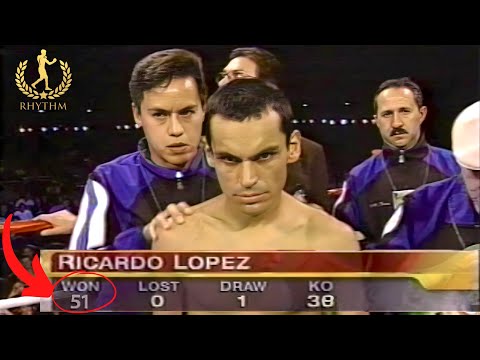
Ricardo López: The Zenith of Mexican Boxing Prowess and a Martial Arts Masterclass

The Unseen Connection: Boxing Technique as Pure Martial Art

A true martial artist understands that the essence of Budo—the way of the warrior—transcends specific disciplines. It lies in the pursuit of perfection, the unwavering discipline, and the profound understanding of human physiology and psychology under pressure. While the world often segregates boxing from the broader martial arts spectrum, a deeper examination reveals undeniable parallels. Today, we delve into the "Mexican PERFECTION Of Ricardo López," not just as a boxing legend, but as a paragon whose technical mastery offers invaluable lessons for any practitioner of the martial ways. This is a journey into precision, defense, and an offensive capability honed to its absolute finest edge.

The Maestro: Unpacking Ricardo "Finito" López's Undefeated Legacy

Ricardo "Finito" López. The name itself evokes an era of unparalleled defensive wizardry and surgical offensive striking. To call him merely a "boxer" is to diminish the artistry he brought to the ring. With a flawless professional record of 51 wins (38 by knockout) and zero losses, López wasn't just winning; he was dominating, a three-time world champion across the minimumweight and light flyweight divisions. His moniker, "El Maestro," wasn't bestowed lightly. It was earned through years of meticulous training, an almost supernatural understanding of distance and timing, and a defensive shell so impenetrable it seemed almost mythical. For any aspiring fighter, whether on the mats or in the ring, López's career is a living testament to what disciplined dedication can achieve.

From Mexico City to the Pinnacle: A Fighter's Genesis

Born and raised in Mexico City, López's path to boxing greatness began at a tender age. The environment, while perhaps lacking in conventional martial arts dojos of the East, fostered a raw, competitive spirit that, when channeled through the disciplined structure of boxing, became a crucible for excellence. He turned professional in 1985, and within two years, had captured his first world championship. His career, spanning over 14 years, was a masterclass against some of the era's toughest competitors, including Saman Sorjaturong, Andy Tabanas, and Zolani Petelo. Each victory was not just a testament to his physical prowess, but a demonstration of strategic brilliance.
"The art of boxing is like a dance. You must know when to step forward, when to step back, and most importantly, when not to be touched at all." - A lesson echoed in López's every move.

The Science of Elusion: López's Defensive Masterpiece

What truly elevated Ricardo López beyond the status of a mere champion was his almost unbelievable technique and precision. His stance was textbook-perfect, his footwork fluid and economical, allowing him to control distance with an expert's touch. But it was his defense that became legendary. López possessed an uncanny ability to slip punches, roll with blows, and maintain an upright, active guard that left opponents frustrated and ineffective. For nearly a decade, he went virtually untouched, a feat almost unheard of in the brutal world of professional boxing. This wasn't luck; it was applied physics, timing, and an unparalleled commitment to not getting hit. His style is a profound study in the martial principle of **"Nuki"** (evasion) and **"Uke"** (receiving/blocking), executed with an artistry that is still analyzed and emulated by fighters worldwide.

The Crucible of Training: Dedication Beyond Measure

López's dedication to his craft was not just exemplary; it was absolute. His training regimen was relentless, ensuring he was always in impeccable physical condition. He understood that true mastery in any martial pursuit requires sacrificing comfort for continuous improvement. He was a student of both offense and defense, recognizing that each complements the other. His fights were not simply brawls; they were strategic engagements, thrilling chess matches played out with fists and feet, showcasing a complete understanding of the fight. This unwavering commitment is a core tenet of **Budo Life**, the philosophy that the martial way is a lifelong pursuit of self-improvement.

Veredicto del Sensei: Is Ricardo López's Boxing a Martial Art Worth Studying?

Absolutely. To dismiss Ricardo López's boxing simply because it doesn't involve throws or joint locks is to miss the forest for the trees. His defensive mastery, his precision striking, his footwork that dances on the edge of danger, and his unwavering mental fortitude are all pillars of effective combat. López's career is a compelling argument for the universality of martial principles. His fights are a masterclass in controlling space, managing risk, and executing techniques with devastating efficiency. He embodies the **Warrior Philosophy** and the **Self-Mastery** that all true martial artists strive for.

Rating: Cinturón Negro en Técnica y Estrategia Marcial

Equipo Esencial para tu Entrenamiento

While Ricardo López's technique is invaluable, proper equipment can enhance your training and safety. For those inspired by "El Maestro's" dedication, consider these essentials:
  • Guantes de Boxeo de Alta Calidad: Look for gloves (14-16oz for sparring) that offer excellent padding and wrist support, crucial for emulating López's defensive style without injury.
  • Protector Bucal (Mouthguard): Essential for protecting your teeth and jaw, a non-negotiable for any combat sport training.
  • Vendas para las Manos (Hand Wraps): Provide vital support to your knuckles and wrists, preventing common injuries during heavy bag work or sparring.
  • Cuerda de Saltar (Jump Rope): A staple for improving footwork, coordination, and cardiovascular endurance, mirroring the agility López displayed.
  • Saco de Boxeo (Heavy Bag): For developing power and technique. A quality heavy bag allows you to practice combinations and striking power safely.

Guía de Entrenamiento: El Arte de la Defensa Activa

Inspired by López's impenetrable defense? Here’s a fundamental drill to begin developing your own:
  1. Posición Fundamental (Stance): Adopt a balanced, slightly staggered stance. Keep your lead foot slightly forward, weight distributed evenly, and hands up protecting your head.
  2. El "Slip" Básico: Imagine a punch coming towards your head. Instead of blocking, subtly shift your head to the side, just enough for the punch to whistle past. Practice this movement rhythmically.
  3. El "Roll" o Giro: For hooks or straights aimed slightly lower, bend your knees and use your torso to "roll" with the punch, allowing it to glance off your shoulder or guard.
  4. Combinación de Movimientos: Practice chaining slips and rolls. As one punch is evaded, immediately transition to evading the next, maintaining your balance and guard.
  5. Incorpora el Juego de Pies: As you evade, take small, precise steps to maintain optimal distance or to counter-attack. López never just stood still; his movement was integral to his defense.
  6. Repetición Constante: Perform this drill for 5-10 minutes daily, focusing on fluidity and economy of motion. The goal is to make evasion instinctive.

Preguntas Frecuentes

  • Is Ricardo López's boxing style applicable to other martial arts? Absolutely. The principles of distance management, evasion, timing, and precision striking are universal and can be adapted to disciplines like Karate, Taekwondo, and even Kung Fu applications.
  • What made López's defense so effective? It was a combination of exceptional reflexes, a deep understanding of his opponents' tendencies, perfect timing, economical footwork, and rigorous, consistent training.
  • How did López maintain his undefeated record for so long? Through unwavering dedication to training, meticulous preparation for each opponent, and a defensive capability that minimized damage and maximized his opportunities to win.
  • Can beginners learn from López's style? Yes, but with caution. Beginners should focus on the fundamental defensive movements (slips, rolls) and footwork under the guidance of a qualified instructor before attempting more complex maneuvers.

Para Profundizar en tu Camino

Reflexión del Sensei: Tu Próximo Paso

Ricardo López did not just fight; he *performed* the art of boxing. His "Mexican PERFECTION" is a testament to the fact that in any martial endeavor, the path of discipline, precision, and unwavering dedication leads to a profound understanding of combat and self. The question is not whether you can achieve such mastery, but whether you possess the warrior's spirit to even begin the pursuit. Do you seek mere victory, or do you seek true mastery?
"The difference between a good fighter and a great fighter is not the punches they throw, but the punches they avoid."

Now, contemplate this: How can you integrate the defensive intelligence and precise execution of "El Maestro" into the specific martial art you practice? What concrete steps will you take this week to refine your own evasive techniques and strategic defense? The true test of learning lies not in reading, but in application. Prove your commitment in the dojo, on the mat, or in your solitary training.

If you want to delve deeper into Ricardo López's incredible career and the broader world of martial arts, explore the wealth of resources available online. You can also find related merchandise on our site to commemorate boxing and martial arts legends.

Thank you for reading. We hope to see you back at the dojo (or the digital dojo) soon!

AI vs. The Fist: Has Artificial Intelligence Earned Its Black Belt in Boxing?

The Unlikely Sparring Partner

The ancient discipline of BUDO and the raw, explosive art of boxing have always shared a spiritual and physical kinship. Think of the dedication, the relentless pursuit of perfection, the almost meditative focus required to master striking. Now, picture a new contender stepping into this age-old arena: Artificial Intelligence. Forget about mere algorithms; we're talking about AI that's not just learning to punch, but learning to deliver a knockout blow. Is this the dawn of a new era in combat sports, or a mere technological curiosity? Prepare yourselves, for this is not just about code; it's about the very evolution of the fight.

"True boxing is a matter of instinct and intelligence. You must react, not think." - A sentiment often echoed, but what happens when machines begin to mimic that instinct?

The question is no longer *if* AI can box, but *how* it learns, and more importantly, what it means for us, the practitioners and observers of martial arts. We delve into this fascinating intersection, dissecting the technology and its implications with the precision of a well-executed jab.

Beyond Programming: The Neural Network's Dojo

Let's dispel a common misconception immediately: teaching an AI to box isn't as simple as writing a script that says "punch, punch, dodge." That’s like expecting a student to master the Sai after reading a manual. The reality is far more intricate, employing sophisticated machine learning techniques. At its core lies the power of deep neural networks. Imagine these networks as vast digital dojos, where AI studies not just individual movements, but the intricate patterns, timing, and strategic flow of countless real-world bouts.

By analyzing colossal datasets – thousands upon thousands of hours of professional boxing matches, capturing every feint, every combination, every defensive maneuver – the AI begins to discern the underlying principles of striking power and accuracy. It learns contextually, much like a human student observing a master. This isn't programming; it’s emergent learning, a digital evolution of combat prowess.

Enter Dactyl: A Machine with a Punch

The company at the forefront of this technological marvel is OpenAI, a name that has sent ripples through the AI community. Their creation, an AI system known as Dactyl, is not just a participant; it's a formidable force. Reports suggest Dactyl has demonstrated the capability to deliver punches with such devastating force that it has even managed to score knockouts against seasoned professional boxers during training simulations. How can a system, devoid of flesh and bone, achieve such a feat?

The answer, again, lies in the relentless optimization through machine learning. Dactyl has been trained on an immense digital library of boxing data. This exhaustive analysis allows it to understand the biomechanics of a powerful punch – the hip rotation, the core engagement, the speed of the arm extension – with a precision that can surpass even human intuition. It’s a digital echo of the perfect strike, refined through data.

This advancement raises profound questions about the future of combat and training. Could AI become the ultimate sparring partner, pushing human athletes to their absolute limits?

The Human Element: Where Code Meets Consciousness

However, as with any technological leap, we must temper enthusiasm with a dose of reality. AI, despite its impressive strides, still operates within a framework of data and algorithms. The true essence of combat, especially in disciplines like Karate or boxing, is more than just physical execution. It's about the intangible qualities that define a warrior.

Can AI truly replicate the strategic depth of reading an opponent's subtle body language? Can it anticipate a sudden shift in momentum born from sheer grit or desperation? The intuitive understanding, the psychological warfare inherent in a fight – these are domains where human consciousness, emotion, and lived experience still reign supreme. A machine can simulate a punch, but can it feel the pressure of the crowd, the sting of a blow, or the unwavering will to overcome?

"The true martial artist is one who has conquered himself." - This level of self-mastery, forged through struggle and introspection, remains a distinctly human endeavor.

While AI can learn patterns, it doesn't possess the lived experience of overcoming adversity, the fear that must be confronted, or the sheer willpower that separates a champion from a contender. This is where the human element continues to hold its unique power in the world of martial arts and battle.

The Digital Sensei: AI as a Coach

Beyond direct competition, the most immediate and perhaps most valuable application of AI in combat sports lies in its potential as a sophisticated training tool. Imagine an AI system acting as a tireless, objective coach, analyzing every aspect of an athlete's performance in real-time.

This AI could meticulously track an athlete's stance, punch speed, footwork efficiency, and defensive reactions. Based on this granular data, it could provide personalized feedback, identify weaknesses, and suggest specific drills to bridge those gaps. For amateur athletes, especially those without consistent access to elite coaching, this could be revolutionary. It democratizes high-level analysis, offering insights that were once the exclusive domain of seasoned masters.

Consider the application in BUDO, where precision and efficiency are paramount. An AI could help refine katas, correct posture, and ensure the optimal application of force. This is not about replacing human coaches, but augmenting their capabilities, providing a data-driven layer to traditional wisdom.

Stepping into the VR Ring

The fusion of AI with virtual reality (VR) opens up even more exciting possibilities. Imagine stepping into a VR environment where you can spar with an AI opponent that adapts to your style, learns your tendencies, and provides a hyper-realistic challenge. This isn’t just a game; it’s a powerful training simulation.

VR boxing simulations, powered by AI, could offer athletes a safe yet incredibly effective way to prepare for real-world confrontations. They could practice specific strategies, test new techniques, and build ring generalship without the physical toll or risk of injury associated with constant sparring. This technology could revolutionize how fighters prepare for major events, offering an unparalleled level of immersive training.

Furthermore, for the general public, these AI-driven VR experiences could offer an engaging and accessible way to experience the thrill of boxing and martial arts, fostering a broader appreciation for these disciplines.

Sensei's Verdict: Boxing's Future, Coded or Cultivated?

AI's foray into boxing is undeniably impressive, showcasing the power of machine learning to mimic and even, in certain quantifiable aspects, surpass human physical capabilities. The ability of systems like Dactyl to deliver knockout power is a testament to technological advancement. However, as a lifelong student and practitioner of the martial arts, I must emphasize that the spirit of combat, the true art of the fight, encompasses more than just the physical strike. It's about resilience, strategy born from experience, the psychological battle, and the inner journey of self-mastery.

AI can be a powerful tool – a digital sensei for training, a fascinating subject for simulation. But the heart of boxing, the raw courage and the refined technique honed through years of sweat and dedication, remains profoundly human. For now, AI earns a respectable Cinturón Verde en Simulación de Combate, demonstrating immense potential as an analytical and training tool, but it has yet to earn the master's black belt of true martial understanding.

Essential Gear for Your Own Training Journey

While we marvel at AI's boxing prowess, let's not forget the foundation of human training. To truly engage with the physical and mental demands of striking arts, the right equipment is crucial:

  • Quality Boxing Gloves: For sparring, 16oz gloves offer the best balance of protection for both you and your partner.
  • Hand Wraps: Essential for wrist and knuckle support during heavy bag work or pad sessions.
  • Mouthguard: Non-negotiable for any form of sparring or high-intensity training to protect your teeth and jaw.
  • Durable Training Shoes: Lightweight and providing good grip for footwork.
  • Professional Coaching: The most critical "equipment" – guidance from experienced martial artists and boxers.

Investing in quality KarateMerchandise or boxing gear is a commitment to your own development.

Frequently Asked Questions

Can AI truly understand the "spirit" of martial arts?

Currently, AI excels at pattern recognition and data analysis. It can simulate techniques and predict outcomes based on learned data, but it lacks consciousness, emotion, and the lived experience that form the "spirit" or "philosophy" of martial arts like BUDO.

Will AI replace human boxers or martial artists?

It's highly unlikely AI will fully replace human athletes. While AI can be a superior training tool and formidable opponent in simulations, the inherent human elements of competition, such as psychological resilience, adaptation, and the pursuit of self-mastery, remain unmatched.

How can AI help in martial arts training?

AI can significantly enhance training by providing objective performance analysis, personalized feedback, injury prevention insights, and creating realistic virtual sparring environments. It can act as an invaluable supplementary tool for coaches and athletes.

What are the ethical considerations of AI in combat sports?

Ethical concerns include fairness in competition, the potential for AI-assisted cheating, data privacy, and the dehumanization of combat if AI becomes too dominant. Responsible development and clear regulations are crucial.

Is AI boxing purely about power, or also technique?

While the initial focus has been on generating power, advanced AI systems learn complex techniques by analyzing vast amounts of data. This includes footwork, combinations, defensive strategies, and timing – demonstrating a growing capacity for technical proficiency.

Deepen Your Understanding

The intersection of technology and martial arts is a rapidly evolving field. To further explore this fascinating territory, consider these resources:

  • Fight Analysis: Understanding the strategic and technical aspects of combat.
  • Martial Philosophy: Exploring the deeper meanings and principles behind the practice.
  • Training: Resources on effective methods for human athletes.

The journey of martial arts is one of constant learning and adaptation. Whether human or artificial, the pursuit of excellence in combat continues to push boundaries.

Reflection of the Sensei: Your Next Step

We've seen AI learn to mimic the power of a punch, a feat that challenges our understanding of skill and intelligence. But does the ability to execute a devastating strike equate to true mastery? Consider this: If a machine can learn to hit harder than any human through data alone, what does that say about the true value of *your* dedication, *your* discipline, and the years of sweat you invest in honing your own craft? Is the "knockout power" of AI a threat, an opportunity, or simply a mirror reflecting the ever-expanding potential of what can be learned and achieved? Ponder this deeply, and let your training be your answer.

``` ```json { "@context": "https://schema.org", "@type": "FAQPage", "mainEntity": [ { "@type": "Question", "name": "Can AI truly understand the \"spirit\" of martial arts?", "acceptedAnswer": { "@type": "Answer", "text": "Currently, AI excels at pattern recognition and data analysis. It can simulate techniques and predict outcomes based on learned data, but it lacks consciousness, emotion, and the lived experience that form the \"spirit\" or \"philosophy\" of martial arts like BUDO." } }, { "@type": "Question", "name": "Will AI replace human boxers or martial artists?", "acceptedAnswer": { "@type": "Answer", "text": "It's highly unlikely AI will fully replace human athletes. While AI can be a superior training tool and formidable opponent in simulations, the inherent human elements of competition, such as psychological resilience, adaptation, and the pursuit of self-mastery, remain unmatched." } }, { "@type": "Question", "name": "How can AI help in martial arts training?", "acceptedAnswer": { "@type": "Answer", "text": "AI can significantly enhance training by providing objective performance analysis, personalized feedback, injury prevention insights, and creating realistic virtual sparring environments. It can act as an invaluable supplementary tool for coaches and athletes." } }, { "@type": "Question", "name": "What are the ethical considerations of AI in combat sports?", "acceptedAnswer": { "@type": "Answer", "text": "Ethical concerns include fairness in competition, the potential for AI-assisted cheating, data privacy, and the dehumanization of combat if AI becomes too dominant. Responsible development and clear regulations are crucial." } }, { "@type": "Question", "name": "Is AI boxing purely about power, or also technique?", "acceptedAnswer": { "@type": "Answer", "text": "While the initial focus has been on generating power, advanced AI systems learn complex techniques by analyzing vast amounts of data. This includes footwork, combinations, defensive strategies, and timing – demonstrating a growing capacity for technical proficiency." } } ] }