Showing posts sorted by date for query CombateCuerpoACuerpo. Sort by relevance Show all posts

Unleashing the Power Within: Mastering the 27 Core Movements of Okinawan Karate

The Genesis of Karate: From Okinawa to Your Dojo

Greetings, warriors! Today, we delve into the very heart of the martial arts, tracing its roots back to the sun-drenched shores of Okinawa, the undisputed birthplace of Karate. For centuries, this island has been the crucible where techniques were forged, philosophies refined, and the indomitable spirit of the warrior cultivated. But what if the traditional dojo walls are beyond your reach? Does that mean the path of Karate is closed to you? Absolutely not.

Ageshio Japan, deeply embedded in the Okinawan martial landscape, brings you a profound training program designed for the modern practitioner. This isn't just about physical conditioning; it's about unlocking the latent power within, a power accessible to anyone willing to commit. We are thrilled to present a masterclass led by the venerable Yoshimasa Kakazu, a 10th Dan instructor of Shorin-ryu, who will guide us through 27 fundamental movements that form the bedrock of Karate.

The true essence of Karate lies not in grand displays, but in the diligent, repetitive refinement of basic principles. This session is your invitation to transcend physical limitations and bring the authentic spirit of Okinawan Karate directly into your home. Prepare to train, to sweat, and to grow. Ossu!

The Wisdom of Yoshimasa Kakazu: A 10th Dan Perspective

When we speak of Karate, especially the classical styles of Okinawa, names of true masters echo through the annals of martial history. Yoshimasa Kakazu, a 10th Dan instructor of Shorin-ryu, embodies the pinnacle of this tradition. His lineage, his dedication, and his profound understanding of the art are a testament to a lifetime devoted to the path of Budo. Shorin-ryu, meaning "the style of the young forest," is renowned for its emphasis on speed, agility, and economical movement, principles that Kakazu Sensei embodies.

His instruction transcends mere technique. It is a distillation of decades of practical application, philosophical contemplation, and the relentless pursuit of perfection. Through these 27 core movements, he offers not just a curriculum, but a philosophy. He teaches us that the journey of a thousand miles begins with a single step – or in this case, a single, perfectly executed block, strike, or stance. His approach is a powerful reminder that mastery is built upon a foundation of unwavering discipline and a deep respect for the fundamentals, a concept central to the BUDO philosophy.

"The true martial artist does not seek victory, but strives for self-perfection. Each movement, no matter how basic, is an opportunity for growth." - Attributed to Okinawan Karate Masters

Deconstructing the 27 Core Movements

What are these 27 movements? They are not arbitrary. Each one is a building block, a fundamental expression of combative principles honed over generations. You will encounter foundational blocks (uke), devastating strikes (tsuki and uchi), crucial evasive maneuvers, and essential stances (dachi) that provide stability and power. These are the building blocks for all Karate katas and combat applications.

Consider the simplicity and effectiveness of a basic gedan barai (downward block). In the hands of a novice, it is merely a gesture. But when executed with the correct body mechanics, focus, and intention—as taught by Kakazu Sensei—it becomes a formidable defense, capable of neutralizing an attack before it even lands. Similarly, a straight punch (choku zuki) delivered with hip rotation and proper alignment is a weapon of considerable force. These 27 movements are the alphabet of Karate; mastering them allows you to compose the epic poems of combat.

The beauty of this curated set of movements lies in its universality. Whether your goal is self-defense (SelfDefense), physical fitness (Fitness), or spiritual development (SpiritualDevelopment), these 27 movements provide the essential framework. They are the distilled essence, the fundamental grammar of Karate, applicable across various styles including Okinawan Karate and beyond.

The Unwavering Path: Why Daily Practice is Non-Negotiable

In the relentless pursuit of mastery, there are no shortcuts. This is a truth that resonates across all martial arts, from the precision of Judo to the fierce spirit of Kyokushin Karate. Kakazu Sensei's emphasis on daily practice is not a suggestion; it is a command. The human body and mind are instruments that require constant tuning. Neglect them, and their resonance fades.

Think of a musician practicing scales. Each repetition might seem monotonous, yet it is this very repetition that builds muscle memory, refines technique, and instills the discipline necessary for complex performances. In Karate, daily practice ingrains the movements into your very being. It enhances your Ki, improves your conditioning (Conditioning), and sharpens your reflexes to a razor's edge. It is the consistent effort, the unwavering commitment, that transforms a practitioner into a martial artist.

This consistent effort also builds mental fortitude. Facing the challenge of practicing a movement for the hundredth, or perhaps the thousandth, time cultivates patience, resilience, and a deep understanding of perseverance. This is the core of SelfImprovement and MentalGame. It is through this daily grind that we learn to overcome our own limitations, a far more significant victory than any external fight.

"Repetition is the mother of skill. Do not scorn the basics; they are the foundation upon which all greatness is built." - A principle echoed in many dojos.

Ageshio Japan: Your Gateway to Authentic Okinawan Karate

Ageshio Japan is more than just an organization; it is a bridge. A bridge connecting the rich, historical legacy of Okinawan Karate to the global community of martial arts enthusiasts. Located on Okinawa, the spiritual homeland of Karate, their mission is twofold: to share the profound charm and depth of Okinawan Karate with the world and to foster the growth of Okinawan Karate tourism. They are dedicated to providing an authentic experience, allowing you to learn directly from the source, from the Masters who carry the torch of tradition.

Whether you are a seasoned practitioner seeking advanced training or a complete beginner eager to embark on your martial arts journey, Ageshio Japan offers a spectrum of programs. From structured dojo trainings to bespoke training plans tailored to your individual needs, their offerings are designed to enrich your understanding and elevate your skill. They are a vital resource for anyone passionate about the martial way, providing insights into the lives and teachings of Okinawan Karate Grand Masters.

If you're looking to deepen your martial arts experience, their website is an invaluable resource. You'll find information on upcoming programs, details on Okinawan Karate history, and how to connect with the living legends of this art. They are truly facilitating a connection, a vital link for your personal MartialArtsJourney. Explore their offerings and take the first step towards an unforgettable TransformativeExperience.

Website: https://ift.tt/sbzRFCl
Facebook: https://ift.tt/0NaTW7h
Instagram: https://ift.tt/Jj5ENw6
Trip Advisor: https://bit.ly/2nKFj0C

Essential Training Gear for Your Home Dojo

To truly embrace the discipline of daily Karate practice at home, having the right equipment can make a significant difference. While Karate is famously accessible with minimal gear, certain items can enhance your training, safety, and overall experience. For anyone serious about mastering these 27 movements and progressing in their KarateSpirit, consider these essentials:

  • Karate Gi: A durable, well-fitting Karate uniform (gi) is crucial. Look for a double-weave cotton gi for durability, especially if you plan on practicing dynamic movements or light sparring. Ensure it allows for freedom of movement. For those serious about KarateMerchandise, a quality gi is a worthy investment.
  • Training Mat: Depending on your flooring, a specialized martial arts mat or a firm yoga mat can provide cushioning for stances and break falls, protecting your joints and preventing slips during dynamic drills.
  • Hand Protection: For practicing strikes, even on a makiwara or heavy bag (if available), consider basic padded mitts or fingerless gloves. This can help prevent minor injuries and allow for more vigorous practice.
  • Footwear: While many practice barefoot, some prefer lightweight, flexible martial arts shoes or even clean, flat-soled athletic shoes for added grip and support on harder surfaces.
  • Training Partner (Optional): While these drills are designed for solo practice, eventually, a training partner can offer invaluable feedback and allow you to practice CombateCuerpoACuerpo scenarios.

Investing in the right gear shows commitment to your training and respect for the art. It transforms your space into a genuine MartialArtsTraining environment.

Frequently Asked Questions

  • Can beginners truly learn Karate from a video? Absolutely. While direct instruction from a qualified Sensei is ideal, foundational movements like these 27 core techniques can be effectively learned and practiced from detailed video instruction. The key is diligent observation, repetition, and self-correction.
  • How long should I practice these 27 movements daily? Consistency is more important than duration. Aim for at least 20-30 minutes of focused practice daily. Quality over quantity – ensure each movement is performed with correct form, power, and intention.
  • What is the difference between Okinawan Karate and other styles like Japanese Karate? Okinawan Karate is the original form from which many Japanese styles evolved. It often emphasizes more direct, linear techniques and a deeper connection to traditional Budo principles. Styles like Shotokan or Wado-ryu, while rooted in Karate, have developed distinct characteristics.
  • Is this program suitable for women's self-defense? Yes. The fundamental principles of Karate, including blocks, strikes, and stances taught here, are highly effective for self-defense. The physical conditioning and mental focus developed will significantly enhance your ability to protect yourself.

Sensei's Reflection: Your Next Move

You have now been presented with the blueprint: 27 fundamental movements, the wisdom of a 10th Dan master, and the unwavering principle of daily practice. The birthplace of Karate has extended an invitation into your home. The path is clear, but the journey is yours alone to walk.

This isn't merely about learning a sequence of physical actions. It's about forging discipline, cultivating resilience, and unlocking a deeper understanding of yourself and the world around you. The real test of a martial artist is not in the flashy techniques, but in the quiet dedication to the basics, day in and day out.

Reflection of the Sensei: Your Next Step

If you had to choose just ONE of these 27 movements to perfect in the next week, which would it be, and *why* do you believe its mastery will bring you the most significant benefit, not just in Karate, but in facing the daily battles of life?
For Deeper Exploration on Your Path

``` ``` GEMINI_METADESC: Master the 27 core movements of Okinawan Karate with 10th Dan instructor Yoshimasa Kakazu. Learn daily practice routines for home and unlock your true martial potential.

The Unseen Force: Deconstructing the 9 "Most Powerful" Martial Arts in the World

Introduction: Beyond the Hype

Hello, warriors, and welcome to Budo and Martial Arts. Today, we confront a question that ignites debates in dojos and online forums alike: "What are the most powerful martial arts in the world?" This is a question fraught with subjective interpretation, often fueled by cinematic portrayals and hyperbolic claims. As a Sensei who has dedicated a lifetime to the study and practice of various combat disciplines, I find such lists inherently flawed, yet undeniably intriguing. They force us to examine what "power" truly means in a martial context. Is it brute force? Effectiveness in sport? Lethality in self-defense? Or perhaps the depth of its philosophical underpinnings? We live in an age where information is abundant, yet wisdom can be scarce. The internet is awash with "Top 10" lists, but few delve into the substance behind the spectacle. My mission today is not merely to present another such list, but to dissect the very notion of power within the martial arts, analyzing the systems often cited, and challenging you to think critically. Prepare yourselves; this is not a passive viewing. This is a lesson.
"The supreme art of war is to subdue the enemy without fighting." - Sun Tzu, The Art of War

Deconstructing "Power": A Martial Perspective

The term "powerful" is a nebulous descriptor when applied to martial arts. In the realm of combat, power can manifest in several ways: * **Physical Power**: The ability to generate force through striking, grappling, or throws. This is often what the uninitiated associate with power, envisioning devastating punches or immovable stances. * **Technical Efficacy**: The efficiency and effectiveness of techniques under pressure. A technically sound practitioner can overcome a physically stronger but less skilled opponent. * **Strategic Acumen**: The ability to read an opponent, control distance, timing, and adapt to the flow of combat. This is the realm of the seasoned warrior. * **Mental Fortitude**: The resilience, discipline, and emotional control that allows one to perform under duress. This "inner strength" is often the most potent, yet least visible, form of power. * **Adaptability**: The capacity to apply principles across different scenarios, be it sport, self-defense, or even everyday challenges. A truly powerful martial art cultivates a holistic development of these facets. Focusing solely on one element, such as raw striking power, while neglecting others like mental resilience or technical adaptation, creates an incomplete and potentially vulnerable practitioner. The *true* power lies not in the style itself, but in the practitioner's mastery of its principles and their ability to integrate them.

The Contenders: A Critical Look

When lists of "powerful" martial arts emerge, certain styles consistently appear. Let's examine some common candidates through a critical lens, focusing on their strengths and potential limitations: 1. **Mixed Martial Arts (MMA)**: * **Core Principle**: The ultimate application of a wide range of combat skills. MMA is less a single art and more a sport that demands proficiency in striking (boxing, Muay Thai, Karate), grappling (Brazilian Jiu-Jitsu, Judo, wrestling), and the transitions between them. * **Power Defined**: Its power lies in its *comprehensiveness*. A skilled MMA fighter is a multi-disciplinary threat, capable of winning on the feet or on the ground. * **Critique**: While undeniably effective in its competitive context, MMA is a sport with rules. Its "power" is often defined within those parameters. Traditional martial arts principles like situational awareness outside a ring or the ethical application of force are not its primary focus. * **Keyword Integration**: #MMA, #ArtesMarcialesMixtas, #EntrenamientoDeMMA, #UFC, #CombateCuerpoACuerpo, #Grappling, #Kickboxing 2. **Brazilian Jiu-Jitsu (BJJ)**: * **Core Principle**: Ground fighting, leverage, and submission holds. BJJ emphasizes taking an opponent to the ground and neutralizing their size and strength advantages through joint locks and chokeholds. * **Power Defined**: Superiority in ground control and submission techniques. It can allow a smaller, weaker individual to defeat a larger, stronger one. * **Critique**: Its effectiveness is heavily reliant on the ability to get the fight to the ground. Against multiple opponents, or in situations where standing is critical, its advantage diminishes. The sport aspect also introduces rulesets that might not apply in a real-world confrontation. * **Keyword Integration**: #BJJ, #jiujitsu, #judo, #grappling, #LuchaEnPie (as a counterpoint), #SubmissionHolds, #GroundFighting 3. **Muay Thai (The Art of Eight Limbs)**: * **Core Principle**: Striking art utilizing punches, kicks, elbows, and knee strikes, combined with clinch work. * **Power Defined**: Devastating offensive striking power, conditioning, and clinch control. Its techniques are designed to inflict damage efficiently. * **Critique**: While a formidable striking art, it traditionally lacks ground fighting techniques. Its effectiveness in a purely ground-based scenario or against a skilled grappler without significant adaptation would be tested. * **Keyword Integration**: #MuayThai, #Striking, #ElbowStrikes, #KneeStrikes, #ClinchWork, #Kickboxing 4. **Boxing**: * **Core Principle**: Punching techniques, footwork, head movement, and defensive strategies. * **Power Defined**: Precision, speed, and concussive force in punches. Elite boxers possess exceptional hand-eye coordination and offensive timing. * **Critique**: Like Muay Thai, boxing is primarily a stand-up striking art and offers limited defense against kicks, takedowns, or ground attacks. * **Keyword Integration**: #Boxing, #PunchingTechniques, #Footwork, #HandEyeCoordination, #DefensaPersonal (as a contrast) 5. **Kyokushin Karate**: * **Core Principle**: Full-contact Karate emphasizing conditioning, powerful direct strikes, and a strong mental component. * **Power Defined**: Raw, uncompromising power through full-contact sparring and rigorous physical conditioning. It instills immense resilience and fighting spirit. * **Critique**: Traditional Kyokushin sparring often has rules against punches to the face and certain joint manipulations, which can differ from the dynamic of a street fight or MMA match. * **Keyword Integration**: #Kyokushin, #KarateKyokushin, #KarateSpirit, #FullContactKarate, #Conditioning, #BUDO 6. **Sambo**: * **Core Principle**: A Russian martial art and combat sport combining aspects of Judo, wrestling, and various folk styles. It emphasizes throws, takedowns, joint locks, and submissions. * **Power Defined**: Its strength lies in its blend of striking and grappling, offering a robust system for both standing and ground combat. * **Critique**: While comprehensive, its specific techniques and emphasis can vary between its sport and combat sambo variations. * **Keyword Integration**: #Sambo, #Judo, #Wrestling, #Grappling, #CombatSambo, #RussianMartialArts 7. **Wing Chun**: * **Core Principle**: A concept-based Chinese martial art emphasizing simultaneous blocking and striking, efficient close-range combat, and sensitivity training. * **Power Defined**: Economy of motion, directness, and centerline control. It's designed to overwhelm an opponent with rapid, efficient techniques from a close distance. * **Critique**: Often criticized for its limited effectiveness against longer-range attacks or skilled grapplers if the practitioner cannot close the distance effectively. Its traditional training methods can sometimes lack the dynamic pressure-testing found in modern combat sports. * **Keyword Integration**: #WingChun, #KungFu, #ChineseMartialArts, #CloseRangeCombat, #CenterlineControl, #ConceptBasedMartialArts 8. **Savate (French Boxing)**: * **Core Principle**: A unique striking art combining elegant kicking techniques with boxing punches. * **Power Defined**: Precision, agility, and powerful kicks delivered with athletic grace. It offers a dynamic mix of long and short-range striking. * **Critique**: While a complete striking system, it typically lacks extensive grappling or ground fighting components. * **Keyword Integration**: #Savate, #FrenchBoxing, #KickingTechniques, #Agility, #StrikingArt 9. **Krav Maga**: * **Core Principle**: A military self-defense system developed in Israel, focusing on practical, brutal, and efficient techniques designed for real-world confrontations. * **Power Defined**: Uncompromising effectiveness for survival. It emphasizes aggressive counter-attacks, targeting vulnerable points, and disengaging quickly. * **Critique**: As a self-defense system, it is not typically practiced as a sport and lacks the structured sparring and rule sets that hone technique against resisting opponents over extended periods. Its focus is purely on practical application, not on traditional martial arts philosophies or competitive development. * **Keyword Integration**: #KravMaga, #SelfDefense, #RealWorldCombat, #MilitarySelfDefense, #DefensaPersonal, #SurvivalSkills

Defining Effectiveness: From Dojo to Street

The true measure of a martial art's "power" depends on the context for which it's being evaluated. * **For Sport Competition**: MMA, BJJ, Boxing, Muay Thai, Judo, and Wrestling often rank high due to their established rule sets, competitive environments, and the rigorous testing of techniques against resisting opponents. * **For Self-Defense**: Systems like Krav Maga, or traditional arts with a strong emphasis on practical application (e.g., certain styles of Karate, Wing Chun, Aikido *when trained realistically*), might be considered "powerful." Their focus is on survival and neutralizing threats quickly. * **For Personal Development**: Arts that emphasize discipline, character building, and philosophical depth (e.g., traditional Karate, Taekwondo, Aikido, Judo, Kung Fu, Budo in general) offer profound "power" in shaping the individual. The debate often arises when people conflate these contexts. An art that excels in sport may not be ideal for street survival, and an art focused on philosophical development might not produce the most effective street fighter without adaptation.

The Foundation: Training and Philosophy

No matter the style, the *depth* of training and the *philosophy* behind it are paramount. A disciplined, consistent approach under skilled instruction is what transforms techniques into genuine skill.
"There are no good or bad martial arts. There are only good or bad martial artists." - Anonymous Master
The concept of **Ki** (or Qi), the vital life force, is central to many traditional Asian martial arts. While often misunderstood or sensationalized, it represents an underlying principle of energy, focus, and intention that, when cultivated, can enhance physical technique. Masters of **BUDO** and other traditional paths understand that true power emanates from a wellspring of disciplined practice, mental clarity, and an unwavering spirit. The rigorous **entrenamiento** required builds not just physical prowess, but **Fuerza** and **Resistencia** that transcend the physical.

Real-World Applicability: Fact vs. Fiction

The portrayal of martial arts in films often creates misconceptions. While visually stunning, fight choreography rarely reflects the chaos, brutality, and unpredictability of a real conflict. Arts that emphasize direct, simple, and overwhelming techniques often fare better in scenarios outside the ring. Consider the principle of **economy of motion**. In a life-or-death situation, wasted energy is a fatal flaw. Arts that teach practitioners to achieve maximum effect with minimum effort, like Wing Chun or elements of Judo's leverage, possess a practical power.

Essential Gear for Your Training Journey

Regardless of the martial art you choose, proper equipment is crucial for safe and effective training. Investing in quality gear not only enhances your practice but also demonstrates your commitment to the art.
  • Uniform (Gi/Kimono): For arts like Judo, Karate, or BJJ, a durable, well-fitting uniform is essential. Look for double-weave fabrics for Karate and BJJ if you anticipate intense sparring.
  • Gloves: For striking arts like Boxing, Muay Thai, or MMA training, well-padded gloves (e.g., 16oz for sparring) protect your hands and your training partners.
  • Mouthguard: A non-negotiable piece of safety equipment for any sparring situation.
  • Shin Guards: Important for arts involving significant kicking, like Muay Thai or Taekwondo.
  • Training Mats: For arts involving throws or ground work, mats provide necessary cushioning.
For those seeking to deepen their understanding of martial philosophy and history, consider exploring a curated selection of texts.

Recommended Resources for Deeper Study:

  • Books on Bushido: Understanding the warrior's code is fundamental to many East Asian martial traditions.
  • Biographies of Masters: Learning from the lives and experiences of legendary figures offers invaluable insights.
  • Historical Texts: Works like Miyamoto Musashi's "The Book of Five Rings" provide strategic and philosophical depth.

Frequently Asked Questions

  • Q: Is it possible for one martial art to be definitively "more powerful" than another?
    A: Power is context-dependent. An art effective in sport may not be in self-defense, and vice-versa. The practitioner's skill, dedication, and the specific application context are more critical than the art's label.
  • Q: How important is the physical aspect versus the mental aspect in martial arts?
    A: Both are crucial and interconnected. Physical training builds discipline and resilience, while mental fortitude allows you to apply techniques effectively under pressure. True mastery requires the integration of both.
  • Q: Should I choose a traditional martial art or a modern combat sport?
    A: This depends on your goals. If you seek self-defense and character development, traditional arts offer a strong foundation. If competitive prowess is your aim, combat sports provide the most direct path. Many find value in cross-training.
  • Q: What role does Ki (Qi) play in martial arts?
    A: Ki is often seen as the vital energy that, when cultivated through focused practice, enhances a practitioner's physical power, mental clarity, and overall presence. It's about harnessing internal energy for external expression.

The True Measure of Power

The question of the "most powerful" martial arts is a gateway to a deeper understanding, not a definitive answer. The true power resides not in a specific style, but in the diligent, consistent, and intelligent practice of any art that fosters discipline, resilience, adaptability, and a profound understanding of oneself and the dynamics of conflict.

The Sensei's Reflection: Your Next Step

The next time you witness a display of martial prowess, whether in film, competition, or real life, resist the urge to simply label it "powerful." Instead, ask yourself: What specific attributes are being demonstrated? How do these attributes serve the practitioner's goal? And, most importantly, how can these principles of power—physical, technical, strategic, and mental—be cultivated within your own journey? The answer lies not in the style, but in the cultivator.

For Deeper Exploration on Your Path

``` GEMINI_METADESC: Critically analyze the 9 "most powerful" martial arts. Sensei Budo & AM dissects MMA, BJJ, Muay Thai, Karate, Krav Maga & more, defining true power beyond hype for effective training and self-defense.

King of the Streets 64: A Raw Look at "Cabeção" vs. "Michel" - Beyond the Rules

Introduction: The Underground Arena

Hello, practitioners and enthusiasts of the martial path. Today, we delve into the raw, unfiltered world of "King of the Streets" – specifically, the 64th installment featuring the clash between "Cabeção" and "Michel." This isn't about sanctioned bouts in a gleaming arena; this is about the primal urge to test oneself against another, where the rules are as fluid as the human condition. You are watching a document of raw combat, a spectacle that, while far removed from the disciplined dojo, still offers vital lessons if viewed through the lens of a martial artist. But can these "hooligan" clashes truly be considered martial arts? Or are they merely displays of brute force? Prepare for a dissection that goes beyond the surface-level violence.

Fight Breakdown: "Cabeção" vs. "Michel"

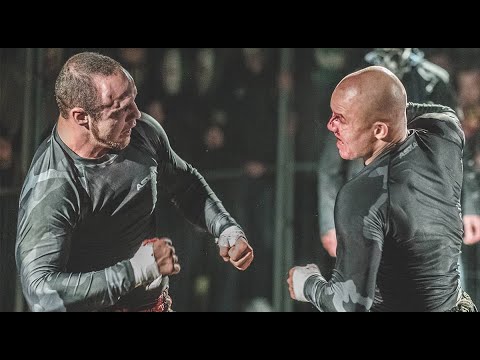
The encounter pitted "Cabeção" of the KGB Hooligan contingent against "Michel" from Jungblut Kiel Hooligan. On paper, the physical attributes were remarkably similar: "Michel" stood at 176 cm and weighed 84 kg, while "Cabeção" measured 175 cm and tipped the scales at 80 kg. Both fighters are listed with a background in **Boxing**. This initial detail is crucial. While Boxing is a legitimate combat sport, its application in a "no rules" or "K.O. only" environment is a distinct variable.
The fight itself, as documented in the "K.O. ONLY" format, promised a direct confrontation where the ultimate goal was to incapacitate the opponent. This format strips away the tactical nuances of rounds, point scoring, and a wider range of techniques, focusing solely on power and precision aimed at ending the fight decisively. The question arises: does the limitation to Boxing techniques in such a brutal setting diminish the martial aspect, or does it elevate the purity of the strike? I maintain that true martial prowess lies in adaptability and the effective application of principles, not just adherence to a specific rule set.
"The martial way is to be invincible, not to be a fighter. To be a fighter is to be a loser. To be invincible is to be a victor." - Miyamoto Musashi
This quote from the legendary Musashi rings profoundly here. Is the goal of "Cabeção" and "Michel" to be invincible, or simply to win the physical confrontation? The spirit of Budo, the warrior's path, is about self-mastery and the cultivation of character through rigorous training. While these fights test courage and resilience, do they foster the inner discipline that defines a true martial artist?

The Unrivaled Format: Rules of the Streets

"King of the Streets" operates under a philosophy that pushes the boundaries of conventional combat sports. The event offers two primary formats: "K.O. ONLY" and "NO RULES." * **"K.O. ONLY"**: In this format, all techniques are permitted except submissions. Victory must be achieved through a knockout. This emphasizes striking power and defensive awareness, as a single well-placed blow can end the contest. * **"NO RULES"**: This is the apex of extremity, where "everything is allowed." Victory can be secured by either knockout or submission. This format is the closest to a true, unregulated street fight, testing a fighter's complete arsenal and their ability to adapt to unforeseen circumstances. Crucially, there are no rounds and no time limits. Fights can extend indefinitely until a victor emerges. This aspect is critical from a training perspective. It demands extraordinary **Resistencia** and mental fortitude, far beyond what is typically required in timed bouts. A fighter must be prepared not just for a few minutes of intense action, but for a prolonged war of attrition. The very nature of these formats raises a significant question for martial artists: What is the difference between a "fight" and a "martial encounter"? A fight is often characterized by emotion, aggression, and a singular focus on defeating an opponent. A martial encounter, while still involving conflict, is underpinned by principles of strategy, respect, control, and self-development. Observing "King of the Streets" requires us to critically evaluate which aspects, if any, align with the latter.

Beyond the Brawl: A Test of Spirit

The allure of underground fight clubs like "King of the Streets" lies in their raw authenticity. They strip away the gloss and spectacle of mainstream combat sports, presenting a more primal form of human conflict. Participants like "Cabeção" and "Michel" are not professional athletes in the traditional sense; they are individuals drawn to the crucible of extreme competition. This raises a fundamental question that separates the casual observer from the dedicated martial artist: What is the *purpose* of the fight? For "Cabeção" and "Michel," the motivation might be prize money, reputation within their subculture, or simply the adrenaline rush. For a practitioner of Budo, the motivations are often deeper: self-improvement, the refinement of character, understanding one's limits, and the pursuit of **Inner Strength**. When we watch such a fight, are we witnessing the application of martial skills, or are we observing a demonstration of courage, power, and perhaps recklessness? The "K.O. ONLY" format, focusing solely on striking, might seem to limit the scope of martial arts. However, a master of Boxing can be devastatingly effective. The real challenge for a martial artist watching this is to discern the underlying principles. Can we see the defensive footwork, the strategic feints, the power generation from the hips, even within this brutal context?
"A superior fighter does not exist. There is only the fighter who is trying to become superior." - Unknown Budo Master
This is the core of the martial journey. It is not about inherent superiority, but about the relentless pursuit of self-mastery. While "King of the Streets" might not explicitly teach this principle, the raw courage displayed by fighters like "Cabeção" and "Michel" speaks to a willingness to face fear and push boundaries – elements that, when channeled correctly, are foundational to martial development.

What Can We Learn? Training for Unpredictability

While I would never advocate for unregulated street fighting, the principles demonstrated by the "King of the Streets" format can offer valuable insights for our own training. The "K.O. ONLY" and "NO RULES" formats demand a high level of conditioning and adaptability. Let's consider the implications for martial training: * **Unwavering Conditioning**: Fights with no time limits require immense cardiovascular and muscular **Fuerza** and **Resistencia**. This translates to our own workouts. Are we pushing our limits in our conditioning sessions? Are we building the stamina to last when the physical and mental pressure is at its peak? * **Striking Precision**: Even within the confines of Boxing, precision and power are paramount. This emphasizes the importance of dedicated striking practice. For Karate practitioners, this means honing our punches and kicks with intent. For Judoka, it means understanding the power generated through body mechanics even when grappling is not the primary objective. * **Mental Fortitude**: The absence of rounds and the "K.O. ONLY" or "NO RULES" formats place an immense psychological burden on fighters. They must remain focused and composed under extreme duress. This highlights the necessity of **Mental Game** training, including meditation and visualization, to build resilience. * **Adaptability**: While the fighters here may have a Boxing background, the "NO RULES" format implies they must be ready for anything. This is a vital lesson for all martial artists. Our training should not be confined to a single style or set of techniques. We must be prepared to adapt, drawing on our core principles to overcome any challenge. Consider the **CombateEnLaCalle** (Self-Defense) aspect. While "King of the Streets" is a controlled (albeit extreme) environment, the lessons learned about dealing with unpredictable opponents and enduring prolonged physical stress are relevant. A practitioner of **DefensaPersonal** must cultivate a similar mindset of resilience and adaptability.

Essential Gear for the Unconventional Warrior

While "King of the Streets" emphasizes raw, often unadorned combat, there are essential pieces of equipment that support the training and safety of any serious combatant, whether in a dojo or preparing for unconventional encounters. * **Gloves**: For striking-heavy formats like "K.O. ONLY," appropriate **Gloves** are crucial to protect both the hands of the striker and the face of the opponent. For training, varying weights like 12oz or 16oz gloves are standard for sparring. * **Mouthguard**: A high-quality **Mouthguard** is non-negotiable for protecting teeth and preventing concussions. This is a fundamental piece of safety gear for any form of combat that involves striking. * **Protective Cup**: Essential for protecting the groin area, especially in formats where groin strikes might be implicitly or explicitly allowed. * **Shin Guards**: For practitioners who incorporate kicking techniques (even if not explicitly in the "K.O. ONLY" Boxing format), **Shin Guards** are vital for training drills and reducing injury risk. * **Training Shoes**: Lightweight, flexible shoes with good grip are essential for footwork and agility training. Whether you're practicing **Karate** footwork or **MMA** movement, proper footwear makes a difference. * **Duffel Bag**: A durable **Duffel Bag** to carry all your gear to and from training is a practical necessity. Look for one with separate compartments for sweaty gear. For those looking to delve deeper into the philosophical and technical aspects of martial arts, relevant books and resources are invaluable. Consider works on **Bushido** philosophy or tactical manuals on **CombateCuerpoACuerpo**.

Sensei's Verdict: The True Measure of a Fighter

"King of the Streets 64" presents a fascinating, albeit disturbing, glimpse into the darker corners of combat. "Cabeção" and "Michel," as listed with a **Boxing** background, engaged in a raw display of striking within the "K.O. ONLY" format. The event itself, with its lack of rounds and time limits, is a testament to extreme human endurance. However, as a martial arts critique, I must be direct. While courage and a willingness to engage in physical conflict are present, the "King of the Streets" format, by its very nature, often prioritizes brute force and the thrill of unfiltered combat over the discipline, respect, and self-mastery that are the hallmarks of true Budo. The focus on "K.O. ONLY" or "NO RULES" can foster a mindset of pure aggression rather than strategic application of techniques rooted in principles of yielding, control, and efficiency. Does this fight teach us something about raw power and grit? Yes. Does it represent the pinnacle of martial arts? No. The spirit of the warrior is forged not just in the heat of battle, but in the discipline of training, the humility of learning, and the wisdom gained through introspection. **Sensei's Rating:** Barely a White Belt in True Budo. It's a demonstration of combat, not martial mastery.

Frequently Asked Questions

  • What is "King of the Streets"? "King of the Streets" is an underground fight club that organizes unregulated combat events, often featuring "K.O. ONLY" or "NO RULES" formats with no time limits.
  • What is the difference between "K.O. ONLY" and "NO RULES"? "K.O. ONLY" allows all techniques except submissions, requiring a knockout win. "NO RULES" permits virtually everything, with victory by knockout or submission.
  • Are these fights considered martial arts? While they involve combat and test physical attributes, they often lack the philosophical underpinnings, discipline, and emphasis on character development that define traditional martial arts like Karate, Judo, or BJJ. They are closer to unregulated fighting or combat sports.
  • What can a martial artist learn from "King of the Streets"? Insights can be gained into extreme conditioning, the psychological pressure of prolonged combat, and the raw effectiveness of striking when rules are minimized. However, the ethical and philosophical lessons are often absent.
  • Is "Boxing" a martial art? Boxing is a highly technical and demanding combat sport that develops significant skill in punching, footwork, and defense. Many consider it a martial art due to its rigorous training, discipline, and focus on combative effectiveness.

Deeper Dive into the Budo Path

If the raw intensity of combat captivates you, but you seek a path that cultivates character alongside skill, explore these interconnected threads within the vast tapestry of martial arts:
  • BUDO: Understanding the overarching philosophy of the warrior's path.
  • Karate: Explore the striking arts and their traditional forms.
  • Judo: Delve into the principles of grappling, throws, and resilience.
  • MMA: Examine how different martial arts disciplines can be integrated effectively.
  • Self-Defense: Learn practical applications for real-world situations.

Reflexion del Sensei: Tu Próximo Paso

We have witnessed a brutal contest, far from the hallowed grounds of disciplined practice. "Cabeção" and "Michel" threw themselves into the fray, driven by the rules of their arena. Now, I ask you: When you step onto the mat, into the ring, or face an unexpected challenge in life, what drives *you*? Is it the primal urge to simply overcome, or is it the deeper pursuit of self-mastery, of becoming an invincible warrior not by destroying others, but by perfecting yourself? Reflect on this: In the absence of external rules, what internal code guides your actions? ``` GEMINI_METADESC: Analyze the raw combat of \"King of the Streets 64\" between \"Cabeção\" and \"Michel.\" Explore \"K.O. ONLY\" rules, their martial implications, and what true Budo means beyond the brawl.

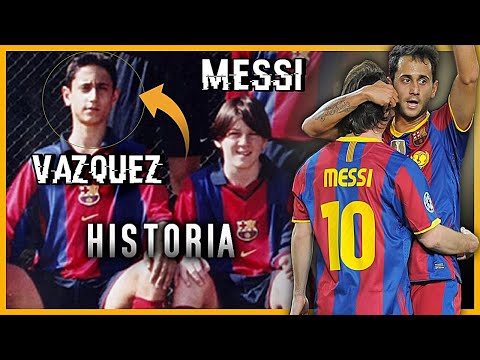
The Boy Who Was Better Than Messi: The Tragic Tale of Víctor Vázquez

The annals of sports are replete with tales of prodigious talent, flashes in the pan, and futures unfulfilled. Yet, few stories are as poignant, as laced with the bitter tang of what might have been, as that of Víctor Vázquez. We often speak of the "chosen ones," the athletes born with a gift so profound it seems almost divine. But what happens when that divine spark is snuffed out prematurely? This isn't a story of glorious victories and legendary status; it's a stark reminder of the fragility of talent and the cruel hand of fate. Today, we delve into the captivating, yet heartbreaking, narrative of a young footballer whose brilliance shone brighter than even Lionel Messi's in his formative years, only to be tragically cut short.

The Genesis of a Prodigy

Born in Barcelona in 1987, Víctor Vázquez was not merely a good young footballer; he was a phenomenon. Even before he was a teenager, whispers of his extraordinary skill echoed through the hallowed grounds of La Masia, FC Barcelona's famed youth academy. While a young Lionel Messi was also honing his craft, many observers at the time noted that Vázquez possessed a precociousness, a maturity of play, and an astonishing technical ability that set him apart. He was lauded for his vision, his dribbling, his precise passing, and a maturity on the ball that belied his tender years. He was, in essence, the "Niño Maravilla" – the Wonder Kid – long before that moniker was attached to others.

La Masia's Golden Boy

Vázquez rose through the ranks of La Masia with unparalleled ease. His performances were consistently exceptional, drawing comparisons not only to Messi but also to other footballing geniuses. He was the lynchpin of the youth teams, the player around whom tactics were built, the one who could unlock any defense. His understanding of the game, his ability to read plays, and his innate creativity made him a standout in an environment already saturated with talent. It seemed inevitable that he would follow in the footsteps of Barcelona's legends, gracing the Camp Nou and etching his name into footballing immortality.

The Cruel Twist of Fate

Yet, as is often the case in life, destiny had other plans. During a youth match, at the tender age of 16, a devastating injury struck. A severe knee injury, specifically a torn anterior cruciate ligament (ACL), not only sidelined him for an extended period but also proved to be a career-altering, and ultimately, career-ending blow. The road to recovery from such an injury is arduous for any athlete, but for a young player whose game was built on agility, speed, and explosive movement, the impact was catastrophic.

The Psychological Toll

The physical rehabilitation was only half the battle. The mental and emotional toll of seeing his dream slip away was immense. The pressure to return to his previous form, the fear of re-injury, and the sheer frustration of being unable to do what he loved most bore down on Vázquez. The football world, which had been eagerly awaiting his senior debut, watched as his trajectory flattened. While he attempted comebacks with various lower-league clubs, the explosive brilliance of his youth never fully returned. The "better than Messi" narrative, once a source of pride, became a painful echo of what could have been.

Life After the Dream

The story of Víctor Vázquez is not one that ends with trophies and accolades. It's a story of resilience in the face of profound disappointment. After his playing career concluded prematurely, Vázquez transitioned into coaching, a natural progression for someone with such an intrinsic understanding of the game. He began working with younger players, sharing his knowledge and passion, perhaps seeking to impart the lessons he learned – not just about football, but about life. He became a coach at the RCD Espanyol youth academy, channeling his experiences into nurturing the next generation.

Lessons from the Pitch and Beyond

The narrative of Víctor Vázquez serves as a powerful, albeit somber, lesson for athletes and aspiring talents across all disciplines, including the martial arts. * **The Fragility of Talent:** Even the most gifted individuals are subject to the whims of fate. Injuries, unforeseen circumstances, and sheer bad luck can derail even the most promising careers. This underscores the importance of not taking one's abilities for granted and of valuing the journey as much as the destination. * **Mental Fortitude:** The psychological aspect of sport cannot be overstated. Recovering from a devastating injury requires immense mental strength, resilience, and a positive outlook. Vázquez's post-playing career in coaching demonstrates a remarkable capacity to adapt and find new purpose. * **Redefining Success:** While football fame eluded him, Vázquez found success in imparting his knowledge and passion. Success is not solely defined by the pinnacle of achievement; it can also be found in mentorship, contribution, and finding fulfillment in new endeavors. This resonates deeply within the **#BUDO** philosophy, which emphasizes continuous self-improvement and finding harmony even amidst adversity. * **The Martial Arts Parallel:** In martial arts, we often speak of **#ki** or **#chi**, the vital energy that fuels our movements. A serious injury can profoundly affect this energy flow. The practice of **#Judo**, **#Karate**, **#Taekwondo**, or **#BJJ** teaches us to persevere through pain and setback, to adapt our techniques when physical limitations arise, and to maintain our spirit even when our bodies falter. A torn ACL in football is akin to a severe joint injury in martial arts; it demands a recalibration of one's entire approach to training and combat. The story of Víctor Vázquez is a poignant reminder that the path to greatness is rarely linear. While he may not have achieved the global superstardom once predicted, his journey offers invaluable lessons about passion, perseverance, and the enduring spirit of sport. It's a tale that echoes through the halls of academies worldwide, a quiet testament to the dreams that bloom and, sometimes, tragically, fade.

Veredicto del Sensei: More Than Just a Football Story

This narrative transcends the typical sports biopic. It's a profound exploration of potential versus reality, of talent's delicate dance with destiny. While the comparison to Messi initially draws us in, the true power of Vázquez's story lies in its human element – the crushing disappointment, the struggle to adapt, and the eventual finding of a new path. It's a story that resonates with any athlete who has faced adversity, any martial artist who has pushed through pain, and anyone who understands the bittersweet nature of dreams unfulfilled. It reminds us that even without reaching the absolute zenith, a life dedicated to one's passion, and the subsequent sharing of that passion, holds immense value. It's a cautionary tale, a source of inspiration, and a testament to the resilience of the human spirit.

Equipo Esencial para tu Entrenamiento (Martial Arts Context)

While Víctor Vázquez's story is rooted in football, the principles of dedication, overcoming adversity, and the importance of physical conditioning are universal. For martial artists, the right equipment is crucial for both training safely and effectively.
  • Guantes de Sparring de Calidad: Para disciplinas como **#Kickboxing**, **#MMA**, o **#Karate** con contacto, invertir en unos buenos guantes de 16oz o más es fundamental para proteger tus manos y las de tu compañero.
  • Kimono Resistente: Si practicas **#Judo**, **#BJJ**, o **#Aikido**, un kimono de doble tejido (heavyweight) puede soportar el rigor del **#grappling** y el desgaste constante.
  • Protección Bucal y Tibial: Elementos básicos pero indispensables para evitar lesiones graves durante sesiones intensas de sparring o entrenamiento de **#CombateCuerpoACuerpo**.
  • Esterillas de Entrenamiento: Para prácticas que implican caídas o movimientos en el suelo, como **#Judo** o **#BJJ**, unas buenas esterillas son vitales para la seguridad y comodidad.
  • Makiwara o Saco de Boxeo: Herramientas clásicas para desarrollar la potencia de golpeo y la resistencia de tus puños y pies, esenciales en estilos como el **#KyokushinKarate**.
For those looking to delve deeper into the philosophy and history of martial arts, investing in literature is equally important. Books on **#Bushido**, the biographies of legendary masters like Miyamoto Musashi, or texts on **#Zen** and **#BUDO** can provide invaluable insights that complement physical training.

Guía de Entrenamiento: Fortaleciendo tu "Ki" (Energía Vital)

The concept of "Ki" is central to many Eastern martial arts. While it's a spiritual and energetic concept, its cultivation is often linked to physical practices that enhance breath control, focus, and bodily awareness. Here’s a simple exercise rooted in **#BUDO** principles that can help:
  1. Preparación: Encuentra un lugar tranquilo donde no seas molestado. Ponte de pie con los pies separados al ancho de los hombros, rodillas ligeramente flexionadas y la columna vertebral erguida pero relajada. Cierra suavemente los ojos.
  2. Respiración Abdominal (Hara): Coloca una mano sobre tu abdomen, justo debajo del ombligo (tu "Tanden" o centro de energía). Inhala lentamente por la nariz, sintiendo cómo tu abdomen se expande, empujando tu mano hacia afuera. Tu respiración debe ser profunda y diafragmática, no superficial en el pecho.
  3. Visualización del Flujo: Al exhalar lentamente por la nariz, imagina que toda la tensión, el estrés y la fatiga salen de tu cuerpo. Con cada inhalación, visualiza una energía pura y revitalizante (Ki) entrando en tu cuerpo, llenando tu Tanden y extendiéndose a través de tus extremidades.
  4. Mantenimiento y Conexión: Mantén este patrón de respiración durante 5 a 10 minutos. Siente la energía acumulándose en tu centro. Intenta mantener una sensación de calma y presencia mental.
  5. Cierre: Después de tu sesión, respira profundamente un par de veces, mueve suavemente los dedos de manos y pies, y abre los ojos lentamente. Siente la diferencia en tu estado físico y mental.
This exercise, fundamental in practices like **#Aikido** and **#QiGong**, helps in centering oneself, improving focus, and building a stronger connection to one's inner energy – a core tenet of **#MartialArtsJourney**.

Preguntas Frecuentes

¿Quién fue Víctor Vázquez?

Víctor Vázquez was a Spanish footballer, born in 1987, who was considered a prodigious talent in FC Barcelona's youth academy, La Masia. He was noted for his exceptional skills and was even considered by some to be playing at a level comparable to a young Lionel Messi during their shared time in the academy.

¿Por qué no triunfó profesionalmente Víctor Vázquez?

Vázquez's promising career was tragically cut short at the age of 16 by a severe knee injury, specifically a torn ACL. This injury significantly impacted his physical capabilities, preventing him from reaching the elite professional level despite attempts to recover and play for various clubs.

¿Qué hace Víctor Vázquez ahora?

After his playing career ended prematurely, Víctor Vázquez transitioned into coaching. He has worked with youth academies, notably RCD Espanyol's, to help develop the next generation of footballers, channeling his extensive knowledge and experience.

¿Qué lecciones se pueden aprender de la historia de Víctor Vázquez?

His story highlights the fragility of athletic careers, the importance of mental resilience in the face of adversity, and the need to redefine success beyond just reaching the highest professional level. It also underscores the value of mentorship and sharing one's passion, even after dreams are altered.

¿Cómo se relaciona la historia de Vázquez con las artes marciales?

While Vázquez's story is in football, it parallels the experiences of martial artists who face career-threatening injuries. It emphasizes the importance of physical conditioning, mental fortitude, resilience, and adapting to limitations, all core tenets within **#BUDO** and various **#Combate** disciplines.

Para Profundizar en tu Camino

  • #BUDO: Descubre la filosofía subyacente en las artes marciales japonesas.
  • #ArtesMarcialesMixtas: Explora cómo la adversidad forja a los campeones de la #UFC.
  • #FightAnalysis: Analiza la resiliencia y las estrategias de los atletas que superan obstáculos.
"The greatest glory in living lies not in never falling, but in rising every time we fall." - Nelson Mandela. This profound truth resonates deeply with the spirit of every martial artist and, indeed, with the journey of Víctor Vázquez.

Reflexión del Sensei: Tu Próximo Paso

Vázquez's narrative is a stark reminder that talent is a gift, but resilience is a choice. We often chase the illusion of inevitable success, comparing ourselves to titans like Messi. But what if the true "victory" lies not in reaching the summit, but in how we navigate the unexpected detours and the steep climbs? If your own journey has been marked by setbacks, be they physical injuries or dashed ambitions, how can you harness that experience not as an end, but as a catalyst for growth and a deeper understanding of your chosen path, whether it’s on the football pitch or the dojo mat? How will you rise? ``` GEMINI_METADESC: Explore the heartbreaking story of Víctor Vázquez, the young football prodigy once considered better than Messi, whose career was tragically cut short by injury. Learn lessons of resilience and success.

When Cocky Fighters Get Knocked Down: A Martial Arts Analysis

The Illusion of Arrogance: More Than Just Showmanship

The warrior's path, the very essence of Budo, is paved with discipline, respect, and an unyielding pursuit of mastery. Yet, within the electrifying crucible of combat sports, a peculiar paradox often emerges: arrogance. Many believe that a cocky demeanor is merely a tool, a psychological weapon to intimidate opponents and project an aura of invincibility. It's a dangerous interpretation, one that confuses bravado with true martial prowess. While a certain swagger can indeed add flair and spectacle, as we often see in the electrifying world of MMA, it is a double-edged sword. For the uninitiated, this swagger might seem like a badge of honor, a testament to their perceived superiority. But to those who understand the depths of martial philosophy, it’s a glaring red flag.
"Arrogance is the camouflage of insecurity." - Unknown Master
The truth, however, is that if one chooses to play the game of cockiness, they must be able to back it up with an equal, if not greater, measure of substance. The ring, whether it's for boxing, Karate, or any form of Combate, is a harsh arbiter of reality. It’s where words become meaningless and actions speak volumes. We are not entirely against the theatrical elements that spice up a Fight; the taunts, the posturing, the animated celebrations – they are part of the drama that captivates audiences. But there's a critical distinction to be made between a fighter who uses their confidence to fuel their performance and one who is merely *all talk*.

The Fatal Flaw: When Swagger Meets Substance (or Lack Thereof)

This is where we delve into the captivating, and often brutal, category of fighters who rely more on theatrics than on genuine skill. These are the individuals whose pronouncements of invincibility are as hollow as their training regimen. In today's analysis, we will examine those cocky fighters who ultimately failed to "put their money where their mouth or muscle was," experiencing the humbling, and often spectacular, downfall that comes with such hubris. It’s a testament to the fundamental principles of BUDO: respect for the opponent and the continuous cultivation of one's self.

The Anatomy of a Knockout: From Arrogance to Humiliation

What separates a true champion from a braggart? It's the deep well of discipline, the relentless dedication to honing skills, and the profound understanding that mastery is a journey, not a destination. Fighters who exhibit excessive arrogance without the underlying capability often fall prey to their own inflated ego. Their focus shifts from the craft of Lucha to self-aggrandizement. This mental lapse, this disconnect from the core principles of martial arts, often leaves them vulnerable. * Overconfidence: A cocky fighter may underestimate their opponent, assuming their reputation or mere presence is enough to secure victory. * Poor Preparation: The focus on outward projection can overshadow the necessity of rigorous Entrenamiento and strategic planning. * Emotional Vulnerability: Arrogance can make a fighter emotionally volatile. A setback or unexpected move from their opponent can shatter their composure, leading to panic. * Ignoring Fundamentals: Complex techniques or showy moves might be favored over solid, fundamental skills, which are often the most effective under pressure. In essence, the very arrogance that a fighter might use to project strength can become their Achilles' heel. The universe, much like a disciplined Sensei, has a way of delivering humbling lessons.

Case Studies: When Fighters Face the Music

While we cannot explicitly detail specific fights due to the nature of this analysis, the annals of combat sports are replete with examples. Think of those highly touted prospects who entered the ring with a dismissive attitude, only to be swiftly dismantled by a technically superior or more disciplined opponent. The crowd gasps, the commentators are stunned, and the arrogant fighter is left with a stark realization: their bark was far louder than their bite. This is the karma that often follows unchecked ego in the martial world.
"A true warrior is not a fighter who talks big, but one who acts small and defeats his opponent." - Master Mas Oyama (paraphrased)
These moments, while perhaps entertaining from a spectator’s perspective, serve as potent reminders of the core values that underpin all true ArtesMarciales. The journey of a martial artist is one of constant self-improvement, humility, and respect for the path.

Veredicto del Sensei: ¿Show o Substancia?

The line between confident showmanship and detrimental arrogance is razor-thin. While a fighter who can deliver on their swagger is an exciting spectacle, the fighter who relies solely on it is a tragic figure waiting to happen. True mastery in any CombateCuerpoACuerpo discipline, be it Judo, Kickboxing, or ArtesMarciales Mixtas, is built on a foundation of relentless training, strategic thinking, and profound respect. Arrogance, when untethered from skill, is not a weapon but a vulnerability. It blinds fighters to their own weaknesses and makes them easy prey for a disciplined opponent. **Calificación:** Cinturón Negro en Humildad Requerida. Los peleadores deben recordar que el ring es el escenario de la verdad.

Equipo Esencial para tu Entrenamiento

For those aspiring to avoid the pitfalls of arrogance and cultivate genuine martial skill, the right equipment is crucial. It's not about flashy gear, but about tools that facilitate effective training and build a solid foundation.
  • Guantes de Entrenamiento de Calidad: Para proteger tus manos durante el sparring y el trabajo de saco. Busca guantes con buen acolchado, especialmente en el rango de 14-16 oz para sparring.
  • Kimono Resistente: Si practicas Judo, BJJ o Karate, invierte en un kimono (gi) de doble tejido o reforzado. Durará más y soportará el rigor de los entrenamientos intensos.
  • Protector Bucal: Indispensable para cualquier tipo de sparring o combate para prevenir lesiones dentales.
  • Espinilleras y Guantes de Protección para MMA/Kickboxing: Si tu disciplina lo requiere, estos elementos son vitales para entrenamientos seguros.
  • Saco de Boxeo o Makiwara: Para desarrollar potencia y precisión. Un buen saco de boxeo o un makiwara tradicional son herramientas invaluables.
Investing in the right MartialArtsMerchandise is an investment in your development as a martial artist.

Guía de Entrenamiento: El Ejercicio del 'Escucha y Responde'

To combat the tendency towards arrogance, a focus on discipline and attentive listening is paramount. This exercise, best practiced with a training partner, cultivates humility and responsiveness.
  1. Posición Inicial: Ambos practicantes se colocan en una postura de combate básica, mirándose mutuamente.
  2. Comando del "Sensei": Uno de los practicantes asume el rol de "Sensei" y da una orden simple, como "¡Giro a la izquierda!" o "¡Baja guardia!".
  3. Respuesta Inmediata: El otro practicante (el "estudiante") debe ejecutar la acción indicada de forma inmediata y precisa.
  4. Rotación de Roles: Después de 5-10 repeticiones, los roles se intercambian.
  5. Variaciones: Introduce combinaciones de comandos o comandos auditivos y visuales (ej: un gesto y una palabra).
  6. Enfoque: El objetivo es escuchar atentamente, procesar la información y reaccionar con la máxima eficiencia. Esto enseña humildad al reconocer la necesidad de seguir instrucciones y disciplina al ejecutarlas perfectamente.
This simple drill reinforces the martial arts principle of listening to your teacher and your environment, a stark contrast to the self-absorbed nature of arrogance.

Recursos para Profundizar

To truly understand the philosophy behind martial arts and the consequences of unchecked ego, further study is essential.
  • BUDO y la Filosofía Marcial
  • Análisis de Fight Analysis: Cómo la Técnica Supera la Arrogancia
  • Biografías de Maestros: Lecciones de Humildad de Leyendas Marciales

Preguntas Frecuentes

What is the difference between confidence and arrogance in martial arts?

Confidence is a quiet self-assurance stemming from skill and preparation. Arrogance is an excessive belief in one's superiority, often masking insecurity and leading to a disregard for opponents and fundamentals.

Can taunting be effective in a fight?

Taunting can be a psychological tactic, but its effectiveness hinges entirely on the fighter's ability to back it up. If they fail to do so, the taunting becomes a liability, revealing their lack of substance.

Why is humility so important in martial arts?

Humility fosters continuous learning, respect for others, and self-awareness. It keeps a practitioner grounded, focused on improvement rather than ego, which is essential for true mastery and longevity in the martial path.

Are there specific martial arts that encourage more swagger than others?

While the discipline of each art aims to instill humility, certain combat sports that emphasize flair and individual expression, like some forms of Kickboxing or exhibition MMA bouts, can sometimes showcase more outward displays of confidence that might border on arrogance if not grounded in skill.

How can a martial artist overcome their own arrogance?

By actively seeking feedback, focusing on the process of training rather than just results, practicing humility in sparring, studying the philosophy of martial arts, and remembering that there is always someone more skilled. Consistent practice of drills that emphasize listening and responding is also key.

Para Profundizar en tu Camino

  • BudoLife: Más Allá del Combate
  • Entrenamiento de Agility: La Base de un Peleador Ágil
  • El Legado de los Fighter Legacy: Maestros de la Disciplina

Reflexión del Sensei: Tu Próximo Paso

The ring is a mirror. It reflects not only your physical capabilities but also the state of your spirit. When you stand before an opponent, are you facing them with the quiet strength of a seasoned warrior, or the hollow bluster of an insecure child? True martial arts training is a journey of self-discovery, a path that strips away ego to reveal the core of one's being. Now, tell me: If you were to step into the ring tomorrow, with all your current skills and mindset, would you be the hunter, or the hunted? Do you believe the spectacle of cockiness is a vital part of combat sports, or a dangerous illusion? Defend your stance in the comments below. GEMINI_METADESC: Descubre por qué la arrogancia en las artes marciales lleva a la humillación. Un análisis profundo sobre la disciplina, el ego y la verdadera maestría marcial.

The Warrior's Crucible: Alan Belcher's BKFC Transformation and the True Spirit of Combat

The roar of the crowd, the scent of anticipation, the raw, unadulterated dance of combat. These are the elements that draw us to the arenas, to witness the primal struggle that defines so much of human endeavor. But what truly separates a mere spectacle from a testament to the martial spirit? Is it the ferocity of the strike, the strategic mastery of the clinch, or something far more profound? Today, we dissect the transformation of Alan Belcher, a name synonymous with tenacious MMA, as he stepped into the unforgiving crucible of bare-knuckle boxing at BKFC 20 against the formidable Tony Lopez. This isn't just about a fighter changing disciplines; it's about the enduring essence of the warrior.

Unveiling the Warrior's Path: Belcher's BKFC Debut

Alan Belcher, a veteran whose powerful striking and submission prowess made him a feared opponent in MMA promotions, made a daring foray into the world of bare-knuckle boxing at BKFC 20. His opponent, Tony Lopez, was no stranger to the brutal realities of this discipline, known for his resilience and warrior spirit. The very act of stepping into the ring without gloves, with only the calloused skin and honed technique as defense, is a testament to a fighter's commitment to the ultimate test of will and skill. This transition speaks volumes about Belcher's inherent drive to push his limits and confront fear head-on, a core tenet of #BUDO and the broader #MartialArtsJourney.

The transition from MMA to bare-knuckle is not a trivial one. The gloves, while offering some protection, also alter the dynamics of striking and grappling. Bare-knuckle demands a different kind of precision, a heightened awareness of distance, and an almost unimaginable fortitude to withstand the impact of unprotected blows. It strips away some of the technical layers of MMA, exposing the raw, unyielding spirit of the combatant. It’s a dive into the deep end of #CombateCuerpoACuerpo, testing the mettle in its most fundamental form. We often see fighters evolve, but this particular shift represents a profound test of character and #InnerStrength.

BKFC 20: A Clash of Titans and the Evolution of the Fighter

BKFC 20 showcased a card brimming with potential, but the encounter between Alan Belcher and Tony Lopez stood out as a focal point. It represented a clash not just of styles, but of legacies. For Belcher, it was a chance to prove that his warrior spirit, forged in the octagon, could translate to a different, arguably more primitive, arena. For Lopez, it was an opportunity to defend his territory against a high-profile newcomer.

The fight itself, while a significant event, serves as a microcosm for a larger discussion about fighter transformation. We saw Belcher apply his power and strategic thinking, adapting to the unique demands of bare-knuckle. This event, originally scheduled for August 20th, 2021, highlighted the continuous evolution within combat sports, a theme that resonates deeply with the principles of #Perseverance and #SelfImprovement that are central to any martial art.

It’s crucial to understand that this wasn't merely a superficial change. Stepping into the bare-knuckle arena is a conscious decision to embrace a more primal form of combat. It requires an immense amount of bravery and a deep understanding of the risks involved. This is where the line between a sport and a true test of warrior spirit blurs, making events like BKFC 20 fascinating case studies for anyone interested in the psychology of #Fighters and the human capacity for facing adversity. The inherent risks also bring a heightened sense of authenticity to the contest, a quality often sought by fans of #MMA and #CombatSports alike.

Beyond the Bare Knuckle: Belcher's Continued Journey and BKFC Fight Night Jackson

The narrative didn't end with Belcher's BKFC debut. His return to action at Fight Night Jackson on January 29th, 2022, facing Bobo O'Bannon, underscores the dedication required to remain at the forefront of this demanding sport. This event in Mississippi, held at the Jackson Convention Complex, further solidified the growing presence of bare-knuckle boxing, offering a platform for warriors to test their mettle in a raw, unvarnished format.

The fight card for this event was stacked, featuring a welterweight championship bout between Elvin Brito and Kaleb Harris, promising a night of intense action. The co-main event, featuring Belcher against O'Bannon, was highly anticipated, and the additional nine bare-knuckle bouts ensured a full spectrum of combat sports excitement. This demonstrates the expanding landscape of #CombatSports and the diverse avenues available for athletes to showcase their skills.

Events like BKFC Fight Night Jackson are vital for the growth of disciplines that demand such extraordinary courage and commitment. They provide opportunities for seasoned veterans and rising stars alike to prove their worth. For fans of the raw, unscripted drama of combat, these events offer an unparalleled experience, tapping into the ancient human fascination with the warrior's duel. It's a reminder that the spirit of combat, in its purest form, continues to captivate audiences worldwide, driving interest in #MartialArtists and the #WarriorPhilosophy.

The Anatomy of Transformation: What Drives a Fighter to Adapt?

Alan Belcher's journey is a powerful illustration of a fighter's innate drive for evolution. What compels an athlete, already established in one discipline, to step into a new and potentially more dangerous arena? Several factors come into play:

  • The Pursuit of a Pure Test: Bare-knuckle boxing strips away many of the layers of modern MMA, offering a more direct and primal test of skill, heart, and resilience. It appeals to those who seek the most fundamental form of combat.
  • Challenging Limitations: True warriors are never content. They constantly seek new mountains to climb, new ways to test their mettle and prove their capabilities. This is the essence of #SelfMastery.
  • The Lure of a Different Kind of Glory: While MMA offers fame and fortune, the raw, visceral nature of bare-knuckle combat provides a unique and potent form of recognition and accomplishment.
  • A Deeper Connection to History: Bare-knuckle boxing is a return to the roots of combat sports, echoing historical duels and tests of strength that have captivated humanity for millennia. It connects to a primal instinct, a core aspect of the #BUDO life.

This drive for adaptation and self-discovery is a universal theme, not confined to the fighting realm. It is the very essence of growth, whether in physical training, mental discipline, or philosophical understanding. It’s about embracing challenges that push you beyond your perceived limits. This concept is central to the #MartialArtsJourney, reminding us that progress often lies just outside our comfort zone.

Veredicto del Sensei: ¿Merece la pena?

The transition of a fighter like Alan Belcher into bare-knuckle boxing is, without question, a testament to the unyielding spirit of the warrior. It's not about glorifying violence, but about acknowledging the courage, discipline, and resilience required to face such a raw and fundamental test. Belcher's willingness to step into the crucible of BKFC demonstrates a deep commitment to his craft and an unwavering pursuit of self-challenge. It’s a display of **"Cinturón Negro en Coraje"** for embracing the unknown and confronting fear with strategic intent.

Equipo Esencial para tu Entrenamiento

While bare-knuckle boxing requires minimal equipment in the ring, the preparation for such a demanding discipline is extensive and relies on foundational training. To emulate the dedication of fighters like Alan Belcher, consider the following:

  • Guantes de Entrenamiento y Sparring: Essential for developing striking power and endurance safely during MMA or kickboxing preparation. Look for quality sparring gloves (14-16oz).
  • Protector Bucal: Non-negotiable for any form of combat training to protect your teeth and jaw.
  • Kimono de Judo/BJJ (si aplica): For fighters who cross-train, a durable gi is crucial for grappling practice. A double-weave gi is recommended for longevity.
  • Hombreras y Protecciones de Cabeza: Useful for specific drills to simulate impact and refine defensive techniques in MMA or boxing training.
  • Pesas y Equipo de Fuerza: For building the foundational strength necessary for powerful strikes and the endurance to withstand prolonged combat.
  • Cuerda de Saltar: An indispensable tool for improving footwork, coordination, and cardiovascular conditioning, crucial for fighters in any discipline.

Guía de Entrenamiento: Desarrollando la Resiliencia del Guerrero

The mental and physical fortitude required for bare-knuckle boxing is honed through rigorous, multi-faceted training. Here's a practical approach:

  1. Fundamentos de Striking: Master the basics of punches (jab, cross, hook, uppercut) and kicks (if applicable to your base art). Focus on precision, power generation from the hips, and proper form. Practice on heavy bags and with pads.
  2. Acondicionamiento Físico Intensivo: Incorporate high-intensity interval training (HIIT), circuit training, and long-distance cardiovascular work. Focus on building endurance for multiple rounds and explosive power for single, decisive strikes.
  3. Sparring Estratégico: Engage in sparring sessions that simulate the intensity and pace of bare-knuckle fighting. This involves controlled striking with emphasis on defense, distance management, and reaction time. Adapt drills to focus on hand protection and blocking.
  4. Fortalecimiento de Manos y Muñecas: Gradually incorporate exercises like rice bucket training, grip strengtheners, and specific wrist conditioning drills to prepare your hands for impact. Consult with a coach or physical therapist for safe progression.
  5. Preparación Mental y Visualización: Practice mindfulness and visualization techniques. Imagine yourself in challenging scenarios, executing techniques effectively, and maintaining composure under pressure. This builds the #MentalGame essential for combat.
  6. Recuperación Activa: Prioritize sleep, nutrition, stretching, and active recovery methods like foam rolling. A warrior is only as strong as their ability to recover and adapt.

Preguntas Frecuentes

¿Es el bare-knuckle boxing más peligroso que el MMA?

El bare-knuckle boxing presenta riesgos elevados debido a la falta de protección en las manos, lo que puede llevar a lesiones más severas y fracturas. Sin embargo, el MMA, con sus múltiples disciplinas (striking, grappling, sumisiones), conlleva su propio conjunto de riesgos significativos. La peligrosidad es alta en ambos, pero la naturaleza de las lesiones puede diferir.

¿Por qué un luchador de MMA se pasaría al bare-knuckle?

Los luchadores pueden hacer esta transición en busca de una prueba más pura de habilidad de combate, para desafiar sus límites, por la emoción de un nuevo comienzo, o por una conexión con las raíces históricas del combate. También puede ser una oportunidad para una carrera diferente o un cambio de ritmo.

¿Qué habilidades del MMA son más transferibles al bare-knuckle?

La potencia de golpeo, la gestión de la distancia, la resistencia cardiovascular, la fuerza mental, la capacidad de absorber golpes y la estrategia general de combate son altamente transferibles. Las habilidades de agarre (grappling) son menos relevantes directamente, pero la fuerza y el control corporal que se desarrollan son beneficiosos.

¿Cómo se prepara un peleador para la ausencia de guantes?

La preparación se centra en fortalecer las manos y muñecas, refinar la técnica de golpeo para maximizar la efectividad con el mínimo de riesgo de lesión, y desarrollar una resistencia psicológica aún mayor para soportar el dolor y la presión del combate sin la amortiguación de los guantes.

¿Representa el bare-knuckle una evolución o una involución en las artes marciales?

Es un debate complejo. Algunos lo ven como un retorno a las raíces más crudas del combate, una prueba de espíritu fundamental. Otros lo consideran una involución, alejándose de las técnicas más refinadas y seguras que se han desarrollado en las artes marciales modernas. El verdadero valor reside en la disciplina, el coraje y el respeto que los practicantes demuestren.

Para Profundizar en tu Camino

"El Kendo es la vida, el combate es la muerte." - Anónimo Zen. Esta profunda declaración nos recuerda que la disciplina del guerrero no es solo para la batalla, sino para la forma en que vivimos nuestras vidas.

Reflexión del Sensei: Tu Próximo Paso

Alan Belcher's journey into bare-knuckle boxing is a powerful narrative of courage and adaptation. It begs the question: what "bare-knuckle" challenge does your own training present? Are you avoiding the aspects of your martial art that are uncomfortable, that demand a raw confrontation with your limitations? Or are you, like the true warrior, willing to step into the arena of your own self-improvement, no matter how intimidating the path may seem?

¿Qué habilidad o aspecto de tu propio entrenamiento has estado evitando, y cómo puedes comenzar a enfrentarlo con la misma audacia que un guerrero en el cuadrilátero?

``` GEMINI_METADESC: Explore Alan Belcher's BKFC debut, BKFC Fight Night Jackson, and the warrior spirit in combat sports. Analyze MMA transitions and the true essence of fighting.