Showing posts sorted by date for query Best MMA Defenses against Strikes. Sort by relevance Show all posts

The Most Effective Martial Arts for Home Defense Against Burglary

Home burglary. The words alone can send a shiver down your spine. It’s a stark reality that, in many parts of the world, a break-in isn’t a matter of if, but when. With burglaries occurring every 26 seconds in the US alone, and millions happening globally each year, the threat is alarmingly real. This isn't just a statistic; it's a potential invasion of your sanctuary, a threat to your peace of mind and the safety of your loved ones. In such desperate circumstances, what tools do you possess? Beyond reinforced doors and alarm systems, the most potent defense lies within you – your body, your mind, and your training. Today, we delve into the martial arts that can transform you from a potential victim into a capable defender when your home is threatened.

Welcome, students of the Way, to Budo and AM. You stand on the precipice of understanding how ancient combat methodologies can serve your modern-day safety. This isn't about aggression; it's about preparedness. It's about cultivating the presence and capability to deter, defend, and, if absolutely necessary, neutralize a threat within the most vulnerable space you inhabit: your home. We aim to equip you with knowledge, not just theoretical, but practical. Consider this your first lesson in the martial art of home defense.

Introduction: The Alarming Reality of Home Burglary

As mentioned, the statistics are chilling. A burglary occurs with alarming frequency, shattering the sense of security that our homes are meant to provide. Drug addicts, opportunistic thieves, or even more organized criminals – the source matters less than the immediate threat. In these moments, traditional security measures can fail, and your personal ability to defend yourself becomes paramount. This is where martial arts training transcends sport and transforms into a vital life skill. It's not about seeking conflict, but about possessing the capacity to de-escalate, deter, or defend when unavoidable. Let us analyze which disciplines offer the most practical and effective skills for such a critical situation.

Choosing the Right Art: Principles for Home Defense

When selecting a martial art for home defense, we must look beyond flashy techniques or the aesthetics of tradition. We need effectiveness, practicality, and rapid applicability. The principles that guide this choice are:

  • Simplicity: Complex techniques are difficult to recall and execute under extreme stress. Simple, direct movements are key.
  • Directness: The goal is to stop the threat efficiently, not to engage in prolonged combat. Techniques should be decisive.
  • Realism: The art must train against common attack scenarios, not idealized combat.
  • Adaptability: Home environments are often cluttered and confined. The art should allow for movement and technique application in such spaces.
  • Control: The ability to control an attacker, either through joint locks, throws, or incapacitation, is crucial.

Many arts claim effectiveness, but few are forged in the crucible of real-world self-defense. We must discern the signal from the noise.

Top Martial Arts for Home Defense

Now, let's dissect the disciplines that stand out when the threat is at your doorstep. Each offers unique advantages, and often, a blend of skills from different arts provides the most robust defense.

Karate: Power and Precision

Originating from Okinawa, Karate is renowned for its powerful linear strikes and strong stances. Its core principles of ikken hissatsu (one strike, one kill) translate directly to the need for decisive action in a home invasion. While traditional Karate training can sometimes be ritualistic, its emphasis on explosive power, rapid footwork, and direct hand techniques (punches, open-hand strikes) makes it highly effective. A well-trained Karateka can deliver crippling blows to vital areas, deterring or incapacitating an attacker quickly. The kata, or forms, if trained with practical application in mind, can simulate defensive movements against multiple threats in confined spaces.

"Karate is a lifetime pursuit of discipline and self-mastery." - A fundamental tenet of Karate practitioners.

For home defense, the applications of punches like the tsuki, blocks like the age uke (rising block) to defend the head, and kicks to the lower body are invaluable. The focus on conditioning the body, particularly the striking surfaces, also enhances resilience.

Krav Maga: The Ultimate Survival System

If pure, unadulterated effectiveness is the sole criterion, then Krav Maga often tops the list. Developed for the Israeli military, it is a brutal, no-nonsense system designed for survival in violent confrontations. Krav Maga ruthlessly exploits vulnerable targets – eyes, throat, groin – and utilizes natural weapons like elbows, knees, and headbutts. There are no rules in a home invasion, and Krav Maga embraces this ruthlessly. It trains you to react instinctively to common threats, including grabs, chokes, and attacks with weapons, all within a confined space. Its emphasis on simultaneous defense and offense, and its continuous adaptation to evolving threats, makes it a prime candidate for personal security.

Consider the practicality: a simple, powerful strike to the throat or eyes can end an engagement instantly. There's no embellishment, no sport aspect – only survival.

Jeet Kune Do: Adaptability and Efficiency

The philosophy of Jeet Kune Do (JKD), created by the legendary Bruce Lee, is "using no way as way, having no limitation as limitation." This makes it exceptionally suited for the unpredictable nature of a home invasion. JKD teaches practitioners to be adaptable, to flow between different ranges of combat (kicking, punching, trapping, grappling), and to utilize whatever technique is most effective in a given moment. It emphasizes efficiency, economy of motion, and directness. A JKD practitioner wouldn't be confined to one style; they would fluidly transition from a powerful kick to a trapping hand technique, then to a close-range elbow strike or a takedown, all while considering the environment. Bruce Lee himself stressed the importance of training for real combat, not just sport.

"The art of fighting without fighting." - A paradox that defines Bruce Lee's approach to combat.

The JKD principle of intercepting an attack as it happens, rather than waiting to defend, is a powerful concept for preventing an intruder from gaining the upper hand.

Judo: Leverage and Control

While often seen as a sport, Judo provides invaluable skills for home defense, particularly in close-quarters combat. The founder, Jigoro Kano, intended Judo to be a system for physical, mental, and moral education. Its emphasis on throws (nage waza) and grappling (katame waza) allows you to control an attacker, use their momentum against them, and bring them to the ground where you may have a significant advantage, especially within the confined spaces of a home. Techniques like O-soto gari (major outer reaping) or Ippon seoi nage (one-arm shoulder throw) can quickly neutralize an opponent. Furthermore, groundwork techniques such as armlocks (kansetsu waza) and chokes (shime waza) offer non-lethal means of incapacitation.

The ability to use leverage rather than brute strength is a key advantage, especially if you are smaller or less physically imposing than an intruder. Mastering Judo principles can turn an attacker's own aggression into their downfall.

Aikido: Redirecting Force

Aikido, often described as the "way of harmonious energy," focuses on blending with an attacker's motion and redirecting their force against them. While it may appear less direct than striking arts, Aikido's principles of joint locks, throws, and pins are highly effective for controlling an attacker without necessarily causing severe injury, which can be advantageous in a self-defense situation where legal ramifications are a consideration. The circular movements and evasive footwork taught in Aikido are excellent for managing space and evading direct confrontation, allowing you to create openings for decisive action or to escape. Learning to absorb and redirect an attack is a profound skill that can disorient and subdue an aggressor.

A skilled Aikido practitioner can often neutralize a larger, stronger attacker by leading their momentum, turning aggression into imbalance. This is particularly useful in tight home environments where large, sweeping movements might be restricted.

Training Considerations for Home Defense

Simply knowing techniques is insufficient. To be truly prepared for a home invasion, your training must incorporate:

  • Stress Inoculation: Training under simulated pressure (e.g., with mild fatigue, distractions, or a partner moving unpredictably) is crucial.
  • Environmental Awareness: Practice techniques in varied and confined spaces, simulating your home's layout. Understand how furniture, obstacles, and lighting can be used for or against you.
  • De-escalation: While martial arts training focuses on physical defense, the ultimate goal is to avoid the physical confrontation if possible. Verbal de-escalation is a vital first line of defense.
  • Legal Considerations: Understand the laws regarding self-defense in your jurisdiction. The force used must be proportionate to the threat.
  • Physical Conditioning: Strength, stamina, and flexibility are the foundation upon which all techniques are built. Without them, even the best technique can fail.

A balanced approach, integrating physical skills with mental preparedness and an understanding of the legal landscape, is essential.

Practical Application: Scenarios and Strategies

Imagine an intruder forcing entry through a back window. Your training should immediately kick in. Which art offers the best response?

  • Striking Arts (Karate, Krav Maga): A swift, powerful strike to the face or throat can stop the intruder in their tracks before they even fully enter.
  • Grappling Arts (Judo): If they manage to enter and engage, a well-timed takedown can put them on the defensive on the ground, where you can control them or create an escape.
  • Flowing Arts (JKD, Aikido): You might evade their initial aggressive push, redirect their momentum as they stumble, and then use a quick application of pressure or a decisive strike.

The key is to have a repertoire of responses and the ability to choose the most appropriate one instantly. This requires consistent, realistic training. Consider scenarios like: an attacker armed with a knife, an attacker who grabs you from behind, an attacker who attempts to restrain you. How would your chosen art address these?

Essential Gear for Home Defense Training

While the best defense comes from within, certain equipment can enhance your training and preparedness:

  • Protective Gear: Mouthguards, groin protectors, and sparring gloves (when applicable) are essential for safe, intensive training.
  • Training Uniform (Gi/Dobok): For arts like Judo, Karate, and Aikido, a durable training uniform is necessary for practicing grips and throws. A good Karate gi or Judo gi can withstand rigorous training.
  • Training Mats (if applicable): For arts involving throws or groundwork, mats provide safety.
  • Focus Mitts and Strike Shields: Useful for practicing striking power and accuracy with a partner.
  • Optional: Inert training tools: For advanced training in Krav Maga or JKD, realistic training knives or batons can simulate weapon defenses, but MUST be used with extreme caution and qualified instruction.

Investing in quality training gear ensures durability and safety, allowing you to focus on honing your skills.

Frequently Asked Questions

What is the absolute best martial art for self-defense at home?

There isn't one single "best." However, systems like Krav Maga are specifically designed for real-world, no-rule confrontations and are highly effective. Jeet Kune Do offers unparalleled adaptability. Traditional arts like Karate provide power, while Judo and Aikido offer control and redirection. The best art is often the one you can train consistently and effectively.

Do I need to be very strong to use these martial arts?

Not necessarily. Arts like Judo and Aikido emphasize leverage and technique over brute strength, allowing smaller individuals to control larger opponents. Even striking arts benefit from conditioning, but technique is often more crucial than sheer power.

How long does it take to become proficient?

Proficiency varies greatly depending on the art, the intensity of training, and the individual. For basic self-defense effectiveness, consistent training for 1-2 years can yield significant results. However, mastery is a lifelong pursuit.

What if the intruder is armed?

This is where specialized training, particularly in systems like Krav Maga or advanced JKD, becomes critical. Disarming an armed attacker is extremely dangerous and requires specific techniques, awareness, and a high degree of skill. Your primary goal should always be to escape if possible. If escape is not an option, you must be prepared to defend yourself with proportionate force.

Is it better to have multiple martial arts skills?

Cross-training can be highly beneficial, providing a well-rounded skill set. For example, combining striking from Karate with grappling from Judo offers a comprehensive approach. However, focus is also important; trying to learn too much too quickly can dilute your progress.

Sensei's Reflection: Your Next Step

The threat of home burglary is a stark reminder that vigilance and preparedness are not optional; they are essential components of modern living. We have explored the martial disciplines that offer the most potent tools for personal defense within the sanctuary of your home – from the decisive power of Karate to the adaptable philosophy of Jeet Kune Do and the pragmatic survival focus of Krav Maga. Each carries the weight of centuries of combat knowledge, refined for contemporary threats.

But knowledge, unapplied, is like a sharp sword left to rust. The true test lies not in understanding, but in application. So, I ask you:

Reflection of the Sensei: Your Next Step

Considering the immediate threats and environments discussed, which single martial art technique, drawing from any of the arts mentioned, do you believe would be the most crucial to master first for effective home defense, and why? And more importantly, what concrete action will you take this week to begin or advance your training in that area?

Do not let this knowledge remain dormant. The safety of your home and loved ones depends on your resolve. Engage with this question, debate its merits, and more importantly, act. Your journey to preparedness begins now.

For Deeper Exploration in Your Path

  • Self-Defense: Essential principles and techniques for personal safety.
  • BUDO: The philosophical underpinnings of martial discipline.
  • Training: Guides and tips for effective martial arts practice.
  • Close-Quarters Combat: Mastering engagement in confined spaces.
  • MMA: Learning from the pinnacle of modern combative sports.
``` ```json { "@context": "https://schema.org", "@type": "FAQPage", "mainEntity": [ { "@type": "Question", "name": "What is the absolute best martial art for self-defense at home?", "acceptedAnswer": { "@type": "Answer", "text": "There isn't one single \"best.\" However, systems like Krav Maga are specifically designed for real-world, no-rule confrontations and are highly effective. Jeet Kune Do offers unparalleled adaptability. Traditional arts like Karate provide power, while Judo and Aikido offer control and redirection. The best art is often the one you can train consistently and effectively." } }, { "@type": "Question", "name": "Do I need to be very strong to use these martial arts?", "acceptedAnswer": { "@type": "Answer", "text": "Not necessarily. Arts like Judo and Aikido emphasize leverage and technique over brute strength, allowing smaller individuals to control larger opponents. Even striking arts benefit from conditioning, but technique is often more crucial than sheer power." } }, { "@type": "Question", "name": "How long does it take to become proficient?", "acceptedAnswer": { "@type": "Answer", "text": "Proficiency varies greatly depending on the art, the intensity of training, and the individual. For basic self-defense effectiveness, consistent training for 1-2 years can yield significant results. However, mastery is a lifelong pursuit." } }, { "@type": "Question", "name": "What if the intruder is armed?", "acceptedAnswer": { "@type": "Answer", "text": "This is where specialized training, particularly in systems like Krav Maga or advanced JKD, becomes critical. Disarming an armed attacker is extremely dangerous and requires specific techniques, awareness, and a high degree of skill. Your primary goal should always be to escape if possible. If escape is not an option, you must be prepared to defend yourself with proportionate force." } }, { "@type": "Question", "name": "Is it better to have multiple martial arts skills?", "acceptedAnswer": { "@type": "Answer", "text": "Cross-training can be highly beneficial, providing a well-rounded skill set. For example, combining striking from Karate with grappling from Judo offers a comprehensive approach. However, focus is also important; trying to learn too much too quickly can dilute your progress." } } ] }

Streetbeefs: Fetty vs. Manu Da Great - A Critique from the Dojo

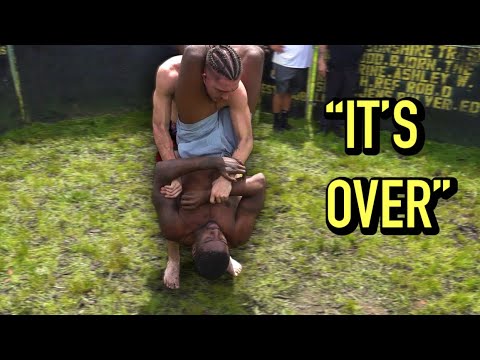
Ah, the primal allure of conflict, stripped bare and presented for consumption. We gather today not to witness a refined duel of ancient warriors, but to dissect the raw, unvarnished energy of Streetbeefs, specifically the encounter between Fetty and Manu Da Great. Before we plunge into the visceral fray, let's set the stage. My intention here is to go beyond mere observation; I aim to distill the essence of this contest through the lens of martial philosophy and practical application. We will explore not just the punches thrown, but the intent behind them, the control (or lack thereof), and what lessons, if any, can be gleaned by those who train diligently in the traditional arts.

You might be drawn here by the spectacle, the promise of a genuine 'beef' settled under the guise of a sporting contest. Perhaps you're curious about the effectiveness of raw aggression versus trained technique. Or maybe, just maybe, you're seeking to understand the societal undercurrents that give rise to such events. Whatever your entry point, consider this your formal invitation to a deeper analysis. This isn't just a fight; it's a case study. So, sharpen your focus, for we are about to enter "Satan's Backyard," as the organizers aptly put it, and examine what unfolds when the concrete jungle becomes the arena.

Setting the Stage: The Philosophy of Streetbeefs

The concept behind Streetbeefs, as articulated by its founder Scarface, is rooted in a desire to provide an alternative to lethal violence. The narrative is compelling: a community leader, witnessing the devastating consequences of disputes settled with weapons, offers a controlled, albeit bare-knuckle, outlet. "Come to SATANS BACKYARD and put gloves on to settle your dispute. No guns, No knives, No gang of friends jumping in. Just you, your Foe, the referee, and a group of spectators." This proposition, while seemingly pragmatic within a certain context, raises immediate questions for any serious martial artist.

Is this true Budo? Is this the path of the warrior, or simply a sanitized form of street brawling? The emphasis on "purely for sport" versus "REAL beef" highlights a fundamental tension. True martial arts training cultivates discipline, respect, and a deep understanding of self-defense, not for settling petty disputes, but for survival and personal growth. While Streetbeefs aims to channel aggression constructively, it operates far from the philosophical underpinnings of traditional disciplines. The mention of Scarface's inclusion in the New York Times and ESPN speaks to the spectacle, the raw human drama, but not necessarily to martial efficacy.

"The martial way is a path that is not only about striking and fighting, but also about discipline, respect, and personal growth." - A principle echoed across many martial traditions.

This isn't about condemning the participants; it's about analyzing the context. Are these individuals trained fighters, or are they people channeling existing aggression into a supervised, yet still brutal, confrontation? The very name, "Streetbeefs," signals an origin far removed from the serene dojo. It is a raw expression of human conflict, and our task is to see what martial lessons, if any, can be extracted from this raw energy.

The Combatants: Fetty vs. Manu Da Great

In this particular contest, we are presented with Fetty and Manu Da Great. Without extensive prior knowledge of their individual backgrounds or training, their engagement here is judged on the moment. We observe their physical presence, their apparent conditioning, and their demeanor as they step into the makeshift ring. The audience's anticipation is palpable, a testament to the enduring human fascination with one-on-one confrontation.

The critical question for a martial artist is: what skills do they bring to the table? Are they merely relying on brute strength and a willingness to exchange blows, or is there an underlying technique, a tactical awareness that hints at prior training? Often, in these unsanctioned or semi-sanctioned events, the lines blur. Some participants may have a background in boxing, kickboxing, or even amateur MMA, while others might be stepping into a combat scenario for the very first time, driven purely by the "beef."

The success of any combat encounter, be it a street confrontation or a formal competition, hinges on a confluence of factors: physical conditioning, mental fortitude, technical skill, and strategic application. The true test lies not just in the ferocity of the attack, but in the ability to adapt, defend, and persevere under pressure. It is in these moments of dynamic interaction that the true nature of a fighter, and potentially the effectiveness of their training, is revealed.

Round One: Raw Aggression and Initial Exchanges

The initial moments of the Fetty vs. Manu Da Great bout are often characterized by explosive energy. Expect to see a flurry of punches, perhaps wild and unrefined, as both combatants seek to assert dominance early. This is where raw aggression, fueled by the adrenaline of the confrontation and the crowd's energy, often takes precedence over technical precision. You might observe:

  • Overhand Rights and Hooks: These are common power punches, often thrown with significant force but lacking the tight defense that protects the fighter.
  • Defensive Lapses: Fighters might drop their hands, expose their chins, or adopt a wide, unstable stance, leaving them vulnerable.
  • Forward Pressure: A strong desire to close the distance and engage, sometimes without proper setup or awareness of the opponent's reach.

From a martial perspective, this round is a test of nerve and initial impact. It's less about strategy and more about raw will. The effectiveness of these initial exchanges depends heavily on the participants' physical conditioning and their tolerance for pain. A seasoned boxer might look for openings, while someone with less formal training might simply throw everything they have. The key here is to observe how each fighter reacts to landing or receiving a solid blow. Does it spur them on, or does it cause them to falter?

Round Two: Adaptation and Fatigue

As the initial adrenaline surge subsides, Round Two often becomes a battle of conditioning and adaptation. The raw aggression of the first round begins to wane, and fatigue starts to set in. This is where the differences between a trained fighter and an untrained combatant become starkly apparent.

  • Slowing Pace: Punches may become slower, less powerful. Footwork might become heavier and less agile.
  • Increased Vulnerability: Fighters might breathe more heavily, keep their guard lower, and their defensive movements will likely be more labored.
  • Strategic Adjustments (or lack thereof): Do the combatants try to change their approach? Do they attempt to clinch, grapple, or perhaps conserve energy? Or do they simply continue to throw punches until they can't?

A well-trained martial artist understands the importance of pacing, energy conservation, and maintaining defensive integrity even when tired. They might look to exploit an opponent's fatigue by using feints, quicker movements, or drawing them into exchanges where their exhaustion is most apparent. In a Streetbeefs context, this round often separates those who are genuinely prepared for a sustained fight from those who relied solely on initial explosiveness.

Round Three: The Climax and Resolution

The final round is typically where the contest reaches its climax. By this stage, both Fetty and Manu Da Great are likely to be significantly fatigued. The exchanges may become more desperate, with fighters pushing themselves to their absolute limits. This is often the round where a decisive blow lands, leading to a knockout, or where one fighter clearly gains a dominant position that the other cannot overcome.

  • The Finishing Exchange: Look for a moment where one fighter commits to an attack, perhaps leaving themselves open for a counter, or lands a clean, powerful shot that ends the fight.
  • Resilience and Willpower: Even when exhausted, some fighters display incredible resilience. Observing who continues to fight back, even if effectively, reveals a great deal about their mental toughness.
  • Referee Intervention: The referee plays a crucial role in ensuring safety. Their decision to stop the fight is based on a fighter's inability to intelligently defend themselves, a critical safety measure absent in actual street altercations.

The resolution of this round, whether by knockout, stoppage, or the end of the allotted time, provides the definitive outcome. However, the true value for us lies not just in who won, but in understanding *how* the fight concluded. Was it a display of superior technique, a testament to superior conditioning, or simply the result of one fighter landing a lucky, powerful shot?

Analysis of Technique: What We Saw

When dissecting the technical aspects of the Fetty vs. Manu Da Great fight, it's crucial to maintain perspective. We are not critiquing Olympic-level athletes, but rather individuals engaging in a raw, unfiltered combat scenario. However, certain observations hold true regardless of the level of training.

Stance and Footwork: Observe their base. Is it wide and stable, allowing for movement and power generation? Or is it narrow and unbalanced, making them susceptible to takedowns or easily knocked off their feet? In many such encounters, footwork is rudimentary, relying on forward shuffling rather than dynamic pivots or lateral movement. This often leads to fighters being "flat-footed" and predictable.

Punching Technique: Are punches thrown with proper rotation of the hips and shoulders, or are they primarily arm punches? Are defensive measures like covering the chin and tucking the elbows consistent? We often see wild swings, lack of jab control, and open guards. While powerful, these blows may lack efficiency and leave the fighter's own defenses compromised.

Clinching and Close-Quarters Combat: If the fight goes to close range, how do they manage the clinch? Is there an attempt to control the opponent's posture, or is it simply a messy entanglement? In a street fight context, clinching can be a precursor to illegal strikes or grappling, but in a regulated bout, it's an opportunity to wear down an opponent or create space.

Defense: This is often the most glaring area for improvement in untrained fighters. Head movement is minimal, blocking is often passive (arms simply absorbing blows), and slipping or rolling with punches is rarely seen. This is where formal martial arts training provides a significant advantage, teaching fighters to evade, deflect, and counter effectively, rather than simply enduring damage.

Awareness: Do the fighters seem aware of the referee, the crowd, and the overall dynamic of the fight? Or are they solely focused on their immediate opponent, potentially missing crucial cues or strategic opportunities? Situational awareness is a vital component of any combat discipline.

Veredict of the Sensei: More Than Just a Brawl?

Streetbeefs: Fetty vs. Manu Da Great is, at its core, a raw, unadulterated display of human aggression channeled into a physical contest. It is undeniably entertaining for those who appreciate visceral action. However, from the perspective of a seasoned martial artist, it presents a complex picture.

Core Strengths: The undeniable courage and willingness to confront an opponent face-to-face, without weapons or external aid, is noteworthy. The participants, by stepping into the ring, demonstrate a level of bravery that cannot be discounted. The format, while crude, does provide a safer alternative than a genuine street fight, reducing the likelihood of lethal outcomes.

Fundamental Weaknesses: The technical execution is, as expected, often lacking. Defensive skills are rudimentary at best, conditioning is a major factor, and the strategies employed are basic. This is not a showcase of martial arts mastery, but rather a demonstration of will and raw physical capacity. The "beef" itself, the underlying reason for the fight, often overshadows any semblance of martial spirit or ethical conduct.

Entertainment Value vs. Martial Value: As entertainment, Streetbeefs succeeds. It provides drama, excitement, and a conclusion to disputes. As a demonstration of martial arts principles, its value is limited. It highlights the importance of formal training in technique, defense, and discipline. While it offers a controlled environment, it lacks the philosophical depth, the self-improvement focus, and the respect for tradition that defines true Budo.

Overall: I would categorize Streetbeefs as **"Entertaining Spectacle, Limited Martial Merit."** It's a glimpse into a raw form of conflict resolution, but not a benchmark for martial prowess.

Equipment Essential for Your Training

While Streetbeefs often features minimal protective gear beyond gloves, serious martial arts training demands proper equipment to ensure safety and effectiveness. Investing in the right gear is not about vanity; it's about enabling dedicated practice and minimizing injury. For those inspired to train after witnessing such contests, consider the following:

  • High-Quality Training Gloves: Essential for any striking art. For sparring, 14-16 oz gloves are standard for boxing and kickboxing to protect both hands and your partner. Look for good padding and wrist support.
  • Mouthguard: Non-negotiable for any combat sport. A properly fitted mouthguard can prevent concussions, broken teeth, and jaw injuries.
  • Groin Protector: Crucial for preventing serious injury during sparring or live drills.
  • Headgear: For intensive sparring sessions, especially in boxing or MMA, headgear significantly reduces the risk of cuts, bruises, and concussions.
  • Shin Guards: Necessary for kickboxing and Muay Thai to protect against impact from kicks.
  • Dojo Uniform (Gi/Dobok): Depending on your chosen art (e.g., Judo, Karate, Taekwondo), a durable, well-fitting uniform is essential for training and demonstrates respect for the art. For grappling arts like Brazilian Jiu-Jitsu, a sturdy BJJ gi is paramount.
  • Training Mats (Tatami/Mats): For arts involving throws, groundwork, or falling techniques (like Judo, Aikido, BJJ), quality mats are vital for safety.

Remember, the best equipment is the kind that allows you to train consistently and safely, pushing your limits without undue risk. Investing in these items is a commitment to your own development as a martial artist.

Resources for Deeper Understanding

To truly appreciate the spectrum of martial arts and combat sports, it's vital to explore beyond the raw spectacle. Understanding the philosophy, history, and techniques of various disciplines provides a richer context.

  • BUDO: Explore the fundamental principles that underpin many Japanese martial arts, focusing on discipline, self-mastery, and the pursuit of perfection.
  • Martial Arts: Delve into the diverse world of martial traditions from across the globe, understanding their unique origins, philosophies, and techniques.
  • Karate: Learn about the striking art originating from Okinawa, its various styles, katas, and its emphasis on power and precision.
  • MMA: Understand the modern combat sport that blends techniques from various martial arts, focusing on striking and grappling in a comprehensive fighting system.
  • Fight Analysis: Develop a critical eye for dissecting combat encounters, understanding strategy, technique, and the psychological aspects of fighting.

Frequently Asked Questions

What is the main difference between Streetbeefs and professional MMA?

The primary difference lies in intent, regulation, and skill level. Streetbeefs aims to settle personal disputes in a semi-controlled environment with minimal rules and often untrained participants. Professional MMA is a highly regulated sport with standardized rules, weight classes, judges, and a focus on athletic competition and skill, not personal vendettas.

Are the fights in Streetbeefs legitimate?

The fights are legitimate in the sense that they are real confrontations between two individuals. However, they are not recognized as professional sporting events. They operate outside the stringent regulatory frameworks of sports like boxing or MMA, and the skill levels vary dramatically.

Does Streetbeefs teach actual martial arts?

No, Streetbeefs does not teach martial arts. It provides a platform for people to engage in unarmed combat to settle disputes. While some participants may have martial arts training, the organization itself is not a martial arts school. Its focus is conflict resolution and entertainment.

Is Streetbeefs dangerous?

Yes, Streetbeefs carries significant risks. While gloves and referees are present, participants are often untrained, leading to uncontrolled exchanges. Injuries, including severe cuts, broken bones, and concussions, are possible and have occurred.

What is the philosophical value of watching Streetbeefs?

The philosophical value is debatable. One perspective is that it highlights the raw human drive for confrontation and resolution, offering a potentially safer alternative to weaponized violence. Another perspective is that it showcases the absence of martial discipline and the dangers of untrained aggression, thereby underscoring the value of formal martial arts training for self-control and effective self-defense.

Reflection of the Sensei: Your Next Step

We have dissected the contest between Fetty and Manu Da Great, examining its context, its execution, and its implications from the vantage point of martial tradition. We've seen raw courage, undeniable aggression, and the stark realities of untrained combat. But now, the true lesson awaits not in the spectacle, but in your own response.

Did the ferocity of the exchanges ignite a spark of primal interest within you? Or did the lack of technique and control fill you with a quiet disdain, a yearning for the discipline you practice or aspire to? This is the crux: where does your own spirit lie in relation to such raw conflict?

"The supreme art of war is to subdue the enemy without fighting." - Sun Tzu, The Art of War.

Consider this: if you found yourself in a situation where a "beef" needed settling, would your instinct be to emulate Fetty or Manu, to meet force with force in a chaotic exchange? Or would your training, your philosophy, guide you towards de-escalation, strategic evasion, or a measured, technical application of skill if confrontation became unavoidable? The answer reveals more about your path than any fight result.

Now, tell me, Sensei's students: Where does the path of true martial strength lie – in the explosive, uncontrolled rage of the street, or in the disciplined, focused power cultivated within the dojo? Are these events a dangerous distraction, or do they, in their own brutal way, serve a societal function that warrants our understanding, even if not our emulation? Speak your mind, for your perspective is as vital to your growth as any kata.

Published at May 27, 2022 at 03:33PM. Welcome the most complete and updated martial arts blog on the internet. Follow us on social networks and do not forget to visit our main page: Budo and Martial Arts.

Ignore tags: #artesmarciales,#BUDO,#lucha,#pelea,#entrenamiento,#historia,#fight,#battle,#martialarts,#karate,#jiujitsu,#taekwondo,#shaolin,#ki,#bjj,#ninjitsu,#kenpo,#combat,#sambo,#news,#judo,#aikido

``` GEMINI_METADESC: A martial arts critique of the Streetbeefs fight between Fetty and Manu Da Great, examining technique, philosophy, and comparison to formal training.

Surviving the Unseen Blow: What to Do When Sucker Punched

The primal instinct when struck unexpectedly is often disorientation. A sucker punch, by its very nature, bypasses our natural defenses, leaving us vulnerable and bewildered. But as any seasoned martial artist knows, true mastery lies not just in offense, but in resilience and the ability to adapt. This isn't about seeking confrontation; it's about understanding the harsh realities of surprise aggression and equipping yourself with the knowledge to survive. Have you ever wondered what separates a victim of a surprise attack from someone who can potentially turn the tables? Is it sheer luck, or is there a tangible strategy, a martial principle, that can be applied even when blindsided? Today, we delve into the critical moments following an unseen blow, dissecting the steps to recover, regain composure, and, if necessary, defend yourself effectively.

Table of Contents

The Shock and Initial Response

The moment a sucker punch lands, your world can tilt. The immediate physical sensation is often accompanied by a surge of adrenaline, confusion, and pain. This is not the time to panic; it's the time to engage your training, however rudimentary. Your first action, assuming you haven't been knocked unconscious, is to fight the disorientation. This means focusing your senses. Where did the blow come from? How many attackers are there? What is their immediate posture and intent? This phase is crucial. Many are taught to immediately lash out, a reactive and often ineffective response that can leave you more exposed. Instead, focus on *breathing*. Deep, controlled breaths can help to oxygenate your brain and temper the panic response. Remember the principles of Ki – internal energy. Even in chaos, maintaining your internal center is paramount.

Immediate Recovery Techniques

Assuming you're still standing, albeit wobbly, the next objective is to regain stable footing and a defensive posture.
  • Center Yourself: Lower your center of gravity. Bend your knees, widen your stance slightly. This provides a more stable base and makes you harder to knock over.
  • Hands Up: Bring your hands up to protect your head and face. This is a fundamental protective reflex, honed through countless hours of Karate, Judo, or Boxing training.
  • Scan and Orient: Quickly assess your surroundings. Identify escape routes. Note any potential weapons or improvised tools nearby. Most importantly, locate your attacker(s).
This isn't about initiating a fight; it's about transitioning from a state of shock to a state of preparedness. It’s about shifting from victim to survivor. Think of it as the initial recovery phase in a grappling match after a failed takedown. You don’t give up; you re-establish your guard.

Assessing the Threat and Creating Space

Once you have a moment of stability, the next critical step is to create distance, if possible. A surprise attack often happens at close range. If the attacker is pressing the advantage, you need to disengage and create the space necessary to assess and react.
  • Push or Shove: A forceful push can create an immediate gap. This isn't a refined technique, but a raw exertion of force. Aim to disrupt their balance or push them back enough to gain precious seconds.
  • Footwork: If space allows, use your feet. Step back, step sideways. Don't get cornered. Good martial arts training emphasizes movement and evasion. Even a few steps can be the difference between being overwhelmed and regaining control.
This phase is where the psychological battle truly begins. The attacker expects you to be dazed. Your ability to move and create space demonstrates resilience, which can be discouraging to an aggressor who thrives on perceived dominance.

Turning the Tide: Counter Offense

If disengagement isn't possible, or if your initial efforts to create space are met with continued aggression, then you must consider counter-offense. This is the most dangerous phase, and it requires decisive action.
"In combat, the direct way is the best way." - Miyamoto Musashi
The counter-attack should be aimed at stopping the aggression, not necessarily incapacitating the attacker completely unless your life is in imminent danger.
  • Target Vulnerable Areas: Eyes, throat, groin. These are areas where even a moderately strong strike can be debilitating, allowing you to escape.
  • Use Your Environment: If there's anything within reach – a bag, a bottle, a chair – use it. Improvised weapons can equalize a physical disparity.
  • Explosive Power: Your counter needs to be sudden and powerful. Drawing on principles from BUDO and MMA, a quick combination of strikes can be effective. Think a jab to the eyes followed by a knee to the groin, or a palm strike to the throat.
Remember, this is self-defense. The goal is survival and escape. Once an opportunity to get away presents itself, *take it*. Do not linger to prove a point.

The Psychology of Survival

Dr. Mark Phillips, a criminal psychologist, emphasizes that survival in such scenarios is as much a mental game as a physical one. The attacker often relies on the victim's shock and fear.
"The mind is the most important weapon in any conflict. If you can control your mind, you can control your body." - Unknown Martial Artist

This means cultivating a mindset of resilience. Before any physical confrontation, visualize potential threats and your responses. This preparation, even mental, primes your brain to react more effectively. It’s the core of Mindset Preparation, a key topic in the work of experts like Dr. Phillips. This proactive mental conditioning is a cornerstone of effective Self Defence.

Training for the Unexpected

How do you train for something you don't see coming? You train in ways that build awareness, reflexes, and a broad range of combat skills.
  • Sparring: Regular sparring sessions in styles like Brazilian Jiu Jitsu, Wrestling, San Da Kickboxing, and MMA hone your ability to react under pressure. Even drills that simulate surprise attacks can be invaluable.
  • Awareness Drills: Practicing scenarios where a partner initiates contact unexpectedly helps develop quicker reactions.
  • Physical Conditioning: Building strength, speed, and endurance is fundamental. A body that is physically resilient can recover faster from impact and sustain effort longer.
  • Situational Awareness: Constantly scan your environment. Notice who is around you, their body language, and potential threats. This is a skill that improves with practice in everyday life.
The key is to integrate these elements. A practitioner of Wing Chun, for instance, would focus on centerline control and simultaneous block-and-strike, but these techniques are most effective when combined with the awareness and physical conditioning derived from other disciplines.

Veredicto del Sensei: Self-Defense Philosophy

This scenario isn't about the elegance of a perfect kata or the glory of a knockout. It's about survival. While no training guarantees invincibility, understanding the principles of recovery and immediate response dramatically increases your chances of weathering a surprise attack. It highlights the importance of cross-training, as seen in experts like Dr. Phillips who blend multiple disciplines. The true martial artist is not just a fighter, but a survivor, adaptable and resilient. The effectiveness of any technique hinges on its applicability in the chaotic reality of the street.

Equipo Esencial para tu Entrenamiento

While direct confrontation may not always require specialized gear, robust training often benefits from the right equipment.
  • Sparring Gloves: For safe and effective sparring sessions in Boxing, Kickboxing, or MMA, invest in a good pair of 16oz sparring gloves.
  • Mouthguard: Essential protection for your teeth and jaw during any form of sparring or intense combat training.
  • Shin Guards: Protect your shins during kicking drills common in Taekwondo and San Da Kickboxing.
  • Durable Gi: For Judo and some forms of Karate, a high-quality, double-weave gi is durable and allows for proper gripping practice.

Recursos para Profundizar

To truly grasp the nuances of self-defense and combat psychology, continuous learning is key.
  • LWCA Academy: Explore resources and training methodologies from a dedicated academy.
  • The Budo and Martial Arts Blog: For continuous insights and weekly releases.
  • BUDO and Philosophy Books: Study classic texts on martial philosophy and strategy.
  • Self Improvement and Psychology Resources: Understand the mental aspects of conflict and survival.

Preguntas Frecuentes

  • Q: What is the most important thing to do immediately after being sucker punched?
    A: Fight disorientation by focusing on breathing, stabilizing your stance, and bringing your hands up to protect your head.
  • Q: Should I always fight back after a surprise attack?
    A: The primary goal is survival and escape. Fight back only if disengagement is not possible and you are in immediate danger.
  • Q: How can I train for surprise attacks if they are, by definition, unpredictable?
    A: Train with high-intensity sparring, awareness drills, and develop strong physical conditioning. Cultivate a resilient mindset through mental preparation.
  • Q: What martial arts are best for learning self-defense against street attacks?
    A: A blend of arts like Wing Chun (for close-range efficiency), BJJ (for ground fighting), Judo (for throws and control), and Boxing (for striking) provides a well-rounded foundation.

Reflexión del Sensei: Tu Próximo Paso

We've dissected the mechanics of recovering from an unseen blow. We've touched upon the crucial intersection of physical technique and mental fortitude. But knowing is only half the battle. The true test lies in application. If you were to walk out of this dojo, this virtual space, and face a sudden, unexpected aggression, would you freeze, or would you *move*? Would your training kick in, or would the shock render you helpless? The koan for you today is this: What is the single, smallest, most practical action you can take *this week* to better prepare your mind and body for the unpredictable? ``` GEMINI_METADESC: Learn how to recover and fight back when sucker punched. This comprehensive guide covers immediate techniques, psychological resilience, and training for unexpected attacks.

Mastering the Streets: The Top 5 Martial Arts for Self-Defense and Street Fighting

Anyone can embark on the journey of martial arts and reap its profound benefits. From the youngest child to the most seasoned elder, the disciplines offer a path to sustained health and vitality. But the allure of martial arts extends far beyond mere physical conditioning. It's a crucible where discipline, humility, and the essential skill of self-preservation are forged. At its very core, the genesis of many martial arts lies in the primal need for self-defense – the ability to protect oneself against an aggressor. While countless styles exist, numbering in the hundreds, perhaps even thousands, we have distilled this vast ocean of combat knowledge into a critical examination of five styles that, in our expert opinion, stand at the apex of effectiveness for real-world conflict. Prepare for a ranking that moves from the least efficient to the most potent on the unforgiving streets.

The Core of Combat: Why Self-Defense Matters

Let's be blunt: the world is not a dojo. While the discipline and technical prowess honed in martial arts training are invaluable, the realities of street conflict are chaotic, unpredictable, and often brutal. Unlike a controlled sparring match with rules and referees, a street confrontation can involve multiple attackers, weapons, and a complete disregard for fair play. This is where the distinction between sport martial arts and practical self-defense becomes starkly apparent. The primary objective on the street is not to score points or impress a judge, but to survive. It’s about neutralizing a threat as efficiently and quickly as possible, then disengaging. This fundamental difference dictates which styles and techniques are truly "best" for survival.

"The supreme art of war is to subdue the enemy without fighting." - Sun Tzu, The Art of War. While this philosophical approach is paramount, understanding how to fight is a non-negotiable last resort.

Many traditional martial arts, while rich in history and philosophy, may not directly translate to the high-stress, low-rule environment of street fighting. Their techniques might be too complex, require too much setup, or rely on compliance from an opponent that a street attacker will never offer. The ultimate goal of martial arts training, especially for self-defense, is to cultivate a state of awareness and readiness, not just physical capability. This means understanding de-escalation, situational awareness, and when to fight versus when to flee – often, the wisest choice is to avoid conflict altogether. But if avoidance fails, you must be prepared.

The Apex Predators: Our Top 5 Street-Ready Styles

The following are our meticulously selected top five martial arts styles, ranked not by popularity or historical significance alone, but by their proven efficacy in realistic self-defense scenarios. This ranking is based on extensive analysis of their core principles, common training methodologies, and documented effectiveness in real-world situations.

#5: Muay Thai - The Art of Eight Limbs

Originating from Thailand, Muay Thai is renowned as the "Art of Eight Limbs" because it utilizes punches, kicks, elbow strikes, and knee strikes, along with clinch work. Its raw power and directness make it a formidable striking art.

  • Strengths: Devastating offensive capabilities with elbows and knees, effective clinch control for close-range attacks, high conditioning standards leading to superior stamina.
  • Weaknesses: Limited ground fighting techniques, less emphasis on defensive grappling or escaping holds, can be overly offensive in situations requiring measured defense.

While Muay Thai is a brutal striking art, its effectiveness on the street is significantly amplified when its practitioners are also proficient in other ranges of combat, particularly grappling. Imagine a Muay Thai fighter landing devastating kicks and knees, only to be taken down by an opponent skilled in Brazilian Jiu-Jitsu. The effectiveness is undeniable, but it is not a complete system on its own for all street scenarios.

#4: Brazilian Jiu-Jitsu (BJJ) - The Ground Game King

Developed from Judo and traditional Japanese Jujutsu, BJJ focuses on ground fighting, emphasizing leverage and technique to control and submit opponents, regardless of size or strength. It’s a cornerstone of modern Mixed Martial Arts.

  • Strengths: Unparalleled effectiveness in controlling and submitting opponents on the ground, leverages technique over brute force, excellent for individuals of smaller stature against larger aggressors.
  • Weaknesses: Less effective against multiple attackers, limited striking defense (unless cross-trained), situations where the fight ends quickly on the feet or the opponent refuses to engage on the ground can neutralize its advantage.

The Gracie family’s legendary demonstrations proved BJJ’s worth against practitioners of other arts. However, a street fight rarely stays on the ground, especially if there are bystanders or the attacker doesn't want to be subdued. BJJ excels when you can dictate where the fight takes place, but the street offers no such luxury. It's indispensable for one-on-one encounters on the ground, but lacks the striking prowess needed for standing confrontations.

#3: Krav Maga - The No-Nonsense System

Developed for the Israeli military, Krav Maga is a practical, reality-based self-defense system that emphasizes instinctual movements, aggression, and simultaneous defense and offense. It's less a sport and more a survival methodology.

  • Strengths: Focuses on real-world scenarios, including defenses against weapons (knives, sticks, firearms), simultaneous attack and defense, dirty fighting tactics (eye gouges, groin strikes), and a strong emphasis on situational awareness and de-escalation.
  • Weaknesses: Can be less refined in terms of technique compared to traditional martial arts, potential for injury due to its aggressive nature, lacks the sporting aspect which can hinder development of technical perfection through competition.
"In the street, you don't get a second chance to learn your mistake." - A common adage in Krav Maga circles. This highlights the system's direct, unforgiving approach.

Krav Maga’s philosophy is simple: survive. It takes effective techniques from various martial arts and adapts them for maximum efficiency under extreme stress. Its training often simulates high-pressure environments, making practitioners more resilient to the shock and adrenaline of a real attack. This is perhaps the closest system to pure street effectiveness, devoid of sporting constraints.

#2: Boxing - The Sweet Science of Striking

Boxing, often called "The Sweet Science," focuses exclusively on punching with speed, power, and precision. Its practitioners develop exceptional footwork, head movement, and defensive skills.

  • Strengths: Incredible development of punching power, speed, and accuracy; superior defensive skills through footwork and head movement; excellent cardiovascular conditioning; teaches discipline and mental toughness.
  • Weaknesses: Completely lacks kicking, grappling, or defense against low attacks; vulnerable to opponents who can close the distance and clinch or take the fight to the ground.

The power and precision of a trained boxer are undeniable. Their ability to generate force and control distance with their hands is unparalleled. However, relying solely on boxing for self-defense is like bringing a knife to a gunfight if your opponent can kick or grapple. It's a critical component of striking, but rarely a complete solution in isolation for the unpredictable nature of street encounters.

#1: Mixed Martial Arts (MMA) - The Ultimate Hybrid

MMA is not a traditional martial art but a combat sport that allows a wide array of fighting techniques, drawing from various disciplines including striking (boxing, Muay Thai, Karate), grappling (BJJ, Wrestling, Judo), and clinch work.

  • Strengths: Develops well-rounded fighters proficient in striking, grappling, and transitions between them; teaches adaptability and problem-solving in combat; mirrors the unpredictability of real fights more closely than single-discipline arts.
  • Weaknesses: Often focuses on sport rules which may not apply to street scenarios (e.g., no striking downed opponents, weight classes); can still lack specific weapon defense training unless integrated.

MMA’s rise in popularity is directly attributable to its proven effectiveness. By training in multiple disciplines, MMA fighters are prepared for almost any situation. They can strike with devastating power, defend takedowns, control opponents on the ground, and transition seamlessly between ranges. While sport rules differ from street rules, the underlying skills—adaptability, resilience, and a comprehensive understanding of combat dynamics—make MMA the most potent foundation for real-world self-defense. An MMA practitioner has likely encountered and trained for more types of attacks and scenarios than a specialist in a single art.

Training for the Streets: Essential Principles

Regardless of the style you choose, effective self-defense training must incorporate several key elements:

  1. Situational Awareness: Learn to recognize potential threats and avoid dangerous situations. This is the first and most crucial line of defense.
  2. De-escalation: Develop verbal skills to defuse tense confrontations before they turn physical.
  3. Physical Conditioning: Build stamina, strength, and agility. A street fight can be a marathon, not a sprint. Focus on conditioning that mimics the demands of combat.
  4. Sparring Under Pressure: Regularly engage in controlled sparring that simulates the stress and unpredictability of a real encounter. This is vital for testing techniques and building mental fortitude.
  5. Weapon Defense: If possible, seek training that specifically addresses defense against common weapons like knives and sticks.
  6. Multiple Attacker Training: While challenging to simulate safely, understanding principles for dealing with more than one assailant is critical for street survival.

Gear Up: Essential Training Equipment

To train effectively and safely, consider the following:

  • Quality Gloves: For striking arts like boxing or Muay Thai, invest in durable MMA gloves or boxing gloves (14-16oz for general training, lighter for specific drills).
  • Mouthguard: Absolutely essential to protect your teeth and jaw during any form of sparring.
  • Headgear: Crucial for reducing the impact of blows during sparring sessions to prevent concussions and other injuries.
  • Shin Guards: For arts involving kicks, like Muay Thai or Kickboxing, these are vital for preventing painful injuries.
  • Groin Protector: A non-negotiable piece of safety equipment for all male practitioners, especially when sparring.
  • Grappling Dummy or Partner: Essential for practicing throws, takedowns, submissions, and ground control in arts like BJJ or Judo.
  • Durable Training Uniform (Gi/Kimono): For Judo or Jiu-Jitsu, a high-quality, double-weave judo kimono will withstand rigorous training.

Veredicto del Sensei: Street Smarts or Dojo Dreams?

The debate between the efficacy of traditional martial arts versus modern combat systems for street defense is as old as the arts themselves. My verdict is clear and unwavering: for pure, unadulterated street survival, systems that prioritize reality-based training, multiple ranges of combat, and weapon defense hold the undeniable edge. While the elegance and philosophical depth of arts like Karate or Aikido are invaluable for personal development and discipline, their direct applicability on a chaotic street can be limited without significant cross-training or adaptation. Boxing provides potent striking, BJJ dominates the ground, and Muay Thai brings devastating power. However, it is the integration of these elements, as seen in MMA, or the pragmatic, survival-focused approach of Krav Maga, that truly prepares an individual for the worst-case scenarios. Don't just train a martial art; train to survive.

Frequently Asked Questions

What is the single most important skill for street self-defense?

Situational awareness. Being aware of your surroundings and potential threats allows you to avoid conflict before it begins, which is always the most effective form of self-defense.

Can traditional martial arts like Karate be effective for street fighting?

While Karate teaches valuable principles like discipline and powerful strikes, its sport-oriented nature and lack of grappling or weapon defense training mean it's often insufficient on its own for street scenarios. Cross-training with other arts is highly recommended.

Is it better to train striking or grappling for self-defense?

Both are crucial. A well-rounded fighter needs proficiency in both striking (like boxing or Muay Thai) and grappling (like BJJ or Wrestling) to handle various situations effectively. MMA training integrates both.

How important is physical conditioning for street fighting?

Extremely important. Street fights can be physically demanding and last longer than expected. Superior conditioning can give you a significant advantage in stamina and resilience.

What about defending against multiple attackers?

This is one of the most dangerous scenarios. Training often focuses on creating space, targeting the most immediate threat, and using mobility to try and escape or isolate attackers. There are no guaranteed techniques, only principles to increase your odds.

Further Reading on Your Path

"It is the mind that makes a man fight and win. It is the mind that has felt the enemy's strength and weakness. It is the mind that can turn weakness into strength, and confusion into victory." - Miyamoto Musashi, The Book of Five Rings.

Reflection of the Sensei: Your Next Step

We’ve dissected the styles, weighed their strengths, and acknowledged their limitations in the crucible of street conflict. But knowledge without application is merely intellectual vanity. So, I ask you:

If you were to face an unavoidable confrontation right now, which of your current skills would serve you best, and more importantly, what is the single, most actionable step you will take *this week* to bridge the gap between your current capabilities and the harsh realities we've discussed?

The path to genuine self-defense is a lifelong commitment, not a weekend seminar. Do not let this be another fleeting thought. The streets wait for no one. Prove your intentions with action.

``` GEMINI_METADESC: Explore the top 5 martial arts for effective self-defense and street fighting, ranked by real-world efficiency. Learn essential training principles and gear recommendations.

The Unseen Force: Unpacking Nicolino Locche's Elusive Boxing Mastery

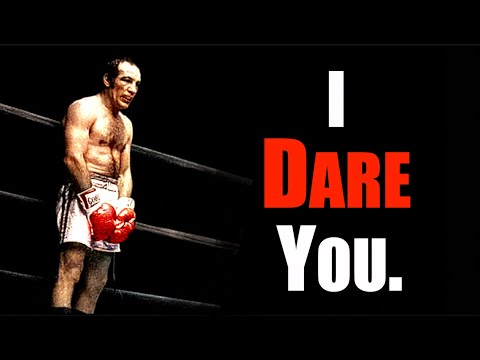
Imagine a fighter who could defeat an opponent without ever throwing a punch. Not through intimidation, not through psychological warfare, but through sheer, unadulterated defensive brilliance. Nicolino Locche, the Argentinean boxing prodigy, was precisely that man. He once famously sent an adversary to the canvas without ever landing a single blow. How? The answer lies not in brute force, but in an almost supernatural mastery of head movement, a cornerstone of his elusive and utterly captivating style. Welcome, warriors, to Budo y AM, where we dissect the arts of combat and the philosophies that underpin them.

The Myth of the Unseen Punch: More Than Just Defense

The legend of Nicolino Locche is woven from tales of opponents left flustered, exhausted, and ultimately defeated by an invisible force. This wasn't magic; it was applied science, honed through rigorous dedication. In the realm of artes marciales, we understand that victory is not solely achieved through offensive power. Sometimes, the most potent attack is the absence of one. Locche embodied this principle, demonstrating that controlling the space, dictating the rhythm, and making your opponent fight the air itself is a legitimate, and devastating, path to victory. His style was a testament to the fact that true mastery lies in understanding not just how to strike, but how to avoid being struck.

Locche's Philosophy: The Art of Evasion

At its core, Locche's approach to boxing was an embodiment of a deep martial philosophy. It wasn't just about boxing; it was about *survival*, about minimizing risk and maximizing control. His style resonates with principles found across various BUDO disciplines, where the ultimate goal is often to neutralize an opponent's aggression with minimal expenditure of energy. This mirrors concepts like Aikido's "harmony" or certain Karate katas emphasizing defensive movements followed by swift counters. Locche understood that a fighter who cannot be hit is a fighter who cannot lose. His movements were fluid, economical, and imbued with a strategic intent that transcended mere physical action. He didn't just dodge; he *redirected*, *deflected*, and *nullified*. This is the essence of high-level combat.

"If you don't get hit, you don't get tired. If you don't get tired, you can keep fighting. If you can keep fighting, you win." - A principle embodied by Locche, though not directly quoted.

His defensive prowess was not born out of fear, but out of profound confidence in his ability to control the engagement. He was a maestro of the "ghost move," a technique that makes the opponent *think* they are about to land a strike, only to find themselves punching empty air while Locche remains safely out of range. This mental aspect is crucial; it demoralizes the opponent and erodes their confidence with every missed attempt.

Head Movement: The Ultimate Defensive Weapon

Locche's signature was his extraordinary head movement. This wasn't just about bobbing and weaving; it was a sophisticated dance of evasion. He utilized subtle shifts of the head, almost imperceptible changes in posture, and impeccable timing to slip punches that would have found their mark on lesser fighters. This level of mastery requires:

  • Exceptional Peripheral Vision: The ability to track an opponent's movements and anticipate strikes.
  • Impeccable Timing: Knowing precisely when to move and how much.
  • Body Control: The ability to generate power from the hips and legs to move the upper body explosively.
  • Anticipation: Reading an opponent's intentions before the punch is even thrown.

This, my friends, is where the true spirit of martial arts lies. It's not just about the raw power of a Kyokushin Karate punch, or the technical wizardry of jiujitsu grappling. It's about understanding the dynamics of conflict, the psychology of the fight, and the most efficient ways to achieve your objective – victory, or in a broader sense, self-preservation. Locche's style brings to mind the elusive movements of a skilled Shaolin monk, evading attacks with grace and purpose.

Consider the concept of 'distance' in combat. For Locche, distance was not a fixed entity but a fluid battlefield he constantly manipulated. He could make an opponent feel like they were within striking range, only to disappear, forcing them to overextend and expose themselves. This continuous spatial adjustment is a high-level skill that requires immense practice and an intuitive understanding of physics and physiology. It’s a lesson applicable to all combat sports, from MMA to Karate.

Applying Locche's Principles: Beyond Boxing

While Locche was a boxer, the principles he exemplified are universally applicable in the martial arts and indeed, in life. How can a Karateka, a Judo practitioner, or even a MMA fighter learn from Locche?

  1. Embrace Defensive Drills: Dedicate significant training time to defensive movements. Practice slipping, rolling, and countering from evasive positions. This is as vital as practicing offensive techniques.
  2. Develop Spatial Awareness: Understand your range and your opponent's range. Learn to move in and out of these ranges effectively. This is crucial for all fight scenarios, whether in a ring or in self-defense.
  3. Study Movement Economy: Every movement should have a purpose. Avoid wasted energy. This principle is central to BUDO and applies to all martial endeavors.
  4. Cultivate Mental Fortitude: Confidence in defense can be as powerful as confidence in offense. Train your mind to stay calm under pressure and to read your opponent's intentions.

In the UFC, we often see fighters with incredible offensive output, but those who truly stand the test of time, like Jon Jones, possess an uncanny ability to avoid damage. This is Locche's legacy echoing through modern combat sports. Even in the brutal world of Artes Marciales Mixtas, where grappling and striking collide, the ability to slip a punch or evade a takedown remains paramount.

Locche in the Pantheon of Boxing Greats

Nicolino Locche's career spanned from the late 1950s to the mid-1970s. He retired with an impressive record, having held the WBA junior welterweight title. But his legacy transcends mere statistics. He was a fighter who dared to be different, who prioritized skill and intelligence over raw aggression. In a sport often characterized by its physicality, Locche proved that artistry and tactical genius could lead to dominance. He was a boxer who fought more like a martial artist, a testament to the universal principles of combat.

His impact can be felt in the evolution of defensive techniques across various martial disciplines. He showed that the ultimate fight strategy might not be to strike first, but to ensure you are never in a position to be struck at all. This is a profound lesson, applicable far beyond the boxing ring. It speaks to the importance of preparation, foresight, and strategic positioning in any challenging endeavor.

Veredicto del Sensei: Is Locche a Blueprint for All Fighters?

Locche's style is undeniably brilliant and highly effective for its context. He was a master of his craft, and his ability to dominate through evasion is a marvel. However, to suggest it's a direct blueprint for every fighter, in every discipline, would be a disservice to the diversity of martial arts. A Judo practitioner needs to engage in close-range grappling, a Karate master might rely on powerful linear attacks, and an MMA fighter must blend striking and grappling seamlessly.

Locche's greatest contribution is not a specific technique, but a *philosophy* of combat: the absolute primacy of defense and control. This philosophy, however, must be adapted. For some, it means slipping punches. For others, it means expertly defending against takedowns or blocking devastating kicks. The core principle – making yourself an unhittable target – remains a universal truth in combat. He achieved the ultimate defensive state, where the opponent's efforts were rendered futile. This is why he is celebrated, and why his legend endures.

Essential Gear for Your Training

To emulate the dedication and precision of masters like Locche, the right equipment is crucial. While boxing is his domain, many principles translate to other martial arts. Focus on developing your core and agility, as these are foundational to effective movement.

  • Quality Boxing Gloves: For sparring and bag work, invest in gloves that offer good wrist support and cushioning (e.g., 16oz for sparring).
  • Hand Wraps: Protect your metacarpals and wrists during intense training sessions.
  • Speed Rope: Develop footwork, coordination, and cardiovascular endurance – essential for any evasive style.
  • Agility Ladder: Enhance foot speed and coordination, critical for mastering elusive movements.
  • Headgear: For sparring, especially when practicing defensive techniques, headgear is paramount for safety.

For those in disciplines like Karate or Judo, a high-quality Karate Gi or Judo Gi respectively, made from durable material, will withstand rigorous training. Remember, investing in good equipment is an investment in your training and your longevity as a martial artist.

Frequently Asked Questions

Q1: Did Nicolino Locche ever really knock someone out without touching them?
A: The most famous instance involves an opponent who, after being frustrated and exhausted by Locche's elusiveness, collapsed from sheer exertion and possibly a touch of psychological breakdown. It's a testament to his ability to control the fight without engaging directly.

Q2: How can a beginner develop Locche's level of head movement?
A: Start with the basics: shadow boxing focusing on slipping and bobbing. Use drills like throwing a ball against a wall and catching it while moving your head, or partner drills with a coach focusing solely on defensive reactions. Patience and consistent practice are key.

Q3: Is Locche's style relevant in modern MMA?
A: Absolutely. While MMA requires a broader skillset, the principles of elite defense, precise timing, and spatial control are more critical than ever. Fighters like Alexander Volkanovski and Max Holloway demonstrate a modern interpretation of Locche's defensive artistry.

Q4: What martial art best embodies Locche's philosophy of evasion?
A: While boxing is his origin, Aikido's emphasis on blending with an opponent's force and redirecting it, or certain styles of Kung Fu focusing on circular evasion, share similar philosophical underpinnings.

For Further Learning on Your Journey

The story of Nicolino Locche is more than just boxing history; it's a profound lesson in the martial arts. It teaches us that true strength often lies in restraint, intelligence, and the subtle art of not being there when your opponent strikes. It’s a reminder that the most effective way to win a fight is often to control it so completely that your opponent never has a chance to fight back.

Reflection of the Sensei: Your Next Step

Locche made his opponents fight his fight, on his terms, without ever truly engaging them on theirs. Now, consider your own training. Are you dictating the terms of your learning, or are you merely reacting to what is thrown at you? Are you developing your defenses with the same fervor you pursue your attacks? Remember, the path of the warrior is one of constant adaptation and intelligent application. What unseen force can YOU cultivate in your own practice to control your engagement and emerge victorious, not by force, but by wisdom?

``` GEMINI_METADESC: Explore Nicolino Locche's legendary boxing, focusing on his unparalleled head movement and defensive mastery. Learn martial principles applicable to all combat arts.