Showing posts sorted by relevance for query sambo training. Sort by date Show all posts

The Untold Genesis of Sambo: Vasili Oshchepkov's Controversial Legacy

The whispers of legends, the clash of titans, the very essence of combat woven into tradition – this is the realm of martial arts. But what happens when a new art is forged, not from ancient scrolls, but from the crucible of geopolitical upheaval and the relentless pursuit of effective combat? Today, we delve into the controversial, yet undeniably vital, genesis of Sambo, an art that continues to evolve and dominate mats worldwide. Forget what you think you know; the true story of Sambo is far more complex, more intriguing, and frankly, more dangerous than the sanitized versions peddled in some circles.

The Warrior's Oath: Oshchepkov's Early Years and the Judo Connection

Every great martial art has its foundational figures, those who embody the spirit and lay the groundwork for what is to come. In the story of Sambo, the name Vasili Oshchepkov stands as both a beacon and a storm cloud. Born in the Russian Far East in 1893, Oshchepkov's early life was marked by hardship and the harsh realities of the era. His path to martial arts prowess was not a direct one; it was forged through circumstance and an unyielding curiosity.

His pivotal journey began with Judo. In 1911, Oshchepkov traveled to Japan, a bold move for a young Russian at the time, and trained under the tutelage of the legendary Jigoro Kano himself at the Kodokan. Imagine this: a samurai spirit meets Russian resilience. He achieved the rank of Ni-Dan (2nd Dan) in Judo, a significant accomplishment that speaks volumes about his dedication and natural aptitude. This period was not merely about learning techniques; it was an immersion into the philosophy of Budo, the "Way of the Warrior." He absorbed the principles of Seiryoku Zenyo (Maximum Efficiency, Minimum Effort) and Jita Kyoei (Mutual Welfare and Benefit), concepts that would later subtly, or perhaps overtly, influence his own creations.

"Judo was the seed, but the soil of Russia would cultivate a different tree." - A common sentiment echoing through Sambo academies.

Upon returning to Russia, Oshchepkov found a nation in turmoil, on the cusp of revolution. The practical application of combat skills was not a philosophical pursuit but a matter of survival. He began teaching Judo, but the Russian martial landscape was different. The need for a combat system that was effective, adaptable, and distinctly Russian began to take root in his mind. The groundwork was laid, not just for a new art, but for a national identity expressed through combat. This is where the true "intent of search" for a powerful, indigenous fighting system begins to manifest. People were looking for self-reliance, for a way to defend their newfound ideals, or simply, their lives.

Forging the Blade: The Soviet Union and the Birth of Sambo

The 1920s and 1930s in the Soviet Union were a period of intense nationalistic fervor and military development. The Red Army recognized the need for a standardized, highly effective hand-to-hand combat system. This wasn't about tradition for tradition's sake; it was about creating soldiers who could subdue an enemy with speed, efficiency, and brutal effectiveness. Enter Vasili Oshchepkov, tasked with this monumental challenge.

Oshchepkov's approach was revolutionary for its time. He didn't merely adapt Judo. He drew inspiration from various ethnic wrestling styles prevalent across the vast Soviet Union – Georgian Chidaoba, Armenian Kokh, Mongolian Bokh, and Tatar Koresh, to name a few. He meticulously analyzed these disciplines, cherry-picking the most devastating throws, takedowns, and submission holds. Crucially, he integrated elements that went beyond pure grappling. While Judo had restrictions on certain limb attacks, Oshchepkov, under the imperative of military combat, did not shy away from techniques that could incapacitate an opponent swiftly.

The name "Sambo" itself is a portmanteau, derived from the Russian words "samozashchita bezvooruzhennogo cheloveka" – literally, "self-defense of an unarmed person." This definition alone speaks to the pragmatic, survivalist ethos at its core. Unlike some martial arts that focus on aesthetic form or spiritual enlightenment as primary goals, Sambo's DNA is hardwired for practical application. The intent behind its creation was clear: to equip individuals with the most effective means of defense and offense in any unarmed encounter. This directly addresses the search intent of those looking for real-world **self-defense** techniques.

Oshchepkov's methodology was systematic. He worked with athletes, military instructors, and fellow martial artists to refine techniques, ensuring they were not just effective in theory but reproducible under pressure. This collaborative, analytical approach, though controversial in its political context, was key to Sambo's rapid development. He sought to create a system that was both a sport and a battlefield-tested martial art.

However, this period was fraught with political peril. The Soviet Union under Stalin was a dangerous place. Oshchepkov's international connections (through Judo) and his perceived "bourgeois" leanings made him a target. In 1937, during the Great Purge, Vasili Oshchepkov was arrested and later died in prison, a tragic end for a man who had contributed so much to the development of Russian martial arts. His death cast a long shadow, and for a time, his role in Sambo's creation was downplayed or even erased.

The Split and the Legacy: Two Paths Diverge

Following Oshchepkov's death, Sambo continued to evolve, but a divergence occurred, largely driven by two prominent figures: Anatoly Kharlampiev and the political establishment. Kharlampiev, often credited as "the Father of Sambo" in later Soviet literature (conveniently omitting or diminishing Oshchepkov's role), continued to develop and promote the art. Under his influence, Sambo became more codified, particularly the sport aspect, leading to the establishment of distinct rules and competitions. This path emphasized the grappling and submission elements, creating the sport of **Sambo** we recognize today.

Simultaneously, a parallel development was happening within the military and security apparatus – **Combat Sambo**. This is where the raw, brutal pragmatism of Oshchepkov's vision truly shines. Combat Sambo incorporates striking (punches, kicks, elbows, knees) alongside the throws and submissions of sport Sambo. It's designed for incapacitation, often utilizing techniques that might be considered too dangerous for sport. This is the Sambo that fuels the **MMA** fighter, the **UFC** competitor, and the modern soldier. The intention here is survival and dominance in the most direct sense.

This duality is crucial to understanding Sambo's appeal and its effectiveness. Sport Sambo provides a framework for competition, skill development, and the refinement of grappling techniques – a perfect match for those seeking to master **judo** or **bjj** (Brazilian Jiu-Jitsu) fundamentals. Combat Sambo, on the other hand, speaks to the practitioner seeking a complete, no-holds-barred **fight** system, akin to what one might find in advanced **entrenamiento de MMA**.

The legacy of Vasili Oshchepkov is thus complex. While Kharlampiev received official accolades within the Soviet system, it is Oshchepkov's broader vision – incorporating diverse wrestling styles and a pragmatic approach to combat – that truly defines Sambo's multifaceted nature. His story is a stark reminder of the intersection of martial arts, politics, and personal sacrifice.

Analysis of Sambo Techniques: Raw Power Meets Savvy Strategy

Sambo is not a system of rigid forms or kata. It is fluid, adaptable, and brutal. Its effectiveness lies in its core principles: explosive takedowns, powerful throws, and inescapable submissions.

  • Takedowns and Throws: Sambo excels in transitioning from standing to the ground. Techniques like the O-soto-gari (major outer reaping) and Uchi-mata (inner thigh throw), borrowed and adapted from Judo, are devastating. However, Sambo also features unique throws derived from its diverse wrestling roots, often utilizing grips and body mechanics not commonly seen in Judo or BJJ. The emphasis is on unbalancing the opponent and using their momentum against them for a powerful, decisive takedown.
  • Grappling and Submissions: Once on the ground, Sambo transitions seamlessly into submission holds. While it shares many common submissions with Judo and BJJ, such as armbars (ude-garami), kimuras, and chokes, Sambo has a particular affinity for leg locks (ashi-barai variations, sakuraba choke) that are more restricted or banned in some Judo federations. This focus on leg attacks adds a critical dimension to its submission arsenal, making it a truly comprehensive grappling art. For anyone interested in advanced **grappling** techniques, Sambo offers a unique perspective.
  • Striking (Combat Sambo): In Combat Sambo, the standing game is brought to life with a full array of striking techniques. Punches, kicks, knees, and elbows are integrated fluidly with takedowns and clinching. This creates an incredibly dangerous hybrid art where an opponent can be knocked out, submitted, or thrown with equal efficacy. This is the kind of system that shapes fighters in organizations like the **UFC**.

The core philosophy is efficiency. Every movement, every technique, is geared towards ending the confrontation quickly and decisively. It’s a martial art born from necessity, honed by competition, and proven in combat.

Equipment Essentials for Your Sambo Training

While Sambo, especially its roots in wrestling, can be practiced with minimal equipment, specific gear enhances safety, performance, and authenticity. For serious practitioners, consider the following:

  • Sambo Uniform (Kurtka): Similar to a Judo gi but typically thicker and with different lapel and sleeve designs, the Kurtka is essential for gripping and control. Look for durable, double-weave cotton for longevity during intense training. These are crucial for both sport and a safe introduction to **combat Sambo**.
  • Sambo Shoes: Lightweight, flexible shoes with good grip are recommended, especially for training on mats. They protect your feet and improve stability during dynamic movements and throws.
  • Hand Wraps and Gloves (for Combat Sambo): If you are training Combat Sambo or sparring, hand wraps provide wrist support, and MMA gloves offer protection for your hands and your training partners. Opt for 16oz gloves for sparring to ensure maximum safety.
  • Mouthguard: Non-negotiable for any form of sparring or combat training. Protect your teeth and jaw.
  • Groin Protection: Essential for sparring to prevent serious injury.

Investing in quality gear is not just about comfort; it's a sign of respect for the art and your training partners. The right Martial Arts Merchandise can significantly improve your experience.

Frequently Asked Questions

Q1: Is Sambo the same as Judo?
A: No, while Sambo has roots in Judo and shares many techniques, it is distinct. Sambo incorporates more leg locks and, in its Combat Sambo form, includes striking, making it a more comprehensive and often more brutal system.

Q2: Is Sambo good for self-defense?
A: Absolutely. Sambo, particularly Combat Sambo, is renowned for its effectiveness in real-world self-defense scenarios due to its focus on practical takedowns, submissions, and aggressive striking.

Q3: Do I need to be strong to start Sambo?
A: Strength is beneficial, but technique and timing are paramount in Sambo. Many techniques rely on leverage and opponent's momentum rather than brute force, making it accessible to individuals of various strength levels. **Inner strength** and determination are far more critical.

Q4: Is Sambo dangerous for beginners?
A: Like any combat sport, Sambo carries risks. However, when trained under qualified instructors in a structured environment, with proper progression from drills to controlled sparring, the risks are managed effectively. The emphasis is on **safe training methodologies**.

Deepen Your Understanding

The journey into the depths of Sambo is a continuous one. To truly grasp its essence, exploring related arts and philosophies is essential.

Sensei's Reflection: Your Next Step

Vasili Oshchepkov's story is a powerful testament to how martial arts evolve not just through tradition, but through innovation, necessity, and sometimes, at great personal cost. Sambo, born from a blend of Judo, indigenous wrestling, and the unforgiving demands of survival, stands as a testament to this. It is an art that honors the warrior spirit by demanding constant adaptation and relentless efficacy.

Reflexión del Sensei: Tu Próximo Paso

Oshchepkov sought to create a system for "self-defense of an unarmed person," a concept deeply rooted in practical reality. In a world saturated with stylized techniques and esoteric philosophies, how do you ensure your training remains grounded in the principles of genuine efficacy? Is your practice solely for sport, or does it truly prepare you for the unexpected challenges life might throw at you? The effectiveness of any art – be it Sambo, Karate, or even the philosophical tenets of Bushido – ultimately rests on its practitioner's ability to translate theory into reality when it matters most.

``` GEMINI_METADESC: Explore the controversial origins of Sambo, focusing on Vasili Oshchepkov's critical role, the blend of Judo and ethnic wrestling, and the development of Sport and Combat Sambo.
Beyond the Kremlin Walls: Why You Should Never Challenge Vladimir Putin to a Sparring Match

"It is the spirit of the warrior that must be cultivated. The physical body is but a vessel, yet it must be strong to carry the spirit." - A lesson from the dojo that transcends borders.

Have you ever encountered someone, perhaps a global figure of power, and instinctively thought, "I could handle that person in a one-on-one fight"? It's a common human tendency, especially when we perceive individuals as powerful due to armies and wealth rather than inherent physical prowess. If Vladimir Putin has ever crossed your mind in such a context, it's time for a martial reckoning.

This isn't about politics; it's about the martial reality. This exploration delves into why confronting Vladimir Putin, even stripped of his considerable military and political apparatus, would be an act of profound folly. We're going to dissect the martial background and disciplined mind that makes him a formidable opponent, a testament to the enduring power of dedicated training in the BUDO.

The Sambo Foundation: More Than Just a Sport

To understand why underestimating Putin's physical capabilities is a critical error, one must first acknowledge his deep roots in Sambo. This isn't merely a passing hobby; it's a martial art developed in the Soviet Union, a potent blend of judo, wrestling, and other combative techniques. Putin himself is a recognized master of sport Sambo, holding a black belt and having participated in competitions.

Sambo emphasizes throws, takedowns, joint locks, and submission holds. It's a practical, no-nonsense system designed for effectiveness. Imagine the countless hours of drilling, the sweat, the impact, and the sheer grit required to achieve mastery in such a demanding discipline. This isn't the fictional prowess of a movie character; it's the result of rigorous, sustained physical and mental conditioning.

Beyond Sambo: The Discipline of Judo

Putin's martial journey didn't stop at Sambo. He also holds a black belt in Judo, the renowned Japanese art of grappling. Judo, founded by Jigoro Kano, focuses on efficient use of energy, leverage, and balance to overcome an opponent. It teaches practitioners to adapt to an adversary's movements, to find openings, and to execute powerful throws and pins.

The mental fortitude required for Judo is immense. It cultivates patience, resilience, and an acute understanding of an opponent's physical and mental state. A Judo black belt signifies years, often decades, of dedicated training, facing defeat, and rising again. This experience instills a deep-seated discipline that permeates every aspect of a practitioner's life, extending far beyond the tatami.

The MMA Connection: A Modern Warrior's Mindset

While Putin's primary background is in Sambo and Judo, his understanding of combat likely extends to the modern mixed martial arts landscape. The skills honed in Sambo and Judo are highly transferable to MMA. The ability to control an opponent on the ground, to execute powerful takedowns, and to maintain composure under pressure are hallmarks of successful MMA fighters.

Watching high-level MMA bouts, one can see the echoes of these foundational arts. Fighters like Cyril Gane and Jon Jones, while diverse in their skill sets, rely on grappling and control techniques that have their origins in arts like Judo and Sambo. Putin's strategic mind, honed through years of high-stakes political maneuvering, would undoubtedly complement a pragmatic understanding of physical confrontation.

Physical Conditioning: The Unseen Weapon

It is a misconception to believe that world leaders are merely figureheads removed from physical reality. Reports and images of Vladimir Putin engaging in physical activities paint a different picture. From hockey games to judo sparring, and even ice swimming, his commitment to maintaining peak physical condition is evident. This isn't just for show; it's a critical component of his discipline and resilience.

Consistent physical training builds not only strength and endurance but also mental toughness. It develops the ability to push through discomfort, to maintain focus under duress, and to recover quickly from exertion. In any physical confrontation, this level of conditioning can be the decisive factor. It's the difference between fading under pressure and having the stamina to press your advantage.

The Mind of a Warrior: Mushin and Strategy

Perhaps the most overlooked aspect of Putin's potential in a physical encounter is his mind. His career has been defined by strategic thinking, calculated risks, and an unwavering focus on objectives. This is the essence of the warrior's mindset, a concept deeply ingrained in many traditional martial arts, often referred to as Mushin – "no mind" or a state of flow.

Mushin is not about being emotionless; it's about achieving a state where the mind is free from distraction, ego, and fear. Decisions are made instinctively, based on training and experience, not on overthinking or hesitation. In a fight, this means reacting with speed and precision, anticipating an opponent's moves, and exploiting weaknesses without conscious deliberation.

Consider the chess-like strategic depth required in high-level MMA or BJJ. The ability to "read" an opponent, to set traps, and to execute complex sequences of movements under extreme pressure is a testament to a finely tuned mind. Putin's long tenure at the apex of global politics suggests a similar, albeit different, application of strategic genius.

Why You Should Never Test Putin's Limits

To challenge Vladimir Putin physically is to underestimate not just a man, but a lifetime of disciplined martial training. It's to disregard the foundation of Sambo and Judo, the physical conditioning he maintains, and the strategic acumen he possesses. It's a gamble with odds overwhelmingly stacked against you.

The battlefield of politics and the arena of combat share a common thread: the application of strategy, discipline, and an unyielding will. Putin embodies these qualities. He is a living testament to the fact that true strength lies not just in brute force, but in the mastery of oneself, a principle at the very heart of BUDO and all legitimate martial traditions.

"The supreme art of war is to subdue the enemy without fighting." - Sun Tzu. Perhaps this is a lesson Putin understands all too well, not just on the global stage, but potentially in any physical contest.

Veredicto del Sensei: ¿Merece la pena?

In the grand theater of global politics, Vladimir Putin presents an image of controlled power. However, beneath the surface lies a martial practitioner with a deep understanding of combat. His mastery of Sambo and Judo, coupled with his evident commitment to physical fitness and strategic thinking, makes him an individual one should approach with extreme caution, not as a potential sparring partner. The potential consequences of underestimating such a disciplined and experienced individual, in any arena, are simply too dire to contemplate. This isn't a matter of political opinion; it's a cold, hard martial assessment.

Equipo Esencial para tu Entrenamiento

While we're discussing the rigorous training of a master, let's consider what a dedicated martial artist might need to hone their own skills. For those inspired by the dedication seen in disciplines like Sambo and Judo, the right equipment is crucial for safety and effectiveness.
  • Kimono de Judo/Sambo: Look for a double-weave gi that is durable enough to withstand rigorous grappling and throwing. Brands like Adidas, Mizuno, and KuSakura offer high-quality options that are approved by international federations.
  • Guantes de MMA (si exploras MMA): If your path leads to mixed martial arts, investing in a good pair of MMA gloves is essential for both striking and grappling. Ensure they offer adequate padding for protection.
  • Protector Bucal: Essential for any training involving striking or intense sparring, a custom-fitted mouthguard offers the best protection against dental injuries.
  • Espinilleras: For kickboxing or Muay Thai training, good shin guards are vital to prevent injury during kicking drills.
  • Esterillas de Entrenamiento (Tatami): For practicing throws and groundwork safely at home, high-density judo or BJJ mats are a worthwhile investment.

Guía de Entrenamiento: Ejercicio de 'Shadow Boxing' Estratégico

Even without a direct opponent, you can cultivate the mindset and physical readiness we've discussed. Shadowboxing isn't just about throwing punches; it's a mental rehearsal and a physical conditioning tool.
  1. Calentamiento Dinámico (5-10 minutos): Inicia con movimientos articulares, saltos suaves, y estiramientos dinámicos como círculos de brazos, giros de torso y patadas bajas.
  2. Visualización del Oponente (5 minutos): Antes de empezar, imagina un oponente. ¿Cuáles son sus fortalezas? ¿Cuáles son sus debilidades? ¿Cómo se mueve? Visualízalo frente a ti.
  3. Ronda 1: Defensa y Contraataque (3 minutos): Enfócate en movimientos defensivos. Practica esquivas, bloqueos y paradas. Luego, ejecuta contraataques rápidos y precisos, imaginando puntos de presión o vulnerabilidades.
  4. Ronda 2: Juego de Pies y Distancia (3 minutos): Dedica esta ronda a moverte fluidamente. Practica el avance, retroceso y el posicionamiento lateral. Mantén una distancia óptima, entrando y saliendo del alcance del oponente.
  5. Ronda 3: Combinaciones de Poder (3 minutos): Ahora, desata combinaciones de golpes y patadas, imaginando la potencia y la intención detrás de cada movimiento. Enfócate en la explosividad y la precisión.
  6. Ronda 4: Transiciones y Groundwork Imaginario (3 minutos): Simula una transición al suelo. Practica movimientos de control, escapes y transiciones imaginarias como si estuvieras en un combate de grappling.
  7. Enfriamiento y Estiramientos Estáticos (5-10 minutos): Finaliza con estiramientos profundos, manteniendo cada posición durante 20-30 segundos para mejorar la flexibilidad y la recuperación.

Este tipo de entrenamiento, realizado con enfoque e intención, ayuda a desarrollar no solo el cuerpo sino también la mente del guerrero.

Preguntas Frecuentes

¿Es el Sambo un arte marcial efectivo para la defensa personal?

Absolutamente. El Sambo fue diseñado para ser un sistema de combate práctico y efectivo, incorporando técnicas de desarme, luxaciones y proyecciones que son muy útiles en situaciones de defensa personal.

¿Cuánto tiempo se necesita para obtener un cinturón negro en Judo?

Generalmente, obtener un cinturón negro en Judo requiere muchos años de práctica dedicada, a menudo entre 5 y 10 años, dependiendo de la frecuencia y la intensidad del entrenamiento.

¿Vladimir Putin todavía practica artes marciales activamente?

Aunque su agenda es extremadamente exigente, hay informes y visuales que sugieren que Putin continúa participando en actividades físicas y, ocasionalmente, en demostraciones o entrenamientos de artes marciales, manteniendo así su nivel de condición física y habilidad.

¿Qué diferencia al Sambo del Judo?

Mientras que ambos son artes de grappling, el Sambo incluye más técnicas de lucha de pie y sumisión (como llaves de pierna, que no se permiten en competiciones de Judo) y a menudo se considera más enfocado en la efectividad combativa directa. El Judo pone un mayor énfasis en las proyecciones y el control en el suelo.

Para Profundizar en tu Camino

Reflexión del Sensei: Tu Próximo Paso

Having dissected the formidable martial background of Vladimir Putin, a question arises not just about him, but about your own commitment. If a leader can dedicate years to mastering disciplines like Sambo and Judo, what does that say about the potential within you? Are you merely observing, or are you actively engaging in the cultivation of your own physical and mental discipline? Consider this: If the world's most powerful men are (or have been) deeply invested in martial arts, what does that signify about the true nature of strength and preparedness? Is it time for you to stop admiring and start doing?

GEMINI_METADESC: Explore Vladimir Putin's formidable martial arts background in Sambo and Judo. Understand the warrior mindset, discipline, and physical conditioning that make him a dangerous opponent, far beyond his political power.

Russian Martial Arts: Unveiling the Brutal Efficiency of Hand-to-Hand Combat

Russian martial arts. The very name conjures images of icy landscapes, stoic warriors, and combat techniques forged in the crucible of necessity. But beyond the popular perception, what lies within the heart of these disciplines? Are they merely relics of a bygone era, or do they hold potent lessons for the modern practitioner? Today, we plunge into the depths of Russian hand-to-hand combat, stripping away the myth to reveal the raw, unadulterated truth of its effectiveness. Prepare yourselves, for this is not a discussion for the faint of heart.

The Myth and the Reality of Russian Martial Arts

When most people hear "Russian martial arts," they often picture systems like Sambo or Systema. While these are prominent examples, the landscape is far richer and more complex. The intention behind many of these arts was not sport, nor was it solely self-improvement in the philosophical sense. It was survival. It was the art of incapacitating an opponent with ruthless efficiency, often in brutal, unforgiving conditions. The question we must ask is: can techniques designed for life-or-death struggles truly translate to the modern training environment? And more importantly, do they offer something that Western martial arts or even contemporary combat sports might miss?

We will explore the core tenets that make these systems distinct, the historical underpinnings that shaped them, and the practical application of their principles. Prepare to challenge your preconceptions.

Forged in Fire: A Historical Perspective

The history of Russian martial arts is intrinsically linked to the tumultuous history of Russia itself. From the ancient Slavic fighting traditions to the more formalized systems that emerged from military and security forces, these arts were developed out reverence for the homeland and a pragmatic need for effective self-preservation. Unlike some Eastern traditions that emphasize spiritual enlightenment as a primary goal, Russian combat systems often prioritized practicality and lethality.

"The goal of a warrior is not to survive, but to thrive in the face of adversity." - An unnamed Russian military instructor.

Consider the harsh Russian winters, the constant threat of invasion, and the often brutal social conditions throughout history. These factors bred a culture where combat prowess was not an abstract concept, but a vital skill. Techniques were refined through real-world application, often in the context of hand-to-hand combat within military units or for civilian defense in unpredictable environments. This historical context is crucial to understanding the unvarnished effectiveness that many Russian martial arts embody.

The Pillars of Russian Hand-to-Hand Combat

What sets Russian hand-to-hand fighting apart? Several core principles emerge consistently:

  • Natural Movement and Breath Control: Emphasis is placed on relaxed, flowing movements that utilize the entire body's momentum. Breath is synchronized with action, not just for stamina, but as a tool to enhance power and disrupt an opponent's rhythm. Think of the Russian concept of dykhanie (breathing) as integral to force generation.
  • Simplicity and Directness: Complex, flashy techniques are often eschewed in favor of direct, powerful actions. The objective is to achieve the desired outcome with the minimum of wasted effort and movement. This mirrors principles found in other combative arts, but the Russian approach often carries an implicit urgency.
  • Stress Inoculation and Psychological Conditioning: Many Russian systems actively train practitioners to function under extreme stress. This can involve chaotic drills, simulated combat scenarios, and mental exercises designed to build resilience and combat fear. The ability to remain calm and decisive when faced with danger is paramount.
  • Adaptability and Improvisation: While core techniques exist, there's a strong emphasis on adapting to the situation, the opponent, and the environment. Practitioners are encouraged to use whatever is available, be it their hands, feet, or improvised weapons.
  • Understanding Anatomy and Vulnerability: A deep, albeit often intuitively understood, knowledge of human anatomy and vulnerable points is central. This allows for targeted strikes designed to disable or incapacitate quickly.

These principles, when combined, create a formidable fighting system. It’s a testament to the human capacity for developing effective strategies under pressure. The focus is less on aesthetic perfection and more on brutal, functional efficacy.

The Modern Master: Vladimir Vasiliev and His Influence

While Russian martial arts have deep historical roots, the modern dissemination of these arts owes a significant debt to individuals like Vladimir Vasiliev. As a co-founder of Systema, Vasiliev has been instrumental in bringing a specific flavor of Russian hand-to-hand combat to the global stage. Systema, under his tutelage, emphasizes natural movement, breath, relaxation, and the continuous flow of motion. It’s a system that aims to build not just a fighter, but a more resilient and aware individual.

"True strength lies not in the muscles, but in the spirit and the ability to remain calm under any circumstances." - Vladimir Vasiliev

Vasiliev's approach often appears deceptively simple. Instead of rigid stances and pre-arranged sequences, his teaching focuses on fundamental principles that can be applied to any situation. He has influenced countless practitioners worldwide, demonstrating that the core concepts of Russian martial arts remain relevant and potent even today. His work exemplifies the evolution of these arts, adapting them for contemporary understanding while retaining their essential effectiveness.

Practical Application: Beyond the Dojo

The question inevitably arises: how effective are these Russian martial arts in real-world scenarios, particularly when compared to modern combat sports like MMA or BJJ? The answer lies in the *intent* and *context*. While MMA focuses on sport competition with defined rules, and BJJ on grappling dominance, Russian systems often retain a focus on unconstrained combat where the goal is often neutralization rather than submission or points.

This means that techniques might include:

  • Targeting of vital areas that are illegal in sports.
  • Use of environmental factors for leverage or to create weapons.
  • Emphasis on breaking balance and disrupting an opponent's posture before striking.
  • Protocols for dealing with multiple attackers, a rarity in most combat sports.

Can Systema or other Russian styles teach you to fight effectively? Absolutely. However, it’s vital to distinguish between sport and self-defense. A practitioner trained in a pure Russian combat system may possess skills directly applicable to a street confrontation that a purely sport-focused fighter might lack, and vice-versa. The ideal, of course, is to integrate the strengths of multiple disciplines.

Training Guide: Developing the Russian Warrior Within

Embarking on the path of Russian martial arts requires dedication and a specific mindset. Here’s a foundational approach to training:

  1. Mastering Breath: Begin with simple breathwork exercises. Focus on deep, diaphragmatic breathing. Practice synchronizing your breath with simple movements, like a slow swing or a gentle push. The goal is to connect breath with relaxation and power.
  2. Relaxation and Natural Movement: Practice moving without tension. Stand in a relaxed posture, then gently shake your limbs. Experiment with natural falling and recovering. Think of moving like water, flowing around obstacles.
  3. Understanding Body Mechanics: Work on generating power from your core and transferring it through your limbs. Practice simple strikes and pushes, focusing on using your body weight and momentum rather than just muscle strength.
  4. Balance and Stability: Incorporate exercises that challenge your balance. Practice shifting your weight smoothly and maintaining a stable base even when under slight pressure. This could involve standing on one leg, or performing simple footwork drills.
  5. Contact and Sensitivity Drills: Engage in low-intensity partner drills where the focus is on maintaining contact and sensing your partner’s movements and intentions. This is not about overpowering but about subtle adjustments and redirects.
  6. Scenario-Based Practice: Gradually introduce elements of unpredictability. This could involve varying the pace, adding light external stimuli, or practicing in different environments. The aim is to develop the ability to act effectively when things don't go as planned.

Remember, the key is consistent practice and an open mind. Don't be discouraged by the apparent simplicity; the depth lies in the subtle nuances of execution.

Essential Equipment for Your Training

Unlike many martial arts that require specialized uniforms or protective gear from the outset, Russian hand-to-hand combat systems often emphasize training in everyday clothing. This reflects their practical origins, where training would occur in whatever one was wearing.

  • Comfortable Clothing: Wear loose-fitting, comfortable clothing that allows for a full range of motion. Think sweatpants and a t-shirt, or similar athletic wear.
  • Training Mats: For ground work and impact exercises, good quality training mats are essential for safety.
  • Partner: The most crucial "equipment" is a willing and knowledgeable training partner.
  • Optional: Basic Protective Gear: As you progress to more dynamic drills, consider light padding for elbows and knees. Some practitioners might also opt for soft-soled shoes for better ground feel.

If you are looking to explore related gear, consider checking out options for MMA gloves if you intend to incorporate striking, or comfortable Judo Gis for grappling-oriented training, as elements of Sambo training may overlap.

Sensei's Verdict: Is Russian Martial Arts for You?

Russian martial arts, particularly systems like Systema, offer a unique and potent approach to hand-to-hand combat. They are characterized by their emphasis on natural movement, breath control, psychological resilience, and ruthless efficiency. If you are seeking a system that prioritizes practical, unconstrained application for self-defense, and if you are willing to embrace a less dogmatic, more principle-based training methodology, then exploring these arts could be a transformative experience.

However, it's crucial to find a reputable instructor who understands the nuances and dangers of this training. This is not a path for those seeking superficial techniques or a quick fix. It requires patience, dedication, and a willingness to confront your own limitations. For the discerning practitioner looking to expand their martial horizon beyond conventional sports, Russian martial arts offer a profound and powerful addition to their skillset.

Overall Rating: Master of All Ranges (M.A.R.) - For its directness, adaptability, and historical depth.

Frequently Asked Questions

What is the main difference between Systema and Sambo?

Sambo is a more structured combat sport and self-defense system developed in the Soviet Union, with clear techniques and often competitive aspects. Systema, while also Russian, is generally considered more of a martial art based on principles of breath, relaxation, and natural movement, with less emphasis on rigid forms and more on adaptability.

Are Russian martial arts suitable for women?

Absolutely. The principles of utilizing body mechanics, breath, and psychological control are universal. Many Russian martial arts systems emphasize efficiency over brute strength, making them highly effective for practitioners of all genders.

Do I need to be physically fit to start training Russian martial arts?

While a baseline level of fitness is always beneficial, Russian martial arts often focus on efficiency and technique that can compensate for pure physical strength. The training itself will progressively improve your fitness. The key is starting with the fundamentals and building up gradually.

Can I learn Russian martial arts from online resources alone?

While online resources like those by Vladimir Vasiliev can provide invaluable insights and supplementary training, they cannot replace the crucial feedback and safety guidance of a qualified instructor. In-person training is highly recommended for proper technique and safe practice.

Deepen Your Journey

The exploration of Russian hand-to-hand combat is a lifelong pursuit. If this glimpse into its principles has ignited your curiosity, consider delving deeper into related disciplines and concepts:

Sensei's Reflection: Your Next Step

We have peeled back the layers of Russian hand-to-hand combat, revealing its historical imperatives and its core principles of efficiency, breath, and natural movement. Now, the challenge is yours. How will you integrate this understanding into your own training, regardless of your current art? Will you seek out these principles in your existing practice, or will you embark on a new path to explore them directly? The battlefield of life demands constant adaptation. Which tool will you forge for yourself today?

``` GEMINI_METADESC: Explore the brutal efficiency of Russian martial arts, from Systema to hand-to-hand combat. Learn principles, applications, and training from historical context to modern masters like Vladimir Vasiliev.

Kosen Judo: Unveiling the Secrets of the "High School" Style

The world of martial arts is a vast ocean, teeming with disciplines, philosophies, and strategies honed over centuries. Yet, within this expanse, certain styles emerge that challenge conventional wisdom, pushing the boundaries of what we understand as effective combat. Kosen Judo, often translated as "High School Judo," is precisely one such enigma. Many practitioners of modern Judo or other grappling arts hear whispers of its existence, its formidable effectiveness, and its unique approach, but few truly grasp its essence. Is it merely an older, less refined version of Judo, or does it possess secrets that could revolutionize your training? Today, we embark on a journey into the heart of Kosen Judo to uncover its core principles and understand why its legacy continues to resonate.

The Genesis of Kosen Judo

To understand Kosen Judo, we must first rewind the clock. While Kano Jigoro Shihan established Kodokan Judo in the late 19th century, the practical application and evolution of throwing and grappling arts in Japan have a much deeper history. Kosen Judo specifically refers to the style of Judo practiced in Japanese "Kosen" (vocational or higher technical schools) during the early 20th century. These schools often fostered a more rigorous, competitive, and less rule-bound environment compared to the nascent Kodokan Judo.

Crucially, Kosen Judo emerged during a period when the distinction between Judo and its parent art, Jujutsu, was still fluid. The emphasis was less on sporting purity and more on genuine combat effectiveness. This era saw the development of strategies and techniques that might be considered controversial or even illegal under modern international Judo rules, but which were vital for survival on the mat.

Unlike the Kodokan, where certain potentially dangerous techniques were gradually de-emphasized to promote wider acceptance as a sport, Kosen Judo schools often retained and refined these elements. The goal was to produce individuals capable of defending themselves and engaging in intense physical contests without the strict limitations imposed by competitive Judo.

Beyond the Rules: The Spirit of Kosen Judo

The most striking aspect of Kosen Judo is its philosophical departure from mainstream Judo. While Kodokan Judo embraces principles like "Seiryoku Zenyo" (Maximum Efficiency, Minimum Effort) and "Jita Kyoei" (Mutual Welfare and Benefit), Kosen Judo often prioritized raw effectiveness. This meant that while efficiency was still valued, the ethical considerations of competition took a backseat to the imperative of winning and demonstrating superiority.

This philosophical divergence led to a broader acceptance of techniques that could inflict significant damage or incapacitate an opponent. The "no-holds-barred" nature of Kosen Judo training meant that practitioners were exposed to a wider array of submissions and strategic applications. Think of it as the difference between a sparring session focused on point-scoring and a no-gi grappling match where the objective is submission above all else.

The spirit of Kosen Judo was that of the battlefield, not the gymnasium. Every technique was scrutinized for its potential to end a confrontation decisively.

This competitive environment fostered an innovative spirit. Faced with diverse challenges and fewer restrictions, Kosen Judo practitioners explored tactical variations and combinations that remain potent today. The emphasis was on problem-solving in real-time, adapting to the opponent's strengths and exploiting their weaknesses with ruthless precision.

This isn't to say Kosen Judo was devoid of discipline. Far from it. The discipline required to master these techniques and to operate within such a demanding framework was immense. It was a discipline forged in the crucible of intense competition, where the consequences of error were far more severe than a loss of points.

Key Techniques and Strategic Departures

The most significant difference between Kosen Judo and modern Kodokan Judo lies in the permissible techniques. While Kodokan Judo has gradually restricted certain dangerous submissions to emphasize dynamic throws and tachi-waza, Kosen Judo often embraced techniques that could lead to rapid submission or injury.

  • Strangulations (Shime-waza): Kosen Judo permitted a much wider variety of chokeholds, including those applied with the forearm, gi lapels, or even the thumb. Techniques like the Okuri-eri Jime (Corpse Poseé Choke) and Kata-ha Jime (Single Wing Choke), when applied with intense pressure, could lead to quick submissions.
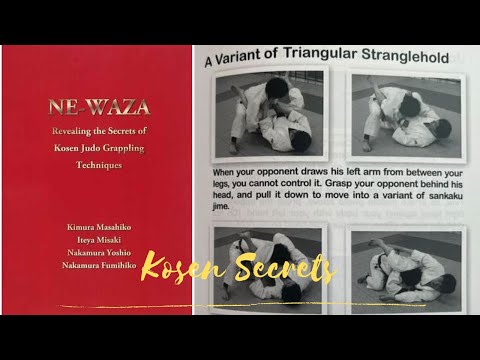
  • Joint Locks (Kansetsu-waza): While modern Judo is famous for its armlocks (Kote-gaeshi, Ude-garami, etc.), Kosen Judo extended this to include leg locks and even wrist locks. Techniques such as the Sankaku-gatame (Triangle Armbar) and various ankle locks were part of the arsenal. The goal was to create pain or hyperextend joints, forcing a tap-out.
  • Forbidden Techniques (Kinpatsu-waza): While the term "Kinpatsu" can be debated, it generally refers to techniques targeting vital areas or joints in ways deemed too dangerous for sport Judo. This could include certain variations of leg locks, spinal cranks, or techniques applied in combinations that overwhelmed the opponent's defenses.
  • Newaza Dominance: Due to the broader acceptance of submissions, Kosen Judo placed a significantly higher emphasis on ground fighting (Ne-waza). The objective was often to quickly transition to the ground after a throw or to secure a dominant position from which to apply a submission.
  • Strategic Variations: Techniques like Uchi-mata (Inner Thigh Throw), a staple in modern Judo, were often employed with variations aimed at creating openings for ground submissions rather than just scoring an ippon.

The strategic implications were profound. An opponent in Kosen Judo had to be constantly aware not just of being thrown, but also of being submitted on the ground. This forced a much higher level of technical proficiency in both standing and ground techniques, and a constant vigilance against a wider range of threats.

In Kosen Judo, the mat was not just a stage for throws; it was a battlefield where every limb was a potential target and every hold a potential end.

Training for the Unseen Battle

Training in Kosen Judo was, and in the few remaining schools, still is, notoriously demanding. The philosophy of "leaving nothing on the mat" meant that randori (free practice) was often intense, pushing practitioners to their absolute limits.

Emphasis on Randori: The core of Kosen Judo training was, and is, randori. However, this was not the point-scoring randori familiar to many modern Judoka. Kosen randori often continued until a clear submission, incapacitation, or a definitive stalemate. This type of prolonged, high-intensity grappling naturally develops incredible stamina, resilience, and tactical acumen. If you are looking to improve your own endurance, consider incorporating at-home workouts and conditioning drills.

Cross-Training: Given its historical context and focus on effectiveness, Kosen Judo practitioners often engaged in or were knowledgeable about other combat systems. There was a natural synergy with arts like Sambo and Wrestling, as well as with the emerging field of Mixed Martial Arts (MMA), which shares a similar ethos of applying diverse techniques to achieve victory. The connection to BJJ and Jiu-Jitsu is also undeniable, as Kosen Judo was a significant influence on the development of these arts.

Mental Fortitude: Facing constant threats of submission and the pressure of prolonged, intense grappling cultivates a unique mental resilience. Kosen Judo practitioners learned to remain calm under extreme duress, to think tactically even when exhausted, and to persevere through pain and discomfort. This development of mental strength is a hallmark of all true martial arts.

Strategic Understanding: Beyond mere technique, Kosen Judo demanded a deep understanding of leverage, timing, and anatomy. Knowing how to apply pressure to maximize discomfort or induce submission required a more profound grasp of biomechanics than might be necessary for purely sport-oriented grappling.

Sensei's Verdict: The Enduring Legacy

Kosen Judo is not merely a historical footnote in the evolution of Judo; it is a testament to the relentless pursuit of effectiveness in combat. While modern Judo has evolved into a globally recognized sport with its own unique beauty and challenges, Kosen Judo represents a lineage that prioritizes decisive outcomes. Its legacy is evident in the continued popularity of submission grappling, the rise of MMA, and the perennial appeal of techniques that have the power to end a contest quickly.

For practitioners of Judo, BJJ, Sambo, or Wrestling, understanding Kosen Judo offers invaluable insights. It reminds us that the art of grappling is multifaceted, and that sometimes, looking to the past can unlock new pathways to improvement in the present. The techniques and strategies honed in the Kosen schools are not relics; they are living, breathing principles of combat that continue to prove their efficacy.

Is Kosen Judo still relevant today? Absolutely. While the formal practice may be niche, its core principles – a willingness to explore all effective techniques, a focus on decisive submissions, and relentless, high-intensity training – are directly applicable to modern grappling and self-defense scenarios. It challenges us to question the limits we impose on ourselves and our art.

Essential Gear for Your Training

While Kosen Judo's emphasis on effectiveness means that technique often trumps equipment, having the right gear can significantly enhance your training experience and safety. For those looking to emulate the rigorous nature of Kosen Judo training, consider the following:

  • High-Quality Gi: A durable, well-fitting gi is essential. For grappling arts, a double-weave gi (often called a "heavyweight" gi) offers superior durability and resistance to tearing during intense randori. Look for brands known for their robust construction.
  • Rashguards: Underneath your gi, a good rashguard can help prevent mat burn and improve comfort, especially during extensive ground work.
  • Spats/Shorts: For no-gi training, grappling shorts or spats are necessary. Ensure they are made of durable, flexible material that can withstand the demands of grappling.
  • Mouthguard: Even in grappling, accidents happen. A well-fitting mouthguard is crucial for protecting your teeth and jaw, especially if you're engaging in highly competitive randori or sparring.
  • Grappling Tape: For protecting fingers and wrists, grappling tape can offer additional support and prevent injuries during demanding sessions.

Investing in quality gear is an investment in your training longevity. Remember, when looking for the best equipment, consider your specific art and training intensity. For example, Karate merchandise differs greatly from Judo or BJJ gear.

Frequently Asked Questions

  • What is the main difference between Kosen Judo and Kodokan Judo?
    The primary difference lies in the permissible techniques. Kosen Judo allows a broader range of submissions, including leg locks and more dangerous chokes, with less emphasis on sport-specific rules.
  • Is Kosen Judo dangerous?
    Like any full-contact martial art, Kosen Judo carries inherent risks. However, its "danger" stems from its effectiveness and the broader range of potentially incapacitating techniques. Proper instruction and a focus on safety within training are paramount.
  • Can Kosen Judo techniques be used in modern MMA?
    Absolutely. Many Kosen Judo techniques are foundational to modern MMA grappling. The emphasis on submissions and positional control is directly transferable.
  • Where can I find Kosen Judo training today?
    Pure Kosen Judo dojos are rare. However, some traditional Judo schools and grappling academies may incorporate Kosen principles, or you can explore related arts like Sambo or certain styles of BJJ that retain a strong emphasis on Ne-waza and submissions.

Deepen Your Journey

Exploring Kosen Judo opens up a fascinating chapter in martial arts history. To further your understanding and enrich your training, consider delving into these related topics:

  • BUDO: The overarching philosophy of martial ways in Japan.
  • Judo: The parent sport and its modern evolution.
  • BJJ: The "gentle art" and its sophisticated ground fighting.
  • MMA: The ultimate test of diverse martial skills.
  • Combat and Lucha: General principles applicable across disciplines.

Sensei's Reflection: Your Next Step

Kosen Judo teaches us that rules are not always limitations, but sometimes frameworks that can be strategically navigated or, in some cases, transcended to achieve a greater objective. The spirit of Kosen Judo is one of relentless pursuit of effectiveness, a willingness to confront all challenges, and a deep understanding that true mastery often lies beyond the obvious.

So, I ask you: In your own training, where have you allowed the "rules" to limit your exploration? Are you truly pushing the boundaries of your understanding, or are you content with the comfortable path? Reflect on the techniques and philosophies of Kosen Judo, and consider how this spirit of effective inquiry can ignite your own martial journey. The mat is your laboratory; what will you discover?

``` GEMINI_METADESC: Uncover the potent secrets of Kosen Judo, the high-school style focused on effective grappling and submissions. Learn its philosophy, key techniques, and enduring legacy.

The Unseen Strength: Why Grapplers Possess Superior Physique and How to Forge Yours

As a Sensei, I've witnessed countless disciplines and debated their merits across the vast landscape of martial arts and combat sports. Today, we confront a question that echoes in dojos and training halls worldwide: Why do grapplers – those who master the intricate dance of clinch, takedown, and ground fighting – often exhibit a physique that commands respect, a veritable temple of functional strength? This isn't mere coincidence; it's the direct result of a training methodology forged in the crucible of necessity. We'll dissect this phenomenon, not just from a performance standpoint, but from the philosophical core of what true physical prowess entails. Prepare to have your preconceptions challenged.

The Grappler's Physique: More Than Just Muscles

The immediate visual cue of a seasoned grappler often includes broad shoulders, a powerful back, thick traps, and legs that are as strong as ancient oaks. But this is not the sculpted, aesthetic physique of a bodybuilder, chasing symmetry over function. The grappler's build is a testament to the demands of their art: the ability to generate immense force for takedowns, to absorb blows and maintain control, and to endure grueling rounds on the mat. This is functional hypertrophy, developed through resistance and strategic application of power. The core of grappling lies in leveraging an opponent's body, often against their will. This requires a unique blend of: * **Explosive Power:** For initiating takedowns like the *O-soto-gari* (Major Outer Reaping) in Judo, or explosive double-leg takedowns in wrestling. * **Crushing Grip Strength:** Essential for maintaining holds, preventing escapes, and controlling an opponent's limbs. * **Core Stability:** The bedrock of all powerful movements. A strong core allows for efficient power transfer and resistance to being swept or controlled on the ground. * **Endurance:** Grappling is a high-intensity activity. The ability to maintain strength and technique for extended periods is paramount.
These attributes don't develop in isolation. They are intricately linked, each reinforcing the other. A strong core enables more explosive leg drives, which in turn requires a stronger grip to secure the takedown. This is the interconnectedness that makes grappling so physically demanding and, consequently, so effective at building a formidable physique.

Unpacking the Philosophy: The *Shin Gi Tai* of Grappling

In the world of Budo, we speak of *Shin Gi Tai* (心技体): mind, technique, and body. For grapplers, this triad is not just an ideal; it's the operational framework for success. * **Shin (Mind):** The mental fortitude required for grappling is immense. It involves strategic thinking, problem-solving under pressure, patience, and the resilience to overcome adversity – whether it's being caught in a submission or facing a seemingly insurmountable physical challenge. The ability to remain calm and analytical when your entire body is under stress is a mark of true mental discipline. * **Gi (Technique):** This is where the art of grappling truly shines. It's not about brute force alone, but about understanding leverage, timing, biomechanics, and the anatomy of movement. A well-executed throw or submission can neutralize a physically superior opponent. Mastering techniques like the *Kimura* (a shoulder lock) or the *Triangle Choke* requires precision and an intimate understanding of joint mechanics. * **Tai (Body):** This is the physical vessel that supports the mind and technique. For a grappler, the body must be a tool – strong, resilient, adaptable, and conditioned for the unique stresses of combat. The physique we observe is the direct manifestation of this body being honed for its specific purpose. The mastery of *Shin Gi Tai* leads to a unique kind of power, one that is both deeply personal and incredibly impactful.

The Training Regimen: Forging the Grappler's Body

The training of a grappler is multifaceted, often blending sport-specific drills with foundational strength and conditioning. It's a holistic approach that builds not just muscles, but resilience and adaptability.

Training Elements for the Aspiring Grappler

* **Technical Mat Time:** The cornerstone of any grappling discipline. This includes drilling techniques, live sparring (*randori* in Judo, *rolling* in BJJ), and positional control exercises. This develops the specific neuromuscular pathways and tactical understanding required. * **Strength Training:** Focuses on compound movements that mimic grappling actions. * **Lower Body:** Squats, deadlifts, lunges, and explosive Olympic lifts like cleans and snatches build the foundational power for takedowns and stability. * **Upper Body:** Pull-ups, rows, bench presses, and overhead presses develop the pulling and pushing strength needed for control and submissions. * **Core:** Planks, anti-rotation exercises, and weighted carries are crucial for stability and power transfer. * **Grip Strength Training:** Farmers' walks, dead hangs, and specialized grip trainers are indispensable. Without a strong grip, all other strengths are compromised. * **Cardiovascular Conditioning:** Grappling is demanding. Interval training, circuit training, and even roadwork (running) improve the cardiovascular system's ability to sustain high-intensity efforts and recover quickly. * **Flexibility and Mobility:** Essential for injury prevention and for executing techniques effectively. Dynamic stretching before training and static stretching afterward, alongside mobility drills, keep the body limber and responsive.
"The strength of the body is not in its muscles, but in its flexibility and resilience." - Unknown Master

A Sample Training Structure (Conceptual)

A typical week might look something like this: * **Monday:** Judo/Wrestling technique and *randori*. * **Tuesday:** Strength training focusing on lower body and core. Grip work. * **Wednesday:** BJJ/Grappling technique and *rolling*. * **Thursday:** Active recovery – light cardio, mobility work, or focus on a specific weak area. * **Friday:** Full grappling session or a focused strength and conditioning circuit designed for grappling. * **Saturday:** Longer grappling session, or a physical challenge (e.g., extended roadwork, heavy carries). * **Sunday:** Rest and recovery. This is a general framework, and the specifics will vary greatly depending on the individual's primary discipline (Judo, BJJ, Sambo, Wrestling), their current level, and their specific goals.

The Role of Genetics and Individual Variation

While training is paramount, we cannot entirely discount the role of genetics. Certain body types might lend themselves more readily to specific grappling disciplines. Taller individuals with longer limbs might excel at certain submissions or guards, while shorter, more compact individuals might find success with explosive takedowns and pressure passing. However, this is where the philosophy of Budo truly shines. Regardless of natural predisposition, dedication, proper technique, and the unyielding spirit (*kokoro*) can overcome many physical limitations. The true grappler develops their body to serve their art, adapting and overcoming.

Reflecting on the *Kime* (Focus/Intent)

The "jacked" physique of the grappler is not a superficial aesthetic; it's a functional outcome of demanding, purposeful training. It's the physical embodiment of *Shin Gi Tai* in action. The strength developed is not just for show; it's for control, for leverage, for survival, and for the execution of intricate techniques. This journey of building a grappling physique requires discipline, patience, and a deep understanding of one's own body and the principles of the art. It’s a path of continuous learning and adaptation.

Veredicto del Sensei: ¿Merece la pena el esfuerzo?

Absolutely. The physical rewards of dedicated grappling training are immense, but they pale in comparison to the mental fortitude, tactical acumen, and profound self-understanding gained. This is not just about building a better body; it's about forging a better self. The principles learned on the mat – discipline, perseverance, respect, and the constant pursuit of mastery – extend far beyond the dojo, shaping every aspect of a grappler's life.

Equipo Esencial para tu Entrenamiento

While grappling is often accessible with minimal equipment, certain items can significantly enhance your training and safety.
  • Gi (Kimono): For Judo and Brazilian Jiu-Jitsu, a high-quality Gi is essential. Look for double-weave for durability and a good fit that allows for movement without being too loose. Brands like Fuji, Hayabusa, and Atama are reputable.
  • Mouthguard: Crucial for protecting your teeth during sparring, especially in BJJ and wrestling.
  • Groin Protector: A wise investment for men to prevent serious injury during accidental impacts.
  • Knee Pads: Helpful for protecting your knees during drills and rolling on harder surfaces.
  • Weightlifting Gear: For supplemental strength training, consider appropriate lifting shoes, a weightlifting belt for heavy squats and deadlifts, and wrist wraps for support.
  • Apparel: Comfortable, moisture-wicking rash guards and shorts for BJJ or no-gi training. For Judo, a specific Judo uniform is required.
When selecting equipment, prioritize durability and proper fit. For instance, a well-fitting judogi is paramount for effective Judo practice.

Guía de Entrenamiento: Ejercicio de Potencia para el Agarre

One of the most overlooked yet critical aspects of grappling is grip strength. Here’s a simple yet brutal exercise:
  1. Find a sturdy barbell or, even better, a thick towel. If using a towel, loop it through the center hole of a weight plate or attach it to a barbell.
  2. Grip the barbell or towel firmly. Ensure your grip is secure and your arms are extended.
  3. Begin a Farmer's Walk. Walk a predetermined distance (e.g., 20-50 meters) or for a set amount of time (e.g., 30-60 seconds).
  4. Focus on maintaining your grip throughout the entire walk. Don't let your hands loosen.
  5. Repeat for 3-5 sets.
This exercise directly targets the forearms, hands, and wrists, building the crushing grip necessary to control an opponent.

Recursos para Profundizar

To truly understand the depth of grappling, explore these foundational elements:
  • The Kodokan Judo Institute: The official source for Judo principles and history, founded by Jigoro Kano. Explore their official website for historical context and technical information.
  • Brazilian Jiu-Jitsu Fundamentals: Many online resources and books delve into the intricacies of BJJ. Look for instructional videos from reputable instructors.
  • The Philosophy of Budo: Understanding broader martial arts philosophy enhances the appreciation of grappling. Texts on Bushido or the writings of Miyamoto Musashi can provide valuable insights.

Preguntas Frecuentes

  • Q: Is it possible to become a strong grappler without spending hours on the mat?
    A: While mat time is crucial for technique, a focused strength and conditioning program can build a strong physical foundation that accelerates technical learning and improves performance during sparring. However, technique acquisition is largely dependent on mat practice.
  • Q: What is the most important physical attribute for a grappler?
    A: It's a tie between core strength and grip strength. A powerful core allows for efficient movement and stability, while a strong grip is essential for control and submission.
  • Q: Can a smaller person succeed in grappling against a larger opponent?
    A: Absolutely. Grappling is a sport where technique, leverage, and strategy can often overcome sheer size and strength differences, especially in disciplines like Judo and Brazilian Jiu-Jitsu.
  • Q: How important is flexibility for grapplers?
    A: Very important. Flexibility aids in injury prevention, allows for a greater range of motion to execute techniques effectively, and can be crucial for escaping certain submission holds.

Para Profundizar en tu Camino

"To learn to fight is to learn to discipline the body and the mind. Strength without control is merely brute force." - Sensei's personal reflection from years of training.

Reflexión del Sensei: Tu Próximo Paso

Observe the grapplers around you. Do you see just athletes, or do you see living embodiments of resilience and tactical brilliance? The physical prowess is not an end in itself, but a tool forged by the mind and honed by technique. Now, I challenge you: How will you begin to forge your own functional strength, not just for the mat, but for life? Will you seek out the discipline, or continue to admire from afar? The choice, as always, is yours. ``` GEMINI_METADESC: Uncover the secrets behind the formidable physique of grapplers. Learn essential training principles from a martial arts master.

The Unseen Art: Decoding the Gritty Brilliance of December's UFC FIGHT PASS Grappling Gems

The digital mats of UFC FIGHT PASS in December were not merely a showcase of athletic prowess, but a testament to the profound, often brutal, beauty of the ground game. While the flashy knockouts command the roar of the crowd, it is the intricate dance of submission, leverage, and strategic patience that truly defines the martial artist's journey. This past December, we witnessed an extraordinary convergence of BJJ specialists and established UFC titans, all converging on the canvas to remind us of the primal, intellectual, and deeply philosophical nature of grappling. As a seasoned Sensei, I approach such events not just as entertainment, but as living exhibitions of principles honed over centuries. Let us dissect the essence of these "best moments" and understand what they reveal about the warrior's spirit.

Table of Contents

The December Grappling Renaissance

December on UFC FIGHT PASS was, by all accounts, a celebration of the ground. We saw practitioners whose entire careers are built on the delicate art of submission, and we saw formidable strikers forced to confront their vulnerabilities on the mat. This is where the true character of a fighter is often revealed. The ability to transition seamlessly from the thunderous power of striking to the silent, cerebral war of grappling separates the competent from the truly complete martial artist. It's a reminder that the ultimate goal of many martial arts isn't just to inflict damage, but to control, incapacitate, and ultimately, to demonstrate mastery over oneself and an opponent through technique and strategic application of force. This month's events offered a compelling narrative of this very principle in action, showcasing the depth and complexity that lies beneath the surface of combat sports. The digital subscription service, UFC FIGHT PASS, acted as the perfect conduit for these profound displays of skill and resilience.
"The supreme art of war is to subdue the enemy without fighting." - Sun Tzu, The Art of War. While direct combat is inevitable in the octagon, the principles of control and strategic submission echo this ancient wisdom.

Beyond the Submission: The Strategic Mind at Play

To the uninitiated, a submission might appear as a sudden, brutal end to a contest. However, as any practitioner of Jiu-Jitsu, Judo, or Sambo will tell you, the submission is the culmination of a complex strategic battle. It is the result of positional dominance, pressure distribution, and the relentless exploitation of an opponent's structural weaknesses. December’s events on UFC FIGHT PASS offered numerous instances where we saw fighters meticulously build towards a submission, demonstrating patience that would make a seasoned chess grandmaster proud. This isn't about brute strength; it's about intelligence, timing, and an almost intuitive understanding of physics and human anatomy. The greatest grapplers aren't just athletes; they are strategists who think several steps ahead, constantly probing, adapting, and waiting for that precise moment to strike with a choke or joint lock.

The BJJ vs. Striker Dilemma: A Philosophical Clash

The perennial debate in mixed martial arts – the clash between the striker and the grappler – was vividly illustrated throughout December’s UFC FIGHT PASS offerings. On one hand, you have the practitioners of Brazilian Jiu-Jitsu and other ground-based arts, who seek to neutralize striking advantages by taking the fight to the mat. Their philosophy centers on control, leverage, and the submission. On the other, you have the stand-up specialists, whose arsenal consists of powerful punches, kicks, and knees, aiming to end the fight with decisive strikes. When these two archetypes collide, it's more than just a physical contest; it’s a philosophical one. It's a question of which martial paradigm will prevail: the cerebral, technical mastery of the ground game, or the explosive, immediate danger of striking? The December events provided fertile ground for observing this dynamic play out, with varying outcomes that fuel endless discussion among fight fans.
"In the art of war, one must be both the serpent and the dragon." This quote, often attributed to various martial traditions, speaks to the need for both cunning and power. A grappler embodies the serpent's ability to ensnare, while a striker reflects the dragon's ferocity. The true master integrates both.

Key Moments: A Master's Perspective

While I won't delve into specific fighter names as the original content aimed for broader appeal, let's analyze the *types* of moments that stood out in December’s grappling-centric UFC FIGHT PASS events. * **The Calculated Takedown**: We saw fighters masterfully disguise their intentions, feinting strikes to set up powerful double-leg or single-leg takedowns. This is not just about physical execution, but psychological warfare – manipulating the opponent’s expectations. The success of these takedowns hinged on timing and a deep understanding of distance management. * **Positional Advancement as Art**: Once on the ground, the true art of grappling unfolds. Achieving mount, side control, or a dominant back position isn't merely about staying on top. It's about strategically applying pressure, preventing escapes, and setting up the next phase of the attack. Seeing fighters patiently work through these transitions, grinding down their opponents, is a masterclass in control. * **The Submission Sequence**: The moment an opponent's defense breaks is electrifying. However, what precedes it is often more impressive: the intricate chain wrestling, the clever hip escapes, the setup for armbars, kimuras, or rear-naked chokes. These sequences highlight the problem-solving nature of grappling. A fighter must constantly adapt to their opponent's defenses, much like solving a dynamic, three-dimensional puzzle. * **The Resilient Defense**: Equally important are the moments of incredible defense. Fighters escaping tight submissions, surviving dominant positions, and finding a way back to neutral or even a superior position showcases immense grit and technical proficiency. This resilience is a cornerstone of the warrior spirit.

Training the Grappler's Mindset: Lessons for All Martial Paths

The lessons from December’s grappling showcase extend far beyond the canvas and are directly applicable to any martial art, indeed, to life itself. * **Patience and Perseverance**: Grappling teaches that progress is often slow and incremental. Submissions are rarely achieved in seconds. It requires unwavering patience and the mental fortitude to continue applying pressure and technique even when immediate success isn't apparent. This is invaluable for mastering any skill, be it a martial technique or a professional endeavor. * **Adaptability**: An opponent will always react. A good grappler doesn't stick rigidly to a plan but adapts their strategy based on the opponent's movements and reactions. This is the essence of situational awareness and tactical flexibility, critical for any combat scenario or life challenge. * **Understanding Leverage and Efficiency**: Grappling is the ultimate study in leverage. It teaches you to use your entire body's structure, not just brute strength, to overcome an opponent. This principle of efficiency—achieving maximum effect with minimum effort—is a profound lesson applicable to all forms of physical activity and problem-solving. * **The Importance of the Foundation**: Strong fundamentals in grappling—proper base, posture, grip fighting, and escapes—are paramount. Without them, advanced techniques will fail. This mirrors the martial arts axiom that mastery is built upon a solid foundation of basic principles.

Essential Equipment for Your Grappling Training

To truly immerse yourself in the art of grappling, having the right equipment is crucial for both safety and effectiveness. While striking arts might focus on gloves and pads, the groundwork demands specific gear.
  • High-Quality Jiu-Jitsu Gi (Kimono): A durable double-weave or hybrid gi is essential for BJJ. It should be reinforced at stress points and offer a good fit without being too loose (making it easy for opponents to grip) or too tight (restricting movement). Look for brands known for their longevity and adherence to IBJJF standards. Consider brands like **Fuji**, **Adidas**, or **Tatami**.
  • Rash Guards: Essential for no-gi grappling, rash guards help prevent mat burns and provide a snug fit that doesn't impede movement. They also help manage sweat and hygiene.
  • Spats/Grappling Shorts: For no-gi training, comfortable and durable spats or grappling-specific shorts are a must. They offer protection and prevent friction burns.
  • Mouthguard: Even in grappling, accidental impacts can occur. A well-fitting mouthguard is vital for protecting your teeth and jaw.
  • Shin Guards (Optional, for some drills): While not standard for all grappling, some drills or specific training scenarios might benefit from light shin protection.
  • Footwear (For specific training): While most grappling happens barefoot, some Judo or Sambo training might require specific footwear.
For those looking to enhance their conditioning for grappling, consider investing in items that support strength and agility. Resistance bands and kettlebells are excellent for developing explosive power and core strength, essential for takedowns and sweeps.

Frequently Asked Questions

  • Q: Is grappling dangerous?
    A: Like any physical activity, grappling carries risks. However, with proper instruction, emphasis on technique over strength, and a culture of safety and respect within the dojo, the risk of serious injury can be significantly minimized.
  • Q: Do I need to be strong to start BJJ or Judo?
    A: Absolutely not! These arts are designed to allow smaller, weaker individuals to overcome larger, stronger opponents through technique and leverage. Strength can be developed, but it's not a prerequisite.
  • Q: How long does it take to learn a submission?
    A: Learning the mechanics of a submission can be quick, but mastering it to the point where you can effectively apply it under pressure can take months or even years of consistent practice and refinement.
  • Q: What's the difference between BJJ and Judo?
    A: Judo focuses heavily on throws and takedowns, aiming to bring the opponent to the ground to achieve a pin or submission. BJJ, while incorporating some takedowns, emphasizes ground fighting and submission techniques more extensively once the fight is on the mat.

For a Deeper Dive into Your Martial Journey

Reflexión del Sensei: Tu Próximo Paso

These moments from UFC FIGHT PASS are not just clips; they are living lessons in strategy, resilience, and the profound depth of martial philosophy. They remind us that true mastery lies not just in the obvious displays of power, but in the subtle, intelligent application of technique and the unwavering spirit to control the narrative of conflict. As you watch, or perhaps even train, consider this: In the quiet intensity of a grappling exchange, where every grip, every shift of weight, carries immense consequence, how do you cultivate the mental discipline to remain present, strategic, and unbroken? GEMINI_METADESC: Explore the strategic depth of December's UFC FIGHT PASS grappling events. A Sensei's analysis of BJJ, Judo, and the warrior's mindset.