Showing posts sorted by relevance for query karate vs judo. Sort by date Show all posts

PRIDE FC 6 (1999): A Martial Masterpiece or a Gory Spectacle?

Welcome, warriors and scholars of the Way! You've stumbled upon a deep dive into a pivotal moment in combat sports history: PRIDE FC 6, held at the Yokohama Arena on July 4th, 1999. Today, we dissect this event not merely as a collection of fights, but as a crucible where martial arts principles met raw, unadulterated combat. Forget your sanitized MMA promotions; PRIDE was a different beast, a testament to the visceral, often brutal, application of martial skill. But does its legacy hold up under the scrutinizing gaze of a true martial arts critic? Let's find out.

Table of Contents

A New Era of Combat

PRIDE FC 6 wasn't just another fight card; it was a declaration of intent. In 1999, the landscape of mixed martial arts was still being shaped, and PRIDE stepped onto the scene with a distinct flavor. It embraced the spectacle, the larger-than-life personalities, and, crucially, the diverse martial arts traditions that fueled its fighters. This event was a melting pot, showcasing not only grappling prowess but also striking from various disciplines. It was a raw, unfiltered look at what happens when different fighting philosophies collide on the grandest stage. The question for us, as students of the martial way, is: did it represent a genuine advancement in our understanding of combat, or was it merely a brutal display of aggression?

The Fights That Defined a Generation

Let's break down the card, not just by time stamps, but by the martial significance of each bout. PRIDE FC 6 featured a lineup that would become synonymous with the promotion’s daring approach to matchmaking. This wasn't about creating predictable mismatches; it was about pitting contrasting styles against each other, often with dramatic results.

Malenko vs. Inoue: A Struggle for Dominance

Carl Malenko, a practitioner of catch wrestling, faced Egan Inoue, a judoka and Brazilian Jiu-Jitsu practitioner. This bout epitomized the early PRIDE philosophy: pitting distinct grappling backgrounds against one another. The outcome often hinged on which fighter could impose their rules – the mat-based submissions of Jiu-Jitsu or the transitional, limb-targeting attacks of catch wrestling.

Newton vs. Matsui: Technical Prowess on Display

Carlos Newton, known for his Judo and submission skills, took on Daijiro Matsui. Newton was a trailblazer, seamlessly blending takedowns with submission offense. Matsui, while perhaps less heralded internationally, brought his own brand of fighting spirit. This bout was a prime example of how Judo's throws and controls could transition into effective ground fighting, a key element that PRIDE helped popularize.

Vovchanchyn vs. Carlos Barreto: The Unstoppable Force Meets the Immovable Object

Igor Vovchanchyn, a legendary striking powerhouse with a background in combat sambo, met Carlos Barreto, a formidable BJJ black belt. This was a classic striker vs. grappler matchup, a cornerstone of MMA. Vovchanchyn's devastating power was legendary, while Barreto was known for his submission defense and ability to grind out opponents. The tension in a fight like this is palpable, representing the eternal debate: can power and aggression overcome superior technique, or vice-versa?
"The ultimate aim of martial arts is not physical prowess, but the development of a knightly character." - Jigoro Kano, Founder of Judo. While PRIDE often tested the limits of brutality, the underlying principle of character development remained, even if masked by raw combat.

Kurosawa vs. Nobuaki Kakuda: The Karate Clash

This bout stands out as a unique inclusion: a pure Karate vs. Karate match, albeit with Kakuda’s unique brand of full-contact Karate incorporating striking with his hands and feet, and a showman's flair. Hiroki Kurosawa was a respected Karateka. This was a rare opportunity to see striking arts of a similar lineage compete directly in the PRIDE ring, highlighting the differences in their application and philosophy. Did it showcase the explosive power of Karate, or did it expose its limitations in a mixed-rules environment?

Akira Shoji vs. Guy Mezger: A Battle of Styles

Akira Shoji, a Japanese fighter with a reputation for heart, faced American Kenpo Karate and Brazilian Jiu-Jitsu practitioner Guy Mezger. This bout represented the clash of Japanese fighting spirit against American MMA acumen. Shoji embodied the warrior ethos, often fighting through adversity, while Mezger was a seasoned competitor known for his well-rounded skills.

Naoya Ogawa vs. Gary Goodridge: The Heavyweight Collision

Naoya Ogawa, an Olympic Judo medalist, stepped into the brutal world of MMA against Gary Goodridge, a powerful heavyweight with a background in kickboxing and BJJ. This was a clash of titans, showcasing how Olympic-level grappling translated to the unforgiving rules of PRIDE. Goodridge was known for his knockout power, making this a high-stakes encounter where a single mistake could be fatal.

Kazushi Sakuraba vs. Ebenezer Fontes Braga: The Gracie Hunter's Prelude

Kazushi Sakuraba, "The Gracie Hunter," was at the height of his fame, known for his uncanny ability to defeat members of the legendary Gracie family. He faced Ebenezer Fontes Braga, a BJJ practitioner. While Braga was not a direct Gracie opponent, this fight was significant as it showcased Sakuraba's grappling acumen and his unique, almost dance-like, approach to submissions, often bewildering his opponents. His style was a blend of professional wrestling and submission grappling, a testament to his innovative approach.

Mark Kerr vs. Nobuhiko Takada: The Pinnacle of PRIDE's Drama

This main event between Mark Kerr, the "Smashing Machine," and Nobuhiko Takada, a puroresu legend and the face of PRIDE, was more than just a fight; it was a narrative. Kerr, a collegiate wrestling champion, was a force of nature, while Takada represented the established Japanese martial arts establishment. The build-up, the theatricality, and the sheer contrast in their backgrounds made this a focal point of the event, encapsulating PRIDE's ability to weave compelling stories around its contests.

Veredict of the Sensei: Was PRIDE FC 6 a True Test of Martial Arts?

PRIDE FC 6 was a raw, visceral, and undeniably impactful event. It delivered on its promise of showcasing diverse martial arts in high-stakes combat. The inclusion of a Karate vs. Karate bout, the clash of Judo against Catch Wrestling, and the perennial Striker vs. Grappler narratives were all present. However, we must analyze this through the lens of *true* martial arts development. While the event demonstrated incredible courage, resilience, and technical application, it also reveled in the brutality. The focus was often on the spectacle and the knockout, sometimes at the expense of the deeper philosophical tenets that underpin traditional martial arts. Did it advance martial arts? Yes, in terms of showcasing the effectiveness of various disciplines in a competitive, high-pressure environment. It highlighted the efficacy of submission grappling and the power of well-executed striking combinations. Was it the *pinnacle* of martial arts representation? That's where the debate lies. For those seeking the philosophical depth, the character refinement, and the spiritual growth that defines many traditional arts, PRIDE FC 6 might feel like a distant echo. Yet, for its demonstration of "real-world" combat effectiveness and the courage displayed by its warriors, it undeniably earned its place in history. **Cinturón Negro en Espectáculo Brutal, Medalla de Bronce en Filosofía Profunda.**

Equipo Esencial para tu Entrenamiento

To truly understand the martial arts showcased at PRIDE FC 6, dedicated training is paramount. Here's some essential gear to enhance your journey:
  • Guantes de MMA: For sparring and striking practice, ensuring hand protection while allowing for grappling. Look for 4-6 oz.
  • Rashguards: Essential for grappling disciplines like BJJ and Judo, providing comfort and preventing mat burn.
  • Protector Bucal: Non-negotiable for any striking or sparring activity to protect your teeth and jaw.
  • Espinilleras: Crucial for Karate and Kickboxing training to protect your shins during kicking drills.
  • Kimono/Gi de Judo o BJJ: For foundational grappling training. Invest in a durable, double-weave kimono for longevity, especially if you plan on serious Judo or BJJ.

Frequently Asked Questions

What was PRIDE FC known for?

PRIDE FC was renowned for its unique ruleset, larger-than-life fighters, dramatic entrances, and its willingness to book exciting, often brutal, matchups between fighters from diverse martial arts backgrounds. It was seen as a more "wild west" version of MMA compared to its contemporaries.

Was PRIDE FC real fighting?

Yes, PRIDE FC featured legitimate mixed martial arts contests governed by a specific set of rules. While it emphasized spectacle, the fights themselves involved highly skilled athletes competing seriously.

What martial arts were most prominent in PRIDE FC?

PRIDE FC showcased a wide array of martial arts, including Brazilian Jiu-Jitsu, Judo, Karate, Kickboxing, Muay Thai, Sambo, Wrestling, and Japanese professional wrestling (Puroresu), among others.

How did PRIDE FC differ from the UFC?

PRIDE FC often featured a more open ruleset (e.g., allowing soccer kicks and stomps to grounded opponents in its early days), had a different presentation style emphasizing Japanese culture and drama, and frequently booked heavier weight classes and inter-style super fights that were less common in the UFC at the time.

To Delve Deeper into Your Journey

Reflexión del Sensei: Tu Próximo Paso

PRIDE FC 6 offered a potent brew of combat effectiveness and raw human drama. It pushed the boundaries of what was accepted in competitive fighting, forcing us to question the efficacy of different martial arts against each other. But as you leave the spectacle of the ring behind, I ask you: In your own training, are you seeking mere victory, or are you forging the character of a true warrior? Is your technique a tool for control, or a weapon of uncontrolled aggression? Reflect on the spirit behind the strike, the intention behind the submission. Where does your true path lie? ``` GEMINI_METADESC: Explore PRIDE FC 6 (1999) with a critical martial arts perspective. Analyze fights, styles, and the event's legacy in combat sports history.

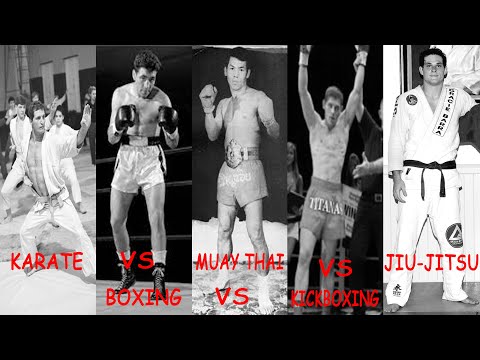
Karate vs. Jiu-Jitsu, Boxing vs. Muay Thai: A Master's Critique of Combat Sports' Pinnacle Showdowns

The roar of the crowd, the glint of sweat under the lights, the primal dance of combat. We’ve all seen the highlights, the explosive compilations that leave us breathless. But what lies beneath the surface of these electrifying clashes? Are we merely witnessing a spectacle, or are we seeing the fundamental principles of martial arts put to the ultimate test? Today, we dissect the age-old rivalries: Karate versus Jiu-Jitsu, and Boxing versus Muay Thai. This isn't just about which style "wins"; it's about understanding the essence of each discipline and how they represent the warrior's path. Prepare yourselves, for we are about to engage in a debate as fierce as any fought in the ring.

The Clash of Titans: Why These Comparisons Ignite Debate

The internet is awash with highlight reels showcasing the most brutal and beautiful moments in combat sports. Phrases like "Karate vs. Jiu-Jitsu," "Boxing vs. Muay Thai," and "Kickboxing highlights" are not just search terms; they represent a deep-seated human fascination with efficacy, strategy, and the raw display of physical and mental fortitude. As a martial arts scholar and practitioner, I find these comparisons both illuminating and, at times, frustratingly simplistic. My intention here is not to crown a single champion, but to offer a critical analysis, a **Sensei's perspective**, on what these matchups reveal about the evolution of combat, the philosophy of different martial traditions, and the practical application of techniques.

Many beginners, and even some seasoned practitioners, get lost in the spectacle, chasing the "knockout power" or the "submission chain" without grasping the underlying principles. The goal of this discourse is to provide clarity, to elevate the understanding beyond mere highlights, and to encourage a deeper appreciation for the dedication required in any martial discipline. We will delve into the core philosophies, the strategic differences, and the historical context that shapes these iconic rivalries. Furthermore, we'll touch upon the equipment that supports this journey, because even the most profound spiritual path requires the right tools.

Karate vs. Jiu-Jitsu: The Art of Striking Meets the Art of the Ground

The image of a Karateka delivering a precise, powerful punch or a devastating front kick is iconic. Rooted in Okinawan traditions and refined over decades, Karate emphasizes striking from a distance. Its practitioners train to develop explosive power, speed, and pinpoint accuracy. The core tenets often revolve around "Isshin-ryu" (one heart, one mind) or the striking principles found in various Karate styles like Shotokan or Kyokushin. The focus is on incapacitating an opponent with devastating blows to vital areas. Katas, the pre-arranged forms, are crucial for internalizing techniques and developing body mechanics. When you see "Karate Kid 3 final fight" or "Karate tournament" highlights, you are witnessing the culmination of years of practice in striking precision and evasive footwork.

Conversely, Brazilian Jiu-Jitsu (BJJ), heavily influenced by Judo's grappling and throws, thrives on the ground. Its philosophy centers on leverage and technique to overcome brute strength. A smaller, weaker person can defeat a larger, stronger adversary by taking them to the ground, controlling their position, and applying joint locks or chokeholds. The phrase "BJJ submissions" encapsulates the essence of this art. Masters like the Gracie family demonstrated the effectiveness of BJJ against practitioners of striking arts, famously in the early UFC events. Understanding "jiu jitsu basics" and "jiu jitsu takedowns" is fundamental to appreciating its effectiveness.

The true debate arises when these two arts meet. Can Karate's powerful strikes overcome Jiu-Jitsu's dominant ground game? Or will Jiu-Jitsu's ability to nullify striking by taking the fight to the mat prove superior? Historical encounters and modern MMA have shown that a successful fighter often needs proficiency in both striking and grappling. A pure Karateka might struggle against a skilled BJJ practitioner who can close the distance and initiate a ground battle. Conversely, a Jiu-Jitsu specialist must be wary of devastating kicks and punches if they cannot close the gap effectively. The key lies in the transition – how well each fighter can dictate the terms of engagement.

"The ultimate aim of martial arts is not victory or defeat, but the perfection of the human character." - Gichin Funakoshi

When we analyze "jiu jitsu vs wrestling", we see a similar dynamic: the art of taking an opponent down versus the art of staying up or controlling them once down. Both require immense strength, technique, and strategic thinking. The highlights often showcase the most dramatic moments – the spectacular submission or the powerful knockout punch. But the real lesson is in the preparation, the countless hours of drilling "jiu jitsu basics" and mastering the nuances of stance and striking in Karate.

Boxing vs. Muay Thai: The Sweet Science Versus the Art of Eight Limbs

Boxing, often called "the sweet science," is a discipline of elegant simplicity and profound complexity. It focuses exclusively on punches delivered with the fists, employing intricate footwork, defensive maneuvers like slipping and weaving, and strategic combinations. Legends like Muhammad Ali and Mike Tyson embody the pinnacle of this art, showcasing unparalleled speed, power, and ring generalship. A "boxing workout" emphasizes conditioning, accuracy, and the development of devastating punch combinations. Analyzing "boxing knockouts" reveals the power of focused strikes to critical targets.

Muay Thai, the "Art of Eight Limbs," incorporates a broader arsenal. In addition to punches, it utilizes elbows, knees, and kicks. The clinch, a grappling position where fighters can deliver knee strikes and control their opponent, is a significant element. This makes Muay Thai a more versatile striking art in certain contexts. When practitioners engage in "Muay Thai training", they develop a holistic striking ability, often incorporating the use of the shin for powerful kicks, reminiscent of the effectiveness seen in "kickboxing training".

The contrast between the two is stark. Can boxing’s refined punching technique and evasive footwork overcome Muay Thai’s devastating kicks, powerful knees, and close-range elbow strikes? Many believe that a boxer’s ability to control distance and land clean punches can neutralize Muay Thai’s wider range of weapons. However, a skilled Muay Thai fighter can use their kicks to control the distance, clinch to deliver damaging knees, and employ elbows to create openings. The "Muay Thai vs. Kickboxing" debate is also significant, as both share many striking techniques, though Muay Thai’s clinch and traditional elements often set it apart.

"When you are not practicing, remember that the world is practicing, and you will be surpassed." - Anonymous (often attributed to various martial arts masters)

"Boxing vs. Muay Thai" comparisons often highlight the stark difference in ranges. Boxers excel at mid-to-long range punches, while Muay Thai fighters are dangerous at all ranges, from long-range kicks to the devastating close-quarters combat of the clinch. The highlights of "Muay Thai knockouts" often showcase the brutal efficiency of the roundhouse kick or the fight-ending knee strike. Similarly, "boxing highlights" demonstrate the surgical precision and concussive force of a well-placed punch.

Kickboxing: A Synthesis or a Compromise?

Kickboxing, in its various forms (American, Japanese, Dutch), attempts to bridge the gap between boxing and traditional martial arts like Karate and Muay Thai. It generally allows punches and kicks, but often prohibits the extensive use of the clinch or certain types of throws and submissions found in BJJ or Judo. This creates a dynamic, high-paced striking environment. "Kickboxing for beginners" often focuses on mastering basic punches and kicks, building towards more complex combinations and footwork.

Comparing "kickboxing vs muay thai" is crucial. While both involve punches and kicks, Muay Thai's emphasis on the clinch, elbows, and shins provides a distinct flavor and tactical approach. Dutch kickboxing, for instance, is heavily influenced by boxing's power and combinations, integrated with powerful kicks. Japanese kickboxing often incorporates more dynamic, high-flying techniques. Kickboxing can be seen as a sport that distilled the most effective striking elements from various martial traditions into a competitive format.

The compilation of "kickboxing training" highlights often feature fast-paced exchanges, demonstrating powerful combinations and explosive kicks. This emphasis on striking offense makes it a popular choice for those seeking a high-intensity workout and a practical self-defense skillset. Analyzing "kickboxing workout with punching bag" routines shows how practitioners hone their power and technique.

Sensei's Verdict: Authenticity and Effectiveness

From my vantage point, the true "winner" in these comparisons is the practitioner who understands the depth and philosophy of their chosen art, and more importantly, the principles that transcend individual styles.

  • Karate vs. Jiu-Jitsu: Karate teaches discipline, focus, and devastating striking power. Jiu-Jitsu teaches leverage, control, and the ability to overcome strength with technique. In a practical self-defense scenario, a blend is ideal. For pure sport, the rules often dictate the effectiveness. A pure Karateka might find themselves in trouble if they can't keep a BJJ practitioner at bay. A pure BJJ practitioner needs to be aware of the striking threat. The "fight analysis" of MMA bouts often shows practitioners developing hybrid skillsets.
  • Boxing vs. Muay Thai: Boxing offers unparalleled hand speed, head movement, and punching power. Muay Thai provides a more comprehensive striking toolkit with kicks, knees, and elbows, along with the clinch. A boxer needs to defend against a wider array of attacks, while a Muay Thai fighter must be wary of a boxer's ability to control distance and deliver concussive punches. The strategic implications are vast.

Authenticity lies in respecting the lineage and principles of each art. Effectiveness is situational and depends on the practitioner, the opponent, and the context (sport vs. self-defense). These compilations, while entertaining, often present an incomplete picture. They showcase peak moments, not the years of diligent training, the failures, and the constant refinement required to master any martial path. The journey is as important as the destination, and true mastery involves understanding the 'why' behind the techniques.

Essential Training Gear for the Aspiring Warrior

To embark on the journey of martial arts, whether it's Karate, Jiu-Jitsu, Boxing, or Muay Thai, the right equipment is crucial for safety and effective training.

  • For Striking Arts (Karate, Boxing, Muay Thai, Kickboxing):
    • Gloves: For boxing and Muay Thai, 16oz sparring gloves are standard for protection. For bag work, 10-12oz training gloves are suitable.
    • Hand Wraps: Essential for protecting your wrists and knuckles during any punching activity.
    • Mouthguard: Non-negotiable for sparring in any combat sport to protect your teeth and jaw.
    • Shin Guards: Crucial for Muay Thai and Kickboxing training to protect against kicks.
    • Groin Protector: For both male and female practitioners, vital during sparring.
    • Kimono/Gi: For Karate, a durable Karate Gi is standard. For Judo/BJJ, a specialized heavyweight Judo Gi or BJJ Gi is required.
    • Headgear: Recommended for beginners during sparring to reduce the risk of cuts and bruises.
  • For Grappling Arts (Jiu-Jitsu, Judo):
    • Gi (Kimono): A high-quality double-weave BJJ Gi or single-weave Judo Gi is essential. Look for brands known for durability like Fuji or Tatami.
    • No-Gi Gear: Rash guards and grappling shorts are necessary for No-Gi Jiu-Jitsu training.
    • Mouthguard: Still essential for protection during grappling exchanges.

Investing in quality "Martial Arts Merchandise" is an investment in your safety and longevity in the sport. Don't skimp on protection; your body is your most valuable tool.

Frequently Asked Questions

  • Q: Which martial art is best for self-defense?
    A: The "best" martial art for self-defense is the one you train consistently and effectively. A combination of striking (like Karate or Boxing) and grappling (like Jiu-Jitsu or Judo) provides a well-rounded skillset. Focus on practical techniques and situational awareness.
  • Q: Is it true that Jiu-Jitsu can defeat any striking art?
    A: While Jiu-Jitsu is highly effective on the ground, it's not infallible. A skilled striker who can maintain distance and avoid being taken down can neutralize a pure Jiu-Jitsu practitioner. In mixed martial arts, the most successful fighters blend striking and grappling.
  • Q: Should I focus on Karate or Muay Thai for kickboxing?
    A: Both can contribute. Karate provides discipline and powerful linear strikes, while Muay Thai offers a broader range of kicks, knees, elbows, and clinch work. Many modern kickboxing systems integrate elements from both.
  • Q: How important is conditioning in combat sports?
    A: Conditioning is paramount. Stamina, strength, and speed are critical for executing techniques effectively and enduring the rigors of training and competition. A strong "Entrenamiento de MMA" program will always include rigorous conditioning.
  • Q: How can I improve my mental strength in martial arts?
    A: Mental strength is built through consistent practice, overcoming challenges, and developing discipline. Meditation, visualization, and learning to persevere through fatigue and discomfort are key components of the "Mental Game" in martial arts.

To Deepen Your Path

The comparisons we’ve explored—Karate vs. Jiu-Jitsu, Boxing vs. Muay Thai—are more than just highlight reels; they are crucibles where the philosophies and techniques of martial traditions are tested. Each art possesses its own unique beauty, effectiveness, and challenges. True mastery lies not in declaring one superior, but in understanding the principles that govern all combat, respecting the dedication of practitioners across disciplines, and continuously striving for self-improvement. The journey is long, demanding, and infinitely rewarding.

Sensei's Reflection: Your Next Step

You have witnessed the analysis of iconic martial rivalries. Now, the true test begins: application. Consider your own training. Are you focusing solely on your strengths, or are you venturing into the disciplines that challenge you most? Do you understand the fundamental principles that underpin your techniques, or are you merely mimicking movements? The essence of Budo is not about winning debates on forums, but about winning the quiet battles within yourself every single day.

"In martial arts, the highest goal is not to defeat an opponent, but to defeat oneself." - Unknown Master

So, I ask you: Which aspect of your training have you been neglecting out of comfort or perceived lack of importance? And more critically, what steps will you take, starting today, to address that deficit and embody the spirit of a true warrior? The path to mastery is paved with self-awareness and deliberate action. Share your thoughts and your commitment in the comments below. Let us learn from each other.

``` GEMINI_METADESC: A martial arts master dissects Karate vs. Jiu-Jitsu and Boxing vs. Muay Thai, analyzing techniques, philosophies, and effectiveness beyond the hype. Essential training insights included.

Karate vs. Brazilian Jiu-Jitsu: A Clash of Titans, Analyzed by a True Sensei

Introduction: The Age-Old Question

Welcome, students, to a discussion that has ignited debate in dojos and living rooms for generations: Karate versus Brazilian Jiu-Jitsu. What happens when the devastating power of a strike meets the inescapable control of a grapple? Many have pondered this, and few have offered a truly insightful answer. Today, we dissect this enduring question not as mere spectators, but as practitioners who understand the heart of martial arts. We’re not just looking at a spectacle; we’re examining fundamental principles, historical lineage, and the brutal realities of combat. Prepare yourselves, for this is not for the faint of heart.

Historical Context: Where Do They Stand?

To understand the potential outcome of a Karate vs. Jiu-Jitsu encounter, we must first grasp their origins and evolution. Karate, born in Okinawa and refined in mainland Japan, is a system built upon striking – punches, kicks, elbow strikes, and knee strikes – emphasizing distance management and the "one-hit, one-kill" philosophy. It evolved from indigenous Okinawan fighting methods and influences from Chinese martial arts, codified over centuries into diverse styles like Shotokan, Goju-Ryu, and Kyokushin. Its purpose has always been multifaceted: self-defense, physical conditioning, and character development. Brazilian Jiu-Jitsu, on the other hand, emerged from Judo’s ground-fighting principles, meticulously adapted and refined by the Gracie family in Brazil. Its core tenet is that a smaller, weaker individual can defend themselves against a larger, stronger assailant by using leverage and proper technique, particularly in ground fighting and submissions (chokes and joint locks). BJJ is a grappling art, designed to take an opponent to the ground, control them, and apply a submission that forces them to yield. The perceived conflict arises from their diametrically opposed primary engagement methods: striking versus grappling.

Karate's Philosophy: The Striking Art

Karate's essence lies in the devastating efficiency of its techniques. Masters train for years to imbue their strikes with explosive power, precision, and intent. The goal is often to incapacitate an opponent before they can effectively close the distance or execute their own techniques. Key principles include: * **Zanshin (Remaining Mind/Awareness)**: Constant awareness of surroundings and one’s own condition. * **Mushin (No Mind)**: A state of mind free from distraction, allowing instinct and training to take over. * **Kiai (Spirit Cry)**: A focused exhalation that amplifies power and intent. * **Ma'ai (Distance/Spacing)**: Crucial for Karate, controlling the space between combatants to land strikes effectively. Styles like Kyokushin Karate, known for its full-contact sparring and emphasis on conditioning, showcase the raw power and resilience inherent in Karate. The effectiveness of a powerful gyaku-zuki (reverse punch) or a front kick can be undeniable if it lands clean.
"The ultimate aim of Karate is not to be victorious or defeated, but to perfect the imperfection of oneself." - Gichin Funakoshi

Jiu-Jitsu's Philosophy: The Ground Game

Brazilian Jiu-Jitsu flips the script. While striking arts focus on keeping an opponent at bay, BJJ aims to close the distance, secure a takedown, and dominate from the ground. Its philosophy centers on: * **Leverage over Strength**: The ability of the smaller person to control the larger one. * **Positional Dominance**: Achieving and maintaining superior positions (mount, side control, back control) to set up submissions. * **Submission Holds**: Chokes and joint locks designed to force an opponent to tap out. * **Takedowns**: The critical first step to bring an opponent to the ground where BJJ excels. The legendary effectiveness of BJJ was famously demonstrated by Royce Gracie in the early Ultimate Fighting Championship (UFC) events, where he, often facing larger opponents from striking backgrounds, consistently achieved victory through superior grappling.
"Jiu-jitsu is not about fighting. It's about the struggle for survival, and the art of overcoming." - Helio Gracie

The Clash: Principles in Action

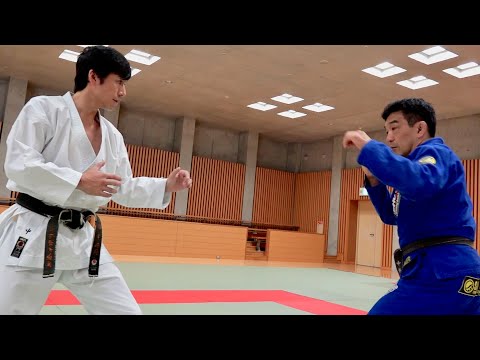
So, what happens when these two philosophies collide? The outcome hinges on several critical factors: 1. **The Initial Engagement**: Can the Karate practitioner maintain distance and land a decisive strike before the Jiu-Jitsu practitioner can close the gap for a takedown? A well-timed kick or punch can end the fight immediately. 2. **Takedown Defense**: Can the Karate practitioner effectively defend against takedown attempts? Strong stances, sweeping motions, and sprawl techniques are vital. 3. **Ground Transition**: If the Jiu-Jitsu practitioner successfully secures a takedown, can they maintain positional control and avoid being swept or submitted themselves? 4. **The Art of the Ground**: Once on the ground, the Jiu-Jitsu practitioner typically holds a significant advantage, capable of controlling and submitting a striker who lacks ground-fighting experience. This scenario is precisely what was explored in the now-famous encounter between Tatsuya Naka (Karate) and Yuki Nakai (Jiu-Jitsu), a bout that remains a benchmark for discussion.

Choreography Analysis: The Naka vs. Nakai Encounter

The "Karate vs. Jiu-Jitsu" encounter featuring Tatsuya Naka and Yuki Nakai is a compelling case study, though it’s crucial to approach it with nuance. This wasn't a street fight; it was a carefully orchestrated demonstration, albeit one with real stakes and respect between the practitioners.
From a martial arts perspective, this bout highlights the strategic dance between striking and grappling. Naka, representing Karate, sought to keep Nakai at bay, using his superior reach and powerful kicks to maintain distance. His objective was clear: land strikes that would prevent Nakai from closing the gap. Nakai, the Jiu-Jitsu practitioner, faced the classic challenge: how to get past the "wall of strikes" to engage in his preferred domain. His strategy involved pressure, feints, and ultimately, closing the distance to initiate the clinch and attempt a takedown. The choreography, while not as fluid as some Hollywood productions, was authentic to the principles of each art. We saw Naka’s explosive kicks and Nakai’s patient, forward-moving pressure. The fight demonstrated that the *first* successful engagement often dictates the narrative. In this instance, Nakai managed to close the distance and secure a takedown, leading to his eventual victory via submission. This outcome aligns with the established strengths of Jiu-Jitsu once the fight hits the ground. However, to extrapolate from this single encounter that Jiu-Jitsu *always* defeats Karate would be a gross oversimplification. A different Karateka, with superior takedown defense or a more explosive offensive strategy, might have achieved a different result. This is why rigorous training and a deep understanding of one’s own art are paramount.

Sensei's Verdict: Authenticity and Practicality

The Naka vs. Nakai bout, while fascinating, serves more as a demonstration of principles than a definitive answer. My verdict? Both arts are valid and potent when practiced with dedication and purpose. * **Karate's Strength**: In a scenario where distance can be maintained, Karate's striking power is immense. A fighter trained in a practical, full-contact style (like Kyokushin) possesses the tools to end a fight decisively before grappling even becomes a factor. The emphasis on conditioning also builds incredible resilience. * **Jiu-Jitsu's Strength**: Once the fight goes to the ground, BJJ’s technical superiority is almost undeniable, especially against a pure striker. Its efficacy in controlling and submitting a larger opponent is proven. The key takeaway isn't which art is "better," but understanding the *range* at which each art is most effective and the critical transition points. The true martial artist respects all disciplines and understands that mastery comes from deep practice, not from shallow comparisons. This encounter reinforces the importance of cross-training and understanding the strengths and weaknesses of different martial systems. It’s a reminder that in combat, adaptability is king.

Essential Equipment for Your Training

To truly explore the depths of Karate or Jiu-Jitsu, the right gear is essential. Investing in quality equipment not only enhances your training experience but also ensures safety. * **For Karate Practitioners**: * **Uniform (Gi)**: A durable, high-quality Karate gi that allows for a full range of motion. Look for double-stitched seams for longevity. * **Mittens and Headgear**: Essential for full-contact sparring (kumite) to prevent injuries. * **Makiwara**: A traditional training tool for developing powerful, focused strikes. * **For Jiu-Jitsu Practitioners**: * **Uniform (Gi)**: A sturdy BJJ gi designed to withstand the rigors of grappling. Look for features like reinforced stitching and shrinkage resistance. We recommend gis with a double-weave fabric for durability. * **Mouthguard**: Crucial for protecting your teeth and jaw during sparring. * **Shin Guards**: Useful for certain drilling and rolling sessions to protect against abrasions. For those interested in exploring both striking and grappling, consider specialized training gear that bridges the gap.

Resources for Deepening Your Understanding

To truly grasp the intricacies of Karate and Jiu-Jitsu, further study is vital. Immerse yourself in the knowledge passed down by masters. * **Books on Karate**: Explore the foundational texts of Karate masters like Gichin Funakoshi and Mas Oyama. Titles focusing on Okinawan Karate or specific styles like Kyokushin offer deep insights into technique and philosophy. * **Books on Jiu-Jitsu**: For BJJ, delve into the works of the Gracie family, such as Helio Gracie, to understand the evolution and principles of leverage and submission. Books detailing specific BJJ techniques or grappling strategies are invaluable. * **Documentaries and Instructional Videos**: Visual mediums can be incredibly powerful. Look for documentaries that explore the history and culture of these arts, and instructional videos from reputable instructors. The encounter between Naka and Nakai itself is a prime example of an instructional resource.

Frequently Asked Questions

**Q1: Can a Karate practitioner beat a Jiu-Jitsu practitioner in a real fight?** A: It depends heavily on the individual's training, experience, and the specific circumstances of the confrontation. A Karateka with excellent takedown defense and offensive striking could win. Conversely, if the Jiu-Jitsu practitioner can close the distance and take the fight to the ground, they have a strong advantage. **Q2: Is Karate useless against Jiu-Jitsu in self-defense?** A: Absolutely not. Karate's striking, particularly at close range with elbows and knees, can be devastating. Furthermore, a strong Karate foundation can provide the conditioning and awareness necessary to evade or counter initial grappling attempts. The effectiveness is situational. **Q3: Should I train both Karate and Jiu-Jitsu?** A: Cross-training is highly recommended for a well-rounded martial artist. Training both disciplines provides a comprehensive understanding of combat, allowing you to appreciate the strengths of striking and grappling and develop skills in both areas. Many successful MMA fighters train extensively in both Karate-based arts and Jiu-Jitsu. **Q4: How did Tatsuya Naka and Yuki Nakai's fight influence martial arts?** A: Their encounter became an iconic representation of the Karate vs. Jiu-Jitsu debate. It highlighted the strategic differences and the importance of understanding an opponent's strengths. While not a definitive answer, it fueled discussions and encouraged practitioners to explore hybrid training methods.

For Deepening Your Understanding

Sensei's Reflection: Your Next Step

The debate of Karate versus Jiu-Jitsu is as old as the arts themselves, a constant ebb and flow between the power of the strike and the subtlety of the grapple. We've seen how each art possesses unique strengths, rooted in distinct philosophies and training methodologies. The Naka vs. Nakai encounter offers a glimpse into this dynamic, but it is not the final word. True mastery lies not in declaring one art superior, but in understanding the principles that govern all combat and in dedicating oneself to the rigorous path of practice. Now, consider this: If you were to face an opponent whose primary skill set is the direct opposite of your own, how would you adapt? Would you rely solely on your strengths, or would you seek to understand and even integrate elements of their art into your own? Reflect on your training. Are you prepared for the unexpected? --- ``` GEMINI_METADESC: Explore the Karate vs. Brazilian Jiu-Jitsu debate with a Sensei's expert analysis. Understand principles, history, and the Naka vs. Nakai encounter.

The Unvarnished Truth About Judo: Beyond the Gi and the Throws

Have you ever stepped onto the mat with grand expectations, only to find the reality a far cry from the legend? This is a familiar sting for many martial artists, and it was precisely this disillusionment that led me to seek out Shintaro Higashi, a seasoned Judo instructor and former professional competitor. We needed to dissect where the beautiful, flowing art of Judo often falters, especially when measured against its martial roots and the demands of real-world application.

Table of Contents

The journey of a martial artist is rarely a straight path. It’s a winding road filled with moments of profound clarity and periods of unsettling doubt. My own path, which began with fourteen years of Aikido, culminating in running a professional dojo for seven, took a sharp turn when I realized Aikido, as practiced, often failed to deliver on its martial promises. This led to a radical decision: closing my dojo and immersing myself in the world of Mixed Martial Arts (MMA) at the renowned Straight Blast Gym Headquarters in Portland, Oregon, under the tutelage of Matt Thornton.

This intensive training, followed by my first amateur MMA fight and my return to Lithuania, became the crucible for "Martial Arts Journey," my YouTube channel. Now, I’m charting a course for further MMA training, seeking quality guidance to prepare for my next fight, all while continuing to document and share my discoveries. This exploration of Judo is a vital part of that ongoing quest for authentic martial understanding.

The Genesis of Doubt: Why Question Judo?

The initial spark that ignited this deep dive into Judo wasn't a sudden revelation, but a slow-burning dissatisfaction. I'd observed the art of Judo for years, admiring its throws, its dynamism, its place as an Olympic sport. Yet, whispers and personal experiences hinted at a disconnect – a potential gap between the Judo presented in dojos and its effectiveness in scenarios demanding genuine combative prowess. This led me to Shintaro Higashi, whose experience bridges the divide between competitive Judo and a deeper understanding of martial principles.

First Steps, First Stumbles: My Initial Judo Experience

Like many, my first foray into Judo was an exercise in humility. The fluid grace I’d seen in demonstrations felt clumsy and ineffective in my own hands. The techniques, while seemingly simple, required a level of coordination and timing I hadn’t anticipated. It became apparent that the skills honed for sport do not always translate directly to the unpredictability of conflict. This initial shock is a crucial, albeit often painful, rite of passage for many martial artists.

The Elusive Belt Standard: A Universal Martial Arts Dilemma

The martial arts world is rife with discussions about rank. The belt, a symbol of progression, can become a double-edged sword. While it signifies dedication and achievement, it can also foster complacency or, worse, inflate egos. This issue isn't unique to Judo; it's a pervasive challenge across numerous disciplines, from Karate to Kung Fu.

Judo's Belt Standards: A Closer Look

Shintaro's insights here are particularly sharp. He points out the often-vast disparity in the quality and rigor of Judo instruction across different schools. While the foundational principles of Judo are sound, their implementation and the standards for advancement can vary wildly. This inconsistency can lead to practitioners holding high ranks without possessing the commensurate skills.

The Paradox of the Black Belt: When Rank Fails to Reflect Skill

"I've seen many terrible black belts in Judo," Shintaro states candidly, a sentiment that resonates with anyone who has trained in martial arts for a significant period. This isn't a condemnation of Judo itself, but a critique of its institutionalization. When the focus shifts heavily towards sport and competition, the emphasis on fundamental martial effectiveness can wane. The result? Individuals who have achieved the rank of 'Shodan' (black belt) may struggle to apply their techniques effectively outside the controlled environment of the dojo.

"The belt is a symbol of effort, but it is not the effort itself. True mastery lies in the application, not just the adornment." - Attributed to a nameless Judo master.

The Quest for Authenticity: Finding a Genuine Judo School

So, how does one navigate this minefield and find a Judo school that emphasizes true martial development? Shintaro’s advice is to look beyond the flashy demonstrations and focus on the substance. Does the instructor emphasize practical application? Is there a focus on defense as well as offense? Are students encouraged to question and explore? A good school will foster critical thinking and a pragmatic approach to learning.

Navigating the Defensive: Dealing with Unresponsive Opponents

A common frustration in martial arts training, particularly for those with a combative mindset, is facing opponents who are overly defensive or resistant to engagement. This can stifle the learning process, as techniques designed for dynamic exchanges become difficult to execute. Shintaro addresses this challenge, suggesting that adaptability and strategic thinking are key to overcoming such obstacles, even within the framework of Judo.

The Ground Game: Examining Ne-Waza in Judo

Judo, at its core, is renowned for its spectacular standing throws (Tachi-Waza). However, it also incorporates groundwork (Ne-Waza). The effectiveness and depth of this ground component are central to our discussion. We delve into the techniques, the principles, and the practical application of Ne-Waza within the Judo curriculum.

Is Judo's Groundwork Inherently Flawed?

This is where the debate truly heats up. While Judo possesses Ne-Waza, its development has arguably lagged behind specialized grappling arts like Brazilian Jiu-Jitsu (BJJ). Shintaro and I explore whether the current emphasis in Judo training adequately prepares practitioners for prolonged ground engagements. Are there gaps in technique, strategy, or training methodology?

The Divide: Sports Judo vs. Martial Arts Judo

This distinction is crucial. Olympic Judo, while a testament to athleticism and skill, is a sport with rules designed for fairness and spectator appeal. These rules, however, can inadvertently discourage or even prohibit certain techniques that might be highly effective in a self-defense scenario. We discuss how the evolution of Judo as a sport has impacted its identity as a martial art.

Is Sport Judo Missing the Mark?

If the goal of a martial art is to provide effective tools for self-preservation, then the constraints of sport Judo raise valid questions. Are practitioners being adequately trained for situations where rules do not apply? Shintaro expresses concerns that the emphasis on points and winning within competition can sometimes overshadow the development of practical, uncompromised martial skills.

The Jiu-Jitsu Question: Do Judokas Fear BJJ?

A question that often surfaces in martial arts circles is the perceived rivalry or apprehension between practitioners of different arts. We tackle the notion of whether Judokas, particularly those deeply entrenched in the sport aspect, harbor any negative feelings or fears towards Brazilian Jiu-Jitsu, an art that has heavily influenced and arguably surpassed Judo in the realm of ground fighting.

Shintaro's Cross-Training Odyssey

Shintaro shares his personal journey of cross-training, exploring different martial arts beyond Judo. This is where experience truly informs expertise. His willingness to step outside his comfort zone and engage with other disciplines provides invaluable perspective on the strengths and weaknesses of Judo.

The Disillusionment of Cross-Training

Ironically, cross-training can sometimes lead to further disillusionment. When a practitioner moves from one art to another, they may encounter similar issues or realize that the grass isn't always greener. Shintaro discusses the challenges and revelations that arise when encountering different training methodologies and philosophies.

Does Judo Need More Ground Work?

This question lies at the heart of our discussion. Given the prevalence of grappling in real-world altercations and its dominance in sports like MMA and BJJ, does Judo’s curriculum need a significant re-emphasis on Ne-Waza? We explore the arguments for and against expanding Judo’s ground-fighting focus.

The Seoi Nage Ban: A Controversial Judgement

The discussion turns to specific controversial aspects within Judo, such as the banning of certain techniques like the Seoi Nage in specific contexts. Such bans, while perhaps intended to enhance safety or fairness in sport, can impact the art's martial integrity. We dissect the implications of these regulatory decisions.

Judo Culture vs. BJJ Culture: A Clash of Worlds

Every martial art has its own unique culture, shaped by its history, philosophy, and practitioners. Shintaro offers his perspective on the differences between the cultural milieu of Judo and that of BJJ. These cultural nuances often dictate training priorities, social dynamics, and the overall ethos of the art.

The Imperative to Evolve: Can Judo Adapt?

The martial landscape is constantly shifting. Arts that fail to adapt risk becoming relics. We contemplate whether Judo, particularly in its non-sport aspects, can and should evolve to better address contemporary challenges and integrate advancements from other combat disciplines.

Shintaro's Gripes: What Bugs Him About Judo?

Directly addressing his frustrations, Shintaro articulates specific aspects of modern Judo practice that he finds problematic. These range from pedagogical approaches to the philosophical underpinnings that may have become diluted over time. His candidness is both refreshing and critical.

"The purpose of a martial art is to cultivate the mind and body, not merely to win trophies. If the latter overshadows the former, the art itself is diminished." - Shintaro Higashi

A Glimpse Elsewhere: Is Tomiki Aikido the Real Aikido?

While our primary focus is Judo, the conversation briefly touches upon other martial arts, including a provocative question about the legitimacy of Tomiki Aikido. This detour highlights the ongoing debates within the martial arts community about authenticity and lineage.

Shintaro's Counsel: Advice for All Martial Artists

Drawing from his extensive experience, Shintaro offers profound advice for practitioners of any martial art. His words emphasize continuous learning, humility, critical thinking, and the importance of seeking genuine understanding beyond superficial achievements. This section is a treasure trove of wisdom for anyone committed to the martial path.

Concluding Thoughts: Embracing the Uncomfortable Truths

Our conversation with Shintaro Higashi underscores a vital truth: no martial art is perfect. Each has its strengths, its weaknesses, its historical context, and its potential for deviation from its core principles. Judo, despite its global popularity and Olympic status, is no exception. The key lies not in blind adherence, but in critical engagement, a willingness to question, and a relentless pursuit of practical effectiveness.

The challenge for every Judoka, and indeed for every martial artist, is to look beyond the rank, the tradition, and the sport, and to constantly ask: "Does this practice truly serve the purpose of martial development? Does it equip me for the realities I may face?" The answers may not always be comfortable, but they are essential for true growth.

Equipment Essential for Your Training

Whether you're exploring Judo, BJJ, or MMA, the right equipment is fundamental to safe and effective training. Investing in quality gear not only enhances your performance but also protects you from unnecessary injuries. Here’s a look at some essential items:

  • High-Quality Gi: For Judo and BJJ, a durable, well-fitting Gi is paramount. Look for double-weave fabrics for Judo to withstand the rigors of gripping and throwing. For BJJ, a lighter yet robust weave is often preferred. Martial Arts Merchandise often features a wide selection.
  • Training Mats (Tatami): Essential for safe practice of throws and ground techniques. Ensure they provide adequate cushioning.
  • Mouthguard: Crucial for any sparring, whether in Judo, BJJ, or MMA, to protect your teeth and jaw.
  • Hand Protection (for MMA/Kickboxing): Sparring gloves and training mitts are necessary if your training incorporates striking elements.
  • Groin Protection: A vital piece of safety equipment for all combat sports.

Resources to Deepen Your Understanding

To truly grasp the nuances of Judo and its place within the broader martial arts landscape, further study is highly recommended. Here are some resources to consider:

  • Books on Judo History and Philosophy: Explore foundational texts that delve into the teachings of Jigoro Kano and the evolution of the art.
  • Biographies of Judo Masters: Understanding the lives and experiences of legendary figures can provide invaluable context.
  • Documentaries on Combat Sports: Visual mediums can offer insights into training methodologies and the competitive spirit. Consider documentaries exploring MMA or Judo culture.

FAQ

Is Judo effective for self-defense?

Judo provides excellent foundational skills for self-defense, particularly its throwing techniques and basic groundwork. However, its effectiveness can be significantly enhanced by training in a context that emphasizes practical application and includes techniques not typically covered in sport Judo, such as striking or defenses against weapons.

What is the difference between Judo and Brazilian Jiu-Jitsu?

While both arts focus on grappling, Judo traditionally emphasizes standing throws (Tachi-Waza) and has a more limited scope of ground fighting (Ne-Waza). Brazilian Jiu-Jitsu evolved from Judo's groundwork and places a much stronger emphasis on grappling, submissions, and positional control on the ground.

How can I find a good Judo instructor?

Look for instructors who emphasize practical application, encourage critical thinking, demonstrate patience and a genuine desire to teach, and have a proven track record of developing well-rounded martial artists. Visiting multiple schools and observing classes is highly recommended.

Does Judo require flexibility?

Yes, flexibility is beneficial in Judo for executing techniques smoothly, preventing injuries, and increasing your range of motion. Regular stretching and mobility work are important components of a Martial Arts Training regimen.

For Deeper Exploration in Your Journey

Reflexión del Sensei: Your Next Step

After dissecting Judo’s intricacies, the question remains: Where does this leave the aspiring martial artist? Do you abandon Judo, or do you seek out the rare, authentic practitioners who bridge the gap between sport and true combat efficacy? Consider this: Is the journey about mastering a single art, or about understanding the principles that transcend all arts? What will you do to ensure your training serves not just your physical prowess, but your martial spirit?

``` GEMINI_METADESC: Explore the unvarnished truth about Judo: its strengths, weaknesses, sport vs. martial art debate, and how to find authentic training with insights from expert Shintaro Higashi.

Beyond the Gi: Does a Judo Black Belt Guarantee Street Survival?

The art of Judo, a discipline celebrated across generations, attracts practitioners from the tender age of six to the venerable eighty, encompassing all professions, nationalities, and genders. Each individual embarks on this path with a unique objective: some seek physical prowess, others the elixir of health, a strong mind, the practical edge of self-defense, or the noble aspiration of becoming an instructor. Its global recognition is undeniable, a testament to its enduring appeal. But when the polished dojo floor gives way to the unforgiving concrete of a street confrontation, does the esteemed black belt of Judo truly hold its weight? This is the crucible where technique meets reality, and theory grapples with survival.

The Enduring Appeal of Kodokan Judo

Born from the innovative spirit of Jigoro Kano, Judo, meaning "gentle way," is more than just a physical pursuit; it's a philosophy, a path to self-improvement. Its systematic approach to throwing (nage-waza), grappling (katame-waza), and striking (atemi-waza, though rarely emphasized in sport Judo) has captivated martial artists worldwide. The rigorous training, the emphasis on `seiryoku zenyo` (maximum efficiency, minimum effort) and `jita kyoei` (mutual welfare and benefit), fosters not only physical conditioning but also profound mental fortitude. The iconic white gi, the precise etiquette, the respect ingrained in every bow – these are the hallmarks of a tradition that has stood the test of time.

What Does a Judo Black Belt Truly Signify?

A black belt in Judo, or *Kuroobi*, is a symbol of dedication, a milestone earned through years of relentless training, sweat, and perseverance. It signifies a comprehensive understanding of Judo's core principles, a mastery of fundamental techniques, and the ability to apply them with precision and power. A Yudansha (black belt holder) is expected to possess: * **Technical Proficiency:** Mastery of numerous throwing techniques, groundwork holds, armlocks, and chokes. * **Strategic Acumen:** The ability to read an opponent, anticipate their moves, and exploit openings. * **Physical Conditioning:** Stamina, strength, and agility honed through countless randori (free sparring) sessions. * **Mental Discipline:** Patience, focus, resilience, and the capacity to remain calm under pressure. * **Understanding of Principles:** Deep comprehension of leverage, balance, and the concept of `kuzushi` (unbalancing). This journey is not for the faint of heart. It demands a commitment to the `do`, the way, often requiring personal sacrifice and unwavering dedication.

Judo in the Dojo vs. Judo on the Streets: A Critical Analysis

Herein lies the crux of the debate, the friction point where the idealized dojo environment collides with the chaotic unpredictability of real-world conflict. While Judo is undeniably effective, its application in a street fight is a complex matter, fraught with nuances that often get lost in translation.
"The purpose of Judo is to train the body and mind, thereby cultivating a strong, virtuous character and contributing to the betterment of society." - Jigoro Kano
Kano's vision was primarily one of holistic development and societal contribution, not necessarily street combat. While the techniques are rooted in practicality, the context of their practice is crucial.
  • The Gi Factor: Judo techniques are heavily reliant on gripping the opponent's gi. In a street fight, most assailants will not be wearing a loose-fitting uniform. This immediately nullifies a significant portion of Judo's arsenal. Hand-to-hand fighting without a gi requires drastically different grips, entries, and applications.
  • Controlled Environment vs. Chaos: Dojo randori, while intense, operates under a set of rules and a degree of mutual respect. A street fight is an uncontrolled environment where anything goes – multiple attackers, weapons, uneven terrain, and malicious intent.
  • Legal Ramifications: Judo techniques, particularly throws and submissions, can be lethal if applied improperly or with excessive force. The legal consequences of using such techniques against an untrained assailant in a self-defense scenario can be severe.
  • The "Soft" vs. "Hard" Debate: While Judo is far from a "soft" art, its emphasis on redirection and leverage can be perceived as less direct than the "hard" striking arts like Karate or Muay Thai. In a situation where immediate incapacitation is paramount, a well-placed, powerful strike might be more expedient than attempting a complex throw.

Adaptability is Key: Bridging the Gap

This is not to diminish Judo's inherent value. A skilled Judo black belt possesses a superior understanding of body mechanics, balance, and control. These attributes are invaluable, even on the street. The challenge lies in adapting Judo principles to a gi-less, rule-less scenario. A pragmatic approach would involve: * Focusing on Core Principles: Understanding `kuzushi` (unbalancing) and leverage remains critical, regardless of attire. * Developing Striking Acumen: Cross-training in striking arts or developing a personal "street Judo" curriculum that incorporates effective hand and foot techniques. * Awareness and De-escalation: The most potent self-defense is avoiding conflict altogether. A Judo practitioner, grounded in discipline, should prioritize situational awareness and de-escalation. * Understanding Ground Fighting: If a fight goes to the ground, a Judo black belt has a significant advantage, especially if they have supplemented their ground game with Brazilian Jiu-Jitsu principles. Many modern martial arts, particularly Mixed Martial Arts (MMA), have successfully integrated Judo's throwing and grappling prowess. Fighters like Ronda Rousey, with her devastating Judo background, demonstrated the raw effectiveness of specialized martial arts when honed for combat.
"In real combat, the most effective techniques are often the simplest ones."
This adage, echoing through countless dojos and training halls, highlights the critical difference between sport martial arts and street survival. While Judo offers a rich tapestry of techniques, their direct applicability in a street fight is conditional.

Veredicto del Sensei: ¿Merece la pena?

The question isn't whether Judo is "good" for a street fight, but rather how a Judo black belt *adapts* their formidable skillset. A Judo black belt, by virtue of their training, possesses tools that can be incredibly effective in a self-defense scenario. However, blind adherence to dojo techniques, without consideration for the absence of a gi or the presence of extreme danger, is a recipe for disaster. The effectiveness lies not solely in the black belt itself, but in the practitioner's ability to critically assess, adapt, and integrate their knowledge into the harsh realities of uncompromised conflict. Cinturón Negro en Fundamentos, Naranja en Aplicación Callejera (Sin Adaptación).

Equipo Esencial para tu Entrenamiento

While Judo training primarily emphasizes the gi and the mat, supplementing your martial arts journey with other equipment can enhance your skills and preparedness.
  • Judogi (Kimono de Judo): A durable, reinforced gi is crucial for traditional training and offers grip points vital for many techniques. Look for IJF-approved gis for competition-level quality.
  • Training Matting: Essential for safe practice of throws and groundwork. Tatami mats are the standard for dojos.
  • Resistance Bands: Excellent for building explosive strength and improving grip endurance, transferable to clinch work and throws.
  • Sparring Gloves (Lightweight): If you're cross-training in striking or developing "street Judo," lightweight MMA gloves can help practice striking without the risk of injuring your hands.
  • Makiwara or Striking Pads: For developing power and conditioning your hands and feet, crucial for any striking component of self-defense.

Guía de Entrenamiento: Desarrollando el "Kuzushi" en Casa

Mastering `kuzushi` (unbalancing) is fundamental to Judo and applicable even without a partner.
  1. Body Awareness Drill: Stand in a natural stance. Focus on your center of gravity. Practice shifting your weight subtly, feeling how your balance changes.
  2. Static Balance Holds: Hold a strong, balanced stance (like a natural `shizentai`) for extended periods. Focus on maintaining your core stability.
  3. Mirror Practice: Imagine an opponent in front of you. Practice imaginary `tsukuri` (entry) and `kuzushi` movements, focusing on the precise body mechanics required to break their balance.
  4. Weight Shift Drills: Practice forward, backward, and lateral weight shifts. Imagine pulling or pushing an opponent, and feel how your own balance must adjust to maintain stability while initiating movement.
  5. Resistance Band Pulls: Use a resistance band anchored securely. Practice pulling motions that mimic unbalancing an opponent. Focus on generating power from your hips and core, not just your arms.

Preguntas Frecuentes

Is Judo effective for self-defense on the street?

Judo provides an excellent foundation in balance, leverage, and control. However, its direct application is limited without a gi. Adapting principles and cross-training in striking and gi-less grappling are crucial for street effectiveness.

What is the biggest difference between Judo in the dojo and a street fight?

The most significant differences are the absence of a gi and the uncontrolled, unpredictable nature of street conflict, which may involve multiple attackers, weapons, and a lack of rules or mutual respect.

Can a Judo black belt defend themselves effectively without their gi?

Yes, but it requires adaptation. The core principles of balance and leverage remain, but the techniques must be modified for a gi-less environment. Supplementing with striking arts or Brazilian Jiu-Jitsu is highly recommended.

What are the most important Judo principles for self-defense?

`Kuzushi` (unbalancing), `Tsukuri` (entry), and `Kake` (execution) are paramount. Understanding how to off-balance an attacker and control their body are transferable skills.

Para Profundizar en tu Camino

The true warrior is the one who masters himself. All other battles are secondary.

Reflexión del Sensei: Tu Próximo Paso

You've trained, earned your rank, and understand the fundamental principles of Judo. But when the dojo doors close and the harsh reality of the outside world presents itself, is your training a tool for survival or a cherished memory of sport? The techniques you've perfected are potent, but their effectiveness is a reflection of your adaptability and your willingness to confront the uncomfortable truth: the street is not a dojo. Are you a Judo practitioner, or are you a martial artist ready for *any* confrontation? The answer lies not in your belt color, but in your actions when the rules no longer apply. ``` GEMINI_METADESC: Does Judo's black belt prowess translate to street survival? Explore the nuances, adaptative strategies, and the true meaning of martial effectiveness beyond the dojo.

Strikeforce: At The Dome (2008) - A Martial Arts Masterclass or a Spectacle?

The Roar of the Dome: Setting the Stage

Hello and welcome to Budo and Martial Arts. You are watching Strikeforce: At The Dome (2008). Have you ever felt the raw, untamed energy of a live combat sports event? The collective gasp, the roar of the crowd, the palpable tension in the air – it's an experience that transcends mere observation. It’s a visceral connection to the human spirit pushed to its limits. For us martial artists, these events are not just entertainment; they are living laboratories, showcasing the evolution of combat, the application of techniques refined over centuries, and the sheer willpower of individuals facing adversity. This event, held at the Tacoma Dome on February 23, 2008, was a significant moment in the Strikeforce catalog. It wasn’t just a collection of fights; it was a platform where established veterans and rising stars etched their legacies. But beyond the spectacle, what can we, as practitioners and enthusiasts of the martial way, truly glean from such an event? Is it merely about the knockouts and submissions, or is there a deeper current of philosophy, technique, and warrior spirit flowing beneath the surface? Today, we dissect Strikeforce: At The Dome not just as fans, but as students of the martial arts.

Deconstructing the Fight Card: Beyond the Knockouts

A fight card is a carefully curated tapestry, designed to thrill, excite, and test the mettle of its participants. Strikeforce: At The Dome presented a compelling lineup, featuring a mix of established names and hungry newcomers. The sheer length of the broadcast, spanning over three hours, suggests a commitment to showcasing a diverse range of talent and styles. But as martial artists, we look beyond the timestamp. We look for the principles, the strategies, and the subtle nuances that define a true warrior.
"The supreme art of war is to subdue the enemy without fighting." - Sun Tzu, The Art of War.
While Sun Tzu's words speak of strategy, every bout on this card represents a confrontation where "fighting" is inevitable. Our task is to analyze *how* these fights unfolded, not just *that* they happened. We’ll break down key matchups, examining the martial effectiveness of techniques, the strategic decision-making under pressure, and the embodiment of the warrior spirit.

Skinner vs. Shaffer: The Unseen Battles

The opening bout, Zack Skinner vs. Scott Shaffer (beginning at 9:51), often sets the tone for the entire event. In these initial fights, we frequently witness raw aggression, tentative exploration of techniques, and sometimes, a stark display of fundamentals or their absence. Skinner and Shaffer likely engaged in a battle of wills and basic skills, where footwork, defensive posture, and the effective use of the jab could have been crucial. Did they display the discipline required to maintain composure, or did nerves get the better of them? This early contest is a crucial indicator of the level of preparation and martial understanding we can expect throughout the night.

Hayes vs. Kovacs: A Technical Grinder

Moving through the card, the bout between Mike Hayes and Matt Kovacs (starting at 36:53) likely presented a different dynamic. Perhaps these fighters were known for their grappling, or a more methodical, pressure-based striking game. A "technical grinder" implies a fight where endurance, pacing, and the relentless application of pressure were key. We would look for how they managed distance, how they defended against takedowns or clinch work, and whether their transitions between striking and grappling were seamless. A fight like this is a masterclass in strategic application of skills, a test of mental fortitude as much as physical prowess.

Beerbohm vs. Perales: The Art of the Submission

At 1:04:07, Lyle Beerbohm faced Ray Perales. The mention of submissions immediately brings to mind the intricate dance of Brazilian Jiu-Jitsu and other ground-fighting arts. In these matchups, the fight shifts from the vertical plane to the horizontal. We'd be keen to observe Beerbohm's or Perales' ability to control position, secure advantageous grips, and apply submissions like armbars, chokes, or joint locks. Did they exhibit the patience and precision required to navigate the complexities of ground fighting? Or did one fighter manage to impose their will through sheer strength and athleticism, negating the technical aspects? This bout is a prime opportunity to study the application of leverage and strategy in a confined, three-dimensional space.

Clark vs. Bennett: Striking Fundamentals in Focus

Mychal Clark versus Josh Bennett (starting at 1:26:16) offers another lens through which to view martial prowess. If these fighters are primarily strikers, we'd analyze their boxing combinations, Muay Thai techniques (kicks, knees, elbows), or Karate-based power shots. Were they throwing with intent? Was their defense tight, protecting against counter-attacks? The effectiveness of a jab, the power behind a cross, the fluidity of a roundhouse kick – these are the building blocks of striking. A fight like this can serve as an excellent visual aid for those looking to sharpen their own Karate or boxing fundamentals.

Masvidal vs. Healy: The Rising Star's Crucible

At 1:47:39, we encounter Jorge Masvidal vs. Ryan Healy. Masvidal, even at this stage of his career, was known for his dangerous striking and tenacity. This bout would have been a significant test for him, likely against an opponent who also possessed a well-rounded skillset. How did Masvidal, or Healy for that matter, adapt to the pressures of a high-stakes professional fight? Did they stick to their game plan, or did they deviate when faced with unexpected challenges? Observing Masvidal's early career fights like this is crucial for understanding the development of one of MMA’s most resilient fighters. It's a testament to the BUDO spirit of perseverance.

Ellis vs. Berger: A Tale of Two Styles

Eddy Ellis vs. Steve Berger (2:15:23) likely represented a clash of contrasting martial philosophies. Perhaps Ellis was a powerful striker, while Berger was a submission specialist, or vice versa. These stylistic matchups are where strategic brilliance shines. How does a dominant striking game counter a suffocating submission game? How does a submission artist avoid devastating strikes on the way in? The effectiveness of feints, the timing of takedown attempts, and the defensive awareness to avoid submissions are all critical elements to observe.

Smith vs. নৈতিকता vs. Roufus: Legends Collide

The bout between Maurice Smith and Rick Roufus (starting at 2:43:09) is particularly intriguing. Both are established names with significant histories in combat sports. Smith, a pioneer of MMA, and Roufus, a legendary kickboxer. When legends meet, the stakes are not just about winning, but about upholding their reputations. We would analyze their conditioning, their ability to adapt their renowned skills to the modern MMA landscape, and their mental fortitude. Did they still possess the "killer instinct" that defined their careers? This fight is a valuable lesson in longevity and the enduring spirit of a true fighter.

Devela vs. Riggs: Grit and Determination

Cory Devela vs. Joe Riggs (2:56:00) likely showcased a gritty, back-and-forth affair. Riggs, in particular, was known for his toughness and willingness to engage in wars. A fight like this often comes down to who wants it more, who is willing to dig deeper when exhausted. We would look for signs of resilience, the ability to absorb punishment and continue fighting, and the strategic adjustments made when a fight doesn't go according to plan. This is where the Fight spirit truly manifests – not just in skill, but in sheer heart.

Nortje vs. Sapp: The Clash of Titans

Finally, the bout between Jan Nortje and Bob Sapp (3:13:52) represents a classic heavyweight matchup. When fighters of this magnitude meet, raw power and size often play a significant role. However, technique and strategy are never entirely absent. Did Sapp, known for his explosive power, manage to land his signature blows? Did Nortje, perhaps a more technically refined heavyweight, use his size and reach to control the distance and avoid Sapp's onslaught? These contests are a brutal reminder of the physical dimensions of combat, but also an arena where speed and technique can overcome brute force.

The Deeper Philosophy: Beyond the Spectacle

Beyond the individual performances, what overarching lessons can be drawn from Strikeforce: At The Dome? It's easy to get lost in the excitement of the spectacular moments, but for the dedicated martial artist, there's a deeper study to be undertaken. Each fight is a microcosm of the martial way: the discipline required for training, the strategic thinking, the emotional control under duress, and the acceptance of both victory and defeat.
"The true warrior is the one who has conquered himself." - Unknown
This quote resonates deeply when watching professionals push their limits. They have conquered the internal battles – the doubt, the fear, the physical pain – to step into the arena. We, too, must strive for this self-mastery in our own training. Whether you practice Karate, Judo, MMA, or any other discipline, the principles of dedication, resilience, and mental fortitude are universal.

Veredicto del Sensei: ¿Merece la pena?

For the dedicated martial artist, Strikeforce: At The Dome (2008) is more than just a collection of fights; it's a valuable educational resource. While the spectacle is undeniable, the true worth lies in dissecting the techniques, strategies, and the warrior spirit displayed. Each bout offers lessons in striking, grappling, conditioning, and mental toughness. It’s a raw, unfiltered look at combat sports at a significant point in its evolution. Cinturón Negro en Análisis Marcial

Guía de Entrenamiento: Building a Warrior's Mindset

Watching these fights can be a powerful motivator. Here's how to translate that inspiration into actionable training:
  1. Study the Fundamentals: Revisit the basic stances, strikes, and defensive maneuvers of your chosen art. Even the most complex techniques are built upon simple foundations.
  2. Incorporate Conditioning: Notice the endurance of the fighters who dominated. Incorporate cardio, strength training, and specific martial arts conditioning drills into your routine. Consider exercises like burpees, plyometrics, and at-home workouts that mimic the demands of combat.
  3. Sparring with Purpose: If you spar, focus on implementing specific techniques or strategies observed from the fights. Don't just engage; train with intent.
  4. Mental Fortitude Drills: Practice mindfulness, meditation, or visualization techniques to build mental resilience. The ability to remain calm and focused under pressure is as vital as any physical skill. Try short BUDO meditation sessions before or after training.
  5. Analyze Your Own Performance: After training or sparring, reflect on what worked, what didn't, and why. Be your own harshest, yet fairest, critic.

Equipo Esencial para tu Entrenamiento

To truly immerse yourself in training inspired by events like Strikeforce, having the right gear is crucial. While many martial arts can be practiced with minimal equipment, investing in quality gear enhances safety, performance, and the overall training experience.
  • Gloves: For striking-focused arts or MMA sparring, a good pair of 10-16oz MMA gloves or boxing gloves are essential for protecting your hands and your training partners.
  • Shin Guards: If your training involves kicks (like Karate or Muay Thai), invest in durable kickboxing or Muay Thai shin guards.
  • Mouthguard: Non-negotiable for any sparring or live drills. A custom-fitted mouthguard offers the best protection against dental injuries.
  • Groin Protector: A vital piece of protective equipment for men participating in any form of combat or sparring.
  • Training Uniform (Gi/Dobok): For disciplines like Judo, Karate, or Taekwondo, a durable, well-fitting uniform is key. Look for double-weave Judo gis for durability or specific doboks designed for impact.
  • Training Mats: For groundwork and grappling practice, especially if training at home, consider investing in interlocking judo or BJJ mats.

Preguntas Frecuentes

¿Qué arte marcial es predominante en Strikeforce: At The Dome (2008)? This event primarily showcased Mixed Martial Arts (MMA), which blends techniques from various disciplines including striking arts like Boxing, Kickboxing, and Karate, and grappling arts like Brazilian Jiu-Jitsu, Judo, and Wrestling. Are there any specific techniques from this event that a beginner should focus on? Beginners should focus on the fundamental principles demonstrated, such as proper stance, footwork, basic defensive maneuvers, and the core mechanics of punches and kicks. Learning from the mistakes and successes of these fighters can accelerate understanding. How did Strikeforce compare to the UFC during that era? Strikeforce was a major competitor to the UFC during the late 2000s and early 2010s. It was known for signing top talent and often put on highly competitive events, sometimes rivaling the UFC in terms of fight quality and star power before its eventual absorption by the UFC. Is watching old fight footage beneficial for martial arts training? Absolutely. Watching footage like this allows practitioners to study technique, strategy, timing, and the mental aspects of combat without the physical risk. It's a fantastic way to learn and gain new perspectives.

Para Profundizar en tu Camino

To continue your journey of martial arts enlightenment, explore these related topics:
  • MMA: The Evolution of Modern Combat
  • BUDO: The Way of the Warrior - Philosophy and Practice
  • Karate Fundamentals: Mastering the Striking Arts
  • Judo Throws: Principles of Force and Balance
  • Entrenamiento de MMA: Conditioning for the Complete Fighter

Reflexión del Sensei: Tu Próximo Paso

We have dissected Strikeforce: At The Dome, peeling back the layers of raw aggression to find the underlying principles of martial arts. We've seen the application of strikes, the intricacies of grappling, and the unwavering spirit of competitors. But observing is only the first step. The true lesson lies not in merely watching, but in *doing*. Now, reflect: Which fighter's approach, technique, or mindset resonated most with you? Was it the technical precision of a submission artist, the explosive power of a striker, or the sheer resilience of a fighter who refused to yield? More importantly, how will you integrate that inspiration into your own training, starting tomorrow? Will you focus on your footwork like a dancer, your conditioning like a marathon runner, or your mental game like a stoic monk? The arena awaits your commitment. ``` GEMINI_METADESC: Analyze Strikeforce: At The Dome (2008) from a martial arts perspective. Explore fight breakdowns, techniques, philosophy, and training insights.