Showing posts sorted by relevance for query Taekwondo Uniform. Sort by date Show all posts

The Lost Art of Old-School Taekwondo: More Than Just High Kicks

Ah, Taekwondo. The Korean art of striking, famous worldwide for its spectacular kicks. But when we speak of "old-school Taekwondo," are we merely reminiscing about a bygone era of slightly less flashy, perhaps more grounded, techniques? Or are we, as I suspect, touching upon a deeper, more fundamental essence of martial practice that risks being diluted in the pursuit of sport and spectacle? Many practitioners today chase the adrenaline of competition, the roar of the crowd, the glint of a medal. They learn routines, perfect angles for judges, and perhaps even forget that the true battlefield of the martial arts lies not on a competition mat, but within the self, and sometimes, in less forgiving environments. So, let us peel back the layers, shall we? Let's confront the legacy of Taekwondo's past and ask ourselves: what truly constitutes "old-school" in the world of Korean martial arts, and does it still hold relevance today?

What Exactly Defines "Old-School" Taekwondo?

The term "old-school" in any martial art is often a nebulous concept, colored by nostalgia and personal experience. For Taekwondo, it generally refers to the period before the art's widespread internationalization and its formal adoption into the Olympic Games. This era, roughly from the 1950s through the 1970s and even into the early 80s, predates the strong emphasis on sport-specific training, the intricate point-scoring systems, and the global standardization that characterizes modern World Taekwondo (WT, formerly WTF) or even the International Taekwon-Do Federation (ITF) as it evolved. Old-school Taekwondo was less about pleasing judges and more about practical application, often drawing heavily from its martial roots, which included significant influence from Japanese Karate.

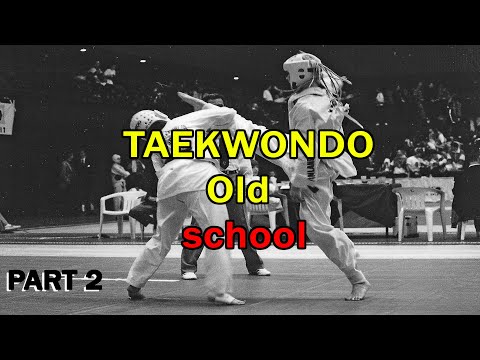
When I hear someone mention "Taekwondo Old school" or search for "old school taekwondo vs new," they're often seeking the raw, unadulterated techniques and the foundational principles that might have been streamlined or altered for competitive formats. They might be looking for the kind of Taekwondo where sparring (kyorugi) felt less like a dance of point-scoring and more like a genuine test of combat effectiveness. It's about the perceived authenticity and the historical lineage, a connection to the pioneers who shaped this art.

Tracing the Roots: From Karate's Shadow to Korean Identity

To understand old-school Taekwondo, we must acknowledge its birth. Taekwondo, in its modern form, emerged in Korea post-World War II, a period of intense national rebuilding and a desire to forge a distinct Korean martial identity. Its founders, many of whom had trained in Japanese Karate (specifically Shotokan and others) during the Japanese occupation of Korea, synthesized various Korean martial arts traditions (like Taekkyon and Gwonbeop) with their Karate knowledge. This fusion created the initial frameworks of what would become Taekwondo.

The early Kwans (schools) like Chung Do Kwan, Moo Duk Kwan, Ji Do Kwan, and others, each had their nuances, but a common thread was a more direct, sometimes brutal, approach. Techniques were often taught with less regard for the "shininess" that appeals to modern audiences. Sparring could be intense, often resulting in knockouts, and the physical conditioning was rigorous. It was a martial art forged in a time of necessity, intended for self-defense and the cultivation of strong character, not solely for athletic achievement.

"The way of the warrior is to be always prepared, not just in body, but in mind and spirit. Old-school Taekwondo embodies this preparedness." - A principle echoing the spirit of Budo.

The division between WT and ITF styles, while not strictly the defining line of "old-school," certainly marked further evolutions. ITF, founded by General Choi Hong Hi, retained a more traditional emphasis on patterns (tul) and self-defense applications, often perceived as closer to the original intent. WT, on the other hand, heavily pushed for Olympic inclusion, leading to rule changes that prioritized speed, agility, and point-scoring over power and traditional combat effectiveness. Searching for "old school taekwondo vs wtf old school" often leads to this distinction.

Key Characteristics of Old-School Taekwondo

What then, are the tangible differences one might observe or seek when exploring "old school Taekwondo training" or "old school Taekwondo sparring"?

  • Emphasis on Fundamentals and Power: Less focus on flashy, spinning kicks performed from a distance. More emphasis on strong stances, powerful hip rotation, and direct, impactful strikes. Kicks like ap chagi (front kick), dollyo chagi (roundhouse kick), and yop chagi (side kick) were executed with maximum force and grounded stability.
  • Practical Self-Defense: Techniques were often taught with their direct application in mind. This included blocks, strikes to vital points, and even some joint locks or throws, reflecting the influence of older martial arts. The "self-defense" aspect was paramount.
  • Rigorous Physical Conditioning: Training was notoriously tough. This involved extensive cardiovascular work, strength training, flexibility exercises, and repetitive drilling of techniques until they became second nature. Think of the "old school taekwondo training" videos you might find – they often depict intense, almost grueling sessions.
  • Realistic Sparring (Kyolpa/Kyorugi): Sparring was often full-contact or semi-contact with fewer protective gears, leading to more cautious yet decisive exchanges. Knockouts were not uncommon, and the goal was often to incapacitate or dominate the opponent, rather than simply score points. The term "old school taekwondo sparring" evokes this intensity.
  • Deeper Connection to Patterns (Poomsae/Tul): While patterns exist in all Taekwondo, in the old school era, there was a greater emphasis on understanding and applying the underlying combat principles within each movement. Each kata was seen as a direct self-defense scenario.
  • Philosophical Underpinnings: The tenets of Taekwondo – Courtesy, Integrity, Perseverance, Self-Control, Indomitable Spirit – were deeply ingrained in the training and daily life of the practitioners. This was the core of the "Budo" spirit.

Old-School vs. Modern Taekwondo: A Clash of Philosophies

The most significant divergence between old-school and modern Taekwondo lies in their primary objectives. Modern WT Taekwondo, driven by its Olympic status, prioritizes athleticism, speed, and a point-based scoring system. This has led to:

  • Modified Techniques: Kicks have become higher, faster, and more acrobatic. Stances are often lighter and more mobile to facilitate quick movement and evasion.
  • Reduced Physical Contact: Extensive padding and electronic scoring systems, while safer, often discourage powerful, full-contact strikes in favor of quick touches that register points.
  • Emphasis on Competition Strategy: Training is heavily geared towards the specific rules and strategies of WT competitions.

Conversely, old-school Taekwondo, like many traditional martial arts, focused on developing a complete practitioner. The "old school taekwondo highlights" might not be as visually spectacular as modern Olympic bouts, but they often showcase a rawer, more direct form of combat. The debate is fierce: some argue that modern Taekwondo has lost its martial soul, becoming solely a sport. Others contend that it has evolved, adapted, and achieved global recognition, proving its viability in a new context.

When people look for "taekwondo old school vs new," they are often grappling with this philosophical shift. They question if the modern iteration truly prepares one for self-defense or if it has become too specialized for the arena. It's a question of purpose: Is Taekwondo an art for self-mastery and defense, or a sport for athletic competition?

The Spirit of the Warrior in Taekwondo: Beyond the Kicks

Regardless of the era, the true essence of Taekwondo, as with all respectable martial arts, transcends mere physical techniques. It is the cultivation of the warrior spirit – the indomitable spirit that faced adversity and emerged stronger. This spirit is perhaps more palpable in the narratives of old-school practitioners.

"The ultimate aim of martial arts is not to be a winner or a loser, but to perfect oneself and to contribute to the world." - A sentiment that bridges all eras of authentic Budo.

Old-school training often emphasized discipline, humility, respect for elders and seniors (sunbae), and the perseverance to overcome physical and mental challenges. The journey of learning Taekwondo was seen as a microcosm of life itself, a path of continuous self-improvement. This philosophical depth is what many practitioners seek when they delve into "taekwondo old school philosophy" or wonder about the "meaning of Taekwondo."

The questioning of "does really the taekwondo was a soft-style" is often a misunderstanding of its evolution. While its roots may contain softer, more fluid movements from Taekkyon, the Karate influence and the pragmatic needs of its founders instilled a powerful, striking-based methodology. The perceived "softness" today often stems from the rule-set of sport Taekwondo, not necessarily from its foundational principles.

Training the Old-School Way

If you are intrigued by the "old school Taekwondo training" and wish to incorporate its principles, consider these aspects:

Guiding Principles of Old-School Training

  1. Discipline is Paramount: Arrive on time, pay attention, follow instructions precisely. Respect the dojo and your training partners.
  2. Master the Basics: Spend significant time perfecting fundamental stances, blocks, punches, and basic kicks. Don't rush to advanced techniques.
  3. Conditioning is Non-Negotiable: Incorporate strength training (bodyweight exercises like push-ups, squats, sit-ups), cardiovascular endurance (running, skipping), and flexibility work (stretching, dynamic movements).
  4. Repetition for Mastery: Drill techniques thousands of times. Muscle memory is built through consistent, focused repetition.
  5. Sparring with Purpose: When sparring, focus on control, timing, and strategy rather than simply overwhelming your opponent. Understand the intent behind each technique.
  6. Study the Patterns: Don't just memorize the movements of Poomsae or Tul. Understand the self-defense applications hidden within each sequence.
  7. Cultivate Mental Fortitude: Train your mind to be calm under pressure, focused, and resilient. Practice mindfulness and self-reflection.

Practicing Foundational Kicks

  1. Stance: Begin in a stable, balanced stance (e.g., parallel ready stance or a basic fighting stance).
  2. Chambering: Bring the kicking leg's knee up towards your chest, keeping your supporting leg slightly bent for balance.
  3. Extension: Extend the kicking leg towards the target with a strong hip rotation. For a roundhouse kick (dollyo chagi), the foot strikes with the ball or the edge. For a side kick (yop chagi), strike with the edge of the foot or heel.
  4. Recoil: Quickly retract the leg back to the chambered position before returning it to the floor. This maintains balance and protects your leg.
  5. Power Generation: Focus on driving the hip forward through the kick. The power comes from the entire body, not just the leg.
  6. Controlled Landing: Return your foot to the ground in a stable position, ready for the next technique.

Essential Gear for Your Training

While old-school training often involved minimal equipment, some items are crucial for effective and safe practice, especially if you intend to spar or train with intensity. Investing in quality gear can prevent injuries and enhance your training experience. For those looking into the more dynamic aspects, especially sparring, consider:

  • High-Quality Dobok: A durable, comfortable uniform (dobok) is essential. Look for a traditional cut, perhaps a heavier fabric for that "old-school" feel. Brands offering a double-weave fabric are excellent for longevity and a substantial feel, akin to what you might associate with traditional Karate gis used in early Taekwondo.
  • Protective Sparring Gear: If sparring, invest in headgear, chest protectors, forearm guards, shin guards, and groin protection. While old-school sparring might have been less padded, modern safety standards are paramount for injury prevention.
  • Hand Mitts: For sparring, well-fitting hand mitts protect your knuckles and improve your grip. For training striking power, focus mitts or Thai pads are invaluable for partners to use.
  • Training Shoes (Optional): Some prefer to train barefoot, which is traditional. Others find lightweight, flexible training shoes beneficial for grip and foot protection, especially on harder surfaces.
  • Optional Training Tools: For home practice, a makiwara (striking board) or heavy bag can help develop power and conditioning, echoing the practices of traditional martial artists.

Frequently Asked Questions

Q1: What is the difference between ITF and WTF Taekwondo, and which is more "old-school"?
A: While both originated from the same roots, the ITF, founded by General Choi Hong Hi, is often perceived as retaining more traditional aspects and self-defense applications. WT (formerly WTF) heavily focused on Olympic standardization, leading to more sport-oriented rules. Both have elements that can be considered "old-school" depending on the specific school and instructor.

Q2: Are old-school Taekwondo techniques still effective for self-defense today?
A: The fundamental principles of striking, power generation, and body mechanics remain highly effective. However, modern self-defense also incorporates ground fighting and grappling, which were less emphasized in traditional Taekwondo. A well-rounded practitioner might supplement their Taekwondo training with these other areas.

Q3: Where can I find an "old-school" Taekwondo school?
A: Finding a strictly "old-school" school can be challenging. Look for schools that emphasize traditional values, realistic self-defense, and perhaps have instructors with long lineages tracing back to the early days of Taekwondo. Researching instructors and visiting schools to observe classes is key.

Q4: What does "Taekwondo" stand for?
A: "Tae" means foot or leg; "Kwon" means fist or strike; "Do" means way or art. So, Taekwondo translates to "The Way of the Foot and Fist."

Q5: Is Taekwondo still a powerful martial art?
A: Yes, Taekwondo is undeniably powerful, particularly in its striking capabilities. While sport-oriented Taekwondo might focus on points, the underlying art is designed for devastating offensive techniques. The power lies in the proper application of technique, hip rotation, and commitment – principles that remain constant from old-school to modern practice.

Deepen Your Journey

Exploring the depths of Taekwondo, whether its historical roots or its contemporary applications, is a journey of continuous learning. The past informs the present, and understanding the "old-school" mindset can enrich your current training, regardless of your style.

Sensei's Reflection: Your Next Step

We have dissected the essence of old-school Taekwondo, tracing its lineage and contrasting its methods with the modern sport. But knowledge without application is like a sharpened sword left to rust. Now, I pose this to you: In the pursuit of martial perfection, are you merely mimicking forms, or are you truly embodying the spirit of the warrior? When you execute a technique, do you feel its power, its intent, its historical weight? Or is it just another movement? Contemplate this: If your Taekwondo were to be stripped of its competitive rules, its flashy exhibition, what would remain? Would it be a true art of combat and self-mastery, or would it crumble like dry earth? Your answer, felt deep within your core, will define your path forward.

``` GEMINI_METADESC: Explore the authentic techniques and spirit of old-school Taekwondo, contrasting it with modern interpretations and its place in the martial arts landscape. A deep dive into its history, philosophy, and practical application.

Taekwondo in Street Fighting: Myth or Martial Reality?

Is Taekwondo, with its high kicks and flashy forms, truly a viable tool for self-defense in the brutal, unpredictable chaos of a street fight? Or is it merely a beautiful, yet ultimately impractical, dance performed under the guise of martial arts? Many of you have arrived here seeking answers, driven by curiosity, perhaps even by a gut-wrenching encounter or the fear of one. You want to know if the discipline you admire, or are considering adopting, can truly protect you when the stakes are life and death. Let's cut through the noise, the dogma, and the unverified claims. Today, we dissect Taekwondo's efficacy on the unforgiving pavement.

The Taekwondo Paradox: Sport vs. Survival

Taekwondo, recognized globally for its dynamic kicking techniques and its prominent status as an Olympic sport, holds a unique position in the martial arts landscape. Its popularity is undeniable, drawing millions of practitioners of all ages and genders, celebrated for its accessibility and fitness benefits. However, this very popularity and its sporting evolution have fueled a persistent debate: Can the stylized techniques honed in a dojo translate effectively to the raw, unscripted violence of a street altercation? Many come to Taekwondo seeking not just physical fitness or a connection to BUDO, but a genuine means of self-preservation. Yet, the common question lingers, a shadow cast over its glittering achievements: Is Taekwondo truly effective in a street fight?

Taekwondo's Strengths: When Form Meets Function

Let us not dismiss Taekwondo outright. Its strengths are significant, and when understood correctly, can be applied. Firstly, the emphasis on kicking techniques develops incredible leg strength, agility, and coordination. A well-placed, powerful kick from a distance can be a formidable weapon, capable of deterring an attacker or creating an opening. Think of the infamous "roundhouse kick" or "axe kick" – executed with precision and power, they are not just for show. They develop balance and proprioception, crucial for staying on your feet amidst chaos.

Furthermore, Taekwondo training instills a powerful sense of discipline and mental fortitude. The rigorous practice of katas (known as poomsae in Taekwondo) requires focus, memory, and physical control. This mental conditioning is transferable. The ability to remain calm under pressure, to execute a practiced movement despite fear, is a core tenet of any true martial art, including Taekwondo. The constant drilling also builds cardiovascular endurance and flexibility, both vital components for any physical confrontation.

"The ultimate aim of martial arts is not victory or defeat, but the perfection of the human character." - Choi Hong Hi, Founder of ITF Taekwondo. While this quote speaks to the higher purpose, a perfected character often includes the ability to protect oneself and others.

The sheer accessibility of Taekwondo is another point in its favor. Its lack of age or gender restrictions means a vast number of people are exposed to its principles. This widespread practice means a greater potential for individuals to develop the confidence and basic physical conditioning needed for self-defense, even if their specific curriculum isn't geared towards street combat.

The Street Fight Reality: Where Taekwondo Falters

Now, let us address the elephant in the room. The modern, sport-oriented Taekwondo often falls short in a street fight for several critical reasons:

  • Limited Ground Game: Most street fights, particularly those involving multiple assailants or a determined attacker, quickly devolve to the ground. Taekwondo offers virtually no training in grappling, wrestling, or submissions. A skilled grappler can neutralize a Taekwondo practitioner's kicking advantage almost instantly. This is a critical vulnerability.
  • Lack of Close-Range Combat: The flashy, long-range kicks that dominate Taekwondo sparring are often impractical when an opponent is within arm's reach, attempting to clinch, grab, or strike with punches. Training often lacks emphasis on effective close-quarters striking, blocking punches, or defensive maneuvers in tight spaces.
  • Sport-Centric Rules: The rules of Taekwondo sparring prioritize points scored through clean, often one-legged, kicks to the torso and head. Techniques that might be dangerous or illegal in sport (like low kicks to the legs, groin strikes, or using the opponent's momentum against them) are rarely trained. This fosters a mentality that prioritizes scoring over disabling an opponent.
  • Over-reliance on High Kicks: While visually impressive, high kicks can be risky. They require significant space, can compromise balance, and are vulnerable to takedowns. In a confined, chaotic environment, such techniques are often a liability rather than an asset.
  • Absence of Weapon Defense: Street violence can involve weapons. Taekwondo, in its standard curriculum, typically does not train practitioners on how to defend against knives, sticks, or improvised weapons.

The primary issue is that Taekwondo, as commonly practiced today, is overwhelmingly a sport and a fitness activity, not a comprehensive self-defense system designed for the grim realities of violent encounters. The curriculum has been refined for points, for spectacle, and for athletic competition, often at the expense of brutal practicality.

The Philosophical Divide: Budo vs. Sport

This brings us to a fundamental divergence in martial arts philosophy. On one side, we have the "Budo" path – a path of rigorous, often harsh, training focused on effectiveness above all else, even at the cost of aesthetic appeal. This path emphasizes survival, disabling an opponent quickly and decisively, and accepting the brutal nature of real combat. Think of systems like Kyokushin Karate or Judo, which, while competitive, retain a strong foundation in practical application.

On the other side, we have sport martial arts. While invaluable for competition, character development, and fitness, their rule sets inherently alter their purpose. They teach participants how to win within a specific framework, not necessarily how to survive a fight with no rules. Taekwondo, particularly Olympic Taekwondo, leans heavily into this sporting aspect. The beautiful techniques, the focus on avoiding injury to score points – these are antithetical to the mindset required when facing an attacker who intends to inflict harm without referee intervention.

"In the heat of battle, the martial artist must not be constrained by rules or forms. Survival is the only rule." - A common sentiment echoed by many combat strategists, though difficult to attribute to a single master.

This is not to say all Taekwondo practitioners are unprepared. Many schools and masters still teach practical self-defense principles. However, the prevalence of sport-focused dojos means that the average Taekwondo practitioner may possess a skillset that is far removed from street-survival efficacy.

Adapting Taekwondo for the Street: A Sensei's Perspective

So, is all hope lost for the Taekwondo practitioner seeking real-world self-defense? Not entirely. The foundation you've built can be a valuable asset if strategically adapted:

  1. Focus on Practical Kicks: Prioritize kicks that are fast, stable, and effective at closer ranges. Think low kicks to the legs (thighs, shins), knee strikes, and controlled side kicks to the body. High, flashy kicks should be reserved for specific, open scenarios, if at all.
  2. Develop Essential Hand Techniques: Supplement your training with punches, elbow strikes, and palm-heel strikes. Learn how to block effectively against common punches.
  3. Incorporate Clinch and Takedown Defense: Seek out supplemental training in grappling, Muay Thai clinch work, or basic Judo. Understanding how to defend against or disengage from clinches and takedowns is paramount.
  4. Practice Footwork and Balance: Develop agility and the ability to maintain balance in awkward positions. This will help you recover from off-balance moments and move effectively in confined spaces.
  5. Train for Simulation, Not Just Sport: Engage in scenario-based training. Practice defending yourself from surprise attacks, multiple opponents, and confined spaces. Understand the psychological aspects of a real fight – the fear, the adrenaline, the aggression.
  6. Embrace a Simpler Mindset: In a street fight, complexity is your enemy. Focus on simple, direct techniques that work under extreme stress. The goal is to end the confrontation as quickly and safely as possible, not to perform a beautiful sequence of moves.

Essentially, you must filter your Taekwondo training through a lens of brutal practicality. Ask yourself for every technique: "Will this work when someone is trying to hurt me, when there are no rules, and when I'm scared?"

Essential Gear for Your Training

While Taekwondo itself doesn't require extensive gear for basic practice, serious training for self-defense, or even competitive sparring, necessitates proper equipment. Investing in the right kit not only protects you but also enhances your training experience. For those looking to supplement their Taekwondo with more combat-focused skills, consider:

  • Quality Sparring Gear: Headguards, mouthguards, chest protectors (especially the hogu used in Taekwondo competitions), and shin/instep protectors are crucial for safe sparring.
  • Durable Footwear: While many practice barefoot, dedicated training shoes can offer better grip and support for certain drills, especially if cross-training in arts like MMA.
  • Training Uniform (Dobok): Ensure your dobok is durable enough for dynamic movements and potential grappling. Look for heavier fabrics if you anticipate rougher training.
  • Hand Wraps and Gloves: If incorporating boxing or MMA-style striking, hand wraps are essential for wrist support, and bag gloves or sparring gloves will protect your hands.
  • Resistance Bands: Excellent for strength and conditioning exercises that mimic the explosive power needed for kicks and strikes, all manageable #AtHomeWorkout options.

Remember, the best #MartialArtsMerchandise is that which supports safe and effective training.

Frequently Asked Questions

Is Taekwondo considered a good self-defense system for women?

Taekwondo can be a decent starting point for women due to its emphasis on fitness, confidence building, and distance-creating kicks. However, like all martial arts, its effectiveness in a real confrontation depends heavily on the training focus. A curriculum prioritizing practical self-defense, including close-range techniques and situational awareness, would be more beneficial than one solely focused on sport sparring.

Can Taekwondo kicks stop a much larger attacker?

A powerful, well-placed kick to a vulnerable area (like the knee or groin) *can* incapacitate a larger attacker, but it is not guaranteed. The attacker's momentum, adrenaline, and sheer size can sometimes absorb such blows. Relying solely on kicks against a significantly larger and more aggressive opponent is risky. A comprehensive approach combining kicks, punches, and defensive maneuvers is always superior.

Is it better to learn Taekwondo or Karate for street fighting?

This is a classic debate with no single "correct" answer, as both arts have their strengths and weaknesses depending on the specific school and curriculum. Traditional Karate styles often incorporate more hand techniques and closer-range combat than sport Taekwondo. However, some Taekwondo schools teach excellent self-defense. Ultimately, a style that emphasizes practical application, situational awareness, and a no-rules mindset, regardless of its name, will be more effective than a purely sport-oriented system.

For Deeper Exploration

To truly grasp the nuances of martial arts efficacy and philosophy, delve into these related topics:

  • MMA vs. Traditional Martial Arts: Where Does Effectiveness Lie?
  • The Philosophy of BUDO: More Than Just Fighting.
  • Self-Defense: Principles for the Modern World.

Sensei's Reflection: Your Next Step

Taekwondo offers undeniable benefits: incredible kicking prowess, physical conditioning, and mental discipline. Yet, its efficacy in the raw crucible of a street fight is, at best, conditional. The transition from controlled sport to uncontrolled violence is a chasm that requires more than just high kicks. It demands a brutal pragmatism, an embrace of close-quarters combat, and an understanding of grappling.

The question is not whether Taekwondo *can* be effective, but whether the way you are training it *makes* it effective for survival. Are you training for points, or for permanence? Are you honing skills that will save you when the rules vanish, or just those that win you a trophy?

Sensei's Reflection: Your Next Step

Consider this: If you found yourself in a real, life-threatening confrontation tomorrow, would you rather face an opponent who has mastered the 30 most effective, simple techniques for survival, or one who can flawlessly execute 300 flashy, yet situational, moves? Now, examine your training. Which path are you truly on?

``` GEMINI_METADESC: Analyze Taekwondo's effectiveness in street fights. Explore its strengths, weaknesses, and practical adaptations for real-world self-defense scenarios.

Hassan Kassrioui: The Taekwondo Master Who Conquered Muay Thai

The tapestry of martial arts is woven with threads of tradition, innovation, and the sheer, indomitable will of practitioners who dare to cross disciplines. Today, we delve into the extraordinary journey of Hassan Kassrioui, a Moroccan warrior whose mastery of Taekwondo became the unlikely, yet devastating, foundation for his conquest of the brutal world of Muay Thai. Have you ever witnessed a practitioner so adept in one art that they could dismantle another, seemingly disparate, discipline with pure skill and strategic brilliance? Kassrioui is precisely that legend. This isn't just a story of an athlete; it's a testament to the universal principles of combat, the fluidity of movement, and the aggressive spirit that defines true martial prowess. From the dusty fields of Algeria to the hallowed rings of Thailand, Hassan Kassrioui's path is a lesson in adaptability and relentless pursuit of excellence. Prepare yourselves, for we are about to dissect the career of a fighter who redefined the boundaries of cross-disciplinary combat.

The Seed of Combat: Early Life and Influences

The genesis of a warrior is rarely a simple narrative. Hassan Kassrioui (حسن القصريوي) was born in Algeria, the youngest of several children on a farm. His early life was marked by displacement; familial ties pulled him and his parents back to Morocco, settling near Rabat. From the tender age of seven, the spirit of sport began to stir within him. The cinematic magic of Bruce Lee ignited a passion, drawing him towards the discipline of karate. However, it was the raw, unadulterated spectacle of street fights, which he frequented at the local market from age twelve, that likely honed his innate toughness and competitive drive. Imagine a young boy, captivated not by toys, but by the visceral exchanges of combat. This was the crucible where his martial spirit was first forged.

Forging the Foundation: Taekwondo Mastery

The pivotal moment arrived in 1982 when a meeting with his cousin, a professional boxer in Spain, steered him towards a more structured path: Taekwondo. By 1983, Kassrioui was enrolled in a local Taekwondo school under the tutelage of Ba Ami Mo. Financial hardship was a constant shadow, but the dedication of his coach, who recognized Kassrioui's potential and supported him through the struggles, speaks volumes about the bonds formed in the dojo. This period was crucial; it was where Kassrioui built the technical scaffolding that would later serve him so well. His natural talent was evident, securing third place in the Moroccan Championships in 1985 and improving to second place a year later. This early success in a recognized Olympic art form speaks to his inherent athletic capabilities and discipline.
"The journey of a thousand miles begins with a single step." - Lao Tzu. For Kassrioui, that first step was into the Taekwondo dojang, laying the groundwork for a legendary career.
The year 1987 presented a profound challenge: the loss of his trainer and the destruction of the gym. This could have been the end for many, but for Kassrioui, it was a catalyst for independence. He trained alone, sharpening his skills through sheer self-will. This period of solitary dedication is where true martial character is revealed – a commitment that transcends external support. It was during this introspective phase that an invitation to train at Sitangym in the Netherlands arose, opening a gateway to international competition and a broader understanding of striking arts.

The Invasion of the Ring: Adapting to Muay Thai

Transitioning from the highly stylized kicks of Taekwondo to the all-encompassing "Art of Eight Limbs" – Muay Thai – is no small feat. Muay Thai incorporates punches, kicks, elbows, and knee strikes, demanding a different kind of resilience and strategic thinking. Yet, Hassan Kassrioui did not just adapt; he *dominated*. His Taekwondo background provided him with exceptional kicking power, speed, and agility. He seamlessly integrated these strengths with the brutal efficiency required in Muay Thai bouts. The fact that he achieved multiple championship titles in Thailand, the very homeland of Muay Thai, is a staggering achievement that underscores his exceptional skill and adaptability.
His aggressive and "wild" striking techniques, as described, suggest a fighter who wasn't afraid to take risks or unleash unconventional attacks. This style likely surprised opponents accustomed to more traditional Muay Thai fighters. It’s a powerful illustration of how a strong foundation in one art can be leveraged to disrupt and conquer another.

Spectacular Showdowns: Defining Moments

Among Kassrioui's most memorable performances was his open-air tournament bout in Austria against Pepsi, a highly-ranked Thai fighter. This fight was significant because it was Kassrioui's first encounter with Thai rules that explicitly allowed elbow strikes to the head. This is a critical distinction, as elbows can end fights instantly and require a different defensive and offensive mindset. Winning this match against a top Thai contender, on their terms, was a monumental victory. It silenced any doubters and firmly established him as a legitimate force in the Muay Thai circuit. His subsequent, seemingly unstoppable winning streak further cemented his reputation. This wasn't just winning; it was a statement of dominance, proving that his Taekwondo-honed striking could overcome the most seasoned Muay Thai veterans.

The Enduring Legacy of Kassrioui

Hassan Kassrioui’s career is a compelling case study in martial arts evolution. He represents the practitioner who understands that the spirit of combat is universal, even if the tools and rulesets differ. His success transcends borders and disciplines, highlighting the potential for cross-training to elevate a fighter to unprecedented levels. He retired as a W.T.F. Taekwondo black belt and champion who conquered Muay Thai, a dual legacy that inspires aspiring martial artists to explore beyond their initial training. His story serves as a powerful reminder that true mastery lies not just in perfecting a single art, but in understanding the underlying principles that govern all forms of combat.

Sensei's Verdict: A Masterclass in Adaptation

Hassan Kassrioui's journey from Taekwondo phenom to Muay Thai champion is nothing short of a masterclass in strategic adaptation and relentless grit. He demonstrated that a strong technical foundation, coupled with an aggressive mindset and a willingness to embrace new challenges, can lead to extraordinary success. In a world often focused on the purity of a single art, Kassrioui broke the mold, proving that tactical intelligence and pure fighting spirit are the ultimate arbiters of victory. His career is a vibrant illustration of the martial principle of "Ju" (yielding and adapting), but executed with an "Yo" (hard, aggressive) spirit. He didn’t just switch disciplines; he conquered them by understanding their core essence and leveraging his unique strengths. **Rating: Black Belt in Cross-Disciplinary Dominance**

Essential Gear for Your Training

To emulate the dedication of fighters like Hassan Kassrioui, the right equipment is crucial for both Taekwondo and Muay Thai training. While Kassrioui himself benefited from a friend's generosity, investing in quality gear is a sign of respect for your craft.
  • Taekwondo Uniform (Dobok): Look for a durable, breathable dobok that allows for a full range of motion during kicks and forms (poomsae). A good quality uniform from brands like Adidas or Mooto is a solid investment.
  • Muay Thai Shorts: Lightweight and designed for maximum mobility, these shorts are essential for practicing the wide stances and low kicks characteristic of Muay Thai.
  • Hand Wraps and Boxing Gloves: Crucial for protecting your hands and wrists, whether practicing Taekwondo punches or the devastating hand strikes of Muay Thai. For Muay Thai sparring, 14-16oz gloves are standard. For Taekwondo, specific sparring gloves are often used.
  • Shin Guards: Absolutely vital for both disciplines to protect against kicks and to absorb the impact of your own. Look for comfortable, secure-fitting shin guards.
  • Mouthguard: Non-negotiable for any sparring or intense training sessions to protect your teeth and jaw.
  • Groin Protector: Another essential piece of protective equipment for both men and women during sparring.

Frequently Asked Questions

  • Was Hassan Kassrioui an Olympic Taekwondo champion?
    While Hassan Kassrioui was a W.T.F. Taekwondo champion, his professional career in Muay Thai took precedence, and Olympic Taekwondo competitions during his prime were under different rule sets.
  • How difficult is it to transition from Taekwondo to Muay Thai?
    The transition is challenging. Taekwondo emphasizes high, fast kicks and punches with a focus on form and technique. Muay Thai incorporates punches, kicks, elbows, and knees, demanding a more robust clinch game and a higher tolerance for damage. However, Taekwondo's powerful kicking arsenal is a significant advantage.
  • What makes Muay Thai so dangerous?
    Muay Thai is known as the "Art of Eight Limbs" because it utilizes fists, elbows, knees, and shins, along with a powerful clinch. The use of elbows and knees in particular, often directed at the head and body, can lead to severe injuries and quick knockouts.
  • Did Kassrioui use his Taekwondo skills directly in Muay Thai fights?
    Yes, his powerful and fast kicking techniques, characteristic of Taekwondo, were a significant part of his offensive arsenal in Muay Thai, surprising many opponents.

To Delve Deeper Into Your Journey

Reflexion del Sensei: Tu Próximo Paso

Kassrioui's life is a resounding argument against the dogma of martial purity. He shows us that the battlefield – whether a ring or the street – respects only effectiveness. When you face your next training session, ask yourself: Am I merely practicing my art, or am I preparing for *combat*? Are there principles from other disciplines that could enhance my own? Do not let ego or tradition blind you to the potential for growth. The true warrior is a perpetual student. Now, go forth and consider this: If a Taekwondo master can reign supreme in Muay Thai, what limiting beliefs are *you* holding onto in your own martial journey? GEMINI_METADESC: Explore the incredible journey of Hassan Kassrioui, a Taekwondo master who conquered the brutal world of Muay Thai, showcasing adaptability and combat prowess.

13 Brutal Taekwondo Knockouts: A Sensei's Analysis of Power and Precision

The roar of the crowd, the sharp crack of a foot connecting with a padded target, the instant the opponent collapses in a heap. We've all seen it. We've all felt that visceral thrill. But what truly separates a spectacular Taekwondo knockout from mere spectacle? Is it just raw power, or is there a deeper martial artistry at play? As a seasoned Sensei, I approach these compilations not just with awe, but with a critical eye, dissecting the techniques, the strategy, and the very spirit that defines a true warrior's victory.

This collection, "13 Brutal Taekwondo Knockouts," presents a raw, unadulterated display of the kicking prowess inherent in Taekwondo. While the creators behind Brutal TV aim to capture the raw excitement (and who can blame them for seeking those viral moments?), my duty is to peel back the layers. We must look beyond the immediate impact to understand the foundations, the training, and the philosophy that make such feats possible.

The Essence of Taekwondo Striking: More Than Just Kicks

Taekwondo, often lauded for its spectacular high-flying kicks, is built upon a fundamental principle: the strategic application of power and speed through dynamic movements. The name itself, Tae Kwon Do, translates to "the way of foot and fist." While the emphasis is undeniably on the legs, the hands play a crucial role in both offense and defense, as well as in generating the torque and balance needed for those devastating kicks. A well-executed knockout isn't just a lucky shot; it's a testament to years of disciplined conditioning, precise technique, and an understanding of biomechanics.

Consider the physics involved. A successful kick to a vital point – be it the jaw, temple, or even the solar plexus – requires not only reach but also immense velocity and a solid connection. This velocity is generated from the ground up: a strong stance, a powerful hip rotation, and a snapping action of the leg. Without a solid foundation, the kick will lack the necessary force. This is why the foundational drills, the seemingly monotonous repetitions of basic stances and punches, are paramount. They build the very framework for these explosive techniques.

"The true martial artist is not one who knows many techniques, but one who has mastered the few fundamental ones." - A principle deeply ingrained in Budo.

In the context of these knockouts, we often see techniques like the Dollyo-chagi (turning kick) or the Naeryo-chagi (downward kick) delivered with vicious intent. However, the most effective knockouts are often the result of unexpected angles, feints, and intelligent combinations that exploit an opponent's momentary lapse in concentration. It's the subtle interplay between offense and defense, a dance of controlled aggression, that leads to the final, decisive blow.

Analyzing the Knockouts: Technique and Timing

Let's delve into the specifics. What makes a knockout *brutal*? It’s the combination of factors: the speed of the strike, the accuracy of the target, the force of impact, and often, the element of surprise. When reviewing these clips, I look for:

  • Stance and Balance: Was the kicker firmly planted? Did they maintain their equilibrium even during the explosive movement? A loss of balance can nullify even the most powerful strike.
  • Hip Rotation: This is the engine of a Taekwondo kick. A full, powerful rotation of the hips channels kinetic energy into the limb. Lack of rotation means less power.
  • Snapping Action: Unlike a "pushing" kick, a knockout blow often involves a rapid "snapping" motion of the foot and shin, concentrating the force into a smaller impact area.
  • Targeting: Did the strike land on a vulnerable point? Even a powerful kick might not result in a knockout if it connects poorly. Precision is as vital as power.
  • Timing and Rhythm: The most effective strikes often come when the opponent is off-balance, recovering from their own attack, or simply not expecting it. It's about interrupting their rhythm and capitalizing on the opening.

Many of these knockouts are likely the result of well-trained practitioners, possibly in competitive settings. The term "Professionals vs. Beginners" in the original description hints at a disparity that, while making for exciting viewing, can be a bit misleading for understanding the *art* of Taekwondo. True mastery is often honed against equally skilled opponents, where strategy and nuance triumph over brute force alone. However, even in mismatches, the underlying principles of effective striking remain constant.

The Psychology of the Knockout: Dominance and Decisiveness

A knockout is more than a physical event; it's a psychological one. It signifies absolute dominance and decisiveness. The fighter who lands the knockout blow has not only overcome their opponent physically but has also imposed their will. This mental fortitude is cultivated through rigorous BUDO training, which emphasizes perseverance, confidence, and the ability to remain calm under pressure. The mindset required to execute a fight-ending technique is one of unwavering belief in one's training and abilities. This mental game is a cornerstone of any true martial path, whether it's MMA, Karate, or Judo.

The visual impact of a knockout can also be intimidating. For the opponent who has been knocked out, it represents a failure, a moment of vulnerability. For the crowd, it's the ultimate expression of combat effectiveness. This is why videos focusing on knockouts are so popular – they showcase the ultimate conclusion of a physical confrontation, the definitive end to the fight.

"In the heat of battle, fear is a luxury the warrior cannot afford. Only focus and determination remain." - A lesson learned through countless hours of Martial Arts Training.

Beyond the Ring: Taekwondo in Daily Life

While the spectacular kicks and knockouts are what draw many to Taekwondo, the true value of the art extends far beyond the competitive arena. The discipline, perseverance, and respect instilled in a Taekwondo practitioner are transferable skills that benefit every aspect of life. The focus required to master a complex kick translates into better concentration at work or in studies. The resilience developed through enduring tough training sessions builds character and aids in overcoming life's challenges. This concept of Self Improvement through rigorous physical and mental training is at the heart of Budo Life.

For those inspired by these displays, remember that the path to such proficiency is paved with consistent effort. It’s not about seeking the quick knockout, but about embracing the entire journey of Martial Arts Journey. This includes mastering the basics, understanding the philosophy, and cultivating a mindset of continuous learning. If you're new to martial arts, consider looking into reputable schools that emphasize technique and character development, rather than just flashy moves. Exploring Self Defense programs or even competitive sports like Kickboxing or Taekwondo itself can be incredibly rewarding.

Equipment Essential for Your Training

To safely and effectively train in disciplines like Taekwondo, proper equipment is crucial. Investing in the right gear not only enhances your training experience but also minimizes the risk of injury. Here’s what I recommend for anyone serious about their martial arts journey:

  • Dobok (Uniform): A breathable, durable uniform is essential for comfort and freedom of movement. Look for one specifically designed for Taekwondo, often with lighter fabric for kicking.
  • Pads and Mitts: For partner drills and bag work, focus mitts, Thai pads, and leg protectors are vital for developing power and accuracy safely.
  • Mouthguard: A non-negotiable piece of protective gear in any sparring situation.
  • Groin Protector: Essential for male practitioners, offering crucial protection during sparring.
  • Foot Protection: While less common in traditional Taekwondo training, specialized foot pads are used in competition and can be beneficial for heavy bag work.
  • Optional: Training Dummy/Bags: A heavy bag or a BOB (Body Opponent Bag) can be excellent for solo practice to build power and stamina.

For those looking to supplement their training at home, consider affordable options that don't require a full dojo setup. Items like resistance bands and adjustable dumbbells can be found for under $100 and offer a wide range of exercises. For serious practitioners, exploring **high-quality sparring gear** can make a significant difference in comfort and protection.

Training Guide: Developing Power and Speed

Creating knockout power in Taekwondo isn't magic; it's a systematic process. Here's a basic guide to developing that explosive capability:

  1. Foundation: Stance and Footwork:
    • Practice various stances (ready stance, forward stance, back stance) until they feel natural and stable.
    • Drill moving between stances smoothly and quickly. This is the base for all power generation.
  2. Core Strength and Rotation:
    • Perform exercises like Russian twists, medicine ball throws, and planks to build a strong, stable core.
    • Focus on the hip rotation in your kicks. Practice slow, controlled rotations, feeling the power come from your center.
  3. Leg Strength and Flexibility:
    • Incorporate exercises like squats, lunges, and calf raises.
    • Dedicate time to dynamic stretching (leg swings, high knees, butt kicks) and static stretching (hamstring stretches, hip flexor stretches) to improve range of motion.
  4. Speed and Power Drills:
    • Speed Kicks: Practice kicks at maximum speed, focusing on a quick snap and retraction. Aim for quantity with good form.
    • Power Kicks: Choose a target (heavy bag, pads) and focus on generating maximum force with each kick. Exaggerate the hip rotation and extension.
    • Combination Drills: Combine punches and kicks. For example, a jab-cross followed by a turning kick. This trains your body to transition between upper and lower body attacks seamlessly.
  5. Sparring Practice:
    • Applying these techniques under pressure is crucial. Sparring against a resistant opponent, even at a light pace initially, helps refine timing and execution. Focus on landing clean techniques.

Remember, consistency is key. Aim for regular training sessions, incorporating these elements into your routine. Even 30 minutes of focused practice several times a week can yield significant results. For those interested in home workouts without equipment, many bodyweight exercises can build incredible functional strength beneficial for martial arts.

Veredict of the Sensei

From a purely visual standpoint, "13 Brutal Taekwondo Knockouts" delivers exactly what it promises: an exciting, fast-paced showcase of powerful strikes. The editing, music, and pacing are geared towards maximizing adrenaline. However, as a critical analysis of Taekwondo as a martial art, it's superficial. It presents the spectacular conclusion without delving into the arduous journey, the technical nuances, or the philosophical underpinnings that define true mastery. It’s akin to admiring a skyscraper's facade without understanding the engineering marvels within.

Rating: 3 out of 5 Stars (Pure Spectacle, Limited Martial Insight)

While entertaining, this type of content rarely explores the depths of BUDO or the strategic intricacies found in competitive Artes Marciales Mixtas. It's popcorn entertainment, not a deep dive into martial philosophy.

Frequently Asked Questions

Is Taekwondo effective for self-defense?
Yes, Taekwondo can be very effective for self-defense, particularly due to its emphasis on strong kicking techniques for distance control and powerful strikes. However, like any art, its effectiveness depends on the practitioner's training, the specific curriculum of their school (some focus more on sport, others on practical application), and their ability to adapt techniques to real-world scenarios.
How long does it take to learn a knockout kick in Taekwondo?
Developing the power and precision for a knockout-level kick requires significant dedication. While a beginner might learn the basic motion of a kick relatively quickly, achieving the speed, accuracy, and force to incapacitate an opponent can take years of consistent training, practice, and sparring.
Are professional Taekwondo fighters always stronger than beginners?
Generally, yes. Professional fighters have dedicated years to honing their skills, conditioning their bodies, and understanding fight strategy. The disparity in experience, training, and physical conditioning means professionals possess a significant advantage over beginners. This is why matches are usually categorized by skill level and weight class.
What is the most important principle in Taekwondo?
While there are many important principles, arguably the most fundamental are discipline (Gyeol-gi) and respect (Jeong-sin-yeol-yong). These guide the practitioner's behavior both inside and outside the dojo, fostering character development alongside physical prowess.

Further Learning

To truly appreciate the depth of Taekwondo and martial arts in general, I encourage you to explore these related topics:

Reflexión del Sensei: Tu Próximo Paso

These knockouts, while thrilling, are merely the crescendo. The true martial artist’s journey is the symphony that leads to that moment – the countless hours of solitary practice, the sweat, the discipline, the overcoming of doubt. My question to you is this: Are you captivated by the final note, or do you strive to understand and embody the entire composition?

``` GEMINI_METADESC: A Sensei's critical analysis of powerful Taekwondo knockouts, exploring technique, timing, psychology, and the deeper martial art principles beyond mere spectacle.

Kung Fu vs. Karate vs. Taekwondo: A Sensei's Unvarnished Breakdown

Introduction: The Martial Trinity

Ah, another generation of eager minds drawn to the ancient fires of the martial arts. You come seeking clarity, a path through the fog of differing styles, asking: Kung Fu, Karate, Taekwondo – which reigns supreme? It's a question as old as the techniques themselves, a perpetual debate that echoes through dojos and training halls worldwide. But to ask which is 'supreme' is to misunderstand the very essence of Budo. These are not mere combat sports to be ranked; they are distinct philosophies, rigorous disciplines, and living traditions, each forged in the crucible of history and human ingenuity.

In this exposition, we will dissect these three titans of martial tradition. Forget the Hollywood theatrics for a moment. We delve into their origins, their core principles, their methodologies, and, critically, their effectiveness. Are you here to learn a devastating technique, understand a philosophical underpinning, or simply satisfy a burning curiosity ignited by celluloid heroes like Bruce Lee and Jackie Chan? Regardless, prepare for a lesson that cuts to the bone. This is not about finding a winner; it's about understanding the unique strengths and spirit of each art. Let the examination begin.

Kung Fu: The Dragon's Breath and the Monkey's Agility

When one speaks of Kung Fu (功夫), or Gōngfu in Mandarin, we are not referring to a single, monolithic art. Instead, we are referencing a vast constellation of Chinese martial arts, each with its own lineage, techniques, and underlying philosophy. Shaolin Kung Fu, Wing Chun, Hung Gar, Choy Li Fut, Monkey Style – the list is extensive and bewildering to the uninitiated. The term itself, "Kung Fu," originally meant acquired skill through hard work and dedication, applicable to any craft. It was only later, particularly with international exposure, that it became synonymous with Chinese martial arts.

The diversity of Kung Fu stems from its long and complex history, influenced by centuries of philosophical development (Taoism, Buddhism), military strategy, and even observations of animalistic movements. Shaolin monks, for instance, developed styles mimicking animals like the tiger, crane, leopard, snake, and dragon, integrating them with Buddhist meditation and principles of qi (vital energy) cultivation. This results in styles that can be brutally direct and powerful, or fluid and deceptively agile, often incorporating a wide array of open-hand techniques, joint locks, throws, and an impressive repertoire of weaponry. The visual spectacle of Kung Fu, with its acrobatic leaps and intricate forms (taolu), has captivated audiences for decades, painting a picture of martial prowess that is both beautiful and deadly.

The true martial artist is not one who studies a thousand techniques, but one who has mastered a single technique a thousand times. The essence of Kung Fu lies in this dedication.

From a training perspective, Kung Fu often emphasizes extensive taolu practice, conditioning exercises designed to build explosive power and resilience, and sparring that can range from controlled, pre-arranged drills to more dynamic, free-flowing exchanges, depending on the specific style and lineage.

Karate: The Empty Hand's Unyielding Power

Originating in Okinawa, Japan, Karate (空手), meaning "empty hand," is a striking art that emphasizes linear, powerful movements, direct attacks, and a strong defensive posture. Its development was heavily influenced by indigenous Okinawan fighting methods and Chinese Kung Fu, particularly Fujian White Crane styles, brought to the island by traders and scholars. Under Japanese rule, Karate was systematized and integrated into the Japanese martial arts curriculum, leading to its global proliferation.

Karate's philosophy is deeply rooted in Bushido, the way of the warrior. It stresses discipline, respect, self-control, and the concept of ikken hissatsu (一拳必殺) – "to annihilate with one blow." This principle dictates that a Karate practitioner should strive to end a conflict with a single, decisive strike, embodying efficiency and commitment. Training involves rigorous repetition of kata (forms that are sequences of offensive and defensive techniques), conditioning to build strength and stamina, and kumite (sparring). Traditional Karate styles often eschew kicking techniques above the waist and focus on powerful punches, elbow strikes, knee strikes, and low, powerful stances. Modern sport Karate, however, has evolved, with many styles incorporating higher kicks and more dynamic footwork to suit competitive formats.

The aesthetic of Karate is often perceived as stoic and direct, with sharp, focused movements. The Kiai (気合), a sharp, explosive yell, is integral to channeling energy and spirit into a technique. While often seen as a pure striking art, many Karate lineages also incorporate grappling and throwing elements, though these are not typically the primary focus.

Taekwondo: The Foot's Dance of Destruction

Taekwondo (태권도), meaning "the way of the foot and the fist," is a Korean martial art renowned for its spectacular and dynamic kicking techniques. While its roots can be traced to ancient Korean fighting traditions like Taekkyon and Subak, modern Taekwondo was largely established in the mid-20th century, heavily influenced by Karate and Chinese martial arts. It was officially recognized as a distinct Korean art and later became an Olympic sport.

The hallmark of Taekwondo is its incredible emphasis on leg techniques, featuring high, fast, and spinning kicks that are both visually impressive and highly effective for distance management and powerful strikes. Practitioners train extensively to develop flexibility, balance, and explosive power in their legs. While kicking is paramount, Taekwondo also includes a robust system of hand strikes, blocks, and defensive maneuvers. Poomsae (forms) are central to training, requiring precision, power, and controlled breathing. Sparring, known as Kyorugi, is highly dynamic and points-based, particularly in its Olympic iteration, emphasizing agility and scoring with kicks.

Taekwondo's philosophy often centers on self-discipline, courage, respect, and the pursuit of justice. The art cultivates mental fortitude and physical resilience, aiming to produce well-rounded individuals. The visual of a Taekwondo practitioner executing a spinning hook kick or a flying side kick is iconic, symbolizing a martial art that is both a discipline and a breathtaking display of athleticism.

Head-to-Head: A Comparative Analysis

Let's lay out the fundamental differences and similarities in a clear, comparative manner. This is where we start to see the nuances that differentiate these powerful arts.

Feature Kung Fu (General) Karate Taekwondo
Origin China Okinawa, Japan Korea
Primary Focus Diverse (striking, grappling, forms, animal movements, weapons) Linear, powerful striking (punches, blocks, kicks); emphasis on 'ikken hissatsu' Dynamic kicking techniques, agility, speed; emphasis on footwork
Range of Techniques Extremely broad; includes strikes, locks, throws, sweeps, pressure points, and weapons. Primarily hand strikes (punches, blocks), kicks (often below the waist in traditional forms), elbow/knee strikes. Extensive kicking arsenal (high, spinning, jumping), supplemented by punches and blocks.
Forms (Kata/Poomsae/Taolu) Taolu: Highly varied, often complex, mirroring animal movements or combat scenarios. Kata: Structured sequences emphasizing power, precision, and balance. Poomsae: Emphasize dynamic kicking, speed, and flexibility.
Sparring (Kumite/Kyorugi) Varies greatly by style; can be pre-arranged, free-sparring, or focus on specific elements. Kumite: Can range from controlled, point-based sparring to full-contact in some styles. Kyorugi: Often fast-paced, point-based, with a strong emphasis on scoring with kicks. Olympic sport format.
Philosophy/Emphasis Adaptability, balance of hard/soft techniques, harnessing Qi, self-discovery. Discipline, respect, self-control, directness, power, 'ikken hissatsu'. Integrity, perseverance, self-control, indomitable spirit, athleticism.

Beyond the Techniques: The Soul of Each Art

While the physical techniques offer a visible distinction, it's the underlying philosophy that truly shapes an art. Kung Fu, with its myriad styles, often embodies a Taoist or Buddhist worldview, emphasizing balance, harmony with nature, and the flow of qi. The practitioner seeks not just to defeat an opponent, but to understand the universal principles of energy and movement. Some styles are overtly spiritual, incorporating meditation and philosophical study as integral to training.

Karate, particularly its Okinawan roots, is steeped in the stoic discipline of the samurai and the Zen Buddhist principles of mindfulness and direct action. The pursuit of perfection in the mundane – the punch, the block, the stance – is seen as a path to self-mastery. The concept of reigi (etiquette) is paramount, fostering humility and respect. It's about forging an unyielding spirit through rigorous, often repetitive, physical and mental discipline.

Taekwondo, while sharing the emphasis on discipline and respect with Karate, carries a more overt competitive and athletic spirit, especially in its modern context as an Olympic sport. It celebrates dynamism, grace, and the power of the human body, particularly the legs, to express martial principles. Its philosophy often centers on building courage and perseverance through challenging oneself physically and mentally, striving for continuous improvement.

"To win one hundred victories in one hundred battles is not the highest skill. To subdue the enemy without fighting is the highest skill." - Sun Tzu, The Art of War (a principle that resonates deeply within many Kung Fu styles)

Real-World Efficacy: Myths vs. Reality

Here's where the debate often gets heated, fueled by anecdotal evidence and romanticized notions. Can a Taekwondo practitioner defend themselves against a Muay Thai fighter? Does Wing Chun Kung Fu truly work in a street fight? Is traditional Karate obsolete?

The truth, as always, is more nuanced than these simplistic dichotomies. The effectiveness of any martial art in a real-world confrontation depends less on the *style* and more on the practitioner, their training methodology, and their mindset. A highly skilled and dedicated practitioner of any of these arts can be formidable.

However, we can make some observations:

  • Kung Fu: Its diversity is its strength and weakness. A practitioner of a style like Wing Chun, which emphasizes close-range combat, trapping, and simultaneous blocking/striking, might fare well in confined spaces. Styles that incorporate throws and grappling also offer a broader self-defense spectrum. The challenge for many traditional Kung Fu styles is a lack of realistic, high-intensity sparring in their curriculum, which can lead to a disconnect between form and function.
  • Karate: Traditional Karate's focus on distance and powerful, linear strikes can be highly effective against an opponent who doesn't know how to close the distance or counter its power. However, its limitations can appear in close-quarters combat or against opponents who can absorb strikes or use grappling. Sport Karate, while exciting, often sacrifices some of the self-defense efficacy in favor of points and rules.
  • Taekwondo: Its spectacular kicking can be a potent weapon, capable of keeping an opponent at bay and delivering powerful blows. However, traditional Taekwondo training often neglects close-range fighting and grappling, leaving practitioners vulnerable if an attacker closes the distance. The focus on high kicks can also be predictable and easily countered if not executed with exceptional skill and timing.

The critical factor is "realistic training." If a martial art incorporates sparring that simulates the chaos and unpredictability of a real fight, teaches effective range management, and develops strategic thinking, its practitioners will be better prepared. The best martial artists, regardless of style, possess a strong foundation, adaptability, and the mental fortitude to handle pressure. You can have the most "effective" style, but if your training is divorced from reality, its efficacy will be theoretical, not practical.

A Glimpse into Training Regimens

Understanding how each art is trained offers insight into its character.

  1. Kung Fu:
    • Forms (Taolu): Extensive practice of pre-arranged sequences, often mimicking animals or combat scenarios.
    • Conditioning: Iron palm training, stance training, flexibility drills, strength exercises (e.g., bodyweight training, weighted exercises).
    • Sparring: Varies widely. Some styles focus on application drills, others on full-contact sparring.
    • Meditation/Qi Gong: Cultivation of internal energy and mental focus.
  2. Karate:
    • Kata: Repetitive practice of forms to refine technique, power, and balance.
    • Kihon: Basic techniques (punches, blocks, kicks, stances) practiced individually.
    • Kumite: Sparring, from controlled point-fighting to full-contact depending on the style (e.g., Kyokushin vs. Shotokan).
    • Conditioning: Strength training, cardiovascular endurance, and flexibility.
  3. Taekwondo:
    • Poomsae: Forms requiring speed, power, and flexibility, particularly in kicking.
    • Kicks: Intense focus on developing a wide array of dynamic kicking techniques.
    • Kyorugi (Sparring): Fast-paced, often point-based, emphasizing agility and scoring with kicks.
    • Conditioning: High levels of cardiovascular fitness, leg strength, and flexibility training.

Essential Gear for Your Martial Journey

Choosing the right equipment can significantly enhance your training and safety. While some arts are more equipment-heavy than others, foundational items are crucial. For those interested in striking arts like Karate or Taekwondo, or even some Kung Fu styles, consider:

  • Uniform (Gi/Dobok/Kwoon): A durable, comfortable uniform is essential. Look for Karate merchandise or a well-fitting Taekwondo dobok. For Kung Fu, a loose-fitting, traditional uniform is ideal.
  • Training Shoes: Lightweight, flexible shoes are important for footwork, especially in Taekwondo and some Kung Fu styles. For Karate, training is often done barefoot.
  • Hand Protection: For sparring, MMA gloves or specific sparring gloves (e.g., 16oz for full contact) are vital to protect your hands and your partner.
  • Mouthguard: Non-negotiable for any sparring session to protect your teeth and jaw.
  • Shin Guards and Forearm Guards: Recommended for higher-contact sparring to prevent injuries.
  • Training Mats: For home practice, especially for grappling or falling techniques, consider Judo or BJJ mats.

For those exploring the deeper philosophical aspects or seeking to understand the theoretical underpinnings, consider investing in key texts. Books on BUDO philosophy, biographies of martial arts masters, or even classic military strategy texts like Sun Tzu's The Art of War can provide invaluable insights.

Sensei's Verdict: Which Path is Yours?

This is not about declaring a victor, but about guiding you to the path that resonates most with your spirit and goals. If your soul yearns for the explosive, dynamic artistry of the legs and a focus on speed and agility, Taekwondo calls to you. If you seek the unyielding power of the "empty hand," the stoic discipline, and the concept of decisive impact, Karate awaits.

And if you crave a vast tapestry of movement, a deep philosophical connection to nature and energy, and a path that offers immense diversity and adaptability – perhaps even incorporating weaponry and animal mimicry – then the world of Kung Fu is your domain.

Consider what you seek:

  • Self-Defense in Tight Quarters? Look towards styles of Kung Fu or grappling arts.
  • Spectacular Kicking and Athleticism? Taekwondo is your art.
  • Disciplined Striking and Mental Fortitude? Karate offers this path.
  • A Broad, Philosophically Rich Journey? Explore the many branches of Kung Fu.

The "best" martial art is the one you commit to with unwavering dedication. It's the one that challenges you, teaches you discipline, builds your character, and, yes, prepares you to defend yourself if the unthinkable occurs. Don't chase the 'supreme' art; find your art.

Frequently Asked Questions

What is the main difference between Kung Fu, Karate, and Taekwondo?

The primary differences lie in their origin (China, Japan/Okinawa, Korea respectively), their emphasis (Kung Fu's diversity, Karate's linear striking, Taekwondo's dynamic kicking), and their philosophical underpinnings.

Is Taekwondo useful for self-defense?

Yes, Taekwondo can be very useful, especially its powerful kicking techniques for distance control. However, practitioners must also train for close-range defense and grappling, as this is less emphasized in traditional curricula.

Which martial art is the hardest to learn?

Difficulty is subjective and depends on the individual's aptitude, dedication, and the specific school or lineage. All three arts require significant commitment to achieve proficiency.

Can I learn Kung Fu, Karate, and Taekwondo at the same time?

While possible, it's generally recommended to focus on one art initially to build a strong foundation and avoid diluting your training. Advanced practitioners may cross-train, but beginners often benefit from singular focus.

Which art has the most effective kicks?

Taekwondo is renowned for its diverse and powerful kicking techniques, often featuring higher and more dynamic kicks than traditional Karate or many Kung Fu styles. However, effectiveness always depends on the practitioner and the context.

Deeper into Your Path

To truly grasp the depth of these martial traditions, I urge you to explore further. Understanding the historical context and the philosophical evolution is as crucial as mastering a technique.

  • BUDO: The overarching philosophy of Japanese martial ways, which informs Karate.
  • Shaolin Monks and their impact on Kung Fu.
  • The Olympic journey of Taekwondo and its competitive evolution.
  • Martial Arts Inspiration: Insights from masters across traditions.

Reflection of the Sensei: Your Next Step

You have seen the paths laid out: the swirling dragon of Kung Fu, the unwavering fist of Karate, the soaring foot of Taekwondo. But a map is not the territory. Have you truly *felt* the discipline of a low stance? Have you experienced the snap of a clean strike or the controlled power of a precise kick? My challenge to you is this: Stop debating which art is 'best' on the internet. Find a reputable dojo for one of these styles, commit to a trial class, and *feel* it in your bones. Your journey begins not with analysis, but with action. Now, go. Train.

``` ``` GEMINI_METADESC: Un Sensei desglosa Kung Fu, Karate y Taekwondo: orígenes, técnicas, filosofía y eficacia real. ¡Encuentra tu camino marcial!