Hello and welcome, warriors! Today, we delve into the electrifying world of Kickboxing, a discipline that marries the explosive power of punches with the sweeping, devastating force of kicks. But is it merely a brutal spectacle, or does it hold deeper lessons for the dedicated martial artist? As your Sensei, I'm here to dissect its essence, its history, and its place in the grand tapestry of combat. Prepare yourselves; this isn't just a surface-level glance.
Many of you arrive seeking to understand the mechanics, the training, perhaps even the best **equipment for your training** to excel in this dynamic sport. The intention is clear: to learn, to improve, to conquer. But the true spirit of Kickboxing, like any venerable art, lies not just in the execution of a technique, but in the *why* and the *how* it’s applied, both physically and mentally.
The Genesis of the "Kick" in Boxing
Kickboxing, as we recognize it today, is a relatively modern hybrid. Its roots, however, stretch back through centuries of combat traditions across Asia and the West. Think of the Thai warriors developing Muay Boran, utilizing knees and elbows alongside punches and kicks. Consider the early forms of Karate in Okinawa, emphasizing powerful strikes. Even Western boxing, with its intricate footwork and hand combinations, laid a crucial foundation.
The true emergence of Kickboxing as a distinct sport is often pinpointed to the mid-20th century. In Japan, pioneers like **Osamu Noguchi** sought to fuse Karate with professional boxing. Simultaneously, in the United States, figures were experimenting with adding kicks to boxing techniques, leading to styles like American Kickboxing. The goal was always the same: to create a more complete, effective, and exciting combat sport.
"The supreme art of war is to subdue the enemy without fighting." - Sun Tzu. While Kickboxing thrives on the fight, this principle reminds us that true mastery lies in control, anticipation, and strategic application of force, not just brute strength.
The intention behind this fusion was often to create a sport that was more dynamic, visually appealing, and arguably, more "complete" than its predecessors, by incorporating the full spectrum of striking techniques.
Styles and Sensibilities: A Spectrum of Striking
The beauty of Kickboxing lies in its diverse interpretations. We see distinct styles emerging, each with its own nuances:
* **Japanese Kickboxing (K-1 Style)**: Perhaps the most globally recognized, this style is renowned for its high pace, devastating power, and the inclusion of knees, elbows (in some rule sets), and devastating clinch work, drawing heavily from Muay Thai. The K-1 organization, in particular, revolutionized the sport with its spectacular tournaments.
* **American Kickboxing**: Often characterized by its more boxing-heavy approach, with kicks typically targeting the legs and body, and less emphasis on the clinch. This style emphasizes fast hands and explosive kicks.
* **Muay Thai (Thai Boxing)**: While often considered a separate discipline, its influence on Kickboxing is undeniable and profound. The "Art of Eight Limbs" incorporates fists, elbows, knees, and shins, along with a distinctive clinch, making it one of the most comprehensive striking arts.
The intention here is not to rigidly define but to understand the evolution and adaptation of striking principles across different cultures and competitive environments. Each style has contributed to the rich lexicon of modern Kickboxing.
The Philosophical Underpinnings: Beyond the Knockout
While the objective is often to win by knockout or points, the true practitioner understands that Kickboxing is a profound path of self-discovery. It demands:
* **Discipline (Kihon)**: The relentless practice of fundamental techniques. Without a solid foundation in stances, punches, and kicks, any advanced strategy crumbles. This is where the *Kihon* of Karate meets the precision of boxing.
* **Strategy (Senjutsu)**: Understanding distance, timing, and opponent tendencies. A skilled Kickboxer doesn't just throw techniques; they weave a strategic narrative within the ring.
* **Resilience (Gaman)**: The ability to absorb punishment, to push through fatigue, and to stand back up when knocked down. This mental fortitude, this *Gaman*, is often forged in the crucible of hard sparring and demanding training.
* **Respect (Rei)**: A cornerstone of all traditional martial arts. The bow before and after the match, the respect for the opponent, the referee, and the dojo itself, are non-negotiable.
The intention of training Kickboxing extends far beyond physical prowess. It is about cultivating a resilient mind, a disciplined spirit, and a respectful demeanor.
Training for the Unseen: Conditioning and Technique
To excel in Kickboxing, a holistic approach to training is paramount. It's not just about hitting pads or sparring.
Guía de Entrenamiento: El Arte del Golpeo Completo
Here’s a fundamental approach to developing your Kickboxing skills:
1. **Calentamiento (Warm-up)**: Begin with 10-15 minutes of light cardio (jogging, jumping jacks) followed by dynamic stretching to prepare your muscles and joints for explosive movements.
2. **Técnica de Puño (Punching Technique)**:
* **Jab**: Practice the straight lead punch, focusing on speed, reach, and snapping it back to guard.
* **Cross**: Develop the power punch from the rear hand, rotating the hips and shoulders for maximum force.
* **Hook**: Master the short, circling punch aimed at the temple or jaw.
* **Uppercut**: Learn the rising punch, essential for close-range combat.
* *Practice combinations*: Jab-Cross, Jab-Cross-Hook, etc.
3. **Técnica de Patada (Kicking Technique)**:
* **Front Kick (Mae Geri)**: Focus on chambering the knee and extending the foot with a sharp snap.
* **Roundhouse Kick (Mawashi Geri)**: Develop hip rotation and pivot on the supporting foot for power, striking with the shin or instep.
* **Side Kick (Yoko Geri)**: Master the chamber and hip positioning for a powerful, linear thrust.
* **Hook Kick (Ushiro Geri - in some contexts)**: Learn the spinning motion for a powerful, often surprising, strike.
* *Integrate kicks with punches*: Jab-Cross to set up a Roundhouse Kick.
4. **Defensa y Contraataque (Defense and Counter-Striking)**:
* **Blocking**: Practice parrying punches and blocking kicks with your forearms and shins.
* **Evasión**: Develop head movement and footwork to evade strikes without losing balance.
* **Clinch Work (if applicable to your style)**: Learn to control your opponent and deliver short strikes or off-balancing techniques.
5. **Sparring (Kumite/Randori)**: Gradually increase intensity, focusing on applying techniques learned, maintaining guard, and respecting your partner. Start light, focus on control.
6. **Acondicionamiento Físico (Physical Conditioning)**:
* **Cardio**: Interval training, sprints, and long-distance running build the necessary stamina.
* **Fuerza**: Bodyweight exercises (push-ups, squats, lunges) and resistance training build explosive power.
* **Flexibilidad**: Regular stretching improves range of motion and injury prevention.
7. **Enfriamiento (Cool-down)**: Static stretching to improve flexibility and aid recovery.
Equipo Esencial para tu Entrenamiento
While the human body is the ultimate weapon, the right gear enhances safety and effectiveness. For dedicated Kickboxers, consider these essentials:
* **Guantes de Boxeo/Kickboxing**: Crucial for protecting your hands and your training partners. Opt for 10-16 oz. gloves depending on your training needs (sparring often requires heavier gloves).
* **Shin Guards**: Protect your shins during kicking drills and sparring.
* **Mouthguard**: Absolutely non-negotiable for any form of sparring.
* **Groin Protector**: Essential for male practitioners.
* **Headgear**: Recommended for sparring to protect against cuts and concussions.
* **Kickboxing Pants/Shorts**: Allow for freedom of movement.
* **Hand Wraps**: Worn under gloves, they provide crucial wrist and hand support.
* **Duffel Bag**: To carry your gear to and from training.
"In martial arts, the more you train, the more you realize how little you know." - A common sentiment among true masters. This humility fuels continuous learning.
The Cinematic Lens: Kickboxing on Film
The silver screen has often attempted to capture the visceral thrill of Kickboxing. While many films fall into the trap of hyperbole, some have managed to portray the art with a degree of authenticity and respect.
Think of the early Jean-Claude Van Damme films like "Kickboxer." While dramatized, they showcased incredible athleticism and some genuinely impressive fight choreography that captivated a generation. Later, films like "Ong-Bak" (though primarily Muay Thai) demonstrated the devastating potential of incorporating various martial arts, including kickboxing elements, into action sequences. However, it's a constant battle for filmmakers to balance dramatic flair with martial integrity.
The intention of these films, for the most part, is entertainment. Yet, they can serve as gateways, igniting a passion for the real thing.
Veredicto del Sensei: ¿Merece la pena?
Kickboxing, at its core, is an art of direct engagement. It strips away pretense and demands clarity of action. The intention is to strike, to defend, and to overcome. For those who embrace its discipline, it offers a path to formidable physical conditioning, sharp mental acuity, and a deep understanding of combat. It's not for the faint of heart, but for those willing to step into the fire, the rewards are immense.
**Calificación**: Cinturón Negro en Explosividad y Resiliencia.
Recursos para Profundizar
For those who wish to delve deeper into the world of Kickboxing and related combat sports, consider exploring these avenues:
¿Es el Kickboxing peligroso para los principiantes?
Como cualquier deporte de contacto, el Kickboxing conlleva riesgos. Sin embargo, con entrenamiento adecuado, equipo de protección y un instructor calificado, los riesgos se minimizan significativamente, especialmente en las etapas iniciales de aprendizaje.
¿Cuánto tiempo se tarda en ser competente en Kickboxing?
La competencia es subjetiva. Un practicante puede aprender los fundamentos y participar en combates controlados en unos pocos meses. Alcanzar un nivel avanzado, con dominio técnico y estratégico, puede llevar años de dedicación constante.
¿Se puede usar el Kickboxing para la defensa personal?
Absolutamente. Las técnicas de golpeo de puño y patada son directamente aplicables en situaciones de defensa personal. Sin embargo, es crucial entrenar bajo escenarios realistas y entender las diferencias entre el deporte y la calle.
¿Qué diferencia hay entre Kickboxing y Muay Thai?
La diferencia principal radica en el uso de las "ocho extremidades" en Muay Thai (puños, codos, rodillas, espinillas), el clinch más extenso, y las patadas de golpeo con la espinilla. El Kickboxing, dependiendo de su variante, puede tener reglas más restrictivas o enfocarse más en el boxeo.
¿Es el Kickboxing un arte marcial o un deporte de combate?
Es ambas cosas. Posee las raíces y la disciplina de un arte marcial, con su énfasis en el respeto, el desarrollo personal y la técnica. Al mismo tiempo, es un deporte de combate competitivo con reglas y objetivos claros.
We have dissected the components of Kickboxing, from its historical roots to its practical application and philosophical depth. But the true measure of understanding comes not from reading, but from doing.
Consider this: If you were to step into the ring tomorrow, what is the single weakest link in your game, and what is the one fundamental drill you will practice relentlessly until it becomes an extension of your will?
Now, tell me, what is that weakness, and how will you conquer it? Your opponent awaits, both within the ring and within yourself.
```
`GEMINI_METADESC: Explore the brutal elegance of Kickboxing. From its historical roots and diverse styles to philosophical underpinnings and essential training, discover this dynamic combat sport. A Sensei's deep dive.`
`
The roar of the crowd, the flash of cameras, the names etched in glory. We often see the final product: the champion. But what lies beneath the surface? What dedication, what sacrifice, what raw martial spirit fuels a legend like Salvatore "Sam" Greco? Many know him as a dominant force in full-contact karate and kickboxing, a name synonymous with powerful strikes and unwavering resolve. But understanding Sam Greco is not merely about listing his victories; it's about dissecting the *why* and the *how* of his journey. Today, we go beyond the highlight reels to examine the core of a fighter who transcended disciplines. Are you ready to learn from a true warrior's path?
The Warrior's Blueprint: Sam Greco's Profile
Born on May 3, 1967, in Australia, Salvatore "Sam" Greco is more than just a retired athlete; he's a testament to the relentless pursuit of excellence in combat sports. His career spanned full-contact karate, heavyweight K-1 kickboxing, and even mixed martial arts. This versatility is a hallmark of the modern martial artist, a willingness to test one's skills against diverse challenges. Greco's physical prowess was undeniable, but it was his mental fortitude, honed through rigorous training, that truly set him apart. He embodies the spirit of BUDO, the "Martial Way," which emphasizes character development alongside physical skill.
"The true warrior is not one who wins every battle, but one who never fears losing one. He fights with honor, knowing that victory is not the only measure of success."
Mastering the Arts: Greco's Tournament Triumphs
Greco's trophy cabinet speaks volumes. His crowning achievement was becoming the 1994 Karate World Cup champion. This wasn't a minor tournament; it was a global stage where the finest karateka converged to test their mettle. But his conquests didn't stop there. In the brutal world of K-1 kickboxing, Greco secured significant victories against some of the sport's most formidable figures: Branko Cikatic, Ernesto Hoost, Mike Bernardo, Stefan Leko, and Ray Sefo. These names are etched in kickboxing history, and to defeat them was to prove one's mettle at the absolute highest level.
Furthermore, Greco ventured into the realm of mixed martial arts, achieving notable wins against Heath Herring and Shungo Oyama. This move demonstrates an exceptional understanding of combat and a desire to push boundaries, proving that skills developed in one discipline can often translate effectively to others, provided the fundamental principles of combat and adaptability are present. It's this adaptability that separates a good fighter from a legend.
Analyzing the Arsenal: Greco's Fighting Style
What made Sam Greco so effective? While specific technical breakdowns require in-depth fight footage analysis, we can infer much from his career trajectory and opponents. His success in full-contact karate suggests a strong foundation in striking, emphasizing power and precision. The transition to K-1 kickboxing, a sport that allows a wider range of strikes including knees and elbows, indicates a capacity to adapt his technique.
His victories over giants like Ernesto Hoost and Ray Sefo point towards several key attributes:
* **Power Generation**: Greco possessed immense striking power, capable of deterring even the most resilient opponents. This comes from efficient body mechanics, core engagement, and proper weight transfer – principles fundamental to almost all martial arts.
* **Timing and Distance Management**: Against elite strikers, timing is everything. Greco likely excelled at controlling the distance, knowing when to attack and when to defend, and exploiting the brief windows of opportunity.
* **Resilience and Chin**: Defeating opponents known for their knockout power requires an iron chin and the mental toughness to withstand punishment. This speaks to his conditioning and the cultivation of inner strength.
* **Strategic Acumen**: Winning against such diverse and dangerous opponents isn't just about brute force; it requires strategic thinking. Greco likely studied his opponents, adapted his game plan, and executed it effectively.
Let's consider a hypothetical comparison:
Attribute
Karate Background
Kickboxing (K-1) Adaptation
Primary Weaponry
Punches, Kicks (emphasis on power, less on sweeping kicks)
Punches, Kicks (all types), Knees, Elbows (depending on ruleset)
Fluidity, incorporating clinching and grappling transitions
His ability to not only compete but *dominate* in K-1, a sport known for its high level of technique and physicality, speaks volumes about his mastery and willingness to evolve. This mirrors the evolution seen in many MMA fighters today, who often draw from strong Karate or Kickboxing foundations.
The Echo of the Warrior: Greco's Lasting Impact
Sam Greco's legacy extends beyond his win-loss record. He represents a bridge between traditional martial arts and modern combat sports. In an era where specialization is often key, Greco’s success across multiple disciplines highlights the enduring value of foundational skills and a broad martial understanding. He demonstrated that the discipline and spirit cultivated in karate could indeed find powerful expression on the global kickboxing and MMA stages.
His influence can be seen in aspiring fighters who aim to build a well-rounded striking arsenal. He proved that a dedicated practitioner, driven by a strong warrior philosophy and relentless training, could achieve greatness. He’s an inspiration for anyone seeking to understand the true meaning of a martial artist: not just a fighter, but a disciplined individual committed to continuous improvement. This aligns perfectly with the spirit of BUDO, which emphasizes that the path of martial arts is a lifelong journey of self-discovery and self-improvement.
Sam Greco's Training Secrets (Hypothetical)
While specific details of Sam Greco's personal training regimen are not publicly detailed in the provided text, we can infer what a champion's approach to training likely involved, based on the demands of his disciplines:
Intense Cardiovascular Conditioning: Essential for sustaining high-paced kickboxing and karate matches. This would include long-distance running, interval training, and skipping rope.
Strength and Power Training: Weightlifting (squats, deadlifts, bench press), plyometrics (box jumps, medicine ball throws), and bodyweight exercises would be crucial for developing knockout power and overall athleticism.
Technical Striking Drills: Hours spent on the heavy bag, focus mitts, and sparring partners to refine punches, kicks, knees, and elbows. Emphasis would be placed on power, speed, accuracy, and combinations.
Sparring: Crucial for developing timing, distance, defense, and the ability to implement techniques under pressure. This would range from light technical sparring to full-contact bouts.
Flexibility and Mobility: Dynamic stretching, static stretching, and potentially yoga or martial arts-specific flexibility drills to improve range of motion and prevent injuries.
Mental Training: Visualization, meditation, and focusing exercises to build resilience, strategic thinking, and the ability to perform under pressure. This is the unseen aspect of mental game development.
Recovery: Adequate rest, nutrition, and potentially therapies like massage or ice baths to ensure the body can repair and adapt.
Essential Gear for Striking Arts
To emulate the path of striking legends like Sam Greco, having the right equipment is paramount. Investing in quality gear not only enhances your training but also ensures safety.
Gloves: For kickboxing and MMA, consider 16oz gloves for sparring to protect both you and your partners, and lighter gloves (10-12oz) for bag work and pad training. For authentic karate training, specific karate mitts might be used, though often sparring is done bare-knuckled or with minimal padding depending on the style's ruleset.
Shin Guards: Absolutely critical for kickboxing and Muay Thai training to protect against hard kicks.
Mouthguard: Non-negotiable for any form of sparring or competitive fighting to protect your teeth and jaw.
Headgear: Essential during sparring sessions to mitigate the risk of concussions and facial injuries.
Footwear: Lightweight, supportive shoes are ideal for striking arts, allowing for quick footwork and pivots. Many martial artists prefer training barefoot, especially in traditional styles like karate.
Training Apparel: Comfortable, moisture-wicking clothing is important. For karate, a traditional Karate gi is standard. For kickboxing or MMA, shorts and a rashguard are common.
Heavy Bag/Thai Pad: For solo and partner technical striking practice at home.
For those serious about Muay Thai or Kickboxing, I highly recommend exploring brands known for their durability and protection. For striking arts, good quality Kickboxing shorts and Martial Arts Merchandise are readily available.
Sensei's Verdict: A True Champion's Spirit?
Sam Greco's record speaks for itself. Dominating across full-contact karate, K-1, and even dipping into MMA, he displayed a rare combination of power, technique, and adaptability. He wasn't just a fighter; he was a martial artist who understood the nuances of different combat disciplines and excelled in them. His victories over elite opponents are not mere statistics; they are validations of a warrior spirit that refused to be confined by a single art form.
His career embodies the spirit of BUDO, continuously pushing boundaries and seeking challenges. He earns a **Cinturón Negro en Versatilidad y Poder**.
Frequently Asked Questions
What is Sam Greco most known for?
Sam Greco is most recognized for his achievements in full-contact karate and K-1 kickboxing, including winning the 1994 Karate World Cup and defeating numerous legendary fighters.
Did Sam Greco compete in MMA?
Yes, Sam Greco also had a career in mixed martial arts, achieving notable victories against fighters like Heath Herring and Shungo Oyama.
What is the difference between Karate and Kickboxing?
Karate traditionally focuses on punches and kicks with a greater emphasis on form and discipline, often with more restricted rulesets. Kickboxing, particularly K-1 style, allows for a broader range of strikes including punches, kicks, knees, and sometimes elbows, and is generally more combative.
Is Sam Greco considered one of the greatest kickboxers of all time?
Given his victories over legends like Ernesto Hoost and Mike Bernardo, and his K-1 success, Sam Greco is certainly in the conversation for great heavyweight kickboxers of his era, embodying the spirit of FightFans' discussions.
How did Sam Greco transition between different martial arts?
Greco's success suggests a strong foundational understanding of combat principles, combined with an exceptional ability to adapt his techniques and training to meet the demands of different rulesets and opponents.
Greco's journey from karate to K-1 and MMA is a powerful narrative in the evolution of combat sports. It begs the question: In an age of hyper-specialization, is the pursuit of multi-disciplinary mastery still a viable path to greatness, or a relic of a bygone era? What does Greco's career teach us about adaptability in your own life, beyond the dojo?
```
GEMINI_METADESC: Explore the martial arts journey of Sam Greco, from Karate World Cup champion to K-1 legend. Analyze his fighting style, legacy, and the true spirit of a multi-disciplinary warrior.
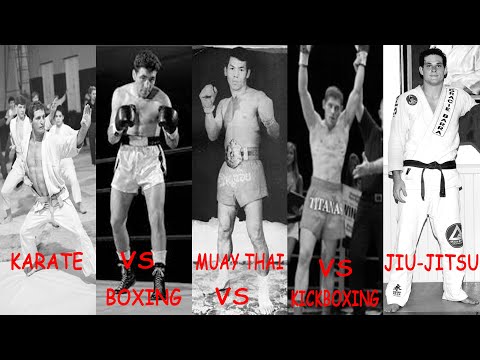
The roar of the crowd, the glint of sweat under the lights, the primal dance of combat. We’ve all seen the highlights, the explosive compilations that leave us breathless. But what lies beneath the surface of these electrifying clashes? Are we merely witnessing a spectacle, or are we seeing the fundamental principles of martial arts put to the ultimate test? Today, we dissect the age-old rivalries: Karate versus Jiu-Jitsu, and Boxing versus Muay Thai. This isn't just about which style "wins"; it's about understanding the essence of each discipline and how they represent the warrior's path. Prepare yourselves, for we are about to engage in a debate as fierce as any fought in the ring.
The Clash of Titans: Why These Comparisons Ignite Debate
The internet is awash with highlight reels showcasing the most brutal and beautiful moments in combat sports. Phrases like "Karate vs. Jiu-Jitsu," "Boxing vs. Muay Thai," and "Kickboxing highlights" are not just search terms; they represent a deep-seated human fascination with efficacy, strategy, and the raw display of physical and mental fortitude. As a martial arts scholar and practitioner, I find these comparisons both illuminating and, at times, frustratingly simplistic. My intention here is not to crown a single champion, but to offer a critical analysis, a **Sensei's perspective**, on what these matchups reveal about the evolution of combat, the philosophy of different martial traditions, and the practical application of techniques.
Many beginners, and even some seasoned practitioners, get lost in the spectacle, chasing the "knockout power" or the "submission chain" without grasping the underlying principles. The goal of this discourse is to provide clarity, to elevate the understanding beyond mere highlights, and to encourage a deeper appreciation for the dedication required in any martial discipline. We will delve into the core philosophies, the strategic differences, and the historical context that shapes these iconic rivalries. Furthermore, we'll touch upon the equipment that supports this journey, because even the most profound spiritual path requires the right tools.
Karate vs. Jiu-Jitsu: The Art of Striking Meets the Art of the Ground
The image of a Karateka delivering a precise, powerful punch or a devastating front kick is iconic. Rooted in Okinawan traditions and refined over decades, Karate emphasizes striking from a distance. Its practitioners train to develop explosive power, speed, and pinpoint accuracy. The core tenets often revolve around "Isshin-ryu" (one heart, one mind) or the striking principles found in various Karate styles like Shotokan or Kyokushin. The focus is on incapacitating an opponent with devastating blows to vital areas. Katas, the pre-arranged forms, are crucial for internalizing techniques and developing body mechanics. When you see "Karate Kid 3 final fight" or "Karate tournament" highlights, you are witnessing the culmination of years of practice in striking precision and evasive footwork.
Conversely, Brazilian Jiu-Jitsu (BJJ), heavily influenced by Judo's grappling and throws, thrives on the ground. Its philosophy centers on leverage and technique to overcome brute strength. A smaller, weaker person can defeat a larger, stronger adversary by taking them to the ground, controlling their position, and applying joint locks or chokeholds. The phrase "BJJ submissions" encapsulates the essence of this art. Masters like the Gracie family demonstrated the effectiveness of BJJ against practitioners of striking arts, famously in the early UFC events. Understanding "jiu jitsu basics" and "jiu jitsu takedowns" is fundamental to appreciating its effectiveness.
The true debate arises when these two arts meet. Can Karate's powerful strikes overcome Jiu-Jitsu's dominant ground game? Or will Jiu-Jitsu's ability to nullify striking by taking the fight to the mat prove superior? Historical encounters and modern MMA have shown that a successful fighter often needs proficiency in both striking and grappling. A pure Karateka might struggle against a skilled BJJ practitioner who can close the distance and initiate a ground battle. Conversely, a Jiu-Jitsu specialist must be wary of devastating kicks and punches if they cannot close the gap effectively. The key lies in the transition – how well each fighter can dictate the terms of engagement.
"The ultimate aim of martial arts is not victory or defeat, but the perfection of the human character." - Gichin Funakoshi
When we analyze "jiu jitsu vs wrestling", we see a similar dynamic: the art of taking an opponent down versus the art of staying up or controlling them once down. Both require immense strength, technique, and strategic thinking. The highlights often showcase the most dramatic moments – the spectacular submission or the powerful knockout punch. But the real lesson is in the preparation, the countless hours of drilling "jiu jitsu basics" and mastering the nuances of stance and striking in Karate.
Boxing vs. Muay Thai: The Sweet Science Versus the Art of Eight Limbs
Boxing, often called "the sweet science," is a discipline of elegant simplicity and profound complexity. It focuses exclusively on punches delivered with the fists, employing intricate footwork, defensive maneuvers like slipping and weaving, and strategic combinations. Legends like Muhammad Ali and Mike Tyson embody the pinnacle of this art, showcasing unparalleled speed, power, and ring generalship. A "boxing workout" emphasizes conditioning, accuracy, and the development of devastating punch combinations. Analyzing "boxing knockouts" reveals the power of focused strikes to critical targets.
Muay Thai, the "Art of Eight Limbs," incorporates a broader arsenal. In addition to punches, it utilizes elbows, knees, and kicks. The clinch, a grappling position where fighters can deliver knee strikes and control their opponent, is a significant element. This makes Muay Thai a more versatile striking art in certain contexts. When practitioners engage in "Muay Thai training", they develop a holistic striking ability, often incorporating the use of the shin for powerful kicks, reminiscent of the effectiveness seen in "kickboxing training".
The contrast between the two is stark. Can boxing’s refined punching technique and evasive footwork overcome Muay Thai’s devastating kicks, powerful knees, and close-range elbow strikes? Many believe that a boxer’s ability to control distance and land clean punches can neutralize Muay Thai’s wider range of weapons. However, a skilled Muay Thai fighter can use their kicks to control the distance, clinch to deliver damaging knees, and employ elbows to create openings. The "Muay Thai vs. Kickboxing" debate is also significant, as both share many striking techniques, though Muay Thai’s clinch and traditional elements often set it apart.
"When you are not practicing, remember that the world is practicing, and you will be surpassed." - Anonymous (often attributed to various martial arts masters)
"Boxing vs. Muay Thai" comparisons often highlight the stark difference in ranges. Boxers excel at mid-to-long range punches, while Muay Thai fighters are dangerous at all ranges, from long-range kicks to the devastating close-quarters combat of the clinch. The highlights of "Muay Thai knockouts" often showcase the brutal efficiency of the roundhouse kick or the fight-ending knee strike. Similarly, "boxing highlights" demonstrate the surgical precision and concussive force of a well-placed punch.
Kickboxing: A Synthesis or a Compromise?
Kickboxing, in its various forms (American, Japanese, Dutch), attempts to bridge the gap between boxing and traditional martial arts like Karate and Muay Thai. It generally allows punches and kicks, but often prohibits the extensive use of the clinch or certain types of throws and submissions found in BJJ or Judo. This creates a dynamic, high-paced striking environment. "Kickboxing for beginners" often focuses on mastering basic punches and kicks, building towards more complex combinations and footwork.
Comparing "kickboxing vs muay thai" is crucial. While both involve punches and kicks, Muay Thai's emphasis on the clinch, elbows, and shins provides a distinct flavor and tactical approach. Dutch kickboxing, for instance, is heavily influenced by boxing's power and combinations, integrated with powerful kicks. Japanese kickboxing often incorporates more dynamic, high-flying techniques. Kickboxing can be seen as a sport that distilled the most effective striking elements from various martial traditions into a competitive format.
The compilation of "kickboxing training" highlights often feature fast-paced exchanges, demonstrating powerful combinations and explosive kicks. This emphasis on striking offense makes it a popular choice for those seeking a high-intensity workout and a practical self-defense skillset. Analyzing "kickboxing workout with punching bag" routines shows how practitioners hone their power and technique.
Sensei's Verdict: Authenticity and Effectiveness
From my vantage point, the true "winner" in these comparisons is the practitioner who understands the depth and philosophy of their chosen art, and more importantly, the principles that transcend individual styles.
Karate vs. Jiu-Jitsu: Karate teaches discipline, focus, and devastating striking power. Jiu-Jitsu teaches leverage, control, and the ability to overcome strength with technique. In a practical self-defense scenario, a blend is ideal. For pure sport, the rules often dictate the effectiveness. A pure Karateka might find themselves in trouble if they can't keep a BJJ practitioner at bay. A pure BJJ practitioner needs to be aware of the striking threat. The "fight analysis" of MMA bouts often shows practitioners developing hybrid skillsets.
Boxing vs. Muay Thai: Boxing offers unparalleled hand speed, head movement, and punching power. Muay Thai provides a more comprehensive striking toolkit with kicks, knees, and elbows, along with the clinch. A boxer needs to defend against a wider array of attacks, while a Muay Thai fighter must be wary of a boxer's ability to control distance and deliver concussive punches. The strategic implications are vast.
Authenticity lies in respecting the lineage and principles of each art. Effectiveness is situational and depends on the practitioner, the opponent, and the context (sport vs. self-defense). These compilations, while entertaining, often present an incomplete picture. They showcase peak moments, not the years of diligent training, the failures, and the constant refinement required to master any martial path. The journey is as important as the destination, and true mastery involves understanding the 'why' behind the techniques.
Essential Training Gear for the Aspiring Warrior
To embark on the journey of martial arts, whether it's Karate, Jiu-Jitsu, Boxing, or Muay Thai, the right equipment is crucial for safety and effective training.
For Striking Arts (Karate, Boxing, Muay Thai, Kickboxing):
Gloves: For boxing and Muay Thai, 16oz sparring gloves are standard for protection. For bag work, 10-12oz training gloves are suitable.
Hand Wraps: Essential for protecting your wrists and knuckles during any punching activity.
Mouthguard: Non-negotiable for sparring in any combat sport to protect your teeth and jaw.
Shin Guards: Crucial for Muay Thai and Kickboxing training to protect against kicks.
Groin Protector: For both male and female practitioners, vital during sparring.
Kimono/Gi: For Karate, a durable Karate Gi is standard. For Judo/BJJ, a specialized heavyweight Judo Gi or BJJ Gi is required.
Headgear: Recommended for beginners during sparring to reduce the risk of cuts and bruises.
For Grappling Arts (Jiu-Jitsu, Judo):
Gi (Kimono): A high-quality double-weave BJJ Gi or single-weave Judo Gi is essential. Look for brands known for durability like Fuji or Tatami.
No-Gi Gear: Rash guards and grappling shorts are necessary for No-Gi Jiu-Jitsu training.
Mouthguard: Still essential for protection during grappling exchanges.
Investing in quality "Martial Arts Merchandise" is an investment in your safety and longevity in the sport. Don't skimp on protection; your body is your most valuable tool.
Frequently Asked Questions
Q: Which martial art is best for self-defense? A: The "best" martial art for self-defense is the one you train consistently and effectively. A combination of striking (like Karate or Boxing) and grappling (like Jiu-Jitsu or Judo) provides a well-rounded skillset. Focus on practical techniques and situational awareness.
Q: Is it true that Jiu-Jitsu can defeat any striking art? A: While Jiu-Jitsu is highly effective on the ground, it's not infallible. A skilled striker who can maintain distance and avoid being taken down can neutralize a pure Jiu-Jitsu practitioner. In mixed martial arts, the most successful fighters blend striking and grappling.
Q: Should I focus on Karate or Muay Thai for kickboxing? A: Both can contribute. Karate provides discipline and powerful linear strikes, while Muay Thai offers a broader range of kicks, knees, elbows, and clinch work. Many modern kickboxing systems integrate elements from both.
Q: How important is conditioning in combat sports? A: Conditioning is paramount. Stamina, strength, and speed are critical for executing techniques effectively and enduring the rigors of training and competition. A strong "Entrenamiento de MMA" program will always include rigorous conditioning.
Q: How can I improve my mental strength in martial arts? A: Mental strength is built through consistent practice, overcoming challenges, and developing discipline. Meditation, visualization, and learning to persevere through fatigue and discomfort are key components of the "Mental Game" in martial arts.
The comparisons we’ve explored—Karate vs. Jiu-Jitsu, Boxing vs. Muay Thai—are more than just highlight reels; they are crucibles where the philosophies and techniques of martial traditions are tested. Each art possesses its own unique beauty, effectiveness, and challenges. True mastery lies not in declaring one superior, but in understanding the principles that govern all combat, respecting the dedication of practitioners across disciplines, and continuously striving for self-improvement. The journey is long, demanding, and infinitely rewarding.
Sensei's Reflection: Your Next Step
You have witnessed the analysis of iconic martial rivalries. Now, the true test begins: application. Consider your own training. Are you focusing solely on your strengths, or are you venturing into the disciplines that challenge you most? Do you understand the fundamental principles that underpin your techniques, or are you merely mimicking movements? The essence of Budo is not about winning debates on forums, but about winning the quiet battles within yourself every single day.
"In martial arts, the highest goal is not to defeat an opponent, but to defeat oneself." - Unknown Master
So, I ask you: Which aspect of your training have you been neglecting out of comfort or perceived lack of importance? And more critically, what steps will you take, starting today, to address that deficit and embody the spirit of a true warrior? The path to mastery is paved with self-awareness and deliberate action. Share your thoughts and your commitment in the comments below. Let us learn from each other.
```
GEMINI_METADESC: A martial arts master dissects Karate vs. Jiu-Jitsu and Boxing vs. Muay Thai, analyzing techniques, philosophies, and effectiveness beyond the hype. Essential training insights included.
"They call him 'The Jet.' And for good reason. Benny Urquidez wasn't just a fighter; he was a phenomenon. An undefeated legend whose name is etched in the annals of combat sports history. But how did he achieve such a storied career? What was the secret behind his seemingly invincible aura? Welcome to Budo and Martial Arts, where today we dissect the legacy of a true martial arts titan."
The Unbeatable Record: A Testament to Dedication
Benny "The Jet" Urquidez stands as a colossus in the world of kickboxing, boasting a professional record that is nothing short of astonishing: 63 wins, 0 losses, and 58 knockouts. This isn't just a statistic; it's a declaration of dominance. In an era where martial arts were rapidly evolving and the line between different disciplines was constantly being tested, Urquidez carved his path with unwavering precision and devastating power. His career spanned decades, from the gritty dojos of the 1960s to the brightly lit arenas of international competition.
The Jet's Philosophy: Speed, Power, and the Unseen
What separated Urquidez from his contemporaries wasn't just raw talent, but a deeply ingrained martial philosophy. He wasn't merely throwing punches and kicks; he was orchestrating a symphony of motion. His speed was legendary, earning him the moniker "The Jet." But speed without control is chaos, and Urquidez possessed the control of a surgeon. He combined this velocity with concussive power, often delivering fight-ending blows with deceptive simplicity.
His approach was rooted in effective technique, drawing from a diverse martial arts background that included elements of Karate, Judo, and Boxing. This cross-training allowed him to adapt and overcome opponents with varying styles. He understood the principles of leverage, timing, and distance – fundamental tenets found across nearly all effective combat systems.
"The Jet was a master of distance. He could close it in an instant and create it just as quickly. His footwork was impeccable, making him a nightmare to pin down."
One often overlooked aspect of Urquidez's success was his mental fortitude. In the crucible of competition, where fear and doubt can cripple even the most skilled, "The Jet" remained composed. This mental discipline, a core principle in many traditional martial arts like Budo and Karate, allowed him to execute his strategies flawlessly under immense pressure.
Reflexion of the Sensei: Your Next Step
Benny Urquidez's career is a living testament to the power of dedicated practice, strategic thinking, and an unbreakable spirit. He proved that in combat, the most effective weapons are often speed, power, and an unshakeable mind.
But is his undefeated record merely a relic of a bygone era, or do the principles he embodied still hold true today? Can the modern martial artist, trained in the diverse landscape of MMA, truly learn from a kickboxing legend?
Reflect on this: When faced with an unexpected challenge, be it in the ring or in life, what is your immediate response? Is it born of calculated strategy and disciplined execution, or a reaction driven by impulse and fear? How can you cultivate "The Jet's" composure and decisiveness in your own daily battles?
Frequently Asked Questions
What martial arts did Benny Urquidez train in?
Benny Urquidez had a diverse background, reportedly training in Karate, Judo, Boxing, and other styles, which contributed to his well-rounded kickboxing prowess.
What was Benny Urquidez's professional kickboxing record?
He retired with an astonishing professional record of 63 wins, 0 losses, and 58 knockouts.
Why was Benny Urquidez nicknamed "The Jet"?
He earned the nickname "The Jet" due to his exceptional speed, agility, and quick striking ability in the ring.
Did Benny Urquidez compete in MMA?
While primarily known for kickboxing, Urquidez did have some appearances in mixed martial arts events, demonstrating his adaptability.
What is Benny Urquidez's legacy in martial arts?
His legacy is that of an undefeated champion, a master of striking, and an embodiment of the disciplined warrior spirit, inspiring countless martial artists worldwide.
Equipment Essential for Your Training
To emulate the dedication of champions like Benny Urquidez, proper training equipment is crucial. While he excelled in kickboxing, many of these principles apply across various striking arts.
Kickboxing Gloves: Essential for protection during sparring and bag work. Look for gloves with adequate padding (14-16oz for sparring is common).
Shin Guards: To protect your shins during kicking drills and sparring.
Mouthguard: Non-negotiable for any form of sparring or competition to protect your teeth and jaw.
Groin Protector: Crucial for male practitioners to safeguard vital areas.
Training Partner: The most important piece of "equipment." Consistent, quality sparring is key to developing timing and reflexes.
Heavy Bag or Thai Pads: For developing power and striking technique.
For those interested in the traditional aspects of martial arts that influenced Urquidez, consider exploring:
Karate Gis: For Karate training, a durable, double-weave gi is recommended for kata and kumite.
Judo Gi (Judogi): For Judo or Jiu-Jitsu, a heavier, reinforced gi is necessary for gripping and throws.
Investing in quality gear ensures safety and enhances your training experience, allowing you to focus on mastering the techniques and the spirit of Budo.
Deepen Your Understanding
To further explore the principles and figures that shaped martial arts history and continue to influence modern combat, delve into these related topics:
```
GEMINI_METADESC: Explore the legendary career of undefeated kickboxer Benny 'The Jet' Urquidez. Analyze his fighting philosophy, incredible record, and lasting impact on martial arts.
Every aspiring martial artist, every seasoned practitioner, seeks inspiration. We pore over the greats, we study the techniques, but sometimes, we find ourselves drawn to the silver screen, searching for echoes of our own discipline. The "Wu-Tang Collection" has long been a treasure trove for such seekers, and "King of the Kickboxers" is a film that promises raw, unadulterated combat. But does it deliver? Does it capture the essence of the martial spirit, or is it merely a shallow imitation, a spectacle for the uninitiated? Today, we delve deep, not just into the film's narrative, but into the very heart of its martial arts representation. Prepare yourselves, for we are about to dissect this cinematic offering with the precision of a well-placed strike.
The Architects of Violence: Director and Cast
Directed by Lucas Lowe, "King of the Kickboxers" brings together a cast that, on paper, suggests a certain level of combat pedigree. We have Loren Avedon as Jake, the protagonist driven by vengeance. Richard Jaeckel and Don Stroud lend their presence, while Billy Blanks steps into the formidable shoes of Kahn, the heavyweight kickboxing champion whose brutality defines the film's central conflict. Blanks, a renowned martial artist and filmmaker in his own right, brings a palpable physicality to the role of the antagonist. However, the question remains: can the direction and the performances elevate a familiar revenge plot into something more profound? Can they convey the *why* behind the fight, not just the *how*?
The Serpent's Coil: Plot and Protagonist's Path
The narrative of "King of the Kickboxers" is a well-trodden path in martial arts cinema: revenge. Jake witnesses his brother's demise at the hands of the merciless kickboxing champion, Kahn. This tragic event fuels Jake's quest for retribution. But the journey to confront Khan is not a straight line. Jake understands that brute force alone will not suffice against such a powerful foe. He seeks out Phang, a figure of legend, the only one who has ever managed to put Khan on the defensive. This quest for training is where the film can truly shine, exploring the dedication, sacrifice, and mental fortitude required to master one's craft. It's a chance to showcase the arduous path of a martial artist, far removed from the quick fixes often portrayed.
"The true opponent is not the one across from you, but the one within." - A timeless principle often forgotten in the heat of cinematic battle.
The narrative structure presents an opportunity to explore the philosophy of martial arts. Jake's transformation from a vengeful victim to a disciplined warrior under Phang's tutelage is crucial. Does the film delve into the ethical considerations of violence? Does it portray the psychological toll of seeking revenge? Or does it simply rely on flashy kicks and punches to carry the story? These are the questions we must ask as viewers who appreciate more than just the spectacle.
The Crucible of Combat: Analyzing the Fighting
This is where the film truly stands or falls for the discerning martial arts enthusiast. "King of the Kickboxers" prominently features kickboxing, a dynamic and aggressive striking art. We need to examine the choreography. Are the movements fluid and realistic, reflecting the principles of kickboxing, or are they overly stylized and theatrical? Do the fighters display proper footwork, defensive awareness, and effective combinations, or are they performing a dance of death that lacks genuine technical merit?
Billy Blanks, as Kahn, has the potential to showcase powerful, explosive techniques. Loren Avedon, as Jake, must evolve visually and physically under Phang's tutelage. Does his fighting style improve convincingly? Are the techniques taught by Phang rooted in practical application, or are they merely plot devices? We look for authenticity in stances, in the execution of kicks and punches, and in the transitions between striking and grappling, even if grappling is secondary in this film.
The film's portrayal of a "heavyweight kickboxing champion" should ideally reflect the power and precision of such athletes. The "running camera" aspect, while aiming for a gritty realism, can sometimes detract from the clarity of the action. Can we still discern the techniques being employed? Does the editing enhance or hinder our understanding of the combat?
A critical point for any martial arts film is the depiction of training sequences. This is where the true discipline is often shown. Do Jake's training montages with Phang reveal effective drills? Do they illustrate the grueling nature of preparation? Or are they simply a montage of sweat and grunts set to music? For those who practice Judo, Karate, or MMA, these sequences are often the most informative, offering glimpses into principles that can be applied to their own training.
Beyond the Blows: The Spirit of the Warrior
The term "King of the Kickboxers" evokes a sense of dominance, but true mastery in martial arts extends far beyond physical prowess. It encompasses mental fortitude, discipline, and a deep understanding of oneself. Does "King of the Kickboxers" touch upon these deeper aspects? The character of Phang, as the legendary trainer, is a crucial figure. Does he impart wisdom beyond mere technique? Does he teach Jake about control, about the responsibility that comes with power, or about the ethical application of martial skills?
"Victory over others is temporary. Victory over oneself is eternal." - A profound truth often lost in films driven solely by external conflict.
The film presents a classic "good versus evil" scenario, but the most compelling martial arts narratives explore the shades of gray, the internal struggles, and the philosophical underpinnings of combat. Does Jake's desire for revenge ultimately corrupt him, or does he find a path towards redemption through mastering himself? The exploration of concepts like Budo – the way of the warrior – or the pursuit of Mushin (no-mind) can elevate a simple action flick into something more meaningful. For practitioners of Kickboxing, understanding the mental game is as vital as the physical technique.
Veredicto del Sensei: Is It Worth Your Sweat?
After dissecting the narrative, the performances, and the potential for authentic martial arts representation, "King of the Kickboxers" presents a mixed bag. As a pure action film focused on kickboxing, it delivers some entertaining sequences, largely thanks to the presence of Billy Blanks and the commitment of Loren Avedon. The revenge plot, while predictable, provides a clear motivation for the conflict. However, for the dedicated martial artist seeking deep philosophical insights or groundbreaking technical instruction, the film falls somewhat short.
The choreography, while energetic, occasionally veers into the realm of cinematic exaggeration rather than pure technical demonstration. The training sequences offer glimpses of discipline but don't provide a detailed blueprint for self-improvement. The philosophical underpinnings are present but often superficial, serving the plot rather than being explored in depth.
Cinturón Negro en Entretenimiento de Acción, Cinturón Blanco en Profundidad Filosófica.
If you're looking for a nostalgic kickboxing flick with some solid action, "King of the Kickboxers" can satisfy that craving. If you're seeking a profound exploration of the martial spirit or detailed technical breakdowns, you might need to look elsewhere, perhaps to documentaries or more critically acclaimed martial arts films. It’s a decent watch, but don't expect it to redefine your understanding of the martial way.
Training Regimen: Building Your Own Khan-Slaying Physique
Whether you're inspired by Jake's quest for revenge or Kahn's sheer power, the path to becoming a more capable fighter requires dedication. Here’s a fundamental regimen to build a strong base:
Warm-up (10-15 minutes): Begin with light cardio like jogging in place, jumping jacks, or skipping rope. Follow with dynamic stretches such as arm circles, leg swings, torso twists, and high knees. This prepares your muscles and reduces the risk of injury.
Striking Fundamentals (20-30 minutes):
Stance: Practice your fighting stance (e.g., orthodox or southpaw for kickboxing). Focus on balance, a solid base, and keeping your guard up.
Punches: Execute jabs, crosses, hooks, and uppercuts. Focus on proper form: rotating your hips and shoulders, extending your arm fully but not locking it, and snapping the punch back quickly. Practice these on a makiwara if available, or focus on form with shadowboxing.
Kicks: Work on basic kicks like front kicks, roundhouse kicks, and side kicks. Emphasize hip rotation, chambering your leg, extending through the target, and retracting. Practice with control and focus on technique over power initially.
Core Strength and Conditioning (15-20 minutes): A strong core is vital for power and stability.
Plank variations: Standard plank, side planks.
Crunches and Leg Raises: For abdominal strength.
Russian Twists: For rotational core power.
Burpees: An excellent full-body conditioning exercise that builds explosive power.
Sparring Drills (Optional, with a partner): If you have a training partner and protective gear, engage in controlled sparring. Focus on applying techniques learned, defensive maneuvers, and footwork. Start with light contact and focus on timing and distance.
Cool-down and Flexibility (10-15 minutes): Static stretching is crucial for recovery and maintaining flexibility. Hold stretches for major muscle groups (quadriceps, hamstrings, calves, glutes, chest, shoulders, triceps) for 20-30 seconds.
Essential Gear for Your Training Journey
To train effectively and safely, having the right equipment is key. Investing in quality gear not only enhances your experience but also protects you during intense sessions. For kickboxing and general striking arts, consider the following:
Boxing Gloves: For striking drills and sparring, 12-16oz gloves are standard for general training. Ensure a good fit to protect your wrists.
Hand Wraps: Essential for wrist support and protecting your knuckles under the gloves.
Mouthguard: Crucial for protecting your teeth and jaw, especially during sparring.
Shin Guards: For leg kick protection during sparring or when practicing kicks against pads.
Groin Protector: A mandatory piece of safety equipment for all male practitioners during sparring.
Training Shoes: Lightweight, flexible shoes that offer good traction and support for footwork.
Kickboxing Pads/Focus Mitts: If training with a partner, these are invaluable for practicing and improving striking accuracy and power.
Duffel Bag: A sturdy bag to carry all your gear to and from the training space.
When looking for specific items, such as the best judo gis or durable karate merchandise, always research brands known for quality and durability in the martial arts community.
Q1: Is "King of the Kickboxers" based on a true story?
A1: No, the film is a fictional narrative and not based on a true story. It follows a common revenge plot structure found in many martial arts films.
Q2: Who is Phang in the movie?
A2: Phang is the legendary martial artist who trains Jake. He is portrayed as the only person capable of standing against the formidable kickboxing champion, Kahn.
Q3: What martial arts are depicted in the film?
A3: The primary martial art depicted is kickboxing. However, the training sequences might incorporate elements from other disciplines depending on the interpretation of the trainers and choreography.
Q4: Is Billy Blanks a real kickboxer?
A4: Yes, Billy Blanks is a highly accomplished martial artist and kickboxer, a seven-time world karate and kickboxing champion. He is also the creator of the Tae Bo fitness program.
Q5: How does this film compare to other Wu-Tang Collection movies?
A5: "King of the Kickboxers" is generally considered a solid, albeit somewhat standard, entry in the Wu-Tang Collection. It offers good action for fans of 80s/90s martial arts cinema but might not reach the cult status of some other titles within the collection that are known for more unique styles or storytelling.
Sensei's Reflection: Your Next Move
We have examined "King of the Kickboxers" through the lens of the martial artist, dissecting its plot, its action, and its underlying spirit. It serves as a reminder that while cinematic battles can be exhilarating, the true journey of a martial artist lies in consistent training, self-mastery, and the relentless pursuit of improvement—both within the dojo and in the arena of life. The film, for all its flaws, can still be a catalyst, sparking the desire to train harder, to understand the philosophy behind the techniques, and to embody the warrior's ethos.
Sensei's Reflection: Your Next Move
Now, consider this: If Jake's brother was killed, and Jake seeks revenge, is his path truly that of a martial artist, or that of a vigilante? Where does the line blur between righteous retribution and personal vendetta? And more importantly, when you face your own "Khans"—be they in physical combat, a difficult task, or an internal struggle—does your first instinct lead you to destruction, or to self-improvement? Reflect on this, and let your training, not just your fists, provide the answer.
```
GEMINI_METADESC: A deep martial arts analysis of 'King of the Kickboxers' (Wu-Tang Collection), scrutinizing its fight scenes, plot, and philosophical depth. Sensei's verdict.
Hello and welcome, warriors of the path, to Budo and Martial Arts. Today, we dissect a fighter whose name echoes with both thunderous power and audacious bravery: Gokhan Saki. You're witnessing a breakdown of a style that embodies the razor's edge between triumph and oblivion, a testament to the "most high risk/high reward" philosophy. Published on January 6, 2022, this analysis aims to be the most complete and updated martial arts exposition you'll find.
The internet is awash with fleeting performances, but few fighters leave an indelible mark like Gokhan Saki. A multi-time champion, his brand of kickboxing is not merely a spectacle; it's a masterclass in calculated aggression, a living testament to the spirit of competitive combat. Much like the legendary Ramon Dekkers, Saki's adaptation of the Dutch kickboxing paradigm shares an uncanny resemblance to the devastating peekaboo style of boxing famously employed by titans such as Mike Tyson and Floyd Patterson.
Gokhan Saki is more than just a fighter; he's a phenomenon. His career in kickboxing is punctuated by performances that left audiences breathless, a testament to a style that is as thrilling as it is perilous. Saki’s approach is a high-stakes gamble, where every movement is loaded with the potential for a spectacular knockout, yet equally carries the risk of leaving himself exposed. This is the essence of the high-risk, high-reward dynamic in martial arts.
"The beauty of martial arts is found not only in power, but in the precision with which that power is wielded. Saki’s style exemplifies this, pushing the boundaries of controlled aggression."
His ability to blend explosive offense with defensive artistry is what sets him apart. This isn't mere brute force; it's a tactical engagement that draws heavily on strategic principles refined over years of dedicated martial arts training.
The Art of Lateral Footwork and Head Movement
Saki’s offensive strategy is intrinsically linked to his defensive prowess, primarily through his masterful use of lateral footwork and head movement. This isn't the static stance of a fighter waiting to be hit; it's a fluid dance on the edge of danger.
* **Lateral Footwork:** Saki doesn't just move forward or backward; he constantly shifts his weight and position laterally, making him an elusive target. This constant angling off-center disrupts an opponent's rhythm and line of attack. Think of a boxer avoiding a jab not by simply blocking it, but by stepping offline and countering.
* **Head Movement:** Complementing his footwork, Saki employs sharp, evasive head movements – slips, rolls, and weaves. This forces opponents to constantly re-adjust their aim, often overextending themselves. This is a direct echo of the defensive principles seen in the boxing techniques of Mike Tyson and Floyd Patterson, where evasion is the first line of offense.
This combination creates openings, not by enduring an onslaught, but by artfully sidestepping it. It’s a philosophy that prioritizes evasion and counter-attack over absorbing punishment.
Fight-Ending Counters and Power Shots
The true artistry of Saki’s style lies in his ability to capitalize on the openings created by his defensive maneuvers. Once an opponent misses or overcommits, Saki is ready to unleash.
* **One-Off Power Shots:** These are not wild, hopeful swings. Saki's power shots are deliberate, often thrown with full body rotation and weight transfer, designed to land with fight-ending force. Whether it’s a thunderous hook or a devastating leg kick, these strikes are the payoff for his patient, evasive work.
* **Fight-Ending Counters:** The most dangerous moments arise when Saki lands a clean counter-strike. After skillfully evading an attack, he pivots or steps into a powerful shot, catching his opponent often before they can recover their guard or composure. This is the high-risk, high-reward payoff: create the opening through defense, then deliver the decisive blow.
This approach demands immense timing and precision. It requires the fighter to anticipate the opponent's movements and react with lightning speed and devastating accuracy. This is not simply reacting; it is predicting and punishing.
Deconstructing the Opponent's Guard
Beyond individual strikes, Saki possesses a remarkable ability to systematically break down an opponent's defenses. His lateral movement and feints often serve to confuse and disrupt, making it difficult for opponents to maintain a solid guard.
* **Constant Pressure:** Even while evading, Saki maintains an aggressive presence. This relentless pressure forces opponents to stay focused and defensively engaged, which in turn can lead to mistakes.
* **Targeting Weaknesses:** He adeptly exploits any perceived gap or lapse in an opponent's guard. A slight opening of the hands, a momentary drop of the chin, a predictable pattern of movement – Saki identifies these and capitalizes with surgical precision.
* **Building to the Finish:** His sequence of attacks often builds momentum. A series of evasions might be followed by a probing jab, then a feint, before the commitment to a power shot or a debilitating combination. This isn't random aggression; it's a calculated dismantling.
This methodical approach ensures that even his most explosive attacks feel earned, a direct consequence of superior strategy and execution. This aligns with the core principles of BUDO, where efficiency and effectiveness are paramount.
The Unyielding Heart of a Champion
Perhaps what truly elevates Gokhan Saki beyond his technical prowess is his sheer bravery and willingness to face any challenge. The sport of kickboxing, particularly at the elite level, often sees fighters carefully choosing their opponents. Saki, however, stands out for his willingness to step into the ring against contenders significantly larger than himself.
This "big heart" isn't just about physical courage; it's a mental fortitude that allows him to overcome perceived disadvantages. It's the embodiment of the warrior spirit that drives practitioners of Martial Arts to push their limits, not just against equals, but against seemingly insurmountable odds. This mental resilience is a crucial component of self-improvement and a cornerstone of any true martial artist's journey.
"The true measure of a fighter is not just the power of their punches, but the strength of their will to face any opponent, regardless of size or reputation."
This characteristic makes Saki a role model for anyone seeking to develop not only their physical skills but also their inner strength and mental game.
Essential Gear for Your Training
To emulate the dynamism and power of a fighter like Gokhan Saki, a dedicated training regimen is crucial. While Saki’s style is unique, foundational training often benefits from specific equipment. For those looking to develop striking power and agility, consider:
Kickboxing Gloves: Opt for gloves around 10-14 oz for bag work and pad training to build hand strength and conditioning. For sparring, 16 oz gloves are standard for safety.
Training Shin Guards: Essential for absorbing the impact of kicks during pad work and sparring, protecting both your shins and your training partner's shins.
Headgear: Crucial for sparring sessions to protect against accidental headbutts and to mitigate the impact of strikes, allowing you to train with higher intensity.
Durable Training Shorts: Lightweight and breathable shorts that allow for maximum freedom of movement are key for agility drills and dynamic striking.
Jump Rope: An indispensable tool for cardiovascular conditioning and developing footwork coordination.
Investing in quality equipment is not just about comfort; it’s about safety and ensuring you can train effectively to hone your skills, whether you're practicing kicks, punches, or defensive movements. Consider exploring options for Martial Arts Merchandise that offers both durability and performance.
Frequently Asked Questions
What makes Gokhan Saki's style high-risk/high-reward?
Saki's style involves aggressive offense combined with sophisticated evasion. He often takes calculated risks, leaving himself momentarily open to land devastating counters or power shots, making each fight a potential highlight reel or a quick exit.
How does Saki's style compare to Mike Tyson's peekaboo?
Both styles heavily utilize lateral footwork and head movement to evade punches and create openings for powerful counter-attacks. Saki applies these principles within kickboxing, while Tyson famously used them in boxing to devastating effect.
Is Saki's style applicable to other martial arts?
The core principles of effective footwork, head movement, timing, and counter-striking are transferable across many combat sports and self-defense disciplines. The emphasis on calculated aggression is a universal martial principle.
What is the "Dutch style" of kickboxing?
The Dutch style is known for its aggressive, forward-marching pressure, heavy use of low kicks, clinch work, and powerful combinations, often blending Muay Thai techniques with boxing fundamentals.
Deepen Your Understanding
To further your journey into the intricate world of martial arts and combat analysis, explore these related topics on our blog:
Saki’s approach is a potent reminder that martial arts are not static disciplines. They are living, breathing entities that evolve with each practitioner’s interpretation. His blend of calculated risk and unyielding heart is what separates the competent from the legendary.
Now, consider this: In your own training, are you merely going through the motions, or are you actively seeking to push your own boundaries? Are you content with safety, or do you dare to embrace the calculated risks that lead to true mastery? The path of the warrior is rarely the easiest. It is the path of the bold.
GEMINI_METADESC: Analyze Gokhan Saki's high-risk/high-reward kickboxing style. Explore his lateral footwork, devastating counters, and warrior's heart, drawing parallels to boxing legends. Essential gear and training insights included.