Showing posts sorted by relevance for query best judo gis. Sort by date Show all posts

Judo vs. Laamb Wrestling: A Sensei's Analysis of Throws, Tactics, and True Combat Efficacy

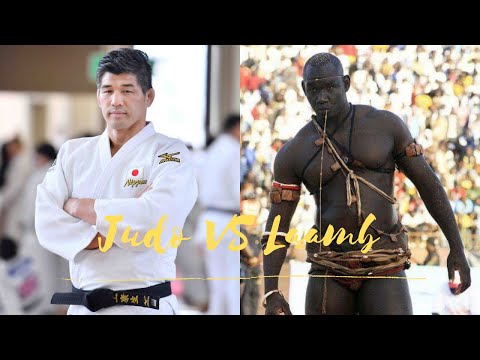
Greetings, warriors and scholars of the Way. Today, we delve into a fascinating intersection of combat: the venerable art of Judo and the powerful tradition of Senegalese wrestling, known as Laamb. Many have seen brief clips, others have heard whispers, but few truly grasp the profound similarities and stark differences that define these disciplines. This is not merely an academic exercise; it is a critical examination of techniques that have echoed across dojos and dusty arenas for generations, each vying for supremacy in the crucible of combat. Are the sweeping throws of Judo merely elegant dance, or do they possess the raw power to subdue a Laamb wrestler? Conversely, can the brute strength and unique techniques of Laamb stand against the structured efficiency of Judo? Let us uncover the truth, not with speculation, but with the rigorous lens of martial understanding.

The Clash of Titans: Judo Meets Laamb

The discussion around Senegalese wrestling, or Laamb, often sparks debate, especially when juxtaposed with established martial arts like Judo. The raw power and explosive nature of Laamb are undeniable, yet the question persists: how does it fare against the codified techniques and principles of Jigoro Kano's creation? This analysis goes beyond superficial comparisons. We will dissect the core philosophies, the fundamental techniques, and the practical applications of both disciplines. Prepare for a journey that challenges assumptions and illuminates the true nature of combat prowess. Are you ready to understand the nuances that separate a mere throw from a decisive victory?

The Essence of Kodokan Judo: Precision and Control

Founded by Professor Jigoro Kano, Judo, meaning "gentle way," is far more than just a sport. It is a system of physical, intellectual, and moral education. At its heart lies the principle of Seiryoku Zenyo – maximum efficiency with minimum effort. Judo emphasizes Jita Kyoei – mutual welfare and benefit. Technically, Judo is characterized by its dynamic nage-waza (throwing techniques) and its crucial katame-waza (grappling techniques), which include pins, chokes, and armlocks. Unlike many striking arts, Judo focuses on using an opponent's weight and momentum against them, turning aggression into a vector for control.

A typical Judo curriculum progresses from basic falls (ukemi) to fundamental grips (kumi-kata), then to a vast array of throws. Iconic techniques like O-soto-gari (major outer reaping), Ippon Seoi Nage (one-arm shoulder throw), and the devastating Osoto-gari (major outer reaping) are built upon intricate footwork, hip movement, and the precise timing of Kuzushi (off-balancing). The goal is not just to throw the opponent, but to do so with such control that they cannot recover, often leading to a point (ippon) or a submission hold on the ground.

"Maximum efficiency, minimum effort." - Jigoro Kano

The emphasis on randori (free practice) in Judo is paramount. It's where the theoretical techniques are tested against resisting opponents, fostering adaptability and resilience. However, it's crucial to note that Judo, in its Olympic sporting context, has seen certain techniques restricted for safety reasons, particularly those involving direct leg grabs (ami-waza) and certain submissions on the legs. This evolution, while prioritizing safety, has led some critics to question its direct applicability in scenarios demanding less structured combat.

Laamb Wrestling: The Unyielding Spirit of Senegal

Laamb, the traditional wrestling of Senegal, is an ancient sport deeply ingrained in the nation's culture and identity. It is a spectacle of raw power, vibrant tradition, and often, fierce competition. Unlike Judo's emphasis on technical sequences and controlled submissions, Laamb is fundamentally about overpowering the opponent through strength, leverage, and a direct, forceful approach. Wrestlers, known as lutteurs, train rigorously to develop immense physical conditioning, focusing on explosive power, grip strength, and resilience.

The objective in Laamb is typically to throw an opponent to the ground or to get them into a position where their back, shoulders, or chest touches the sand. Techniques often involve powerful lifts, body locks, and wrestling for dominance on the feet. The most visually striking aspect of Laamb, and where comparisons to Judo naturally arise, is the presence of throws and takedowns. However, the execution is often more direct and driven by brute force rather than the nuanced off-balancing seen in Judo.

Laamb is also steeped in ritual and superstition. Wrestlers often perform dances, wear talismans (gris-gris), and engage in pre-fight rituals meant to imbue them with spiritual strength and luck. This spiritual dimension, while not directly part of Judo's codified philosophy, speaks to the profound psychological aspect of combat, a critical element often overlooked in purely technical analyses.

"The wrestler who is proficient in the art of wrestling, and in the use of his own strength, is capable of conquering the world." - A traditional saying often associated with Laamb.

Furthermore, Laamb has evolved to incorporate elements that blur lines with mixed martial arts. Some lutteurs are now training in striking arts and grappling, aiming to be more well-rounded competitors, a testament to the sport's adaptation in the modern combat landscape.

Judo vs. Laamb: A Comparative Takedown

Now, let us engage in the critical analysis, the sensei's dissection of these two formidable combat systems. The intention of search here is clear: understand how these arts compare in a combative scenario. We must look beyond the superficial "throw for throw" comparison.

1. Philosophy and Principles:

  • Judo: Seiryoku Zenyo (Maximum Efficiency) and Jita Kyoei (Mutual Welfare). Focus on leverage, timing, and technique over brute force. Structured curriculum.
  • Laamb: Emphasis on raw power, physical conditioning, and spiritual/ritualistic preparation. Primarily focused on overpowering the opponent for a decisive takedown.

2. Technical Execution:

  • Judo: Highly codified throws (nage-waza) relying on Kuzushi (off-balancing), Tsukuri (entry), and Kake (completion). Extensive ground grappling (katame-waza) including pins, chokes, and armlocks. Strict rules limit leg grabs in sport Judo.
  • Laamb: Direct, powerful throws and takedowns, often utilizing immense strength and body control. Grip fighting is crucial, but the emphasis is on driving through the opponent. Ground grappling is less formalized than Judo, focusing more on pinning or maintaining positional dominance.

3. Grip Fighting:

  • Judo: The grip (kumi-kata) is fundamental. Mastering grips is essential for initiating throws and controlling the opponent.
  • Laamb: Grips are vital for leverage and control, but often more about a secure hold to enable a powerful lift or drive. Less emphasis on the intricate setup of grips seen in Judo.

4. Groundwork:

  • Judo: A complete ground fighting system (Ne-waza) with submissions and pins that can end a match.
  • Laamb: Ground work focuses on pinning or maintaining a dominant position to achieve victory, with less emphasis on the submission aspect found in Judo or BJJ.

5. Physical Attributes:

  • Judo: Requires flexibility, balance, coordination, and explosive power, but technique can often compensate for a deficit in raw strength.
  • Laamb: Heavily reliant on exceptional strength, power, stamina, and a high pain threshold.

Consider this: a Judo throw is a finely tuned mechanism. A Laamb takedown is often a battering ram. Both can achieve the objective, but the pathway and the principles behind them differ significantly.

Beyond the Arena: Efficacy in MMA and Self-Defense

The ultimate test for any martial art is its efficacy when the rules are removed. How do Judo and Laamb translate into Mixed Martial Arts (MMA) or real-world self-defense scenarios?

Judo's Contribution to MMA: Judo practitioners have consistently proven their mettle in MMA. Fighters like Ronda Rousey, Kayla Harrison, and Teddy Riner (though not primarily an MMA fighter) have showcased the devastating power of Judo throws and groundwork. Judo's emphasis on ne-waza provides an immediate advantage in controlling opponents on the ground, setting up submissions, and preventing opponents from establishing dominant positions. The restriction on leg grabs in sport Judo has, in fact, led many Judo-based MMA fighters to supplement their training with techniques that target the legs.

Laamb's Potential in MMA: Laamb's raw power and explosive takedowns offer a unique threat. A skilled lutteur with the conditioning and adaptability could be a formidable opponent. Their ability to absorb punishment and drive through opponents with sheer force is a valuable asset. However, the lack of a structured grappling submission system and the potentially less refined defensive skills against strikes might present challenges that modern MMA training would need to address.

Self-Defense Considerations: For self-defense, Judo's principles are highly valuable. The ability to off-balance and control an attacker, use their momentum, and, if necessary, subdue them with a pin or choke, are critical skills. The emphasis on situational awareness and controlling distance is also paramount. Laamb's strength-based approach can be effective for disabling a single aggressor, but its reliance on close-range power might be less advantageous against multiple attackers or in confined spaces where Judo's control-based techniques might offer more tactical options.

The question isn't which is "better" in a vacuum, but rather, which set of skills complements the demands of the situation. A fighter who can blend Judo's technical precision with Laamb's explosive power and conditioning would be a truly terrifying force.

Essential Gear for Your Training Journey

To truly appreciate the nuances of Judo and wrestling, proper training is essential. While Laamb is traditionally practiced on sand, and Judo on mats, the underlying principles of conditioning and technique require specific equipment:

  • For Judo Training:
    • High-Quality Judo Gi: Look for a double-weave or heavyweight gi for durability, especially for randori. Brands like Adidas, Mizuno, or Fuji offer excellent options. Consider a specialized Judogi that meets IJF standards if you plan to compete.
    • Mat Shoes (Optional): For hygiene and grip on training mats, though many practice barefoot.
    • Mouthguard: Recommended for all sparring to protect your teeth.
  • For Wrestling/Conditioning (General):
    • Durable Training Shorts: Comfortable and allow for a wide range of motion.
    • Performance T-shirts: Moisture-wicking fabrics are essential for intense conditioning.
    • Wrestling Shoes (Optional): Provide ankle support and superior grip on various surfaces.
    • Resistance Bands: Excellent for building explosive power and grip strength, mimicking some aspects of grappling resistance.
    • A Sand Pit (if feasible): For an authentic Laamb training experience!
  • For Strength and Conditioning:
    • Weightlifting Gloves: If your grip strength is a limiting factor, these can help.
    • Jump Rope: A fundamental tool for cardiovascular conditioning and agility.
    • Kettlebells: Versatile for power, strength, and conditioning exercises relevant to wrestling and Judo.

Investing in the right [best Judo gis for randori] or [quality wrestling shoes] can significantly enhance your training experience and safety. Explore options for durable, comfortable gear that supports rigorous practice.

Sensei's Verdict: Which Style Reigns Supreme?

The question of supremacy is often a fallacy created by those who fail to see the interconnectedness of all martial paths. Judo and Laamb are not rivals in a death match; they are distinct expressions of the human desire to overcome through physical prowess and tactical acumen.

Judo offers a highly refined system of control, leverage, and submission. Its structured approach makes it accessible for learning and progression, and its principles of efficiency are timeless. Its sport evolution, while debated, has undeniably contributed immensely to the landscape of combat sports like MMA.

Laamb, on the other hand, embodies raw, unadulterated power and an indomitable spirit. It demands immense physical conditioning and resilience. Its cultural significance is profound, representing more than just a fight – it's a celebration of strength and heritage.

Cinturón Negro en Tradición y Poder

If forced to choose for a multifaceted combat scenario (like MMA), a fighter who possesses the technical depth and submission arsenal of Judo, combined with the explosive power, conditioning, and sheer will of a Laamb wrestler, would be virtually unstoppable. Neither art, in its purest sporting form, is inherently "better." They simply excel in different aspects of combat. Judo teaches you to redirect force; Laamb teaches you to embody it. Both are invaluable.

Frequently Asked Questions

Is Laamb wrestling a form of grappling like Judo?
Yes, Laamb is a form of wrestling, which falls under the broad category of grappling arts. Both Laamb and Judo focus on controlling and taking down an opponent, but their methodologies, principles, and specific techniques differ significantly.
Can Judo techniques be used against a Laamb wrestler?
Absolutely. Many Judo throws and control techniques can be effective. However, a Laamb wrestler's strength and directness may require Judo practitioners to adapt, perhaps relying more on powerful entries or focusing on ground control once a throw is initiated.
What are the main differences in training between Judo and Laamb?
Judo training emphasizes technique, timing, and efficiency (Seiryoku Zenyo), often practiced on mats. Laamb training heavily focuses on building immense physical strength, power, and conditioning, traditionally practiced on sand, and often includes unique rituals.
Is Laamb wrestling dangerous?
Like any full-contact combat sport, Laamb carries risks of injury due to the intensity of the physical exertion and the nature of the throws and holds. However, it is a traditional sport with deep cultural roots, practiced for generations.

Deepen Your Understanding

The journey through martial arts is one of continuous learning and adaptation. Whether you are drawn to the precision of Judo or the raw power of Laamb, the pursuit of mastery is a path that refines the body, sharpens the mind, and strengthens the spirit.

Reflection of the Sensei: Your Next Step

We have dissected Judo and Laamb, exploring their philosophies, techniques, and applications. Now, the true test is not in the reading, but in the doing. Consider this:

If you were to train in both Judo and Laamb for one year each, how would the integration of Judo's leverage and Laamb's power fundamentally change your approach to a physical confrontation? Would one art's principles bleed into the other, creating a hybrid strategy, or would they remain distinct tools in your arsenal? Ponder this, and prepare to demonstrate your insights.

``` GEMINI_METADESC: Compare Judo and Senegalese Laamb wrestling: analyze throws, tactics, training, and real-world combat efficacy with a Sensei's expert insights.
Judo vs. MMA: A Sensei's Tactical Breakdown of Dominance

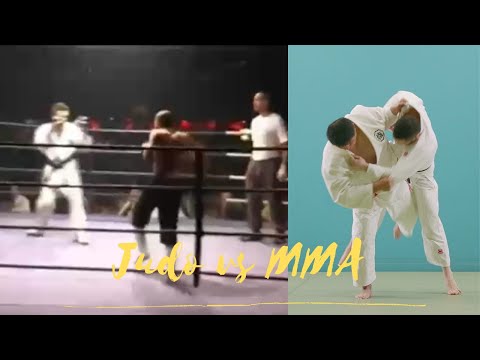
The roar of the crowd, the glint of sweat under the arena lights, the coiled tension before a strike or a takedown. These are the primal elements that draw us to combat sports. But when a Judoka, a master of the throw and the ground game, steps into the cage against an MMA fighter, a specialist in a multi-disciplinary war, what transpires? Is it a clash of titans, or a predictable outcome? This isn't about mere physical prowess; it's about the application of refined principles honed over centuries versus a modern, brutal synthesis. We are about to dissect this very confrontation, not as mere spectators, but as students of the Budo, examining the strategic depth, the technical nuances, and the philosophical underpinnings that dictate victory.

The Genesis of the Duel: Judo vs. MMA

Welcome, practitioners of the Budo and aficionados of the martial arts. Today, we confront a scenario that has ignited countless debates in dojos and online forums alike: the direct confrontation between a pure Judoka and a seasoned Mixed Martial Arts (MMA) fighter. The question is not simply about who is stronger, but who can adapt, who can impose their will, and whose fundamental principles of combat will prevail. Is the devastating potential of a perfectly executed Uchi-mata enough to overcome a barrage of strikes? Can a master of O-soto-gari translate their grappling prowess to an environment devoid of the gi?

Let's be clear: these are not the same battles. Judo, as codified by Jigoro Kano, emphasizes mutual welfare and prosperity, a path of maximum efficiency with minimum effort. MMA, on the other hand, is a brutal crucible, a synthesis of the most effective techniques from across the globe, stripped of tradition and focused solely on victory. This dichotomy forms the bedrock of our analysis.

The Judoka's Arsenal: Unlocking the Power of Kuzushi

A Judoka enters the fray with a formidable foundation. Their understanding of kuzushi – the art of unbalancing an opponent – is paramount. This is not merely about brute strength; it's about leverage, timing, and understanding the opponent's center of gravity. Techniques like Seoi-nage, Ippon-seoi-nage, and the ubiquitous Uchi-mata are not just moves; they are physics-defying applications of kinetic energy transfer.

In a gi-based environment, a Judoka can employ grips that provide immense control, allowing them to break down an opponent's posture and set up devastating throws. The ability to transition seamlessly to the ground and apply submissions like Sankaku-gatame (triangle choke) or Gyaku-juji-jime (reverse cross choke) is another layer of their offensive capability. These are skills honed through thousands of repetitions, ingrained into muscle memory.

However, the MMA cage presents a starkly different landscape. The absence of a gi negates the primary method of control for a Judoka. Without the familiar fabric to grip, the art of kuzushi becomes exponentially more challenging, relying on body control and clinch work rather than the secure grips of the judogi. This is where the conceptual understanding of Judo must be rigorously tested.

The MMA Chameleon: Adapting to the Unfamiliar

The MMA fighter is, by definition, a generalist. They are trained to weather the storm from various martial disciplines – striking arts like Boxing and Muay Thai, grappling arts like Brazilian Jiu-Jitsu (BJJ) and Wrestling, and sometimes even elements of Karate or Taekwondo. Their strength lies not in singular mastery, but in their ability to seamlessly blend these arts and exploit an opponent's weaknesses.

An MMA fighter facing a Judoka will likely anticipate the takedown attempts. Their training will focus on defending throws, establishing dominant grips (or lack thereof), and creating space to employ their striking arsenal. A well-timed knee to the head in the clinch, or a barrage of punches while the Judoka attempts to secure a grip, can quickly neutralize the thrower's advantage. Furthermore, a skilled MMA fighter will have extensive training in defending submissions and, crucially, in executing their own submissions from various positions, often learned through the lens of BJJ.

"The supreme art of war is to subdue the enemy without fighting." - Sun Tzu. In MMA, this often translates to dictating the pace and range of engagement.

The MMA fighter’s conditioning is also typically tailored for longer, more grueling bouts where the intensity of grappling exchanges is sustained. While Judokas possess incredible stamina for their sport, the all-out, multi-faceted war of MMA is a different beast entirely. The ability to absorb damage and fight through adversity is a core component of an MMA fighter's mettle.

A Sensei's Technical Deep Dive: From Gi to Cage

Let's break down the technical battleground:

  • Standing Exchange: Here lies the Judoka's primary challenge. Without the gi, effective grips are difficult to establish. They must rely on open-hand clinching, head control, and exploiting minute openings to initiate a throw. Techniques requiring significant lapel or sleeve grip, like a strong O-uchi-gari or Harai-goshi, become significantly harder to execute. The MMA fighter, conversely, will aim to keep the distance, use their jab and straight punches to manage the space, and be ready to sprawl or counter a takedown attempt. The potential for striking is high here, which is a clear advantage for the MMA fighter.
  • The Clinch: This is where the battle for control intensifies. A Judoka's Tsurikomi-goshi or Uki-goshi might still be viable if they can secure a body lock. However, MMA clinch work often involves controlling the wrists and head, preventing the opponent from gaining the necessary leverage for a throw, while also looking for knees or short punches. A well-trained MMA wrestler can often counter a Judo clinch with superior head positioning and takedown defense (e.g., a double leg or single leg).
  • Ground Game: If the Judoka successfully secures a takedown and lands in a dominant position (e.g., kesa-gatame), their advantage is substantial. However, MMA fighters are adept at transitioning from defending takedowns to scrambling back to their feet or attacking from the bottom. Judo's emphasis on pins (Osaekomi-waza) is powerful, but MMA fighters are trained to escape pins quickly and create submission opportunities. BJJ's influence means MMA fighters are often more comfortable and dynamic in scrambles and submissions from disadvantageous positions than a pure Judoka might be, especially one accustomed to gi grips.

Consider the case of Uchi-mata. In Judo, it's a spectacular throw initiated with a specific pulling and reaping motion, often facilitated by gripping the opponent's gi. In MMA, without that grip, the reap becomes a more generalized leg sweep or sweep attempt, highly susceptible to being countered by a wrestler's sprawling or a striker's balance shift. The effectiveness of Judo techniques is intrinsically linked to the context in which they are applied.

Beyond the Physical: The Budo Spirit in Combat

At its core, Judo is a Budo, a "way of war" focused on self-development. It teaches discipline, respect, and resilience. The principle of Seiryoku Zenyo (maximum efficiency, minimum effort) is not just a physical tactic but a philosophical guide to life. Can this philosophy translate into the unforgiving environment of an MMA bout?

An MMA fighter's philosophy is often one of survival and dominance. While discipline and resilience are certainly necessary, the underlying ethos is different. It's about adapting to win, using whatever works. This pragmatism can be both a strength and a weakness. A Judoka, trained in the principles of Judo, might exhibit greater composure under pressure, focusing on the technical execution rather than succumbing to the chaos. However, that same adherence to Judo principles, if not adapted, can become a rigidity that an MMA fighter exploits.

"The true Budo practitioner is one who, even in the heat of battle, retains the calm and clarity of a serene mind. This is the essence of Mushin – no-mind."

The spiritual dimension of martial arts often provides a deep well of inner strength. For a Judoka, this might manifest as an unwavering focus on technique and process. For an MMA fighter, it might be a fierce tenacity, a refusal to be broken. Which spirit is better suited to the cage? It often depends on the individual, but the Judoka's ingrained discipline offers a powerful psychological advantage if they can maintain their composure and execute their game plan.

Veredict of the Sensei: Who Reigns Supreme?

Let us not mince words. In a direct, rules-free confrontation, the MMA fighter, by virtue of their comprehensive training, generally holds the advantage. Their ability to seamlessly transition between striking and grappling, their defense against Judo's primary weapons (throws and gi-based submissions), and their often superior conditioning for the specific demands of MMA combat give them a significant edge.

However, this is not to dismiss the Judoka. A Judoka who has cross-trained in MMA, specifically focusing on striking defense and no-gi grappling, can be an incredibly dangerous opponent. A Judoka who understands how to use their entries and timing without the gi, and who has developed strong wrestling defense, can absolutely impose their will. The key is adaptation. Without it, the Judoka faces an uphill battle.

Cinturón Negro en Adaptación: An MMA fighter who has spent years honing their craft across multiple disciplines. They understand the rhythm of the fight and can exploit openings in striking, clinch, or ground.
Cinturón Azul Descolorido: A pure Judoka, unaccustomed to striking, fighting without the gi, and unfamiliar with MMA grappling nuances. Their core Judo skills are present but may not be fully applicable.

The outcome is not predetermined. It hinges on the specific skillset and adaptability of the individual athletes. But in a vacuum of preparation, the MMA fighter's versatility is their ultimate weapon.

Essential Gear for Your Training

To excel in either Judo or MMA, the right equipment is not a luxury, but a necessity. Investing in quality gear shows respect for the art and for yourself. For aspiring Judokas, the fundamental piece of equipment is a durable judogi. Look for double-weave cotton kimonos that can withstand the rigors of throwing and grappling. For MMA, a good pair of training shorts (designed for movement and durability) and boxing or MMA gloves are essential. Shin guards and mouthguards are crucial for sparring safely. Consider investing in a quality makiwara for striking conditioning or a grappling dummy for solo submission drills.

  • Judogi: A high-quality, pre-shrunk judo uniform (e.g., best judo gis for competition and training).
  • MMA Shorts: Lightweight and flexible shorts that allow for a full range of motion.
  • Training Gloves: 4oz or 6oz MMA gloves for striking and light grappling.
  • Mouthguard: Essential for protecting your teeth and jaw during sparring.
  • Wrestling Shoes: For improved traction and ankle support in striking and grappling.
  • Training Matting: For safe practice at home.

Training Drills for Cross-Disciplinary Skills

To bridge the gap between Judo and MMA, specific drills are vital:

  1. No-Gi Grip Fighting & Clinch Control: Practice establishing body locks and head control without the gi. Focus on transitions and fighting for dominant positions in the clinch.
  2. Takedown Defense (Sprawls & Counters): Work on quickly recognizing takedown attempts and executing effective sprawls. Drill countering single and double leg takedowns with leg rides or trip attempts.
  3. Striking Integration: Incorporate punches, elbows, and knees into clinch work. Practice throwing and immediately transitioning to a dominant ground position or defending a counter-strike.
  4. Ground Escapes & Submission Defense: Practice escaping pins and unfavorable positions. Drill defending common MMA submissions like rear-naked chokes and armbars.
  5. Live Sparring (MMA Ruleset): Regular sparring under MMA rules, with partners who have diverse skill sets, is the ultimate test.

Frequently Asked Questions

Q1: Can a Judo throw always be adapted for MMA?
A1: Not always directly. Techniques that heavily rely on gi grips are difficult to execute effectively without them. However, the underlying principles of unbalancing (kuzushi) and leverage can be adapted.

Q2: Is BJJ better than Judo for MMA?
A2: BJJ and Judo have different focuses. BJJ emphasizes ground submissions and positional control, often without a gi. Judo excels in explosive throws and pins. Many top MMA fighters train in both, leveraging the strengths of each.

Q3: What is the most important skill for a Judoka moving to MMA?
A3: Adaptability and striking defense. Learning to defend strikes, establish control without the gi, and transition to offensive grappling or striking effectively are crucial.

Q4: How do Judokas train for MMA?
A4: They typically incorporate striking training (boxing, Muay Thai), no-gi grappling (often with BJJ or wrestling coaches), and specific conditioning for MMA rounds.

Deepen Your Journey

To truly understand the complexities of combat sports, one must explore various facets of the martial world. Here are some resources to further your education:

Reflexión del Sensei: Tu Próximo Paso

You have seen the technical and philosophical considerations of a Judo versus MMA encounter. Now, I ask you:

If you were a Judoka preparing for an MMA bout, what single Judo technique would you prioritize adapting, and why? Conversely, if you were an MMA fighter facing a Judoka, what is the first element of their game you would neutralize, and how?

The mats, the cage, and life itself are arenas for learning and adaptation. Prove your understanding. Discuss your strategy in the comments below. Do not hold back; your insights are valuable.

``` GEMINI_METADESC: Sensei's expert analysis: Judo vs. MMA. Discover the tactical advantages, technical differences, and philosophical clashes between these combat disciplines. Who truly dominates the cage?

The Crucible of Combat: Hector Tanajara Jr. vs. John Arellano - A Martial Perspective

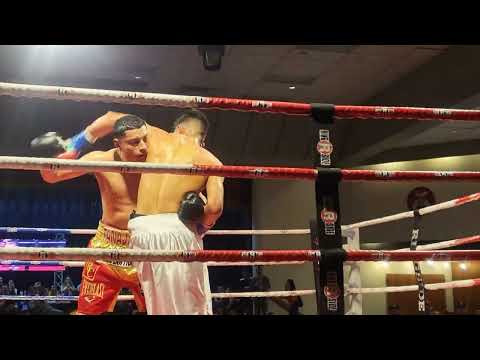
Greetings, warriors and students of the Way. Today, we dissect not just a fight, but a testament to the unyielding spirit of combat sports. You are witnessing the full bout between Hector Tanajara Jr. and John Arellano, presented by Triple AAA Promotions in San Antonio. This isn't merely about who lands the decisive blow; it's about the journey that led them to that squared circle, the discipline forged in the dojo, and the primal dance of skill and will.

The Genesis of a Bout: Intent and the Search for Knowledge

What draws us to a full fight, especially one featuring emerging talents like Tanajara Jr. and Arellano? The intent of the "budoka" (a practitioner of martial arts) seeking this content is multifaceted. They aren't just here for entertainment, though the spectacle is undeniable. They are here to learn. They analyze the footwork, the defensive strategies, the explosive offensive combinations. They seek to understand the mental fortitude required to step under the bright lights, facing an opponent who has also dedicated countless hours to the same relentless pursuit of mastery. This fight is a living textbook, offering insights into the application of techniques honed in solitary practice, now tested in the unforgiving arena of live combat.

Deconstructing the Dance: A Martial Arts Analysis

From a martial artist's viewpoint, every exchange is a chapter. Tanajara Jr. and Arellano, while perhaps not embodying ancient samurai ideals in their gi, are certainly students of their chosen disciplines. We must observe beyond the raw aggression. Look for the underlying principles::

  • Distance Management (Maai): How do they control the space between them? Who dictates the range of engagement?
  • Timing and Rhythm: The ebb and flow of the fight is crucial. Are there predictable patterns, or is it a constant improvisation?
  • Structure and Balance: Even in high-paced exchanges, maintaining a solid base and posture is paramount. A single loss of balance can be fatal in a real confrontation.
  • Reaction vs. Anticipation: The true masters don't just react; they anticipate. Did one fighter consistently seem one step ahead?

While the specifics of their training might lean towards boxing, Muay Thai, or wrestling – disciplines that inform modern MMA – the core tenets of martial arts are present. The relentless pressure, the strategic use of energy, the understanding of an opponent's strengths and weaknesses. This is the essence of combat analysis, whether it's a traditional kata or a professional MMA bout.

The Spirit of the Warrior: Beyond the Knockout

The term "BUDO" encompasses more than just fighting; it speaks to a way of life, a path of self-improvement through rigorous training. In fights like Tanajara Jr. vs. Arellano, we witness the tangible results of this path. We see the culmination of thousands of hours of sweat, pain, and unwavering dedication. Even in defeat, there is honor in the effort, in the willingness to confront one's limitations and push beyond them.

"The supreme art of war is to subdue the enemy without fighting." - Sun Tzu

While this bout is a direct confrontation, the underlying philosophy of mastering oneself before confronting an adversary remains relevant. The preparation, the strategy, the mental resilience – these are the unseen weapons that often decide the outcome.

Training Regimens and the Pursuit of Peak Performance

To reach the level of professional fighters, the training is anything but casual. It involves a holistic approach to conditioning, skill development, and mental preparation. This isn't just about hitting pads; it's about building a complete athlete capable of enduring sustained physical and mental duress. Factors include:

  • Strength and Conditioning: Developing explosive power and muscular endurance.
  • Technical Drills: Repetition of strikes, grappling techniques, and defensive maneuvers until they become instinctive.
  • Sparring: The closest simulation to a real fight, allowing fighters to test their skills under pressure.
  • Nutritional Optimization: Fueling the body for peak performance and recovery.
  • Mental Conditioning: Building resilience, focus, and the ability to perform under extreme stress.

For those aspiring to improve their own martial arts journey, understanding the dedication required at the professional level can be a powerful motivator. Even if your goal is personal development rather than professional competition, the principles of consistent, structured training are universal.

Equipment Essentials for Your Training

While Tanajara Jr. and Arellano are likely using specialized professional gear, the principles of selecting equipment apply to practitioners at all levels. Proper gear not only enhances training but is crucial for safety.

  • Gloves: For striking arts, appropriate sparring and bag gloves are essential to protect your hands and the equipment.
  • Mouthguards: Non-negotiable for any form of sparring or competitive engagement to protect your teeth and jaw.
  • Shin Guards: Vital for arts involving kicks, preventing injuries during drills and sparring.
  • Headgear: Recommended for heavy sparring to mitigate the risk of concussions and facial injuries.
  • Gi/Rash Guards: Depending on the art, a well-fitting gi for Judo or Brazilian Jiu-Jitsu, or comfortable rash guards for grappling and MMA, are key.

Investing in quality equipment is an investment in your own training and longevity in the martial arts. Look for reputable brands that focus on durability and protective features. For instance, exploring best judo gis or MMA training equipment can significantly enhance your practice.

Veredicto del Sensei: ¿Merece la Pena?

This fight between Hector Tanajara Jr. and John Arellano is more than just a display of punches and kicks; it's a demonstration of the dedication, strategy, and spirit that defines modern combat sports. While not every practitioner will step into a professional ring, the lessons learned from observing such contests are invaluable. It reaffirms the importance of discipline, resilience, and the constant pursuit of improvement. For anyone interested in the tactical and philosophical aspects of martial arts, this bout offers substantial insights.

Calificación: Cinturón Negro en Demostración de Determinación

Guía de Entrenamiento: La Filosofía del "No-Punto"

Observando el flujo de la pelea, uno puede apreciar la importancia de un concepto marcial aplicado a menudo en combate: el "no-punto" o "zona de nadie". Es esa área peligrosa donde ambos combatientes tienen la oportunidad de atacar, pero también de ser atacados. La clave no es evitarladefinitivemente, sino dominarla.

  1. Posicionamiento: Mantén una base sólida y un centro de gravedad bajo.
  2. Observación Constante: Tus ojos deben registrar cada movimiento del oponente.
  3. Palanca de Movimiento: Utiliza tu cadera y torso para generar potencia en tus golpes y para esquivar.
  4. Contragolpe: Identifica las aperturas del oponente y ataca en el momento justo.
  5. Transición Rápida: Prepárate para cambiar de ataque a defensa o viceversa sin dudar.

Practicar drills que simulen esta zona de alta intensidad, como el sparring ligero con reglas específicas para fomentar la observación y la reacción, es fundamental para desarrollar esta habilidad.

Recursos para Profundizar

Para expandir tu comprensión del mundo marcial, te recomiendo explorar:

  • Libros Clásicos de Estrategia: "El Libro de los Cinco Anillos" de Miyamoto Musashi sigue siendo una lectura esencial para entender la filosofía del combate y la estrategia.
  • Biografías de Maestros: Conocer la vida y el camino de leyendas como Bruce Lee o Jigoro Kano ofrece una perspectiva invaluable sobre la dedicación requerida.
  • Documentales sobre Artes Marciales: Hay excelentes producciones que cubren la historia y la práctica de diversas disciplinas.

Profundizar en la literatura y la historia te proporcionará un contexto mucho más rico para tu propio entrenamiento. La exploración de books on bushido es un excelente punto de partida.

Preguntas Frecuentes

What are the key martial arts principles evident in professional fighting today?

Modern professional fighting, while often a blend of combat sports, still hinges on core martial principles such as distance management (Maai), timing, balance, structure, and the ability to anticipate an opponent's actions rather than merely reacting.

How does consistent training impact a fighter's performance?

Consistent, structured training builds not only physical attributes like strength and endurance but also crucial mental fortitude, discipline, and instinctive technical proficiency, all of which are vital for peak performance under pressure.

Is it necessary to have professional-grade equipment to train effectively?

While professional athletes use specialized gear, effective training is more about consistent practice and proper technique. However, investing in good quality, safe equipment like gloves, mouthguards, and shin guards is highly recommended for all practitioners to prevent injuries.

What is the philosophical takeaway from observing a full fight?

Beyond the physical contest, a full fight offers lessons in perseverance, self-mastery, respect for the opponent, and the understanding that progress often comes through confronting challenges and pushing beyond one's perceived limits.

How can I apply the lessons from this fight to my own martial arts journey?

Analyze the fighters' strategies, their reactions to adversity, and their dedication. Focus on improving your own discipline, technical execution, and mental resilience in your daily training, applying the principles observed to your own practice.

Para Profundizar en tu Camino

7 Martial Arts That Truly Deliver in Self-Defense

As a seasoned practitioner and observer of the martial way, I've witnessed countless individuals drawn to the dojo for a singular, primal purpose: survival. While the pursuit of physical fitness, mental discipline, or spiritual enlightenment are noble aims, the core of martial arts for many, especially the uninitiated, often boils down to a more visceral question: "Will this actually protect me when things get dangerous?" It's a valid concern, a fundamental inquiry that separates the philosophical from the practical. Not all styles are created equal when the rubber meets the road – or rather, when fists fly. My own journey, marked by countless hours on the tatami, in the ring, and observing the brutal ballet of combat, has shown me that while *any* martial art can be a deterrent, some are inherently designed with a more direct, no-nonsense application for self-defense. Today, we delve into not just seven disciplines, but seven philosophies of combat that have proven their mettle in situations where mere technique isn't enough; where survival is the only prize. This isn't about flashy moves or theatrical katas; it's about efficacy, about principles that translate from the training floor to the unforgiving reality of street confrontation.

Table of Contents

Introduction: The Pragmatic Warrior

The question of survival is as old as humanity itself. For centuries, martial arts have evolved not just as forms of combat, but as systems of self-preservation. In today's world, where threats can manifest in unexpected ways, the ability to defend oneself is not a luxury; it's a fundamental requirement for peace of mind. But with a dizzying array of styles available, how does one choose the martial art that will best equip them for real-world confrontations? This exploration aims to cut through the noise and highlight disciplines that prioritize practical application, brutal efficiency, and proven effectiveness. Forget the mystical aura; we're talking about survival tools honed through rigorous training and tested under pressure.

What Makes a Martial Art Truly Effective for Self-Defense?

Before we dive into specific styles, let's establish the bedrock principles that define a martial art's efficacy in a self-defense scenario. It's not about how many forms you can perform or how high you can kick. It's about:
  • Directness and Simplicity: Complex techniques often fail under duress. Effective self-defense relies on simple, decisive actions.
  • Realism in Training: Sparring should simulate actual threats, not choreographed performances. Resistance is key.
  • Adaptability: The ability to handle various situations, ranges of combat (standing, ground, weapons), and types of opponents.
  • Focus on Vulnerable Targets: Understanding anatomy and knowing where to strike for maximum effect.
  • Mindset and Aggression Control: The psychological preparation to act decisively and the discipline to avoid excessive force.
These are the lenses through which we will examine our chosen disciplines. A martial art that checks these boxes is one that truly prepares you for the unexpected.

1. Krav Maga: The Uncompromising Israeli System

Originating from the streets of Israel, Krav Maga is less a traditional martial art and more a combat system. It was developed for the Israel Defense Forces (IDF) and focuses on practical, real-world situations.
  • Core Principles: Simultaneous defense and attack, aggression, and exploiting an attacker's weaknesses.
  • Effectiveness: It teaches how to defend against common attacks, including multiple assailants, armed assaults, and brutal grabs. The emphasis is on quick neutralization of the threat.
  • Training Style: Highly intense, stress-induced drills designed to replicate the adrenaline and chaos of a real fight.
  • Philosophical Take: "The best defense is to end the fight as quickly as possible." There's no room for honor or etiquette when your life is on the line.
"In Krav Maga, there are no rules. Only survival."
For those seeking a no-holds-barred approach to self-defense that prioritizes immediate threat cessation, Krav Maga stands as a formidable choice. You won't find graceful katas here, but you will find a direct path to protecting yourself.

2. Muay Thai: The Art of Eight Limbs

The national sport of Thailand, Muay Thai, is renowned for its devastating power and comprehensive striking. It utilizes fists, elbows, knees, and shins, making it a complete arsenal for stand-up combat.
  • Core Principles: Utilizing all eight limbs for offense and defense, strong clinch work, and devastating kicks and knee strikes.
  • Effectiveness: Its conditioning and power generation make it incredibly effective in close-range combat. The clinch allows for control and the delivery of painful knee and elbow strikes.
  • Training Style: Intense physical conditioning, heavy bag work, pad drills, and sparring that emphasizes power and resilience.
  • Philosophical Take: Muay Thai embodies resilience and relentless pressure. It teaches practitioners to endure and to strike with full commitment.
"The body is your weapon. Every part of it is capable of inflicting damage. Use them all."
While primarily a striking art, the conditioning and close-quarters fighting prowess gained from Muay Thai are invaluable for self-defense. If you're looking to develop power and the ability to control an opponent at close range, Muay Thai is unparalleled.

3. Brazilian Jiu-Jitsu (BJJ): The Ground Game Dominator

Developed from Judo and traditional Japanese Jiu-Jitsu, BJJ focuses on grappling and ground fighting. Its effectiveness lies in its ability to allow a smaller, weaker person to overcome a larger, stronger attacker through leverage and technique.
  • Core Principles: Taking the fight to the ground, controlling the opponent, and applying submissions (chokes and joint locks).
  • Effectiveness: In a street fight, the confrontation often ends up on the ground. BJJ provides the skills to control, dominate, and submit an opponent in this scenario, even if they are significantly larger.
  • Training Style: Live rolling (sparring) is a cornerstone, teaching practitioners to apply techniques under pressure and develop a high level of grappling proficiency.
  • Philosophical Take: Jiu-Jitsu teaches humility and problem-solving under extreme physical and mental stress. It's often said, "If you don't know Jiu-Jitsu, you'd better hope you win the lottery."
The importance of grappling in self-defense cannot be overstated. BJJ offers a systematic approach to controlling the most common fight scenario. For anyone concerned about facing a larger aggressor, BJJ is a critical skill.

4. Kali/Eskrima/Arnis: The Weaponized Art

Hailing from the Philippines, Kali (also known as Eskrima or Arnis) is a comprehensive martial art that emphasizes weapon-based combat – sticks, knives, and empty hands.
  • Core Principles: Flowing, continuous movements, transition between empty-hand combat and weapon usage, and devastatingly effective strikes aimed at vital points.
  • Effectiveness: Its practical application against armed assailants makes it a top choice for self-defense. Training with weapons translates surprisingly well to empty-hand techniques.
  • Training Style: Repetitive drills focusing on angles of attack, footwork, and integration of weapon and empty-hand skills.
  • Philosophical Take: Adaptability and preparedness. Kali teaches you to use whatever is at hand as a tool for defense, emphasizing flow and responsiveness.
"In the Philippines, we don't distinguish between armed and unarmed combat. They are one and the same."
If you want to be prepared for the grim reality of weapon-based threats, Kali provides a direct and brutal curriculum. Its focus on angles and flow makes it incredibly practical.

5. Wing Chun: The Efficient Southern Chinese Art

Wing Chun is a concept-based martial art originating from Southern China, famously associated with Ip Man, Bruce Lee's teacher. It emphasizes efficiency, directness, and simultaneous blocking and striking.
  • Core Principles: Centerline theory, economy of motion, simultaneous block-and-strike, and sensitivity (sticking hands).
  • Effectiveness: Its focus on close-range combat, trapping, and rapid-fire strikes makes it highly effective in confined spaces and against aggressive opponents. It teaches practitioners to generate power from structure rather than brute force.
  • Training Style: Forms (Siu Nim Tao, Chum Kiu, Biu Jee), sticky hands drills (Chi Sao), and controlled sparring.
  • Philosophical Take: "Directness is the path. Stick to the center." Wing Chun teaches you to be economical with your movements and to exploit the opponent's structure.
Wing Chun's emphasis on practicality and efficiency makes it a strong contender for self-defense, particularly for those who may not possess overwhelming physical strength.

6. Judo: The Gentle Way of Leverage and Control

Founded by Jigoro Kano, Judo is a grappling-based martial art derived from Japanese Jiu-Jitsu. While often seen as a sport, its core principles are deeply rooted in self-defense.
  • Core Principles: Maximum efficiency, mutual welfare and benefit, using an opponent's force and momentum against them.
  • Effectiveness: Judo excels at throws and takedowns, but also teaches crucial groundwork (pins, chokes, and joint locks). It develops balance, coordination, and the ability to control an opponent's body.
  • Training Style: Randori (free practice/sparring) is central, simulating real combat scenarios, alongside specific technique practice and falling skills (Ukemi).
  • Philosophical Take: "Jitsu is the way of yielding, of gentleness. By softness, you can overcome hardness." Judo teaches you to use an attacker's energy and aggression against them.
The ability to unbalance and throw an opponent can neutralize a threat instantly. Judo's focus on leverage and control makes it a powerful tool for self-defense, especially when facing larger opponents.

7. Mixed Martial Arts (MMA): The Ultimate Synthesis

MMA is not a single martial art but a combat sport that allows a wide variety of striking and grappling techniques. Practitioners often cross-train in multiple disciplines to become well-rounded fighters.
  • Core Principles: Combining striking (like Muay Thai, Boxing, Karate) with grappling (like BJJ, Wrestling, Judo) to be effective in all ranges of combat.
  • Effectiveness: MMA fighters are trained to handle virtually any situation that arises in a fight, making them highly adaptable and dangerous. The comprehensive training addresses striking, clinching, takedowns, and ground fighting.
  • Training Style: Cross-training across disciplines, heavy sparring, conditioning, and strategic fight preparation.
  • Philosophical Take: "There are no rules in a street fight, but there are rules for survival." MMA fighters learn to adapt and overcome, drawing from the strengths of multiple arts.
While MMA is a sport, the skills developed by MMA athletes are incredibly applicable to self-defense. Their ability to transition between striking and grappling, combined with rigorous conditioning, makes them formidable. For a practical, all-around self-defense system, training in an MMA environment is hard to beat.

Essential Gear for Your Training

To truly maximize your progress in any martial art, having the right equipment is crucial. Investing in quality gear not only enhances your training experience but also provides necessary protection.
  • Protective Gear: Mouthguards are non-negotiable for any sparring. Headgear and shin guards are essential for striking arts like Muay Thai or Karate to prevent injuries.
  • Training Uniforms (Gi/Kimono): For Judo and BJJ, a durable gi is paramount. Look for double-weave for BJJ for longevity. For striking arts, comfortable shorts and t-shirts are usually sufficient, though some Karate styles require specific gis.
  • Sparring Gloves: If you're engaging in striking, quality sparring gloves (14-16 oz recommended for training) are vital for hand protection.
  • Training Partners: Perhaps the most crucial "gear" is a dedicated training partner or a good gym with a supportive community. Consistent resistance is key to developing real-world skills.
  • Optional: A training dummy for solo practice or a makiwara if your art incorporates it can be beneficial.
Remember, quality equipment is an investment in your safety and development as a martial artist. Consider looking into specific Karate merchandise or MMA gear tailored to your chosen discipline.

Frequently Asked Questions

Do I need to be in great shape to start?

No, absolutely not. Most martial arts schools are equipped to take beginners and help them build their fitness as they learn. The training itself will improve your conditioning.

Which art is best for women's self-defense?

All martial arts can be effective for women. However, styles like Krav Maga, BJJ, and Judo are often highlighted for their emphasis on leverage and neutralizing larger opponents, making them particularly well-suited.

How long does it take to become proficient in self-defense?

Proficiency varies, but with consistent training (2-3 times a week) in a practical art like Krav Maga or BJJ, you can expect to develop a solid foundation for self-defense within 6-12 months. True mastery takes a lifetime.

What if I'm afraid of getting hurt?

It's natural to have reservations. Good instructors prioritize safety and teach progressively. The goal is to learn to control your fear and react effectively, not to embrace unnecessary injury.

Is striking or grappling more important for self-defense?

Both are crucial. A comprehensive system like MMA or cross-training combines the best of both worlds, allowing you to defend yourself effectively whether the fight stays standing or goes to the ground.

For Profundizar en tu Camino

Sensei's Reflection: Your Next Step

The path to effective self-defense is paved with dedication and the right choices. These seven martial arts offer proven methodologies, but remember, the effectiveness of any art is ultimately determined by the practitioner and their commitment to realistic training. A flashy technique practiced in isolation is useless; a simple principle drilled relentlessly becomes a powerful tool. Now, consider this: Is your current training regimen truly preparing you for the chaos of a real-world encounter, or are you merely going through the motions? Have you tested your skills against willing, resisting opponents? The dojo is a laboratory, but the real world is the ultimate test. What fears hold you back from engaging in more realistic training? And more importantly, what are you willing to do to overcome them? Answer me this: If your life depended on it, could you defend yourself right now? The time to truly prepare is always before the storm, not during it. GEMINI_METADESC: Explore 7 highly effective martial arts for self-defense: Krav Maga, Muay Thai, BJJ, Kali, Wing Chun, Judo, and MMA. Learn what makes them practical for real-world threats.

The Ultimate Guide to Martial Arts for Outnumbered Combat: Beyond the Myth, Into Reality

As a Sensei who has dedicated decades to the study and practice of Budo, I've witnessed firsthand the evolution of martial arts, from their ancient origins to their modern interpretations. The question of "what to do when outnumbered" is not merely an academic exercise; it's a desperate plea born from the primal fear of overwhelming odds. It's easy to get lost in cinematic fantasies, but here, we will dissect the reality. My intention today is to equip you, the dedicated practitioner, with knowledge forged in discipline and tempered by experience, not just to survive, but to strategize and overcome when facing multiple assailants. This isn't about flashy techniques; it's about fundamental principles and the right mindset. Prepare to have your assumptions challenged.

Table of Contents

The Harsh Reality: Outnumbered and Overwhelmed?

The romantic notion of a lone hero facing down a horde is precisely that: a fantasy. In a real-world scenario where you are outnumbered, your primary objective shifts from dominance to survival and escape. This is not a contest of who can perform the most spectacular takedown, but a desperate struggle where every second counts. Most traditional martial arts, while invaluable for personal development and one-on-one combat, often fall short when facing multiple aggressors without proper adaptation. We must understand which arts provide the *foundational principles* and which *specific applications* are most effective when the odds are stacked against you. This isn't about finding a "magic bullet" art, but about understanding strategic application and leveraging your strengths against their weaknesses.
"In a fight with more than one attacker, the priority is not to win every engagement, but to create opportunities to disengage and escape." - A principle echoed by many combat strategists.

Today, we delve into the methodologies and arts that offer the most practical advantages in these terrifying situations. We'll explore the critical role of situational awareness, movement, and decisive, yet controlled, action.

The Mindset of the Warrior: Beyond Technique

Before we even discuss specific arts, let's anchor ourselves in the philosophy. Facing multiple attackers requires a fundamentally different mindset than a standard duel.

The Principle of 'Mushin' (No Mind)

In the heat of chaos, the ability to act without hesitation or conscious thought is paramount. Mushin, a concept deeply rooted in Zen Buddhism and the samurai tradition, allows for fluid, intuitive responses. It's not about being thoughtless, but about transcending the analytical mind to react instinctively to threats. This is cultivated through rigorous, repetitive training that builds muscle memory and emotional resilience.

Situational Awareness: The First Line of Defense

The best way to handle being outnumbered is to never be in that situation in the first place. Kansatsu (observation) is a continuous process. Before any physical confrontation can even begin, you must be aware of your surroundings. Identify potential threats, escape routes, and environmental advantages (e.g., choke points, obstacles). This awareness is honed through mindful training and a conscious effort to be present, even in mundane situations.

Economy of Motion and Energy

When you are facing one, or more, you cannot afford to waste energy. Every movement must have a purpose. This means prioritizing direct, efficient techniques that incapacitate or create space for escape, rather than engaging in prolonged exchanges. This principle is crucial across all martial disciplines.

The 'Kake' (Engagement) Decision

The decision to engage or disengage is critical. In a situation where you are outnumbered, disengagement should almost always be the primary goal. Physical confrontation is a last resort. If engagement is unavoidable, the goal is to neutralize the immediate threat as quickly as possible to create an opening to escape. This might involve a single, decisive strike or a controlled movement to break a grapple.

Foundational Arts for Survival

Certain martial arts provide a more robust foundation for dealing with multiple aggressors due to their emphasis on practicality, efficiency, and adaptability.

Krav Maga: The No-Nonsense Approach

Developed for the Israeli military, Krav Maga is less a traditional martial art and more a self-defense system. Its core tenets are simplicity, aggression, and practicality. Techniques are designed to be learned quickly and are brutally effective, focusing on vulnerable points, simultaneous defense and offense, and a no-holds-barred approach to neutralize threats, especially against multiple attackers. Its philosophy directly addresses the "outnumbered" scenario as a common threat.

Wing Chun: The Close-Range Specialist

While often practiced as a solo art, the principles of Wing Chun are exceptionally suited for dealing with multiple opponents in close quarters. Its focus on simultaneous block-and-strike, centerline theory, and trapping hands (Chi Sao) allows a practitioner to control the space around them, defend against multiple incoming attacks, and generate surprising power at close range. The ability to 'feel' and control an opponent's structure is vital when you can't afford to be overwhelmed by a single direction.

Judo (with an emphasis on Takedown Defense and Control)

While Judo is primarily known for its throws and groundwork, its principles of balance, leverage, and controlling an opponent's center of gravity are invaluable. In an outnumbered situation, a skilled Judoka can use throws to clear space, disrupt an attacker's momentum, and potentially use an opponent as a shield or weapon. Crucially, its emphasis on dynamic movement and positional control on the ground can be adapted to manage multiple threats, albeit with extreme caution.

Brazilian Jiu-Jitsu (BJJ) - A Qualified Recommendation

BJJ excels in one-on-one ground combat. However, its effectiveness when outnumbered is highly debated and often situational. On the ground, a BJJ practitioner can control one opponent effectively. But against multiple standing or even grounded attackers, the risk of being swarmed and overwhelmed is immense. The key here is adaptability: using BJJ *principles* of leverage and control to *create space and escape* from the ground, rather than attempting to submit everyone. Focus on positional escapes and creating openings to get back on your feet. Mastering the art of defending from the bottom position to create opportunities to stand is paramount.

Silat/Kali/Eskrima (The Weapon-Based Arts)

These Filipino and Southeast Asian martial arts are often overlooked but are arguably among the most practical for dealing with multiple threats. Their focus on weapon integration (sticks, knives, improvised weapons) and empty-hand applications that mirror weapon movements makes them incredibly versatile. The speed, flowing transitions, and angle-based attacks are designed to intercept, disable, and control multiple opponents simultaneously. The concept of using an opponent's momentum against them, and striking from unpredictable angles, is key.

Specialized Approaches for Multiple Attackers

Beyond the core arts, specific tactical approaches are vital.

The 'Wedge' or 'Fan' Movement

When facing multiple opponents, moving in a curved or linear path (like a wedge or fan) can help you control the engagement, keep attackers in front of you, and prevent them from flanking you. Never allow yourself to be surrounded. This is a tactical principle applicable to any martial art.

Targeting the 'Lead' Attacker

Focus your initial, decisive action on the attacker who is closest or most aggressive. Neutralizing or deterring them quickly can create hesitation and confusion among the others, buying you precious time to escape.

Using the Environment

Walls, corners, narrow passages – these can be your allies. Use them to limit the angles of attack against you. A wall at your back, for instance, means attackers can only come from one direction. Learn to use objects as shields or obstacles.

Improvised Weapons

In a true survival situation, anything can be a weapon: a chair, a bottle, keys, a belt. Arts like Silat or Krav Maga often train practitioners to identify and utilize everyday objects effectively.

Training Methodology: Beyond the Dojo

Simply practicing forms or sparring one-on-one is insufficient. Training for outnumbered scenarios requires a different approach.

Drills for Multiple Opponents

This is where specialized training centers shine. Drills involving multiple attackers (even if they are cooperating to a degree) are essential. These should focus on:

  • Movement and footwork to maintain a defensive perimeter.
  • Quick transitions between defending against different angles.
  • Striking and disabling techniques designed for rapid effect.
  • Escape routes and strategies.

If a dedicated school isn't available, simulate these scenarios with training partners, emphasizing controlled aggression and clear communication about the objective (usually to create an escape).

Sparring with Role-Playing

Engage in sparring where one person is designated as the defender, and multiple others act as attackers. The "attackers" should not go full-force but focus on overwhelming the defender with numbers and different angles. The defender's goal is purely survival and escape. This builds crucial physical and mental conditioning.

Scenario-Based Training

Simulate real-world scenarios: a dark alley, a crowded street, a confined space. This training enhances your situational awareness and decision-making under pressure.

Equipment Essential for Your Training

While many martial arts can be trained with minimal equipment, certain items enhance effectiveness and safety, especially when focusing on practical self-defense.
  • Protective Gear: Mouthguards are non-negotiable. Headgear and chest protectors are recommended for controlled sparring drills involving multiple attackers to prevent serious injury and build confidence.
  • Training Knives/Baton: For arts like Kali or Krav Maga, safe training versions of weapons are crucial for developing proficiency in dealing with armed assailants.
  • Focus Mitts and Pads: Essential for practicing power striking and conditioning striking accuracy when creating openings.
  • A Durable Uniform (Gi/Dobok): For arts like Judo or Karate, a sturdy uniform is key. For arts focusing on practical self-defense, comfortable athletic wear that allows for maximum freedom of movement is preferred. Consider looking for high-quality Judo gis if you train in grappling arts.
  • Sturdy Footwear: Depending on the training surface, appropriate footwear can prevent slips and improve agility.

Frequently Asked Questions

Can Karate be effective when outnumbered?

Traditional Karate, with its focus on linear movements and powerful strikes, can be effective in creating space and deterring an attacker. However, its structured forms (Katas) and emphasis on distance fighting might require significant adaptation. Principles of evasion, body shifting, and rapid counter-strikes are crucial. Adaptations like close-range striking and sweeping techniques can be incorporated.

What about Aikido? Is it useful against multiple attackers?

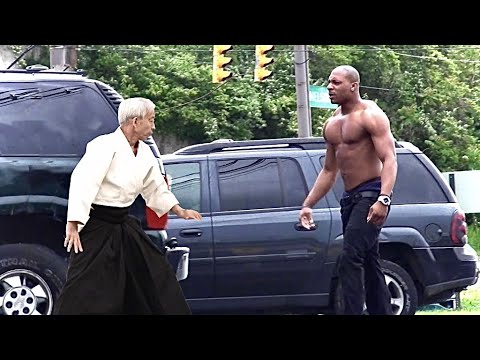
Aikido's circular movements, joint locks, and throws are designed to neutralize an attacker using their own momentum. Against a single opponent, it can be highly effective. Against multiple attackers, its effectiveness is debated. While skilled practitioners can redirect multiple attackers, the risk of being grabbed by a second or third assailant while controlling the first is very high. Its philosophy of harmonizing with an attack can be difficult to maintain when facing pure aggression from numbers. The ability to *break* control and escape quickly becomes paramount.

Is there a single "best" martial art for being outnumbered?

No. The "best" approach is often a combination of principles from various arts, coupled with a strong mindset and practical training. Arts like Krav Maga, Kali, and practical Wing Chun offer direct methodologies, but the underlying principles of awareness, movement, and decisive action are universal.

How important is fitness for dealing with multiple attackers?

Crucial. You need the cardiovascular endurance to evade and move, the strength to create space, and the resilience to withstand the physical demands. Proper conditioning is as vital as any technique.

Sensei's Reflection: Your Next Step

We've journeyed through the harsh realities and practical strategies of facing multiple aggressors. Remember, the goal is not to become a mythical hero, but a pragmatic survivor. The arts that offer the most practical advantage are those that prioritize speed, efficiency, adaptability, and a clear understanding of the objective: escape and survival.

Do not be fooled by simplistic answers or cinematic portrayals. True mastery lies in understanding principles, relentless training, and the unwavering cultivation of a warrior's mindset. The techniques are merely tools; the mind and spirit are the true weapons.

Sensei's Reflection: Your Next Step

The knowledge gained here is but a map. The true path is walked through dedicated practice. Consider this: In your current training, how much time is dedicated *specifically* to the principles of managing multiple threats? Are you merely drilling techniques, or are you cultivating the strategic awareness and decisive action required when the world turns against you? Go forth. Analyze your own practice. Challenge your dojo. And, most importantly, start training with purpose.

Now, let's hear from you. Do you believe some arts are inherently superior in these situations, or is it purely about the individual's application and mindset? Ignite the discussion. Prove your conviction.

Para Profundizar en tu Camino

GEMINI_METADESC: Discover the most effective martial arts and strategies for surviving outnumbered combat. Learn practical techniques, mindset shifts, and training methods from a seasoned Sensei's perspective.

The Tragic End of a Warrior's Spirit: Paul DeMayo's Legacy Beyond the IFBB Stage

The world of martial arts, though often associated with disciplined stoicism and the pursuit of inner peace, is not immune to the harsh realities of life's struggles. We speak today not of a formal martial artist in the traditional sense, but of a man whose life, though rooted in physical prowess, ended in a manner that serves as a stark reminder of the battles fought beyond the dojo or the competition arena. Paul DeMayo, a name known to many in the realm of professional bodybuilding, also represents a life cut tragically short, a testament to the fact that strength in one arena does not always translate to victory in all of life's demanding bouts.

Who Was Paul DeMayo?

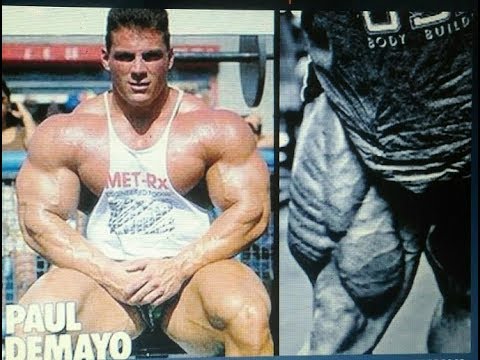
Paul DeMayo, born September 12, 1967, and passing away on June 2, 2005, was primarily recognized as a professional bodybuilder associated with the IFBB (International Federation of BodyBuilding and Fitness). While his professional life was dedicated to sculpting the human form to its aesthetic peak, his story, unfortunately, is often intertwined with darker narratives that speak of struggles beyond the stage lights. The image of DeMayo conjures that of immense physical power, a testament to rigorous training and dedication, yet it is a power that, in his case, could not ultimately shield him from personal demons.

Hello and welcome to Budo and Martial Arts, the most complete and updated martial arts blog on the internet. Here, we delve into the heart of combat, the philosophy of the warrior, and the disciplines that forge strength and character. Follow us on social networks and do not forget to visit our main page.

The Bodybuilding Arena: A Different Kind of Combat

The path of a professional bodybuilder is, in its own right, a demanding martial discipline. It requires an unwavering commitment to training, an almost obsessive attention to diet, and a psychological fortitude to endure constant physical stress and self-scrutiny. It is a battle against one's own genetics, a relentless pursuit of an idealized physique. Unlike the direct confrontation of martial arts, bodybuilding is a contest against oneself, where the opponent is the limit of human potential and the judges are arbiters of aesthetic perfection. Yet, the dedication, the sacrifice, and the sheer willpower involved are echoes of the warrior's spirit.

The rigor of preparation, the constant pushing of physical boundaries, and the mental toughness required to step onto a stage under intense scrutiny share common ground with the demands placed upon athletes in combat sports. The precision required in posing, the control over one's body, and the ability to project confidence are all skills honed through a form of disciplined practice, not unlike the katas or forms practiced in traditional martial arts. However, the absence of direct physical opposition removes a crucial element: the dynamic reaction and adaptation necessary in a true fight.

"The ultimate aim of martial arts is not the victory or defeat, but the perfection of the character of its practitioners." - Gichin Funakoshi (though often attributed, this sentiment reflects the core philosophy)

Beyond the Physique: Unseen Battles

It is crucial to understand that a formidable physique does not equate to an impregnable spirit. Paul DeMayo's life, as reported, was marked by challenges that extended far beyond the gym. His passing, attributed to an overdose, highlights the pervasive and devastating nature of addiction. This is a battle many individuals, regardless of their physical strength or public persona, face with varying degrees of success. In the martial arts, we speak of conquering the self, of mastering one's emotions and impulses. This mastery is not a singular achievement but a lifelong endeavor, a continuous process of refinement.

The IFBB stage, while showcasing peak physical condition, cannot reveal the internal struggles an athlete may be enduring. The pressure to maintain a certain image, the potential for substance abuse to cope with physical pain or psychological stress, and the isolation that can sometimes accompany extreme dedication are all factors that can weigh heavily. This is where the true spirit of martial arts – the cultivation of inner strength, resilience, and self-awareness – becomes paramount. While DeMayo's expertise was in bodybuilding, the principles of mental fortitude and self-care are universal.

The journey of a warrior is not just about striking power or defensive reflexes; it is about the ability to withstand life's storms. This includes confronting personal vulnerabilities and seeking help when needed. The martial path teaches us that true strength lies not only in the ability to inflict harm but in the capacity to protect oneself from self-destruction, a concept often embodied by the principle of Mushin (no mind), a state of effortless action arising from pure instinct and awareness, unclouded by fear or doubt.

Lessons from a Life Ended Too Soon

The narrative of Paul DeMayo serves as a poignant, albeit tragic, case study. It compels us to look beyond the surface – beyond the rippling muscles and the posed perfection – to acknowledge the complex interplay of physical, mental, and emotional well-being. For practitioners of martial arts, this is a profound lesson. Our training is not merely about mastering techniques; it is about developing the holistic individual. It is about cultivating resilience in the face of adversity, both external and internal.

The question often arises: could stronger martial arts principles have offered DeMayo a different path? While it's speculative, the core tenets of many martial arts – discipline, self-control, mindfulness, and community support – are designed to build an individual's capacity to navigate life's challenges. The ethos of Bushido, the way of the warrior, emphasizes not just bravery and loyalty but also integrity and self-discipline. The ability to face one's own weaknesses with the same courage one would face an opponent is a hallmark of true mastery.

The community aspect found in many martial arts dojos also plays a vital role. The camaraderie, the shared struggle, and the mutual encouragement can provide a powerful support system. This sense of belonging is critical, especially when individuals are battling personal demons. In the absence of such a structured support system, or when personal struggles become overwhelming, the consequences can be dire, as tragically exemplified in DeMayo's case.

"The supreme art of war is to subdue the enemy without fighting." - Sun Tzu, The Art of War. This applies not only to external conflicts but, more importantly, to the internal battles we must win.

Veredict of the Sensei: A Cautionary Tale

Paul DeMayo's life story, while not a direct account of martial arts prowess, offers a critical lens through which to view the holistic development of an individual. His journey into the world of professional bodybuilding demonstrates immense dedication to physical form, a form of discipline in itself. However, his untimely death underscores the undeniable truth that physical strength alone is insufficient to overcome life's deepest challenges, particularly those of addiction and mental health. As a martial arts practitioner and instructor, I see this not as a failure of his chosen discipline, but as a universal reminder of the comprehensive nature of true strength. True mastery encompasses the mind and spirit as much as, if not more than, the body. This is a story that resonates beyond the bodybuilding stage, a stark warning etched into the annals of human struggle. It is a reminder that the most important fights are often those waged within ourselves, and that the journey of self-improvement is a lifelong, often arduous, path.

Equipment Essential for Your Training

While Paul DeMayo's discipline was bodybuilding, many of you who follow Budo and Martial Arts are dedicated to other paths. Regardless of your chosen art, proper equipment is crucial for safe and effective training. Investing in the right gear not only enhances your performance but also minimizes the risk of injury. Here's a look at some essentials:

  • Quality Training Mats: Essential for grappling arts like BJJ and Judo, and for safety in striking arts. Look for mats with good shock absorption.
  • Durable Uniforms (Gi/Kimono): Whether you practice Judo, Karate, or Aikido, a well-made, reinforced uniform is vital. Consider double-weave fabrics for Judo for added durability during grappling.
  • Protective Gear: Mouthguards, sparring headgear, and shin guards are indispensable for any sparring session to prevent common injuries.
  • Training Weights and Resistance Bands: For developing explosive power and muscular endurance, crucial for fighters in MMA or Kickboxing.
  • Agility Training Tools: Agility ladders and cones are excellent for improving footwork, speed, and coordination, vital for any combat sport.

For those interested in the aesthetic strength that bodybuilding cultivates, while not a martial art, weights and resistance bands are obviously key. For those looking into the specific gear for martial arts, searching for "best judo kimonos" or "lightweight karate gis" can lead to excellent options.

FAQ About Paul DeMayo and Life Lessons

  • Who was Paul DeMayo primarily known as?

    Paul DeMayo was primarily known as a professional bodybuilder affiliated with the IFBB.

  • What led to Paul DeMayo's early passing?

    His passing was reportedly due to an overdose, highlighting struggles with addiction.

  • Can bodybuilding be considered a martial art?

    While bodybuilding demands immense discipline, physical training, and mental fortitude, it is not a martial art as it lacks direct physical confrontation and combative application. However, it shares principles of dedication and self-mastery.

  • What is the greatest lesson from Paul DeMayo's life story for martial artists?

    The greatest lesson is that physical prowess alone does not guarantee inner peace or the ability to overcome personal struggles. True strength encompasses mental and emotional resilience, self-awareness, and seeking support when needed.

  • How do martial arts principles help in overcoming personal battles?

    Martial arts cultivate discipline, self-control, mindfulness, perseverance, and often a strong sense of community, all of which are crucial tools for navigating and overcoming life's adversities, including addiction and mental health challenges.

Deepen Your Path

Reflection of the Sensei: Your Next Step

Paul DeMayo's story is a somber echo in the grand symphony of human experience. We train our bodies to be strong, our minds to be sharp, and our spirits to be resilient. But how often do we truly confront the unseen battles within? In your own training, are you merely perfecting techniques, or are you cultivating the unwavering spirit that can withstand any storm, internal or external? Consider this: What is the most vital 'fight' you are currently engaged in, and what principles from your martial path can you apply to ensure victory, not just on the mat, but in the deepest arena of your own life?

If you like what I do and want to support TRUE martial arts, I invite you to visit our store to buy exclusive NFTs.

We also invite you to visit our other blogs.

``` GEMINI_METADESC: Explore the life and tragic end of Paul DeMayo, a bodybuilder whose story serves as a powerful, cautionary tale for all martial artists about inner strength and the unseen battles of life.