Showing posts sorted by date for query Shotokan Karate Philosophy. Sort by relevance Show all posts

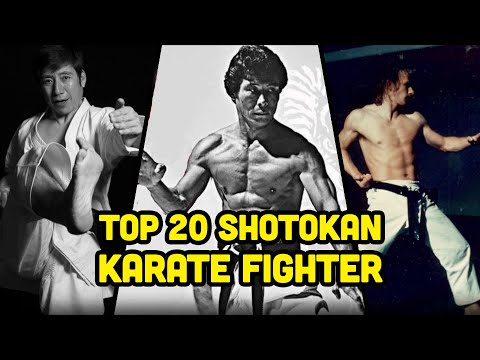
The Pantheon of Shotokan: Unveiling the Top 20 Masters Who Defined Budo

The air in the dojo crackles with a silent intensity. It's the hum of discipline, the echo of countless hours spent honing the body and mind. Shotokan Karate, a name synonymous with power, precision, and an unbroken lineage stretching back to the dawn of modern martial arts, is more than just a fighting style; it's a philosophy etched in motion. But who are the titans, the individuals whose very names evoke awe and respect within the hallowed halls of Budo? Who are the fighters who didn't just practice Shotokan, but embodied its spirit, pushing its boundaries and leaving an indelible mark on the world of martial arts? This is not merely a list; it is an investigation into the soul of a discipline that has shaped warriors and fostered self-mastery for generations.

The Genesis of Shotokan Greatness

Shotokan Karate, a cornerstone of modern martial arts, didn't spring into existence fully formed. It was forged in the crucible of Okinawa, refined by visionary masters, and disseminated across the globe by dedicated practitioners. Its very name, "Shoto," meaning "waving pine," reflects the serene yet powerful nature that its founder, Gichin Funakoshi, sought to instill. When we speak of the "greatest fighters," we're not just referring to those who dominated competitions, but to individuals who exemplified the highest ideals of Shotokan: technical brilliance, unwavering spirit, and a profound commitment to the principles of Budo.

But let's cut through the polite introductions. Are we talking about pure sport Karate, or does the definition of "fighter" encompass those who preserved the art's combative integrity? The line can blur, and it's precisely this tension that makes dissecting Shotokan's legacy so compelling. In this deep dive, we will not shy away from controversy, but rather embrace it, for it is through rigorous debate that true understanding is born.

The Pillars: Funakoshi and Nakayama

No discussion of Shotokan greatness can begin without acknowledging its spiritual and practical architects. Gichin Funakoshi (1868-1957) is, without question, the linchpin. His journey from Okinawa to mainland Japan, introducing *Te* (hand techniques) as Karate, fundamentally altered the martial landscape. Funakoshi wasn't just a fighter; he was a philosopher-warrior who translated the raw effectiveness of Okinawan fighting into a structured system, emphasizing the moral and ethical dimensions alongside the physical.

"Karate is not a copy of other arts, just as the pine is not a copy of the willow. Its strength is not merely in its execution, but in its perfection." - Gichin Funakoshi

His student, Masatoshi Nakayama (1913-1987), inherited this monumental task. Nakayama was the organizational genius and the driving force behind the Japan Karate Association (JKA). He not only codified the techniques and katas, ensuring a degree of standardization that allowed Shotokan to spread universally, but he also championed the competitive aspect, recognizing its power in testing and refining techniques under pressure. Nakayama's vision was pragmatic: to ensure Shotokan's relevance and effectiveness in a changing world. His influence on competitive Karate is undeniable.

Masters of the Golden Age

The decades following Funakoshi and Nakayama's foundational work saw an explosion of talent. These were the men who took the established framework and infused it with their unique fire, forging careers that would inspire generations. The late 20th century, in particular, was a fertile period for Shotokan fighters who excelled not only in kata but in the intense, high-speed combat of kumite.

We speak of:

  • Hirokazu Kanazawa (b. 1931): A student of Nakayama, Kanazawa is a legend for his technical prowess and dynamic energy. His mastery of both kata and kumite, coupled with his extensive international teaching, solidified his place in history. His influence transcends mere fighting; he is an educator of Budo.
  • Taiji Kase (1935-2004): Known for his powerful techniques and dynamic stances, Kase was another prominent figure within the JKA. He later developed his own style, encouraging innovation while staying true to Shotokan principles. His approach to the art was often described as forceful and direct, reflecting a deep understanding of combat application.
  • Hidetaka Nishiyama (1928-2008): A student of Funakoshi, Nishiyama was instrumental in establishing Karate in the United States and was a key figure in the formation of the International Traditional Karate Federation (ITKF). He advocated for Karate as a path to self-development, not just a fighting sport.
  • Keinosuke Enoeda (1935-1993): Often dubbed the "Tiger of Shotokan," Enoeda was renowned for his incredible speed, powerful techniques, and fierce fighting spirit. His presence on the mat was electrifying, a true testament to the combative potential of Shotokan.

These names, and many others like Tetsuhiko Asai, Takashi Mikami, and Yoshiaki Ushiro, represent a golden era where the theoretical principles of Shotokan were put to the ultimate test in live combat scenarios, both in dojo sparring and international tournaments. Their dedication to rigorous training, often involving punishing physical conditioning and repetitive drilling, is a lesson in itself. Are you putting in that level of commitment, or are you content with superficial understanding?

Contemporary Icons and Their Legacies

While the "golden age" produced many legends, the evolution of Shotokan has continued. Modern fighters, often competing in highly specialized sport Karate circuits, continue to push the envelope. Names like Antonio Oliva, Shinji Nagaki, and Toru Shimizu have carved out significant legacies. Their ability to adapt Shotokan's principles to the demands of modern competition, where milliseconds matter and strategy is paramount, is a testament to the art's enduring viability.

However, a word of caution: does the intense focus on sport Karate sometimes dilute the deeper philosophical aspects that Funakoshi emphasized? This is a question that sparks heated debate in martial arts circles. Some argue that the scoring system and rulesets can inadvertently encourage techniques that are less effective in a real self-defense scenario, while others contend that competitive pressure refines techniques to their most efficient form. Where do you stand on this crucial distinction?

The Philosophical Underpinnings of Mastery

To truly understand the "greatest" Shotokan fighters, one must look beyond their physical prowess. At its heart, Shotokan is a discipline rooted in the principles of Budo – the Way of the Warrior. This path emphasizes not only the combat skills but also moral development, mental fortitude, and spiritual growth. Concepts like Mushin (no mind), Zanshin (continuous awareness), and Fudoshin (immovable mind) are not mere buzzwords; they are the guiding principles that separate a mere fighter from a true martial artist.

"The ultimate aim of Karate is not winning or losing, but the perfection of the human character." - Gichin Funakoshi

The dedication required to achieve mastery in Shotokan is immense. It demands not only physical training but also deep introspection and an unwavering commitment to self-improvement. This is where the true "fighting" occurs – the internal battle against one's own limitations, fears, and ego. It is this internal struggle that, when conquered, allows the external techniques to flow with true power and purpose. Think of the discipline required for Kyokushin Karate's legendary conditioning; Shotokan, while different in its expression, demands a similar internal fortitude.

Sharpening Your Own Blade: Training for Excellence

The path to becoming a formidable Shotokan practitioner, whether for competition or personal development, is paved with consistent and intelligent training. While the specific techniques and approaches of the masters differ, certain core principles remain universal:

  1. Master the Fundamentals: Do not underestimate the power of the basics. Perfect your stances (dachi), punches (tsuki), blocks (uke), and kicks (geri). This is the bedrock upon which all advanced techniques are built.
  2. Kata as a Blueprint: Treat each kata not as a dance, but as a detailed combat simulation. Understand the bunkai (applications) behind every movement. Practice it repeatedly until the techniques become instinctive.
  3. Kumite Dynamics: Engage in sparring (kumite) with a focus on strategy, timing, and control. Seek partners who challenge you, forcing you to adapt and think on your feet. Learn from both your successes and your failures.
  4. Physical Conditioning is Non-Negotiable: Develop explosive power, endurance, and flexibility. Incorporate cardiovascular training, strength conditioning, and flexibility exercises into your routine. The body is the weapon; it must be honed.
  5. Mental Fortitude is Key: Cultivate focus, discipline, and resilience. Practice meditation or mindfulness techniques to enhance your awareness and composure under pressure.

Remember, the journey is as important as the destination. The greatest fighters weren't born; they were made through relentless dedication. Are you willing to make that commitment?

Essential Gear for the Dedicated Budoka

While Shotokan Karate can be practiced with minimal equipment, certain items can significantly enhance your training experience and help you emulate the dedication of the masters.

  • Karategi (Uniform): A high-quality, durable Karategi is essential. Look for one made from heavy-duty cotton that can withstand the rigors of intense training and frequent washing. Brands like Karate Merchandise or specific Kyokushin Gi manufacturers often offer excellent options.
  • Karate Belt: As you progress, your belt signifies your level of dedication and understanding. Ensure it's securely tied – a loose belt is a sign of a loose mind.
  • Mouthguard: For sparring (kumite), a properly fitting mouthguard is non-negotiable for protecting your teeth and jaw.
  • Groin Protector: Essential for protecting against accidental strikes during sparring.
  • Training Mats (optional): If you're practicing at home, especially dynamic techniques or falling drills, padded mats can provide a safer training environment and reduce the risk of injury.

Sensei's Verdict: The Enduring Impact

The concept of a definitive "Top 20" is inherently subjective, a testament to the diverse interpretations and expressions of Shotokan Karate throughout history. What unites these masters, from the foundational figures like Funakoshi and Nakayama to the titans of competition like Enoeda and Kanazawa, is their unwavering commitment to the art. They didn't just perform techniques; they lived the philosophy. They demonstrated that Shotokan Karate is a powerful combative system, a rigorous physical discipline, and a profound path to personal growth. Their legacies are not merely in the records they set, but in the countless practitioners they have inspired to take up the mantle of Budo.

Score: Black Belt in Legacy and Influence

Frequently Asked Questions

Who is considered the founder of Shotokan Karate?
Gichin Funakoshi is widely regarded as the founder of Shotokan Karate. He introduced the style from Okinawa to mainland Japan.
What is the difference between Shotokan and other Karate styles?
Shotokan is characterized by its deep stances, powerful linear techniques, and emphasis on strong fundamental movements. While all Karate styles share common roots, Shotokan's specific approach to stances, kihon (basics), and kata differentiates it.
Is Shotokan Karate effective for self-defense?
Yes, Shotokan Karate, when practiced with a focus on practical application and combative principles, can be highly effective for self-defense. However, like any art, its effectiveness depends on the practitioner's training, intent, and understanding of real-world situations.
What does "Budo" mean in the context of Shotokan?
Budo translates to "the Way of the Warrior." In Shotokan, it signifies that the practice of Karate extends beyond physical techniques to encompass discipline, respect, mental fortitude, and personal development.

Deeper Dives into the Budo Path

The journey into the world of Shotokan and the broader martial arts landscape is continuous. For those seeking to deepen their understanding and connect with a vibrant community, the following resources are invaluable:

  • Explore the foundational principles of martial philosophy in our article on BUDO.
  • Understand the physical demands and strategic nuances of modern combat in our analysis of Artes Marciales Mixtas.
  • Discover the importance of mental resilience and self-mastery in our guide to Self Improvement.

In conclusion, Shotokan Karate stands as a monumental pillar in the edifice of martial arts. The fighters we have highlighted are not just practitioners; they are custodians of a legacy, warriors who have not only mastered technique but have also illuminated the profound philosophical depths of this ancient art form. Their dedication serves as a perpetual challenge to us all: to pursue not just strength, but wisdom; not just victory, but character.

Reflexión del Sensei: Tu Próximo Paso

You have walked through the hallowed halls, glimpsed the faces of legends. But true understanding does not come from observation alone. It is forged in sweat, in frustration, in the relentless pursuit of perfection. Now, tell me: which of these masters' spirits resonates most deeply with your own martial aspirations? And more importantly, what single, concrete action will you take today to embody a fraction of their dedication in your own training? The path is yours to walk, but the first step must be taken with intention.


Top 5 Shotokan Karate Masters: Pillars of a Global Martial Art

Is Shotokan Karate merely a series of powerful techniques, or is it a profound path to self-mastery? Many practitioners chase the perfect punch, the crispest block, or the most dynamic kick, yet often miss the deeper currents that flow beneath the surface of this venerable martial art. Are we truly living the Budo spirit, or are we just performing movements? Today, we delve into the very heart of Shotokan, not just by dissecting its techniques, but by honoring the titans who shaped it, challenged its evolution, and ensured its survival through sheer dedication. Prepare to confront the legacy of the masters.

Introduction: The Unwavering Spirit of Shotokan

Karate, a discipline born on the shores of Okinawa, Japan, has transcended its origins to become a global phenomenon. Among its myriad styles, Shotokan stands as a colossus, a testament to the vision of its founder, Gichin Funakoshi. Forged in the early 20th century, Shotokan is characterized by its thunderous strikes, acrobatic kicks, and an almost monastic devotion to rigorous training and unwavering discipline. But what truly elevates Shotokan beyond mere physical combat? It's the philosophy, the character development, the Budo spirit that these masters embodied and transmitted.

In this exposé, we move beyond a simple list. We dissect the contributions of five titans whose influence reverberates through every dojo today. These are not just names in a history book; they are the architects of a martial art that continues to shape minds and bodies worldwide. Are they truly the "best," or were they simply the most *influential*? That's a debate for the ages, one we'll certainly ignite.

1. Gichin Funakoshi: The Father of Modern Karate

To speak of Shotokan is to speak of Gichin Funakoshi. Born in Okinawa in 1868, this visionary is not merely the founder; he is the very bedrock upon which modern Karate is built. Often hailed as the "father of modern Karate," Funakoshi dedicated his life to refining and popularizing this art form. His journey began at a young age, immersed in the traditional Okinawan fighting arts. Yet, it was his move to Tokyo in 1922 that proved pivotal, introducing Karate to mainland Japan and setting the stage for its global ascent.

Funakoshi’s approach transcended mere physical prowess. He stressed the paramount importance of character development, believing that the true essence of Karate lay not in defeating an opponent, but in perfecting oneself. His teachings are encapsulated in his immortal words:

"The ultimate aim of Karate lies not in victory or defeat, but in the perfection of the character of its participants."

This philosophical anchor is what separates true Budo from mere fighting. His legacy is not just in the techniques, but in the enduring spirit of self-improvement that defines Shotokan.

2. Masatoshi Nakayama: Architect of the JKA System

Emerging from the shadow of Funakoshi, Masatoshi Nakayama stands as one of the most crucial figures in shaping Shotokan into the structured, globally recognized art it is today. Born in 1913, Nakayama was not just a student; he was an innovator, a strategist, and the driving force behind the establishment of the Japan Karate Association (JKA) in 1949. As its chief instructor for many years, he meticulously codified training methodologies, ensuring a consistent and effective transmission of Funakoshi's teachings.

Nakayama’s contribution extends beyond organizational prowess. He authored several seminal books on Karate, delving deep into the technical nuances and practical application of Shotokan techniques. His work in developing the JKA's comprehensive training program was instrumental in standardizing Karate instruction, making it accessible and replicable across different regions. He understood that for an art to truly flourish, it needs a robust system. Did he achieve that system, or did he inadvertently create rigidity? The debate rages, but his impact is undeniable.

3. Hidetaka Nishiyama: The American Pioneer

While Funakoshi laid the foundation and Nakayama built the structure, Hidetaka Nishiyama carried the torch across the Pacific, becoming a pivotal figure in the development of Karate in the United States. Born in 1928, Nishiyama made his significant move to the U.S. in 1960, armed with a profound understanding of Shotokan and a burning desire to share it.

His entrepreneurial spirit led him to found the All American Karate Federation (AAKF) in 1969. Through relentless promotion via tournaments, demonstrations, and educational initiatives, Nishiyama was instrumental in igniting the Karate boom in America. He wasn't just teaching techniques; he was cultivating a community. Like Nakayama, he authored several influential books, but his particular genius lay in his meticulous focus on the technical intricacies of the martial art, ensuring that the purity of Shotokan remained intact amidst its rapid expansion. How much of the American Karate scene owes its existence to his direct efforts?

"Karate is a martial art that originated in Okinawa, Japan... One of the most popular styles of Karate is Shotokan Karate..."

4. Taiji Kase: The Technical Virtuoso and Spiritual Seeker

Taiji Kase, born in 1929, represents a different facet of Shotokan mastery – a deep technical prowess interwoven with a profound spiritual understanding. While many focused on the competitive aspects or the organizational structures, Kase delved into the *essence* of Karate, exploring its spiritual dimensions alongside its physical manifestations. His understanding of Ki (life force) and its application in martial arts was legendary.

Relocating to Europe in the 1960s, Kase became a crucial catalyst for Karate's growth on the continent. His founding of the European Shotokan Karate Association (ESKA) in 1975 and his long tenure as its chief instructor cemented his influence. Kase’s teachings often emphasized subtle yet powerful principles, encouraging practitioners to look beyond brute force and discover the efficiency and fluidity inherent in well-executed technique. He embodied the idea that true power comes not just from muscle, but from cultivated energy and precise intent.

5. Hirokazu Kanazawa: The Living Legacy

In the pantheon of Shotokan masters, Hirokazu Kanazawa (born 1931) stands as a living embodiment of the art’s technical brilliance and its traditional roots. A top student under Masatoshi Nakayama, Kanazawa honed his skills within the prestigious Japan Karate Association (JKA), serving as an instructor and further refining his understanding of the style.

However, his vision extended beyond the JKA. In 1977, he founded the Shotokan Karate International Federation (SKIF), an organization that has grown to encompass millions of practitioners worldwide. Kanazawa is renowned for his exceptional technique, his dynamic demonstrations, and his unwavering commitment to preserving the traditional spirit of Karate while adapting it for the modern practitioner. He represents continuity and evolution, a master who has not only mastered Shotokan but has also become its global ambassador.

Veredict of the Sensei: Acknowledging the Pillars

To definitively rank these masters as "best" is a fool's errand, akin to asking if a sword is better than a spear – it depends entirely on the wielder and the context. What is undeniable is their collective impact. Funakoshi ignited the flame, Nakayama built the engine, Nishiyama spread the fuel across continents, Kase explored its deeper energies, and Kanazawa continues to fan the flames with unparalleled technical mastery. They are the indispensable pillars upon which modern Shotokan rests. Without them, the landscape of martial arts would be drastically different. They represent different facets of mastery: the visionary founder, the systematic organizer, the international pioneer, the technical-spiritual synthesist, and the living repository of tradition. Each deserves profound respect.

Essential Equipment for Your Training

While the mind and spirit are the ultimate tools in Karate, the right equipment can significantly enhance your training, safety, and progression. For Shotokan practitioners, focusing on durability and proper fit is key:

  • Karate Gi: Look for a double-woven or heavyweight gi (kimono) for sparring and advanced training. A 10-12 oz gi offers good durability and a satisfying snap during technique execution. Brands like Adidas, Mizuno, and Shureido are highly regarded.
  • Belts (Obi): Ensure your belt is strong enough to withstand the rigors of training, especially during grappling or intense kata practice. A multi-layered cotton belt is recommended.
  • Mouthguard: Essential for sparring. A custom-fitted mouthguard offers the best protection and comfort.
  • Groin Protector (for males): A non-negotiable piece of safety gear for any full-contact sparring.
  • Shin and Instep Guards: Increasingly common and recommended for sparring, especially for practitioners focusing on dynamic kicks, to prevent injuries.
  • Training Mats (optional): For practicing falls (ukemi) and some solo drills, especially if training at home.

Training Guide: Mastering the Fundamentals

The essence of Shotokan lies in its foundational techniques. Mastery doesn't come from complexity, but from perfecting the simple. Here’s a basic framework for practicing key elements:

  1. Stances (Dachi):
    • Zenkutsu-dachi (Forward Stance): Focus on a deep, stable base, ensuring the front knee is aligned over the toes and the back leg is straight and firm. Practice transitioning smoothly into and out of this stance.
    • Kiba-dachi (Horse Stance): Maintain a wide, low stance with knees pushed outwards. Ensure the back is straight and the core is engaged. Practice holding this stance for extended periods to build leg strength and stability.
    • Kokutsu-dachi (Backward Stance): Shift weight predominantly to the rear leg, keeping the front leg light for quick retraction or extension. Ensure the back is straight and the hips are relatively square to the front.
  2. Basic Strikes (Tsuki):
    • Choku-zuki (Middle Punch): Practice with a straight, linear motion, focusing on hip rotation and exhaling sharply at the point of impact. Ensure a clean retraction of the fist.
    • Gedan-barai (Downward Block): Execute with power from the shoulder, drawing a straight line downwards to deflect an incoming attack. Maintain a strong, stable stance throughout.
  3. Basic Blocks (Uke):
    • Age-uke (Rising Block): Practice deflecting attacks aimed at the head. Ensure the block travels in a clear upward path, using the forearm as the primary defensive surface.
    • Soto-uke (Outside Block): Visualize deflecting a blow coming from the outside (e.g., across the face). Focus on a circular motion originating from the elbow.
  4. Kata Practice:
    • Begin with the fundamental kata like Taigyoku (if taught in your dojo) or Heian Shodan. Focus on precise movements, correct stances, breathing, and the underlying Budo principles within each sequence.
    • Record yourself practicing kata and analyze your form, looking for improvements in posture, power generation, and fluidity.
  5. Conditioning:
    • Incorporate basic conditioning exercises like push-ups, squats, and core work daily.
    • Practice dynamic stretching before training and static stretching afterwards to improve flexibility and prevent injuries.

Frequently Asked Questions

What is the difference between Shotokan and other Karate styles?

Shotokan, founded by Gichin Funakoshi, is known for its deep, long stances (like Zenkutsu-dachi), powerful linear movements, and strong emphasis on basic techniques (kihon) and kata. Other styles might emphasize different stances, faster or more circular movements, or different philosophical underpinnings.

Is Shotokan Karate effective for self-defense?

Yes, when taught and practiced with the correct intent. While its primary focus is on character development and discipline, the powerful techniques, effective blocking strategies, and physical conditioning inherent in Shotokan provide a solid foundation for self-defense. However, practical application often requires specific training in close-quarters combat and realistic scenarios.

How important is the philosophical aspect of Shotokan?

The philosophical aspect, encapsulated in Funakoshi's quote about character perfection, is arguably the most important element. It elevates Karate from a mere fighting system to a path of personal growth (Do). Without this understanding, one risks practicing only the physical shell without the true Budo spirit.

What is "Ki" in the context of Shotokan?

Ki (or Qi) refers to life force or energy. In Shotokan, understanding and harnessing Ki is crucial for generating power efficiently, moving fluidly, and developing presence. Masters like Taiji Kase specifically emphasized this aspect, showing how focused intent and breath control can amplify physical techniques.

Are Shotokan masters still actively teaching today?

While the foundational masters mentioned have passed on, their students and grand-students continue to teach and lead organizations worldwide. Masters like Hirokazu Kanazawa have been active for decades, preserving and propagating the art. New generations of skilled instructors are also emerging globally.

Veredict of the Sensei: Acknowledging the Pillars

To definitively rank these masters as "best" is a fool's errand, akin to asking if a sword is better than a spear – it depends entirely on the wielder and the context. What is undeniable is their collective impact. Funakoshi ignited the flame, Nakayama built the engine, Nishiyama spread the fuel across continents, Kase explored its deeper energies, and Kanazawa continues to fan the flames with unparalleled technical mastery. They are the indispensable pillars upon which modern Shotokan rests. Without them, the landscape of martial arts would be drastically different. They represent different facets of mastery: the visionary founder, the systematic organizer, the international pioneer, the technical-spiritual synthesist, and the living repository of tradition. Each deserves profound respect.

Essential Equipment for Your Training

While the mind and spirit are the ultimate tools in Karate, the right equipment can significantly enhance your training, safety, and progression. For Shotokan practitioners, focusing on durability and proper fit is key:

  • Karate Gi: Look for a double-woven or heavyweight gi (kimono) for sparring and advanced training. A 10-12 oz gi offers good durability and a satisfying snap during technique execution. Brands like Adidas, Mizuno, and Shureido are highly regarded.
  • Belts (Obi): Ensure your belt is strong enough to withstand the rigors of training, especially during grappling or intense kata practice. A multi-layered cotton belt is recommended.
  • Mouthguard: Essential for sparring. A custom-fitted mouthguard offers the best protection and comfort.
  • Groin Protector (for males): A non-negotiable piece of safety gear for any full-contact sparring.
  • Shin and Instep Guards: Increasingly common and recommended for sparring, especially for practitioners focusing on dynamic kicks, to prevent injuries.
  • Training Mats (optional): For practicing falls (ukemi) and some solo drills, especially if training at home.

Training Guide: Mastering the Fundamentals

The essence of Shotokan lies in its foundational techniques. Mastery doesn't come from complexity, but from perfecting the simple. Here’s a basic framework for practicing key elements:

  1. Stances (Dachi):
    • Zenkutsu-dachi (Forward Stance): Focus on a deep, stable base, ensuring the front knee is aligned over the toes and the back leg is straight and firm. Practice transitioning smoothly into and out of this stance.
    • Kiba-dachi (Horse Stance): Maintain a wide, low stance with knees pushed outwards. Ensure the back is straight and the core is engaged. Practice holding this stance for extended periods to build leg strength and stability.
    • Kokutsu-dachi (Backward Stance): Shift weight predominantly to the rear leg, keeping the front leg light for quick retraction or extension. Ensure the back is straight and the hips are relatively square to the front.
  2. Basic Strikes (Tsuki):
    • Choku-zuki (Middle Punch): Practice with a straight, linear motion, focusing on hip rotation and exhaling sharply at the point of impact. Ensure a clean retraction of the fist.
    • Gedan-barai (Downward Block): Execute with power from the shoulder, drawing a straight line downwards to deflect an incoming attack. Maintain a strong, stable stance throughout.
  3. Basic Blocks (Uke):
    • Age-uke (Rising Block): Practice deflecting attacks aimed at the head. Ensure the block travels in a clear upward path, using the forearm as the primary defensive surface.
    • Soto-uke (Outside Block): Visualize deflecting a blow coming from the outside (e.g., across the face). Focus on a circular motion originating from the elbow.
  4. Kata Practice:
    • Begin with the fundamental kata like Taigyoku (if taught in your dojo) or Heian Shodan. Focus on precise movements, correct stances, breathing, and the underlying Budo principles within each sequence.
    • Record yourself practicing kata and analyze your form, looking for improvements in posture, power generation, and fluidity.
  5. Conditioning:
    • Incorporate basic conditioning exercises like push-ups, squats, and core work daily.
    • Practice dynamic stretching before training and static stretching afterwards to improve flexibility and prevent injuries.

Frequently Asked Questions

What is the difference between Shotokan and other Karate styles?

Shotokan, founded by Gichin Funakoshi, is known for its deep, long stances (like Zenkutsu-dachi), powerful linear movements, and strong emphasis on basic techniques (kihon) and kata. Other styles might emphasize different stances, faster or more circular movements, or different philosophical underpinnings.

Is Shotokan Karate effective for self-defense?

Yes, when taught and practiced with the correct intent. While its primary focus is on character development and discipline, the powerful techniques, effective blocking strategies, and physical conditioning inherent in Shotokan provide a solid foundation for self-defense. However, practical application often requires specific training in close-quarters combat and realistic scenarios.

How important is the philosophical aspect of Shotokan?

The philosophical aspect, encapsulated in Funakoshi's quote about character perfection, is arguably the most important element. It elevates Karate from a mere fighting system to a path of personal growth (Do). Without this understanding, one risks practicing only the physical shell without the true Budo spirit.

What is "Ki" in the context of Shotokan?

Ki (or Qi) refers to life force or energy. In Shotokan, understanding and harnessing Ki is crucial for generating power efficiently, moving fluidly, and developing presence. Masters like Taiji Kase specifically emphasized this aspect, showing how focused intent and breath control can amplify physical techniques.

Are Shotokan masters still actively teaching today?

While the foundational masters mentioned have passed on, their students and grand-students continue to teach and lead organizations worldwide. Masters like Hirokazu Kanazawa have been active for decades, preserving and propagating the art. New generations of skilled instructors are also emerging globally.

For Further Learning on Your Path

Sensei's Reflection: Your Next Step

We have examined the giants upon whose shoulders the edifice of Shotokan Karate stands. Their dedication, their vision, their relentless pursuit of perfection are undeniable. But knowledge without application is like a powerful technique without proper execution – it lacks true meaning.

The question that lingers is not merely about their greatness, but about yours. Are you merely practicing Karate, or are you *living* Budo? How will you honor these masters not just with your fists and feet, but with the cultivation of your character? What single principle learned from these titans will you strive to embody this week, both on and off the mat?

The Unseen Battle: Deconstructing the "Mc Stan vs. Salin" Phenomenon Beyond the Hype

The digital age has blurred the lines between entertainment, celebrity gossip, and genuine conflict. We often see headlines screaming about "fights" that are less about martial prowess and more about manufactured drama. Today, we're diving deep into a prime example: the sensationalized "Mc Stan vs. Salin Full Fight" and the surrounding media frenzy about Mc Stan's personal life, all amplified within the context of a Bigg Boss episode. But what does this have to do with the true spirit of martial arts? As your Sensei, I'm here to dissect this phenomenon not just as a fan of combat, but as a guardian of Budo. We'll explore the intent behind such spectacles, how they warp our perception of conflict, and what actual martial artists can glean from this digital tempest – if anything.

Table of Contents

The Media Circus: When Entertainment Trumps Truth

The title itself – "Mc Stan और Salin Full Fight 😈🤬 !! मीडिया ने पुछा Mc Stan की शादी 🥰 !! Bigg Boss Today Episode" – is a masterclass in clickbait. It’s designed to provoke, to pique curiosity through emojis and loaded questions. We see the word "Fight" amplified, juxtaposed with a personal inquiry about marriage, all wrapped in the package of a popular reality show. This isn't about martial arts; it's about eyeballs. The media's role here is crucial. They amplify the drama, dissecting every raised voice, every perceived insult, turning fleeting moments into viral sensations. The intention? Engagement. Views. Virality. The underlying message is that conflict, especially when tied to celebrity, is inherently entertaining. This perspective is dangerous because it trivializes genuine struggle and the discipline required to navigate it constructively.
"If you think you are too small to make a difference, try sleeping with a mosquito in the room." - Tenzin Gyatso (The 14th Dalai Lama)
This quote, while philosophical, highlights how even small events can have significant impact. In the context of Mc Stan and Salin, the "impact" is manufactured, amplified, and ultimately, superficial. True martial impact comes from honed skill and disciplined spirit, not from viral whispers.

Understanding Mc Stan and Salin: Beyond the Bigg Boss Persona

Mc Stan, a rapper, and Salin are figures within the realm of Indian entertainment, particularly known for their participation in "Bigg Boss," a reality television show known for fostering interpersonal conflicts and public scrutiny. Their "fight" is likely a product of the show's environment, designed to create narrative arcs and boost viewership. It's crucial to understand that their on-screen personas and the conflicts they engage in are often performances. The "fight" might involve heated arguments, accusations, or even a physical altercation, but it's rarely, if ever, a demonstration of trained martial ability. The intensity of the reaction – the emojis, the media's probing questions about marriage – suggests that the public is more invested in the gossip and the drama surrounding the personalities than in any underlying combat skill.
The interest in Mc Stan's personal life, specifically his marriage, further underscores this point. It signals a public fascination with celebrity gossip, a far cry from the disciplined introspection of a martial arts practitioner.

What Constitutes a "Real Fight"? The Martial Arts Perspective

In the disciplined world of martial arts, a "fight" is not merely an outburst of emotion or a staged confrontation. It is the ultimate test of skill, conditioning, mental fortitude, and adherence to principles. Whether it's the precision of Karate, the grappling of Judo or BJJ, or the dynamic striking of Kickboxing, a real fight is an application of years of dedicated training. Key elements of a true martial encounter include:
  • Technique: The application of learned skills, whether strikes, throws, locks, or submissions.
  • Strategy: The ability to read an opponent, adapt to changing circumstances, and employ tactics.
  • Conditioning: The physical stamina, strength, and resilience to endure a prolonged engagement.
  • Mental Fortitude (Mushin): The state of "no mind," where actions are instinctive and free from fear or hesitation. This is often cultivated through rigorous training and meditation.
  • Intent: In self-defense, the intent is survival and de-escalation. In sport, it's competition within defined rules.
Comparing the potential scuffle between Mc Stan and Salin to a sparring session between seasoned martial artists, or a historical duel between swordsmen, reveals a vast chasm. One is a spectacle for entertainment; the other is a high-stakes application of developed skill and character.

The Concept of Ki (Qi) and Its Absence in Manufactured Conflict

The concept of "Ki" (or Qi) is central to many East Asian martial arts, including Karate, Taekwondo, and Aikido. It represents the vital life force, the energy that animates the body and can be channeled through focused intention and training. In martial arts, harnessing Ki isn't just about physical power; it's about mental clarity, spirit, and an almost intuitive connection to one's actions.
"The ultimate aim of Karate is not victory or defeat, but the perfection of the character of its participants." - Gichin Funakoshi
This statement from the founder of Shotokan Karate encapsulates the essence of Budo. The physical techniques are tools for self-improvement, for cultivating qualities like discipline, respect, and emotional control. A true martial artist strives to embody this perfection of character. In the context of Mc Stan and Salin, their "fight" is likely fueled by ego, anger, and perhaps a misunderstanding – emotions that are the antithesis of the calm, focused energy of Ki. There is no evidence of technique, strategy, or the cultivation of character. The "fight" is a display of uncontrolled emotional discharge, not the purposeful channeling of energy that defines martial arts. The media's focus on the drama, the gossip, and the "who said what" further highlights the absence of any deeper, more significant "energy" at play.

Lessons for the Budoka: Extracting Value from the Noise

While the Mc Stan and Salin spectacle offers little in terms of direct martial application, we can still learn from it, albeit indirectly. Firstly, it serves as a stark reminder of what martial arts are *not*. They are not about manufactured drama, seeking validation through public conflict, or equating emotional outbursts with strength. This contrast can strengthen our resolve and deepen our appreciation for the discipline we practice. Secondly, it highlights the power of narrative and media. As martial artists, we must be mindful of how our craft is portrayed. We should advocate for authentic representation and educate others on the true values of Budo. Thirdly, it presents an opportunity to reflect on our own emotional regulation. The raw, uncontrolled reactions seen in such spectacles are a testament to the importance of the mental training we undertake. The pursuit of "Mushin" – a state of clear, unhindered consciousness – becomes even more valuable when contrasted with the chaos of unmanaged emotions. Finally, it underscores the importance of contextualizing conflict. A fight in a reality show is a performance for entertainment. A fight for survival on the street requires entirely different preparation. Understanding these distinctions is critical for any serious practitioner of self-defense.

Veredicto del Sensei: A Spectacle, Not a Study

The "Mc Stan vs. Salin Full Fight" is, in essence, a digital mirage. It presents a facsimile of conflict, amplified by the entertainment industry and fueled by public curiosity about celebrity lives. It offers no valuable insights into martial techniques, no lessons in strategy, and certainly no demonstration of Budo's core principles. While it generates clicks and conversation, it distracts from the profound journey of self-mastery that defines true martial arts. It’s a fleeting spectacle, akin to watching a child’s squabble amplified for mass consumption. **Rating:** Fail on Fundamentals, Exhibit A in Manufactured Drama.

Equipo Esencial para tu Entrenamiento

While the Mc Stan spectacle doesn't warrant specific equipment, a dedicated martial artist understands the importance of proper gear for effective and safe training. Investing in the right equipment can significantly enhance your practice and prevent injuries.
  • Kimono/Gi: Essential for Judo, Karate, Taekwondo, and BJJ. Look for durable fabrics that allow for a full range of motion. For Judo, a double-weave gi is recommended for its resilience.
  • Training Uniforms: For arts like Kung Fu or Wushu where traditional uniforms are preferred, ensure breathability and comfort.
  • Sparring Gear: Headgear, mouthguards, groin protectors, and chest protectors are vital for safe sparring in striking arts.
  • Gloves: MMA gloves or 16oz boxing gloves are necessary for any form of striking or sparring that involves hand contact.
  • Training Mats: For arts involving throws or ground work, mats provide crucial cushioning.
  • Focus Mitts & Punching Bags: Excellent tools for improving striking accuracy, power, and speed.
  • Makiwara (Optional): A traditional Okinawan striking post for developing power and conditioning the hands. Requires careful technique and progression.
Remember, the best equipment is the one that allows you to train consistently and safely, pushing your limits without undue risk. Exploring options for "Karate merchandise" or "MMA training gear" can lead you to reputable suppliers.

Preguntas Frecuentes

  • Q: Was the "Mc Stan vs. Salin Fight" a real martial arts confrontation?
    A: Highly unlikely. It was part of a reality TV show and likely a manufactured conflict for entertainment purposes, not a demonstration of trained martial skill.
  • Q: What is the difference between a reality show "fight" and a martial arts match?
    A: A reality show "fight" is often performative and driven by emotion and narrative. A martial arts match is governed by rules, emphasizes technique and strategy, and is a test of skill honed through rigorous training.
  • Q: How can martial artists avoid being influenced by sensationalized media?
    A: By understanding the principles of Budo, focusing on personal development, and critically evaluating the content consumed. True martial arts value substance over spectacle.

Para Profundizar en tu Camino

Here are some resources to help you delve deeper into the authentic world of martial arts:

Reflexión del Sensei: Your Next Step

The digital realm bombards us with spectacles of conflict, often devoid of true meaning or skill. The phenomenon of "Mc Stan vs. Salin" is a prime example, parading as a fight but revealing itself as mere entertainment noise. Now, I ask you, the dedicated practitioner: When you see such staged drama, how does it affect your perception of conflict? Does it reinforce your commitment to the disciplined path of martial arts, or does it tempt you with the allure of superficial drama? Reflect on this: Is your pursuit of martial arts about the roar of the crowd and fleeting headlines, or is it about the quiet, internal battle for self-mastery? Your answer in the quiet of your dojo, or your training space, is more important than any viral video. ``` ```json { "@context": "https://schema.org", "@type": "FAQPage", "mainEntity": [ { "@type": "Question", "name": "Was the \"Mc Stan vs. Salin Fight\" a real martial arts confrontation?", "acceptedAnswer": { "@type": "Answer", "text": "Highly unlikely. It was part of a reality TV show and likely a manufactured conflict for entertainment purposes, not a demonstration of trained martial skill." } }, { "@type": "Question", "name": "What is the difference between a reality show \"fight\" and a martial arts match?", "acceptedAnswer": { "@type": "Answer", "text": "A reality show \"fight\" is often performative and driven by emotion and narrative. A martial arts match is governed by rules, emphasizes technique and strategy, and is a test of skill honed through rigorous training." } }, { "@type": "Question", "name": "How can martial artists avoid being influenced by sensationalized media?", "acceptedAnswer": { "@type": "Answer", "text": "By understanding the principles of Budo, focusing on personal development, and critically evaluating the content consumed. True martial arts value substance over spectacle." } } ] }

Mas Oyama: The "Godhand" Who Redefined Karate's Limits

A Force of Nature: Introducing Mas Oyama

Hello and welcome, aspiring warriors and seasoned practitioners, to Budo and Martial Arts. Today, we delve into the annals of martial history to confront a figure whose legend looms as large as his physical presence: Mas Oyama. His name is synonymous with the raw, uncompromising spirit of full-contact karate. But was he merely a showman, or a true embodiment of Budo? Prepare yourselves, for we dissect the life and legacy of a man who pushed the boundaries of human potential, earning the thunderous moniker "Godhand." This is not just a story of a karate master; it's a testament to the relentless pursuit of strength, both physical and spiritual.

From Korea to Karate's Pinnacle

Born Choi Young-Eui in 1923 in Korea, Mas Oyama's journey into the martial world began at a tender age. His early training, reportedly in Korean martial arts and later under the tutelage of Gichin Funakoshi, the father of modern Shotokan Karate, laid the foundational stones of his formidable skill. But Oyama was never one to tread the conventional path. His insatiable hunger for self-improvement and his innate combative spirit drove him to seek out the most rigorous training methods available. He emigrated to Japan, a nation deeply entrenched in martial traditions, and began to forge his own unique path within the diverse landscape of Japanese martial arts.

Forging Kyokushin: The Birth of Full Contact

The true metamorphosis of Mas Oyama occurred with the establishment of his own style: Kyokushin Karate. The word "Kyokushin" itself translates to "ultimate truth," a fitting descriptor for a system that stripped away the non-essentials and focused on pure, unadulterated combat effectiveness. In an era where many karate styles emphasized kata and pre-arranged sparring, Oyama championed full contact – the unyielding clash of power, technique, and will, with knockouts not only permitted but expected. This radical approach was a seismic shift, resonating with those who sought a martial art grounded in practical application and genuine toughness. Kyokushin became more than just a style; it became a philosophy of life, demanding unwavering dedication and the courage to face adversity head-on.
"Karate is a form of daily training to become strong, not just for fighting." - Mas Oyama

The Myth and The Man: Fighting Bulls

Perhaps the most sensationalized aspect of Oyama's legend is his infamous series of fights against live bulls. He reportedly faced over 50 bulls, breaking horns with bare hands and, in many instances, subduing them with a single, decisive blow. Was this an act of bravado or a profound statement on the efficacy of his Kyokushin techniques? From a martial perspective, these demonstrations, while extreme, served to visually underscore the immense power and precision Oyama had cultivated. They were a stark illustration of his philosophy: that a true martial artist, through rigorous training, could achieve extraordinary feats of strength and control. This wasn't just about brute force; it was about applying focused energy, a principle central to many martial traditions, taken here to its absolute zenith.

The Crucible of Training: Pushing Beyond Human Limits

The "Godhand" moniker wasn't bestowed lightly. Mas Oyama's training regimen was legendary for its severity. He subjected his body to incredible stress, enduring countless repetitions of kicks, punches, and blocks against makiwara (striking pads), and honing his conditioning through grueling physical exercises. He practiced in harsh environments, from icy rivers to desolate mountains, all to temper his spirit and physical resilience. This relentless self-discipline, the willingness to endure pain and push past perceived limits, is the very essence of true martial arts training. It's a concept many modern practitioners, perhaps accustomed to more comfortable training environments, might struggle to fully grasp. Oyama's approach was a brutal, uncompromising path to self-mastery.
"The ultimate aim of Karate is to be strong, not only physically but also mentally and spiritually. The ultimate aim of Karate is to be strong, not only physically but also mentally and spiritually." - Mas Oyama

The Enduring Legacy of the "Godhand"

Mas Oyama's influence extends far beyond the dojo. Kyokushin Karate has spread across the globe, fostering a community of dedicated practitioners who embody his spirit of perseverance. His emphasis on full contact fighting paved the way for modern combat sports and continues to challenge individuals to test their limits in the most direct way possible. He proved that a single individual, armed with unwavering conviction and a brutal training regimen, could fundamentally alter the landscape of martial arts. His legacy is not just in the techniques or the style, but in the mindset he instilled: one of indomitable will and the pursuit of absolute truth through combat.

Sensei's Verdict: A Titan of the Martial World

Mas Oyama was more than a martial artist; he was a force of nature, a living embodiment of Budo's demanding spirit. His Kyokushin style, with its emphasis on full contact, challenged conventional wisdom and produced incredibly tough, resilient fighters. The legendary tales of fighting bulls, while perhaps embellished, served as powerful symbols of his extreme dedication to pushing the human body and spirit to their absolute limits. He wasn't just teaching karate; he was demonstrating the profound transformation that can occur when one dedicates themselves entirely to a martial path. Sensei's Rating: A true Karate "10th Dan" in Impact and Legacy. A Masterclass in Dedication.

Essential Training Gear for the Dedicated Practitioner

To emulate even a fraction of Oyama's dedication, having the right equipment is paramount. While Oyama himself often trained with minimal gear, relying on his body's resilience, modern practitioners benefit from specialized equipment to train safely and effectively.
  • Durable Karate Gi: Look for a heavy-duty, double-weave or triple-weave Gi that can withstand the rigors of intense kumite and striking drills. Brands known for robust construction are ideal for styles like Kyokushin.
  • Makiwara: An essential tool for developing power and conditioning the hands and forearms. Ensure you have a well-mounted makiwara for effective striking practice.
  • 16oz Sparring Gloves: For full-contact sparring, proper hand protection is non-negotiable. 16oz gloves offer excellent cushioning for both the wearer and their partner.
  • Groin Protector: In any full-contact training, safeguarding vital areas is crucial.
  • Mouthguard: Essential for protecting your teeth and jaw during sparring.
  • Shin Guards: Particularly useful for practicing kicks and absorbing impact during sparring.
For those interested in high-quality Karate merchandise, exploring reputable martial arts suppliers will offer a range of options to suit your training needs.

Training to Build Your Own "Godhand"

While replicating Oyama's feats is beyond most, the principles behind his training can guide your own journey. This is not about fighting bulls, but about cultivating inner strength and physical resilience.
  1. Commit to Full Contact Sparring (Safely): If your style allows, engage in controlled, full-contact sparring under the supervision of experienced instructors. This is the crucible where techniques are tested and true resilience is forged.
  2. Develop a Ruthless Conditioning Routine: Incorporate exercises that build explosive power and endurance. Think burpees, plyometrics, intense cardio, and strength training focused on functional movements.
  3. Practice Striking Drills Daily: Regular, focused practice on striking pads (makiwara) or heavy bags is crucial for developing power, speed, and conditioning your striking surfaces. Ensure proper technique to avoid injury.
  4. Embrace Mental Toughness: Visualize success, push through discomfort during training, and learn to remain calm under pressure. Meditation and mindfulness can be powerful tools here.
  5. Build Physical Resilience: While Oyama pushed extremes, a consistent routine of stretching and mobility work can help prevent injuries and improve your body's ability to handle stress.
  6. Seek Directness: Apply the "ultimate truth" principle. Focus on techniques that are proven effective and eliminate what is unnecessary.

Frequently Asked Questions

  • What is Kyokushin Karate?
    Kyokushin Karate is a style of full-contact karate founded by Masutatsu Oyama. It emphasizes practical application, full-force sparring, and rigorous physical and mental conditioning.
  • Was Mas Oyama really able to fight bulls?
    Yes, Mas Oyama famously fought and subdued numerous bulls as part of his extreme demonstrations of power and courage. While the exact details and outcomes are often debated, the core of these events is widely accepted as fact.
  • Is Kyokushin Karate still practiced today?
    Absolutely. Kyokushin remains one of the most popular full-contact karate styles worldwide, with numerous organizations and dojos continuing its tradition.
  • What does "Godhand" mean in relation to Mas Oyama?
    The nickname "Godhand" was given to Mas Oyama due to his extraordinary strength, power, and the seemingly superhuman feats he accomplished, particularly his ability to break bull horns with his bare hands.
  • How did Mas Oyama train?
    Oyama's training was famously rigorous, involving thousands of repetitions of techniques, intense physical conditioning, and enduring harsh environmental challenges to build both physical and mental fortitude.

Deepen Your Understanding

Explore these essential topics to further your martial arts journey:

Reflection of the Sensei: Your Next Step

Oyama's life was a stark confrontation with limits – his own, and those society placed upon human capability. He didn't just practice karate; he *lived* it with an intensity that few can comprehend. Now, I pose this to you: In the face of your own perceived limitations, whether in the dojo, in your work, or in your personal life, do you retreat into comfort, or do you embrace the "ultimate truth" and confront adversity with unyielding spirit? Where do *you* find the strength to push beyond what you believe is possible? ``` GEMINI_METADESC: Explore the life and legacy of Mas Oyama, the founder of Kyokushin Karate, known as 'Godhand' for his incredible strength and his legendary bull fights.

Unleashing the Power Within: Mastering the 27 Core Movements of Okinawan Karate

The Genesis of Karate: From Okinawa to Your Dojo

Greetings, warriors! Today, we delve into the very heart of the martial arts, tracing its roots back to the sun-drenched shores of Okinawa, the undisputed birthplace of Karate. For centuries, this island has been the crucible where techniques were forged, philosophies refined, and the indomitable spirit of the warrior cultivated. But what if the traditional dojo walls are beyond your reach? Does that mean the path of Karate is closed to you? Absolutely not.

Ageshio Japan, deeply embedded in the Okinawan martial landscape, brings you a profound training program designed for the modern practitioner. This isn't just about physical conditioning; it's about unlocking the latent power within, a power accessible to anyone willing to commit. We are thrilled to present a masterclass led by the venerable Yoshimasa Kakazu, a 10th Dan instructor of Shorin-ryu, who will guide us through 27 fundamental movements that form the bedrock of Karate.

The true essence of Karate lies not in grand displays, but in the diligent, repetitive refinement of basic principles. This session is your invitation to transcend physical limitations and bring the authentic spirit of Okinawan Karate directly into your home. Prepare to train, to sweat, and to grow. Ossu!

The Wisdom of Yoshimasa Kakazu: A 10th Dan Perspective

When we speak of Karate, especially the classical styles of Okinawa, names of true masters echo through the annals of martial history. Yoshimasa Kakazu, a 10th Dan instructor of Shorin-ryu, embodies the pinnacle of this tradition. His lineage, his dedication, and his profound understanding of the art are a testament to a lifetime devoted to the path of Budo. Shorin-ryu, meaning "the style of the young forest," is renowned for its emphasis on speed, agility, and economical movement, principles that Kakazu Sensei embodies.

His instruction transcends mere technique. It is a distillation of decades of practical application, philosophical contemplation, and the relentless pursuit of perfection. Through these 27 core movements, he offers not just a curriculum, but a philosophy. He teaches us that the journey of a thousand miles begins with a single step – or in this case, a single, perfectly executed block, strike, or stance. His approach is a powerful reminder that mastery is built upon a foundation of unwavering discipline and a deep respect for the fundamentals, a concept central to the BUDO philosophy.

"The true martial artist does not seek victory, but strives for self-perfection. Each movement, no matter how basic, is an opportunity for growth." - Attributed to Okinawan Karate Masters

Deconstructing the 27 Core Movements

What are these 27 movements? They are not arbitrary. Each one is a building block, a fundamental expression of combative principles honed over generations. You will encounter foundational blocks (uke), devastating strikes (tsuki and uchi), crucial evasive maneuvers, and essential stances (dachi) that provide stability and power. These are the building blocks for all Karate katas and combat applications.

Consider the simplicity and effectiveness of a basic gedan barai (downward block). In the hands of a novice, it is merely a gesture. But when executed with the correct body mechanics, focus, and intention—as taught by Kakazu Sensei—it becomes a formidable defense, capable of neutralizing an attack before it even lands. Similarly, a straight punch (choku zuki) delivered with hip rotation and proper alignment is a weapon of considerable force. These 27 movements are the alphabet of Karate; mastering them allows you to compose the epic poems of combat.

The beauty of this curated set of movements lies in its universality. Whether your goal is self-defense (SelfDefense), physical fitness (Fitness), or spiritual development (SpiritualDevelopment), these 27 movements provide the essential framework. They are the distilled essence, the fundamental grammar of Karate, applicable across various styles including Okinawan Karate and beyond.

The Unwavering Path: Why Daily Practice is Non-Negotiable

In the relentless pursuit of mastery, there are no shortcuts. This is a truth that resonates across all martial arts, from the precision of Judo to the fierce spirit of Kyokushin Karate. Kakazu Sensei's emphasis on daily practice is not a suggestion; it is a command. The human body and mind are instruments that require constant tuning. Neglect them, and their resonance fades.

Think of a musician practicing scales. Each repetition might seem monotonous, yet it is this very repetition that builds muscle memory, refines technique, and instills the discipline necessary for complex performances. In Karate, daily practice ingrains the movements into your very being. It enhances your Ki, improves your conditioning (Conditioning), and sharpens your reflexes to a razor's edge. It is the consistent effort, the unwavering commitment, that transforms a practitioner into a martial artist.

This consistent effort also builds mental fortitude. Facing the challenge of practicing a movement for the hundredth, or perhaps the thousandth, time cultivates patience, resilience, and a deep understanding of perseverance. This is the core of SelfImprovement and MentalGame. It is through this daily grind that we learn to overcome our own limitations, a far more significant victory than any external fight.

"Repetition is the mother of skill. Do not scorn the basics; they are the foundation upon which all greatness is built." - A principle echoed in many dojos.

Ageshio Japan: Your Gateway to Authentic Okinawan Karate

Ageshio Japan is more than just an organization; it is a bridge. A bridge connecting the rich, historical legacy of Okinawan Karate to the global community of martial arts enthusiasts. Located on Okinawa, the spiritual homeland of Karate, their mission is twofold: to share the profound charm and depth of Okinawan Karate with the world and to foster the growth of Okinawan Karate tourism. They are dedicated to providing an authentic experience, allowing you to learn directly from the source, from the Masters who carry the torch of tradition.

Whether you are a seasoned practitioner seeking advanced training or a complete beginner eager to embark on your martial arts journey, Ageshio Japan offers a spectrum of programs. From structured dojo trainings to bespoke training plans tailored to your individual needs, their offerings are designed to enrich your understanding and elevate your skill. They are a vital resource for anyone passionate about the martial way, providing insights into the lives and teachings of Okinawan Karate Grand Masters.

If you're looking to deepen your martial arts experience, their website is an invaluable resource. You'll find information on upcoming programs, details on Okinawan Karate history, and how to connect with the living legends of this art. They are truly facilitating a connection, a vital link for your personal MartialArtsJourney. Explore their offerings and take the first step towards an unforgettable TransformativeExperience.

Website: https://ift.tt/sbzRFCl
Facebook: https://ift.tt/0NaTW7h
Instagram: https://ift.tt/Jj5ENw6
Trip Advisor: https://bit.ly/2nKFj0C

Essential Training Gear for Your Home Dojo

To truly embrace the discipline of daily Karate practice at home, having the right equipment can make a significant difference. While Karate is famously accessible with minimal gear, certain items can enhance your training, safety, and overall experience. For anyone serious about mastering these 27 movements and progressing in their KarateSpirit, consider these essentials:

  • Karate Gi: A durable, well-fitting Karate uniform (gi) is crucial. Look for a double-weave cotton gi for durability, especially if you plan on practicing dynamic movements or light sparring. Ensure it allows for freedom of movement. For those serious about KarateMerchandise, a quality gi is a worthy investment.
  • Training Mat: Depending on your flooring, a specialized martial arts mat or a firm yoga mat can provide cushioning for stances and break falls, protecting your joints and preventing slips during dynamic drills.
  • Hand Protection: For practicing strikes, even on a makiwara or heavy bag (if available), consider basic padded mitts or fingerless gloves. This can help prevent minor injuries and allow for more vigorous practice.
  • Footwear: While many practice barefoot, some prefer lightweight, flexible martial arts shoes or even clean, flat-soled athletic shoes for added grip and support on harder surfaces.
  • Training Partner (Optional): While these drills are designed for solo practice, eventually, a training partner can offer invaluable feedback and allow you to practice CombateCuerpoACuerpo scenarios.

Investing in the right gear shows commitment to your training and respect for the art. It transforms your space into a genuine MartialArtsTraining environment.

Frequently Asked Questions

  • Can beginners truly learn Karate from a video? Absolutely. While direct instruction from a qualified Sensei is ideal, foundational movements like these 27 core techniques can be effectively learned and practiced from detailed video instruction. The key is diligent observation, repetition, and self-correction.
  • How long should I practice these 27 movements daily? Consistency is more important than duration. Aim for at least 20-30 minutes of focused practice daily. Quality over quantity – ensure each movement is performed with correct form, power, and intention.
  • What is the difference between Okinawan Karate and other styles like Japanese Karate? Okinawan Karate is the original form from which many Japanese styles evolved. It often emphasizes more direct, linear techniques and a deeper connection to traditional Budo principles. Styles like Shotokan or Wado-ryu, while rooted in Karate, have developed distinct characteristics.
  • Is this program suitable for women's self-defense? Yes. The fundamental principles of Karate, including blocks, strikes, and stances taught here, are highly effective for self-defense. The physical conditioning and mental focus developed will significantly enhance your ability to protect yourself.

Sensei's Reflection: Your Next Move

You have now been presented with the blueprint: 27 fundamental movements, the wisdom of a 10th Dan master, and the unwavering principle of daily practice. The birthplace of Karate has extended an invitation into your home. The path is clear, but the journey is yours alone to walk.

This isn't merely about learning a sequence of physical actions. It's about forging discipline, cultivating resilience, and unlocking a deeper understanding of yourself and the world around you. The real test of a martial artist is not in the flashy techniques, but in the quiet dedication to the basics, day in and day out.

Reflection of the Sensei: Your Next Step

If you had to choose just ONE of these 27 movements to perfect in the next week, which would it be, and *why* do you believe its mastery will bring you the most significant benefit, not just in Karate, but in facing the daily battles of life?

For Deeper Exploration on Your Path

``` ``` GEMINI_METADESC: Master the 27 core movements of Okinawan Karate with 10th Dan instructor Yoshimasa Kakazu. Learn daily practice routines for home and unlock your true martial potential.

Humility in Combat: When Cocky Amateurs Learn the Hard Way

Ah, the siren song of overconfidence! It's a melody many amateur fighters find themselves humming, a tune that often precedes a harsh, humbling crescendo. We've all seen it, perhaps even experienced it ourselves on our journey: the fighter who believes their own hype, whose bravado precedes them like a poorly executed shout before a punch. This isn't just about pride; it's about a fundamental misunderstanding of what it truly means to be a warrior. In the heat of battle, true strength isn't displayed through arrogance, but through focus, respect, and an unyielding spirit.
This video, "Amateur Cocky Fighters Getting Owned Again And Again," published on June 14, 2022, serves as a stark reminder. While entertaining, it encapsulates a vital lesson that echoes through the annals of martial history: **disrespecting your opponent is a shortcut to defeat.** It's a concept deeply ingrained in the philosophy of many traditional arts, a principle that transcends mere physical competition and seeps into the very fabric of one's character.

The Illusion of Superiority: A Martial Perspective

The narrative of the cocky fighter is a recurring theme, not just in amateur bouts, but throughout the history of combat. Masters like Miyamoto Musashi, in his seminal work *The Book of Five Rings*, emphasized the importance of clear perception and a mind free from emotional clutter. He wrote:
"There is a time to be direct and a time to be indirect. Understand the way of the warrior. There is no rule that says you must never let your opponent know your thoughts."
However, Musashi's teachings also advocate for a detachment from ego. Arrogance, the outward manifestation of unchecked ego, blinds a fighter to their opponent's true capabilities and creates predictable openings. The "overbearing comments" or the feigned sense of complete control are often defensive mechanisms, a way to mask underlying fear or insecurity. A true master doesn't need to boast; their actions speak for themselves. Their confidence is not born of arrogance, but of rigorous training and a deep understanding of their art.

The Cost of Disrespect: Lessons from the Ring

The clips within this video likely showcase moments where this lack of respect proves to be the fighter's undoing. A punch thrown with a sneer, a defensive posture that's too relaxed, an overextension after a perceived advantage – these are the telltale signs. The opponent, perhaps quieter but more focused, seizes these moments. This isn't merely about winning or losing; it's about the integrity of the martial spirit. The great Karate master Gichin Funakoshi, founder of Shotokan Karate, instilled the principle of *Dojo Kun*, a set of tenets for karate practitioners. One of these states: "Seek perfection of character." Arrogance is the antithesis of character perfection. It corrodes the spirit and diminishes the value of any victory achieved through it.

Why Humility is Your Strongest Weapon

Humility in martial arts is not weakness; it is the foundation upon which true strength is built. It allows for:
  • Continuous Learning: A humble fighter is always open to learning, recognizing that there is always more to master.
  • Adaptability: Without ego blinding them, humble fighters can adapt their strategies mid-fight, responding effectively to their opponent's actions.
  • Resilience: They can absorb defeat without their spirit being broken, viewing it as a valuable learning experience.
  • Respect for the Art: Humility fosters a deeper appreciation for the traditions and philosophies of the martial arts.
Consider the legendary sumo wrestler Takanoyama Shuntaro. Despite his formidable presence, he was known for his humble demeanor and unwavering respect for his opponents and the sport. This humility did not diminish his fighting prowess; rather, it amplified his presence and earned him respect across the board.

The Philosophy Behind the Blows

It's crucial to understand that martial arts are more than just physical combat. They are pathways to self-discovery and self-mastery. The energy, or "Ki," that flows through a practitioner is deeply connected to their mental and emotional state. An arrogant mind is a turbulent mind, one where Ki becomes stagnant or chaotic, hindering fluid movement and clear decision-making. In contrast, a calm, humble mind allows Ki to flow freely, enhancing speed, power, and intuition. This is the essence of concepts like "Mushin" (no-mind) in Zen Buddhism and its application in martial arts, where the practitioner acts spontaneously and effectively, unburdened by ego or conscious thought. The very act of training in martial arts, whether it be Karate, Judo, BJJ, or Muay Thai, is designed to break down ego and build character. The repetitive drilling, the sparring, the discipline required – all serve to temper the individual. Those who enter the arena with arrogance often miss the profound lessons the martial path offers.

Equipo Esencial para tu Entrenamiento

While humility is a mindset, the right equipment can certainly support your physical training. For those dedicated to honing their skills and embracing the martial spirit, consider:
  • Gi/Kimono: A durable, well-fitting Gi is essential for grappling arts like Judo and Brazilian Jiu-Jitsu. Look for double-weave for increased longevity. For Karate, a lighter, more breathable gi is often preferred.
  • Gloves: For striking arts such as Karate, Kickboxing, or MMA, investing in quality sparring gloves (e.g., 16oz for general sparring) is crucial for protecting your hands and your training partners.
  • Mouthguard: Non-negotiable for any form of sparring to protect your teeth and jaw.
  • Shin Guards: Recommended for Muay Thai or Kickboxing training to protect against kicks.
  • Training Mats: For practicing throws or ground techniques safely at home.
Investing in quality gear is a sign of respect for your training and your journey.

Veredicto del Sensei: ¿Merece la pena la Arrogancia?

This video, while perhaps presented for entertainment, highlights a timeless truth. The flashy display of arrogance by amateur fighters, followed by their inevitable downfall, is a pedagogical tool in itself. It demonstrates that the martial path is not about proving superiority to others, but about striving for self-improvement. Victory born of disrespect is hollow. True mastery is achieved through discipline, dedication, and a profound respect for the art and all its practitioners. Calificación: Cinturón Negro en Lección de Humildad.

Guía de Entrenamiento: Cultivando la Humildad en el Dojo

Here’s a practical approach to integrate the lesson of humility into your training regimen. This isn't about specific techniques, but about the mindset.
  1. Active Listening: When your instructor speaks, truly listen. Absorb their words, not just the physical movements. Ask clarifying questions, but do so with genuine curiosity, not to challenge their authority.
  2. Respect Your Training Partners: Always greet them with a bow. During sparring, focus on learning from them, not just "beating" them. Acknowledge good techniques they use against you.
  3. Embrace Mistakes: When you make an error, don't get frustrated or defensive. See it as an opportunity. What can you learn from this mistake to improve?
  4. Focus on Process, Not Just Outcome: Celebrate consistent effort and improvement, not just wins. The journey of self-mastery is long and nuanced.
  5. Practice Gratitude: Be thankful for the opportunity to train, for your instructors, and for your training partners. This mindset naturally fosters humility.

Preguntas Frecuentes

What is the core philosophy behind respecting your opponent?

The core philosophy stems from the understanding that martial arts are a path to self-improvement and character development. Disrespecting an opponent hinders this growth, as it stems from ego and a lack of self-awareness. True martial artists seek to learn and grow, and this requires acknowledging the skill and effort of others.

Can arrogance be a sign of underlying insecurity in fighters?

Absolutely. Often, overbearing confidence, excessive trash-talking, or a dismissive attitude towards opponents are compensatory behaviors used to mask deep-seated insecurities or fear of failure. A truly confident fighter is often quiet and focused, their belief in their abilities stemming from diligent training rather than outward bravado.

How does the concept of "Ki" relate to humility in martial arts?

Ki, or internal energy, is believed to flow best when the mind is calm, focused, and free from the turbulence of ego and arrogance. An arrogant mind is cluttered, impeding the smooth and powerful flow of Ki. Humility, conversely, fosters a clear and centered mind, allowing for a more potent and effective use of internal energy.

Is it possible to be confident without being arrogant?

Certainly. Confidence is the belief in one's abilities, built upon consistent training, experience, and self-awareness. Arrogance is an inflated sense of self-importance, often projecting superiority. The former is a healthy internal state; the latter is a fragile facade that crumbles under pressure. True martial artists possess deep confidence tempered by humility.

How can someone who is naturally competitive avoid becoming arrogant?

The key is to channel competitive energy into self-improvement rather than external validation. Focus on your own progress, set personal goals, and always strive to learn from every experience, win or lose. Remember why you started training – for the journey of mastery, not just for the thrill of victory. Seek feedback, acknowledge the strengths of others, and understand that the martial path is a lifelong endeavor.

Para Profundizar en tu Camino

  • BUDO: Entiende los principios que rigen el camino del guerrero más allá del combate.
  • Entrenamiento: Descubre rutinas y consejos para optimizar tu preparación física y mental.
  • Historia: Explora las raíces y la evolución de las artes marciales a través de los siglos.

Reflexión del Sensei: Tu Próximo Paso

If you watched that video and chuckled at the humbled fighters, ask yourself this: in my own pursuit of martial excellence, have I ever allowed ego to cloud my judgment, to make me underestimate a challenge, or to disregard the lesson another offered me, even if unintentionally? Where does your own "cockiness" manifest, and how does it serve or hinder your true growth?
"The object of the training is not to win, but to improve." - Unknown Master.
The true fight is not against an opponent, but against the limitations within ourselves. Now, go forth and train with respect, with focus, and with the humility of a true student. ``` GEMINI_METADESC: A Sensei's critique on cocky amateur fighters, analyzing the martial philosophy of humility, respect, and the true path to self-mastery in combat.