Showing posts sorted by date for query BJJ for women. Sort by relevance Show all posts

BJJ Crash Course: Mastering the Art of Ground Combat for Absolute Beginners

Ah, Brazilian Jiu-Jitsu. A realm where the earth itself becomes your adversary and your ally. Many approach the mats with a thirst for knowledge, a desire to conquer, yet they are often met with a deluge of jargon and complexity that can feel like an impassable tidal wave. You seek to understand BJJ, to navigate its intricate dance of leverage and control, but the sheer volume of information threatens to drown you before you even tie your white belt. Fear not, fledgling warrior. Today, we embark on a journey, not through endless videos or conflicting forums, but into the very heart of what makes BJJ a martial art unlike any other. This is not merely a guide; it is a foundational lesson from a Sensei who has seen countless beginners falter and, more importantly, flourish.

Table of Contents

What Exactly is Brazilian Jiu-Jitsu?

At its core, Brazilian Jiu-Jitsu is a martial art and combat sport system that emphasizes ground fighting and grappling. Its genesis lies in Judo, meticulously refined by the Gracie family in Brazil. Unlike striking-focused martial arts where distance and impact are paramount, BJJ shifts the battlefield to the ground. Here, strength and size become secondary to the art of leverage, technique, and understanding the human body's mechanics. It is a profound discipline that cultivates not only physical prowess but also acute mental fortitude, strategic thinking, and a deep sense of self-awareness. Many dismiss it as mere "wrestling," a superficial understanding that misses the intricate chess match unfolding on the mats. BJJ is about control, about suffocating an opponent's options until submission is the only recourse. It is the ultimate test of who understands the human form better, who can manipulate it more effectively.

"The BJJ practitioner's goal is not to inflict damage, but to control and neutralize their opponent through submission holds."

The beauty of BJJ lies in its democratic nature. As Helio Gracie famously stated, it was developed so that a smaller, weaker individual could defend themselves against a larger, stronger attacker. This principle holds true today. Regardless of your age, gender, or initial physical condition, with consistent dedication and intelligent training, proficiency is an achievable goal. It is a testament to the power of applied knowledge over brute force, a concept often forgotten in the modern pursuit of physical dominance.

Laying the Foundation: Your First Steps on the Mat

Embarking on your BJJ journey requires more than just enthusiasm; it demands prudence. The first, and perhaps most critical, step is finding a reputable academy. Do not be swayed by flashy advertising or the allure of a famous name alone. Seek out schools with experienced instructors who prioritize safety and proper technique. A good gym will offer beginner-friendly classes – often called "intro" or " Fundamentals" classes – where the curriculum is designed to introduce you to the core concepts without overwhelming you. Observe a class if possible. Is the atmosphere welcoming? Do students seem to be learning and supporting each other, or is it a cutthroat environment from day one? Remember, BJJ is a physical sport, and the risk of injury is real. A wise instructor will emphasize control, technique, and a gradual progression to prevent unnecessary harm. Inquire about their approach to injury prevention and their mat etiquette.

Consider the lineage and philosophy of the instructors. Are they promoting a balanced approach to BJJ, one that encompasses self-defense, sport grappling, and personal development? This is crucial for long-term growth.

Essential Gear: The Warrior's Uniform

Once you've found your training home, the next step is acquiring the necessary equipment. The cornerstone of traditional BJJ training is the gi (pronounced "gee"). This is not merely a uniform; it is an integral part of the art. Crafted from durable cotton weaves, the gi provides grips for both attacker and defender, influencing the dynamics of the fight. For beginners, a standard single-weave or lightweight double-weave gi is usually sufficient. As you progress, you might explore heavier weaves for durability or specific cuts for mobility. Attached to the gi is the belt, a visible representation of your journey. Starting at white, the belt system (white, blue, purple, brown, black) signifies mastery and experience. But before you even step onto the mats for your first roll, consider other protective gear. A mouthguard is non-negotiable for protecting your teeth and jaw. Similarly, a jockstrap with a cup offers vital protection for male practitioners. Some academies may also recommend shin guards or knee pads for specific drills. Investing in quality gear is an investment in your safety and longevity in the sport.

The Core Principles: Leverage Over Raw Power

This is where the magic of BJJ truly unfolds. The entire system is built upon the principle that a smaller, weaker person can successfully defend against a larger, stronger opponent by using proper technique and leverage. Think of a simple lever: a small amount of force applied at the correct point can move a much larger object. BJJ applies this to the human body. Instead of muscling through a position, you learn to use your hips, your base, and your opponent's own weight and momentum against them. This is why a wiry blue belt can often submit a powerful, untrained larger individual.

Key concepts to grasp early on include:

  • Hip Movement (Hips are Key): Your hips are your primary tool for creating angles, generating power, and escaping bad positions. Learning to shrimp, bridge, and swivel your hips is fundamental.
  • Base and Posture: In grappling, "base" refers to your stable structure, making it difficult for your opponent to unbalance you. "Posture" is maintaining an upright, strong frame, especially when on the bottom.
  • Connection: Maintaining a close connection with your opponent is vital for control and for preventing them from creating space to execute their own techniques.
"In BJJ, the difference between winning and losing often comes down to who understands leverage and body mechanics better, not who can lift more."

Understanding these principles will fundamentally change how you perceive combat. It's not about overpowering; it's about outsmarting, outmaneuvering, and out-understanding your opponent.

Understanding the Battlefield: Guard, Mount, and Back

BJJ strategy revolves around achieving and maintaining dominant positions while avoiding disadvantageous ones. There are three primary dominant positions that beginners must understand:

  • Guard: When you are on your back and your opponent is between your legs, you are in the guard position. This is a defensive position, but a skilled practitioner can use the guard offensively to sweep (reverse position) or submit their opponent. There are many variations, such as closed guard, open guard, and spider guard.
  • Mount: This is perhaps the most dominant position. You are on top of your opponent, sitting on their torso, facing their head. From mount, you have excellent control and numerous options for attacks like chokes and armbars. Maintaining good base is crucial to prevent your opponent from escaping.
  • Back Mount (Control of the Back): Having your opponent's back is considered the most dominant position in BJJ. You are behind them, with hooks (your legs) wrapped around their hips, controlling their posture and limiting their movement. From here, the Rear Naked Choke (RNC) is a highly effective submission.

Conversely, positions like being "stacked" in guard, being flattened out underneath side control, or being exposed in the turtle position are ones you'll want to escape as quickly as possible. Learning to transition between these positions efficiently is the essence of BJJ strategy.

Building Blocks: Essential BJJ Maneuvers

As mentioned, BJJ techniques can be broadly categorized. For a beginner, mastering the fundamentals is paramount. Trying to learn advanced techniques before you have a solid grasp of the basics is like trying to build a skyscraper on a foundation of sand – it will inevitably collapse.

Key Fundamental Techniques Include:

  • Takedowns: Safely bringing your opponent from a standing position to the ground. This could include basic Judo throws like O Goshi or Seoi Nage, or wrestling-style shots. The focus here is on control and not exposing yourself to danger.
  • Guard Passes: Techniques used to move from being controlled in your opponent's guard to a dominant position like side control or mount. Examples include the knee slice pass and the toreando pass.
  • Sweeps: Techniques used from the guard position to reverse your opponent and end up in a dominant position yourself. A basic scissor sweep or hip bump sweep are essential early learns.
  • Submissions: Techniques designed to force an opponent to tap out due to pain or the threat of injury. Fundamental submissions include the armbar (hyperextending the elbow), the kimura (a shoulder lock), and the triangle choke (using your legs to constrict blood flow to the brain). From the mount and back control, the cross-collar choke and Rear Naked Choke (RNC) are foundational.

Focus on understanding the setup, the execution, and the control principles behind each fundamental technique. Don't just memorize the movements; understand why they work.

The Dojo's Crucible: Drills, Sparring, and Growth

Your BJJ training will primarily consist of three components:

  • Drills: These are repetitive exercises designed to ingrain specific movements and techniques into your muscle memory. You might drill a guard pass 50 times with a partner, focusing on the precise footwork and body positioning. Drills build efficiency and technical accuracy.
  • Positional Sparring (Situational Sparring): Instead of a full, free-flowing roll, positional sparring focuses on specific scenarios. For example, you might start in mount and the defender's goal is to escape, while the attacker's goal is to maintain mount or advance to another dominant position. This allows for focused practice on specific situations without the pressure of a full match.
  • Live Sparring (Rolling): This is the application of all your learned techniques in a dynamic, unpredictable environment against resisting opponents. It's where you test your skills, discover your weaknesses, and learn to adapt. It’s crucial to roll with people of different sizes, skill levels, and styles. This is where true progress is made, but it must be done with control and respect. Remember the goal is to learn, not to "win" at all costs.

Consistency is the bedrock of progress in BJJ. Attending classes regularly, listening to your instructors, and approaching each session with a growth mindset are essential. BJJ is a marathon, not a sprint. Embrace the challenges, celebrate the small victories, and never stop learning.

Sensei's Verdict: Is BJJ for You?

Brazilian Jiu-Jitsu is a demanding yet profoundly rewarding martial art. It tests your physical limits, your strategic mind, and your resilience. If you seek a discipline that offers unparalleled self-defense capabilities, a comprehensive physical workout that builds functional strength and flexibility, and a mental challenge that fosters discipline, patience, and problem-solving skills, then BJJ is undoubtedly for you.

However, be prepared for the initial learning curve. You will be uncomfortable, you will get tangled, and you will be submitted – frequently. This is part of the process. The true value lies not in avoiding submission, but in learning from each instance, refining your technique, and developing the mental toughness to persevere. If you are willing to embrace the struggle, the growth potential is immense. It is a martial art that truly transforms individuals from the inside out.

"The mats do not lie. Your ego will be checked at the door. What remains is the honest pursuit of skill and understanding."

Essential Equipment for Your Training

To begin your BJJ journey effectively and safely, consider investing in the following:

  • A quality BJJ Gi: Look for durability and a comfortable fit. Brands like Fuji, Hayabusa, and Tatami offer excellent options for beginners and experienced practitioners alike.
  • Mouthguard: Essential for protecting your teeth and jaw during sparring. Custom-fitted mouthguards offer the best protection and comfort.
  • Protective Cup (for men): Crucial for safeguarding sensitive areas during grappling.
  • Flip-flops or sandals: For wearing outside the mats to maintain hygiene.
  • Gym Bag: To carry your gear.
  • Water Bottle: Staying hydrated is key during intense training sessions.

For those interested in no-gi grappling, which often uses shorts and a rashguard instead of a gi, consider investing in good grappling shorts and a compression rashguard for optimal fit and mobility.

Frequently Asked Questions

Is BJJ suitable for women?

Absolutely. BJJ was developed with the principle of a smaller person defending against a larger one, making it exceptionally well-suited for women. Many academies have a strong female presence, and women often excel due to their focus on technique and leverage.

How long does it take to get a blue belt?

This varies significantly by academy and individual progress, but typically ranges from 1 to 3 years of consistent training. Your instructor will promote you when they feel you have demonstrated sufficient technical knowledge and skill.

Do I need to be strong to start BJJ?

No. BJJ emphasizes technique and leverage over brute strength. While strength can be an advantage, it's the skillful application of techniques that truly determines success, especially against larger opponents.

What is the difference between BJJ and Judo?

While BJJ originated from Judo, it has evolved significantly. Judo focuses heavily on takedowns and standing throws, with limited ground fighting. BJJ places a much greater emphasis on ground grappling, positional control, and submission holds.

Is BJJ dangerous?

Like any physical combat sport, BJJ carries risks of injury. However, with proper instruction, a focus on safety, controlled sparring, and good mat etiquette, the risks can be significantly minimized. Most injuries occur due to ego-driven actions or lack of technical understanding.

Deepen Your Understanding

To continue your exploration of martial arts and combat, consider these related topics:

Sensei's Final Challenge

You now possess the foundational knowledge to step onto the mats with clarity. But knowledge without application is mere theory. The true learning begins when you face resistance, when you apply these principles under pressure.

My question to you is this: Will you be a practitioner who merely goes through the motions, or will you be a student who relentlessly seeks understanding? When faced with the discomfort of a submission or the frustration of a failed technique, will you crumble, or will you analyze, adapt, and rise stronger? The path of the martial artist is paved with these choices. Choose wisely, and demonstrate your commitment not with words, but with sweat and perseverance on the mats.

Jessica Andrade vs. Erin Blanchfield: A Simulation of Combat Prowess in UFC 4

The digital octagon beckons, and with it, the promise of simulated warfare between two formidable warriors. Today, we dissect a virtual clash of titans: Jessica Andrade versus Erin Blanchfield within the confines of UFC 4. This simulation, brought to you by Budo and Martial Arts, is more than just a game; it's an opportunity to analyze simulated combat strategies, statistical representations of fighter attributes, and the emergent dance of offense and defense when two distinct styles collide under CPU control. While the outcome is predetermined by algorithms, the underlying principles of martial engagement remain a fertile ground for study.

The Simulated Clash: Andrade vs. Blanchfield in UFC 4

On February 13, 2023, at 03:04 PM, our blog, Budo and Martial Arts, published a simulation that sparked discussion: Jessica Andrade versus Erin Blanchfield in UFC 4. This wasn't merely a presentation of digital prowess, but an invitation to analyze how game mechanics translate the real-world attributes of these fighters. Do the statistics accurately reflect their striking power, grappling acumen, and defensive resilience? The CPU versus CPU format allows us to observe their inherent tendencies and programmed strategies play out without human intervention, offering a raw, unfiltered look at how their virtual counterparts might engage.

The allure of such simulations lies in their ability to distill complex martial arts into quantifiable data. In the real world, Andrade, a former UFC Women's Strawweight Champion, is known for her explosive power, aggressive striking, and ability to close the distance. Blanchfield, on the other hand, represents a new wave of talent, showcasing a well-rounded game with a strong grappling base and improving striking. How does UFC 4, with its intricate engine and detailed fighter ratings, represent these distinct skill sets?

Analyzing the Digital Gladiators

In UFC 4, fighter attributes are meticulously crafted. Jessica Andrade’s digital avatar likely boasts high ratings in striking power, speed, and aggression. Her simulated output would likely focus on powerful combinations, driving forward to overwhelm her opponent. This mirrors her real-life fight style, where she often initiates exchanges with significant force.

Erin Blanchfield’s simulation, conversely, would probably highlight her grappling proficiency. Expect to see strong takedown attempts, control on the ground, and submission threat ratings that challenge Andrade’s defensive instincts. Her striking, while perhaps not as overtly powerful as Andrade's, would likely be depicted as more technical and precise, aiming to set up grappling exchanges or outpoint her opponent.

The intersection of these simulated attributes is where the true fascination lies. Can Andrade’s raw power break through Blanchfield’s technical defense and grappling? Can Blanchfield’s strategic control and submission threat neutralize Andrade’s explosive offense? The simulation provides a digital canvas for this tactical battle.

Strategic Dynamics: CPU vs. CPU

Observing CPU versus CPU combat in a game like UFC 4 offers a unique perspective. Unlike human players, the AI’s decision-making is governed by algorithms designed to emulate fighter archetypes. This means we can witness:

  • Tendency to engage: Does the AI prioritize striking exchanges or grappling battles based on the fighter's profile?
  • Defensive reactions: How does the AI react to significant strikes or takedown attempts? Does it employ evasive maneuvers or counter-offense?
  • Strategic adaptation: While limited, do the AI fighters exhibit any level of adaptation within the fight, or do they follow a set pattern?

In this specific simulation, the dynamic would likely be a clash between Andrade’s offensive pressure and Blanchfield’s tactical counter-engagement, potentially leading to moments where Andrade attempts to corner Blanchfield with strikes, only for Blanchfield to initiate a clinch or a takedown to regain control. The effectiveness of these simulated strategies is a direct reflection of the game's engine and the data fed into it.

"The martial spirit is not about winning or losing, but about the perfection of the human body and spirit." - Gichin Funakoshi

While this is a simulation, it touches upon the core of martial arts: the relentless pursuit of self-improvement and strategic application of skill. Even in a digital realm, understanding how these principles are represented can be educational.

Veredicto del Sensei: ¿Merece la pena?

From a martial arts enthusiast's perspective, simulations like this offer a compelling, albeit indirect, way to engage with the sport. UFC 4's engine does a commendable job of translating fighter attributes into a visually engaging spectacle. For fans of Andrade and Blanchfield, it provides a hypothetical scenario and a glimpse into their respective strengths as interpreted by the game developers.

However, it is crucial to remember this is a simulation. It cannot replicate the unpredictability of human emotion, the adrenaline of a live fight, or the true nuances of real-world combat. The tactical decisions are algorithmic, not born of instinct honed through years of dedicated training. It’s a fascinating digital representation, but it is no substitute for the real art.

Rating: Cinturón Azul en Representación Digital. Cumple con las expectativas de un simulador de combate, pero le falta el alma del verdadero Budo.

Equipo Esencial para tu Entrenamiento

While you won't need a virtual avatar for your training, the right equipment can significantly enhance your martial arts journey. Investing in quality gear is an investment in your progress and safety. Consider the following:

  • Kimono/Gi: For Judo, BJJ, and Karate, a durable, well-fitting gi is paramount. Look for double-weave fabrics for grappling arts and traditional single-weave for Karate, depending on your style.
  • Gloves: Essential for striking arts like Karate, Kickboxing, and Muay Thai. For sparring, 16oz gloves offer superior protection. Training gloves are lighter for pad work and drills.
  • Mouthguard: Non-negotiable for any combat sport involving striking. Protect your teeth and jaw.
  • Shin Guards: Crucial for sparring in Muay Thai and Kickboxing to prevent injuries.
  • Training Mats: For home practice of groundwork, falling techniques (ukemi), or body conditioning exercises.

For those interested in specific martial arts, exploring brands known for their quality in Karate merchandise or BJJ gis can be a worthwhile endeavor.

Guía de Entrenamiento: Preparando tu Mente para la Lucha

Beyond physical prowess, the mental fortitude of a martial artist is paramount. This simulation, though digital, underscores the importance of strategy and composure. Here's a practical guide to cultivating mental strength:

  1. Mindfulness Meditation (Zazen): Dedicate 10-15 minutes daily to silent sitting. Focus on your breath, observing thoughts without judgment. This builds concentration and emotional regulation.
  2. Visualization: Before training or a simulated bout, vividly imagine yourself executing techniques perfectly, defending effectively, and maintaining a calm, focused mindset.
  3. Breath Control Exercises: Practice deep diaphragmatic breathing. Learn to control your breath under stress, which is crucial for maintaining composure in intense situations.
  4. Scenario Training (Mental Rehearsal): Mentally walk through various combat scenarios. Consider your opponent’s potential moves and plan your responses. This sharpens your tactical thinking.
  5. Positive Self-Talk: Replace doubt with affirmations. Focus on your strengths and past successes. Remind yourself of the principles you train for.

Developing this Inner Strength is as vital as any physical conditioning. It’s the foundation upon which all martial skills are built, ensuring that in any battle, whether real or simulated, your mind remains your sharpest weapon.

Preguntas Frecuentes

Q1: How realistic is the UFC 4 simulation for Jessica Andrade vs. Erin Blanchfield?
A1: UFC 4 offers a high degree of realism for a video game, with detailed fighter attributes and animations. However, it's a simulation governed by algorithms and cannot perfectly replicate the unpredictability and human element of a real fight.

Q2: Can playing UFC 4 improve my actual martial arts skills?
A2: It can help with understanding strategy, spacial awareness, and recognizing basic techniques. However, it is not a substitute for hands-on training, proper instruction, and the physical conditioning required for real martial arts.

Q3: What are the key differences in fighting styles between Jessica Andrade and Erin Blanchfield in real life?
A3: Jessica Andrade is known for her powerful, aggressive striking and her ability to overwhelm opponents with volume and force. Erin Blanchfield is recognized for her well-rounded game, particularly her strong grappling, submission skills, and technical striking.

Para Profundizar en tu Camino

Reflexión del Sensei: Tu Próximo Paso

This digital duel, while entertaining, ultimately serves as a mirror. It reflects the skills we train for, the strategies we employ, and the spirit we cultivate. But tell me, warrior: When the algorithms cease and the screen goes dark, how does the discipline learned from this simulated battle translate into the unwavering resolve of your next real-world training session? Do you see the game as a mere distraction, or as another facet of the martial world to understand and conquer?

```json { "@context": "https://schema.org", "@type": "FAQPage", "mainEntity": [ { "@type": "Question", "name": "How realistic is the UFC 4 simulation for Jessica Andrade vs. Erin Blanchfield?", "acceptedAnswer": { "@type": "Answer", "text": "UFC 4 offers a high degree of realism for a video game, with detailed fighter attributes and animations. However, it's a simulation governed by algorithms and cannot perfectly replicate the unpredictability and human element of a real fight." } }, { "@type": "Question", "name": "Can playing UFC 4 improve my actual martial arts skills?", "acceptedAnswer": { "@type": "Answer", "text": "It can help with understanding strategy, spacial awareness, and recognizing basic techniques. However, it is not a substitute for hands-on training, proper instruction, and the physical conditioning required for real martial arts." } }, { "@type": "Question", "name": "What are the key differences in fighting styles between Jessica Andrade and Erin Blanchfield in real life?", "acceptedAnswer": { "@type": "Answer", "text": "Jessica Andrade is known for her powerful, aggressive striking and her ability to overwhelm opponents with volume and force. Erin Blanchfield is recognized for her well-rounded game, particularly her strong grappling, submission skills, and technical striking." } } ] }

Strikeforce Miami (2010): A Masterclass in Combat Dynamics, or a Spectacle of Misfires?

Hello, warriors and seekers of the martial path. Today, we delve into the gritty, high-octane world of Strikeforce: Miami, a 2010 event that promised explosive matchups and undeniable displays of combat prowess. But as a seasoned Sensei, my gaze goes beyond the raw spectacle. I dissect the techniques, question the strategy, and probe the very spirit of the martial arts showcased, or perhaps, unfortunately, diluted, within this event. This isn't just about who won or lost; it's about what we can *learn* from every exchange, every falter, and every moment of brutal clarity. Are you ready to peel back the layers of hype and analyze the true martial substance? Then prepare yourselves, for the dojo of critical analysis is now open.

Table of Contents

Introduction: Beyond the Hype

Strikeforce: Miami, held on January 30, 2010, at the BankAtlantic Center, presented a card filled with established names and rising stars. The marketing promised a night of unforgettable combat. As a practitioner and lifelong student of martial arts, I approach such events with a dual lens: one that appreciates the raw spectacle and the incredible athleticism, and another, far more critical one, that seeks the underlying principles, the technical execution, and the philosophical underpinnings of the combat arts. This isn't just about entertainment; it's an opportunity to dissect the application of techniques under pressure, the strategic minds at play, and the resilience of the human spirit in a controlled, yet undeniably brutal, environment. We will analyze each significant bout, not just for its outcome, but for the lessons it offers to those dedicated to the path of martial development.

The Fights: A Tactical Deep Dive

The provided timestamps offer a roadmap through the evening's featured bouts. Let's break down these encounters through the eyes of a martial arts critic.

Bobby Lashley vs. Wes Sims

This matchup pitted former professional wrestler Bobby Lashley against the imposing Wes Sims. In such contests, the advantage often lies with the fighter who can impose their will through superior grappling or raw power. Lashley, with his extensive background in wrestling, is known for his explosive takedowns and devastating ground-and-pound. Sims, while possessing a formidable frame, often struggled with consistency and tactical discipline. From a technical standpoint, the key here is transition control. Lashley's objective would be to close the distance, secure a takedown, and prevent Sims from effectively using his reach advantage on the feet. Sims, conversely, needed to maintain distance, utilize his jab, and defend takedowns at all costs, or risk being neutralized on the mat. The effectiveness of their respective defensive strategies – Sims' ability to create space and Lashley's pursuit of grappling dominance – would dictate the fight's narrative. We often see power wrestlers like Lashley struggle against skilled strikers who can dictate range. The question is, could Sims capitalize on this, or would Lashley's sheer physical force be too much to overcome?

Robbie Lawler vs. Melvin Manhoef: A Striking Masterclass?

This bout was a highly anticipated clash of titans, featuring two of the most dangerous strikers in mixed martial arts. Robbie Lawler, known for his brutal knockout power and relentless pressure, versus Melvin Manhoef, a man whose name is synonymous with explosive, fight-ending KOs. This fight was widely expected to be a short, violent affair. The strategic chess match here is defined by risk and reward. Both men possess the ability to end the fight with a single blow. Lawler's boxing, combined with his formidable Muay Thai clinch and knee strikes, makes him a constant threat. Manhoef, with his devastating leg kicks and powerful boxing combinations, could also land a fight-ending shot at any moment. The critical factor would be defense and timing. Who could land cleaner, more effective shots while avoiding the same fate? A fight like this often comes down to who lands first or who possesses a slightly more robust chin. From a martial perspective, it's a fascinating study in offensive aggression versus defensive awareness.
"The supreme art of war is to subdue the enemy without fighting." - Sun Tzu, The Art of War. In a bout like Lawler vs. Manhoef, however, the art is in the controlled explosion, the calculated risk that *does* involve fighting, but doing so with superior precision and timing.

Herschel Walker vs. Greg Nagy: The Athlete's Transition

Herschel Walker's transition from American football stardom to professional mixed martial arts was a significant talking point. His bout against Greg Nagy presented an interesting case study: the application of elite athleticism and a disciplined training regimen against the established skill set of a professional fighter. Walker's primary advantage would likely be his physical conditioning and explosiveness, honed by years in professional sports. The challenge for Walker, as it is for many elite athletes crossing over, is the technical nuance of MMA. While raw power and athleticism can take you far, the intricacies of striking defense, grappling transitions, and submission defense require years of dedicated practice. Nagy, presumably a more experienced MMA practitioner, would aim to exploit these technical gaps, perhaps by employing varied striking attacks or by taking the fight to the ground where Walker's wrestling background, while strong, might not translate directly to MMA grappling. This bout highlights the age-old question: can raw athletic prowess overcome specialized martial skill?

Cris Cyborg vs. Marloes Coenen: Female Featherweight Dominance

This championship bout featured two formidable female athletes: Cris "Cyborg" Justino, a dominant force known for her relentless striking and physical power, against Marloes Coenen, a highly skilled submission specialist with a dangerous ground game. This fight was a true test of contrasting styles and a landmark moment in women's MMA. Cyborg's strategy would undoubtedly revolve around keeping the fight standing, where her devastating power and aggressive striking could overwhelm Coenen. She needed to avoid Coenen's submission attempts and maintain positional control if the fight went to the ground. Coenen's path to victory lay in successfully closing the distance, securing takedowns, and working her BJJ magic. Her ability to transition and find submissions from various positions made her a significant threat on the mat. The dynamic here is the classic striker versus grappler narrative. Can the superior striker defend the takedown and nullify the submission threat, or will the grappler find the opening to apply their art? This is where the adage "a black belt in Judo is dangerous on the ground" takes on new meaning.

Nick Diaz vs. Marius Žaromskis: The Gritty Showdown

Nick Diaz is a unique figure in MMA, known for his relentless pressure, exceptional boxing, and his highly effective, albeit unorthodox, submission game. Marius Žaromskis, a powerful striker with a background in kickboxing, presented a significant challenge. This bout promised intensity and a high pace. Diaz's game plan typically involves overwhelming opponents with volume striking, maintaining constant forward pressure, and wearing them down. His jiu-jitsu is often underestimated; he possesses a strong guard and can snatch submissions when opponents become complacent. Žaromskis would need to utilize his striking to keep Diaz at bay, avoid getting drawn into prolonged exchanges where Diaz excels, and potentially look for a knockout blow. The mental fortitude of both fighters would be tested; Diaz is notorious for his ability to get under his opponents' skin and break their spirit. This bout is a prime example of how strategic pressure and a well-rounded skill set can overcome pure power.

Martial Philosophy Under Fire

Beyond the raw aggression and the pursuit of victory, what philosophical lessons can we glean from an event like Strikeforce: Miami? Firstly, **resilience**. Every fighter faces adversity within the cage. Injuries, painful shots, being put in compromising positions – these are all moments where true character is revealed. The ability to absorb punishment, to recover, and to continue fighting is a testament to mental fortitude, a key tenet in many traditional martial arts. Secondly, **adaptability**. The MMA landscape is constantly evolving. Fighters who succeed are those who can adapt their techniques, their strategies, and their training to counter new threats and embrace new methodologies. This mirrors the adaptability required in traditional arts; a rigid approach can lead to stagnation and defeat. Thirdly, **the pursuit of mastery**. While not every fighter on this card might embody the highest ideals of a martial artist, their dedication to honing specific skills under extreme pressure is undeniable. Each punch thrown, each defense mounted, is a micro-lesson in the lifelong journey of martial mastery. However, one must also critically examine if the spectacle sometimes overshadows the substance. Does the emphasis on knockouts and aggressive exchanges detract from the deeper, more nuanced aspects of martial philosophy, such as discipline, humility, and respect? This is a constant debate within the martial arts community.
"Mastering others is strength. Mastering yourself is true power." - Lao Tzu. In the MMA arena, the ultimate victory is not just over the opponent, but over one's own limitations, fears, and impulses.

Veredicto del Sensei: ¿Merece la pena?

Strikeforce: Miami (2010) was a product of its time, a snapshot of the MMA world when Strikeforce was a major player. For fans of pure, unadulterated combat and the early days of MMA's evolution, this event offers compelling matchups. The Lawler vs. Manhoef and Cyborg vs. Coenen bouts, in particular, were significant encounters showcasing high-level striking and grappling, respectively. However, as a critical analysis from a martial arts perspective, one must temper enthusiasm with discernment. While athleticism and fighting spirit were on display, not all bouts represented the pinnacle of martial technique or strategic depth. Some were more showcases of power and aggression than intricate martial displays. **Cinturón Negro en Espectáculo y Potencia, Medalla de Bronce en Filosofía Marcial Profunda.** It's a worthwhile watch for historical context and specific exciting moments, but perhaps not a definitive treatise on the highest forms of martial arts.

Training Insights from the Cage

The dedication required to compete at this level offers invaluable lessons for any martial artist, regardless of their chosen discipline. * **Consistency is Key**: The athletes who succeed in MMA, and indeed in any art, are those who show up consistently to train. The power of cumulative effort over time cannot be overstated. * **Cross-Training Benefits**: MMA inherently requires proficiency in multiple disciplines – striking, wrestling, Brazilian Jiu-Jitsu. This highlights the potential benefits of cross-training even in traditional martial arts to develop a more rounded skill set and understanding of combat dynamics. * **Mental Toughness**: The ability to perform under pressure is paramount. Incorporate drills that simulate stress, build confidence, and develop coping mechanisms for setbacks. * **Physical Conditioning**: Explosive power, endurance, and functional strength are critical. A well-rounded conditioning program is non-negotiable for any serious martial artist.

Equipo Esencial para tu Entrenamiento

While MMA is diverse, certain equipment is fundamental for effective and safe training:
  • Guantes de Entrenamiento (16oz): Crucial for sparring to protect both your hands and your partner's.
  • Guantes de MMA (4oz): For simulating fight conditions with striking and grappling.
  • Espinilleras: Essential for Muay Thai and Kickboxing drills to practice powerful kicks safely.
  • Protector Bucal: Non-negotiable for any sparring session to protect your teeth and jaw.
  • Kimono de Jiu-Jitsu/Grappling: If your training involves grappling, a durable Gi is necessary.
  • Equipo de Protección de Cabeza: For advanced sparring, a headguard can help reduce the risk of cuts and concussions.
For those looking to deepen their striking, investing in quality **punch mitts** and a **heavy bag** is also highly recommended.

Preguntas Frecuentes

What is the main martial art background of Nick Diaz?

Nick Diaz is primarily known for his highly effective Brazilian Jiu-Jitsu (BJJ) and boxing skills, often blended with a relentless, pressure-fighting style.

Was Cris Cyborg dominant in her era?

Yes, Cris Cyborg has been widely considered one of the most dominant female fighters in MMA history, particularly in the featherweight division, due to her incredible knockout power and aggressive fighting style.

How did Herschel Walker's athletic background translate to MMA?

Walker's elite athleticism, discipline, and strength from his NFL career provided a solid foundation. However, the technical intricacies of MMA striking and grappling required significant dedicated training, as is common for athletes transitioning from other sports.

Is Melvin Manhoef known for his grappling?

No, Melvin Manhoef is renowned as a devastatingly powerful striker, particularly known for his knockout power in boxing and Muay Thai. His strength lies in stand-up exchanges.

What makes MMA different from traditional martial arts?

MMA blends techniques from various martial arts (striking from Boxing/Muay Thai, grappling from BJJ/Wrestling/Judo) into a single competitive format. Traditional arts often focus on a specific discipline or a more philosophical approach, whereas MMA prioritizes effectiveness across all ranges of combat.

Para Profundizar en tu Camino

Reflexión del Sensei: Tu Próximo Paso

This event, like so many in the world of combat sports, presents a dichotomy: the raw, thrilling display of physical prowess versus the deeper, more profound journey of martial self-mastery. We've dissected the fights, acknowledged the athleticism, and questioned the martial integrity. Now, I ask you: When you witness such displays of power and aggression, do you merely see a fight, or do you seek the underlying principles that could enhance your own practice? And more importantly, are you applying the lessons of discipline, resilience, and adaptability from *these* arenas to the silent, daily battles within your *own* life? The true arena is not the cage, but the heart and mind.

Streetbeefs: Iceberg vs. Eduardo - A Raw Look at Urban Combat's Unfiltered Arena

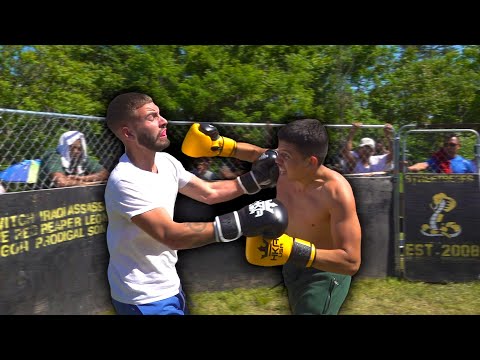
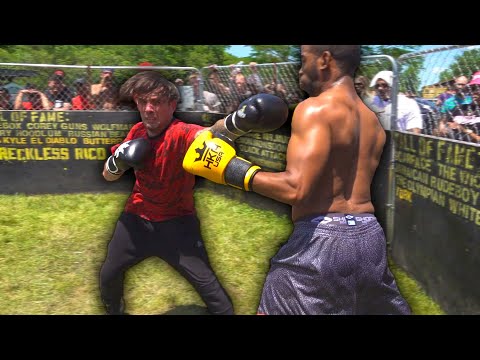
Hello, warriors and seekers of truth! Today, we cast our gaze not upon the hallowed mats of a dojo or the pristine rings of professional combat sports, but into the raw, untamed crucible of Streetbeefs. This isn't about technical mastery or the refined philosophy of ancient martial traditions. This is about primal conflict, about settling scores in a manner that, while brutal, claims a certain (and I use this term loosely) structured legitimacy. We dissect the clash between Iceberg and Eduardo, a bout that serves as a window into a world far removed from the disciplined pursuit of Budo. Prepare yourselves; this will not be a comfortable examination, but an essential one if we are to understand the full spectrum of human confrontation.

The Streetbeefs Phenomenon: More Than Just a Backyard Brawl

Before we dissect the specific confrontation, we must understand the context. Streetbeefs, founded by Scarface, presents itself as an alternative to the deadly consequences of real-world disputes. The premise is simple: put on gloves, step into an arena (aptly named "Satan's Backyard"), and settle your differences. No weapons, no gang involvement, just a direct confrontation. Scarface's own history, documented by the likes of The New York Times and ESPN, lends a certain gravitas to this endeavor, positioning it as a social intervention as much as an entertainment spectacle.

The participants, often young men and women with genuine grievances, are given an outlet. This raises a crucial question: Is this a responsible way to channel aggression, or merely a dangerous glorification of violence? As martial artists, we are trained to understand conflict, to de-escalate, and, when necessary, to defend. But Streetbeefs operates in a grey area, where the lines between sport, catharsis, and sheer brutality are perpetually blurred.

"After years of watching people in my area severely hurt each other over various disputes, I decided to offer a solution. Come to SATANS BACKYARD and put gloves on to settle your dispute. No guns, No knives, No gang of friends jumping in. Just you, your Foe, the referee, and a group of spectators." - Scarface, Founder of Streetbeefs

The appeal lies in its rawness. It's unscripted, unfiltered, and often shocking. While some bouts are framed as pure sport, others are explicitly labeled "REAL beef." This distinction is critical. The former allows for an examination of athletic endeavor, however unrefined. The latter plunges us into the heart of personal vendettas, where skill takes a backseat to desperation and animosity.

Iceberg vs. Eduardo: The Clash

Now, to the main event: Iceberg vs. Eduardo. The original broadcast, as indicated by the placeholder, likely featured raw footage of this confrontation. What can we glean from such an encounter, stripped of professional polish and the intricate strategies of trained combatants?

It's a testament to the spirit of BUDO, in its most rudimentary form, that individuals will step into a physical contest to resolve issues. However, this is where our analysis must diverge from a typical MMA or boxing match review. We are not looking for textbook techniques, but for the raw will to compete, the fundamental drives that push humans towards physical confrontation.

Iceberg and Eduardo likely represent the archetypal Streetbeefs participants: individuals with a score to settle, armed with more fury than finesse. The challenge is to watch such a bout not with judgment, but with an analytical eye, seeking to understand the human element at play. Are they driven by anger? Pride? A desperate need for validation? Or simply the primal urge to assert dominance?

Analysis of the Combat: Raw Aggression Meets Unrefined Technique

When examining fights like Iceberg vs. Eduardo, we must recalibrate our expectations. This is not a demonstration of the Karate kata or the precise Judo throws that define traditional martial arts. This is street combat, albeit with gloves and a referee.

Expect wild swings, awkward footwork, and a reliance on brute force over calculated strategy. The "technique" on display is often instinctual, born of desperation rather than years of dedicated entrenamiento. This is where the concept of Ki, or internal energy, becomes a fascinating, albeit controversial, lens. While traditional martial arts cultivate Ki for focus, power, and resilience, here, it might manifest as raw, uncontrolled aggression – a double-edged sword that can fuel a fighter but also lead to exhaustion and mistakes.

The combatants are likely employing rudimentary striking, perhaps some desperate grappling if the fight spills to the ground. The referee's role is crucial, not just to enforce rules, but to step in before severe, career-ending (or life-ending) damage is inflicted. This intervention, while necessary, highlights the inherent danger. In a true street fight, there is no referee, no gloves, and the stakes are infinitely higher.

This raw display can be both captivating and disturbing. It offers a visceral connection to the human drive for conflict resolution, however primitive. But it also starkly contrasts with the disciplined philosophy of the martial arts we hold dear, reminding us of the path we have chosen to avoid.

The Ethics of Streetbeefs: A Dangerous Necessity?

This is where the true polemic begins. Streetbeefs, by its very nature, provokes ethical debate. On one hand, Scarface's claim of providing a safer outlet is compelling. When genuine disputes arise, the alternative can be far more destructive – stabbings, shootings, and long prison sentences. Streetbeefs offers a structured, albeit dangerous, alternative.

However, we must ask: are we inadvertently glorifying violence? Does providing an "entertaining" platform for fights, even with rules, encourage more conflict? The involvement of social media and the potential for viral fame add another layer of complexity. Young men and women might be incentivized to engage in "beefs" not just for resolution, but for notoriety.

From a BUDO perspective, true martial arts training is about self-mastery, discipline, and the prevention of violence. The goal is to become so skilled and so centered that conflict becomes unnecessary. Streetbeefs, while offering a controlled environment, still operates on the premise of physical conflict as the primary means of resolution. It's a pragmatic, if brutal, solution for a specific segment of society, but it stands in stark opposition to the philosophical underpinnings of many traditional martial disciplines.

"Some matches are purely for sport, some are REAL beef, and ALL are entertaining." - Streetbeefs

The admission that "ALL are entertaining" is telling. It suggests an awareness of the spectacle, the audience appeal, which can overshadow the potential for genuine harm or the ethical implications of broadcasting such events. This is the tightrope Streetbeefs walks – between providing a service and creating a commercialized display of aggression.

Equipment Essential for Your Training

While Streetbeefs participants might be making do with what they have, serious martial arts training requires proper equipment. Investing in the right gear not only enhances your learning but, crucially, protects you from injury. For those who are inspired by the spirit of combat but wish to pursue it through disciplined channels, consider the following:

  • Gloves: For any striking-based art, proper sparring gloves (e.g., 12-16oz for boxing/MMA) are non-negotiable.
  • Mouthguard: Protect your teeth and brain. A good mouthguard is essential for all sparring.
  • Headgear: Particularly important for beginners in striking arts to reduce the risk of concussions.
  • Shin Guards: For arts involving kicks (e.g., Kickboxing, Kyokushin Karate), these protect against impact and abrasions.
  • Gi/Kimono: For arts like Judo, BJJ, or traditional Karate, a durable gi is your uniform and a tool for training. Look for double-weave Judo gis if you plan on grappling extensively.
  • Training Mats: For ground work, throws, and safe falling practice, especially if you don't have access to a dedicated dojo.

Remember, the goal of training is to improve, not to injure yourself or others. Proper entrenamiento with the right gear is paramount.

FAQs

What exactly is Streetbeefs?
Streetbeefs is an organization that provides a platform for individuals with disputes to settle them through sanctioned, glove-wearing fights, as an alternative to potentially deadly street violence.
Are Streetbeefs fights real or staged?
The organization states that while some matches are purely for sport, others are "REAL beef," indicating genuine grievances are being settled. All are presented as entertaining.
Is Streetbeefs considered a martial art?
No. While it involves combat, Streetbeefs is not a traditional martial art. It lacks the structured curriculum, philosophy, and emphasis on self-mastery found in disciplines like Karate, Judo, or BJJ.
What are the safety measures in Streetbeefs?
Key safety measures include mandatory gloves, a referee to oversee the bout, and the absence of weapons or gang involvement. Participants must be 18 or older.
How does Streetbeefs compare to professional MMA or boxing?
Streetbeefs is significantly less regulated and features participants with little to no formal training, relying more on raw aggression than technical skill. Professional combat sports have stringent rules, weight classes, and highly trained athletes.

For Profundizar en tu Camino

Reflection of the Sensei: Your Next Step

We have peered into the raw, unvarnished world of Streetbeefs. We've seen Iceberg and Eduardo engage in a primal contest, a far cry from the disciplined art of BUDO. It's easy to dismiss such events, to condemn them outright. But as students of combat, we must look deeper. What does this phenomenon tell us about human nature? About the persistent need to resolve conflict, even through brute force?

The founder's intent to offer a safer alternative is a pragmatic response to a harsh reality. Yet, the line between a solution and a spectacle is perilously thin. We, as practitioners of martial arts, strive for a higher path – one of control, respect, and the ultimate goal of transcending conflict altogether. Does the existence of platforms like Streetbeefs highlight a societal failure, or a necessary, albeit crude, outlet?

Reflection of the Sensei: Your Next Step

Consider this: If conflict is inevitable, and discipline is the path to mastery, what is the true measure of a warrior? Is it the ferocity of their unbridled rage, or the controlled power and wisdom with which they navigate, and ideally, prevent conflict? Reflect on the core principles you uphold in your training. Are they merely techniques to be executed, or a philosophy to be lived, even when faced with the rawest forms of human aggression?

```json { "@context": "https://schema.org", "@type": "FAQPage", "mainEntity": [ { "@type": "Question", "name": "What exactly is Streetbeefs?", "acceptedAnswer": { "@type": "Answer", "text": "Streetbeefs is an organization that provides a platform for individuals with disputes to settle them through sanctioned, glove-wearing fights, as an alternative to potentially deadly street violence." } }, { "@type": "Question", "name": "Are Streetbeefs fights real or staged?", "acceptedAnswer": { "@type": "Answer", "text": "The organization states that while some matches are purely for sport, others are \"REAL beef,\" indicating genuine grievances are being settled. All are presented as entertaining." } }, { "@type": "Question", "name": "Is Streetbeefs considered a martial art?", "acceptedAnswer": { "@type": "Answer", "text": "No. While it involves combat, Streetbeefs is not a traditional martial art. It lacks the structured curriculum, philosophy, and emphasis on self-mastery found in disciplines like Karate, Judo, or BJJ." } }, { "@type": "Question", "name": "What are the safety measures in Streetbeefs?", "acceptedAnswer": { "@type": "Answer", "text": "Key safety measures include mandatory gloves, a referee to oversee the bout, and the absence of weapons or gang involvement. Participants must be 18 or older." } }, { "@type": "Question", "name": "How does Streetbeefs compare to professional MMA or boxing?", "acceptedAnswer": { "@type": "Answer", "text": "Streetbeefs is significantly less regulated and features participants with little to no formal training, relying more on raw aggression than technical skill. Professional combat sports have stringent rules, weight classes, and highly trained athletes." } } ] }

The Brutal Spectacle of Streetbeefs: Mike Myers vs. Klapse Moro – A Martial Arts Perspective

Introduction: The Raw Arena of Conflict

The digital age has a peculiar way of commodifying even the most visceral human experiences. We’ve seen combat sports evolve from gladiatorial contests to highly regulated athletic competitions. Yet, beneath the veneer of professionalism, a primal urge for raw, unadulterated conflict persists. Streetbeefs, and specifically the bout between Mike Myers and Klapse Moro, taps directly into this raw vein. But what are we truly watching? Is it a display of martial prowess, a desperate cry for attention, or something else entirely? As a seasoned practitioner and critic of martial arts, I approach such spectacles with a critical eye, seeking to dissect the layers of aggression, intent, and the faint echoes of genuine martial principles. Welcome, aspiring budoka and seasoned warriors, to a deep dive into the unfiltered world of Streetbeefs.

Streetbeefs: More Than Just a Fight?

Streetbeefs presents itself as a solution, a safer alternative to the lethal disputes that plague communities. Founded by "Scarface," a figure recognized by prestigious media outlets like The New York Times and ESPN, the premise is simple: step into the ring, gloves on, and settle your beef. No weapons, no outside interference, just two individuals. The organization claims to have resolved hundreds of disputes through this method, offering an outlet for aggression that, in theory, prevents bloodshed and incarceration. The organization’s narrative is compelling: fostering bonds, developing friendships, and providing a controlled environment for young men and women to channel their conflicts. It’s a narrative of community and a potentially redemptive path for those caught in cycles of violence. Yet, the very nature of this "sanctioned street fighting" raises profound questions.
"The true warrior is not afraid of the struggle, but of the lack of purpose in the fight." - A Principle Often Forgotten.
While the intent might be to mitigate violence, the spectacle itself is inherently violent. It caters to an audience that craves raw, often unfiltered combat, blurring the lines between sport and pure, unadulterated aggression. The question remains: does the safety aspect truly outweigh the potential for glorifying violence and desensitizing viewers?

Mike Myers vs. Klapse Moro: A Microcosm of the Spectacle

The bout between Mike Myers and Klapse Moro, published on June 21, 2022, serves as a case study for understanding the Streetbeefs phenomenon. While the specific grievances or "beefs" leading to this particular match are not detailed here, the visual and contextual information surrounding Streetbeefs allows for a critical analysis.
These encounters are often characterized by a raw, unpolished style. Participants, while sometimes having a background in combat sports or martial arts, are not typically elite professionals. This lends a sense of authenticity to the "street" aspect, but it simultaneously dilutes the technical sophistication one might expect from a sanctioned boxing or MMA match. The atmosphere is described as "Satans Backyard," a moniker that suggests a raw, untamed, and perhaps even dangerous environment. The promotion itself leverages social media extensively, driving traffic to YouTube channels, websites, and social media groups. This digital ecosystem transforms these personal disputes into content, entertaining a global audience hungry for conflict. The use of terms like "SATANS BACKYARD" and "DEMON BOYS BOXING" further accentuates the raw, almost barbaric appeal.

Martial Authenticity vs. Raw Aggression

Herein lies the core of my critical examination. While Streetbeefs claims to offer a "safer outlet," it's crucial to distinguish between genuine martial arts training and the unrefined clashes seen in these events. * **Technique vs. Brute Force**: Professional martial arts and combat sports are built on years of disciplined training, focusing on technique, strategy, and control. Punches are thrown with precision, grappling is executed with leverage, and defense is a paramount concern. In contrast, many Streetbeefs matches exhibit more raw aggression than refined technique. While participants may possess some fighting ability, the emphasis often shifts from technical mastery to sheer force and the willingness to endure punishment. * **The Concept of 'Ki' and Inner Strength**: True martial arts training often emphasizes the cultivation of 'Ki' (or Qi), the internal energy that fuels focus, power, and resilience. This is not merely about physical strength but about mental fortitude, discipline, and spiritual development. The uncontrolled rage or desperation seen in some street fights, while powerful, lacks this refined internal component. It's the difference between a precisely aimed strike fueled by calm resolve and a wild swing born of anger. * **Purpose and Philosophy**: The Budo philosophy, which underpins many traditional martial arts, emphasizes self-improvement, discipline, and the pursuit of perfection. The goal is not simply to win a fight, but to become a better person through the rigorous training. Streetbeefs, while offering a resolution to disputes, seems to operate on a different paradigm – one of immediate conflict resolution and entertainment, with less emphasis on the transformative journey of the individual.
"The fight is won or lost far away from the ring, in the gym, on the road, long before I enter the ring." - Jesse Owens. While Owens was an athlete, this sentiment resonates deeply in the martial world. The preparation, the discipline, the countless hours of practice – these are the true foundations, not just the raw aggression of the moment.
Can a spectacle that amplifies aggression, even in a controlled environment, truly be considered a martial pursuit? Or is it a purely primal display that capitalizes on the human fascination with conflict?

Sensei's Verdict: Entertainment or Essential Outlet?

Streetbeefs is a complex phenomenon. On one hand, it provides a structured, albeit raw, alternative to lethal violence for resolving disputes. The narrative of community and safer conflict resolution is appealing. Scarface's media recognition and the documentary features lend it an air of legitimacy. On the other hand, the spectacle is undeniably violent and, for many, gratuitous. It prioritizes raw aggression and entertainment over the refined techniques and philosophical underpinnings of traditional martial arts. The distinction between "sport" and "real beef" matches suggests a variable level of intent, which can be problematic. **Cinturón Negro en Espectáculo Crudo, ¿Cinturón Blanco en Artes Marciales?** Streetbeefs excels at providing a raw, visceral spectacle that appeals to a particular audience. It fulfills a need for unfiltered combat content. However, from a pure martial arts perspective, it falls short. It’s akin to watching a street brawl dressed up with gloves and a referee, rather than a sophisticated martial arts contest. The potential for positive impact exists, but it's overshadowed by the inherent nature of the display. It’s a concerning cultural artifact that highlights a societal fascination with aggression, packaged as a "solution."

Essential Training for the Uninitiated

For those who find themselves drawn to the idea of settling disputes or simply wish to understand combat better, I strongly advise against seeking out unsanctioned fights. Instead, invest in proper training. This will not only enhance your physical capabilities but also imbue you with the discipline and mental fortitude that true martial arts cultivate.
  • Boxing Gloves (12-16 oz): Essential for any striking training, whether boxing or MMA. They protect your hands and your sparring partner.
  • Mouthguard: Non-negotiable for any form of sparring or intense training. Protect your teeth and jaw.
  • Shin Guards: Crucial for kickboxing and Muay Thai training to prevent injuries during kicking drills.
  • Groin Protector: A vital piece of protective gear, especially when sparring.
  • Durable Training Shoes: Good grip and ankle support are key for footwork and stability in striking arts and grappling.
  • Kimono (Gi) for Judo/BJJ: If you are interested in grappling, a sturdy Gi is essential for training Judo or Brazilian Jiu-Jitsu. Look for a double-weave for durability.

Frequently Asked Questions

  • What is Streetbeefs?
    Streetbeefs is an organization that provides a platform for individuals to settle disputes through unsanctioned, bare-knuckle or gloved fights, promoted as a safer alternative to real-life violence.
  • Are Streetbeefs matches legal?
    The organization states that their matches are "100% legal" amateur exhibitions, implying they operate within specific legal frameworks for such events. However, the legality of unsanctioned fighting can be complex and vary by location.
  • What martial arts are represented in Streetbeefs?
    While some participants may have backgrounds in boxing, MMA, or other martial arts, Streetbeefs is not focused on promoting a specific martial art. The style is generally raw and unrefined, emphasizing aggression over technical precision.
  • What is the philosophy behind Streetbeefs?
    The stated philosophy is to provide a controlled outlet for aggression and dispute resolution, thereby preventing more serious violence, jail time, or fatalities. It also aims to foster community among participants.

To Delve Deeper into Your Path

For those seeking to understand the principles and practice of martial arts beyond the spectacle of raw conflict, I highly recommend exploring these foundational aspects of the Budo path:

Reflection of the Sensei: Your Next Step

Streetbeefs offers a potent, albeit crude, mirror to a part of human nature that craves conflict. It raises the question: when does the desire for resolution devolve into the glorification of violence? Is the "safer outlet" a genuine solution, or merely a more palatable form of brutality for public consumption? I challenge you: look beyond the visceral appeal. What underlying societal needs does this spectacle fulfill? And more importantly, how can we, as practitioners and observers of martial arts, promote paths of discipline, respect, and true self-mastery instead of simply consuming aggression? The answer lies not in the roar of the crowd, but in the quiet discipline of the dojo. GEMINI_METADESC: A critical martial arts perspective on Streetbeefs, Mike Myers vs. Klapse Moro. Examining the raw spectacle, martial authenticity, and the controversial "solution" to conflict.

Dream Fight for Japan - Genki Desu Ka! New Year! 2011: A Critical Martial Analysis

"El arte de la guerra es de vital importancia para el Estado. Es un asunto de vida o muerte, un camino hacia la supervivencia o la pérdida. Por lo tanto, no debe ser descuidado." - Sun Tzu, El Arte de la Guerra.

Hello and welcome, warriors and students of the Way, to Budo and Martial Arts. Today, we dissect an event that, while perhaps not a pillar of martial arts history, offered a glimpse into the fervent spirit of Japanese combat sports at the turn of the year 2011. We delve into Dream Fight for Japan - Genki Desu Ka! New Year! 2011, held at the Saitama Super Arena. Was it a mere spectacle, or did it hold moments of genuine martial significance? Let's not just watch the fights; let's *analyze* them.

A Martial Lens on Dream Fight 2011

The New Year's Eve tradition in Japan, particularly in the realm of combat sports, has often been a showcase of diverse fighting styles and a platform for dream matchups. "Genki Desu Ka!" (Are You Energetic?) was a recurring event that aimed to bring together top talent from various disciplines. Dream Fight for Japan - Genki Desu Ka! New Year! 2011 was no exception, featuring a card that blended MMA bouts with K-1 kickboxing contests. But as practitioners and students of the martial path, we must look beyond the superficial entertainment. We must ask: What martial principles were on display? What can we learn from the exchanges, the strategies, and the outcomes?

This event, held on December 31, 2011, brought together a significant roster of fighters, many of whom were established names or rising stars. The intention, as with most such events, was to create exciting contests that would captivate a broad audience. However, the true value for us lies in dissecting the application of techniques, the mental fortitude of the combatants, and the underlying philosophies that guide their actions within the squared circle or the cage.

Match Breakdown: More Than Just Hits and Throws

Let's move beyond simply listing the fight times. We need to examine the essence of each contest through the prism of martial arts expertise.

  • Yusup Saadulaev vs. Hideo Tokoro: Saadulaev, a Sambo practitioner, often brings a strong grappling base. Tokoro, a veteran Japanese fighter, is known for his tenacity and diverse striking and submissions. This bout would likely showcase a clash of grappling control versus elusive striking and submission hunting. Did Saadulaev impose his will on the ground, or did Tokoro's experience and adaptability prevail?
  • Antonio Banuelos vs. Masakazu Imanari: Imanari is legendary for his leg lock game, particularly the Imanari Roll. Banuelos, a powerful wrestler, would need to manage distance and avoid Imanari's submission traps. This is a classic grappler vs. submission specialist matchup. The critical question: could Banuelos neutralize Imanari's famed ground attacks?
  • Bibiano Fernandes vs. Rodolfo Marques: Fernandes, a highly decorated BJJ black belt and former ADCC champion, is a submission wizard. Marques would be facing an uphill battle if it went to the ground. Was Fernandes able to implement his strategy, or did Marques manage to keep the fight standing where he might have had a better chance?
  • Masaaki Noiri vs. Kengo Sonoda (K-1): This K-1 bout represents the striking-focused aspect of the event. Noiri, known for his powerful Muay Thai-influenced striking, would likely engage in a fierce kickboxing war. Sonoda's strategy would be crucial. Did they exchange heavy blows, or was there a tactical chess match of feints and counters?
  • Yuta Kubo vs. Nils Widlund: Another K-1 contest. Kubo, a dynamic Japanese striker, against Widlund. The analysis here focuses on the effectiveness of their respective striking arsenals. Were there textbook combinations, or did it devolve into a slugfest?
  • Hayato Sakurai vs. Ryo Chonan: Both Sakurai ("Mach") and Chonan are well-respected Japanese MMA veterans. Mach is known for his striking and submissions, while Chonan is famous for his spectacular flying scissor heel kick knockout. This fight is a test of veteran savvy and tactical execution. Who dictated the pace and imposed their game plan?
  • Tatsuya Kawajiri vs. Kazuyuki Miyata: Kawajiri, a powerful wrestler and striker, often known as "The Crusher." Miyata, an Olympic wrestler. This is a wrestling-heavy MMA bout. The focus would be on takedowns, ground control, and the ability to transition between wrestling offense and striking defense. Did Kawajiri's aggression and striking overpower Miyata's Olympic-level wrestling, or vice-versa?
  • Megumi Fujii vs. Karla Benitez: Fujii was a pioneer and a dominant force in women's MMA, known for her exceptional submission skills. Benitez would have faced a monumental challenge. The analysis here centers on Fujii's mastery of technique and positional control. Did Benitez show resilience and any effective counter-strategies, or was it a demonstration of Fujii's overwhelming skill?
  • Yuichiro Nagashima vs. Katsunori Kikuno (K-1 & MMA): This bout potentially bridged the gap between K-1 striking and MMA grappling. Nagashima, known for his flamboyant entrances and aggressive style, against Kikuno, a skilled striker. How did they adapt their styles to the mixed ruleset, if applicable?
  • Bibiano Fernandes vs. Antonio Banuelos: A second fight for both fighters on the card. This is interesting. It suggests perhaps an injury or a change in the original lineup. Fernandes facing Banuelos again highlights the strategic challenges each fighter presented to the other.
  • Hiroyuki Takaya vs. Takeshi Inoue: Two Japanese combatants. Takaya, a Featherweight champion, and Inoue, a highly regarded boxer transitioning to MMA. This bout tests the striking prowess and adaptability of both. Did Inoue's boxing skills translate effectively against Takaya's MMA striking and potential grappling?
  • Shinya Aoki vs. Satoru Kitaoka: Aoki is an MMA legend, renowned for his suffocating Jiu-Jitsu and submission game. Kitaoka is also a skilled grappler. This is a high-level submission grappling chess match within an MMA context. Who could impose their ground game, and how did they defend against each other's formidable submission threats?
  • Fedor Emelianenko vs. Satoshi Ishii: The headline fight. Fedor "The Last Emperor" Emelianenko is arguably the greatest heavyweight MMA fighter of all time. Ishii is an Olympic gold medalist in Judo. This is a fascinating clash of titans: Fedor's unparalleled MMA dominance against an Olympic-level judoka known for his powerful throws and ground control. The key questions: Could Ishii's judo takedowns neutralize Fedor's striking and submissions? How did Fedor manage the Olympic wrestling threat?

The K-1 vs. MMA Conundrum

The inclusion of K-1 bouts within an MMA event is not uncommon, especially on New Year's Eve cards designed for maximum entertainment. However, from a martial perspective, it presents a dichotomy. K-1 emphasizes striking – punches, kicks, knees, and sometimes elbows. MMA, on the other hand, is a comprehensive combat sport that integrates striking, wrestling, and grappling.

When a K-1 fighter steps into an MMA bout, or vice versa, we witness a test of adaptability. Can a pure striker defend takedowns and survive on the ground? Can a grappler effectively strike with someone who has dedicated their life to it? The Dream Fight 2011 card offered these comparisons, forcing fighters to operate outside their primary comfort zones. The success of fighters like Nagashima and Kikuno in a mixed environment, or the effectiveness of striking specialists like Noiri and Kubo against potentially more defensively-minded opponents, provides valuable insights into the cross-training and stylistic evolution within combat sports.

"There are no shortcuts in life, but the most effective path is often the one that is least travelled. It requires the most dedication, the most discipline, and the most courage." - A principle instilled by my early instructors.

Individual Performances and Martial Spirit

Beyond the technical execution, the true measure of a martial artist lies in their spirit – their Seishin. Did the fighters display:

  • Resilience: How did they react when hurt or put in a disadvantageous position? Did they crumble, or did they fight back with renewed determination?
  • Discipline: Did they stick to their game plan, or did they abandon strategy in the heat of the moment?
  • Courage: Stepping into the ring against formidable opponents requires immense bravery. Who showed the most heart?
  • Respect: While the combat is fierce, the post-fight sportsmanship, the bow, the handshake – these are remnants of the traditional martial arts that deserve acknowledgment.

For instance, in a fight like Fedor vs. Ishii, the mental game is paramount. Fedor's legendary composure under pressure against Ishii's Olympic-level power and potential for explosive judo throws would be a significant test of both fighters' mental fortitude. Similarly, Megumi Fujii's dominance would not only be technical but also mental – projecting an aura of control that could demoralize opponents.

Legacy and Lessons Learned

What does an event like Dream Fight 2011 leave behind? For the casual observer, it's a collection of exciting fights. For the martial artist, it's a learning opportunity. We can analyze techniques, study strategic adaptations, and reflect on the mental attributes required for high-level competition.

Fights like Aoki vs. Kitaoka offer a masterclass in submission grappling. Fedor vs. Ishii, regardless of the outcome, provides case studies in heavyweight MMA strategy. The K-1 bouts serve as reminders of the striking arts' power and precision. Each fight, win or lose, contributes to the fighter's journey and, by extension, to the collective knowledge base of the martial arts community.

It's also a moment to reflect on the "why." Why do these athletes push their bodies and minds to such extremes? It's a pursuit of self-mastery, a demonstration of dedication, and a quest for excellence. As Sun Tzu wisely stated, "Know your enemy and know yourself, and you will win a hundred battles." This event, in its own way, was a crucible for fighters to test that knowledge.

Training Guide: Developing Your Fighting Spirit

The spirit displayed in these fights is not exclusive to professional athletes. It's a quality we can cultivate in our own training. Here’s how to apply the principles observed:

  1. Simulate Pressure: During sparring, deliberately put yourself in uncomfortable positions. This trains your mind to remain calm and analytical, not panic.
  2. Drill with Purpose: Don't just go through the motions. For every technique, understand its application, its counters, and its underlying principles.
  3. Embrace the Challenge: Seek out training partners who are better than you. This is where true growth occurs.
  4. Visualize Success: Before training or sparring, visualize executing techniques perfectly and overcoming obstacles.
  5. Mindfulness and Breath Control: Practice deep breathing exercises (like those found in BUDO or meditation) to manage stress and enhance focus, crucial for maintaining composure in any confrontation.

Essential Gear for Your Training

To properly train and emulate the dedication seen in these bouts, having the right equipment is paramount. Whether you're practicing striking, grappling, or a blend like in MMA, quality gear is an investment in your safety and progress. Consider:

  • High-Quality Gloves: For MMA or striking training, durable gloves (e.g., 4oz MMA gloves or 10-16oz training gloves) are essential for protection and effective striking. Investing in brands known for durability can save money in the long run.
  • Protective Cup: Non-negotiable for any combat sport involving lower body attacks or accidental strikes.
  • Mouthguard: Protect your teeth and jaw. A custom-fitted mouthguard offers the best protection and comfort.
  • Shin Guards: Crucial for Muay Thai or Kickboxing training to prevent injuries during kick drills.
  • Grappling Dummy or Partner: For practicing throws, takedowns, and submissions, a reliable training partner or a quality judo or bjj dummy is invaluable.
  • Durable Gi/Kimono: If your training involves styles like judo or Brazilian Jiu-Jitsu, a sturdy, double-weave gi is a must.

Frequently Asked Questions

What is the main difference between K-1 rules and MMA rules?

K-1 primarily focuses on stand-up striking, allowing punches, kicks, and knees. MMA allows striking, wrestling, and grappling (submissions and ground control), making it a more comprehensive combat system.

Was Fedor Emelianenko at his peak during this fight?

By late 2011, Fedor's absolute dominance streak had ended, but he remained a formidable heavyweight contender. His fight against Ishii was still a significant matchup featuring a legend.

What is "Genki Desu Ka!"?

"Genki Desu Ka!" is a Japanese phrase that translates to "Are You Energetic?" or "How Are You Feeling?". It was often used as a rallying cry and event title, particularly for New Year's Eve shows in Japan, aiming to energize the audience and fighters.

How can I improve my mental game in martial arts?

Consistent practice, mindfulness techniques, visualization, and facing challenges head-on during training are key to developing mental toughness. Learning to stay calm under pressure is as vital as learning a technique.

Are K-1 fighters typically good at MMA?

Not always. While striking is a component of MMA, success requires proficiency in wrestling and grappling defense. Pure strikers often struggle significantly against well-rounded MMA fighters unless they have dedicated cross-training.

To Deepen Your Path

To continue your journey into the deeper aspects of martial arts philosophy and practice, explore these related topics on our blog:

Reflection of the Sensei: Your Next Step

We have dissected a card filled with high-level competition. Now, reflect: In the face of overwhelming odds, like Ishii against Fedor, or Benitez against Fujii, what truly separates a fighter who merely participates from one who embodies the martial spirit? Is it technique, physical conditioning, or something less tangible? Contemplate this before your next training session.

``` GEMINI_METADESC: Analyze Dream Fight for Japan - Genki Desu Ka! New Year! 2011: A critical martial arts breakdown of fights, techniques, and the spirit of combat.