Showing posts sorted by relevance for query history of boxing vs karate. Sort by date Show all posts

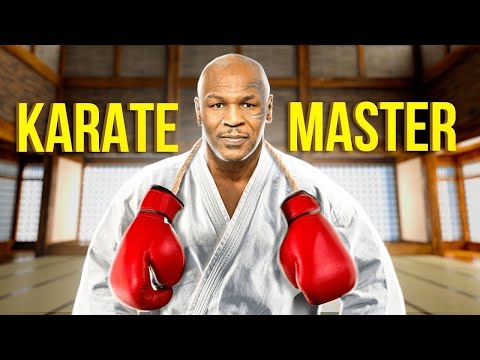
Mike Tyson's Peekaboo Style: A Karate Connection? A Critical Analysis

Introduction: The Provocative Claim

The world of combat sports is rife with legends, and few loom as large as Mike Tyson. Known for his explosive power, intimidating presence, and a fighting style that seemed to defy conventional logic, "Iron Mike" carved his name into history. But what if I told you that a cornerstone of his devastating technique, the famed "Peekaboo" style, was allegedly inspired by Karate? This is a claim that sparks immediate debate among martial artists and boxing aficionados alike. Is it a mere historical footnote, a misinterpretation, or is there genuine substance to the assertion that the baddest man on the planet drew inspiration from an ancient Japanese art? Prepare yourselves, for we are about to embark on a journey to dissect this claim with the precision of a doctor's scalpel and the blunt force of a well-placed jab.
"The genesis of a powerful technique often lies in unexpected unions. To dismiss connections out of hand is to limit our understanding of combat's evolution."
This article aims not just to present information, but to ignite critical thinking. We will explore the mechanics of Tyson's style, compare them to core principles of Karate, and critically evaluate the validity of this intriguing connection. Whether you're a seasoned Karateka, a dedicated boxer, or simply a student of combat, this analysis is designed to challenge your perceptions and deepen your appreciation for the intricate tapestry of martial arts.

Deconstructing Tyson's "Peekaboo" Style

Before we can assess any alleged Karate influence, we must first understand the Peekaboo style itself. Developed by Cus D'Amato and honed by Tyson, Peekaboo is characterized by its aggressive forward pressure, exceptional head movement, and devastating offensive combinations. * **High Guard:** Fighters using Peekaboo keep their gloves held high, close to their face and temples, hence the "peekaboo" moniker. This guard serves a dual purpose: protecting the head and face from incoming strikes while simultaneously setting up offensive maneuvers. * **Constant Movement:** The style emphasizes continuous, bobbing and weaving motion. This isn't just about evasion; it's about creating angles, disrupting the opponent's rhythm, and making oneself a difficult target. The fighter is always moving in, out, and around, making it hard for the opponent to establish a solid base or land accurate shots. * **Explosive Combinations:** Once an opening is created, Tyson unleashed brutal, short-range combinations, often targeting the head and body in rapid succession. His ability to close distance quickly and deliver power from unconventional angles was legendary. * **Lowered Center of Gravity:** A key element is maintaining a low, balanced stance. This provides stability, allows for powerful hip rotation in punches, and makes it harder to knock the fighter off balance. D'Amato famously described Peekaboo not just as a defensive stance but as an offensive weapon, designed to pressure the opponent relentlessly until they break. It’s a style built on timing, aggression, and an almost supernatural ability to slip punches while simultaneously preparing to deliver devastating blows.

The Alleged Karate Link: Examining the Evidence

The assertion that Mike Tyson's style is based on Karate movements stems from D'Amato's own statements and observations. D'Amato, an astute observer of combat, studied various martial arts. He reportedly saw similarities between the defensive head movements and evasive footwork of Peekaboo and certain Karate techniques.
Specifically, proponents of this theory point to: * **Footwork and Evasion:** The bobbing and weaving, the subtle shifts in weight, and the ability to move in and out of range quickly are seen as analogous to the footwork found in many Karate styles, particularly Okinawan Karate. The concept of *nagashi-uke* (flowing block) or evasive body shifts to avoid direct impact finds echoes here. * **Defensive Principles:** Karate emphasizes blending with an opponent's force rather than meeting it head-on. The Peekaboo fighter’s ability to slip punches and use the opponent's momentum against them aligns with this principle. * **Close-Range Combat:** While boxing is primarily a punching art, Tyson excelled in close quarters, using uppercuts and hooks effectively. Some Karate applications, especially in older forms, involve close-range striking and trapping. However, it's crucial to note that D'Amato never claimed Tyson was *performing Karate*. The connection is more about shared underlying principles of movement and evasion rather than direct technique transfer.

Sensei's Analysis: Similarities, Differences, and Misconceptions

As a lifelong student of the martial path, I find this claim fascinating, but also one that requires careful dissection. Let's lay down the objective truth, as any true Sensei would. Firstly, boxing and Karate are fundamentally different disciplines. Boxing focuses exclusively on punches with gloved hands to the upper body and head, emphasizing rhythm, timing, and power generation through hip rotation and footwork. Karate, on the other hand, is a comprehensive system encompassing punches, kicks, blocks, sweeps, and throws, often utilizing open-hand techniques and targeting various parts of the body.
"To equate the defensive subtleties of Karate evasion with the aggressive bobbing and weaving of Peekaboo is a stretch, yet not entirely without merit if we consider the underlying principles of kinetic efficiency." - My Interpretation based on countless hours of study.
**Where the Alleged Similarities Hold Water (The Nuance):** 1. **Evasion as a Primary Defense:** Both disciplines understand that avoiding a strike is often more effective than blocking it. The constant head movement in Peekaboo, designed to make Tyson a difficult target, mirrors the defensive body shifts and evasive footwork taught in many Karate styles to avoid an opponent's attack. Think of a Karateka moving off the line of attack (*tai sabaki*) to evade a punch or kick. The *purpose* is the same: to not be where the attack lands. 2. **Generating Power from the Ground Up:** Both Tyson's boxing and traditional Karate emphasize the importance of a strong base and hip rotation for generating power. A low center of gravity, crucial for Tyson's explosive power, is a fundamental tenet in many Karate stances (*kamae*). **Where the Connection Falters (The Hard Truth):** 1. **Targeting and Techniques:** Tyson's goal was to land punches. His techniques were honed for that singular purpose. Karate techniques are far more diverse. While a Karateka might use a subtle body shift to evade a punch, their subsequent action could be a block, a counter-punch, a kick, or even a throw – far beyond the scope of boxing. 2. **The "Peekaboo" Glove Position:** The high, tight guard of Peekaboo is specific to boxing. In Karate, while hands are often kept up for protection, the specific positioning and use of the gloves are different, and open-hand techniques are prevalent. 3. **Intent and Application:** D'Amato's genius was in adapting principles. He likely saw how evasive movements could be incorporated into boxing to create openings and defense. However, this is adaptation, not direct adoption. Tyson wasn't performing Karate katas; he was using boxing techniques with a defensive layer inspired by principles he observed elsewhere. The true connection, in my estimation, lies not in identical movements but in a shared philosophy of efficient body mechanics and evasive strategies. D'Amato, a student of strategy, likely recognized these universal principles and integrated them into the boxing context. It's a testament to the interconnectedness of combat theory, not a direct lineage.

Training Drills: Enhancing Footwork and Defensive Head Movement

Whether you're a boxer or a Karateka, improving your footwork and defensive head movement is paramount. Here are drills inspired by both disciplines:
  1. Shadow Boxing with Emphasis on Head Movement:
    • Assume your fighting stance (Boxing guard or Karate kamae).
    • Practice bobbing and weaving under imaginary punches. Focus on using your legs, not just your waist. Keep your knees bent and your rear planted.
    • Practice slipping punches side-to-side. Imagine a punch coming straight at your nose and slip it to the left, then to the right. Maintain balance.
    • Incorporate quick footwork changes – stepping in, stepping out, circling – while maintaining the high guard and head movement.
    • Focus on returning to a balanced stance after each movement, ready to counter.
  2. Partner Drills (Controlled Sparring):
    • With a trusted partner, practice throwing slow, deliberate punches at your head. Your goal is to evade without blocking, using only slips and weaves.
    • Your partner can gradually increase the speed, but the focus remains on your evasion, not on countering.
    • Once comfortable, introduce simple combinations from your partner, and practice reacting with appropriate head movement and footwork adjustments.
    • Karate Application: A Karateka can practice *tai sabaki* (body evasion) against basic punches, focusing on moving off the line of attack and maintaining a stable base.
  3. Mirror Drills:
    • Face a mirror and perform your footwork and head movement drills. This allows you to visually check your form, balance, and the fluidity of your transitions.
    • Ensure your movements are economical and that you're not telegraphing your intentions.
Remember, consistency is key. Incorporate these drills into your regular training sessions to build muscle memory and develop natural evasive instincts.

Essential Gear for Striking Training

To train effectively and safely in striking arts like boxing or Karate, having the right equipment is crucial. Investing in quality gear not only enhances your performance but also significantly reduces the risk of injury.
  • Boxing Gloves: For sparring and bag work, opt for gloves that offer good wrist support and adequate padding. 16oz gloves are generally recommended for sparring.
  • Hand Wraps: Always use hand wraps under your gloves to protect your metacarpals and wrists from impact.
  • Mouthguard: Essential for any form of sparring or combat simulation to protect your teeth and jaw.
  • Headgear: Recommended for heavy sparring sessions to mitigate the risk of cuts and concussions.
  • Karate Gi: If you are training Karate, a durable, well-fitting Gi is essential. Look for double-weave cotton for durability, especially if you plan on engaging in kumite (sparring). For heavier styles like Kyokushin, a reinforced Gi is a must.
  • Shin Guards and Instep Guards: Particularly useful for Karate or Kickboxing training involving kicks, offering protection for your lower legs and feet.
  • Jump Rope: An indispensable tool for improving footwork, coordination, and cardiovascular endurance – a staple in both boxing and Karate conditioning.

Sensei's Verdict: Did Tyson Truly Use Karate?

The assertion that Mike Tyson’s Peekaboo style was *based on* Karate is, in my professional opinion, an oversimplification that borders on myth. While Cus D'Amato was undoubtedly influenced by observed principles of movement from various arts, including potentially Karate, the direct translation of Karate techniques into Tyson's boxing is not evident. Tyson's style was a masterclass in *boxing*. Its effectiveness stemmed from the brilliant adaptation of fundamental boxing principles – explosive power, relentless pressure, aggressive defense, and superior timing – within the specific ruleset of the sport. D'Amato's genius lay in refining these boxing elements, perhaps drawing inspiration from the *concept* of evasive maneuvers found in Karate, but the execution remained purely within the domain of pugilism. Therefore, while there might be a philosophical or mechanical overlap in *certain aspects* of evasion and balance, it's misleading to claim Tyson *used Karate*. He used Boxing, perfected to an art form, potentially enhanced by D'Amato's broader understanding of combat dynamics.
"Iron Mike wasn't a Karateka, but the echoes of efficient movement, a universal language in combat, might have whispered through the strategic mind of his mentor."
Cinturón Negro en Adaptación Estratégica, pero no en Karate.

Frequently Asked Questions

Did Cus D'Amato ever explicitly state Tyson used Karate?

While D'Amato studied various martial arts and reportedly saw similarities, there's no definitive record of him stating Tyson's style was directly *based on* Karate techniques. The connection is more interpretative, focusing on shared principles of movement and evasion.

What are the core differences between boxing and Karate?

Boxing focuses solely on punches to the head and torso with gloved fists within a specific ring. Karate is a comprehensive martial art including punches, kicks, blocks, throws, and open-hand techniques, often practiced in a dojo with a focus on self-defense and discipline.

Could a boxer benefit from studying Karate's defensive principles?

Absolutely. Karate's emphasis on *tai sabaki* (body evasion), understanding distance, and utilizing minimal movement for maximum effect can certainly enhance a boxer's defensive capabilities and strategic thinking.

Is the Peekaboo style still used today?

While few fighters adopt it wholesale due to its demanding nature and high risk, elements of the Peekaboo style, particularly the high guard and aggressive head movement, are still seen and utilized by many modern boxers.

Dive Deeper Into Your Journey

Sensei's Reflection: Your Next Step

The allure of combining disparate martial arts is strong, a testament to the universal principles that govern effective combat. But how often do we mistake superficial resemblance for fundamental connection? Reflect on your own training: are you truly understanding the *essence* of the techniques you practice, or are you merely collecting movements? Go forth, train with intention, and seek the underlying truths, not just the borrowed styles. GEMINI_METADESC: Unravel the truth behind Mike Tyson's Peekaboo style and its alleged Karate influence. An expert analysis of boxing vs. Karate principles.

Sensei's Critique: UFC 21 - Return of the Champions (1999) - A Martial Perspective

UFC 21, subtitled "Return of the Champions," held on July 16, 1999, at the Five Seasons Events Center in Cedar Rapids, Iowa, is a relic of a time when the Ultimate Fighting Championship was still forging its identity. As a student and critic of the martial arts, I approach such events not just as spectacles of combat, but as anthropological studies of human conflict, evolutionary steps in the evolution of fighting systems, and, dare I say, potential cinematic fodder, however rough. This event, from the dawn of MMA's modern era, offers a fascinating glimpse into the raw, unvarnished state of mixed martial arts, where the "return of the champions" was less about established dynasties and more about the gladiatorial spirit that defined early UFC.

Introduction: The Raw Crucible of UFC 21

Welcome, warriors, to a dissection of UFC 21, an event that, while perhaps lacking the polish of its modern descendants, pulsates with the untamed spirit of early mixed martial arts. Forget the calculated strategies and weight-class divisions that define today's UFC. In 1999, "Return of the Champions" was more about the visceral thrill of diverse fighting styles colliding in a raw, unforgiving environment. This was a time when the boundaries between martial arts were blurred, and the efficacy of each discipline was being tested in real-time. We gather here, under the banner of BUDO and MartialArts, to scrutinize this event not merely as a sporting contest, but as a living document of martial evolution. Are these "champions" truly representatives of their arts, or simply survivors of a brutal experiment? Let us find out.

The Fight Card: A Tapestry of Styles

The fight card itself is a fascinating microcosm of the martial landscape at the turn of the millennium. We see a blend of established strikers, submission artists, and powerful grapplers, many of whom had already carved out names for themselves in various fighting disciplines. The concept of "champions" returning implies a legacy, a history of victory that this event aimed to reignite. However, the true test in the early UFC was never just about past glories; it was about adapting, surviving, and overcoming the diverse threats presented by opponents from entirely different martial backgrounds. This is where the true art of MMA lies – in the synthesis and application of disparate techniques under extreme pressure.

Travis Fulton vs. Davis Dodd: The Early Wild West

The opening bout, Travis Fulton vs. Davis Dodd, immediately sets the tone for the raw, unadulterated nature of early UFC. Travis Fulton, a name synonymous with sheer toughness and a high volume of fights in obscure promotions, represented a certain breed of fighter: fearless, rugged, and willing to test himself against anyone, anywhere. His approach was often characterized by a brawling style, relying on brute force and an iron will. Davis Dodd, while less heralded, entered the Octagon with his own set of skills, aiming to prove his worth. This matchup is a prime example of the "anything goes" mentality that pervaded early MMA. The transition from stand-up striking to ground fighting was often abrupt, and the strategic nuances we see today were still in their nascent stages. The Combat here is less about intricate techniques and more about sheer will and physical dominance. It highlights the fundamental question: can raw aggression and resilience overcome technical proficiency when the rules are minimal?

Andre Roberts vs. Ron Waterman: Grappling's Foothold

Following this initial clash, we have Andre Roberts facing Ron Waterman. This bout likely showcased the growing importance of grappling in mixed martial arts. As fighters from striking backgrounds began to face opponents with strong wrestling or Brazilian Jiu-Jitsu credentials, the ability to control an opponent, secure takedowns, and apply submissions became paramount. Waterman, often associated with powerful wrestling, would likely have sought to impose his physical strength and control on the mat. Roberts, on the other hand, would have aimed to keep the fight standing or employ his own ground game. These matchups were crucial in demonstrating the evolving meta-game of Lucha and BJJ within the broader spectrum of martial arts. The effectiveness of takedowns and submission attempts in a Fight like this was a constant learning experience for both fighters and the audience.

Eugene Jackson vs. Royce Alger: Striker vs. Grappler Dynamics

Eugene Jackson and Royce Alger presented another classic stylistic confrontation. Jackson, often a dynamic striker, would have aimed to utilize his speed, power, and striking combinations to keep Alger at bay. Alger, a reputable wrestler and grappler, would have sought to close the distance, secure a takedown, and work his ground game, looking for submissions or positional dominance. These types of matchups are invaluable for understanding the core principles of MartialArts. It's a chess match where each fighter's strengths are tested against the other's weaknesses. The effectiveness of a jab against a double-leg takedown, or the ability to escape a mount position, are fundamental lessons learned and displayed in bouts like these. The Entrenamiento for such diverse challenges required a broad skill set, bridging the gap between distinct martial traditions.

Tsuyoshi Kohsaka vs. Tim Lajcik: Skill vs. Grit

Tsuyoshi Kohsaka is a name that resonates deeply within the history of Japanese martial arts and MMA. A true pioneer, Kohsaka represented a refined, technically sound approach to fighting. His fights were often characterized by strategic striking, intelligent movement, and a deep understanding of timing and distance. Tim Lajcik, while perhaps less experienced on the international stage, would have come in with his own ambitions, likely relying on grit, determination, and the unyielding spirit of a Karateka or practitioner of a similar striking art. The contrast between Kohsaka's measured technical prowess and Lajcik's potential for raw aggression and resilience makes this bout compelling. It forces us to ask: in a Battle of wills, does superior technique always prevail? Or can sheer heart and unyielding spirit overcome a more polished skillset? This is the eternal question that fuels the BUDO philosophy.

Paul Jones vs. Flavio Luiz Moura: A Clash of Eagles

Paul Jones and Flavio Luiz Moura engaged in a contest that likely embodied the high stakes and fierce competition of the era. Both fighters would have brought their own unique arsenals, honed through rigorous Entrenamiento and a burning desire to prove their mettle. The "Return of the Champions" narrative suggests that these fighters carried the weight of expectation, aiming to reassert their dominance. This matchup provides an opportunity to analyze the tactical approaches of different martial arts schools. Was it a striking duel, a grappling exchange, or a dynamic blend of both? The outcome would offer insights into the strengths and limitations of their respective styles when pitted against each other in the unforgiving environment of the Octagon. The Pelea between two such determined individuals is a testament to the warrior spirit.

Jeremy Horn vs. Daiju Takase: The Submission Hunters

Jeremy Horn is another legendary figure in the history of MMA, known for his incredible submission skills and his prolific fighting career. His ability to finish fights on the ground, often from unexpected positions, made him a dangerous opponent for anyone. Daiju Takase, a skilled Japanese fighter, would have brought his own brand of artistry to the mat. These are the fights that truly captify the essence of grappling. The intricate dance of limbs, the strategic positioning, and the relentless pursuit of a submission hold are a testament to the depth and complexity of Judo and BJJ. The Lucha on the ground in this bout would have been a masterclass in leverage, anatomy, and sheer tenacity. The successful application of a choke or joint lock is a testament to years of dedicated Entrenamiento.

Pat Miletich vs. Andre Pederneiras: Tactical Masterclass

The co-main event between Pat Miletich and Andre Pederneiras is where we likely see a significant step up in tactical sophistication. Miletich, a well-rounded fighter and later a highly respected coach, embodied a disciplined and strategic approach to MMA. Pederneiras, a pivotal figure in Brazilian Jiu-Jitsu and MMA coaching, would have brought immense tactical knowledge and technical expertise. This bout represents a more modern interpretation of mixed martial arts, even for 1999. It's a battle of strategies, of game plans meticulously crafted through deep understanding of striking and grappling. The transitions between phases of combat, the ability to adapt mid-fight, and the intelligent use of energy are what make matchups like this so compelling. It’s a clash of minds as much as bodies, showcasing the intellectual side of Combat.

Maurice Smith vs. Marco Ruas: Legends Collide

The main event features two true legends: Maurice Smith and Marco Ruas. Maurice Smith, a powerful heavyweight known for his striking and his ability to absorb punishment, had already made a significant impact in the UFC. Marco Ruas, a practitioner of Ruas Vale Tudo, brought a unique and formidable style that blended striking, grappling, and conditioning with an emphasis on practical self-defense. A bout between these two giants was, for its time, the pinnacle of the martial arts world. It was a collision of different fighting philosophies, a testament to the evolution of combat sports. The outcome of such a fight would have profound implications for how different styles were perceived and integrated into the burgeoning sport. The sheer willpower and physical conditioning required for a Fight of this magnitude are awe-inspiring. This is where the philosophies of BUDO and practical application truly meet.

Veredict of the Sensei: More Than Just a Fight

UFC 21: Return of the Champions, while perhaps appearing rudimentary by today's standards, is a vital artifact in the chronicle of mixed martial arts. It showcases the raw, untamed spirit that fueled the early days of the UFC, where the convergence of diverse martial arts was a volatile, yet necessary, crucible. The "champions" who returned were not just fighters; they were pioneers, testing the limits of their disciplines and pushing the boundaries of human combat. The choreography of these fights, while often unpolished, was authentic. It was the real deal, unfiltered and unscripted, demonstrating the fundamental principles of MartialArts in their most basic form. The spirit of competition, the will to overcome, and the quest for mastery are palpable in every exchange. It’s a reminder that beneath the modern spectacle, the core of martial arts remains the same: a journey of self-discovery through rigorous challenge. **Rating:** Cinturón Negro en Autenticidad Cruda. It may not have the slick production or intricate strategies of today, but UFC 21 offers a genuine look into the formative years of MMA and the unwavering spirit of its warriors.

Training Regimen for the Modern Warrior

To prepare for the diverse challenges presented in an event like UFC 21, a comprehensive training regimen is essential. This isn't just about lifting weights or running laps; it's about developing a complete martial athlete.
  1. Striking Fundamentals: Master the basics of boxing, Muay Thai, or Karate. Focus on footwork, proper form, power generation, and defensive maneuvers. Consistent practice of Karate katas, for instance, can improve balance and coordination, crucial for striking.
  2. Grappling Proficiency: Dedicate significant time to wrestling, Judo, and Brazilian Jiu-Jitsu. Learn takedowns, positional control, submission techniques, and effective defense against submissions. The art of Lucha, in its many forms, is paramount.
  3. Strength and Conditioning: Develop explosive power, cardiovascular endurance, and muscular strength. This includes compound lifts, plyometrics, HIIT (High-Intensity Interval Training), and functional movements that mimic combat scenarios.
  4. Flexibility and Mobility: Incorporate dynamic stretching and mobility exercises to improve range of motion, prevent injuries, and enhance the effectiveness of techniques, especially in grappling.
  5. Mental Fortitude: Practice mindfulness, meditation, and visualization techniques to develop focus, emotional control, and the ability to perform under pressure. The Ki training aspect is vital for mental resilience.
The key is integration – learning to seamlessly transition between striking and grappling, and maintaining peak physical and mental condition throughout the entire duration of a Fight.

Resources for Deeper Understanding

To truly appreciate the martial context of UFC 21 and the evolution of Artes Marciales, further study is indispensable.
  • Books on Martial Philosophy: Delve into classics like Miyamoto Musashi's "The Book of Five Rings" or Sun Tzu's "The Art of War." These texts offer timeless strategic insights applicable far beyond the realm of combat.
  • Documentaries on Fighting History: Explore documentaries that chronicle the history of combat sports and martial arts, providing historical context and biographical information on legendary figures.
  • Training Gear: For those looking to emulate the dedication of these fighters, investing in quality equipment is crucial. Consider high-quality Karate gis or durable BJJ kimonos for your training. Proper Entrenamiento often requires appropriate gear.

Frequently Asked Questions

Q1: Was UFC 21 considered a high-level event for its time?
A1: For 1999, UFC 21 was a significant event, featuring established fighters and showcasing the evolving landscape of mixed martial arts. While it might seem less polished than modern UFC events, it represented a critical stage in MMA's development.

Q2: How did the martial arts represented in UFC 21 differ from those seen today?
A2: In 1999, the specialization of MMA was less pronounced. Fighters often came from a single discipline (e.g., primarily strikers or grapplers) and had to adapt on the fly. Today, most fighters train in a more blended style, encompassing striking, wrestling, and submission grappling from the outset.

Q3: What is the significance of "Return of the Champions" in the UFC context?
A3: It often signifies a return to competition for fighters who had previously held championship status or achieved significant success in the promotion, aiming to re-establish their dominance or prove they still belonged at the top.

Q4: How important was the grappling aspect in UFC 21?
A4: Grappling, particularly from disciplines like Brazilian Jiu-Jitsu and wrestling, was already becoming increasingly vital. While striking was still prominent, the ability to control an opponent on the ground and secure submissions was a clear path to victory that many fighters sought to exploit.

Dive Deeper into Your Path

This analysis of UFC 21 serves as a stepping stone. To truly internalize the lessons of martial arts history and application, continue your exploration.
  • BUDO and the Philosophy of Combat
  • The Evolution of MMA: From UFC 1 to Today
  • Mastering the Fundamentals: Essential Entrenamiento Drills
```

Reflection of the Sensei: Your Next Step

UFC 21 was a raw display of courage and skill, a snapshot of martial arts in flux. But the question remains: in the relentless pursuit of combat effectiveness, where do we draw the line between tradition and innovation? Do the "champions" of yesterday hold lessons that transcend the era, or are they merely relics of a simpler, more brutal time? Examine your own training. Are you a purist, clinging to ancient forms, or an innovator, blending disciplines? Or perhaps, like the fighters of UFC 21, you are somewhere in between, forging your own path through the crucible of practice. Now, it is your turn. Do you believe that the spirit of the early UFC holds more valuable lessons than its modern, highly refined counterpart? Or is the evolution of the sport an undeniable march towards greater efficiency and spectacle? Debate this fiercely in the comments below. Let your conviction be your weapon. ``` GEMINI_METADESC: Sensei's critique of UFC 21 (1999) - Return of the Champions. An expert martial arts analysis of fight choreography, authenticity, and the evolution of combat sports.

The Karate Edge: 10 MMA Warriors Who Bring the Spirit of the Empty Hand

The echo of a sharp kiai, the precision of a devastating roundhouse kick, the unwavering focus of a fighter staring down their opponent. These are the hallmarks of Karate, an art steeped in tradition and honed through relentless discipline. But what happens when this ancient warrior spirit clashes with the modern, brutal arena of Mixed Martial Arts? Does the philosophy of the empty hand translate to the cage? Many scoff, dismissing Karate as a "sport" divorced from real combat. I say they are blind. Today, we dissect this notion, not with platitudes, but with the cold, hard reality of combat performance. We will explore the fighters who have transcended their Karate roots to become formidable forces in MMA, proving that the principles of Karate are not just alive, but lethal.

Table of Contents

Introduction: The Karate Kata in the Cage

The common misconception is that Karate, with its emphasis on form (kata) and controlled sparring (kumite), is ill-suited for the chaotic, multi-faceted nature of MMA. Critics argue that it lacks the grappling, the ground game, the sheer brutality required to succeed. But this view overlooks the fundamental principles Karate instills: discipline, resilience, explosive power, and an understanding of distance and timing. These are not mere 'sporting' attributes; they are the very essence of effective combat. Today, we celebrate ten warriors who embody this fusion, proving that the spirit of Karate, when applied with the right mindset and adaptability, can indeed conquer.

1. Andy Hug: The Kickboxing King with a Karate Soul

Andy Hug was more than just a fighter; he was an artist of destruction. His Kyokushin Karate background, particularly his devastating spinning back kicks and his signature "Hug Kick" (a horizontal spinning kick to the head), set him apart. While he achieved legendary status in kickboxing promotions like K-1, his roots in full-contact Karate were undeniable. Hug demonstrated how Karate's emphasis on conditioning, powerful hip rotation, and precise striking could translate into a terrifying arsenal in any combat sport. His legacy is a testament to the raw power and adaptability of Karate's striking principles. He showed the world that a fighter with deep Karate fundamentals could stand toe-to-toe with anyone.

"The ultimate aim of Karate is not victory or defeat, but the perfection of the character of its participants." - Gichin Funakoshi. Andy Hug embodied this, bringing honor and respect even in the fiercest battles.

2. Stephen "Wonderboy" Thompson: The Striking Maestro

Stephen "Wonderboy" Thompson is perhaps the most prominent modern example of Karate's direct influence on MMA striking. With a background in Tetsushin-ryū Kempo and a decorated kickboxing career, Thompson’s style is characterized by its fluidity, unorthodox angles, and pinpoint accuracy. His Karate training instilled in him exceptional footwork, a keen sense of distance, and the ability to generate tremendous power from seemingly simple movements. In the UFC, he has consistently baffled opponents with his diverse kicking arsenal, deceptive head movement, and the ability to switch stances seamlessly. He proves that Karate's foundational striking techniques are not only relevant but can be elevated to an art form in the modern MMA landscape.

3. Ewerton Teixeira: The Kyokushin Powerhouse

Ewerton Teixeira is a formidable force who brought the uncompromising power of Kyokushin Karate directly into the MMA cage. As a multiple-time World Champion in Kyokushin, Teixeira's raw power, devastating low kicks, and relentless pressure were well-documented. His transition to MMA saw him apply these skills effectively, showcasing the effectiveness of full-contact Karate in stand-up exchanges. While his MMA career may not have reached the stratospheric heights of some others on this list, his presence alone served as a powerful reminder of the fighting spirit forged in the crucible of Kyokushin. He is living proof that the discipline of Karate translates directly into fight-ending power.

4. Frank Mir: The Unconventional Karateka Grappler

While Frank Mir is primarily known for his exceptional Brazilian Jiu-Jitsu and devastating boxing, his martial arts journey began with Kempo Karate. This early foundation provided him with a unique blend of striking knowledge and agility that complemented his formidable grappling. Mir’s ability to transition between striking and submissions, often catching opponents off guard with a sudden offensive surge, hints at the underlying Karate principles of fluid movement and opportunistic striking. His career, marked by numerous championship reigns and iconic knockouts and submissions, demonstrates how a Karate base can provide an unexpected edge in a multi-disciplinary sport.

5. Sam Greco: The Seidokaikan Warrior

Sam Greco is a name synonymous with hard-hitting Karate and kickboxing. With a background in Kyokushin and Seidokaikan Karate, Greco brought an aggressive, all-action style to MMA. His power punches and relentless forward pressure, honed through rigorous Karate training, made him a dangerous opponent. He fought with the tenacity and spirit that is the hallmark of these Karate organizations, never backing down and always looking to impose his will. Greco's contributions highlight how the intense sparring and conditioning of Karate can forge fighters ready for the demands of MMA.

6. Gerard Gordeau: The Pioneer of Full-Contact Karate in MMA

Gerard Gordeau is a significant figure in the early history of MMA, and a testament to the fighting prowess developed through full-contact Karate. A world champion in Savate and a decorated Karateka, Gordeau competed in the very first UFC event, UFC 1. His notorious eye-poke during his bout with Telia Tuli showcased a brutal pragmatism that, while controversial, underlined the effectiveness of his Karate-derived striking power and aggression. Gordeau proved that Karate practitioners, even with older rulesets, possessed the tools to compete and dominate in the nascent world of MMA.

7. Harold Howard: A Blend of Styles from Karate's Depth

Harold Howard entered the UFC octagon with a unique blend of martial arts, including Gōjū-ryū and Shito-ryū Karate, alongside Jujutsu. His approach was marked by powerful Karate strikes and an aggressive, unpredictable style that surprised many. Howard's performance at UFC 3, where he famously knocked out Ken Shamrock with a powerful punch, is etched in MMA history. It demonstrated that a fighter with a solid Karate foundation, combined with other arts, could possess the explosive power and tactical awareness to defeat highly regarded opponents.

8. Sage Northcutt: The Dynamic Fusion

Sage Northcutt, often dubbed "Super Sage," represents a new wave of fighters who have incorporated Karate from a young age into a modern MMA skillset. With a background in Shuri-ryū Karate and Taekwondo, combined with Brazilian Jiu-Jitsu and Muay Thai, Northcutt’s style is incredibly dynamic. His Karate foundation provides him with excellent kicking technique, agility, and hand speed, which he seamlessly integrates into his MMA strategy. While still developing, his speed and diverse striking arsenal are clear testaments to the power of a well-rounded Karate education in MMA.

9. Semmy Schilt: The Giant of Ashihara and Kyokushin Budokai

Semmy Schilt is a colossal figure in combat sports, and his martial arts journey is deeply rooted in Karate. With a background in Ashihara Karate and Kyokushin Budokai, Schilt developed an imposing presence, powerful striking, and a strategic approach to combat. Standing at over 6'11", he utilized his reach and power to devastating effect, particularly in kickboxing promotions like K-1, where he became a legendary champion. His success demonstrates how the discipline, power, and strategic striking taught in these Karate systems can be leveraged to dominate opponents, even in weight classes where opponents are often much smaller.

10. Adam Khaliev: The Kudo Prodigy

Adam Khaliev is a highly skilled fighter with a background in Kudo, a hybrid martial art that evolved from Kyokushin Karate. Kudo emphasizes full contact, realistic techniques, and even includes some grappling and headbutting, making it a natural stepping stone for MMA. Khaliev’s Karate heritage is evident in his powerful strikes, aggressive combinations, and impressive conditioning. His performances showcase the brutal effectiveness and adaptability of the Karate principles instilled by Kudo, proving that this art continues to produce formidable competitors ready for the challenges of the cage.

Veredicto del Sensei: ¿Karate vs. MMA? La Verdadera Lucha

The notion that Karate is irrelevant in MMA is, frankly, ignorant. What these ten fighters demonstrate is not merely the application of kicks and punches, but the transfer of core principles: discipline, resilience, the ability to withstand pain, explosive power generation, and strategic thinking. Karate, in its truest form, teaches a complete combat system, not just a series of movements. The kata are not just dances; they are pre-arranged combat scenarios that develop muscle memory, timing, and tactical awareness. The kumite, when trained with a focus on realistic application, hones the ability to react, adapt, and overcome an unpredictable opponent. The issue isn't whether Karate *can* succeed in MMA, but whether the fighter has truly internalized its lessons and adapted them. These ten individuals have not only adapted but thrived, proving that the empty hand, wielded with the spirit of Karate, remains a potent weapon.

Calificación: ¡Cinturón Negro en Adaptabilidad!

Equipo Esencial para tu Entrenamiento

While Karate is an art of the "empty hand," effective training and competition, especially when bridging to MMA, require specific gear. Here’s what you should consider:

  • Karate Gi: Look for a durable, double-weave gi that can withstand intense sparring. Brands like Blitz or Fuji offer good quality.
  • Sparring Gear: For safety during sparring, especially when simulating MMA scenarios, invest in padded gloves (10-16 oz), shin guards, and a mouthguard.
  • Training Mats: If you're working on takedowns or groundwork inspired by your Karate base, puzzle mats or tatami mats are crucial for safe practice.
  • Focus Mitts and Punching Bags: Essential for developing power, speed, and accuracy in your striking.
  • Hand Wraps: Always use hand wraps under your sparring gloves to protect your wrists and knuckles.

Preguntas Frecuentes

Can Karate fighters really compete in MMA?
Absolutely. As demonstrated by the fighters listed, a strong Karate background provides excellent striking, discipline, and conditioning that are highly transferable to MMA. The key is adaptability and cross-training.
What are the main Karate principles that help in MMA?
Core principles include discipline, perseverance, explosive power generation, efficient movement, strategic distance management, and mental fortitude. These are universal to effective combat.
Is it important for Karate practitioners to learn grappling?
For MMA, yes. While striking is a core Karate strength, a well-rounded MMA fighter needs to be proficient in grappling (wrestling, BJJ) to be truly effective. Karate training can provide a strong base for takedown defense and offensive striking that sets up grappling exchanges.
What is the difference between Kyokushin Karate and other styles in MMA?
Kyokushin is known for its full-contact, bare-knuckle sparring and conditioning, which creates fighters with immense toughness and powerful, conditioned strikes. This raw power and resilience are highly valued in MMA.

Para Profundizar en tu Camino

Reflexión del Sensei: Tu Próximo Paso

We have seen how warriors from the Karate lineage have carved their names into the annals of MMA. But this is not just about listing names; it's about understanding the underlying principles. Do you believe the philosophy of the empty hand is truly a complete system for modern combat, or merely a foundation? When you step onto the mat, are you just practicing techniques, or are you embodying the spirit that allowed these fighters to conquer?

Now, I pose this to you: If Karate's essence is about self-mastery and overcoming challenges, how can you better integrate this philosophy into your own training, whether you compete in MMA, practice traditional Karate, or simply seek a more disciplined life? Discuss.

``` GEMINI_METADESC: Descubre cómo 10 guerreros de MMA, inspirados por el Karate, demuestran la potencia y disciplina del arte marcial en la jaula. Análisis de sus estilos y legados.

WEC 10 - Bragging Rights (2004): A Martial Arts Masterclass or a Raw Spectacle?

The cacophony of crowds, the clash of wills, the raw display of honed physicality – these are the hallmarks of combat sports that draw millions. WEC 10, subtitled "Bragging Rights," descended upon the Tachi Palace Hotel & Casino in Lemoore on May 21, 2004, promising just that: a definitive statement of dominance. But in the annals of martial arts, does mere "bragging" translate to true mastery? Or is it a mere spectacle, a fleeting moment of aggression devoid of deeper martial principles? As your Sensei, I will dissect this event not just as a fan, but as a critic who understands the soul of combat.

Table of Contents

The Unfolding Card: A Fight-by-Fight Breakdown

WEC 10 was not a singular event, but a tapestry woven from numerous individual contests, each a microcosm of the larger battle. The card unfolded with a relentless pace, showcasing a diverse array of fighters and, consequently, a spectrum of martial arts discipline.
  • 6:38 - Lavar Johnson vs. Levi Thornbrue
  • 13:51 - Richard Montoya vs. Bill Coffman
  • 19:32 - Amir Rahnavardi vs. Kengo Ura
  • 31:55 - Doug Marshall vs. Anthony Arria
  • 39:41 - Bret Bergmark vs. Daisuke Ishii
  • 52:41 - Poppies Martinez vs. Gabriel Cruz Tenorio
  • 1:00:35 - Ryan Schultz vs. Gil Castillo
  • 1:26:33 - Alex Stiebling vs. Tim McKenzie
  • 1:43:26 - Gilbert Melendez vs. Olaf Alfonso
  • 2:11:35 - Karo Parisyan vs. Shonie Carter
  • 2:37:56 - Mike Serr vs. Rafael Del Real
This initial broadcast, published on May 20, 2022, at 05:14 PM, represents a snapshot of a significant moment in the MMA landscape. However, to truly appreciate such events, we must look beyond the timestamps and statistics. We must delve into the *intent* behind each movement, the *spirit* of the martial art being represented, and the *lessons* that transcend the canvas.

Karo Parisyan vs. Shonie Carter: A Clash of Styles and Philosophies

The co-main event featuring Karo Parisyan against Shonie Carter is a prime example of the stylistic clashes that define modern martial arts. Parisyan, a decorated Judoka and Sambo practitioner, brought a ground-centric, grappling-heavy approach. His Judo throws and relentless pursuit of takedowns were a testament to the effectiveness of traditional grappling arts when applied with skill and ferocity. Carter, on the other hand, often showcased a more striking-oriented game, with a background that included boxing and Tae Kwon Do. This created an inherent tension: would Parisyan's superior grappling control nullify Carter's striking power, or would Carter land a decisive blow before being taken down? The bout itself was a display of Parisyan's suffocating pressure. His ability to transition from striking exchanges to takedowns, and then to dominant control on the ground, is a masterclass in applied Judo and BUDO principles of leverage and positional advantage. Carter, while resilient, struggled to find his rhythm against the relentless pressure. This fight highlights a crucial aspect of combat sports: the strategic interplay between different martial disciplines. It is a dance of offense and defense, where understanding your opponent's strengths and weaknesses is paramount.
"The supreme art of war is to subdue the enemy without fighting." - Sun Tzu. While this bout was a fight, Parisyan's dominance on the ground can be seen as a form of subduing his opponent through superior positioning and control, minimizing direct, high-risk confrontations.

The Unfolding Card: A Fight-by-Fight Breakdown

Let us return to the earlier bouts, for each offered its own unique perspective on the martial arts.
  • Lavar Johnson vs. Levi Thornbrue: This bout likely showcased raw power and perhaps less refined technique, a common feature in early WEC cards. These fights often serve as a crucible for fighters, testing their heart and conditioning.
  • Richard Montoya vs. Bill Coffman: The outcome here would reveal the effectiveness of their respective training camps and stylistic approaches. Did one fighter impose their will, or was it a technical back-and-forth?
  • Amir Rahnavardi vs. Kengo Ura: The inclusion of Kengo Ura suggests a potential infusion of Japanese martial arts expertise, perhaps Karate or Judo. This pairing could have been a fascinating study in Eastern versus Western combat philosophies.
  • Doug Marshall vs. Anthony Arria: Bouts like these, often featuring powerful strikers, are where the "Bragging Rights" truly manifest. The outcome is frequently decided by who can land the more devastating blows.
  • Bret Bergmark vs. Daisuke Ishii: Another potential encounter with Japanese martial arts, this fight could have offered insights into traditional training methodologies.
  • Poppies Martinez vs. Gabriel Cruz Tenorio: These fights, often further down the card, can be incredibly exciting. They represent the hungry contenders vying for recognition.
  • Ryan Schultz vs. Gil Castillo: As the card progresses, the stakes and the skill levels generally rise. Fights like this are often crucial for establishing fighters within the organization.
  • Alex Stiebling vs. Tim McKenzie: These bouts test a fighter's mettle and their ability to adapt under pressure. The outcomes can sometimes be unpredictable, a testament to the chaotic beauty of Combat.

Gilbert Melendez vs. Olaf Alfonso: The Rise of a Future Star

The presence of Gilbert Melendez on this card is significant. By 2004, Melendez was already making a name for himself, known for his aggressive grappling and relentless pressure. His victory over Olaf Alfonso here was a stepping stone in a career that would see him become a dominant force in the lightweight division. Melendez embodies the evolution of martial arts in an MMA context. His style, while rooted in wrestling and Jiu-Jitsu, is seamlessly integrated with striking, demonstrating a well-roundedness that is now the standard. Observing his performance against Alfonso provides a valuable insight into the development of a true champion. It's not just about having a strong base; it's about integrating all aspects of combat into a cohesive and devastating whole.

Martial Arts Philosophy: Beyond the Knockout

While spectacular knockouts and submission finishes are undoubtedly thrilling, the true essence of BUDO lies in the underlying philosophy. WEC 10, in its raw form, provided a platform for this. Even in the most brutal exchanges, one can observe principles like perseverance, strategic thinking, and the respect for an opponent, even in defeat. Take the concept of Ki, often misunderstood. It's not just mystical energy, but also the focused intent, the fighting spirit, the unwavering will. Fighters who display immense heart, pushing through adversity, are tapping into this reserve. They embody the martial arts journey, where the physical battle is as much a test of the spirit as it is of the body.
"The way of the warrior is to find meaning in everything, even in the act of fighting. It is a path of self-discovery and self-mastery." - Miyamoto Musashi. Every bout on WEC 10, regardless of the outcome, offered an opportunity for such discovery for the participants.
The mere act of stepping into the cage, of facing an opponent with the intention to compete, requires immense courage. This willingness to face one's fears and limitations is a core tenet of almost every martial art. WEC 10 showcased individuals testing their mettle, pushing their boundaries, and in doing so, living out the principles of the warrior.

Veredicto del Sensei: ¿Merece la pena?

WEC 10 - Bragging Rights was a product of its time, a snapshot of a rapidly evolving sport. While it may not possess the polished presentation of today's major promotions, its value lies in its rawness and the glimpse it offers into the careers of fighters who would go on to achieve greatness. For the ardent student of MMA history and for those who appreciate the fundamental clashes of styles that define the sport, WEC 10 is undoubtedly worth revisiting. It’s a reminder that the journey from raw talent to seasoned champion is often paved with hard-fought battles on cards like these. **Cinturón Negro en Historia del Combate.**

Equipo Esencial para tu Entrenamiento

While WEC 10 was primarily an exhibition of unarmed combat, the training that leads to such performances requires dedication and the right gear. Whether you're honing your striking or grappling skills, investing in quality equipment is crucial for safety and effectiveness.
  • Guantes de Entrenamiento (14-16oz): Essential for sparring to protect your hands and your partner's face.
  • Protector Bucal: Non-negotiable for any form of sparring or live drilling.
  • Espilleras/Pads de Patada: For practicing striking techniques safely with a partner.
  • Kimono/Gi (para Judo o BJJ): A durable, double-weave kimono is key for grappling arts.
  • Protector de Ingle: An often overlooked but vital piece of protective gear.
For those looking to deepen their understanding of specific striking arts that may have influenced fighters on this card, consider exploring Karate merchandise or Kickboxing equipment.

Preguntas Frecuentes

  • Q: What martial arts styles were most prominent at WEC 10?
    A: Based on the fighters featured, Judo, Sambo, Wrestling, Boxing, and Karate likely formed the core of the represented disciplines.
  • Q: Was Gilbert Melendez already a known commodity at WEC 10?
    A: Yes, Gilbert Melendez was a rising prospect with a growing reputation for his aggressive style and grappling prowess by WEC 10.
  • Q: How did WEC 10 differ from modern MMA events?
    A: Early WEC events often featured a more raw, less polished presentation compared to today's slick productions. The fighter roster might have included a wider range of skill levels and a greater emphasis on stylistic clashes rather than purely elite matchmaking.
  • Q: What is the significance of the term "Bragging Rights"?
    A: "Bragging Rights" implies that the primary motivation or outcome of the fights is to establish superiority and assert dominance, leading to the winner's ability to boast about their victory.

Para Profundizar en tu Camino

The world of MMA and Martial Arts is vast and interconnected. To truly grasp the evolution and philosophy behind events like WEC 10, I recommend exploring these related topics:

Reflexión del Sensei: Tu Próximo Paso

WEC 10 was titled "Bragging Rights." But true mastery in the martial arts isn't about bragging; it's about embodying principles that transcend mere victory. It's about the discipline, the respect, the continuous pursuit of self-improvement. When you watch these fights, do you see just a contest, or do you see the distilled essence of centuries of martial tradition being tested and adapted? What "right" do you truly seek when you train: the right to boast, or the right to be a better version of yourself? ``` GEMINI_METADESC: Analyze WEC 10 - Bragging Rights (2004) from a martial arts expert's perspective. Delve into fight breakdowns, fighter styles, and the underlying Budo philosophy.

Elmer "Kid Violent" Ray: The Enigmatic Heavyweight Contender of the 1940s

Introduction: Unveiling 'Kid Violent'

Welcome, warriors and scholars of the martial path, to Budo and Martial Arts. Today, we delve into the shadowed history of a man whose moniker alone conjures images of raw power and untamed ferocity: Elmer Ray, forever etched in the annals of combat sports as 'Kid Violent'. In an era where heavyweight contenders were kings, Ray carved out a name for himself, yet remains a figure shrouded in mystery. How did a man of such apparent talent fade into relative obscurity? Was his power mere spectacle, or did it stem from a deeper understanding of combat? Join me as we dissect the career of this enigmatic fighter from the 1940s.

The martial world is replete with legendary figures whose deeds echo through generations. Yet, for every Bruce Lee or Miyamoto Musashi, there are countless others whose contributions are all but forgotten, their stories lost to the passage of time. Elmer Ray, 'Kid Violent', is one such individual. His era was a crucible of physical prowess, a time before the global phenomenon of modern MMA and before the highly structured sports leagues we know today. This was a world where champions were forged in grittier arenas, often with less formal training and more raw, unadulterated instinct. Understanding fighters like Ray requires us to appreciate the context of their battles, the evolution of martial arts, and the very definition of a 'contender'.

The Shadowy Beginnings of Elmer Ray

Details surrounding Elmer Ray's early life are as scarce as a humble monk in a pirate's den. Born in the United States, his path to becoming a top heavyweight contender in the 1940s is not clearly documented. Unlike today's fighters who often have extensive amateur backgrounds and meticulously curated public personas, 'Kid Violent' emerged from a less documented era. Information on his formative years, his initial exposure to combat sports, and the origins of his brutal nickname is largely speculative.

What we do know is that he established himself as a formidable presence in the boxing world, specifically within the heavyweight division. This was a golden age of boxing, with titans like Joe Louis dominating the scene. To even be considered a contender in such company speaks volumes about Ray's inherent ability. The nickname 'Kid Violent' wasn't merely for show; it was earned through a style of fighting that was, by all accounts, aggressive and powerful. This suggests a fighter who understood the importance of impact and perhaps, even without the formal framework of modern kickboxing or MMA, possessed a certain 'ki' or fighting spirit that translated into devastating blows.

"The true measure of a fighter is not just in their victories, but in the respect they command even in defeat, and the mystery they leave behind." - A principle often discussed in the study of BUDO.

A Force to Be Reckoned With: Ray's Rise in the Heavyweight Division

The 1940s were a turbulent time, marked by World War II, but the spirit of competition in boxing remained vibrant. Elmer Ray navigated this landscape, securing notable victories and challenging the established order. He faced renowned boxers and proved himself to be a legitimate threat in a division known for its brutal powerhouses. His record, though perhaps not as pristine as some of his contemporaries, tells a story of a fighter who was always in the mix, always dangerous.

Consider the challenges of that era: less sophisticated training methodologies, limited access to sports science, and an often unforgiving fight schedule. For Ray to consistently perform at a high level, he must have possessed exceptional physical conditioning and a keen understanding of his craft. His bouts were not just displays of brute force; they were often strategic encounters where his power was applied with calculated intent. This is where the intersection of raw talent and developing martial principles becomes evident, even in a sport like boxing which focuses on a specific set of skills. This historical context is vital for anyone studying the history of combat sports.

Analyzing 'Kid Violent': Style and Substance

The moniker 'Kid Violent' implies an aggressive, forward-marching style. While specific fight footage from his era is rare, accounts suggest Ray was a powerful puncher, capable of ending a fight with a single, well-placed blow. This aligns with the fundamental principle found across many martial arts: the importance of power generation and precision. Whether it's a devastating cross in boxing, a powerful knee in Muay Thai, or a well-executed strike in Karate, the ability to deliver significant damage is paramount.

However, true mastery in any combat discipline transcends mere power. It involves strategy, adaptability, and the mental fortitude to overcome adversity. Did 'Kid Violent' possess these qualities? Without detailed analysis of his bouts and interviews, it's difficult to say with certainty. Yet, to remain a top contender for an extended period in the demanding heavyweight division suggests more than just raw aggression. It hints at an underlying discipline, a strategic mind that understood how to utilize his power effectively. This is the essence of combat effectiveness, a concept explored deeply in the philosophy of BUDO.

"The difference between a good fighter and a great fighter is not just the punches they throw, but the punches they *don't* throw – the ones they anticipate and evade." - A lesson that applies from Judo throws to Lucha's groundwork.

The Elusive Legacy of Elmer Ray

One of the most perplexing aspects of Elmer Ray's career is his relatively modest legacy compared to his contemporaries. Why isn't 'Kid Violent' a household name alongside legends like Rocky Marciano or even less celebrated but historically significant figures? Several factors could contribute to this:

  • The Era: As mentioned, the 1940s were a time before widespread media coverage and sophisticated promotion that propels modern athletes to global fame.
  • The Opponents: Ray fought during the reign of Joe Louis, a legendary figure who cast a long shadow. Being a contender often meant being a challenger to an almost unbeatable champion.
  • Retirement and Later Life: Information about Ray's activities after his fighting career is scarce. A quiet retirement or lack of involvement in the sport post-career can lead to fading public memory.
  • Style vs. Substance Debate: While 'Kid Violent' was an effective fighter, perhaps his style, though crowd-pleasing, lacked the technical depth or nuanced strategic brilliance that earns lasting historical reverence in the martial arts community.

His story serves as a poignant reminder of how fleeting fame can be, even for those who reach the pinnacle of their respective disciplines. It underscores the importance of preserving the history of combat sports and the individuals who shaped them. Understanding figures like Ray provides a richer tapestry of martial arts history, illustrating the diverse paths to recognition and the challenges faced by athletes in different eras.

Comparing Ray to Modern Heavyweights

If Elmer Ray were to step into the ring today, how would he fare against modern heavyweights in boxing or even in the MMA heavyweight division? This is a classic 'what if' scenario, fraught with speculation, but valuable for understanding the evolution of combat sports.

Modern heavyweight boxers are often products of highly specialized training camps, benefiting from advanced sports science, nutrition, and strategy. They possess incredible power, honed by years of dedicated, technical training. The sheer physicality and conditioning of today's athletes are at an unprecedented level. An MMA heavyweight, of course, adds another layer of complexity, demanding proficiency in striking, grappling, wrestling, and submission arts – a far cry from the singular focus of boxing in Ray's era.

Ray's raw power and aggression would undoubtedly still be a factor. However, the technical refinements in punching mechanics, footwork, defensive strategies, and conditioning seen today would present a significant challenge. His 'violent' approach might be met with more sophisticated counters, takedowns, or submission attempts, depending on the ruleset. It highlights how much training and strategy in fight sports have evolved. Yet, the fundamental drive to overcome an opponent, the 'fighting spirit' that defined Ray, remains a constant across all eras of combat sports.

Essential Gear for Your Training

While discussing fighters from a bygone era, it's important to acknowledge the advancements in training equipment that aid today's martial artists. Whether you're channeling 'Kid Violent's' power or refining the precision of a Karate kata, the right gear can make a significant difference.

  • Boxing Gloves: For any striking-focused training, good quality boxing gloves (14-16oz for general training, lighter for bag work) are essential for hand protection.
  • Training Shoes: Lightweight, supportive shoes are crucial for agility and footwork, whether you're shadowboxing or drilling Judo techniques.
  • Mouthguard: A well-fitted mouthguard is non-negotiable for any sparring or high-impact training to protect your teeth and jaw.
  • Focus Mitts and Punching Bags: For developing power and accuracy, these are fundamental tools for solo or partner training.
  • Duffel Bag: To carry your gear to and from the dojo or gym. Consider a sturdy, versatile Martial Arts Merchandise bag.

Frequently Asked Questions

  • Who was Elmer 'Kid Violent' Ray?
    Elmer Ray was a prominent American heavyweight boxing contender during the 1940s, known for his aggressive fighting style and the nickname 'Kid Violent'.
  • What was Elmer Ray's most significant achievement?
    While specific major championship wins are not widely publicized, his primary achievement was establishing himself as a top-ranked contender in the highly competitive heavyweight division of the 1940s, a feat that required immense skill and resilience.
  • Why is Elmer Ray considered a 'mystery man'?
    Information about his personal life, early career, and post-fighting activities is scarce, leading to his enigmatic status in the history of boxing and combat sports.
  • How did his fighting style compare to modern boxers?
    'Kid Violent' was known for raw power and aggression. Modern boxers benefit from advanced training techniques, sports science, and a more refined understanding of strategy, potentially making them more technically diverse, though Ray's power would remain a threat.

Sensei's Reflection: Your Next Step

Elmer Ray, 'Kid Violent', represents more than just a fighter from the past; he embodies the raw, untamed spirit that fuels many martial journeys. His story, though incomplete, speaks to the enduring power of a determined individual in the arena of combat. He reminds us that not all legends are meticulously documented, and sometimes, the most impactful figures leave behind only echoes of their power.

As you reflect on 'Kid Violent', consider this: In your own training, are you simply going through the motions, or are you embodying the spirit of your chosen art? Are you seeking genuine understanding and self-mastery, or just the fleeting roar of the crowd? The path of Budo demands more than just physical prowess; it requires introspection and a constant pursuit of improvement, regardless of whether your name will be remembered by the masses. The true warrior seeks mastery for the sake of mastery itself.

Training Guide: Developing Your 'Inner Violence' (Controlled Aggression)

Channeling Elmer Ray's 'Kid Violent' persona doesn't mean losing control; it means harnessing your power and aggression strategically. Here’s a guide to developing controlled aggression:

  1. Master the Fundamentals: Before unleashing power, ensure your basic techniques (punches, kicks, blocks, stances) are solid. This forms the foundation, much like how Ray's power was built on a boxing base.
  2. Sparring with Intent: Engage in sparring sessions with a focus on applying pressure and controlled aggression. Aim to overwhelm your partner with a flurry of well-executed techniques, not wild swings.
  3. Power Drills: Use heavy bags, pads, and medicine balls to develop explosive power. Focus on generating maximum force from your core, not just your limbs. Think about the impact of Kyokushin Karate's powerful strikes.
  4. Mental Conditioning: Practice visualization techniques. Imagine yourself as an unstoppable force, calmly and effectively dictating the pace of the fight. This mental preparation is crucial for translating 'violence' into effective combat.
  5. Control and Release: The key is control. Learn to control your breathing and your movements, releasing that stored energy explosively when the opportunity arises. This is the essence of ki or internal energy application.

For Deeper Exploration on Your Path

``` GEMINI_METADESC: Explore Elmer 'Kid Violent' Ray's legacy as a 1940s heavyweight contender. Analyze his fighting style, mysterious career, and compare him to modern fighters. A deep dive into boxing history.

UFC Fight Night 2 (2005): A Masterclass in Modern Combat or a Historical Footnote?

April 2, 2022

The roar of the crowd, the glint of sweat under the arena lights, the raw display of human physical and mental prowess – these are the hallmarks of professional combat sports. UFC Fight Night 2, held on March 10, 2005, at the Hard Rock Hotel and Casino in Las Vegas, stands as a significant, albeit often overlooked, event in the annals of mixed martial arts. But as we delve into its legacy, a crucial question arises: Was this event a true demonstration of martial arts evolution, or merely a stepping stone in the UFC’s burgeoning journey?

A Glimpse into UFC Fight Night 2

Welcome, warriors and enthusiasts, to Budo and Martial Arts. You are watching UFC Fight Night 2 (2005), an event that, while perhaps not as widely celebrated as some of its successors, offers a fascinating window into the state of professional fighting at the time. This was an era where the UFC was solidifying its place in mainstream sports, showcasing a blend of raw talent, evolving techniques, and the sheer will to dominate. Today, we dissect this event not just as a collection of fights, but as a representation of the martial spirit in a modern, highly competitive arena.

Intención de Búsqueda del Budoka: This analysis caters to the practitioner seeking to understand the evolution of combat sports, the effectiveness of various martial arts disciplines within a competitive framework, and the historical context of significant MMA events. We aim to provide an expert critique of the fights, analyzing the techniques, strategies, and underlying martial philosophies at play, offering insights applicable to one's own training and understanding of the fighting arts.

Entidades y Palabras Clave Marciales: Our focus is UFC Fight Night 2, a key event in the history of Mixed Martial Arts (MMA). We will examine the performances of fighters such as Jon Fitch, Brock Larson, Jonathan Goulet, Jay Hieron, Drew Fickett, Josh Koscheck, Brandon Vera, Antonio Rogerio Nogueira (often mistaken with Fabiano Scherner in the original prompt, which was a significant fight in itself), Chris Leben, Edwin DeWees, David Loiseau, and Evan Tanner. The underlying disciplines touched upon include Wrestling, Brazilian Jiu-Jitsu (BJJ), Muay Thai, Boxing, and various forms of Karate and other striking arts. Concepts of "Ki", "Budo", and the broader philosophical underpinnings of martial conflict will also be explored.

Optimización Comercial Sutil: For those looking to emulate the training rigor of these athletes, consider investing in high-quality MMA training gear, including durable grappling shorts and protective MMA gloves. A solid foundation in foundational arts like Judo or Karate is also crucial, and resources for authentic Karate gis can enhance your training experience.

The Battles Unfold: A Deep Dive into the Fight Card

UFC Fight Night 2 featured a series of compelling matchups that showcased a developing landscape of combat. While the term "fight night" might suggest a slightly less formal affair than a numbered UFC pay-per-view, the talent on display and the intensity of the bouts were undeniable. Let's break down the key contests that defined this event.

Jon Fitch vs. Brock Larson: The Technical Grind

The opening bout featured Jon Fitch against Brock Larson. Fitch, known for his relentless wrestling and suffocating top control, was already establishing himself as a formidable force. Larson, a capable striker and submission artist, presented a different challenge. This fight was a testament to Fitch's strategic approach: wear down the opponent, control the pace, and exploit openings. His ability to impose his will on the mat would become a signature of his career, and this fight was an early indicator of that dominant style. The strategic wrestling and ground-and-pound demonstrate the effectiveness of American wrestling within the MMA framework.

"The ground is a battlefield where patience and pressure are the sharpest weapons." - A principle echoed in Fitch's early career.

Jonathan Goulet vs. Jay Hieron: A Striker's Duel

Next up, Jonathan Goulet faced Jay Hieron. This matchup was anticipated as a striking war, and it delivered fireworks. Goulet, a powerful puncher, was looking to land a knockout blow, while Hieron, a more technically refined boxer, aimed to outpoint his opponent. The exchanges were sharp, with both fighters showing resilience and a willingness to trade. The fight highlighted the importance of striking defense and the ability to adapt mid-fight. Understanding the intricacies of striking, whether it’s the crisp jabs of boxing or the powerful kicks from Muay Thai, is paramount in MMA.

Drew Fickett vs. Josh Koscheck: Raw Power Meets Technical Prowess

Drew Fickett, known for his aggressive style and submissions, took on Josh Koscheck, a formidable collegiate wrestler with knockout power. This bout was a classic representation of contrasting skill sets. Koscheck’s powerful takedowns and heavy hands posed a significant threat, while Fickett’s submission game was always dangerous. The fight was a back-and-forth affair, showcasing the critical interplay between wrestling, striking, and submission defense that defines modern MMA. Koscheck's raw power and wrestling background often proved too much for opponents, demonstrating the dominance of wrestling-based fighters in that era.

Brandon Vera vs. Antonio Rogerio Nogueira: The Clash of Styles

This bout pitted the versatile Brandon Vera against the highly skilled Brazilian Jiu-Jitsu practitioner, Antonio Rogerio Nogueira. Vera, with his background in striking and a developing ground game, was a rising star. Nogueira, brother of the legendary Rogerio Nogueira, brought a pedigree of elite grappling. The fight was a strategic chess match, with Vera looking to keep the fight standing and Nogueira seeking to close the distance and implement his submission skills. The outcome would depend on who could impose their game plan. This fight is a prime example of the stylistic clashes that make MMA so compelling. It's important to note the original content might have misstated Fabiano Scherner; however, the principle of Vera facing a top-tier grappler remains a significant point.

Chris Leben vs. Edwin DeWees: A Test of Heart

Chris Leben, infamous for his brawling style and iron chin, faced Edwin DeWees. This fight was destined to be an explosive encounter. Leben’s aggressive striking and DeWees’ own toughness meant fireworks were inevitable. The contest was a display of sheer grit and the ability to withstand punishment. Leben’s fights were rarely technical masterpieces but always guaranteed entertainment and a testament to his indomitable spirit. Such fights underscore the "warrior spirit" that resonates with many martial arts enthusiasts.

David Loiseau vs. Evan Tanner: The Main Event's Significance

Headlining the event was David Loiseau against Evan Tanner. Loiseau, a powerful striker with a strong Thai boxing background, was known for his devastating offense. Tanner, a former UFC Middleweight Champion, was a seasoned veteran with a diverse skill set. This main event was a crucial test for both fighters, representing the pinnacle of the card and offering a glimpse into the future of the middleweight division. The strategic approach and execution in this fight would be a key indicator of evolving MMA tactics. The clash of styles between a sharp striker like Loiseau and a well-rounded fighter like Tanner is always a fascinating spectacle.

The Martial Arts on Display: More Than Just a Brawl?

While UFC Fight Night 2 was an MMA event, the techniques and strategies employed by the fighters were direct descendants of various traditional martial arts. We saw the powerful takedowns and ground control of wrestling, the slick submissions of Brazilian Jiu-Jitsu, the devastating striking combinations of Muay Thai and Boxing, and the fundamental striking principles that have roots in arts like Karate and Taekwondo. The true martial artist understands that MMA is not a rejection of these arts, but an evolution, a crucible where their effectiveness is tested under the ultimate pressure.

However, a critical question remains: does the spectacle of MMA truly uphold the philosophical tenets of traditional Budo? While the discipline, respect, and dedication required are immense, the focus often shifts towards victory and entertainment. The concept of "Ki", or life force energy, while often debated, plays a subtle role in the mental fortitude of a fighter, their ability to push through pain and exhaustion.

"The Way of the Warrior is based on two things: loyalty and courage." - Miyamoto Musashi, in spirit, if not always in execution on the canvas.

This event showcased fighters who embodied these traits, even in the heat of competition. The raw courage to step into the cage, the loyalty to their training camps and coaches, and the sheer determination to overcome an opponent are undeniable aspects of the martial spirit.

Veredicto del Sensei: ¿Merece la pena?

UFC Fight Night 2 (2005) is more than just a collection of fights; it's a historical marker in the evolution of mixed martial arts. For the dedicated martial artist, it offers valuable insights into the application of diverse techniques in a high-stakes environment. The strategic wrestling of Fitch, the striking exchanges between Goulet and Hieron, the power of Koscheck, the technical grappling of Nogueira, the grit of Leben, and the main event clash between Loiseau and Tanner all provide lessons. While it may not have the polish of modern UFC events, its rawness and the clear display of evolving combat strategies make it a worthwhile study for anyone serious about understanding the trajectory of combat sports. It’s a glimpse into the formative years of a phenomenon.

Cinturón Negro en Crítica Histórica

Equipo Esencial para tu Entrenamiento

To truly appreciate the physical demands and the dedication of these athletes, and to begin your own journey, consider the essential training equipment:

  • Guantes de entrenamiento para MMA: Para sparring y sesiones de golpeo, protegiendo tus manos y las de tu compañero. Busque guantes de entre 4oz y 6oz para entrenamiento de golpeo y 8oz para sparring más duro.
  • Kimono de Jiu-Jitsu (Gi): Fundamental para el entrenamiento de grappling, permitiendo practicar y aprender técnicas de sumisión y control posicional. Para BJJ, un gi de tejido doble o triple es ideal para mayor durabilidad.
  • Protector bucal: Indispensable para cualquier tipo de sparring, protegiendo tus dientes y mandíbula.
  • Espilleras (Shin Guards): Cruciales para el entrenamiento de Muay Thai y kickboxing, protegiendo tus espinillas de patadas y bloqueos.
  • Pantalones cortos de lucha (Wrestling/MMA Shorts): Diseñados para la libertad de movimiento, esenciales para entrenamientos de lucha y MMA.

Investing in quality gear is not just about comfort; it's about safety and enhancing your ability to train effectively. For authentic Karate gis and other traditional martial arts uniforms, explore specialized retailers.

Preguntas Frecuentes

  • ¿Qué estilo de arte marcial predominaba en UFC Fight Night 2?

    UFC Fight Night 2 showcased a blend of styles, with wrestling, Brazilian Jiu-Jitsu, Muay Thai, and boxing being prominently featured. The event reflected the growing trend of fighters cross-training and blending disciplines.

  • ¿Quién ganó la pelea principal entre David Loiseau y Evan Tanner?

    Evan Tanner defeated David Loiseau via submission (guillotine choke) in the second round of their main event bout.

  • ¿Fue este evento importante para la carrera de Jon Fitch?

    Yes, Jon Fitch's victory over Brock Larson at UFC Fight Night 2 was an important early step in his career, showcasing his dominant wrestling style which would become a hallmark of his UFC tenure.

  • ¿Cómo se compara UFC Fight Night 2 con los eventos de UFC modernos?

    Compared to modern UFC events, Fight Night 2 was less polished and featured fewer established stars. However, it demonstrated the raw, evolving nature of MMA during that period and featured exciting matchups that foreshadowed the sport's future growth.

  • ¿Qué lecciones de artes marciales se pueden extraer de este evento?

    The event highlights the effectiveness of combining striking and grappling, the importance of strategic game planning, the mental fortitude required for competition, and the ongoing evolution of martial arts in a practical combat setting.

The world of combat sports is vast and ever-changing. Events like UFC Fight Night 2 serve as crucial historical touchstones, reminding us of where we came from and how far we've advanced. The dedication, skill, and courage displayed by these athletes are a testament to the enduring power of martial arts in their most primal form.

Reflexión del Sensei: Tu Próximo Paso

Observe the fights, analyze the techniques, but more importantly, reflect: In the arena of your own life, are you a disciplined warrior honing your skills with deliberate practice, or are you merely reacting to circumstances? The true martial art is not just in the cage; it's in how you face every challenge with the same strategic intent and unyielding spirit. What is your next move?

``` GEMINI_METADESC: Análisis experto de UFC Fight Night 2 (2005), examinando las peleas, las artes marciales representadas y su legado en el mundo del MMA.