Showing posts sorted by relevance for query Wrestling for MMA. Sort by date Show all posts

Olympic Gold Medalists Collide: Judo vs. Greco-Roman in the Octagon - A Budo Analysis

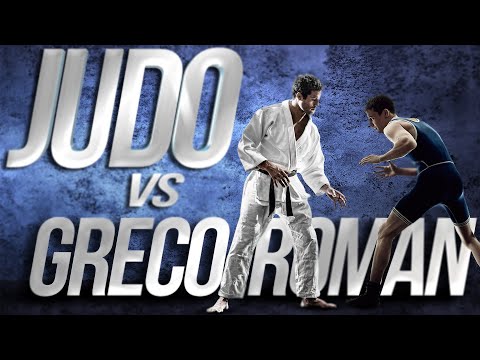
So, what do you think happens when an Olympic Judo Champion faces an Olympic Greco-Roman Champion in an MMA fight? This isn't mere speculation; it's a question that has been put to the ultimate test. Thanks to the legendary Pride FC organization, we were privileged to witness a prime example of this clash of titans. Judo gold medalist Hidehiko Yoshida and Greco-Roman Wrestling gold medalist Rulon Gardner squared off inside the ring, a contest that promised a fascinating battle of grappling supremacy.

But was it truly the clash of grappling styles many anticipated, or something more complex? As practitioners of the martial arts, we understand that translating Olympic-level specialization into the chaotic, multi-faceted arena of mixed martial arts is no simple feat. It requires more than just technical prowess; it demands adaptation, resilience, and a deep understanding of the warrior's spirit.

This encounter serves as a potent case study for anyone serious about combat sports. It forces us to question: what truly wins when two absolute masters of their distinct disciplines meet under a new set of rules?

When Worlds Collide: Olympic Champions in MMA

The allure of seeing champions from different combat sports test their mettle against each other is undeniable. It's a narrative that has captivated fans for decades. When athletes who have reached the pinnacle of their respective fields—like Olympic Judo and Greco-Roman Wrestling—step into the unpredictable realm of MMA, the stakes are raised exponentially. These are not just athletes; they are arguably the best in the world at what they do. Their Olympic gold medals are not mere decorations; they are proof of years, often decades, of relentless dedication, rigorous training, and an unwavering will to win.

However, the transition from a sport with a singular focus to the hybrid nature of MMA presents unique challenges. In Judo, throws and submissions are key, but striking is absent. Greco-Roman Wrestling is purely about the upper body, focusing on takedowns and control without the use of legs or submissions. MMA, on the other hand, integrates striking, grappling, and submissions from various disciplines. This convergence means that a master of one discipline, no matter how dominant, must confront weaknesses that were never relevant in their original sport.

"In a fight, there are no referees to call time. The only thing you can do is fight." - Miyamoto Musashi

The Pride FC era was particularly fertile ground for such dream matchups. The organization was renowned for its willingness to pit stylistic contrasts against each other, often in spectacular fashion. The bout between Rulon Gardner and Hidehiko Yoshida was a prime example of this philosophy, pitting two Olympic titans whose primary skill sets, while both grappling-based, were fundamentally different. The question wasn't just who was the better grappler, but who could adapt their lifelong skills to the unforgiving environment of the MMA cage.

Rulon Gardner: The Greco-Roman Titan

Rulon Gardner is an American legend in Greco-Roman wrestling. His most celebrated achievement was undoubtedly his shocking upset victory over Russia's three-time Olympic gold medalist Aleksandr Karelin at the 2000 Sydney Olympics. This victory cemented Gardner's place in wrestling history and showcased his incredible grit, determination, and strategic prowess within the confines of Greco-Roman rules.

Gardner's style in Greco-Roman wrestling was characterized by immense physical strength, powerful upper-body control, and an iron will. He excelled at clinching, breaking down opponents, and executing powerful throws or takedowns. His conditioning was superb, allowing him to maintain intense pressure throughout grueling matches. In Greco-Roman, the focus is entirely on the upper body; legs cannot be used for attacks or defense, and no submissions are allowed. This discipline demands exceptional core strength, explosive power, and a deep understanding of leverage and balance. Gardner embodied these traits, making him a formidable force in his chosen discipline.

Transitioning to MMA, Gardner brought this formidable wrestling base. His primary goal would have been to impose his superior control and strength, aiming for takedowns and potentially grinding out a decision or seeking a dominant position. However, the absence of leg attacks and the introduction of striking and submissions meant he had to evolve. Could his raw power and strategic clinch work translate against an opponent skilled in Judo's dynamic throws and submissions, and potentially capable of landing strikes?

Hidehiko Yoshida: The Judo Master

On the other side stood Hidehiko Yoshida, a Japanese judoka who captured the gold medal in the men's middleweight division at the 1992 Barcelona Olympics. Yoshida was not just an Olympic champion; he was a highly respected figure in the world of Judo, known for his dynamic throwing techniques (nage-waza) and his dangerous groundwork (ne-waza).

Judo, unlike Greco-Roman, incorporates the use of legs for sweeping and tripping, and crucially, emphasizes submissions like armbars and chokes from various positions. Yoshida's judo was characterized by powerful grips, explosive entries into throws, and a strong understanding of kuzushi (off-balancing an opponent). His Olympic victory was a testament to his mastery of these principles. He possessed a powerful seoi-nage (shoulder throw) and was adept at transitioning from standing techniques to ground control and submissions.

When Yoshida moved into MMA, he brought a dangerous combination of throwing ability and submission grappling. His judo background gave him an advantage in disrupting an opponent's balance and executing throws that could lead to dominant positions on the ground. The challenge for Yoshida in MMA, as with many judoka, was often adapting to the striking game and defending against techniques outside the scope of traditional judo, such as leg locks if he faced a BJJ specialist. However, against a wrestler like Gardner, Yoshida's throwing prowess and submission threat from the ground presented a unique set of dangers.

Pride FC Presents: Gardner vs. Yoshida

The fight between Rulon Gardner and Hidehiko Yoshida took place at Pride 32 in Las Vegas on October 21, 2006. The anticipation was palpable. Fans were eager to see how the raw power and control of Greco-Roman wrestling would fare against the dynamic throws and submission potential of Judo, all within the context of MMA.

The bout itself, however, did not unfold as many expected. While both athletes were Olympic gold medalists, their transition to MMA had presented significant challenges. Gardner, known for his aggressive wrestling style, struggled to impose his game. Yoshida, while a master of Judo, also found it difficult to implement his signature throws against Gardner's defensive posture and the limitations imposed by the MMA ruleset and Gardner's wrestling background.

The fight largely became a wrestling-heavy affair, with both men attempting takedowns and control. However, the dynamic exchanges and submissions that many hoped for were largely absent. The fight went the distance, with Rulon Gardner ultimately winning by unanimous decision. It was a testament to his ability to survive and control the fight, even if it wasn't the most spectacular display of martial arts.

Budo Analysis: Technique, Tactics, and the Spirit of Combat

From a Budo perspective, the Gardner vs. Yoshida fight is a profound lesson in adaptation and the realities of combat. While both men were Olympic champions, their MMA careers were often marked by struggles that highlighted the chasm between sport-specific mastery and the broader application of combat skills.

Greco-Roman vs. Judo in MMA:

  • Striking Defense: Both athletes, coming from grappling-only backgrounds, showed vulnerability to strikes. In MMA, the threat of punches and kicks changes the dynamic of grappling entirely. A simple clinch entry might be met with a knee or elbow.
  • Takedown Defense: While both were world-class wrestlers/judoka, defending takedowns in MMA is different. Opponents can attack the legs, use strikes to set up takedowns, and employ a wider array of setups than in their respective sports. Gardner's defensive wrestling was strong, but Yoshida struggled at times to implement his dynamic entries.
  • Submission Threat: Judo offers submissions, but MMA includes a broader range, particularly leg locks, which are absent in Judo. While Yoshida had submission skills, Gardner's wrestling base was primarily defensive against them, and he wasn't known for offensive submission work in MMA.
  • The "Spirit" of MMA: MMA demands a different mindset. It's not just about executing techniques; it's about enduring a multi-faceted attack and defending against varied threats. The pressure is immense, and the ability to adapt under fire is paramount. Both Gardner and Yoshida, despite their Olympic spirit, showed the steep learning curve.

Gardner's victory was a demonstration of his ability to use his core strength and defensive wrestling to nullify Yoshida's offense and control the fight. It wasn't a masterclass in offensive grappling within MMA, but it was an effective strategy against an opponent who also struggled to find his rhythm. It underscores the principle that even a "less exciting" strategy can be effective if it directly counters the opponent's strengths and exploits their weaknesses.

"Mastering others is strength. Mastering yourself is true power." - Lao Tzu

The fight also serves as a cautionary tale. Olympic champions are not automatically destined for success in MMA. The transition requires significant cross-training, a willingness to learn entirely new skill sets, and a deep respect for the diverse disciplines that constitute mixed martial arts. The technical purity of Judo or Greco-Roman wrestling, while incredibly effective in its own domain, must be augmented and adapted for the MMA arena.

Sensei's Verdict: A Lesson in Adaptation

Rulon Gardner vs. Hidehiko Yoshida was less a dazzling display of stylistic martial arts combat and more a stark illustration of the challenges faced by elite specialists transitioning to MMA. While both were Olympic gold medalists, their performance highlighted that Olympic-level mastery in a singular discipline does not automatically translate to dominance in a multi-disciplinary combat sport like MMA.

Gardner's win by decision was a testament to his superior defensive wrestling and his ability to manage the fight, preventing Yoshida from implementing his dynamic Judo. It demonstrated that fundamental wrestling control, even without offensive submissions, could be enough to neutralize a skilled Judo practitioner in this context. However, it was not a performance that showcased the full potential of either art form within MMA.

For the aspiring martial artist, the lesson is clear: specialization is crucial for reaching the highest levels in a specific sport, but success in MMA requires breadth. One must embrace cross-training, understand the interplay of striking and grappling, and cultivate a mindset that prioritizes adaptability above all else.

Sensei's Rating: 3 out of 5 Grips (A valuable lesson, but lacking in dynamic martial exchange).

Essential Training Gear for Grapplers

Whether you're training Judo, Greco-Roman, or BJJ, the right equipment can make a significant difference in your training. Investing in quality gear not only enhances comfort and performance but also ensures safety and durability.

  • High-Quality Gi/Kimono: For Judo and BJJ, a durable gi is essential. Look for double-weave or heavy-weave fabrics that can withstand the rigors of grappling. Brands like [Brand Name - Affiliate Link Placeholder] or [Another Brand - Affiliate Link Placeholder] offer excellent options. For specific recommendations on best judo kimonos, consider brands known for their resilience.
  • Wrestling Shoes: While not always necessary for Judo or BJJ training, wrestling shoes can provide excellent grip and ankle support for specific drills or if training in a facility with a slick mat.
  • Mouthguard: Crucial for any combat sport, a custom-fitted mouthguard is vital for protecting your teeth and jaw during sparring or live drills.
  • Training Apparel: For MMA or specific wrestling drills, comfortable and breathable rash guards and shorts are a must. Look for moisture-wicking fabrics.
  • Knee Pads: Essential for protecting your knees during takedown drills, groundwork, and various positional sparring.

Frequently Asked Questions

What is the main difference between Judo and Greco-Roman Wrestling?

Judo allows leg sweeps and trips, and emphasizes throws leading to ground submissions. Greco-Roman Wrestling prohibits the use of legs in attacking or defending and does not allow submissions, focusing solely on upper-body control and takedowns.

Can Olympic-level skills in one grappling sport guarantee success in MMA?

No. While Olympic skills provide a strong foundation, success in MMA requires adapting to striking, defending against a wider range of techniques, and understanding the multi-disciplinary nature of the sport. Many Olympic champions have struggled to transition successfully.

Was the fight between Gardner and Yoshida entertaining?

Many fans found the fight to be somewhat slow and tactical, lacking the high-octane exchanges often seen in MMA. It was more of a strategic wrestling match than a dynamic martial arts display.

What are the key takeaways from this fight for martial artists?

The fight highlights the importance of specialization versus generalization, the need for adaptability in combat sports, and the significant challenges of bridging the gap between different grappling disciplines and MMA.

Deepen Your Journey

Reflection of the Sensei: Your Next Step

Gardner and Yoshida proved that Olympic gold is a testament to incredible dedication, but the Octagon demands a different kind of warrior. When faced with the unknown, do you freeze, clinging to what you know, or do you adapt, forging new paths from the embers of old techniques? Consider this: In your own training, where are you most specialized, and where are you most resistant to learning? Is your focus so narrow that it blinds you to the broader battlefield of life?

``` GEMINI_METADESC: Analyze the epic clash between Olympic Judo gold medalist Hidehiko Yoshida and Greco-Roman champion Rulon Gardner in MMA. Learn about their skills, the fight, and Budo lessons.
Aikido vs. MMA: A Sensei's Unvarnished Critique of Effectiveness

The ring. The cage. The street. Different arenas, yet the fundamental principles of combat often echo through them. But what happens when a philosophy born from self-mastery and harmony, like Aikido, faces the raw, unadulterated pragmatism of modern Mixed Martial Arts (MMA)? This is not a question for casual observation; it demands a deep dive, a critical lens forged in the fires of tradition and tempered by the realities of contemporary conflict. Today, we dissect this apparent dichotomy, not to dismiss, but to understand.
The early days of MMA were a brutal spectacle, a chaotic clash of styles where bouts were often decided in the blink of an eye. It was a proving ground, a crucible that forged a new breed of warrior. But that era, characterized by lightning-fast finishes and stylistic shock, has given way to a sophisticated sport. Modern MMA is a meticulously crafted fusion, a synthesis of the most potent elements drawn from wrestling, Judo, Sambo, Brazilian Jiu-Jitsu, Kickboxing, Boxing, and Muay Thai. This amalgamation has propelled it to global popularity, captivating millions with its blend of technique, strategy, and raw athleticism. ### Tabla de Contenidos

The Philosophy of Aikido: Harmony and Control

Aikido, often translated as "the Way of Harmonizing Energy," is a martial art deeply rooted in philosophical principles. Founded by Morihei Ueshiba, its essence lies not in confronting force with force, but in blending with an attacker's energy, redirecting their momentum, and neutralizing them with minimal harm. The techniques emphasize circular movements, joint locks (kansetsu-waza), throws (nage-waza), and pins (osaekomi-waza). The goal is not to injure, but to control, to achieve victory through redirection and strategic application of pressure. It is a path that seeks to cultivate inner peace, discipline, and a profound understanding of human interaction. > "Victory over yourself is the greatest victory." - Morihei Ueshiba This emphasis on harmony and self-control is profoundly admirable. In a self-defense context against a street aggressor—often characterized by uncontrolled aggression and a lack of sophisticated technique—Aikido can indeed be remarkably effective. A well-executed wrist throw or a swift pin can disarm a cocky attacker, stopping a confrontation before it escalates into a more dangerous situation. The art teaches practitioners to read an opponent's intent and to use their attacker's own power against them.

The Unforgiving Arena of MMA

Mixed Martial Arts, by its very definition, is an environment where diverse fighting styles converge. Unlike the singular focus of many traditional arts, MMA demands proficiency across striking, grappling, and positional control. Fighters are trained to deliver and absorb powerful strikes, to execute takedowns, to defend against them, and to navigate the complex landscape of ground fighting. The ruleset, while evolving, generally allows for a comprehensive engagement of combat skills. This multi-faceted nature is what makes MMA so compelling and, for practitioners of more specialized arts, so challenging to adapt to. The sport has evolved from a stylistic free-for-all to a highly technical discipline. Fighters now train holistically, understanding that weaknesses in one area can be ruthlessly exploited by an opponent skilled in another. The era of the "stylistic clash" has matured into a strategic battleground where complete martial artists thrive.

Aikido's Principles on the MMA Canvas: A Tactical Breakdown

Now, let us address the core question: how would Aikido fare within the structured chaos of an MMA bout? We must analyze its core principles against the demands of the cage. The philosophy of Aikido centers on blending and redirection. This is exceptionally potent when facing an opponent who is charging in wildly or attempting a single, committed attack. An Aikido practitioner trained to sense this momentum could potentially deflect a wild haymaker or redirect a charging opponent into a throw. The fluidity and circular motion are designed to unbalance and control. However, the MMA environment presents a different kind of challenge. Unlike a street confrontation where an attacker might be unskilled and predictable, MMA opponents are highly trained specialists, often with devastating striking power and robust grappling abilities.

The Critical Flaw: Deflecting Strikes

Herein lies Aikido's most significant hurdle in an MMA context: striking defense. While Aikido techniques often involve deflecting or evading an incoming strike as part of a larger movement to a throw or lock, they are rarely designed to absorb or counter a direct, powerful blow. In MMA, fighters train extensively to deliver and withstand strikes. Punches, kicks, elbows, and knees are integral weapons. An Aikido practitioner's typical defensive posture and movements, focused on evasion and redirection *into* a grappling exchange, can leave them dangerously exposed to the sheer impact of determined strikes. Imagine an attempt to blend with a jab; while the intent might be to control the arm, a skilled MMA fighter will follow through with power, potentially landing the punch before the blend is complete, or initiating a barrage of strikes that the Aikido technique is not designed to parry effectively. While some Aikido styles incorporate strikes (atemi), they are often secondary to the throws and locks, and not developed to the same level of offensive and defensive sophistication as those found in Muay Thai or Boxing. The risk of absorbing significant damage before successfully executing a technique is exceptionally high.

The Nuances of Control: Aikido vs. Ground Combat

Aikido excels in controlling an opponent once engaged, particularly in standing grappling situations. Joint locks like *ikkyo* or *shihonage* are designed to incapacitate or unbalance. Throws can take an opponent down effectively. However, MMA's grappling is a different beast. Brazilian Jiu-Jitsu and Sambo, staples of MMA, focus heavily on positional control and submissions on the ground. The objective in MMA grappling is not merely to *control* an opponent, but to advance position, achieve dominant grappling positions (like mount or side control), and secure submissions (chokes and joint locks that force a tap-out). An Aikido throw might bring an opponent down, but it doesn't inherently guarantee a dominant position. An MMA fighter trained in BJJ or Sambo would likely use that transition to immediately work for a superior position or a submission. Furthermore, the emphasis on breaking an opponent's structure and balance in Aikido is different from the pressure-based, submission-oriented approach of ground fighting in MMA. While an Aikido lock might be effective, an MMA fighter accustomed to defending against a wide array of submissions might have the tools and training to escape or counter it. The concept of *mushin* (no-mind) in Aikido is about detached awareness, but in MMA, focused aggression and offensive pressure are often paramount. The physical conditioning and resilience required for MMA grappling are also distinct. Fighters are conditioned to endure prolonged periods of intense grappling, to generate power from static positions, and to resist submission attempts.

Beyond Technique: The Mental Battlefield

> "Empty your mind, be formless. Shapeless, like water. If you put water into a cup, it becomes the cup. You put water into the bottle and it becomes the bottle. You put it in the teapot, it becomes the teapot. Now, water can flow or it can crash. Be water, my friend." - Bruce Lee This quote, though from Bruce Lee, resonates with the adaptability preached in many martial arts, including Aikido's call for harmony and fluidity. However, the mental fortitude required in MMA is a unique blend of aggression, resilience, and strategic calculation. Aikido cultivates mental calm and presence. This is invaluable. However, MMA demands the ability to remain calm *while* under immense physical duress, absorbing strikes, defending submissions, and managing fatigue. It requires a specific kind of aggression—not uncontrolled anger, but a focused, combative drive to impose one's will and achieve victory within the rules. The "no-mind" state in Aikido is about achieving a state of flow and awareness where actions are instinctive and unhindered by conscious thought. In MMA, this *mushin* must be coupled with an acute awareness of the opponent's strategy, the fight clock, and the fighter's own physical condition—a much more complex mental calculus.

Sensei's Verdict: Effectiveness in the Cage

Let's be direct. As a primary martial art for competition in MMA, Aikido, in its traditional form, presents significant challenges. Its strengths—harmony, redirection, control—are formidable in their intended context, particularly for self-defense against untrained assailants. However, the MMA arena is a different ecosystem. The lack of a robust, dedicated striking arsenal and the potential vulnerability to powerful, precise strikes pose a critical issue. Furthermore, while Aikido's grappling is effective for control and takedowns, it doesn't inherently prepare a practitioner for the submission-heavy, positionally complex world of modern MMA ground fighting. An MMA fighter with a solid foundation in BJJ or Wrestling would likely have a significant advantage in neutralizing Aikido techniques and imposing their own grappling dominance. Is Aikido entirely useless in MMA? No. A practitioner with exceptional timing, an uncanny ability to read an opponent, and perhaps complementary training in striking or ground work, might find ways to incorporate its principles. The ability to sense an opponent's movement and off-balance them is a universal martial principle. However, relying solely on traditional Aikido techniques would be akin to bringing a finely crafted sword to a gunfight. It's a beautiful tool, but perhaps not the right one for this specific battle. Aikido's true strength lies in its philosophical depth and its effectiveness in de-escalation and self-defense outside the competitive sports realm. It cultivates qualities of character—discipline, respect, self-awareness—that are invaluable to any martial artist, regardless of their chosen discipline.

Essential Training Gear for Your Journey

To embark on any martial arts journey, the right equipment is crucial. While Aikido traditionally emphasizes the *hakama* and *gi*, MMA requires a more specialized set of gear for training and competition.
  • MMA Gloves: Padded gloves are essential for sparring to protect your hands and your training partners. Look for gloves around 4-6oz for MMA-specific sparring.
  • Mouthguard: Non-negotiable for any form of sparring or live drilling to protect your teeth and jaw.
  • Groin Protector: A vital piece of safety equipment to prevent serious injury.
  • Shin Guards: Necessary for Muay Thai or Kickboxing drills to protect your shins from repeated impact.
  • Rash Guards and Spats: These form-fitting garments reduce friction during grappling, helping to prevent mat burns and allowing for smoother movement.
  • Wrestling Shoes (Optional): Some practitioners prefer wrestling shoes for improved grip and ankle support during grappling sessions.
  • High-Quality Gi or Kimono: For Judo or BJJ training, a durable, double-weave gi is paramount. Consider brands known for their longevity and fit, like KarateMerchandise or brands specializing in Judo uniforms.
For those interested in the philosophical aspects or history, investing in foundational texts is always wise. Books on Budo, the Warrior Philosophy, or biographies of martial arts masters can provide invaluable insights.

Frequently Asked Questions

Is Aikido completely useless in MMA?

Not entirely. Its principles of balance, redirection, and timing can be beneficial. However, as a primary system for MMA competition, it lacks crucial elements like dedicated striking offense/defense and ground submission specialization.

What are the main differences between Aikido and MMA grappling?

Aikido grappling focuses on joint locks, throws, and controlling an opponent to neutralize them, often with minimal damage. MMA grappling (BJJ, Sambo, Wrestling) emphasizes positional dominance, submissions (chokes, joint locks designed to force a tap), and ground-and-pound.

Can an Aikido practitioner effectively defend against MMA strikes?

This is a significant challenge. Traditional Aikido defense is not designed to absorb or effectively counter the power and variety of strikes found in MMA. While evasion is key, direct impact is a major risk.

What martial arts are considered most effective in MMA?

Currently, a strong base in Brazilian Jiu-Jitsu (for grappling), Muay Thai or Kickboxing (for striking), and Wrestling (for takedowns and takedown defense) forms the core of most successful MMA fighters.

Is Aikido still valuable for self-defense?

Absolutely. Aikido's focus on de-escalation, controlling an attacker, and using an opponent's energy makes it highly effective in many real-world self-defense scenarios, especially against untrained aggressors.

Deepen Your Understanding

To truly grasp the nuances of martial arts philosophy and its application in combat, exploration is key. Continue your journey with these related topics:

Sensei's Reflection: Your Next Step

We have dissected the formidable world of MMA and contrasted it with the elegant philosophy of Aikido. The cage demands a different kind of warrior, one forged in a crucible of diverse combat disciplines. Yet, the pursuit of martial arts is not solely about victory in competition. It is about self-improvement, discipline, and understanding. The question then becomes: What is your objective? Are you seeking to compete in a sport where raw pragmatism reigns, or are you pursuing a path of self-mastery and harmonious control? Perhaps the true answer lies not in choosing one over the other, but in understanding their respective strengths and appreciating the wisdom each offers.

Reflexión del Sensei: Tu Próximo Paso

If you were to step into an MMA octagon tomorrow with only your Aikido training, what single principle or technique would you rely on, and what is the greatest danger you would face? Reflect on this not just as a theoretical exercise, but as a lesson in the specificity of martial application. GEMINI_METADESC: A Sensei analyzes Aikido's effectiveness in MMA, debating its philosophy against the cage's reality. Discover the strengths and limitations of each.

Judo vs. MMA: A Sensei's Tactical Breakdown of Dominance

The roar of the crowd, the glint of sweat under the arena lights, the coiled tension before a strike or a takedown. These are the primal elements that draw us to combat sports. But when a Judoka, a master of the throw and the ground game, steps into the cage against an MMA fighter, a specialist in a multi-disciplinary war, what transpires? Is it a clash of titans, or a predictable outcome? This isn't about mere physical prowess; it's about the application of refined principles honed over centuries versus a modern, brutal synthesis. We are about to dissect this very confrontation, not as mere spectators, but as students of the Budo, examining the strategic depth, the technical nuances, and the philosophical underpinnings that dictate victory.

The Genesis of the Duel: Judo vs. MMA

Welcome, practitioners of the Budo and aficionados of the martial arts. Today, we confront a scenario that has ignited countless debates in dojos and online forums alike: the direct confrontation between a pure Judoka and a seasoned Mixed Martial Arts (MMA) fighter. The question is not simply about who is stronger, but who can adapt, who can impose their will, and whose fundamental principles of combat will prevail. Is the devastating potential of a perfectly executed Uchi-mata enough to overcome a barrage of strikes? Can a master of O-soto-gari translate their grappling prowess to an environment devoid of the gi?

Let's be clear: these are not the same battles. Judo, as codified by Jigoro Kano, emphasizes mutual welfare and prosperity, a path of maximum efficiency with minimum effort. MMA, on the other hand, is a brutal crucible, a synthesis of the most effective techniques from across the globe, stripped of tradition and focused solely on victory. This dichotomy forms the bedrock of our analysis.

The Judoka's Arsenal: Unlocking the Power of Kuzushi

A Judoka enters the fray with a formidable foundation. Their understanding of kuzushi – the art of unbalancing an opponent – is paramount. This is not merely about brute strength; it's about leverage, timing, and understanding the opponent's center of gravity. Techniques like Seoi-nage, Ippon-seoi-nage, and the ubiquitous Uchi-mata are not just moves; they are physics-defying applications of kinetic energy transfer.

In a gi-based environment, a Judoka can employ grips that provide immense control, allowing them to break down an opponent's posture and set up devastating throws. The ability to transition seamlessly to the ground and apply submissions like Sankaku-gatame (triangle choke) or Gyaku-juji-jime (reverse cross choke) is another layer of their offensive capability. These are skills honed through thousands of repetitions, ingrained into muscle memory.

However, the MMA cage presents a starkly different landscape. The absence of a gi negates the primary method of control for a Judoka. Without the familiar fabric to grip, the art of kuzushi becomes exponentially more challenging, relying on body control and clinch work rather than the secure grips of the judogi. This is where the conceptual understanding of Judo must be rigorously tested.

The MMA Chameleon: Adapting to the Unfamiliar

The MMA fighter is, by definition, a generalist. They are trained to weather the storm from various martial disciplines – striking arts like Boxing and Muay Thai, grappling arts like Brazilian Jiu-Jitsu (BJJ) and Wrestling, and sometimes even elements of Karate or Taekwondo. Their strength lies not in singular mastery, but in their ability to seamlessly blend these arts and exploit an opponent's weaknesses.

An MMA fighter facing a Judoka will likely anticipate the takedown attempts. Their training will focus on defending throws, establishing dominant grips (or lack thereof), and creating space to employ their striking arsenal. A well-timed knee to the head in the clinch, or a barrage of punches while the Judoka attempts to secure a grip, can quickly neutralize the thrower's advantage. Furthermore, a skilled MMA fighter will have extensive training in defending submissions and, crucially, in executing their own submissions from various positions, often learned through the lens of BJJ.

"The supreme art of war is to subdue the enemy without fighting." - Sun Tzu. In MMA, this often translates to dictating the pace and range of engagement.

The MMA fighter’s conditioning is also typically tailored for longer, more grueling bouts where the intensity of grappling exchanges is sustained. While Judokas possess incredible stamina for their sport, the all-out, multi-faceted war of MMA is a different beast entirely. The ability to absorb damage and fight through adversity is a core component of an MMA fighter's mettle.

A Sensei's Technical Deep Dive: From Gi to Cage

Let's break down the technical battleground:

  • Standing Exchange: Here lies the Judoka's primary challenge. Without the gi, effective grips are difficult to establish. They must rely on open-hand clinching, head control, and exploiting minute openings to initiate a throw. Techniques requiring significant lapel or sleeve grip, like a strong O-uchi-gari or Harai-goshi, become significantly harder to execute. The MMA fighter, conversely, will aim to keep the distance, use their jab and straight punches to manage the space, and be ready to sprawl or counter a takedown attempt. The potential for striking is high here, which is a clear advantage for the MMA fighter.
  • The Clinch: This is where the battle for control intensifies. A Judoka's Tsurikomi-goshi or Uki-goshi might still be viable if they can secure a body lock. However, MMA clinch work often involves controlling the wrists and head, preventing the opponent from gaining the necessary leverage for a throw, while also looking for knees or short punches. A well-trained MMA wrestler can often counter a Judo clinch with superior head positioning and takedown defense (e.g., a double leg or single leg).
  • Ground Game: If the Judoka successfully secures a takedown and lands in a dominant position (e.g., kesa-gatame), their advantage is substantial. However, MMA fighters are adept at transitioning from defending takedowns to scrambling back to their feet or attacking from the bottom. Judo's emphasis on pins (Osaekomi-waza) is powerful, but MMA fighters are trained to escape pins quickly and create submission opportunities. BJJ's influence means MMA fighters are often more comfortable and dynamic in scrambles and submissions from disadvantageous positions than a pure Judoka might be, especially one accustomed to gi grips.

Consider the case of Uchi-mata. In Judo, it's a spectacular throw initiated with a specific pulling and reaping motion, often facilitated by gripping the opponent's gi. In MMA, without that grip, the reap becomes a more generalized leg sweep or sweep attempt, highly susceptible to being countered by a wrestler's sprawling or a striker's balance shift. The effectiveness of Judo techniques is intrinsically linked to the context in which they are applied.

Beyond the Physical: The Budo Spirit in Combat

At its core, Judo is a Budo, a "way of war" focused on self-development. It teaches discipline, respect, and resilience. The principle of Seiryoku Zenyo (maximum efficiency, minimum effort) is not just a physical tactic but a philosophical guide to life. Can this philosophy translate into the unforgiving environment of an MMA bout?

An MMA fighter's philosophy is often one of survival and dominance. While discipline and resilience are certainly necessary, the underlying ethos is different. It's about adapting to win, using whatever works. This pragmatism can be both a strength and a weakness. A Judoka, trained in the principles of Judo, might exhibit greater composure under pressure, focusing on the technical execution rather than succumbing to the chaos. However, that same adherence to Judo principles, if not adapted, can become a rigidity that an MMA fighter exploits.

"The true Budo practitioner is one who, even in the heat of battle, retains the calm and clarity of a serene mind. This is the essence of Mushin – no-mind."

The spiritual dimension of martial arts often provides a deep well of inner strength. For a Judoka, this might manifest as an unwavering focus on technique and process. For an MMA fighter, it might be a fierce tenacity, a refusal to be broken. Which spirit is better suited to the cage? It often depends on the individual, but the Judoka's ingrained discipline offers a powerful psychological advantage if they can maintain their composure and execute their game plan.

Veredict of the Sensei: Who Reigns Supreme?

Let us not mince words. In a direct, rules-free confrontation, the MMA fighter, by virtue of their comprehensive training, generally holds the advantage. Their ability to seamlessly transition between striking and grappling, their defense against Judo's primary weapons (throws and gi-based submissions), and their often superior conditioning for the specific demands of MMA combat give them a significant edge.

However, this is not to dismiss the Judoka. A Judoka who has cross-trained in MMA, specifically focusing on striking defense and no-gi grappling, can be an incredibly dangerous opponent. A Judoka who understands how to use their entries and timing without the gi, and who has developed strong wrestling defense, can absolutely impose their will. The key is adaptation. Without it, the Judoka faces an uphill battle.

Cinturón Negro en Adaptación: An MMA fighter who has spent years honing their craft across multiple disciplines. They understand the rhythm of the fight and can exploit openings in striking, clinch, or ground.
Cinturón Azul Descolorido: A pure Judoka, unaccustomed to striking, fighting without the gi, and unfamiliar with MMA grappling nuances. Their core Judo skills are present but may not be fully applicable.

The outcome is not predetermined. It hinges on the specific skillset and adaptability of the individual athletes. But in a vacuum of preparation, the MMA fighter's versatility is their ultimate weapon.

Essential Gear for Your Training

To excel in either Judo or MMA, the right equipment is not a luxury, but a necessity. Investing in quality gear shows respect for the art and for yourself. For aspiring Judokas, the fundamental piece of equipment is a durable judogi. Look for double-weave cotton kimonos that can withstand the rigors of throwing and grappling. For MMA, a good pair of training shorts (designed for movement and durability) and boxing or MMA gloves are essential. Shin guards and mouthguards are crucial for sparring safely. Consider investing in a quality makiwara for striking conditioning or a grappling dummy for solo submission drills.

  • Judogi: A high-quality, pre-shrunk judo uniform (e.g., best judo gis for competition and training).
  • MMA Shorts: Lightweight and flexible shorts that allow for a full range of motion.
  • Training Gloves: 4oz or 6oz MMA gloves for striking and light grappling.
  • Mouthguard: Essential for protecting your teeth and jaw during sparring.
  • Wrestling Shoes: For improved traction and ankle support in striking and grappling.
  • Training Matting: For safe practice at home.

Training Drills for Cross-Disciplinary Skills

To bridge the gap between Judo and MMA, specific drills are vital:

  1. No-Gi Grip Fighting & Clinch Control: Practice establishing body locks and head control without the gi. Focus on transitions and fighting for dominant positions in the clinch.
  2. Takedown Defense (Sprawls & Counters): Work on quickly recognizing takedown attempts and executing effective sprawls. Drill countering single and double leg takedowns with leg rides or trip attempts.
  3. Striking Integration: Incorporate punches, elbows, and knees into clinch work. Practice throwing and immediately transitioning to a dominant ground position or defending a counter-strike.
  4. Ground Escapes & Submission Defense: Practice escaping pins and unfavorable positions. Drill defending common MMA submissions like rear-naked chokes and armbars.
  5. Live Sparring (MMA Ruleset): Regular sparring under MMA rules, with partners who have diverse skill sets, is the ultimate test.

Frequently Asked Questions

Q1: Can a Judo throw always be adapted for MMA?
A1: Not always directly. Techniques that heavily rely on gi grips are difficult to execute effectively without them. However, the underlying principles of unbalancing (kuzushi) and leverage can be adapted.

Q2: Is BJJ better than Judo for MMA?
A2: BJJ and Judo have different focuses. BJJ emphasizes ground submissions and positional control, often without a gi. Judo excels in explosive throws and pins. Many top MMA fighters train in both, leveraging the strengths of each.

Q3: What is the most important skill for a Judoka moving to MMA?
A3: Adaptability and striking defense. Learning to defend strikes, establish control without the gi, and transition to offensive grappling or striking effectively are crucial.

Q4: How do Judokas train for MMA?
A4: They typically incorporate striking training (boxing, Muay Thai), no-gi grappling (often with BJJ or wrestling coaches), and specific conditioning for MMA rounds.

Deepen Your Journey

To truly understand the complexities of combat sports, one must explore various facets of the martial world. Here are some resources to further your education:

Reflexión del Sensei: Tu Próximo Paso

You have seen the technical and philosophical considerations of a Judo versus MMA encounter. Now, I ask you:

If you were a Judoka preparing for an MMA bout, what single Judo technique would you prioritize adapting, and why? Conversely, if you were an MMA fighter facing a Judoka, what is the first element of their game you would neutralize, and how?

The mats, the cage, and life itself are arenas for learning and adaptation. Prove your understanding. Discuss your strategy in the comments below. Do not hold back; your insights are valuable.

``` GEMINI_METADESC: Sensei's expert analysis: Judo vs. MMA. Discover the tactical advantages, technical differences, and philosophical clashes between these combat disciplines. Who truly dominates the cage?

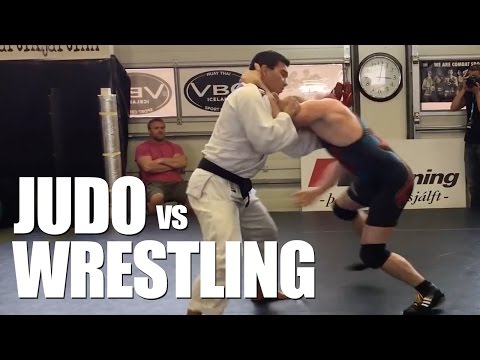
Judo vs. Freestyle Wrestling: A Deep Dive into Grappling Supremacy

Greetings, aspiring warriors and seasoned practitioners! Today, we confront a question that echoes through the annals of combat sports: Judo versus Freestyle Wrestling. Is one a superior art of grappling? Or are they simply different paths leading to the same summit of physical and mental dominance? Many of you seek to understand the core differences, the practical applications, and perhaps even the lineage that binds and separates these formidable disciplines. Prepare yourselves, for we are about to dissect this clash of titans with the precision of a well-executed throw and the insight of a thousand training sessions.

Table of Contents

The Core Philosophies: Beyond the Throw

At first glance, both Judo and Freestyle Wrestling are titans of the mat, focusing on throws, takedowns, pins, and submissions. Yet, their underlying philosophies paint distinct portraits of the warrior. Judo, born from the mind of Jigoro Kano, emphasizes maximum efficiency with minimum effort – *Seiryoku Zenyo* – and mutual welfare and prosperity – *Jita Kyoei*. It's a system designed not just for combat, but for self-development and societal contribution. Kano sought to create a path of physical, intellectual, and moral education. Freestyle Wrestling, conversely, is a direct descendant of ancient wrestling styles. Its primary objective is to dominate the opponent through superior control, leverage, and physical conditioning, aiming for pinfall or points through takedowns and control. While discipline is paramount, the emphasis leans more heavily towards raw athletic prowess and strategic control in a competitive environment. It is about overcoming the opponent, a fundamental aspect of combat that Kano himself acknowledged as a precursor to Judo's broader goals.
The essence of Judo is not to defeat others, but to defeat the worst in oneself.
This philosophical divergence is crucial. A Judoka might seek a perfect throw, not just for the win, but for the aesthetic and technical beauty of the movement, demonstrating mastery over self and opponent. A Freestyle Wrestler is driven by the immediate imperative to control and subdue, their strategy honed for victory within the specific rule set of their discipline.

Technique vs. Technique: A Comparative Breakdown

The practical differences are where the true debate lies.

Judo: The Art of Yielding and Dominating

Judo's arsenal is rich with throws, sweeps, and holds. Its signature techniques often involve using an opponent's momentum against them. Key elements include:
  • Grips (Kumi-kata): Judo places immense importance on grip fighting. Mastering grips is fundamental to controlling an opponent's posture and initiating throws.
  • Throws (Nage-waza): Techniques like the O-soto-gari (Major Outer Reap), Ippon-seoi-nage (One-arm Shoulder Throw), and Uchi-mata (Inner Thigh Throw) are hallmarks of Judo. They often require precise timing and kuzushi (breaking balance).
  • Groundwork (Ne-waza): While throws are iconic, Judo also incorporates extensive groundwork, including pins (Osaekomi-waza), joint locks (Kansetsu-waza - primarily on the elbow), and strangles (Shime-waza). However, leg locks are generally disallowed in competition Judo, a significant point of divergence from wrestling.
  • Attacks to the Arms and Neck: Judo allows for submissions targeting the arms and neck, adding a strategic depth to its ne-waza.

Freestyle Wrestling: The Pursuit of Superior Control

Freestyle Wrestling, on the other hand, is characterized by its explosive takedowns and relentless pressure.
  • Takedowns: Emphasis is on powerful shots like the double-leg takedown, single-leg takedown, and various throws that often end in dominant positions on the ground.
  • Ground Control: Wrestlers excel at maintaining top pressure, transitioning between pins, and working towards exposing the opponent's back or forcing them to their shoulders.
  • Leg Attacks: Unlike Judo, Freestyle Wrestling permits attacks to the legs, which forms the basis for many of its signature takedowns and scrambles.
  • Limited Submissions: While wrestlers can achieve submission-like positions through pins and control, direct submission holds (like chokes and armbars) are not typically part of the competitive Freestyle Wrestling rule set. The goal is control and pinning.
The absence of leg locks in Judo and the restriction of direct submissions in Freestyle Wrestling creates distinct strategic landscapes. A Judoka must develop impeccable balance and throwing mechanics, while a Freestyle Wrestler must cultivate explosive power, relentless pursuit, and superior mat control.

The Mental Arena: Discipline and Spirit

Beyond the physical, the mental fortitude required is immense for both.

Judo's Path to Self-Mastery

In Judo, the concept of *Mushin* (no mind) and *Zanshin* (lingering awareness) are paramount. The rigorous practice of *randori* (sparring) teaches practitioners to react instinctively, to remain calm under pressure, and to learn from every interaction. The emphasis on etiquette, bowing, and respect for one's training partners instills a deep sense of discipline and humility.

Freestyle Wrestling's Grit and Tenacity

Freestyle Wrestling demands an iron will. The grueling conditioning, the constant pressure of being on the mat, and the sheer physical exertion forge a unique brand of resilience. Wrestlers learn to push through pain and fatigue, to adapt on the fly, and to maintain aggressive intent even when exhausted. This is a test of sheer tenacity and the will to impose one's dominance.
In wrestling, you learn that quitting is not an option. You push until you can't push anymore, and then you push a little further.
Both arts cultivate extraordinary mental toughness, but the flavor differs. Judo hones mental clarity and adaptability, while Freestyle Wrestling builds an unyielding spirit of combat.

Application in Modern Combat: Real-World Scenarios

This is where the debate often ignites, especially in the context of Mixed Martial Arts (MMA).
  • Judo's Edge: Judo's powerful throws and its groundwork, which includes chokes and arm locks, offer a potent package for MMA. A skilled Judoka can take an opponent down, control them on the ground, and finish the fight with a submission or a dominant pin. The ability to off-balance and throw from various ranges is invaluable.
  • Wrestling's Foundation: Freestyle Wrestling is widely regarded as the most dominant base for MMA grappling. Its emphasis on takedowns, relentless pressure, and conditioning allows fighters to dictate where the fight takes place and to exhaust their opponents. The ability to chain takedowns and defend takedowns are crucial skills that wrestlers possess at an elite level.
However, the effectiveness of either art in MMA depends heavily on the individual practitioner. A Judoka who cross-trains in striking and leg attacks, or a wrestler who learns advanced submission techniques, can become a truly formidable force. The rules of sport combat often limit the full spectrum of these arts, and their adaptation for a different arena is key.

Veredict of the Sensei: Which Reigns Supreme?

To ask which is "superior" is to fundamentally misunderstand the nature of martial arts. Both Judo and Freestyle Wrestling are complete and effective systems of grappling. Their "supremacy" lies not in an objective ranking, but in their alignment with the practitioner's goals and temperament.
  • For holistic development and self-perfection: Judo offers a broader path, integrating physical prowess with moral and intellectual growth.
  • For sheer dominance in a competitive grappling context: Freestyle Wrestling's relentless pressure and versatile takedown game are exceptionally effective.
In the context of MMA, Freestyle Wrestling has historically shown a slight edge due to its allowance of leg attacks and the emphasis on maintaining dominant control, which translates well to the cage. However, many of the most successful MMA grapplers are either Judokas who have supplemented their skill set or wrestlers who have learned submission techniques. The true victor is the athlete who masters the principles of leverage, timing, and control, regardless of the specific style.

Essential Gear for Your Grappling Journey

To embark on your grappling journey, proper attire and a conducive environment are key.
  • Judogi: For Judo, a sturdy, double-weave Judogi is essential. It must be durable enough to withstand rigorous gripping and throwing. Look for brands known for their quality and reinforced stitching, especially around the seams and lapels.
  • Wrestling Singlet: Freestyle Wrestlers typically wear a lightweight, form-fitting singlet. This allows for maximum freedom of movement and reduces potential gripping points for the opponent.
  • Training Mats (Tatami/Wrestling Mats): A safe training surface is non-negotiable. Whether you train on traditional Tatami mats for Judo or specialized wrestling mats, ensure they provide adequate cushioning to prevent injuries during throws and falls.
  • Mouthguard: Crucial for any combat sport, a mouthguard protects your teeth and jaw, reducing the risk of concussions.
For those looking to refine their skills at home, a good pair of wrestling shoes can provide excellent grip on various surfaces, and resistance bands can be used for conditioning exercises. Investing in quality gear is not just about comfort; it's about safety and enhancing your training experience. Consider exploring dedicated Martial Arts Merchandise or specific Judo Equipment and Wrestling Gear retailers.

Training Guide: Developing Your Grappling Foundation

Whether you choose Judo or Freestyle Wrestling, the path to mastery involves consistent, intelligent training.
  1. Master the Fundamentals: Start with the basics. For Judo, this means understanding grips, posture, and basic footwork. For Wrestling, focus on stance, level changes, and basic takedown entries.
  2. Drill Relentlessly: Consistent repetition of techniques (uchi-komi in Judo, drilling in wrestling) builds muscle memory and perfects execution. Focus on quality over quantity.
  3. Engage in Live Sparring (Randori/Live Wrestling): This is where you apply techniques under pressure. Learn to adapt, defend, and attack. Listen to your instructors and learn from every exchange. This is vital for developing Agility and Combat readiness.
  4. Develop Physical Conditioning: Grappling is physically demanding. Incorporate strength training, cardiovascular conditioning, and flexibility exercises. Exercises like No Equipment workouts or At-Home Workouts can supplement your dojo training.
  5. Study the Art: Read books, watch instructional videos, and learn about the history and philosophy of your chosen discipline. Understanding the "why" behind techniques enhances their application.
Consistency is the cornerstone of progress. Even short, focused sessions several times a week will yield far greater results than infrequent marathon training. Remember the principle of Perseverance, a key trait in all Martial Artists.

Frequently Asked Questions

What is the main difference between Judo and Freestyle Wrestling?

Judo focuses on throws, pins, joint locks, and strangles, with a philosophical emphasis on efficiency and mutual welfare. Freestyle Wrestling emphasizes takedowns, control, and pinning, with a focus on athletic dominance and less restriction on leg attacks.

Which art is better for self-defense?

Both provide excellent skills for self-defense. Judo's throws and submissions are highly effective, while Wrestling's takedowns and control offer a strong foundation. The effectiveness depends on the practitioner's training and ability to adapt.

Can a Judoka beat a Freestyle Wrestler?

Yes, in a hypothetical match, it is entirely possible. The outcome would depend on the specific skills, experience, and strategies of the individuals involved, as well as any rule sets governing the encounter.

Are leg locks allowed in Judo?

Generally, leg locks are not permitted in competitive Judo, though some exceptions exist in certain IJF rule sets for junior or specific events. In Freestyle Wrestling, leg attacks are a fundamental part of the sport.

Deepen Your Path: Further Exploration

For those who wish to delve deeper into the world of grappling and martial philosophy, consider exploring these related topics:
The journey of a thousand miles begins with a single step. In martial arts, that step is taken with humility and a commitment to continuous learning.

Reflexión del Sensei: Tu Próximo Paso

We have dissected the core principles, techniques, and mental landscapes of Judo and Freestyle Wrestling. But knowing is only the first step. The true test lies in application. When you next step onto the mat, or even when you face a challenge in your daily life, ask yourself: "Am I approaching this with the yielding precision of Judo, or the unyielding tenacity of Wrestling? And how can I integrate the strengths of both into my own pursuit of mastery?" The answer, and your next step, lies within your own spirit. ``` GEMINI_METADESC: Explore the profound differences and similarities between Judo and Freestyle Wrestling. Discover their philosophies, techniques, mental demands, and effectiveness in combat sports.

The Incredible Story of MMA & The UFC: A Budo Warrior's Perspective

Introduction: The Birth of the Modern Gladiators

What is it that draws us to the raw, unfiltered spectacle of men and women testing their limits in combat? For centuries, humanity has been captivated by martial prowess, from the ancient Olympic pankration to the samurai's duel. Today, few arenas command such attention as the octagon, the birthplace of modern Mixed Martial Arts (MMA) and the epicentre of the Ultimate Fighting Championship (UFC). But how did we arrive at this point? Is MMA merely a brutal display of violence, or does it embody a profound lineage of warrior traditions? As a student of the Budo and a critic of martial arts cinema, I can assure you, the story is far richer and more complex than it appears on the surface. This is not just about knockouts and submissions; it's about the evolution of combat, the test of human spirit, and the enduring philosophy that underpins every strike, every grapple, every moment of victory and defeat. Prepare yourselves, for we are about to embark on a journey through the history of MMA and the UFC, viewed through the critical lens of a martial arts Sensei.

From Ancient Roots to Modern Arenas

The concept of "mixed martial arts" isn't a recent invention. Long before the UFC, combatants across the globe honed diverse skill sets to overcome their opponents. Think of the ancient Greeks and their pankration, a devastating blend of boxing and wrestling. Consider the Shaolin monks, who synthesized numerous fighting styles into a cohesive system. Even the legendary Miyamoto Musashi, with his unique "Niten Ichi-ryū" (Two Heavens as One style), advocated for mastering a multitude of weapons and strategies, not limiting oneself to a single approach. This fundamental principle – that a true warrior must be versatile – echoes through the ages and is the very soul of MMA. The desire to find the most effective way to fight, regardless of the discipline, is as old as conflict itself.
"Know the enemy and know yourself; in a hundred battles, you will never be in danger." - Sun Tzu, The Art of War. In MMA, "knowing yourself" means understanding your own strengths and weaknesses across various martial disciplines.
The very essence of MMA is this very principle: the cross-pollination of techniques, the ultimate test of martial effectiveness. It's a modern manifestation of an ancient human drive to excel in combat by embracing a holistic approach to fighting.

The Gritty Genesis of Mixed Martial Arts

Before the polished spectacle of today's UFC, MMA's roots were far more primal. Various organizations and historical events laid the groundwork. In Brazil, for instance, the Gracie family developed Brazilian Jiu-Jitsu (BJJ), emphasizing ground fighting and submissions. They famously promoted "Gracie Challenges," where practitioners would face exponents of other martial arts to prove the superiority of their grappling techniques. These were no-holds-barred affairs, testing not just skill but raw courage and endurance.
Elsewhere, Vale Tudo ("anything goes") tournaments in Brazil became legendary for their brutality and lack of rules. These were often chaotic, dangerous events that, while ethically questionable by modern standards, served as crucial proving grounds for different martial arts. They highlighted the strengths of grappling arts like BJJ and wrestling when pitted against striking disciplines like Karate or Taekwondo. The realization dawned: no single art held a monopoly on effective combat. A fighter needed a well-rounded arsenal.

The UFC's Crucible: Forging a Sport

The true revolution, however, began in 1993 with the inception of the Ultimate Fighting Championship. Initially conceived as a tournament to determine the most effective martial art, the early UFC events were stark, raw, and controversial. Eight fighters, representing diverse backgrounds like Karate, Kung Fu, Boxing, Kickboxing, Sumo, and Brazilian Jiu-Jitsu, entered an eight-man elimination bracket. The goal was simple: find out who would win in a no-rules fight. The early tournaments, particularly UFC 1, famously showcased the dominance of Royce Gracie, a slender BJJ practitioner who repeatedly submitted much larger, stronger opponents using his superior ground fighting skills. This was a paradigm shift. It forced practitioners of traditional striking arts to confront the efficacy of grappling and vice-versa. It shattered the myth that size and brute force alone determined victory.
"When you are in a fight, you cannot be looking for the perfect technique. You have to look for the technique that works in that moment, against that opponent." - A common sentiment echoed by many early MMA pioneers.
The UFC's early years were a chaotic, yet vital, experiment. It was a crucible where disparate martial arts collided, and from that collision, a new sport began to emerge. The initial lack of weight classes and the minimal ruleset, while horrifying to some, were precisely what allowed for this unprecedented comparison of martial effectiveness.

Evolution and Challenges: The Road to Mainstream

The raw, almost barbaric, nature of early MMA was a double-edged sword. It drew immense attention but also attracted significant criticism, leading to bans and widespread condemnation. Senator John McCain famously spearheaded efforts to ban the sport, deeming it "human cockfighting." This intense pressure forced the sport's governing bodies, including the UFC, to evolve. Gradually, rules were introduced and refined. Weight classes were established to ensure fairer competition. Stricter regulations on fouls and fighting conduct were implemented. The introduction of gloves, the prohibition of certain dangerous techniques, and the refinement of judging criteria transformed MMA from a spectacle of raw violence into a legitimate, albeit still intense, sport.
The Fertitta brothers' purchase of the UFC in 2001, with Dana White at the helm, marked a turning point. Through strategic marketing, groundbreaking television deals, and the development of the reality show "The Ultimate Fighter," the UFC began its meteoric rise. This series, in particular, humanized the fighters, showcasing their dedication, sacrifice, and the rigorous training required. It allowed audiences to connect with the athletes on a deeper level, understanding the discipline and the "why" behind their pursuit. MMA, once a fringe phenomenon, was steadily gaining mainstream acceptance, appealing to fans of boxing, wrestling, judo, karate, and virtually every other combat sport.

The Warrior's Code in the Octagon

While the rules have evolved, the spirit of the warrior, the core tenets of Budo, remain relevant in modern MMA. The discipline required to train for an MMA bout is immense. Fighters must master striking, grappling, wrestling, and conditioning. This necessitates an unwavering commitment to self-improvement, a core principle in all traditional martial arts. The concept of "Mushin" – a mind free from thought, a state of flow – is often displayed by elite MMA athletes. When a fighter operates in this state, their reactions are instinctive, honed by thousands of hours of practice. They are not thinking; they are *doing*. This is the pinnacle of martial training, whether in a dojo or an octagon. Furthermore, the respect shown between competitors, particularly after a grueling fight, embodies the martial ideal. Despite the intense conflict within the cage, there is often a profound respect for the opponent's skill and courage. This is the embodiment of "respect for the adversary," a cornerstone of martial philosophy. The octagon, in its own way, has become a modern dojo for testing not just physical prowess, but mental fortitude, discipline, and the warrior spirit.
"The ultimate aim of martial arts is not to be better than others, but to be better than your former self." - This ancient proverb is lived out daily by MMA fighters who push their limits in training and competition.
The journey from ancient combat systems to the global phenomenon of MMA and the UFC is a testament to the enduring human fascination with conflict, skill, and the spirit of the warrior. It’s a continuous evolution, driven by the desire to find the most effective way to overcome an opponent, always pushing the boundaries of human capability.

Essential Gear for Your Training

For those inspired to explore the world of combat sports, whether it's MMA, BJJ, Muay Thai, or Karate, having the right equipment is crucial. Quality gear not only enhances your training but also provides essential protection.
  • Gloves: For striking disciplines like Muay Thai, Kickboxing, or MMA sparring, 16oz training gloves are a standard. They offer ample padding to protect your hands and your training partners.
  • Hand Wraps: Always use hand wraps beneath your gloves to provide extra support to your knuckles and wrists, preventing injuries during intense striking sessions.
  • Mouthguard: Non-negotiable for any sparring. A custom-fitted mouthguard offers the best protection against dental injuries.
  • Shin Guards: Essential for Muay Thai and Kickboxing training to protect against kicks and improve your kicking defense.
  • Brazilian Jiu-Jitsu Gi: For BJJ practitioners, a durable Gi (Kimono) is necessary. Look for a double-weave or heavy weave Gi for added resilience. Brands like Tatami or Fuji offer excellent options for both beginners and advanced practitioners.
  • Wrestling Shoes: Lightweight, supportive shoes with good grip are beneficial for wrestling and BJJ training on the mats.
  • MMA Gloves: Designed with open fingers for grappling, these are specific to MMA training and competition.
Investing in good Karate merchandise or Judo equipment can also significantly improve your training experience and safety. Remember, proper attire is a sign of respect for the art and your fellow practitioners.

Frequently Asked Questions

  • What does MMA stand for?
    MMA stands for Mixed Martial Arts.
  • Is MMA a real sport?
    Yes, MMA is recognized as a legitimate and highly demanding sport worldwide, with professional organizations like the UFC hosting major international events.
  • What is the difference between MMA and UFC?
    MMA is the sport itself, the combination of various martial arts. The UFC (Ultimate Fighting Championship) is the largest and most prominent organization that promotes MMA events.
  • Do MMA fighters train in only one martial art?
    No, successful MMA fighters train in a variety of disciplines, including striking arts (like Boxing, Muay Thai, Karate) and grappling arts (like Brazilian Jiu-Jitsu, Wrestling, Judo).
  • How dangerous is MMA?
    Like many full-contact combat sports, MMA carries inherent risks. However, stringent rules, weight classes, and safety equipment have significantly reduced the dangers compared to its early days.

To Delve Deeper on Your Path

* The Rich Tapestry of Karate History * Understanding the Budo Warrior's Philosophy * Practical Tips for Your MMA Training Regimen

Sensei's Reflection: Your Next Step

We've traced the lineage of MMA from ancient battlefields to the roaring crowds of the UFC. We've seen how disparate martial arts, once rivals, have found common ground in the crucible of competition. The question remains: does the spirit of Budo truly endure in this modern gladiatorial arena? Or has the pursuit of spectacle overshadowed the path of self-mastery? Reflect on this: is the true essence of a martial art found in its ancient traditions, or in its capacity to adapt and prove its efficacy in the face of any challenge?

Reflexión del Sensei: Tu Próximo Paso

The journey from ancient combat systems to the global phenomenon of MMA and the UFC is a testament to the enduring human fascination with conflict, skill, and the spirit of the warrior. It’s a continuous evolution, driven by the desire to find the most effective way to overcome an opponent, always pushing the boundaries of human capability. Now, I pose this to you: If the goal of martial arts is to forge stronger individuals, both physically and mentally, does the modern MMA fighter, with their dedication to comprehensive training and their willingness to face diverse challenges, represent the ultimate evolution of the warrior spirit, or a dilution of ancient principles? Let your thoughts flow. Debate. Disagree. Prove your stance. Your next move is on the mat… or in the comments below. ``` GEMINI_METADESC: Un Sensei desmantela la historia de MMA y UFC, analizando su evolución desde las raíces marciales hasta el deporte moderno. ¿Encarna el espíritu del Budo?