Showing posts sorted by relevance for query gi-bjj. Sort by date Show all posts

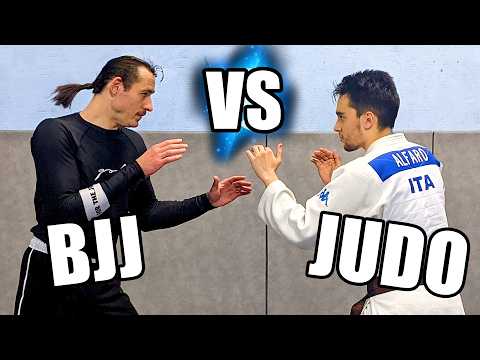
BJJ vs. Judo: A Master's Critique of a Real Sparring Session

The true test of any martial art lies not in the rhetoric of its proponents, but in the crucible of direct application. When two distinct traditions clash, what emerges is not merely a winner and a loser, but a profound lesson for all who seek mastery.

The question echoes through dojos and online forums with the persistence of a well-placed jab: what truly separates Brazilian Jiu-Jitsu from its venerable ancestor, Judo? This isn't just an academic exercise for practitioners; it's a fundamental inquiry into efficacy, philosophy, and the very essence of grappling. We witness a blue belt in BJJ facing a brown belt in Judo, a scenario rich with potential insights. But does this encounter merely highlight technical differences, or does it reveal deeper truths about the evolution of combat sports and the perennial pursuit of the warrior's spirit?

Table of Contents

The Premise: Blue Belt vs. Brown Belt

The core of this analysis lies in the specific pairing: a BJJ blue belt against a Judo brown belt. This immediately presents a nuanced dynamic. The Judo brown belt possesses significant experience in throws and takedowns, coupled with a foundational understanding of ground fighting derived from their Judo practice. However, the BJJ blue belt, while perhaps less experienced overall, is immersed in a system specifically designed for prolonged ground combat and submissions. The belt ranking, while indicative of progress, doesn't tell the whole story. The true divergence lies in the *emphasis* and *specialization* of each art. BJJ's lineage traces back to Judo, particularly Kodokan Judo's ground fighting aspects as adapted by the Gracie family, yet it has evolved into a distinct discipline with a different strategic focus.

Deconstructing the Engagement: Sparring Rules

The rules of engagement are paramount. Without a clear understanding of what is permitted and disallowed, any comparison becomes anecdotal. Were submissions the primary objective? Were takedowns scored, or simply a means to an end? Did the sparring adhere to the typical parameters of BJJ rolling (e.g., emphasis on submission), or did it incorporate Judo's point-based system for throws? The subtle shifts in rules can dramatically alter the outcome and, more importantly, the tactical approaches employed by each practitioner. A format prioritizing submissions naturally favors the BJJ practitioner's specialized skillset, while one rewarding throws would lean towards the Judoka. The absence of clear rules in this context makes a definitive technical judgment challenging, yet it also opens the door to observing adaptability.

Historical Context: The Roots of the Rivalry

To understand BJJ vs. Judo, one must delve into their shared past. Judo, founded by Jigoro Kano, was born from a desire to create a martial art that emphasized physical and moral education, drawing from older Jujutsu styles but refining them into a sport and a discipline. The Gracie family, initially learning Judo from Mitsuyo Maeda, adapted and expanded upon its ground-fighting principles, focusing relentlessly on submission holds that could neutralize larger, stronger opponents. This evolution, driven by real-world application and the necessity of proving its efficacy, led to the birth of Brazilian Jiu-Jitsu. This historical lineage is not a footnote; it's the bedrock upon which the modern debate is built. It begs the question: did BJJ merely refine Judo's ground game, or did it fundamentally transform it into something entirely new?

The Grappling Spectrum: Judo vs. Judo

The internal variations within Judo itself are often overlooked. The "Judo vs. Judo" segment is crucial because it illustrates the diversity even within a single art. A Judoka focused primarily on competition might have a different approach to randori (sparring) than one who emphasizes kata and self-defense. Furthermore, the competitive Judo landscape has evolved significantly. Modern Judo often sees a strong emphasis on standing techniques and controlling the clinch, with ground fighting sometimes being a secondary focus, or at least a transition phase rather than the primary objective. This internal diversity means that comparing a "typical" Judo approach to a "typical" BJJ approach can be misleading if the specific Judo style and training methodology aren't understood.

Gi Dynamics: BJJ Gi vs. Judo Gi

The gi itself plays a critical role. While visually similar, Judo and BJJ gis have subtle differences in cut and material that affect their use in grappling. Judo gis are traditionally thicker and more durable, designed to withstand the rigors of throws and grips meant to control an opponent's posture and balance. BJJ gis, while also robust, often feature variations in fabric weight and cut (e.g., slimmer fit) that can facilitate certain movements and submissions on the ground. In sparring, the grip-fighting aspect becomes central. A Judoka is highly skilled at establishing grips that enable throws, while a BJJ practitioner uses gi grips for control, submission setup, and to prevent sweeps or passes. The ability to adapt to the unique gripping opportunities and restrictions presented by each gi is a key differentiator.

No-Gi Confrontation: BJJ No-Gi vs. Judo No-Gi

The shift to no-gi sparring levels the playing field in a significant way. Without the gi, the primary means of control and manipulation for throws and submissions are removed. This inherently benefits BJJ, whose techniques are often more adaptable to a no-gi environment. While Judo does incorporate some no-gi elements, its core mechanics are heavily reliant on the gi. In a no-gi scenario, the Judoka may find their primary offensive tools (grips for throws) significantly diminished, forcing a greater reliance on wrestling-style takedowns and a more direct engagement with BJJ's submission-focused ground game. This is where the distinct strategic philosophies become most apparent.

The Unexpected Detour: Aikido vs. Judo

The inclusion of Aikido in the comparative analysis, even if tangential, speaks to a broader martial arts discourse. Aikido, with its emphasis on blending with an opponent's movement and redirecting their energy, presents a philosophical counterpoint to the more direct, often combative nature of Judo and BJJ. The comparison, even if brief, highlights the distinct paths these arts have taken. While Judo evolved into a sport and a comprehensive self-defense system, and BJJ specialized in ground submission, Aikido pursued a different trajectory, focusing on principles of non-resistance and harmonizing with force. The realization that "Aikido does not live up to what it promises" is a stark admission that can resonate with many who have explored various martial disciplines.

The Summation: Lessons Learned

Ultimately, the sparring session between a BJJ blue belt and a Judo brown belt offers a microcosm of the ongoing dialogue between these arts. It underscores that while they share a common ancestor, their modern applications and strategic priorities have diverged. Judo retains its strength in takedowns and control from the standing position, with a historical grounding in ground techniques. BJJ has intensified its focus on ground submission, developing a vast arsenal of techniques specifically for that domain. The outcome of such a bout is less about inherent superiority and more about the specific rules, the individual practitioners' strengths, and their adaptability. It's a testament to the idea that each art offers unique value, and their greatest strength might lie in recognizing their differences and learning from one another.

Veredicto del Sensei: ¿Merece la pena?

This exploration is more than just a casual sparring match; it's a valuable educational tool. For practitioners of Judo and BJJ, it offers tangible insights into the practical differences between the two arts. For those exploring martial arts, it serves as an accessible entry point to understanding the nuances of grappling. The willingness to engage in direct comparison, to acknowledge historical context, and to analyze the practical implications of rule sets and equipment demonstrates a commitment to genuine martial inquiry. It's a rare glimpse into the evolutionary process of combat sports. While the specific outcome of any single roll is secondary, the willingness to document and dissect it for learning purposes earns high marks. This isn't about definitively proving one art "better" than another, but about understanding their respective strengths and philosophies. It's a vital conversation starter for any serious martial artist.

Calificación: Cinturón Negro en Análisis Comparativo.

Guía de Entrenamiento: Dominando el Agarre (Kumi-kata)

  1. Comprender la Filosofía del Agarre: En Judo, el agarre (kumi-kata) es primordial para la proyección. Busca agarres que te den control sobre el centro de gravedad de tu oponente, limitando su movilidad y preparándolo para una técnica de derribe. En BJJ, los agarres son para controlar el oponente en el suelo, establecer posiciones, y preparar sumisiones. Adapta tu mentalidad según la fase del combate.
  2. Práctica de Agarre en Judo: Dedica tiempo específico a practicar diferentes tipos de agarres con un compañero. Experimenta con agarres de solapa (tsuri-komi), de manga (kote-gaeshi), y combinaciones. Sin moverte, enfócate en sentir la tensión, el equilibrio y la respuesta de tu oponente. Trabaja la fuerza de tus dedos y antebrazos.
  3. Práctica de Agarre en BJJ: En el suelo, practica cómo mantener agarres estables mientras tu oponente intenta escapar. Enfócate en la creación de palancas y puntos de control que impidan que tu oponente se escape o establezca su propia ofensiva. Experimenta con agarres para transiciones (ej. de control lateral a montada) y para finalizar (ej. agarre de cuello para estrangulamiento).
  4. Adaptabilidad del Agarre (Gi vs. No-Gi): Entrena tanto con gi como sin él. Observa cómo la ausencia del gi cambia la eficacia de ciertos agarres. Desarrolla un repertorio de agarres sin gi que funcionen bien para takedowns (estilo lucha) y para control en el suelo.
  5. Simulación de Combate: Incorpora la práctica de agarres en tus sesiones de sparring (randori para Judo, rolling para BJJ). Enfócate en cómo aplicas y defiendes agarres bajo presión. Presta atención a cuándo debes cambiar tu agarre o soltarlo para evitar quedar en una posición desventajosa.

Equipo Esencial para tu Entrenamiento

  • Kimono de Judo (Judogi): Busca un judogi resistente, a menudo de tejido más grueso, diseñado para soportar las fuerzas de los derribes y el control de agarre.
  • Kimono de BJJ (BJJ Gi): Los kimonos de BJJ varían en peso y corte. Un gi de peso medio es ideal para empezar, ofreciendo durabilidad y libertad de movimiento.
  • Ropa de Entrenamiento (No-Gi): Camisetas de compresión o rash guards y pantalones cortos de lucha/MMA son ideales para el entrenamiento sin gi, permitiendo un buen agarre y previniendo quemaduras en la lona.
  • Protección Dental: Fundamental para cualquier tipo de sparring para prevenir lesiones.
  • Protector de Ingle: Altamente recomendado para protegerse de impactos accidentales.

Recursos para Profundizar

Preguntas Frecuentes

  • ¿Es el Judo mejor que el BJJ para la defensa personal? Ambos artes tienen sus fortalezas. El Judo es excelente para los derribes y el control inicial, mientras que el BJJ se especializa en neutralizar y someter en el suelo. La efectividad dependerá de la situación y del entrenamiento del practicante.
  • ¿Puede un Judoka competir en BJJ? Sí, muchos Judokas compiten exitosamente en BJJ, adaptando sus habilidades de derribe y control. Sin embargo, a menudo deben enfocarse en mejorar su juego de sumisión específico del BJJ.
  • ¿Puede un practicante de BJJ competir en Judo? Requiere adaptación significativa. Los practicantes de BJJ deben dominar las técnicas de derribe y las reglas específicas del Judo, que a menudo penalizan el tiempo excesivo en el suelo si no se busca la progresión.
  • ¿Por qué el BJJ evolucionó tanto del Judo? El BJJ se centró en la aplicación práctica de las técnicas de sumisión en el suelo, a menudo probadas en desafíos abiertos (vale tudo), lo que llevó a una especialización y desarrollo de un repertorio de sumisiones mucho más amplio que el Judo competitivo tradicional.

Reflexión del Sensei: Tu Próximo Paso

The modern martial landscape is a tapestry woven from threads of ancient tradition and contemporary innovation. BJJ and Judo represent two powerful strands in this fabric. This sparring session, while a snapshot, invites a deeper contemplation: are these arts truly rivals, or complementary disciplines? If you are a Judoka, how can you integrate more submission-focused ground training? If you are a BJJ practitioner, how can you sharpen your takedown game and leverage the positional advantages Judo offers? True mastery lies not in adhering rigidly to one path, but in understanding the strengths of all paths and synthesizing them into your own unique journey.

The master does not teach by word, but by example. The student learns not by imitation, but by understanding.

Now, I pose this to you: In your own training, are you truly exploring the frontiers of your chosen art, or are you content to remain within its familiar borders? Have you considered how principles from other disciplines might enhance your own practice? Prove your understanding by sharing your perspective. Does this comparison resonate with your experience, or do you see a different truth? Speak now, for silence in the dojo of learning is a missed opportunity.

``` GEMINI_METADESC: Análisis experto de BJJ vs Judo en sparring. Explora las diferencias, historia, reglas y equipamiento con un Sensei. ¿Cuál arte marcial es superior?

El Jiu-Jitsu Brasileño: El Arte Suave que Desafía al Gigante

¿Has sentido alguna vez la frustración de ser superado por la fuerza bruta, sin tener las herramientas para igualar la contienda? ¿Te has preguntado cómo un peleador, aparentemente más pequeño y débil, puede someter a un oponente de mayor envergadura? Hoy, en este dojo digital, desentrañaremos los secretos de uno de los sistemas de combate más efectivos y fascinantes que han surgido en las últimas décadas: el Jiu-Jitsu Brasileño (BJJ).

No se dejen engañar por su apodo, el "arte suave". Bajo esa aparente delicadeza, se esconde una estrategia de combate implacable, diseñada para neutralizar la fuerza con la técnica y la inteligencia. Desde sus raíces hasta su dominio en las arenas de las Artes Marciales Mixtas (MMA), el BJJ ha reescrito las reglas de la confrontación. Prepárense, porque esta no será una lección superficial. Vamos a sumergirnos en las profundidades del ne waza y a cuestionar lo que creían saber sobre la lucha.

¿Qué es el Jiu-Jitsu Brasileño?

El Jiu-Jitsu Brasileño, conocido mundialmente como BJJ por sus siglas en inglés (Brazilian Jiu-Jitsu), es mucho más que un simple conjunto de técnicas. Es un arte marcial, un deporte de combate y un sistema de defensa personal que ha conquistado el globo. Su esencia reside en el combate cuerpo a cuerpo, especialmente en el lucha en el suelo (ne waza). Aquí es donde la estrategia, la palanca y la precisión superan a la fuerza bruta.

El objetivo primordial del BJJ es someter al oponente sin necesidad de recurrir a golpes. ¿Cómo? Mediante la aplicación experta de luxaciones articulares (buscando la inmovilidad o el daño controlado de una articulación) y estrangulaciones (cortando el flujo sanguíneo o de aire al cerebro). De ahí nace su aclamado sobrenombre: el "arte suave".

El Legado de Maeda y los Gracie: Origen y Evolución

Para comprender el BJJ, debemos retroceder en el tiempo hasta las primeras décadas del siglo XX. Sus raíces se hunden en el Judo japonés, especialmente en su componente de lucha en el suelo, el ne waza. El maestro Mitsuyo Maeda, uno de los principales exponentes del Kodokan Judo, emigró a Brasil en 1914, llevando consigo no solo sus conocimientos sino también la semilla del arte que florecería.

Maeda compartió sus enseñanzas con Geo Omori, quien a su vez las transmitió a la influyente Familia Gracie. Fue Carlos Gracie, y posteriormente sus hermanos y descendientes, quienes comenzaron a adaptar y refinar estas técnicas, enfocándose en la aplicación práctica y en la demostración de su eficacia contra oponentes más grandes y fuertes. Esta adaptación dio origen al Jiu-Jitsu Brasileño tal como lo conocemos hoy.

"La verdadera sabiduría está en el dominio del propio espíritu, no en la fuerza bruta." - Principio del Budo que resuena en el BJJ.

La familia Gracie no se conformó con la enseñanza teórica. La piedra angular de su legado fue la creación del "Vale Tudo" (vale todo), eventos de lucha sin reglas o con reglas mínimas, donde los practicantes de BJJ se enfrentaban a exponentes de otras disciplinas marciales. Estas demostraciones, aunque a veces brutales, fueron cruciales para validar y difundir la superioridad técnica del BJJ en situaciones de combate real.

Los Principios Fundamentales: Fuerza contra Técnica

El mantra del BJJ es simple pero profundo: un individuo más pequeño y menos fuerte puede vencer a un oponente mayor y más poderoso. ¿Cómo? Mediante la aplicación inteligente de la técnica. El BJJ enseña a:

  • Llevar la lucha al suelo: Donde la diferencia de fuerza física se minimiza.
  • Controlar la posición: No se trata solo de luchar, sino de dominar el espacio sobre el oponente.
  • Desgastar al rival: La presión constante y las transiciones agotan física y mentalmente.
  • Someter con luxaciones o estrangulaciones: El golpe final, que no requiere fuerza bruta sino precisión y conocimiento anatómico.

Esta filosofía hace del BJJ un arte accesible para hombres y mujeres de todas las edades y constituciones físicas. No se trata de quién golpea más fuerte, sino de quién entiende mejor la física del cuerpo humano y cómo aplicarla.

El BJJ en el Combate Moderno: Del Vale Tudo al MMA

La influencia del Jiu-Jitsu Brasileño en el mundo del combate moderno es innegable. Su eficacia se hizo patente en los primeros eventos de la UFC, donde Royce Gracie, a menudo el competidor más ligero, sometía a oponentes de mayor tamaño y experiencia en disciplinas como el boxeo, el kickboxing o la lucha libre. Estos eventos catapultaron al BJJ a la fama mundial y demostraron la falacia de que la fuerza bruta es la única variable en una pelea.

Hoy, el BJJ es un pilar fundamental en el entrenamiento de cualquier peleador de Artes Marciales Mixtas (MMA). Las competiciones de grappling, que a menudo excluyen los golpes, son dominadas por practicantes de BJJ. Incluso en disciplinas que combinan lucha y golpeo, las habilidades de lucha en el suelo adquiridas en el BJJ son cruciales para controlar la pelea, defenderse de sumisiones o buscar finalizar al oponente.

Entrenamiento y Disciplina: El Arte de "Rodar"

El sistema de entrenamiento del BJJ se centra en la competición y la aplicación práctica. Una sesión típica en un dojo de BJJ suele incluir:

  • Acondicionamiento físico: Fundamental para soportar la intensidad del combate.
  • Instrucción técnica: Aprendizaje y perfeccionamiento de posiciones, transiciones y sumisiones.
  • "Rodar" (Rolling): La simulación de un combate real en el suelo, aplicando las técnicas aprendidas. Este es el corazón del entrenamiento en BJJ.

Este ciclo constante de aprendizaje, práctica y competición fomenta una disciplina férrea y una capacidad de adaptación notable. El "rolling" te enseña no solo a aplicar técnicas, sino a pensar bajo presión, a gestionar el miedo y a desarrollar una resiliencia mental inquebrantable.

Equipo Esencial para tu Entrenamiento

Aunque el BJJ se enfoca en la técnica, contar con el equipo adecuado puede mejorar tu experiencia de entrenamiento y tu seguridad. Aquí tienes una lista de lo esencial:

  • Kimono (Gi): Para entrenar en la modalidad tradicional. Busca un kimono de doble tejido para mayor durabilidad. Un buen kimono de Judo puede ser una alternativa económica para empezar, aunque los kimonos de BJJ específicos ofrecen un corte más ajustado.
  • Rashguards: Camisetas técnicas de manga larga o corta, ideales para entrenar "no-gi" o debajo del kimono para evitar rozaduras y mejorar la higiene.
  • Pantalones Cortos de Competición (Boardshorts): Específicos para la modalidad "no-gi", suelen ser resistentes y cómodos.
  • Escarpines o Zapatillas Ligeras: Útiles para la calistenia o ejercicios de movilidad fuera de la colchoneta.

Explora tiendas especializadas en artes marciales para encontrar la mejor relación calidad-precio.

El Jiu-Jitsu No-Gi y el Auge del Grappling

Si bien el kimono tradicional es emblemático del BJJ, la modalidad "no-gi" (sin kimono) ha ganado una popularidad inmensa. En esta versión, los practicantes usan ropa deportiva ajustada (rashguards y shorts), lo que elimina la posibilidad de agarres sobre la tela y acelera el ritmo del combate. El "no-gi" tiende a enfatizar más las técnicas de lucha libre y sambo, resultando en un estilo de combate más dinámico y directo.

El término "grappling" abarca todas las disciplinas de combate sin golpeo, incluyendo el BJJ (con y sin gi), la lucha libre y la lucha grecorromana. Los torneos de grappling puro, como los de ADCC, son la cúspide de este tipo de competición y a menudo son dominados por los mejores grapplers del mundo, muchos de los cuales provienen del BJJ.

El Sistema de Rangos y la Filosofía del Cinturón

Al igual que en otras artes marciales tradicionales japonesas como el Judo o el Karate Kyokushin, el BJJ utiliza un sistema de rangos basados en cinturones de colores para indicar el progreso del practicante. El sistema, aunque con variaciones, suele seguir una progresión:

  • Cinturón Blanco: El punto de partida.
  • Cinturón Azul: Primer avance significativo, indica comprensión de las técnicas fundamentales.
  • Cinturón Morado: Dominio de conceptos y técnicas más avanzadas.
  • Cinturón Marrón: Preparación para el nivel de maestro, con un conocimiento profundo.
  • Cinturón Negro: Nivel de maestría, pero solo el comienzo de un nuevo camino de aprendizaje.

A partir del cinturón negro, existen grados adicionales (negro-rojo, rojo) que representan un nivel de experiencia y contribución aún mayor al arte. Cada cinturón no es solo un distintivo, sino un compromiso con el aprendizaje continuo y la transmisión del conocimiento.

Veredicto del Sensei: ¿Es el BJJ el Rey de las Artes Marciales?

El Jiu-Jitsu Brasileño ha demostrado, sin lugar a dudas, ser uno de los sistemas de combate más efectivos jamás creados. Su capacidad para neutralizar la fuerza física con la técnica es revolucionaria y ha cambiado la percepción de lo que significa ser un peleador completo. Su dominio en el mundo del MMA es un testimonio contundente de su eficacia.

Sin embargo, calificarlo como el "rey" de todas las artes marciales sería simplificar en exceso. Cada arte marcial tiene su propósito, su filosofía y sus fortalezas. El boxeo produce pegadores letales, el Taekwondo enseña patadas devastadoras, el Judo ofrece derribos espectaculares, y el Karate Kyokushin forja una resistencia inquebrantable. El BJJ sobresale en el control y la sumisión en el suelo.

Cinturón Negro en Eficacia de Combate en el Suelo. El BJJ no es solo un arte marcial; es una herramienta poderosa para la autodefensa y una disciplina que moldea el carácter. Su enfoque en la inteligencia, la paciencia y la adaptabilidad lo convierte en una opción excepcional para cualquiera que busque dominar el arte de la confrontación controlada.

Preguntas Frecuentes

¿Es el Jiu-Jitsu Brasileño peligroso para principiantes?

Como cualquier arte marcial de contacto, existe un riesgo inherente de lesiones. Sin embargo, un buen dojo y un instructor cualificado priorizan la seguridad. El BJJ enseña a rendirse ("tapar") antes de sufrir una lesión, lo que minimiza los riesgos si se practica con inteligencia y respeto.

¿Cuánto tiempo se tarda en ser bueno en BJJ?

El BJJ es un viaje que dura toda la vida. Se necesitan años de práctica constante para alcanzar un alto nivel de maestría. Sin embargo, se pueden aprender técnicas efectivas de defensa personal y disfrutar de los beneficios del entrenamiento en cuestión de meses.

¿Necesito ser fuerte o ágil para practicar BJJ?

No. El BJJ se basa en la técnica y la palanca, no en la fuerza bruta. De hecho, muchos practicantes más pequeños y menos atléticos encuentran en el BJJ una forma de igualar el campo de juego contra oponentes más grandes y fuertes.

¿Puedo usar el BJJ para defensa personal en la calle?

Absolutamente. Las técnicas de control en el suelo, las luxaciones y estrangulaciones del BJJ son extremadamente efectivas en situaciones de defensa personal, especialmente si la pelea termina en el suelo.

Para Profundizar en tu Camino

Si la profundidad y la estrategia del Jiu-Jitsu Brasileño han capturado tu interés, te invito a explorar otros aspectos del universo marcial que hemos cubierto:

Reflexión del Sensei: Tu Próximo Paso

El BJJ nos enseña que la verdadera fuerza no reside en la capacidad de infligir daño, sino en la inteligencia para controlar el caos y la resiliencia para superar la adversidad. Ahora te pregunto:

¿Estás dispuesto a sacrificar tu ego y tu fuerza bruta por la elegancia y la eficacia de la técnica? ¿Te atreves a enfrentarte a ti mismo en el tapiz, donde el único verdadero adversario eres tú mismo?

La respuesta a estas preguntas definirá tu camino en las artes marciales. Ahora, es tu turno. Comparte tus pensamientos, tus dudas, o incluso tus discrepancias. El dojo está abierto. ¡Te espero en los comentarios!

``` GEMINI_METADESC: Descubre el Jiu-Jitsu Brasileño (BJJ): origen, principios, eficacia en MMA y defensa personal. Aprende cómo el arte suave somete a rivales más grandes.

BJJ Crash Course: Mastering the Art of Ground Combat for Absolute Beginners

Ah, Brazilian Jiu-Jitsu. A realm where the earth itself becomes your adversary and your ally. Many approach the mats with a thirst for knowledge, a desire to conquer, yet they are often met with a deluge of jargon and complexity that can feel like an impassable tidal wave. You seek to understand BJJ, to navigate its intricate dance of leverage and control, but the sheer volume of information threatens to drown you before you even tie your white belt. Fear not, fledgling warrior. Today, we embark on a journey, not through endless videos or conflicting forums, but into the very heart of what makes BJJ a martial art unlike any other. This is not merely a guide; it is a foundational lesson from a Sensei who has seen countless beginners falter and, more importantly, flourish.

Table of Contents

What Exactly is Brazilian Jiu-Jitsu?

At its core, Brazilian Jiu-Jitsu is a martial art and combat sport system that emphasizes ground fighting and grappling. Its genesis lies in Judo, meticulously refined by the Gracie family in Brazil. Unlike striking-focused martial arts where distance and impact are paramount, BJJ shifts the battlefield to the ground. Here, strength and size become secondary to the art of leverage, technique, and understanding the human body's mechanics. It is a profound discipline that cultivates not only physical prowess but also acute mental fortitude, strategic thinking, and a deep sense of self-awareness. Many dismiss it as mere "wrestling," a superficial understanding that misses the intricate chess match unfolding on the mats. BJJ is about control, about suffocating an opponent's options until submission is the only recourse. It is the ultimate test of who understands the human form better, who can manipulate it more effectively.

"The BJJ practitioner's goal is not to inflict damage, but to control and neutralize their opponent through submission holds."

The beauty of BJJ lies in its democratic nature. As Helio Gracie famously stated, it was developed so that a smaller, weaker individual could defend themselves against a larger, stronger attacker. This principle holds true today. Regardless of your age, gender, or initial physical condition, with consistent dedication and intelligent training, proficiency is an achievable goal. It is a testament to the power of applied knowledge over brute force, a concept often forgotten in the modern pursuit of physical dominance.

Laying the Foundation: Your First Steps on the Mat

Embarking on your BJJ journey requires more than just enthusiasm; it demands prudence. The first, and perhaps most critical, step is finding a reputable academy. Do not be swayed by flashy advertising or the allure of a famous name alone. Seek out schools with experienced instructors who prioritize safety and proper technique. A good gym will offer beginner-friendly classes – often called "intro" or " Fundamentals" classes – where the curriculum is designed to introduce you to the core concepts without overwhelming you. Observe a class if possible. Is the atmosphere welcoming? Do students seem to be learning and supporting each other, or is it a cutthroat environment from day one? Remember, BJJ is a physical sport, and the risk of injury is real. A wise instructor will emphasize control, technique, and a gradual progression to prevent unnecessary harm. Inquire about their approach to injury prevention and their mat etiquette.

Consider the lineage and philosophy of the instructors. Are they promoting a balanced approach to BJJ, one that encompasses self-defense, sport grappling, and personal development? This is crucial for long-term growth.

Essential Gear: The Warrior's Uniform

Once you've found your training home, the next step is acquiring the necessary equipment. The cornerstone of traditional BJJ training is the gi (pronounced "gee"). This is not merely a uniform; it is an integral part of the art. Crafted from durable cotton weaves, the gi provides grips for both attacker and defender, influencing the dynamics of the fight. For beginners, a standard single-weave or lightweight double-weave gi is usually sufficient. As you progress, you might explore heavier weaves for durability or specific cuts for mobility. Attached to the gi is the belt, a visible representation of your journey. Starting at white, the belt system (white, blue, purple, brown, black) signifies mastery and experience. But before you even step onto the mats for your first roll, consider other protective gear. A mouthguard is non-negotiable for protecting your teeth and jaw. Similarly, a jockstrap with a cup offers vital protection for male practitioners. Some academies may also recommend shin guards or knee pads for specific drills. Investing in quality gear is an investment in your safety and longevity in the sport.

The Core Principles: Leverage Over Raw Power

This is where the magic of BJJ truly unfolds. The entire system is built upon the principle that a smaller, weaker person can successfully defend against a larger, stronger opponent by using proper technique and leverage. Think of a simple lever: a small amount of force applied at the correct point can move a much larger object. BJJ applies this to the human body. Instead of muscling through a position, you learn to use your hips, your base, and your opponent's own weight and momentum against them. This is why a wiry blue belt can often submit a powerful, untrained larger individual.

Key concepts to grasp early on include:

  • Hip Movement (Hips are Key): Your hips are your primary tool for creating angles, generating power, and escaping bad positions. Learning to shrimp, bridge, and swivel your hips is fundamental.
  • Base and Posture: In grappling, "base" refers to your stable structure, making it difficult for your opponent to unbalance you. "Posture" is maintaining an upright, strong frame, especially when on the bottom.
  • Connection: Maintaining a close connection with your opponent is vital for control and for preventing them from creating space to execute their own techniques.
"In BJJ, the difference between winning and losing often comes down to who understands leverage and body mechanics better, not who can lift more."

Understanding these principles will fundamentally change how you perceive combat. It's not about overpowering; it's about outsmarting, outmaneuvering, and out-understanding your opponent.

Understanding the Battlefield: Guard, Mount, and Back

BJJ strategy revolves around achieving and maintaining dominant positions while avoiding disadvantageous ones. There are three primary dominant positions that beginners must understand:

  • Guard: When you are on your back and your opponent is between your legs, you are in the guard position. This is a defensive position, but a skilled practitioner can use the guard offensively to sweep (reverse position) or submit their opponent. There are many variations, such as closed guard, open guard, and spider guard.
  • Mount: This is perhaps the most dominant position. You are on top of your opponent, sitting on their torso, facing their head. From mount, you have excellent control and numerous options for attacks like chokes and armbars. Maintaining good base is crucial to prevent your opponent from escaping.
  • Back Mount (Control of the Back): Having your opponent's back is considered the most dominant position in BJJ. You are behind them, with hooks (your legs) wrapped around their hips, controlling their posture and limiting their movement. From here, the Rear Naked Choke (RNC) is a highly effective submission.

Conversely, positions like being "stacked" in guard, being flattened out underneath side control, or being exposed in the turtle position are ones you'll want to escape as quickly as possible. Learning to transition between these positions efficiently is the essence of BJJ strategy.

Building Blocks: Essential BJJ Maneuvers

As mentioned, BJJ techniques can be broadly categorized. For a beginner, mastering the fundamentals is paramount. Trying to learn advanced techniques before you have a solid grasp of the basics is like trying to build a skyscraper on a foundation of sand – it will inevitably collapse.

Key Fundamental Techniques Include:

  • Takedowns: Safely bringing your opponent from a standing position to the ground. This could include basic Judo throws like O Goshi or Seoi Nage, or wrestling-style shots. The focus here is on control and not exposing yourself to danger.
  • Guard Passes: Techniques used to move from being controlled in your opponent's guard to a dominant position like side control or mount. Examples include the knee slice pass and the toreando pass.
  • Sweeps: Techniques used from the guard position to reverse your opponent and end up in a dominant position yourself. A basic scissor sweep or hip bump sweep are essential early learns.
  • Submissions: Techniques designed to force an opponent to tap out due to pain or the threat of injury. Fundamental submissions include the armbar (hyperextending the elbow), the kimura (a shoulder lock), and the triangle choke (using your legs to constrict blood flow to the brain). From the mount and back control, the cross-collar choke and Rear Naked Choke (RNC) are foundational.

Focus on understanding the setup, the execution, and the control principles behind each fundamental technique. Don't just memorize the movements; understand why they work.

The Dojo's Crucible: Drills, Sparring, and Growth

Your BJJ training will primarily consist of three components:

  • Drills: These are repetitive exercises designed to ingrain specific movements and techniques into your muscle memory. You might drill a guard pass 50 times with a partner, focusing on the precise footwork and body positioning. Drills build efficiency and technical accuracy.
  • Positional Sparring (Situational Sparring): Instead of a full, free-flowing roll, positional sparring focuses on specific scenarios. For example, you might start in mount and the defender's goal is to escape, while the attacker's goal is to maintain mount or advance to another dominant position. This allows for focused practice on specific situations without the pressure of a full match.
  • Live Sparring (Rolling): This is the application of all your learned techniques in a dynamic, unpredictable environment against resisting opponents. It's where you test your skills, discover your weaknesses, and learn to adapt. It’s crucial to roll with people of different sizes, skill levels, and styles. This is where true progress is made, but it must be done with control and respect. Remember the goal is to learn, not to "win" at all costs.

Consistency is the bedrock of progress in BJJ. Attending classes regularly, listening to your instructors, and approaching each session with a growth mindset are essential. BJJ is a marathon, not a sprint. Embrace the challenges, celebrate the small victories, and never stop learning.

Sensei's Verdict: Is BJJ for You?

Brazilian Jiu-Jitsu is a demanding yet profoundly rewarding martial art. It tests your physical limits, your strategic mind, and your resilience. If you seek a discipline that offers unparalleled self-defense capabilities, a comprehensive physical workout that builds functional strength and flexibility, and a mental challenge that fosters discipline, patience, and problem-solving skills, then BJJ is undoubtedly for you.

However, be prepared for the initial learning curve. You will be uncomfortable, you will get tangled, and you will be submitted – frequently. This is part of the process. The true value lies not in avoiding submission, but in learning from each instance, refining your technique, and developing the mental toughness to persevere. If you are willing to embrace the struggle, the growth potential is immense. It is a martial art that truly transforms individuals from the inside out.

"The mats do not lie. Your ego will be checked at the door. What remains is the honest pursuit of skill and understanding."

Essential Equipment for Your Training

To begin your BJJ journey effectively and safely, consider investing in the following:

  • A quality BJJ Gi: Look for durability and a comfortable fit. Brands like Fuji, Hayabusa, and Tatami offer excellent options for beginners and experienced practitioners alike.
  • Mouthguard: Essential for protecting your teeth and jaw during sparring. Custom-fitted mouthguards offer the best protection and comfort.
  • Protective Cup (for men): Crucial for safeguarding sensitive areas during grappling.
  • Flip-flops or sandals: For wearing outside the mats to maintain hygiene.
  • Gym Bag: To carry your gear.
  • Water Bottle: Staying hydrated is key during intense training sessions.

For those interested in no-gi grappling, which often uses shorts and a rashguard instead of a gi, consider investing in good grappling shorts and a compression rashguard for optimal fit and mobility.

Frequently Asked Questions

Is BJJ suitable for women?

Absolutely. BJJ was developed with the principle of a smaller person defending against a larger one, making it exceptionally well-suited for women. Many academies have a strong female presence, and women often excel due to their focus on technique and leverage.

How long does it take to get a blue belt?

This varies significantly by academy and individual progress, but typically ranges from 1 to 3 years of consistent training. Your instructor will promote you when they feel you have demonstrated sufficient technical knowledge and skill.

Do I need to be strong to start BJJ?

No. BJJ emphasizes technique and leverage over brute strength. While strength can be an advantage, it's the skillful application of techniques that truly determines success, especially against larger opponents.

What is the difference between BJJ and Judo?

While BJJ originated from Judo, it has evolved significantly. Judo focuses heavily on takedowns and standing throws, with limited ground fighting. BJJ places a much greater emphasis on ground grappling, positional control, and submission holds.

Is BJJ dangerous?

Like any physical combat sport, BJJ carries risks of injury. However, with proper instruction, a focus on safety, controlled sparring, and good mat etiquette, the risks can be significantly minimized. Most injuries occur due to ego-driven actions or lack of technical understanding.

Deepen Your Understanding

To continue your exploration of martial arts and combat, consider these related topics:

Sensei's Final Challenge

You now possess the foundational knowledge to step onto the mats with clarity. But knowledge without application is mere theory. The true learning begins when you face resistance, when you apply these principles under pressure.

My question to you is this: Will you be a practitioner who merely goes through the motions, or will you be a student who relentlessly seeks understanding? When faced with the discomfort of a submission or the frustration of a failed technique, will you crumble, or will you analyze, adapt, and rise stronger? The path of the martial artist is paved with these choices. Choose wisely, and demonstrate your commitment not with words, but with sweat and perseverance on the mats.

BJJ vs. Wrestling: The Grappling Showdown of Strikers

The clash of titans, the dance of the mat, the cerebral battleground where leverage and technique reign supreme – we're talking about grappling. But when two formidable strikers, masters of the striking arts like Muay Thai or Boxing, find themselves drawn into the realm of BJJ (Brazilian Jiu-Jitsu) or Wrestling, what transpires? Is it a predictable dance of submission hunters, or a chaotic unraveling of fundamental principles? Today, we dissect this fascinating intersection, exploring not just the mechanics, but the very soul of what happens when worlds collide.

This isn't just about who wins or loses; it's about understanding the transfer of skills, the mental fortitude required, and the inherent philosophies that drive these distinct yet often complementary disciplines. Many believe that a powerful striker is at a disadvantage when the fight hits the ground. Is this an absolute truth, or a myth perpetuated by those who fear the transition?

Understanding BJJ: The Art of the Gentle Way

Brazilian Jiu-Jitsu, often dubbed "the gentle art," is a martial art and combat sport system focused on grappling, and specifically on ground fighting. Its core principle, derived from Judo, is that a smaller, weaker person can defend themselves against a larger, stronger assailant by using proper technique, leverage, and most importantly, by taking the fight to the ground. Once on the ground, BJJ practitioners aim to achieve a dominant position from which they can apply joint-locks and chokeholds to submit their opponent.

The beauty of BJJ lies in its intricate web of positional control, sweeps, and submissions. It's a game of inches, where a slight shift in weight or an adjustment of a limb can mean the difference between victory and defeat. It teaches patience, problem-solving under pressure, and an almost chess-like strategic thinking.

"Jiu-Jitsu is not about strength; it's about leverage and knowing how to use your body efficiently. A smaller person can defeat a larger person if they understand the principles." - Helio Gracie

For a striker, entering the BJJ domain is like stepping into a different dimension. The rules of engagement change drastically. The powerful punches and kicks that define their striking prowess are largely neutralized, and a new set of skills – grip fighting, takedown defense, guard retention, and submission chains – must be learned and mastered.

The World of Wrestling: Dominance and Control

Wrestling, encompassing styles like Freestyle and Greco-Roman, is perhaps the purest form of combat focused on takedowns, throws, and positional control. Unlike BJJ, the objective in wrestling is not submission through joint locks or chokes, but rather to pin the opponent's shoulders to the mat or to outscore them through superior execution of techniques. It's a test of raw physical power, endurance, and strategic maneuvering to gain and maintain control.

Wrestlers are experts at controlling an opponent's body, dictating the pace, and using their strength and balance to their advantage. The emphasis is on explosiveness, relentless pressure, and a deep understanding of body mechanics to execute powerful takedowns like the single-leg or double-leg, and to maintain control once the opponent is down. The ground game in wrestling is about control, not necessarily about ending the fight with a submission.

For a striker, wrestling presents its own unique set of challenges. While it's also a ground-based art, the tactics are different. A wrestler's ability to clinch, to drive through opponents, and to achieve and hold dominant positions can be overwhelming. A striker accustomed to creating space might find themselves suffocated by a relentless wrestler determined to control their every move.

The Striker in the Grappling Arena: Challenges and Advantages

When a fighter whose primary skill set is striking enters the grappling arena, several critical challenges immediately arise:

  • Loss of Range Advantage: Striking arts thrive on maintaining a certain distance to effectively land blows. Grappling immediately closes this distance, often nullifying the striker's primary weapons.
  • Unfamiliarity with Positions: A striker may not understand the dangers of common grappling positions like side control, mount, or back control, nor how to escape them effectively.
  • Submission Threats: The constant threat of joint locks (like armbars, kimuras) and chokes (like rear-naked chokes, guillotines) is a new and often terrifying paradigm for a striker.
  • Cardio Drainage: Grappling exchanges can be incredibly taxing physically, often requiring a different type of stamina than striking exchanges.

However, a striker isn't entirely without advantages. Their explosive power can be channeled into takedowns or scrambles. A powerful **sprawl** can be a devastating defense against a takedown attempt. Their natural athleticism and body awareness, honed through striking training, can be a foundation for learning grappling techniques. Furthermore, a striker's offensive mindset might translate into an aggressive approach to submission hunting or positional advancement, once they understand the mechanics.

Consider the infamous MMA fighter who relies heavily on striking. When matched against a high-level grappler, the strategy is often clear: keep the fight standing. But what happens when that striker has dedicated time to developing their grappling? The equation changes dramatically.

Strategic Interplay: When Styles Meet

The true fascination lies in the strategic interplay when a striker attempts to grapple, or when a grappler faces a striker. In Mixed Martial Arts (MMA), this is a constant dynamic. High-level MMA fighters often develop a well-rounded game, incorporating elements of both striking and grappling.

A striker with a solid wrestling base can use their wrestling to:

  • Control the clinch: Disrupt the opponent's striking rhythm.
  • Execute takedowns strategically: Bring the fight to the ground when advantageous, perhaps to escape danger or to set up ground strikes.
  • Defend takedowns effectively: Keep the fight standing and utilize their striking.

Conversely, a striker who has trained in BJJ might use their grappling to:

  • Survive bad positions: Utilize techniques to escape and return to their feet.
  • Threaten with submissions: Keep their opponent honest and prevent them from simply overwhelming them with pressure.
  • Control the ground: If they achieve a dominant position, use it to land ground-and-pound strikes.

The effectiveness of a striker in a grappling scenario often depends on the depth of their cross-training. A casual dabble in grappling won't suffice against a seasoned grappler. It requires dedicated practice and a willingness to embrace a different way of fighting. We see this time and again; fighters who neglect one aspect of combat often fall prey to specialists in the other.

Philosophical Differences: The Underlying Currents

Beyond the physical techniques, BJJ, Wrestling, and striking arts are underpinned by distinct philosophies. Striking often emphasizes direct confrontation, the decisive blow, and the warrior's spirit of facing an opponent head-on. The **kiai** in Karate, the sharp focus of a boxer – these are expressions of intent and power.

BJJ, as mentioned, is the "gentle art." It speaks to humility, patience, and overcoming brute force with intelligence and technique. It's a philosophy of adaptation and finding solutions, even when seemingly trapped.

Wrestling, while physical, is deeply rooted in concepts of dominance, control, and relentless pressure. It's about imposing your will and exhausting your opponent through sheer tenacity and superior positioning. It’s the embodiment of the **"never quit"** mentality.

"The supreme art of war is to subdue the enemy without fighting." - Sun Tzu. While Sun Tzu predates modern grappling, his philosophy of strategy and minimizing direct confrontation resonates deeply with the principles of BJJ and effective positional control in Wrestling.

When a striker ventures into grappling, they are not just learning new moves; they are confronting new ways of thinking about conflict, control, and victory. They must learn to temper their aggressive instincts with the patience required for submission hunting or the stoic control needed in wrestling. This mental shift is often the most challenging aspect.

Training Corner: Bridging the Gap

For strikers looking to improve their grappling or for grapplers wanting to enhance their striking, consistent cross-training is key. Here are some drills and approaches:

  1. Takedown Defense Drills: Practice defending against common takedowns (single leg, double leg, clinch takedowns) against resistance. Focus on sprawling, grip fighting, and creating space to disengage.
  2. Positional Sparring (BJJ): Instead of full rolling, focus on specific positions. Start in side control and work to escape, or start in guard and work to pass. This allows for focused learning without the pressure of a full match.
  3. Clinch Work: Practice clinch entries, control, and takedowns/sweeps. This is a crucial transition area for both strikers and grapplers.
  4. Submission Escapes: Dedicate time to learning and drilling escapes from common submissions like the armbar, triangle choke, and rear-naked choke.
  5. Striking from Guard/Dominant Positions: For MMA context, practice landing effective strikes from various ground positions (e.g., ground-and-pound from mount/side control, short strikes from guard).

Remember, consistency is paramount. Incorporating grappling sessions into your training regimen, even if you are primarily a striker, will make you a more complete and dangerous martial artist. The aim isn't necessarily to become a world-class BJJ practitioner or wrestler, but to develop enough proficiency to defend yourself, control the fight's trajectory, and avoid being caught in unfamiliar and vulnerable situations.

Gear Essentials for Your Grappling Journey

While grappling can be done with minimal equipment, having the right gear can enhance your training experience and safety. For BJJ, a durable and comfortable gi (kimono) is essential. Look for materials that can withstand rigorous training. For No-Gi BJJ and Wrestling, a good pair of spats and a comfortable rashguard are recommended to prevent mat burn and provide a layer of protection. Secure, well-fitting training shoes or wrestling shoes are also important for footwork and grip.

For those interested in cross-training from striking, consider investing in:

  • A high-quality BJJ Gi: Look for brands known for their durability and comfort.
  • No-Gi grappling shorts and rashguards: Essential for No-Gi training.
  • Mouthguard: Crucial for protecting your teeth, especially when transitioning between striking and grappling.
  • Groin protector: Recommended for safety during sparring.

Investing in quality martial arts merchandise can make your training more comfortable and effective. Consider exploring options for the best kimonos for Judo or BJJ, or specialized wrestling gear to optimize your performance on the mats.

Sensei's Verdict: Strikers and Grappling

The notion that a pure striker is completely helpless against a grappler is, in most cases, a gross oversimplification. However, it is undeniably true that a striker's primary toolkit is significantly diminished when the fight transitions to the ground. The true measure of a martial artist, especially in the modern combat sports landscape, lies in their versatility. Strikers who neglect grappling do so at their peril, leaving themselves vulnerable to submissions and positional control.

Conversely, grapplers who lack striking skills are often easy targets for skilled strikers who can keep the fight at a distance. The ideal martial artist, whether for sport or self-defense, strives for a balance. For a striker, developing at least a foundational level of BJJ or Wrestling proficiency is not just beneficial; it's essential for survival and success. It's about understanding the entire spectrum of combat, not just the part that feels most comfortable.

Sensei's Rating: Cinturón Negro en Adaptabilidad. The ability to integrate striking and grappling, or to at least understand the threats and defenses of the opposing discipline, is a mark of a true martial artist.

Frequently Asked Questions

Can a professional boxer beat a BJJ black belt?

In a pure boxing match, yes. In a BJJ match or MMA fight where grappling is allowed, a BJJ black belt has a significant advantage due to their specialized ground fighting skills. The boxer would need substantial cross-training in grappling to stand a chance.

Is Wrestling or BJJ more useful for a striker?

Both offer crucial skills. Wrestling excels at takedowns, control, and explosiveness, which can be used defensively or offensively to transition. BJJ focuses on submissions and intricate ground positions, offering more direct "finishing" techniques on the ground. For self-defense, a basic understanding of both is ideal, but BJJ's submission focus might be more directly applicable for neutralizing a threat without causing excessive harm.

How long does it take for a striker to become proficient in grappling?

Proficiency is a relative term. Achieving a basic level of competence where one can defend against common attacks and execute fundamental techniques might take months of dedicated training. Becoming truly proficient, like reaching black belt level in BJJ or a high competitive wrestling rank, takes years of consistent, rigorous practice.

What is the biggest mistake strikers make when grappling?

Often, it's panicking. Striker's instinct is to try and "muscle" their way out or throw wild punches, which usually leads to them being submitted or ending up in an even worse position. They need to learn to stay calm, breathe, and apply technique.

To Dive Deeper into Your Journey

The striking arts teach you how to control the engagement from a distance, to impose your will with power and precision. Grappling teaches you how to control the engagement up close, to use leverage and technique to overcome strength, and to find openings where none seem to exist. To dismiss one is to leave oneself fundamentally incomplete.

Sensei's Reflection: Your Next Step

You have witnessed the stark contrasts and surprising commonalities between the worlds of striking and grappling. But knowledge without application is like a sword without a blade – beautiful, perhaps, but ultimately useless. The true test of your understanding lies not in what you read, but in what you do.

My challenge to you is this: How will you actively seek to bridge the gap between your preferred martial art and its counterpart? Will you schedule a wrestling class next week? Will you ask your BJJ training partner to focus on specific defensive techniques against strikes? Or will you simply reflect, allowing this knowledge to remain dormant? The path of the martial artist is one of constant evolution. Choose wisely.

``` GEMINI_METADESC: Explore the BJJ vs. Wrestling dynamic for strikers. Analyze techniques, philosophies, and training to bridge the gap between striking and grappling arts. Essential reading for martial artists.

Why BJJ Gyms That Neglect Striking Are Leaving Black Belts on the Table

Hey warriors and martial arts aficionados! It’s your Sensei here, ready to dissect a topic that’s been simmering in the dojo of my mind. We’ve all seen the evolution of combat sports. We’ve witnessed the legendary clashes, the strategic outmaneuvering, and the raw power that defines true mastery. Yet, a peculiar dogma persists in some traditional BJJ academies, a stubborn adherence to a singular discipline that, I argue, is a disservice to the art and its practitioners. Today, we're diving deep into the notion that Brazilian Jiu-Jitsu gyms neglecting the integration of striking are, quite frankly, missing out on a significant evolutionary leap. Eli Knight of @Knight Jiu-Jitsu articulates a compelling argument: the integration of strikes into regular BJJ classes isn't just a novelty; it's an essential step towards a more complete martial education. This isn't about diluting the art of the ground game, but about enriching it, about forging well-rounded combatants who understand the full spectrum of engagement.

The Interconnectedness of Grappling and Striking

For too long, the martial world has been compartmentalized. On one side, the devastating kicks and punches of Muay Thai, Karate, and Taekwondo. On the other, the intricate submission chains and takedowns of Judo and BJJ. Yet, the battlefield—be it a street confrontation or an MMA octagon—rarely respects these artificial boundaries. A fight can begin standing, transition to the ground, and then, just as suddenly, return to a standing position. To train solely for one phase is to train for only a fraction of the conflict.

Consider the origins of many martial arts. Judo, for instance, was born from a desire for a more comprehensive system than its predecessors. Kano Jigoro Shinto understood that balance was key. While BJJ, derived from Judo's groundwork (Ne-Waza), has achieved unparalleled sophistication on the mat, its "stand-up" component, while present in Judo's Tachi-Waza, often becomes secondary in pure BJJ curricula. This is where the disconnect occurs. How can a BJJ practitioner truly master the transition from standing to the ground if their striking defense and offense are rudimentary at best?

"True mastery lies not in mastering one aspect, but in understanding the interconnectedness of all." - A principle often echoed in the halls of martial wisdom.

Integrating striking, even at a fundamental level, provides invaluable context. It teaches practitioners timing, distance management, and the vital skill of striking defense. Learning to parry a punch, to slip a jab, or to maintain posture while under threat of being struck are skills that directly enhance a grappler's ability to execute takedowns and defend against submissions. Without this, a BJJ practitioner can become a formidable force once the fight hits the mat, but a sitting duck if the confrontation remains upright.

Beyond the Mat: Real-World Application and Mental Fortitude

While many BJJ gyms emphasize self-defense, the reality of a street altercation often involves threats that are not confined to grappling range. Attacks can come from unexpected angles, with fists, feet, or even improvised weapons. A BJJ practitioner trained only in ground techniques might find themselves overwhelmed before they even get the chance to implement their ground game. Adding striking training, even basic defensive maneuvers and controlled offensive bursts, provides a more realistic skillset for survival.

Furthermore, the mental aspect of martial arts training cannot be overstated. Facing a striking opponent in a controlled sparring environment builds a unique type of resilience. It instills a different kind of awareness, a heightened sense of danger, and the ability to remain composed under duress. This mental fortitude is transferable, making the practitioner calmer and more strategic in all aspects of their training and life. It fosters a deeper understanding of "Mushin," the mind without mind, essential for reacting instinctively and effectively in any scenario.

The argument isn't to turn BJJ gyms into full-blown MMA striking schools overnight. It's about progressive integration. Imagine incorporating drills that simulate striking exchanges before a takedown attempt, or adding basic defensive striking responses to common grappling attacks. This approach doesn't diminish the value of BJJ; it elevates it. It prepares practitioners for the multifaceted nature of combat, respecting the art of the ground while acknowledging the reality of the entire fight.

The "Why" Behind the Reluctance: Tradition vs. Evolution

So, why do some BJJ gyms shy away from incorporating striking? Often, it boils down to tradition and specialization. Many academies pride themselves on their pure grappling lineage, tracing their roots back to the Gracies and beyond. There's a reverence for the "Art of the Gentle Way" as it was originally conceived.

However, martial arts are not static entities. They are living, breathing disciplines that must adapt to survive and thrive. Karate has evolved. Judo has evolved. Even the hyper-specialized world of MMA is constantly innovating. To resist evolution is to risk stagnation. The original pioneers of BJJ were themselves innovators, adapting Judo groundwork for the reality of vale tudo. Continuing this spirit of innovation by integrating striking is the natural next step.

Consider the success of mixed martial artists. Many of the most dominant figures in MMA possess a strong foundation in grappling, but their success is amplified by their ability to strike effectively. Fighters like Khabib Nurmagomedov, despite his legendary grappling, understood the importance of striking to set up his takedowns and maintain control. This synergy is not a compromise; it's a testament to a complete martial education.

Equipo Esencial para tu Entrenamiento

While BJJ is often associated with just a gi, integrating striking requires a few key pieces of equipment to ensure safety and effectiveness. For any gym looking to expand its curriculum, these are non-negotiable:

  • Guantes de Boxeo/MMA: Essential for striking practice, ranging from 4oz MMA gloves for sparring to 10-16oz boxing gloves for bag work and partner drills. Different weights serve different purposes, but having a variety is beneficial.
  • Espinilleras (Shin Guards): Crucial for safe kick training and sparring, protecting both the striker and the grappler.
  • Casco de Sparring: Protects the head during striking drills, minimizing the risk of cuts and concussions, and allowing for more intense practice.
  • Protector Bucal (Mouthguard): A fundamental safety item for any form of sparring involving strikes.
  • Kimono de Doble Tejido para Judo y BJJ: While not directly for striking, a durable gi is paramount for the grappling component. Look for brands offering reinforced stitching and heavier fabrics that can withstand the rigors of integrated training.

Guía de Entrenamiento: Integrando Golpes Básicos en tu Rutina de BJJ

For the dedicated practitioners who find themselves in a BJJ-centric academy, here’s a simple way to start thinking about integration:

  1. Warm-up with Striking Drills: Begin your training session with 5-10 minutes of basic striking. Shadow boxing, focusing on jab, cross, hook, and uppercut, along with basic defensive movements like slipping and bobbing.
  2. Takedown Entries with Striking Threat: Practice initiating takedowns (e.g., double leg, single leg) while incorporating a punch or feint as a setup. This teaches you to manage distance and create openings.
  3. Guard Passing with Striking Defense: When drilling guard passes, have your partner (the one in guard) practice basic defensive strikes to create space or deter advances. This helps the passer learn to manage strikes while closing distance.
  4. Positional Sparring with Added Striking: During positional sparring (e.g., working from mount or side control), allow for controlled, light striking exchanges. This simulates the pressure of a fight where you might need to strike to improve your position or escape.
  5. Cool-down with Complementary Mobility: Finish with dynamic stretching that incorporates movements used in both striking and grappling, like rotational torso twists and lunges with punches.

Veredicto del Sensei: ¿Merece la pena?

The integration of striking into Brazilian Jiu-Jitsu training is not just a trend; it's a necessary evolution. To ignore it is to remain tethered to a singular aspect of combat, leaving practitioners vulnerable and less prepared for the dynamic reality of fighting. BJJ is a powerful art, but when combined with an understanding and application of striking, it transforms into a complete martial system capable of confronting any threat.

Calificación: Cinturón Negro en Visión Estratégica. A gyms that embrace this fusion, you are not just teaching BJJ; you are forging true martial artists.

Preguntas Frecuentes

What is the main argument for integrating striking into BJJ?

The primary argument is to create more well-rounded martial artists who are prepared for all phases of combat, from standing engagements to ground fighting, enhancing both effectiveness and real-world applicability.

Will adding strikes dilute the effectiveness of BJJ?

No, when integrated intelligently, striking can enhance BJJ by improving takedown entries, defense against strikes while grappling, and overall situational awareness, making the practitioner more complete.

What are the essential safety precautions when adding strikes to BJJ training?

Key precautions include using appropriate safety gear (gloves, mouthguards, shin guards, headgear), maintaining controlled sparring, and ensuring instructors are knowledgeable in both disciplines.

Is this approach suitable for beginners in BJJ?

Yes, basic defensive striking and controlled offensive drills can be introduced early on, helping beginners develop a better understanding of distance and timing, which complements their grappling development.

How can a traditional BJJ gym start incorporating striking?

They can begin with dedicated warm-ups featuring basic striking, incorporating striking setups into takedown drills, and allowing light, controlled striking during positional sparring sessions.

Para Profundizar en tu Camino

The journey of a martial artist is one of constant learning and adaptation. We must be willing to challenge our own preconceived notions and embrace new perspectives if we are to truly grow.

Reflexión del Sensei: Tu Próximo Paso

Consider your current training regimen. If you are in a BJJ academy, how often are strikes incorporated, even in a supplementary manner? If you train a striking art, how much emphasis is placed on transitioning to the ground? Are you a complete martial artist, or a specialist in a multi-faceted battlefield? The answer to these questions will reveal the true gaps in your preparation. Now, go forth and train with purpose, not just proficiency.

```

Why BJJ Gyms That Neglect Striking Are Leaving Black Belts on the Table

Hey warriors and martial arts aficionados! It’s your Sensei here, ready to dissect a topic that’s been simmering in the dojo of my mind. We’ve all seen the evolution of combat sports. We’ve witnessed the legendary clashes, the strategic outmaneuvering, and the raw power that defines true mastery. Yet, a peculiar dogma persists in some traditional BJJ academies, a stubborn adherence to a singular discipline that, I argue, is a disservice to the art and its practitioners. Today, we're diving deep into the notion that Brazilian Jiu-Jitsu gyms neglecting the integration of striking are, quite frankly, missing out on a significant evolutionary leap. Eli Knight of @Knight Jiu-Jitsu articulates a compelling argument: the integration of strikes into regular BJJ classes isn't just a novelty; it's an essential step towards a more complete martial education. This isn't about diluting the art of the ground game, but about enriching it, about forging well-rounded combatants who understand the full spectrum of engagement.

The Interconnectedness of Grappling and Striking

For too long, the martial world has been compartmentalized. On one side, the devastating kicks and punches of Muay Thai, Karate, and Taekwondo. On the other, the intricate submission chains and takedowns of Judo and BJJ. Yet, the battlefield—be it a street confrontation or an MMA octagon—rarely respects these artificial boundaries. A fight can begin standing, transition to the ground, and then, just as suddenly, return to a standing position. To train solely for one phase is to train for only a fraction of the conflict.

Consider the origins of many martial arts. Judo, for instance, was born from a desire for a more comprehensive system than its predecessors. Kano Jigoro Shinto understood that balance was key. While BJJ, derived from Judo's groundwork (Ne-Waza), has achieved unparalleled sophistication on the mat, its "stand-up" component, while present in Judo's Tachi-Waza, often becomes secondary in pure BJJ curricula. This is where the disconnect occurs. How can a BJJ practitioner truly master the transition from standing to the ground if their striking defense and offense are rudimentary at best?

"True mastery lies not in mastering one aspect, but in understanding the interconnectedness of all." - A principle often echoed in the halls of martial wisdom.

Integrating striking, even at a fundamental level, provides invaluable context. It teaches practitioners timing, distance management, and the vital skill of striking defense. Learning to parry a punch, to slip a jab, or to maintain posture while under threat of being struck are skills that directly enhance a grappler's ability to execute takedowns and defend against submissions. Without this, a BJJ practitioner can become a formidable force once the fight hits the mat, but a sitting duck if the confrontation remains upright.

Beyond the Mat: Real-World Application and Mental Fortitude

While many BJJ gyms emphasize self-defense, the reality of a street altercation often involves threats that are not confined to grappling range. Attacks can come from unexpected angles, with fists, feet, or even improvised weapons. A BJJ practitioner trained only in ground techniques might find themselves overwhelmed before they even get the chance to implement their ground game. Adding striking training, even basic defensive maneuvers and controlled offensive bursts, provides a more realistic skillset for survival.

Furthermore, the mental aspect of martial arts training cannot be overstated. Facing a striking opponent in a controlled sparring environment builds a unique type of resilience. It instills a different kind of awareness, a heightened sense of danger, and the ability to remain composed under duress. This mental fortitude is transferable, making the practitioner calmer and more strategic in all aspects of their training and life. It fosters a deeper understanding of "Mushin," the mind without mind, essential for reacting instinctively and effectively in any scenario.

The argument isn't to turn BJJ gyms into full-blown MMA striking schools overnight. It's about progressive integration. Imagine incorporating drills that simulate striking exchanges before a takedown attempt, or adding basic defensive striking responses to common grappling attacks. This approach doesn't diminish the value of BJJ; it elevates it. It prepares practitioners for the multifaceted nature of combat, respecting the art of the ground while acknowledging the reality of the entire fight.

The "Why" Behind the Reluctance: Tradition vs. Evolution

So, why do some BJJ gyms shy away from incorporating striking? Often, it boils down to tradition and specialization. Many academies pride themselves on their pure grappling lineage, tracing their roots back to the Gracies and beyond. There's a reverence for the "Art of the Gentle Way" as it was originally conceived.

However, martial arts are not static entities. They are living, breathing disciplines that must adapt to survive and thrive. Karate has evolved. Judo has evolved. Even the hyper-specialized world of MMA is constantly innovating. To resist evolution is to risk stagnation. The original pioneers of BJJ were themselves innovators, adapting Judo groundwork for the reality of vale tudo. Continuing this spirit of innovation by integrating striking is the natural next step.

Consider the success of mixed martial artists. Many of the most dominant figures in MMA possess a strong foundation in grappling, but their success is amplified by their ability to strike effectively. Fighters like Khabib Nurmagomedov, despite his legendary grappling, understood the importance of striking to set up his takedowns and maintain control. This synergy is not a compromise; it's a testament to a complete martial education.

Equipo Esencial para tu Entrenamiento

While BJJ is often associated with just a gi, integrating striking requires a few key pieces of equipment to ensure safety and effectiveness. For any gym looking to expand its curriculum, these are non-negotiable:

  • Guantes de Boxeo/MMA: Essential for striking practice, ranging from 4oz MMA gloves for sparring to 10-16oz boxing gloves for bag work and partner drills. Different weights serve different purposes, but having a variety is beneficial.
  • Espinilleras (Shin Guards): Crucial for safe kick training and sparring, protecting both the striker and the grappler.
  • Casco de Sparring: Protects the head during striking drills, minimizing the risk of cuts and concussions, and allowing for more intense practice.
  • Protector Bucal (Mouthguard): A fundamental safety item for any form of sparring involving strikes.
  • Kimono de Doble Tejido para Judo y BJJ: While not directly for striking, a durable gi is paramount for the grappling component. Look for brands offering reinforced stitching and heavier fabrics that can withstand the rigors of integrated training.

Guía de Entrenamiento: Integrando Golpes Básicos en tu Rutina de BJJ

For the dedicated practitioners who find themselves in a BJJ-centric academy, here’s a simple way to start thinking about integration:

  1. Warm-up with Striking Drills: Begin your training session with 5-10 minutes of basic striking. Shadow boxing, focusing on jab, cross, hook, and uppercut, along with basic defensive movements like slipping and bobbing.
  2. Takedown Entries with Striking Threat: Practice initiating takedowns (e.g., double leg, single leg) while incorporating a punch or feint as a setup. This teaches you to manage distance and create openings.
  3. Guard Passing with Striking Defense: When drilling guard passes, have your partner (the one in guard) practice basic defensive strikes to create space or deter advances. This helps the passer learn to manage strikes while closing distance.
  4. Positional Sparring with Added Striking: During positional sparring (e.g., working from mount or side control), allow for controlled, light striking exchanges. This simulates the pressure of a fight where you might need to strike to improve your position or escape.
  5. Cool-down with Complementary Mobility: Finish with dynamic stretching that incorporates movements used in both striking and grappling, like rotational torso twists and lunges with punches.

Veredicto del Sensei: ¿Merece la pena?

The integration of striking into Brazilian Jiu-Jitsu training is not just a trend; it's a necessary evolution. To ignore it is to remain tethered to a singular aspect of combat, leaving practitioners vulnerable and less prepared for the dynamic reality of fighting. BJJ is a powerful art, but when combined with an understanding and application of striking, it transforms into a complete martial system capable of confronting any threat.

Calificación: Cinturón Negro en Visión Estratégica. A gyms that embrace this fusion, you are not just teaching BJJ; you are forging true martial artists.

Preguntas Frecuentes

What is the main argument for integrating striking into BJJ?

The primary argument is to create more well-rounded martial artists who are prepared for all phases of combat, from standing engagements to ground fighting, enhancing both effectiveness and real-world applicability.

Will adding strikes dilute the effectiveness of BJJ?

No, when integrated intelligently, striking can enhance BJJ by improving takedown entries, defense against strikes while grappling, and overall situational awareness, making the practitioner more complete.

What are the essential safety precautions when adding strikes to BJJ training?

Key precautions include using appropriate safety gear (gloves, mouthguards, shin guards, headgear), maintaining controlled sparring, and ensuring instructors are knowledgeable in both disciplines.

Is this approach suitable for beginners in BJJ?

Yes, basic defensive striking and controlled offensive drills can be introduced early on, helping beginners develop a better understanding of distance and timing, which complements their grappling development.

How can a traditional BJJ gym start incorporating striking?

They can begin with dedicated warm-ups featuring basic striking, incorporating striking setups into takedown drills, and allowing light, controlled striking during positional sparring sessions.

Para Profundizar en tu Camino

The journey of a martial artist is one of constant learning and adaptation. We must be willing to challenge our own preconceived notions and embrace new perspectives if we are to truly grow.

Reflexión del Sensei: Tu Próximo Paso

Consider your current training regimen. If you are in a BJJ academy, how often are strikes incorporated, even in a supplementary manner? If you train a striking art, how much emphasis is placed on transitioning to the ground? Are you a complete martial artist, or a specialist in a multi-faceted battlefield? The answer to these questions will reveal the true gaps in your preparation. Now, go forth and train with purpose, not just proficiency.

GEMINI_METADESC: Explore why BJJ gyms are missing out by not integrating striking, enhancing combat readiness and creating well-rounded martial artists. Expert analysis and training tips.