Showing posts sorted by relevance for query Street fighting techniques and realities. Sort by date Show all posts

Mastering the Streets: The Top 5 Martial Arts for Self-Defense and Street Fighting

Anyone can embark on the journey of martial arts and reap its profound benefits. From the youngest child to the most seasoned elder, the disciplines offer a path to sustained health and vitality. But the allure of martial arts extends far beyond mere physical conditioning. It's a crucible where discipline, humility, and the essential skill of self-preservation are forged. At its very core, the genesis of many martial arts lies in the primal need for self-defense – the ability to protect oneself against an aggressor. While countless styles exist, numbering in the hundreds, perhaps even thousands, we have distilled this vast ocean of combat knowledge into a critical examination of five styles that, in our expert opinion, stand at the apex of effectiveness for real-world conflict. Prepare for a ranking that moves from the least efficient to the most potent on the unforgiving streets.

The Core of Combat: Why Self-Defense Matters

Let's be blunt: the world is not a dojo. While the discipline and technical prowess honed in martial arts training are invaluable, the realities of street conflict are chaotic, unpredictable, and often brutal. Unlike a controlled sparring match with rules and referees, a street confrontation can involve multiple attackers, weapons, and a complete disregard for fair play. This is where the distinction between sport martial arts and practical self-defense becomes starkly apparent. The primary objective on the street is not to score points or impress a judge, but to survive. It’s about neutralizing a threat as efficiently and quickly as possible, then disengaging. This fundamental difference dictates which styles and techniques are truly "best" for survival.

"The supreme art of war is to subdue the enemy without fighting." - Sun Tzu, The Art of War. While this philosophical approach is paramount, understanding how to fight is a non-negotiable last resort.

Many traditional martial arts, while rich in history and philosophy, may not directly translate to the high-stress, low-rule environment of street fighting. Their techniques might be too complex, require too much setup, or rely on compliance from an opponent that a street attacker will never offer. The ultimate goal of martial arts training, especially for self-defense, is to cultivate a state of awareness and readiness, not just physical capability. This means understanding de-escalation, situational awareness, and when to fight versus when to flee – often, the wisest choice is to avoid conflict altogether. But if avoidance fails, you must be prepared.

The Apex Predators: Our Top 5 Street-Ready Styles

The following are our meticulously selected top five martial arts styles, ranked not by popularity or historical significance alone, but by their proven efficacy in realistic self-defense scenarios. This ranking is based on extensive analysis of their core principles, common training methodologies, and documented effectiveness in real-world situations.

#5: Muay Thai - The Art of Eight Limbs

Originating from Thailand, Muay Thai is renowned as the "Art of Eight Limbs" because it utilizes punches, kicks, elbow strikes, and knee strikes, along with clinch work. Its raw power and directness make it a formidable striking art.

  • Strengths: Devastating offensive capabilities with elbows and knees, effective clinch control for close-range attacks, high conditioning standards leading to superior stamina.
  • Weaknesses: Limited ground fighting techniques, less emphasis on defensive grappling or escaping holds, can be overly offensive in situations requiring measured defense.

While Muay Thai is a brutal striking art, its effectiveness on the street is significantly amplified when its practitioners are also proficient in other ranges of combat, particularly grappling. Imagine a Muay Thai fighter landing devastating kicks and knees, only to be taken down by an opponent skilled in Brazilian Jiu-Jitsu. The effectiveness is undeniable, but it is not a complete system on its own for all street scenarios.

#4: Brazilian Jiu-Jitsu (BJJ) - The Ground Game King

Developed from Judo and traditional Japanese Jujutsu, BJJ focuses on ground fighting, emphasizing leverage and technique to control and submit opponents, regardless of size or strength. It’s a cornerstone of modern Mixed Martial Arts.

  • Strengths: Unparalleled effectiveness in controlling and submitting opponents on the ground, leverages technique over brute force, excellent for individuals of smaller stature against larger aggressors.
  • Weaknesses: Less effective against multiple attackers, limited striking defense (unless cross-trained), situations where the fight ends quickly on the feet or the opponent refuses to engage on the ground can neutralize its advantage.

The Gracie family’s legendary demonstrations proved BJJ’s worth against practitioners of other arts. However, a street fight rarely stays on the ground, especially if there are bystanders or the attacker doesn't want to be subdued. BJJ excels when you can dictate where the fight takes place, but the street offers no such luxury. It's indispensable for one-on-one encounters on the ground, but lacks the striking prowess needed for standing confrontations.

#3: Krav Maga - The No-Nonsense System

Developed for the Israeli military, Krav Maga is a practical, reality-based self-defense system that emphasizes instinctual movements, aggression, and simultaneous defense and offense. It's less a sport and more a survival methodology.

  • Strengths: Focuses on real-world scenarios, including defenses against weapons (knives, sticks, firearms), simultaneous attack and defense, dirty fighting tactics (eye gouges, groin strikes), and a strong emphasis on situational awareness and de-escalation.
  • Weaknesses: Can be less refined in terms of technique compared to traditional martial arts, potential for injury due to its aggressive nature, lacks the sporting aspect which can hinder development of technical perfection through competition.
"In the street, you don't get a second chance to learn your mistake." - A common adage in Krav Maga circles. This highlights the system's direct, unforgiving approach.

Krav Maga’s philosophy is simple: survive. It takes effective techniques from various martial arts and adapts them for maximum efficiency under extreme stress. Its training often simulates high-pressure environments, making practitioners more resilient to the shock and adrenaline of a real attack. This is perhaps the closest system to pure street effectiveness, devoid of sporting constraints.

#2: Boxing - The Sweet Science of Striking

Boxing, often called "The Sweet Science," focuses exclusively on punching with speed, power, and precision. Its practitioners develop exceptional footwork, head movement, and defensive skills.

  • Strengths: Incredible development of punching power, speed, and accuracy; superior defensive skills through footwork and head movement; excellent cardiovascular conditioning; teaches discipline and mental toughness.
  • Weaknesses: Completely lacks kicking, grappling, or defense against low attacks; vulnerable to opponents who can close the distance and clinch or take the fight to the ground.

The power and precision of a trained boxer are undeniable. Their ability to generate force and control distance with their hands is unparalleled. However, relying solely on boxing for self-defense is like bringing a knife to a gunfight if your opponent can kick or grapple. It's a critical component of striking, but rarely a complete solution in isolation for the unpredictable nature of street encounters.

#1: Mixed Martial Arts (MMA) - The Ultimate Hybrid

MMA is not a traditional martial art but a combat sport that allows a wide array of fighting techniques, drawing from various disciplines including striking (boxing, Muay Thai, Karate), grappling (BJJ, Wrestling, Judo), and clinch work.

  • Strengths: Develops well-rounded fighters proficient in striking, grappling, and transitions between them; teaches adaptability and problem-solving in combat; mirrors the unpredictability of real fights more closely than single-discipline arts.
  • Weaknesses: Often focuses on sport rules which may not apply to street scenarios (e.g., no striking downed opponents, weight classes); can still lack specific weapon defense training unless integrated.

MMA’s rise in popularity is directly attributable to its proven effectiveness. By training in multiple disciplines, MMA fighters are prepared for almost any situation. They can strike with devastating power, defend takedowns, control opponents on the ground, and transition seamlessly between ranges. While sport rules differ from street rules, the underlying skills—adaptability, resilience, and a comprehensive understanding of combat dynamics—make MMA the most potent foundation for real-world self-defense. An MMA practitioner has likely encountered and trained for more types of attacks and scenarios than a specialist in a single art.

Training for the Streets: Essential Principles

Regardless of the style you choose, effective self-defense training must incorporate several key elements:

  1. Situational Awareness: Learn to recognize potential threats and avoid dangerous situations. This is the first and most crucial line of defense.
  2. De-escalation: Develop verbal skills to defuse tense confrontations before they turn physical.
  3. Physical Conditioning: Build stamina, strength, and agility. A street fight can be a marathon, not a sprint. Focus on conditioning that mimics the demands of combat.
  4. Sparring Under Pressure: Regularly engage in controlled sparring that simulates the stress and unpredictability of a real encounter. This is vital for testing techniques and building mental fortitude.
  5. Weapon Defense: If possible, seek training that specifically addresses defense against common weapons like knives and sticks.
  6. Multiple Attacker Training: While challenging to simulate safely, understanding principles for dealing with more than one assailant is critical for street survival.

Gear Up: Essential Training Equipment

To train effectively and safely, consider the following:

  • Quality Gloves: For striking arts like boxing or Muay Thai, invest in durable MMA gloves or boxing gloves (14-16oz for general training, lighter for specific drills).
  • Mouthguard: Absolutely essential to protect your teeth and jaw during any form of sparring.
  • Headgear: Crucial for reducing the impact of blows during sparring sessions to prevent concussions and other injuries.
  • Shin Guards: For arts involving kicks, like Muay Thai or Kickboxing, these are vital for preventing painful injuries.
  • Groin Protector: A non-negotiable piece of safety equipment for all male practitioners, especially when sparring.
  • Grappling Dummy or Partner: Essential for practicing throws, takedowns, submissions, and ground control in arts like BJJ or Judo.
  • Durable Training Uniform (Gi/Kimono): For Judo or Jiu-Jitsu, a high-quality, double-weave judo kimono will withstand rigorous training.

Veredicto del Sensei: Street Smarts or Dojo Dreams?

The debate between the efficacy of traditional martial arts versus modern combat systems for street defense is as old as the arts themselves. My verdict is clear and unwavering: for pure, unadulterated street survival, systems that prioritize reality-based training, multiple ranges of combat, and weapon defense hold the undeniable edge. While the elegance and philosophical depth of arts like Karate or Aikido are invaluable for personal development and discipline, their direct applicability on a chaotic street can be limited without significant cross-training or adaptation. Boxing provides potent striking, BJJ dominates the ground, and Muay Thai brings devastating power. However, it is the integration of these elements, as seen in MMA, or the pragmatic, survival-focused approach of Krav Maga, that truly prepares an individual for the worst-case scenarios. Don't just train a martial art; train to survive.

Frequently Asked Questions

What is the single most important skill for street self-defense?

Situational awareness. Being aware of your surroundings and potential threats allows you to avoid conflict before it begins, which is always the most effective form of self-defense.

Can traditional martial arts like Karate be effective for street fighting?

While Karate teaches valuable principles like discipline and powerful strikes, its sport-oriented nature and lack of grappling or weapon defense training mean it's often insufficient on its own for street scenarios. Cross-training with other arts is highly recommended.

Is it better to train striking or grappling for self-defense?

Both are crucial. A well-rounded fighter needs proficiency in both striking (like boxing or Muay Thai) and grappling (like BJJ or Wrestling) to handle various situations effectively. MMA training integrates both.

How important is physical conditioning for street fighting?

Extremely important. Street fights can be physically demanding and last longer than expected. Superior conditioning can give you a significant advantage in stamina and resilience.

What about defending against multiple attackers?

This is one of the most dangerous scenarios. Training often focuses on creating space, targeting the most immediate threat, and using mobility to try and escape or isolate attackers. There are no guaranteed techniques, only principles to increase your odds.

Further Reading on Your Path

"It is the mind that makes a man fight and win. It is the mind that has felt the enemy's strength and weakness. It is the mind that can turn weakness into strength, and confusion into victory." - Miyamoto Musashi, The Book of Five Rings.

Reflection of the Sensei: Your Next Step

We’ve dissected the styles, weighed their strengths, and acknowledged their limitations in the crucible of street conflict. But knowledge without application is merely intellectual vanity. So, I ask you:

If you were to face an unavoidable confrontation right now, which of your current skills would serve you best, and more importantly, what is the single, most actionable step you will take *this week* to bridge the gap between your current capabilities and the harsh realities we've discussed?

The path to genuine self-defense is a lifelong commitment, not a weekend seminar. Do not let this be another fleeting thought. The streets wait for no one. Prove your intentions with action.

``` GEMINI_METADESC: Explore the top 5 martial arts for effective self-defense and street fighting, ranked by real-world efficiency. Learn essential training principles and gear recommendations.
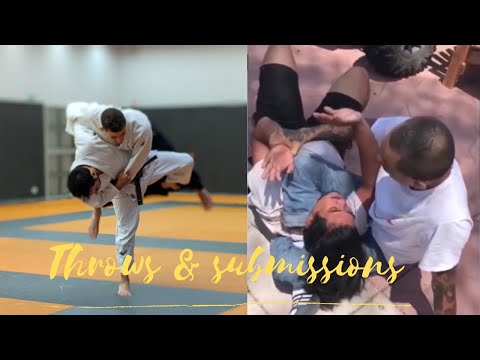
The Ultimate Guide to Street-Effective Throws and Submissions: Beyond the Dojo's Shadow

The dojo is where we forge our skills, refine our techniques, and learn the sacred art of Budo. But what happens when the polished mats are replaced by unforgiving asphalt? What separates a controlled demonstration from a desperate struggle for survival? Many practitioners spend years perfecting complex sequences, only to find them useless when faced with the brutal reality of a street confrontation. This isn't about glory or competition; it's about returning home. Today, we strip away the sport and delve into the raw efficacy of throws and submissions as applied in a self-defense scenario. Are the techniques you've mastered truly street-ready, or are they merely elegant illusions? Let's confront this uncomfortable truth.
## Table of Contents

Why Street Effectiveness Differs from Sport Techniques

The world of competitive grappling—be it Judo, BJJ, Sambo, or Wrestling—is governed by rules. These rules, while essential for fair play and athlete safety, fundamentally alter the nature of engagement. In a match, you have referees, mats, and often, a shared understanding of engagement. On the street, there are no such courtesies. Your opponent might have weapons, multiple assailants could be present, and the environment is chaotic and unpredictable. Techniques that are highly effective in sport, such as intricate leg locks in BJJ or complex throws requiring perfect grip fighting in Judo, may become liabilities. Why? Because they often require significant setup, precise timing, and a controlled opponent. On the street, a failed throw attempt could leave you off-balance and vulnerable. A submission attempt might be countered with a sudden, brutal strike or a desperate escape into a crowd. The goal shifts from "winning" the match to "disabling the threat" and escaping.
"In Budo, there is no room for ego. The only victory that matters is the victory over oneself, and in the street, that victory means returning home safe." - A Principle Imbued by Masters
This means favoring techniques that are: * **Simple and Direct**: Requiring minimal setup and easily understood under duress. * **Powerful and Decisive**: Capable of quickly neutralizing a threat. * **Environmentally Adaptable**: Effective on varied surfaces, not just mats. * **Less Risky for Counter-Attack**: Minimizing openings for the opponent.

The Core Philosophy: Survival Over Sport

The heart of martial arts lies in its philosophy, the Budo. While sport Budo emphasizes discipline, respect, and self-improvement, self-defense Budo prioritizes survival and de-escalation. This fundamental difference dictates the techniques we must prioritize. Consider the iconic *Uchi Mata* (Inner Thigh Throw) in Judo. On the tatami, it's a beautiful, powerful technique. But in a street fight, executing it perfectly requires specific foot placement and commitment that might be difficult to achieve against a resisting, potentially armed opponent. Furthermore, if the throw fails, you are often in a compromised position. Instead, we look to principles that align with immediate threat management. This often means prioritizing: * **Balance Disruption**: Causing the opponent to fall with minimal effort or risk to yourself. * **Control**: Gaining dominance over the opponent's limbs or posture. * **Immediate Incapacitation**: The ability to quickly end the confrontation. This philosophical shift is critical. It's not about discarding your years of training, but about re-contextualizing them. The grip fighting, the body mechanics, the understanding of leverage—these are all transferable. What needs to change is the objective and the selection criteria for techniques.

Essential Throws for the Streets

When we talk about throws on the street, we're not aiming for a clean *ippon*. We're aiming to disrupt, incapacitate, and create an opportunity to escape. Simplicity and raw power often trump technical finesse. 1. **Hip Toss Variations (e.g., O Goshi, Koshi Guruma)**: These are generally more adaptable than more complex throws. The key is to use your hips as a solid fulcrum and drive forward, utilizing your body weight to bring the opponent down. The emphasis is on driving *through* them, not just lifting. Against a resisting opponent, a strong *kosshi guruma* (full nelson throw) can be very effective, as it controls the head and upper body. 2. **Sweeney/Gogoplata-esque Takedowns**: While not traditional throws, these involve using a leg to destabilize and pull an opponent forward and down, often leading to a vulnerable position. Imagine an attacker lunging; using your lead leg to hook their ankle or calf while pulling their arm or head can lead to a sudden fall. This is about leverage and opportunistic disruption. 3. **Shoulder Throws (e.g., Seoi Nage variations)**: A well-executed *Seoi Nage* can be devastating. However, on the street, consider simpler variations. A powerful *morote seoi nage* (two-handed shoulder throw) where you drive *into* the opponent, using your shoulder and back to offload them, can be more reliable than the flashy one-handed versions. The focus is on a strong entry and driving your body mass. 4. **Simple Trips and Sweeps**: Don't underestimate the power of a well-timed sweep or trip. If an attacker overextends or commits their weight, a simple foot sweep (*Sasae Tsurikomi Ashi* type motion but without the full setup) or a leg hook can bring them down. The objective is immediate disruption of their base. 5. **The "Barn Door" Slam**: While often discouraged in sport due to safety, a forceful push or slam against a hard surface can be a decisive, albeit brutal, tactic in self-defense. This is about immediate incapacitation. If you can manipulate an opponent's balance and drive them into a wall, a car, or even the ground with sufficient force, the confrontation can end instantly. This requires significant power and aggressive intent.

Crucial Submissions for Self-Defense

Submissions in a self-defense context are about control and incapacitation. The goal is to make the opponent unable to continue the attack, allowing you to escape. Complex, time-consuming submissions are often impractical. 1. **Basic Chokes (e.g., Rear Naked Choke, Guillotine)**: These are universally effective and relatively quick to apply if you can secure the position. The Rear Naked Choke (*Hadaka Jime*) is perhaps the most potent choke, capable of incapacitating an opponent rapidly. A well-applied Guillotine choke can also be devastating, especially if you can drive the opponent down. The key is securing the position *before* attempting the submission. 2. **Arm Locks (e.g., Americana, Kimura, Straight Armbar)**: A straight armbar (*Juji Gatame*) is a classic and effective submission. The key is isolating the arm and hyperextending the elbow. A Kimura or Americana offers similar control and pain compliance. On the street, the ability to apply these locks quickly and decisively is paramount. Imagine securing an arm after a throw or takedown; a swift armbar can end the threat. 3. **Joint Manipulation/Pain Compliance**: Beyond formal submissions, being able to apply painful pressure to joints can be enough to deter an attacker. This could be a simple wrist lock applied with force, or pressure on fingers. The goal here is pain compliance to create an escape window. 4. **Cranks and Torque**: Techniques that apply rotational or twisting force to joints, like a toe hold or a crank applied to the knee, can be effective but also carry a high risk of permanent injury. In a self-defense scenario, the ethical line becomes blurred, but the objective remains neutralization. 5. **The "Ground and Pound" Principle**: While not a submission in the traditional sense, if the confrontation goes to the ground, the most effective "submission" is often a rapid series of strikes to vulnerable areas. This is about aggression and ending the fight through overwhelming force.

Training for the Unpredictable

How do you train for the chaos of the street? * **Sparring with Realistic Constraints**: Incorporate scenarios where you start from disadvantageous positions, have limited movement (e.g., against a wall), or face multiple attackers (in a controlled, safe manner). Train with varied striking and grappling, even if your base is one discipline. * **Environmental Training**: Practice techniques on different surfaces—grass, sand, concrete (safely, with padding). Train in confined spaces. * **Scenario-Based Drills**: Simulate real-life confrontations. Start from a verbal altercation and escalate to physical engagement. Practice de-escalation, escape, and then decisive action. * **Focus on Simplicity and Power**: When drilling, emphasize the most direct and powerful applications of techniques. Less is often more when survival is on the line. * **Conditioning for Endurance and Power**: Street fights can be short and explosive, or they can be grueling, prolonged struggles. Your conditioning must support both. Resistance bands, plyometrics, and explosive weight training can build the necessary power. Cardiovascular endurance is non-negotiable.

Essential Gear for Your Training

While the street offers no specialized gear, your training environment can be enhanced for realism and safety.
  • MMA Gloves (10-16oz): Essential for developing striking power and simulating combat while protecting your hands and your training partners.
  • Mouthguard: Non-negotiable for any sparring that involves striking or potential impacts.
  • Shin Guards: Crucial for safe leg kick and low-line sweep sparring.
  • Headgear: Recommended for high-intensity striking sparring to mitigate the risk of cuts and concussions.
  • Durable Clothing/Uniform: Training in clothes similar to what you'd wear on the street (e.g., jeans, t-shirts) can help you adapt your techniques. Consider a durable karate gi if you want to train with grip fighting that mimics real-world clothing grabs.
  • Training Dummy/BJJ Dummy: Useful for drilling throws and submissions without a live partner, allowing for repetition and muscle memory development.
For those looking to deepen their understanding of foundational principles, consider resources like Miyamoto Musashi's "The Book of Five Rings," which, while not a technical manual, offers profound insights into strategy and mindset applicable to any combat scenario. A good MMA or Judo textbook focusing on practical application can also be invaluable.

Frequently Asked Questions

What's the biggest mistake people make when applying martial arts on the street?

The biggest mistake is treating it like a sport. Over-reliance on techniques that require rules, referees, or perfect conditions. This includes going for complex submissions that leave you vulnerable, or initiating a throw without considering the environment and potential for counter-attack.

Should I incorporate striking into my grappling training for self-defense?

Absolutely. Most street confrontations involve both standing and ground elements, and often include striking. Even if your primary art is grappling-based, understanding basic striking defense and offense, and how to transition between ranges, is crucial for survival. This is where MMA training shines.

How do I deal with multiple attackers?

The primary strategy is *avoidance*. If avoidance fails, your goal is to create space and escape, not to engage and "win." Use techniques to disable the most immediate threat quickly, then disengage and run. Look for opportunities to break line of sight or use the environment to your advantage. This is where powerful disruption techniques are vital.

Is Judo or BJJ more effective for street self-defense?

Both offer valuable skills. Judo provides powerful throws and takedowns, useful for disrupting an opponent's balance and ending a fight quickly. BJJ excels in ground control and submission. However, neither is inherently "better" without proper adaptation. A practitioner from either art must learn to apply their skills under realistic, rule-less conditions, integrating striking and environmental awareness. The true effectiveness lies in the practitioner's ability to adapt, not solely the art itself.

For Deeper Exploration on Your Path

Sensei's Reflection: Your Next Step

You've trained, you've sweat, you've dedicated yourself to the path of Budo. But the true test of martial arts isn't the belt you wear or the trophies you've won. It's your ability to apply its principles when it matters most. The techniques discussed here are merely tools. Their effectiveness lies in your understanding, your conditioning, and your willingness to confront the harsh realities of conflict. Now, let me ask you this: When faced with true danger, will your training be a shield or a beautiful, but useless, ornament? Reflect on your current skill set. Which techniques would you rely on if your life depended on it, and *why*? Be honest with yourself. The path of the warrior demands constant, critical self-assessment. GEMINI_METADESC: Explore essential Judo, BJJ, and Sambo throws & submissions for real-world street self-defense. Learn to adapt your training beyond the dojo for survival.

Karate for the Streets: Fact, Fiction, or a Flawed Premise?

The age-old question echoes through dojos and online forums alike: Can traditional Karate truly hold its ground against the chaotic brutality of a street fight? Many have seen the viral clips, the fleeting moments of a disciplined practitioner seemingly overpowering a less skilled aggressor. But does this represent the reality of self-defense outside the controlled environment of a dojo? Today, we dissect this notion, not as a mere documentary, but as a critical examination from the perspective of martial arts mastery. We will delve into the core principles of Karate, contrast them with the unpredictable nature of street altercations, and ultimately, determine if the philosophy and techniques taught in Karate dojos are truly applicable when the stakes are highest.

The Street Fight Dilemma

Let's be unequivocally clear from the outset: engaging in street fighting is illegal and carries severe consequences. This discussion is purely an academic exploration of self-defense efficacy, not an endorsement of violence. The "Karate Master vs. Bully" trope, often sensationalized in media, presents a simplified dichotomy. It pits the refined techniques of a martial art against brute force, implying an almost guaranteed victory for the trained individual. But does this hold water when the rules are non-existent, the environment is chaotic, and the threat is immediate and unforgiving? We aim to dissect this common assumption and offer a more nuanced perspective rooted in the principles of combat and self-preservation.

"The supreme art of war is to subdue the enemy without fighting." - Sun Tzu, The Art of War. This foundational principle is often overlooked in discussions of street effectiveness.

Core Tenets of Karate: Striking and Stance

Karate, meaning "empty hand," is a system renowned for its powerful, linear strikes, sharp kicks, and disciplined stances. Rooted in Okinawan traditions, it emphasizes:

  • Kihon (Basics): Fundamental techniques like punches (tsuki), blocks (uke), and kicks (geri) form the bedrock.
  • Kata: Prearranged forms that simulate combat scenarios, teaching sequences, timing, and power generation.
  • Kumite: Sparring, often starting with controlled point-fighting (ippon kumite) and progressing to more dynamic, semi-free sparring.
  • Stances (Dachi): Stable, grounded positions like Zenkutsu-dachi (forward stance) and Kiba-dachi (horse stance) are crucial for power and stability.

The philosophy behind Karate often includes tenets like discipline, respect, and self-control. A well-trained Karateka learns to generate significant force from a stable base, deliver rapid strikes to vital points, and maintain composure under pressure within the structured framework of the dojo.

The Unpredictable Nature of Street Violence

Now, let us contrast this with the grim reality of a street fight. There are no referees, no judges, and no weight classes. You face opponents who may be:

  • Larger, stronger, and fueled by adrenaline or substances.
  • Attacking with unpredictable, often crude, yet highly effective methods (grabs, headbutts, kicks to the groin).
  • Fighting in uneven terrain, potentially in darkness, or with multiple assailants.
  • Armed with improvised weapons.

In such an environment, the elegance and precision of traditional Karate techniques can be severely challenged. A wide, stable stance that is excellent for power generation might leave you vulnerable to a quick sweep or tackle. Linear, outward-focused strikes can be easily intercepted by a clinch or a sudden takedown attempt. The element of surprise and sheer desperation often dictate the outcome far more than technical superiority alone.

Bridging the Gap: Karate's Strengths and Weaknesses in a Real Confrontation

Can Karate techniques be adapted for street defense? Absolutely. However, it requires a critical understanding of its limitations and a conscious effort to modify training.

Strengths:

  • Devastating Striking Power: A well-executed Gyaku-zuki (reverse punch) or a powerful roundhouse kick can be fight-ending.
  • Targeting Vital Points: Knowledge of vulnerable areas is crucial for quickly neutralizing a threat.
  • Mental Fortitude: The discipline and focus developed in Karate training can provide a significant psychological advantage.

Weaknesses and Challenges:

  • Stance Vulnerability: Traditional stances can be too static against aggressive grapplers or those who attack the legs.
  • Linearity: Predictable, outward movements can be anticipated and countered.
  • Distance Management: Karate excels at mid-to-long range striking, but street fights often devolve into close-quarters brawls or grappling exchanges where Karate may be at a disadvantage without specific adaptations.
  • Lack of Ground Fighting: Most traditional Karate styles do not emphasize ground survival or submissions, a critical component of modern combat sports like BJJ and MMA.

A common critique is that many Karate practitioners train for sport kumite, which involves rules and point systems that differ vastly from a life-or-death scenario. The concept of "Mushin" (no-mind), a state of effortless action without conscious thought, is the ideal, but achieving it in a high-stress, chaotic environment requires immense, practical application.

"When I am fighting, I am the enemy, and the enemy is me. I am the mountain, and the mountain is me." - A principle of detachment and oneness found in some martial traditions, crucial for overcoming fear.

When Traditional Meets Modern: The Case for MMA and Other Systems

This is where the debate intensifies. Systems like Mixed Martial Arts (MMA) explicitly aim to integrate striking (like Karate, Muay Thai, Boxing) with grappling (like Brazilian Jiu-Jitsu, Wrestling, Judo). Proponents argue that a well-rounded fighter with skills in all ranges – striking, clinching, and ground fighting – is inherently better prepared for the unpredictable nature of combat, whether in a ring or on the street.

However, it's a fallacy to dismiss Karate entirely. A Karateka who understands the principles of evasion, closing distance, and transitioning to clinch or takedown defense (even if not extensively trained) can adapt. The key is acknowledging the limitations and seeking supplementary training.

Consider the philosophy of Bruce Lee's Jeet Kune Do: "Use what is useful, discard what is useless." This approach encourages practitioners to take effective techniques from various sources, rather than adhering dogmatically to a single style.

Essential Training Modifications for Street Readiness

For a Karate practitioner aiming for greater street efficacy, consider these training modifications:

  1. Sparring with Diverse Partners: Train with individuals who practice Grappling, Judo, and Kickboxing. This exposes you to different ranges and pressures.
  2. Realistic Drills: Incorporate scenarios that mimic street environments – surprise attacks, multiple opponents (if done safely and with control), fighting in confined spaces, and defending against grabs.
  3. Clinch Work: Develop basic clinch fighting skills, elbow and knee strikes, and takedown defense.
  4. Ground Survival: Even basic techniques for getting back to your feet (technical stand-up) or defending against basic positional holds are invaluable.
  5. Focus on Evasion and Mobility: Train to move out of the pocket, use footwork to create angles, and avoid being a static target.
  6. De-escalation and Awareness: The most crucial "technique" is awareness and de-escalation. Avoiding the fight is always the primary goal.

Veredicto del Sensei: ¿Funciona el Karate en la Calle?

The answer is a resounding... it depends entirely on the practitioner and their training methodology.

If you train Karate as a pure sport with rigid rules, focusing solely on point sparring and traditional forms without adapting to the realities of unregulated combat, its effectiveness will be severely limited. You risk being unprepared for the chaos, the close-quarters fighting, and the sheer brutality of a street confrontation.

However, if your Karate training incorporates principles of practical application, realistic sparring against diverse martial arts, an understanding of gross motor skills under stress, and a strong emphasis on situational awareness and de-escalation, then yes, the core principles and techniques of Karate can be highly effective. A disciplined mind, powerful strikes, and a solid foundation are always advantageous.

Ultimately, Karate itself is not the problem; it is the *training* and the *application* that determine its efficacy. The true "Karate Master" on the street is not necessarily the one who performs the most complex kata, but the one who survives, protected by their training, their awareness, and their wisdom.

Cinturón Negro en Adaptación y Realismo

Equipo Esencial para tu Entrenamiento

Para llevar tu entrenamiento de Karate hacia una mayor aplicabilidad en escenarios de defensa personal, considera el siguiente equipo:

  • Guantes de Sparring (16oz): Indispensables para proteger tus manos y las de tu compañero durante el sparring más dinámico.
  • Protector Bucal: Fundamental para prevenir lesiones dentales y mandibulares.
  • Protector de Ingle: Especialmente importante si incluyes trabajo de combate cercano o defensas contra golpes bajos.
  • Peto o Peto Ligero: Permite un mayor realismo en golpes corporales.
  • Esterillas de Entrenamiento o tatami: Para practicar caídas y técnicas de suelo de manera segura.
  • Kimono de Doble Tejido para Judo o Karate Resistente: Si planeas incorporar agarres y defensas contra luxaciones, un kimono más robusto será necesario.

Invertir en equipo adecuado no solo garantiza la seguridad, sino que permite un entrenamiento más intenso y realista, acercándote a las condiciones de una confrontación real.

Preguntas Frecuentes

¿Es el Karate una de las artes marciales más efectivas para la defensa personal?

La efectividad de cualquier arte marcial para la defensa personal depende enormemente del enfoque del entrenamiento y la adaptabilidad del practicante. Karate proporciona excelentes herramientas de golpeo, pero sin entrenamiento específico en otras áreas como el grappling o la defensa contra múltiples oponentes, puede tener limitaciones.

¿Debería un practicante de Karate evitar las peleas callejeras?

Absolutamente. Las peleas callejeras son impredecibles, peligrosas y tienen consecuencias legales graves. La mejor defensa es la prevención, la conciencia situacional y, si es posible, la desescalada. El entrenamiento en artes marciales debe ser un último recurso, no una invitación a la confrontación.

¿Qué diferencias clave existen entre el Karate deportivo y el Karate para la calle?

El Karate deportivo se enfoca en reglas, puntuación y seguridad. El Karate para la calle (o defensa personal) enfatiza la eficacia bajo estrés, la simplicidad de las técnicas, la conciencia del entorno, la protección contra múltiples atacantes y la capacidad de neutralizar una amenaza rápidamente.

¿Pueden los katas de Karate ser útiles en una pelea real?

Los katas enseñan principios de movimiento, potencia y defensa. Sin embargo, su aplicación directa en una pelea caótica es limitada. Los principios subyacentes, como la correcta generación de fuerza y la coordinación, son transferibles, pero la forma exacta de la kata rara vez se reproduce en combate real.

¿Qué otras artes marciales son recomendables para complementar el Karate para defensa personal?

Artes marciales que cubren el grappling y la lucha en el suelo, como el Judo, Brazilian Jiu-Jitsu (BJJ), y la lucha libre (Wrestling), son excelentes complementos. El Kickboxing y el Muay Thai también mejoran la versatilidad en el combate de pie.

Para Profundizar en tu Camino


Narrador: Tysmithvoice
Investigador/Escritor: Emekaekwuribe
Editor de Video: Lance
Música: https://artlist.io
Imágenes de stock: https://ift.tt/lkdhzfM
Más metraje de stock: https://ift.tt/6xzeZJU

Apoya el canal con los enlaces de abajo:

Twitter: https://twitter.com/ChrisVisionz

Suscríbete a Brutal TV para más videos.

Descripción del Canal: Este canal está dedicado a todo tipo de Artes Marciales. Hacemos desde artes marciales japonesas tradicionales hasta boxeo. Espero que disfruten el video. Por favor, dejen un "me gusta" para que podamos seguir creando más videos.

Reflexión del Sensei: Tu Próximo Paso

Si pudieras modificar un solo aspecto de tu entrenamiento actual de Karate para prepararte mejor para una situación impredecible, ¿cuál sería y por qué? ¿Es la técnica, la mentalidad, o la familiaridad con otros sistemas de combate?

``` GEMINI_METADESC: Karate for the Streets: Does it work? Critical analysis of Karate's effectiveness in real-world confrontations. Strengths, weaknesses, and training adaptations for self-defense.

Beyond the Gi: Does a Judo Black Belt Guarantee Street Survival?

The art of Judo, a discipline celebrated across generations, attracts practitioners from the tender age of six to the venerable eighty, encompassing all professions, nationalities, and genders. Each individual embarks on this path with a unique objective: some seek physical prowess, others the elixir of health, a strong mind, the practical edge of self-defense, or the noble aspiration of becoming an instructor. Its global recognition is undeniable, a testament to its enduring appeal. But when the polished dojo floor gives way to the unforgiving concrete of a street confrontation, does the esteemed black belt of Judo truly hold its weight? This is the crucible where technique meets reality, and theory grapples with survival.

The Enduring Appeal of Kodokan Judo

Born from the innovative spirit of Jigoro Kano, Judo, meaning "gentle way," is more than just a physical pursuit; it's a philosophy, a path to self-improvement. Its systematic approach to throwing (nage-waza), grappling (katame-waza), and striking (atemi-waza, though rarely emphasized in sport Judo) has captivated martial artists worldwide. The rigorous training, the emphasis on `seiryoku zenyo` (maximum efficiency, minimum effort) and `jita kyoei` (mutual welfare and benefit), fosters not only physical conditioning but also profound mental fortitude. The iconic white gi, the precise etiquette, the respect ingrained in every bow – these are the hallmarks of a tradition that has stood the test of time.

What Does a Judo Black Belt Truly Signify?

A black belt in Judo, or *Kuroobi*, is a symbol of dedication, a milestone earned through years of relentless training, sweat, and perseverance. It signifies a comprehensive understanding of Judo's core principles, a mastery of fundamental techniques, and the ability to apply them with precision and power. A Yudansha (black belt holder) is expected to possess: * **Technical Proficiency:** Mastery of numerous throwing techniques, groundwork holds, armlocks, and chokes. * **Strategic Acumen:** The ability to read an opponent, anticipate their moves, and exploit openings. * **Physical Conditioning:** Stamina, strength, and agility honed through countless randori (free sparring) sessions. * **Mental Discipline:** Patience, focus, resilience, and the capacity to remain calm under pressure. * **Understanding of Principles:** Deep comprehension of leverage, balance, and the concept of `kuzushi` (unbalancing). This journey is not for the faint of heart. It demands a commitment to the `do`, the way, often requiring personal sacrifice and unwavering dedication.

Judo in the Dojo vs. Judo on the Streets: A Critical Analysis

Herein lies the crux of the debate, the friction point where the idealized dojo environment collides with the chaotic unpredictability of real-world conflict. While Judo is undeniably effective, its application in a street fight is a complex matter, fraught with nuances that often get lost in translation.
"The purpose of Judo is to train the body and mind, thereby cultivating a strong, virtuous character and contributing to the betterment of society." - Jigoro Kano
Kano's vision was primarily one of holistic development and societal contribution, not necessarily street combat. While the techniques are rooted in practicality, the context of their practice is crucial.
  • The Gi Factor: Judo techniques are heavily reliant on gripping the opponent's gi. In a street fight, most assailants will not be wearing a loose-fitting uniform. This immediately nullifies a significant portion of Judo's arsenal. Hand-to-hand fighting without a gi requires drastically different grips, entries, and applications.
  • Controlled Environment vs. Chaos: Dojo randori, while intense, operates under a set of rules and a degree of mutual respect. A street fight is an uncontrolled environment where anything goes – multiple attackers, weapons, uneven terrain, and malicious intent.
  • Legal Ramifications: Judo techniques, particularly throws and submissions, can be lethal if applied improperly or with excessive force. The legal consequences of using such techniques against an untrained assailant in a self-defense scenario can be severe.
  • The "Soft" vs. "Hard" Debate: While Judo is far from a "soft" art, its emphasis on redirection and leverage can be perceived as less direct than the "hard" striking arts like Karate or Muay Thai. In a situation where immediate incapacitation is paramount, a well-placed, powerful strike might be more expedient than attempting a complex throw.

Adaptability is Key: Bridging the Gap

This is not to diminish Judo's inherent value. A skilled Judo black belt possesses a superior understanding of body mechanics, balance, and control. These attributes are invaluable, even on the street. The challenge lies in adapting Judo principles to a gi-less, rule-less scenario. A pragmatic approach would involve: * Focusing on Core Principles: Understanding `kuzushi` (unbalancing) and leverage remains critical, regardless of attire. * Developing Striking Acumen: Cross-training in striking arts or developing a personal "street Judo" curriculum that incorporates effective hand and foot techniques. * Awareness and De-escalation: The most potent self-defense is avoiding conflict altogether. A Judo practitioner, grounded in discipline, should prioritize situational awareness and de-escalation. * Understanding Ground Fighting: If a fight goes to the ground, a Judo black belt has a significant advantage, especially if they have supplemented their ground game with Brazilian Jiu-Jitsu principles. Many modern martial arts, particularly Mixed Martial Arts (MMA), have successfully integrated Judo's throwing and grappling prowess. Fighters like Ronda Rousey, with her devastating Judo background, demonstrated the raw effectiveness of specialized martial arts when honed for combat.
"In real combat, the most effective techniques are often the simplest ones."
This adage, echoing through countless dojos and training halls, highlights the critical difference between sport martial arts and street survival. While Judo offers a rich tapestry of techniques, their direct applicability in a street fight is conditional.

Veredicto del Sensei: ¿Merece la pena?

The question isn't whether Judo is "good" for a street fight, but rather how a Judo black belt *adapts* their formidable skillset. A Judo black belt, by virtue of their training, possesses tools that can be incredibly effective in a self-defense scenario. However, blind adherence to dojo techniques, without consideration for the absence of a gi or the presence of extreme danger, is a recipe for disaster. The effectiveness lies not solely in the black belt itself, but in the practitioner's ability to critically assess, adapt, and integrate their knowledge into the harsh realities of uncompromised conflict. Cinturón Negro en Fundamentos, Naranja en Aplicación Callejera (Sin Adaptación).

Equipo Esencial para tu Entrenamiento

While Judo training primarily emphasizes the gi and the mat, supplementing your martial arts journey with other equipment can enhance your skills and preparedness.
  • Judogi (Kimono de Judo): A durable, reinforced gi is crucial for traditional training and offers grip points vital for many techniques. Look for IJF-approved gis for competition-level quality.
  • Training Matting: Essential for safe practice of throws and groundwork. Tatami mats are the standard for dojos.
  • Resistance Bands: Excellent for building explosive strength and improving grip endurance, transferable to clinch work and throws.
  • Sparring Gloves (Lightweight): If you're cross-training in striking or developing "street Judo," lightweight MMA gloves can help practice striking without the risk of injuring your hands.
  • Makiwara or Striking Pads: For developing power and conditioning your hands and feet, crucial for any striking component of self-defense.

Guía de Entrenamiento: Desarrollando el "Kuzushi" en Casa

Mastering `kuzushi` (unbalancing) is fundamental to Judo and applicable even without a partner.
  1. Body Awareness Drill: Stand in a natural stance. Focus on your center of gravity. Practice shifting your weight subtly, feeling how your balance changes.
  2. Static Balance Holds: Hold a strong, balanced stance (like a natural `shizentai`) for extended periods. Focus on maintaining your core stability.
  3. Mirror Practice: Imagine an opponent in front of you. Practice imaginary `tsukuri` (entry) and `kuzushi` movements, focusing on the precise body mechanics required to break their balance.
  4. Weight Shift Drills: Practice forward, backward, and lateral weight shifts. Imagine pulling or pushing an opponent, and feel how your own balance must adjust to maintain stability while initiating movement.
  5. Resistance Band Pulls: Use a resistance band anchored securely. Practice pulling motions that mimic unbalancing an opponent. Focus on generating power from your hips and core, not just your arms.

Preguntas Frecuentes

Is Judo effective for self-defense on the street?

Judo provides an excellent foundation in balance, leverage, and control. However, its direct application is limited without a gi. Adapting principles and cross-training in striking and gi-less grappling are crucial for street effectiveness.

What is the biggest difference between Judo in the dojo and a street fight?

The most significant differences are the absence of a gi and the uncontrolled, unpredictable nature of street conflict, which may involve multiple attackers, weapons, and a lack of rules or mutual respect.

Can a Judo black belt defend themselves effectively without their gi?

Yes, but it requires adaptation. The core principles of balance and leverage remain, but the techniques must be modified for a gi-less environment. Supplementing with striking arts or Brazilian Jiu-Jitsu is highly recommended.

What are the most important Judo principles for self-defense?

`Kuzushi` (unbalancing), `Tsukuri` (entry), and `Kake` (execution) are paramount. Understanding how to off-balance an attacker and control their body are transferable skills.

Para Profundizar en tu Camino

The true warrior is the one who masters himself. All other battles are secondary.

Reflexión del Sensei: Tu Próximo Paso

You've trained, earned your rank, and understand the fundamental principles of Judo. But when the dojo doors close and the harsh reality of the outside world presents itself, is your training a tool for survival or a cherished memory of sport? The techniques you've perfected are potent, but their effectiveness is a reflection of your adaptability and your willingness to confront the uncomfortable truth: the street is not a dojo. Are you a Judo practitioner, or are you a martial artist ready for *any* confrontation? The answer lies not in your belt color, but in your actions when the rules no longer apply. ``` GEMINI_METADESC: Does Judo's black belt prowess translate to street survival? Explore the nuances, adaptative strategies, and the true meaning of martial effectiveness beyond the dojo.

King of the Streets 106: Unveiling the Brutality of "Mass Hypnosis" - A Martial Sensei's Analysis

The Unvarnished Truth of Underground Combat

Hello and welcome, warriors and seekers of truth. Today, we delve into the raw, untamed arena of "King of the Streets: 106 - Mass Hypnosis." This isn't about choreographed dance or televised spectacle; this is about the visceral exchange of power, the primal test of wills in a setting that mirrors the oldest forms of combat. You're about to witness a brutal depiction of what happens when the rules of polite society are stripped away. Are you ready for the unfiltered reality of street fighting?

Table of Contents

The Brutal Paradigm of King of the Streets

"King of the Streets" is more than just a fight club; it's an experiment in human aggression, a testament to the enduring human need to test boundaries. Unlike the highly regulated environments of professional sports like [UFC](https://www.ufc.com/) or amateur bouts, KOTS operates in the shadows, presenting a format that emphasizes raw effectiveness over sport-specific techniques. This is where the principles of [BUDO](https://en.wikipedia.org/wiki/Budo) meet the chaos of desperation. The event title, "Mass Hypnosis," hints at the psychological warfare at play, the ability to control not just one's own actions but also to influence the opponent's perception and will.

Fight Analysis: Sylwester vs. Artemis

The combatants, Sylwester from Poland and Artemis from Cyprus, are described as "Streetfighters." This label carries weight, suggesting experience forged not in dojos but in the unforgiving crucible of real-world altercations.
  • Sylwester: Poland, 75 kg / 181 cm / 30 years. His height advantage suggests potential reach, but his experience as a street fighter implies a pragmatic, possibly brutal, approach.
  • Artemis: Cyprus, 75 kg / 173 cm / 23 years. Younger and shorter, Artemis likely relies on speed, tenacity, and perhaps a more aggressive, forward-charging style to overcome the physical disparity.
The weight class is a common ground, equalizing one significant factor. The age and height differences, however, introduce variables that will undoubtedly play a crucial role in the unfolding drama. Will Sylwester's experience and reach dominate, or will Artemis's youthful aggression and agility prevail? This is the eternal question in combat.
"In martial arts, as in life, the greatest weapon is not your fist or your foot, but your mind. It dictates how you use them."

Rules of Engagement: The No-Holds-Barred Reality

KOTS eschews the common round-based structures. Instead, fights continue until a decisive conclusion: a knockout or a submission. Two primary formats are presented:
  • "K.O. Only": This format permits all techniques except submissions, demanding a definitive knockout. This emphasizes striking power and the ability to end a fight decisively.
  • "No Rules": Here, the ultimate freedom of combat is granted. Everything is permitted, including submissions, with victory achieved by knockout or tap-out. This is the closest one can get to a "real fight" scenario without the consequences of legal repercussions.
The absence of time limits is particularly telling. It strips away the urgency of clock management and forces fighters to engage in a war of attrition, testing not just skill but sheer endurance and mental fortitude. This aligns with the spirit of ancient combat, where fights could last until one combatant could no longer stand.

The Mindset of the Street Fighter

The term "Streetfighter" is often romanticized, but its reality is far from glamorous. It implies a fighter who has learned to adapt, to improvise, and to survive in unpredictable environments. Unlike the formalized training of disciplines such as [Karate](https://en.wikipedia.org/wiki/Karate) or [Judo](https://en.wikipedia.org/wiki/Judo), street fighting often involves elements of surprise, improvised weapons, and the harsh realities of self-defense where the objective is survival, not points. A key aspect of "Mass Hypnosis" likely refers to the psychological element. Can a fighter impose their will on their opponent, creating a mental fog that hinders the opponent's ability to think clearly and react effectively? This is where the spiritual discipline of [BUDO](https://en.wikipedia.org/wiki/Budo) finds its parallel in the brutal effectiveness of street combat. The ability to remain calm under duress, to maintain focus amidst chaos – these are universal principles.

Veredict of the Sensei: A True Test of Skill?

"King of the Streets" presents a raw, unadulterated form of combat. The "K.O. Only" and "No Rules" formats, devoid of time limits, push fighters to their absolute physical and mental limits. This environment tests a fighter’s adaptability, resilience, and true understanding of the fight. While lacking the formal elegance of traditional martial arts, the sheer intensity and consequence-driven nature of KOTS provide a unique and compelling spectacle. For those who seek to understand the extremes of human conflict, "King of the Streets" offers a potent, if brutal, insight. It's a reminder that the foundational principles of martial arts – courage, discipline, and the will to overcome – are tested in the most unforgiving arenas. Cinturón Negro en Brutal Honestidad.

Equipment Essential for Your Training

While KOTS thrives on minimal regulation, the right gear is crucial for safe and effective training, preparing you for any scenario.
  • Hand Wraps: Essential for protecting your wrists and hands during striking drills.
  • Groin Protector: A non-negotiable piece of safety equipment for any sparring.
  • MMA Gloves (14-16 oz): For sparring that simulates KOTS's "K.O. Only" and "No Rules" formats, offering protection for both striker and receiver.
  • Shin Guards: Crucial for kickboxing and Muay Thai drills that build leg power and conditioning.
  • Mouthguard: Vital for protecting your teeth and preventing concussions.

Training Guide: Simulating Street Conditions

While direct imitation of street fights is inadvisable and illegal, certain training principles can enhance readiness for unpredictable encounters.
  1. Conditioning: Focus on high-intensity interval training (HIIT) and extensive cardiovascular work to build the stamina needed for prolonged engagements. Exercises like burpees, mountain climbers, and sprints are invaluable.
  2. Sparring with Varied Rules: Incorporate rounds with specific restrictions. For example, "no kicking" rounds, "no punching with the lead hand" rounds, or rounds where only certain target areas are allowed. This forces adaptation.
  3. Situational Drills: Practice fighting from disadvantageous positions (e.g., starting on the ground, confined spaces) and incorporate defensive techniques against common street attacks like grabs and chokes.
  4. De-escalation Training: While this post focuses on combat, remember that the ultimate martial skill is to avoid the fight altogether. Practice verbal de-escalation techniques and awareness drills.
  5. Grip Fighting & Clinch Work: Develop strong grips and proficiency in close-quarters combat, as many street altercations devolve into grappling exchanges.

Frequently Asked Questions

  • What is "King of the Streets"? It's an underground fight club where individuals compete for prize money under various rulesets, emphasizing real combat scenarios.
  • What does "Mass Hypnosis" refer to? It likely refers to the psychological aspect of fighting, the ability to mentally overwhelm an opponent.
  • Is this legal? The legality of such events can be highly questionable and varies by jurisdiction. Professional sporting organizations operate under strict regulations for safety and legality.
  • What is the difference between "K.O. Only" and "No Rules"? "K.O. Only" means victory must be by knockout, with submissions disallowed. "No Rules" allows for both knockouts and submissions, permitting virtually all techniques.

For Further Study in Your Journey

Reflexión del Sensei: Tu Próximo Paso

You have witnessed the allure and the brutality of an environment where the most basic principles of combat are laid bare. But I must ask you: What is the true purpose of training? Is it to seek the most dangerous arena, or to cultivate a strength and wisdom that transcends any single fighting style or environment? If you truly wish to master the martial path, ask yourself: how can the lessons of control, resilience, and tactical awareness from even this raw spectacle be refined and applied to the discipline and philosophy of your chosen art, ultimately serving a higher purpose than mere survival? The answer lies not in the ring, but within your own spirit. ``` GEMINI_METADESC: Explore the brutal world of King of the Streets 106: Mass Hypnosis. A Sensei analyzes the raw combat, rules, and mindset of underground fighting, comparing it to traditional martial arts.

Taekwondo in Street Fighting: Myth or Martial Reality?

Is Taekwondo, with its high kicks and flashy forms, truly a viable tool for self-defense in the brutal, unpredictable chaos of a street fight? Or is it merely a beautiful, yet ultimately impractical, dance performed under the guise of martial arts? Many of you have arrived here seeking answers, driven by curiosity, perhaps even by a gut-wrenching encounter or the fear of one. You want to know if the discipline you admire, or are considering adopting, can truly protect you when the stakes are life and death. Let's cut through the noise, the dogma, and the unverified claims. Today, we dissect Taekwondo's efficacy on the unforgiving pavement.

The Taekwondo Paradox: Sport vs. Survival

Taekwondo, recognized globally for its dynamic kicking techniques and its prominent status as an Olympic sport, holds a unique position in the martial arts landscape. Its popularity is undeniable, drawing millions of practitioners of all ages and genders, celebrated for its accessibility and fitness benefits. However, this very popularity and its sporting evolution have fueled a persistent debate: Can the stylized techniques honed in a dojo translate effectively to the raw, unscripted violence of a street altercation? Many come to Taekwondo seeking not just physical fitness or a connection to BUDO, but a genuine means of self-preservation. Yet, the common question lingers, a shadow cast over its glittering achievements: Is Taekwondo truly effective in a street fight?

Taekwondo's Strengths: When Form Meets Function

Let us not dismiss Taekwondo outright. Its strengths are significant, and when understood correctly, can be applied. Firstly, the emphasis on kicking techniques develops incredible leg strength, agility, and coordination. A well-placed, powerful kick from a distance can be a formidable weapon, capable of deterring an attacker or creating an opening. Think of the infamous "roundhouse kick" or "axe kick" – executed with precision and power, they are not just for show. They develop balance and proprioception, crucial for staying on your feet amidst chaos.

Furthermore, Taekwondo training instills a powerful sense of discipline and mental fortitude. The rigorous practice of katas (known as poomsae in Taekwondo) requires focus, memory, and physical control. This mental conditioning is transferable. The ability to remain calm under pressure, to execute a practiced movement despite fear, is a core tenet of any true martial art, including Taekwondo. The constant drilling also builds cardiovascular endurance and flexibility, both vital components for any physical confrontation.

"The ultimate aim of martial arts is not victory or defeat, but the perfection of the human character." - Choi Hong Hi, Founder of ITF Taekwondo. While this quote speaks to the higher purpose, a perfected character often includes the ability to protect oneself and others.

The sheer accessibility of Taekwondo is another point in its favor. Its lack of age or gender restrictions means a vast number of people are exposed to its principles. This widespread practice means a greater potential for individuals to develop the confidence and basic physical conditioning needed for self-defense, even if their specific curriculum isn't geared towards street combat.

The Street Fight Reality: Where Taekwondo Falters

Now, let us address the elephant in the room. The modern, sport-oriented Taekwondo often falls short in a street fight for several critical reasons:

  • Limited Ground Game: Most street fights, particularly those involving multiple assailants or a determined attacker, quickly devolve to the ground. Taekwondo offers virtually no training in grappling, wrestling, or submissions. A skilled grappler can neutralize a Taekwondo practitioner's kicking advantage almost instantly. This is a critical vulnerability.
  • Lack of Close-Range Combat: The flashy, long-range kicks that dominate Taekwondo sparring are often impractical when an opponent is within arm's reach, attempting to clinch, grab, or strike with punches. Training often lacks emphasis on effective close-quarters striking, blocking punches, or defensive maneuvers in tight spaces.
  • Sport-Centric Rules: The rules of Taekwondo sparring prioritize points scored through clean, often one-legged, kicks to the torso and head. Techniques that might be dangerous or illegal in sport (like low kicks to the legs, groin strikes, or using the opponent's momentum against them) are rarely trained. This fosters a mentality that prioritizes scoring over disabling an opponent.
  • Over-reliance on High Kicks: While visually impressive, high kicks can be risky. They require significant space, can compromise balance, and are vulnerable to takedowns. In a confined, chaotic environment, such techniques are often a liability rather than an asset.
  • Absence of Weapon Defense: Street violence can involve weapons. Taekwondo, in its standard curriculum, typically does not train practitioners on how to defend against knives, sticks, or improvised weapons.

The primary issue is that Taekwondo, as commonly practiced today, is overwhelmingly a sport and a fitness activity, not a comprehensive self-defense system designed for the grim realities of violent encounters. The curriculum has been refined for points, for spectacle, and for athletic competition, often at the expense of brutal practicality.

The Philosophical Divide: Budo vs. Sport

This brings us to a fundamental divergence in martial arts philosophy. On one side, we have the "Budo" path – a path of rigorous, often harsh, training focused on effectiveness above all else, even at the cost of aesthetic appeal. This path emphasizes survival, disabling an opponent quickly and decisively, and accepting the brutal nature of real combat. Think of systems like Kyokushin Karate or Judo, which, while competitive, retain a strong foundation in practical application.

On the other side, we have sport martial arts. While invaluable for competition, character development, and fitness, their rule sets inherently alter their purpose. They teach participants how to win within a specific framework, not necessarily how to survive a fight with no rules. Taekwondo, particularly Olympic Taekwondo, leans heavily into this sporting aspect. The beautiful techniques, the focus on avoiding injury to score points – these are antithetical to the mindset required when facing an attacker who intends to inflict harm without referee intervention.

"In the heat of battle, the martial artist must not be constrained by rules or forms. Survival is the only rule." - A common sentiment echoed by many combat strategists, though difficult to attribute to a single master.

This is not to say all Taekwondo practitioners are unprepared. Many schools and masters still teach practical self-defense principles. However, the prevalence of sport-focused dojos means that the average Taekwondo practitioner may possess a skillset that is far removed from street-survival efficacy.

Adapting Taekwondo for the Street: A Sensei's Perspective

So, is all hope lost for the Taekwondo practitioner seeking real-world self-defense? Not entirely. The foundation you've built can be a valuable asset if strategically adapted:

  1. Focus on Practical Kicks: Prioritize kicks that are fast, stable, and effective at closer ranges. Think low kicks to the legs (thighs, shins), knee strikes, and controlled side kicks to the body. High, flashy kicks should be reserved for specific, open scenarios, if at all.
  2. Develop Essential Hand Techniques: Supplement your training with punches, elbow strikes, and palm-heel strikes. Learn how to block effectively against common punches.
  3. Incorporate Clinch and Takedown Defense: Seek out supplemental training in grappling, Muay Thai clinch work, or basic Judo. Understanding how to defend against or disengage from clinches and takedowns is paramount.
  4. Practice Footwork and Balance: Develop agility and the ability to maintain balance in awkward positions. This will help you recover from off-balance moments and move effectively in confined spaces.
  5. Train for Simulation, Not Just Sport: Engage in scenario-based training. Practice defending yourself from surprise attacks, multiple opponents, and confined spaces. Understand the psychological aspects of a real fight – the fear, the adrenaline, the aggression.
  6. Embrace a Simpler Mindset: In a street fight, complexity is your enemy. Focus on simple, direct techniques that work under extreme stress. The goal is to end the confrontation as quickly and safely as possible, not to perform a beautiful sequence of moves.

Essentially, you must filter your Taekwondo training through a lens of brutal practicality. Ask yourself for every technique: "Will this work when someone is trying to hurt me, when there are no rules, and when I'm scared?"

Essential Gear for Your Training

While Taekwondo itself doesn't require extensive gear for basic practice, serious training for self-defense, or even competitive sparring, necessitates proper equipment. Investing in the right kit not only protects you but also enhances your training experience. For those looking to supplement their Taekwondo with more combat-focused skills, consider:

  • Quality Sparring Gear: Headguards, mouthguards, chest protectors (especially the hogu used in Taekwondo competitions), and shin/instep protectors are crucial for safe sparring.
  • Durable Footwear: While many practice barefoot, dedicated training shoes can offer better grip and support for certain drills, especially if cross-training in arts like MMA.
  • Training Uniform (Dobok): Ensure your dobok is durable enough for dynamic movements and potential grappling. Look for heavier fabrics if you anticipate rougher training.
  • Hand Wraps and Gloves: If incorporating boxing or MMA-style striking, hand wraps are essential for wrist support, and bag gloves or sparring gloves will protect your hands.
  • Resistance Bands: Excellent for strength and conditioning exercises that mimic the explosive power needed for kicks and strikes, all manageable #AtHomeWorkout options.

Remember, the best #MartialArtsMerchandise is that which supports safe and effective training.

Frequently Asked Questions

Is Taekwondo considered a good self-defense system for women?

Taekwondo can be a decent starting point for women due to its emphasis on fitness, confidence building, and distance-creating kicks. However, like all martial arts, its effectiveness in a real confrontation depends heavily on the training focus. A curriculum prioritizing practical self-defense, including close-range techniques and situational awareness, would be more beneficial than one solely focused on sport sparring.

Can Taekwondo kicks stop a much larger attacker?

A powerful, well-placed kick to a vulnerable area (like the knee or groin) *can* incapacitate a larger attacker, but it is not guaranteed. The attacker's momentum, adrenaline, and sheer size can sometimes absorb such blows. Relying solely on kicks against a significantly larger and more aggressive opponent is risky. A comprehensive approach combining kicks, punches, and defensive maneuvers is always superior.

Is it better to learn Taekwondo or Karate for street fighting?

This is a classic debate with no single "correct" answer, as both arts have their strengths and weaknesses depending on the specific school and curriculum. Traditional Karate styles often incorporate more hand techniques and closer-range combat than sport Taekwondo. However, some Taekwondo schools teach excellent self-defense. Ultimately, a style that emphasizes practical application, situational awareness, and a no-rules mindset, regardless of its name, will be more effective than a purely sport-oriented system.

For Deeper Exploration

To truly grasp the nuances of martial arts efficacy and philosophy, delve into these related topics:

  • MMA vs. Traditional Martial Arts: Where Does Effectiveness Lie?
  • The Philosophy of BUDO: More Than Just Fighting.
  • Self-Defense: Principles for the Modern World.

Sensei's Reflection: Your Next Step

Taekwondo offers undeniable benefits: incredible kicking prowess, physical conditioning, and mental discipline. Yet, its efficacy in the raw crucible of a street fight is, at best, conditional. The transition from controlled sport to uncontrolled violence is a chasm that requires more than just high kicks. It demands a brutal pragmatism, an embrace of close-quarters combat, and an understanding of grappling.

The question is not whether Taekwondo *can* be effective, but whether the way you are training it *makes* it effective for survival. Are you training for points, or for permanence? Are you honing skills that will save you when the rules vanish, or just those that win you a trophy?

Sensei's Reflection: Your Next Step

Consider this: If you found yourself in a real, life-threatening confrontation tomorrow, would you rather face an opponent who has mastered the 30 most effective, simple techniques for survival, or one who can flawlessly execute 300 flashy, yet situational, moves? Now, examine your training. Which path are you truly on?

``` GEMINI_METADESC: Analyze Taekwondo's effectiveness in street fights. Explore its strengths, weaknesses, and practical adaptations for real-world self-defense scenarios.