Showing posts sorted by relevance for query history of hapkido. Sort by date Show all posts

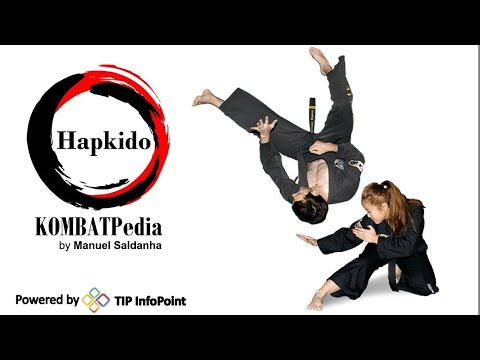
Hapkido: Unleashing the Korean Warrior's Art of Unification

The true essence of a martial art is not merely in the techniques it bestows, but in the philosophy it cultivates. Hapkido, a dynamic and comprehensive Korean martial art, is a prime example of this profound integration. But beyond the flashy kicks and joint locks, what truly defines Hapkido? Is it a relic of the past, or a living, breathing art form relevant to the modern warrior? Prepare yourselves, for we are about to dissect Hapkido not just as a system of combat, but as a path to self-mastery, a philosophy tested in the crucible of reality.

Table of Contents

The Genesis of Hapkido: A Fusion of Power

To understand Hapkido is to understand its roots. Emerging from Korea in the mid-20th century, Hapkido is not a singular invention but a masterful synthesis. Its lineage traces back to various Korean martial arts like Taekkyeon and Subak, but crucially, it also absorbed the profound wisdom of Japanese arts like Daito-ryu Aiki-jujutsu. This cross-pollination resulted in a system that emphasizes circular motion, flowing techniques, and the redirection of an opponent's force. Unlike some arts that focus on brute strength or single, linear strikes, Hapkido teaches practitioners to flow with an attack, making it incredibly effective regardless of the practitioner's physical size. The very name, Hapkido (합기도), translates to "cooperative energy way" – a philosophy that underscores its holistic approach.

"The art of Hapkido is the art of unification of the spirit and body, the cooperative energy of the mind and action." - Choi Yong-sool (often credited as the founder)

This fundamental principle of 'Hap' – cooperation and harmony – is the bedrock upon which all Hapkido techniques are built. It’s a concept that transcends mere physical action, reaching into the realm of mental discipline and strategic thinking. Many practitioners today might dismiss such historical origins as mere footnotes, but understanding where an art comes from is crucial to grasping its true potential. Without this historical context, Hapkido risks becoming a collection of disjointed movements rather than a cohesive, potent martial philosophy.

The Pillars of Hapkido: Unification and Harmony

At its core, Hapkido operates on three fundamental principles:

  • Harmony (Hwa - 화): This is the essence of 'Hap'. It means to flow with an opponent's energy, to blend with their movements rather than directly opposing them. Think of a willow tree bending in the wind rather than a rigid oak that snaps.
  • Energy (Ki - 기): The conscious development and application of internal energy. This is not about supernatural powers, but about focused intent, breath control, and the efficient generation of power from the core.
  • Way (Do - 도): The philosophical and ethical path of development. Hapkido is not just about fighting; it’s about personal growth, discipline, respect, and continuous self-improvement.

These principles are not abstract ideals; they are practical guides for action. In a confrontation, understanding 'Hwa' allows a Hapkido practitioner to de-escalate or control an attacker with minimal force. 'Ki' provides the explosive power for strikes and throws. And 'Do' ensures that the practitioner acts with integrity and purpose, both on and off the training mat.

A Symphony of Strikes, Throws, and Locks

Hapkido is renowned for its incredibly diverse technical repertoire. It's a complete martial system, integrating:

  • Hand Strikes: Powerful punches, open-hand strikes (knife hands, hammer fists), and elbow strikes, often delivered in rapid succession or as part of a flowing combination.
  • Kicking Techniques: Hapkido boasts a vast array of kicks, from the low, sweeping kicks to fundamental leg sweeps, to high, dynamic spinning kicks and jump kicks. Unlike some styles that favour only high kicks, Hapkido emphasizes practical kicks for various ranges and situations.
  • Joint Locks (Kwan-jeol-sool - 관절술): This is where Hapkido truly shines. The art excels in applying precise, often painful, joint manipulations to control or incapacitate an opponent. Wrist locks, arm bars, shoulder locks, and finger locks are standard.
  • Throws and Takedowns (Deonjigi - 던지기): Leveraging an opponent's momentum and balance, Hapkido practitioners learn to execute a variety of throws, from simple hip throws to more complex joint-manipulation throws.
  • Falling Techniques (Nakbeop - 낙법): Crucial for survival and mobility, these techniques teach how to fall safely after being thrown or swept.
  • Pressure Points and Vital Areas: Hapkido training often involves striking vulnerable points on the body to maximize effect.
  • Weapons Defense: Many Hapkido schools teach techniques for defending against common weapons such as knives and sticks.

The sheer breadth of techniques means that a Hapkido practitioner is rarely caught off guard. Whether facing an unarmed assailant or someone wielding a weapon, the training provides a comprehensive framework for response. However, this vastness can also be its downfall if not taught with a clear focus on practicality and efficiency. Too many techniques, poorly executed, are worse than a few well-mastered ones.

Beyond the Physical: The Mind of the Hapkido Practitioner

The true depth of Hapkido lies not in the physical execution of techniques, but in the mental and spiritual cultivation it fosters. It’s a journey of self-discovery, where the dojo becomes a crucible for forging character.

  • Discipline (Gi-gyeok - 규격): The consistent, dedicated practice required to learn and refine techniques instills a powerful sense of discipline that spills over into all aspects of life.
  • Perseverance (In-nae - 인내): Facing challenging techniques and pushing through physical discomfort builds resilience and the ability to overcome obstacles.
  • Respect (Jeong-jung - 존중): Respect for the instructor, training partners, the art itself, and oneself is paramount.
  • Humility (Gyeom-son - 겸손): Recognizing that there is always more to learn and that one's skill can always be improved prevents arrogance and promotes continuous growth.
  • Self-Control (Ja-je - 자제): The ability to manage emotions, particularly anger and fear, is a hallmark of a true martial artist.

These intangible qualities are what elevate Hapkido from a mere fighting style to a transformative life path. A practitioner who masters these virtues will find themselves better equipped to handle life's challenges, not just those encountered in physical combat. As Master Choi Yong-sool is often quoted, "Hapkido is more than just kicking and punching; it is a way of life."

Hapkido in the Arena of Modern Conflict

The question inevitably arises: how does Hapkido fare against the brute force of modern combat sports like MMA or the gritty reality of self-defense scenarios?

Hapkido's strength lies in its adaptability. The emphasis on joint locks, throws, and circular movements can be incredibly effective in controlling an opponent and neutralizing their strength. A well-executed armbar or sweep can quickly end a confrontation. However, some critics argue that certain Hapkido schools focus too heavily on stylized techniques that may not translate well under extreme pressure or against seasoned grapplers. The art of redirection and flowing can be challenging to maintain when facing an overwhelming offensive onslaught, especially if the practitioner lacks sufficient sparring experience.

"The true warrior knows when to stand firm and when to yield, when to strike and when to control. Hapkido, at its best, teaches this discerning judgment."

For Hapkido to remain relevant, practitioners must train with a focus on practical application, incorporating realistic sparring and scenario-based training. Arts like MMA and UFC, while different in scope, have shown the effectiveness of integrating grappling and striking. A Hapkido practitioner who complements their system with robust sparring, perhaps even cross-training in elements of BJJ or Kickboxing, will undoubtedly possess a more formidable skillset. The question is not "Is Hapkido effective?" but "How effectively is it being taught and practiced?"

Training Hapkido: A Path to Mastery

Embarking on the Hapkido journey requires dedication and a structured approach. Here’s a guide to what you can expect and how to maximize your training:

  1. Find a Reputable School: The quality of instruction is paramount. Look for instructors who are knowledgeable, ethical, and emphasize practical application alongside philosophy.
  2. Master the Fundamentals: Don't rush past the basics. Solid stances, fundamental strikes, basic blocks, and simple joint locks form the foundation for everything else.
  3. Embrace the Warm-up and Conditioning: Hapkido is physically demanding. Proper warm-ups, stretching (Flexibility training, stretching), and conditioning (conditioning) are vital for injury prevention and performance.
  4. Practice Sparring (Kyurogi - 겨루기): Engaging in controlled sparring, whether it's with a focus on striking, grappling, or a combination, is essential for developing timing, distance, and reaction. This is where the art comes alive.
  5. Focus on Joint Locks and Throws: Dedicate significant time to drilling these techniques with partners. Precision and understanding of leverage are key.
  6. Study the Philosophy: Don't just punch and kick. Engage with the teachings of 'Hwa', 'Ki', and 'Do'. Understand the principles behind the movements.
  7. Be Patient and Persistent: Hapkido is a lifelong journey. There will be plateaus and challenges. Embrace the process and trust your training.

While Hapkido can be practiced with minimal equipment, certain items will enhance your training experience and safety. For those serious about their practice, consider these:

  • Dobok (도복): The traditional Hapkido uniform. Look for a durable, comfortable Dobok that allows for a full range of motion. Materials vary, with many opting for cotton or poly-cotton blends.
  • Belt: To signify your rank.
  • Sparring Gear: When engaging in more dynamic sparring, protective gear such as headgear, mouthguards, shin guards, and groin protectors are essential.
  • Training Mats (Maten - 매트): For schools that don't provide them, or for home practice, mats are crucial for safely executing throws and falls.
  • Optional: Training Weights/Resistance Bands: For supplemental conditioning, especially if you don't have access to a gym. (AtHomeWorkout, NoEquipment).

Veredicto del Sensei: Does Hapkido Earn its Black Belt?

Hapkido, when taught and practiced with dedication to its core principles of harmony, energy, and the Way, is an incredibly effective and profound martial art. Its comprehensive technical curriculum, blending striking, joint manipulation, and throws, offers a well-rounded approach to self-defense and personal development. However, the effectiveness is highly dependent on the school and the practitioner's commitment to realistic training and continuous learning. A Hapkido black belt who has engaged in rigorous sparring and applied the philosophy of 'Hwa' will possess a formidable skill set. Conversely, a Hapkido practitioner who only performs stylized forms without practical application will find themselves lacking when faced with real-world challenges.

Cinturón Negro en Potencial: Hapkido holds immense potential, capable of producing highly skilled and well-rounded martial artists. Its efficacy is unlocked through dedicated, practical training.

Frequently Asked Questions

What is the main difference between Hapkido and Taekwondo?

While both are Korean martial arts, Taekwondo primarily focuses on dynamic kicking techniques, emphasizing speed and power. Hapkido, on the other hand, offers a broader spectrum, incorporating kicks, punches, joint locks, throws, and grappling techniques, with a strong emphasis on circular motion and redirection of force.

Is Hapkido good for self-defense?

Yes, Hapkido is highly effective for self-defense due to its diverse range of techniques, including joint locks, throws, and pressure point strikes, which can incapacitate an attacker quickly and efficiently. However, practical sparring and real-world scenario training are crucial for its effective application.

How long does it take to get a black belt in Hapkido?

The time to achieve a black belt can vary significantly depending on the school, the student's dedication, frequency of training, and the specific curriculum. Typically, it takes anywhere from 3 to 5 years of consistent practice.

Can Hapkido be practiced by women and children?

Absolutely. Hapkido's philosophy of using an opponent's force against them makes it particularly suitable for individuals of smaller stature or lesser physical strength, including women and children. Its emphasis on discipline and character development also makes it an excellent choice for younger practitioners.

What are the most common Hapkido techniques?

Some of the most recognizable Hapkido techniques include various kicks (roundhouse, side kick, axe kick), open-hand strikes, elbow and knee strikes, numerous joint locks (especially wrist and elbow locks), and a variety of throws and sweeps.

Deepen Your Understanding of the Warrior's Path

Reflection of the Sensei: Your Next Step

Hapkido, in its purest form, teaches us to find strength in yielding, power in harmony, and wisdom in the flow of conflict. But how often do we apply this principle of ‘Hwa’ outside the dojo? When faced with life’s inevitable frictions – a demanding boss, a difficult family member, or even our own internal struggles – do we meet them with forceful opposition, or do we seek to understand, redirect, and unify? Consider this: In your next challenging interaction, can you embody the spirit of Hapkido, not with a physical strike, but with the strategic harmony of a true warrior?

GEMINI_METADESC: Delve into Hapkido, the powerful Korean martial art. Explore its techniques, philosophy of unification (Hwa, Ki, Do), and its effectiveness in self-defense and modern combat.

Krav Maga vs. Hapkido: A Martial Masterclass or a Misguided Brawl?

Greetings, aspiring warriors and seasoned practitioners! It is I, your Sensei, ready to dissect another spectacle that dares to grace the screens of our digital dojo. Today, we find ourselves at a crossroads where two distinct martial philosophies collide in a bout that promises much, but will it deliver the substance we crave? We speak, of course, of Krav Maga versus Hapkido. Let the sparring begin!

The Genesis of the Clash

The digital realm, ever a fertile ground for comparison and competition, presents us with a video promising an "Unbelievable fight" between Krav Maga and Hapkido. As students of the martial way, our first instinct should not be to gawk at mere spectacle, but to analyze. Does this encounter represent a genuine test of skill and philosophy, or is it a staged exhibition designed to titill the masses? My duty as your Sensei is to peel back the layers, to separate the wheat from the chaff, and to illuminate the path of authentic martial understanding. Many are drawn to the raw, aggressive allure of Krav Maga, while others are captivated by the fluid, intricate movements of Hapkido. But are these systems truly comparable, or are we comparing apples and oranges… or perhaps, a badger and a swan?

The Unyielding Fist: Krav Maga's Brutal Pragmatism

Krav Maga, born from the crucible of necessity and developed by Imi Lichtenfeld in the tumultuous pre-war era, is not an art of tradition or form in the classical sense. It is a system of self-defense, honed for survival on the unforgiving streets and battlefields. Its ethos is simple, yet terrifyingly effective: "So that one may live peacefully." This is not about winning a point in a tournament; it's about neutralizing a threat with overwhelming force and efficiency. Krav Maga embraces aggression, utilizes instinct, and prioritizes simultaneous defense and offense. Techniques focus on vulnerable targets – eyes, throat, groin – and employ devastating strikes, joint locks, and grappling adapted for immediate incapacitation. There is no room for ego, no ceremonial bowing before an attacker. The only ceremony is the swift and decisive end to the confrontation.

"In Krav Maga, we don't teach martial arts; we teach survival." - A fundamental principle often echoed by instructors.

Its training is rigorous, often simulating real-world stress to build resilience. The goal is not mastery of complex katas, but the innate ability to react decisively under extreme duress. This pragmatic approach makes it a formidable tool for self-protection, but its lack of competitive structure means its practical application in a controlled environment can be misleading if not properly understood.

The Flowing Dragon: Hapkido's Adaptive Techniques

On the other side of the ring, we have Hapkido. Originating in Korea, its name itself – "the way of coordinated power" – speaks volumes. Hapkido is a comprehensive martial art that integrates a wide array of techniques, including striking, joint locks (hoksinsool), throws, takedowns, and vital point attacks. Unlike the singular focus of Krav Maga, Hapkido emphasizes circular motion, redirection of force, and the principle of non-resistance. This means using an opponent's own momentum and strength against them, much like water flowing around a rock.

The art's lineage traces back to Japanese arts like Daito-ryu Aiki-jujutsu, and its curriculum often includes forms (hyungs or pumsae), which, while not directly applicable to street combat in the same way as Krav Maga's drills, build a strong foundation of coordination, balance, and body mechanics. Hapkido practitioners learn to control an attacker with pins, sweeps, and agonizing joint manipulations, often ending with a controlling hold or a submission. The emphasis is on control, discipline, and a holistic approach to combat and self-cultivation.

Head-to-Head: Fundamental Differences

The core divergence between these two systems is stark and crucial for any student to grasp. Krav Maga is about immediate, decisive, and often brutal neutralization of a threat. It's a system designed to win a fight before it escalates, or end it as quickly as possible. Think of a bear trap: designed for one purpose, and that purpose is to seize and hold with unforgiving power.

Hapkido, conversely, is a more nuanced art. It offers a wider spectrum of responses, from gentle redirection to crippling joint locks. It teaches not just how to strike, but how to control, redirect, and subdue. It is a martial art in the classical sense, often including philosophical underpinnings and a structured progression. Imagine a skilled artisan using various tools: a hammer for a strong strike, a chisel for precision, and a file for refinement. Both systems can be lethal, but their methodologies, training philosophies, and ultimate goals diverge significantly.

Street Smarts vs. Traditional Prowess: Where Does the Truth Lie?

Here lies the eternal debate, the fuel for countless online arguments. Is Krav Maga inherently more effective in a real-world confrontation due to its direct, no-holds-barred approach? Or does Hapkido's comprehensive skill set, including throws and joint locks, offer a more versatile defense against a wider range of threats? My experience in observing and training across various disciplines leads me to a nuanced conclusion.

For pure, unadulterated self-defense against an immediate, violent assault, especially by multiple attackers or against weapons, Krav Maga's focused aggression and emphasis on disabling strikes offer a distinct advantage. Its training drills are designed to mimic the chaos of a street fight, building a potent survival instinct. However, this comes at the cost of refinement and, for some, a less holistic understanding of martial principles.

Hapkido, when taught by a competent instructor, provides a practitioner with an incredibly versatile toolkit. The ability to seamlessly transition from a strike to a lock, or a sweep to a throw, is invaluable. However, the effectiveness of these techniques is highly dependent on the practitioner's ability to close the distance, maintain control, and execute with precision – skills that can be harder to develop under high-stress conditions without consistent, realistic sparring. A poorly executed Hapkido technique can leave one vulnerable, whereas a wild, desperate strike in Krav Maga, while less elegant, might still achieve its immediate goal of disruption.

"The martial artist who knows only his own art, and not his enemy's, is like a bird with only one wing." - A timeless principle applicable here.

The "best" system is often the one that best suits the individual, their temperament, their training environment, and their specific goals. And, critically, the quality of the instructor trumps the superiority of any given art.

Cinematic Portrayals: Myth vs. Reality

Hollywood, sadly, is rarely a reliable source for martial arts authenticity. We often see Krav Maga depicted as a barrage of frantic, wild strikes, while Hapkido is reduced to improbable, gravity-defying joint locks and throws. These cinematic interpretations serve entertainment, not education. They exaggerate the techniques and remove the crucial elements of setup, defense, and follow-through that are vital in reality. A film's "unbelievable fight" is often just that – unbelievable. It’s entertainment, not a documentary on the practical application of these arts. We must resist the urge to believe that what we see on screen is a faithful representation of combat effectiveness.

Equipping Yourself for the Path

When embarking on the journey of martial arts, proper equipment is not merely about looking the part; it's about safety and efficacy. For a Krav Maga practitioner, the focus is on durability and protection that allows for explosive movement and contact. For Hapkido, while less gear-intensive than some disciplines, the right attire promotes freedom of movement and respect for training partners.

Equipment Essential for Your Training

  • Krav Maga:
    • Protective Gear: A groin cup is non-negotiable. Mouthguards are essential for sparring and drilling. Shin guards and headgear are recommended for advanced sparring sessions.
    • Apparel: Comfortable, durable training pants and a t-shirt that allow for a full range of motion.
    • Gloves: Training gloves or mitts for striking drills to protect your hands and your partner's.
  • Hapkido:
    • Dobok (Uniform): A traditional Hapkido uniform (dobok) is often required, emphasizing respect and tradition. These are typically made of cotton and designed for flexibility.
    • Belt System: Your rank belt signifies your progression and dedication.
    • Footwear: Training is usually done barefoot, but clean, designated indoor training shoes might be permitted for specific drills.
    • Safety Equipment: As with Krav Maga, mouthguards and groin cups are vital for sparring.

Training Guide: Essential Drills for Both Arts

A Practical Guide: Simulating Realistic Scenarios

  1. Krav Maga Drill - The Multiple Attacker Sweep:
    1. Start in a defensive stance with your partner(s) circling you at a slight distance.
    2. On command, one partner initiates a simple attack (e.g., a straight punch).
    3. Execute a rapid, decisive defense: block, elbow strike to the throat, and simultaneously pivot to face the next attacker.
    4. Use a leg sweep or knee strike to disrupt the second attacker's balance.
    5. If a third attacker emerges, employ a defensive sprawl and continue to create distance or use the environment to your advantage.
    6. Focus: Speed, aggression, target selection (eyes, throat, groin), and immediate threat neutralization.
  2. Hapkido Drill - Redirect and Control:
    1. Assume a standard Hapkido ready stance.
    2. Your partner initiates a forward punch.
    3. Instead of blocking, use a circular, flowing motion with your lead hand to redirect their punch while simultaneously stepping off the line of attack.
    4. As their balance shifts, execute a step-through to trap their arm.
    5. Apply a joint lock (e.g., a wrist lock or elbow control) using their redirected momentum.
    6. Transition smoothly into a takedown or a controlling pin on the ground.
    7. Focus: Circularity, redirection of force, timing, balance, and controlled submission.
  3. Combined Drill - Scenario Training:
    1. Set up a scenario: e.g., a simulated grab from behind.
    2. First, attempt a Krav Maga escape: striking vulnerable points (e.g., headbutt, stomp, elbow) to create space.
    3. Once space is created, transition into a Hapkido technique to control or subdue the attacker (e.g., a joint lock to break their grip and follow up with a control).
    4. This drill emphasizes the integration of brutal efficiency with controlled technique.

Sensei's Verdict: A Critical Examination

Let us dispense with the pleasantries. The footage presented, while featuring practitioners from both disciplines, often falls prey to the pitfalls of exhibition. The "unbelievable fight" frequently showcases techniques that lack the context of genuine combative pressure. We see aggressive strikes from the Krav Maga side, and some well-executed locks from Hapkido, but rarely the seamless, high-pressure integration that defines mastery.

If this video is intended to showcase the superiority of one art over the other, it fails miserably. True effectiveness is proven not in a staged video for clicks, but through consistent, dedicated training, and proven application in unpredictable environments. Both Krav Maga and Hapkido have merit, but their value is realized through rigorous training under qualified instructors, not through a fleeting YouTube spectacle. The "fight" is less about skill and more about which practitioner was trained to perform a specific sequence for the camera.

Therefore, my verdict: This comparison, as presented in typical online videos, is a flawed premise. It's akin to asking if a hammer is better than a scalpel; each has its purpose, and its effectiveness depends entirely on the hand that wields it and the task at hand.

Rating: 3 out of 5 Belts – for potential, but lacking in genuine insight.

Frequently Asked Questions

Q1: Which art is better for self-defense?
A: Both can be highly effective for self-defense. Krav Maga emphasizes immediate threat neutralization, while Hapkido offers a broader range of control and de-escalation techniques. The best choice depends on your personal preference and the quality of your training.

Q2: Is Hapkido too complex for beginners?
A: Hapkido has a comprehensive curriculum, but like any art, beginners start with fundamental techniques. A good instructor will guide you progressively. Krav Maga might offer a quicker entry into basic self-defense concepts.

Q3: Can I compete in Krav Maga or Hapkido?
A: Krav Maga is not designed for competition. Hapkido often has competitive formats (point fighting, forms, breaking), though its primary focus remains self-defense and personal development.

Q4: Which art is more physically demanding?
A: Both are demanding. Krav Maga training can be intensely high-impact and high-stress. Hapkido requires significant flexibility, coordination, and strength for joint manipulation and throws.

Further Exploration for the Dedicated Student

The path of martial arts is one of perpetual learning. To truly understand the depths of these disciplines, I urge you to seek out more than just sensationalized videos. Explore the foundational principles, the history, and the philosophies that shape these arts.

Sensei's Reflection: Your Next Step

We have dissected the essence of Krav Maga and Hapkido, two distinct yet potent martial paths. We've seen their philosophies, their techniques, and their often-misleading portrayal in popular media. The question that now lingers in the dojo air is not 'Which art is superior?' but rather, 'What will you do with this knowledge?'

Are you content to be a passive observer, swayed by the loudest voices and most dazzling displays? Or will you take the next step, seek out authentic training, and begin the arduous, yet profoundly rewarding, journey of self-mastery? The choice, as always, is yours. But remember, a martial artist is not defined by the style they practice, but by the discipline, perseverance, and integrity they embody, both on and off the mat.

``` GEMINI_METADESC: An expert analysis comparing Krav Maga and Hapkido. Explore their philosophies, training methods, effectiveness in self-defense, and cinematic portrayals from a martial arts master's perspective.

Unveiling Daitō-ryū Aiki-jūjutsu: Beyond the Shadow of Takeda

What truly defines an art form? Is it the flashy techniques, the ancient lineage, or the philosophical underpinnings that transcend mere physical combat? Today, we delve into the intricate world of Daitō-ryū Aiki-jūjutsu (大東流 合気柔術), an art shrouded in history and often misunderstood. Many practitioners flock to its modern interpretations or confuse it with its more globally recognized descendant, Judo. But is this simplification doing justice to the profound martial science that the Takeda family has preserved for generations?

Our journey today is not merely an academic exploration; it's a dissection. We will examine the historical claims, the practical application of its core principles, and challenge the common misconceptions that often surround this venerable art. Are you ready to look beyond the surface and understand the true essence of Daitō-ryū?

The Genesis: Tracing the Historical Lineage

The narrative of Daitō-ryū is inextricably linked to the Takeda family of the Aizu Domain. Legend and historical accounts place its origins within the samurai class, specifically with the techniques of the Yari (spear) and the Tachi (sword) being adapted for unarmed combat. It is said that Minamoto no Yoshimitsu, also known as Shinra Saburō Minamoto no Yoshikiyo Takeda, a prominent samurai of the Kamakura period (1185–1333), is the progenitor of the art. He is credited with developing a unique system of self-defense techniques based on his observations and study of combat, which he later systematized and passed down through his descendants.

The name "Daitō-ryū" itself, meaning "Great Eastern Flow," hints at its perceived prominence and perhaps its geographical roots. The art was meticulously preserved within the Takeda family for centuries, passed down through generations in relative obscurity. It wasn't until the late 19th and early 20th centuries that the art began to be shared more widely, primarily through the efforts of Sokaku Takeda, who is considered the last true headmaster (Sōke) of the system as it was traditionally practiced.

Sokaku Takeda was a formidable martial artist who traveled extensively throughout Japan, honing his skills and, importantly, disseminating his knowledge. It was during this period that many prominent martial artists studied under him, including Morihei Ueshiba, the founder of Aikido. This connection is crucial, as it explains the shared principles and many overlapping techniques between Daitō-ryū and Aikido. However, the emphasis, the pedagogical approach, and the ultimate objectives often diverge significantly.

"The true warrior is one who can embody the principles of the art even when unarmed, for the highest expression of strategy is found in the absence of weapons." - Attributed to historical samurai strategists.

Understanding this historical progression is key. Daitō-ryū is not merely a collection of throws and joint locks; it is a system born from the battlefield realities faced by samurai, adapted for the protection of oneself and one's lord. Its techniques were designed to be effective against armed opponents, requiring a deep understanding of body mechanics, timing, and the application of subtle yet powerful force.

The Philosophical Core: Aiki and its Application

At the heart of Daitō-ryū lies the concept of Aiki (合気). Often translated as "harmonious energy" or "joining energy," Aiki is not some mystical force, but rather a sophisticated principle of leverage, timing, and blending with an opponent's movement. It's about understanding how to use the opponent's own power, momentum, and intention against them.

This is where the controversy often ignites. Many contemporary martial arts systems focus on brute strength or overpowering an opponent. Daitō-ryū, conversely, emphasizes achieving control and neutralizing an attack through minimal effort. This doesn't mean it's easy; it requires immense internal development, proprioception, and a deep understanding of anatomy and physics.

Consider the common scenario of an opponent attempting a forceful grab or strike. A Daitō-ryū practitioner doesn't meet force with equal force. Instead, they might redirect the opponent's line of attack, subtly shift their own center of gravity, and use a small, precise movement to unbalance them, leading to a joint lock or throw. This is the essence of Aiki: a seemingly effortless control born from an intelligent application of principles.

The philosophy extends beyond physical technique. It’s about cultivating a mindset – a state of awareness and calm under pressure. This mental fortitude, akin to the Buddhist concept of Mushin (無心), or "no mind," allows the practitioner to react spontaneously and effectively without hesitation or conscious thought. It's a state achieved through rigorous training and a deep internalization of the art's principles.

Techniques and Principles: The Daitō-ryū Arsenal

Daitō-ryū's technical repertoire is vast and intricate, often categorized into various sets of waza (技), or techniques. These include:

  • Kuzushi (崩し): Unbalancing the opponent. This is the foundational principle; without proper kuzushi, subsequent techniques are significantly weakened.
  • Uke Nagashi (受け流し): Receiving and deflecting. This involves absorbing and redirecting an incoming attack rather than blocking it head-on.
  • Atemi (当身): Striking techniques, often used to disrupt the opponent's balance, timing, or awareness, facilitating other techniques. While not always the primary focus in some interpretations, their strategic use is crucial.
  • Kansetsu Waza (関節技): Joint locks. These are designed to control or incapacitate an opponent by manipulating their joints.
  • Shime Waza (絞技): Choking techniques. Used to control or subdue an opponent through restricted breathing.
  • Nage Waza (投げ技): Throwing techniques. These are often subtle, leveraging the opponent's imbalance and momentum.

A common misunderstanding is that Daitō-ryū is simply a precursor to Judo, with Judo having adopted and refined its throwing techniques. While Jigoro Kano, the founder of Judo, did study Daitō-ryū under Sokaku Takeda, he selectively extracted and systematized certain elements, emphasizing sport and safety. Daitō-ryū, in its traditional form, retains elements that are less suited for a sporting context but are arguably more effective for self-defense or combat situations, such as the integration of atemi and a wider range of joint manipulation techniques, often applied to multiple joints and in more complex sequences.

The Takeda Legacy: Guardians of the Art

The Takeda family's role in preserving Daitō-ryū is paramount. Sokaku Takeda (1859-1943) is the pivotal figure who brought the art to a wider audience. He was known for his intense training methods and his unwavering dedication to the art. His son, Tokimune Takeda (1916-1988), continued his father's legacy, further systematizing the curriculum and ensuring its transmission.

However, the history is not without its complexities and controversies. Disputes over succession, interpretations of the curriculum, and the very definition of "true" Daitō-ryū have led to the emergence of various branches and lineages. Some prominent figures who studied under Sokaku Takeda, such as Morihei Ueshiba (Aikido) and Choi Yong-Sool (Hapkido), developed their own distinct martial arts, incorporating principles learned from Daitō-ryū but evolving them in unique directions.

This diversification, while enriching the martial landscape, also leads to fragmentation. Today, practitioners might encounter Daitō-ryū Kodokai, Daitō-ryū Aikijujutsu Shimbokukai, and other variations, each with its own emphasis and approach. Authenticity often becomes a point of contention, leading practitioners to question which lineage truly upholds the spirit of Sokaku Takeda.

"The path of mastery is not a straight line, but a winding river. Each bend reveals new currents, new challenges, and new depths to explore. Do not fear the change; embrace the flow." - A teaching from the Daitō-ryū tradition.

Daitō-ryū vs. Modern Judo: A Polemic Debate

This is where the real fire can be stoked. Judo, as a sport, has evolved dramatically. Its emphasis on dynamic throws and ground grappling (Ne-Waza) has made it a globally popular Olympic discipline. However, in this pursuit of sport, certain aspects that were integral to its Daitō-ryū roots have been deemphasized or removed.

Daitō-ryū, on the other hand, is not bound by the constraints of a sporting competition. Its curriculum often includes techniques and strategies that are dangerous for sparring, such as certain joint locks applied to vulnerable points, striking techniques designed to incapacitate, and a more direct application of Aiki to control and subdue. The intent is often self-preservation or the effective neutralization of a threat, rather than scoring points.

Is modern Judo less effective? Absolutely not, in its own domain. It fosters incredible discipline, physical conditioning, and formidable grappling skills. But to equate it directly with the broader, more combative scope of Daitō-ryū is a fallacy. One is a refined sport; the other is a comprehensive martial art system designed for a wider range of conflict scenarios.

Furthermore, the modern emphasis on specific grips and attack-response drills in Judo might inadvertently train practitioners to become predictable, a weakness that a skilled Daitō-ryū practitioner could exploit. This isn't to disparage Judo, but to highlight the distinct evolutionary paths and objectives of these related arts.

Training Essentials for the Aspiring Daitō-ryū Practitioner

Embarking on the path of Daitō-ryū requires a different approach than training for a sport. The focus is on internal development and understanding principles, not just rote memorization of techniques. Here's what you'll need:

  • A Qualified Instructor: This is non-negotiable. Finding a legitimate lineage instructor is paramount. Beware of individuals claiming mastery without verifiable lineage or extensive training under recognized masters.
  • Patience and Persistence: Daitō-ryū is not learned overnight. It requires years of dedicated practice to internalize the subtle principles.
  • Open Mind: Be willing to unlearn preconceived notions about martial arts. The principles of Aiki can be counter-intuitive at first.
  • Proper Attire: A durable kimono (gi) designed for grappling arts is essential. Look for a thick, double-weave fabric that can withstand the rigors of joint locks and throws. While specific Daitō-ryū uniforms exist, a high-quality judo or Jiu-Jitsu gi will suffice in most cases.
  • Training Partner(s): Consistent practice with committed partners is vital for developing timing, sensitivity, and the ability to apply techniques safely and effectively.

Resources for Deeper Study

While direct instruction is key, supplementing your training with research can accelerate your understanding. Here are some avenues:

  • Books on Daitō-ryū: Seek out well-researched historical accounts and technical manuals. Be critical of sources that sensationalize or misrepresent the art.
  • Biographies of Masters: Studying the lives and philosophies of Sokaku Takeda, Tokimune Takeda, and other significant figures can offer profound insights.
  • Comparative Martial Arts Studies: Understanding the historical and technical relationships between Daitō-ryū, Aikido, Judo, and other related arts can provide valuable context.

Veredicto del Sensei: The Enduring Spirit of Daitō-ryū

Daitō-ryū Aiki-jūjutsu represents a significant chapter in the history of Japanese martial arts. It is a system born from the pragmatic needs of the samurai, emphasizing subtlety, principle, and the intelligent application of force. While its direct lineage and interpretation may be debated, its influence is undeniable, resonating through modern arts like Aikido and Judo.

As a martial art, its value lies not just in its physical techniques, but in the philosophical and mental discipline it cultivates. It challenges practitioners to think differently about conflict, about leverage, and about their own internal capabilities. It demands dedication, introspection, and a deep respect for tradition.

Is it for everyone? Perhaps not. Those seeking purely sport-oriented training might find Judo or BJJ more immediately rewarding. But for the dedicated martial artist who seeks a deeper understanding of classical combat principles, an exploration into Daitō-ryū offers a rich and rewarding, albeit challenging, path.

Rating: Master of Subtle Force (Menkyo Kaiden in Principles)

Frequently Asked Questions

What is the primary difference between Daitō-ryū and Aikido?
While both share roots and principles of Aiki, Aikido, founded by Morihei Ueshiba (a student of Sokaku Takeda), emphasizes harmonizing with an attacker's energy for peaceful resolution and de-escalation. Daitō-ryū, in its traditional form, often retains a more direct, combative focus, incorporating strikes and a broader range of joint manipulations aimed at effective neutralization.
Can Daitō-ryū techniques be used in modern self-defense?
The underlying principles of balance, leverage, and timing are universally applicable. However, some specific techniques might be too complex or dangerous to apply under the extreme stress of a real-world encounter without extensive, realistic training. Adaptability and understanding the core principles are key.
Is Daitō-ryū dangerous to practice?
Like all robust martial arts, it carries inherent risks, especially due to the joint locks and potential for impact. However, under the guidance of a qualified instructor and with committed training partners who practice safely, the risks can be managed. Safety is a cornerstone of responsible martial arts training.
Where can I find a Daitō-ryū dojo?
Finding a legitimate dojo requires diligent research. Look for instructors who can clearly articulate their lineage back to Sokaku Takeda through recognized channels. Websites of major Daitō-ryū organizations (e.g., Kodokai, Shimbokukai) can be starting points, but always verify credentials and visit the dojo if possible.

Explore Further on Your Path

Reflexión del Sensei: Your Next Step

We have dissected the lineage, examined the philosophy, and debated its place in the modern martial landscape. But knowledge without application is like a sword left to rust. The question that now hangs in the air, heavy with the weight of tradition and the edge of innovation, is this: How will you integrate the principles of subtle force and unwavering principle into your own training, not just as techniques, but as a way of being?

``` GEMINI_METADESC: Explore the rich history and profound philosophy of Daitō-ryū Aiki-jūjutsu. Understand its lineage, techniques, and its distinct place among classical martial arts.