Showing posts sorted by relevance for query Monthly Hiden Magazine. Sort by date Show all posts

Gong Baotian's "Dui Lian" System: Unveiling the Secrets of Baguazhang's Paired Training (Part 2)

The Legacy of Gong Baotian: A Phantom Master's Teachings

Hello and welcome, fellow warriors, to a deep dive into the profound world of martial arts. Today, we uncover the legacy of a master whose very existence seems to have blurred into legend – Gong Baotian. Often referred to as the "phantom master," his influence on Baguazhang, particularly its intricate paired training methods, is undeniable. This article, a continuation of our exploration from the May 2022 issue of Hiden Magazine, delves into the specific techniques he passed down, offering a glimpse into a system that has captivated martial artists for generations.

In the world of martial arts, where authenticity and lineage are paramount, the teachings of masters like Gong Baotian stand as pillars of knowledge. His unique approach to Baguazhang, especially the concepts of Dui Lian (paired training), offers invaluable insights for practitioners seeking to enhance their combat effectiveness and deepen their understanding of internal martial arts. We will explore the essence of these techniques, how they foster sensitivity, timing, and power, and why they remain relevant even in today's dynamic martial landscape.

Unlocking Paired Training: Chuan Zhang and Chan Bang Zi

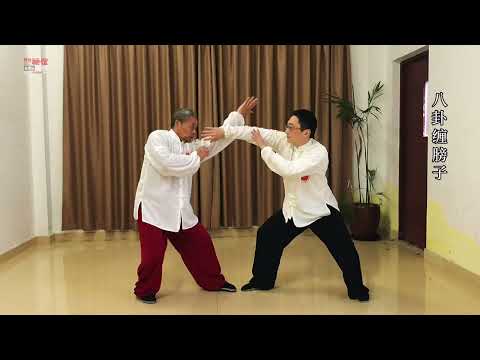
The second installment of our feature from Hiden Magazine, "The Complete Baguazhang of Gong Baotian, as told by Master Wang Hanzhi (Part 2)," focuses on two critical elements of Gong Baotian's unique system: Chuan Zhang (穿掌 - Intercepting Palms) and Chan Bang Zi (纏膀子 - Coiling Arms). These are not mere exercises; they are sophisticated drills designed to cultivate specific skills essential for effective combat and the development of internal power.

"The true essence of martial arts lies not just in the offensive power, but in the sensitivity and adaptability developed through interaction with an opponent." - A principle often echoed by masters of internal arts.

These paired training methods are the crucible where theory meets practice. They bridge the gap between solo forms (kata or taolu) and the unpredictable nature of actual combat. By engaging in Dui Lian, practitioners learn to respond, adapt, and generate force dynamically, honing their ability to sense an opponent's intentions and react accordingly.

Chuan Zhang: The Art of Intercepting Palms

Chuan Zhang, literally "piercing palms" or "intercepting palms," is a foundational paired exercise within Gong Baotian's system. This drill involves two practitioners facing each other, their palms continuously moving, striking, and defending in a forward and backward motion. The objective is to develop a keen sense of timing, distance, and the ability to both attack and defend simultaneously.

Imagine two snakes, their heads constantly probing, ready to strike or deflect. That is the essence of Chuan Zhang. It trains the practitioner to feel the opponent's energy and intention, intercepting their movements before they fully manifest. This sensitivity, known as Ting Jin (listening energy) in other internal arts, is crucial. It allows for preemptive defense and opportunistic counter-attacks.

The beauty of Chuan Zhang lies in its simplicity yet profound complexity. While initially practiced between two individuals, its principles can be scaled up. As practitioners become more adept, they can engage in group drills, enhancing their awareness of multiple attackers. This adaptability makes it a vital component for real-world self-defense scenarios. Mastering Chuan Zhang is not about brute force, but about fluid transitions and precise application of energy.

Chan Bang Zi: Mastering Spiraling Arm Energy

Complementing Chuan Zhang is Chan Bang Zi, or "coiling arms." This exercise involves the arms of both practitioners spiraling and interlinking. It's a dynamic form of Gong Shou Dao (the way of extending hands) that focuses on developing the characteristic spiraling power inherent in Baguazhang. Through this continuous, interwoven movement, practitioners learn to generate and redirect force along circular paths.

Think of it as weaving a fabric of energy with your training partner. Your arms entwine, resist, and yield, creating a constant flow of motion. This drill is instrumental in teaching how to harness the body's rotational power and channel it through the arms. It emphasizes the principle of yielding to overcome force, redirecting an opponent's momentum rather than meeting it head-on.

Chan Bang Zi teaches practitioners to maintain structural integrity while undergoing constant change. It cultivates the ability to absorb an incoming force and immediately transform it into a counter-attack, all within a continuous, flowing motion. This mastery of spiraling energy is a hallmark of skilled Baguazhang practitioners and is fundamental to Gong Baotian's effective system.

Master Wang Hanzhi and the Shanghai Baguazhang Association

The insights into Gong Baotian's Baguazhang are directly transmitted through Master Wang Hanzhi, a distinguished practitioner and inheritor of the lineage. As a key figure in the Shanghai Baguazhang Association, Master Wang plays a vital role in preserving and propagating this rich martial tradition. The association itself serves as a hub for dedicated practitioners, ensuring that the knowledge passed down through generations remains accessible and alive.

The Shanghai Baguazhang Association is more than just a training facility; it's a community dedicated to the art. By visiting and learning from Master Wang, the researchers behind Hiden Magazine have brought to light the practical application and philosophical depth of Gong Baotian's teachings. Their efforts ensure that the "phantom master's" legacy continues to influence and inspire.

You can learn more about their work and connect with the association through their official website: Shanghai Baguazhang Association.

The Spirit of Hiden Magazine

This exploration into Gong Baotian's Baguazhang is brought to you in conjunction with Monthly Hiden (月刊『秘伝』), a renowned Japanese martial arts magazine. For decades, Hiden has been dedicated to preserving and disseminating the "wisdom of the body" passed down through ancient traditions. Its pages cover a vast spectrum of martial arts, from the esoteric to the contemporary, including Jujutsu, Kenjutsu, Iaido, Aikido, Judo, Karate, and global traditional martial arts, self-defense techniques, healing arts, and physical development methods.

Monthly Hiden, released on the 14th of each month, is a treasure trove for anyone serious about martial arts. Their commitment to depth and authenticity is unparalleled. You can find more of their extensive content on their official website: WEB HIDEN and follow them on various platforms like Facebook and Twitter (@hiden_b).

The content presented here also reflects the broader mission of BUDOJAPAN.com, which aims to introduce Japanese martial arts and culture to a global audience. Through articles and videos, they provide free access to valuable information, further enriched by the detailed content on WEB HIDEN. It’s through these dedicated channels that the fire of martial arts tradition is kept burning brightly.

Essential Training Gear for Baguazhang

While Baguazhang, particularly in its paired training aspects like Chuan Zhang and Chan Bang Zi, emphasizes sensitivity and internal energy over brute force, proper attire and basic equipment can significantly enhance your practice. For Baguazhang, like many internal arts, comfort and freedom of movement are key. Consider the following:

  • Lightweight, Breathable Uniform (Gi/Dogi): Opt for a uniform made from cotton or a cotton blend that allows for maximum flexibility and ventilation. This is crucial for dynamic movements and long training sessions.
  • Comfortable Footwear: Traditional Baguazhang is often practiced barefoot or in soft-soled martial arts shoes to improve ground connection and footwork. If practicing on harder surfaces, consider flat-soled, flexible shoes that mimic the feel of being barefoot.
  • A Dedicated Training Space: While not strictly "gear," having a clear, unobstructed space is vital. This could be a corner of your living room or a dedicated workout at home space. Ensure you have enough room to move in circles and practice the coiling arm movements without hitting furniture.
  • Optional: Training Mats: For floor work or if practicing in a space with a hard floor, consider using simple exercise mats for added comfort and safety.

Training Guide: Chi Shou (Pushing Hands) Drills

Chuan Zhang and Chan Bang Zi are advanced forms of paired training, often built upon foundational exercises like Chi Shou (Pushing Hands). Here’s a basic outline to get you started with fundamental pushing hands drills that echo the principles found in Gong Baotian's methods:

  1. Basic Stance and Connection: Start in a stable stance (e.g., Horse Stance or a natural Bagua stance). Connect your forearms and hands with your partner, establishing a light, but firm contact.
  2. Yielding and Rooting: Practice absorbing your partner's forward push by yielding backward, maintaining your root. Feel their force and redirect it, rather than meeting it directly. This is the foundation of Ting Jin.
  3. Forward Pressure and Control: Practice applying gentle, continuous forward pressure. The goal isn't to push your partner over forcefully, but to maintain contact and control their center. Observe how they react and try to find their balance point.
  4. Circular Movements: Introduce small circular movements with your hands and arms while maintaining contact. This begins to simulate the spiraling nature of Chan Bang Zi. Practice moving your center (around which Baguazhang practitioners famously circle) while maintaining this connection.
  5. Intercepting Practice (Simplified Chuan Zhang): As you practice yielding and applying pressure, begin to introduce light, probing strikes or deflections aimed at intercepting your partner's intended movement. This is a simplified precursor to Chuan Zhang. Focus on timing and sensitivity.
  6. Breathing and Intention: Coordinate your breath with your movements. Inhale as you receive or yield, exhale as you press or strike. Maintain a clear intention in each movement, whether it’s to deflect, control, or probe.

Remember, the key is continuous, relaxed practice. These drills are designed to develop sensitivity and responsiveness, not to win a contest. Patience and consistency are your greatest allies.

Veredict of the Sensei: Is Gong Baotian's Legacy Alive?

The techniques of Chuan Zhang and Chan Bang Zi, as preserved and taught by Master Wang Hanzhi, are a testament to the enduring power of Gong Baotian's martial system. This isn't just historical trivia; it's living, breathing martial arts knowledge. The emphasis on sensitivity, dynamic interaction, and internal energy development is precisely what makes internal martial arts so potent for both self-defense and personal cultivation.

The fact that these methods are still being practiced and taught today, with dedicated associations and magazine features, indicates that Gong Baotian's influence is far from a phantom. His legacy is tangible, accessible to those willing to seek it out and dedicate themselves to its practice. The Hiden Magazine feature and the work of Master Wang serve as crucial bridges, connecting us to this profound lineage.

Cinturón Negro en Profundidad Marcial: This detailed exploration into the paired training of Baguazhang, highlighting specific techniques and their philosophical underpinnings, is exactly what practitioners seek. It provides practical knowledge rooted in a rich history, demonstrating the continued relevance of traditional systems.

Frequently Asked Questions

  • What is "Dui Lian" in martial arts?
    "Dui Lian" (対練) literally translates to "paired training." It refers to drills where two practitioners engage in cooperative or semi-cooperative exercises to develop specific martial skills, such as timing, sensitivity, distance control, and power generation.
  • Is Baguazhang effective for self-defense?
    Yes, Baguazhang, when practiced correctly and with a focus on practical application, is highly effective for self-defense. Its circular movements, evasive footwork, and emphasis on redirecting an opponent's force allow for sophisticated defense and counter-attack strategies. Techniques like Chuan Zhang directly address intercepting an opponent's attack.
  • What is the difference between Chuan Zhang and Chan Bang Zi?
    Chuan Zhang focuses on the continuous striking and intercepting of palm movements, developing offensive and defensive timing. Chan Bang Zi emphasizes the spiraling, coiling, and interlocking of arms to cultivate rotational power and the ability to change energy dynamically. Both are forms of Dui Lian, but they train different aspects of internal martial skill.
  • Where can I find authentic Baguazhang training?
    Finding authentic training requires diligent research. Look for reputable martial arts schools that explicitly teach Baguazhang and have clear lineage. Consulting resources like Hiden Magazine, BudoJapan.com, and contacting official Baguazhang associations (like the Shanghai Baguazhang Association) are good starting points.

Further Learning

To continue your journey into the depths of martial arts knowledge, explore these related topics:

  • BUDO and the Philosophy of Japanese Martial Arts
  • The Principles of Karate Spirit: Beyond Physical Techniques
  • Understanding Ki (Qi) in Martial Arts Training
  • Historical Context: The Evolution of Artes Marciales
  • Training Strategies for Enhancing Strength and Endurance

Reflexión del Sensei: Tu Próximo Paso

Gong Baotian's "phantom" techniques offer a glimpse into a martial art that prioritizes sensitivity, adaptability, and the seamless integration of offense and defense. The principles of Chuan Zhang and Chan Bang Zi are not confined to Baguazhang; they are universal concepts applicable to any martial discipline. When you face a partner, whether in formal training or in a sparring match, do you truly "listen" with your hands and body? Or do you simply react with pre-programmed movements? The true mastery lies in the awareness and responsiveness cultivated through interaction. How will you begin to hone your sensitivity today?

``` GEMINI_METADESC: Explore Gong Baotian's legendary Baguazhang paired training (Dui Lian) with Chuan Zhang and Chan Bang Zi, detailed by Master Wang Hanzhi and Hiden Magazine.
Keiburyu Aiki Taijutsu: Unveiling the "Yoroi Toshi" Striking Technique

The Ancient Art of Keiburyu Aiki Taijutsu

Welcome, seekers of martial wisdom, to a profound exploration of Keiburyu Aiki Taijutsu. Today, we delve into the essence of a lineage steeped in history, passed down through generations from the turbulent Sengoku period. Imagine a secret art, entrusted to the Amemiya family by none other than Takeda Shingen himself, a martial legacy so potent it remained a closely guarded secret for centuries. This is the foundation upon which Keiburyu Aiki Taijutsu is built, a system meticulously updated for the modern warrior by its current inheritor, Hiroki Amemiya.

The whispers of its effectiveness are growing, the techniques of Keiburyu are capturing the attention of martial artists worldwide. It’s a testament to the enduring power of ancient principles, artfully adapted to contemporary combat. We are not just discussing a martial art; we are unearthing a living tradition, a dynamic force shaped by time and necessity.

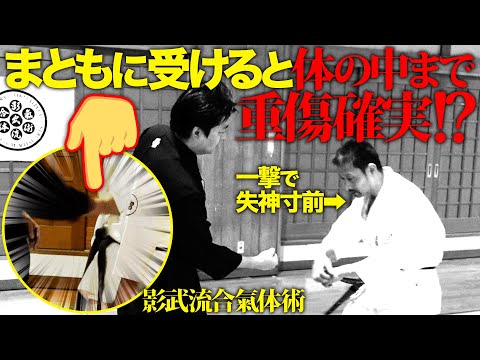
This article is born from the esteemed pages of Monthly Hiden Magazine, June 2022 issue, featuring the foundational Keiburyu striking technique known as "Yoroi Toshi" (Armor Piercer). To truly grasp the depth of this art, it is imperative to engage with both the written word and the visual demonstration. Consider this your invitation to a deeper understanding.

The Principle of "Yoroi Toshi": Piercing the Armor

The core of this discussion lies in the "Yoroi Toshi," a striking technique whose name itself speaks volumes. In an era when warriors donned heavy armor, the ability to strike with devastating penetrative force was paramount. "Yoroi Toshi" is not merely a punch; it is a method, a science of impact designed to bypass the strongest defenses and reach the vital points beneath.

The martial philosophy behind Keiburyu dictates that true power is not brute force, but the precise application of energy. This technique teaches us to generate and direct force with a specific trajectory, ensuring that the impact is not absorbed but rather "pierces" through the target, much like a sharp blade through cloth. This concept challenges the conventional understanding of striking, where power is often equated with mass or speed alone. Here, it is about the *quality* of the impact, the focused intention behind the movement.

Consider the difference between a blunt object hitting a wall and a pointed object. While both exert force, the latter has the potential to penetrate. "Yoroi Toshi" embodies this principle, transforming the practitioner's fist, elbow, or even a fingertip into a focused instrument of impact. It's about understanding the structural weaknesses of an opponent's guard and exploiting them with surgical precision. This requires an intimate knowledge of anatomy and physics, a blend of ancient wisdom and practical application.

"True strength lies not in the muscle, but in the mind. The hand that strikes must be guided by an unwavering will, an intention to penetrate the deepest defenses." - A principle echoing from the Amemiya lineage.

Application Methods: Striking with Intent

How is this "Armor Piercing" power actualized? Keiburyu Aiki Taijutsu offers a sophisticated framework for its application. The technique is not a single, static movement, but a dynamic principle that can be integrated into various striking forms. It emphasizes a "penetrating strike" that continues its trajectory through the target, maximizing the transfer of energy.

This means that the strike doesn't stop at the surface. Whether it's a straight punch, a diagonal strike, or even an elbow, the body mechanics involved are designed to allow the impact to travel *through* the opponent. This requires specific training in hip rotation, core engagement, and the precise alignment of the body's kinetic chain. The goal is to create a shockwave that resonates deep within the opponent's structure, causing disruption and incapacitation.

The teaching of "Yoroi Toshi" involves understanding angles of attack that are less likely to be blocked by conventional guards. It's about targeting vulnerabilities in the opponent's posture and structure, much like a swordsman aims for the gaps in armor. This requires a keen observational skill and the ability to adapt to an opponent's movements in real-time.

The associated article in Monthly Hiden Magazine goes into granular detail on these methods, dissecting the subtle shifts in weight, the specific chambering of the fist, and the exhalation that accompanies the strike. It is this detailed instruction that transforms a basic punch into a technique capable of "piercing the armor."

The "Aiki" of Striking: Unbalancing Your Opponent

But Keiburyu Aiki Taijutsu is not solely about the power of the strike itself. The "Aiki" component is crucial, transforming a mere offensive technique into a tool for control and disruption. "Aiki" is often translated as "harmonizing energy" or "blending," but in this context, it refers to the subtle manipulation of an opponent's balance and structure, often in conjunction with a strike.

The technique known as "Ai no Tsumi" (Striking to Break Balance), as explored in the latter part of the Keiburyu curriculum, exemplifies this. It’s not just about hitting hard; it’s about hitting in a way that destabilizes your opponent, making them vulnerable. Imagine a strike that, instead of just causing pain, subtly redirects their momentum, or causes their own structure to collapse inward. This is the art of "Aiki" applied to striking.

The Amemiya lineage emphasizes striking to the "Tanden," the energetic center of the body. By targeting this core, practitioners can disrupt an opponent's internal balance and energy flow, making them susceptible to further techniques. This is where the "penetrating strike" truly becomes a weapon of profound influence, reaching beyond the physical to affect the opponent's very center of being.

The video series associated with this article, particularly the upcoming "Part 2: Revealing Keiburyu Aiki Taijutsu's 'Aiki Strikes' that Crumble the Tanden," promises to shed even more light on this fascinating aspect. It’s a progression from simple impact to strategic disruption, a hallmark of advanced martial practice.

The Essence of Training: Cultivating the Keiburyu Spirit

Training in Keiburyu Aiki Taijutsu is not just about acquiring a set of techniques; it is about embracing a philosophy. The spirit of the warrior, the dedication to self-improvement, and the respect for tradition are all integral components. The journey requires immense discipline and perseverance.

Practitioners are encouraged to cultivate their inner strength, their "Ki," and to learn how to channel it effectively through their movements. This internal development is as critical as the physical training. The ability to remain calm under pressure, to perceive openings, and to act decisively are all nurtured through rigorous practice and mindful repetition.

The concept of "no-nonsense training" is central. This isn't about flashy moves or performative techniques. It's about developing practical, effective skills that have been refined over centuries. The goal is efficacy, the ability to defend oneself and to overcome an opponent decisively. This requires a commitment to understanding the underlying principles, not just mimicking the outward forms.

"The foundation of all martial arts is the cultivation of the self. Without inner strength, even the most powerful technique is but a hollow echo." - A sentiment deeply embedded in the Budo philosophy.

The emphasis on "home workouts" and "no equipment" training, when applied to the principles of Keiburyu, means that the core of the practice can be developed anywhere, anytime. The body itself becomes the primary tool, and the mind, the ultimate guide.

Sensei's Verdict: Is Keiburyu Aiki Taijutsu a Lost Gem?

Keiburyu Aiki Taijutsu, with its direct lineage to historical martial traditions and its focus on practical, penetrative striking, stands as a significant find in the modern martial landscape. The "Yoroi Toshi" technique, as presented, is a compelling example of how ancient warriors developed methods to overcome even the most formidable defenses.

While the name "Aiki Taijutsu" might conjure images of the softer, more yielding applications seen in some other styles, Keiburyu clearly demonstrates a more direct, impactful approach. The integration of "Aiki" principles to enhance striking power and unbalance opponents suggests a sophisticated understanding of combat dynamics. This isn't just about applying force; it's about applying force intelligently.

The commitment to preserving and updating these ancestral techniques, as championed by Hiroki Amemiya, is commendable. It ensures that vital martial knowledge is not lost to time but continues to evolve and serve practitioners. The emphasis on real-world application and the connection to historical context gives Keiburyu Aiki Taijutsu a profound authenticity.

Overall Rating: A Masterclass in Penetrative Power and Strategic Striking. This is a system that demands respect and further study.

Essential Equipment for Your Training

While Keiburyu Aiki Taijutsu, at its core, emphasizes the use of the body and mind, certain tools can enhance your training journey:

  • Durable Training Uniform (Keikogi): A strong, well-fitting uniform is essential for practicing techniques that involve grappling and close-quarters movement. Look for a double-weave or heavyweight fabric that can withstand rigorous training.
  • Training Mats (Tatami/Yoga Mats): For practicing falls, rolls, and any dynamic movements, protective mats are crucial to prevent injury.
  • Striking Pads or Mitts: To safely practice the "Yoroi Toshi" and other striking techniques with power, a training partner with focus mitts or thai pads is invaluable.
  • Mirror: For self-correction, practicing in front of a mirror allows you to observe your posture, alignment, and technique execution.
  • Training Dummy (Makiwara/Kake): While not strictly necessary, a makiwara can help develop striking power and conditioning for hand techniques.

Resources for Deeper Study

To continue your martial journey and deepen your understanding, I recommend the following:

Frequently Asked Questions

What does "Yoroi Toshi" literally translate to?
"Yoroi Toshi" translates from Japanese to "Armor Piercer."
Is Keiburyu Aiki Taijutsu related to Aikido?
While it shares the "Aiki" in its name and likely some philosophical underpinnings, Keiburyu Aiki Taijutsu emphasizes direct, penetrative striking more than the joint locks and throws typical of mainstream Aikido.
Is this technique suitable for self-defense in modern times?
The principles of precise striking, targeting vulnerabilities, and disrupting an opponent's balance are highly relevant to self-defense. The historical context of overcoming armor suggests a focus on efficacy that transcends specific eras.
How can I start training Keiburyu Aiki Taijutsu?
The best approach is to seek out authorized instructors or dojos that teach this specific lineage. If direct instruction is not available, studying the principles through reputable sources like Monthly Hiden and associated media can provide a strong theoretical foundation.

For Profundizar en tu Camino

Reflexión del Sensei: Tu Próximo Paso

We have journeyed into the heart of Keiburyu Aiki Taijutsu, uncovering the potent "Yoroi Toshi" and its integration with "Aiki." We've seen how a martial art, born in the crucible of feudal Japan, can still offer profound lessons for today's practitioner. But knowledge without application is like a sharp sword left to rust. The true test lies not in understanding these principles, but in embodying them.

Now, I pose this to you: When you next train, whether striking a heavy bag, practicing drills with a partner, or even contemplating a difficult situation, how will you seek to "pierce the armor"? Will you rely on brute force, or will you seek the elegant efficiency that lies at the heart of true Budo? Reflect on this, and let your practice be your answer.

``` GEMINI_METADESC: Explore Keiburyu Aiki Taijutsu's "Yoroi Toshi," a historical striking technique designed to pierce armor. Learn its principles, applications, and integration with Aiki for modern combat.

Honoring a Legend: Hiyori Kanazawa on Her Grandfather, the Master Hirokazu Kanazawa

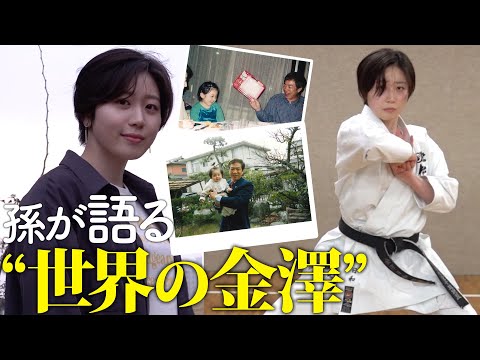
The legacy of a martial arts master is a tapestry woven with dedication, skill, and the profound impact they have on their students and the art itself. Master Hirokazu Kanazawa, a name synonymous with Shotokan Karate, is one such titan whose influence resonates across the globe. But beyond the dojo, beyond the powerful techniques and the philosophical depth, lies the personal legacy. This is where his granddaughter, Hiyori Kanazawa, steps into the light, offering a unique perspective on the man behind the legend, the "Sensei Kanazawa" revered worldwide. This piece, intrinsically linked to the May 2022 issue of *Gekkan Hiden* (Monthly Secret Teachings) magazine, delves into the "BU" (martial) and "BI" (beauty) of Shotokan Karate as seen through the eyes of a new generation. Hiyori's insights promise a fresh, intimate look at a martial arts icon, bridging the gap between the historical figure and the living tradition he fostered.

Table of Contents

Introduction: The Legacy of Hirokazu Kanazawa

The world of martial arts is replete with figures whose names are etched in history, but few possess the widespread recognition and respect afforded to Hirokazu Kanazawa. As a direct student of the founder of Shotokan Karate, Gichin Funakoshi, and later a prominent figure within the Japan Karate Association (JKA) and eventually the founder of the Shotokan Karate-do International Federation (SKIF), Kanazawa Sensei's journey is a testament to unwavering dedication. His influence spans continents, shaping the practice and understanding of Karate for countless individuals. The original article published in *Gekkan Hiden* aimed to capture this multifaceted legacy, presenting not just the technical prowess but the deeper philosophical underpinnings of his art. This video, however, offers a different, perhaps even more poignant, dimension by focusing on Hiyori Kanazawa's personal reflections. It’s a reminder that even the most celebrated masters are, first and foremost, human beings with families and personal histories.
"The way of the warrior is to confront the world with the spirit of the warrior." - Hirokazu Kanazawa

Hiyori Kanazawa: A Granddaughter's Gaze

Hiyori Kanazawa, a practitioner in her own right and carrying the mantle of her esteemed grandfather, provides an invaluable perspective. Her viewpoint is not that of a detached historian or a distant admirer, but that of someone intimately connected to the Kanazawa lineage. This personal connection allows for a narrative that transcends mere technical description, venturing into the heart of what made Hirokazu Kanazawa not just a master of *Karate-do*, but a respected figure in the broader **BUDO** community. Her insights into her grandfather's character, his approach to training, and his philosophy offer a rare glimpse into the personal life of a man who dedicated his existence to the pursuit of Karate. This familial lens adds a layer of warmth and authenticity, humanizing the legend and making his teachings more relatable to a new generation of practitioners.

The "BU" and "BI" of Shotokan Karate

The concept of "BU" (武) signifies the martial aspect – the power, the strategy, the discipline, the combative effectiveness that are fundamental to any true martial art. It encompasses the technical execution of strikes, blocks, and movements, honed through relentless **training** and sparring. Within Shotokan, this manifests in the powerful, linear techniques, the deep stances, and the emphasis on speed and precision. Juxtaposed with "BU" is "BI" (美), representing beauty. This is not merely aesthetic appeal, but a deeper, more profound beauty found in the perfect execution of a technique, the grace of movement, the harmonious flow of action and reaction, and the inner peace that accompanies mastery. For Shotokan Karate, "BI" can be seen in the elegant arc of a punch, the controlled power of a block, the disciplined form of a kata, and the spiritual development that arises from dedicated practice. Hiyori Kanazawa, through her unique position, can articulate how these two seemingly disparate elements – the **combat** readiness and the aesthetic perfection – are not contradictory but intrinsically linked in her grandfather's philosophy and the practice of Shotokan.

Master Kanazawa's Enduring Influence

Hirokazu Kanazawa's impact on Karate is undeniable. He was instrumental in spreading Shotokan Karate-do internationally, establishing dojos and fostering a global community of practitioners. His approach emphasized both the rigorous technical aspects and the philosophical depth of Karate, ensuring that it was understood not merely as a fighting **fight**, but as a path to self-improvement and personal development. His legacy is carried on by his family and his students worldwide, who continue to uphold the principles he championed. The SKIF remains a testament to his vision, a global organization dedicated to preserving and promoting the art he loved. Through Hiyori's voice, we gain a renewed appreciation for the man whose life was a living embodiment of **BUDO** and the spirit of Karate.

Resources for Deepening Your Knowledge

To truly grasp the depth of Shotokan Karate and the philosophy of masters like Hirokazu Kanazawa, engaging with supplementary materials is essential. Understanding the historical context and the technical nuances can significantly enhance your practice.
  • DVDs featuring Hirokazu Kanazawa: For those who wish to see the master in action, his instructional DVDs are invaluable. His work, such as 'Karate Breathing Power Cultivation in Half a Month' and 'Karate Budo Live', provides direct insight into his teaching methods and the application of his techniques. These are crucial for anyone serious about understanding the practical **combat** applications and breathing principles he advocated.
  • Gekkan Hiden Magazine: This monthly publication is a cornerstone for martial arts enthusiasts in Japan, covering a vast array of disciplines from ancient **Jujutsu** and **Kenjutsu** to modern **Judo**, **Kendo**, and **Karate**. Its articles often delve into the philosophical and historical aspects of **martial arts**, offering a rich source of information.
  • BUDO JAPAN (.com): This website serves as a gateway for international audiences to explore Japanese martial arts. It features articles and videos on various disciplines, including **Jiu-Jitsu**, **Iaido**, **Aikido**, **Karate**, and **Judo**, providing context and introductions to the world of **BUDO**.

Training Guide: Shotokan Basics

While this post focuses on the philosophical and historical aspects, a true understanding of Shotokan Karate requires practical application. Here are fundamental elements that every practitioner should focus on, embodying the principles discussed.
  1. Stances (Tachi):Zenkutsu-dachi (front stance), Kōkutsu-dachi (back stance), and Kokutsu-dachi (cat stance). Proper stance work is the foundation of power generation and stability in Shotokan.
  2. Blocks (Uke): Practice essential blocking techniques like Gedan-barai (down block), Age-uke (up block), and Soto-uke (outward block). Focus on the hip rotation and body mechanics that generate power and ensure effectiveness.
  3. Strikes (Tsuki & Uchi): Develop precision and power in your punches (Tsuki) such as Gyaku-zuki (reverse punch) and Oi-zuki (lunge punch), and open-hand strikes (Uchi) like Shuto-uchi (knife-hand strike).
  4. Kicks (Geri): Begin with basic kicks such as Mae-geri (front kick) and Mawashi-geri (roundhouse kick). Focus on balance and proper extension.
  5. Kata: The forms (Kata) are the heart of Shotokan. Begin with the foundational Heian series, understanding the application of each movement and technique within the sequence. This is where the "BU" and "BI" truly converge.

Veredicto del Sensei: A Living Tradition

This exploration into the legacy of Hirokazu Kanazawa, through the heartfelt perspective of his granddaughter Hiyori, is more than a biographical sketch; it's a vital connection to the living heart of Shotokan Karate. It underscores that the true essence of a martial art isn't solely in the physical techniques, but in the continuity of its spirit, passed down through generations. Hiyori's insights into the "BU" and "BI" remind us that mastery is a harmonious blend of power and grace, action and contemplation. For practitioners, this offers a profound lesson: the legends of martial arts are not confined to history books or old films. They live on through their teachings, their lineage, and the passion of those who continue their journey. It reinforces the idea that **BUDO** is an evolving path, enriched by every new generation that embraces its core principles. Cinturón Negro en Legado y Perspectiva.

Frequently Asked Questions

Q1: Who was Hirokazu Kanazawa?
A1: Hirokazu Kanazawa was a highly respected Japanese master of Shotokan Karate, a direct student of Gichin Funakoshi, and the founder of the Shotokan Karate-do International Federation (SKIF). He is celebrated for his technical skill and his role in spreading Karate worldwide.

Q2: What is "Gekkan Hiden"?
A2: Gekkan Hiden (Monthly Secret Teachings) is a Japanese magazine dedicated to traditional Japanese martial arts and combat sports, covering a wide range of disciplines and their philosophies.

Q3: What is the significance of "BU" and "BI" in Karate?
A3: "BU" (武) refers to the martial aspect – power, technique, and combative efficacy. "BI" (美) signifies beauty, seen in the grace, precision, and spiritual harmony of movement. In Shotokan, these are considered complementary aspects of mastery.

Q4: How does Hiyori Kanazawa contribute to the legacy of her grandfather?
A4: As his granddaughter and a practitioner herself, Hiyori offers a personal and contemporary perspective on Hirokazu Kanazawa's life, teachings, and the essence of Shotokan Karate, bridging the gap between past and present.

Further Exploration in Your Path

To continue your journey into the profound world of martial arts and cultivate the spirit of **BUDO**, I recommend delving into these related topics:

Reflection of the Sensei: Your Next Step

Hiyori Kanazawa shares her grandfather's legacy, revealing the blend of power and grace that defines Shotokan. The question you must now confront is not merely about watching, but about *doing*. How will you infuse the "BU" and "BI" into your own training? Will you seek only the outward appearance of skill, or will you strive for the inner harmony that true mastery demands? The path is yours to walk. ``` GEMINI_METADESC: Explore the legacy of Hirokazu Kanazawa through the eyes of his granddaughter, Hiyori Kanazawa. Discover the "BU" and "BI" of Shotokan Karate and the enduring spirit of Budo.