Showing posts sorted by relevance for query Brazilian Jiu Jitsu. Sort by date Show all posts

Jiu-Jitsu: Beyond the Mat - A Budo Master's Analysis of Its Global Impact

The Genesis of a Global Phenomenon

The question echoes through dojos and grappling mats across continents: "Jiu-Jitsu VS The World." But is it truly a confrontation, or is it Jiu-Jitsu's quiet, insistent infiltration into the very fabric of global martial culture? For too long, the narrative has been one of simple competition. As a student of the Budo and a critic of martial arts cinema, I can attest that the story of Brazilian Jiu-Jitsu is far richer, a testament to adaptation, effectiveness, and a profound philosophical underpinning that resonates deeply with the human spirit. This isn't merely about takedowns and submissions; it's about a way of life, a constant process of self-discovery and refinement.

Many practitioners, especially those new to the mats, see Jiu-Jitsu as a specific sport or art. They focus on the mechanics of the armbar, the pressure of the mount, the strategic dance of guard passing. While these are the building blocks, the true power of Jiu-Jitsu lies in its transformative potential. It strips away ego, demanding humility and resilience in equal measure. The question of "Jiu-Jitsu VS The World" is thus a misnomer. The world, in many ways, has been embraced by Jiu-Jitsu, and in return, has shaped it into the formidable force it is today.

More Than a Sport: The Philosophical Core

My association with martial arts spans decades, observing the rise and fall of countless disciplines and their claims to universal truth. Brazilian Jiu-Jitsu, born from the Judo of Mitsuyo Maeda and meticulously refined by the Gracie family, possesses a unique philosophical gravitas. Carlos Gracie himself famously stated, "It's not a sport, it's not a martial art, it's a lifestyle, it's a way of living, it's a way to improve your life." This is not mere hyperbole; it is the distilled essence of its enduring appeal. In the intimate, often uncomfortable confines of a grapple, one confronts not just an opponent, but also one's own limitations, fears, and reactive tendencies. The practice instills discipline, patience, and a relentless pursuit of understanding. It teaches you to analyze, adapt, and overcome, principles that transcend the dojo and permeate every aspect of existence.

"The true martial artist is not one who masters a technique, but one who masters himself through the art." - A principle echoed in the highest levels of Budo.

This inherent philosophy is what allows Jiu-Jitsu to permeate diverse cultures. Unlike some martial arts that are rigidly tied to specific cultural or spiritual traditions, Jiu-Jitsu's focus on leverage, anatomy, and strategy makes it universally applicable. It speaks a language of physics and biomechanics that requires no cultural translation. This pragmatic approach is its greatest strength, allowing it to be adopted and adapted by individuals from all walks of life, seeking not just self-defense, but self-improvement.

The Art of the Submission: Technical Prowess

From a technical standpoint, Jiu-Jitsu's genius lies in its emphasis on ground fighting and submission holds. Where many traditional arts focus on striking and standing grappling, Jiu-Jitsu systematically explores the ground. This was its revolutionary edge, particularly in the early days of the MMA landscape. The concept of leverage allows a smaller, weaker individual to control and defeat a larger, stronger adversary – a cornerstone of the Gracie Challenge and a powerful demonstration of its efficacy. Techniques like the triangle choke, armbar, and rear-naked choke are not mere moves; they are intricate puzzles of anatomy and pressure, requiring precise timing and body mechanics.

The strategic depth is astounding. Each position offers a multitude of options, and the transition between them is a complex dance of offense and defense. A skilled practitioner understands the subtle shifts in weight, the angle of attack, and the opponent's defensive reactions. This is why the learning curve can be steep, yet incredibly rewarding. It fosters a problem-solving mindset that is highly sought after, not just in combative scenarios but in strategic planning and critical thinking.

Jiu-Jitsu's Worldwide Conquest

The journey of Brazilian Jiu-Jitsu from the mats of Brazil to the global stage is a fascinating case study in cultural dissemination. Pioneers like Rorion Gracie understood the power of demonstration, challenging practitioners of all disciplines to test their art. The now-legendary UFC (Ultimate Fighting Championship) provided the ultimate proving ground, where Royce Gracie, a seemingly slight figure, systematically dismantled larger, more experienced fighters using the techniques of Jiu-Jitsu. This cemented its reputation as a highly effective martial art for real-world confrontations.

Following these early successes, academies and affiliations began to spring up across the globe. From the bustling metropolises of Tokyo and London to the smaller towns of Europe and Asia, the allure of Jiu-Jitsu's effectiveness and its unique lifestyle drew individuals in. The interconnectedness of the modern world, facilitated by the internet and social media, played a pivotal role. Videos of techniques, match footage, and training seminars became readily accessible, further accelerating its global reach. This accessibility, coupled with the undeniable effectiveness of the art, created a snowball effect that continues to this day. The phrase "Jiu-Jitsu VS The World" is thus increasingly becoming "Jiu-Jitsu *and* the World," a harmonious integration rather than a conflict.

Transforming Lives, One Grapple at a Time

Beyond the spectacle of competition and the efficacy in self-defense, the most profound impact of Jiu-Jitsu is often the personal transformation it inspires. I’ve witnessed countless individuals walk onto the mats lacking confidence, riddled with anxiety, or simply feeling lost. Through consistent training, they discover reserves of strength, mental fortitude, and a sense of belonging they never thought possible. The physical exertion leads to improved health and fitness, but the mental and emotional benefits are often more significant.

The humbling nature of being a beginner – constantly tapping out, making mistakes, and being submitted – fosters a unique kind of resilience. It teaches individuals to embrace failure as a learning opportunity, to persevere through discomfort, and to approach challenges with a calm, analytical mindset. This is the true 'lifestyle' that practitioners speak of. It's about facing adversity head-on, both on and off the mat, with a renewed sense of purpose and self-belief. It's this deeply personal impact that has cemented Jiu-Jitsu's place not just as a martial art, but as a powerful tool for self-mastery.

The Gi and No-Gi Divide: Evolution or Compromise?

The evolution of Jiu-Jitsu has also seen the rise of 'No-Gi' grappling. While the traditional Gi (uniform) provides a rich tapestry of grips and control points, No-Gi, often favored in wrestling and some MMA contexts, emphasizes different techniques and strategies. This divergence sparks debate within the community: is it a natural evolution that broadens the art's applicability, or a compromise that dilutes its core principles? My view is that both have their merits. The Gi teaches a different kind of control, a deeper understanding of body mechanics through the manipulation of fabric. No-Gi, on the other hand, often leads to faster-paced exchanges and a greater reliance on athletic conditioning and submission chains. Both versions demand strategic thinking and technical proficiency. Embracing both disciplines can create a more well-rounded grappler, capable of adapting to various rule sets and combat scenarios. It's a testament to Jiu-Jitsu's adaptability that it can thrive in these different formats.

Jiu-Jitsu in the Crucible of Combat

The true test of any martial art lies in its efficacy when faced with genuine aggression. Jiu-Jitsu’s reputation was forged in this crucible. The early Vale Tudo and UFC matches demonstrated that a skilled Jiu-Jitsu practitioner could neutralize the advantages of size, strength, and striking ability possessed by opponents from other disciplines. The ability to take a fight to the ground, a place where many martial artists are less comfortable and effective, is a significant strategic advantage. Once on the ground, the sophisticated system of control and submission holds allows for the neutralization of a threat with minimal, or indeed, significant force, depending on the practitioner's intent and the situation.

"In any fight, he who has the advantage of ground position is the one who will win." - An observation born from countless real-world encounters.

However, it is crucial to acknowledge that Jiu-Jitsu is not a panacea. In a street fight scenario, an experienced striker might land a decisive blow before the grapple can even be initiated. Therefore, integrating Jiu-Jitsu training with elements of striking defense and awareness is paramount for comprehensive self-protection. This holistic approach is what elevates martial arts from mere techniques to practical life skills. The 'Jiu-Jitsu VS The World' mentality should be reframed as "Jiu-Jitsu as a vital component *within* the world of combat and self-defense."

Sensei's Verdict: Is Jiu-Jitsu Truly the World's Art?

After decades of observing martial arts and their global impact, I can confidently state that Brazilian Jiu-Jitsu, while originating in Brazil, has transcended its geographical roots to become a truly global phenomenon. Its effectiveness, philosophical depth, and adaptability have allowed it to resonate with people from all cultures and backgrounds. The question isn't whether Jiu-Jitsu can defeat the world, but rather how effectively it has integrated *with* the world, offering a path of growth and empowerment to millions. It challenges the individual to confront their limitations, fosters resilience, and provides a practical, effective skillset for self-defense and personal development.

Sensei's Verdict:

Mastery of Leverage and Life.

While not every martial art can claim such a comprehensive global integration and demonstrable effectiveness, Jiu-Jitsu has carved a unique and undeniable niche. It's a testament to the power of a well-developed system that prioritizes efficiency and strategic thinking. Its influence on modern MMA and its widespread adoption in self-defense programs worldwide speak volumes. It's not just a discipline; it's a global movement.

Training Essentials: Your Path to Mastery

Embarking on your Jiu-Jitsu journey requires more than just signing up for classes. It demands dedication, proper preparation, and a commitment to continuous learning. Here’s a guide to setting yourself up for success:

  1. Find a Reputable Academy: Look for instructors with verifiable lineage and a positive training environment. Visit several academies if possible and roll with different people to get a feel for the school.
  2. Invest in Quality Gear: A durable, well-fitting kimono is essential for Gi training. For No-Gi, comfortable rash guards and grappling shorts are key.
  3. Focus on Fundamentals: Don't rush to advanced techniques. Master the basic positions, escapes, and submissions first. Consistency is more important than complexity.
  4. Spar Regularly (Rolling): This is where theory meets practice. Learn to apply techniques under pressure and, critically, learn to defend and escape. Remember, it's about learning, not "winning."
  5. Study and Observe: Watch high-level matches, read about Jiu-Jitsu history and strategy, and ask questions of your instructors and senior students.
  6. Listen to Your Body: Jiu-Jitsu can be physically demanding. Prioritize rest, nutrition, and injury prevention to ensure longevity in your training.

Resources for the Dedicated Grappler

To truly deepen your understanding and enhance your training, consider these resources:

  • Recommended Gear:
    • Kimono (Gi): Look for brands like Shoyoroll or others known for their durability and fit. A double-weave Judo gi can also be a robust option for certain training styles.
    • Training Apparel: High-quality rash guards and grappling shorts are crucial for comfort and performance, especially in No-Gi.
    • Mouthguard: Essential for protecting your teeth during sparring.
    • Water Bottle: Staying hydrated is paramount.
  • Books to Master:
    • Gracie Jiu-Jitsu in Action by Rorion Gracie
    • Jiu-Jitsu University by Saulo Ribeiro
    • The Gracie Way series
    • For broader martial philosophy, consider Miyamoto Musashi's The Book of Five Rings for strategic insights applicable to any combat art.
  • Online Platforms: Many high-level instructors offer instructional videos and online courses. Explore platforms dedicated to martial arts education.

Frequently Asked Questions

  • Is Jiu-Jitsu effective for self-defense?

    Absolutely. Its focus on leverage and control allows smaller individuals to defend against larger attackers, and its ground-fighting aspect is crucial as many real-world altercations end up on the ground.

  • How long does it take to become proficient in Jiu-Jitsu?

    Proficiency is a lifelong pursuit. However, with consistent training (2-3 times per week), you can expect to learn the fundamental techniques and develop a solid understanding of positional control within 6-12 months.

  • Do I need to be strong or athletic to start Jiu-Jitsu?

    No. Jiu-Jitsu is often described as "human chess" because technique and strategy are more important than brute strength. The training itself will build your strength and athleticism.

  • What is the difference between Brazilian Jiu-Jitsu and Judo?

    While BJJ evolved from Judo, its primary focus is on ground fighting and submissions (chokes, joint locks). Judo emphasizes throws and takedowns, with ground fighting limited to osaekomi-waza (pins) and some submissions in certain rule sets.

  • Is Jiu-Jitsu dangerous?

    Like any physical activity, there's a risk of injury. However, in a controlled training environment under qualified instruction, with an emphasis on safety and respect, the risks are minimized. Tapping out to prevent injury is a core principle.

Deeper Dive into the Warrior's Path

To truly understand the breadth of Budo and its influence on disciplines like Jiu-Jitsu, explore these interconnected topics:

Reflexión del Sensei: Tu Próximo Paso

Jiu-Jitsu has undeniably conquered hearts and minds worldwide. But is this conquest about dominance, or about offering a universal path to betterment? In the stillness after a gruelling roll, when the sweat drips and the breath steadies, what truths about yourself have you uncovered? Have you merely learned to apply a chokehold, or have you begun to truly understand the leverage of patience, the strength of resilience, and the art of adapting to pressure? The world awaits your response, not in words, but in the quiet evolution of your character.

``` GEMINI_METADESC: A Budo master analyzes Brazilian Jiu-Jitsu's global impact, effectiveness, and transformative lifestyle beyond the mats. Explore its philosophy, techniques, and warrior's journey.
Karate vs. Brazilian Jiu-Jitsu: A Clash of Titans, Analyzed by a True Sensei

Introduction: The Age-Old Question

Welcome, students, to a discussion that has ignited debate in dojos and living rooms for generations: Karate versus Brazilian Jiu-Jitsu. What happens when the devastating power of a strike meets the inescapable control of a grapple? Many have pondered this, and few have offered a truly insightful answer. Today, we dissect this enduring question not as mere spectators, but as practitioners who understand the heart of martial arts. We’re not just looking at a spectacle; we’re examining fundamental principles, historical lineage, and the brutal realities of combat. Prepare yourselves, for this is not for the faint of heart.

Historical Context: Where Do They Stand?

To understand the potential outcome of a Karate vs. Jiu-Jitsu encounter, we must first grasp their origins and evolution. Karate, born in Okinawa and refined in mainland Japan, is a system built upon striking – punches, kicks, elbow strikes, and knee strikes – emphasizing distance management and the "one-hit, one-kill" philosophy. It evolved from indigenous Okinawan fighting methods and influences from Chinese martial arts, codified over centuries into diverse styles like Shotokan, Goju-Ryu, and Kyokushin. Its purpose has always been multifaceted: self-defense, physical conditioning, and character development. Brazilian Jiu-Jitsu, on the other hand, emerged from Judo’s ground-fighting principles, meticulously adapted and refined by the Gracie family in Brazil. Its core tenet is that a smaller, weaker individual can defend themselves against a larger, stronger assailant by using leverage and proper technique, particularly in ground fighting and submissions (chokes and joint locks). BJJ is a grappling art, designed to take an opponent to the ground, control them, and apply a submission that forces them to yield. The perceived conflict arises from their diametrically opposed primary engagement methods: striking versus grappling.

Karate's Philosophy: The Striking Art

Karate's essence lies in the devastating efficiency of its techniques. Masters train for years to imbue their strikes with explosive power, precision, and intent. The goal is often to incapacitate an opponent before they can effectively close the distance or execute their own techniques. Key principles include: * **Zanshin (Remaining Mind/Awareness)**: Constant awareness of surroundings and one’s own condition. * **Mushin (No Mind)**: A state of mind free from distraction, allowing instinct and training to take over. * **Kiai (Spirit Cry)**: A focused exhalation that amplifies power and intent. * **Ma'ai (Distance/Spacing)**: Crucial for Karate, controlling the space between combatants to land strikes effectively. Styles like Kyokushin Karate, known for its full-contact sparring and emphasis on conditioning, showcase the raw power and resilience inherent in Karate. The effectiveness of a powerful gyaku-zuki (reverse punch) or a front kick can be undeniable if it lands clean.
"The ultimate aim of Karate is not to be victorious or defeated, but to perfect the imperfection of oneself." - Gichin Funakoshi

Jiu-Jitsu's Philosophy: The Ground Game

Brazilian Jiu-Jitsu flips the script. While striking arts focus on keeping an opponent at bay, BJJ aims to close the distance, secure a takedown, and dominate from the ground. Its philosophy centers on: * **Leverage over Strength**: The ability of the smaller person to control the larger one. * **Positional Dominance**: Achieving and maintaining superior positions (mount, side control, back control) to set up submissions. * **Submission Holds**: Chokes and joint locks designed to force an opponent to tap out. * **Takedowns**: The critical first step to bring an opponent to the ground where BJJ excels. The legendary effectiveness of BJJ was famously demonstrated by Royce Gracie in the early Ultimate Fighting Championship (UFC) events, where he, often facing larger opponents from striking backgrounds, consistently achieved victory through superior grappling.
"Jiu-jitsu is not about fighting. It's about the struggle for survival, and the art of overcoming." - Helio Gracie

The Clash: Principles in Action

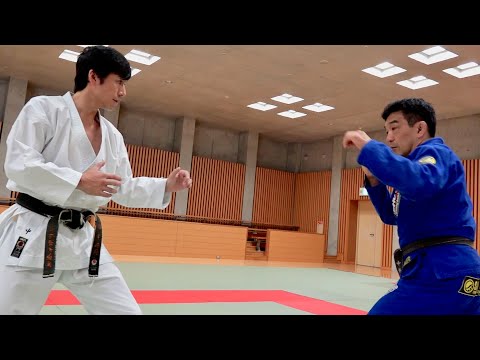
So, what happens when these two philosophies collide? The outcome hinges on several critical factors: 1. **The Initial Engagement**: Can the Karate practitioner maintain distance and land a decisive strike before the Jiu-Jitsu practitioner can close the gap for a takedown? A well-timed kick or punch can end the fight immediately. 2. **Takedown Defense**: Can the Karate practitioner effectively defend against takedown attempts? Strong stances, sweeping motions, and sprawl techniques are vital. 3. **Ground Transition**: If the Jiu-Jitsu practitioner successfully secures a takedown, can they maintain positional control and avoid being swept or submitted themselves? 4. **The Art of the Ground**: Once on the ground, the Jiu-Jitsu practitioner typically holds a significant advantage, capable of controlling and submitting a striker who lacks ground-fighting experience. This scenario is precisely what was explored in the now-famous encounter between Tatsuya Naka (Karate) and Yuki Nakai (Jiu-Jitsu), a bout that remains a benchmark for discussion.

Choreography Analysis: The Naka vs. Nakai Encounter

The "Karate vs. Jiu-Jitsu" encounter featuring Tatsuya Naka and Yuki Nakai is a compelling case study, though it’s crucial to approach it with nuance. This wasn't a street fight; it was a carefully orchestrated demonstration, albeit one with real stakes and respect between the practitioners.
From a martial arts perspective, this bout highlights the strategic dance between striking and grappling. Naka, representing Karate, sought to keep Nakai at bay, using his superior reach and powerful kicks to maintain distance. His objective was clear: land strikes that would prevent Nakai from closing the gap. Nakai, the Jiu-Jitsu practitioner, faced the classic challenge: how to get past the "wall of strikes" to engage in his preferred domain. His strategy involved pressure, feints, and ultimately, closing the distance to initiate the clinch and attempt a takedown. The choreography, while not as fluid as some Hollywood productions, was authentic to the principles of each art. We saw Naka’s explosive kicks and Nakai’s patient, forward-moving pressure. The fight demonstrated that the *first* successful engagement often dictates the narrative. In this instance, Nakai managed to close the distance and secure a takedown, leading to his eventual victory via submission. This outcome aligns with the established strengths of Jiu-Jitsu once the fight hits the ground. However, to extrapolate from this single encounter that Jiu-Jitsu *always* defeats Karate would be a gross oversimplification. A different Karateka, with superior takedown defense or a more explosive offensive strategy, might have achieved a different result. This is why rigorous training and a deep understanding of one’s own art are paramount.

Sensei's Verdict: Authenticity and Practicality

The Naka vs. Nakai bout, while fascinating, serves more as a demonstration of principles than a definitive answer. My verdict? Both arts are valid and potent when practiced with dedication and purpose. * **Karate's Strength**: In a scenario where distance can be maintained, Karate's striking power is immense. A fighter trained in a practical, full-contact style (like Kyokushin) possesses the tools to end a fight decisively before grappling even becomes a factor. The emphasis on conditioning also builds incredible resilience. * **Jiu-Jitsu's Strength**: Once the fight goes to the ground, BJJ’s technical superiority is almost undeniable, especially against a pure striker. Its efficacy in controlling and submitting a larger opponent is proven. The key takeaway isn't which art is "better," but understanding the *range* at which each art is most effective and the critical transition points. The true martial artist respects all disciplines and understands that mastery comes from deep practice, not from shallow comparisons. This encounter reinforces the importance of cross-training and understanding the strengths and weaknesses of different martial systems. It’s a reminder that in combat, adaptability is king.

Essential Equipment for Your Training

To truly explore the depths of Karate or Jiu-Jitsu, the right gear is essential. Investing in quality equipment not only enhances your training experience but also ensures safety. * **For Karate Practitioners**: * **Uniform (Gi)**: A durable, high-quality Karate gi that allows for a full range of motion. Look for double-stitched seams for longevity. * **Mittens and Headgear**: Essential for full-contact sparring (kumite) to prevent injuries. * **Makiwara**: A traditional training tool for developing powerful, focused strikes. * **For Jiu-Jitsu Practitioners**: * **Uniform (Gi)**: A sturdy BJJ gi designed to withstand the rigors of grappling. Look for features like reinforced stitching and shrinkage resistance. We recommend gis with a double-weave fabric for durability. * **Mouthguard**: Crucial for protecting your teeth and jaw during sparring. * **Shin Guards**: Useful for certain drilling and rolling sessions to protect against abrasions. For those interested in exploring both striking and grappling, consider specialized training gear that bridges the gap.

Resources for Deepening Your Understanding

To truly grasp the intricacies of Karate and Jiu-Jitsu, further study is vital. Immerse yourself in the knowledge passed down by masters. * **Books on Karate**: Explore the foundational texts of Karate masters like Gichin Funakoshi and Mas Oyama. Titles focusing on Okinawan Karate or specific styles like Kyokushin offer deep insights into technique and philosophy. * **Books on Jiu-Jitsu**: For BJJ, delve into the works of the Gracie family, such as Helio Gracie, to understand the evolution and principles of leverage and submission. Books detailing specific BJJ techniques or grappling strategies are invaluable. * **Documentaries and Instructional Videos**: Visual mediums can be incredibly powerful. Look for documentaries that explore the history and culture of these arts, and instructional videos from reputable instructors. The encounter between Naka and Nakai itself is a prime example of an instructional resource.

Frequently Asked Questions

**Q1: Can a Karate practitioner beat a Jiu-Jitsu practitioner in a real fight?** A: It depends heavily on the individual's training, experience, and the specific circumstances of the confrontation. A Karateka with excellent takedown defense and offensive striking could win. Conversely, if the Jiu-Jitsu practitioner can close the distance and take the fight to the ground, they have a strong advantage. **Q2: Is Karate useless against Jiu-Jitsu in self-defense?** A: Absolutely not. Karate's striking, particularly at close range with elbows and knees, can be devastating. Furthermore, a strong Karate foundation can provide the conditioning and awareness necessary to evade or counter initial grappling attempts. The effectiveness is situational. **Q3: Should I train both Karate and Jiu-Jitsu?** A: Cross-training is highly recommended for a well-rounded martial artist. Training both disciplines provides a comprehensive understanding of combat, allowing you to appreciate the strengths of striking and grappling and develop skills in both areas. Many successful MMA fighters train extensively in both Karate-based arts and Jiu-Jitsu. **Q4: How did Tatsuya Naka and Yuki Nakai's fight influence martial arts?** A: Their encounter became an iconic representation of the Karate vs. Jiu-Jitsu debate. It highlighted the strategic differences and the importance of understanding an opponent's strengths. While not a definitive answer, it fueled discussions and encouraged practitioners to explore hybrid training methods.

For Deepening Your Understanding

Sensei's Reflection: Your Next Step

The debate of Karate versus Jiu-Jitsu is as old as the arts themselves, a constant ebb and flow between the power of the strike and the subtlety of the grapple. We've seen how each art possesses unique strengths, rooted in distinct philosophies and training methodologies. The Naka vs. Nakai encounter offers a glimpse into this dynamic, but it is not the final word. True mastery lies not in declaring one art superior, but in understanding the principles that govern all combat and in dedicating oneself to the rigorous path of practice. Now, consider this: If you were to face an opponent whose primary skill set is the direct opposite of your own, how would you adapt? Would you rely solely on your strengths, or would you seek to understand and even integrate elements of their art into your own? Reflect on your training. Are you prepared for the unexpected? --- ``` GEMINI_METADESC: Explore the Karate vs. Brazilian Jiu-Jitsu debate with a Sensei's expert analysis. Understand principles, history, and the Naka vs. Nakai encounter.

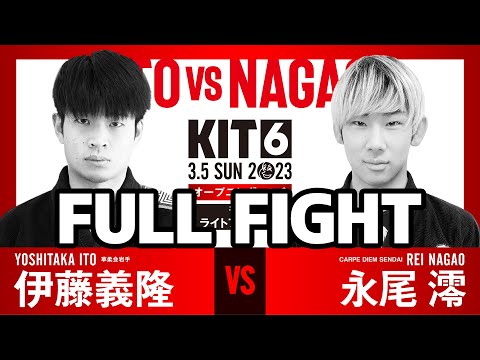
BJJ Showdown: Yoshitaka Ito vs. Rei Nagao at KIT6 – A Critical Analysis of Grappling Prowess

Greetings, warriors and students of the Way. Welcome to Budo and Martial Arts, your sanctuary for dissecting the true essence of combat and discipline. Today, we delve into a recent encounter that, while perhaps not shaking the very foundations of the martial world, offers a valuable lens through which to examine the intricacies of Brazilian Jiu-Jitsu. We are analyzing the bout between Yoshitaka Ito and Rei Nagao at KIT6, a contest that promises a clash of techniques and strategies within the grappling arts. This isn't just about watching two individuals grapple; it's about understanding the principles they employ, the execution of their techniques, and the silent dialogue of pressure and resistance. As practitioners, we are always searching for lessons, for insights that can refine our own journey. Was this bout a masterclass in BJJ strategy, or a mere exhibition? Let us find out.

Table of Contents

A Deeper Look at KIT6: Ito vs. Nagao

The event, "KIT6," held on March 5, 2023, presented a card that, while perhaps not as globally recognized as the UFC or ONE Championship, served its purpose in showcasing talent within the Brazilian Jiu-Jitsu scene. The specific match we are examining pits Yoshitaka Ito, representing Kusojukai Iwate, against Rei Nagao. The weight class and belt division (blue belt, light featherweight) provide context, suggesting a developmental stage in the practitioners' careers. However, as any seasoned martial artist knows, the purity of technique and strategic application can shine through regardless of belt level. This analysis aims to transcend a simple fight recap. We will dissect the mechanics, the strategy, and perhaps even the philosophical underpinnings, if any, present in this grappling exchange.

Brazilian Jiu-Jitsu: The Gentle Art of Control

Brazilian Jiu-Jitsu, often hailed as the "gentle art," is a martial art and combat sport system that focuses on grappling, particularly on the ground. Its effectiveness lies in its principle that a smaller, weaker person can defend themselves against a bigger, stronger opponent by using proper technique, leverage, and most importantly, applying joint-locks and chokeholds to defeat them. The core philosophy of BJJ is about control. It's not about brute force, but about positional dominance. Achieving mount, side control, or taking the back are not just positions; they are strategic advantages that allow for the application of submission techniques. This emphasis on control makes BJJ a highly technical and cerebral art. It teaches patience, problem-solving under pressure, and the understanding of body mechanics.
The evolution of BJJ from its Judo roots, particularly through the Gracie family, has cemented its reputation in mixed martial arts and self-defense. Its intricate web of sweeps, submissions, and escapes requires a deep understanding of anatomy, leverage, and timing. Every movement has a purpose, every reaction a counter. This is the canvas upon which Ito and Nagao painted their Jiu-Jitsu.

Fight Analysis: Ito vs. Nagao at KIT6

Observing the bout between Yoshitaka Ito and Rei Nagao requires a specific mindset. We are not looking for devastating knockouts or flashy striking displays. Instead, we must appreciate the subtle shifts in pressure, the feints, the grip changes, and the strategic maneuvering for dominant positions. Initially, one might expect a blue belt match to be somewhat raw, filled with errors and missed opportunities. However, the true beauty of Jiu-Jitsu, even at this level, lies in the moments of clarity. Did Ito or Nagao demonstrate superior pressure passing? Were their takedown attempts effective, or did they lead to scrambles? How did they react when taken down? These are the questions we must ask. From the footage, it appears the match was contested keenly. The exchange likely involved attempts to establish takedowns, transitions to the ground, and subsequent positional battles. The outcome, whether a submission, a decision, or a point-based victory, is secondary to the process. Did one fighter consistently maintain top control? Did the other exhibit strong defensive skills and successful escapes? A crucial aspect of any grappling match is the "scramble." These are dynamic moments where control is lost, and both athletes are attempting to regain a dominant position. Scrambles can be chaotic, but they are also where creativity and quick thinking are paramount. Observing how Ito and Nagao navigated these transitions will reveal a great deal about their respective skill sets and their understanding of the flow of Jiu-Jitsu.
"Jiu-Jitsu is like a chess game played with the body. Each move must be calculated, and every reaction anticipates the opponent's next step." - A common adage in BJJ circles.
The opening match designation suggests this was an early bout on the card. While this sometimes means less experienced competitors, it also signifies the start of the day's energy, a clean slate where the fundamental principles are put to the test without the fatigue of earlier bouts.

Technical Breakdown: Key Moments and Techniques

To truly understand the fight, we must look at specific technical elements, even if they are not fully visible in a general viewing. * **Takedown Entries:** Were takedowns initiated with solid base and posture? Did they utilize single-leg, double-leg, or perhaps Judo-inspired throws like an Ouchi Gari or Sasae Tsurikomi Ashi? Effective takedowns are the foundation of many grappling strategies. * **Guard Retention and Sweeps:** If one fighter was taken down, how effectively did they utilize their guard (closed, open, half guard) to prevent positional advancement and look for sweep opportunities? A strong guard is a Jiu-Jitsu practitioner's best friend when on their back. * **Passing the Guard:** Conversely, if a fighter was on top, how did they attempt to pass the opponent's guard? This is a critical phase where many BJJ matches are won or lost. Did they use pressure passes, speed passes, or leg drags? * **Submission Attempts:** Were there any submission attempts, such as armbars, kimuras, or chokes like the rear-naked choke or triangle choke? How were they set up, and how were they defended? The commitment to a submission, even if unsuccessful, shows intent. * **Positional Escapes:** When caught in a disadvantageous position (e.g., side control, mount, back control), how did the fighters attempt to escape and return to a neutral or dominant position? This often requires immense patience and technical understanding. Without detailed slow-motion analysis, pinpointing every micro-adjustment is difficult. However, the general flow and the success or failure of these core BJJ elements will indicate the relative strengths of Ito and Nagao. For instance, a fighter who consistently finds themselves on bottom and struggling to escape mount or side control is likely weaker in their defensive grappling and positional awareness. Conversely, a fighter who can seamlessly transition from guard pass to submission attempt showcases a more developed offensive game.

The Spirit of Budo in Grappling

While BJJ is a relatively modern art compared to the ancient traditions of Karate or Kendo, the principles of Budo are intrinsically linked to its practice. Budo, broadly translated as "the way of the warrior," emphasizes not just physical prowess but also mental discipline, respect, humility, and self-improvement. In the context of a BJJ match like Ito vs. Nagao, Budo manifests in several ways: * **Respect for the Opponent:** The handshake before and after the match, the acknowledgement of effort, regardless of the outcome. * **Perseverance:** Continuing to fight for a position or submission even when fatigued or in a difficult spot. This is the embodiment of "never give up." * **Discipline:** Adhering to the rules, maintaining composure under pressure, and executing techniques with precision rather than wild abandon. * **Humility:** Accepting defeat gracefully and learning from mistakes. A true Budo practitioner understands that every match is a learning opportunity. When we watch these athletes, we should look beyond the physical contest and consider how they embody these principles. Do they show the warrior's spirit in their actions?
"The ultimate aim of martial arts is not victory or defeat, but the perfection of the human character." - O-Sensei Morihei Ueshiba (Founder of Aikido)
This sentiment holds true for all disciplines that fall under the umbrella of Budo, including the dynamic world of Brazilian Jiu-Jitsu.

Veredicto del Sensei: Is This a Must-Watch?

Let’s be direct. For the casual viewer seeking a high-octane, visually spectacular fight, this blue belt BJJ match might not immediately capture your attention in the same way a UFC main event would. However, for the dedicated student of martial arts, particularly Brazilian Jiu-Jitsu, there are valuable lessons to be gleaned. If you are a beginner in BJJ, observing how these competitors navigate fundamental positions, attempt transitions, and apply basic submissions can be highly instructive. It provides a benchmark, a tangible example of techniques you might be learning in your own dojo. If you are an intermediate or advanced practitioner, the analysis becomes more nuanced – appreciating strategic choices, anticipating counters, and identifying subtle flaws or excellent applications of technique. It’s not about whether Ito or Nagao will become the next UFC champion based on this single bout. It’s about the journey of mastery. This fight is a snapshot of that journey. **Cinturón Negro en Fundamentos de BJJ**: This match is valuable for its clear illustration of core Brazilian Jiu-Jitsu principles, particularly for those at the beginner to intermediate stages. While it may lack the flashy finishes of higher-level contests, its technical integrity makes it a worthwhile study for aspiring grapplers.

Equipo Esencial para tu Entrenamiento de Jiu-Jitsu

To truly immerse yourself in the art of Brazilian Jiu-Jitsu, having the right equipment is crucial. It not only ensures comfort and safety but also allows you to focus on the techniques without distraction.
  • Kimono de Jiu-Jitsu (Gi): This is your primary uniform. For training and competition, a durable, well-fitting Gi is essential. Look for ones with double or triple stitching for longevity, especially if you plan on competing. Brands often vary in cut and weight, so trying a few on or getting recommendations from your gym is wise.
  • Rash Guards: Worn under the Gi, rash guards help prevent mat burn and can wick away sweat, keeping you more comfortable. They are also a critical piece of apparel for No-Gi grappling.
  • Spats/Shorts: For No-Gi training, comfortable and durable spats or grappling shorts are necessary. Ensure they are made of a flexible, resilient material that won't impede movement.
  • Mouthguard: Safety first. A good quality mouthguard is vital to protect your teeth and jaw during sparring, especially if there's a chance of accidental strikes or hard falls.
  • Flip-flops/Sandals: Essential for hygiene when walking around the gym outside the mats.
Investing in quality gear shows your commitment and will serve you well throughout your MartialArtsJourney.

Guía de Entrenamiento: El Arte del Escape de Sumisión

Mastering submissions is crucial, but true Jiu-Jitsu mastery lies in knowing how to escape them. A failed submission defense can end a match quickly. Here's a fundamental approach to escaping common submissions:
  1. Recognize the Submission Attempt Early: The earlier you recognize a submission being applied, the easier it will be to defend. Look for tell-tale signs like a change in your opponent's posture, a sudden shift in pressure, or the initial grip being set.
  2. Escape the Grip: If a grip is being applied (e.g., RNC grip, armbar grip), your first priority is to break or neutralize that grip. This might involve using your hands to peel fingers off, or using body positioning to create space.
  3. Defend the Limb/Position: For joint locks (armbars, kimuras), protect the attacked limb. In an armbar, this means bringing your hips into the attacker and keeping the arm tight to your body. For chokes, it means defending the neck by tucking your chin and creating space with your shoulder.
  4. Create Space and Re-Guard/Defend: The key to escaping almost any submission is creating space. This can be done by shrimping (hip escaping), bridging, or using your limbs to push away. Once space is created, you can either:
    • Re-Guard: If you were on the bottom, use the space to get your guard back between you and your opponent.
    • Defend Positionally: If you were caught in a bad position, use the space to regain a more neutral or dominant spot (e.g., turn into the armbar to relieve pressure, shrimp out of mount).
  5. Counter-Attack or Reset: Once you've escaped the immediate threat, you have an opportunity. This could be to reverse the position (sweep), secure your own submission, or simply reset to a neutral position to re-engage.
Remember, consistent drilling of these escapes is as vital as practicing offensive techniques. It's the defensive aspect that truly embodies the "gentle art" – surviving and thriving against greater force.

Preguntas Frecuentes

Q1: What belt level is considered proficient in Brazilian Jiu-Jitsu?

While belt colors indicate progression (white, blue, purple, brown, black), true proficiency is demonstrated through consistent application of techniques, strategic thinking, and a deep understanding of leverage and control, regardless of belt rank. A skilled blue belt can often outperform a less experienced higher belt.

Q2: Is Brazilian Jiu-Jitsu effective for self-defense?

Yes, BJJ is widely considered one of the most effective martial arts for self-defense, especially in situations where grappling might ensue. Its focus on control and submissions allows a smaller person to neutralize a larger attacker. However, a well-rounded self-defense strategy often incorporates striking defense as well.

Q3: How long does it typically take to earn a blue belt in BJJ?

The timeframe varies significantly based on individual dedication, training frequency, and the instructor's criteria. However, it typically takes anywhere from 1 to 3 years of consistent training to achieve the blue belt.

Q4: What is the difference between Judo and Brazilian Jiu-Jitsu?

While BJJ evolved from Judo, their focus differs. Judo emphasizes throws and takedowns, with grappling on the ground being secondary. BJJ, conversely, emphasizes ground fighting, positional control, and submissions, with takedowns being a means to get to the ground.

Para Profundizar en tu Camino

Continue your exploration of the martial arts world with these related articles: As you can see, the world of martial arts is vast and interconnected. Each bout, each technique, each philosophy offers a new lesson.

Reflexión del Sensei: Tu Próximo Paso

This encounter between Ito and Nagao at KIT6 was more than just a fight; it was a testament to the ongoing evolution and application of Brazilian Jiu-Jitsu. Every practitioner, from the novice to the seasoned veteran, faces challenges. The question for you now is: When the pressure mounts, when you are caught in an unfavorable position, do you know how to breathe, how to think, and how to execute the fundamental escape? Or do you falter? Meditate on this. Now, it is your turn. Did you find value in this breakdown? Do you believe the blue belt division of BJJ offers more insight than traditionally acknowledged? Express your views. Did Ito or Nagao demonstrate superior technique in your eyes? Argue your case in the comments below. Let the discourse begin!

Rickson Gracie's "Choke": A Martial Masterclass or a Gracie Propaganda Piece?

"The truth is that martial arts, in their purest form, are not about violence, but about discipline, respect, and the pursuit of self-perfection." - A common sentiment echoed by many martial arts masters.
The year is 1995. The world of combat sports is on the cusp of a revolution, a seismic shift orchestrated in large part by the Gracie family and their seemingly invincible art: Brazilian Jiu-Jitsu. And at the epicenter of this unfolding saga stands Rickson Gracie, a name that would soon become synonymous with unbreakable resolve and unparalleled technical prowess. The documentary "Choke," a product of Manga Entertainment, aims to capture this pivotal moment, following Rickson as he gears up for the brutal Vale Tudo Japan 1995 tournament. But does this film merely present a straightforward chronicle, or does it serve as a carefully crafted testament to the Gracie dynasty's dominance? This is where our critical eye, honed by decades of studying the philosophy and practice of martial arts, must engage.
The core intention behind seeking out a film like "Choke" for many martial arts enthusiasts is multifaceted. Some are pure fans of Rickson Gracie, eager to witness firsthand the legend in action and glean insights into his preparation. Others are practitioners of Brazilian Jiu-Jitsu or MMA, looking for technical nuances or inspiration for their own training. A significant portion, however, are likely drawn by the mystique of Vale Tudo – the "anything goes" fights that preceded modern MMA – and the Gracie family's reputation for systematically dismantling larger opponents. My aim here is not just to summarize the film, but to dissect it through the lens of a martial arts scholar, examining the authenticity of the depiction, the spirit of the art presented, and the underlying narrative.

The Gracie Lineage: A Foundation of Judo and Innovation

To truly appreciate Rickson Gracie's place in martial arts history, we must first understand his roots. Born on November 21, 1958, Rickson is a 9th-degree red belt in Gracie Jiu-Jitsu, a testament to a lifetime dedicated to the art. His family's journey into martial arts began with the teachings of Mitsuyo Maeda, a Japanese judoka and student of Judo's founder, Jigoro Kano. Maeda’s influence on Carlos Gracie, and subsequently Helio Gracie, led to the development of Brazilian Jiu-Jitsu. This lineage, therefore, traces back to the very foundations of Judo, emphasizing leverage, technique, and positional control over brute strength. This is the bedrock upon which Rickson's formidable reputation was built. The instructor lineage is a crucial concept in BUDO, reinforcing the idea that knowledge is passed down through direct transmission. Jigoro Kano → Mitsuyo Maeda → Carlos Gracie → Helio Gracie → Rickson Gracie. This unbroken chain highlights the evolution and adaptation of a martial art over generations, a process that requires not just technical skill but also philosophical depth.

Vale Tudo Japan 1995: The Crucible of Competition

"Choke" centers on Rickson Gracie's preparation for Vale Tudo Japan 1995. This era was a wild west for combat sports. Rules were minimal, and the emphasis was on determining the most effective fighting style. For the Gracie family, particularly Rickson, these events were not merely contests but opportunities to prove the superiority of their Brazilian Jiu-Jitsu. Rickson’s reputation preceded him; he was widely considered the most dominant fighter in the family, a man who had rarely, if ever, tasted defeat. The pressure on him to perform, to uphold the family name and the effectiveness of their art, was immense. The documentary captures the raw intensity of this preparation. We see glimpses of Rickson’s training regimen, his strategic thinking, and the psychological fortitude required to step into the ring against diverse opponents. It’s a window into the mindset of a fighter at the pinnacle of his physical and mental conditioning, a state often referred to in Martial Philosophy as "Mushin" – the mind of no mind, where actions flow instinctively without conscious thought.

The Art of the Clinch and Ground Game: Gracie Jiu-Jitsu in Action

At its heart, "Choke" is a showcase for Gracie Jiu-Jitsu’s effectiveness, particularly in the realm of grappling and ground fighting. The film highlights Rickson's masterful ability to control opponents, often much larger than himself, and transition them to the mat where his submission skills could be unleashed. This aligns perfectly with the core principles of BJJ: a smaller, weaker person can successfully defend against a bigger, stronger assailant by using proper technique, leverage, and most importantly, by taking the fight to the ground where size and strength become less decisive factors. The effectiveness of techniques like the armbar, the triangle choke, and various strangulation holds (chokes) are implicitly demonstrated throughout the documentary. The term "choke" itself refers to these submission holds that restrict airflow or blood flow to the brain, leading to unconsciousness. Rickson’s precision in applying these submissions, often making it look effortless, is a testament to countless hours of dedicated practice.
"The supreme art of war is to subdue the enemy without fighting." - Sun Tzu, The Art of War. While "Choke" showcases fighting, the underlying strategy of controlling and neutralizing an opponent embodies this principle.

Critical Analysis: Beyond the Hype

As a critic steeped in the traditions of martial arts, I must look beyond the surface. "Choke" is undeniably a compelling watch, but we must ask: how authentic is its portrayal? Documentaries, by their nature, often frame a narrative. Is this an objective look at Rickson Gracie, or a carefully constructed piece of propaganda designed to further cement the Gracie mythos? The film showcases Rickson's victories, his physical dominance, and his calm demeanor. But what about the struggles? What about the moments of doubt, the near-defeats, the raw vulnerability that every true warrior experiences? While the documentary aims to inspire, it occasionally risks presenting an almost superhuman image of Rickson, which, while perhaps true in a sporting context, can sometimes detract from the relatable human journey of training and perseverance. The focus on Vale Tudo Japan 1995, while a significant event, also implicitly frames BJJ as the ultimate martial art, capable of overcoming any other style. This was a common assertion by the Gracie family during that period, and "Choke" certainly reinforces that message. However, the subsequent evolution of MMA has shown that a blend of striking, wrestling, and grappling is often the most effective approach. Critiquing the film from a historical perspective, it's important to remember that BJJ’s dominance in these early Vale Tudo events was groundbreaking but not the absolute final word on martial efficacy.

Veredicto del Sensei: ¿Merece la pena?

"Choke" is an essential viewing for anyone interested in the history of MMA and the Gracie family's profound influence. It provides a vivid portrayal of Rickson Gracie at the height of his powers and offers a glimpse into the brutal yet captivating world of early Vale Tudo. The technical aspects, while not explicitly broken down in a step-by-step tutorial, are visually evident in Rickson’s performance. However, as a critical observer, I find it to be a celebration rather than a purely objective historical document. It's a testament to Rickson's skill and the effectiveness of Gracie Jiu-Jitsu, but perhaps less so an exploration of the nuanced realities of combat sports evolution. It’s a powerful piece of storytelling, but like all stories, it's told from a particular perspective. **Calificación del Sensei:** Cinturón Negro en Legado, con un Matiz de Propaganda.

Equipo Esencial para tu Entrenamiento

While "Choke" doesn't directly focus on equipment, consistent training in disciplines like BJJ or MMA requires specific gear to ensure safety and effectiveness. For those inspired by Rickson's dedication, consider the following:
  • Gi (Kimono): A durable gi is essential for Judo and BJJ training. Look for pre-shrunk, double-weaved fabrics for longevity.
  • Rash Guards: Worn under the gi or during no-gi grappling, these offer protection and help manage moisture.
  • Mouthguard: Crucial for protecting your teeth and jaw during sparring.
  • Grappling Gloves (Lightweight): For MMA-specific drills and sparring, lightweight gloves (e.g., 4-6oz) are necessary.
  • Training Partners: The most vital piece of equipment. Finding dedicated training partners is paramount for progress.

Guía de Entrenamiento: La Importancia del Sparring

Inspired by Rickson's preparation for Vale Tudo? Sparring is where theory meets practice. Here’s a basic approach:
  1. Warm-up: Begin with light cardio and dynamic stretching to prepare your body.
  2. Positional Sparring: Focus on specific positions (e.g., guard passing, side control escapes). Work on executing techniques you've learned in that specific scenario.
  3. Situational Sparring: Simulate fight scenarios, like starting from a specific position or defending a takedown.
  4. Live Sparring (Randori/Rolling): Engage in free-flowing sparring, applying techniques as they come naturally. The goal is to test your skills under pressure, learn from mistakes, and understand distance and timing. Remember the spirit of Budo: respect your partner and focus on learning, not just winning.
  5. Cool-down: Static stretching and reflection on what you learned during the session.

Preguntas Frecuentes

What is Vale Tudo?

Vale Tudo, meaning "anything goes" in Portuguese, was a form of MMA that originated in Brazil. It featured minimal rules, allowing for a wide range of techniques including striking and grappling, often with few protective measures.

How did Gracie Jiu-Jitsu differ from Judo?

While derived from Judo, Gracie Jiu-Jitsu (BJJ) placed a greater emphasis on ground fighting and submissions. Helio Gracie, in particular, adapted techniques to be effective for smaller individuals against larger opponents, focusing heavily on leverage and submission holds.

Is Rickson Gracie still involved in martial arts?

While retired from professional fighting, Rickson Gracie remains an influential figure, teaching and promoting Gracie Jiu-Jitsu worldwide. He continues to advocate for the art and its principles.

What was the significance of Rickson Gracie's fights in Japan?

Rickson's undefeated record in Japan, particularly in organizations like Vale Tudo Japan, was instrumental in popularizing Brazilian Jiu-Jitsu globally and challenging the perceived dominance of other martial arts styles at the time.

What are the main benefits of training Brazilian Jiu-Jitsu?

BJJ offers numerous benefits, including improved physical fitness, enhanced problem-solving skills, increased confidence, discipline, and a deep understanding of leverage and body mechanics. It's often described as a physical chess match.

Para Profundizar en tu Camino

Reflexión del Sensei: Tu Próximo Paso

"Choke" presents a powerful narrative of skill, lineage, and dominance. But as practitioners, we must always look deeper. Rickson Gracie's journey is a testament to dedication, but is the art of martial combat solely about proving superiority, or is it about the internal battle for self-mastery? Does focusing solely on the "win" diminish the profound philosophical lessons embedded within the struggle? Consider this: If you were to face an opponent whose style was completely unknown to you, and your only weapon was the pure principle of your chosen art, what would truly be your strongest asset? The technique, the lineage, or the unwavering spirit cultivated through years of discipline? GEMINI_METADESC: Critically review Rickson Gracie's 'Choke' documentary. Analyze BJJ, Vale Tudo, and the Gracie legacy from a martial arts expert's perspective.

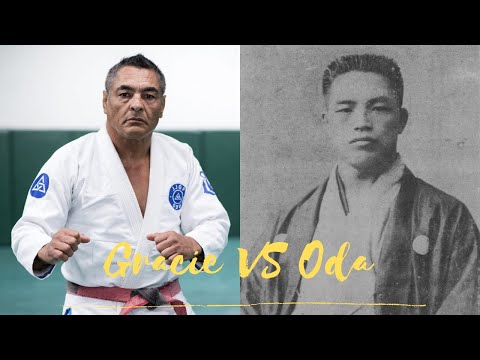
Rickson Gracie vs. Tsunetane Oda: A Masterclass in Foundational Combat

In the hushed halls of martial history, certain encounters resonate not merely for their outcome, but for the profound lessons they impart. The confrontation between Rickson Gracie and Tsunetane Oda is one such event. It’s a bout that transcends the typical spectacle of combat, offering a deep dive into the very essence of what makes a martial artist truly formidable. As a Sensei dedicated to the propagation of Budo and the critical analysis of martial arts in all its forms, I find this particular exchange a fertile ground for dissecting the principles that separate fleeting victory from enduring mastery.

The Legacy of Tsunetane Oda: A Pillar of Kodokan Judo

Before we dissect the encounter, understanding the context of Tsunetane Oda is paramount. Oda was not merely a judoka; he was a living testament to the ideals of the Kodokan. Born into an era where Judo was solidifying its philosophical and technical foundations, Oda exemplified the principles of Seiryoku Zenyo (Maximum Efficiency, Minimum Effort) and Jita Kyoei (Mutual Welfare and Benefit). His reputation preceded him as a formidable competitor and an influential instructor, deeply rooted in the rigorous training methodologies that defined early Judo.

"Judo is not merely a technique of attack and defense, but a way of life, a path of self-improvement." - Jigoro Kano

Oda's journey within the Kodokan was one of dedication and mastery. He understood the intricate biomechanics of throws like the Ouchi Gari and Seoi Nage, but more importantly, he grasped the underlying principles of leverage, timing, and kuzushi (breaking balance). In a street fight scenario, or even a regulated contest, a judoka of Oda's caliber possessed a threat that extended far beyond mere physical strength. His ability to redirect an opponent's force, to exploit the smallest imbalance, was a skill honed through years of relentless practice, a true embodiment of the BUDO spirit.

Rickson Gracie: The Embodiment of Brazilian Jiu-Jitsu's Evolution

Across the Pacific, a different martial revolution was brewing, spearheaded by the Gracie family. Rickson Gracie, often hailed as the greatest Gracie of them all, became the living embodiment of Brazilian Jiu-Jitsu’s effectiveness. His philosophy was rooted in the idea that a smaller, weaker individual could defeat a larger, stronger opponent through superior technique, leverage, and ground fighting prowess. This wasn't just theory; Rickson’s undefeated record, particularly in vale tudo (no-holds-barred) matches, served as the ultimate validation.

What set Rickson apart was his seemingly effortless control. He didn't rely on brute strength but on an innate understanding of pressure points, joint manipulation, and submission holds like the choke and the armbar. His application of these techniques was fluid, almost organic, reflecting a deep, almost intuitive mastery of his art. He demonstrated that the foundation of BJJ wasn't just about grappling; it was about a comprehensive system of control that began standing and transitioned seamlessly to the ground. This was a direct challenge and evolution of the striking-heavy combat prevalent at the time.

The Encounter: A Clash of Philosophies

The bout between Rickson Gracie and Tsunetane Oda wasn't just a fight; it was a philosophical debate enacted on the mat. On one side, we had the established authority of Kodokan Judo, a system refined over decades, emphasizing standing techniques and throws with a strong emphasis on self-discipline and holistic development. On the other, the burgeoning power of Brazilian Jiu-Jitsu, a system that had evolved from Judo, focusing on ground fighting and submission holds as the ultimate deciders of a contest, particularly in a context where rules were minimal.

The anticipation surrounding this fight was immense. Many wondered if Oda's Judo prowess, honed under the strict tenets of the Kodokan, could overcome Gracie's methodical dismantling of opponents on the ground. Could the foundational principles of Judo, as taught by masters like Kano and exemplified by Oda, stand against the aggressive refinement of BJJ that Gracie represented? This wasn't just a personal contest; it was a symbolic battle between two titans of martial arts evolution.

Technical Breakdown: The Subtle Art of Control

When analyzing the exchange, the initial engagement is crucial. Both fighters, being masters of their respective arts, would have begun by establishing dominant grips, testing each other's balance and posture. Oda, true to his Judo background, would have likely sought to utilize kuzushi to create throwing opportunities. His grips would have been strong, designed to control Gracie’s center of gravity and initiate a powerful throw.

However, Gracie’s game was different. His grips were not solely for the purpose of throwing, but for control, for pulling his opponent into his domain – the ground. A key element to watch for would be Gracie’s ability to defend against the throw while simultaneously setting up his own transition. This is where the evolution of BJJ is evident. While Judo emphasizes the throw and the immediate pin, BJJ recognizes that the fight often continues after the throw, or that a failed throw can be an opportunity to secure a dominant ground position.

If the fight went to the ground, as was often Gracie’s intention, the dynamic would shift entirely. Oda, though trained in groundwork, would find himself in a situation where Gracie's specialization would come to the fore. Gracie's guard passing, his pressure, and his suffocating submission holds – the triangle choke, the armbar, the kimura – were legendary. He wouldn't just be trying to submit Oda; he’d be systematically dismantling his defenses, controlling his hips and posture, making escape a near impossibility.

A critical point of analysis is the concept of "position before submission." Gracie exemplified this. He wouldn't rush into a submission attempt. Instead, he would establish dominant positional control – mount, side control, or a suffocating guard – before patiently applying pressure and seeking the most opportune moment for a tap. This methodical approach is a hallmark of high-level BJJ and is directly contrasted with approaches that might prioritize immediate, high-risk attacks.

Lessons Learned: Beyond the Bout

The enduring legacy of this encounter lies not just in who won or lost, but in the principles it illuminates. For judoka, it reinforces the importance of adapting their training to include comprehensive groundwork defense and offense, understanding that the fight does not always end with a throw. For BJJ practitioners, it’s a powerful reminder of the roots from which their art sprang and the critical importance of standing techniques and control to initiate their ground game. It underscores that true martial arts mastery requires a holistic approach, encompassing both striking and grappling, standing and ground fighting.

Moreover, this bout highlights the critical role of foundational principles. Whether it's the balance and leverage in Judo or the pressure and submission control in BJJ, the core concepts of efficient movement, timing, and understanding an opponent's structure are universal. The ability to adapt and evolve, incorporating the strengths of different martial arts while staying true to one's core philosophy, is what creates a truly complete martial artist.

"The supreme art of war is to subdue the enemy without fighting." - Sun Tzu, The Art of War

In essence, Rickson Gracie vs. Tsunetane Oda serves as a profound case study in martial arts evolution. It demonstrates that the most effective fighters are those who understand not only their own art but also the strengths and weaknesses of others, allowing them to adapt and dominate across different contexts.

Veredict of the Sensei: Did This Fight Earn Its Stripes?

Absolutely. While the specific context and outcome might be debated by purists, the encounter between Rickson Gracie and Tsunetane Oda is a pivotal moment in martial arts history. It perfectly encapsulates the transition and evolution of combat sports, showcasing the practical application of distinct, yet interconnected, martial philosophies. It’s a testament to the idea that mastery of fundamentals, whether in standing techniques or ground control, is the ultimate key to victory. This fight is a masterclass in strategic application and foundational dominance.

Sensei's Rating:

Cinturón Negro en Análisis Táctico y Filosófico.

Essential Training for Foundational Mastery

To truly understand and implement the principles showcased in a bout like this, rigorous training in fundamental techniques is non-negotiable. Whether you lean towards Judo or BJJ, or seek a hybrid approach, focusing on the core elements is paramount.

  • Grip Fighting: Developing strong, intelligent grips is the first step in controlling distance and initiating techniques, both standing and on the ground.
  • Balance and Posture: Mastering the ability to maintain your own balance while disrupting your opponent's is crucial for throws and submissions.
  • Takedown Defense: For grapplers, understanding how to defend against takedowns is as important as executing them.
  • Positional Control: In BJJ, establishing and maintaining dominant positions like mount, side control, and back control is the foundation for successful submissions.
  • Submission Fundamentals: Practicing common submissions like armbars, chokes, and leg locks under pressure is vital.
  • Flow Rolling/Randori: Regular sparring (Randori in Judo, Rolling in BJJ) is essential to integrate techniques and develop practical application.

If you're looking to enhance your training, consider investing in quality equipment. For Judo practitioners, a durable, double-weave gi is essential, while BJJ requires a gi that allows for maximum flexibility. For those focusing on striking or conditioning, investing in quality MartialArtsMerchandise like hand wraps and sparring gloves can also be beneficial.

Frequently Asked Questions

What is the primary difference between Kodokan Judo and Brazilian Jiu-Jitsu in terms of philosophy?

Kodokan Judo, founded by Jigoro Kano, emphasizes holistic development, including physical, mental, and moral aspects, with a focus on throwing techniques and self-defense principles like Seiryoku Zenyo and Jita Kyoei. Brazilian Jiu-Jitsu, evolved from Judo by the Gracie family, places a stronger emphasis on ground fighting and submission holds as the primary means of defeating an opponent, particularly in no-holds-barred contexts.

Was Rickson Gracie undefeated?

Rickson Gracie is widely recognized for his undefeated professional record, particularly in vale tudo (no-holds-barred) contests, solidifying his reputation as one of the most dominant martial artists of his era.

What is 'kuzushi' in Judo?

Kuzushi refers to the act of breaking an opponent's balance or disrupting their posture. It is a fundamental principle in Judo, essential for executing effective throws.

What are the main submissions in Brazilian Jiu-Jitsu?

Key submissions in BJJ include various types of chokes (e.g., rear-naked choke, triangle choke) and joint locks (e.g., armbar, kimura, omoplata).

How did Judo influence Brazilian Jiu-Jitsu?

Brazilian Jiu-Jitsu originated from Judo techniques brought to Brazil by Mitsuyo Maeda. The Gracie family, particularly Hélio Gracie, adapted and refined these techniques, focusing more heavily on groundwork and submissions that proved effective against larger opponents.

To Deepen Your Understanding

To truly grasp the nuances of martial arts, continuous learning and exploration are key. Here are some resources to further your journey:

  • BUDO: Explore the philosophical underpinnings of Japanese martial ways.
  • Artes Marciales: A broad overview of various martial disciplines and their histories.
  • Entrenamiento: Practical guides and tips for enhancing your physical conditioning and technical skills.

Reflection of the Sensei: Your Next Step

In the grand tapestry of combat, is true mastery found in perfecting a single thread, or in weaving together multiple strands into a stronger, more resilient whole? Consider how the principles of Judo's standing control and BJJ's ground dominance can inform your own training, regardless of your chosen path. Are you merely practicing techniques, or are you striving for the profound understanding that transcends the physical?

``` GEMINI_METADESC: Explore the legendary clash between Rickson Gracie and Tsunetane Oda. Analyze the foundational principles of Judo and BJJ, and learn critical lessons for martial arts mastery.

Wallid Ismail: The Gracie Killer - A Martial Legacy Analyzed

The annals of martial arts are replete with tales of titans, of rivalries that have shaped entire disciplines, and of individuals whose names echo through generations. Today, we delve into the life and legacy of a man whose career presented a formidable challenge to a family synonymous with Brazilian Jiu-Jitsu: Wallid Farid Ismail. Born on February 23, 1968, Ismail’s journey from a dedicated practitioner to a renowned champion and promoter is a testament to the relentless spirit of martial competition. But the title that truly ignites debate and demands examination is "The Gracie Killer." Did he merely win fights, or did he strike at the very heart of a martial dynasty?

The Crucible of Brazilian Jiu-Jitsu

To understand Wallid Ismail's impact, one must first grasp the immense cultural and martial significance of the Gracie family in Brazil. For decades, BJJ, largely pioneered and propagated by the Gracies, was the undisputed king of ground fighting. Their innovative techniques, their rigorous training methods, and their unyielding commitment to proving the efficacy of their art in any combat scenario—particularly in the brutal Vale Tudo (no holds barred) matches—cemented their legendary status. To challenge them was not just to enter a fight; it was to step into a historical narrative, to confront an institution.

Ismail, a product of the esteemed Carlson Gracie Team, emerged from this very crucible. Under the tutelage of Carlson Gracie, a legendary figure himself and a key innovator within the family, Ismail honed his skills. This lineage is crucial. He wasn't an outsider with a foreign style; he was a high-level Jiu-Jitsu black belt, trained in the same philosophical and technical wellspring that produced his fiercest rivals. This internal conflict, a fighter from one branch of the Gracie tree taking on others, adds a layer of complexity far beyond a simple external challenge.

The "Gracie Killer" Title: A Matter of Fact or Hyperbole?

The moniker "Gracie Killer" is provocative. It implies a decisive, almost exterminating, proficiency against members of the renowned Gracie family. Wallid Ismail is widely recognized for having defeated four members of the Gracie lineage in combat. This is not mere rumor; it is a documented achievement that sets him apart. But what does this "killing" truly signify in the context of martial arts?

"Victory is never final. Failure is never fatal. It is the courage to continue that counts." - Winston Churchill (A principle that resonates deeply in any warrior's path).

In the realm of combat sports, particularly Vale Tudo and later Mixed Martial Arts (MMA), victory is often measured in wins and losses. For Ismail to have secured victories against multiple members of a family so closely associated with the sport's very identity is a remarkable feat. It speaks volumes about his skill, his preparation, and his mental fortitude. He possessed the technique and the heart to overcome opponents from one of the most formidable martial families in history.

Analyzing the Victories: Technique, Strategy, and Spirit

While a comprehensive breakdown of each individual fight would require its own extensive treatise, we can infer general principles from Ismail's success. His victories likely stemmed from a combination of factors:

  • Technical Prowess: As a high-ranking black belt from the Carlson Gracie lineage, Ismail would have possessed exceptional grappling skills, likely focusing on submissions and positional dominance.
  • Strategic Acumen: Facing different Gracie fighters would require adapting strategies. Each family member, while sharing a common lineage, developed unique styles and strengths. Ismail and his team would have analyzed these differences meticulously.
  • Mental Toughness: The psychological pressure of facing members of the Gracie family, especially given their reputation, would be immense. Ismail's ability to perform under such scrutiny is a testament to his mental game.
  • The "Carlson Gracie" Factor: Training under Carlson Gracie meant a specific emphasis on aggressive, offensive grappling designed to finish fights quickly. This philosophy might have provided Ismail with the necessary edge against opponents he knew intimately through shared martial heritage.

It is crucial to acknowledge that the term "killer" is often hyperbolic in sports. It denotes dominance and the end of a particular streak or perceived invincibility. Ismail's achievements were undoubtedly significant, marking him as a standout competitor in a fiercely competitive era. His name became etched in the history of Brazilian Jiu-Jitsu and Vale Tudo for this very reason.

Beyond the Fights: Promoter and Legacy

Ismail’s influence did not end with his competitive career. He transitioned into the role of an MMA promoter, helping to shape the landscape of the sport in Brazil. This transition highlights a deeper engagement with martial arts—a desire to foster the growth and development of the disciplines he dedicated his life to. Promoting events allows individuals to pass on their knowledge and experience, ensuring that the spirit of competition and martial endeavor continues.

His involvement with organizations like the World Submission Wrestling Federation (WSWF) further underscores his commitment to the sport. This work, alongside his past achievements, solidifies his place not just as a fighter, but as a significant figure in the broader martial arts community.

"The martial way is a normal way. And what is the normal way? It is the right way. Therefore, the martial way is the right way." - Miyamoto Musashi, The Book of Five Rings.

Veredicto del Sensei: ¿Merece la pena?

Wallid Ismail’s career is a fascinating case study in martial arts history, particularly within the context of Brazilian Jiu-Jitsu. The title "Gracie Killer" is not an exaggeration of his accomplishments; it's a direct reflection of his ability to defeat multiple members of a family that defined an era of combat sports. His victories were earned through skill, strategy, and an unwavering martial spirit forged in one of the toughest training environments. While the term "killer" can be sensationalized, Ismail's legacy is rooted in genuine competitive success against formidable opposition. He proved that within the BJJ world, there were indeed individuals capable of challenging and overcoming the established order. His story is a powerful reminder that even the most dominant dynasties face their challengers, and that the martial path is one of constant evolution and competition.

Equipo Esencial para tu Entrenamiento

For any martial artist aspiring to reach the highest levels, the right equipment is paramount. While skill and spirit are paramount, proper gear provides safety and enhances training.

  • Gi/Kimono: For practitioners of Brazilian Jiu-Jitsu, a durable, well-fitting Gi is indispensable. Look for double-weave options for added resilience during intense grappling. Brands known for quality include Keiko Sports, Atama, and others offering robust martial arts merchandise.
  • Training Rashguards: Essential for MMA and No-Gi grappling, providing a comfortable, form-fitting layer that minimizes friction and allows for better movement.
  • Mouthguard: Non-negotiable for any sparring or competitive bout to protect your teeth and jaw.
  • Hand Wraps & Gloves: Crucial for striking disciplines like Kickboxing or Muay Thai, offering wrist support and knuckle protection. For MMA, specific MMA gloves are designed for both striking and grappling.
  • Spats and Shorts: Comfortable and functional attire for various disciplines, allowing for a full range of motion without restriction.

Investing in quality martial arts merchandise not only supports your training but also connects you to the broader martial arts community.

Guía de Entrenamiento: Simulando la Presión del Combate

Wallid Ismail's success against the Gracies implies an ability to perform under extreme pressure. Here's an exercise to build that resilience:

  1. Resistencia Cardiovascular: Begin with high-intensity interval training (HIIT). For example, 30 seconds of intense calisthenics (burpees, jump squats) followed by 30 seconds of rest. Repeat for 15-20 minutes. This simulates the burst of energy required in a fight.
  2. Sparring con Restricciones: During sparring sessions (whether BJJ, Judo, or Kickboxing), introduce specific rules. For instance, in BJJ, focus solely on submission attempts for 5 minutes, ignoring positional advancement if it doesn't lead to a submission. In striking, limit yourself to only body shots for a round. This forces adaptation and creative problem-solving under duress.
  3. "Pressure Testing" Drills: Have a training partner apply constant, light pressure (like a slow guard pass attempt or a steady stream of jabs) while you try to maintain a stable base or execute specific movements. This builds mental fortitude and the ability to react effectively when things get chaotic.
  4. Mindfulness and Breath Control: Practice deep breathing exercises before and after training, and even during breaks. Learning to control your breath is paramount to controlling your nerves and maintaining clarity in high-stress situations. This taps into the core of BUDO and Inner Strength.
  5. Visualización: Before sleep or during quiet moments, visualize yourself successfully executing techniques against tough opponents, maintaining composure, and achieving victory. This mental rehearsal primes your mind for actual combat scenarios.

Consistent application of these drills will help build the kind of mental and physical resilience that allowed Ismail to achieve his legendary status. It’s about more than just physical conditioning; it's about cultivating the Warrior Philosophy.

Preguntas Frecuentes

¿Cuántos miembros de la familia Gracie derrotó Wallid Ismail?

Wallid Ismail es conocido por haber derrotado a cuatro miembros de la familia Gracie en competiciones de Vale Tudo y BJJ.

¿Cuál era el estilo de lucha principal de Wallid Ismail?

Ismail era un practicante de alto nivel de Jiu-Jitsu Brasileño y también compitió en Vale Tudo, demostrando habilidades tanto en el suelo como en el combate de pie. Fue entrenado por el Carlson Gracie Team.

¿En qué tipo de combates se enfrentó Wallid Ismail a los Gracie?

Los enfrentamientos tuvieron lugar principalmente en el contexto de Vale Tudo, un precursor del MMA moderno en Brasil, y en competiciones de Jiu-Jitsu Brasileño.

¿Qué significa el apodo "The Gracie Killer"?

El apodo "The Gracie Killer" se refiere a la notable hazaña de Ismail de derrotar a varios miembros de la influyente familia Gracie, quienes son pioneros y pilares del Jiu-Jitsu Brasileño y del MMA.

Para Profundizar en tu Camino

```

Reflexión del Sensei: Tu Próximo Paso

Ismail's legacy is built on decisive victories. But in the grand tapestry of martial arts, is true "killing" about defeating opponents, or about transcending limitations to reach new heights of personal mastery? When you face your own insurmountable challenges, both on and off the mat, will you seek to merely defeat them, or will you strive to evolve through them? Consider this: What "family" of limitations holds you back, and what internal "Gracie Killer" must you awaken to conquer them?

GEMINI_METADESC: Explore the formidable career of Wallid Ismail, the celebrated "Gracie Killer," and his impact on Brazilian Jiu-Jitsu and MMA.