Showing posts sorted by date for query judo throws. Sort by relevance Show all posts

Okinawan Karate: More Than Just Strikes - A Deep Dive into the Warrior's Path

In the vast universe of martial arts, the profound legacy of Japan stretches its influence far beyond the iconic shores of Okinawan Karate. While Karate stands as a titan, it is but one star in a constellation of disciplines that have ignited passion in enthusiasts across the globe. Alongside the thunderous power of Okinawan Karate, we find the yielding strength of Judo, the circular grace of Aikido, and the disciplined precision of Kendo. What binds these diverse arts? A common thread, as potent as any physical technique: their unwavering emphasis on spiritual development. Practitioners are not merely acquiring the tools of combat; they are embarking on a quest to sculpt better individuals, refined souls. Join us, students, on a journey through the profound philosophies and rigorous practices that forge the very essence of the martial arts world.

The Legacy Beyond Okinawa

The influence of Japanese martial arts is undeniable, a testament to centuries of refinement and philosophical depth. Many practitioners begin their journey with a single art, perhaps drawn by the dynamic movements of Karate or the strategic throws of Judo. However, a true appreciation for Budo, the "Way of Martial Arts," reveals a rich tapestry of interconnected principles.

The Way of the Warrior: A Life Philosophy

Is martial arts merely about fighting? A dangerous misconception, and one that undermines the very soul of Budo. True martial arts encompasses far more than mere physical combat; it is a comprehensive way of life. The real essence lies not in the blow landed, but in the continuous pursuit of self-improvement, the cultivation of unwavering character, and the profound journey of spiritual growth. The ancient samurai warriors, masters of their craft and their minds, understood this interconnectedness intimately. Their training was a holistic endeavor, seeking the perfect harmony of mind, body, and spirit. This timeless philosophy continues to resonate, shaping the teachings and the very spirit of various martial arts disciplines today.

"The warrior is one who digests his experiences and is not discouraged by them." - Miyamoto Musashi, The Book of Five Rings

Okinawan Karate: A Legacy Unparalleled

Among the most iconic martial arts to emerge from Japan, Okinawan Karate stands with a legacy that traces its proud roots back to the Ryukyu Kingdom. Renowned for its emphasis on explosive, powerful strikes delivered with fluid, almost dance-like movements, this discipline embodies the indomitable spirit and resilience of the Okinawan people. Practitioners of Karate do not merely acquire formidable self-defense skills; they cultivate profound virtues: unwavering discipline, deep-seated respect for their peers and instructors, and the tenacious spirit of perseverance in the face of adversity.

The sheer effectiveness of Karate's striking techniques, from the devastating Uraken (reverse punch) to the precise Gedan Barai (downward block), is legendary. Yet, beneath the surface of these physical applications lies a deep philosophical wellspring. The rigorous repetition of kata—prearranged forms that simulate combat—is not just muscle memory training; it is a meditative practice, a way to ingrain principles of balance, timing, and intention.

The Spiritual Essence of Martial Arts

In the disciplined world of martial arts, physical techniques are inextricably intertwined with deep, foundational spiritual principles. Ancient traditions, notably the profound philosophies of Zen Buddhism and the naturalistic reverence of Shintoism, have deeply influenced the philosophical underpinnings of these arts. Practices such as mindful meditation (Zazen), controlled breathing exercises (Kokyu ho), and pervasive mindfulness are not mere add-ons; they are integral components of many martial arts training regimens. These practices are the crucible in which practitioners forge mental fortitude, sharpen unwavering focus, and cultivate profound self-awareness.

Consider the concept of Mushin, the "no-mind" state often sought in Karate and other arts. It is not about being empty-headed, but about achieving a state of spontaneous, uninhibited action, free from conscious thought or fear. This is the spiritual essence—the ability to react instinctively and effectively under pressure. This state is cultivated through thousands of hours of dedicated practice and introspective training.

Unveiling the "Ways of the Warrior"

Beyond the striking prowess of Okinawan Karate, a pantheon of other esteemed "ways of the warrior" have garnered international acclaim and devoted followings. Judo, masterfully originating from Jigoro Kano's vision, champions the principle of "Seiryoku Zenyo" – maximum efficiency with minimal effort. It teaches us how to use an opponent's strength and momentum against them, a profound lesson in leverage and strategy.

Then there is Aikido, the art of peaceful harmony, founded by the legendary Morihei Ueshiba. Aikido’s philosophy centers on blending with and redirecting an opponent's energy, neutralizing aggression without causing undue harm. It is a testament to the principle that true strength lies not in brute force, but in adaptability and control.

And we cannot forget Kendo, the "way of the sword." This discipline meticulously preserves the spirit and techniques of the ancient samurai through rigorous, disciplined training, steeped in tradition and unwavering respect for the weapon and the opponent.

Martial Arts as a Path to Personal Growth

To engage with martial arts is to embark on a profoundly transformative journey. It is an experience that molds individuals, forging them into disciplined, confident, and compassionate human beings. The relentless pursuit of perfection in technique, coupled with the deep commitment to self-improvement, transcends the confines of the dojo and permeates every aspect of a practitioner's life. Martial arts offer a holistic approach to personal development, instilling invaluable virtues that positively influence relationships, career paths, and overall well-being.

The lessons learned on the mat – patience, perseverance, humility – are directly applicable to challenges faced off the mat. Facing a difficult boss? Remember the patience required to master a complex kata. Dealing with a personal setback? Recall the resilience built from countless sparring sessions and the commitment to rise after being thrown. This is the true power of Budo.

Building a Thriving Martial Arts Community

Martial arts not only bestow invaluable physical and mental benefits upon their practitioners but also cultivate a powerful sense of camaraderie and belonging. By training together, side-by-side, artists develop deep, enduring bonds, sharing hard-won experiences and offering unwavering support to one another on their individual paths. This interconnectedness fosters a vibrant, dynamic community where knowledge, wisdom, and mutual respect are continuously exchanged, enriching the journey for every single person involved.

A strong martial arts community provides a crucial support system. In moments of doubt or struggle, the encouragement of fellow practitioners can be the difference between quitting and pushing through. Sharing insights on techniques, discussing philosophical quandaries, and celebrating each other's progress builds a collective strength that empowers everyone.

Unlocking the Warrior Within

Embracing the path of martial arts is, in essence, an act of unlocking the latent, often untapped, potential residing within each individual. Through unwavering dedication, relentless perseverance, and an unyielding commitment to lifelong learning, practitioners embark on a profoundly transformative journey that extends far beyond mere physical techniques. The true, potent power lies in the awakening of the warrior within—an individual who embodies unwavering discipline, profound humility, and unshakeable determination in all endeavors.

Veredict of the Sensei: Does Okinawan Karate Live Up to the Hype?

This exploration into Okinawan Karate and its place within the broader martial arts landscape reveals an art form steeped in history, discipline, and profound philosophy. The documentary, while not explicitly reviewed here, sets the stage for understanding Karate's global impact. From the rigorous physicality to the mental fortitude it cultivates, Karate offers a complete system for self-development. However, like all martial arts, its true value lies in the practitioner's commitment to its underlying principles.

Rating: Cinturón Negro en Profundidad Filosófica

Essential Equipment for Your Training

While the spirit of the warrior can be honed with minimal equipment, certain items can significantly enhance your training experience and safety, particularly for Okinawan Karate and related disciplines:

  • Karate Gi: Look for a durable, comfortable Karate Gi made from cotton or a poly-cotton blend. A heavier gi is often preferred for competitive Karate and provides better durability for intense training.
  • Karate Belt: A sturdy Karate belt (Obi) is essential. Start with a white belt and progress through the ranks as you master techniques and demonstrate understanding of the principles.
  • Mouthguard: For sparring sessions (kumite), a well-fitting mouthguard is crucial to protect your teeth and jaw.
  • Groin Protector: Safety first. A groin protector is highly recommended for all male practitioners engaging in sparring.
  • Optional: Karate Training Mitts/Pads: For partner drills, training mitts and pads can be useful for practicing strikes safely and effectively.

For those interested in Judo, a robust Judo Gi (often heavier and designed for gripping) is essential. For Kendo, specialized protective gear and a bamboo sword (Shinai) are necessary.

Frequently Asked Questions

Is Okinawan Karate effective for self-defense?
Yes, Okinawan Karate, particularly styles that emphasize practical application and sparring, can be very effective for self-defense. Its focus on powerful strikes, blocks, and evasive movements provides a solid foundation.
What is the main difference between Karate and Judo?
Karate primarily focuses on striking techniques (punches, kicks, blocks), while Judo emphasizes grappling, throwing, and submission techniques. Both share a common emphasis on discipline and character development.
Can beginners start with any martial art?
Absolutely. Most martial arts schools are welcoming to beginners and offer foundational classes. The key is to find an art and an instructor that resonate with your personal goals and learning style.
How important is meditation in martial arts?
Meditation, or similar mindfulness practices, is highly important in many martial arts as it helps develop focus, emotional control, mental clarity, and a deeper understanding of oneself, which are all crucial for effective technique and personal growth.

Deepen Your Journey

To truly grasp the breadth and depth of the martial path, I encourage you to explore these related areas:

Reflection of the Sensei: Your Next Step

We have traversed the landscape of Okinawan Karate and its kin, glimpsing the profound philosophy that underpins these ancient disciplines. We've seen that the true battle is not against an external foe, but against the limitations within oneself. Now, I pose this question to you, my students:

When you bow at the end of training, are you bowing to your opponent, your instructor, or are you bowing to the improved version of yourself that you are striving to become? What does that bow truly signify in your life outside the dojo?

Ponder this. Discuss it. Let it fuel your practice. The journey of the warrior is a continuous one, and the deepest lessons are often found in the quiet moments of reflection.

``` ```json { "@context": "https://schema.org", "@type": "FAQPage", "mainEntity": [ { "@type": "Question", "name": "Is Okinawan Karate effective for self-defense?", "acceptedAnswer": { "@type": "Answer", "text": "Yes, Okinawan Karate, particularly styles that emphasize practical application and sparring, can be very effective for self-defense. Its focus on powerful strikes, blocks, and evasive movements provides a solid foundation." } }, { "@type": "Question", "name": "What is the main difference between Karate and Judo?", "acceptedAnswer": { "@type": "Answer", "text": "Karate primarily focuses on striking techniques (punches, kicks, blocks), while Judo emphasizes grappling, throwing, and submission techniques. Both share a common emphasis on discipline and character development." } }, { "@type": "Question", "name": "Can beginners start with any martial art?", "acceptedAnswer": { "@type": "Answer", "text": "Absolutely. Most martial arts schools are welcoming to beginners and offer foundational classes. The key is to find an art and an instructor that resonate with your personal goals and learning style." } }, { "@type": "Question", "name": "How important is meditation in martial arts?", "acceptedAnswer": { "@type": "Answer", "text": "Meditation, or similar mindfulness practices, is highly important in many martial arts as it helps develop focus, emotional control, mental clarity, and a deeper understanding of oneself, which are all crucial for effective technique and personal growth." } } ] }

Takanoyama Shuntarō: The "Small But Mighty" Master of Judo Throws in Sumo

Introduction: The Anomaly of Takanoyama

Have you ever watched a martial artist, seemingly outmatched by their opponent's size and strength, still emerge victorious? This isn't magic; it's the elegant application of technique, timing, and an indomitable spirit. In the world of Sumo, a sport often defined by sheer mass, one wrestler stood out, not for his bulk, but for his brilliance. Takanoyama Shuntarō, hailing from the Czech Republic, shattered expectations, proving that in combat, as in life, technique and tenacity can indeed conquer brute force. This analysis dives deep into his arsenal, dissecting the throws that made him a beloved figure and a testament to the "small but mighty" principle.

Takanoyama's Unique Journey: Defying Sumo's Giants

Takanoyama Shuntarō, born Martin Koselecta, carved a unique path in the hallowed dohyo of professional Sumo. As a European venturing into a deeply traditional Japanese sport, he faced an uphill battle from the outset. The average weight of a top-division Makuuchi wrestler often exceeds 150 kg. Takanoyama, however, consistently competed in the 80-100 kg range. This stark physical disparity could have been a career-ending limitation. Instead, it became his greatest teacher, forcing him to hone an exceptional understanding of leverage, timing, and evasive footwork. His speed and mastery of judo principles, a natural fit for his agile frame, allowed him to outmaneuver and defeat opponents who dwarfed him. He wasn't just a novelty; he was a strategic genius on the mat.

Technique Breakdown: The Arsenal of a Smaller Wrestler

The brilliance of Takanoyama lay in his ability to execute techniques that maximized his advantages while neutralizing his opponents' size. He didn't rely on overwhelming power; he employed precision and speed. Let's examine some of his signature finishes that consistently saw him victorious:

Kote-nage (Armlock Throw)

Takanoyama's kote-nage was a masterclass in deception and leverage. The core of this technique involves establishing a firm grip on the opponent's wrist (kote). From there, instead of forcing the throw, he artfully used the opponent's own forward momentum or attempted forward movement against them. A swift rotation of his body, combined with a pulling action on the captured wrist, redirected their energy, causing them to lose balance and be thrown over his back or to the side. This is a classic judo throw, but Takanoyama's execution, particularly the precise timing and angle, made it devastatingly effective against larger sumo wrestlers.

Koshi-guruma (Hip Wheel)

Another technique that highlights his judo background is the koshi-guruma. This throw involves wrapping one of Takanoyama's legs around the opponent's hip, creating a fulcrum. With a simultaneous pull forward and a powerful twist of his torso, he would elevate and unbalance his opponent, using his hip as the pivot point. The momentum generated would send the larger wrestler crashing down. The effectiveness here lies in getting the leg placement correct and generating the rotational force quickly, preventing the opponent from stabilizing or counteracting.

Oshi-dashi (Push Out)

While Takanoyama excelled in throwing techniques, his oshi-dashi, or push out, was a pure display of his speed and agility. This technique requires an explosive burst of energy to drive the opponent backward. Takanoyama, with his lighter frame, could generate rapid forward pressure. He would use quick, powerful shoves, often targeting the opponent's upper body and shoulders, to force them out of the ring. His ability to maintain balance and drive forward while his opponent was attempting to resist or counter was crucial to its success. It’s a testament to his conditioning and lower body strength.

Sukuinage (Beltless Arm Throw)

This technique, often seen in judo, involves an arm throw where the grip is established differently, often without a traditional belt grip. Takanoyama would secure a grip on his opponent's arm and, using a scooping motion with his body, throw them over his hip. The key here is to get under the opponent's center of gravity and use their own weight to complete the throw. His agility allowed him to make the necessary adjustments to create the throwing angle, turning a potential disadvantage into an offensive opportunity. It’s a dynamic throw that requires excellent body control.

Uchimuso (Inner Thigh Throw)

Takanoyama's mastery of judo skills shone through in his uchimuso. This throw involves attacking the opponent's legs or inner thigh area. He would use his grappling ability to secure a grip, often on the opponent's leg or gi near the thigh. With a precise hip movement and a lifting or sweeping action, he would unbalance the opponent, using their own forward pressure or stability against them. This technique requires significant timing and the ability to get low and deep, something Takanoyama was adept at, allowing him to execute it even against much larger opponents.

Beyond Technique: The Mental Game

What truly set Takanoyama apart, and what offers the most profound lessons for any martial artist, was his mental fortitude. He entered a sport steeped in tradition, where size was king, and had to overcome not only his physical limitations but also potential cultural barriers. His ability to persevere through rigorous training, maintain focus, and execute complex techniques under pressure is a testament to his inner strength and dedication. He proved that a warrior's heart and a sharp mind are often more critical than sheer physical dominance.

"In the martial path, it is not the size of the warrior that matters, but the size of their heart."

This adage resonates deeply when we consider Takanoyama's career. He embodied this philosophy, turning perceived weaknesses into strengths through sheer willpower and intelligent application of skill.

Lessons for Every Budoka: Perseverance and Adaptability

The journey of Takanoyama Shuntarō offers invaluable lessons for every practitioner of martial arts, regardless of their style or size. His career is a powerful reminder that:

  • Technique over Brute Force: Superior technique, timing, and leverage can overcome significant size and strength disparities.
  • Adaptability is Key: Understanding your own physical attributes and adapting your strategy and techniques accordingly is crucial for success.
  • Mental Strength is Paramount: True mastery is forged not just in the body, but in the mind. Perseverance, discipline, and a positive attitude are essential tools.
  • Embrace Challenges: Difficulties, whether physical limitations or external obstacles, can be catalysts for growth and innovation.

As martial artists, we face our own challenges, whether it's mastering a difficult technique breakdown, improving our mental strength, or simply staying dedicated. Takanoyama’s story encourages us to push past our perceived limits and continually refine our skills and our spirit.

Cross-Training: Expanding Your Martial Horizon

While Takanoyama's primary discipline was Sumo, his effective use of judo principles demonstrates the power of cross-training. For martial artists today, broadening one's skillset beyond a single discipline is not just beneficial, it's increasingly essential. Exploring different combat sports and martial arts can:

  • Introduce new strategic perspectives.
  • Develop different physical attributes (e.g., grappling, striking, flexibility).
  • Enhance problem-solving skills on the mat.
  • Provide a more well-rounded understanding of combat.

Whether it's incorporating Judo throws into your BJJ, understanding striking principles from Kickboxing for your Muay Thai training, or learning defensive strategies from Aikido, the martial world is interconnected. Embracing this diversity makes you a more complete and adaptable fighter.

Essential Gear for Your Training

To effectively train in disciplines like Judo, Sumo, or any other martial art, having the right equipment is crucial. For Judo practitioners, a high-quality Judo gi is paramount. Look for a durable, double-weave gi that can withstand the rigors of throws and grappling. For those interested in simulating Sumo or practicing specific throwing drills, sturdy mats are essential for safety. Consider investing in:

  • High-Quality Judo Gi: Look for brands known for durability and fit. A good gi enhances grip and withstands pulling forces.
  • Training Mats: Essential for safe practice of throws, falls (ukemi), and groundwork.
  • Wrestling Shoes: For styles that require precise footwork and grip on the mat.
  • Resistance Bands: Excellent for strength and conditioning, mimicking pulling and pushing motions relevant to grappling.

Exploring gear can also lead you to discover resources like specialized training manuals or online courses focused on specific technique breakdowns.

Frequently Asked Questions

What made Takanoyama unique in Sumo?

Takanoyama Shuntarō was unique due to his significantly smaller stature compared to his peers, competing between 80-100 kg in a sport dominated by wrestlers over 150 kg. He compensated with exceptional speed, agility, and judo-based techniques.

What are some key Judo techniques Takanoyama utilized?

He effectively employed techniques such as Kote-nage (armlock throw), Koshi-guruma (hip wheel), Sukuinage (beltless arm throw), and Uchimuso (inner thigh throw), adapting them for the Sumo ring.

How did Takanoyama overcome his size disadvantage?

He leveraged his speed, agility, and precise execution of Judo throws. His strategy focused on outmaneuvering opponents, using their momentum against them, and exploiting openings rather than relying on brute strength.

What broader lessons can martial artists learn from Takanoyama?

Martial artists can learn about the importance of technical mastery, adaptability, mental fortitude, perseverance in the face of adversity, and the strategic advantage of speed and timing over sheer size.

For Deeper Insight

Sensei's Reflection: Your Next Step

Takanoyama's story is more than just a series of successful throws; it's a living testament to the power of a determined spirit. He demonstrated that the physical ring of a dojo, or the clay of the dohyo, is but one arena. The true battlefield often lies within, where the fight against doubt and limitation is waged. Ask yourself:

"When faced with an opponent, or a challenge, that seems insurmountable due to size or perceived advantage, do you instinctively shrink, or do you instinctively seek the angle, the leverage, the technique that will allow you to prevail?"

Reflect on this. True martial arts mastery isn't just about knowing techniques; it's about embodying the spirit to apply them when it matters most. Now, let your actions speak louder than your thoughts.

```

Busting the Myths: What Young Men Get Wrong About Street Fights

The raw, untamed energy of a street fight. For many young men, it's a concept steeped in a dangerous cocktail of adrenaline, bravado, and a primal urge to assert dominance. It’s a narrative often fueled by cinematic explosions and whispered legends. But this romanticized notion is a minefield of misconceptions, leaving those who believe them vulnerable to severe consequences. As a Budo practitioner and instructor, I've witnessed the fallout from these misguided beliefs far too often. Today, we confront these dangerous myths head-on, not to glorify violence, but to arm you with the truth and the wisdom to avoid it. Are you ready to understand what truly matters when the stakes are real?

Myth 1: Size and Strength Reign Supreme

This is, without a doubt, the most pervasive and potentially lethal myth. The young male psyche is often saturated with the idea that a larger frame and brute force are the ultimate arbiters of a fight's outcome. They envision themselves as titans, crushing lesser opponents with sheer power. But I ask you: have you ever seen a seasoned fighter get blindsided by someone smaller, faster, and more technically adept?

In the crucible of a real confrontation, while size and strength offer *an* advantage, they are far from the decisive factors. The true warriors understand that technique, experience, and crucially, mental fortitude, are the pillars upon which victory rests. Consider the devastating effectiveness of a Judo throw – leverage and timing trumping raw mass. Think of the precision of a Kyokushin Karate strike, delivered with controlled explosiveness, capable of incapacitating a larger foe.

"Strategy without tactics is the slowest route to victory. Tactics without strategy is the noise before defeat." - Sun Tzu. In a street fight, superior technique *is* the superior tactic, often born from strategic understanding of leverage and timing, rendering brute force irrelevant.

This is where the discipline of martial arts becomes not just beneficial, but essential. Learning proper techniques allows you to harness the physics of movement, using your opponent's weight and momentum against them. Through rigorous sparring, you develop the invaluable skill of fight analysis in real-time, learning to read an opponent's intentions before they even fully manifest. And perhaps most importantly, through dedicated mental training, you cultivate the calm focus required to think, react, and survive under duress – a quality utterly absent in a purely brute-force approach.

Myth 2: Knockouts Are the Only Path to Victory

The silver screen bombards us with images of dramatic knockouts – the one-punch K.O., the spinning heel kick that ends it all. This cinematic spectacle breeds the dangerous illusion that fights are won solely through devastating strikes. Young men often fantasize about landing the "money punch" that ends the confrontation instantly. But let me be clear: real-world confrontations are rarely as clean or as dramatic.

The truth is, a fight ending in a clean knockout is statistically rare and often attributable to a lucky shot rather than superior skill. More commonly, street fights devolve into chaotic brawls where injuries are sustained by both parties, and the aggressor is not necessarily the victor. The most effective and reliable path to neutralizing a threat is not through spectacular violence, but through incapacitation.

This is where the intricate world of grappling and submission techniques, honed in arts like BJJ, Judo, and Aikido, proves its worth. Joint locks, chokes, and throws are designed to control and disable an opponent with far greater efficiency and less risk of unpredictable escalation than relying solely on strikes. Mastering these techniques requires discipline, precision, and an understanding of anatomy and leverage – skills forged in the dojo, not on the street.

"The supreme art of war is to subdue the enemy without fighting." - Sun Tzu. While not always possible on the street, the principle extends to minimizing damage and achieving control swiftly, a hallmark of effective grappling.

Relying solely on striking is like bringing a knife to a gunfight – it leaves you dangerously incomplete. The ability to transition from a striking range to a control-based scenario, or to defend effectively against a grappling attack, is paramount. This is the essence of well-rounded martial arts training.

Myth 3: Going Solo is the Ultimate Test of Courage

There's a certain narrative of lone wolf heroism that appeals to the young male ego – the idea that facing multiple opponents alone is the ultimate display of courage and martial prowess. It paints a picture of a solitary warrior, standing defiant against overwhelming odds. This romantic ideal, however, is a perilous fallacy.

In reality, a street fight is not a tournament bracket. It's an unpredictable, often chaotic, and dangerous environment. While courage is admirable, recklessness is not. The presence of allies, friends, or even a supportive group can be an enormous deterrent and a crucial source of backup. A united front can dissuade potential aggressors before a confrontation even begins.

However, this is not an endorsement of mob mentality or gratuitous violence. The objective is safety and de-escalation, not gang warfare. The presence of a group should serve to de-escalate, to provide witnesses, or to ensure that a situation does not spiral out of control. Using group strength to unjustly overwhelm an opponent is not courage; it is bullying.

The true measure of a warrior's strength lies in their ability to assess a situation, to use their voice and intellect to defuse conflict, and to resort to physical means only as an absolute last resort. This principle is deeply embedded in the philosophy of Budo, which emphasizes self-mastery and the avoidance of unnecessary conflict. Learning de-escalation techniques and assertive communication is as vital a skill as any self-defense technique.

Veredicto del Sensei: Avoiding the Pitfalls

Let me be unequivocal: engaging in a street fight is almost never the wise or honorable path. The risks – severe injury, legal repercussions, emotional trauma – far outweigh any perceived 'victory.' The focus for any young man should be on cultivating themselves into a better, more capable individual, not on preparing for imaginary battles.

This means prioritizing the development of genuine skills: the physical discipline of martial arts, the mental resilience fostered by overcoming challenges, and the social intelligence required for effective communication and conflict resolution. True strength isn't about winning fights; it's about developing the wisdom and skill to navigate life's challenges, including avoiding unnecessary confrontations altogether. The goal is not to become a brawler, but a resilient, capable individual.

Practical Training: Building a Real Defense

If your goal is genuine self-improvement and preparedness, then direct your energy towards foundational training. This isn't about learning 'street fighting,' but about building a robust physical and mental foundation that can serve you in all aspects of life, including the unlikely event of needing to defend yourself.

  1. Foundational Striking: Focus on solid Karate or Kickboxing principles. Learn proper footwork, stance, and the mechanics of core strikes like punches and kicks. Practice these diligently to build power and accuracy.
  2. Control and Submission: Integrate Brazilian Jiu-Jitsu or Judo into your training. Learning to control an opponent on the ground, execute basic throws, and apply fundamental submissions like an armbar or choke is crucial for neutralizing threats efficiently.
  3. Situational Awareness: Train your mind to be constantly aware of your surroundings. Practice recognizing potential threats and understanding escape routes. This is a mental skill that requires conscious effort, not just physical conditioning.
  4. De-escalation Drills: Role-play potential confrontation scenarios with training partners. Practice assertive communication, setting boundaries, and walking away. This is often the most critical 'technique' in preventing a fight.
  5. Sparring with Purpose: Engage in controlled sparring sessions that simulate different ranges and scenarios. The aim is not to win, but to learn, adapt, and understand distance, timing, and reaction under pressure.

Frequently Asked Questions

Q1: Is it true that a smaller person can beat a bigger person with martial arts?

Yes, it is absolutely possible. While size and strength offer advantages, superior technique, speed, timing, and strategy can often overcome them. Martial arts train you to exploit an opponent's weaknesses and leverage your own strengths effectively, regardless of size disparity.

Q2: Should I learn multiple martial arts styles?

For comprehensive self-defense and personal development, cross-training in multiple disciplines is highly recommended. Styles like Karate/Kickboxing for striking, and Judo/BJJ for grappling, offer a well-rounded skill set. However, focus on mastering the fundamentals of one or two arts before spreading yourself too thin.

Q3: Is it better to learn self-defense from a movie or a real instructor?

A real, qualified instructor is infinitely better. Movies are for entertainment; they are not instructional tools. They often depict unrealistic techniques and scenarios. A qualified instructor provides structured training, feedback, and a safe environment to learn practical, effective skills.

Q4: What's the best martial art for self-defense?

There isn't one single "best" art. The most effective approach is often a combination that includes striking (like Muay Thai, Kickboxing, or Karate) and grappling (like Judo or BJJ). Crucially, effective self-defense also incorporates situational awareness and de-escalation skills, which are taught across many disciplines but require dedicated focus.

To Deepen Your Path

  • BUDO Philosophy: Understanding the Way of the Warrior
  • Self-Defense: Principles Beyond Techniques
  • Karate vs. MMA: A Clash of Worlds?

In conclusion, the battlefield of the street is a treacherous place, littered with the wreckage of myth-driven bravado. The true path forward lies not in seeking confrontation, but in cultivating the inner and outer strength to navigate life with skill, wisdom, and resilience. Remember, winning a fight is often about mastering yourself, not an opponent.

Reflexión del Sensei: Tu Próximo Paso

You've seen the myths dismantled. Now, look within. Which of these dangerous misconceptions has, even subtly, influenced your own perception of conflict or strength? Is it your size, your striking power, your willingness to stand alone? Confront that illusion in your mind and decide, consciously, to pursue *real* mastery over perceived dominance. How will you actively dismantle this myth within yourself, starting today?

Morihei Ueshiba: The Last Master's Testament to Aikido's Harmonious Force

Who Was Morihei Ueshiba?

Morihei Ueshiba, O-Sensei, the revered founder of Aikido, was a martial artist whose life spanned from 1883 to 1969. His legacy is not merely recorded history; it's a living testament to a profound understanding of combat and philosophy that transcends mere physical prowess. For decades, his name has echoed through the halls of martial arts, synonymous with a unique and powerful system. But what truly set Ueshiba apart? Was he merely a skilled technician, or was he something more – a philosopher-warrior whose insights continue to shape practitioners today? This exploration delves into the essence of the man and the art he birthed, challenging the conventional notions of martial efficacy and exploring the deeper currents of Budo.

The Philosophy of Harmony: Aikido's Core

At the heart of Aikido lies a philosophy that initially seems counterintuitive to the world of combat: harmony. Ueshiba O-Sensei didn't teach his students to meet force with force, but rather to blend with an opponent's energy, redirecting their momentum and neutralizing their aggression. This principle, often misunderstood as passive, is in reality a sophisticated application of physics and psychology. It requires immense sensitivity, precise timing, and an unwavering inner calm – the very definition of Ki mastery. This approach differentiates Aikido fundamentally from many artes marciales focused primarily on striking or overpowering an opponent. It’s a dance of control, a conversation of movement where the ultimate goal is not to inflict damage, but to resolve conflict with minimal harm. This core tenet is the bedrock upon which the entire art of Aikido is built, a revolutionary concept in the often brutal world of combate.
"The true meaning of martial arts is not to be the strongest, but to be the most harmonious." - Morihei Ueshiba

A Glimpse into the Master's Final Class

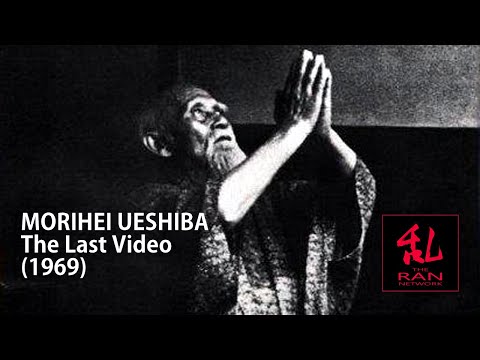
The year 1969 marked a poignant moment in martial arts history: Morihei Ueshiba's final class at the Aikikai Hombu Dojo in Tokyo. A video recording of this session offers a deeply moving glimpse into the spirit of a master at the twilight of his life. We witness an elderly Ueshiba, physically frail, battling illness, yet still able to command the respect and attention of his assembled students. What unfolds is not a display of raw power, but a demonstration of exquisite technique and profound understanding. His movements, though perhaps lacking the explosive speed of his youth, retained an uncanny fluidity, a dancer's grace married with a warrior's precision. He executed throws and techniques with an apparent effortlessness that belied the complexity and effectiveness of his art. This final performance serves as a powerful testament not just to his exceptional skill, but to a lifetime dedicated to the pursuit of martial perfection. It’s a visual lesson that transcends words, showcasing the enduring power and aesthetic beauty inherent in Budo.

The Enduring Legacy and Transmission of Teachings

Ueshiba's final class was more than just a demonstration; it was a distillation of his life's work, a living transmission of principles passed down through generations. The impact of O-Sensei's teachings is immeasurable, permeating the global community of martial artists. His philosophy of harmony, resolution, and self-improvement continues to be practiced and taught by his students, and their students, and so on. This lineage, this unbroken chain of transmission, is the true measure of a master's impact. Aikido, as a discipline, is not static; it evolves through the practitioners who embody its principles. The legacy of Morihei Ueshiba isn't confined to historical records or video archives; it lives and breathes in every dojo where his art is practiced with sincerity and dedication. His influence extends far beyond the confines of Aikido, resonating with anyone seeking a deeper understanding of human potential and conflict resolution.

Martial Arts: More Than Just Fighting

O-Sensei's final demonstration serves as a powerful reminder that the martial path is far more profound than mere combat. While the ability to defend oneself is a crucial aspect of many lucha systems, the true essence of martial arts, as Ueshiba taught, lies in discipline, self-mastery, and personal growth. It’s about cultivating inner strength, developing resilience, and fostering a spirit of peaceful resolution. This holistic approach, this emphasis on character development alongside physical technique, is a cornerstone of his philosophy. It’s a lesson that has been passed down through the ages, influencing not only practitioners of Aikido but a broad spectrum of individuals dedicated to self-improvement. The journey through BUDO is a journey of transformation, where the dojo becomes a microcosm of life itself.

Deepening Your Understanding: Resources and Gear

For those captivated by the philosophy and practice of Aikido and artes marciales in general, a wealth of resources exists to support your journey. Books offer historical context and philosophical depth, videos provide visual demonstrations of techniques and principles, and online courses offer structured learning from experienced instructors. Many reputable Aikido schools worldwide welcome beginners eager to explore this unique art form. When it comes to training, the right equipment can significantly enhance your experience and safety. High-quality training gear is essential for effective practice and injury prevention.

Equipo Esencial para tu Entrenamiento

  • Kimono de Aikido (Gi): Look for a durable, double-weave cotton gi that allows for freedom of movement and can withstand the rigors of throws and grappling. Brands like Karate and Judo gis often offer suitable alternatives.
  • Hakama: While not essential for beginners, the hakama is traditional attire for Aikido practitioners and allows for practice of specific techniques.
  • Jo y Bokken: Training staffs (Jo) and wooden swords (Bokken) are crucial for practicing weapon-based techniques, which are integral to Aikido's curriculum. Ensure they are made from solid, resilient wood.
  • Training Mats (Tatami): Proper matting is vital for safety during practice, especially for falls (ukemi).
For those interested in acquiring martial arts merchandise, numerous online stores cater to every need, from specialized training equipment to apparel that reflects the spirit of the arts. Investing in high-quality products from reputable sellers not only supports your training but also honors the dedication and craftsmanship associated with these disciplines.

Veredicto del Sensei: Legacy Embodied

Morihei Ueshiba's final performance is a powerful and poignant testament to the enduring spirit of martial arts. It’s not about the physical strength of youth, but the cultivated wisdom and refined technique that comes with decades of dedication. While some might dismiss older practitioners or focus solely on the combative aspects, Ueshiba’s demonstration highlights the profound beauty, control, and philosophical depth that true mastery entails. It’s a reminder that the "last master" doesn't signify an ending, but a living legacy that continues to inspire and guide. For its authentic portrayal of a martial art's philosophical core and its demonstration of mastery transcending physical limitations, this event, as captured in its final showing, earns a "Cinturón Negro en Sabiduría Marcial."

Guía de Entrenamiento: El Arte del Hakkō-ryu

While Aikido is the art Ueshiba founded, many of its principles echo foundational concepts found in older Japanese jujutsu systems. One such lineage, often associated with its characteristic joint-locking and pressure-point techniques, is Hakkō-ryu (八光流). While not directly taught by Ueshiba in his final class, understanding its principles can illuminate the depth of Japanese martial arts.

Pasos para Comprender los Principios del Hakkō-ryū:

  1. Entender la Filosofía Central: Hakkō-ryu se traduce como "Escuela de la Octava Luz". Su filosofía se centra en la armonía y el uso de la fuerza del oponente, similar a Aikido, pero a menudo con un énfasis más directo en el control a través de puntos de presión (Kyūsho) y técnicas de luxación (Kansetsu-waza).
  2. Estudiar Movimiento y Equilibrio: La base de Hakkō-ryū, como en muchas artes japonesas, es el movimiento corporal eficiente y el control del centro de gravedad. La postura debe ser baja y estable, permitiendo movimientos fluidos y respuestas rápidas.
  3. Practicar el "Te-no-uchi" (Mano-dentro): Este concepto se refiere al control fino de la muñeca y el antebrazo para aplicar torsiones y presiones precisas sobre las articulaciones del oponente. No es solo fuerza bruta, sino una manipulación experta.
  4. Familiarizarse con los Puntos de Presión (Kyūsho): Identificar y comprender la ubicación y efecto de los puntos de presión es crucial. La aplicación de presión en estos puntos puede incapacitar a un oponente sin necesidad de fuerza excesiva.
  5. Integrar la Respiración (Kokyū): La respiración juega un papel vital en la generación de potencia y en el mantenimiento de la calma. Coordinar la respiración con el movimiento y la aplicación de técnicas es fundamental.
  6. Entrenar Ukemi (Caídas): La habilidad para caer de manera segura es un pilar en cualquier arte que involucre proyecciones o luxaciones. El entrenamiento constante de ukemi es esencial para la seguridad y para ganar confianza.

Nota del Sensei: Es vital abordar el estudio de sistemas como Hakkō-ryū con un instructor calificado. La información aquí proporcionada es introductoria y no sustituye la guía práctica y la supervisión experta en un Dojo.

Frequently Asked Questions

What is the primary philosophy behind Aikido?

The primary philosophy of Aikido, as founded by Morihei Ueshiba, is to harmonize with an opponent's movements, redirect their force, and resolve conflict peacefully, emphasizing self-improvement and spiritual development over aggression.

Was Morihei Ueshiba an older man during his last class?

Yes, by 1969, Morihei Ueshiba was in his late 80s and frail due to illness, yet his final demonstration showcased his profound skill and dedication.

What distinguishes Aikido from other martial arts like Karate or Judo?

Unlike striking arts like Karate or grappling arts like Judo, Aikido primarily focuses on blending with an opponent's motion, using circular movements, throws, and joint locks to neutralize an attack without relying on brute strength or direct confrontation.

Is Aikido effective for self-defense?

Aikido's principles of redirection and control can be very effective for self-defense, particularly against larger or more aggressive opponents. However, its effectiveness is highly dependent on the practitioner's skill level and the specific situation.

Where can I find resources to learn more about Aikido or O-Sensei?

You can find extensive resources through books detailing Ueshiba's life and philosophy, official Aikido federation websites, documentaries, and by attending classes at a local Aikikai-affiliated dojo.

Para Profundizar en tu Camino

Reflexión del Sensei: Tu Próximo Paso

O-Sensei demonstrated that true mastery is not about the accumulation of power, but the refinement of spirit and the understanding of universal principles. His final class was a silent sermon on grace, control, and the non-violent resolution of conflict. Now, ask yourself: In the face of resistance in your own life – be it a difficult task, a personal conflict, or a physical challenge – do you instinctively meet force with force, or do you seek to blend, redirect, and harmonize? Have you truly embraced the idea that your greatest strength lies not in overpowering your circumstances, but in mastering yourself?

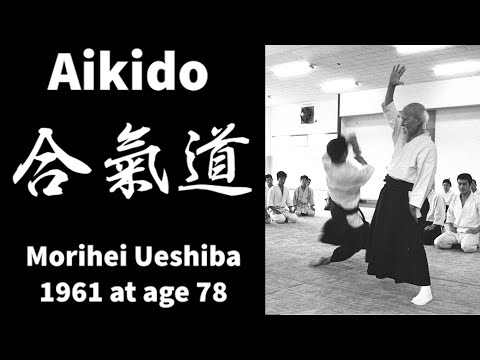
Aikido's Essence: Analyzing O'Sensei Ueshiba's 1961 Masterclass

Introduction: A Glimpse into the Soul of Budo

This rare 1961 footage, capturing a 78-year-old Morihei Ueshiba, the revered founder of Aikido, is far more than just a martial arts demonstration. It's a profound window into the very essence of Budo, a concept that transcends mere physical combat. Many today, particularly those drawn to the explosive dynamism of MMA or the brutal efficiency of Kyokushin Karate, might question the relevance of Aikido's fluid movements. Does its emphasis on blending and redirection hold water in a world that often values brute force? Let me tell you, this video is the answer. It's a masterclass in principles that are eternally valid, not just for the dojo, but for life itself. We will dissect this gem, exploring Ueshiba's techniques, his philosophy, and the enduring legacy of Budo.

Ueshiba in Action: The Art of Blending and Redirecting

Watching Ueshiba Sensei at this advanced age is awe-inspiring. His movements, while perhaps not possessing the raw power of a younger man, are imbued with an almost supernatural grace and precision. The documentary showcases his mastery of Aikido techniques – the effortless throws, the seemingly gentle yet devastating joint locks. He doesn't meet force with force; instead, he becomes one with his attacker's energy, subtly redirecting their momentum. This is the core of Aikido, and it's a principle that many arts, even the fiercely competitive BJJ or Judo, can learn from. The seemingly passive nature of his defense is, in reality, a highly active and intelligent application of physics and timing. He demonstrates that true strength lies not in overpowering an opponent, but in understanding and harmonizing with their movements. Have you ever sparred with someone who just seems to *flow* with your attacks, nullifying them before they even land? That's the echo of Ueshiba Sensei's teaching.
"The true meaning of martial arts is to unify the world." - Morihei Ueshiba

The Philosophy of Aikido: Harmony, Compassion, and Unity

Beyond the physical application, Ueshiba Sensei's words in this documentary reveal a philosophy that is both deeply spiritual and remarkably practical. He speaks of Aikido not as a means of destruction, but as a path to reconciliation. Harmony, balance, and compassion are not mere buzzwords here; they are the foundational pillars of his art. This stands in stark contrast to some of the more combative depictions of martial arts in popular culture, where violence is often glorified without consequence. Ueshiba's vision is one of connection, of resolving conflict not through aggression, but through understanding and empathy. It’s a message that resonates even more powerfully today, in our often fragmented and contentious world. This philosophy is the very heart of BUDO, the "Way of the Warrior," which demands not just martial prowess but moral integrity.

Budo: More Than Just Fighting

The term Budo itself is crucial here. It's not simply "martial arts" in the Western sense. It encompasses the entire way of life, the philosophy of the warrior, drawing heavily from principles like Bushido. This means more than just mastering techniques for a fight. It's about self-cultivation, rigorous discipline, and unwavering honor. Ueshiba Sensei embodies this perfectly. His practice was a lifelong dedication to refining not just his body, but his mind and spirit. The documentary offers a fleeting glimpse, but it's enough to understand that for masters like him, the training never truly ends. It's a constant pursuit of self-improvement, a journey that shapes one's character in profound ways.
"The martial way is a thing of daily practice. It is a continuous process of refinement. The master is simply a student who never quit." - Attributed to various martial arts masters

Training and Self-Cultivation: The Path to Inner Peace

The practice of martial arts, as exemplified by Ueshiba's Aikido, is a powerful tool for inner growth. It offers a structured path to control one's ego, to confront and overcome fear and anger, and to cultivate a deep sense of inner peace. This isn't just about learning to defend yourself physically; it's about building mental resilience. The physical demands – improving fitness, flexibility, and coordination – are significant, but the mental benefits are arguably even greater. In a world rife with stress and anxiety, the discipline and focus required in martial arts training provide an invaluable sanctuary. It's a lifelong pursuit, a journey of personal development that extends far beyond the dojo mats. The principles learned in Karate, Judo, or Aikido can positively impact every facet of life.

Veredicto del Sensei: A Timeless Testament

This 1961 documentary is not just a historical artifact; it's a living testament to the enduring power of Budo. Ueshiba Sensei, even at 78, displays a level of mastery that transcends time and style. While the martial arts landscape has evolved dramatically, with hyper-realistic sports like MMA and UFC capturing global attention, the core principles demonstrated here remain vital. The emphasis on harmony, respect, and self-cultivation is a counterbalance to the often aggressive narratives surrounding combat sports. This film is essential viewing for anyone who seeks a deeper understanding of martial arts, not just as a means of fighting, but as a path to becoming a better human being. Rating: 10/10 Cinturones Negros en Sabiduría y Maestría.

Essential Equipment for Your Training

To embark on your own martial arts journey, whether it's Aikido, Karate, Judo, or any other discipline, the right equipment is essential. At BYAM Budo y Artes Marciales, we understand the needs of practitioners at all levels.
  • Gi (Uniforme): A durable, comfortable Gi is fundamental. For arts like Judo and Aikido, a heavier weave might be preferred for grip resistance.
  • Protective Gear: Depending on your style, consider sparring headgear, mouthguards, and shin guards for safe combat training.
  • Training Mats (Tatami): Essential for safe practice of throws and falls, especially in arts like Judo and Aikido.
  • Training Weapons: For specific disciplines, wooden bokken (swords) or jo (staffs) are necessary.
Investing in quality gear enhances your training experience and ensures safety. Explore our range of Martial Arts Merchandise to find what you need.

Frequently Asked Questions

  • What is Budo? Budo is a Japanese term that refers to the systematic practice of martial arts, emphasizing not only combat techniques but also spiritual and moral development.
  • Is Aikido effective for self-defense? Yes, Aikido's principles of blending, redirection, and using an attacker's momentum can be highly effective for self-defense, though its effectiveness in highly aggressive scenarios is a subject of ongoing debate.
  • What is the difference between Budo and Bushido? Bushido is the code of honor and conduct of the samurai warrior class, while Budo is the broader term encompassing the practices and philosophies of martial arts derived from that warrior tradition.
  • How can martial arts training improve mental health? Through discipline, focus, stress reduction techniques, and the cultivation of inner peace and self-control.

For a Deeper Dive into Your Path

Reflexión del Sensei: Tu Próximo Paso

Ueshiba Sensei demonstrated that true mastery lies in harmonization, not domination. In a world that often rewards aggression and competition, can you find the strength in yielding? Can you apply the principles of blending and redirecting not just against a physical opponent, but against the challenges and conflicts of your daily life? The video is a lesson; your response to its message is the application. ```json { "@context": "https://schema.org", "@type": "FAQPage", "mainEntity": [ { "@type": "Question", "name": "What is Budo?", "acceptedAnswer": { "@type": "Answer", "text": "Budo is a Japanese term that refers to the systematic practice of martial arts, emphasizing not only combat techniques but also spiritual and moral development." } }, { "@type": "Question", "name": "Is Aikido effective for self-defense?", "acceptedAnswer": { "@type": "Answer", "text": "Yes, Aikido's principles of blending, redirection, and using an attacker's momentum can be highly effective for self-defense, though its effectiveness in highly aggressive scenarios is a subject of ongoing debate." } }, { "@type": "Question", "name": "What is the difference between Budo and Bushido?", "acceptedAnswer": { "@type": "Answer", "text": "Bushido is the code of honor and conduct of the samurai warrior class, while Budo is the broader term encompassing the practices and philosophies of martial arts derived from that warrior tradition." } }, { "@type": "Question", "name": "How can martial arts training improve mental health?", "acceptedAnswer": { "@type": "Answer", "text": "Through discipline, focus, stress reduction techniques, and the cultivation of inner peace and self-control." } } ] }

Morihei Ueshiba O Sensei's 1957 Aikido Demonstration: A Masterclass in Harmony and Unseen Power

The Founder's Legacy

For centuries, the intricate tapestry of martial arts has woven itself into the fabric of human culture, offering not just combat prowess but profound philosophical insights. These disciplines, honed through generations, continue to inspire and shape individuals worldwide. Among the most revered is Aikido, a uniquely Japanese martial art born from the vision and mastery of Morihei Ueshiba, revered by practitioners as O Sensei.

Today, we delve into a rare treasure: a 1957 demonstration video featuring the founder himself. This is not merely a historical artifact; it's a living lesson. We will dissect the art of Aikido, its core philosophy of harmony, and the transformative benefits that await those who dedicate themselves to its practice. Prepare to witness the embodiment of principles that transcend mere physical conflict.

A Glimpse into the Past: The 1957 Demonstration

The video from 1957 is an invaluable window into the very soul of Aikido, as expressed through the founder's movements. It showcases Morihei Ueshiba O Sensei demonstrating techniques that define the art's essence. Observe the fluidity, the economy of motion, and the palpable control. This is not about brute force; it's about redirecting an opponent's power with precision and minimal effort. The demonstration stands as a powerful testament to the beauty, effectiveness, and spiritual depth of Aikido.

In this rare footage, O Sensei doesn't just perform techniques; he embodies them. You'll see the principles of blending, evasion, and redirection executed with a mastery that few have achieved since. It’s a visual symphony of conflict resolution, demonstrating how to neutralize an attack not by meeting force with force, but by becoming one with the attacker's energy.

The Essence of Aikido: Beyond Conflict

At its heart, Aikido is a martial art dedicated to the principle of harmony – Wa (和). Practitioners strive not to dominate or destroy an opponent, but to harmonize with their energy and movements. The objective is to neutralize an attack by skillfully guiding the attacker's force, often leading them into a state of imbalance from which they can be controlled or subdued without causing undue harm.

This philosophy extends far beyond the dojo. The ultimate aim of Aikido is to achieve harmony not only with oneself and one's opponent but with the universe itself. It's a path of self-discovery and mutual respect, where conflict is resolved not through violence, but through understanding and integration. O Sensei often spoke of protecting oneself while simultaneously safeguarding the attacker's well-being, a concept that radically redefines the nature of martial engagement.

"The Art of Peace is a game that changes the way you see the world. It is an endeavor to achieve harmony with the world." - Morihei Ueshiba O Sensei

Deconstructing O Sensei's Art

Examining O Sensei's movements in the 1957 video reveals techniques rooted in deep understanding of biomechanics and energy dynamics. Notice the subtle shifts in weight, the precise angles of entry, and the circular motions that absorb and redirect an attacker's momentum. Techniques like Irimi (entering) and Tenkan (turning/pivoting) are executed with seamless grace, demonstrating how to move *with* the attack rather than against it.

The effectiveness lies in the principle of Aiki (合気) – literally, "joining energy" or "harmony energy." This is not simply about physical leverage; it's about understanding and manipulating the attacker's intention and kinetic energy. Observe how O Sensei uses minimal physical force, often relying on timing, positioning, and the attacker's own commitment to their movement to achieve a decisive outcome. This mastery is what distinguishes true Aikido from mere physical combat.

More Than Just Movement: The Holistic Gains

The practice of Aikido offers a profound spectrum of benefits, extending far beyond the physical realm. Physically, it enhances flexibility, improves balance, and builds overall conditioning, engaging the entire body in a coordinated and dynamic manner. It sharpens coordination and reaction times, essential for both self-defense and daily life.

Mentally and spiritually, Aikido is a powerful tool for personal development. It cultivates discipline, sharpens focus, and instills a sense of calmness under pressure. Practitioners learn to manage their emotions, channeling their energy constructively. This journey fosters inner peace, boosts confidence, and builds mental resilience, equipping individuals to face life's challenges with greater equanimity.

Cultivating Harmony: Essential Aikido Drills

To truly internalize the principles demonstrated by O Sensei, consistent practice is key. Here are fundamental exercises to develop your Aikido foundation:

  1. Basic Body Movement Drills: Practice Tai Sabaki (body movement) in isolation. Focus on natural, efficient footwork, maintaining a stable yet relaxed posture. Execute forward, backward, and lateral movements, as well as pivoting actions (Tenkan), ensuring your center remains grounded.
  2. Ukemi Practice: Learning to receive techniques safely is paramount. Practice Uke Nagashi (receiving and deflecting) and basic rolls (Mawari Ukemi). Focus on dissipating energy upon impact and recovering quickly.
  3. Irimi & Tenkan Combinations: Practice entering (Irimi) and turning (Tenkan) motions in response to imaginary attacks or with a training partner. Focus on the seamless transition between these core movements.
  4. Ki Breathing Exercises: Engage in Kokyu Ho (breathing methods). These exercises, often done seated, teach breath control and the development of internal energy (Ki), which is fundamental to Aikido's power.
  5. Solo Weapon Practice (if applicable): For styles that incorporate Jo (staff) or Bokken (wooden sword), practice basic strikes, blocks, and forms (Kata) to refine timing, distance, and precision.

Remember, the essence is not just performing the movements but understanding the principles behind them. Seek qualified instruction to ensure proper technique and safety.

Equipping Your Journey: Essential Aikido Gear

At BYAM Budo y Artes Marciales, we understand that the right equipment can significantly enhance your training experience. We are passionate about supporting practitioners on their journey towards inner harmony and physical excellence.

  • Aikido Uniforms (Gi): A durable, well-fitting uniform is essential for comfort and freedom of movement. Look for reinforced stitching for longevity, especially in the pants and collar.
  • Training Weapons: For styles that practice with them, a quality Bokken (wooden sword), Jo (staff), or Tanto (knife) is crucial. Ensure they are balanced and free of splinters.
  • Zori or Martial Arts Footwear: Appropriate footwear for the dojo floor aids in footwork and hygiene.
  • Practice Mats (if training at home): Interlocking mats can provide cushioning and safety for solo practice of falling techniques.

We carefully select our merchandise, working only with trusted suppliers who share our commitment to quality and the spirit of martial arts. Enhance your practice with gear designed for performance and durability.

Frequently Asked Questions

What is the fundamental principle of Aikido?

The fundamental principle is harmony (Wa), which involves blending with an opponent's energy and movements to neutralize an attack without causing unnecessary harm.

Is Aikido effective for self-defense?

Yes, Aikido provides practical self-defense skills by teaching practitioners to control an attacker's balance and momentum, often using joint locks and throws derived from the attacker's own force.

Do I need to be strong to practice Aikido?

No, Aikido emphasizes technique, timing, and leverage over brute strength. This makes it accessible and effective for individuals of all ages and physical builds.

What are the main differences between Aikido and Judo?

While both are Japanese martial arts that involve throws, Aikido focuses on redirecting an opponent's energy and blending, often with minimal physical contact until the final technique. Judo traditionally involves more direct gripping and emphasizes takedowns and grappling on the ground.

Deepen Your Understanding

To continue your exploration into the profound world of martial arts and the philosophy of Budo, we recommend the following resources:

"True victory is victory over oneself." - Morihei Ueshiba O Sensei

The 1957 demonstration by Morihei Ueshiba O Sensei is more than just footage; it's a blueprint for a way of life. Aikido offers a path to self-mastery, conflict resolution, and profound inner peace. Its techniques are elegant, its philosophy is deep, and its benefits are transformative.

At BYAM Budo y Artes Marciales, we are dedicated to fostering this journey. We believe in providing practitioners with the highest quality tools to support their training and growth. Visit our website to explore our curated selection of Aikido merchandise and join a community dedicated to the pursuit of martial excellence.

Sensei's Reflection: Your Next Step

O Sensei’s art embodies the ultimate principle: finding strength in yielding, power in harmony. When faced with an unyielding force, do you meet it head-on, or do you learn to flow around it, redirecting its energy with masterful subtlety? Consider this: In moments of personal conflict or challenge, are you an unbending oak, or a bamboo swaying in the wind? How can you apply the principle of Aiki – blending and harmonizing – not just in physical combat, but in the everyday battles of life?

``` ```json { "@context": "https://schema.org", "@type": "FAQPage", "mainEntity": [ { "@type": "Question", "name": "What is the fundamental principle of Aikido?", "acceptedAnswer": { "@type": "Answer", "text": "The fundamental principle is harmony (Wa), which involves blending with an opponent's energy and movements to neutralize an attack without causing unnecessary harm." } }, { "@type": "Question", "name": "Is Aikido effective for self-defense?", "acceptedAnswer": { "@type": "Answer", "text": "Yes, Aikido provides practical self-defense skills by teaching practitioners to control an attacker's balance and momentum, often using joint locks and throws derived from the attacker's own force." } }, { "@type": "Question", "name": "Do I need to be strong to practice Aikido?", "acceptedAnswer": { "@type": "Answer", "text": "No, Aikido emphasizes technique, timing, and leverage over brute strength. This makes it accessible and effective for individuals of all ages and physical builds." } }, { "@type": "Question", "name": "What are the main differences between Aikido and Judo?", "acceptedAnswer": { "@type": "Answer", "text": "While both are Japanese martial arts that involve throws, Aikido focuses on redirecting an opponent's energy and blending, often with minimal physical contact until the final technique. Judo traditionally involves more direct gripping and emphasizes takedowns and grappling on the ground." } } ] }

Judo: More Than Just Throws – The Unsung Hero of Practical Self-Defense

Let's confront a misconception that festers in the minds of many: the notion that Judo, stripped of explosive kicks and thunderous strikes, is somehow less effective for genuine self-defense. This is a flawed perspective, born from a superficial understanding of combat. As a seasoned practitioner and critic of martial arts and their cinematic portrayals, I can tell you that beneath its graceful throws and intricate holds lies a profound system forged for real-world application. Forget the flashy theatrics; we're talking about the cold, hard science of controlling an adversary.

The Grappling Advantage: Why Throws Trump Strikes in Close Quarters

Judo, born from the brilliant mind of Jigoro Kano, is often misunderstood. Many dismiss it as a "sport" art, lacking the "killer instinct" they associate with self-defense. This is a critical error. Judo's power lies precisely in its focus on grappling, throws, joint locks, and chokes. In the chaotic reality of a street encounter, distance is a luxury you rarely have. A sudden rush, a grab, and you're in the clinch. This is where Judo excels. While a punch might be blocked, a well-executed Osoto Gari (Major Outer Reaping) or Seoi Nage (Shoulder Throw) can incapacitate an attacker by exploiting gravity and leverage. It's about control, not just damage. Unlike striking arts where a missed blow can leave you vulnerable, Judo techniques aim for a swift resolution, often by taking the fight to the ground or immobilizing the opponent.

Consider the physics: using an opponent's weight and momentum against them is far more efficient than generating your own force against resistance. This is the essence of Judo's efficacy. It teaches you to dismantle an attack by controlling the attacker's base and balance. This is not mere sport; it's applied biomechanics honed over decades.

"The ultimate aim of Karate is not victory or defeat, but the perfection of the character of its participants." - Gichin Funakoshi. While this speaks to Karate, the principle of self-perfection through martial practice is universal. Judo, too, seeks this refinement, but its path is through control and leverage.

Beyond Competition: Judo's Street-Smart Philosophy

A common criticism leveled against many traditional martial arts is their perceived detachment from real combat scenarios. However, Judo, despite its competitive nature, retains a strong foundation in Kano's original intent: "Seiryoku Zen'yo" (Maximum Efficiency, Minimum Effort) and "Jita Kyoei" (Mutual Welfare and Benefit). This philosophy translates directly to self-defense. It's not about inflicting gratuitous harm, but about neutralizing a threat with the least amount of force necessary. Judo practitioners are trained to read an opponent's movements, anticipate their intent, and exploit the slightest imbalance.

Think about it: if an aggressor charges, your instinct shouldn't be to stand and trade blows, but to redirect that energy. A Judo throw can turn an attacker's forward momentum into a debilitating fall. Joint locks like the Juji Gatame (Armbar) or chokeholds like the Hadaka Jime (Rear Naked Choke, though less emphasized in modern sport Judo than in BJJ or self-defense contexts) can subdue an attacker quickly and efficiently, without resorting to strikes that might escalate the violence unnecessarily or lead to legal repercussions.

This emphasis on practical control makes Judo a powerful tool for self-protection. It teaches you to manage the distance, break grips, and, when necessary, take the fight to a controlled ground environment where size and strength disadvantages can be significantly mitigated.

The Universal Warrior: Judo for Every Body

One of Judo's most remarkable strengths, often overlooked in discussions about self-defense efficacy, is its profound adaptability. In a world obsessed with the archetype of the hulking fighter, Judo reminds us that effective self-defense is not solely dependent on brute strength. Jigoro Kano designed Judo to be accessible to everyone, regardless of age, gender, or physical condition. This is a crucial aspect often missing in discussions comparing martial arts for self-defense. Can a smaller individual effectively defend against a larger, stronger assailant?

With Judo, the answer is a resounding yes. Techniques are built upon principles of leverage, timing, and balance. A smaller practitioner can learn to use their opponent's size and weight against them, executing throws and pins that would be impossible through sheer strength alone. This principle is fundamental and can be seen in sports like Judo and BJJ, where technique consistently triumphs over raw power.

Whether you are a young student learning discipline or a senior seeking to maintain physical and mental acuity, Judo offers a path. It builds functional strength, cardiovascular endurance, and flexibility – all essential components of effective self-defense. Unlike some arts that demand extreme athleticism from the outset, Judo's progression is structured to cultivate these attributes progressively.

Building Inner Strength: The Psychological Edge of Judo

Beyond the physical techniques, Judo cultivates a powerful inner fortitude. The rigorous training, the discipline required to master complex movements, and the constant challenge of facing stronger opponents all forge a resilient mindset. This translates directly into self-defense confidence. A person who has trained diligently in Judo is not only physically capable but also mentally prepared.

This is where the concept of Ki (or Qi) subtly plays a role, not in a mystical sense, but in understanding body mechanics and presence. A confident stance, controlled breathing, and an aware demeanor can often deter potential aggressors. Judo teaches practitioners to be aware of their surroundings, to project an aura of control rather than fear. This heightened awareness, coupled with the knowledge that you possess the skills to defend yourself if necessary, significantly reduces vulnerability.

The journey of learning Judo is a constant lesson in overcoming limitations. Each successful throw, each successfully applied submission, builds self-efficacy. This isn't about aggression; it's about self-mastery, a core tenet of BUDO. The ability to remain calm under pressure, to think clearly when physically challenged, is invaluable in any high-stress situation, especially a physical confrontation.

The Art of the Encounter: Timing, Boundaries, and Control

Effective self-defense is not just about knowing techniques; it's about understanding when and how to apply them. Judo instills a keen sense of timing and an understanding of personal space and boundaries. In a confrontation, the ability to read the aggressor's intent and react at the opportune moment is paramount. Judo training sharpens this intuitive sense.

You learn to recognize the signs of an impending attack, the subtle shifts in weight, the aggressive posture. This allows you to act preemptively, perhaps by establishing a dominant grip or initiating a controlled throw before the attacker can fully commit. Furthermore, Judo teaches the concept of establishing and maintaining control. Whether through pins on the ground or sweeping throws, the goal is to neutralize the threat and regain safety.

Practicing these scenarios in a safe, controlled environment like a dojo allows individuals to develop the reflexes and decision-making skills needed for real-world application. It's about building muscle memory and mental fortitude so that when faced with a genuine threat, your trained response takes over, ensuring you can defend yourself effectively and with appropriate force.

Veredict of the Sensei: Is Judo King of Self-Defense?

Let me be unequivocal: Judo is an exceptional martial art for practical self-defense. While arts like Combat Sports, MMA, or Krav Maga might offer more direct, immediate "combat" applications, Judo's strength lies in its ability to control, incapacitate, and neutralize threats through leverage and technique, often without causing severe, potentially lethal, injury. Its emphasis on taking an opponent down and controlling them on the ground is incredibly effective. Is it the *only* effective art? Absolutely not. But is it a foundational and highly potent system for self-protection? Without a doubt. It teaches discipline, respect, physical conditioning, and most importantly, how to manage conflict through superior technique and strategy. For those seeking a well-rounded, adaptable, and highly effective self-defense system, Judo stands as a powerful choice.

Essential Gear for Your Judo Training

To embark on your Judo journey and train effectively, certain equipment is essential. While the emphasis is on technique, proper attire and safety gear will enhance your learning and protect you during practice.

  • Judogi (Uniform): A durable, heavy-duty cotton uniform specifically designed for Judo. Look for double-weave or reinforced stitching, especially around the lapels and seams, to withstand the rigors of grappling. Brands known for quality Karate and Judo uniforms are a good starting point.
  • White Belt: Initially, a standard white belt will signify your beginner status. As you progress, you will earn colored belts denoting your rank.
  • Optional (for conditioning): While not strictly required for basic Judo, if you incorporate conditioning exercises, consider items like jump ropes for cardiovascular fitness or resistance bands for strength training.

Training Guide: Mastering the Uchi-mata

The Uchi-mata (Inner Thigh Throw) is a dynamic and powerful throwing technique in Judo. It requires timing, balance, and coordinated movement. Here's a basic breakdown:

  1. Grip: Establish a strong grip on your opponent's lapel and sleeve.
  2. Entry: Step forward with your right foot, angling your body towards your opponent. As you do, pull them slightly forward and off-balance.
  3. Pivot & Lift: Pivot on your right foot, bringing your left foot to nearly touch your opponent's right foot. Simultaneously, use your right leg (your "pivot leg") to lift your opponent's right leg high, hooking their inner thigh.
  4. Rotation & Throw: Rotate your body forcefully to your left, driving with your hips and pulling with your arms. Your lifted leg acts as a lever. The combined action of the lift, rotation, and pull will send your opponent over your thigh and to the mat.
  5. Follow-Through: Maintain control as they fall and follow through to secure a dominant position.

Note: This is a simplified explanation. Proper execution requires consistent practice under a qualified instructor to develop the necessary coordination, balance, and power transfer. Seeking out instructional videos or specialized Martial Arts Training resources can be beneficial.

Frequently Asked Questions

Q1: Is Judo effective for self-defense against multiple attackers?
A: While Judo provides excellent tools for neutralizing one attacker, facing multiple assailants is extremely dangerous. Judo's strength is in control and takedowns. In a multi-attacker scenario, the priority is often escape, and Judo skills can help you break free or create space, but it's not designed as a primary defense against overwhelming numbers.

Q2: Do I need to be strong to practice Judo?
A: No. Judo's core principles of leverage and timing allow smaller, less physically strong individuals to effectively execute techniques against larger opponents. Strength can be developed through training, but it's not a prerequisite.

Q3: How long does it take to become proficient in Judo for self-defense?
A: Proficiency is a lifelong pursuit. However, with consistent training (2-3 times per week), you can gain a solid understanding of fundamental Judo self-defense techniques within 1-2 years. Real mastery takes much longer.

Q4: Is Judo safe to practice?
A: Generally, yes. Judo has a lower injury rate than many contact sports when practiced under qualified instruction. The emphasis on control and safety in training minimizes risk. However, like any physical activity, injuries can occur.

To Deepen Your Journey

Reflexión del Sensei: Tu Próximo Paso

Judo offers a path to practical self-defense, yes, but more profoundly, it offers a path to understanding the interconnectedness of effort, balance, and control – principles that extend far beyond the dojo. My question to you is this: In a world that often rewards brute force and immediate gratification, are you willing to embrace the subtle, yet immensely powerful, art of Judo, not just for self-defense, but for the cultivation of your character?