Showing posts sorted by date for query Morihei Ueshiba. Sort by relevance Show all posts

Okinawan Karate: More Than Just Strikes - A Deep Dive into the Warrior's Path

In the vast universe of martial arts, the profound legacy of Japan stretches its influence far beyond the iconic shores of Okinawan Karate. While Karate stands as a titan, it is but one star in a constellation of disciplines that have ignited passion in enthusiasts across the globe. Alongside the thunderous power of Okinawan Karate, we find the yielding strength of Judo, the circular grace of Aikido, and the disciplined precision of Kendo. What binds these diverse arts? A common thread, as potent as any physical technique: their unwavering emphasis on spiritual development. Practitioners are not merely acquiring the tools of combat; they are embarking on a quest to sculpt better individuals, refined souls. Join us, students, on a journey through the profound philosophies and rigorous practices that forge the very essence of the martial arts world.

The Legacy Beyond Okinawa

The influence of Japanese martial arts is undeniable, a testament to centuries of refinement and philosophical depth. Many practitioners begin their journey with a single art, perhaps drawn by the dynamic movements of Karate or the strategic throws of Judo. However, a true appreciation for Budo, the "Way of Martial Arts," reveals a rich tapestry of interconnected principles.

The Way of the Warrior: A Life Philosophy

Is martial arts merely about fighting? A dangerous misconception, and one that undermines the very soul of Budo. True martial arts encompasses far more than mere physical combat; it is a comprehensive way of life. The real essence lies not in the blow landed, but in the continuous pursuit of self-improvement, the cultivation of unwavering character, and the profound journey of spiritual growth. The ancient samurai warriors, masters of their craft and their minds, understood this interconnectedness intimately. Their training was a holistic endeavor, seeking the perfect harmony of mind, body, and spirit. This timeless philosophy continues to resonate, shaping the teachings and the very spirit of various martial arts disciplines today.

"The warrior is one who digests his experiences and is not discouraged by them." - Miyamoto Musashi, The Book of Five Rings

Okinawan Karate: A Legacy Unparalleled

Among the most iconic martial arts to emerge from Japan, Okinawan Karate stands with a legacy that traces its proud roots back to the Ryukyu Kingdom. Renowned for its emphasis on explosive, powerful strikes delivered with fluid, almost dance-like movements, this discipline embodies the indomitable spirit and resilience of the Okinawan people. Practitioners of Karate do not merely acquire formidable self-defense skills; they cultivate profound virtues: unwavering discipline, deep-seated respect for their peers and instructors, and the tenacious spirit of perseverance in the face of adversity.

The sheer effectiveness of Karate's striking techniques, from the devastating Uraken (reverse punch) to the precise Gedan Barai (downward block), is legendary. Yet, beneath the surface of these physical applications lies a deep philosophical wellspring. The rigorous repetition of kata—prearranged forms that simulate combat—is not just muscle memory training; it is a meditative practice, a way to ingrain principles of balance, timing, and intention.

The Spiritual Essence of Martial Arts

In the disciplined world of martial arts, physical techniques are inextricably intertwined with deep, foundational spiritual principles. Ancient traditions, notably the profound philosophies of Zen Buddhism and the naturalistic reverence of Shintoism, have deeply influenced the philosophical underpinnings of these arts. Practices such as mindful meditation (Zazen), controlled breathing exercises (Kokyu ho), and pervasive mindfulness are not mere add-ons; they are integral components of many martial arts training regimens. These practices are the crucible in which practitioners forge mental fortitude, sharpen unwavering focus, and cultivate profound self-awareness.

Consider the concept of Mushin, the "no-mind" state often sought in Karate and other arts. It is not about being empty-headed, but about achieving a state of spontaneous, uninhibited action, free from conscious thought or fear. This is the spiritual essence—the ability to react instinctively and effectively under pressure. This state is cultivated through thousands of hours of dedicated practice and introspective training.

Unveiling the "Ways of the Warrior"

Beyond the striking prowess of Okinawan Karate, a pantheon of other esteemed "ways of the warrior" have garnered international acclaim and devoted followings. Judo, masterfully originating from Jigoro Kano's vision, champions the principle of "Seiryoku Zenyo" – maximum efficiency with minimal effort. It teaches us how to use an opponent's strength and momentum against them, a profound lesson in leverage and strategy.

Then there is Aikido, the art of peaceful harmony, founded by the legendary Morihei Ueshiba. Aikido’s philosophy centers on blending with and redirecting an opponent's energy, neutralizing aggression without causing undue harm. It is a testament to the principle that true strength lies not in brute force, but in adaptability and control.

And we cannot forget Kendo, the "way of the sword." This discipline meticulously preserves the spirit and techniques of the ancient samurai through rigorous, disciplined training, steeped in tradition and unwavering respect for the weapon and the opponent.

Martial Arts as a Path to Personal Growth

To engage with martial arts is to embark on a profoundly transformative journey. It is an experience that molds individuals, forging them into disciplined, confident, and compassionate human beings. The relentless pursuit of perfection in technique, coupled with the deep commitment to self-improvement, transcends the confines of the dojo and permeates every aspect of a practitioner's life. Martial arts offer a holistic approach to personal development, instilling invaluable virtues that positively influence relationships, career paths, and overall well-being.

The lessons learned on the mat – patience, perseverance, humility – are directly applicable to challenges faced off the mat. Facing a difficult boss? Remember the patience required to master a complex kata. Dealing with a personal setback? Recall the resilience built from countless sparring sessions and the commitment to rise after being thrown. This is the true power of Budo.

Building a Thriving Martial Arts Community

Martial arts not only bestow invaluable physical and mental benefits upon their practitioners but also cultivate a powerful sense of camaraderie and belonging. By training together, side-by-side, artists develop deep, enduring bonds, sharing hard-won experiences and offering unwavering support to one another on their individual paths. This interconnectedness fosters a vibrant, dynamic community where knowledge, wisdom, and mutual respect are continuously exchanged, enriching the journey for every single person involved.

A strong martial arts community provides a crucial support system. In moments of doubt or struggle, the encouragement of fellow practitioners can be the difference between quitting and pushing through. Sharing insights on techniques, discussing philosophical quandaries, and celebrating each other's progress builds a collective strength that empowers everyone.

Unlocking the Warrior Within

Embracing the path of martial arts is, in essence, an act of unlocking the latent, often untapped, potential residing within each individual. Through unwavering dedication, relentless perseverance, and an unyielding commitment to lifelong learning, practitioners embark on a profoundly transformative journey that extends far beyond mere physical techniques. The true, potent power lies in the awakening of the warrior within—an individual who embodies unwavering discipline, profound humility, and unshakeable determination in all endeavors.

Veredict of the Sensei: Does Okinawan Karate Live Up to the Hype?

This exploration into Okinawan Karate and its place within the broader martial arts landscape reveals an art form steeped in history, discipline, and profound philosophy. The documentary, while not explicitly reviewed here, sets the stage for understanding Karate's global impact. From the rigorous physicality to the mental fortitude it cultivates, Karate offers a complete system for self-development. However, like all martial arts, its true value lies in the practitioner's commitment to its underlying principles.

Rating: Cinturón Negro en Profundidad Filosófica

Essential Equipment for Your Training

While the spirit of the warrior can be honed with minimal equipment, certain items can significantly enhance your training experience and safety, particularly for Okinawan Karate and related disciplines:

  • Karate Gi: Look for a durable, comfortable Karate Gi made from cotton or a poly-cotton blend. A heavier gi is often preferred for competitive Karate and provides better durability for intense training.
  • Karate Belt: A sturdy Karate belt (Obi) is essential. Start with a white belt and progress through the ranks as you master techniques and demonstrate understanding of the principles.
  • Mouthguard: For sparring sessions (kumite), a well-fitting mouthguard is crucial to protect your teeth and jaw.
  • Groin Protector: Safety first. A groin protector is highly recommended for all male practitioners engaging in sparring.
  • Optional: Karate Training Mitts/Pads: For partner drills, training mitts and pads can be useful for practicing strikes safely and effectively.

For those interested in Judo, a robust Judo Gi (often heavier and designed for gripping) is essential. For Kendo, specialized protective gear and a bamboo sword (Shinai) are necessary.

Frequently Asked Questions

Is Okinawan Karate effective for self-defense?
Yes, Okinawan Karate, particularly styles that emphasize practical application and sparring, can be very effective for self-defense. Its focus on powerful strikes, blocks, and evasive movements provides a solid foundation.
What is the main difference between Karate and Judo?
Karate primarily focuses on striking techniques (punches, kicks, blocks), while Judo emphasizes grappling, throwing, and submission techniques. Both share a common emphasis on discipline and character development.
Can beginners start with any martial art?
Absolutely. Most martial arts schools are welcoming to beginners and offer foundational classes. The key is to find an art and an instructor that resonate with your personal goals and learning style.
How important is meditation in martial arts?
Meditation, or similar mindfulness practices, is highly important in many martial arts as it helps develop focus, emotional control, mental clarity, and a deeper understanding of oneself, which are all crucial for effective technique and personal growth.

Deepen Your Journey

To truly grasp the breadth and depth of the martial path, I encourage you to explore these related areas:

Reflection of the Sensei: Your Next Step

We have traversed the landscape of Okinawan Karate and its kin, glimpsing the profound philosophy that underpins these ancient disciplines. We've seen that the true battle is not against an external foe, but against the limitations within oneself. Now, I pose this question to you, my students:

When you bow at the end of training, are you bowing to your opponent, your instructor, or are you bowing to the improved version of yourself that you are striving to become? What does that bow truly signify in your life outside the dojo?

Ponder this. Discuss it. Let it fuel your practice. The journey of the warrior is a continuous one, and the deepest lessons are often found in the quiet moments of reflection.

``` ```json { "@context": "https://schema.org", "@type": "FAQPage", "mainEntity": [ { "@type": "Question", "name": "Is Okinawan Karate effective for self-defense?", "acceptedAnswer": { "@type": "Answer", "text": "Yes, Okinawan Karate, particularly styles that emphasize practical application and sparring, can be very effective for self-defense. Its focus on powerful strikes, blocks, and evasive movements provides a solid foundation." } }, { "@type": "Question", "name": "What is the main difference between Karate and Judo?", "acceptedAnswer": { "@type": "Answer", "text": "Karate primarily focuses on striking techniques (punches, kicks, blocks), while Judo emphasizes grappling, throwing, and submission techniques. Both share a common emphasis on discipline and character development." } }, { "@type": "Question", "name": "Can beginners start with any martial art?", "acceptedAnswer": { "@type": "Answer", "text": "Absolutely. Most martial arts schools are welcoming to beginners and offer foundational classes. The key is to find an art and an instructor that resonate with your personal goals and learning style." } }, { "@type": "Question", "name": "How important is meditation in martial arts?", "acceptedAnswer": { "@type": "Answer", "text": "Meditation, or similar mindfulness practices, is highly important in many martial arts as it helps develop focus, emotional control, mental clarity, and a deeper understanding of oneself, which are all crucial for effective technique and personal growth." } } ] }
The Divine Techniques of Morihei Ueshiba: Aikido's Pinnacle or a Philosopher's Dream?

The Enigma of Aikido's Founder

Aikido. The very name conjures images of graceful, seemingly effortless movements that neutralize aggression without inflicting unnecessary harm. It's a martial art that has captivated practitioners worldwide, promising not just self-defense, but a path toward inner peace and universal harmony. But how much of this ideal is rooted in practical application, and how much is a philosophical construct? At its heart stands its founder, O Sensei Morihei Ueshiba, a man whose martial journey spanned decades, culminating in what many consider the zenith of his art: the "divine techniques." But were these techniques truly divine in their efficacy, or merely the sublime expressions of a martial philosopher in his twilight years? Let's dissect this, for the path of Budo is rarely as simple as it appears.
Born in 1883 and passing in 1969, Ueshiba's life was a crucible where the fire of myriad martial arts—including Daito-ryu Aiki-jujutsu, Yagyu Shinkage-ryu, and even tenets from Shintoism and Omoto-kyo—were forged into the unique art of Aikido. His vision transcended mere combat; he aimed to create an art that could protect both oneself and one's attacker, fostering a spirit of reconciliation. This lofty goal, however, inevitably raises questions. Can an art so focused on peace truly stand against the brutal realities of conflict? And what of these celebrated "divine techniques"?

The Twilight Years: Crafting Divine Techniques (1962-1969)

It is during the final seven years of his life, from 1962 to 1969, that O Sensei Morihei Ueshiba is said to have perfected what are now termed the "divine techniques." This period is often viewed as the culmination of his life's work, a time when his understanding of Aikido reached its most profound level. These weren't new styles, but rather refinements and deeper expressions of existing principles, imbued with an almost ethereal quality. These techniques are characterized by their exceptional fluidity, a seamless integration of movement and intention that appears almost magical to the untrained eye. The practitioner seems to flow around an attack, redirecting the aggressor's force with minimal physical exertion. It’s easy to see why the term "divine" was applied. It suggests a level of mastery that transcends the ordinary, a harmony between spirit, mind, and body that few martial artists ever achieve. But let us not be swayed solely by the poetic descriptions. Every martial technique, divine or otherwise, must possess a foundation in practical mechanics. These late-stage techniques, while beautiful, demand an extraordinary level of internalized principles. They are the result of decades of relentless training, a deep understanding of biomechanics, and, crucially, a profound connection to the attacker's intent and energy.

The Essence of Blending: Beyond Mere Self-Defense

At the core of Aikido, and particularly within these "divine techniques," lies the principle of *aiki*—often translated as "joining energy" or "harmony of spirit." This is not about brute force against brute force. Instead, it's about understanding the attacker's momentum, intention, and center of gravity, then subtly guiding them to their own detriment. Ueshiba's genius was in systematizing this into a practical art form. The divine techniques elevate this concept. They are not simply counters; they are demonstrations of how to become one with the attacker's movement. Imagine water flowing around a rock, or wind bending a reed—the Aikidoka, through these techniques, becomes an extension of the attacker's force, not an obstacle. This requires an almost predictive quality, an ability to sense the incoming attack before it fully materializes and to position oneself to redirect it. This is where the philosophical and the practical converge. To achieve this seamless redirection, the practitioner must cultivate a state of *mushin*—a "no-mind" or mind free from ego, fear, and distraction. Without this mental clarity, the subtle adjustments and precise timing required for these techniques become impossible. The divine techniques, therefore, are not just physical movements; they are exercises in mindfulness and spiritual development.
"The Art of Peace is not a weapon or an engine of destruction. It is a means of bringing about reconciliation and harmony, a way to achieve unity with the universe." - Morihei Ueshiba

More Than Movement: Aikido as a Martial Philosophy

O Sensei Ueshiba himself referred to Aikido as a "martial philosophy." This isn't hyperbole; it's central to understanding his creation. While many martial arts focus on the objective of defeating an opponent, Ueshiba's aim was broader: to cultivate a spirit that could resolve conflict without violence, or at least with minimal harm. The ultimate goal was not to win a fight, but to win the peace. The "divine techniques" embody this philosophy. They are designed to neutralize an opponent's aggression by unbalancing them, controlling them, or guiding them to the ground, often leaving them unharmed but incapacitated. This requires an immense amount of control and understanding—control over one's own body and mind, and an understanding of the attacker's biomechanics and psychology. Is this idealism? Perhaps. In the heat of a life-or-death struggle, the refined principles of Aikido might seem like a distant dream. However, the practice itself cultivates attributes that are invaluable in any situation: discipline, awareness, composure under pressure, and a respect for oneself and others. These are the true "divine" aspects of the art, transcending any specific physical movement.

The Question of Effectiveness: Divine Techniques in the Crucible

This is where the debate often ignites. Critics, particularly from the realm of more direct combat sports like MMA or traditional Karate, question the practical applicability of Aikido's higher forms, especially against determined, uncooperative attackers. "Can these flowing movements truly stop a punch or a kick from someone who isn't blending?" they ask. It’s a fair question, and one that O Sensei Ueshiba himself grappled with, albeit from a different perspective. His focus was on creating a *better* way, a way that reflected a more evolved human spirit. The effectiveness of the divine techniques hinges on several factors: the practitioner's skill level, the attacker's compliance (or lack thereof), and the context of the encounter. In a dojo setting, with a willing *uke* (attacker) practicing techniques, the divine movements are undeniably beautiful and effective. They demonstrate profound principles of leverage, timing, and body mechanics. However, translating this into a chaotic street fight is another matter entirely. The sheer commitment to peaceful resolution might be a disadvantage against an adversary intent on causing harm.
"Aikido is not about fighting. It is about resolving conflict without unnecessary harm. It is a path of peace." - Morihei Ueshiba (paraphrased)
Some argue that the core principles of unbalancing and redirecting can be adapted, but the exquisite fluidity of the "divine" forms is most potent when there's a degree of synergy with the attacker. This doesn't negate their value; it simply places them within a specific context. The true test lies not just in execution, but in understanding *when* and *how* to apply these principles.

Mastering the Flow: What it Takes to Execute Ueshiba's Vision

Executing Ueshiba's divine techniques is not a matter of simply memorizing movements. It requires a deep integration of mind, body, and spirit. Here's a breakdown of the essential elements:
  1. Centering and Grounding: The practitioner must establish a stable center (hara) and maintain a strong connection to the ground. This provides the base from which to absorb and redirect force.
  2. Body Structure and Movement: Learn to move as a single unit, utilizing the entire body's power rather than isolated limbs. This involves proper posture, hip rotation, and footwork (*taisabaki*).
  3. Sensing the Attack: Develop the ability to perceive the attacker's intention, energy, and timing. This often comes through extensive practice and sensitivity drills.
  4. Blending and Redirection: Rather than meeting force with force, learn to blend with the attacker's line of movement, becoming an extension of their energy. This allows for effortless redirection.
  5. Timing and Kuzushi: Mastering the art of unbalancing the attacker (*kuzushi*) at the precise moment is critical. This often involves subtle shifts in weight or posture.
  6. Spirit and Intention: Cultivate a calm, focused mind (*mushin*). The intention should always be to neutralize the threat, not to dominate or harm.
  7. Breath Control: Synchronizing breath with movement enhances power, fluidity, and mental clarity.
These are not steps to be ticked off a list; they are principles to be embodied through years of dedicated training. The path to mastering these techniques is long, demanding patience, perseverance, and a willingness to constantly learn and refine.

BYAM Budo & Artes Marciales: Equipping the Aikidoka

Understanding the philosophy and mechanics of Aikido is one thing; training effectively is another. At BYAM Budo & Artes Marciales, we recognize the dedication required to walk the path of Budo. Whether you are delving into the intricacies of O Sensei's divine techniques or just beginning your journey, the right equipment can make a significant difference. We are committed to providing practitioners with high-quality gear that supports their training. From durable kimonos designed to withstand the rigors of grappling and throws, to essential accessories that aid in practice and conditioning, our selection aims to empower your martial arts journey. We believe that quality training tools should be accessible, enabling more individuals to pursue the transformative benefits of martial arts like Aikido.

Veredicto del Sensei: ¿Un Arte Sagrado o un Sueño Filosófico?

The "divine techniques" of Morihei Ueshiba are undeniably a beautiful and profound expression of martial art principles. They represent a pinnacle of Aikido's development, emphasizing harmony, control, and the resolution of conflict. However, to label them purely "divine" without acknowledging the rigorous physical and mental discipline required, or to ignore the perennial debate about their practical efficacy in extreme situations, would be a disservice to critical analysis. Are they a practical self-defense system for every scenario? Perhaps not in their purest, most flowing form against a wholly aggressive opponent. But as a method of cultivating awareness, control, and a philosophy of peace, they are unparalleled. Ueshiba’s legacy is not just in the techniques, but in the ethical and spiritual framework he built around them. **Calificación:** ⭐ ⭐ ⭐ ⭐ (4 de 5 Estrellas) - Un Arte Sublime con Profundas Implicaciones Filosóficas, Requiere Contexto para la Aplicación Práctica.

Frequently Asked Questions

What makes Aikido's "divine techniques" so special?

These techniques, developed in the later years of O Sensei Morihei Ueshiba's life, are characterized by exceptional fluidity, grace, and efficiency, seemingly neutralizing an attacker's energy with minimal effort by blending movements.

Are these techniques practical for self-defense in real-world situations?

Their effectiveness is debated. While they demonstrate profound principles of leverage and timing, their fluid nature is often most potent against attackers who offer some degree of cooperation or predictability. In chaotic, high-aggression scenarios, adaptation might be necessary.

What is the role of philosophy in Aikido's divine techniques?

Aikido is fundamentally a martial philosophy. The divine techniques embody O Sensei's vision of peace and harmony, aiming to resolve conflict without unnecessary harm, promoting self-mastery and respect for the attacker.

How does one train to perform these techniques?

Mastering them requires years of dedicated practice focused on centering, precise body movement, sensitivity to the attacker's energy, effective blending and redirection (*kuzushi*), and cultivating a calm, focused mind (*mushin*).

What kind of equipment is recommended for Aikido training?

A high-quality, durable kimono (gi) is essential. Training shoes or bare feet are common. Some practitioners also use wooden weapons like the *bokken* (sword) and *jo* (staff) for supplementary training, as they help develop principles applicable to empty-hand techniques.

Further Exploration

``` ```json { "@context": "http://schema.org", "@type": "FAQPage", "mainEntity": [ { "@type": "Question", "name": "What makes Aikido's 'divine techniques' so special?", "acceptedAnswer": { "@type": "Answer", "text": "These techniques, developed in the later years of O Sensei Morihei Ueshiba's life, are characterized by exceptional fluidity, grace, and efficiency, seemingly neutralizing an attacker's energy with minimal effort by blending movements." } }, { "@type": "Question", "name": "Are these techniques practical for self-defense in real-world situations?", "acceptedAnswer": { "@type": "Answer", "text": "Their effectiveness is debated. While they demonstrate profound principles of leverage and timing, their fluid nature is often most potent against attackers who offer some degree of cooperation or predictability. In chaotic, high-aggression scenarios, adaptation might be necessary." } }, { "@type": "Question", "name": "What is the role of philosophy in Aikido's divine techniques?", "acceptedAnswer": { "@type": "Answer", "text": "Aikido is fundamentally a martial philosophy. The divine techniques embody O Sensei's vision of peace and harmony, aiming to resolve conflict without unnecessary harm, promoting self-mastery and respect for the attacker." } }, { "@type": "Question", "name": "How does one train to perform these techniques?", "acceptedAnswer": { "@type": "Answer", "text": "Mastering them requires years of dedicated practice focused on centering, precise body movement, sensitivity to the attacker's energy, effective blending and redirection (kuzushi), and cultivating a calm, focused mind (mushin)." } }, { "@type": "Question", "name": "What kind of equipment is recommended for Aikido training?", "acceptedAnswer": { "@type": "Answer", "text": "A high-quality, durable kimono (gi) is essential. Training shoes or bare feet are common. Some practitioners also use wooden weapons like the bokken (sword) and jo (staff) for supplementary training, as they help develop principles applicable to empty-hand techniques." } } ] }

Morihei Ueshiba: The Last Master's Testament to Aikido's Harmonious Force

Who Was Morihei Ueshiba?

Morihei Ueshiba, O-Sensei, the revered founder of Aikido, was a martial artist whose life spanned from 1883 to 1969. His legacy is not merely recorded history; it's a living testament to a profound understanding of combat and philosophy that transcends mere physical prowess. For decades, his name has echoed through the halls of martial arts, synonymous with a unique and powerful system. But what truly set Ueshiba apart? Was he merely a skilled technician, or was he something more – a philosopher-warrior whose insights continue to shape practitioners today? This exploration delves into the essence of the man and the art he birthed, challenging the conventional notions of martial efficacy and exploring the deeper currents of Budo.

The Philosophy of Harmony: Aikido's Core

At the heart of Aikido lies a philosophy that initially seems counterintuitive to the world of combat: harmony. Ueshiba O-Sensei didn't teach his students to meet force with force, but rather to blend with an opponent's energy, redirecting their momentum and neutralizing their aggression. This principle, often misunderstood as passive, is in reality a sophisticated application of physics and psychology. It requires immense sensitivity, precise timing, and an unwavering inner calm – the very definition of Ki mastery. This approach differentiates Aikido fundamentally from many artes marciales focused primarily on striking or overpowering an opponent. It’s a dance of control, a conversation of movement where the ultimate goal is not to inflict damage, but to resolve conflict with minimal harm. This core tenet is the bedrock upon which the entire art of Aikido is built, a revolutionary concept in the often brutal world of combate.
"The true meaning of martial arts is not to be the strongest, but to be the most harmonious." - Morihei Ueshiba

A Glimpse into the Master's Final Class

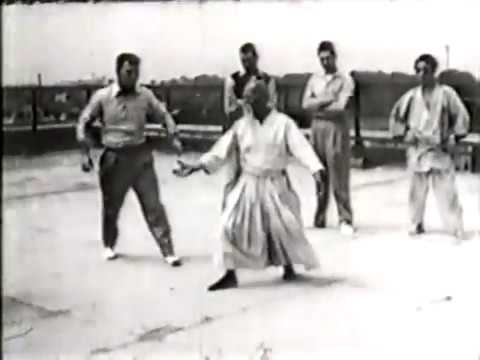
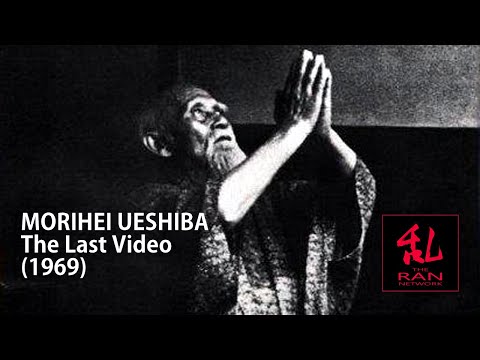
The year 1969 marked a poignant moment in martial arts history: Morihei Ueshiba's final class at the Aikikai Hombu Dojo in Tokyo. A video recording of this session offers a deeply moving glimpse into the spirit of a master at the twilight of his life. We witness an elderly Ueshiba, physically frail, battling illness, yet still able to command the respect and attention of his assembled students. What unfolds is not a display of raw power, but a demonstration of exquisite technique and profound understanding. His movements, though perhaps lacking the explosive speed of his youth, retained an uncanny fluidity, a dancer's grace married with a warrior's precision. He executed throws and techniques with an apparent effortlessness that belied the complexity and effectiveness of his art. This final performance serves as a powerful testament not just to his exceptional skill, but to a lifetime dedicated to the pursuit of martial perfection. It’s a visual lesson that transcends words, showcasing the enduring power and aesthetic beauty inherent in Budo.

The Enduring Legacy and Transmission of Teachings

Ueshiba's final class was more than just a demonstration; it was a distillation of his life's work, a living transmission of principles passed down through generations. The impact of O-Sensei's teachings is immeasurable, permeating the global community of martial artists. His philosophy of harmony, resolution, and self-improvement continues to be practiced and taught by his students, and their students, and so on. This lineage, this unbroken chain of transmission, is the true measure of a master's impact. Aikido, as a discipline, is not static; it evolves through the practitioners who embody its principles. The legacy of Morihei Ueshiba isn't confined to historical records or video archives; it lives and breathes in every dojo where his art is practiced with sincerity and dedication. His influence extends far beyond the confines of Aikido, resonating with anyone seeking a deeper understanding of human potential and conflict resolution.

Martial Arts: More Than Just Fighting

O-Sensei's final demonstration serves as a powerful reminder that the martial path is far more profound than mere combat. While the ability to defend oneself is a crucial aspect of many lucha systems, the true essence of martial arts, as Ueshiba taught, lies in discipline, self-mastery, and personal growth. It’s about cultivating inner strength, developing resilience, and fostering a spirit of peaceful resolution. This holistic approach, this emphasis on character development alongside physical technique, is a cornerstone of his philosophy. It’s a lesson that has been passed down through the ages, influencing not only practitioners of Aikido but a broad spectrum of individuals dedicated to self-improvement. The journey through BUDO is a journey of transformation, where the dojo becomes a microcosm of life itself.

Deepening Your Understanding: Resources and Gear

For those captivated by the philosophy and practice of Aikido and artes marciales in general, a wealth of resources exists to support your journey. Books offer historical context and philosophical depth, videos provide visual demonstrations of techniques and principles, and online courses offer structured learning from experienced instructors. Many reputable Aikido schools worldwide welcome beginners eager to explore this unique art form. When it comes to training, the right equipment can significantly enhance your experience and safety. High-quality training gear is essential for effective practice and injury prevention.

Equipo Esencial para tu Entrenamiento

  • Kimono de Aikido (Gi): Look for a durable, double-weave cotton gi that allows for freedom of movement and can withstand the rigors of throws and grappling. Brands like Karate and Judo gis often offer suitable alternatives.
  • Hakama: While not essential for beginners, the hakama is traditional attire for Aikido practitioners and allows for practice of specific techniques.
  • Jo y Bokken: Training staffs (Jo) and wooden swords (Bokken) are crucial for practicing weapon-based techniques, which are integral to Aikido's curriculum. Ensure they are made from solid, resilient wood.
  • Training Mats (Tatami): Proper matting is vital for safety during practice, especially for falls (ukemi).
For those interested in acquiring martial arts merchandise, numerous online stores cater to every need, from specialized training equipment to apparel that reflects the spirit of the arts. Investing in high-quality products from reputable sellers not only supports your training but also honors the dedication and craftsmanship associated with these disciplines.

Veredicto del Sensei: Legacy Embodied

Morihei Ueshiba's final performance is a powerful and poignant testament to the enduring spirit of martial arts. It’s not about the physical strength of youth, but the cultivated wisdom and refined technique that comes with decades of dedication. While some might dismiss older practitioners or focus solely on the combative aspects, Ueshiba’s demonstration highlights the profound beauty, control, and philosophical depth that true mastery entails. It’s a reminder that the "last master" doesn't signify an ending, but a living legacy that continues to inspire and guide. For its authentic portrayal of a martial art's philosophical core and its demonstration of mastery transcending physical limitations, this event, as captured in its final showing, earns a "Cinturón Negro en Sabiduría Marcial."

Guía de Entrenamiento: El Arte del Hakkō-ryu

While Aikido is the art Ueshiba founded, many of its principles echo foundational concepts found in older Japanese jujutsu systems. One such lineage, often associated with its characteristic joint-locking and pressure-point techniques, is Hakkō-ryu (八光流). While not directly taught by Ueshiba in his final class, understanding its principles can illuminate the depth of Japanese martial arts.

Pasos para Comprender los Principios del Hakkō-ryū:

  1. Entender la Filosofía Central: Hakkō-ryu se traduce como "Escuela de la Octava Luz". Su filosofía se centra en la armonía y el uso de la fuerza del oponente, similar a Aikido, pero a menudo con un énfasis más directo en el control a través de puntos de presión (Kyūsho) y técnicas de luxación (Kansetsu-waza).
  2. Estudiar Movimiento y Equilibrio: La base de Hakkō-ryū, como en muchas artes japonesas, es el movimiento corporal eficiente y el control del centro de gravedad. La postura debe ser baja y estable, permitiendo movimientos fluidos y respuestas rápidas.
  3. Practicar el "Te-no-uchi" (Mano-dentro): Este concepto se refiere al control fino de la muñeca y el antebrazo para aplicar torsiones y presiones precisas sobre las articulaciones del oponente. No es solo fuerza bruta, sino una manipulación experta.
  4. Familiarizarse con los Puntos de Presión (Kyūsho): Identificar y comprender la ubicación y efecto de los puntos de presión es crucial. La aplicación de presión en estos puntos puede incapacitar a un oponente sin necesidad de fuerza excesiva.
  5. Integrar la Respiración (Kokyū): La respiración juega un papel vital en la generación de potencia y en el mantenimiento de la calma. Coordinar la respiración con el movimiento y la aplicación de técnicas es fundamental.
  6. Entrenar Ukemi (Caídas): La habilidad para caer de manera segura es un pilar en cualquier arte que involucre proyecciones o luxaciones. El entrenamiento constante de ukemi es esencial para la seguridad y para ganar confianza.

Nota del Sensei: Es vital abordar el estudio de sistemas como Hakkō-ryū con un instructor calificado. La información aquí proporcionada es introductoria y no sustituye la guía práctica y la supervisión experta en un Dojo.

Frequently Asked Questions

What is the primary philosophy behind Aikido?

The primary philosophy of Aikido, as founded by Morihei Ueshiba, is to harmonize with an opponent's movements, redirect their force, and resolve conflict peacefully, emphasizing self-improvement and spiritual development over aggression.

Was Morihei Ueshiba an older man during his last class?

Yes, by 1969, Morihei Ueshiba was in his late 80s and frail due to illness, yet his final demonstration showcased his profound skill and dedication.

What distinguishes Aikido from other martial arts like Karate or Judo?

Unlike striking arts like Karate or grappling arts like Judo, Aikido primarily focuses on blending with an opponent's motion, using circular movements, throws, and joint locks to neutralize an attack without relying on brute strength or direct confrontation.

Is Aikido effective for self-defense?

Aikido's principles of redirection and control can be very effective for self-defense, particularly against larger or more aggressive opponents. However, its effectiveness is highly dependent on the practitioner's skill level and the specific situation.

Where can I find resources to learn more about Aikido or O-Sensei?

You can find extensive resources through books detailing Ueshiba's life and philosophy, official Aikido federation websites, documentaries, and by attending classes at a local Aikikai-affiliated dojo.

Para Profundizar en tu Camino

Reflexión del Sensei: Tu Próximo Paso

O-Sensei demonstrated that true mastery is not about the accumulation of power, but the refinement of spirit and the understanding of universal principles. His final class was a silent sermon on grace, control, and the non-violent resolution of conflict. Now, ask yourself: In the face of resistance in your own life – be it a difficult task, a personal conflict, or a physical challenge – do you instinctively meet force with force, or do you seek to blend, redirect, and harmonize? Have you truly embraced the idea that your greatest strength lies not in overpowering your circumstances, but in mastering yourself?

Aikido's Essence: Analyzing O'Sensei Ueshiba's 1961 Masterclass

Introduction: A Glimpse into the Soul of Budo

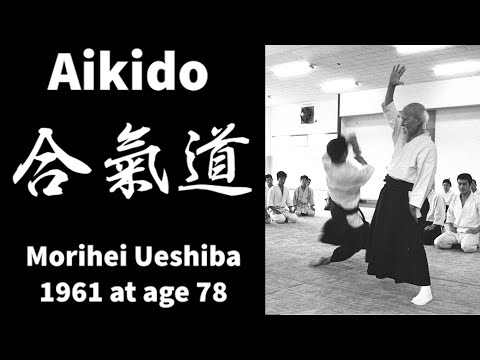
This rare 1961 footage, capturing a 78-year-old Morihei Ueshiba, the revered founder of Aikido, is far more than just a martial arts demonstration. It's a profound window into the very essence of Budo, a concept that transcends mere physical combat. Many today, particularly those drawn to the explosive dynamism of MMA or the brutal efficiency of Kyokushin Karate, might question the relevance of Aikido's fluid movements. Does its emphasis on blending and redirection hold water in a world that often values brute force? Let me tell you, this video is the answer. It's a masterclass in principles that are eternally valid, not just for the dojo, but for life itself. We will dissect this gem, exploring Ueshiba's techniques, his philosophy, and the enduring legacy of Budo.

Ueshiba in Action: The Art of Blending and Redirecting

Watching Ueshiba Sensei at this advanced age is awe-inspiring. His movements, while perhaps not possessing the raw power of a younger man, are imbued with an almost supernatural grace and precision. The documentary showcases his mastery of Aikido techniques – the effortless throws, the seemingly gentle yet devastating joint locks. He doesn't meet force with force; instead, he becomes one with his attacker's energy, subtly redirecting their momentum. This is the core of Aikido, and it's a principle that many arts, even the fiercely competitive BJJ or Judo, can learn from. The seemingly passive nature of his defense is, in reality, a highly active and intelligent application of physics and timing. He demonstrates that true strength lies not in overpowering an opponent, but in understanding and harmonizing with their movements. Have you ever sparred with someone who just seems to *flow* with your attacks, nullifying them before they even land? That's the echo of Ueshiba Sensei's teaching.
"The true meaning of martial arts is to unify the world." - Morihei Ueshiba

The Philosophy of Aikido: Harmony, Compassion, and Unity

Beyond the physical application, Ueshiba Sensei's words in this documentary reveal a philosophy that is both deeply spiritual and remarkably practical. He speaks of Aikido not as a means of destruction, but as a path to reconciliation. Harmony, balance, and compassion are not mere buzzwords here; they are the foundational pillars of his art. This stands in stark contrast to some of the more combative depictions of martial arts in popular culture, where violence is often glorified without consequence. Ueshiba's vision is one of connection, of resolving conflict not through aggression, but through understanding and empathy. It’s a message that resonates even more powerfully today, in our often fragmented and contentious world. This philosophy is the very heart of BUDO, the "Way of the Warrior," which demands not just martial prowess but moral integrity.

Budo: More Than Just Fighting

The term Budo itself is crucial here. It's not simply "martial arts" in the Western sense. It encompasses the entire way of life, the philosophy of the warrior, drawing heavily from principles like Bushido. This means more than just mastering techniques for a fight. It's about self-cultivation, rigorous discipline, and unwavering honor. Ueshiba Sensei embodies this perfectly. His practice was a lifelong dedication to refining not just his body, but his mind and spirit. The documentary offers a fleeting glimpse, but it's enough to understand that for masters like him, the training never truly ends. It's a constant pursuit of self-improvement, a journey that shapes one's character in profound ways.
"The martial way is a thing of daily practice. It is a continuous process of refinement. The master is simply a student who never quit." - Attributed to various martial arts masters

Training and Self-Cultivation: The Path to Inner Peace

The practice of martial arts, as exemplified by Ueshiba's Aikido, is a powerful tool for inner growth. It offers a structured path to control one's ego, to confront and overcome fear and anger, and to cultivate a deep sense of inner peace. This isn't just about learning to defend yourself physically; it's about building mental resilience. The physical demands – improving fitness, flexibility, and coordination – are significant, but the mental benefits are arguably even greater. In a world rife with stress and anxiety, the discipline and focus required in martial arts training provide an invaluable sanctuary. It's a lifelong pursuit, a journey of personal development that extends far beyond the dojo mats. The principles learned in Karate, Judo, or Aikido can positively impact every facet of life.

Veredicto del Sensei: A Timeless Testament

This 1961 documentary is not just a historical artifact; it's a living testament to the enduring power of Budo. Ueshiba Sensei, even at 78, displays a level of mastery that transcends time and style. While the martial arts landscape has evolved dramatically, with hyper-realistic sports like MMA and UFC capturing global attention, the core principles demonstrated here remain vital. The emphasis on harmony, respect, and self-cultivation is a counterbalance to the often aggressive narratives surrounding combat sports. This film is essential viewing for anyone who seeks a deeper understanding of martial arts, not just as a means of fighting, but as a path to becoming a better human being. Rating: 10/10 Cinturones Negros en Sabiduría y Maestría.

Essential Equipment for Your Training

To embark on your own martial arts journey, whether it's Aikido, Karate, Judo, or any other discipline, the right equipment is essential. At BYAM Budo y Artes Marciales, we understand the needs of practitioners at all levels.
  • Gi (Uniforme): A durable, comfortable Gi is fundamental. For arts like Judo and Aikido, a heavier weave might be preferred for grip resistance.
  • Protective Gear: Depending on your style, consider sparring headgear, mouthguards, and shin guards for safe combat training.
  • Training Mats (Tatami): Essential for safe practice of throws and falls, especially in arts like Judo and Aikido.
  • Training Weapons: For specific disciplines, wooden bokken (swords) or jo (staffs) are necessary.
Investing in quality gear enhances your training experience and ensures safety. Explore our range of Martial Arts Merchandise to find what you need.

Frequently Asked Questions

  • What is Budo? Budo is a Japanese term that refers to the systematic practice of martial arts, emphasizing not only combat techniques but also spiritual and moral development.
  • Is Aikido effective for self-defense? Yes, Aikido's principles of blending, redirection, and using an attacker's momentum can be highly effective for self-defense, though its effectiveness in highly aggressive scenarios is a subject of ongoing debate.
  • What is the difference between Budo and Bushido? Bushido is the code of honor and conduct of the samurai warrior class, while Budo is the broader term encompassing the practices and philosophies of martial arts derived from that warrior tradition.
  • How can martial arts training improve mental health? Through discipline, focus, stress reduction techniques, and the cultivation of inner peace and self-control.

For a Deeper Dive into Your Path

Reflexión del Sensei: Tu Próximo Paso

Ueshiba Sensei demonstrated that true mastery lies in harmonization, not domination. In a world that often rewards aggression and competition, can you find the strength in yielding? Can you apply the principles of blending and redirecting not just against a physical opponent, but against the challenges and conflicts of your daily life? The video is a lesson; your response to its message is the application. ```json { "@context": "https://schema.org", "@type": "FAQPage", "mainEntity": [ { "@type": "Question", "name": "What is Budo?", "acceptedAnswer": { "@type": "Answer", "text": "Budo is a Japanese term that refers to the systematic practice of martial arts, emphasizing not only combat techniques but also spiritual and moral development." } }, { "@type": "Question", "name": "Is Aikido effective for self-defense?", "acceptedAnswer": { "@type": "Answer", "text": "Yes, Aikido's principles of blending, redirection, and using an attacker's momentum can be highly effective for self-defense, though its effectiveness in highly aggressive scenarios is a subject of ongoing debate." } }, { "@type": "Question", "name": "What is the difference between Budo and Bushido?", "acceptedAnswer": { "@type": "Answer", "text": "Bushido is the code of honor and conduct of the samurai warrior class, while Budo is the broader term encompassing the practices and philosophies of martial arts derived from that warrior tradition." } }, { "@type": "Question", "name": "How can martial arts training improve mental health?", "acceptedAnswer": { "@type": "Answer", "text": "Through discipline, focus, stress reduction techniques, and the cultivation of inner peace and self-control." } } ] }

Aikido O Sensei in 1954: A Timeless Warrior's Legacy in Modern Combat Sports

The year 1954 gifted us a rare glimpse into the profound capabilities of Aikido O Sensei through a rediscovered video. This artifact, showcasing his mastery, serves as a potent reminder of the enduring power of traditional martial arts. Today, the echoes of such legends resonate powerfully, not only in dedicated dojos but also within the electrifying arenas of modern martial arts and combat sports. These disciplines, with their rich histories and timeless teachings, continue to captivate us, offering lessons that transcend mere physical prowess.

But what is the true essence of martial arts and Budo? Far beyond the technicalities of striking and grappling, they represent a holistic philosophy, a rigorous discipline, and ultimately, a pathway to self-development. The pursuit of perfection, a core tenet of Budo – the "way of the warrior" – is a journey of constant refinement, both physically and mentally.

The True Essence of Martial Arts and Budo

Martial arts are not merely a collection of techniques designed for conflict. They are a profound system for cultivating the individual. The ultimate aim is to forge a stronger self – physically resilient, mentally sharp, and spiritually grounded. This holistic development is what sets true martial arts apart.

Budo: More Than Just a Fighting Style

"Budo" translates directly to "the way of the warrior." This term encapsulates the spirit that underpins these disciplines. It's about the relentless pursuit of excellence, the mastery of oneself through rigorous training, and the application of these principles in all facets of life. It is a lifelong pursuit, not a destination.

"The ultimate aim of martial arts is not victory or defeat, but the perfection of the character of its practitioners." - A principle echoed across many martial traditions.

The Multifaceted Benefits of Martial Arts Training

The benefits of consistent training in martial arts are vast and touch every aspect of a practitioner's life. Beyond the obvious enhancement of self-defense skills, individuals develop:

  • Improved Physical Health: Increased strength, flexibility, cardiovascular endurance, and coordination.
  • Enhanced Mental Fortitude: Greater focus, discipline, patience, and stress management.
  • Unshakeable Self-Discipline: The ability to set goals and work towards them consistently, overcoming obstacles.
  • A Strong Sense of Community: The shared passion within the martial arts community fosters deep bonds, camaraderie, and mutual respect. This sense of belonging is invaluable.

This supportive environment is crucial. The shared struggles and triumphs in the dojo create a unique connection that strengthens the collective spirit.

Combat Sports: The Arena of Modern Competition

Contrast this with combat sports. While they share the roots of physical confrontation, their primary focus is often on competition and the quantifiable outcome of victory. Disciplines like MMA, boxing, and Judo demand extraordinary levels of physical conditioning, strategic thinking, and mental toughness. They are a testament to the human spirit's capacity to perform under immense pressure.

The athletes in these fields are modern warriors, pushing the boundaries of human potential. Their dedication, sacrifice, and ability to execute under the bright lights are truly inspiring. It is undeniable that these sports showcase incredible athleticism and tactical brilliance.

Showcasing Your Passion: Martial Arts and Combat Sports Merchandise

For enthusiasts and practitioners alike, the passion for martial arts and combat sports often extends beyond the training mat or the ring. This is where merchandise plays a role. From specialized Karate gis and durable Judo uniforms to training equipment and casual apparel, these items allow individuals to express their identity and support their chosen disciplines.

High-quality training equipment, such as punching bags, focus mitts, and protective gear, is essential for effective practice. Wearing apparel that represents your art or sport is a way to connect with the wider community and serve as a constant reminder of your commitment. These items also make fantastic gifts for fellow martial artists or combat sports fans.

Our Commitment at BYAM Budo y Artes Marciales

At BYAM Budo y Artes Marciales, we understand this passion. We are dedicated to providing a wide array of high-quality merchandise tailored for both martial arts practitioners and combat sports aficionados. Our selection is curated to meet the needs of everyone, from the absolute beginner taking their first steps in Aikido or Karate, to the seasoned expert honing their skills. Functionality and durability are paramount in our product design, ensuring that what you choose supports your journey.

We firmly believe that martial arts and combat sports are more than just physical activities; they are transformative life experiences. Our blog serves as a platform to share invaluable insights, including practical training tips, detailed technique breakdowns, and the philosophical underpinnings that make these arts so profound.

Deepen Your Journey: Recommended Resources

To further enrich your understanding and practice, I highly recommend exploring these resources:

Frequently Asked Questions

  • Q: Is Aikido still relevant in modern combat sports?
    A: While Aikido's direct application in MMA is debated, its principles of blending, redirection, and control offer invaluable lessons in balance, spatial awareness, and joint manipulation, which are transferable skills.
  • Q: What is the difference between Budo and just training martial arts?
    A: Budo emphasizes the spiritual and philosophical development of the individual, viewing training as a lifelong path to self-perfection. Simply training martial arts may focus more on the technical or competitive aspects without the deeper philosophical commitment.
  • Q: How can I start training martial arts if I'm a complete beginner?
    A: The best approach is to research local dojos or gyms offering styles that interest you. Many offer introductory classes. Focus on finding qualified instructors and a welcoming community, like those found in martial arts communities globally.

Sensei's Verdict: Is the Legacy Alive?

Looking back at O Sensei’s demonstration in 1954, and observing the dedication in today's dojos and the fierce competition in UFC bouts, one undeniable truth emerges: the warrior spirit, the essence of Budo, is very much alive. The methods evolve, the arenas change, but the fundamental principles of discipline, perseverance, and the quest for self-mastery remain constant.

Whether you are drawn to the intricate flows of Aikido, the powerful stances of Karate, or the dynamic exchanges in MMA, the path of martial arts offers a profound opportunity for growth. It is a journey that builds not just a fighter, but a better human being.

Sensei's Reflection: Your Next Step

O Sensei's movements in that 1954 film were not just physical actions; they were expressions of deep understanding and embodiment. The question for you, the dedicated practitioner and student of the Way, is this: How can you embody the principles you learn on the mat in the unpredictable dojo of your daily life? Do you merely mimic techniques, or do you strive to internalize the philosophy?

```

For Deeper Exploration on Your Path

Morihei Ueshiba O Sensei's 1957 Aikido Demonstration: A Masterclass in Harmony and Unseen Power

The Founder's Legacy

For centuries, the intricate tapestry of martial arts has woven itself into the fabric of human culture, offering not just combat prowess but profound philosophical insights. These disciplines, honed through generations, continue to inspire and shape individuals worldwide. Among the most revered is Aikido, a uniquely Japanese martial art born from the vision and mastery of Morihei Ueshiba, revered by practitioners as O Sensei.

Today, we delve into a rare treasure: a 1957 demonstration video featuring the founder himself. This is not merely a historical artifact; it's a living lesson. We will dissect the art of Aikido, its core philosophy of harmony, and the transformative benefits that await those who dedicate themselves to its practice. Prepare to witness the embodiment of principles that transcend mere physical conflict.

A Glimpse into the Past: The 1957 Demonstration

The video from 1957 is an invaluable window into the very soul of Aikido, as expressed through the founder's movements. It showcases Morihei Ueshiba O Sensei demonstrating techniques that define the art's essence. Observe the fluidity, the economy of motion, and the palpable control. This is not about brute force; it's about redirecting an opponent's power with precision and minimal effort. The demonstration stands as a powerful testament to the beauty, effectiveness, and spiritual depth of Aikido.

In this rare footage, O Sensei doesn't just perform techniques; he embodies them. You'll see the principles of blending, evasion, and redirection executed with a mastery that few have achieved since. It’s a visual symphony of conflict resolution, demonstrating how to neutralize an attack not by meeting force with force, but by becoming one with the attacker's energy.

The Essence of Aikido: Beyond Conflict

At its heart, Aikido is a martial art dedicated to the principle of harmony – Wa (和). Practitioners strive not to dominate or destroy an opponent, but to harmonize with their energy and movements. The objective is to neutralize an attack by skillfully guiding the attacker's force, often leading them into a state of imbalance from which they can be controlled or subdued without causing undue harm.

This philosophy extends far beyond the dojo. The ultimate aim of Aikido is to achieve harmony not only with oneself and one's opponent but with the universe itself. It's a path of self-discovery and mutual respect, where conflict is resolved not through violence, but through understanding and integration. O Sensei often spoke of protecting oneself while simultaneously safeguarding the attacker's well-being, a concept that radically redefines the nature of martial engagement.

"The Art of Peace is a game that changes the way you see the world. It is an endeavor to achieve harmony with the world." - Morihei Ueshiba O Sensei

Deconstructing O Sensei's Art

Examining O Sensei's movements in the 1957 video reveals techniques rooted in deep understanding of biomechanics and energy dynamics. Notice the subtle shifts in weight, the precise angles of entry, and the circular motions that absorb and redirect an attacker's momentum. Techniques like Irimi (entering) and Tenkan (turning/pivoting) are executed with seamless grace, demonstrating how to move *with* the attack rather than against it.

The effectiveness lies in the principle of Aiki (合気) – literally, "joining energy" or "harmony energy." This is not simply about physical leverage; it's about understanding and manipulating the attacker's intention and kinetic energy. Observe how O Sensei uses minimal physical force, often relying on timing, positioning, and the attacker's own commitment to their movement to achieve a decisive outcome. This mastery is what distinguishes true Aikido from mere physical combat.

More Than Just Movement: The Holistic Gains

The practice of Aikido offers a profound spectrum of benefits, extending far beyond the physical realm. Physically, it enhances flexibility, improves balance, and builds overall conditioning, engaging the entire body in a coordinated and dynamic manner. It sharpens coordination and reaction times, essential for both self-defense and daily life.

Mentally and spiritually, Aikido is a powerful tool for personal development. It cultivates discipline, sharpens focus, and instills a sense of calmness under pressure. Practitioners learn to manage their emotions, channeling their energy constructively. This journey fosters inner peace, boosts confidence, and builds mental resilience, equipping individuals to face life's challenges with greater equanimity.

Cultivating Harmony: Essential Aikido Drills

To truly internalize the principles demonstrated by O Sensei, consistent practice is key. Here are fundamental exercises to develop your Aikido foundation:

  1. Basic Body Movement Drills: Practice Tai Sabaki (body movement) in isolation. Focus on natural, efficient footwork, maintaining a stable yet relaxed posture. Execute forward, backward, and lateral movements, as well as pivoting actions (Tenkan), ensuring your center remains grounded.
  2. Ukemi Practice: Learning to receive techniques safely is paramount. Practice Uke Nagashi (receiving and deflecting) and basic rolls (Mawari Ukemi). Focus on dissipating energy upon impact and recovering quickly.
  3. Irimi & Tenkan Combinations: Practice entering (Irimi) and turning (Tenkan) motions in response to imaginary attacks or with a training partner. Focus on the seamless transition between these core movements.
  4. Ki Breathing Exercises: Engage in Kokyu Ho (breathing methods). These exercises, often done seated, teach breath control and the development of internal energy (Ki), which is fundamental to Aikido's power.
  5. Solo Weapon Practice (if applicable): For styles that incorporate Jo (staff) or Bokken (wooden sword), practice basic strikes, blocks, and forms (Kata) to refine timing, distance, and precision.

Remember, the essence is not just performing the movements but understanding the principles behind them. Seek qualified instruction to ensure proper technique and safety.

Equipping Your Journey: Essential Aikido Gear

At BYAM Budo y Artes Marciales, we understand that the right equipment can significantly enhance your training experience. We are passionate about supporting practitioners on their journey towards inner harmony and physical excellence.

  • Aikido Uniforms (Gi): A durable, well-fitting uniform is essential for comfort and freedom of movement. Look for reinforced stitching for longevity, especially in the pants and collar.
  • Training Weapons: For styles that practice with them, a quality Bokken (wooden sword), Jo (staff), or Tanto (knife) is crucial. Ensure they are balanced and free of splinters.
  • Zori or Martial Arts Footwear: Appropriate footwear for the dojo floor aids in footwork and hygiene.
  • Practice Mats (if training at home): Interlocking mats can provide cushioning and safety for solo practice of falling techniques.

We carefully select our merchandise, working only with trusted suppliers who share our commitment to quality and the spirit of martial arts. Enhance your practice with gear designed for performance and durability.

Frequently Asked Questions

What is the fundamental principle of Aikido?

The fundamental principle is harmony (Wa), which involves blending with an opponent's energy and movements to neutralize an attack without causing unnecessary harm.

Is Aikido effective for self-defense?

Yes, Aikido provides practical self-defense skills by teaching practitioners to control an attacker's balance and momentum, often using joint locks and throws derived from the attacker's own force.

Do I need to be strong to practice Aikido?

No, Aikido emphasizes technique, timing, and leverage over brute strength. This makes it accessible and effective for individuals of all ages and physical builds.

What are the main differences between Aikido and Judo?

While both are Japanese martial arts that involve throws, Aikido focuses on redirecting an opponent's energy and blending, often with minimal physical contact until the final technique. Judo traditionally involves more direct gripping and emphasizes takedowns and grappling on the ground.

Deepen Your Understanding

To continue your exploration into the profound world of martial arts and the philosophy of Budo, we recommend the following resources:

"True victory is victory over oneself." - Morihei Ueshiba O Sensei

The 1957 demonstration by Morihei Ueshiba O Sensei is more than just footage; it's a blueprint for a way of life. Aikido offers a path to self-mastery, conflict resolution, and profound inner peace. Its techniques are elegant, its philosophy is deep, and its benefits are transformative.

At BYAM Budo y Artes Marciales, we are dedicated to fostering this journey. We believe in providing practitioners with the highest quality tools to support their training and growth. Visit our website to explore our curated selection of Aikido merchandise and join a community dedicated to the pursuit of martial excellence.

Sensei's Reflection: Your Next Step

O Sensei’s art embodies the ultimate principle: finding strength in yielding, power in harmony. When faced with an unyielding force, do you meet it head-on, or do you learn to flow around it, redirecting its energy with masterful subtlety? Consider this: In moments of personal conflict or challenge, are you an unbending oak, or a bamboo swaying in the wind? How can you apply the principle of Aiki – blending and harmonizing – not just in physical combat, but in the everyday battles of life?

``` ```json { "@context": "https://schema.org", "@type": "FAQPage", "mainEntity": [ { "@type": "Question", "name": "What is the fundamental principle of Aikido?", "acceptedAnswer": { "@type": "Answer", "text": "The fundamental principle is harmony (Wa), which involves blending with an opponent's energy and movements to neutralize an attack without causing unnecessary harm." } }, { "@type": "Question", "name": "Is Aikido effective for self-defense?", "acceptedAnswer": { "@type": "Answer", "text": "Yes, Aikido provides practical self-defense skills by teaching practitioners to control an attacker's balance and momentum, often using joint locks and throws derived from the attacker's own force." } }, { "@type": "Question", "name": "Do I need to be strong to practice Aikido?", "acceptedAnswer": { "@type": "Answer", "text": "No, Aikido emphasizes technique, timing, and leverage over brute strength. This makes it accessible and effective for individuals of all ages and physical builds." } }, { "@type": "Question", "name": "What are the main differences between Aikido and Judo?", "acceptedAnswer": { "@type": "Answer", "text": "While both are Japanese martial arts that involve throws, Aikido focuses on redirecting an opponent's energy and blending, often with minimal physical contact until the final technique. Judo traditionally involves more direct gripping and emphasizes takedowns and grappling on the ground." } } ] }

Daitō-ryū Aiki-jūjutsu: El Legado Milenario que Moldeó el Budo Moderno

¿Te has preguntado alguna vez de dónde provienen las complejas luxaciones y proyecciones que vemos en el Aikidō moderno? ¿O cómo era realmente el combate entre samuráis antes de que las técnicas se simplificaran para el deporte? El mundo de las artes marciales es un tapiz vasto y entrelazado, pero hay hilos conductores, legados milenarios que forman la estructura misma de lo que practicamos hoy. Uno de esos legados, fundamental y a menudo subestimado, es el del Daitō-ryū Aiki-jūjutsu. No es solo un nombre antiguo; es la raíz de muchas ramas del budo que florecen en la actualidad.

¿Qué es el Daitō-ryū Aiki-jūjutsu?

El Daitō-ryū Aiki-jūjutsu (大東流合気柔術) se traduce literalmente como "Estilo del Gran Este de la Energía y el Arte de la Suavidad". Este nombre ya nos da pistas de su esencia: un sistema que busca la armonía (Ai), el manejo de la energía interna (Ki) y la aplicación de técnicas de combate basadas en la suavidad y el control, no en la fuerza bruta (Jūjutsu). Originado en la región de Takeda, provincia de Kai, durante el tardío periodo Edo, este arte marcial japonés se distinguió por su enfoque en el Aiki, un concepto que trasciende la mera técnica física para adentrarse en la coordinación mente-cuerpo y la manipulación del equilibrio y la estructura del oponente.

A diferencia de otros jūjutsu que priorizaban la aplicación de fuerza para someter al adversario, el Daitō-ryū se centra en el uso de la propia fuerza del atacante, redirigiéndola y amplificándola para desequilibrarlo, inmovilizarlo o proyectarlo. Se trata de una estrategia de eficiencia marcial, donde la menor cantidad de energía genera el máximo resultado. Su legado es monumental, considerándose la principal fuente de la cual derivaría, bajo la tutela de Morihei Ueshiba, el moderno Aikidō.

Orígenes y Fundadores: El Legado de la Familia Takeda

La historia del Daitō-ryū está intrínsecamente ligada a la familia Takeda, una estirpe de guerreros con profundas raíces en la historia de Japón. Se atribuye la consolidación y sistematización de este arte a Sokaku Takeda (1859-1943). Sin embargo, Sokaku no "inventó" el Daitō-ryū de la nada; se basó en las enseñanzas recibidas de su padre, Takeda Kōyō, y de otros maestros de la época, recopilando y refinando técnicas de escuelas de jūjutsu y kenjutsu tradicionales.

Es crucial entender que las artes marciales japonesas, especialmente las de linaje samurái, a menudo se transmitían de forma privada dentro de familias o clanes. El Daitō-ryū, en sus orígenes, era una de esas artes de combate, diseñada para la supervivencia en un campo de batalla o en duelos personales. Sokaku Takeda viajó extensamente por Japón, enseñando y perfeccionando su arte, y es en este periodo donde el Daitō-ryū comenzó a ganar reconocimiento.

"La verdadera victoria es aquella que no requiere batalla." - Un principio que resuena en la filosofía del Aiki.

La figura de Sokaku Takeda es, sin duda, la más influyente en la historia moderna del Daitō-ryū. Fue él quien lo sacó de las sombras de las escuelas privadas para enseñarlo públicamente, formando a numerosos discípulos que, a su vez, serían los responsables de su diseminación, algunos de los más notables siendo Morihei Ueshiba (fundador del Aikidō) y Yukiyoshi Sagawa, quien a su vez fue maestro de Takeda Tokimune, hijo de Sokaku y quien continuó dirigiendo la escuela tras su padre.

Filosofía y Principios: La Armonía en el Conflicto

Más allá de las impresionantes técnicas de luxación y proyección, la esencia del Daitō-ryū reside en su profunda filosofía. El concepto central es el Aiki, que no es una fuerza mística, sino la comprensión y aplicación de principios dinámicos. Se trata de sentir la intención del oponente y usar esa información para neutralizar su ataque. Esto implica:

  • Unidad Mente-Cuerpo: Desarrollar una conexión total entre la intención y la acción.
  • Coordinación y Timing: Entrar en el momento justo, ni antes ni después, para interceptar el movimiento del atacante.
  • Uso de la Estructura: Manipular la alineación corporal del oponente para crear desequilibrio.
  • Energía Cinética: Redirigir y amplificar la energía del movimiento del atacante.
  • El Conflicto como Oportunidad: Ver la agresión no como un enfrentamiento, sino como una oportunidad para restaurar el equilibrio, preferiblemente sin causar daño innecesario.

Esta filosofía impregna cada aspecto del entrenamiento. No se trata de ganar a toda costa, sino de resolver el conflicto de la manera más eficiente y con el menor daño posible. Es una forma de arte que enseña el control de uno mismo tanto como el control del adversario. En un mundo cada vez más violento, este principio de resolver el conflicto a través de la comprensión y la redirección, en lugar de la confrontación directa y la fuerza bruta, es más relevante que nunca.

Técnicas Clave y Metodología de Entrenamiento

El currículo del Daitō-ryū es vasto y se divide tradicionalmente en varios maki (enrollados o pergaminos de técnicas). Estos incluyen:

  • Atemi waza: Técnicas de golpeo precisas dirigidas a puntos vitales o de presión para desorientar o incapacitar al oponente.
  • Kansetsu waza: Técnicas de luxación articular que utilizan la anatomía del oponente contra sí mismo.
  • Nage waza: Técnicas de proyección que buscan desequilibrar y lanzar al oponente al suelo.
  • Osae komi waza: Técnicas de inmovilización en el suelo.

El entrenamiento se realiza típicamente en pareja, con uno asumiendo el rol de tachi-ai (atacante) y el otro de jūjutsu-ka (defensor). La clave está en la repetición y la internalización de los movimientos, buscando la fluidez y la naturalidad. No se trata de memorizar secuencias rígidas, sino de comprender los principios subyacentes que permiten aplicar una técnica ante una gran variedad de ataques.

Una característica distintiva es el énfasis en la respuesta instintiva. Mediante el entrenamiento repetitivo, se busca que el cuerpo reaccione de forma correcta y automática ante el ataque, sin necesidad de un pensamiento consciente. Esto es lo que los maestros de BUDO llaman ki, la energía que fluye libremente cuando la mente y el cuerpo están en perfecta sintonía. Sin embargo, es importante desmitificar el ki; no es algo sobrenatural, sino la manifestación de una profunda conexión mente-cuerpo y una comprensión intuitiva de la física del movimiento.

El Legado en el Aikidō y Más Allá: Un Impacto Duradero

Sin el Daitō-ryū Aiki-jūjutsu, el Aikidō tal como lo conocemos hoy simplemente no existiría. Morihei Ueshiba, uno de los estudiantes más prominentes de Sokaku Takeda, absorbió la esencia del Daitō-ryū y, a lo largo de su vida, la transformó incorporando sus propias visiones filosóficas y espirituales para crear el Aikidō. Muchas de las técnicas fundamentales de Aikidō, como el judo de proyección (nage waza) y las luxaciones (bjj kansetsu waza), tienen su origen directo en el Daitō-ryū.

Pero el impacto no se detiene ahí. La influencia del Daitō-ryū se puede rastrear en otras disciplinas marciales, desde el judo competitivo hasta algunas formas de Artes Marciales Mixtas (MMA), donde los principios de control del oponente y manipulación de la estructura son vitales. Su énfasis en la resolución de conflictos de manera no violenta, o al menos minimizando la violencia, también resuena en enfoques modernos de Defensa Personal.

La preservación de este arte ha sido una tarea ardua, llevada a cabo por maestros y discípulos dedicados que han mantenido viva la flama del Daitō-ryū a través de generaciones. Su compromiso asegura que las lecciones de Sokaku Takeda sigan siendo relevantes y accesibles para quienes buscan comprender las raíces profundas del combate marcial japonés.

Veredicto del Sensei: ¿Sigue Vigente el Daitō-ryū Aiki-jūjutsu?

¡Absolutamente! El Daitō-ryū Aiki-jūjutsu no es una reliquia polvorienta de un pasado marcial. Es una disciplina viva, un campo de estudio inagotable para cualquier practicante serio de artes marciales. Su enfoque en la eficiencia, la economía de movimiento y la comprensión profunda de la dinámica corporal lo convierten en una herramienta invaluable tanto para el combate como para el desarrollo personal. Mientras que otras disciplinas pueden haber evolucionado hacia el deporte de combatsports o la autodefensa de alta intensidad, el Daitō-ryū mantiene su enfoque en la maestría del Aiki, una habilidad que trasciende el campo de battle y se aplica a la vida misma.

Calificación: Cinturón Negro en Legado y Filosofía. Un pilar fundamental para entender la evolución del martial arts japonés.

Equipo Esencial para tu Entrenamiento

Aunque el Daitō-ryū se centra en técnicas corporales y no requiere un equipo especializado para empezar, hay elementos que pueden mejorar tu entrenamiento y tu comprensión del arte:

  • Keikogi (Uniforme de Entrenamiento): Un KarateMerchandise o un judo gi resistente es ideal. Busca un tejido de doble trama (double weave) para mayor durabilidad, ya que las técnicas de luxación y proyección pueden someter al uniforme a considerable estrés.
  • Hakama: Tradicionalmente usado por practicantes de Daitō-ryū y Aikidō, el hakama ayuda a ocultar el movimiento de las piernas, fomentando un entrenamiento más centrado en el ki y las técnicas de mano y cuerpo.
  • Manuales y Libros Técnicos: Aunque la práctica directa es insustituible, los libros sobre la historia, la filosofía y las técnicas del Daitō-ryū (como los que podrías encontrar en la sección BYAM de Merchandise) son cruciales para la comprensión teórica.
  • Makiwara (Opcional): Si bien no es una herramienta central del Daitō-ryū, un makiwara básico puede ayudar a desarrollar la potencia en los golpes de mano y muñeca, complementando el entrenamiento de Atemi.

Guía de Entrenamiento: Ejercicio Básico de Presión

Este ejercicio, una simplificación de las técnicas de kansetsu waza, te ayudará a sentir la manipulación de la estructura del oponente. Realízalo con un compañero, enfatizando la suavidad y la escucha activa.

  1. Posición Inicial: Ponte de pie frente a tu compañero. Tu compañero agarra tu muñeca derecha con su mano derecha, en un agarre relajado pero firme.
  2. Sentir el Movimiento: Tu compañero intenta tirar suavemente de tu muñeca hacia su lado derecho. Tu objetivo es sentir la dirección y la fuerza de su movimiento.
  3. Redirección y Desequilibrio: En lugar de resistir, debes permitir que su movimiento te guíe ligeramente. Al mismo tiempo, gira tu cuerpo y tu cadera en la dirección de su tirón, usando tu propio peso y el de tu compañero para empezar a desequilibrarlo.
  4. Presión Articular: Mientras giras, usa tu mano izquierda para guiar su antebrazo hacia arriba, aplicando una ligera presión en la articulación de su codo. No es un movimiento de fuerza bruta, sino un "seguir y guiar".
  5. Finalización (Simulada): El objetivo es que tu compañero sienta una presión incómoda y un desequilibrio, lo que le obligaría a ceder o ser proyectado. Detén el movimiento antes de causar dolor o lesión.
  6. Intercambio de Roles: Repite el ejercicio cambiando los roles, permitiendo que ambos experimenten la sensación.

Clave: La comunicación no verbal es fundamental. Siente la tensión en el cuerpo de tu compañero. ¿Hay resistencia? ¿Hay aceptación? El Aiki se revela en esta danza de intenciones.

Preguntas Frecuentes

¿Es el Daitō-ryū Aiki-jūjutsu peligroso para practicar?

Como cualquier arte marcial, el Daitō-ryū implica técnicas de luxación y proyección que, si se aplican incorrectamente o con demasiada fuerza, pueden causar lesiones. Sin embargo, la filosofía del arte enfatiza el control y la minimización del daño. Un buen instructor siempre priorizará la seguridad y el aprendizaje progresivo.

¿Qué diferencia hay entre Daitō-ryū Aiki-jūjutsu y Aikidō?

El Daitō-ryū es el sistema original del cual el Aikidō se desarrolló. Mientras que el Aikidō, bajo Morihei Ueshiba, evolucionó para incorporar una mayor dimensión espiritual y filosófica, el Daitō-ryū tiende a mantener un enfoque más directo en las técnicas de combate y autodefensa heredadas de su linaje samurái.

¿Necesito tener experiencia previa en artes marciales para empezar?

No. El Daitō-ryū se adapta a principiantes. La clave es la paciencia y la disposición para aprender los principios fundamentales de movimiento y coordinación.

¿Es Daitō-ryū efectivo para la defensa personal?

Sí. Las técnicas de control, desequilibrio y neutralización del oponente son altamente efectivas para la defensa personal, especialmente en situaciones donde la fuerza bruta no es una ventaja.

¿Hay competiciones de Daitō-ryū?

Tradicionalmente, el Daitō-ryū no se practica con competiciones deportivas como el MMA o el judo. El enfoque está en el desarrollo individual y la aplicación en escenarios realistas, no en la puntuación de puntos. El combate se entiende como una resolución, no como un deporte.

Para Profundizar en tu Camino

Reflexión del Sensei: Tu Próximo Paso

Hemos recorrido el sendero del Daitō-ryū, un arte que nos enseña que la fuerza más grande reside en la sutileza, en el flujo y en la comprensión profunda del movimiento y la energía. No se trata solo de aprender a derribar a un oponente, sino de aprender a fluir con las circunstancias de la vida, a encontrar el equilibrio en el caos y a resolver los conflictos con sabiduría y economía de esfuerzo.

"Un verdadero maestro no es quien enseña todo, sino quien inspira al estudiante a descubrir por sí mismo la profundidad del camino."

Ahora te pregunto: Si el Daitō-ryū nos enseña a usar la fuerza del oponente en su contra, ¿cómo puedes aplicar este principio para superar tus propios obstáculos internos y externos en tu vida diaria? ¿Estás listo para buscar esa armonía en tu propio camino?