Showing posts sorted by date for query MartialArtsMerchandise. Sort by relevance Show all posts

¿Cuál es el Arte Marcial Definitivo para la Jaula? Un Análisis Marcial de las MMA

Como Sensei, mi propósito es guiaros a través del laberinto del Budo y el combate deportivo, desentrañando verdades que a menudo se ocultan tras la propaganda o la ignorancia. Hoy nos sumergiremos en el crisol de la competición moderna: las Artes Marciales Mixtas (MMA). Muchos se preguntan, con la fervorosa pasión de un novato o la calculada curiosidad de un veterano, ¿cuál es el arte marcial **superior** para triunfar en la jaula? Esta pregunta, aunque seductora, es una trampa si se aborda con una mente cerrada. Las MMA, por su propia naturaleza, no son el dominio de un solo estilo, sino la sinergia de múltiples disciplinas. Pero, ¿qué ocurre cuando se enfrentan estas artes? ¿Cuáles demuestran ser las más resilientes, las más aplicables, las que forjan al verdadero campeón? Vamos a desmantelar el mito y a exponer la realidad.

Tabla de Contenidos

La Fusión de Disciplinas: El ADN de las MMA

Las MMA, en su esencia, son una demostración de adaptabilidad y conocimiento marcial aplicado. No se trata de qué arte marcial es *inherentemente* superior, sino de qué artista marcial puede integrar y aplicar de manera más efectiva múltiples facetas del combate. Un peleador que solo domina el striking sin defensas contra derribos es una presa fácil. Un grappler sin habilidad para golpear será neutralizado antes de poder usar su especialidad. La verdadera efectividad en la jaula reside en la capacidad de transicionar entre las diferentes distancias y fases del combate: la lucha de pie (striking), el clinch y la lucha en el suelo (grappling). Un peleador completo es una amalgama de disciplinas. Sin embargo, ciertas artes marciales proporcionan las bases más sólidas para esta fusión.
"En el arte de la guerra, la victoria se logra mediante el conocimiento y la adaptación." - Sun Tzu
Este principio milenario es la piedra angular de las MMA modernas. Los grandes campeones no son meros practicantes de un estilo, sino estrategas que han absorbido lo mejor de varios mundos.

1. Jiu-Jitsu Brasileño: El Maestro del Suelo

El Jiu-Jitsu Brasileño (BJJ) es, sin duda, uno de los pilares fundamentales de las MMA modernas. Su enfoque en la lucha en el suelo, las sumisiones (llaves articulares y estrangulaciones) y el control posicional lo convierten en una herramienta devastadora. La premisa del BJJ es que un oponente más pequeño y débil puede vencer a uno más grande y fuerte mediante la técnica y el apalancamiento, llevándolo al suelo donde la ventaja física a menudo se neutraliza. La efectividad del BJJ en la jaula es innegable. Hemos visto innumerables combates decididos por una sumisión o un control de suelo que deja al oponente indefenso. El BJJ enseña a los peleadores no solo a someter, sino también a defenderse contra sumisiones, a salir de posiciones desfavorables y a mantener el control mientras se busca una oportunidad. Un luchador con una base sólida de BJJ puede dictar el ritmo del combate si la pelea llega al suelo. #bjj, #jiujitsu, #grappling, #artesmarciales

2. Boxeo: La Maestría del Puño

El boxeo es considerado el "arte noble" por una razón. Su enfoque exclusivo en el uso de los puños para el ataque y la defensa ha perfeccionado la técnica de golpeo hasta niveles asombrosos. En las MMA, donde el combate a menudo se inicia de pie, una base de boxeo sólida es crucial. Un boxeador de élite en MMA puede controlar la distancia, golpear con potencia y precisión, y defenderse eficazmente de los ataques con las manos. La agilidad, la potencia de pegada, el juego de pies y la capacidad de absorber golpes son habilidades que provienen directamente del boxeo y que son transferibles a la jaula. Muchos combates se ganan o se pierden en la fase de striking, y el boxeo proporciona las herramientas más directas para dominarla. #boxeo, #combatsports, #artesmarciales

3. Muay Thai: La Ciencia de las Ocho Extremidades

Originario de Tailandia, el Muay Thai es conocido como "el arte de las ocho extremidades" debido a su uso integrado de puños, codos, rodillas y espinillas. Esta versatilidad lo hace excepcionalmente peligroso y efectivo en las MMA. Los practicantes de Muay Thai son maestros del clinch, donde pueden controlar la cabeza del oponente y lanzar rodillazos devastadores, o usar sus piernas para controlar la distancia y lanzar patadas poderosas. La combinación de golpes contundentes, la resistencia al dolor y la capacidad de infligir daño con múltiples armas hacen del Muay Thai una disciplina primordial para el striking en las MMA. #muaythai, #kickboxing, #combatsports, #artesmarciales

4. Lucha Olímpica (Wrestling): El Arte del Control y el Derribo

La lucha olímpica, tanto libre como grecorromana, es la base de muchas carreras exitosas en MMA. Su enfoque en los derribos (takedowns), el control posicional y la capacidad de dictar dónde ocurre el combate la hacen invaluable. Un luchador puede anular las habilidades de striking de su oponente llevándolo al suelo, y desde allí, controlar la pelea, buscar puntos o incluso finalizar con golpes (ground and pound). La fuerza física, la resistencia, la técnica de derribo y la capacidad de mantener a un oponente en el suelo son las marcas distintivas de un buen luchador. En MMA, la lucha no solo sirve para llevar la pelea al suelo, sino también para defenderse de los derribos y regresar a la posición de pie, una habilidad vital. #wrestling, #lucha, #grappling, #artesmarciales

5. Karate: El Golpe Fulminante y la Distancia

Aunque a menudo se debate su aplicabilidad directa en MMA debido a su enfoque tradicional en katas y formas, los principios del Karate pueden ser sorprendentemente efectivos. El Karate, en sus formas más dinámicas y orientadas al combate (como el Kyokushin), enseña golpes de mano y pierna con tremenda potencia, precisión y control de la distancia. Un peleador con una base de Karate puede utilizar sus patadas rápidas y potentes para mantener al oponente a raya, o emplear golpes de puño rectos y contundentes que pueden ser decisivos. La disciplina y el control corporal que se desarrollan en el Karate son transferibles. La clave está en adaptar los principios y las técnicas a las realidades del combate de MMA, integrándolos con otras disciplinas. #karate, #Kyokushin, #artesmarciales

Veredicto del Sensei: ¿Hay un Rey?

La respuesta, como suele ocurrir en el camino marcial, es más compleja que un simple "sí" o "no". No existe un único "rey" de las artes marciales para las MMA. La efectividad reside en la **combinación**. Históricamente, el **Jiu-Jitsu Brasileño** y la **Lucha Olímpica** han demostrado ser la base más sólida para el éxito en MMA debido a su dominio de las fases de grappling, que a menudo deciden los combates. Sin embargo, un peleador sin habilidades de striking se queda cojo. Un peleador de MMA verdaderamente completo necesita una combinación de:
  • Striking (Boxeo, Muay Thai)
  • Grappling (BJJ, Lucha)
  • Transición y Defensa contra Derribos
  • Condición Física de Élite
  • Fortaleza Mental
El peleador que triunfa es aquel que ha integrado inteligentemente estas disciplinas, no aquel que se aferra rígidamente a una sola. El arte marcial "definitivo" para las MMA es aquel que puedes **adaptar y fusionar** con otros, creando un estilo híbrido insuperable.

Equipo Esencial para tu Entrenamiento

Para aquellos que buscan construir su arsenal marcial para la jaula, el equipo adecuado es fundamental. No necesitas gastar una fortuna, pero invertir en calidad te servirá mejor.
  • Guantes de MMA: Ligeros, permiten el agarre y protegen tus manos y la de tu oponente durante el sparring. Busca unos de 4 a 6 onzas.
  • Protector Bucal: ¡Indispensable! Protege tus dientes, mandíbula y cerebro de impactos.
  • Espinilleras y Guantes de Boxeo/Muay Thai: Para el entrenamiento de striking, necesitas proteger tus piernas y manos.
  • Kimono de Jiu-Jitsu (Gi) y/o Ropa de Entrenamiento Ligera: Para BJJ, un gi de buena calidad es esencial. Para entrenamientos más generales, ropa cómoda que permita el movimiento.
  • Vendajes para las Manos: Cruciales para dar soporte a las muñecas y nudillos antes de usar guantes de boxeo.
  • Protector Genital: Una inversión sabia para evitar lesiones graves.
Visita tiendas especializadas en #MartialArtsMerchandise o busca online "equipo para MMA" para encontrar opciones. ¡Un buen equipo te permite entrenar con más seguridad y confianza!

Guía de Entrenamiento: La Transición entre Distancias

Uno de los aspectos más difíciles de dominar en MMA es la transición fluida entre la lucha de pie y el suelo, y viceversa. Aquí tienes un ejercicio para empezar a desarrollar esta habilidad:
  1. Fase 1: Striking Sostenido (30 segundos): Comienza en guardia, practicando movimientos de pies y lanzando golpes al aire o a un saco. Enfócate en la fluidez y el control de la distancia.
  2. Fase 2: Simulación de Derribo (10 segundos): Desde el striking, simula un intento de derribo (ej. un "sprawl" si tu compañero intenta derribarte, o un intento de llevarlo al suelo si tú eres el atacante).
  3. Fase 3: Lucha en el Suelo (30 segundos): Una vez en el suelo (simuladamente), practica control posicional básico o defensas de sumisión. Si entrenas con un compañero, trabajen transiciones seguras.
  4. Fase 4: Transición a Pie (10 segundos): Si estás en el suelo, practica cómo levantarte de forma segura manteniendo la guardia o defendiéndote de ataques.
  5. Descanso (30 segundos): Recupera el aliento.
  6. Repetir: Realiza este ciclo durante 5-8 rondas.
Este ejercicio, aunque simple, te obliga a pensar en cómo se conectan las diferentes fases del combate. La clave es la **conciencia situacional** y la **capacidad de reaccionar**.

Preguntas Frecuentes

  • ¿Es posible ser un buen peleador de MMA con solo una arte marcial? Es extremadamente difícil. Las MMA exigen una habilidad en múltiples facetas del combate. Un especialista puro tendrá serias debilidades contra un oponente más completo.
  • ¿Cuál es el arte marcial más efectivo para defensa personal en la calle? Para defensa personal callejera, la efectividad depende de la situación y la preparación. Disciplinas como el Krav Maga, que se centran en escenarios realistas y ataques directos, suelen ser recomendadas. Sin embargo, los principios de control, desarme y manejo de múltiples agresores son universales y se benefician de una base sólida en grappling y striking.
  • ¿Qué arte marcial es mejor para empezar en las MMA? Muchos recomiendan empezar con el #bjj o la Lucha Olímpica debido a la importancia del grappling en MMA. Otros prefieren una base de striking como el Boxeo o el Muay Thai. Lo ideal es buscar un gimnasio de MMA que enseñe una mezcla de disciplinas.
  • ¿Es el Karate obsoleto para las MMA? No necesariamente obsoleto, sino que requiere una adaptación significativa. Los principios de potencia y precisión del Karate son valiosos, pero deben complementarse con grappling y defensa contra derribos.

Para Profundizar en tu Camino

El conocimiento marcial es un río inagotable. Si buscas ampliar tu entendimiento, te recomiendo explorar estos recursos:
  • #FightAnalysis: Desgloses detallados de combates y técnicas de peleadores profesionales.
  • #MartialArtsJourney: Historias inspiradoras de artistas marciales y sus caminos.
  • #BUDO: Exploraciones de la filosofía y los principios detrás de las artes marciales tradicionales.

Reflexión del Sensei: Tu Próximo Paso

Hemos explorado las disciplinas que forman el tapiz de las MMA, desgranando sus fortalezas. Pero el conocimiento sin aplicación es tan vacío como una bolsa de arroz sin arroz. ¿Estás listo para dejar de ser un mero espectador y convertirte en un practicante consciente? ¿O acaso tu estudio se limita a las palabras, sin el sudor y la dedicación del tatami? Mi pregunta para ti es simple, pero profunda: **¿Qué disciplina marcial vas a empezar a integrar en tu entrenamiento esta semana, y por qué te resistes a enfrentar tus debilidades técnicas en la jaula de la vida?** Comparte tu respuesta, tu crítica o tu propia visión en los comentarios de abajo. No temáis expresar vuestras ideas; es en el choque de opiniones donde a menudo se forja la verdad.

The Ultimate Warrior's Guide: Mastering the Art of the Fight Beyond the Ring

Are you truly prepared for the test of will, skill, and spirit that defines the warrior? In the electrifying world of martial arts and combat sports, we often focus on the explosive power of a knockout or the intricate dance of a grapple. But what lies beneath the surface? What truly separates a fleeting contender from an enduring legend? Welcome, seekers of the path, to Budo and Martial Arts. Today, we dissect not just a fight, but the very essence of combat and its place in our lives.

Table of Contents

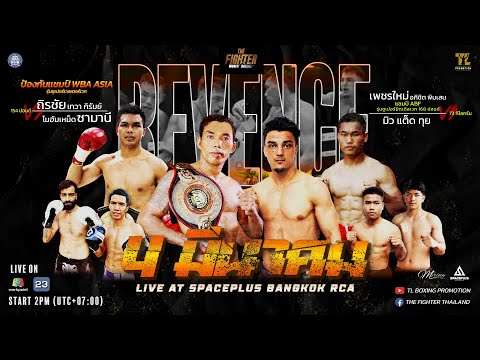
We live in an era saturated with combat sports spectacles, from the raw intensity of boxing to the multi-disciplinary battles of MMA. Yet, how many truly grasp the profound philosophy and rigorous discipline that underpin these arts? The event you might have seen, "The Fighter World Boxing Full Fight | March 4, 2023," is merely a snapshot, a fleeting moment in the grand tapestry of human conflict and self-mastery. But as a true budoka, your gaze must extend far beyond the immediate spectacle. Your intention here, I suspect, is not just to watch a fight, but to understand the warrior within, to learn, to refine, and perhaps, to conquer your own limitations.

The Warrior's Mindset: Beyond Physicality

The common observer sees only the physical exchange: the power, the speed, the brutality. But for the practitioner, the true battleground is internal. The Japanese concept of Mushin, often translated as "no mind" or "mind without mind," is the ultimate goal. It's a state of flow where action and reaction are instantaneous, unburdened by thought or hesitation. This state is not achieved through brute force alone, but through relentless training, unwavering discipline, and a deep understanding of oneself.

Many believe that martial arts are solely about aggression. This is a fundamental misunderstanding. True martial arts are about control – control of oneself, control of the situation, and yes, control of the opponent with minimal necessary force. It's about channeling your Ki (or Qi), your vital energy, with precision and intent. The fight is a crucible, yes, but its true purpose is transformation, not destruction.

"The warrior is not one who fights, but one who has cultivated the discipline to know when and how to act, and when and how not to." - A principle echoed across many martial traditions.

Deconstructing the Fight: More Than Just a Bout

Let's consider the fighters themselves. Take the bout from March 4, 2023, for instance. We see individuals like Petchmai Aphichit Phimsen and Mew Ted Tui. Beyond their names and weight class (73 kg for 6 rounds), what are we truly observing? We are witnessing the culmination of countless hours of dedication. We see the application of specific techniques, the result of rigorous entrenamiento and lucha strategy. But are these techniques authentic? Are they rooted in practical self-defense, or are they performative elements designed for audience appeal?

This is where the critical eye of the martial artist comes into play. We analyze the footwork, the guard, the transitions between striking and grappling. Is there an adherence to classical principles? Or is it a modern fusion, perhaps influenced by ArtesMarcialesMixtas? A truly skilled fighter, regardless of style, demonstrates efficiency and effectiveness. Every movement should serve a purpose, be it to attack, defend, or control distance. The spectacle can be thrilling, but the underlying mechanics reveal the true mastery.

The concept of Kime in Karate, the decisive exhalation and focus of power at the moment of impact, is a perfect example of this effectiveness. It's not just a shout; it's the embodiment of concentrated energy. A fight is a living demonstration of these principles, or a stark illustration of their absence.

Echoes of the Ancients: History and Martial Arts

The roots of every modern combat sport run deep into history. Boxing, for example, while refined into a sport, has origins in Pankration and older forms of pugilism. Karate, originating from Okinawan traditions influenced by Chinese martial arts, carries the legacy of farmers defending themselves against bandits. Even the seemingly chaotic flurry of an MMA bout can be traced back to ancient combative systems designed for battlefield survival.

Understanding this historia provides context and respect. It reminds us that these are not mere pastimes, but traditions honed over centuries. Masters like Miyamoto Musashi, with his treatise "The Book of Five Rings" (Go Rin No Sho), laid down principles of strategy and mindset that transcend time and specific martial arts. His emphasis on adapting to circumstances, much like water taking the shape of its container, is a lesson vital for any combatsports practitioner.

"Consider the boxing ring, the wrestling mat, or the dojo floor. These are not just stages for competition; they are extensions of the ancient battlefields where survival, honor, and discipline were forged."

The martial arts themselves are a living history. From the Shaolin monks to the samurai, each tradition has a story, a philosophy, and a unique approach to combat. Ignoring this heritage is like building a house without a foundation – it may stand for a while, but it lacks true strength and resilience.

Forging the Blade: Principles of Effective Training

Watching a fight is one thing; preparing for one is an entirely different discipline. Effective training goes beyond simply hitting pads or sparring. It involves a holistic approach:

  • Physical Conditioning: Building the stamina, strength, and agility required to perform under pressure. This includes cardiovascular endurance, muscular strength, and flexibility.
  • Technical Proficiency: Mastering the fundamental movements, strikes, blocks, throws, and grappling techniques of your chosen art. This requires repetition until movements become second nature.
  • Mental Fortitude: Developing resilience, focus, and the ability to remain calm under duress. This is where concepts like Mushin are cultivated.
  • Strategic Understanding: Learning to read an opponent, adapt tactics, and exploit weaknesses.

For those aiming to improve their entrenamiento, remember the words of Bruce Lee: "I fear not the man who has practiced 10,000 kicks once, but I fear the man who has practiced 1 kick 10,000 times." Consistency and deliberate practice are paramount.

Equipment for the Dedicated Practitioner

While the warrior's spirit is paramount, the right equipment can significantly enhance your training and performance. For boxers and kickboxers, good quality entrenamiento gloves (16oz for sparring) and hand wraps are essential to prevent injury. For those in grappling arts like Judo or BJJ, a durable, well-fitting Karate gi or Judo gi (double-weave is recommended for longevity) is crucial. Protective gear, mouthguards, and groin protectors are non-negotiable for safe sparring. Investing in quality gear is an investment in your longevity as a martial artist. Consider exploring some of the recommended KarateMerchandise or specialized MartialArtsMerchandise for durable and functional options.

A Practical Exercise: Developing 'Mushin'

Achieving a state of 'Mushin' is a lifelong pursuit. Here’s a simple exercise to begin cultivating it:

  1. Find a quiet space. Minimize distractions.
  2. Assume a stable, comfortable stance. This could be a neutral stance, a Karate Heisoku-dachi, or a relaxed Judo stance.
  3. Focus on your breath. Deep, steady breaths. Inhale through the nose, exhale through the mouth.
  4. Engage your senses. Notice the temperature of the air, the sounds around you, the feeling of your feet on the ground. Do not judge these sensations; simply observe them.
  5. Gently introduce a simple, repetitive movement. This could be a slow, controlled block, a subtle shift of weight, or even just clenching and unclenching your fists.
  6. Perform the movement continuously. Allow your mind to focus on the physical sensation of the movement and your breath.
  7. When thoughts arise (and they will), acknowledge them without judgment and gently return your focus to the breath and movement. Do not fight the thoughts; let them pass like clouds.
  8. Continue for 5-10 minutes. The goal is not to empty your mind, but to become aware of your thoughts without being controlled by them, and to return to a state of present moment awareness.

This exercise, rooted in BUDO principles, helps train the mind to be present and less reactive. It's a foundational step towards that fluid, intuitive state of action.

Frequently Asked Questions

Q1: Is watching fight footage like "The Fighter World Boxing Full Fight" beneficial for my training?
A: Yes, but with discernment. Analyze technique, strategy, and conditioning. However, remember that fights are often performances. Always cross-reference with authentic martial arts principles and training methods.

Q2: How much emphasis should I place on philosophy versus practical fighting skills?
A: Both are essential. Philosophy provides the 'why' and the ethical framework, while practical skills provide the 'how.' A warrior without understanding is just a thug; a philosopher without skill is ineffective. The ideal is a balance, where philosophy informs action and action deepens understanding.

Q3: Is it better to specialize in one martial art or cross-train in multiple disciplines?
A: For deep mastery, specialization is often key. However, cross-training (as seen in ArtesMarcialesMixtas) can broaden your skillset and understanding of combat dynamics. The best approach depends on your goals, be it self-defense, competition, or personal development.

Q4: How can I maintain motivation for consistent training?
A: Set clear goals, find training partners who motivate you, vary your routines to prevent boredom, and regularly remind yourself of the deeper philosophical reasons you began your journey. Remember that SuperaciónPersonal is a marathon, not a sprint.

Deepen Your Understanding

To truly grasp the warrior's path, external knowledge is as vital as internal cultivation. Explore these resources:

The world of combat sports and martial arts is vast and profound. It offers more than just physical prowess; it offers a path to self-discovery, discipline, and resilience. Whether you are drawn to the explosive power of boxing, the intricate throws of Judo, the dynamic strikes of Karate, or the holistic discipline of Budo, remember that the true fight is always within. The goal is not simply to win a bout, but to forge a better version of yourself, tempered by effort and guided by wisdom.

Reflexión del Sensei: Tu Próximo Paso

When you witness a fight, whether live or on screen, what do you see? Do you see only the blows, or do you perceive the years of dedication, the mental fortitude, and the underlying philosophy? In your next training session, or even in a challenging moment in your daily life, how will you consciously seek to embody the principles of Mushin and Kime, acting with decisive focus yet remaining free from the chaos of overthinking?

``` ```json { "@context": "https://schema.org", "@type": "FAQPage", "mainEntity": [ { "@type": "Question", "name": "Is watching fight footage like \"The Fighter World Boxing Full Fight\" beneficial for my training?", "acceptedAnswer": { "@type": "Answer", "text": "Yes, but with discernment. Analyze technique, strategy, and conditioning. However, remember that fights are often performances. Always cross-reference with authentic martial arts principles and training methods." } }, { "@type": "Question", "name": "How much emphasis should I place on philosophy versus practical fighting skills?", "acceptedAnswer": { "@type": "Answer", "text": "Both are essential. Philosophy provides the 'why' and the ethical framework, while practical skills provide the 'how.' A warrior without understanding is just a thug; a philosopher without skill is ineffective. The ideal is a balance, where philosophy informs action and action deepens understanding." } }, { "@type": "Question", "name": "Is it better to specialize in one martial art or cross-train in multiple disciplines?", "acceptedAnswer": { "@type": "Answer", "text": "For deep mastery, specialization is often key. However, cross-training (as seen in ArtesMarcialesMixtas) can broaden your skillset and understanding of combat dynamics. The best approach depends on your goals, be it self-defense, competition, or personal development." } }, { "@type": "Question", "name": "How can I maintain motivation for consistent training?", "acceptedAnswer": { "@type": "Answer", "text": "Set clear goals, find training partners who motivate you, vary your routines to prevent boredom, and regularly remind yourself of the deeper philosophical reasons you began your journey. Remember that SuperaciónPersonal is a marathon, not a sprint." } } ] }

Saitama vs. Tatsumaki: A Martial Arts Sensei's Analysis of the One-Punch Man Epic

Introduction: The Unseen Battle

Ah, the eternal question that echoes through the halls of martial discourse: can fictional combat truly teach us anything about the gritty reality of the dojo or the street? Today, we dissect a clash that transcends mere animation – the titanic confrontation between Saitama and Tatsumaki from the acclaimed One-Punch Man. While many dismiss such spectacles as mere entertainment, I, your humble Sensei, see a profound opportunity for learning. This isn't just about who lands the most blows; it's about the underlying principles of combat, the philosophies that drive warriors, and the very essence of strength. Prepare yourselves, for we are about to delve into the true meaning of power, presented in a way that will challenge your preconceived notions of martial prowess.

This is the full fight between Saitama and Tatsumaki, a cornerstone in the One-Punch Man narrative. Welcome, aspiring warriors and seasoned practitioners, to Budo and Martial Arts. You are witnessing a profound exploration of combat, published on January 19, 2023. Welcome to the most complete and updated martial arts blog on the internet. Follow us on social networks and do not forget to visit our main page!

Martial Mechanics in a Multiverse: Deconstructing the Power

Let us be clear: Saitama and Tatsumaki operate on a level far beyond human comprehension. To analyze their battle through the lens of a traditional Karate kata or a Judo throw would be… amusingly futile. However, we can still glean invaluable insights from their interaction. Tatsumaki, the "Tornado of Terror," represents raw, overwhelming psychic power. Her abilities, while not strictly 'martial arts' in the human sense, embody the concept of overwhelming force. Her movements are swift, destructive, and seemingly effortless, much like the devastating power unleashed by a master of internal arts like Tai Chi when applied with true intent – imagine a tremor rather than a punch.

"The ultimate skill is to be unable to defeat any opponent." - Miyamoto Musashi

Saitama, on the other hand, is the enigma. His 'power' defies conventional understanding. He is the embodiment of perfect simplicity. While Tatsumaki displays a flamboyant, albeit terrifying, display of energy, Saitama's strength is latent, invisible until the moment it is needed. His 'techniques' are often mundane – a series of punches, a casual kick – yet they carry the weight of universes. This is where we, as martial artists, must pause and reflect. Is true mastery about flashy displays of force, or about the absolute, unwavering efficiency that Saitama embodies?

Consider the physics, however fantastical. Tatsumaki manipulates her environment, projecting immense force. Saitama, conversely, seems to absorb and redirect or negate this force with minimal visible effort. This resonates with principles of deflection and neutralization found in arts like Aikido, albeit on a cosmic scale. The difference? Saitama's defense is absolute. He doesn't merely redirect; he *stops* the attack. This is a level of mastery few can even conceive.

The Essence of Strength: Saitama's Unwavering 'Mushin'

The core of Saitama's character, and indeed his martial philosophy, is his utter detachment from the 'fight'. He seeks an opponent who can challenge him, not out of ego, but out of a profound ennui born from absolute mastery. This state of mind, where the mind is free from distraction, from emotion, from conscious thought, is known as Mushin (無心) in Zen Buddhism and is a highly sought-after state in many traditional martial arts. Saitama *lives* Mushin. He doesn't strive for it; it is his natural state.

Tatsumaki, while incredibly powerful, is driven by emotion – pride, anger, and a sense of superiority. Her attacks, though devastating, are tinged with the desire to crush and dominate. Saitama, conversely, engages with a calm, almost indifferent demeanor. His punches are not born of malice but of a simple necessity to end the confrontation, to return to his mundane life. This philosophical dichotomy is perhaps the most potent lesson the fight offers. True martial strength isn't just physical; it is mental and spiritual. It's the ability to remain unperturbed when the world is literally falling apart around you. This is the ultimate form of SelfMastery.

The Provocation: Dialogue as a Martial Tool

Even in this epic battle, the exchange of words is crucial. Tatsumaki's taunts are designed to provoke, to break Saitama's calm. She aims to make him feel inferior, to chip away at his composure. Saitama's responses, however, are almost universally dismissive or oblivious. This isn't necessarily disrespect; it’s a demonstration of his mental fortress. He is not susceptible to psychological warfare because his objective is singular: to find a worthy opponent. Until that day arrives, all else is noise.

In a real combat scenario, psychological manipulation is a potent weapon. A skilled fighter understands this. They might use verbal sparring to create openings, to gauge an opponent's reactions, or to sow doubt. Saitama’s immunity to this is a testament to his unique journey. It teaches us that while verbal jousting can be a part of combat strategy, the ultimate defense lies in an unshakeable inner core. A core built through rigorous BUDO training and unwavering dedication.

Choreography of Cataclysm: A Spectacle of Destruction

Now, let's address the 'fight' itself from a visual and choreographic standpoint. While the raw power depicted is beyond human limits, the *animation* and the *pacing* are masterfully executed. The clash between Saitama’s direct, brutal efficiency and Tatsumaki’s wide-ranging, chaotic energy creates a dynamic visual spectacle. We see massive environmental destruction, energy blasts, and rapid-fire exchanges.

From a purely cinematic perspective, the fight serves its purpose: to showcase the immense power levels of these characters. However, as artists of Martial Arts Training, we must differentiate between animated spectacle and practical martial application. The techniques themselves are not instructive for a human practitioner. Yet, the *intent* behind them is. Tatsumaki's attempts to bind and crush, Saitama's direct, seemingly simple counters – these mirror, in their essence, the strategic considerations of grappling versus striking. It’s a cosmic chess match where each move has world-ending consequences.

Veredicto del Sensei: ¿Merece la pena?

As a pure display of animated power and character philosophy, the Saitama vs. Tatsumaki fight is a triumph. It encapsulates the core of One-Punch Man: the existential struggle of an overwhelmingly powerful being in a world that cannot challenge him. For martial artists, it's not about mimicking the moves, but about internalizing the principles. Saitama's journey is a stark reminder that true strength lies not just in physical might, but in mental clarity, unwavering resolve, and a deep understanding of oneself. Tatsumaki represents the dangers of unchecked power fueled by emotion. This fight is a visual koan, prompting deep reflection on the nature of strength, purpose, and the pursuit of meaning. It is, therefore, a worthy spectacle for any student of the martial way.

Cinturón Negro en Provocación Filosófica.

Guía de Entrenamiento: Cultivating Inner Fortitude

While you cannot replicate Saitama's strength, you *can* cultivate the mental fortitude that underpins it. This exercise focuses on developing inner calm and focus, mirroring the detachment of Mushin.

  1. Find Your Space: Locate a quiet place where you will not be disturbed. This could be a corner of your home, a park bench, or even your dojo after hours.
  2. Assume a Stable Posture: Sit comfortably with your spine erect but relaxed. You can sit cross-legged, on a chair with your feet flat on the floor, or even stand if sitting is not feasible. The key is stability and ease.
  3. Focus on Your Breath: Close your eyes and gently bring your awareness to your breath. Do not try to control it; simply observe the natural rhythm of inhalation and exhalation. Feel the air entering your nostrils, filling your lungs, and then leaving your body.
  4. Acknowledge Thoughts, Do Not Engage: As you meditate, thoughts will arise. This is natural. Do not judge them, do not follow them down rabbit holes. Acknowledge their presence, like clouds passing in the sky, and gently return your focus to your breath. Think of them as stray punches you don't need to counter; just let them drift by.
  5. Introduce a Visual Anchor (Optional): For some, visualizing a simple, calm image can help. This could be a single point of light, a still pond, or even a gentle, steady breeze. Let this image reinforce the feeling of calm.
  6. Practice Regularly: Consistency is key. Aim for 5-10 minutes daily. Over time, you will find your ability to remain calm and focused under pressure will improve, both on and off the mat. This is the first step towards true InnerStrength.

Equipo Esencial para tu Entrenamiento

While this particular battle is beyond physical simulation, consistent training in any martial art requires the right gear. Investing in quality equipment is an investment in your progress and safety.

  • Uniform (Gi/Dogi): Essential for disciplines like Judo, Karate, and Taekwondo. Look for durable fabrics like double-weave cotton for Judo or lighter, breathable cotton for Karate. Consider brands known for their longevity and comfort.
  • Sparring Gear: For disciplines involving full contact or sparring, protective equipment is paramount. This includes:
    • Headgear: Protects against concussions and facial injuries.
    • Mouthguard: Crucial for preventing dental damage.
    • Hand/Glove Wraps: Provide wrist support and padding for knuckles during striking.
    • Boxing/MMA Gloves: Choose weights appropriate for your training (e.g., 10-16oz for sparring).
    • Shin Guards: Protect against kicks.
    • Groin Protector: Essential for male practitioners.
  • Training Mats (Tatami/Puzzle Mats): For arts that involve throws or groundwork (Judo, BJJ, Aikido), proper matting is crucial for safe falls and prevents injuries.
  • Training Weapons: If you practice traditional weapon-based arts (Kendo, Iaido, Kobudo), invest in safe, regulation training weapons (shinai, bokken, jo).

Remember, proper equipment is not just about protection; it's about enabling you to train harder and more effectively, pushing your limits safely. Explore options related to KarateMerchandise or high-quality MartialArtsMerchandise to find what suits your needs.

Preguntas Frecuentes

  • Q: Is the fight between Saitama and Tatsumaki canon?
    A: Yes, this fight occurs within the One-Punch Man webcomic, which is the original source material by ONE. While the anime adaptation may have slightly different pacing or visual emphasis, the core events of their confrontation are canon to the storyline.
  • Q: Can real-world martial artists learn from Saitama's 'punch'?
    A: Not directly in terms of replicating the physics. However, one can learn from Saitama's mental state: extreme focus, detachment, and the pursuit of ultimate efficiency. His punch represents the culmination of perfect technique and intent, a principle applicable to all martial arts.
  • Q: What martial arts philosophy does Tatsumaki represent?
    A: Tatsumaki's power is more akin to raw, elemental force than a structured martial art. However, her emotional volatility and aggressive approach could be seen as a contrast to the disciplined calm of traditional martial arts, highlighting the dangers of power untempered by wisdom and control.

Para Profundizar en tu Camino

"In the final analysis, martial arts are not about fighting. They are about discipline, self-control, and the pursuit of self-improvement." - Unknown Master

Reflexión del Sensei: Tu Próximo Paso

Saitama's power is absolute, his journey one of profound emptiness born from ultimate fulfillment. Tatsumaki's power is vast, yet it is tethered to her emotions and ego. In your own training, which path do you walk? Are you constantly seeking external validation and the thrill of battle, or are you cultivating an inner stillness that transcends the need for conflict? Consider this: If you achieved your ultimate goal tomorrow, the absolute peak of your martial prowess, what would drive you forward? The answer reveals the true nature of your spirit.

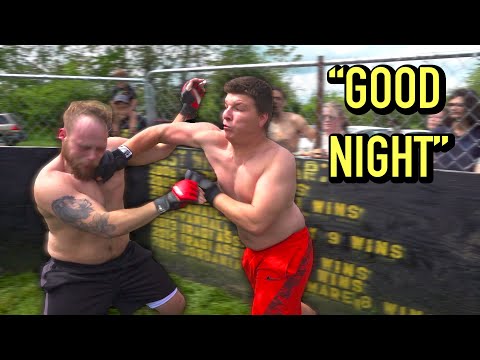
Budo & Martial Arts: Streetbeefs | Bobby Knuckles vs. Ronan - A Raw Look at Settling Disputes**

Welcome, warriors, to another profound exploration within the hallowed halls of Budo and Martial Arts. Today, we descend into a realm that often blurs the lines between sport, necessity, and raw human conflict: the world of unsanctioned, yet legally framed, combat. We're dissecting the phenomenon of Streetbeefs, specifically focusing on the bout between Bobby Knuckles and Ronan. But this isn't just about a single fight. It's about the underlying philosophy, the desperate need for an outlet, and the potent questions it raises about conflict resolution in the modern age.

The Genesis of Streetbeefs: From Beefs to Gloves

The genesis of Streetbeefs, as articulated by its founder, Scarface, is rooted in a grim observation: escalating disputes in his community were leading to severe, often life-altering, violence. The documentary "Guns to Gloves" and features in ESPN The Magazine paint a picture of a man seeking a practical, albeit unconventional, solution. The core concept is deceptively simple: replace the chaos of knives, guns, and gang-involved brawls with a regulated, one-on-one, gloved confrontation. This isn't merely about entertainment; it's presented as a vital societal pressure valve.

The website and associated social media channels, including those of @Lord Besteban, are not just platforms for promoting fights. They are the nexus of this burgeoning community, a digital extension of what Scarface terms "Satan's Backyard." The explicit statement that "OUR MATCHES ARE 100% LEGAL. ALL PARTICIPANTS MUST BE 18 OR OLDER" is crucial. It frames Streetbeefs not as lawlessness, but as a managed, albeit raw, form of conflict resolution operating within the letter, if not always the spirit, of the law. The aim is to de-escalate, to offer an alternative that prevents fatalities and incarceration, fostering instead camaraderie and understanding—a true #BUDO in its most primal sense of disciplined action.

Analyzing Bobby Knuckles vs. Ronan: Beyond the Brawl

While the original content provides the names of the combatants, Bobby Knuckles and Ronan, and the context of their bout being published on May 23, 2020, a deeper martial arts analysis requires more than just the event details. We must infer the nature of the confrontation. Streetbeefs, by its very definition, often pits individuals with genuine personal grievances against each other. This isn't a meticulously trained sparring session; it's a crucible where raw aggression meets the necessity of imposed rules.

In a fight like Bobby Knuckles vs. Ronan, we would typically observe a blend of styles. Given the promotion's focus on boxing and MMA elements, expect to see rudimentary boxing techniques, perhaps some wild grappling exchanges, and a heavy emphasis on heart and conditioning. The term "Bobby Knuckles" itself evokes images of untrained, powerful strikes – a testament to raw power rather than refined technique. Ronan, by contrast, might represent a slightly more controlled, yet equally determined, approach. The "purely for sport" matches stand apart from "REAL beef," and it's the latter that offers the most potent, if brutal, insight into human conflict.

The effectiveness of such bouts lies not in the technical brilliance of the participants, but in their resolve and ability to withstand pressure. We see a raw display of #combat, where mental fortitude is as critical as physical prowess. The lack of extensive martial arts training in many participants means that fundamental principles of distance, timing, and defense often take a backseat to sheer will and the adrenaline of the moment. This is where the spectacle becomes both compelling and concerning.

"I've settled hundreds of disputes in our area with this method, and hope to settle THOUSANDS more, all while entertaining my viewers." - Scarface, Streetbeefs Founder

The Philosophical Underpinnings: A Safer Outlet?

The core philosophy behind Streetbeefs presents a fascinating paradox. On one hand, it champions discipline and regulated conflict, moving away from lethal weapons and indiscriminate violence. On the other, it inherently relies on aggression and confrontation. This is where the discussion transcends mere #fight analysis and delves into the realm of #martialphilosophy.

Is Streetbeefs a legitimate evolution of conflict resolution, a modern interpretation of dueling, or simply a way to monetize aggression? Scarface's intention to "provide a safer outlet for aggressive young men and women to solve disagreements without killing each other or going 2 jail" is a noble goal. It acknowledges the primal need for dominance and resolution that traditional martial arts also seek to address, albeit through a more structured and ethical framework. The emphasis on forming bonds and lasting friendships within the "club" suggests a community aspect that goes beyond the individual bouts.

However, one must question the long-term impact. Does offering a regulated outlet for aggression truly neutralize it, or does it simply provide a platform for its expression, potentially glorifying it? This is a debate that resonates deeply within the martial arts community. While traditional #BUDO emphasizes self-control, humility, and the avoidance of conflict where possible, Streetbeefs operates on the premise that conflict is inevitable and must be channeled. The question remains: does channeling it through a spectacle truly diminish its destructive potential, or merely reframe it?

Cultural Impact and the Spectacle

Streetbeefs has carved out a significant niche online, attracting viewers drawn to the raw, unvarnished nature of these encounters. The mention of being featured in The New York Times and ESPN The Magazine underscores its cultural resonance. It taps into a primal fascination with combat, a theme as old as humanity itself. The "Satan's Backyard" moniker, the "Demon Boys Boxing" channels, and the explicit merchandise all contribute to a distinct aesthetic – one that leans into the darker, more visceral aspects of human nature.

The fusion of genuine disputes with entertainment is a potent combination. It offers viewers a glimpse into conflict resolution stripped bare of professional sports' polish. While some matches are "purely for sport," the inclusion of "REAL beef" injects a level of consequence and emotional intensity that professional fights often struggle to replicate. This rawness is, undoubtedly, a major draw for its audience. The **#BUDOYArtesMarciales** blog aims to dissect such phenomena, understanding the motivations behind them and their place within the broader landscape of martial arts and combat sports.

This phenomenon also raises questions about the ethics of spectating. Are we merely passive observers, or do we, by consuming and sharing this content, inadvertently encourage such confrontations? The line between observing a societal pressure release and endorsing potentially harmful behavior is fine and often blurred in the digital age. The **#CommunityOfWarriors** spirit Scarface cultivates might be genuine, but it exists within a framework that is inherently confrontational.

Training Considerations for Unsanctioned Combat

For those who find themselves drawn to participating in events like Streetbeefs, or even those who wish to understand the demands, specific training considerations arise. While formal martial arts training is beneficial, the environment of Streetbeefs often requires a different kind of preparation.

1. Conditioning is King: Without the refined techniques of professional fighters, endurance and sheer physical grit become paramount. High-intensity interval training (HIIT) and extensive cardiovascular work are essential. Think of the type of **#conditioning** that prepares you for prolonged, intense effort rather than technical exchanges.

2. Basic Striking Proficiency: While formal technique might be secondary, knowing how to throw a basic punch (jab, cross, hook) and avoid being hit effectively is crucial. Boxing fundamentals are invaluable here. The concept of "knowing your limits" is vital, understanding when to press and when to conserve energy.

3. Mental Fortitude: This is perhaps the most critical element. The ability to manage adrenaline, overcome fear, and push through pain is developed through consistent practice and by confronting one's own limitations. This is where the spiritual development aspect of martial arts, even in this raw form, comes into play. The **#MentalGame** is everything.

4. Understanding the Ruleset: Each Streetbeefs event operates under specific rules. Understanding these—what's allowed, what's forbidden, the referee's role—is non-negotiable. This is the most basic form of respecting the discipline, even if it's a discipline forged in backyard brawls.

Essential Equipment for Your Training

While Streetbeefs often emphasizes raw confrontation, proper equipment is non-negotiable for safety and performance, both in training and in actual bouts. For those serious about preparing for such encounters, or even for general **#MartialArtsTraining**, the following are essential:

  • Boxing Gloves (16oz Recommended): For sparring and actual bouts. Lighter gloves increase the risk of injury for both participants. These are crucial for reducing knockout power slightly and protecting hands.
  • Mouthguard: Absolutely essential to protect your teeth, jaw, and prevent concussions. A custom-fitted mouthguard is ideal.
  • Groin Protector (Cup): In any combat sport, protecting this vulnerable area is paramount.
  • Hand Wraps: Worn under boxing gloves, these provide crucial support to the wrist and hand bones, preventing fractures and sprains.
  • Shin Guards: If incorporating kicks or MMA-style sparring, these protect against bruising and cuts.
  • Headgear: For high-impact sparring, headgear can significantly reduce the risk of cuts and superficial injuries.
  • Durable Training Attire: Comfortable shorts and t-shirts that allow for a full range of motion are necessary.

Investing in quality **#MartialArtsMerchandise** and training gear is not a luxury; it is a fundamental aspect of responsible training and injury prevention. This is where the practical side of **#BUDO** meets the reality of **#combat**.

Veredicto del Sensei: Brutal Honesty or Necessary Evil?

Streetbeefs presents a complex ethical and philosophical challenge. On one hand, Scarface's initiative is a bold attempt to mitigate the lethal consequences of street violence by offering a controlled, albeit raw, alternative. The commitment to legality and participant safety (within the context of a fight) is commendable. It provides an outlet, a community, and a spectacle that undeniably entertains.

However, as a practitioner and student of true #Budo, I must remain critical. The glorification of violence, even when regulated, is a slippery slope. While it may prevent some deaths, does it truly instill the principles of self-control, humility, and the avoidance of conflict that are the cornerstones of traditional martial arts? The emphasis on "winning the beef" rather than mastering oneself is a significant divergence. It’s a raw, often brutal, testament to human nature's need to resolve disputes, but it lacks the deep ethical framework that defines martial arts as a path to self-improvement.

Streetbeefs offers a fascinating case study in conflict resolution and the primal appeal of combat. It is, in its own way, a form of #fight culture, raw and unfiltered. But it is not, by any traditional definition, a martial art. It is a necessary evil for some, perhaps, but a far cry from the disciplined pursuit of perfection that defines the true martial path.

Rating: 3 out of 5 **"Gloves of Necessity"** - Necessary for its intended purpose, but lacking the soul of martial arts.

Frequently Asked Questions

What is the main purpose of Streetbeefs?

The main purpose of Streetbeefs, according to its founder, is to provide a legal and safer alternative for individuals with disputes to settle their differences through one-on-one combat, thereby reducing real-world violence involving weapons and gangs.

Are Streetbeefs matches professional fights?

No, Streetbeefs matches are described as amateur exhibitions. While participants may have some fighting experience, they are not professional athletes in the traditional sense, and the events are not sanctioned professional sporting contests.

What kind of training is recommended for Streetbeefs participants?

Participants are recommended to focus on raw conditioning, basic boxing and MMA techniques, mental fortitude to handle adrenaline and fear, and a thorough understanding of the specific event rules.

How does Streetbeefs differ from traditional martial arts?

Traditional martial arts focus on self-improvement, discipline, humility, and conflict avoidance. Streetbeefs focuses on channeling aggression to resolve disputes through combat, prioritizing an outlet for conflict over the broader philosophical development of the individual.

To Further Your Journey

``` GEMINI_METADESC: Explore the raw reality of Streetbeefs with Bobby Knuckles vs. Ronan. An in-depth analysis from a martial arts perspective on conflict, sport, and the Budo spirit.

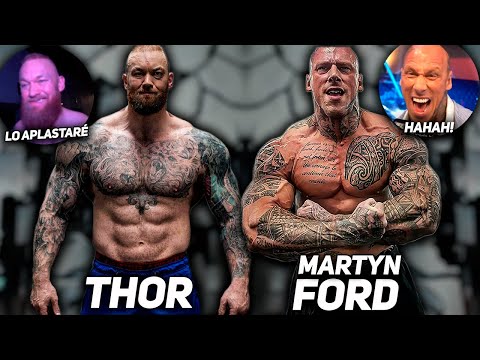
Martyn Ford vs. Hafþór Björnsson: A Martial Master's Critique of the "Clash of Titans"

Hello and welcome, fellow practitioners and enthusiasts of the martial way. Today, we delve into a spectacle that has captured global attention, not for its technical prowess, but for the sheer, raw mass of its participants: Martyn Ford versus Hafþór Björnsson. Published on May 20, 2022, this event begs the question, not just for the casual observer, but for us, the dedicated students of combat: What does this truly represent within the grand tapestry of martial arts and combat sports?

The Spectacle vs. The Art

Let us be clear from the outset. When two individuals of such monumental stature step into a ring, the primary draw is not the intricate application of a sweep or the precise execution of a punch. It is the raw, primal display of power. Martyn Ford, a fitness influencer and actor, and Hafþór Björnsson, the actor who famously portrayed "The Mountain" in Game of Thrones and a former strongman champion, represent an extreme of human physicality. The anticipation surrounding their bout, often dubbed "the fight of the year" by sensationalist media, stems from a morbid curiosity: can these giants, accustomed to feats of strength rather than structured combat, actually engage in a meaningful fight?

As a lifelong student of **BUDO** and various **martial arts**, my perspective is honed by years of dedicated training. I’ve seen the elegant devastation of Karate, the strategic grappling of Judo, the fluid dynamics of Aikido, and the brutal efficiency of Muay Thai. The question is not whether Ford and Björnsson *can* hit each other, but whether their engagement will reveal any semblance of the principles we hold dear: discipline, respect, strategy, and technical refinement. Or is this merely a demonstration of brute force, a modern-day gladiatorial contest stripped of its historical context and ethical underpinnings?

Beyond the Bulge: A Legacy of Strength

Hafþór Björnsson’s background as a former World’s Strongest Man competitor provides a clear lineage to displays of immense physical power. The strongman competitions themselves are a testament to human capability, pushing the boundaries of what the body can lift, pull, and carry. These are not 'fights' in the traditional sense, but tests of pure, unadulterated strength and endurance against inanimate objects or predetermined challenges. Björnsson’s transition to boxing, albeit against opponents of varying experience levels, is a step into a realm demanding a different kind of physical and mental fortitude.

Martyn Ford, while perhaps not possessing the same raw powerlifting credentials, has cultivated a formidable physique through rigorous fitness training and bodybuilding. His background in acting and fitness modeling has given him a public platform, making him a recognizable figure in the realm of physical culture. The pairing, therefore, is a natural, if predictable, consequence of the modern celebrity-driven combat landscape. They are titans, behemoths whose very presence is a statement. But does their physical might translate to effective combat technique?

"True strength lies not in the size of your muscles, but in the discipline of your mind." - A principle echoed across many martial traditions.

This quote, or variations thereof, is a cornerstone of **martial philosophy**. It speaks to the deeper essence of **Budo**. While Ford and Björnsson undoubtedly possess the former, the latter remains to be seen in a true combat scenario. Their immense size presents unique challenges and advantages. Their punches carry devastating weight, but their movement might be slower, their stamina potentially an issue against a more conventionally trained fighter.

The "Technique" Behind the Power: A Skeptic's Gaze

When we analyze the actual footage and training camps of Martyn Ford and Hafþór Björnsson, what do we observe? We see heavy bags being struck with immense force, conditioning drills that test their cardiovascular limits, and sparring sessions that, by necessity, are often cautious due to the risk of serious injury. The 'technique' displayed tends to be rudimentary: straight punches, perhaps the occasional uppercut, and a great deal of clinching and holding. The footwork is often heavy, ponderous, reflecting their mass. This is a far cry from the dynamic foot placement of a Karateka, the explosive takedowns of a Judoka, or the intricate evasive maneuvers of a boxer trained in the classical sense.

The most significant difference between a contest like this and a professional MMA or boxing match lies in the years, often decades, of dedicated, structured **entrenamiento** that professional fighters undergo. They learn not only to hit hard but to take a hit, to move efficiently, to strategize, to grapple, and to endure. They understand distance management, timing, and the subtle art of deception – elements that are largely absent when the primary tool is overwhelming physical presence.

From a **BUDO** standpoint, the effectiveness of a technique is measured not just by its ability to incapacitate an opponent but by its efficiency, its adherence to principles of physics and biomechanics, and its roots in a system of self-defense or combat that has been tested over time. A powerful haymaker from a giant might be effective if it lands, but if it misses, the imbalance created can be exploited by a faster, more technically adept opponent. This is a fundamental principle in many **combatsports**.

The Budo Perspective: Where Does This Fit?

The core tenets of **Budo** – the Japanese martial way – emphasize self-improvement, discipline, respect, and the development of character. While the spectacle of Ford vs. Björnsson certainly draws attention, it's debatable how much it aligns with these deeper principles. Is there self-improvement happening? Undoubtedly, both men are pushing themselves physically and mentally. Is there discipline? The training requires it. But does it foster the traditional respect for the opponent and the art itself? This is where the controversy lies.

When combat becomes primarily a commercial spectacle, a clash of personalities and sheer size, it can overshadow the martial essence. The focus shifts from the 'how' and 'why' of combat to the 'who' and 'how much'. This is not to condemn the individuals involved; they are participating in a popular trend within combat sports entertainment. However, as practitioners and students of **martial arts**, we must maintain a critical eye. We must differentiate between a genuine contest of skill and a pre-ordained entertainment event designed to capitalize on public fascination with size.

The **Budo** path is one of constant learning and refinement. It’s about understanding oneself through conflict, both internal and external. A bout between two men who are primarily entertainers and physical specimens, rather than seasoned combatants, offers limited insight into the true nature of **combat** or the philosophies that underpin it. It is a powerful display of physical presence, but it is not a masterclass in **fight** strategy or **entrenamiento** methodologies that have been forged over centuries.

Could this event, however, serve a purpose? Perhaps it introduces new audiences to the concept of combat sports, piquing their interest to explore more traditional disciplines. It’s a gateway, albeit a very large and intimidating one. The ethical considerations around such fights, particularly regarding the potential for severe injury due to mismatches in skill rather than just size, are also significant. The governing bodies and commissions responsible for sanctioning these bouts have a crucial role to play in ensuring safety, a principle that should be paramount in any form of **lucha** or **pelea**.

Sensei's Verdict: Was it a Fight or a Freak Show?

Let us address the crux of the matter. Was Martyn Ford vs. Hafþór Björnsson a legitimate contest of martial skill? My assessment, from a perspective steeped in the principles of **BUDO** and **martial arts**, is that it leaned heavily towards the spectacle. The sheer disparity in weight and the unique physical attributes of the participants meant the bout was less about technical boxing or fighting strategy and more about managing immense power and endurance.

While both men trained and displayed commendable determination, the fight itself did not showcase the nuanced tactics, defensive strategies, or fluid movement that characterize skilled combat. It was, in essence, a demonstration of raw power and physical presence. The controversy and debate it generated, however, are valuable. They force us to question what we value in combat: sheer strength, or skill honed through dedication? Is entertainment paramount, or is the purity of the art the ultimate measure?

Rating: The "Gentle Giant" Fallacy Award - For highlighting the vast gulf between raw strength and true martial prowess. It served its entertainment purpose for many, but offered little in terms of genuine martial insight. It’s more of a physical chess match played with super-heavyweight pieces where the queen is already trapped by her own dimensions.

Essential Gear for the Aspiring Warrior

While the giants in this contest wield their immense frames as weapons, your journey in the martial arts requires specific tools to hone your skills safely and effectively. Investing in the right equipment is a crucial step in your **entrenamiento**. For those looking to emulate the discipline of **Karate** or the groundwork of **Jiu-Jitsu**, consider the following:

  • Quality Gis: For Judo, Jiu-Jitsu, and Karate, a durable, well-fitting Gi is paramount. Look for reinforced stitching and heavy-duty cotton for longevity. Brands specializing in **KarateMerchandise** or **JudoSkills** often offer superior quality.
  • Training Gloves: Essential for striking arts like Kickboxing or Muay Thai, and for MMA sparring. For heavier individuals or those focusing on power, 16oz or heavier gloves are recommended for sparring.
  • Shin Guards: Crucial for protecting yourself and your training partners during Muay Thai or Kickboxing drills.
  • Mouthguards: Non-negotiable for any form of sparring or competitive **combat**. Protect your teeth and brain.
  • Training Mats: For practicing grappling, groundwork, or even falls in Judo and Aikido, appropriate mats provide necessary cushioning.
  • Resistance Bands: Versatile for strength and conditioning, these are excellent for **AtHomeWorkout** routines, enhancing agility and power without heavy equipment.

Remember, the best gear is that which allows you to train consistently and safely. Exploring specialized retailers for **MartialArtsMerchandise** can yield high-quality products that will serve you for years.

Frequently Asked Questions

Is Hafþór Björnsson a professional boxer?
While Hafþór Björnsson has participated in boxing matches, he is primarily known for his career as a strongman and actor. He has not competed extensively as a professional boxer in the traditional sense.
What are Martyn Ford's primary skills?
Martyn Ford is known for his career in fitness, bodybuilding, and acting. He has trained in various combat sports but is not a professional fighter with a long competitive history in any single discipline.
Does size matter in a fight?
Size is a significant factor, offering advantages in reach and power. However, in skilled combat, technique, speed, strategy, and endurance often overcome sheer size. A smaller, faster, technically superior fighter can defeat a larger, slower opponent.
What is Budo?
Budo is a Japanese term referring to the "martial way." It encompasses not only the physical techniques of combat but also the mental, spiritual, and ethical development of the practitioner, emphasizing self-improvement and character building.
Can this type of fight be considered a real martial art?
While it involves elements of combat sports, fights between individuals primarily focused on size and spectacle, rather than a lifetime of dedicated technical training, are generally not considered representative of traditional martial arts. They are more akin to entertainment events.

Deepen Your Martial Journey

To truly understand the nuances of combat and the philosophies that guide it, look beyond the surface-level spectacle. Explore the rich traditions that have shaped martial arts for centuries:

  • BUDO: The overarching philosophy of the martial way.
  • Karate Community: Explore the striking arts that emphasize discipline and power.
  • JudoSkills: Discover the art of grappling and throws.
  • MMA: Understand the modern synthesis of various martial disciplines.

Sensei's Reflection: Your Next Step

We have witnessed a clash of titans, a spectacle that sells tickets and draws eyes. But as practitioners of the martial way, are we truly learning? Or are we merely being entertained by a distorted reflection of what combat can be? The true journey lies not in the size of the mountains we face, but in the unwavering discipline and refined technique with which we approach the path. Consider this: when you face your own 'mountains' in life, will you rely on brute force alone, or will you draw upon the depth of your training, the sharpness of your mind, and the unwavering spirit of the warrior?

``` GEMINI_METADESC: Critically analyze Martyn Ford vs. Hafþór Björnsson. A martial arts master dissects the spectacle, technique, and Budo principles behind the 'Clash of Titans'.

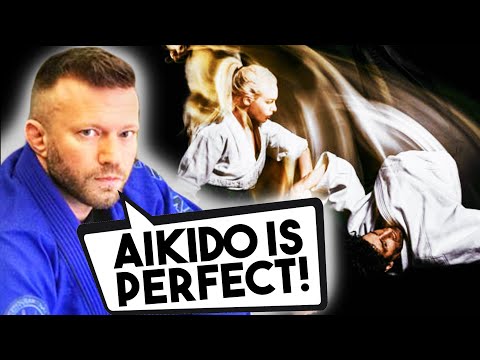
BJJ Black Belt Eli Knight: Aikido and Tai Chi - The Apex of Martial Arts? A Sensei's Critique

The martial world is abuzz. Eli Knight, a decorated Brazilian Jiu-Jitsu black belt and noted self-defense expert, has thrown a gauntlet, asserting that Aikido and Tai Chi represent the *pinnacle* of martial arts. This is a bold claim, one that resonates with a particular romanticism about martial traditions, but one that demands a rigorous examination from the perspective of someone who has dedicated their life to the understanding and practice of combat science. As your Sensei, I approach this not with blind acceptance, but with the sharp eye of a critic and the deep well of knowledge of a martial scholar. Is Knight’s assertion a profound truth, or a misguided romanticism? Let us dissect this.

Table of Contents

The Maverick's Pronouncement

Eli Knight’s statement, that Aikido and Tai Chi are the "perfect" martial arts, is precisely the kind of declaration that ignites debate in any dojo or training hall. It’s the kind of proclamation that, while appealing to a certain aesthetic of martial arts, often overlooks the brutal realities of conflict and the evolutionary pressures that shape effective combat systems. My mission here is to probe this assertion, separating the practitioner's heartfelt belief from the objective efficacy of these arts in the context of modern combat and self-defense. We are not merely discussing forms and philosophies; we are discussing survival and effectiveness.

Eli Knight's Position: A Closer Look

Knight, a practitioner with significant standing in the BJJ community, brings a unique perspective. His background in Brazilian Jiu-Jitsu, a grappling art forged in the crucible of real-world application and competition, imbues his opinions with a certain weight. BJJ is known for its ruthless pragmatism, its focus on leverage, control, and submission. When such an individual praises arts that are often perceived as softer, more philosophical, or even theatrical, it forces us to question *why*. Is he highlighting a forgotten aspect of these arts, or is he perhaps looking at them through the lens of his own highly effective system, seeking parallels that might not fully withstand scrutiny? His explanation, as presented by the original author, is likely focused on principles like yielding, redirection of force, and the cultivation of internal energy (Ki), concepts central to both Aikido and Tai Chi. But do these principles translate to effective, decisive action when the stakes are highest?
"The way of the warrior is to do no fighting. This is the mark of a true warrior." - Miyamoto Musashi (while his philosophy leans towards avoiding conflict, the ability to end it decisively is implied).

Aikido in the 21st Century: Promise vs. Reality

Aikido, founded by Morihei Ueshiba, is often described as a martial art of harmony and non-resistance. Its practitioners focus on blending with an opponent's movement, utilizing joint locks, throws, and pins to neutralize threats. The philosophy emphasizes redirecting an attacker's energy, making it appear as though the attacker is defeating themselves. On the surface, this sounds incredibly sophisticated and effective. However, a critical assessment reveals significant challenges. * **The Problem of Resistance:** Aikido's efficacy is highly dependent on the attacker moving in a predictable, committed manner. In a situation of genuine, untrained aggression – a street fight, for instance – attackers rarely commit to a single, flowing attack that can be easily blended with. They tend to be explosive, unpredictable, and often armed. The intricate joint manipulations and throws, which require precise timing and the opponent's cooperation (or at least a degree of predictable movement), can become exceedingly difficult to apply under extreme duress. * **Lack of Competitive Testing:** Unlike BJJ, Boxing, Muay Thai, or Judo, Aikido has largely eschewed competitive sparring or full-contact competition. While this has preserved its philosophical ideals, it has also left a significant gap in empirical validation. How do we truly know an Aikido technique is effective against a resisting, untrained individual if it's rarely tested under such conditions? The **Martial Arts Training** aspect is crucial here; without pressure-testing, training can become an elaborate dance. * **The Role of Uke:** In Aikido training, the *uke* (receiver of the technique) often plays a crucial role in making the technique work, sometimes demonstrating a degree of complicity in the fall or lock. While this is essential for learning safely, it can create a disconnect between training and application.

Tai Chi: From Health Exercise to Combat Application?

Tai Chi Chuan (Taijiquan) is renowned globally for its health benefits, its slow, flowing movements promoting balance, flexibility, and mindfulness. However, its roots are undeniably in martial combat. The principles of yielding, root, and the generation of internal power (Jin) are central to its practice. * **The Lost Art of Push Hands:** The practice of "Push Hands" (Tui Shou) is the closest Tai Chi comes to controlled sparring. It's designed to develop sensitivity, balance, and the ability to sense and neutralize an opponent's force. However, it is still a far cry from the chaotic nature of a real fight. Many practitioners become highly skilled at Push Hands but struggle to translate this to striking or self-defense. * **Striking and Power Generation:** While Tai Chi *does* involve striking techniques, they are often integrated with evasive and yielding movements. The power generation, *Jin*, is developed through specific training methods that are often esoteric and difficult to master. The question remains: can this power be generated quickly and effectively enough in a surprise confrontation against a motivated attacker? * **The "Health" Perception:** The overwhelming focus on Tai Chi as a health and meditation practice in the West has overshadowed its martial application. Finding instructors who can effectively teach its combat potential is increasingly rare.

The Sensei's Critique: Where Theory Meets Fury

Let us be clear: the philosophical underpinnings of Aikido and Tai Chi—harmony, balance, non-resistance, and the cultivation of internal energy—are profound and offer immense personal development benefits. The issue arises when these principles are presented as the *apex* of martial arts for practical combat. The "perfect" martial art must excel in several critical areas: 1. **Efficacy under Pressure:** Can the techniques be applied reliably against a resisting, untrained, and potentially aggressive opponent? 2. **Simplicity and Directness:** In moments of extreme stress, complex techniques often fail. Simplicity and directness are paramount. 3. **Empirical Validation:** Has the art been tested and proven effective through competition or documented real-world encounters? 4. **Adaptability:** Can the art adapt to various threats, including multiple attackers, weapons, and different ranges of combat (striking, grappling)? From my perspective, while Aikido and Tai Chi possess valuable principles, they fall short in consistently meeting these criteria for *combat effectiveness*. Their strength lies in philosophy and personal cultivation, not necessarily in battlefield application.

MMA: The Ultimate Proving Ground for Martial Efficacy

The rise of **Artes Marciales Mixtas** (MMA) has undeniably changed our understanding of martial effectiveness. MMA forces practitioners to integrate techniques from various disciplines – striking (Boxing, Muay Thai, Kickboxing), grappling (BJJ, Judo, Wrestling), and clinch work – and test them under the most rigorous, full-contact conditions imaginable. The fact that elements from arts like BJJ, Muay Thai, and Wrestling are now foundational to successful MMA careers, while Aikido and Tai Chi have had minimal direct impact at the highest levels, speaks volumes. It’s not that their principles are without merit, but rather that their specific methodologies, when faced with the full spectrum of combat, have proven less adaptable and effective than those that emphasize direct confrontation and empirical testing. The journey of Rokas, the author of the original piece, perfectly illustrates this point. His 14 years in Aikido, followed by a move to train **Entrenamiento de MMA** and compete, highlights a common realization among dedicated martial artists: to truly understand effectiveness, one must face resistance and pressure.

Historical Context and Evolution

Historically, martial arts evolved out of necessity. Styles that worked best for survival on the battlefield or in defense of oneself and one's community naturally gained prominence and were passed down. BJJ, for instance, has a clear lineage of being tested and refined. Aikido, on the other hand, emerged during a period of relative peace in Japan, and its creator, Ueshiba, sought to create an art that emphasized peace and spiritual development alongside physical techniques. Tai Chi, while older and with a more direct martial lineage, also saw significant development towards health and meditative practices, especially in its modern forms. This doesn't invalidate their martial aspects, but it shifts their primary focus.

Spirituality vs. Survival: A False Dichotomy?

Perhaps the core of Knight's argument, and the romantic appeal of Aikido and Tai Chi, lies in the desire for a martial art that transcends mere violence—one that cultivates peace, harmony, and spiritual growth. Many practitioners genuinely seek this, and these arts offer a profound path for self-improvement. However, presenting them as the *perfect* martial arts for *combat* risks creating a false dichotomy: that effectiveness must be purely brutal and devoid of philosophy, or that philosophy inherently lacks effectiveness. This is not the case. A well-rounded martial artist, a true **WarriorPhilosophy**, understands that effectiveness and spirit are not mutually exclusive. The most dangerous warriors are often those with profound discipline, focus, and control—qualities cultivated through deep martial practice, including those found in the more pragmatic arts. The goal isn't to reject the wisdom of Aikido or Tai Chi, but to place it in its proper context. They offer incredible benefits for health, mindfulness, and personal development. For *self-defense* and *combat*, however, a critical mind must look towards arts that have been consistently validated through pressure-testing and competition. While Aikido and Tai Chi emphasize body mechanics over specialized gear, certain items can significantly enhance the training experience, especially if one seeks to bridge the gap towards practical application.
  • Dojo Uniform (Gi): A sturdy, comfortable **KarateMerchandise** or BJJ gi is essential for practicing throws and joint locks in Aikido. Look for durable fabrics that can withstand repeated stress.
  • Training Mats (Tatami): Proper matting is crucial for safe practice of throws and falls.
  • Focus Mitts and Pads: For incorporating striking elements, especially if you are integrating aspects of Tai Chi's striking or preparing for MMA, focus mitts and pads are invaluable for partner drills.
  • Sparring Gear (Optional but Recommended): For a more complete martial experience, consider investing in **MartialArtsMerchandise** such as mouthguards and groin protectors if you begin any form of controlled sparring.

Frequently Asked Questions

Is Aikido completely useless for self-defense?

No, Aikido is not entirely useless. It teaches principles of balance, body movement, and the idea of redirecting force, which can be beneficial. However, its efficacy is significantly limited in realistic self-defense scenarios due to the lack of pressure-testing and the unpredictable nature of real aggression.

Can Tai Chi be used for fighting?

Yes, Tai Chi has martial roots and combat applications. However, mastering these requires dedicated training focused on its martial aspects, often through practices like Push Hands and striking drills, which are not always emphasized in modern Tai Chi classes primarily focused on health.

Why are BJJ and MMA so effective?

Brazilian Jiu-Jitsu and MMA are highly effective because they have been rigorously tested and refined through full-contact competition. They focus on practical, proven techniques for striking, grappling, and control, adapting to the realities of combat.

What is the main difference between Aikido and BJJ in terms of effectiveness?

The primary difference lies in their approach to conflict and their validation. BJJ prioritizes proven effectiveness through competition and direct confrontation, focusing on control and submission. Aikido emphasizes blending, philosophical harmony, and redirection, with less emphasis on competitive testing, making its application in chaotic situations less reliable.

Should I stop training Aikido or Tai Chi if I want to learn self-defense?

Not necessarily. If your primary goal is self-defense, consider supplementing your training with arts that are proven effective under pressure, such as BJJ, Muay Thai, Boxing, or Judo. You can still benefit immensely from the philosophical and physical aspects of Aikido and Tai Chi while acquiring practical self-defense skills elsewhere.

The Sensei's Critique: Final Verdict

Eli Knight's endorsement of Aikido and Tai Chi as "perfect" martial arts is a testament to the enduring allure of their philosophies and the depth of their principles. However, as a critic and practitioner, I must assert that "perfect" for combat effectiveness is a title earned in the heat of battle, not in the serene quiet of a dojo. While these arts offer invaluable lessons in personal development, balance, and awareness, their practical application in the face of genuine, uncooperative aggression is demonstrably less robust than systems like BJJ or MMA, which have been forged and refined through the ultimate proving ground: competition and real-world application. My assessment is that Aikido and Tai Chi are excellent for personal cultivation, health, and understanding the deeper philosophical aspects of martial arts. However, if your primary goal is to prepare for the harsh realities of conflict, to defend yourself effectively, or to engage in combat sports, focusing on arts with proven, tested methodologies is a far more pragmatic and reliable path.

For Deeper Exploration on Your Path

To truly understand the evolution of martial arts and their practical application, I encourage you to explore these related topics:

Reflexión del Sensei: Tu Próximo Paso

Knight's statement has stirred the pot. Now, I pose this to you: If a martial art's perfection is measured by its ability to instill peace and harmony, then perhaps Aikido and Tai Chi are indeed perfect. But if its perfection is measured by its capacity to neutralize a threat decisively and reliably in the most chaotic circumstances, does the definition of "perfect" change? Where does *your* training lie on this spectrum? ``` GEMINI_METADESC: Sensei's critical analysis of BJJ Black Belt Eli Knight's claim that Aikido & Tai Chi are perfect martial arts. Explore combat effectiveness, MMA, and philosophical nuances.