Showing posts sorted by date for query Kyokushin Karate founder. Sort by relevance Show all posts

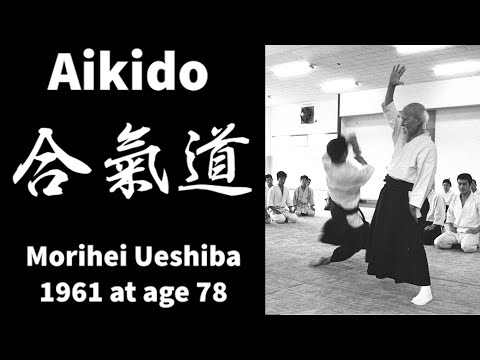
Aikido's Essence: Analyzing O'Sensei Ueshiba's 1961 Masterclass

Introduction: A Glimpse into the Soul of Budo

This rare 1961 footage, capturing a 78-year-old Morihei Ueshiba, the revered founder of Aikido, is far more than just a martial arts demonstration. It's a profound window into the very essence of Budo, a concept that transcends mere physical combat. Many today, particularly those drawn to the explosive dynamism of MMA or the brutal efficiency of Kyokushin Karate, might question the relevance of Aikido's fluid movements. Does its emphasis on blending and redirection hold water in a world that often values brute force? Let me tell you, this video is the answer. It's a masterclass in principles that are eternally valid, not just for the dojo, but for life itself. We will dissect this gem, exploring Ueshiba's techniques, his philosophy, and the enduring legacy of Budo.

Ueshiba in Action: The Art of Blending and Redirecting

Watching Ueshiba Sensei at this advanced age is awe-inspiring. His movements, while perhaps not possessing the raw power of a younger man, are imbued with an almost supernatural grace and precision. The documentary showcases his mastery of Aikido techniques – the effortless throws, the seemingly gentle yet devastating joint locks. He doesn't meet force with force; instead, he becomes one with his attacker's energy, subtly redirecting their momentum. This is the core of Aikido, and it's a principle that many arts, even the fiercely competitive BJJ or Judo, can learn from. The seemingly passive nature of his defense is, in reality, a highly active and intelligent application of physics and timing. He demonstrates that true strength lies not in overpowering an opponent, but in understanding and harmonizing with their movements. Have you ever sparred with someone who just seems to *flow* with your attacks, nullifying them before they even land? That's the echo of Ueshiba Sensei's teaching.
"The true meaning of martial arts is to unify the world." - Morihei Ueshiba

The Philosophy of Aikido: Harmony, Compassion, and Unity

Beyond the physical application, Ueshiba Sensei's words in this documentary reveal a philosophy that is both deeply spiritual and remarkably practical. He speaks of Aikido not as a means of destruction, but as a path to reconciliation. Harmony, balance, and compassion are not mere buzzwords here; they are the foundational pillars of his art. This stands in stark contrast to some of the more combative depictions of martial arts in popular culture, where violence is often glorified without consequence. Ueshiba's vision is one of connection, of resolving conflict not through aggression, but through understanding and empathy. It’s a message that resonates even more powerfully today, in our often fragmented and contentious world. This philosophy is the very heart of BUDO, the "Way of the Warrior," which demands not just martial prowess but moral integrity.

Budo: More Than Just Fighting

The term Budo itself is crucial here. It's not simply "martial arts" in the Western sense. It encompasses the entire way of life, the philosophy of the warrior, drawing heavily from principles like Bushido. This means more than just mastering techniques for a fight. It's about self-cultivation, rigorous discipline, and unwavering honor. Ueshiba Sensei embodies this perfectly. His practice was a lifelong dedication to refining not just his body, but his mind and spirit. The documentary offers a fleeting glimpse, but it's enough to understand that for masters like him, the training never truly ends. It's a constant pursuit of self-improvement, a journey that shapes one's character in profound ways.
"The martial way is a thing of daily practice. It is a continuous process of refinement. The master is simply a student who never quit." - Attributed to various martial arts masters

Training and Self-Cultivation: The Path to Inner Peace

The practice of martial arts, as exemplified by Ueshiba's Aikido, is a powerful tool for inner growth. It offers a structured path to control one's ego, to confront and overcome fear and anger, and to cultivate a deep sense of inner peace. This isn't just about learning to defend yourself physically; it's about building mental resilience. The physical demands – improving fitness, flexibility, and coordination – are significant, but the mental benefits are arguably even greater. In a world rife with stress and anxiety, the discipline and focus required in martial arts training provide an invaluable sanctuary. It's a lifelong pursuit, a journey of personal development that extends far beyond the dojo mats. The principles learned in Karate, Judo, or Aikido can positively impact every facet of life.

Veredicto del Sensei: A Timeless Testament

This 1961 documentary is not just a historical artifact; it's a living testament to the enduring power of Budo. Ueshiba Sensei, even at 78, displays a level of mastery that transcends time and style. While the martial arts landscape has evolved dramatically, with hyper-realistic sports like MMA and UFC capturing global attention, the core principles demonstrated here remain vital. The emphasis on harmony, respect, and self-cultivation is a counterbalance to the often aggressive narratives surrounding combat sports. This film is essential viewing for anyone who seeks a deeper understanding of martial arts, not just as a means of fighting, but as a path to becoming a better human being. Rating: 10/10 Cinturones Negros en Sabiduría y Maestría.

Essential Equipment for Your Training

To embark on your own martial arts journey, whether it's Aikido, Karate, Judo, or any other discipline, the right equipment is essential. At BYAM Budo y Artes Marciales, we understand the needs of practitioners at all levels.
  • Gi (Uniforme): A durable, comfortable Gi is fundamental. For arts like Judo and Aikido, a heavier weave might be preferred for grip resistance.
  • Protective Gear: Depending on your style, consider sparring headgear, mouthguards, and shin guards for safe combat training.
  • Training Mats (Tatami): Essential for safe practice of throws and falls, especially in arts like Judo and Aikido.
  • Training Weapons: For specific disciplines, wooden bokken (swords) or jo (staffs) are necessary.
Investing in quality gear enhances your training experience and ensures safety. Explore our range of Martial Arts Merchandise to find what you need.

Frequently Asked Questions

  • What is Budo? Budo is a Japanese term that refers to the systematic practice of martial arts, emphasizing not only combat techniques but also spiritual and moral development.
  • Is Aikido effective for self-defense? Yes, Aikido's principles of blending, redirection, and using an attacker's momentum can be highly effective for self-defense, though its effectiveness in highly aggressive scenarios is a subject of ongoing debate.
  • What is the difference between Budo and Bushido? Bushido is the code of honor and conduct of the samurai warrior class, while Budo is the broader term encompassing the practices and philosophies of martial arts derived from that warrior tradition.
  • How can martial arts training improve mental health? Through discipline, focus, stress reduction techniques, and the cultivation of inner peace and self-control.

For a Deeper Dive into Your Path

Reflexión del Sensei: Tu Próximo Paso

Ueshiba Sensei demonstrated that true mastery lies in harmonization, not domination. In a world that often rewards aggression and competition, can you find the strength in yielding? Can you apply the principles of blending and redirecting not just against a physical opponent, but against the challenges and conflicts of your daily life? The video is a lesson; your response to its message is the application. ```json { "@context": "https://schema.org", "@type": "FAQPage", "mainEntity": [ { "@type": "Question", "name": "What is Budo?", "acceptedAnswer": { "@type": "Answer", "text": "Budo is a Japanese term that refers to the systematic practice of martial arts, emphasizing not only combat techniques but also spiritual and moral development." } }, { "@type": "Question", "name": "Is Aikido effective for self-defense?", "acceptedAnswer": { "@type": "Answer", "text": "Yes, Aikido's principles of blending, redirection, and using an attacker's momentum can be highly effective for self-defense, though its effectiveness in highly aggressive scenarios is a subject of ongoing debate." } }, { "@type": "Question", "name": "What is the difference between Budo and Bushido?", "acceptedAnswer": { "@type": "Answer", "text": "Bushido is the code of honor and conduct of the samurai warrior class, while Budo is the broader term encompassing the practices and philosophies of martial arts derived from that warrior tradition." } }, { "@type": "Question", "name": "How can martial arts training improve mental health?", "acceptedAnswer": { "@type": "Answer", "text": "Through discipline, focus, stress reduction techniques, and the cultivation of inner peace and self-control." } } ] }

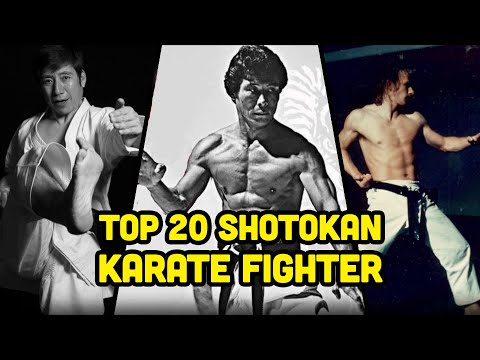
The Pantheon of Shotokan: Unveiling the Top 20 Masters Who Defined Budo

The air in the dojo crackles with a silent intensity. It's the hum of discipline, the echo of countless hours spent honing the body and mind. Shotokan Karate, a name synonymous with power, precision, and an unbroken lineage stretching back to the dawn of modern martial arts, is more than just a fighting style; it's a philosophy etched in motion. But who are the titans, the individuals whose very names evoke awe and respect within the hallowed halls of Budo? Who are the fighters who didn't just practice Shotokan, but embodied its spirit, pushing its boundaries and leaving an indelible mark on the world of martial arts? This is not merely a list; it is an investigation into the soul of a discipline that has shaped warriors and fostered self-mastery for generations.

The Genesis of Shotokan Greatness

Shotokan Karate, a cornerstone of modern martial arts, didn't spring into existence fully formed. It was forged in the crucible of Okinawa, refined by visionary masters, and disseminated across the globe by dedicated practitioners. Its very name, "Shoto," meaning "waving pine," reflects the serene yet powerful nature that its founder, Gichin Funakoshi, sought to instill. When we speak of the "greatest fighters," we're not just referring to those who dominated competitions, but to individuals who exemplified the highest ideals of Shotokan: technical brilliance, unwavering spirit, and a profound commitment to the principles of Budo.

But let's cut through the polite introductions. Are we talking about pure sport Karate, or does the definition of "fighter" encompass those who preserved the art's combative integrity? The line can blur, and it's precisely this tension that makes dissecting Shotokan's legacy so compelling. In this deep dive, we will not shy away from controversy, but rather embrace it, for it is through rigorous debate that true understanding is born.

The Pillars: Funakoshi and Nakayama

No discussion of Shotokan greatness can begin without acknowledging its spiritual and practical architects. Gichin Funakoshi (1868-1957) is, without question, the linchpin. His journey from Okinawa to mainland Japan, introducing *Te* (hand techniques) as Karate, fundamentally altered the martial landscape. Funakoshi wasn't just a fighter; he was a philosopher-warrior who translated the raw effectiveness of Okinawan fighting into a structured system, emphasizing the moral and ethical dimensions alongside the physical.

"Karate is not a copy of other arts, just as the pine is not a copy of the willow. Its strength is not merely in its execution, but in its perfection." - Gichin Funakoshi

His student, Masatoshi Nakayama (1913-1987), inherited this monumental task. Nakayama was the organizational genius and the driving force behind the Japan Karate Association (JKA). He not only codified the techniques and katas, ensuring a degree of standardization that allowed Shotokan to spread universally, but he also championed the competitive aspect, recognizing its power in testing and refining techniques under pressure. Nakayama's vision was pragmatic: to ensure Shotokan's relevance and effectiveness in a changing world. His influence on competitive Karate is undeniable.

Masters of the Golden Age

The decades following Funakoshi and Nakayama's foundational work saw an explosion of talent. These were the men who took the established framework and infused it with their unique fire, forging careers that would inspire generations. The late 20th century, in particular, was a fertile period for Shotokan fighters who excelled not only in kata but in the intense, high-speed combat of kumite.

We speak of:

  • Hirokazu Kanazawa (b. 1931): A student of Nakayama, Kanazawa is a legend for his technical prowess and dynamic energy. His mastery of both kata and kumite, coupled with his extensive international teaching, solidified his place in history. His influence transcends mere fighting; he is an educator of Budo.
  • Taiji Kase (1935-2004): Known for his powerful techniques and dynamic stances, Kase was another prominent figure within the JKA. He later developed his own style, encouraging innovation while staying true to Shotokan principles. His approach to the art was often described as forceful and direct, reflecting a deep understanding of combat application.
  • Hidetaka Nishiyama (1928-2008): A student of Funakoshi, Nishiyama was instrumental in establishing Karate in the United States and was a key figure in the formation of the International Traditional Karate Federation (ITKF). He advocated for Karate as a path to self-development, not just a fighting sport.
  • Keinosuke Enoeda (1935-1993): Often dubbed the "Tiger of Shotokan," Enoeda was renowned for his incredible speed, powerful techniques, and fierce fighting spirit. His presence on the mat was electrifying, a true testament to the combative potential of Shotokan.

These names, and many others like Tetsuhiko Asai, Takashi Mikami, and Yoshiaki Ushiro, represent a golden era where the theoretical principles of Shotokan were put to the ultimate test in live combat scenarios, both in dojo sparring and international tournaments. Their dedication to rigorous training, often involving punishing physical conditioning and repetitive drilling, is a lesson in itself. Are you putting in that level of commitment, or are you content with superficial understanding?

Contemporary Icons and Their Legacies

While the "golden age" produced many legends, the evolution of Shotokan has continued. Modern fighters, often competing in highly specialized sport Karate circuits, continue to push the envelope. Names like Antonio Oliva, Shinji Nagaki, and Toru Shimizu have carved out significant legacies. Their ability to adapt Shotokan's principles to the demands of modern competition, where milliseconds matter and strategy is paramount, is a testament to the art's enduring viability.

However, a word of caution: does the intense focus on sport Karate sometimes dilute the deeper philosophical aspects that Funakoshi emphasized? This is a question that sparks heated debate in martial arts circles. Some argue that the scoring system and rulesets can inadvertently encourage techniques that are less effective in a real self-defense scenario, while others contend that competitive pressure refines techniques to their most efficient form. Where do you stand on this crucial distinction?

The Philosophical Underpinnings of Mastery

To truly understand the "greatest" Shotokan fighters, one must look beyond their physical prowess. At its heart, Shotokan is a discipline rooted in the principles of Budo – the Way of the Warrior. This path emphasizes not only the combat skills but also moral development, mental fortitude, and spiritual growth. Concepts like Mushin (no mind), Zanshin (continuous awareness), and Fudoshin (immovable mind) are not mere buzzwords; they are the guiding principles that separate a mere fighter from a true martial artist.

"The ultimate aim of Karate is not winning or losing, but the perfection of the human character." - Gichin Funakoshi

The dedication required to achieve mastery in Shotokan is immense. It demands not only physical training but also deep introspection and an unwavering commitment to self-improvement. This is where the true "fighting" occurs – the internal battle against one's own limitations, fears, and ego. It is this internal struggle that, when conquered, allows the external techniques to flow with true power and purpose. Think of the discipline required for Kyokushin Karate's legendary conditioning; Shotokan, while different in its expression, demands a similar internal fortitude.

Sharpening Your Own Blade: Training for Excellence

The path to becoming a formidable Shotokan practitioner, whether for competition or personal development, is paved with consistent and intelligent training. While the specific techniques and approaches of the masters differ, certain core principles remain universal:

  1. Master the Fundamentals: Do not underestimate the power of the basics. Perfect your stances (dachi), punches (tsuki), blocks (uke), and kicks (geri). This is the bedrock upon which all advanced techniques are built.
  2. Kata as a Blueprint: Treat each kata not as a dance, but as a detailed combat simulation. Understand the bunkai (applications) behind every movement. Practice it repeatedly until the techniques become instinctive.
  3. Kumite Dynamics: Engage in sparring (kumite) with a focus on strategy, timing, and control. Seek partners who challenge you, forcing you to adapt and think on your feet. Learn from both your successes and your failures.
  4. Physical Conditioning is Non-Negotiable: Develop explosive power, endurance, and flexibility. Incorporate cardiovascular training, strength conditioning, and flexibility exercises into your routine. The body is the weapon; it must be honed.
  5. Mental Fortitude is Key: Cultivate focus, discipline, and resilience. Practice meditation or mindfulness techniques to enhance your awareness and composure under pressure.

Remember, the journey is as important as the destination. The greatest fighters weren't born; they were made through relentless dedication. Are you willing to make that commitment?

Essential Gear for the Dedicated Budoka

While Shotokan Karate can be practiced with minimal equipment, certain items can significantly enhance your training experience and help you emulate the dedication of the masters.

  • Karategi (Uniform): A high-quality, durable Karategi is essential. Look for one made from heavy-duty cotton that can withstand the rigors of intense training and frequent washing. Brands like Karate Merchandise or specific Kyokushin Gi manufacturers often offer excellent options.
  • Karate Belt: As you progress, your belt signifies your level of dedication and understanding. Ensure it's securely tied – a loose belt is a sign of a loose mind.
  • Mouthguard: For sparring (kumite), a properly fitting mouthguard is non-negotiable for protecting your teeth and jaw.
  • Groin Protector: Essential for protecting against accidental strikes during sparring.
  • Training Mats (optional): If you're practicing at home, especially dynamic techniques or falling drills, padded mats can provide a safer training environment and reduce the risk of injury.

Sensei's Verdict: The Enduring Impact

The concept of a definitive "Top 20" is inherently subjective, a testament to the diverse interpretations and expressions of Shotokan Karate throughout history. What unites these masters, from the foundational figures like Funakoshi and Nakayama to the titans of competition like Enoeda and Kanazawa, is their unwavering commitment to the art. They didn't just perform techniques; they lived the philosophy. They demonstrated that Shotokan Karate is a powerful combative system, a rigorous physical discipline, and a profound path to personal growth. Their legacies are not merely in the records they set, but in the countless practitioners they have inspired to take up the mantle of Budo.

Score: Black Belt in Legacy and Influence

Frequently Asked Questions

Who is considered the founder of Shotokan Karate?
Gichin Funakoshi is widely regarded as the founder of Shotokan Karate. He introduced the style from Okinawa to mainland Japan.
What is the difference between Shotokan and other Karate styles?
Shotokan is characterized by its deep stances, powerful linear techniques, and emphasis on strong fundamental movements. While all Karate styles share common roots, Shotokan's specific approach to stances, kihon (basics), and kata differentiates it.
Is Shotokan Karate effective for self-defense?
Yes, Shotokan Karate, when practiced with a focus on practical application and combative principles, can be highly effective for self-defense. However, like any art, its effectiveness depends on the practitioner's training, intent, and understanding of real-world situations.
What does "Budo" mean in the context of Shotokan?
Budo translates to "the Way of the Warrior." In Shotokan, it signifies that the practice of Karate extends beyond physical techniques to encompass discipline, respect, mental fortitude, and personal development.

Deeper Dives into the Budo Path

The journey into the world of Shotokan and the broader martial arts landscape is continuous. For those seeking to deepen their understanding and connect with a vibrant community, the following resources are invaluable:

  • Explore the foundational principles of martial philosophy in our article on BUDO.
  • Understand the physical demands and strategic nuances of modern combat in our analysis of Artes Marciales Mixtas.
  • Discover the importance of mental resilience and self-mastery in our guide to Self Improvement.

In conclusion, Shotokan Karate stands as a monumental pillar in the edifice of martial arts. The fighters we have highlighted are not just practitioners; they are custodians of a legacy, warriors who have not only mastered technique but have also illuminated the profound philosophical depths of this ancient art form. Their dedication serves as a perpetual challenge to us all: to pursue not just strength, but wisdom; not just victory, but character.

Reflexión del Sensei: Tu Próximo Paso

You have walked through the hallowed halls, glimpsed the faces of legends. But true understanding does not come from observation alone. It is forged in sweat, in frustration, in the relentless pursuit of perfection. Now, tell me: which of these masters' spirits resonates most deeply with your own martial aspirations? And more importantly, what single, concrete action will you take today to embody a fraction of their dedication in your own training? The path is yours to walk, but the first step must be taken with intention.

Joe Lewis: The Muhammad Ali of Karate - A Martial Arts Legend

Are you truly a student of the martial arts if you don't recognize the titans who forged its modern path? Many speak of Bruce Lee, of Mas Oyama, but how many truly understand the monumental figure of Joe Lewis? If your training feels stagnant, if your understanding of combat limited to fleeting trends, then this lesson is for you. We dissect the life and legacy of the man they called the "Muhammad Ali of Karate," a title that speaks volumes about his impact, his charisma, and his sheer, undeniable dominance.
This isn't just a biography; it's an excavation of the spirit that propelled Joe Lewis to the pinnacle of karate and kickboxing. We'll delve into his early influences, his brutal training regimens, his legendary battles, and his profound connection with other martial arts icons. Prepare to have your perceptions challenged and your respect for this era of martial arts solidified.

Table of Contents

The Ali of Karate: A Fighter for the Ages

Joseph Henry Lewis. The name itself resonates with power. Born in Wilmington, North Carolina, on March 7, 1944, Lewis didn't just participate in martial arts; he redefined them. His nickname, "The Muhammad Ali of Karate," wasn't bestowed lightly. It reflected his electrifying presence, his outspoken confidence, and his ability to dismantle opponents with a blend of raw power, technical mastery, and sheer showmanship. In an era where karate was still largely a traditional art form, Lewis injected it with a ferocity and a competitive spirit that paved the way for modern combat sports. He wasn't just winning tournaments; he was setting the stage for an evolution.

Forging the Warrior: Early Life and Grueling Training

Every great warrior has a crucible. For Joe Lewis, it was the demanding environment of the U.S. Marines. His martial arts journey began in earnest in the early 1960s during his service, which took him to Okinawa, Japan. There, he trained under the tutelage of the esteemed martial artist and instructor Eizo Shimabukuro. This foundational experience provided him with a deep understanding of traditional karate principles. But Lewis was never content with merely mastering one path. His insatiable thirst for knowledge and combat effectiveness led him to train with Mas Oyama, the formidable founder of Kyokushin karate. This was no gentle apprenticeship; Kyokushin is renowned for its rigorous, full-contact approach and demanding physical conditioning. Lewis embraced this intensity, absorbing the philosophy of breaking boundaries and pushing physical limits. Later, his path would cross with other giants like Chuck Norris and Bruce Lee, each interaction further honing his skills and broadening his martial perspective. This eclectic training history is a testament to his commitment to holistic development, a trait often overlooked in today's specialized combat world.
"The man who fears is already defeated. True mastery comes from facing fear head-on." - A principle embodied by Lewis.

The Reign of Lewis: Dominance in the Ring

Joe Lewis made his professional fighting debut in 1965, and the martial arts world was never the same. He swiftly ascended the ranks, becoming a dominant force. His fighting style was a potent cocktail: explosive power that could end a fight in an instant, breathtaking speed that left opponents scrambling, and an athletic prowess that seemed almost superhuman. He was a feared adversary, respected and sometimes reviled for his sheer effectiveness. His trophy cabinet overflowed with accolades. He secured titles such as:
  • "United States Heavyweight Kickboxing Champion"
  • "World Heavyweight Full Contact Karate Champion"
  • "United States National Black Belt Kata Champion"
These weren't mere participation trophies; they were markers of a man at the absolute zenith of his physical and technical capabilities. Winning a kata championship alongside heavyweight fighting titles demonstrates a rare breadth of skill, encompassing both the precise forms of tradition and the brutal reality of combat.

Beyond Karate: Lewis and the Birth of Full-Contact Kickboxing

While Lewis was a karate legend, his true revolutionary impact arguably lies in his role as a pioneer of modern kickboxing. In 1970, he stepped into the ring against Greg Baines in what is widely recognized as the first full-contact kickboxing match held in the United States. This wasn't just another fight; it was a watershed moment. Full-contact karate, allowing kicks and punches with full force, was a departure from the point-fighting systems that dominated many karate tournaments at the time. Lewis’ victory in this seminal bout wasn't just a personal triumph; it was a validation of a new, more aggressive, and realistic form of stand-up combat. He didn't just fight in this new sport; he helped to define it, shaping the rules, the techniques, and the very spirit of kickboxing as we know it today. His willingness to push boundaries and embrace a more direct, impactful style of fighting set a precedent that continues to influence athletes in MMA and kickboxing rings worldwide.

A Bond of Legends: Friendship with Bruce Lee

The martial arts world is often a tapestry woven with the threads of legendary encounters and profound friendships. The bond between Joe Lewis and Bruce Lee is one such luminous example. Lee, already a global icon, referred to Lewis as "The Greatest Karate Fighter of All Time." This wasn't hyperbole; it was a genuine recognition from one master to another. They trained together extensively, pushing each other to new heights. Lewis’ formidable skills and powerful presence even earned him roles in Lee’s iconic films, "The Way of the Dragon" and "Game of Death." Their friendship was a powerful testament to mutual respect. In an arena often marked by ego and rivalry, their connection highlighted a shared dedication to the pursuit of martial perfection, a deep understanding of the warrior's path, and the camaraderie that can form between individuals who dedicate their lives to the art of combat.
"A moment of pain is worth a lifetime of glory." - A sentiment that both Lee and Lewis understood intrinsically.

The Enduring Legacy of Joe Lewis

Joe Lewis' impact transcends mere victories and titles. He is remembered not just as a competitor, but as a transformative figure in martial arts history. His pioneering work in full-contact kickboxing opened doors for countless athletes and fundamentally altered the landscape of combat sports. He was a multiple-time champion who consistently proved his mettle against the best. Beyond his competitive achievements, Lewis was a mentor. He dedicated himself to passing on his knowledge, shaping the careers of numerous young fighters who looked to him for guidance. His dynamic personality and inspirational drive made him a beacon for many, demonstrating that dedication, hard work, and a touch of charisma could lead to extraordinary success. He passed away on August 31, 2012, but his legacy is far from over. It lives on through his students, his devoted fans, and the enduring influence he has had on martial artists across generations.

Sensei's Verdict: Is Joe Lewis a True Martial Arts Icon?

Unquestionably. Joe Lewis is not merely a legend; he is a foundational pillar upon which modern combat sports, particularly kickboxing, are built. His reign in the 60s and 70s was marked by an unparalleled blend of technical skill, raw power, and an intimidating ring presence that earned him the "Muhammad Ali of Karate" moniker. He didn't just compete; he revolutionized. His transition from karate champion to a pioneer of full-contact kickboxing demonstrated an adaptability and foresight rare even among the elite. His close relationship and mutual respect with Bruce Lee further cements his status among the pantheon of martial arts greats. Lewis embodied the martial spirit: relentless pursuit of excellence, willingness to innovate, and the courage to face any challenge head-on. He wasn't just fighting; he was forging the future. Cinturón Negro Honorífico en la Evolución del Combate.

Essential Equipment for Your Training

To emulate the dedication of legends like Joe Lewis, having the right **entrenamiento** gear is crucial. While Lewis himself was an innovator, the fundamentals of effective training remain.
  • Durable Training Uniform (Gi): For karate and similar disciplines, a robust gi that can withstand rigorous movement and grappling is essential. Look for double-weave cotton for longevity.
  • Sparring Gear: When engaging in controlled sparring, safety is paramount. This includes:
    • Headgear: Protect your most valuable asset.
    • Mouthguard: Non-negotiable for any striking art.
    • Groin Protector: Essential for men.
    • Shin Guards and Instep Protectors: Crucial for kickboxing and full-contact training.
    • 16oz Boxing or MMA Gloves: For striking practice and sparring, ensuring adequate hand protection.
  • Training Mats (Tatami or Puzzle Mats): For groundwork, throws, and conditioning exercises.
  • Punching Bag or Heavy Bag: Indispensable for developing power, speed, and endurance in your strikes.
  • Speed Bag: Improves hand-eye coordination and rhythm.
  • Kick Shield or Thai Pad: For partner drills, allowing you to practice power shots safely and effectively.
Investing in quality **entrenamiento** equipment is an investment in your progress and your health. Don't let subpar gear be an excuse for a lagging **entrenamiento**.

Training Guide: Developing Explosive Power

Joe Lewis was known for his explosive power. This isn't just brute strength; it's the ability to generate maximum force in the shortest amount of time. Here’s a foundational approach to developing that kind of power:
  1. Plyometrics:
    • Jump Squats: Squat down, then explode upwards, reaching for the sky. Land softly and repeat.
    • Box Jumps: Jump onto a sturdy box, landing with control. Step down, don't jump down.
    • Medicine Ball Throws: Overhead slams, chest passes, and rotational throws engage the entire kinetic chain.
  2. Explosive Strength Training:
    • Power Cleans: A highly technical lift, but incredibly effective for full-body explosiveness. Seek qualified instruction.
    • Kettlebell Swings: Focus on the hip drive for maximum power generation.
    • Clapping Push-ups: Push up explosively, clap your hands, and land softly.
  3. Speed Drills:
    • Sprinting: Short, maximal effort sprints build explosive leg power.
    • Rapid Punch/Kick Combinations: Focus on moving quickly through the motions, minimizing wasted energy.
  4. Core Strength: A strong, stable core is the transfer point for all power. Incorporate exercises like planks, Russian twists, and hanging leg raises.
  5. Proper Technique: Power is amplified by efficient movement. Ensure your technique is sound to avoid wasted energy and injury.
Remember, consistency and progressive overload are key. Don't just train hard; train smart to build truly explosive **fuerza** like Joe Lewis.

Frequently Asked Questions

  • Who was Joe Lewis?
    Joe Lewis was an American martial artist, actor, karateka, and kickboxer, renowned for his powerful fighting style and considered one of the greatest karate fighters of all time. He was often called the "Muhammad Ali of Karate."
  • What martial arts did Joe Lewis study?
    Lewis trained in various disciplines, including Okinawan Karate under Eizo Shimabukuro, Kyokushin Karate under Mas Oyama, and also trained with figures like Chuck Norris and Bruce Lee.
  • What was Joe Lewis' greatest contribution to martial arts?
    He was a pioneer of modern full-contact kickboxing, fighting in what is considered the first full-contact kickboxing match in the United States in 1970. He also won numerous championships in karate and kickboxing.
  • Was Joe Lewis friends with Bruce Lee?
    Yes, Joe Lewis and Bruce Lee were close friends and training partners. Lee even referred to Lewis as "The Greatest Karate Fighter of All Time" and cast him in his films.
  • When did Joe Lewis pass away?
    Joe Lewis passed away on August 31, 2012.

Deepen Your Journey

To truly grasp the impact of figures like Joe Lewis, understanding the broader context of martial arts history and philosophy is crucial. Explore these related topics:
  • BUDO: Delve into the philosophical and spiritual aspects that underpin martial training.
  • KarateCommunity: Learn about the evolution of Karate and its various styles.
  • FightAnalysis: Understand the tactical and technical elements that make a great fighter.
  • MartialArtsJourney: Find inspiration and guidance for your own path in the martial arts.

Sensei's Reflection: Your Next Step

We have dissected the career of Joe Lewis, a man who embodied the fierce spirit of competition and the relentless pursuit of mastery. He was a bridge between traditional karate and the explosive reality of modern combat sports. His influence is undeniable. But knowledge without application is like a sword left to rust. Lewis didn't become a legend by reading about fighters; he became one by *being* a fighter, by pushing his limits relentlessly. So, I ask you: **When you step onto the mat, or even when you simply face a challenge in your daily life, do you do so with the explosive power and unwavering confidence of Joe Lewis, or do you hesitate, bound by the fear of what might be? What single action can you take *today* to inject a dose of that legendary fighting spirit into your own practice?** The dojo of life awaits your demonstration. ```json { "@context": "https://schema.org", "@type": "FAQPage", "mainEntity": [ { "@type": "Question", "name": "Who was Joe Lewis?", "acceptedAnswer": { "@type": "Answer", "text": "Joe Lewis was an American martial artist, actor, karateka, and kickboxer, renowned for his powerful fighting style and considered one of the greatest karate fighters of all time. He was often called the \"Muhammad Ali of Karate.\"" } }, { "@type": "Question", "name": "What martial arts did Joe Lewis study?", "acceptedAnswer": { "@type": "Answer", "text": "Lewis trained in various disciplines, including Okinawan Karate under Eizo Shimabukuro, Kyokushin Karate under Mas Oyama, and also trained with figures like Chuck Norris and Bruce Lee." } }, { "@type": "Question", "name": "What was Joe Lewis' greatest contribution to martial arts?", "acceptedAnswer": { "@type": "Answer", "text": "He was a pioneer of modern full-contact kickboxing, fighting in what is considered the first full-contact kickboxing match in the United States in 1970. He also won numerous championships in karate and kickboxing." } }, { "@type": "Question", "name": "Was Joe Lewis friends with Bruce Lee?", "acceptedAnswer": { "@type": "Answer", "text": "Yes, Joe Lewis and Bruce Lee were close friends and training partners. Lee even referred to Lewis as \"The Greatest Karate Fighter of All Time\" and cast him in his films." } }, { "@type": "Question", "name": "When did Joe Lewis pass away?", "acceptedAnswer": { "@type": "Answer", "text": "Joe Lewis passed away on August 31, 2012." } } ] }

Kakashi Hatake vs. A Powerhouse: A Critical Look at Fictional Martial Prowess

Welcome, aspiring warriors and seasoned practitioners, to Budo and Martial Arts. Today, we delve into a spectacle that, while born from imagination, touches upon the very essence of combat prowess: a hypothetical clash between Kakashi Hatake from the Naruto universe and an unnamed but undeniably powerful adversary. This isn't merely about who wins; it's about dissecting the principles, the displayed techniques, and what we can glean from such fictional encounters to enrich our understanding of real-world martial arts.

The Allure of Fictional Combat

We live in an era where the lines between entertainment and edification often blur. The image of Kakashi Hatake, the perpetually calm and formidable ninja, engaging in a "power full fight" resonates with our innate fascination for skill, strategy, and overwhelming force. But beyond the visual spectacle, what does such a confrontation teach us? As martial artists, our focus must always be on extracting practical wisdom, even from the most fantastical scenarios. The *intent* behind such portrayals—showcasing skill, overcoming adversity, and the sheer thrill of combat—is a rich ground for analysis.

The prompt, "Kakashi Hatake vs powerful man and power full fight," published on March 16, 2023, hints at an event or a piece of media that highlights a significant confrontation. My task, as your Sensei, is not to simply recount the action, but to dissect it through the lens of authentic martial principles. We are here to explore the Budo, the philosophical and practical path of the warrior, and how it might be represented, even in its fictionalized form.

Deconstructing Kakashi's Arsenal: Jutsu as Martial Arts

Kakashi Hatake is renowned for his mastery of various Jutsu, techniques that, in essence, function as a highly specialized form of martial art. His signature move, the Chidori (One Thousand Birds), is a concentrated burst of lightning chakra, wielded as a piercing strike. This mirrors the concept of a focused, high-velocity offensive technique found in many real-world striking arts, aiming to overwhelm an opponent's defenses with sheer penetration power. Consider the speed and precision required, akin to a master swordsman delivering a decisive blow, or a boxer executing a perfectly timed straight punch.

Then there's his Sharingan (Copy Wheel Eye), which allows him to perceive chakra, mimic techniques, and gain unparalleled visual acuity. In a real combat context, this translates to an exceptional ability to read an opponent's movements, anticipate attacks, and adapt strategies on the fly. This mirrors the importance of Kime (focus, intensity) and Zanshin (awareness) in Japanese martial arts. The ability to 'copy' techniques, while supernatural, speaks to the martial artist's capacity for deep observation and rapid learning – a skill honed through countless hours of kumite (sparring) and kata (forms) practice.

Furthermore, Kakashi is adept at taijutsu (hand-to-hand combat), utilizing swift kicks and punches, often imbued with chakra for added impact. This foundation in physical combat is crucial. Even the most potent ninjutsu requires a solid physical base. This is a fundamental truth echoed across disciplines, from Karate to Muay Thai. Without strong conditioning and proper body mechanics, even the most advanced techniques are mere parlor tricks.

"The ultimate aim of martial arts is not the victory or defeat, but the perfection of the character of its practitioners." - Gichin Funakoshi, founder of Shotokan Karate. While Kakashi's world is one of battle, his discipline and constant self-improvement embody this principle.

The Unseen Powerhouse: What Defines a True Threat?

The description "powerful man" is intentionally vague, allowing our imagination to fill the void. Is this opponent a master of raw physical strength? A practitioner of forbidden arts? A titan of speed? In martial arts, a "powerful" opponent isn't just about brute force. True power lies in a combination of factors:

  • Technique (Waza): Skillful application of movement, leverage, and timing.
  • Strategy (Senjutsu): The art of anticipating, deceiving, and controlling the engagement.
  • Endurance (Taisei): The capacity to maintain peak performance over extended periods.
  • Mental Fortitude (Mushin - No Mind): The ability to act without hesitation or doubt, a state of focused awareness.
  • Adaptability (Henka): The capacity to adjust tactics based on the opponent's actions.

A truly formidable opponent, fictional or real, integrates these elements seamlessly. They don't just throw punches; they orchestrate an entire encounter. The effectiveness of Kakashi's own techniques would be tested against an opponent who understands distance, timing, and flow, not just raw power.

Choreography vs. The Cold Calculus of Combat

Cinema and anime often present fight sequences that are breathtaking but divorced from the brutal efficiency of real combat. A "power full fight" in fiction might involve elaborate animations, dramatic pauses, and seemingly limitless stamina. Real fights, particularly those where stakes are high, are often far more condensed, messy, and dictated by the first effective strike or mistake.

Consider the nuances: a well-executed grappling exchange in Judo or BJJ can end a fight without a single blow. A perfectly timed counter-attack in Karate or Kickboxing can create a knockout opportunity. Even the seemingly simple, direct approach of Kyokushin Karate emphasizes devastating power and resilience. The fictional fight likely emphasizes flashy jutsu, but a real-world encounter would hinge on fundamental principles: footwork, balance, structure, and exploiting weaknesses.

The inclusion of tags like #artesmarciales, #BUDO, #lucha, #pelea, #entrenamiento, and #historia suggests the original post aimed to connect fictional combat with these real-world disciplines. This is where our critical analysis truly begins.

Beyond the Jutsu: The Budo Spirit in Fiction

At its core, Budo is not just about fighting; it's about self-mastery, discipline, and the cultivation of a strong moral character. While Kakashi is a fictional ninja, his journey often embodies aspects of this path. His adherence to the rules of engagement (even as a ninja), his dedication to his students, and his willingness to sacrifice reflect a deeper commitment than mere combat prowess. The concept of Ki (or Qi), the vital life force, is central to many Eastern martial arts. While depicted as supernatural energy manipulation in Naruto, it fundamentally relates to harnessing internal energy for physical and mental power—a concept explored in practices ranging from Shaolin Kung Fu to internal Chinese martial arts.

"The way of the warrior is to accept death." - Miyamoto Musashi, The Book of Five Rings. This stark reminder from a legendary swordsman highlights the ultimate commitment inherent in the martial path, a commitment that fictional characters like Kakashi, in their own way, often have to confront.

Lessons for the Dojo: Applying Fictional Principles

So, what practical lessons can we draw from this fictional battle?:

  1. Observation is Key: Kakashi's Sharingan highlights the importance of keenly observing your opponent. Train to read body language, anticipate movements, and understand their tendencies.
  2. Master Your Core Techniques: Whether it's Chidori or a simple punch, focus on perfecting your fundamental skills. Power comes from efficient application, not just raw energy.
  3. Develop Adaptability: A single strategy rarely works against all opponents. Cultivate the ability to shift tactics and respond effectively to unexpected situations. This is honed through varied sparring sessions, including incorporating elements of grappling and different ranges of combat.
  4. Integrate Physical and Mental Training: Kakashi's ninja skills are a blend of physical prowess, strategic thinking, and mental fortitude. Ensure your training encompasses strength, conditioning, technique, and mental discipline.
  5. Understand the "Why": Beyond the techniques, always seek the underlying principles. Why does a certain movement work? What is the strategic advantage? This deeper understanding elevates practice to the level of true Budo.

Veredicto del Sensei: Where Fiction Meets Force

While the "Kakashi Hatake vs powerful man and power full fight" is an imaginary scenario, it serves as a potent illustration of martial concepts. Kakashi's abilities, though exaggerated, are rooted in principles of precision, speed, strategic thinking, and the use of specialized techniques. A "powerful man" represents the fundamental challenge of facing a capable adversary. The "power full fight" itself highlights the dynamic interplay between offense, defense, and adaptation.

If this were a real combat scenario, the outcome would depend on countless variables not present in fictional narratives. However, as a catalyst for discussion on martial arts principles, it is effective. It reminds us that the dedication to training, the mastery of technique, and the cultivation of a warrior's spirit—the very essence of BUDO—are timeless, whether applied in a ninja village or a dojo.

Rating: Cinturón Negro en Imaginación, Nivel Novato en Aplicación Real. A commendable exploration of martial concepts, albeit through a fictional lens. It sparks the imagination but requires critical translation to practical training.

Equipo Esencial para tu Entrenamiento

To truly embody the spirit of martial arts, having the right equipment is crucial for effective and safe training. Whether you are practicing Karate, Judo, BJJ, or any other discipline, investing in quality gear can make a significant difference in your progress and enjoyment.

  • Kimono/Gi: Essential for Judo, BJJ, and Aikido. Look for durable, double-woven fabrics for Judo and BJJ, and lighter, comfortable weaves for Aikido. Brands offering high-quality kimonos de judo are a good starting point.
  • Protective Gear: For sparring (kumite), consider padded gloves (e.g., guantes de 16oz para sparring for boxing/kickboxing), shin guards, headgear, and mouthguards. These are vital for minimizing injury.
  • Training Mats (Tatami): If you practice grappling arts or forms that involve throws and falls, investing in quality tatami mats provides necessary cushioning and safety.
  • Training Weapons: For arts that incorporate weapons (e.g., Karate with Bo staff, Kobudo), ensure you use safe, properly weighted practice versions.
  • Fitness Equipment: Resistance bands, jump ropes, and basic weights can supplement your martial arts training, enhancing strength, agility, and cardiovascular fitness.

Preguntas Frecuentes

¿Es posible aplicar las técnicas de Kakashi en la vida real?

Directamente, no. Las jutsu de Kakashi son sobrenaturales y parte de un universo de ficción. Sin embargo, los principios subyacentes—velocidad, precisión, anticipación, uso estratégico de energía (Ki)—son aplicables al entrenamiento de artes marciales reales.

¿Qué arte marcial se asemeja más a las habilidades de Kakashi?

Si bien ningún arte marcial real replica la versatilidad de un ninja, Kakashi's taijutsu, velocidad y enfoques de combate directo podrían tener paralelos con disciplinas como Ninjutsu (el arte histórico, no solo su representación popular), Karate (por su énfasis en golpes contundentes y velocidad), y Kickboxing (por la combinación de golpes y patadas). Su habilidad para copiar técnicas resalta la importancia de la observación y el aprendizaje en cualquier arte marcial.

¿Cuál es la importancia del concepto de Ki en las artes marciales?

El Ki (o Chi/Qi) representa la energía vital. En artes marciales, se cultiva a través de la respiración, la concentración y el movimiento para potenciar la fuerza física, la resistencia y el enfoque mental. No es magia, sino la optimización de la fisiología y la mente humanas.

¿Por qué es importante el entrenamiento de combate en la calle (CombateEnLaCalle)?

El CombateEnLaCalle se enfoca en la autodefensa en escenarios impredecibles y peligrosos. A diferencia de un dojo, no hay reglas, ni árbitros, y las circunstancias pueden ser letales. Un entrenamiento efectivo en esta área debe ser realista, práctico y enfocado en la supervivencia.

Para Profundizar en tu Camino

Reflexión del Sensei: Tu Próximo Paso

The confrontation between Kakashi and his powerful foe, though fictional, serves as a mirror to our own training. It highlights the perpetual quest for knowledge, the development of physical and mental discipline, and the understanding that true strength lies not just in power, but in wisdom and adaptability. The flashy displays are entertaining, but the fundamental principles—dedication to practice, respect for the opponent, and the pursuit of self-improvement—are what forge a true martial artist.

"The martial way is a daily task. It is a lifetime commitment." - A principle echoed across countless martial traditions.

Reflexión del Sensei: Tu Próximo Paso

Now, I pose this to you: In your own training, are you focusing solely on the "flashy jutsu," the spectacular moves that garner attention, or are you diligently building the foundational strength, the keen observational skills, and the unwavering mental fortitude that would allow you to face any "powerful man," whether in a fictional realm or the unforgiving reality of the street? Where does your true commitment lie?

The Unseen Battle: Deconstructing the "Mc Stan vs. Salin" Phenomenon Beyond the Hype

The digital age has blurred the lines between entertainment, celebrity gossip, and genuine conflict. We often see headlines screaming about "fights" that are less about martial prowess and more about manufactured drama. Today, we're diving deep into a prime example: the sensationalized "Mc Stan vs. Salin Full Fight" and the surrounding media frenzy about Mc Stan's personal life, all amplified within the context of a Bigg Boss episode. But what does this have to do with the true spirit of martial arts? As your Sensei, I'm here to dissect this phenomenon not just as a fan of combat, but as a guardian of Budo. We'll explore the intent behind such spectacles, how they warp our perception of conflict, and what actual martial artists can glean from this digital tempest – if anything.

Table of Contents

The Media Circus: When Entertainment Trumps Truth

The title itself – "Mc Stan और Salin Full Fight 😈🤬 !! मीडिया ने पुछा Mc Stan की शादी 🥰 !! Bigg Boss Today Episode" – is a masterclass in clickbait. It’s designed to provoke, to pique curiosity through emojis and loaded questions. We see the word "Fight" amplified, juxtaposed with a personal inquiry about marriage, all wrapped in the package of a popular reality show. This isn't about martial arts; it's about eyeballs. The media's role here is crucial. They amplify the drama, dissecting every raised voice, every perceived insult, turning fleeting moments into viral sensations. The intention? Engagement. Views. Virality. The underlying message is that conflict, especially when tied to celebrity, is inherently entertaining. This perspective is dangerous because it trivializes genuine struggle and the discipline required to navigate it constructively.
"If you think you are too small to make a difference, try sleeping with a mosquito in the room." - Tenzin Gyatso (The 14th Dalai Lama)
This quote, while philosophical, highlights how even small events can have significant impact. In the context of Mc Stan and Salin, the "impact" is manufactured, amplified, and ultimately, superficial. True martial impact comes from honed skill and disciplined spirit, not from viral whispers.

Understanding Mc Stan and Salin: Beyond the Bigg Boss Persona

Mc Stan, a rapper, and Salin are figures within the realm of Indian entertainment, particularly known for their participation in "Bigg Boss," a reality television show known for fostering interpersonal conflicts and public scrutiny. Their "fight" is likely a product of the show's environment, designed to create narrative arcs and boost viewership. It's crucial to understand that their on-screen personas and the conflicts they engage in are often performances. The "fight" might involve heated arguments, accusations, or even a physical altercation, but it's rarely, if ever, a demonstration of trained martial ability. The intensity of the reaction – the emojis, the media's probing questions about marriage – suggests that the public is more invested in the gossip and the drama surrounding the personalities than in any underlying combat skill.
The interest in Mc Stan's personal life, specifically his marriage, further underscores this point. It signals a public fascination with celebrity gossip, a far cry from the disciplined introspection of a martial arts practitioner.

What Constitutes a "Real Fight"? The Martial Arts Perspective

In the disciplined world of martial arts, a "fight" is not merely an outburst of emotion or a staged confrontation. It is the ultimate test of skill, conditioning, mental fortitude, and adherence to principles. Whether it's the precision of Karate, the grappling of Judo or BJJ, or the dynamic striking of Kickboxing, a real fight is an application of years of dedicated training. Key elements of a true martial encounter include:
  • Technique: The application of learned skills, whether strikes, throws, locks, or submissions.
  • Strategy: The ability to read an opponent, adapt to changing circumstances, and employ tactics.
  • Conditioning: The physical stamina, strength, and resilience to endure a prolonged engagement.
  • Mental Fortitude (Mushin): The state of "no mind," where actions are instinctive and free from fear or hesitation. This is often cultivated through rigorous training and meditation.
  • Intent: In self-defense, the intent is survival and de-escalation. In sport, it's competition within defined rules.
Comparing the potential scuffle between Mc Stan and Salin to a sparring session between seasoned martial artists, or a historical duel between swordsmen, reveals a vast chasm. One is a spectacle for entertainment; the other is a high-stakes application of developed skill and character.

The Concept of Ki (Qi) and Its Absence in Manufactured Conflict

The concept of "Ki" (or Qi) is central to many East Asian martial arts, including Karate, Taekwondo, and Aikido. It represents the vital life force, the energy that animates the body and can be channeled through focused intention and training. In martial arts, harnessing Ki isn't just about physical power; it's about mental clarity, spirit, and an almost intuitive connection to one's actions.
"The ultimate aim of Karate is not victory or defeat, but the perfection of the character of its participants." - Gichin Funakoshi
This statement from the founder of Shotokan Karate encapsulates the essence of Budo. The physical techniques are tools for self-improvement, for cultivating qualities like discipline, respect, and emotional control. A true martial artist strives to embody this perfection of character. In the context of Mc Stan and Salin, their "fight" is likely fueled by ego, anger, and perhaps a misunderstanding – emotions that are the antithesis of the calm, focused energy of Ki. There is no evidence of technique, strategy, or the cultivation of character. The "fight" is a display of uncontrolled emotional discharge, not the purposeful channeling of energy that defines martial arts. The media's focus on the drama, the gossip, and the "who said what" further highlights the absence of any deeper, more significant "energy" at play.

Lessons for the Budoka: Extracting Value from the Noise

While the Mc Stan and Salin spectacle offers little in terms of direct martial application, we can still learn from it, albeit indirectly. Firstly, it serves as a stark reminder of what martial arts are *not*. They are not about manufactured drama, seeking validation through public conflict, or equating emotional outbursts with strength. This contrast can strengthen our resolve and deepen our appreciation for the discipline we practice. Secondly, it highlights the power of narrative and media. As martial artists, we must be mindful of how our craft is portrayed. We should advocate for authentic representation and educate others on the true values of Budo. Thirdly, it presents an opportunity to reflect on our own emotional regulation. The raw, uncontrolled reactions seen in such spectacles are a testament to the importance of the mental training we undertake. The pursuit of "Mushin" – a state of clear, unhindered consciousness – becomes even more valuable when contrasted with the chaos of unmanaged emotions. Finally, it underscores the importance of contextualizing conflict. A fight in a reality show is a performance for entertainment. A fight for survival on the street requires entirely different preparation. Understanding these distinctions is critical for any serious practitioner of self-defense.

Veredicto del Sensei: A Spectacle, Not a Study

The "Mc Stan vs. Salin Full Fight" is, in essence, a digital mirage. It presents a facsimile of conflict, amplified by the entertainment industry and fueled by public curiosity about celebrity lives. It offers no valuable insights into martial techniques, no lessons in strategy, and certainly no demonstration of Budo's core principles. While it generates clicks and conversation, it distracts from the profound journey of self-mastery that defines true martial arts. It’s a fleeting spectacle, akin to watching a child’s squabble amplified for mass consumption. **Rating:** Fail on Fundamentals, Exhibit A in Manufactured Drama.

Equipo Esencial para tu Entrenamiento

While the Mc Stan spectacle doesn't warrant specific equipment, a dedicated martial artist understands the importance of proper gear for effective and safe training. Investing in the right equipment can significantly enhance your practice and prevent injuries.
  • Kimono/Gi: Essential for Judo, Karate, Taekwondo, and BJJ. Look for durable fabrics that allow for a full range of motion. For Judo, a double-weave gi is recommended for its resilience.
  • Training Uniforms: For arts like Kung Fu or Wushu where traditional uniforms are preferred, ensure breathability and comfort.
  • Sparring Gear: Headgear, mouthguards, groin protectors, and chest protectors are vital for safe sparring in striking arts.
  • Gloves: MMA gloves or 16oz boxing gloves are necessary for any form of striking or sparring that involves hand contact.
  • Training Mats: For arts involving throws or ground work, mats provide crucial cushioning.
  • Focus Mitts & Punching Bags: Excellent tools for improving striking accuracy, power, and speed.
  • Makiwara (Optional): A traditional Okinawan striking post for developing power and conditioning the hands. Requires careful technique and progression.
Remember, the best equipment is the one that allows you to train consistently and safely, pushing your limits without undue risk. Exploring options for "Karate merchandise" or "MMA training gear" can lead you to reputable suppliers.

Preguntas Frecuentes

  • Q: Was the "Mc Stan vs. Salin Fight" a real martial arts confrontation?
    A: Highly unlikely. It was part of a reality TV show and likely a manufactured conflict for entertainment purposes, not a demonstration of trained martial skill.
  • Q: What is the difference between a reality show "fight" and a martial arts match?
    A: A reality show "fight" is often performative and driven by emotion and narrative. A martial arts match is governed by rules, emphasizes technique and strategy, and is a test of skill honed through rigorous training.
  • Q: How can martial artists avoid being influenced by sensationalized media?
    A: By understanding the principles of Budo, focusing on personal development, and critically evaluating the content consumed. True martial arts value substance over spectacle.

Para Profundizar en tu Camino

Here are some resources to help you delve deeper into the authentic world of martial arts:

Reflexión del Sensei: Your Next Step

The digital realm bombards us with spectacles of conflict, often devoid of true meaning or skill. The phenomenon of "Mc Stan vs. Salin" is a prime example, parading as a fight but revealing itself as mere entertainment noise. Now, I ask you, the dedicated practitioner: When you see such staged drama, how does it affect your perception of conflict? Does it reinforce your commitment to the disciplined path of martial arts, or does it tempt you with the allure of superficial drama? Reflect on this: Is your pursuit of martial arts about the roar of the crowd and fleeting headlines, or is it about the quiet, internal battle for self-mastery? Your answer in the quiet of your dojo, or your training space, is more important than any viral video. ``` ```json { "@context": "https://schema.org", "@type": "FAQPage", "mainEntity": [ { "@type": "Question", "name": "Was the \"Mc Stan vs. Salin Fight\" a real martial arts confrontation?", "acceptedAnswer": { "@type": "Answer", "text": "Highly unlikely. It was part of a reality TV show and likely a manufactured conflict for entertainment purposes, not a demonstration of trained martial skill." } }, { "@type": "Question", "name": "What is the difference between a reality show \"fight\" and a martial arts match?", "acceptedAnswer": { "@type": "Answer", "text": "A reality show \"fight\" is often performative and driven by emotion and narrative. A martial arts match is governed by rules, emphasizes technique and strategy, and is a test of skill honed through rigorous training." } }, { "@type": "Question", "name": "How can martial artists avoid being influenced by sensationalized media?", "acceptedAnswer": { "@type": "Answer", "text": "By understanding the principles of Budo, focusing on personal development, and critically evaluating the content consumed. True martial arts value substance over spectacle." } } ] }

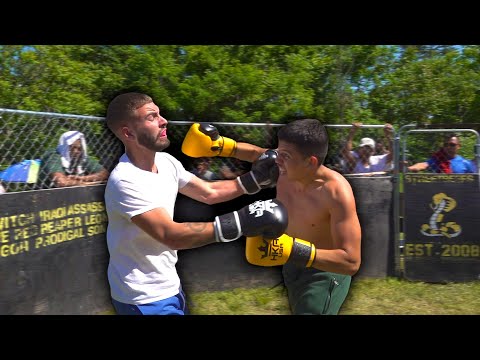
Streetbeefs: Hitman Hamilton vs. Cannon - A Raw Look at Bare-Knuckle Combat

👹 **Welcome to Satan's Backyard: Where Disputes Meet Their Match** 👹 In the raw, unvarnished world of urban conflict, where words often fail and fists become the ultimate arbiters, emerges a phenomenon known as Streetbeefs. This isn't your sanitized, televised boxing match. This is a visceral, no-holds-barred exploration of human aggression channeled into a (relatively) controlled environment. Today, we delve into a specific encounter that has captured attention: **Hitman Hamilton vs. Cannon**. The premise of Streetbeefs, founded by the now-legendary Scarface – a figure recognized by none other than The New York Times in their documentary "Guns to Gloves" and ESPN The Magazine – is disarmingly simple, yet profoundly impactful. Scarface, witnessing the devastating consequences of unresolved disputes in his community, decided to offer an alternative. His solution? **Satan's Backyard**. Here, individuals with grievances are invited to don gloves and settle their differences. The rules are clear: no firearms, no blades, no gang reinforcements. It's a one-on-one confrontation, overseen by a referee, before a crowd of spectators. This initiative has, by Scarface's own account, settled hundreds of disputes. It’s a method designed to entertain, yes, but more critically, to provide a safer outlet for aggressive impulses, preventing potentially fatal encounters and legal repercussions. Some bouts are purely for sport, while others stem from genuine, heated beefs. Regardless of origin, the entertainment value is undeniable, drawing viewers into a world where primal instincts are given an arena. Streetbeefs has cultivated a unique club atmosphere, fostering bonds and lasting friendships among participants. It’s a testament to how even the most aggressive energies can be channeled into something that, paradoxically, builds community and offers a safer path than violence on the streets.
"After years of watching people in my area severely hurt each other over various disputes, I decided to offer a solution. Come to SATANS BACKYARD and put gloves on to settle your dispute." - Scarface, Founder of Streetbeefs
**The Philosophy Behind the Fray: More Than Just a Fight** While the spectacle of bare-knuckle boxing or even gloved street fights might seem purely about brute force, the underlying philosophy is far more nuanced. The prompt delivery of this content, published on June 23, 2022, at 04:05 PM, places it within the context of the most complete and updated martial arts blog on the internet – Budo and Martial Arts. This isn't just about watching two people fight; it's about understanding the *why* and the *how* that underpin such contests, whether they are for sport or to settle a real "beef." The raw energy displayed in bouts like Hitman Hamilton vs. Cannon speaks to a fundamental aspect of human nature: the need to assert oneself, to defend honor, and to resolve conflict. While modern society often advocates for dialogue and legal recourse, the primal drive for direct confrontation persists. Streetbeefs taps into this, offering a structured outlet that, while undeniably gritty, aims for de-escalation of lethal violence. The concept of **Budo** itself, the Japanese martial way, emphasizes not just combat proficiency but also the cultivation of character, discipline, and spiritual development. While Streetbeefs operates outside the traditional dojo, the principle of channeling aggression and finding a path for conflict resolution echoes these deeper martial tenets. It’s a modern, albeit rough-edged, manifestation of a timeless human need. The founder’s own journey, highlighted by features in prestigious publications, lends a unique perspective. It suggests a deep understanding of conflict dynamics and a genuine desire to provide a constructive, albeit unconventional, solution.

The Essence of the Bout: Hamilton vs. Cannon

The matchup between Hitman Hamilton and Cannon is more than just a name on a card; it represents a clash of individuals seeking resolution through combat. Understanding these encounters requires looking beyond the surface-level violence. What drives these individuals to step into the ring? Is it pride, a need for respect, or simply the thrill of competition? From a martial arts perspective, analyzing such bouts involves looking at: * **Technique and Strategy**: Even in a less formal setting, fundamental principles of striking, footwork, and defense are at play. How do Hamilton and Cannon approach the fight? Do they rely on raw power, or is there a discernible strategy? * **Mental Fortitude**: The psychological aspect of fighting is immense. The ability to withstand pressure, manage fear, and maintain focus under duress is paramount. This is where the concept of **Ki** (energy) and mental discipline, central to many martial arts, becomes relevant. * **Physical Conditioning**: While not a professional MMA bout, the endurance and power required are significant. Understanding the physical demands adds another layer to appreciating the athletes' efforts. The existence of organizations like Streetbeefs, alongside traditional combat sports and martial arts, highlights the diverse ways humans engage with conflict and competition. It underscores that the drive to fight, to test oneself against another, is a persistent element of the human experience.

Veredicto del Sensei: ¿Un Deporte o un Mal Necesario?

Streetbeefs presents a complex ethical and philosophical quandary. On one hand, it offers a compelling alternative to potentially lethal street violence, providing a structured outlet for aggression and conflict resolution. Scarface’s dedication and the documented instances of disputes being settled peacefully lend credence to its positive impact. It’s a raw, unfiltered form of combat that can be undeniably entertaining, and in some ways, mirrors the historical roots of many martial arts, which often emerged from practical necessity. However, the inherent dangers of bare-knuckle or even heavily regulated street fighting cannot be ignored. Promoting such events, even with rules, treads a fine line. While the focus here is on legal, consensual combat among adults, the "beef" origins and the raw environment will always carry a risk of escalation or serious injury. From a martial arts perspective, it serves as a stark reminder of the foundational elements of combat: courage, resilience, and the will to overcome. It emphasizes that the desire to test oneself physically is deeply ingrained. Yet, it lacks the deeper philosophical underpinnings of **Budo**, the rigorous training, and the emphasis on character development that truly define martial arts mastery. Therefore, while I respect the initiative's intention to reduce street violence, I cannot wholeheartedly endorse it as a pure "sport" in the traditional sense. It exists in a gray area – a necessary evil for some, a brutal spectacle for others, and a unique community-building platform for its participants. It certainly provides a compelling case study in how conflict resolution manifests in different forms.

Equipo Esencial para tu Entrenamiento (Inspirado en la Cruda Realidad)

Aunque Streetbeefs promueve un estilo de combate "crudo", la seguridad y la eficacia en cualquier disciplina de combate, incluso en las exhibiciones legales, dependen del equipo adecuado. Si bien la filosofía aquí es "guantes puestos para resolver disputas", la inspiración en esta crudeza puede llevarte a mejorar tu propio entrenamiento: * **Guantes de Boxeo/MMA**: Para cualquier entrenamiento que implique golpes, proteger tus manos y a tu compañero es primordial. Considera guantes de 16oz para entrenamiento de boxeo general y guantes de 4oz o 7oz para entrenamiento de MMA. * **Protector Bucal**: Indispensable para proteger tus dientes y mandíbula, incluso en sparring ligero. * **Vendajes para Manos**: Utilizados debajo de los guantes para mayor soporte y protección de las muñecas y nudillos. * **Protector Genital (Cup)**: Un elemento de seguridad básico para cualquier práctica de combate. * **Kimono (Gi) de Entrenamiento Resistente**: Si buscas inspiración en la versatilidad de las artes marciales que se adaptan a diferentes escenarios, un kimono duradero es clave para la práctica de Judo, BJJ o Karate Kyokushin. * **Saco de Boxeo o Pera Loca**: Para desarrollar potencia y precisión en tus golpes, elementos esenciales en cualquier gimnasio o entrenamiento en casa. * **Makiwara**: Para endurecer los puños y desarrollar la potencia de golpeo, un elemento tradicional y efectivo.

Guía de Entrenamiento: Desarrollando la Resiliencia Mental

La verdadera batalla, como demuestran eventos como Streetbeefs, a menudo se libra en la mente. Aquí hay un ejercicio para fortalecer tu **resiliencia mental**, inspirado en la tenacidad requerida para enfrentar un desafío:
  1. Meditación de Atención Plena (Zazen): Dedica 10-15 minutos al día a sentarte en silencio, enfocándote en tu respiración. Cuando tu mente divague (lo hará), nótalo sin juicio y gentilmente redirige tu atención a la respiración. Esto entrena tu capacidad de concentración y de volver a un estado de calma bajo presión.
  2. Visualización de Desafíos: Imagina un escenario de combate o un desafío personal difícil. Visualiza tus respuestas, no solo los golpes, sino tu estado mental: calma, determinación, enfoque. Practica ver más allá de la dificultad inmediata hacia la resolución.
  3. Reencuadre de Pensamientos Negativos: Cuando surja un pensamiento como "No puedo hacer esto" o "Esto es demasiado difícil", desafíalo. Pregúntate: "¿Es realmente cierto? ¿Qué evidencia tengo? ¿Cómo puedo reformular esto de manera más constructiva, como 'Esto es un desafío, pero puedo aprender a superarlo'?"
  4. Establecimiento de Mini-Objetivos: Desglosa desafíos grandes en pasos más pequeños y manejables. Celebra cada pequeña victoria. Esto crea un impulso positivo y te enseña que el progreso, no la perfección, es el camino.
  5. Exposición Gradual al Discomfort: Encuentra actividades que te saquen ligeramente de tu zona de confort (un entrenamiento más intenso, una conversación difícil, aprender una nueva técnica compleja). Practica permanecer presente y comprometido en lugar de retirarte.
Esta disciplina mental es tan crucial como la destreza física. Te prepara no solo para el combate, sino para las inevitables batallas de la vida.

Recursos para Profundizar en tu Camino

Si te fascina la cruda realidad del combate y deseas explorar más a fondo sus diversas facetas, considera estos recursos y temas relacionados que nuestro blog aborda: * [La Filosofía del Combate en el MMA Moderno](/search/label/MMA) * [Karate Kyokushin: La Vía del Combate Real](/search/label/KarateKyokushin) * [Entrenamiento en Casa: Superación Personal Sin Equipamiento](/search/label/AtHomeWorkout) * [La Importancia de la Disciplina y la Autodisciplina en el Budo](/search/label/Disciplina) * [Defensa Personal: Principios Fundamentales para la Calle](/search/label/DefensaPersonal)

Preguntas Frecuentes

¿Es Streetbeefs legal?

Sí, según la información proporcionada, las luchas de Streetbeefs son exhibiciones amateurs 100% legales. Todos los participantes deben ser mayores de 18 años, y los combates se llevan a cabo con un árbitro presente, sin armas ni refuerzos externos.

¿Cuál es el propósito principal de Streetbeefs?

El propósito principal es ofrecer una alternativa más segura a la violencia callejera, permitiendo a las personas resolver disputas mediante un combate físico controlado y legal, en lugar de recurrir a armas o violencia descontrolada.

¿Qué tipo de artes marciales se practican en Streetbeefs?

Si bien los combates son a menudo descritos como boxeo o MMA, la naturaleza de "resolver beefs" sugiere un enfoque en el combate cuerpo a cuerpo y de golpeo. No se adhieren estrictamente a un solo arte marcial tradicional, sino que se centran en la resolución de conflictos a través del combate físico con guantes.

¿Cómo se compara Streetbeefs con los deportes de combate profesionales como UFC?

Streetbeefs se diferencia por su origen en disputas personales y su entorno menos formalizado, operando como exhibiciones amateurs. Los deportes de combate profesionales como la UFC son organizaciones deportivas altamente reguladas con un enfoque en la competición atlética y el entretenimiento de masas, con estructuras y reglas más definidas.

¿Hay alguna guía sobre el equipo de seguridad utilizado?

Sí, aunque el espíritu es crudo, la seguridad es fundamental. Los participantes utilizan guantes, y se exige un árbitro. La importancia del protector bucal y la protección en general es implícita en cualquier evento que busque ser legal y mínimamente seguro.

``` ```json { "@context": "https://schema.org", "@type": "FAQPage", "mainEntity": [ { "@type": "Question", "name": "Is Streetbeefs legal?", "acceptedAnswer": { "@type": "Answer", "text": "Yes, according to the information provided, Streetbeefs fights are 100% legal amateur exhibitions. All participants must be 18 years or older, and bouts are conducted with a referee present, without weapons or external reinforcements." } }, { "@type": "Question", "name": "What is the main purpose of Streetbeefs?", "acceptedAnswer": { "@type": "Answer", "text": "The main purpose is to offer a safer alternative to street violence, allowing individuals to resolve disputes through controlled and legal physical combat, rather than resorting to weapons or uncontrolled violence." } }, { "@type": "Question", "name": "What type of martial arts are practiced at Streetbeefs?", "acceptedAnswer": { "@type": "Answer", "text": "While the fights are often described as boxing or MMA, the nature of 'resolving beefs' suggests a focus on close-quarters combat and striking. They do not strictly adhere to a single traditional martial art but focus on conflict resolution through physical combat with gloves." } }, { "@type": "Question", "name": "How does Streetbeefs compare to professional combat sports like UFC?", "acceptedAnswer": { "@type": "Answer", "text": "Streetbeefs differs by its origin in personal disputes and its less formalized environment, operating as amateur exhibitions. Professional combat sports like UFC are highly regulated sporting organizations focused on athletic competition and mass entertainment, with more defined structures and rules." } }, { "@type": "Question", "name": "Is there any guidance on safety equipment used?", "acceptedAnswer": { "@type": "Answer", "text": "Yes, while the spirit is raw, safety is paramount. Participants use gloves, and a referee is required. The importance of mouthguards and general protection is implicit in any event aiming to be legal and minimally safe." } } ] }

Streetbeefs: Iceberg vs. Eduardo - A Raw Look at Urban Combat's Unfiltered Arena

Hello, warriors and seekers of truth! Today, we cast our gaze not upon the hallowed mats of a dojo or the pristine rings of professional combat sports, but into the raw, untamed crucible of Streetbeefs. This isn't about technical mastery or the refined philosophy of ancient martial traditions. This is about primal conflict, about settling scores in a manner that, while brutal, claims a certain (and I use this term loosely) structured legitimacy. We dissect the clash between Iceberg and Eduardo, a bout that serves as a window into a world far removed from the disciplined pursuit of Budo. Prepare yourselves; this will not be a comfortable examination, but an essential one if we are to understand the full spectrum of human confrontation.

The Streetbeefs Phenomenon: More Than Just a Backyard Brawl

Before we dissect the specific confrontation, we must understand the context. Streetbeefs, founded by Scarface, presents itself as an alternative to the deadly consequences of real-world disputes. The premise is simple: put on gloves, step into an arena (aptly named "Satan's Backyard"), and settle your differences. No weapons, no gang involvement, just a direct confrontation. Scarface's own history, documented by the likes of The New York Times and ESPN, lends a certain gravitas to this endeavor, positioning it as a social intervention as much as an entertainment spectacle.

The participants, often young men and women with genuine grievances, are given an outlet. This raises a crucial question: Is this a responsible way to channel aggression, or merely a dangerous glorification of violence? As martial artists, we are trained to understand conflict, to de-escalate, and, when necessary, to defend. But Streetbeefs operates in a grey area, where the lines between sport, catharsis, and sheer brutality are perpetually blurred.

"After years of watching people in my area severely hurt each other over various disputes, I decided to offer a solution. Come to SATANS BACKYARD and put gloves on to settle your dispute. No guns, No knives, No gang of friends jumping in. Just you, your Foe, the referee, and a group of spectators." - Scarface, Founder of Streetbeefs

The appeal lies in its rawness. It's unscripted, unfiltered, and often shocking. While some bouts are framed as pure sport, others are explicitly labeled "REAL beef." This distinction is critical. The former allows for an examination of athletic endeavor, however unrefined. The latter plunges us into the heart of personal vendettas, where skill takes a backseat to desperation and animosity.

Iceberg vs. Eduardo: The Clash

Now, to the main event: Iceberg vs. Eduardo. The original broadcast, as indicated by the placeholder, likely featured raw footage of this confrontation. What can we glean from such an encounter, stripped of professional polish and the intricate strategies of trained combatants?

It's a testament to the spirit of BUDO, in its most rudimentary form, that individuals will step into a physical contest to resolve issues. However, this is where our analysis must diverge from a typical MMA or boxing match review. We are not looking for textbook techniques, but for the raw will to compete, the fundamental drives that push humans towards physical confrontation.

Iceberg and Eduardo likely represent the archetypal Streetbeefs participants: individuals with a score to settle, armed with more fury than finesse. The challenge is to watch such a bout not with judgment, but with an analytical eye, seeking to understand the human element at play. Are they driven by anger? Pride? A desperate need for validation? Or simply the primal urge to assert dominance?

Analysis of the Combat: Raw Aggression Meets Unrefined Technique

When examining fights like Iceberg vs. Eduardo, we must recalibrate our expectations. This is not a demonstration of the Karate kata or the precise Judo throws that define traditional martial arts. This is street combat, albeit with gloves and a referee.

Expect wild swings, awkward footwork, and a reliance on brute force over calculated strategy. The "technique" on display is often instinctual, born of desperation rather than years of dedicated entrenamiento. This is where the concept of Ki, or internal energy, becomes a fascinating, albeit controversial, lens. While traditional martial arts cultivate Ki for focus, power, and resilience, here, it might manifest as raw, uncontrolled aggression – a double-edged sword that can fuel a fighter but also lead to exhaustion and mistakes.

The combatants are likely employing rudimentary striking, perhaps some desperate grappling if the fight spills to the ground. The referee's role is crucial, not just to enforce rules, but to step in before severe, career-ending (or life-ending) damage is inflicted. This intervention, while necessary, highlights the inherent danger. In a true street fight, there is no referee, no gloves, and the stakes are infinitely higher.

This raw display can be both captivating and disturbing. It offers a visceral connection to the human drive for conflict resolution, however primitive. But it also starkly contrasts with the disciplined philosophy of the martial arts we hold dear, reminding us of the path we have chosen to avoid.

The Ethics of Streetbeefs: A Dangerous Necessity?

This is where the true polemic begins. Streetbeefs, by its very nature, provokes ethical debate. On one hand, Scarface's claim of providing a safer outlet is compelling. When genuine disputes arise, the alternative can be far more destructive – stabbings, shootings, and long prison sentences. Streetbeefs offers a structured, albeit dangerous, alternative.

However, we must ask: are we inadvertently glorifying violence? Does providing an "entertaining" platform for fights, even with rules, encourage more conflict? The involvement of social media and the potential for viral fame add another layer of complexity. Young men and women might be incentivized to engage in "beefs" not just for resolution, but for notoriety.

From a BUDO perspective, true martial arts training is about self-mastery, discipline, and the prevention of violence. The goal is to become so skilled and so centered that conflict becomes unnecessary. Streetbeefs, while offering a controlled environment, still operates on the premise of physical conflict as the primary means of resolution. It's a pragmatic, if brutal, solution for a specific segment of society, but it stands in stark opposition to the philosophical underpinnings of many traditional martial disciplines.

"Some matches are purely for sport, some are REAL beef, and ALL are entertaining." - Streetbeefs

The admission that "ALL are entertaining" is telling. It suggests an awareness of the spectacle, the audience appeal, which can overshadow the potential for genuine harm or the ethical implications of broadcasting such events. This is the tightrope Streetbeefs walks – between providing a service and creating a commercialized display of aggression.

Equipment Essential for Your Training

While Streetbeefs participants might be making do with what they have, serious martial arts training requires proper equipment. Investing in the right gear not only enhances your learning but, crucially, protects you from injury. For those who are inspired by the spirit of combat but wish to pursue it through disciplined channels, consider the following:

  • Gloves: For any striking-based art, proper sparring gloves (e.g., 12-16oz for boxing/MMA) are non-negotiable.
  • Mouthguard: Protect your teeth and brain. A good mouthguard is essential for all sparring.
  • Headgear: Particularly important for beginners in striking arts to reduce the risk of concussions.
  • Shin Guards: For arts involving kicks (e.g., Kickboxing, Kyokushin Karate), these protect against impact and abrasions.
  • Gi/Kimono: For arts like Judo, BJJ, or traditional Karate, a durable gi is your uniform and a tool for training. Look for double-weave Judo gis if you plan on grappling extensively.
  • Training Mats: For ground work, throws, and safe falling practice, especially if you don't have access to a dedicated dojo.

Remember, the goal of training is to improve, not to injure yourself or others. Proper entrenamiento with the right gear is paramount.

FAQs

What exactly is Streetbeefs?
Streetbeefs is an organization that provides a platform for individuals with disputes to settle them through sanctioned, glove-wearing fights, as an alternative to potentially deadly street violence.
Are Streetbeefs fights real or staged?
The organization states that while some matches are purely for sport, others are "REAL beef," indicating genuine grievances are being settled. All are presented as entertaining.
Is Streetbeefs considered a martial art?
No. While it involves combat, Streetbeefs is not a traditional martial art. It lacks the structured curriculum, philosophy, and emphasis on self-mastery found in disciplines like Karate, Judo, or BJJ.
What are the safety measures in Streetbeefs?
Key safety measures include mandatory gloves, a referee to oversee the bout, and the absence of weapons or gang involvement. Participants must be 18 or older.
How does Streetbeefs compare to professional MMA or boxing?
Streetbeefs is significantly less regulated and features participants with little to no formal training, relying more on raw aggression than technical skill. Professional combat sports have stringent rules, weight classes, and highly trained athletes.

For Profundizar en tu Camino

Reflection of the Sensei: Your Next Step

We have peered into the raw, unvarnished world of Streetbeefs. We've seen Iceberg and Eduardo engage in a primal contest, a far cry from the disciplined art of BUDO. It's easy to dismiss such events, to condemn them outright. But as students of combat, we must look deeper. What does this phenomenon tell us about human nature? About the persistent need to resolve conflict, even through brute force?

The founder's intent to offer a safer alternative is a pragmatic response to a harsh reality. Yet, the line between a solution and a spectacle is perilously thin. We, as practitioners of martial arts, strive for a higher path – one of control, respect, and the ultimate goal of transcending conflict altogether. Does the existence of platforms like Streetbeefs highlight a societal failure, or a necessary, albeit crude, outlet?

Reflection of the Sensei: Your Next Step

Consider this: If conflict is inevitable, and discipline is the path to mastery, what is the true measure of a warrior? Is it the ferocity of their unbridled rage, or the controlled power and wisdom with which they navigate, and ideally, prevent conflict? Reflect on the core principles you uphold in your training. Are they merely techniques to be executed, or a philosophy to be lived, even when faced with the rawest forms of human aggression?

```json { "@context": "https://schema.org", "@type": "FAQPage", "mainEntity": [ { "@type": "Question", "name": "What exactly is Streetbeefs?", "acceptedAnswer": { "@type": "Answer", "text": "Streetbeefs is an organization that provides a platform for individuals with disputes to settle them through sanctioned, glove-wearing fights, as an alternative to potentially deadly street violence." } }, { "@type": "Question", "name": "Are Streetbeefs fights real or staged?", "acceptedAnswer": { "@type": "Answer", "text": "The organization states that while some matches are purely for sport, others are \"REAL beef,\" indicating genuine grievances are being settled. All are presented as entertaining." } }, { "@type": "Question", "name": "Is Streetbeefs considered a martial art?", "acceptedAnswer": { "@type": "Answer", "text": "No. While it involves combat, Streetbeefs is not a traditional martial art. It lacks the structured curriculum, philosophy, and emphasis on self-mastery found in disciplines like Karate, Judo, or BJJ." } }, { "@type": "Question", "name": "What are the safety measures in Streetbeefs?", "acceptedAnswer": { "@type": "Answer", "text": "Key safety measures include mandatory gloves, a referee to oversee the bout, and the absence of weapons or gang involvement. Participants must be 18 or older." } }, { "@type": "Question", "name": "How does Streetbeefs compare to professional MMA or boxing?", "acceptedAnswer": { "@type": "Answer", "text": "Streetbeefs is significantly less regulated and features participants with little to no formal training, relying more on raw aggression than technical skill. Professional combat sports have stringent rules, weight classes, and highly trained athletes." } } ] }