
Showing posts sorted by relevance for query streetbeefs. Sort by date Show all posts

Streetbeefs: Iceberg vs. Eduardo - A Raw Look at Urban Combat's Unfiltered Arena

Hello, warriors and seekers of truth! Today, we cast our gaze not upon the hallowed mats of a dojo or the pristine rings of professional combat sports, but into the raw, untamed crucible of Streetbeefs. This isn't about technical mastery or the refined philosophy of ancient martial traditions. This is about primal conflict, about settling scores in a manner that, while brutal, claims a certain (and I use this term loosely) structured legitimacy. We dissect the clash between Iceberg and Eduardo, a bout that serves as a window into a world far removed from the disciplined pursuit of Budo. Prepare yourselves; this will not be a comfortable examination, but an essential one if we are to understand the full spectrum of human confrontation.

The Streetbeefs Phenomenon: More Than Just a Backyard Brawl

Before we dissect the specific confrontation, we must understand the context. Streetbeefs, founded by Scarface, presents itself as an alternative to the deadly consequences of real-world disputes. The premise is simple: put on gloves, step into an arena (aptly named "Satan's Backyard"), and settle your differences. No weapons, no gang involvement, just a direct confrontation. Scarface's own history, documented by the likes of The New York Times and ESPN, lends a certain gravitas to this endeavor, positioning it as a social intervention as much as an entertainment spectacle.

The participants, often young men and women with genuine grievances, are given an outlet. This raises a crucial question: Is this a responsible way to channel aggression, or merely a dangerous glorification of violence? As martial artists, we are trained to understand conflict, to de-escalate, and, when necessary, to defend. But Streetbeefs operates in a grey area, where the lines between sport, catharsis, and sheer brutality are perpetually blurred.

"After years of watching people in my area severely hurt each other over various disputes, I decided to offer a solution. Come to SATANS BACKYARD and put gloves on to settle your dispute. No guns, No knives, No gang of friends jumping in. Just you, your Foe, the referee, and a group of spectators." - Scarface, Founder of Streetbeefs

The appeal lies in its rawness. It's unscripted, unfiltered, and often shocking. While some bouts are framed as pure sport, others are explicitly labeled "REAL beef." This distinction is critical. The former allows for an examination of athletic endeavor, however unrefined. The latter plunges us into the heart of personal vendettas, where skill takes a backseat to desperation and animosity.

Iceberg vs. Eduardo: The Clash

Now, to the main event: Iceberg vs. Eduardo. The original broadcast, as indicated by the placeholder, likely featured raw footage of this confrontation. What can we glean from such an encounter, stripped of professional polish and the intricate strategies of trained combatants?

It's a testament to the spirit of BUDO, in its most rudimentary form, that individuals will step into a physical contest to resolve issues. However, this is where our analysis must diverge from a typical MMA or boxing match review. We are not looking for textbook techniques, but for the raw will to compete, the fundamental drives that push humans towards physical confrontation.

Iceberg and Eduardo likely represent the archetypal Streetbeefs participants: individuals with a score to settle, armed with more fury than finesse. The challenge is to watch such a bout not with judgment, but with an analytical eye, seeking to understand the human element at play. Are they driven by anger? Pride? A desperate need for validation? Or simply the primal urge to assert dominance?

Analysis of the Combat: Raw Aggression Meets Unrefined Technique

When examining fights like Iceberg vs. Eduardo, we must recalibrate our expectations. This is not a demonstration of the Karate kata or the precise Judo throws that define traditional martial arts. This is street combat, albeit with gloves and a referee.

Expect wild swings, awkward footwork, and a reliance on brute force over calculated strategy. The "technique" on display is often instinctual, born of desperation rather than years of dedicated entrenamiento. This is where the concept of Ki, or internal energy, becomes a fascinating, albeit controversial, lens. While traditional martial arts cultivate Ki for focus, power, and resilience, here, it might manifest as raw, uncontrolled aggression – a double-edged sword that can fuel a fighter but also lead to exhaustion and mistakes.

The combatants are likely employing rudimentary striking, perhaps some desperate grappling if the fight spills to the ground. The referee's role is crucial, not just to enforce rules, but to step in before severe, career-ending (or life-ending) damage is inflicted. This intervention, while necessary, highlights the inherent danger. In a true street fight, there is no referee, no gloves, and the stakes are infinitely higher.

This raw display can be both captivating and disturbing. It offers a visceral connection to the human drive for conflict resolution, however primitive. But it also starkly contrasts with the disciplined philosophy of the martial arts we hold dear, reminding us of the path we have chosen to avoid.

The Ethics of Streetbeefs: A Dangerous Necessity?

This is where the true polemic begins. Streetbeefs, by its very nature, provokes ethical debate. On one hand, Scarface's claim of providing a safer outlet is compelling. When genuine disputes arise, the alternative can be far more destructive – stabbings, shootings, and long prison sentences. Streetbeefs offers a structured, albeit dangerous, alternative.

However, we must ask: are we inadvertently glorifying violence? Does providing an "entertaining" platform for fights, even with rules, encourage more conflict? The involvement of social media and the potential for viral fame add another layer of complexity. Young men and women might be incentivized to engage in "beefs" not just for resolution, but for notoriety.

From a BUDO perspective, true martial arts training is about self-mastery, discipline, and the prevention of violence. The goal is to become so skilled and so centered that conflict becomes unnecessary. Streetbeefs, while offering a controlled environment, still operates on the premise of physical conflict as the primary means of resolution. It's a pragmatic, if brutal, solution for a specific segment of society, but it stands in stark opposition to the philosophical underpinnings of many traditional martial disciplines.

"Some matches are purely for sport, some are REAL beef, and ALL are entertaining." - Streetbeefs

The admission that "ALL are entertaining" is telling. It suggests an awareness of the spectacle, the audience appeal, which can overshadow the potential for genuine harm or the ethical implications of broadcasting such events. This is the tightrope Streetbeefs walks – between providing a service and creating a commercialized display of aggression.

Equipment Essential for Your Training

While Streetbeefs participants might be making do with what they have, serious martial arts training requires proper equipment. Investing in the right gear not only enhances your learning but, crucially, protects you from injury. For those who are inspired by the spirit of combat but wish to pursue it through disciplined channels, consider the following:

  • Gloves: For any striking-based art, proper sparring gloves (e.g., 12-16oz for boxing/MMA) are non-negotiable.
  • Mouthguard: Protect your teeth and brain. A good mouthguard is essential for all sparring.
  • Headgear: Particularly important for beginners in striking arts to reduce the risk of concussions.
  • Shin Guards: For arts involving kicks (e.g., Kickboxing, Kyokushin Karate), these protect against impact and abrasions.
  • Gi/Kimono: For arts like Judo, BJJ, or traditional Karate, a durable gi is your uniform and a tool for training. Look for double-weave Judo gis if you plan on grappling extensively.
  • Training Mats: For ground work, throws, and safe falling practice, especially if you don't have access to a dedicated dojo.

Remember, the goal of training is to improve, not to injure yourself or others. Proper entrenamiento with the right gear is paramount.

FAQs

What exactly is Streetbeefs?
Streetbeefs is an organization that provides a platform for individuals with disputes to settle them through sanctioned, glove-wearing fights, as an alternative to potentially deadly street violence.
Are Streetbeefs fights real or staged?
The organization states that while some matches are purely for sport, others are "REAL beef," indicating genuine grievances are being settled. All are presented as entertaining.
Is Streetbeefs considered a martial art?
No. While it involves combat, Streetbeefs is not a traditional martial art. It lacks the structured curriculum, philosophy, and emphasis on self-mastery found in disciplines like Karate, Judo, or BJJ.
What are the safety measures in Streetbeefs?
Key safety measures include mandatory gloves, a referee to oversee the bout, and the absence of weapons or gang involvement. Participants must be 18 or older.
How does Streetbeefs compare to professional MMA or boxing?
Streetbeefs is significantly less regulated and features participants with little to no formal training, relying more on raw aggression than technical skill. Professional combat sports have stringent rules, weight classes, and highly trained athletes.

For Profundizar en tu Camino

Reflection of the Sensei: Your Next Step

We have peered into the raw, unvarnished world of Streetbeefs. We've seen Iceberg and Eduardo engage in a primal contest, a far cry from the disciplined art of BUDO. It's easy to dismiss such events, to condemn them outright. But as students of combat, we must look deeper. What does this phenomenon tell us about human nature? About the persistent need to resolve conflict, even through brute force?

The founder's intent to offer a safer alternative is a pragmatic response to a harsh reality. Yet, the line between a solution and a spectacle is perilously thin. We, as practitioners of martial arts, strive for a higher path – one of control, respect, and the ultimate goal of transcending conflict altogether. Does the existence of platforms like Streetbeefs highlight a societal failure, or a necessary, albeit crude, outlet?

Reflection of the Sensei: Your Next Step

Consider this: If conflict is inevitable, and discipline is the path to mastery, what is the true measure of a warrior? Is it the ferocity of their unbridled rage, or the controlled power and wisdom with which they navigate, and ideally, prevent conflict? Reflect on the core principles you uphold in your training. Are they merely techniques to be executed, or a philosophy to be lived, even when faced with the rawest forms of human aggression?

```json { "@context": "https://schema.org", "@type": "FAQPage", "mainEntity": [ { "@type": "Question", "name": "What exactly is Streetbeefs?", "acceptedAnswer": { "@type": "Answer", "text": "Streetbeefs is an organization that provides a platform for individuals with disputes to settle them through sanctioned, glove-wearing fights, as an alternative to potentially deadly street violence." } }, { "@type": "Question", "name": "Are Streetbeefs fights real or staged?", "acceptedAnswer": { "@type": "Answer", "text": "The organization states that while some matches are purely for sport, others are \"REAL beef,\" indicating genuine grievances are being settled. All are presented as entertaining." } }, { "@type": "Question", "name": "Is Streetbeefs considered a martial art?", "acceptedAnswer": { "@type": "Answer", "text": "No. While it involves combat, Streetbeefs is not a traditional martial art. It lacks the structured curriculum, philosophy, and emphasis on self-mastery found in disciplines like Karate, Judo, or BJJ." } }, { "@type": "Question", "name": "What are the safety measures in Streetbeefs?", "acceptedAnswer": { "@type": "Answer", "text": "Key safety measures include mandatory gloves, a referee to oversee the bout, and the absence of weapons or gang involvement. Participants must be 18 or older." } }, { "@type": "Question", "name": "How does Streetbeefs compare to professional MMA or boxing?", "acceptedAnswer": { "@type": "Answer", "text": "Streetbeefs is significantly less regulated and features participants with little to no formal training, relying more on raw aggression than technical skill. Professional combat sports have stringent rules, weight classes, and highly trained athletes." } } ] }

Streetbeefs: The Raw, Unfiltered Crucible of Combat

"In the brutal arena of street disputes, where pride and ego often dictate the narrative, offering a controlled outlet for aggression isn't just entertainment; it's a pragmatic, albeit dangerous, form of conflict resolution."

The modern martial artist is often a scholar of forms, a student of philosophy, and a practitioner of discipline. We delve into the intricacies of a kata, ponder the wisdom of ancient masters, and strive for a harmonious balance of mind, body, and spirit. Yet, the primal roots of our disciplines, the raw confrontation that forged them, often remain a distant echo. Today, we venture into a different kind of dojo, a place where the stakes are immediate and the consequences palpable: Streetbeefs.

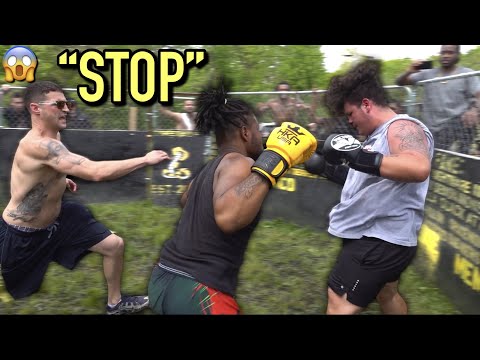
This isn't a pristine dojang with polished floors and hushed reverence. This is "Satan's Backyard," a crucible where disputes are settled not with polite bows, but with gloved fists. The encounter between Fairplay and Hayden, captured and broadcast by Streetbeefs, offers a stark, unfiltered look at the immediate, visceral nature of conflict resolution that predates modern martial arts federations and formal competitions. It’s a raw display that begs the question: what can we, as martial artists, learn from such unvarnished combat?

Understanding Streetbeefs: More Than Just a Fight Club

Streetbeefs, founded by Scarface, operates on a principle that is both ancient and, in its context, surprisingly practical. Scarface, a figure documented in the New York Times and ESPN Magazine, recognized a pervasive issue: individuals resorting to extreme violence, often with lethal consequences, to settle grievances. His solution? To provide a controlled, albeit raw, environment where disputes could be settled through physical confrontation under specific rules.

The core tenets are clear: no guns, no knives, no gang involvement. It’s one-on-one, with a referee, in front of spectators. This structure, while eschewing the formal etiquette of traditional dojos, brings a semblance of order to chaos. It’s a method that Scarface claims has settled hundreds of disputes. The matches themselves vary; some are presented as pure sport, while others stem from genuine "beefs." The entertainment value, however, is a constant, drawing parallels to historical pugilistic contests and early forms of organized fighting.

More than just a spectacle, Streetbeefs aims to foster a sense of community and camaraderie among its participants. It’s described as a club where bonds are formed, and friendships develop. This aspect is crucial: it posits Streetbeefs not merely as a venue for violence, but as a structured social outlet, offering a safer alternative to potentially fatal street altercations or incarceration. It’s a fascinating study in how primal human aggression can be channeled, albeit crudely, into a more contained, if still dangerous, activity.

The emphasis on legality and participant age (18+) underscores an attempt at legitimacy within a system that exists on the fringes. This careful framing aims to distinguish Streetbeefs from random, lawless violence, presenting it as a formalized, albeit amateur, exhibition. The founder’s recognition in mainstream media suggests an underlying narrative of addressing a societal problem through an unconventional, attention-grabbing method.

Fairplay vs. Hayden: A Technical Breakdown

Now, let us turn our critical gaze to the specific encounter between Fairplay and Hayden. From a martial arts perspective, unvarnished street fights are often a brutal test of fundamental principles, stripped of elaborate choreography. What we observe here is less about refined technique and more about raw will, physical conditioning, and the application of basic combative instincts.

Fairplay, as his moniker suggests, may have entered the bout with an intention to adhere to the spirit of the contest. Hayden, on the other hand, represents the raw, unbridled energy that often characterizes such encounters. Observing the exchange requires us to look beyond the aesthetic of traditional martial arts and focus on the efficacy of movement under pressure.

Initial Engagement: The opening moments typically reveal the fighters’ foundational conditioning and their primary offensive or defensive strategies. Are they aggressive, seeking to impose their will immediately? Or are they more cautious, probing for weaknesses? In a Streetbeefs match, the initial phase can be particularly explosive, as participants may feel the pressure to establish dominance quickly. We often see wild swings, a lack of defensive structure, and a heavy reliance on power over precision.

Striking Mechanics: The effectiveness of punches and kicks is paramount. In Streetbeefs, while formal boxing or Muay Thai techniques might be present, they are often diluted by desperation and adrenaline.:

  • Power vs. Accuracy: Fighters tend to prioritize throwing heavy shots rather than precise, targeted strikes. This can lead to fatigue and missed opportunities.
  • Defensive Posture: A common failing in unsanctioned bouts is a weak defensive guard. The "peek-a-boo" style or a tight cross-armed guard might be absent, leaving fighters vulnerable to clean shots.
  • Footwork: Proper weight distribution and movement are crucial for both offense and defense. In these contests, footwork can be clumsy, often characterized by shuffling or static stances, making fighters easy targets.

Clinch and Close-Quarters: If the fight moves into close range, the principles of grappling and infighting become relevant. Though not a formal grappling match, the ability to control an opponent in the clinch, deliver short, effective strikes, or break free strategically can be decisive. The Streetbeefs environment often features a less refined version of this, devolving into messy clinches where raw strength can overwhelm technique.

Stamina and Conditioning: The brutal nature of these contests, often without strict round limits or rest periods as seen in professional MMA, places immense demands on cardiovascular and muscular endurance. A fighter who starts strong but fades quickly is at a significant disadvantage. The raw, extended nature of some Streetbeefs bouts makes conditioning a critical, if often overlooked, factor.

Mental Fortitude: Beyond the physical, the mental game is laid bare. Fear, anger, determination, and the will to continue despite pain are all on display. The ability to maintain composure under duress, to think clearly when hurt, separates those who simply fight from those who can strategically overcome their opponent.

The Role of Striking in Unsanctioned Combat

In the context of Streetbeefs, where the goal is to settle a dispute decisively, striking often becomes the primary tool. Unlike martial arts that emphasize joint locks, throws, or submissions, the raw, often less technical environment of unsanctioned fights lends itself to the direct application of punching and kicking power. This is not to say these contests are devoid of strategy, but rather that the strategies tend to be more rudimentary, focusing on overwhelming the opponent through brute force and persistence.

The **"Fairplay vs. Hayden"** bout, like many in the Streetbeefs series, showcases a spectrum of striking capabilities. Some participants may have a background in boxing or kickboxing, bringing a degree of technical proficiency. Others, however, rely on raw aggression, swinging with maximum force, often sacrificing form for power. This can lead to spectacular, albeit short-lived, exchanges. The lack of formal referees dictating safe striking zones (e.g., no striking to the back of the head or groin, though some rules exist) means fighters must be acutely aware of their own vulnerability.

The psychological aspect of striking in these encounters cannot be overstated. A powerful, well-placed strike can end a fight instantly, but the fear of being struck can also paralyze a less experienced combatant. Conversely, absorbing punishment and continuing to press forward can break an opponent's will. This dynamic is often what draws viewers to platforms like Streetbeefs – the raw, unpredictable nature of human beings pushed to their physical and emotional limits.

From a martial arts perspective, analyzing these exchanges offers valuable insights into the effectiveness of basic offensive techniques when divorced from complex systems. It underscores the enduring power of a well-timed punch or kick, and the importance of the physical conditioning required to deliver and withstand such blows repeatedly.

The Philosophy of Conflict Resolution: Budo vs. Streetbeefs

This is where the true controversy and fascination lie. How does the raw, often chaotic nature of Streetbeefs compare to the philosophical underpinnings of traditional martial arts, or Budo? Budo, the "Martial Way," is not merely about fighting; it's a path of self-cultivation, discipline, and moral development. Its ultimate aim is to transcend conflict, to achieve inner peace, and to use martial skills only as a last resort for self-defense or upholding justice.

"The ultimate aim of martial arts is not victory or defeat, but the perfection of the character." - Gichin Funakoshi

Streetbeefs, while offering a "safer" outlet than uncontrolled street violence, operates on a fundamentally different philosophical plane. It acknowledges and facilitates physical confrontation as the primary means of resolving disputes. The "fair play" aspect, the one-on-one rule set, and the presence of a referee introduce a structured element, but the core principle remains: settling disagreements through physical combat. This starkly contrasts with Budo's emphasis on avoiding conflict, de-escalation, and the cultivation of inner virtues like humility, patience, and compassion.

Can Streetbeefs be considered a form of martial art or Budo? By a strict definition, no. It lacks the deep philosophical traditions, the emphasis on character development, and the ultimate goal of spiritual refinement. However, it does engage with certain primal aspects that are foundational to all martial disciplines: courage, resilience, the physical management of aggression, and the testing of one's mettle under pressure.

The founder’s narrative, seeking to prevent worse violence, adds a layer of utilitarian justification. It’s a pragmatic response to a societal problem, using the inherent human drive for competition and conflict resolution in a (relatively) controlled manner. The debate here is not about whether Streetbeefs is "good" or "bad," but about its place in the broader spectrum of human conflict and its relationship, however distant, to the principles that guide traditional martial arts.

Is there a "Way" in Streetbeefs? Perhaps a brutal, rudimentary one focused on immediate physical resolution and survival. But it is a far cry from the disciplined, character-building path of Budo. This stark difference invites us to reflect on the evolution of combat, from ancient duels to modern MMA, and to consider the enduring human need to test ourselves, and to settle scores, by any means necessary.

Equipment Essential for Your Training

While Streetbeefs operates on the fringes, the participants are still engaging in physical combat that requires basic protective gear. Even for training in more traditional martial arts, the right equipment is crucial for safety, effectiveness, and progression. Investing in quality gear not only enhances your training experience but also minimizes the risk of injury, allowing you to focus on skill development.

  • Gloves: For any striking-based art or sparring, appropriate gloves are non-negotiable. For boxing or MMA sparring, 14oz-16oz sparring gloves offer excellent knuckle protection and wrist support. For bag work, lighter 10oz-12oz training gloves are suitable. Ensure they fit snugly and provide adequate padding.
  • Hand Wraps: Worn underneath gloves, hand wraps are essential for stabilizing the small bones in your hands and wrists, preventing sprains and fractures during heavy striking.
  • Mouthguard: A professional, boil-and-bite mouthguard is vital for protecting your teeth, jaw, and even preventing concussions by absorbing impact. Never spar without one.
  • Shin Guards: If your training involves kicking (e.g., Karate, Taekwondo, Muay Thai, Kickboxing), padded shin guards are essential to protect against bruising and impact from both your own kicks and those of your training partners.
  • Groin Protector: A vital piece of safety equipment for male practitioners of most combat sports, protecting the most vulnerable area.
  • Headgear: Especially important during high-intensity sparring sessions, headgear helps to mitigate cuts, bruises, and reduce the impact of blows to the head.
  • Footwear: Depending on the art, you might need specialized footwear. For Karate or Taekwondo, taekwondo shoes or karate shoes offer grip and flexibility. For Judo or BJJ, a clean dojo floor is often sufficient, but thin-soled wrestling shoes can provide extra grip and protection.
  • Kimono (Gi): For Judo, BJJ, Karate, Taekwondo, and Aikido, a durable, well-fitting Gi is paramount. Look for double-weave fabrics for Judo and BJJ if you plan on rigorous sparring, and lighter, breathable fabrics for striking arts. A high-quality Karate Gi is essential for any serious Karate practitioner.

For those interested in the raw aspect of combat, even basic training equipment can make a significant difference. While Streetbeefs often features participants with minimal gear, understanding the role of protection is key to appreciating the physical demands. For structured martial arts training, however, prioritizing safety through appropriate equipment is a fundamental principle that aligns with the Budo ethos of self-mastery and respect for the training process.

Veredict of the Sensei: Does Streetbeefs Earn a Black Belt?

As a critic of martial arts and their representation, I must assess Streetbeefs not through the lens of formal Budo, but on its own merits as a phenomenon of raw combat. The organization undeniably taps into a primal human drive, offering a cathartic release for pent-up aggression and a raw spectacle for viewers. Scarface's stated intention of providing a safer alternative to deadly street violence is a commendable, albeit controversial, endeavor.

However, when measured against the principles of traditional martial arts – discipline, respect, character development, and the pursuit of self-mastery – Streetbeefs falls woefully short. It is an exhibition of conflict, not a path of cultivation. The "fair play" rules, while providing a semblance of order, do not imbue the combatants with the philosophical depth or ethical framework that defines Budo. The encounters are often brutal, lacking the refined technique and strategic nuance found even in amateur MMA bouts.

Therefore, in the hallowed halls of true martial arts, Streetbeefs does not earn a Black Belt. It does not even earn a white belt. Its value lies in its stark portrayal of human aggression and its unconventional approach to conflict resolution. It serves as a powerful, if disturbing, case study for those who wish to understand the raw, untamed roots from which more formalized combat disciplines eventually emerged.

Rating: Raw Footage of Conflict - Intriguing, but Lacking in Budo.

Frequently Asked Questions

  • What is Streetbeefs?

    Streetbeefs is an organization that provides a platform for individuals to settle personal disputes through one-on-one, unsanctioned fights, emphasizing a controlled environment with strict rules against weapons and gang involvement.

  • Is Streetbeefs a form of martial arts?

    While it involves combat, Streetbeefs is generally not considered a traditional martial art. It lacks the philosophical depth, formal training, and emphasis on character development inherent in disciplines like Karate, Judo, or BJJ. It is more accurately described as unsanctioned fighting or a form of rough combat sport.

  • What are the rules in Streetbeefs fights?

    The primary rules focus on one-on-one combat with gloves, a referee, and spectators. Weapons (guns, knives) and gang involvement are strictly prohibited. Participants must be 18 years or older.

  • What is the goal of Streetbeefs?

    The stated goal of Streetbeefs is to offer a safer alternative to deadly street violence by providing an outlet for individuals to resolve disputes physically, while also entertaining viewers and fostering a sense of community among participants.

Further Exploration of Your Path

The raw energy and immediate stakes presented by Streetbeefs, while different from formal Budo, highlight the universal human element of competition and conflict. To truly understand the spectrum of combat, both refined and unvarnished, consider delving into these related topics:

Reflection of the Sensei: Your Next Step

Having witnessed the raw, unmediated struggle within "Satan's Backyard," ponder this: In the absence of formal rules and established etiquette, what fundamental principle of self-preservation and personal integrity becomes paramount? When the veneer of civilization is stripped away, what truly separates the warrior from the brute?

``` GEMINI_METADESC: Explore the controversial world of Streetbeefs, analyzing the Fairplay vs. Hayden fight and its place alongside traditional Budo. A deep dive into raw combat.

Streetbeefs: Big Al vs. Zion Da Lion - A Raw Look at Real Conflict Resolution

The Genesis of Streetbeefs: More Than Just a Fight

Greetings, seekers of truth in the martial realm. Today, we delve into a phenomenon that blurs the lines between raw, unadulterated conflict and a peculiar form of organized resolution: Streetbeefs. You’ve stumbled upon a chronicle of "STREETBEEFS | BIG AL vs ZION DA LION," a title that conjures images of primal confrontation. But as a seasoned Sensei, I must ask: what truly lies beneath the surface of such encounters? Is it mere brutality, or can we find echoes of the ancient warrior spirit, however distorted?

The founder, "Scarface," speaks of offering a solution to the endemic violence plaguing his community. He presents Streetbeefs not just as a spectacle, but as a "club where people form a bond," providing a safer outlet than the deadly alternative of guns and knives. This intention, however altruistic, raises a critical question: can sanctioned, albeit amateur, street fights truly be considered a form of martial practice, or are they simply a controlled release of aggression?

This post, published on May 20, 2022, aims to dissect the essence of Streetbeefs, using the Big Al vs. Zion Da Lion matchup as our case study. Welcome to Budo and Martial Arts, your definitive resource for the most complete and updated martial arts blog on the internet. Follow us on social networks and do not forget to visit our main page: Budo and Martial Arts Main.

Big Al vs. Zion Da Lion: A Clash of Wills

The pairing of Big Al and Zion Da Lion is presented as a resolution to a real dispute. This isn't a pre-arranged bout for sport alone; it stems from genuine "beef." The Streetbeefs model dictates that participants, both aged 18 or older, step into "Satan's Backyard" – a fitting moniker for a place where disputes are settled with fists rather than firearms. The rules are stark: gloves on, no weapons, no outside interference. It's a one-on-one confrontation under the watchful eye of a referee and spectators.

This method, as the founder claims, has settled hundreds of disputes, aiming to prevent fatalities and jail time. The matches oscillate between being purely for sport and addressing genuine grievances, all contributing to an entertaining narrative. It’s a raw, unvarnished display of human conflict, stripped of the elaborate rulesets and judging criteria found in professional sports. Here, survival and victory are often dictated by sheer will and brute force, sometimes laced with surprising technical application.

The very nature of these contests taps into a primal drive, a fundamental aspect of combative history that predates modern martial arts. The question is, how much of that history remains when the context shifts so dramatically from life-or-death survival to a semi-controlled environment?

"After years of watching people in my area severely hurt each other over various disputes, I decided to offer a solution. Come to SATANS BACKYARD and put gloves on to settle your dispute." - Scarface (Streetbeefs Founder)

Sensei's Analysis: The Brutal Ballet of Streetbeefs

From a martial perspective, Streetbeefs presents a fascinating paradox. On one hand, the lack of formal training, the raw aggression, and the often rudimentary techniques bear little resemblance to the disciplined discipline found in established dojos. Many of these encounters can appear chaotic, a desperate flailing rather than a calculated exchange. The term "boxing" is used, but the reality often transcends the strict confines of that sport, incorporating elements of brawling that we might associate with no-holds-barred fighting.

However, to dismiss it entirely would be a disservice to the underlying human dynamics at play. The core principle of settling disputes through physical confrontation, albeit with protective gear, echoes ancient tribal customs and the early days of Pugilism and rudimentary fighting systems. The participants are, in essence, engaging in a form of combat and fight, albeit with a greater degree of safety than a street brawl. They are testing their mettle, their physical conditioning, and their mental fortitude under duress.

When observing Big Al vs. Zion Da Lion, we should look beyond the immediate spectacle. Are there moments of **strategy**? Does one fighter exhibit superior **physical conditioning** or **resilience**? Does the concept of "KI" – the life force, the spirit of the warrior – manifest in their tenacity, even if not in the refined way we see in traditional Eastern arts? These are the questions a martial scholar contemplates.

The **MMA** and **boxing** communities often debate the legitimacy of various fighting formats. Streetbeefs occupies a unique, often controversial, space. It is undeniably raw, yet it serves a purpose for its participants, channeling aggression into a structured, albeit primitive, contest. It is a testament to the enduring human need to resolve conflict, a fundamental aspect of the martial journey.

Let's consider the **training** aspect. While not a formal dojo, the very act of participating requires some level of physical preparedness. Those who regularly engage in Streetbeefs likely undergo some form of physical exertion, possibly including conditioning and sparring, even if self-taught. This, in itself, is a rudimentary form of **entrenamiento**.

Training Considerations for the Uninitiated

For those watching Streetbeefs and feeling a primal urge to "settle a beef," I must implore caution. This is not a guided path to martial mastery. The risks are substantial, and the potential for serious injury is high, even with gloves. If you feel the need to engage in physical confrontation, the intelligent path lies in seeking proper instruction.

Consider the following, should you wish to explore the combative arts safely and effectively:

  1. Seek a Dojo: Find a reputable dojo teaching disciplines like Boxing, Kickboxing, Muay Thai, Judo, Brazilian Jiu-Jitsu, or Karate. These arts provide structured training, safety protocols, and experienced instructors.
  2. Focus on Fundamentals: Master the basic stances, strikes, blocks, and footwork. A solid foundation is crucial for both effectiveness and injury prevention.
  3. Sparring Under Supervision: Gradually introduce sparring with partners who are equally committed to safety. This is where you test your skills in a controlled environment.
  4. Conditioning is Key: Building physical strength, stamina, and resilience through targeted workouts is non-negotiable.

Streetbeefs is an outlet born of necessity and circumstance, not a curriculum designed for martial development. The true path requires discipline, patience, and guidance.

Sensei's Verdict: Is Streetbeefs a True Martial Art?

This is where the debate ignites. If we define "martial art" by its codified systems, philosophical underpinnings, and lineage of master-to-student instruction, then Streetbeefs falls short. It lacks the formal structure, the deep philosophical study of **BUDO**, and the emphasis on character development that define traditional arts.

However, if we consider the broader spectrum of human **combat** and conflict resolution, Streetbeefs presents a raw, albeit controversial, manifestation. It's a primal distillation of the need to prove oneself physically. The participants are engaging in a form of **fight** and **battle**, testing their courage and strength. It’s entertainment, yes, but also a crude social mechanism.

My verdict? Streetbeefs is a phenomenon of raw human conflict, perhaps a distant, unrefined cousin to genuine martial arts. It offers a glimpse into the unvarnished aspects of **fight** and **pelea**, but it is not a path for disciplined martial development. It may serve a purpose in its community, but it lacks the depth, the respect for tradition, and the profound spiritual development that characterizes true martial arts. It's a **streetbeef**, not a **bushido** path.

"Our matches are 100% legal. All participants must be 18 or older." - Streetbeefs Protocol

Essential Gear for Your Training Journey

While Streetbeefs participants use gloves, a comprehensive martial arts training regimen requires more specialized equipment. For those serious about learning, consider investing in:

  • High-Quality Training Gloves: For boxing, kickboxing, and MMA, durable gloves (12oz-16oz for training) are essential for protection.
  • Mouthguard: Non-negotiable for any form of sparring to protect your teeth and jaw.
  • Shin Guards: Crucial for Muay Thai and Kickboxing training to protect against kicks.
  • Headgear: For sparring, particularly in boxing and kickboxing, to mitigate head trauma.
  • Kimono/Gi: For Judo and Brazilian Jiu-Jitsu, a durable Gi is fundamental. Look for KarateMerchandise if you're exploring Karate.
  • Groin Protector: Essential for preventing serious injury during sparring.

Investing in proper gear is an investment in your safety and longevity in the martial arts. Explore options for KarateMerchandise and other protective equipment to enhance your training.

Frequently Asked Questions

Q1: Are Streetbeefs fights considered real fights?
A1: They are real confrontations with genuine participants and underlying disputes, but they are conducted under a specific set of rules and with protective gear, distinguishing them from unregulated street brawls.

Q2: Can watching Streetbeefs improve my fighting skills?
A2: While you might glean some rudimentary insights, it is not a recommended method for skill development. Formal training with qualified instructors is far more effective and safer.

Q3: Is the founder, Scarface, a martial arts master?
A3: Scarface is presented as a community figure who witnessed violence and created an alternative outlet. While his intentions may be constructive for his community, his background isn't framed as that of a traditional martial arts master.

Q4: What is the main difference between Streetbeefs and amateur boxing?
A4: Amateur boxing adheres to a strict set of rules governed by official bodies, focusing purely on sport. Streetbeefs stems from resolving real disputes, often with less stringent rule adherence and a more volatile context, though still regulated within its own framework.

For Further Study in Your Path

Sensei's Reflection: Your Next Step

Streetbeefs presents a raw, often brutal, reflection of human conflict. It forces us to confront the primitive urge to resolve disputes physically. But does this raw energy, channeled into a controlled environment, truly serve the spirit of martial arts? Or is it merely a temporary bandage on a deeper societal wound, masked by the veneer of sport?

Consider this: if you found yourself in a dispute that escalated towards physical confrontation, would your first instinct be to seek out a sanctioned "beef," or would you rely on the discipline, control, and ethical framework instilled by true martial arts training? What lessons, if any, can a martial artist learn from observing such contests, and how do these lessons differ from the wisdom gained in a traditional dojo?

Now, it is your turn. Do you believe Streetbeefs, in its own way, contributes to a form of conflict resolution that holds merit? Or is it a dangerous spectacle that risks glorifying violence? Prove your point in the comments below.

``` GEMINI_METADESC: Explore the controversial world of Streetbeefs, featuring Big Al vs. Zion Da Lion. Sensei analyzes the raw combat, its purpose, and its relation to true martial arts.

Budo & AM Presents: STREETBEEFS - Florida Boy vs. World Wonder: A Raw Examination of Modern Combat

Introduction: The Siren Call of the Unsanctioned

Hello, fellow practitioners and enthusiasts of the martial way. Today, we delve into a phenomenon that blurs the lines between sport, spectacle, and raw human conflict: Streetbeefs. The contest between Florida Boy and World Wonder, though seemingly a simple street fight, offers a stark, unfiltered glimpse into the primal urges that still simmer beneath the surface of our civilized world. Are these mere brawls for the amusement of the masses, or do they hold a twisted reflection of the warrior spirit? As a Sensei with decades steeped in the traditions of *Budo* and a keen eye for the cinematic portrayal of combat, I find myself compelled to dissect this. This isn't about glorifying violence; it's about understanding its roots, its consequences, and what, if anything, remains of the martial principles when the rules are minimal and the stakes feel undeniably real.
"The supreme art of war is to subdue the enemy without fighting." - Sun Tzu, The Art of War. A principle seemingly antithetical to the very existence of Streetbeefs.

Streetbeefs: Anarchy or Controlled Chaos?

Streetbeefs presents itself as a solution: a controlled environment where disputes can be settled without resorting to lethal weapons or gang affiliations. The founder, Scarface, a figure recognized by the New York Times and ESPN, conceptualized this platform as a way to redirect aggressive energy. He offers an arena, a referee, and gloves – a stark contrast to the anarchy of real street altercations. Yet, the term "Satan's Backyard" and the raw, unpolished nature of the fights conjure images far removed from the disciplined dojos of traditional *Budo*. The organization claims its matches are 100% legal amateur exhibitions, with participants aged 18 and over. This legal veneer, however, does little to mask the underlying reality: these are often real beefs, settled physically. While some matches might be purely for sport, the inherent rawness suggests a deep well of unresolved conflict being tapped. Streetbeefs posits itself as a club, fostering bonds and friendships among participants, providing a safer outlet for aggressive individuals. This narrative of community and safety is compelling, but does it truly honor the spirit of martial arts, or merely co-opt its aesthetic for entertainment?
The *ki* – the vital energy – that flows through a disciplined martial artist is honed through rigorous training, introspection, and respect. In Streetbeefs, this energy often manifests as unfettered aggression. Is there any *Bushido*, any code, being upheld when the primary motivation appears to be the spectacle of a physical confrontation? This is where my critical eye, honed by years of studying both the theory and practice of combat, becomes most engaged.

Florida Boy vs. World Wonder: The Matchup

The specific encounter between Florida Boy and World Wonder falls under the Streetbeefs banner, implying it adheres to their ruleset. While specific details of their *personal* beef are often secondary to the event itself, the names themselves evoke a certain imagery. "Florida Boy" suggests a localized, perhaps impulsive, conflict, while "World Wonder" hints at a broader, perhaps more seasoned, individual. The core of the contest, as with all Streetbeefs events, is the physical confrontation. Unlike the Marquess of Queensberry rules, which emphasize strategic striking and defensive art, Streetbeefs often lean towards a more primal exchange. The visual documentation of these events, often circulated widely, showcases a different kind of combat than seen in professional MMA or traditional martial arts tournaments. The emphasis is less on intricate technique and more on resilience and raw power. This is where the debate truly ignites: can these unsanctioned brawls be considered a form of *combate* in the same vein as Judo, Karate, or Boxing?

The Budo Perspective: Beyond the Brawl

From a *Budo* standpoint, the martial arts are a path of self-mastery, discipline, and ethical development, not merely a means of settling disputes. The core principles of respect, humility, and continuous self-improvement are paramount. When we observe Streetbeefs, we must ask: * **What is the underlying intention?** Is it truly to foster community and provide a safer outlet, or is it primarily for the voyeuristic entertainment of viewers? The latter, if dominant, detracts from any genuine martial merit. * **Is there a measurable improvement in the participants?** Beyond the immediate resolution of a conflict, does participating in Streetbeefs cultivate the discipline and character that are hallmarks of *Budo*? Or does it merely reinforce aggression? * **Where is the respect for the opponent?** While gloves are worn, the often visceral nature of the exchanges can border on disrespect, especially when compared to the formal bows and adherence to etiquette seen in traditional dojos. The founder's background, being featured in the New York Times and ESPN Magazine, lends a certain legitimacy to the *organization*, but not necessarily to the *activity* as a martial art. The transition from "Guns to Gloves" is a powerful narrative, but the question remains: are these gloves truly channeling a martial spirit, or simply channeling aggression into a slightly less destructive, yet still raw, form?
"Karate is a defensive art. In its highest sense, it is a process of engaging with the opponent, understanding them, and finding harmony with them. It is not about fighting." - Gichin Funakoshi, Founder of Shotokan Karate. This sentiment is often lost in the heat of a streetbeef.
The concept of *Ki* is central to many Eastern martial arts. It represents a disciplined, controlled energy. In Streetbeefs, we often see raw, uncontrolled energy—what some might call *rage*—manifesting. While adrenaline is undoubtedly a factor, the lack of structured *breathing techniques* and meditative practices common in *Budo* suggests that the *Ki* is not being cultivated or channeled, but rather unleashed.

Training for the Unpredictable: Lessons from the Street

While I cannot endorse Streetbeefs as a form of legitimate martial arts training, there are elements of their approach that, when viewed through a critical lens, offer some tactical insights for self-defense or sport. **Guía de Entrenamiento: Resiliencia y Adaptación** 1. **Resistencia Física:** El entrenamiento cardiovascular es fundamental. Sesiones de carrera continua (como se promueve en #EmpezarACorrer) y ejercicios de acondicionamiento general (#Conditioning) son esenciales para soportar combates prolongados. 2. **Fuerza Funcional:** Incorporar ejercicios de fuerza que imiten movimientos de combate. Flexiones, sentadillas, levantamientos y ejercicios con el propio peso corporal (#NoEquipment, #AtHomeWorkout) preparan el cuerpo para el impacto. 3. **Golpeo Básico:** Aunque Streetbeefs no se centra en la técnica refinada, entender los principios del golpeo es vital. Practicar golpes rectos, ganchos y uppercuts con un enfoque en la potencia y la sincronización puede ser útil. Considera el uso de guantes de boxeo para proteger tus manos si practicas esto. 4. **Conciencia del Entorno:** La mayor diferencia entre un ring y la calle es la falta de reglas y la imprevisibilidad. Un buen entrenamiento para la calle implica estar consciente de todo lo que te rodea, no solo de tu oponente. Esto va más allá del mero entrenamiento físico y entra en el dominio de la #Autodisciplina y la #Mentalidad. 5. **Control Emocional:** Este es el punto más crítico. Un verdadero artista marcial aprende a controlar sus emociones, especialmente el miedo y la ira. El objetivo es mantenerse tranquilo bajo presión, una habilidad que requiere meditación y práctica constante (#MentalGame, #SelfMastery). Streetbeefs, lamentablemente, parece fomentar la emoción descontrolada. El objetivo final de cualquier entrenamiento marcial debe ser el desarrollo integral del individuo, tanto física como mentalmente. Si bien Streetbeefs puede ofrecer una forma cruda de prueba de fuego, carece de la profundidad y la guía necesarias para un crecimiento marcial auténtico.

Veredict of the Sensei: Entertainment vs. Martial Integrity

Streetbeefs, y por extensión el combate de Florida Boy vs. World Wonder, reside en un territorio ético y marcial muy ambiguo. **Calificación:** Cinturón Negro en Espectáculo Crudo, Cinturón Blanco en *Budo*. **Análisis:** La iniciativa de Scarface de ofrecer una alternativa a la violencia armada es, en cierto nivel, loable. La organización tiene méritos en cuanto a su capacidad para canalizar agresión y potencialmente prevenir tragedias mayores. La documentación y difusión de estos eventos, aunque a menudo explícita, ciertamente capta la atención. Sin embargo, desde la perspectiva de las artes marciales tradicionales, esto es fundamentalmente un espectáculo. Carece de la estructura, la filosofía, el respeto mutuo y el objetivo de autoperfeccionamiento que definen al *Budo*. Si bien hay elementos de lucha y resistencia, equiparar esto con Karate, Judo, o incluso MMA sancionado sería un error fundamental. Es un fenómeno social y una forma de entretenimiento crudo, pero no representa el camino marcial. La pregunta que debemos hacernos no es solo si es legal o entretenido, sino si eleva el espíritu humano o simplemente lo reduce a su forma más básica y reactiva.

Equipment for Controlled Combat

While Streetbeefs emphasizes a raw, often minimal approach to equipment, certain items are crucial for safety, even in unsanctioned bouts. * **Boxing Gloves:** Essential for hand protection and reducing the severity of facial injuries. For raw bouts, 16oz or heavier gloves are typical. * **Mouthguard:** Non-negotiable. Protects teeth, jaw, and can help prevent concussions. * **Groin Protection:** Highly recommended, as groin strikes are common in uncontrolled environments. * **Hand Wraps:** Used beneath gloves to further support the wrists and prevent fractures. * **Athletic Cup:** Similar to groin protection, it is a critical piece of protective gear. For those looking to train in more structured environments, consider: * **Kimono de Judo/BJJ:** For grappling arts, a durable double-weave gi is essential. * **Guantes de MMA:** Designed for grappling and striking, with open fingers for grip. * **Protector Bucal a Medida:** Offers superior comfort and protection compared to standard boil-and-bite models.

Frequently Asked Questions

* **What is Streetbeefs?** Streetbeefs is an organization that provides a platform for individuals to settle disputes through unsanctioned boxing or mixed martial arts matches, aiming to offer a safer alternative to real-world violence. * **Are Streetbeefs matches legal?** The organization claims their matches are legal amateur exhibitions, but the legality can vary by location and specific circumstances. Participants are typically required to be 18 or older. * **How does Streetbeefs differ from professional MMA?** Streetbeefs lacks the strict regulations, professional training, and emphasis on martial technique found in professional MMA. It often involves pre-existing personal conflicts and a more raw, less refined style of fighting. * **Is Streetbeefs a form of martial arts?** From a traditional *Budo* perspective, Streetbeefs is not considered a martial art. While it involves physical combat, it lacks the philosophical underpinnings, ethical codes, and focus on self-mastery inherent in traditional martial arts. * **What is the role of the founder, Scarface?** Scarface founded Streetbeefs with the intention of providing a controlled outlet for aggression and dispute resolution. His background has been documented in major media outlets.

For Further Deepening of Your Path

* The Philosophy of Budo * Essential Training Drills for Martial Artists * Understanding Combat Sports vs. Martial Arts

Reflection of the Sensei: Your Next Step

We have dissected Streetbeefs, Florida Boy vs. World Wonder, and the chaotic realm of unsanctioned combat. We've seen an attempt to control primal urges, wrapped in the guise of a solution. But now, I pose this question to you, the discerning student of the martial way: **When faced with conflict, is your first instinct to seek a 'streetbeef' or to embody the principles of 'Budo' – seeking harmony, understanding, and, if necessary, applying skill with controlled intention, not uncontrolled rage?** Reflect on this not just in the dojo, but in every interaction of your life. GEMINI_METADESC: An incisive martial arts critique of Streetbeefs, analyzing the Florida Boy vs. World Wonder fight from a Budo perspective, questioning its legitimacy as combat.

The Unseen Combat: Analyzing the "Streetbeefs" Phenomenon Through a Martial Lens

Greetings, martial aspirants and combat enthusiasts. Today, we venture into a territory often misunderstood, yet undeniably present in the raw expression of human conflict: the "street beef." We're not here to glorify violence, but to dissect it. The recent event, if we can call it that, featuring MONEYMEIL vs FETTY under the banner of "Streetbeefs," presents a fascinating, albeit crude, case study. This isn't the refined art of the dojo, nor the strategic choreography of a cinematic battle. This is… something else. And it’s our duty, as students of the martial, to understand it.

What Exactly IS Streetbeefs?

The term "Streetbeefs" itself conjures images of raw, unadulterated confrontation. According to its founder, Scarface, Streetbeefs emerged as a "solution" to the escalating violence in his community. The premise: provide a controlled environment where disputes can be settled via sanctioned, albeit amateur, boxing or MMA matches. No weapons, no "friends jumping in," just two individuals settling their differences in a ring, observed by a crowd.

This concept, presented as a safer alternative to fatal street altercations, has garnered attention, even featuring in The New York Times and ESPN The Magazine. It taps into a primal need for resolution, a method as old as time: settling disputes through physical contest. However, the question remains: how does this raw display compare to the disciplined principles of traditional martial arts?

The Core of Conflict: From Dispute to Gloves

The transition from a "beef" – a dispute, a disagreement, a perceived slight – to a sanctioned bout is the crux of the Streetbeefs model. It acknowledges that conflict is inevitable. Instead of allowing it to fester and erupt into potentially deadly street fights, it offers a regulated outlet. This is a critical distinction.

Scarface's intention, as stated, is to prevent bloodshed and incarceration. By providing a platform with referees and rules, the aim is to channel aggression constructively. This resonates with a historical understanding of combat sports as a civilized proxy for warfare or personal vendettas. Think of the gladiatorial contests of ancient Rome, or even the early days of boxing, where bare-knuckle brawls often settled matters of honor or territory.

The variety of matches is also noteworthy: "SOME MATCHES ARE PURELY FOR SPORT, some are REAL beef, and ALL are entertaining." This highlights the blurred line between genuine animosity and pure spectacle. It's this very blend that makes Streetbeefs a compelling, albeit controversial, phenomenon.

"I've settled hundreds of disputes in our area with this method, and hope to settle THOUSANDS more, all while entertaining my viewers."

Analysis of MONEYMEIL vs FETTY: A Martial Critique

Now, let's turn our analytical gaze to the specific contest: MONEYMEIL vs FETTY. From a pure martial arts perspective, we must strip away the "street" element and examine the combat itself. Without access to the full match footage (represented by

), our analysis is based on the context provided and general observations of such events.

The description suggests a boxing or MMA framework. If it was boxing, we'd look for fundamental techniques: footwork, defensive posture, effective punching combinations, and ring generalship. Are the fighters demonstrating proper guard? Is their stance balanced and conducive to both offense and defense? Are they throwing punches with proper form, generating power from their hips and core, rather than just arm swings?

If it leaned towards MMA, the questions multiply. How is the grappling handled? Is there any attempt at takedowns or submissions, or is it primarily striking? If striking, is it governed by MMA rules (e.g., kicks, knees, elbows)? The "100% legal" and "18 or older" stipulations point to a semblance of rules, which is a step above a free-for-all. Yet, without professional training, these bouts can often devolve into wild flailing, lacking the efficiency and control taught in traditional martial arts.

The raw emotion, the "real beef," can be a double-edged sword. It can fuel aggression, but it can also lead to reckless abandon, poor decision-making, and a higher risk of injury. A trained martial artist channels this energy, using discipline and technique to overcome raw power. In a street context like this, it's often raw power and sheer will that dominate, for better or worse.

Beyond the Brawl: The Societal Underpinnings

Streetbeefs, and events like MONEYMEIL vs FETTY, exist within a specific socio-economic context. They highlight a failure of traditional conflict resolution mechanisms for certain demographics. When legal or social avenues for resolving disputes seem inaccessible or ineffective, individuals may resort to more primitive, direct methods.

The organization's stated goal of fostering "lasting friendships" and providing a "safer outlet" speaks to a desire for community and belonging. In some ways, these organized street fights attempt to replicate the camaraderie and discipline found in legitimate martial arts clubs, but without the rigorous training, philosophical depth, and ethical framework.

The entertainment value is undeniable. Humans are drawn to conflict, to displays of courage and aggression. Streetbeefs taps into this, offering a visceral spectacle. However, this entertainment comes at a cost, raising ethical questions about profiting from potentially dangerous situations, even if regulated.

Martial Arts vs. Street Confrontation: A Stark Divide

This is where the true polemic lies. The fundamental difference between a martial art and a street fight, even a regulated one like Streetbeefs, is purpose and philosophy. Martial arts are not solely about fighting; they are about self-improvement, discipline, respect, and character development. The techniques are honed over years, emphasizing efficiency, control, and the minimization of harm – to oneself and the opponent.

"The ultimate aim of martial arts is not victory or defeat, but the perfection of character." - A principle echoed across many traditions.

In contrast, Streetbeefs, while attempting regulation, primarily focuses on resolving "beefs" and providing entertainment. The philosophical underpinnings are largely absent. While boxing and MMA have their own rule sets and competitive spirit, they often stem from disciplined traditions. Streetbeefs feels more like a raw manifestation of competitive instinct born out of necessity or dispute, rather than a path of self-mastery.

The concept of Mushin (no-mind), a state of egolessness and unattached awareness crucial in many martial arts, is unlikely to be present when the fight stems from "real beef." Instead, emotions like anger, pride, and vengeance are likely to be the primary drivers, leading to less strategic, more brute-force engagements.

The *kime* – the final explosive power and focus at the moment of impact – in martial arts is cultivated through precise technique and mental focus. In a street fight, it might be pure adrenaline, leading to missed opportunities and wasted energy.

The very essence of Budo, the "Way of the Warrior," is about cultivating virtues through rigorous training. While Streetbeefs provides a physical outlet, it arguably misses the crucial elements of ethical development and spiritual growth that define true martial practice.

Equipment Considerations for Controlled Combat

For those engaging in regulated combat, whether in a formal sport or an event like Streetbeefs, appropriate equipment is paramount for safety. While the emphasis here is on amateur exhibitions, basic protective gear can mitigate risks.

  • Gloves: For boxing-style bouts, proper sparring gloves (e.g., 14-16oz) are essential to protect both the striker's hands and the opponent's head.
  • Mouthguards: A mandatory item in almost all combat sports to protect teeth, jaw, and prevent concussions.
  • Groin Protection: Crucial for male participants in any form of combat that could involve body shots.
  • Headgear (Optional but Recommended): Especially for individuals with limited training, headgear can reduce the severity of cuts and bruises.

While Streetbeefs aims to be safer than street fighting, the lack of standardized training and conditioning means that injuries are still a significant concern. Investing in quality martial arts merchandise, even for informal bouts, is a sign of respect for the activity and one's own well-being.

FAQ: Streetbeefs and Martial Arts

What is the primary difference between Streetbeefs and professional MMA?

Professional MMA operates under a highly regulated, standardized rule set with trained athletes, judges, and medical staff, focusing on sport and competition. Streetbeefs is an amateur exhibition focused on settling personal disputes, with less stringent regulation and a different underlying purpose.

Is participating in Streetbeefs considered a martial art?

No. While it involves physical combat, it lacks the structured training, philosophical depth, ethical framework, and self-improvement focus that define a martial art. It's closer to an informal combat sport or a regulated street fight.

Can Streetbeefs actually prevent violence?

It's debatable. It offers an outlet for some disputes, potentially preventing immediate escalation. However, it doesn't address the root causes of conflict and could even glorify violence as a means of resolution for some.

Are the matches in Streetbeefs truly safe?

While more controlled than spontaneous street fights, they are inherently dangerous. Participants are often untrained, increasing the risk of serious injury. The "100% legal" aspect refers to the organization of the event itself, not the inherent safety of the activity.

What martial arts philosophy is relevant to understanding Streetbeefs?

Concepts like Sutemi (sacrifice/throwing oneself) might be observed in the willingness to engage, but the lack of refined technique means principles like Aiki (harmonizing energy) or Judo's principle of 'maximum efficiency, minimum effort' are unlikely to be demonstrated.

Final Reflection: Your Next Step

The phenomenon of Streetbeefs, exemplified by bouts like MONEYMEIL vs FETTY, forces us to confront the primal urge for conflict resolution. It's a raw, often brutal, display that stands in stark contrast to the disciplined path of martial arts. While it might offer a regulated alternative to street violence for some, it fundamentally lacks the transformative power of true Budo.

We observe, we analyze, but we do not necessarily endorse. The path of martial arts is one of discipline, respect, and continuous self-improvement. It is a journey that seeks to refine, not just to conquer.

Sensei's Challenge: Your Next Step

When confronted with raw aggression, whether in a formal bout or a personal dispute, is your first instinct to meet force with force, or to seek a resolution that transcends mere physical victory? Ponder this: does the spectacle of a street fight illuminate the path of the warrior, or merely highlight its absence? Share your thoughts. I await your reasoned arguments.

#Streetbeefs #Boxing #MMA #Combat #Discipline #MartialArts #BUDO #ConflictResolution

For Deeper Study on Your Path

``` GEMINI_METADESC: Analyze the MONEYMEIL vs FETTY Streetbeefs event through a martial arts lens. Explore the differences between regulated street fights and true Budo, and the philosophy behind conflict resolution.

StreetBeefs: A Controversial Arena or a Safer Outlet for Conflict?

The world of combat sports is vast and varied, often blurring the lines between organized competition and raw, unfiltered aggression. Today, we delve into a phenomenon that sits squarely in this grey area: StreetBeefs. This isn't your typical sanctioned bout in a glittering arena; it's a stark, often brutal, exhibition of conflict resolution that has captured the attention of many. But is it a dangerous spectacle, or a genuinely safer alternative to the violence it seeks to emulate?

As a lifelong student and critic of martial arts, my approach to any form of combat, whether it's the elegant precision of Karate or the raw power of MMA, is always through the lens of discipline, respect, and the pursuit of self-mastery. StreetBeefs, with its origins rooted in settling disputes, presents a unique challenge to these principles. Let's dissect what it represents and why it ignites such passionate debate.

Introduction: The Genesis of StreetBeefs

StreetBeefs emerged from a grim reality: disputes escalating to life-altering violence. The founder, known as Scarface, observed this pattern and conceived of an alternative. Instead of knives, guns, or gang intervention, participants would settle their differences by donning gloves and stepping into a designated space—dubbed "Satan's Backyard." This radical approach, documented in reputable media like The New York Times and ESPN The Magazine, positions StreetBeefs as more than just a fight club; it's presented as a social intervention.

However, the inherent nature of such confrontations—raw, often unrefined, and driven by genuine animosity—raises critical questions for anyone invested in the principles of martial arts. Can true discipline and respect coexist with such an environment? Or does it merely legitimize and amplify aggressive tendencies?

Scarface's Vision: From Dispute to Gloves

"After years of watching people in my area severely hurt each other over various disputes, I decided to offer a solution," Scarface articulated. This statement forms the philosophical bedrock of StreetBeefs. The core idea is to channel aggression into a controlled, albeit still intense, physical contest. The rules, while seemingly simple (gloves on, one-on-one, refereed), are designed to prevent fatalities and reduce long-term consequences, such as jail time. This pragmatic approach aims to provide a "safer outlet for aggressive young men and women."

"Come to SATANS BACKYARD and put gloves on to settle your dispute. No guns, No knives, No gang of friends jumping in. Just you, your Foe, the referee, and a group of spectators."

This emphasis on "no guns, no knives" is crucial. It’s the fundamental argument for StreetBeefs’ legitimacy as a harm-reduction strategy. By providing a structured, albeit informal, arena, it seeks to mitigate the far more destructive outcomes of street violence. The matches, described as sometimes purely for sport and sometimes as "REAL beef," aim to be entertaining while serving a deeper purpose.

The Controversy: Sport or Spectacle?

The very name "StreetBeefs" and the setting of "Satan's Backyard" immediately signal a departure from the polished world of professional combat sports. This rawness is both its appeal and its most significant point of contention. Critics argue that it glorifies violence, presenting it as entertainment without adequate safeguards or the rigorous training inherent in traditional martial arts. Is this a genuine attempt to quell violence, or a sensationalized display designed for clicks and views?

The distinction between "sport" and "real beef" is a delicate one. In legitimate martial arts, the training is about transcending aggression, about developing the self. StreetBeefs, while offering an outlet, often seems to amplify the aggressive energy. The question is, does the controlled environment truly transform this energy, or merely provide a temporary, albeit safer, release valve?

Authenticity in Conflict: Is it Real Beef?

A key aspect of StreetBeefs' narrative is the authenticity of the disputes. These aren't staged fights for a pay-per-view event; they are presented as genuine attempts to resolve personal conflicts. This "realness" is what draws many viewers. They are witnessing conflict resolution in its most primal form, stripped of the pretense that can sometimes permeate professional sports.

However, authenticity in conflict doesn't necessarily equate to martial efficacy or ethical conduct. A dispute born of genuine animosity can still be decided by brute force, luck, or a lucky punch, rather than skill, strategy, or discipline. This is where the martial artist in me pauses. While I respect the effort to de-escalate violence, the *method* of resolution is still far from the ideals of Budo.

A Martial Artist's Perspective: Discipline vs. Rawness

From a traditional Budo perspective, the goal is not merely to win a fight, but to cultivate character, discipline, and respect. Arts like Judo, Karate, and Aikido emphasize rigorous training, mental fortitude, and the ethical application of techniques. The journey itself is as important as the outcome.

StreetBeefs, while involving combat, often lacks this deep emphasis on traditional martial arts principles. The participants, while willing to fight, may not have undergone the years of dedicated training required to understand the nuances of control, self-preservation, and the philosophical underpinnings of combat. This can lead to a higher risk of injury and a less refined display of combative skill. It's the difference between a trained warrior and a cornered animal; both may fight, but only one truly understands the art of combat.

"The essence of martial arts is not to defeat an enemy, but to cultivate oneself. The fight is only a means to that end." - A principle echoed across many dojos.

This doesn't mean StreetBeefs lacks any value. For individuals with pent-up aggression and unresolved conflicts, stepping into the ring, even informally, is arguably better than resorting to more lethal means. It provides an immediate, visible consequence and a structured way to vent aggression. Yet, it remains a far cry from the transformative journey offered by dedicated martial arts training. One might see it as a pragmatic, if crude, solution to a complex social problem.

StreetBeefs as an Outlet: A Double-Edged Sword

The argument that StreetBeefs provides a "safer outlet" is compelling. In communities where violence is prevalent, offering a controlled environment can undeniably save lives and reduce severe injuries. The fact that participants are 18 or older and must wear gloves signifies a baseline level of responsibility. It taps into the primal human need for resolution and competition.

The documented media attention suggests that Scarface and his organization are serious about this mission. They aim to build a community, foster bonds, and provide a legitimate alternative to destructive behaviors. The club aspect, where people "develop lasting friendships," adds another layer to this argument, suggesting a communal benefit beyond just the fights themselves.

However, the "double-edged sword" analogy is apt. By presenting these fights as entertainment, there's a risk of desensitization to violence. Furthermore, the participants, often lacking formal training, are more susceptible to serious injury. While it might prevent stabbings or shootings, broken bones, concussions, and other trauma are still very real outcomes. The line between entertainment and exploitation can also become blurred.

Equipment Essential for Your Training

While StreetBeefs operates on a more raw level, any engagement with combat, even for self-defense, requires proper preparation. If you're inspired to take your understanding of combat more seriously, here's essential gear:

  • Boxing Gloves: For amateur bouts or sparring, 16oz gloves offer a good balance of protection for both participants.
  • Hand Wraps: Crucial for supporting your wrists and metacarpals during any striking activity.
  • Mouthguard: Essential for protecting your teeth and jaw.
  • Groin Protector: A non-negotiable piece of safety equipment for any form of sparring or combat.
  • Shin Guards: If kicking is involved, these protect your shins from impact and reduce injury.
  • Training Partner: The most important piece of "equipment." Consistent, safe sparring is vital.

For those looking to train in more formal martial arts, a quality Karate gi or Judo gi (kimono) is fundamental for practice.

Sensei's Verdict: Does it Earn a Black Belt?

StreetBeefs is a complex phenomenon. It attempts to address a real societal problem with a bold, if controversial, approach. It provides an outlet and possibly prevents worse violence. For that, it earns a grudging respect. However, from the perspective of martial arts mastery and discipline, it falls short. It prioritizes the "beef" over the "budo."

Cinturón Negro en Iniciativa de Reducción de Daños.
Falla en los Fundamentos de la Disciplina Marcial.

It’s a fascinating case study in human aggression and the search for resolution, but it is not, by any stretch, a traditional martial art. It’s a raw exhibition, a survival mechanism for conflict in a world that often fails to provide better alternatives.

Frequently Asked Questions

  • Is StreetBeefs legal?
    StreetBeefs claims all matches are 100% legal amateur exhibitions, with participants aged 18 or older. However, the legality can vary depending on local regulations regarding unsanctioned combat.
  • Are the fights staged?
    StreetBeefs asserts that some matches are purely for sport, while others are "REAL beef," implying a level of authenticity to the disputes.
  • What are the risks involved?
    Despite the claim of being a safer alternative, participants face risks of serious injury, including broken bones, concussions, and other trauma, as these are often untrained individuals engaging in intense physical conflict.
  • Does StreetBeefs teach martial arts?
    No, StreetBeefs is not a martial arts organization. It provides an arena for settling disputes through physical combat, rather than teaching martial arts techniques or philosophy.

To Deepen Your Path

The exploration of combat and conflict is vast. If StreetBeefs has sparked your interest in understanding the broader context of martial arts and their impact, consider these related topics:

Sensei's Reflection: Your Next Step

StreetBeefs presents a raw, unfiltered look at conflict. It forces us to ask uncomfortable questions about violence, resolution, and the role of combat in society. It’s easy to condemn it as mere brutality, but its founder's stated intent—to offer an alternative to lethal violence—deserves consideration. Yet, as practitioners of martial arts, we must always ask: at what cost does this "alternative" come? Does it truly elevate us, or merely provide a more palatable form of aggression?

Reflection of the Sensei: Your Next Step

Consider the core principles that underpin genuine martial arts: discipline, respect, self-improvement, and the pursuit of control over oneself before controlling others. Now, look at the raw energy displayed in StreetBeefs. Where do these two worlds intersect, and where do they fundamentally diverge? Is the intention to resolve conflict through controlled combat inherently flawed if the participants lack the discipline to manage their own aggression and the techniques to do so safely? Contemplate this: If you were in a situation where resolving conflict through physical means was unavoidable, would you rather face an opponent trained in the ways of Budo, or someone driven solely by raw "beef"? Your answer reveals much about the true value of dedicated martial arts training.

``` GEMINI_METADESC: Analiza StreetBeefs: ¿un circo de peleas o una alternativa a la violencia real? Exploramos el fenómeno, su controvertida autenticidad y su lugar en el mundo del combate.