Showing posts sorted by relevance for query Morihei Ueshiba. Sort by date Show all posts

Morihei Ueshiba: The Last Master's Testament to Aikido's Harmonious Force

Who Was Morihei Ueshiba?

Morihei Ueshiba, O-Sensei, the revered founder of Aikido, was a martial artist whose life spanned from 1883 to 1969. His legacy is not merely recorded history; it's a living testament to a profound understanding of combat and philosophy that transcends mere physical prowess. For decades, his name has echoed through the halls of martial arts, synonymous with a unique and powerful system. But what truly set Ueshiba apart? Was he merely a skilled technician, or was he something more – a philosopher-warrior whose insights continue to shape practitioners today? This exploration delves into the essence of the man and the art he birthed, challenging the conventional notions of martial efficacy and exploring the deeper currents of Budo.

The Philosophy of Harmony: Aikido's Core

At the heart of Aikido lies a philosophy that initially seems counterintuitive to the world of combat: harmony. Ueshiba O-Sensei didn't teach his students to meet force with force, but rather to blend with an opponent's energy, redirecting their momentum and neutralizing their aggression. This principle, often misunderstood as passive, is in reality a sophisticated application of physics and psychology. It requires immense sensitivity, precise timing, and an unwavering inner calm – the very definition of Ki mastery. This approach differentiates Aikido fundamentally from many artes marciales focused primarily on striking or overpowering an opponent. It’s a dance of control, a conversation of movement where the ultimate goal is not to inflict damage, but to resolve conflict with minimal harm. This core tenet is the bedrock upon which the entire art of Aikido is built, a revolutionary concept in the often brutal world of combate.
"The true meaning of martial arts is not to be the strongest, but to be the most harmonious." - Morihei Ueshiba

A Glimpse into the Master's Final Class

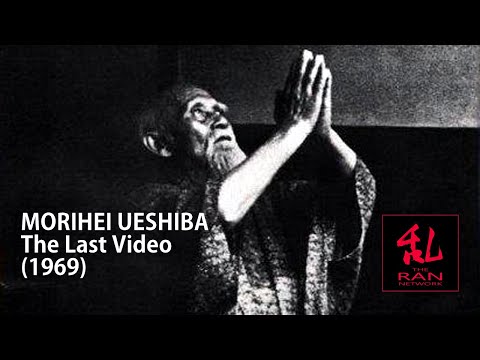
The year 1969 marked a poignant moment in martial arts history: Morihei Ueshiba's final class at the Aikikai Hombu Dojo in Tokyo. A video recording of this session offers a deeply moving glimpse into the spirit of a master at the twilight of his life. We witness an elderly Ueshiba, physically frail, battling illness, yet still able to command the respect and attention of his assembled students. What unfolds is not a display of raw power, but a demonstration of exquisite technique and profound understanding. His movements, though perhaps lacking the explosive speed of his youth, retained an uncanny fluidity, a dancer's grace married with a warrior's precision. He executed throws and techniques with an apparent effortlessness that belied the complexity and effectiveness of his art. This final performance serves as a powerful testament not just to his exceptional skill, but to a lifetime dedicated to the pursuit of martial perfection. It’s a visual lesson that transcends words, showcasing the enduring power and aesthetic beauty inherent in Budo.

The Enduring Legacy and Transmission of Teachings

Ueshiba's final class was more than just a demonstration; it was a distillation of his life's work, a living transmission of principles passed down through generations. The impact of O-Sensei's teachings is immeasurable, permeating the global community of martial artists. His philosophy of harmony, resolution, and self-improvement continues to be practiced and taught by his students, and their students, and so on. This lineage, this unbroken chain of transmission, is the true measure of a master's impact. Aikido, as a discipline, is not static; it evolves through the practitioners who embody its principles. The legacy of Morihei Ueshiba isn't confined to historical records or video archives; it lives and breathes in every dojo where his art is practiced with sincerity and dedication. His influence extends far beyond the confines of Aikido, resonating with anyone seeking a deeper understanding of human potential and conflict resolution.

Martial Arts: More Than Just Fighting

O-Sensei's final demonstration serves as a powerful reminder that the martial path is far more profound than mere combat. While the ability to defend oneself is a crucial aspect of many lucha systems, the true essence of martial arts, as Ueshiba taught, lies in discipline, self-mastery, and personal growth. It’s about cultivating inner strength, developing resilience, and fostering a spirit of peaceful resolution. This holistic approach, this emphasis on character development alongside physical technique, is a cornerstone of his philosophy. It’s a lesson that has been passed down through the ages, influencing not only practitioners of Aikido but a broad spectrum of individuals dedicated to self-improvement. The journey through BUDO is a journey of transformation, where the dojo becomes a microcosm of life itself.

Deepening Your Understanding: Resources and Gear

For those captivated by the philosophy and practice of Aikido and artes marciales in general, a wealth of resources exists to support your journey. Books offer historical context and philosophical depth, videos provide visual demonstrations of techniques and principles, and online courses offer structured learning from experienced instructors. Many reputable Aikido schools worldwide welcome beginners eager to explore this unique art form. When it comes to training, the right equipment can significantly enhance your experience and safety. High-quality training gear is essential for effective practice and injury prevention.

Equipo Esencial para tu Entrenamiento

  • Kimono de Aikido (Gi): Look for a durable, double-weave cotton gi that allows for freedom of movement and can withstand the rigors of throws and grappling. Brands like Karate and Judo gis often offer suitable alternatives.
  • Hakama: While not essential for beginners, the hakama is traditional attire for Aikido practitioners and allows for practice of specific techniques.
  • Jo y Bokken: Training staffs (Jo) and wooden swords (Bokken) are crucial for practicing weapon-based techniques, which are integral to Aikido's curriculum. Ensure they are made from solid, resilient wood.
  • Training Mats (Tatami): Proper matting is vital for safety during practice, especially for falls (ukemi).
For those interested in acquiring martial arts merchandise, numerous online stores cater to every need, from specialized training equipment to apparel that reflects the spirit of the arts. Investing in high-quality products from reputable sellers not only supports your training but also honors the dedication and craftsmanship associated with these disciplines.

Veredicto del Sensei: Legacy Embodied

Morihei Ueshiba's final performance is a powerful and poignant testament to the enduring spirit of martial arts. It’s not about the physical strength of youth, but the cultivated wisdom and refined technique that comes with decades of dedication. While some might dismiss older practitioners or focus solely on the combative aspects, Ueshiba’s demonstration highlights the profound beauty, control, and philosophical depth that true mastery entails. It’s a reminder that the "last master" doesn't signify an ending, but a living legacy that continues to inspire and guide. For its authentic portrayal of a martial art's philosophical core and its demonstration of mastery transcending physical limitations, this event, as captured in its final showing, earns a "Cinturón Negro en Sabiduría Marcial."

Guía de Entrenamiento: El Arte del Hakkō-ryu

While Aikido is the art Ueshiba founded, many of its principles echo foundational concepts found in older Japanese jujutsu systems. One such lineage, often associated with its characteristic joint-locking and pressure-point techniques, is Hakkō-ryu (八光流). While not directly taught by Ueshiba in his final class, understanding its principles can illuminate the depth of Japanese martial arts.

Pasos para Comprender los Principios del Hakkō-ryū:

  1. Entender la Filosofía Central: Hakkō-ryu se traduce como "Escuela de la Octava Luz". Su filosofía se centra en la armonía y el uso de la fuerza del oponente, similar a Aikido, pero a menudo con un énfasis más directo en el control a través de puntos de presión (Kyūsho) y técnicas de luxación (Kansetsu-waza).
  2. Estudiar Movimiento y Equilibrio: La base de Hakkō-ryū, como en muchas artes japonesas, es el movimiento corporal eficiente y el control del centro de gravedad. La postura debe ser baja y estable, permitiendo movimientos fluidos y respuestas rápidas.
  3. Practicar el "Te-no-uchi" (Mano-dentro): Este concepto se refiere al control fino de la muñeca y el antebrazo para aplicar torsiones y presiones precisas sobre las articulaciones del oponente. No es solo fuerza bruta, sino una manipulación experta.
  4. Familiarizarse con los Puntos de Presión (Kyūsho): Identificar y comprender la ubicación y efecto de los puntos de presión es crucial. La aplicación de presión en estos puntos puede incapacitar a un oponente sin necesidad de fuerza excesiva.
  5. Integrar la Respiración (Kokyū): La respiración juega un papel vital en la generación de potencia y en el mantenimiento de la calma. Coordinar la respiración con el movimiento y la aplicación de técnicas es fundamental.
  6. Entrenar Ukemi (Caídas): La habilidad para caer de manera segura es un pilar en cualquier arte que involucre proyecciones o luxaciones. El entrenamiento constante de ukemi es esencial para la seguridad y para ganar confianza.

Nota del Sensei: Es vital abordar el estudio de sistemas como Hakkō-ryū con un instructor calificado. La información aquí proporcionada es introductoria y no sustituye la guía práctica y la supervisión experta en un Dojo.

Frequently Asked Questions

What is the primary philosophy behind Aikido?

The primary philosophy of Aikido, as founded by Morihei Ueshiba, is to harmonize with an opponent's movements, redirect their force, and resolve conflict peacefully, emphasizing self-improvement and spiritual development over aggression.

Was Morihei Ueshiba an older man during his last class?

Yes, by 1969, Morihei Ueshiba was in his late 80s and frail due to illness, yet his final demonstration showcased his profound skill and dedication.

What distinguishes Aikido from other martial arts like Karate or Judo?

Unlike striking arts like Karate or grappling arts like Judo, Aikido primarily focuses on blending with an opponent's motion, using circular movements, throws, and joint locks to neutralize an attack without relying on brute strength or direct confrontation.

Is Aikido effective for self-defense?

Aikido's principles of redirection and control can be very effective for self-defense, particularly against larger or more aggressive opponents. However, its effectiveness is highly dependent on the practitioner's skill level and the specific situation.

Where can I find resources to learn more about Aikido or O-Sensei?

You can find extensive resources through books detailing Ueshiba's life and philosophy, official Aikido federation websites, documentaries, and by attending classes at a local Aikikai-affiliated dojo.

Para Profundizar en tu Camino

Reflexión del Sensei: Tu Próximo Paso

O-Sensei demonstrated that true mastery is not about the accumulation of power, but the refinement of spirit and the understanding of universal principles. His final class was a silent sermon on grace, control, and the non-violent resolution of conflict. Now, ask yourself: In the face of resistance in your own life – be it a difficult task, a personal conflict, or a physical challenge – do you instinctively meet force with force, or do you seek to blend, redirect, and harmonize? Have you truly embraced the idea that your greatest strength lies not in overpowering your circumstances, but in mastering yourself?

The Warrior's Path: Unveiling the Genesis of Aikido with Sonny Chiba

The Spark of Creation: A Master's Vision

The realm of martial arts is not merely a collection of physical techniques; it is a profound journey into the self, a constant pursuit of balance, and a testament to the human spirit's capacity for growth. For centuries, masters have dedicated their lives to forging paths of discipline, refinement, and ultimate understanding. Among these luminaries, Morihei Ueshiba, the founder of Aikido, stands as a monumental figure whose life story is as compelling as the art he created. But how does one truly capture the essence of such a transformative journey on film? How can a movie illuminate not just the 'how' but the 'why' behind a martial art that seeks harmony and non-aggression?

This exploration delves into "Power of Aikido," a cinematic endeavor that attempts to shed light on the genesis of this unique martial discipline. We will dissect its narrative, analyze its portrayal of Ueshiba's life, and critically examine its success in conveying the philosophical underpinnings of Aikido through the lens of martial cinema. Prepare yourself, for we are about to embark on a journey that transcends mere combat, venturing into the very soul of a warrior's path.

Shigehiro Ozawa's Lens on Morihei Ueshiba

Director Shigehiro Ozawa, known for his contributions to the martial arts film genre, takes on the formidable task of chronicling the life of Morihei Ueshiba, the visionary behind Aikido. This biopic, presented with a focus on its original Japanese context (often subtitled or dubbed for international audiences, as indicated by "ESPAÑOL Subtitulado" in its original title), seeks to peel back the layers of legend surrounding Ueshiba. It aims to present a grounded narrative, tracing his evolution from a martial artist seeking mastery to the founder of a philosophy that would influence millions.

Ozawa's direction, in this context, is crucial. The challenge lies in translating the internal struggles and philosophical breakthroughs of a martial arts master into a compelling visual narrative. How does one depict the spiritual awakening that led to the creation of Aikido? The film navigates Ueshiba's early martial arts training, his exposure to various combat systems, and the pivotal moments that shaped his understanding of Budo – the way of the warrior. This is not just a story of punches and kicks; it’s a biographical sketch of a man driven by an insatiable quest for a higher form of martial expression.

Sonny Chiba Embodies the Founder's Spirit

At the heart of any compelling martial arts film is a lead actor capable of embodying both physical prowess and the spirit of their character. In "Power of Aikido," this monumental task falls upon the shoulders of the legendary Sonny Chiba. Chiba, a titan in the world of martial arts cinema, brings his characteristic intensity and deep understanding of combat to the role of Morihei Ueshiba.

His performance is not merely about executing movements; it's about conveying the internal journey of a master. We witness Ueshiba's dedication, his pain, his perseverance, and ultimately, his enlightenment. The way Chiba portrays Ueshiba's learning process – from intense training regimes to moments of quiet contemplation – is vital. He must visually represent the evolution of a man who sought to integrate spirit and technique, transforming personal combat experience into a path of peace. The supporting cast, including Jiro Yabuki, Etsuko Shihomi, and Tsunehiko Watase, provides the necessary backdrop, portraying the individuals who crossed Ueshiba's path and influenced his development.

From Roots to Revolution: The Making of a Martial Art

"Power of Aikido" meticulously details the arduous journey of Morihei Ueshiba in establishing his martial art. The film doesn't shy away from showing the raw effort, the countless hours of practice, and the profound philosophical shifts that characterized Ueshiba's quest. It explores the foundational martial arts that influenced him, such as Daito-ryu Aiki-jujutsu, and highlights how he diverged from traditional approaches to create something entirely new.

The narrative emphasizes Ueshiba's deep connection to nature and his spiritual beliefs, suggesting that these were as instrumental in shaping Aikido as any physical technique. The film aims to answer critical questions: Why did Ueshiba develop Aikido? What were the specific inspirations and motivations behind his pacifist yet potent martial philosophy? It’s a story of innovation born from tradition, a testament to how a single individual’s vision can revolutionize a field. This aspect is crucial for anyone interested in the historical development of martial arts, offering a glimpse into a transformative period.

Beyond the Technique: The Heart of Aikido

What truly sets Aikido apart is its philosophical core. The film attempts to convey that Aikido is not just about defending oneself but about harmonizing with the attacker, redirecting force, and achieving resolution without unnecessary conflict. This principle, often summarized as "the way of harmonious spirit," is difficult to capture visually, yet it is the very essence of Ueshiba's creation.

"The ultimate aim of martial arts is not to be victorious over others, but to be victorious over oneself." - Morihei Ueshiba (as interpreted through the film's narrative).

The film illustrates Ueshiba's belief that true martial strength lies not in brute force but in spiritual fortitude, empathy, and the ability to maintain calm under pressure. We see his dedication to developing techniques that, while effective for self-defense, are rooted in principles of yielding, blending, and circular motion. This philosophical depth is what elevates Aikido from a mere combat system to a path of personal development, a concept the movie strives to communicate.

Analyzing the Martial Choreography

From a martial arts perspective, the effectiveness of any film portraying combat lies in its choreography. "Power of Aikido" features Sonny Chiba, an actor renowned for his authentic fighting style. The question remains: how well does the film represent Aikido itself? While Aikido is not typically performed with the flashy strikes seen in some other martial arts, its movements are fluid, precise, and deceptively powerful.

The film showcases throws, joint locks, and evasive maneuvers that are characteristic of Aikido. The challenge for the filmmakers is to present these techniques in a way that is both visually engaging for a general audience and respectful of the art's principles. The effectiveness of the choreography can be judged by its adherence to Aikido’s core tenets: control, redirection of energy, and the minimal use of force. Does it depict Aikido as a defensive art of harmony, or does it sensationalize it into a more aggressive spectacle? This analysis is key for martial artists watching the film.

Veredicto del Sensei: A Timeless Tribute?

"Power of Aikido" stands as a commendable effort to immortalize the life and philosophy of Morihei Ueshiba, brought to life by the powerful presence of Sonny Chiba. While the cinematic medium inherently simplifies complex human journeys, this biopic succeeds in illuminating the 'why' and 'how' behind Aikido's creation. It delves into Ueshiba’s formative years, his inspirations, and the profound philosophical shifts that led to a martial art focused on harmony and self-mastery.

For practitioners of Aikido, or indeed any martial art, the film offers valuable insight into the dedication and vision required to found a new path. For martial arts enthusiasts, it's a glimpse into the life of a legendary figure and a testament to the enduring power of Budo. Is it a perfect historical document? Perhaps not. But as a tribute to the spirit of Aikido and the man who willed it into existence, it earns a solid respect.

Sensei's Rating: Cinturón Negro en Inspiración Biográfica

Training to Cultivate Your Inner Warrior

The principles of Aikido, as championed by Morihei Ueshiba and as hinted at in "Power of Aikido," extend far beyond physical techniques. Cultivating your inner warrior involves developing mental fortitude, discipline, and a harmonious approach to challenges. Here's a practical guide:

  1. Cultivate Awareness (Seishin-teki Keiko): Begin with mindfulness. Dedicate 5-10 minutes daily to simply observing your thoughts and surroundings without judgment. This is the foundation for all mental training.
  2. Practice Centering (Hara): Learn to ground yourself. Stand with feet shoulder-width apart, knees slightly bent, and focus your awareness on your lower abdomen (hara). Practice breathing deeply from this center. This builds stability and calm.
  3. Embrace Softness (Junan): When faced with resistance, whether physical or metaphorical, practice yielding. Instead of meeting force with force, learn to blend and redirect. This doesn't mean weakness; it means intelligent application of energy.
  4. Study Movement Principles: Even without a formal Aikido dojo, study the principles of circular motion, blending, and timing. Practice basic movements like stepping in circles, shifting weight smoothly, and reacting to gentle pushes.
  5. Seek Harmony in Daily Life: Apply Aikido principles outside training. When disagreements arise, try to understand the other person's perspective before reacting. Look for solutions that benefit all parties involved.

Essential Gear for Your Training Journey

While Aikido emphasizes principles over specific equipment, certain items can enhance your training experience and show respect for the practice:

  • Gi (Aikidogi): A durable, specially designed uniform that allows for freedom of movement during throws and grappling. Look for a heavy-duty double-weave for advanced training.
  • Hakama: The traditional pleated skirt-like trousers worn by practitioners, particularly for higher ranks. It aids in hiding footwork and adds a layer of tradition.
  • Zafu (Meditation Cushion): Essential for Zazen meditation practice, helping to maintain proper posture and comfort during longer sitting periods.
  • Training Partners: The most crucial element! Find a reputable dojo and experienced instructors who can guide you safely and effectively.

For those venturing into related disciplines or seeking supplementary training, consider exploring options for Karate merchandise or specialized Judo skills training materials if you wish to cross-train or understand complementary arts.

Further Learning for the Dedicated Student

To truly grasp the depth of martial philosophy and practice, continuous learning is paramount. Here are some resources to deepen your understanding:

  • The Essence of Budo: Explore foundational texts and principles common across many Japanese martial arts.
  • Martial Philosophy: Dive deeper into the ethical and spiritual dimensions of combat sports and martial arts.
  • Brazilian Jiu-Jitsu Training: While different from Aikido, understanding grappling arts like BJJ offers a complementary perspective on close-quarters combat and control techniques.

Frequently Asked Questions

  • Q: Is Aikido effective for self-defense?
    A: Aikido's effectiveness in real-world self-defense is a topic of debate. While its principles of blending and redirection can be potent, its reliance on training partners and its philosophical emphasis on non-aggression mean it requires dedicated practice and adaptation for practical application against untrained aggression.
  • Q: What martial arts influenced Aikido?
    A: Aikido draws heavily from Daito-ryu Aiki-jujutsu, as well as other traditional Japanese martial arts, Shinto spiritual practices, and Morihei Ueshiba's own philosophical development.
  • Q: Can I learn Aikido solely from movies like "Power of Aikido"?
    A: No. While movies like this can be inspirational and offer a glimpse into the life of the founder, they cannot replace hands-on instruction from a qualified teacher in a dojo. Martial arts require physical practice and direct feedback.
  • Q: What is the core principle of Aikido?
    A: The core principle is harmony and the resolution of conflict through non-resistance, blending with an opponent's force, and redirecting their energy. It emphasizes self-mastery and spiritual development.

Sensei's Reflection: Your Next Step

The journey of Morihei Ueshiba, as depicted in "Power of Aikido," is a powerful reminder that true mastery is born not just from physical prowess, but from a deep well of philosophical understanding and unwavering dedication. Ueshiba didn't just learn techniques; he sought to understand the very nature of conflict and resolution.

So, I pose this to you, the student of the martial way: When you face resistance, be it on the mat, in your work, or in your personal life, do you instinctively brace for impact, or do you seek to blend and redirect? Do you pursue victory over others, or do you strive for victory over your own limitations? The path of the warrior is one of continuous self-examination. Reflect on this, and let your next training session, or even your next conversation, be an experiment in applying the principles of harmony.

Now, tell me: Is the pursuit of perfect technique more important than the cultivation of a peaceful spirit, or can they truly coexist and even enhance each other? Debate this in the comments below.

Equipo Esencial para tu Entrenamiento

Although the original prompt was for an English article, as per the initial instructions provided in Spanish regarding specific sections for 'Equipo' and 'Recursos', here is that section translated back to English, maintaining the spirit of the original requirement for monetization opportunities within specific content types. It should be noted that this is a direct translation of a Spanish-language requirement and may sound slightly out of place in an otherwise English article.

  • Gi (Aikidogi): A durable, specially designed uniform that allows for freedom of movement during throws and grappling. Look for a heavy-duty double-weave for advanced training.
  • Hakama: The traditional pleated skirt-like trousers worn by practitioners, particularly for higher ranks. It aids in hiding footwork and adds a layer of tradition.
  • Zafu (Meditation Cushion): Essential for Zazen meditation practice, helping to maintain proper posture and comfort during longer sitting periods.
  • Training Partners: The most crucial element! Find a reputable dojo and experienced instructors who can guide you safely and effectively.

For those venturing into related disciplines or seeking supplementary training, consider exploring options for Karate merchandise or specialized Judo skills training materials if you wish to cross-train or understand complementary arts.

Recursos para Profundizar

To truly grasp the depth of martial philosophy and practice, continuous learning is paramount. Here are some resources to deepen your understanding:

  • The Essence of Budo: Explore foundational texts and principles common across many Japanese martial arts.
  • Martial Philosophy: Dive deeper into the ethical and spiritual dimensions of combat sports and martial arts.
  • Brazilian Jiu-Jitsu Training: While different from Aikido, understanding grappling arts like BJJ offers a complementary perspective on close-quarters combat and control techniques.
``` GEMINI_METADESC: Explore the genesis of Aikido with Sonny Chiba in 'Power of Aikido'. This analysis delves into Ueshiba's life, martial philosophy, and cinematic representation.

The Divine Techniques of Morihei Ueshiba: Aikido's Pinnacle or a Philosopher's Dream?

The Enigma of Aikido's Founder

Aikido. The very name conjures images of graceful, seemingly effortless movements that neutralize aggression without inflicting unnecessary harm. It's a martial art that has captivated practitioners worldwide, promising not just self-defense, but a path toward inner peace and universal harmony. But how much of this ideal is rooted in practical application, and how much is a philosophical construct? At its heart stands its founder, O Sensei Morihei Ueshiba, a man whose martial journey spanned decades, culminating in what many consider the zenith of his art: the "divine techniques." But were these techniques truly divine in their efficacy, or merely the sublime expressions of a martial philosopher in his twilight years? Let's dissect this, for the path of Budo is rarely as simple as it appears.
Born in 1883 and passing in 1969, Ueshiba's life was a crucible where the fire of myriad martial arts—including Daito-ryu Aiki-jujutsu, Yagyu Shinkage-ryu, and even tenets from Shintoism and Omoto-kyo—were forged into the unique art of Aikido. His vision transcended mere combat; he aimed to create an art that could protect both oneself and one's attacker, fostering a spirit of reconciliation. This lofty goal, however, inevitably raises questions. Can an art so focused on peace truly stand against the brutal realities of conflict? And what of these celebrated "divine techniques"?

The Twilight Years: Crafting Divine Techniques (1962-1969)

It is during the final seven years of his life, from 1962 to 1969, that O Sensei Morihei Ueshiba is said to have perfected what are now termed the "divine techniques." This period is often viewed as the culmination of his life's work, a time when his understanding of Aikido reached its most profound level. These weren't new styles, but rather refinements and deeper expressions of existing principles, imbued with an almost ethereal quality. These techniques are characterized by their exceptional fluidity, a seamless integration of movement and intention that appears almost magical to the untrained eye. The practitioner seems to flow around an attack, redirecting the aggressor's force with minimal physical exertion. It’s easy to see why the term "divine" was applied. It suggests a level of mastery that transcends the ordinary, a harmony between spirit, mind, and body that few martial artists ever achieve. But let us not be swayed solely by the poetic descriptions. Every martial technique, divine or otherwise, must possess a foundation in practical mechanics. These late-stage techniques, while beautiful, demand an extraordinary level of internalized principles. They are the result of decades of relentless training, a deep understanding of biomechanics, and, crucially, a profound connection to the attacker's intent and energy.

The Essence of Blending: Beyond Mere Self-Defense

At the core of Aikido, and particularly within these "divine techniques," lies the principle of *aiki*—often translated as "joining energy" or "harmony of spirit." This is not about brute force against brute force. Instead, it's about understanding the attacker's momentum, intention, and center of gravity, then subtly guiding them to their own detriment. Ueshiba's genius was in systematizing this into a practical art form. The divine techniques elevate this concept. They are not simply counters; they are demonstrations of how to become one with the attacker's movement. Imagine water flowing around a rock, or wind bending a reed—the Aikidoka, through these techniques, becomes an extension of the attacker's force, not an obstacle. This requires an almost predictive quality, an ability to sense the incoming attack before it fully materializes and to position oneself to redirect it. This is where the philosophical and the practical converge. To achieve this seamless redirection, the practitioner must cultivate a state of *mushin*—a "no-mind" or mind free from ego, fear, and distraction. Without this mental clarity, the subtle adjustments and precise timing required for these techniques become impossible. The divine techniques, therefore, are not just physical movements; they are exercises in mindfulness and spiritual development.
"The Art of Peace is not a weapon or an engine of destruction. It is a means of bringing about reconciliation and harmony, a way to achieve unity with the universe." - Morihei Ueshiba

More Than Movement: Aikido as a Martial Philosophy

O Sensei Ueshiba himself referred to Aikido as a "martial philosophy." This isn't hyperbole; it's central to understanding his creation. While many martial arts focus on the objective of defeating an opponent, Ueshiba's aim was broader: to cultivate a spirit that could resolve conflict without violence, or at least with minimal harm. The ultimate goal was not to win a fight, but to win the peace. The "divine techniques" embody this philosophy. They are designed to neutralize an opponent's aggression by unbalancing them, controlling them, or guiding them to the ground, often leaving them unharmed but incapacitated. This requires an immense amount of control and understanding—control over one's own body and mind, and an understanding of the attacker's biomechanics and psychology. Is this idealism? Perhaps. In the heat of a life-or-death struggle, the refined principles of Aikido might seem like a distant dream. However, the practice itself cultivates attributes that are invaluable in any situation: discipline, awareness, composure under pressure, and a respect for oneself and others. These are the true "divine" aspects of the art, transcending any specific physical movement.

The Question of Effectiveness: Divine Techniques in the Crucible

This is where the debate often ignites. Critics, particularly from the realm of more direct combat sports like MMA or traditional Karate, question the practical applicability of Aikido's higher forms, especially against determined, uncooperative attackers. "Can these flowing movements truly stop a punch or a kick from someone who isn't blending?" they ask. It’s a fair question, and one that O Sensei Ueshiba himself grappled with, albeit from a different perspective. His focus was on creating a *better* way, a way that reflected a more evolved human spirit. The effectiveness of the divine techniques hinges on several factors: the practitioner's skill level, the attacker's compliance (or lack thereof), and the context of the encounter. In a dojo setting, with a willing *uke* (attacker) practicing techniques, the divine movements are undeniably beautiful and effective. They demonstrate profound principles of leverage, timing, and body mechanics. However, translating this into a chaotic street fight is another matter entirely. The sheer commitment to peaceful resolution might be a disadvantage against an adversary intent on causing harm.
"Aikido is not about fighting. It is about resolving conflict without unnecessary harm. It is a path of peace." - Morihei Ueshiba (paraphrased)
Some argue that the core principles of unbalancing and redirecting can be adapted, but the exquisite fluidity of the "divine" forms is most potent when there's a degree of synergy with the attacker. This doesn't negate their value; it simply places them within a specific context. The true test lies not just in execution, but in understanding *when* and *how* to apply these principles.

Mastering the Flow: What it Takes to Execute Ueshiba's Vision

Executing Ueshiba's divine techniques is not a matter of simply memorizing movements. It requires a deep integration of mind, body, and spirit. Here's a breakdown of the essential elements:
  1. Centering and Grounding: The practitioner must establish a stable center (hara) and maintain a strong connection to the ground. This provides the base from which to absorb and redirect force.
  2. Body Structure and Movement: Learn to move as a single unit, utilizing the entire body's power rather than isolated limbs. This involves proper posture, hip rotation, and footwork (*taisabaki*).
  3. Sensing the Attack: Develop the ability to perceive the attacker's intention, energy, and timing. This often comes through extensive practice and sensitivity drills.
  4. Blending and Redirection: Rather than meeting force with force, learn to blend with the attacker's line of movement, becoming an extension of their energy. This allows for effortless redirection.
  5. Timing and Kuzushi: Mastering the art of unbalancing the attacker (*kuzushi*) at the precise moment is critical. This often involves subtle shifts in weight or posture.
  6. Spirit and Intention: Cultivate a calm, focused mind (*mushin*). The intention should always be to neutralize the threat, not to dominate or harm.
  7. Breath Control: Synchronizing breath with movement enhances power, fluidity, and mental clarity.
These are not steps to be ticked off a list; they are principles to be embodied through years of dedicated training. The path to mastering these techniques is long, demanding patience, perseverance, and a willingness to constantly learn and refine.

BYAM Budo & Artes Marciales: Equipping the Aikidoka

Understanding the philosophy and mechanics of Aikido is one thing; training effectively is another. At BYAM Budo & Artes Marciales, we recognize the dedication required to walk the path of Budo. Whether you are delving into the intricacies of O Sensei's divine techniques or just beginning your journey, the right equipment can make a significant difference. We are committed to providing practitioners with high-quality gear that supports their training. From durable kimonos designed to withstand the rigors of grappling and throws, to essential accessories that aid in practice and conditioning, our selection aims to empower your martial arts journey. We believe that quality training tools should be accessible, enabling more individuals to pursue the transformative benefits of martial arts like Aikido.

Veredicto del Sensei: ¿Un Arte Sagrado o un Sueño Filosófico?

The "divine techniques" of Morihei Ueshiba are undeniably a beautiful and profound expression of martial art principles. They represent a pinnacle of Aikido's development, emphasizing harmony, control, and the resolution of conflict. However, to label them purely "divine" without acknowledging the rigorous physical and mental discipline required, or to ignore the perennial debate about their practical efficacy in extreme situations, would be a disservice to critical analysis. Are they a practical self-defense system for every scenario? Perhaps not in their purest, most flowing form against a wholly aggressive opponent. But as a method of cultivating awareness, control, and a philosophy of peace, they are unparalleled. Ueshiba’s legacy is not just in the techniques, but in the ethical and spiritual framework he built around them. **Calificación:** ⭐ ⭐ ⭐ ⭐ (4 de 5 Estrellas) - Un Arte Sublime con Profundas Implicaciones Filosóficas, Requiere Contexto para la Aplicación Práctica.

Frequently Asked Questions

What makes Aikido's "divine techniques" so special?

These techniques, developed in the later years of O Sensei Morihei Ueshiba's life, are characterized by exceptional fluidity, grace, and efficiency, seemingly neutralizing an attacker's energy with minimal effort by blending movements.

Are these techniques practical for self-defense in real-world situations?

Their effectiveness is debated. While they demonstrate profound principles of leverage and timing, their fluid nature is often most potent against attackers who offer some degree of cooperation or predictability. In chaotic, high-aggression scenarios, adaptation might be necessary.

What is the role of philosophy in Aikido's divine techniques?

Aikido is fundamentally a martial philosophy. The divine techniques embody O Sensei's vision of peace and harmony, aiming to resolve conflict without unnecessary harm, promoting self-mastery and respect for the attacker.

How does one train to perform these techniques?

Mastering them requires years of dedicated practice focused on centering, precise body movement, sensitivity to the attacker's energy, effective blending and redirection (*kuzushi*), and cultivating a calm, focused mind (*mushin*).

What kind of equipment is recommended for Aikido training?

A high-quality, durable kimono (gi) is essential. Training shoes or bare feet are common. Some practitioners also use wooden weapons like the *bokken* (sword) and *jo* (staff) for supplementary training, as they help develop principles applicable to empty-hand techniques.

Further Exploration

``` ```json { "@context": "http://schema.org", "@type": "FAQPage", "mainEntity": [ { "@type": "Question", "name": "What makes Aikido's 'divine techniques' so special?", "acceptedAnswer": { "@type": "Answer", "text": "These techniques, developed in the later years of O Sensei Morihei Ueshiba's life, are characterized by exceptional fluidity, grace, and efficiency, seemingly neutralizing an attacker's energy with minimal effort by blending movements." } }, { "@type": "Question", "name": "Are these techniques practical for self-defense in real-world situations?", "acceptedAnswer": { "@type": "Answer", "text": "Their effectiveness is debated. While they demonstrate profound principles of leverage and timing, their fluid nature is often most potent against attackers who offer some degree of cooperation or predictability. In chaotic, high-aggression scenarios, adaptation might be necessary." } }, { "@type": "Question", "name": "What is the role of philosophy in Aikido's divine techniques?", "acceptedAnswer": { "@type": "Answer", "text": "Aikido is fundamentally a martial philosophy. The divine techniques embody O Sensei's vision of peace and harmony, aiming to resolve conflict without unnecessary harm, promoting self-mastery and respect for the attacker." } }, { "@type": "Question", "name": "How does one train to perform these techniques?", "acceptedAnswer": { "@type": "Answer", "text": "Mastering them requires years of dedicated practice focused on centering, precise body movement, sensitivity to the attacker's energy, effective blending and redirection (kuzushi), and cultivating a calm, focused mind (mushin)." } }, { "@type": "Question", "name": "What kind of equipment is recommended for Aikido training?", "acceptedAnswer": { "@type": "Answer", "text": "A high-quality, durable kimono (gi) is essential. Training shoes or bare feet are common. Some practitioners also use wooden weapons like the bokken (sword) and jo (staff) for supplementary training, as they help develop principles applicable to empty-hand techniques." } } ] }

Aikido: The Art of Harmonious Conflict and Its Place in the Modern Martial Landscape

Esteemed practitioners and aspiring warriors, gather 'round. Today, we embark on a journey into the fluid, philosophical realm of Aikido. But let us dispense with pleasantries and delve directly into the heart of the matter: Does this art, rooted in ancient principles of blending and redirecting, truly hold its ground in the face of modern combat's brutal pragmatism? Many dismiss it as overly spiritual, impractical, or even dangerous to the uninitiated. I stand here not to defend Aikido blindly, but to dissect its essence, challenge its practitioners, and perhaps, provoke those who have long relegated it to the realm of mere dance.

The Genesis of Harmony: Morihei Ueshiba's Vision

Aikido, often translated as "The Way of Harmonious Energy," was born from the genius of Morihei Ueshiba Sensei. This wasn't an evolution from a single ancient art, but rather a synthesis, a spiritual and physical revelation forged in the crucible of a turbulent Japan. Ueshiba Sensei, a master of several traditional martial arts, sought a path that transcended mere combat, aiming for self-mastery and the cultivation of peace, not just on the battlefield, but in the world. His vision was to create an art that could defend against any attack, not by meeting force with force, but by understanding, absorbing, and neutralizing it. This fundamental principle of awase (blending) is the bedrock upon which Aikido stands, a stark contrast to the confrontational nature of many combative disciplines.

"Aikido is not a martial art in the sense of fighting and defeating an opponent. It is an art of reconciling the world, of bringing harmony to humanity. It is a path of love." - Morihei Ueshiba

This profound philosophical underpinning is what often causes confusion and skepticism among those accustomed to the directness of, say, Karate's kiai or Judo's explosive throws. The objective is not to break the opponent, but to control them with minimal harm, leading them to a state of submission through a deeper understanding of their own imbalance. It’s a martial art that seeks to disarm not just the body, but also the aggressive intent.

The Philosophical Core: Beyond Physicality

To truly understand Aikido, one must look beyond the intricate joint locks (kansetsu-waza) and immobilizations (osae-komi-waza). Its true power lies in its philosophy, deeply intertwined with concepts like Mushin (no-mind), Fudoshin (immovable mind), and Zanshin (lingering mind/awareness). These are not mere buzzwords; they are the operational directives of an Aikidoka in motion. Mushin allows for spontaneous reaction, free from conscious thought, enabling the practitioner to flow with an attack rather than resist it. Fudoshin provides the mental fortitude to remain calm and centered, even when facing overwhelming force or unexpected movements. Zanshin ensures that one’s awareness remains active even after a technique has been executed, anticipating subsequent threats.

This emphasis on mental and spiritual development is what separates Aikido from many purely physical combat sports. While sports like MMA or Judo focus on victory and quantifiable metrics of success, Aikido’s ultimate aim is self-improvement and the fostering of a peaceful spirit. This doesn't negate its effectiveness as a self-defense system, but it recontextualizes its purpose. The goal is to win without fighting, to neutralize aggression through superior timing, positioning, and energetic redirection.

Technique Analysis: Blending, Redirecting, and Controlling

The techniques in Aikido, though seemingly complex, are built upon a few fundamental principles. The core is irimi (entering) and tenkan (turning), used in conjunction with the attacker’s force. Instead of blocking, an Aikidoka enters the line of attack, often blending their movement with the attacker's momentum. This allows them to redirect the force, throwing the attacker off balance. This is often achieved through circular movements, using the attacker's own energy against them.

Key techniques include:

  • Irimi-nage (Entering Throw): A fundamental technique where the practitioner enters at an angle to the attacker's force and redirects their momentum into a throw.
  • Kote-gaeshi (Wrist Turn): A common technique that applies pressure to the wrist and elbow, causing the attacker to fall.
  • Shiho-nage (Four Directions Throw): A versatile throw that controls the attacker's balance by manipulating their arms in multiple directions.
  • Kokyu-nage (Breath Throw): A technique that emphasizes the use of breath and internal energy to unbalance and throw an attacker, often appearing to require little physical strength.

The efficacy of these techniques relies heavily on timing, distance (maai), and the ability to read the attacker's intention (sen-su). Unlike striking arts where power often comes from explosiveness, Aikido's power is in its subtlety and its ability to exploit existing forces. It’s a chess match of movement and intention.

Aikido vs. Modern Combat: A Polemic

Now, let us address the elephant in the dojo. The question that echoes in the minds of many: "Can Aikido truly defend you in a street fight or a cage match?" This is where the controversy ignites. Critics argue that Aikido’s reliance on pre-arranged attacks (nage-waza), its lack of emphasis on striking, and its philosophical bent make it ill-suited for the chaotic, often brutal reality of unsolicited aggression. They point to the fact that an attacker rarely throws a perfectly telegraphed punch or grab that can be seamlessly blended with.

"If you meet an attacker head-on, you will be defeated. You must yield to overcome." - Morihei Ueshiba

I've seen practitioners of arts like Kyokushin Karate and Kickboxing dismantle this notion with the blunt force of a roundhouse kick, arguing that in a real confrontation, there is no "blending" – there is survival. They emphasize the need for conditioning, resilience, and the ability to deliver decisive blows. From this perspective, the philosophical nuances of Aikido can seem like a dangerous indulgence.

However, to dismiss Aikido entirely is to miss its unique strengths. Its emphasis on control and redirection can be incredibly effective against larger, stronger opponents. The joint locks, when applied correctly, can incapacitate without causing lethal damage. Furthermore, the mental discipline cultivated through Aikido training—the ability to remain calm under pressure, to read situations, and to act decisively—is an invaluable asset in any combative scenario, regardless of the specific techniques employed.

The crucial point, I believe, lies in how Aikido is trained and understood. If it is merely practiced as a series of choreographed movements devoid of practical application or realistic sparring (though true sparring in Aikido is a complex and often debated topic), then yes, it risks becoming a beautiful but ultimately ineffective art form. But when trained with an understanding of its principles, and perhaps cross-trained with other disciplines, its value becomes undeniable. It teaches body mechanics and spatial awareness that are universally applicable. It’s about understanding energy and movement, a principle that applies whether you are deflecting a punch or executing a O-soto-gari in Judo.

Consider the philosophy of Budo itself. It's not just about fighting; it's about the refinement of character through rigorous training. Aikido, in its purest form, embodies this ideal. It asks you to be strong enough to yield, calm enough to act, and wise enough to understand your opponent's intent.

Training Guide: Cultivating the Aikido Spirit

For those drawn to the path of Aikido, consistent and dedicated practice is paramount. Here’s a guide to cultivating the fundamental spirit:

  1. Master the Basics: Spend significant time practicing fundamental movements like tai sabaki (body movement), basic stances, and the core blending techniques (irimi and tenkan). Do not rush to complex throws.
  2. Focus on Connection: When practicing with a partner, focus on feeling their energy and intent. This is not about forcing the technique, but about guiding them seamlessly.
  3. Embrace Ukemi: As a uke (receiver of the technique), learning to fall safely and correctly (ukemi) is as vital as executing the throw as nage (thrower). Good ukemi allows for training at higher intensity and develops resilience.
  4. Cultivate Zanshin: After each technique, remain aware. Don't immediately relax or disengage. Maintain a state of readiness.
  5. Practice Stillness: Incorporate meditation (mokuso or zazen) into your training. This helps develop the mental focus and calmness essential for Aikido.
  6. Seek Understanding, Not Just Repetition: Ask "why" a technique works. Understand the biomechanics, the principles of balance, and the energetic flow.

Essential Gear for Your Training

The beauty of Aikido is its accessibility in terms of equipment. The focus is on the body and mind, not expensive gear. However, a few items will greatly enhance your training:

  • Aikidogi: A sturdy, traditional uniform designed for the rigors of grappling and throws. Look for a double-weave cotton for durability, especially if you plan to practice extensively.
  • Hakama: The traditional pleated trousers worn by higher-ranked practitioners. While not essential for beginners, it is an iconic part of the Aikido aesthetic and can aid in certain movements once mastered.
  • Obi (Belt): To denote rank, similar to other martial arts.
  • Wooden Sword (Bokken) and Staff (Jo): Many Aikido dojos incorporate training with these weapons to teach principles of distance, timing, and unified body movement that translate to empty-hand techniques.

Investing in quality Karate Merchandise can be a significant motivator, and similarly, a good Aikidogi represents commitment to your practice.

Sensei's Verdict: Is Aikido Truly Practical?

Herein lies the crux of my opinion. Aikido, as taught and practiced by many dedicated individuals, offers profound benefits for self-defense, physical conditioning, and mental fortitude. Its emphasis on blending and control provides unique advantages, particularly against larger assailants.

However, for Aikido to be considered truly practical in the broader sense of modern combative arts, several conditions must be met:

  1. Realistic Training: The training must incorporate elements that prepare practitioners for the unpredictable nature of violence, including robust ukemi and, where appropriate, drills that simulate stress.
  2. Cross-Training: While Aikido has its strengths, it is not a panacea. Cross-training with striking arts (Karate Community, Kickboxing) or grappling arts (BJJ, Judo) can fill potential gaps and provide a more comprehensive self-defense skillset.
  3. Mindset Adjustment: Practitioners must understand that while the ultimate goal may be harmony, the immediate goal in a self-defense situation is survival. This may, at times, require a more direct and forceful approach than traditional Aikido might initially suggest.

In conclusion: Aikido is practical, but its practicality is nuanced. It’s not a magical art that guarantees victory with a wave of the hand. It requires diligent training, a receptive mind, and an honest appraisal of its strengths and limitations. It excels at control, de-escalation, and incapacitating an opponent without necessarily seeking to inflict grievous harm. If trained correctly, with an eye towards its real-world applications, it is an invaluable martial discipline.

Rating:

Cinturón Negro en Filosofía y Control

Frequently Asked Questions

Can Aikido be used for self-defense against multiple attackers?

Aikido principles of blending and redirecting can be applied, but effectively defending against multiple attackers requires advanced skill, strategic positioning, and often, the ability to create space and escape rather than engaging each attacker individually. Cross-training is highly recommended for this scenario.

Is Aikido safe to practice?

Like all martial arts, Aikido carries inherent risks. However, when practiced under qualified instruction with a focus on safety and correct technique, and with a strong emphasis on ukemi (safe falling), it is considered a relatively safe art. The spiritual and philosophical aspects encourage practitioners to be mindful of their partner's well-being.

Do I need to be strong to practice Aikido?

No, strength is not a prerequisite. In fact, Aikido is designed to allow a smaller, weaker individual to control a larger, stronger opponent by using leverage, timing, and the attacker's own momentum. The training will build strength and coordination over time.

What is the difference between Aikido and Judo?

While both are Japanese martial arts that involve throws and joint locks, Judo focuses more on direct confrontation, competition, and takedowns, aiming to throw an opponent forcefully. Aikido emphasizes blending with the attacker's movement, redirection of energy, and control or immobilization rather than forceful throws, with a greater philosophical focus on harmony.

Deepen Your Path

To continue your exploration of the martial world and its profound impact, delve into these related topics:

Reflexión del Sensei: Tu Próximo Paso

We have dissected Aikido, examined its philosophical roots, and debated its practical application. But the true test of any martial art lies not in the dojo, but in the life it shapes. So, I pose this question to you, the dedicated student: If Aikido teaches us to harmonize with conflict, how can you apply this principle not just to a physical attack, but to the inevitable disagreements and challenges you face in your daily life? Do you confront them head-on, or do you seek the way of harmonious redirection?

``` GEMINI_METADESC: Sensei's critical analysis of Aikido: its philosophy, techniques, practicality in modern combat, and self-defense applications. A deep dive into the Art of Harmonious Conflict.

¡El Aikido contra las MMA! ¿Una Lucha de Filosofía o Realidad en el Combate?

¿Es Posible un Versus entre Aikido y MMA?

¡Saludos, guerreros del Budo! Hoy nos adentramos en un debate que a menudo genera calor en los dojos y rings por igual: la supuesta superioridad de un arte marcial sobre otro. Específicamente, nos preguntamos si el Aikido, con su enfoque en la armonía y el control, puede realmente considerarse "más efectivo" que las Mixed Martial Arts (MMA), el crisol moderno de la confrontación física. Prepárense, porque la respuesta no es un simple sí o no. Es una lección sobre la intención, la aplicación y la profunda filosofía que subyace a cada movimiento.
"El verdadero artista marcial es aquel que no solo domina la técnica, sino que comprende su propósito más allá del combate." - Un principio grabado en la esencia del Budo.
En este análisis, desmantelaremos las afirmaciones, exploraremos las raíces filosóficas del Aikido, la pragmática efectividad de las MMA, y determinaremos dónde, si es que existe, reside la verdadera "efectividad". El objetivo no es declarar un ganador absoluto, sino iluminar las diferencias fundamentales y, quizás, revelar una verdad más profunda sobre el camino marcial. ¿Están listos para la confrontación de ideas?

Morihei Ueshiba: La Génesis de un Arte Único

Para comprender la esencia del Aikido, debemos mirar a su creador: **Morihei Ueshiba**, conocido afectuosamente como O-Sensei. Nacido en la era Meiji de Japón, Ueshiba fue un maestro de artes marciales con una profunda experiencia en Daito-ryu Aiki-jujutsu, así como en otras disciplinas. Sin embargo, su visión trascendió la mera eficacia combativa. Tras una serie de experiencias espirituales profundas, Ueshiba desarrolló el Aikido no solo como un método de autodefensa, sino como un camino hacia la paz universal y la armonía. Su objetivo era crear un arte donde la agresividad del oponente pudiera ser redirigida sin dañarlo gravemente, un arte de "unión" (Ai) y "energía/espíritu" (Ki) que resolviera el conflicto de manera pacífica. Esta filosofía es radicalmente diferente a la de las MMA, cuyo objetivo primordial, dentro de un contexto deportivo o de combate real, es la neutralización del oponente a través de golpes, sumisiones y derribos precisos y contundentes.

Ecos del Budismo y el Taoísmo en el Aikido

La profundidad filosófica del Aikido es uno de sus pilares. No es de extrañar, entonces, que incorpore conceptos extraídos de filosofías milenarias como el Budismo y el Taoísmo. Del Budismo, toma la idea de la compasión y la no violencia activa, buscando resolver el conflicto sin perpetuar el ciclo de agresión. La noción de impermanencia y la aceptación de la realidad tal como es, también resuenan fuertemente. Por otro lado, el Taoísmo aporta la comprensión del "Tao" (el camino), la fluidez y la adaptabilidad. El Aikido enseña a moverse en armonía con la fuerza del atacante, no contra ella, al igual que el agua se adapta a la forma del recipiente que la contiene. El principio de "Wu Wei" (no hacer), que en realidad significa "no forzar" o "actuar de forma natural y espontánea", es fundamental. Se trata de encontrar la línea de menor resistencia y utilizarla. Contrastemos esto con las MMA: si bien algunos practicantes de MMA pueden cultivar una disciplina mental y un respeto por el adversario, el núcleo de su entrenamiento y competición se basa en la aplicación directa y agresiva de técnicas para superar al oponente. No hay una búsqueda inherente de la armonía universal; hay una búsqueda de la victoria dentro de un conjunto de reglas o en una situación de supervivencia.

La Paradoja del Ego: Grados y la Ausencia de Competición

Uno de los puntos más interesantes y, a menudo, controvertidos del Aikido, es su diseño para evitar la competición directa en su forma más pura. La intención original de Morihei Ueshiba era precisamente evitar la exacerbación del ego que, según él, las competiciones y los sistemas de grados estrictos podían fomentar. El combate en sí, la demostración de superioridad sobre otro, era visto como un camino que podía desviar al practicante de su verdadero objetivo: la auto-mejora y la contribución a la paz. Sin embargo, la realidad en muchos dojos de Aikido modernos presenta una paradoja. La introducción de un sistema de grados (Kyu/Dan) y, en algunos casos, la existencia de competiciones de Aikido (aunque diferentes a las de Judo o Karate), introduce elementos que, si no se manejan con cuidado, pueden alimentar precisamente el ego que se pretendía mitigar. La búsqueda del siguiente grado, la validación externa, puede convertirse en un motor más potente que la comprensión profunda de los principios del arte.
"En el combate más feroz, la mayor victoria es no tener que luchar." - Morfeo, en "The Matrix", una película que, irónicamente, bebe mucho de la estética y filosofía del cine de artes marciales y, por ende, del Budo.
Las MMA, por otro lado, son un ecosistema de competición pura. Desde el principio, el sistema de grados (si existe, como en el Jiu-Jitsu Brasileño), la lucha, los torneos y los títulos, están intrínsecamente ligados a la demostración de habilidad y al ego del competidor. La victoria, el KO, la sumisión, son las métricas de éxito. Esto no es intrínsecamente "malo"; es una elección de camino marcial diferente, uno que abraza la confrontación como herramienta de crecimiento y demostración.

¿Cuándo el Aikido Supera a las MMA? El Contexto es Clave

Aquí es donde el debate se vuelve fascinante y, a menudo, se desvía hacia malentendidos. Bajo ciertas circunstancias, el Aikido puede demostrar una efectividad sorprendente, incluso superior a la que las MMA podrían ofrecer en ese *mismo* contexto. 1. **Control sin Daño Severo:** En una situación donde el objetivo principal es desarmar o inmovilizar a un atacante sin causarle lesiones graves (quizás un altercado familiar, una persona ebria fuera de control, o un intento de robo donde la confiscación del arma es prioritaria), las técnicas de Aikido, como las llaves de articulación y las proyecciones controladas, pueden ser muy eficientes. El énfasis en el uso de la fuerza del oponente contra sí mismo permite una neutralización rápida y, a menudo, con menor riesgo de escalada de violencia física severa inmediata para ambas partes. 2. **Contención de Múltiples Oponentes:** Si bien las MMA se centran en el combate uno contra uno, el Aikido, con su énfasis en el movimiento circular, la evasión y la redirection de la energía, puede ofrecer una estrategia viable para lidiar con múltiples atacantes. El objetivo no es "pelear" con cada uno, sino crear espacio, desalentar el ataque y, si es posible, neutralizar al líder o al atacante más agresivo para romper la dinámica del grupo. 3. **Desarme y Control de Armas:** Algunas técnicas de Aikido están diseñadas específicamente para lidiar con ataques de armas, como cuchillos o palos. Si bien la efectividad en estos escenarios siempre dependerá de la habilidad del practicante y la naturaleza del ataque, el Aikido ofrece un marco de pensamiento para abordar estas situaciones que a menudo se pasa por alto en el entrenamiento puramente deportivo de las MMA.
El secreto aquí es la **intención**. Si la intención es el control, la desescalada y la neutralización con mínima violencia, el Aikido tiene un potencial inherente.

La Dura Realidad: Ring, KOTS y la Efectividad Probada

Sin embargo, cuando sacamos al Aikido del dojo y lo ponemos en contextos donde la supervivencia es primordial y la violencia es directa, sus limitaciones se vuelven evidentes, especialmente frente a las MMA. * **En un Ring de MMA:** El combate en un ring de MMA está regulado, pero su objetivo es la demostración de fuerza y habilidad para someter al oponente mediante golpes (puños, patadas, rodillazos, codos) o sumisiones (llaves articulares, estrangulaciones). El Aikido, al carecer de un arsenal de golpes contundentes y entrenamiento de lucha en el suelo, simplemente no está equipado para competir en este entorno. Un practicante de Aikido que entre en una jaula contra un luchador de MMA entrenado estaría, para ser francos, en una desventaja extrema. La filosofía de "no dañar" choca frontalmente con la naturaleza de la competición. * **Pelea al Estilo KOTS (Knockout or Submission):** Similar al ring, una pelea en la calle sin reglas (o con las impredecibles reglas de la calle) exige efectividad inmediata y contundente. Las técnicas de Aikido, que a menudo requieren tiempo, posicionamiento preciso y la cooperación (al menos parcial) del atacante para ser ejecutadas de forma óptima, pueden ser ineficaces contra un ataque rápido, brutal y sin restricciones. Un golpe de puño o una patada bien dirigida por un oponente con experiencia en Muay Thai o Kickboxing puede terminar la pelea mucho antes de que un practicante de Aikido pueda aplicar una llave. La lucha en el suelo (grappling) de las MMA, que incluye técnicas de sumisión y control desarrolladas para finalizar combates, es una baza crucial en este tipo de escenarios. La efectividad de las MMA reside en su capacidad para integrar y refinar las técnicas más eficientes de diversos sistemas de combate (Boxeo, Muay Thai, Kickboxing, Lucha Libre, Lucha Grecorromana, Jiu-Jitsu Brasileño, etc.) con un enfoque en la aplicación práctica y la demostración en combate. Su "efectividad" está probada en la competición y, lamentablemente, en las calles.

Veredicto del Sensei: ¿Merece la Pena?

El debate sobre si el Aikido es "más efectivo" que las MMA es, en última instancia, una cuestión de **propósito y contexto**. * **El Aikido:** Es un camino marcial con un profundo componente filosófico y espiritual. Su objetivo primario no es ganar peleas, sino el desarrollo integral del individuo, la búsqueda de la armonía y la resolución pacífica de conflictos. Como método de autodefensa, es efectivo en escenarios específicos y cuando se practica con un alto nivel de habilidad y comprensión de sus principios. Su énfasis en el movimiento, el control y la redirection lo hace único. * **Las MMA:** Son un deporte de combate y una disciplina que integra las artes de lucha más efectivas para la confrontación directa. Su objetivo es la victoria a través de la demostración de habilidad combativa superior. Son indudablemente efectivas en el ring y, por extensión, en situaciones de combate real donde la neutralización agresiva es necesaria. Por lo tanto, la pregunta no es cuál es *intrínsecamente* mejor, sino **para qué propósito** estás entrenando. Si buscas la paz interior, el desarrollo espiritual y un sistema de defensa basado en la no resistencia, el Aikido es un camino noble. Si buscas la competición, la demostración de tu capacidad combativa y un sistema de autodefensa probado en las situaciones más adversas, las MMA son tu arena. No se trata de una batalla de artes marciales, sino de una comprensión de sus diferentes filosofías y aplicaciones. Ambos caminos tienen valor, pero sirven a propósitos distintos. Intentar comparar su "efectividad" sin considerar el contexto es como comparar la eficacia de un bisturí para una cirugía delicada con la de un martillo para derribar una pared. Ambos son herramientas poderosas, pero para tareas radicalmente diferentes.

Equipo Esencial para tu Entrenamiento

Si bien el Aikido a menudo se practica con un equipo mínimo, y las MMA requieren un equipamiento de entrenamiento robusto, hay elementos clave que mejoran la práctica en ambas disciplinas: * **Para el Aikido:** * **Un buen Hakama y Gi (Kimono):** Permiten la correcta ejecución de movimientos y proyecciones, además de simbolizar la tradición y la disciplina. Busca un tejido resistente que soporte el uso constante. Elige tu gi de Karate si buscas durabilidad. * **Jo (bastón corto) y Bokken (espada de madera):** Herramientas fundamentales para el entrenamiento de armas, que enseñan manejo del espacio y principios de ataque y defensa. * **Zafú:** Un cojín de meditación esencial para la práctica de la postura y la concentración en la filosofía del Aikido. * **Para las MMA:** * **Guantes de MMA:** Diseñados para permitir el agarre (grappling) mientras protegen tus manos en los golpes. Unos buenos guantes de entrenamiento son cruciales. * **Protector bucal:** Indispensable para proteger tus dientes y mandíbula. * **Espinilleras y Guantes de Kickboxing/Boxeo:** Para entrenamientos de golpeo, sparring y para desarrollar tu fuerza de impacto. * **Kimono de Jiu-Jitsu Brasileño (BJJ Gi):** Para el entrenamiento específico de grappling y sumisiones. Busca un tejido de doble tejido para mayor resistencia. * **Protector inguinal:** Una necesidad para protegerte en el sparring. La elección del equipo adecuado es una inversión en tu seguridad y en la progresión de tu entrenamiento.

Preguntas Frecuentes

* **¿Puede un practicante de Aikido defenderse eficazmente de un ataque de MMA?** En un escenario de combate real y sin reglas, las probabilidades están en contra del practicante de Aikido si no tiene entrenamiento adicional en combate de golpeo y lucha en el suelo. Las MMA están diseñadas para la confrontación directa. * **¿Por qué el Aikido se enfoca tanto en la filosofía?** El Aikido fue concebido no solo como un método de autodefensa, sino como un camino espiritual y filosófico para el desarrollo personal, la búsqueda de la armonía y la resolución pacífica de conflictos. * **¿Es cierto que el Aikido no enseña a golpear?** Tradicionalmente, el Aikido se enfoca en llaves, proyecciones y bloqueos, redirigiendo la fuerza del oponente. Si bien existen técnicas de golpeo (Atemi), no son el foco principal como en las MMA. Muchos practicantes complementan su entrenamiento con otras disciplinas de golpeo. * **¿Qué arte marcial es el "más efectivo" para defensa personal?** La "efectividad" depende del contexto, el individuo y el estilo de entrenamiento. Disciplinas como el Krav Maga, el Systema, o incluso las MMA bien aplicadas, a menudo se citan por su enfoque directo y pragmático en situaciones de la vida real. Sin embargo, la mejor defensa personal es, a menudo, la prevención y la evitación.

Para Profundizar en tu Camino

Te recomiendo explorar estos temas para expandir tu comprensión del mundo marcial:

Reflexión del Sensei: Tu Próximo Paso

Hemos explorado las profundidades del Aikido y las realidades de las MMA. Ahora te lanzo una pregunta para tu propia meditación, una que definirá tu camino marcial:
Si te encontraras en una situación de peligro inminente, ¿qué buscarías: la paz del conflicto resuelto sin lucha, o la certeza de la superioridad demostrada en la confrontación? ¿Y cuál de tus entrenamientos actuales te prepararía mejor para esa elección?
Ahora, la palabra es tuya. ¿Crees que he subestimado el Aikido, o he sido demasiado indulgente con las MMA? ¿Hay alguna técnica o filosofía que consideres que he pasado por alto? ¡Demuestra tu conocimiento y tu pasión en los comentarios! Tu perspectiva es vital para el crecimiento de nuestra Comunidad de Guerreros. ``` GEMINI_METADESC: Analizamos en profundidad si el Aikido puede ser más efectivo que las MMA, explorando filosofías, contextos y aplicaciones prácticas. ¿Un arte de paz frente a un deporte de combate?

Morihei Ueshiba: The Divine Art of Aikido and its Enduring Legacy

Morihei Ueshiba, the O-Sensei, the great master. A name that resonates with the very soul of martial arts. But what truly defines the legacy of this enigmatic figure and the art he brought forth? Many practitioners, and indeed many enthusiasts, approach Aikido with a romanticized view, picturing fluid movements and effortless redirection. Yet, beneath this veneer of grace lies a profound philosophy and a set of principles honed through decades of rigorous dedication. The question that often arises, echoing in dojos and online forums alike, is this: can Aikido, as conceived by its founder, truly stand against the brutal efficiency demanded by modern combat and self-defense scenarios? This exploration aims not just to recount the history of Aikido, but to dissect its core, challenge its perceived limitations, and understand its place in the pantheon of martial disciplines. Prepare yourselves, for we are about to embark on a journey into the heart of martial philosophy, as envisioned by one of its most influential modern architects.

The Founder and His Philosophy

Morihei Ueshiba (1883-1969) was not merely a martial artist; he was a visionary. Born into a devout Buddhist family, his early life was steeped in spiritual discipline. This profound connection to the spiritual realm would later become intrinsically woven into the fabric of Aikido. He trained extensively in various traditional martial arts, including Jujutsu, Daito-ryu Aiki-jujutsu, and Kenjutsu, absorbing their principles and techniques like a sponge. Yet, Ueshiba's ambition transcended mere technical mastery. He sought a martial art that would not only defend but also heal, an art that embodied universal love and the spirit of reconciliation.

This pursuit led him to develop Aikido, which he considered a path towards self-perfection and a means to foster peace. Unlike many arts focused on striking or direct confrontation, Aikido emphasizes harmonious blending with an opponent's movement, redirecting their force, and neutralizing their aggression through throws, joint locks, and pins. O-Sensei famously described Aikido as a way to discipline the mind and body to purify one's spirit. He believed that true victory lay not in defeating an enemy, but in overcoming oneself and resolving conflict without violence whenever possible. This philosophical underpinning is what sets Aikido apart, but it is also the very aspect that invites the most fervent debate regarding its practical application.

"The art of peace is the art of war. It is the art of self-defense. It is the art of neutralizing the enemy." - Morihei Ueshiba

From Ancient Traditions to a Modern Art

The roots of Aikido are deeply embedded in the classical Samurai traditions of Japan. Its closest precursor, Daito-ryu Aiki-jujutsu, was an art passed down through generations of warriors, focusing on atemi-waza (striking techniques), kansetsu-waza (joint manipulation), and nage-waza (throwing techniques). However, O-Sensei synthesized these elements, infused them with his own spiritual insights and a philosophical commitment to non-violence, and ultimately created something new.

The development of Aikido was a lifelong process for Ueshiba. He refined his techniques and philosophy through years of teaching and practice. During the turbulent pre-war and post-war eras in Japan, Aikido emerged as a distinct martial art. Its emphasis on spiritual development and its non-competitive nature appealed to many seeking a path of self-improvement beyond the often brutal world of competitive fighting. This unique positioning allowed Aikido to gain international traction, spreading across the globe and captivating practitioners from diverse backgrounds. It's this rich historical tapestry, blending ancient combat efficacy with modern pacifist ideals, that makes Aikido a fascinating subject of study.

The Essence of Aikido: Harmony and Control

At its core, Aikido is guided by principles such as aiki (a combined energy or spirit), irimi (entering), tenkan (turning), and kokyu (breath or vital force). The overarching concept is that of harmonization. Instead of meeting force with force, an Aikidoka learns to blend with the attacker's motion, using their momentum against them. This is achieved through principles of circular movement, leverage, and precise body mechanics. The goal is to unbalance the opponent, control their structure, and apply a technique that neutralizes their attack with minimal harm.

The philosophy extends beyond the dojo. O-Sensei taught that the same principles applied to resolving conflicts in life. By understanding your own energy and that of others, you can navigate challenging situations with grace and effectiveness. This principle of wa (harmony) is paramount. However, this is where the debate often ignites. Critics question whether this focus on blending and redirection is sufficient when faced with a determined attacker employing raw power or a barrage of strikes. Can the subtle art of unbalancing truly overcome a knockout blow or a powerful tackle? The answer, as always, is nuanced and depends heavily on the practitioner's skill and the specific context.

Beyond Strikes: The Art of Joint Locks and Throws

While Aikido does incorporate strikes (atemi), its primary focus lies in its sophisticated arsenal of throws (nage-waza) and joint locks (kansetsu-waza). Techniques like ikkyo (first teaching), shihonage (four-direction throw), and kote-gaeshi (wrist turn throw) are iconic. These techniques are not designed to inflict damage through brute force, but rather to exploit the opponent's skeletal structure and balance. The precision required to execute them effectively is immense.

The power in these techniques comes from generating a cascade of movement and leverage, often starting with a subtle shift in weight or a slight redirection of the attacker's arm. The effectiveness hinges on timing and understanding the biomechanics of the human body. For a skilled Aikidoka, a seemingly gentle wrist grab can lead to a devastating throw. However, this requires extensive training to develop the sensitivity and precision needed. In a high-stress situation, the ability to find that precise moment and apply the correct leverage under duress is the ultimate test. Many martial artists argue that arts with more direct offensive capabilities, like boxing or Muay Thai, offer a more straightforward and arguably more reliable path to self-defense in extreme circumstances.

The Path of the Warrior: Training and Discipline

Training in Aikido is a demanding yet rewarding path. It involves repetitive practice of basic movements, synchronized partner drills (where one partner attacks, and the other practices the defensive technique), and eventually, free-style practice (randori). A critical component is the development of kokyu-ryoku, often translated as "breath power" or "dynamic breathing." This is not simply about breathing; it's about synchronizing breath with movement to generate power and intent. O-Sensei emphasized that true power comes from within, from a centered and calm mind.

The training regimen also includes physical conditioning, developing flexibility, balance, and core strength. More importantly, it fosters mental fortitude, discipline, and respect. The relationship between uke (the attacker) and nage (the defender) is one of mutual trust and respect, essential for safe and effective practice. The uke actively learns how to fall safely (ukemi) and how to generate believable attacks, while the nage learns to control and redirect without causing unnecessary injury. This intricate dance is a microcosm of life's challenges, demanding constant attention and self-awareness.

Aikido on Screen: Grace or Gimmick?

The visual appeal of Aikido has made it a frequent star in martial arts cinema. Films often showcase the flowing movements, the effortless redirects, and the dramatic throws that make Aikido so captivating to watch. Masters like Steven Seagal, who holds a high dan in Aikido, have brought its techniques to the silver screen, often blending them with more conventional action sequences.

However, cinema frequently exaggerates these elements for dramatic effect. The inherent complexity of executing Aikido techniques perfectly, especially under pressure, is often simplified or bypassed. While some films genuinely attempt to portray the art, many use it as a visual spectacle, sacrificing realism for entertainment. This can create a distorted perception of Aikido's capabilities in real-world confrontations. The question then arises: are we seeing Aikido, or a cinematic interpretation of it? It's a common pitfall in martial arts movies, where the practical application often takes a backseat to the aesthetic.

Sensei's Verdict: Is Aikido Truly Effective?

This is the crux of the debate. From a purely combative standpoint, and speaking with the directness demanded by the subject, Aikido, as it is often practiced today, faces significant challenges in a street fight or a high-intensity combat sport scenario. The reliance on blending with an aggressive, committed attacker—who may not adhere to the principles of mutual respect or controlled aggression—can be a critical vulnerability. An opponent intent on inflicting harm might not provide the necessary openings or might simply overpower a less experienced Aikidoka.

However, to dismiss Aikido entirely would be a disservice to its founder and its deeper principles. For the dedicated practitioner who trains diligently, mastering the core principles of centering, blending, and precise biomechanical control, Aikido offers a potent system of self-defense. The ability to neutralize an attacker without necessarily resorting to devastating force, the development of keen situational awareness, and the cultivation of mental calm under pressure are invaluable. Furthermore, the emphasis on ukemi (safe falling) is a vital skill that many other arts neglect, promoting longevity and injury prevention.

Ultimately, effectiveness is a spectrum. In a controlled environment, against a cooperative or less determined opponent, Aikido is demonstrably effective. In the chaos of a real conflict, its success hinges on the practitioner's skill, experience, and adaptability. It is not inherently "less effective" than other arts, but its efficacy is often realized through different pathways and requires a specific mindset. Arts like MMA or Kickboxing offer a more direct and arguably more tested approach to combat sport effectiveness, but they often lack the philosophical depth and the emphasis on conflict resolution inherent in Aikido. It's a trade-off, and one that each practitioner must weigh for themselves.

Essential Gear for Your Training

While Aikido's core philosophy emphasizes internal development, proper attire and equipment are crucial for safety and effective practice. The traditional uniform for Aikido is the gi, often a heavier weight than those used for Karate or Taekwondo to withstand the stresses of throws and joint locks.

  • Aikido Gi (Keikogi): Look for a durable, double-weave or heavyweight cotton gi that allows for freedom of movement while providing protection against gripping and throwing.
  • Hakama: The traditional pleated trousers worn over the gi by senior students and instructors. They aid in concealing footwork and add to the aesthetic tradition.
  • Weapons: Training weapons such as the bokken (wooden sword), jo (short staff), and tanto (wooden knife) are essential for practicing weapon-based techniques and defenses. Ensure they are made of solid, appropriately weighted wood and are free from splinters.
  • Mats (Tatami): While typically provided by the dojo, understanding the importance of good quality mats for safe falling (ukemi) is key.

Resources to Deepen Your Practice

To truly understand Aikido, delving into its foundational texts and lineage is essential. Here are some resources to guide your study:

  • Budo: The Martial Spirit by Morihei Ueshiba: The seminal work offering direct insight into O-Sensei's philosophy.
  • The Spirit of Aikido by Kisshomaru Ueshiba: Provides a historical and philosophical overview from the founder's son.
  • Official Websites of major Aikido organizations (e.g., Aikikai Foundation, International Aikido Federation): These sites offer information on dojos, instructors, and technical syllabi.
  • Documentaries on Morihei Ueshiba: Visual accounts of his life and teachings offer invaluable context.

Frequently Asked Questions

What is the primary difference between Aikido and Judo?

While both arts originated in Japan and share techniques like throws and grappling, Judo focuses more on competitive sport, emphasizing standing throws and groundwork pins, with a clear point system. Aikido, on the other hand, is primarily a defensive art with less emphasis on direct competition, focusing more on redirecting an attacker's energy and immobilizing them with joint locks and pins, often with less perceived force.

Is Aikido effective for self-defense?

Yes, for those who train diligently and understand its principles. Its effectiveness lies in its ability to neutralize an attacker by using their momentum and structure against them. However, its application requires a high level of skill, timing, and awareness, and may be less direct than other self-defense systems when facing extreme aggression.

Does Aikido involve striking?

Yes, Aikido incorporates striking techniques, known as atemi. However, atemi are often used in conjunction with throws and joint locks, serving to distract, unbalance, or disorient the attacker, rather than as the primary means of attack as seen in arts like Karate or Taekwondo.

Is Aikido a dangerous art to practice?

Like any martial art involving physical contact, Aikido carries inherent risks. However, its emphasis on safety, mutual respect, and controlled practice, particularly through the teaching of ukemi (safe falling), aims to minimize injury. Serious injuries are rare when training under qualified instructors in a disciplined environment.

Can I learn Aikido without prior martial arts experience?

Absolutely. Aikido is an art accessible to individuals of all ages and physical backgrounds. Its principles of blending and redirection are often easier for beginners to grasp without preconceived notions from other arts. Most dojos welcome newcomers and provide foundational instruction.

Sensei's Reflection: Your Next Step

Morihei Ueshiba gifted the world an art that mirrors life itself – a constant interplay of energy, intention, and harmonious response. Aikido teaches us that true strength is not in brute force, but in centeredness and the wisdom to redirect conflict. Yet, the battlefield of life rarely offers the controlled environment of the dojo. The question I pose to you, my students, is this: In the face of overwhelming force or unyielding aggression, are you prepared to blend, or will you be swept away? Or, conversely, does the philosophy of Aikido offer a path to de-escalation and resolution that modern combative arts fail to address? Reflect on this: When the storm hits, do you become the sturdy oak that bends, or the rock that withstands the blow? Your answer defines not just your martial path, but your approach to every challenge you will ever face.

For Further Exploration in Your Journey

``` GEMINI_METADESC: Explore Morihei Ueshiba's Aikido: founder's philosophy, core principles, technique analysis, training, and its effectiveness in combat and self-defense.