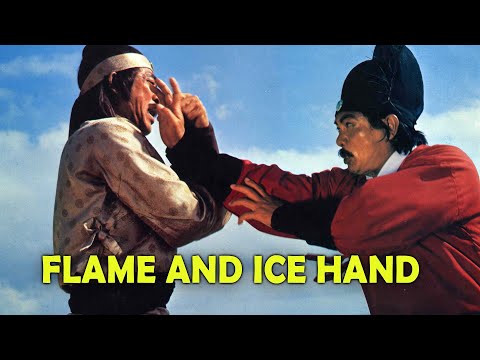
"In the realm of martial arts cinema, not all films are created equal. Some are fleeting sparks, others, enduring flames."
The 1978 Hong Kong martial arts flick, "Flame and Ice Hand," often found within the esteemed Wu-Tang Collection, presents a narrative that, while familiar, delivers moments of genuine kinetic artistry and strategic combat. Directed by Han Bo-Cheung, and featuring a cast including the formidable Pai Ying, Chan Sing, Feng Fang, and Shi Shu-Ping, this film dives headfirst into the classic "usurpation and revenge" trope that has fueled countless *wuxia* and *kung fu* epics. But does it merely tread water in a sea of similar stories, or does it carve its own path with distinctive skill? Let's dissect this cinematic martial art.
The core conflict is established with stark clarity: the villainous "Flame Hand" harbors an insatiable desire to dominate the martial world. Her modus operandi? Ruthlessly eliminating worthy heroes, thereby extinguishing any potential opposition and asserting her dominance through sheer, brutal force. This establishes her not just as a physically capable adversary, but one driven by a dark ambition that fuels her every strike. The narrative’s momentum is then carried forward by the emergence of "Ice Hand," a character whose purpose is the antithesis of Flame Hand's destructive path. Ice Hand’s mission is to bring Flame Hand’s reign of terror to an end, setting the stage for a classic confrontation between opposing philosophies and fighting styles.
Adding further depth, the narrative weaves in the personal stakes of vengeance. The families of the heroes brutally slain by Flame Hand are not content to merely mourn; they seek retribution. This element grounds the larger-than-life conflict in relatable human emotion, providing a potent catalyst for the heroes’ journeys and injecting a raw, visceral drive into their pursuit of justice. It’s a formula that, when executed well, resonates deeply with audiences who appreciate seeing underdogs rise against overwhelming odds.
### The Choreography: Where Simplicity Meets Spectacle
The true test of any martial arts film lies not just in its plot, but in the execution of its action. "Flame and Ice Hand" is lauded as a "brilliant shapes film from 1978," a descriptor that hints at the intricate choreography and dynamic camera work prevalent in the era. While the term "shapes film" might seem abstract, in the context of *kung fu* cinema, it often refers to films that emphasize the visual artistry and distinct forms of various martial arts techniques. The actors, trained in specific styles, bring these forms to life, creating a visual language of combat that is both beautiful and deadly.
The film’s fight sequences are where the essence of its martial spirit is most evident. We witness the raw power and strategic dismemberment that Flame Hand employs, a testament to her mastery and ruthless intent. Conversely, Ice Hand’s approach likely embodies a more controlled, perhaps defensive or counter-attacking style, reflecting their namesake. The familial revenge subplot likely fuels dynamic group fights and individual duels, each designed to showcase different martial arts principles and the emotional weight behind each blow.
The "wheelchair fight" is specifically highlighted as a "must-see." This is a particularly intriguing element, as it suggests an innovative use of props and environment within the combat choreography. In martial arts cinema, such unconventional elements often serve to push the boundaries of creativity, forcing fighters to adapt their techniques and demonstrate an exceptional level of skill and resourcefulness. A fight involving a wheelchair could showcase incredible balance, striking from unusual angles, and a masterful understanding of leverage and momentum, making it a truly memorable scene that defies typical expectations. It speaks volumes about the ingenuity of the filmmakers and choreographers when they can transform an everyday object into a weapon or an obstacle that enhances the martial spectacle.
### The Spirit of Budo and its Cinematic Reflection
While "Flame and Ice Hand" might not explicitly delve into the philosophical underpinnings of *Budo* in the same way a documentary might, its narrative certainly touches upon its core tenets. The concept of *Mushin* – a mind free from distraction and fear – is implicitly tested in the high-stakes combat. For Flame Hand, her ambition might be her focus, but her lack of true *Mushin* might lead to her downfall, as unchecked aggression often blinds one to subtle opportunities or impending threats. For Ice Hand and the avenging families, achieving *Mushin* is crucial to executing their techniques with precision and clarity, allowing them to overcome their adversaries without succumbing to the rage that Flame Hand embodies.
The pursuit of *Seiryoku Zenyo* (maximum efficiency, minimum effort) is also a key element in well-choreographed martial arts. A skilled fighter doesn't waste energy; every movement has a purpose. The film's success hinges on demonstrating this principle through the actors' performances and the fight director's vision. The more economical and impactful the movements, the more believable and compelling the martial prowess displayed.
Moreover, the film’s emphasis on lineage and the passing down of skills and grudges echoes the traditional transmission of martial knowledge. The families seeking revenge are upholding a legacy, a debt owed to those who came before them. This highlights the importance of tradition and the enduring impact of martial arts not just on individual practitioners, but on families and communities.
### Beyond the Screen: Resources for the Dedicated Practitioner
For those inspired by the intensity and discipline showcased in films like "Flame and Ice Hand," the path to understanding and practicing martial arts extends far beyond the screen. The commitment to self-improvement, the pursuit of physical and mental fortitude, and the deep respect for tradition are hallmarks of the martial journey.
In the spirit of continuous learning, it’s vital for practitioners to equip themselves with the right gear. Whether you're practicing *Judo*, *Karate*, or *MMA*, the quality of your equipment can significantly impact your training safety and effectiveness.
Equipo Esencial para tu Entrenamiento
Kimono de Judo o Karate: Look for a durable, double-weave fabric for Judo to withstand the rigors of throws and grappling. For Karate, a lighter, yet sturdy, cotton blend is ideal for dynamic movements and katas. Consider brands known for their longevity and comfort, especially if you plan on engaging in sparring.
Guantes de Entrenamiento: For striking arts like Kickboxing or MMA, properly padded gloves are crucial. Aim for 16oz gloves for sparring to offer adequate protection for both you and your training partners.
Protección Dental y Cabezal: Essential for any form of sparring to prevent injuries. A well-fitting mouthguard and a padded headgear can make a significant difference in safety.
Esterillas de Entrenamiento (Tatami): For arts involving throws, takedowns, or ground fighting, high-density tatami mats are indispensable for cushioning falls and providing a stable surface.
For those looking to delve deeper into the philosophy and techniques, a curated selection of resources can be invaluable.
Recursos para Profundizar
Libros sobre Bushido y Filosofía Marcial: Texts like "The Book of Five Rings" by Miyamoto Musashi or works detailing the principles of Bushido offer profound insights into the mindset of a warrior.
Documentales sobre Maestros Históricos: Understanding the lives and teachings of martial arts legends provides context and inspiration for your own practice.
Cursos Online de Técnicas Específicas: Many reputable martial artists offer online training modules that can supplement your dojo training, focusing on areas like grappling, striking, or self-defense.
This journey requires dedication, much like the heroes and villains depicted on screen.
Guía de Entrenamiento: Fortaleciendo tu Base
Calentamiento Dinámico (10 minutos): Realiza movimientos articulares (círculos de cuello, hombros, muñecas, caderas, rodillas, tobillos) seguidos de estiramientos dinámicos como patadas frontales y laterales suaves, círculos de brazos y torsiones de tronco. El objetivo es preparar el cuerpo para el esfuerzo sin tensar los músculos.
Trabajo de Técnica de Golpeo (15 minutos): Enfócate en un golpe específico, como el puño directo (Choku-zuki en Karate) o un gancho (Hook). Practica en el aire, prestando atención a la rotación del cuerpo, la retracción del puño y la transferencia de peso. Si tienes un saco de boxeo o makiwara, úsalo para desarrollar potencia y precisión.
Ejercicios de Agilidad y Equilibrio (10 minutos): Realiza saltos laterales, desplazamientos rápidos y ejercicios de equilibrio sobre una pierna. Puedes usar un rollo de cinta adhesiva en el suelo para delimitar patrones de desplazamiento. Un buen ejercicio es mantener el equilibrio sobre una pierna mientras realizas movimientos lentos con la otra.
Rutina de Fuerza Corporal (15 minutos): Realiza series de flexiones (push-ups), sentadillas (squats), zancadas (lunges) y planchas (planks). Adapta el número de repeticiones y series a tu nivel actual. Para las flexiones, varía la posición de las manos para trabajar diferentes grupos musculares.
Enfriamiento y Estiramientos Estáticos (10 minutos): Dedica tiempo a estirar los principales grupos musculares trabajados: cuádriceps, isquiotibiales, gemelos, pectorales, dorsales y hombros. Mantén cada estiramiento durante 20-30 segundos, respirando profundamente para relajar el músculo.
### Veredicto del Sensei: ¿Merece la pena el Visionado?
"Flame and Ice Hand" is a film that, despite its age and perhaps a predictable plot, offers a substantial amount of enjoyment for the dedicated martial arts aficionado. Its strength lies in the foundational principles of Hong Kong action cinema: energetic choreography, dedicated performers, and a narrative that, while simple, serves its purpose effectively. The inclusion of innovative elements like the wheelchair fight elevates it beyond a mere generic martial arts film, showcasing the creativity that often defined the genre.
It’s a testament to the enduring appeal of the "usurpation and revenge" narrative when paired with authentic martial prowess. While it might not possess the complex philosophical depth of some *Budo* texts, it certainly embodies the spirit of combat and the pursuit of justice through physical discipline. If you're a fan of classic *kung fu* cinema, or are looking for a film that highlights the visual storytelling potential of martial arts, "Flame and Ice Hand" is a solid choice that deserves a watch.
**Calificación del Sensei:** Cinturón Negro en Coreografía de Época
Preguntas Frecuentes
¿Es "Flame and Ice Hand" adecuado para principiantes en artes marciales?
Sí, si bien la trama puede ser intensa, el enfoque en las secuencias de acción y la demostración de diversas técnicas lo convierten en un film visualmente instructivo para aquellos que se inician en el mundo de las artes marciales.
¿Qué estilo de kung fu se representa principalmente en la película?
Dado el período y el origen de la película, es probable que veas una mezcla de estilos del sur de China, como el Hung Gar o el Choy Li Fut, conocidos por sus posturas sólidas y golpes potentes. Sin embargo, el término "formas" sugiere la representación de varias escuelas de pensamiento marcial.
¿Es la violencia en la película excesiva?
Las películas de artes marciales de esta época a menudo presentaban un nivel de violencia estilizada. Si bien hay muertes y combates intensos, generalmente se ejecutan de una manera que prioriza el espectáculo marcial sobre el gore explícito.
¿Hay alguna conexión con el grupo Wu-Tang Clan?
El término "Wu-Tang Collection" se refiere a una compilación de películas de artes marciales, a menudo de culto, que fueron muy influyentes. Si bien popularizadas por el grupo de hip-hop Wu-Tang Clan en la década de 1990, la colección en sí precede al grupo y se refiere a la era dorada del cine de kung fu de Hong Kong.
¿Se recomienda ver la película para entender la filosofía del Budo?
Si bien la película puede inspirar la reflexión sobre conceptos como la disciplina y la justicia, no es una representación directa de la filosofía del Budo. Para una comprensión más profunda, se recomienda complementar la visualización con el estudio de textos filosóficos y la práctica en un dojo.
Do you find yourself drawn more to the fiery ambition of Flame Hand or the resolute justice of Ice Hand? Does your own training reflect the calculated efficiency of a master, or the raw emotion of a fighter seeking retribution? Consider this: In the crucible of combat, is it the technique itself, or the spirit that guides it, that truly dictates victory?
```
GEMINI_METADESC: Review of "Flame and Ice Hand" (1978), a martial arts film from the Wu-Tang Collection. Analyzes choreography, themes of Budo, and its place in kung fu cinema.
Greetings, fellow travelers on the warrior's path. Today, we delve into the cinematic realm, a canvas where the spirit of Budo and the raw power of martial arts are often depicted, sometimes with brilliant clarity, other times... with less auspicious results. Our subject: Wu-Tang Collection: Begging Swordsman. As a critic and a lifelong practitioner, my gaze dissects not just the narrative, but the very essence of the martial arts portrayed. Does this film embody the principles of discipline, resilience, and precision that define true martial prowess, or is it merely a fleeting spectacle of choreographed violence? Let us find out.
The Premise: A Debt of Honor and a Symphony of Steel
Directed by the prolific Yang Su, Begging Swordsman presents a classic martial arts trope: a young hero, driven by filial duty and a debt of honor, venturing into a dangerous urban landscape. The narrative centers on a swordsman tasked with protecting his father's benefactor, Inspector Chang, from a quartet of formidable antagonists known as "the four monsters." These villains are described as the most violent martial artists in China. This setup immediately signals a potential for intricate combat sequences and a test of our protagonist's skill and character against overwhelming odds.
Analysis of the Martial Core: Beyond the Swordplay
The true measure of a martial arts film lies not solely in its action, but in the authenticity and spirit with which the martial arts are presented. While the original synopsis is brief, the mention of "swordsman" and "four monsters" suggests a focus on traditional weapon-based combat and perhaps a variety of distinct fighting styles embodied by the antagonists. In the world of Budo, the sword, or katana in its Japanese iteration, is more than a weapon; it is an extension of the self, a tool for disciplined expression. The proficiency with which a character wields their blade often reflects their inner state: their focus, their resolve, their understanding of distance and timing. The concept of Heiho, as expounded by Miyamoto Musashi in his seminal work, The Book of Five Rings, emphasizes strategy, timing, and the understanding of one's opponent's movements. We must ask, does Begging Swordsman reflect these deeper principles, or does it merely showcase flashy, disconnected movements?
"There are no easy ways to learn the Way. You must be prepared to devote your life to it." - Miyamoto Musashi, The Book of Five Rings
The "four monsters" present an intriguing challenge. In the martial arts philosophy, facing multiple opponents requires not only exceptional individual skill but also a sophisticated understanding of positioning, evasion, and the ability to neutralize threats efficiently. The ideal scenario, of course, is to avoid such confrontations altogether through wisdom and strategic avoidance. However, when conflict is inevitable, the principles of Sōgō Kakutō (comprehensive fighting) and the effective use of space become paramount. Are these monsters distinct in their martial disciplines, offering a spectrum of challenges, or are they a homogenous threat? The diversity of styles within Chinese martial arts offers a rich tapestry for cinematic representation, from the elegant fluidity of Tai Chi to the explosive power of Wing Chun or the acrobatic prowess of Shaolin Kung Fu. The success of the film in this regard will depend on how Yang Su and his choreography team have translated these potential styles onto the screen.
Director and Cast: The Architects of the Martial Spectacle
Director Yang Su has a notable history in martial arts cinema, often contributing to films that, while perhaps not always reaching the heights of cinematic artistry, deliver on the promise of robust action. His involvement here suggests a certain level of expectation for the fight choreography. The cast, including Wang Ling, Ulysses Au-Yeung Jun, Ma Kei, Chang Feng, and Julie Lee Chi-Lun, comprises performers who have likely honed their skills in the demanding environment of Hong Kong action cinema. The effectiveness of their performances will be judged by their ability to convey the physical discipline and emotional weight required by their roles. A true martial artist understands that expression through movement is as vital as spoken dialogue. The subtle tension in a stance, the controlled aggression in a strike, the controlled recovery after a defensive maneuver – these are the details that elevate a performance from mere acting to embodying the martial spirit.
The Wu-Tang Collection Context: A Legacy of Cinematic Combat
The inclusion of "Wu-Tang Collection" in the title is significant. This collection is renowned for its curation of classic martial arts films, many of which are celebrated for their raw, often brutal, but always compelling depictions of combat. These films often eschewed the wire-fu acrobatics that became prevalent in later eras, favoring a more grounded, impactful style. Begging Swordsman, by association, is positioned within this lineage of gritty, authentic martial arts storytelling. For fans of the genre, this promises a certain quality of fight scene – less about gravity-defying leaps and more about the visceral impact of fists, feet, and blades connecting.
"The sword is the body, the technique is the mind." - A common saying in martial arts circles, emphasizing the unity of physical action and mental intent.
The "exclusive videos on our FREE App" mention, while a modern promotional tool, hints at a broader effort to engage audiences with martial arts content. This speaks to a growing interest in understanding these disciplines beyond passive viewing, perhaps encouraging practical application or deeper historical appreciation. The digital age offers unprecedented access to resources for learning and experiencing martial arts, bridging the gap between cinematic fantasy and tangible practice. For those inspired by films like this, seeking out authentic training in disciplines like Karate, Judo, Aikido, or various forms of Kung Fu is the natural next step.
The Philosophical Undercurrent: More Than Just a Fight
While the premise focuses on confronting adversaries, the underlying philosophy of Budo is crucial. True martial arts training is not merely about learning to fight; it is about self-improvement, developing resilience, and cultivating mental fortitude. The concept of Mushin – the state of "no mind" where one acts instinctively and without hesitation – is a pinnacle of martial development. It requires years of dedicated practice, pushing beyond physical limitations to achieve a state of pure, unadulterated action. Does the protagonist in Begging Swordsman demonstrate this level of mastery, or is his journey one of learning and growing through adversity? The latter often makes for a more relatable and compelling narrative, showcasing the arduous yet rewarding process of becoming a martial artist.
The film's success in conveying this journey will hinge on its ability to show the protagonist's development, not just his inherent talent. Every successful strike should feel earned, every defensive maneuver a result of keen observation and learned technique. The "debt of honor" aspect further enriches the narrative, touching upon themes of loyalty and duty that are cornerstones in many traditional martial arts philosophies, particularly those influenced by the Bushido code.
Veredicto del Sensei: ¿Merece la pena?
Based on the available information, Wu-Tang Collection: Begging Swordsman appears to be a film squarely aimed at enthusiasts of classic Hong Kong martial arts cinema. Its strength will likely lie in its adherence to the traditions of the Wu-Tang Collection, promising unembellished, impactful fight choreography and a straightforward, honor-bound narrative. If your intention is to witness skilled performers engage in well-executed sword fights and hand-to-hand combat that prioritizes realism over fantastical spectacle, then this film is likely to satisfy. It’s a chance to glimpse the "spirit of the warrior" through the lens of cinematic combat, reminding us that the path of martial arts, whether on screen or in the dojo, is one of continuous challenge and dedication. It may not be a philosophical treatise on the Way, but it promises to be a potent dose of martial cinema.
Reflexión del Sensei: Tu Próximo Paso
The screen flickers, the swords clash, and the audience is enthralled. But what truly separates the cinematic warrior from the true martial artist? Is it the number of on-screen victories, or the depth of inner discipline cultivated through daily practice? Consider this: when faced with your own "four monsters" – be they personal challenges, moments of doubt, or physical obstacles – what principles from the martial arts can you call upon to guide your actions? Is it the precision of the blade, the resilience of the spirit, or the wisdom of the Way?
Equipo Esencial para tu Entrenamiento
While Begging Swordsman showcases weapon-based combat, the foundation of any martial artist's journey lies in rigorous, disciplined training. For those inspired to take their practice seriously, having the right equipment is crucial. Consider the following:
Kimono de Judo/Karate: For training in grappling arts like Judo or striking arts like Karate, a durable, well-fitting uniform is essential. Look for double-weave cotton for durability.
Guantes de Entrenamiento: For striking disciplines such as Kickboxing or MMA, padded gloves are vital for protecting your hands and your training partners during sparring.
Protector Bucal: A mandatory piece of safety equipment for any sparring or contact training to prevent dental injuries.
Espinilleras y Empeineras: Particularly useful for Taekwondo, Kickboxing, and some forms of Karate, these protect the shins and feet during drills and sparring.
Esterillas de Tatami: For arts that involve falling or grappling, such as BJJ or Judo, quality floor mats are indispensable for safe practice.
Makiwara: A traditional Okinawan tool for developing striking power and conditioning the hands for Karate. Building your own can be a rewarding project.
Guía de Entrenamiento: El "Swordsman's Stance" (Posición del Espadachín)
While a direct cinematic translation is impossible, we can adapt the *spirit* of a swordsman's readiness into a foundational martial stance that emphasizes balance, awareness, and preparedness. This is a simplified exercise for developing core stability and focus.
Foundation: Stand with your feet shoulder-width apart, toes pointing slightly outward. Imagine a line drawn through the center of your body.
Knees & Hips: Slightly bend your knees, as if preparing to absorb an impact or spring into action. Your hips should be relaxed but stable, not locked stiff.
Torso & Posture: Keep your back straight but not rigid. Your chest should be slightly lifted, and your core engaged – think of drawing your navel gently towards your spine.
Arms: Bring your hands up to a ready position. For a swordsman feel, you might imagine holding a sword hilt in front of your center, or simply keep your hands relaxed but poised, palms facing inward. Avoid tension.
Gaze: Your eyes should be looking forward, with a broad, aware gaze. Do not stare intently at one point; instead, maintain peripheral awareness.
Breathing: Breathe deeply and steadily from your diaphragm. This is crucial for maintaining focus and energy.
Duration: Hold this stance for 30 seconds to 1 minute, focusing on maintaining balance, core engagement, and steady breathing. Relax, then repeat 3-5 times.
This exercise cultivates the groundedness and readiness essential for any martial artist, mirroring the poised vigilance of a skilled swordsman.
Preguntas Frecuentes
¿Es realista la coreografía de las películas de artes marciales?
La mayoría de las películas de artes marciales presentan coreografías estilizadas para el entretenimiento. Si bien algunas películas buscan un mayor realismo, muchas optan por movimientos más llamativos y acrobáticos que no siempre reflejan la efectividad en un combate real. La autenticidad varía enormemente entre películas y directores.
¿Qué significa "Wu-Tang Collection"?
"Wu-Tang Collection" es una serie de lanzamientos de películas de artes marciales, a menudo seleccionadas por su enfoque en la acción cruda y auténtica, y su conexión con el cine de Hong Kong. Se asocia con un estilo particular de cine de lucha.
¿Es importante el entrenamiento con armas en las artes marciales?
El entrenamiento con armas es fundamental en muchas artes marciales tradicionales chinas y japonesas, como el Kung Fu y el Kendo. Complementa el combate sin armas al enseñar principios de distancia, manejo del espacio, precisión y coordinación, que luego pueden aplicarse al combate cuerpo a cuerpo.
¿Puedo aprender artes marciales solo viendo películas?
Ver películas de artes marciales puede ser inspirador y educativo sobre la filosofía y la estética, pero no sustituye el entrenamiento práctico. La técnica, la seguridad y la aplicación dependen de la instrucción de un instructor calificado y la práctica regular en un dojo o gimnasio.
¿Qué arte marcial se enfoca más en el manejo de la espada?
Las artes marciales japonesas como el Kendo (esgrima japonesa) y el Kenjutsu se centran exclusivamente en el manejo de la espada. Además, muchas escuelas de Kung Fu chino y otras disciplinas marciales incluyen el entrenamiento con espadas como parte de su currículo.
```
GEMINI_METADESC: Examine 'Begging Swordsman' from the Wu-Tang Collection with a martial arts master's critical eye. Analyze its choreography, spirit, and cinematic legacy.
Original Release Year: 1981 Director: David Lin Ta-Chao Cast: Chia Ling, Doris Lung, Chang Yi, Yuen Sam, Carter Wong.
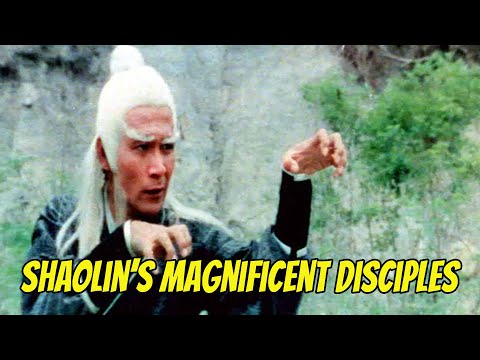
"In the realm of martial cinema, the Wu Tang Collection often delivers a raw, unvarnished glimpse into the essence of martial arts storytelling. 'Shaolin's Magnificent Disciples' is no exception, presenting a tapestry of swordplay, intrigue, and the perennial struggle between loyalty and defiance."
As a Sensei who has dedicated a lifetime to the rigorous study and practice of Budo, and an ardent critic of its cinematic portrayal, I approach films like "Shaolin's Magnificent Disciples" with a dual lens: that of the scholar and that of the warrior. The film, a product of its era, immerses us in the tumultuous landscape of dynastic China, where martial prowess is not merely a skill, but a currency of power, survival, and identity.
The premise, involving patriotic sword fighters caught in the crossfire of the Ching (Manchu) Dynasty's influence, immediately sets a stage for conflict, both internal and external. This is fertile ground for exploring the core tenets of martial philosophy – loyalty (gi), righteousness (yu), and duty (chu). The "Martial Inn" serves as a microcosm, a neutral ground that inevitably becomes a battleground, reflecting how even sanctuaries can be corrupted by the currents of war and political machims.
A notable element, as mentioned in the original description, are the "three old men with long silver hair." In martial arts, age often signifies wisdom and accumulated experience. These characters, potentially masters of ancient styles, represent the deep wellspring of knowledge that underpins the more overt displays of combat. Their difficulty in differentiation might, in fact, be a narrative device to emphasize the collective spirit or the subtle, interconnected nature of martial lineages. It prompts the question: in the grand tapestry of Budo, are individual masters always distinguishable, or is it the unbroken chain of tradition that truly matters?
The Art of Swordplay and the Warrior's Code
"Shaolin's Magnificent Disciples" showcases a cast of "young men and very pretty young women, all very capable sword fighters." This is where the film's true value, from a martial perspective, begins to reveal itself. The efficacy of swordplay in cinema is often a delicate balance. It must be visually compelling enough to captivate the audience, yet rooted enough in recognizable principles to resonate with practitioners. The description suggests that the fighting is not just spectacle, but carries the weight of genuine skill ("very capable").
The interplay between these skilled fighters, navigating "smoldering looks, suspicions and even lines spoken in dialogue poetic couplets," hints at a narrative depth that transcends mere action. This is crucial. True Budo is not solely about physical execution; it is an integrated discipline that encompasses mental fortitude, strategic thinking, and emotional control. The "poetic couplets" might represent the ethical codes, the philosophical underpinnings, or even the veiled threats and challenges that are inherent in any martial encounter.
Furthermore, the inclusion of a "murder mystery" adds a layer of strategic complexity. It implies that combat in this narrative is not always direct confrontation. It involves deduction, deception, and the understanding of human motivation – elements that are critical in real-world self-defense and combat scenarios. A true warrior must not only be adept at striking, but also at observing, analyzing, and anticipating.
Philosophical Undercurrents: Beyond the Blade
While the film is steeped in the tradition of Chinese martial arts cinema, its themes resonate universally within the broader context of Budo. The struggle against an oppressive dynasty mirrors the internal battle against one's own limitations, fears, and ego. The "patriotic" element suggests a commitment to a cause greater than oneself, a principle deeply ingrained in many martial traditions. This speaks to the concept of selfless action, where the practitioner acts not for personal gain, but for the preservation of justice or a chosen ideal.
"The sword is an extension of the soul. Its edge cuts not only flesh, but also indecision and doubt." - A principle echoing through centuries of swordsmanship.
The "pretty young women" being "very capable sword fighters" is also a significant point. It challenges the traditional, often patriarchal, narratives that relegate women to passive roles. In many martial arts, including those passed down through generations, women have been instrumental practitioners and guardians of technique. Their presence as formidable warriors underscores the universality of martial aptitude, transcending gender and reinforcing the idea that skill and dedication are the true determinants of capability.
The blend of genres – martial arts, historical drama, and mystery – is a common, and often effective, technique in martial cinema. It allows for a multifaceted exploration of the warrior's life, showcasing not just their physical prowess but also their intellect and moral compass. The film's ability to weave these elements together is key to its potential impact. Does the mystery serve to highlight the strategic thinking required in combat, or does the martial action punctuate the drama of the unfolding mystery? This interplay is where the true artistry lies.
Training Implications and Cinematic Authenticity
For practitioners of arts like Karate, Judo, BJJ, or MMA, dissecting cinematic fight sequences offers valuable insights, even if they are stylized. The choreography in "Shaolin's Magnificent Disciples," particularly the swordplay, would ideally reflect principles of balance, footwork, and the efficient application of force. While cinematic liberties are inevitable, a well-executed fight scene can still convey the spirit of martial principles.
The emphasis on "patriotic sword fighters" suggests a martial code that extends beyond personal combat. It speaks to the responsibility that comes with martial skill – the responsibility to protect, to serve, and to uphold certain values. This is a concept often overlooked in purely competitive sports, but it remains central to the traditional understanding of martial arts.
The mention of exclusive videos and an app suggests a modern framework surrounding this classic film. This is an interesting juxtaposition: ancient martial traditions presented through contemporary media platforms. It highlights the enduring appeal of martial arts stories and the constant evolution of how we consume and share them. The integration of YouTube links and app promotions is a testament to this adaptation.
Veredicto del Sensei: ¿Merece la pena?
"Shaolin's Magnificent Disciples" presents itself as a classic martial arts film, blending swordplay, historical drama, and a touch of mystery. For aficionados of the genre, particularly those drawn to the Wu Tang Collection, this film offers a glimpse into the storytelling conventions of 1980s Chinese martial cinema. The presence of capable fighters, both male and female, and the underlying themes of loyalty and conflict, provide substance beyond mere action. While specific details on choreography are not provided, the description implies a level of skill that would likely appeal to martial artists. The film may not revolutionize the genre, but it serves as a valuable entry in the historical archive of martial storytelling.
Calificación del Sensei: Cinturón Negro en Espíritu de Lucha.
Equipo Esencial para tu Entrenamiento
While "Shaolin's Magnificent Disciples" focuses on the sword, the principles of martial arts training are universal. Whether you are practicing empty-hand techniques or weapon-based arts, the right equipment can enhance your journey.
Kimono / Gi: Essential for arts like Judo, BJJ, and Karate. Look for durable, double-weave fabrics for longevity.
Sparring Gear: For arts that involve full-contact sparring, protective gear such as headguards, mouthguards, shin guards, and groin protectors are crucial for safety.
Training Weapons: If you are exploring weapon-based martial arts, a Bokken (wooden sword), Bo staff, or other practice weapons are necessary. Ensure they are made from appropriate materials for safe training.
Focus Mitts and Pads: Excellent for striking training, improving accuracy, power, and speed.
Training Mats (Tatami/Puzzle Mats): Especially important for grappling arts like Judo and BJJ, or for practicing falls and breakfalls in any discipline.
Investing in quality equipment not only ensures safety but also demonstrates your commitment to your training. As my teachers always said, "The tools of the warrior are extensions of his will."
Guía de Entrenamiento: Principios de Combate con Espada (Adaptados)
Although we cannot replicate the specific techniques from the film without detailed choreography analysis, we can derive training principles applicable to many martial arts, including weapon-based ones. This exercise focuses on embodying the *spirit* of skilled sword fighting: balance, precision, and awareness.
Postura de Base Firme: Adopt a stable, grounded stance. For sword arts, this often means a slightly wider stance than typical empty-hand styles, allowing for better balance during sweeping movements. Practice shifting weight smoothly between stances.
Movimiento Del Cuerpo (Tai Sabaki): Focus on moving the entire body, not just the limbs. Practice evasion by stepping off the line of attack, maintaining your balance. Think of your body as a single unit, controlled from the center.
Control del Arma: Even with a practice weapon, focus on controlled movements. Understand the 'reach' of your weapon and practice extending it with precision. Avoid wild, uncontrolled swings. The blade should feel like a natural extension of your arm.
Respiración y Enfoque: Synchronize your breath with your movements. A deep, controlled breath can center you. Maintain intense focus on your target or the imaginary opponent. This mirrors the "smoldering looks" and "suspicions" mentioned in the film – a heightened state of awareness.
Simulación de Ataque y Defensa: Practice basic cuts (downward, upward, horizontal) and blocks. Imagine an opponent's attack and react with appropriate defense and counter-attack. This develops reactive timing and strategic thinking, mirroring the film's narrative intrigue.
Remember, safe practice is paramount. Always use appropriate training weapons and ensure you have adequate space. The goal is to internalize the principles of control, awareness, and efficient movement.
Preguntas Frecuentes
What is the Wu Tang Collection?
The Wu Tang Collection is a curated selection of classic Hong Kong martial arts films, often focusing on the legendary Shaolin Temple and its disciples. These films are renowned for their traditional martial arts choreography, epic storytelling, and cultural significance.
Are the fight scenes in Shaolin's Magnificent Disciples realistic?
Like most martial arts films of its era, "Shaolin's Magnificent Disciples" likely features stylized choreography designed for cinematic effect. While the performers are often skilled martial artists, the fights are not a direct representation of real combat but rather an artistic interpretation emphasizing speed, agility, and dramatic flair.
What martial arts philosophy is depicted in the film?
The film appears to touch upon themes of patriotism, loyalty, and the code of the warrior, common in traditional Chinese martial arts narratives. It likely explores the conflict between duty to one's homeland and the personal struggles faced by fighters.
Is the murder mystery element important to the martial arts aspect?
Often, mystery and intrigue in martial arts films serve to highlight the intellectual and strategic side of combat. It suggests that true mastery involves not just physical skill but also keen observation, deduction, and an understanding of human nature, elements crucial for effective combat and self-defense.
The pursuit of martial arts is a lifelong endeavor, constantly evolving. Understanding the historical context and cinematic interpretations enriches our appreciation and practice.
Reflexión del Sensei: Tu Próximo Paso
This film, like many of its kind, presents a world where honor is defended with the blade and loyalty is forged in the crucible of conflict. Reflect on this: In your own life, what "dynasty" do you find yourself fighting against, and what code do you uphold in your personal battles? Is your "sword" a tool of righteous action, or a weapon of fleeting impulse?
```
GEMINI_METADESC: A Sensei's critical analysis of 'Shaolin's Magnificent Disciples' from the Wu Tang Collection, exploring its martial arts, philosophy, and cinematic legacy.
Greetings, warriors and cinephiles! Today, we delve into the gritty, unvarnished world of the Wu Tang Collection with a look at Boxer's Last Stand. Many of you arrive here seeking a deeper understanding of martial arts films, not just for the spectacle, but for the underlying principles of combat, discipline, and the very spirit of the warrior. You want to know if these on-screen battles translate into genuine martial prowess, if the choreography reflects authentic techniques, and if the narrative serves to elevate the martial philosophy, or merely exploits it for cheap thrills. This film, though perhaps not a household name in the same vein as Bruce Lee's classics, offers a compelling, if brutal, case study.
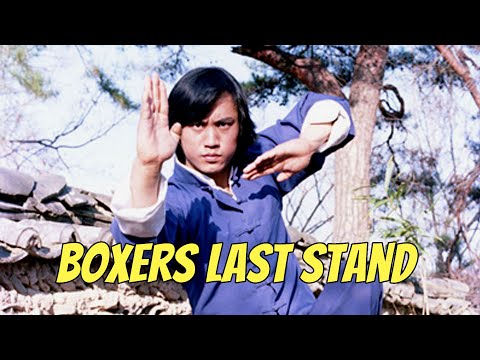
Boxer's Last Stand, directed by Lin Chang-Shi and featuring Liu Chang-Ming, Henry Luk Yat-Lung, and Cheng Hsiu-Ying, plunges us headfirst into a world where loyalty is a currency easily devalued and survival hinges on the sharpness of one's blade, or in this case, the power of one's fists. The premise, as brief as it is, hints at a classic tale of brotherhood fractured by avarice. But for us, the true measure of this film lies not just in the unfolding drama, but in how it portrays the discipline, the pain, and the eventual resilience often associated with the martial path. Does it capture the essence of a boxer's grit, or is it merely a caricature of violence? Let's break it down.
A Symphony of Betrayal: The Plot Unveiled
The narrative arc of Boxer's Last Stand is, at its core, a tale as old as time: six men, bound by an oath, carve out a criminal empire. They are presented not as honourable warriors, but as a "ruthless family of crime," suggesting a focus on power and wealth over any semblance of traditional martial virtue. The immediate turn – "Then one brother betrayed the rest" – sets the stage for inevitable conflict. This is where the martial artist's eye begins to scrutinize. How is this betrayal depicted? Does it lead to duels of honour, or just bloody revenge?
While the film's synopsis is sparse, the implication is clear: this is a story about the consequences of forsaking brotherhood for personal gain. In the realm of martial arts philosophy, such a betrayal often symbolizes a departure from the path of righteousness, a loss of inner harmony. The external conflict, therefore, becomes a reflection of internal corruption. We expect the fight sequences to mirror this descent into chaos, with less emphasis on clean technique and more on desperation.
"The superior warrior, by the very nature of his virtue, is reluctant to be drawn into battle." - Sun Tzu, The Art of War
This film, by its very premise, seems to explore the antithesis of that wisdom. The brotherhood, forged in crime, is inherently flawed, destined to crumble from within. The pursuit of power without ethical grounding is a recurring theme in many martial arts narratives, often serving as a cautionary tale. We must observe if Boxer's Last Stand adheres to this pattern or offers a fresh perspective on the destructive nature of unchecked ambition.
The Heart of the Fight: Analyzing the Combat
Now, let's get to the core of what many of you truly seek: the fight choreography. The title itself, Boxer's Last Stand, strongly suggests a focus on pugilism. Boxing, while one of the oldest and most refined combat sports, is often misrepresented in cinema. True boxing relies on intricate footwork, precise timing, defensive head movement, and devastatingly effective, yet economical, punches. It is a dance of power and strategy.
We need to assess if Lin Chang-Shi's direction captures this essence. Are the fights characterized by tight, controlled exchanges, or are they wild brawls lacking any technical foundation? The "ruthless family of crime" aspect might imply a grittier, less refined style. Perhaps we'll see more raw aggression than skilled technique, reflecting the characters' moral compromises. This could be a strength if the film aims for a depiction of street fighting where survival trumps form, but a weakness if it purports to showcase actual boxing prowess.
A key element to observe is the depiction of the "last stand." Does the protagonist, presumably a boxer, face overwhelming odds with skill and determination, or does he simply endure a prolonged beating? The former speaks to the warrior spirit of perseverance; the latter might lean into gratuitous violence. The use of Henry Luk Yat-Lung, known for his martial arts background, might indicate that we'll see more than just simple boxing. The blend of boxing with other martial arts elements is common in Hong Kong cinema, and it will be interesting to see how it's integrated here.
Beyond the Punch: Martial Authenticity
This is where the critic in me truly engages. "Authenticity" in martial arts cinema is a slippery concept. It doesn't necessarily mean a fight would play out identically in a real-life confrontation (which is often chaotic and unpredictable). Instead, it refers to the underlying principles, the believable execution of techniques, and the portrayal of the martial ethos. Does the film respect the art form it's depicting?
In Boxer's Last Stand, we have boxing as the central theme. True boxing training builds incredible discipline, conditioning, and a deep understanding of biomechanics. A truly authentic portrayal would show the footwork, the defensive strategies, the commitment to striking with power and precision. If the fighters are shown swinging wildly, telegraphing every punch, and seemingly immune to damage unless it serves the plot, then the authenticity is lost. This is a common pitfall in many action films, where spectacle is prioritized over realism.
Furthermore, the "Wu Tang Collection" itself often curates films that, while entertaining, might lean towards exaggerated violence. We must ask: Does this film portray the boxer as a skilled technician pushed to his limits, or simply as a victim of circumstance caught in a bloodbath? The difference is crucial. A genuine martial artist understands that effectiveness in combat is not solely about brute force, but about efficiency, timing, and knowing when to strike and when not to. The narrative's focus on crime and betrayal might suggest a descent into brutality that overshadows genuine skill.
Consider the difference between a choreographed fight designed for visual flair and one that feels grounded in physical reality. Does the impact of punches look convincing? Are the fighters reacting realistically to being hit? Are there moments of tactical thinking evident in their movements, or is it just a series of blows exchanged?
The Boxer's Resolve: Deeper Themes
Beyond the punches and the plot, what message does Boxer's Last Stand convey? The idea of a "Last Stand" inherently speaks to themes of courage, desperation, and perhaps redemption or defiance in the face of overwhelming odds. Does the film explore the mental fortitude required not just for a boxer, but for anyone facing their ultimate challenge?
The betrayal narrative suggests that the true battle might not be against external foes, but against the internal demons of greed and treachery. The "six fierce men" who became brothers in crime highlight a perversion of camaraderie. Their downfall serves as a stark reminder of the ephemeral nature of power built on questionable foundations. In the world of martial arts, true strength comes from within, from self-mastery, not from external dominance achieved through nefarious means.
"The supreme art of war is to subdue the enemy without fighting." - Mao Zedong
While this film seems to revel in the fighting, the underlying theme of fractured brotherhood and the consequences of betrayal is a potent one. It forces us to question the nature of loyalty and the price of ambition. Is the boxer's "last stand" a fight for survival, for honour, or for a lost sense of brotherhood? The answer likely dictates the film's ultimate value as more than just an action flick. It's a question that resonates deeply within the martial philosophy, where inner peace and ethical conduct are paramount.
Veredicto del Sensei: ¿Merece la pena?
Boxer's Last Stand is a film that, from its synopsis, promises raw, brutal action rooted in a story of betrayal. If you are coming for a nuanced exploration of boxing technique or profound martial philosophy, you might find yourself disappointed. The emphasis on a "ruthless family of crime" suggests a narrative that prioritizes grit and violence over sophisticated martial artistry.
However, as part of the Wu Tang Collection, it likely delivers on its promise of hard-hitting combat sequences. The performances of actors like Liu Chang-Ming and Henry Luk Yat-Lung can often elevate such films. The question is: does the "last stand" offer a compelling, albeit violent, conclusion to the narrative of betrayal? If the choreography is serviceable and the story, while grim, is engaging, it can be a worthwhile watch for fans of gritty martial arts cinema.
Cinturón Negro en Brutalidad, Marrón en Realismo de Combate.
It’s a film that likely leans into the visceral, the raw, and the unforgiving. Judge it not by its adherence to strict martial discipline, but by its effectiveness in depicting a brutal world and a desperate struggle. For those who appreciate the harder edge of martial arts cinema, it might just hit the mark.
Essential Gear for Your Training
While Boxer's Last Stand showcases a particular brand of combat, the foundational principles of many martial arts, including boxing, require proper preparation. To engage in safe and effective training, consider the following:
Boxing Gloves: Essential for sparring and bag work. Look for gloves with good padding and wrist support, typically 16oz for general training.
Hand Wraps: Crucial for protecting your knuckles and wrists during intense sessions.
Mouthguard: Non-negotiable for any sparring or full-contact training to protect your teeth and jaw.
Groin Protector: For male practitioners, vital for preventing serious injury during sparring.
Training Apparel: Comfortable, breathable clothing that allows for a full range of motion. A classic tracksuit or comfortable shorts and t-shirt will suffice.
Jump Rope: An excellent tool for cardiovascular conditioning, footwork, and building stamina – a cornerstone of any boxer's regimen.
Investing in quality gear not only enhances your training experience but, more importantly, minimizes the risk of injury, allowing you to focus on honing your skills. For those serious about boxing, exploring dedicated boxing equipment can be a wise investment.
For Deeper Study
This film, while fictional, touches upon themes prevalent in the world of combat and personal struggle. To further your understanding of the martial spirit and its varied expressions, I recommend exploring these related topics on our blog:
The Wu Tang Collection is a curated series of martial arts films, often featuring raw action, gritty themes, and classic Hong Kong cinema style. They are known for their direct approach to combat and storytelling.
Is "Boxer's Last Stand" a documentary?
No, "Boxer's Last Stand" is a fictional martial arts film. While it may draw inspiration from the realities of boxing and crime, it is presented as a dramatic narrative.
What martial arts are typically featured in Wu Tang Collection films?
While often centered around kung fu and specific martial arts styles, these films can incorporate a variety of combat disciplines, including boxing, karate, taekwondo, and more, reflecting the diverse landscape of martial arts cinema.
Where can I watch "Boxer's Last Stand"?
The film is part of the Wu Tang Collection and may be available through specific streaming services or physical media collections dedicated to this genre. The provided link in the original content may lead to related content or the full film.
What makes a martial arts film "authentic"?
Authenticity in martial arts films is subjective. It often refers to the believable execution of techniques, the depiction of the martial ethos (discipline, respect, perseverance), and how well the choreography reflects the underlying principles of the martial art shown, rather than just being visually flashy.
Sensei's Reflection: Your Next Step
So, we've dissected Boxer's Last Stand not just as a film, but as a window into the brutal realities that can arise when martial prowess is divorced from virtue. The tale of betrayal and the inevitable "last stand" are powerful metaphors, not just for the ring, but for life itself. We see how a brotherhood forged in crime is inherently unstable, destined to collapse under its own weight. The true warrior understands that strength without integrity is a hollow victory, a house built on sand.
The question that lingers, then, is not just about the quality of the film's fight scenes, but about the choices we make in our own lives. When faced with difficult decisions, do we choose the path of least resistance, or the one that upholds our principles, even if it means facing overwhelming odds alone? Does the pursuit of power, wealth, or personal gain erode our own sense of brotherhood and loyalty?
Reflection of the Sensei: Your Next Step
Consider this: If you were in a position of power, surrounded by individuals bound by an oath, and one among you began to succumb to greed and treachery, how would you act? Would you fight for the preservation of your bond, or would you succumb to the chaos? Reflect on the true meaning of "last stand." Is it a desperate fight for survival, or a defiant stand for what is right, no matter the cost? Your answer, and your actions, reveal the true martial spirit within you.
GEMINI_METADESC: Dive into a critical analysis of the martial arts film 'Boxer's Last Stand'. Explore its brutal choreography, narrative of betrayal, and the authenticity of its boxing portrayal.