Showing posts sorted by relevance for query karate basic techniques. Sort by date Show all posts

Top 5 Shotokan Karate Masters: Pillars of a Global Martial Art

Is Shotokan Karate merely a series of powerful techniques, or is it a profound path to self-mastery? Many practitioners chase the perfect punch, the crispest block, or the most dynamic kick, yet often miss the deeper currents that flow beneath the surface of this venerable martial art. Are we truly living the Budo spirit, or are we just performing movements? Today, we delve into the very heart of Shotokan, not just by dissecting its techniques, but by honoring the titans who shaped it, challenged its evolution, and ensured its survival through sheer dedication. Prepare to confront the legacy of the masters.

Introduction: The Unwavering Spirit of Shotokan

Karate, a discipline born on the shores of Okinawa, Japan, has transcended its origins to become a global phenomenon. Among its myriad styles, Shotokan stands as a colossus, a testament to the vision of its founder, Gichin Funakoshi. Forged in the early 20th century, Shotokan is characterized by its thunderous strikes, acrobatic kicks, and an almost monastic devotion to rigorous training and unwavering discipline. But what truly elevates Shotokan beyond mere physical combat? It's the philosophy, the character development, the Budo spirit that these masters embodied and transmitted.

In this exposé, we move beyond a simple list. We dissect the contributions of five titans whose influence reverberates through every dojo today. These are not just names in a history book; they are the architects of a martial art that continues to shape minds and bodies worldwide. Are they truly the "best," or were they simply the most *influential*? That's a debate for the ages, one we'll certainly ignite.

1. Gichin Funakoshi: The Father of Modern Karate

To speak of Shotokan is to speak of Gichin Funakoshi. Born in Okinawa in 1868, this visionary is not merely the founder; he is the very bedrock upon which modern Karate is built. Often hailed as the "father of modern Karate," Funakoshi dedicated his life to refining and popularizing this art form. His journey began at a young age, immersed in the traditional Okinawan fighting arts. Yet, it was his move to Tokyo in 1922 that proved pivotal, introducing Karate to mainland Japan and setting the stage for its global ascent.

Funakoshi’s approach transcended mere physical prowess. He stressed the paramount importance of character development, believing that the true essence of Karate lay not in defeating an opponent, but in perfecting oneself. His teachings are encapsulated in his immortal words:

"The ultimate aim of Karate lies not in victory or defeat, but in the perfection of the character of its participants."

This philosophical anchor is what separates true Budo from mere fighting. His legacy is not just in the techniques, but in the enduring spirit of self-improvement that defines Shotokan.

2. Masatoshi Nakayama: Architect of the JKA System

Emerging from the shadow of Funakoshi, Masatoshi Nakayama stands as one of the most crucial figures in shaping Shotokan into the structured, globally recognized art it is today. Born in 1913, Nakayama was not just a student; he was an innovator, a strategist, and the driving force behind the establishment of the Japan Karate Association (JKA) in 1949. As its chief instructor for many years, he meticulously codified training methodologies, ensuring a consistent and effective transmission of Funakoshi's teachings.

Nakayama’s contribution extends beyond organizational prowess. He authored several seminal books on Karate, delving deep into the technical nuances and practical application of Shotokan techniques. His work in developing the JKA's comprehensive training program was instrumental in standardizing Karate instruction, making it accessible and replicable across different regions. He understood that for an art to truly flourish, it needs a robust system. Did he achieve that system, or did he inadvertently create rigidity? The debate rages, but his impact is undeniable.

3. Hidetaka Nishiyama: The American Pioneer

While Funakoshi laid the foundation and Nakayama built the structure, Hidetaka Nishiyama carried the torch across the Pacific, becoming a pivotal figure in the development of Karate in the United States. Born in 1928, Nishiyama made his significant move to the U.S. in 1960, armed with a profound understanding of Shotokan and a burning desire to share it.

His entrepreneurial spirit led him to found the All American Karate Federation (AAKF) in 1969. Through relentless promotion via tournaments, demonstrations, and educational initiatives, Nishiyama was instrumental in igniting the Karate boom in America. He wasn't just teaching techniques; he was cultivating a community. Like Nakayama, he authored several influential books, but his particular genius lay in his meticulous focus on the technical intricacies of the martial art, ensuring that the purity of Shotokan remained intact amidst its rapid expansion. How much of the American Karate scene owes its existence to his direct efforts?

"Karate is a martial art that originated in Okinawa, Japan... One of the most popular styles of Karate is Shotokan Karate..."

4. Taiji Kase: The Technical Virtuoso and Spiritual Seeker

Taiji Kase, born in 1929, represents a different facet of Shotokan mastery – a deep technical prowess interwoven with a profound spiritual understanding. While many focused on the competitive aspects or the organizational structures, Kase delved into the *essence* of Karate, exploring its spiritual dimensions alongside its physical manifestations. His understanding of Ki (life force) and its application in martial arts was legendary.

Relocating to Europe in the 1960s, Kase became a crucial catalyst for Karate's growth on the continent. His founding of the European Shotokan Karate Association (ESKA) in 1975 and his long tenure as its chief instructor cemented his influence. Kase’s teachings often emphasized subtle yet powerful principles, encouraging practitioners to look beyond brute force and discover the efficiency and fluidity inherent in well-executed technique. He embodied the idea that true power comes not just from muscle, but from cultivated energy and precise intent.

5. Hirokazu Kanazawa: The Living Legacy

In the pantheon of Shotokan masters, Hirokazu Kanazawa (born 1931) stands as a living embodiment of the art’s technical brilliance and its traditional roots. A top student under Masatoshi Nakayama, Kanazawa honed his skills within the prestigious Japan Karate Association (JKA), serving as an instructor and further refining his understanding of the style.

However, his vision extended beyond the JKA. In 1977, he founded the Shotokan Karate International Federation (SKIF), an organization that has grown to encompass millions of practitioners worldwide. Kanazawa is renowned for his exceptional technique, his dynamic demonstrations, and his unwavering commitment to preserving the traditional spirit of Karate while adapting it for the modern practitioner. He represents continuity and evolution, a master who has not only mastered Shotokan but has also become its global ambassador.

Veredict of the Sensei: Acknowledging the Pillars

To definitively rank these masters as "best" is a fool's errand, akin to asking if a sword is better than a spear – it depends entirely on the wielder and the context. What is undeniable is their collective impact. Funakoshi ignited the flame, Nakayama built the engine, Nishiyama spread the fuel across continents, Kase explored its deeper energies, and Kanazawa continues to fan the flames with unparalleled technical mastery. They are the indispensable pillars upon which modern Shotokan rests. Without them, the landscape of martial arts would be drastically different. They represent different facets of mastery: the visionary founder, the systematic organizer, the international pioneer, the technical-spiritual synthesist, and the living repository of tradition. Each deserves profound respect.

Essential Equipment for Your Training

While the mind and spirit are the ultimate tools in Karate, the right equipment can significantly enhance your training, safety, and progression. For Shotokan practitioners, focusing on durability and proper fit is key:

  • Karate Gi: Look for a double-woven or heavyweight gi (kimono) for sparring and advanced training. A 10-12 oz gi offers good durability and a satisfying snap during technique execution. Brands like Adidas, Mizuno, and Shureido are highly regarded.
  • Belts (Obi): Ensure your belt is strong enough to withstand the rigors of training, especially during grappling or intense kata practice. A multi-layered cotton belt is recommended.
  • Mouthguard: Essential for sparring. A custom-fitted mouthguard offers the best protection and comfort.
  • Groin Protector (for males): A non-negotiable piece of safety gear for any full-contact sparring.
  • Shin and Instep Guards: Increasingly common and recommended for sparring, especially for practitioners focusing on dynamic kicks, to prevent injuries.
  • Training Mats (optional): For practicing falls (ukemi) and some solo drills, especially if training at home.

Training Guide: Mastering the Fundamentals

The essence of Shotokan lies in its foundational techniques. Mastery doesn't come from complexity, but from perfecting the simple. Here’s a basic framework for practicing key elements:

  1. Stances (Dachi):
    • Zenkutsu-dachi (Forward Stance): Focus on a deep, stable base, ensuring the front knee is aligned over the toes and the back leg is straight and firm. Practice transitioning smoothly into and out of this stance.
    • Kiba-dachi (Horse Stance): Maintain a wide, low stance with knees pushed outwards. Ensure the back is straight and the core is engaged. Practice holding this stance for extended periods to build leg strength and stability.
    • Kokutsu-dachi (Backward Stance): Shift weight predominantly to the rear leg, keeping the front leg light for quick retraction or extension. Ensure the back is straight and the hips are relatively square to the front.
  2. Basic Strikes (Tsuki):
    • Choku-zuki (Middle Punch): Practice with a straight, linear motion, focusing on hip rotation and exhaling sharply at the point of impact. Ensure a clean retraction of the fist.
    • Gedan-barai (Downward Block): Execute with power from the shoulder, drawing a straight line downwards to deflect an incoming attack. Maintain a strong, stable stance throughout.
  3. Basic Blocks (Uke):
    • Age-uke (Rising Block): Practice deflecting attacks aimed at the head. Ensure the block travels in a clear upward path, using the forearm as the primary defensive surface.
    • Soto-uke (Outside Block): Visualize deflecting a blow coming from the outside (e.g., across the face). Focus on a circular motion originating from the elbow.
  4. Kata Practice:
    • Begin with the fundamental kata like Taigyoku (if taught in your dojo) or Heian Shodan. Focus on precise movements, correct stances, breathing, and the underlying Budo principles within each sequence.
    • Record yourself practicing kata and analyze your form, looking for improvements in posture, power generation, and fluidity.
  5. Conditioning:
    • Incorporate basic conditioning exercises like push-ups, squats, and core work daily.
    • Practice dynamic stretching before training and static stretching afterwards to improve flexibility and prevent injuries.

Frequently Asked Questions

What is the difference between Shotokan and other Karate styles?

Shotokan, founded by Gichin Funakoshi, is known for its deep, long stances (like Zenkutsu-dachi), powerful linear movements, and strong emphasis on basic techniques (kihon) and kata. Other styles might emphasize different stances, faster or more circular movements, or different philosophical underpinnings.

Is Shotokan Karate effective for self-defense?

Yes, when taught and practiced with the correct intent. While its primary focus is on character development and discipline, the powerful techniques, effective blocking strategies, and physical conditioning inherent in Shotokan provide a solid foundation for self-defense. However, practical application often requires specific training in close-quarters combat and realistic scenarios.

How important is the philosophical aspect of Shotokan?

The philosophical aspect, encapsulated in Funakoshi's quote about character perfection, is arguably the most important element. It elevates Karate from a mere fighting system to a path of personal growth (Do). Without this understanding, one risks practicing only the physical shell without the true Budo spirit.

What is "Ki" in the context of Shotokan?

Ki (or Qi) refers to life force or energy. In Shotokan, understanding and harnessing Ki is crucial for generating power efficiently, moving fluidly, and developing presence. Masters like Taiji Kase specifically emphasized this aspect, showing how focused intent and breath control can amplify physical techniques.

Are Shotokan masters still actively teaching today?

While the foundational masters mentioned have passed on, their students and grand-students continue to teach and lead organizations worldwide. Masters like Hirokazu Kanazawa have been active for decades, preserving and propagating the art. New generations of skilled instructors are also emerging globally.

Veredict of the Sensei: Acknowledging the Pillars

To definitively rank these masters as "best" is a fool's errand, akin to asking if a sword is better than a spear – it depends entirely on the wielder and the context. What is undeniable is their collective impact. Funakoshi ignited the flame, Nakayama built the engine, Nishiyama spread the fuel across continents, Kase explored its deeper energies, and Kanazawa continues to fan the flames with unparalleled technical mastery. They are the indispensable pillars upon which modern Shotokan rests. Without them, the landscape of martial arts would be drastically different. They represent different facets of mastery: the visionary founder, the systematic organizer, the international pioneer, the technical-spiritual synthesist, and the living repository of tradition. Each deserves profound respect.

Essential Equipment for Your Training

While the mind and spirit are the ultimate tools in Karate, the right equipment can significantly enhance your training, safety, and progression. For Shotokan practitioners, focusing on durability and proper fit is key:

  • Karate Gi: Look for a double-woven or heavyweight gi (kimono) for sparring and advanced training. A 10-12 oz gi offers good durability and a satisfying snap during technique execution. Brands like Adidas, Mizuno, and Shureido are highly regarded.
  • Belts (Obi): Ensure your belt is strong enough to withstand the rigors of training, especially during grappling or intense kata practice. A multi-layered cotton belt is recommended.
  • Mouthguard: Essential for sparring. A custom-fitted mouthguard offers the best protection and comfort.
  • Groin Protector (for males): A non-negotiable piece of safety gear for any full-contact sparring.
  • Shin and Instep Guards: Increasingly common and recommended for sparring, especially for practitioners focusing on dynamic kicks, to prevent injuries.
  • Training Mats (optional): For practicing falls (ukemi) and some solo drills, especially if training at home.

Training Guide: Mastering the Fundamentals

The essence of Shotokan lies in its foundational techniques. Mastery doesn't come from complexity, but from perfecting the simple. Here’s a basic framework for practicing key elements:

  1. Stances (Dachi):
    • Zenkutsu-dachi (Forward Stance): Focus on a deep, stable base, ensuring the front knee is aligned over the toes and the back leg is straight and firm. Practice transitioning smoothly into and out of this stance.
    • Kiba-dachi (Horse Stance): Maintain a wide, low stance with knees pushed outwards. Ensure the back is straight and the core is engaged. Practice holding this stance for extended periods to build leg strength and stability.
    • Kokutsu-dachi (Backward Stance): Shift weight predominantly to the rear leg, keeping the front leg light for quick retraction or extension. Ensure the back is straight and the hips are relatively square to the front.
  2. Basic Strikes (Tsuki):
    • Choku-zuki (Middle Punch): Practice with a straight, linear motion, focusing on hip rotation and exhaling sharply at the point of impact. Ensure a clean retraction of the fist.
    • Gedan-barai (Downward Block): Execute with power from the shoulder, drawing a straight line downwards to deflect an incoming attack. Maintain a strong, stable stance throughout.
  3. Basic Blocks (Uke):
    • Age-uke (Rising Block): Practice deflecting attacks aimed at the head. Ensure the block travels in a clear upward path, using the forearm as the primary defensive surface.
    • Soto-uke (Outside Block): Visualize deflecting a blow coming from the outside (e.g., across the face). Focus on a circular motion originating from the elbow.
  4. Kata Practice:
    • Begin with the fundamental kata like Taigyoku (if taught in your dojo) or Heian Shodan. Focus on precise movements, correct stances, breathing, and the underlying Budo principles within each sequence.
    • Record yourself practicing kata and analyze your form, looking for improvements in posture, power generation, and fluidity.
  5. Conditioning:
    • Incorporate basic conditioning exercises like push-ups, squats, and core work daily.
    • Practice dynamic stretching before training and static stretching afterwards to improve flexibility and prevent injuries.

Frequently Asked Questions

What is the difference between Shotokan and other Karate styles?

Shotokan, founded by Gichin Funakoshi, is known for its deep, long stances (like Zenkutsu-dachi), powerful linear movements, and strong emphasis on basic techniques (kihon) and kata. Other styles might emphasize different stances, faster or more circular movements, or different philosophical underpinnings.

Is Shotokan Karate effective for self-defense?

Yes, when taught and practiced with the correct intent. While its primary focus is on character development and discipline, the powerful techniques, effective blocking strategies, and physical conditioning inherent in Shotokan provide a solid foundation for self-defense. However, practical application often requires specific training in close-quarters combat and realistic scenarios.

How important is the philosophical aspect of Shotokan?

The philosophical aspect, encapsulated in Funakoshi's quote about character perfection, is arguably the most important element. It elevates Karate from a mere fighting system to a path of personal growth (Do). Without this understanding, one risks practicing only the physical shell without the true Budo spirit.

What is "Ki" in the context of Shotokan?

Ki (or Qi) refers to life force or energy. In Shotokan, understanding and harnessing Ki is crucial for generating power efficiently, moving fluidly, and developing presence. Masters like Taiji Kase specifically emphasized this aspect, showing how focused intent and breath control can amplify physical techniques.

Are Shotokan masters still actively teaching today?

While the foundational masters mentioned have passed on, their students and grand-students continue to teach and lead organizations worldwide. Masters like Hirokazu Kanazawa have been active for decades, preserving and propagating the art. New generations of skilled instructors are also emerging globally.

For Further Learning on Your Path

Sensei's Reflection: Your Next Step

We have examined the giants upon whose shoulders the edifice of Shotokan Karate stands. Their dedication, their vision, their relentless pursuit of perfection are undeniable. But knowledge without application is like a powerful technique without proper execution – it lacks true meaning.

The question that lingers is not merely about their greatness, but about yours. Are you merely practicing Karate, or are you *living* Budo? How will you honor these masters not just with your fists and feet, but with the cultivation of your character? What single principle learned from these titans will you strive to embody this week, both on and off the mat?

Karate for the Streets: Fact, Fiction, or a Flawed Premise?

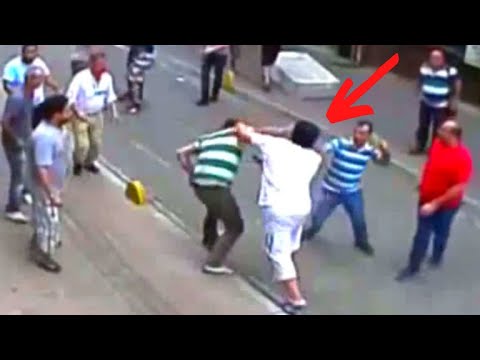
The age-old question echoes through dojos and online forums alike: Can traditional Karate truly hold its ground against the chaotic brutality of a street fight? Many have seen the viral clips, the fleeting moments of a disciplined practitioner seemingly overpowering a less skilled aggressor. But does this represent the reality of self-defense outside the controlled environment of a dojo? Today, we dissect this notion, not as a mere documentary, but as a critical examination from the perspective of martial arts mastery. We will delve into the core principles of Karate, contrast them with the unpredictable nature of street altercations, and ultimately, determine if the philosophy and techniques taught in Karate dojos are truly applicable when the stakes are highest.

The Street Fight Dilemma

Let's be unequivocally clear from the outset: engaging in street fighting is illegal and carries severe consequences. This discussion is purely an academic exploration of self-defense efficacy, not an endorsement of violence. The "Karate Master vs. Bully" trope, often sensationalized in media, presents a simplified dichotomy. It pits the refined techniques of a martial art against brute force, implying an almost guaranteed victory for the trained individual. But does this hold water when the rules are non-existent, the environment is chaotic, and the threat is immediate and unforgiving? We aim to dissect this common assumption and offer a more nuanced perspective rooted in the principles of combat and self-preservation.

"The supreme art of war is to subdue the enemy without fighting." - Sun Tzu, The Art of War. This foundational principle is often overlooked in discussions of street effectiveness.

Core Tenets of Karate: Striking and Stance

Karate, meaning "empty hand," is a system renowned for its powerful, linear strikes, sharp kicks, and disciplined stances. Rooted in Okinawan traditions, it emphasizes:

  • Kihon (Basics): Fundamental techniques like punches (tsuki), blocks (uke), and kicks (geri) form the bedrock.
  • Kata: Prearranged forms that simulate combat scenarios, teaching sequences, timing, and power generation.
  • Kumite: Sparring, often starting with controlled point-fighting (ippon kumite) and progressing to more dynamic, semi-free sparring.
  • Stances (Dachi): Stable, grounded positions like Zenkutsu-dachi (forward stance) and Kiba-dachi (horse stance) are crucial for power and stability.

The philosophy behind Karate often includes tenets like discipline, respect, and self-control. A well-trained Karateka learns to generate significant force from a stable base, deliver rapid strikes to vital points, and maintain composure under pressure within the structured framework of the dojo.

The Unpredictable Nature of Street Violence

Now, let us contrast this with the grim reality of a street fight. There are no referees, no judges, and no weight classes. You face opponents who may be:

  • Larger, stronger, and fueled by adrenaline or substances.
  • Attacking with unpredictable, often crude, yet highly effective methods (grabs, headbutts, kicks to the groin).
  • Fighting in uneven terrain, potentially in darkness, or with multiple assailants.
  • Armed with improvised weapons.

In such an environment, the elegance and precision of traditional Karate techniques can be severely challenged. A wide, stable stance that is excellent for power generation might leave you vulnerable to a quick sweep or tackle. Linear, outward-focused strikes can be easily intercepted by a clinch or a sudden takedown attempt. The element of surprise and sheer desperation often dictate the outcome far more than technical superiority alone.

Bridging the Gap: Karate's Strengths and Weaknesses in a Real Confrontation

Can Karate techniques be adapted for street defense? Absolutely. However, it requires a critical understanding of its limitations and a conscious effort to modify training.

Strengths:

  • Devastating Striking Power: A well-executed Gyaku-zuki (reverse punch) or a powerful roundhouse kick can be fight-ending.
  • Targeting Vital Points: Knowledge of vulnerable areas is crucial for quickly neutralizing a threat.
  • Mental Fortitude: The discipline and focus developed in Karate training can provide a significant psychological advantage.

Weaknesses and Challenges:

  • Stance Vulnerability: Traditional stances can be too static against aggressive grapplers or those who attack the legs.
  • Linearity: Predictable, outward movements can be anticipated and countered.
  • Distance Management: Karate excels at mid-to-long range striking, but street fights often devolve into close-quarters brawls or grappling exchanges where Karate may be at a disadvantage without specific adaptations.
  • Lack of Ground Fighting: Most traditional Karate styles do not emphasize ground survival or submissions, a critical component of modern combat sports like BJJ and MMA.

A common critique is that many Karate practitioners train for sport kumite, which involves rules and point systems that differ vastly from a life-or-death scenario. The concept of "Mushin" (no-mind), a state of effortless action without conscious thought, is the ideal, but achieving it in a high-stress, chaotic environment requires immense, practical application.

"When I am fighting, I am the enemy, and the enemy is me. I am the mountain, and the mountain is me." - A principle of detachment and oneness found in some martial traditions, crucial for overcoming fear.

When Traditional Meets Modern: The Case for MMA and Other Systems

This is where the debate intensifies. Systems like Mixed Martial Arts (MMA) explicitly aim to integrate striking (like Karate, Muay Thai, Boxing) with grappling (like Brazilian Jiu-Jitsu, Wrestling, Judo). Proponents argue that a well-rounded fighter with skills in all ranges – striking, clinching, and ground fighting – is inherently better prepared for the unpredictable nature of combat, whether in a ring or on the street.

However, it's a fallacy to dismiss Karate entirely. A Karateka who understands the principles of evasion, closing distance, and transitioning to clinch or takedown defense (even if not extensively trained) can adapt. The key is acknowledging the limitations and seeking supplementary training.

Consider the philosophy of Bruce Lee's Jeet Kune Do: "Use what is useful, discard what is useless." This approach encourages practitioners to take effective techniques from various sources, rather than adhering dogmatically to a single style.

Essential Training Modifications for Street Readiness

For a Karate practitioner aiming for greater street efficacy, consider these training modifications:

  1. Sparring with Diverse Partners: Train with individuals who practice Grappling, Judo, and Kickboxing. This exposes you to different ranges and pressures.
  2. Realistic Drills: Incorporate scenarios that mimic street environments – surprise attacks, multiple opponents (if done safely and with control), fighting in confined spaces, and defending against grabs.
  3. Clinch Work: Develop basic clinch fighting skills, elbow and knee strikes, and takedown defense.
  4. Ground Survival: Even basic techniques for getting back to your feet (technical stand-up) or defending against basic positional holds are invaluable.
  5. Focus on Evasion and Mobility: Train to move out of the pocket, use footwork to create angles, and avoid being a static target.
  6. De-escalation and Awareness: The most crucial "technique" is awareness and de-escalation. Avoiding the fight is always the primary goal.

Veredicto del Sensei: ¿Funciona el Karate en la Calle?

The answer is a resounding... it depends entirely on the practitioner and their training methodology.

If you train Karate as a pure sport with rigid rules, focusing solely on point sparring and traditional forms without adapting to the realities of unregulated combat, its effectiveness will be severely limited. You risk being unprepared for the chaos, the close-quarters fighting, and the sheer brutality of a street confrontation.

However, if your Karate training incorporates principles of practical application, realistic sparring against diverse martial arts, an understanding of gross motor skills under stress, and a strong emphasis on situational awareness and de-escalation, then yes, the core principles and techniques of Karate can be highly effective. A disciplined mind, powerful strikes, and a solid foundation are always advantageous.

Ultimately, Karate itself is not the problem; it is the *training* and the *application* that determine its efficacy. The true "Karate Master" on the street is not necessarily the one who performs the most complex kata, but the one who survives, protected by their training, their awareness, and their wisdom.

Cinturón Negro en Adaptación y Realismo

Equipo Esencial para tu Entrenamiento

Para llevar tu entrenamiento de Karate hacia una mayor aplicabilidad en escenarios de defensa personal, considera el siguiente equipo:

  • Guantes de Sparring (16oz): Indispensables para proteger tus manos y las de tu compañero durante el sparring más dinámico.
  • Protector Bucal: Fundamental para prevenir lesiones dentales y mandibulares.
  • Protector de Ingle: Especialmente importante si incluyes trabajo de combate cercano o defensas contra golpes bajos.
  • Peto o Peto Ligero: Permite un mayor realismo en golpes corporales.
  • Esterillas de Entrenamiento o tatami: Para practicar caídas y técnicas de suelo de manera segura.
  • Kimono de Doble Tejido para Judo o Karate Resistente: Si planeas incorporar agarres y defensas contra luxaciones, un kimono más robusto será necesario.

Invertir en equipo adecuado no solo garantiza la seguridad, sino que permite un entrenamiento más intenso y realista, acercándote a las condiciones de una confrontación real.

Preguntas Frecuentes

¿Es el Karate una de las artes marciales más efectivas para la defensa personal?

La efectividad de cualquier arte marcial para la defensa personal depende enormemente del enfoque del entrenamiento y la adaptabilidad del practicante. Karate proporciona excelentes herramientas de golpeo, pero sin entrenamiento específico en otras áreas como el grappling o la defensa contra múltiples oponentes, puede tener limitaciones.

¿Debería un practicante de Karate evitar las peleas callejeras?

Absolutamente. Las peleas callejeras son impredecibles, peligrosas y tienen consecuencias legales graves. La mejor defensa es la prevención, la conciencia situacional y, si es posible, la desescalada. El entrenamiento en artes marciales debe ser un último recurso, no una invitación a la confrontación.

¿Qué diferencias clave existen entre el Karate deportivo y el Karate para la calle?

El Karate deportivo se enfoca en reglas, puntuación y seguridad. El Karate para la calle (o defensa personal) enfatiza la eficacia bajo estrés, la simplicidad de las técnicas, la conciencia del entorno, la protección contra múltiples atacantes y la capacidad de neutralizar una amenaza rápidamente.

¿Pueden los katas de Karate ser útiles en una pelea real?

Los katas enseñan principios de movimiento, potencia y defensa. Sin embargo, su aplicación directa en una pelea caótica es limitada. Los principios subyacentes, como la correcta generación de fuerza y la coordinación, son transferibles, pero la forma exacta de la kata rara vez se reproduce en combate real.

¿Qué otras artes marciales son recomendables para complementar el Karate para defensa personal?

Artes marciales que cubren el grappling y la lucha en el suelo, como el Judo, Brazilian Jiu-Jitsu (BJJ), y la lucha libre (Wrestling), son excelentes complementos. El Kickboxing y el Muay Thai también mejoran la versatilidad en el combate de pie.

Para Profundizar en tu Camino


Narrador: Tysmithvoice
Investigador/Escritor: Emekaekwuribe
Editor de Video: Lance
Música: https://artlist.io
Imágenes de stock: https://ift.tt/lkdhzfM
Más metraje de stock: https://ift.tt/6xzeZJU

Apoya el canal con los enlaces de abajo:

Twitter: https://twitter.com/ChrisVisionz

Suscríbete a Brutal TV para más videos.

Descripción del Canal: Este canal está dedicado a todo tipo de Artes Marciales. Hacemos desde artes marciales japonesas tradicionales hasta boxeo. Espero que disfruten el video. Por favor, dejen un "me gusta" para que podamos seguir creando más videos.

Reflexión del Sensei: Tu Próximo Paso

Si pudieras modificar un solo aspecto de tu entrenamiento actual de Karate para prepararte mejor para una situación impredecible, ¿cuál sería y por qué? ¿Es la técnica, la mentalidad, o la familiaridad con otros sistemas de combate?

``` GEMINI_METADESC: Karate for the Streets: Does it work? Critical analysis of Karate's effectiveness in real-world confrontations. Strengths, weaknesses, and training adaptations for self-defense.

The Karate Edge in MMA: 15 Fighters Who Prove Its Lethal Potential

The Striking Art Meets the Octagon

Is Karate just a traditional art form, a relic of the past? Many outside the dojo might think so. But for those who understand the profound principles and devastating techniques forged over centuries, the answer is a resounding no. Karate, at its core, is about the unification of mind and body, about discipline, and about developing an unshakeable inner strength. It's an art where age is but a number, and continuous practice refines not just physical prowess but mental acuity. As we witness the relentless evolution of Mixed Martial Arts (MMA), a crucial question emerges: how does this ancient striking art fare against the modern, multifaceted combat sports landscape? This is not merely an academic exercise; it's about understanding the practical application of lethal techniques under the brightest lights of the modern combat arena. My journey through the dojo and the fight analytics has shown me time and again that the principles of Karate are not only relevant but foundational. Today, we delve into the heart of this intersection, exploring 15 fighters who have masterfully integrated Karate into their MMA arsenals, proving its efficacy and power.

Why Karate Translates to MMA Success

Karate, in its purest form, is a striking discipline. It emphasizes powerful punches, swift kicks, precise elbow and knee strikes, and the devastating efficiency of open-hand techniques like knife-hands and palm-heels. However, to dismiss it as *just* striking is a grave error. Historically, and in many contemporary styles, Karate also encompasses grappling, throws, joint locks, restraints, and the critical application of pressure to vital points. This comprehensive foundation is precisely why Karate practitioners can adapt so effectively to the demands of MMA. The explosive power generated from Karate stances and movements, the footwork that allows for rapid entry and exit, and the strategic use of distance are invaluable assets. Moreover, the mental fortitude cultivated through Karate training – composure, strategic thinking, and an unyielding confidence – are the bedrock of any successful fighter. It's about more than just throwing a punch; it's about timing, precision, and understanding the opponent's intent. The philosophy of Budo, the warrior's path, imbues Karateka with a resilience that transcends the physical. This is the essence that makes Karate not just viable, but often dominant, in the MMA cage.

"Karate practice strengthens the mind, develops composure, a clearer thought process, deeper insight into one's mental capabilities, and more self-confidence."

The "striking art" label often conjures images of stand-up exchanges, but the principles of Karate extend far beyond this. The ability to maintain distance, to react instantaneously to an incoming threat, and to deliver precise, fight-ending strikes are skills that resonate deeply in MMA. Fighters who possess a strong Karate background often exhibit a unique rhythm and flow in their exchanges, an almost predatory awareness that allows them to exploit openings before their opponents even perceive them. This isn't about adhering strictly to kata; it's about internalizing the principles and applying them dynamically in the chaos of a fight. Many top contenders, while their primary discipline might be grappling or Muay Thai, often possess Karate as a significant secondary or even primary influence, demonstrating its versatility.

The Elite 15: Karate's MMA Vanguard

The integration of Karate into MMA is not theoretical; it's demonstrably present in the performances of numerous elite athletes. These individuals have not only adopted Karate techniques but have internalized its spirit, using it as a weapon to achieve victory. Their success serves as a testament to the enduring power and adaptability of this ancient art. Here are 15 fighters who embody the lethal effectiveness of Karate in the MMA landscape:

  • 1. Lyoto Machida: The undisputed "Dragon," renowned for his traditional Karate approach, exceptional timing, and elusive movement.
  • 2. Georges St-Pierre (GSP): While a master of all disciplines, GSP’s Karate background provided him with exceptional distance control and precise striking.
  • 3. Chuck Liddell: "The Iceman" utilized powerful Karate-based striking, blending it with his wrestling for a dominant era.
  • 4. Gunnar Nelson: A submission specialist with a strong Karate foundation, showcasing effective Karate striking in his grappling setups.
  • 5. Uriah Hall: Known for his spectacular spinning attacks and devastating knockout power, heavily influenced by his Karate training.
  • 6. Seth Petruzelli: A powerful striker whose Karate background led to quick, decisive victories.
  • 7. Kyoji Horiguchi: A dynamic fighter with lightning-fast Karate striking and excellent counter-punching ability.
  • 8. Robert Whittaker: "The Reaper" combines devastating striking power with a solid Karate base, making him a threat from anywhere.
  • 9. Guy Mezger: A pioneer in MMA, Mezger showcased effective Karate striking in his early career.
  • 10. Bas Rutten: While known for his Muay Thai and Pancrase background, Rutten incorporated elements of Karate striking into his aggressive style.
  • 11. Katsunori Kikuno: An elegant striker whose Karate techniques were often breathtaking to watch.
  • 12. Ryo Chonan: Famous for his spinning heel kick knockout, demonstrating the spectacular possibilities of Karate in MMA.
  • 13. Justin Scoggins: A Karateka with dynamic kicking ability and fluid striking.
  • 14. Michelle Waterson: "The Karate Hottie" uses her Karate background effectively, blending it with her Muay Thai and BJJ.
  • 15. Shonie Carter: A veteran who often utilized Karate-based techniques and unique striking approaches.

Spotlight on Lyoto Machida: The Karate Master

When discussing Karate in MMA, Lyoto Machida is the first name that often comes to mind. His fighting style was a direct embodiment of traditional Karate principles, specifically Shotokan Karate. Machida employed a highly defensive, counter-striking strategy, utilizing exceptional footwork and timing to evade attacks and land precise, powerful blows. He masterfully controlled the distance, making his opponents uncomfortable and forcing them to commit to attacks, thereby opening themselves up for devastating counter-strikes. His signature move, the Uraken (reverse punch), delivered with pinpoint accuracy, often ended fights decisively. Machida’s approach proved that a pure Karate style, when executed with discipline and strategic brilliance, could overcome brute force and overwhelming grappling. He taught the world that intelligence and technique, honed through dedicated Karate practice, are formidable weapons in the MMA arena. His career is a masterclass in the philosophy of 'Sen' – initiative and preemptive action – a core concept in martial arts.

Spotlight on Georges St-Pierre: The Versatile Champion

Georges St-Pierre (GSP), often considered one of the greatest MMA fighters of all time, represents a different facet of Karate's integration. While GSP developed a well-rounded game encompassing elite wrestling, Brazilian Jiu-Jitsu, and Muay Thai, his foundation in Karate provided him with a significant advantage in striking. His jab was renowned for its speed and accuracy, his movement was fluid, and his ability to mix up strikes with takedowns was unparalleled. GSP's Karate background allowed him to maintain excellent distance control, keeping opponents where he wanted them and dictating the pace of the fight. He demonstrated how Karate's principles of explosive power, precise targeting, and efficient movement could be seamlessly integrated into a comprehensive MMA strategy, elevating his overall fighting prowess and contributing to his legendary status. His career highlights the versatility of Karate – not just as a standalone style, but as a critical component in a larger combat system.

Spotlight on Michelle Waterson: The "Karate Hottie"

Michelle Waterson, affectionately known as "The Karate Hottie," brings a vibrant Karate influence to the women's atomweight and strawweight divisions. Her style is characterized by fluidity, agility, and a keen sense of timing. Waterson leverages her Karate background to deliver sharp, precise strikes, often utilizing quick combinations and evasive maneuvers. She has a knack for finding angles and creating openings with her Karate-based striking, which she then skillfully blends with her Muay Thai and Brazilian Jiu-Jitsu. Her ability to transition between striking and grappling, all while maintaining the core principles of Karate’s dynamic movement and striking efficiency, makes her a compelling and dangerous opponent. Waterson’s success underscores the fact that Karate is not limited to male fighters or heavyweights; its principles are universally applicable, empowering athletes across all divisions and genders. Her dedication to her martial arts journey is an inspiration to many.

Equipment Essentials for Your Training

To truly harness the power and discipline of Karate, the right equipment can make a significant difference. While the art emphasizes mind and body, proper gear enhances safety, improves technique, and instills a sense of seriousness in your training. For striking practice, investing in quality sparring gloves (16oz is standard for MMA sparring) is paramount for protecting your hands and your training partners. A durable, well-fitting Karate gi or a versatile MMA uniform is essential for drills that involve movement, grips, and throws. For those looking to develop powerful strikes, consider investing in a makiwara or a similar striking pad for home practice. Additionally, a good pair of training shoes that offer support and grip can be beneficial for footwork drills. For conditioning, basic items like a jump rope can dramatically improve cardiovascular fitness and coordination, key elements in Karate.

Frequently Asked Questions

  • Can Karate be effective in a real street fight?

    Yes, Karate can be very effective in self-defense situations. Its focus on powerful strikes, defensive maneuvers, and developing situational awareness are invaluable. However, effectiveness depends heavily on the practitioner's training, adaptability, and the specific context of the confrontation.

  • Is Karate better than other martial arts for MMA?

    There is no single "best" martial art for MMA. Karate offers significant advantages in striking, distance management, and mental discipline. Elite MMA fighters often combine techniques from various arts, including Karate, Judo, BJJ, and Muay Thai, to create a well-rounded skillset.

  • Do I need a traditional Karate gi for MMA training?

    While a traditional Karate gi is excellent for Karate-specific training, for MMA, a more robust gi designed for grappling (like a Judo or BJJ gi) or a dedicated MMA uniform might be more practical for incorporating throws and ground transitions. However, the fundamental principles of Karate can be practiced in any suitable attire.

  • How can Karate improve my mental strength?

    Karate training emphasizes discipline, focus, perseverance, and overcoming challenges. The practice of kata, sparring, and the philosophy behind the art cultivate mental resilience, composure under pressure, and a stronger sense of self-confidence.

Deepen Your Martial Path

Sensei's Final Reflection: Your Next Step

The evidence is clear: Karate is not merely an art of tradition; it is a potent force that has carved its path through the brutal landscape of MMA. The fighters we've highlighted are living proof that the principles of unified mind and body, precision striking, and unyielding spirit are timeless. They have taken the essence of Karate and applied it with devastating success in the modern arena. But this is not just about fighting; it's about the application of disciplined movement and focused intent in all aspects of life. The path of Karate, like the path of any true martial art, is a continuous journey of self-discovery and mastery.

Sensei's Final Reflection: Your Next Step

Now, consider this: Are you merely a spectator of these martial feats, or are you actively engaged in your own journey of refinement? If you train Karate, or any martial art, what one principle have you learned that transcends the dojo and impacts your daily life? And if you don't train, what is stopping you from embracing this transformative path?

``` GEMINI_METADESC: Discover the lethal potential of Karate in MMA. Explore 15 elite fighters who masterfully blend Karate's striking power and discipline into their combat strategies.

Kung Fu vs. Karate: The Ultimate Showdown for Street Survival

Introduction: The Streets Are Calling

The clamor of urban life can sometimes escalate into dangerous confrontations. With reports of gang activity on the rise in major cities, the question of self-defense becomes not just relevant, but critical. Are you prepared to defend yourself, not just against a single aggressor, but against multiple attackers? It’s a grim thought, but one that every practitioner of the martial arts must confront. Many turn to the ancient disciplines for answers, and two names frequently surface in these discussions: Kung Fu and Karate. Though often used interchangeably by the uninitiated, these are distinct martial arts with different philosophies and methodologies. Today, we delve deep into a comparison: Kung Fu vs. Karate. Which one truly earns the title of "Gang Destroyer"? Welcome to Budo and Martial Arts, your definitive source for martial arts wisdom.

Historical Roots: Where Did They Come From?

To understand which art might be superior for street survival, we must first understand their origins. This isn't just about dusty scrolls and ancient masters; it's about the environmental pressures that shaped their techniques. * **Kung Fu (Gong Fu):** This is not a single style but an umbrella term encompassing hundreds of Chinese martial arts. Its roots stretch back millennia, evolving from battlefield techniques, animalistic movements, and philosophical influences like Taoism and Buddhism. Styles like Shaolin Kung Fu, Wing Chun, and Tai Chi Chuan represent just a fraction of this vast family. The emphasis has always been on practicality, adaptability, and often, the integration of mind, body, and spirit. * **Karate:** Originating from the Ryukyu Islands (modern-day Okinawa), Karate developed from indigenous fighting methods combined with influences from Southern Chinese martial arts (which likely contributed to its name, meaning "Empty Hand"). Unlike the diverse forms of Kung Fu, Karate is more codified into distinct styles like Shotokan, Goju-ryu, and Wado-ryu. Its development was significantly influenced by a desire for effective self-defense under restrictive historical conditions, leading to a focus on direct, powerful techniques and efficient movement.
"The master does not teach the way of his art, but teaches the spirit of his art." - Unknown Karate Master

Kung Fu Philosophy and Techniques: The Art of Adaptability

Kung Fu is a tapestry woven with diverse threads. This inherent diversity is, perhaps, its greatest strength when considering real-world conflict. * **Philosophy:** Kung Fu emphasizes fluidity, adaptability, and utilizing an opponent's force against them. Many styles draw inspiration from nature – the strength of the tiger, the grace of the crane, the evasiveness of the snake. There's often a focus on long-term development, cultivating inner strength (Qi) and a deep understanding of movement. The concept of "Yin and Yang" is often prevalent, advocating for the balance of hard and soft techniques. * **Techniques:** The range of techniques in Kung Fu is staggering. You'll find powerful, direct strikes similar to Karate, but also: * **Elusive footwork and evasive maneuvers:** Essential for dealing with multiple opponents. * **Close-range trapping and joint manipulation:** Useful when distance is closed. * **Leverage-based throws and sweeps:** Employing an attacker's momentum. * **A variety of weapon training:** Though less relevant for an unarmed street fight, it speaks to the art’s comprehensive nature. * **Emphasis on continuous movement and flow:** Less about static stances, more about transitioning seamlessly between offense and defense. When facing multiple assailants, the Kung Fu practitioner's ability to adapt, evade, and control distance becomes paramount. The principle of "using many to defeat one, and one to defeat many" is often central.

Karate Philosophy and Techniques: The Way of the Empty Hand

Karate, while seemingly more uniform than Kung Fu, possesses a potent simplicity and directness that has made it a globally recognized self-defense art. * **Philosophy:** Karate, translated as "Empty Hand," signifies proficiency without the use of weapons. Its core tenets revolve around discipline, respect, perseverance, and self-control. The term "Budo" is deeply ingrained, emphasizing the martial way as a path to personal development. The ideal is to achieve a state of "Mushin" (no mind) – a state of intuitive action free from fear or hesitation. * **Techniques:** Karate is renowned for its: * **Powerful linear strikes:** Direct punches (Tsuki), kicks (Keri), and elbow/knee strikes (Empi/Hiza) delivered with focused intent and full body power. * **Strong stances and rootedness:** Providing stability and a solid base for explosive movements. * **Emphasis on precision and timing:** Delivering decisive blows to vital targets. * **Blocking and counter-attacking:** Often in a simultaneous or near-simultaneous fashion. * **Kata:** Prearranged forms that train fundamental techniques, transitions, and strategic thinking. While Karate's focus on powerful, single strikes might seem less suited for overwhelming numbers, its emphasis on efficient power generation and decisive action can be highly effective. A single well-placed, high-power strike can neutralize a threat quickly, buying precious time.
"The ultimate aim of Karate is not to be defeated." - Gichin Funakoshi

The Street Fight Scenario: Multiple Attackers and Unpredictability

Let's be brutally honest. A street fight is rarely a fair one-on-one duel. It's chaos, desperation, and survival. When we talk about multiple attackers, the dynamics shift dramatically: * **Angles of Attack:** You're not just facing one direction; threats can come from anywhere. * **Overwhelm:** The sheer number can be psychologically and physically debilitating. * **Environmental Factors:** Uneven ground, poor lighting, obstacles – the street is not a dojo. * **Lethal Intent:** Unlike sport combat, street violence often carries a higher risk of lethal weaponry and intent. In such a scenario, a practitioner needs more than just strong techniques. They need: * **Situational Awareness:** To detect and avoid conflict before it starts. * **Evasion and Mobility:** The ability to move, disengage, and control the space. * **Efficient Power Generation:** To incapacitate threats quickly. * **Mental Fortitude:** To overcome fear and react instinctively.

Analysis of Effectiveness: Kung Fu vs. Karate

Now, let's dissect how each art might fare in this brutal arena. | Feature | Kung Fu (General Strengths) | Karate (General Strengths) | Street Fight Advantage | | :-------------------- | :----------------------------------------------------------- | :----------------------------------------------------------- | :------------------------------------------------------------------------------------------------------------------------------------------------------------------------------------------------------------------------------------------------------------ | | **Adaptability** | High. Diverse styles offer varied approaches. | Moderate. Styles are more codified but highly refined. | **Kung Fu**. Its varied techniques (trapping, joint locks, evasive movement) offer more tools for unpredictable situations. | | **Mobility/Evasion** | Often emphasizes fluid footwork and evasive maneuvers. | Stances can be rooted; mobility is present but often direct. | **Kung Fu**. Its emphasis on flow and evasion is crucial for managing multiple attackers and maintaining distance or closing it strategically. | | **Power Generation** | Can be powerful, often drawing on Qi and body mechanics. | Highly developed, focused on linear, explosive power. | **Karate**. For neutralizing a single immediate threat decisively with a single blow, Karate's direct power is formidable. However, for sustained engagement with multiple foes, Kung Fu's ability to redirect and flow might be more sustainable. | | **Close-Quarters Combat** | Many styles excel in close-range techniques (trapping). | Less emphasis on grappling/trapping, more on striking. | **Kung Fu**. Its repertoire of close-range techniques can be invaluable when an attacker closes the distance. | | **Simplicity/Directness** | Varies greatly by style. | High. Focus on direct, effective techniques. | **Karate**. Simplicity can be an advantage under extreme stress; fewer complex movements to recall. However, a lack of variety could be a disadvantage against adaptive opponents. | | **Defensive Strategy**| Often involves redirection, evasion, and counter-attacks. | Focus on blocking, parrying, and immediate counter-strikes. | **Kung Fu**. Its ability to redirect and flow with attacks can be more effective against the chaos of multiple attackers, preventing one from being overwhelmed by a single defensive block that fails. | | **Mental Discipline** | Strong emphasis across most styles (e.g., Shaolin Zen). | Core principle ("The Way"). Highly developed. | **Even**. Both arts cultivate significant mental fortitude. This is less about the art and more about the practitioner's dedication. |

Veredict of the Sensei: Which Art Prevails?

This is where the debate truly ignites, and the answer is rarely simple. If we're forced to choose which art, *in its generalized form*, offers a more comprehensive toolkit for the chaotic, multi-attacker scenario of street fighting, the edge leans towards **Kung Fu**. Why? Because the sheer diversity and adaptability inherent in the broad term "Kung Fu" provide a wider array of strategies. The ability to flow, evade, redirect, trap, and strike from various ranges makes it incredibly versatile. Many Kung Fu styles were developed with practical self-defense in mind, often under conditions where survival was paramount. However, this is a generalization. A highly skilled Karateka, trained in a self-defense-oriented style and emphasizing practical application over sport, can be exceptionally dangerous. The power and decisiveness of Karate strikes are undeniable. A well-executed punch or kick from a Karate master can end a confrontation instantly, which is a significant advantage when outnumbered. The true determinant is never just the style, but the **practitioner**. A lazy Kung Fu student is useless. A purely sport-focused Karateka might struggle. The **quality of instruction**, the **dedication of the student**, and the **emphasis on realistic application** are far more crucial than the label on the gi. Cinturón Negro en Adaptabilidad: Kung Fu (con la advertencia de su vasta diversidad) Cinturón Negro en Potencia Decisiva: Karate (cuando la aplicación es realista)

Training Guide: Essential Drills for Both Styles

Regardless of your chosen path, dedicated training is key. Here are fundamental drills that benefit practitioners of both Kung Fu and Karate, focusing on street survival principles.
  1. Drill: The One-Minute Drill (Focus: Stamina & Reaction)
    • Set a timer for 1 minute.
    • Practice your basic offensive and defensive movements continuously.
    • For Kung Fu: Focus on fluid transitions, evasive footwork, and varied strikes.
    • For Karate: Focus on powerful stances, rapid punches, blocks, and kicks.
    • Rest for 30 seconds, repeat for 5-10 rounds.
  2. Drill: Multiple Attacker Simulation (Focus: Awareness & Movement)
    • Have training partners (or imagine them) attacking from different angles.
    • The goal is NOT to fight them all, but to move, evade, and create space.
    • Use defensive blocks or minimal strikes only to create openings to escape.
    • Practice identifying threats and reacting with efficient movement.
  3. Drill: Power Strike Application (Focus: Precision & Impact)
    • Using a heavy bag or makiwara: Practice delivering your most powerful strikes (e.g., Karate's reverse punch, Kung Fu's straight fist) with full commitment.
    • Focus on proper body mechanics, hip rotation, and follow-through.
    • Aim for controlled power, not wild flailing.
  4. Drill: Close-Range Control (Focus: Trapping & Short Strikes)
    • Practice controlling an opponent's arms and body in very close range.
    • For Kung Fu: Work on limb control, short-range strikes (e.g., Wing Chun's pak sao, tan sao), and elbow/knee strikes.
    • For Karate: Focus on effective blocks that transition into close-range strikes and clinching if necessary.

Essential Gear for Your Training

While many martial arts can be practiced with minimal equipment, certain items can significantly enhance your training, safety, and understanding.
  • Uniform (Gi/Dobok/Kung Fu Outfit): A comfortable and durable uniform allows for a full range of motion and is traditional. For Karate, a heavy-duty Karate gi is recommended for durability during drills. For Kung Fu, a breathable outfit designed for flexibility is ideal.
  • Training Pads/Mitts: Essential for practicing strikes with a partner and developing power and accuracy. Focus mitts are excellent for speed and reaction drills, while kickboxing-style pads are great for power kicks and punches.
  • Protective Gear: If sparring, headgear, mouthguards, and groin protection are non-negotiable for safety.
  • Heavy Bag/Makiwara: Crucial for developing punching power, conditioning your hands (with a makiwara, used cautiously and with proper technique!), and improving stamina.
  • Floor Mats: For arts that involve throws or groundwork, mats are essential for safety and comfort.

Frequently Asked Questions

Q1: Is Kung Fu or Karate more effective for self-defense?
A: Both can be highly effective. Kung Fu's adaptability and variety of techniques might offer an edge in chaotic, multi-attacker situations, while Karate's direct power and efficiency can neutralize threats decisively. The effectiveness largely depends on the practitioner and the training.

Q2: Can Karate be used against multiple attackers?
A: Yes, with the right mindset and training. While Karate's strengths lie in one-on-one encounters, its emphasis on speed, power, and decisive action, combined with defensive principles, can be applied. However, practitioners must train specifically for such scenarios, focusing on evasion and creating opportunities to disengage.

Q3: Is Kung Fu too complex for beginners to learn for self-defense?
A: Kung Fu encompasses many styles, some of which are indeed complex. However, many beginner-friendly styles focus on practical self-defense principles from the outset. Finding a reputable instructor is key.

Q4: Should I focus on striking or grappling for street fighting?
A: For street survival, a well-rounded approach is best. While striking arts like Karate and many Kung Fu styles provide excellent tools, understanding basic grappling and Judo principles (like throws and control) can be invaluable if the fight goes to the ground or involves clinching.

Further Learning on Your Journey

To continue your exploration into the depths of martial arts and combat, I recommend these resources:

Sensei's Reflection: Your Next Step

We’ve dissected Kung Fu and Karate, examining their philosophies, techniques, and potential effectiveness in the unforgiving arena of street combat. The martial path is not about finding a single "best" style, but about forging oneself through diligent practice, understanding, and unwavering spirit. Kung Fu offers a vast ocean of adaptability, while Karate provides the sharp edge of decisive action. Both demand discipline, respect, and a commitment to continuous improvement. Now, I pose this question to you, the warrior spirit reading these words: **Which principles from these arts resonate most with your own approach to self-mastery, and how will you integrate them not just into your physical training, but into the challenges you face daily?** The streets may be unpredictable, but your preparation, your mindset, and your dedication are within your control. Prove your understanding. --- GEMINI_METADESC: Compare Kung Fu vs. Karate for street fighting. Discover which martial art offers superior adaptability and power for survival against multiple attackers.

Karate's Hidden Kin: Unearthing the Filipino Martial Arts Connection

Introduction: The Unseen Link

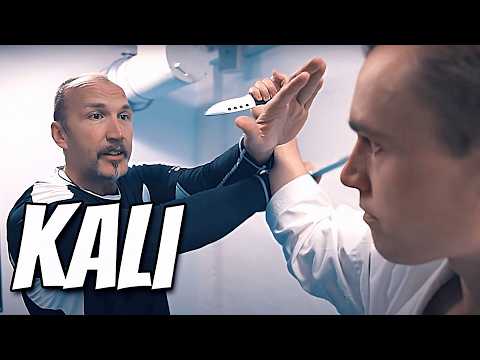
The world of martial arts is a vast tapestry, woven with threads of tradition, innovation, and cultural exchange. For decades, many practitioners have revered Karate, hailing from the shores of Okinawa, as a distinct and formidable art. Yet, what if I told you that beneath the surface of its powerful strikes and disciplined stances lies a connection, a shared lineage, with the vibrant and fierce traditions of Filipino Martial Arts (FMA)? This is not mere speculation; it's a revelation that challenges conventional understanding and opens a new vista for those dedicated to the warrior's path. My encounter with Guro Punong Johan Skålberg, a renowned master of Kali Sikaran, Arnis, Escrima, and Panantukan, unearthed insights that have the potential to fundamentally alter how we perceive the history and interconnectedness of these martial disciplines. Prepare to have your assumptions challenged.

Expert Insight: Guro Punong Johan Skålberg's Revelation

My journey into the depths of FMA began with a profound conversation with Guro Punong Johan Skålberg. His expertise, honed over years of dedicated practice and study across various FMA systems, revealed striking similarities between the core principles and methodologies of Karate and the indigenous fighting arts of the Philippines. We delved into the historical context, exploring the possibility of shared influences and cross-pollination of techniques and philosophies. Skålberg's articulate breakdown presented a compelling argument: that the essence of FMA might not be as separate from Karate as commonly believed. He spoke of a shared "blueprint" for combat, a universal language of movement and strategy that transcends geographical boundaries. This wasn't about dilution, but about recognizing a common ancestral root, a testament to the adaptability and inherent effectiveness of these arts.
"The human body is a weapon. The mind is the trigger. The environment is the battlefield. Understanding these three is the key to mastery, whether you wield a stick or an empty fist." - Guro Punong Johan Skålberg

Structural Parallels: Beyond the Surface

The most immediate parallels lie in the structural integrity and strategic application of movement. Observe the footwork in many Karate katas – the grounded stances, the pivots, the weight shifts. Now, consider the foundational stances in Kali or Arnis. You will find a remarkable echo. Both emphasize a stable base, the ability to generate power from the ground up, and the capacity for rapid transitions between offense and defense. The concept of "triangulation" in FMA, where the body moves in a triangular pattern to maintain balance and striking angles, finds its resonance in the circular movements and stepping patterns found in Karate. Even the way practitioners visualize angles of attack and defense, the concept of flowing from one movement to the next seamlessly, suggests a shared understanding of combat geometry. This isn't to say the arts are identical. Karate, particularly its Okinawan roots, often emphasizes linear power generation, while FMA is renowned for its fluid, often circular, and deceptively simple yet complex movement patterns, especially with weaponry. However, the underlying biomechanical principles and the strategic approach to creating openings and maintaining distance are remarkably convergent. It suggests that both arts, in their own evolutionary paths, arrived at similar, highly effective solutions for human conflict.

Philosophical Convergences: The Warrior's Heart

Beyond the physical, the philosophical underpinnings of Karate and FMA reveal a profound kinship. The Okinawan concept of (道), the "Way," emphasizing personal development, discipline, and continuous learning, is mirrored in the Filipino warrior's ethos. While FMA might not always articulate it in the same formal terminology as Japanese Budo, the emphasis on respect for elders and masters, the cultivation of courage, perseverance, and a humble yet confident demeanor are universally present. The principle of Mushin (無心) – a mind without mind, acting instinctively and without conscious thought – is a goal in many Karate styles. Similarly, in FMA, the ability to react spontaneously and effectively in the chaos of combat, without hesitation, is paramount. This state of heightened awareness and effortless action is the hallmark of true martial proficiency, a goal shared by practitioners across cultures. Both traditions understand that true skill transcends mere technique; it is a cultivated state of being.

Analysis of Techniques: From Empty Hand to Blade

Perhaps the most compelling evidence lies in the analysis of specific techniques. Many empty-hand techniques in Karate, when deconstructed, bear a striking resemblance to weapon-based movements in FMA. A particular block in Karate might directly correspond to a defensive parry with a stick or knife in FMA. Likewise, certain grappling or joint-locking techniques in Panantukan (Filipino boxing) share similarities with throws or immobilizations found in some Karate styles, particularly those with roots in older Chinese martial arts that influenced Okinawan Karate. The concept of "flow" is also critical. FMA masters often teach that empty-hand techniques are derived from weapon techniques, meaning that if you can execute a movement with a weapon, you can perform a similar motion with your bare hands. This principle of translation, of moving from weapon to empty hand, can also be observed implicitly in the development of certain Karate techniques. Consider the powerful, often extended arm strikes in Karate. When viewed through an FMA lens, they can be seen as the empty-hand manifestation of a thrusting or slashing motion with a blade or stick.

The Mindset of the Warrior: Cultivating Inner Strength

Both Karate and FMA place immense value on mental fortitude. The rigorous training regimens, the repeated practice of katas or forms, and the sparring sessions are not just about physical conditioning; they are designed to forge mental resilience, discipline, and an indomitable spirit. The ability to face adversity, to push past physical and mental barriers, and to maintain composure under pressure are fundamental tenets.
"The true fight is not against the opponent, but against the doubt within yourself. Conquer that, and the external battle becomes a mere formality." - Jesse Enkamp, The Karate Nerd™
This mental toughness is what separates a mere fighter from a true martial artist. It's the ability to remain calm when facing a formidable opponent, to learn from every defeat, and to approach training with unwavering dedication. This shared emphasis on inner strength is a powerful testament to the universal principles that guide dedicated warriors.

Veredict of the Sensei: A Masterstroke of Cultural Exchange

The exploration of the connections between Karate and Filipino Martial Arts is not an attempt to diminish either art but to celebrate their shared heritage and the universality of effective combat principles. Guro Punong Johan Skålberg's insights, combined with a critical analysis of technique and philosophy, suggest a deep, often unacknowledged, dialogue between these traditions. It’s a testament to how human ingenuity, when applied to the fundamental challenges of self-defense and personal development, can lead to remarkably similar outcomes across different cultures. The parallels are too numerous and too profound to be mere coincidence. They speak to a common origin, or at least a significant period of mutual influence, that predates modern categorization. Understanding these connections enriches our appreciation for both Karate and FMA, highlighting the enduring wisdom embedded within the practice of martial arts. Cinturón Negro en Interconexión Marcial

Equipment Essential for Your Training

  • Karate Gi: A durable, high-quality Karate Gi is essential for traditional Karate training, allowing for unrestricted movement and providing a good feel for range. Look for double-weave options if you plan on extensive sparring. (Explore Karate Gis)
  • Training Weapons (FMA): For exploring the FMA side, consider rattan sticks, training knives (blunted), or a training sword. Safety first – always use appropriate protective gear.
  • Protective Gear: Sparring requires essential protection such as headgear, mouthguards, groin protectors, and sparring mitts or gloves.
  • Training Mats: For any floor-based drills or grappling, consider a set of interlocking training mats for comfort and safety.
  • Resistance Bands: Excellent for flexibility, mobility, and strength training, complementing both Karate and FMA conditioning. (Discover Flexibility Training)

Practice Guide: Drills for Connection

  1. Weapon-Hand Translation Drill: If you have access to training sticks, practice basic FMA blocks and strikes (e.g., angle 1, angle 2). Then, immediately transition to performing the same motion with your empty hands. Focus on maintaining the same body mechanics and power generation.
  2. Kata Application (FMA Lens): Take a familiar Karate kata. For each movement, ask yourself: "How would this be performed with a stick or knife?" Look for the underlying principles of angle, distance, and timing. Can you see the weapon-based origin?
  3. Stance Transitions: Practice moving smoothly between a stable Karate stance (like a strong Zenkutsu-dachi) and a more fluid, evasive FMA stance. Focus on keeping your center of gravity low and maintaining balance during the transition.
  4. Partner Block and Counter: With a training partner, one person throws basic strikes (empty hand or stick). The other practices FMA-style deflections and counters, focusing on redirecting force and immediately attacking the opponent's centerline.
  5. Flow Drills: Practice a continuous flow of blocks, strikes, and evasions. The goal is not to overpower but to maintain constant motion and adapt to your partner's movements, much like the concept of Taisabaki in Karate and continuous flow drills in FMA.

Frequently Asked Questions

  • Is Karate actually derived from Filipino Martial Arts?
    While there isn't a direct, linear descent in all cases, historical evidence and structural/philosophical parallels strongly suggest significant cross-pollination and shared influences between ancient Chinese martial arts that influenced both Karate and FMA, and direct exchanges between Karate practitioners and FMA masters over time.
  • Can FMA techniques be used with Karate?
    Absolutely. The principles of FMA, particularly concerning angles, flow, and weapon integration, can significantly enhance a Karate practitioner's understanding of distance, timing, and application, especially in self-defense scenarios.
  • Do FMA practitioners learn empty-hand techniques?
    Yes. Many FMA systems, such as Panantukan (Filipino Boxing) and Sikaran, are entirely empty-hand arts. Furthermore, the philosophy in FMA is that weapon techniques are simply extensions of empty-hand movements, making the transition seamless.
  • What is the primary difference between Karate and FMA?
    While Karate often emphasizes strong stances, linear power, and striking, FMA is known for its intricate footwork, flowing movements, emphasis on angles, and extensive use of weaponry integrated with empty-hand combat. However, there is substantial overlap and shared principles.

For Deeper Exploration on Your Path

Sensei's Reflection: Your Next Step

The martial world is not a collection of isolated islands, but a vast ocean where currents of knowledge and technique constantly flow and intermingle. To believe any art exists in a vacuum is to limit its potential for growth and understanding. The similarities between Karate and Filipino Martial Arts are not just academic curiosities; they are practical lessons in the universality of effective combative principles.

Reflection of the Sensei: Your Next Step

In your own training, whether it be Karate, FMA, or any other discipline, how can you actively seek out and appreciate the "hidden kin" of your chosen art? Are you willing to challenge your preconceptions and explore the possibility that the wisdom you seek might lie in unexpected places, or even within the very techniques you already practice, viewed from a different angle? The path of mastery is one of perpetual inquiry.
The martial artist who sees only their own style is like a man who stares only at his own reflection in the water, unaware of the vast ocean around him.
--- GEMINI_METADESC: Explore the surprising connections between Karate and Filipino Martial Arts (FMA). Discover shared techniques, philosophies, and insights from Guro Punong Johan Skålberg.