Showing posts sorted by relevance for query judo throw. Sort by date Show all posts

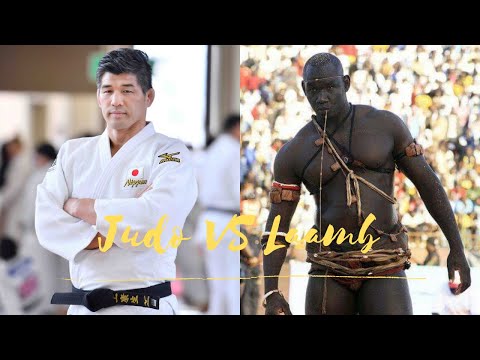
Judo vs. Laamb Wrestling: A Sensei's Analysis of Throws, Tactics, and True Combat Efficacy

Greetings, warriors and scholars of the Way. Today, we delve into a fascinating intersection of combat: the venerable art of Judo and the powerful tradition of Senegalese wrestling, known as Laamb. Many have seen brief clips, others have heard whispers, but few truly grasp the profound similarities and stark differences that define these disciplines. This is not merely an academic exercise; it is a critical examination of techniques that have echoed across dojos and dusty arenas for generations, each vying for supremacy in the crucible of combat. Are the sweeping throws of Judo merely elegant dance, or do they possess the raw power to subdue a Laamb wrestler? Conversely, can the brute strength and unique techniques of Laamb stand against the structured efficiency of Judo? Let us uncover the truth, not with speculation, but with the rigorous lens of martial understanding.

The Clash of Titans: Judo Meets Laamb

The discussion around Senegalese wrestling, or Laamb, often sparks debate, especially when juxtaposed with established martial arts like Judo. The raw power and explosive nature of Laamb are undeniable, yet the question persists: how does it fare against the codified techniques and principles of Jigoro Kano's creation? This analysis goes beyond superficial comparisons. We will dissect the core philosophies, the fundamental techniques, and the practical applications of both disciplines. Prepare for a journey that challenges assumptions and illuminates the true nature of combat prowess. Are you ready to understand the nuances that separate a mere throw from a decisive victory?

The Essence of Kodokan Judo: Precision and Control

Founded by Professor Jigoro Kano, Judo, meaning "gentle way," is far more than just a sport. It is a system of physical, intellectual, and moral education. At its heart lies the principle of Seiryoku Zenyo – maximum efficiency with minimum effort. Judo emphasizes Jita Kyoei – mutual welfare and benefit. Technically, Judo is characterized by its dynamic nage-waza (throwing techniques) and its crucial katame-waza (grappling techniques), which include pins, chokes, and armlocks. Unlike many striking arts, Judo focuses on using an opponent's weight and momentum against them, turning aggression into a vector for control.

A typical Judo curriculum progresses from basic falls (ukemi) to fundamental grips (kumi-kata), then to a vast array of throws. Iconic techniques like O-soto-gari (major outer reaping), Ippon Seoi Nage (one-arm shoulder throw), and the devastating Osoto-gari (major outer reaping) are built upon intricate footwork, hip movement, and the precise timing of Kuzushi (off-balancing). The goal is not just to throw the opponent, but to do so with such control that they cannot recover, often leading to a point (ippon) or a submission hold on the ground.

"Maximum efficiency, minimum effort." - Jigoro Kano

The emphasis on randori (free practice) in Judo is paramount. It's where the theoretical techniques are tested against resisting opponents, fostering adaptability and resilience. However, it's crucial to note that Judo, in its Olympic sporting context, has seen certain techniques restricted for safety reasons, particularly those involving direct leg grabs (ami-waza) and certain submissions on the legs. This evolution, while prioritizing safety, has led some critics to question its direct applicability in scenarios demanding less structured combat.

Laamb Wrestling: The Unyielding Spirit of Senegal

Laamb, the traditional wrestling of Senegal, is an ancient sport deeply ingrained in the nation's culture and identity. It is a spectacle of raw power, vibrant tradition, and often, fierce competition. Unlike Judo's emphasis on technical sequences and controlled submissions, Laamb is fundamentally about overpowering the opponent through strength, leverage, and a direct, forceful approach. Wrestlers, known as lutteurs, train rigorously to develop immense physical conditioning, focusing on explosive power, grip strength, and resilience.

The objective in Laamb is typically to throw an opponent to the ground or to get them into a position where their back, shoulders, or chest touches the sand. Techniques often involve powerful lifts, body locks, and wrestling for dominance on the feet. The most visually striking aspect of Laamb, and where comparisons to Judo naturally arise, is the presence of throws and takedowns. However, the execution is often more direct and driven by brute force rather than the nuanced off-balancing seen in Judo.

Laamb is also steeped in ritual and superstition. Wrestlers often perform dances, wear talismans (gris-gris), and engage in pre-fight rituals meant to imbue them with spiritual strength and luck. This spiritual dimension, while not directly part of Judo's codified philosophy, speaks to the profound psychological aspect of combat, a critical element often overlooked in purely technical analyses.

"The wrestler who is proficient in the art of wrestling, and in the use of his own strength, is capable of conquering the world." - A traditional saying often associated with Laamb.

Furthermore, Laamb has evolved to incorporate elements that blur lines with mixed martial arts. Some lutteurs are now training in striking arts and grappling, aiming to be more well-rounded competitors, a testament to the sport's adaptation in the modern combat landscape.

Judo vs. Laamb: A Comparative Takedown

Now, let us engage in the critical analysis, the sensei's dissection of these two formidable combat systems. The intention of search here is clear: understand how these arts compare in a combative scenario. We must look beyond the superficial "throw for throw" comparison.

1. Philosophy and Principles:

  • Judo: Seiryoku Zenyo (Maximum Efficiency) and Jita Kyoei (Mutual Welfare). Focus on leverage, timing, and technique over brute force. Structured curriculum.
  • Laamb: Emphasis on raw power, physical conditioning, and spiritual/ritualistic preparation. Primarily focused on overpowering the opponent for a decisive takedown.

2. Technical Execution:

  • Judo: Highly codified throws (nage-waza) relying on Kuzushi (off-balancing), Tsukuri (entry), and Kake (completion). Extensive ground grappling (katame-waza) including pins, chokes, and armlocks. Strict rules limit leg grabs in sport Judo.
  • Laamb: Direct, powerful throws and takedowns, often utilizing immense strength and body control. Grip fighting is crucial, but the emphasis is on driving through the opponent. Ground grappling is less formalized than Judo, focusing more on pinning or maintaining positional dominance.

3. Grip Fighting:

  • Judo: The grip (kumi-kata) is fundamental. Mastering grips is essential for initiating throws and controlling the opponent.
  • Laamb: Grips are vital for leverage and control, but often more about a secure hold to enable a powerful lift or drive. Less emphasis on the intricate setup of grips seen in Judo.

4. Groundwork:

  • Judo: A complete ground fighting system (Ne-waza) with submissions and pins that can end a match.
  • Laamb: Ground work focuses on pinning or maintaining a dominant position to achieve victory, with less emphasis on the submission aspect found in Judo or BJJ.

5. Physical Attributes:

  • Judo: Requires flexibility, balance, coordination, and explosive power, but technique can often compensate for a deficit in raw strength.
  • Laamb: Heavily reliant on exceptional strength, power, stamina, and a high pain threshold.

Consider this: a Judo throw is a finely tuned mechanism. A Laamb takedown is often a battering ram. Both can achieve the objective, but the pathway and the principles behind them differ significantly.

Beyond the Arena: Efficacy in MMA and Self-Defense

The ultimate test for any martial art is its efficacy when the rules are removed. How do Judo and Laamb translate into Mixed Martial Arts (MMA) or real-world self-defense scenarios?

Judo's Contribution to MMA: Judo practitioners have consistently proven their mettle in MMA. Fighters like Ronda Rousey, Kayla Harrison, and Teddy Riner (though not primarily an MMA fighter) have showcased the devastating power of Judo throws and groundwork. Judo's emphasis on ne-waza provides an immediate advantage in controlling opponents on the ground, setting up submissions, and preventing opponents from establishing dominant positions. The restriction on leg grabs in sport Judo has, in fact, led many Judo-based MMA fighters to supplement their training with techniques that target the legs.

Laamb's Potential in MMA: Laamb's raw power and explosive takedowns offer a unique threat. A skilled lutteur with the conditioning and adaptability could be a formidable opponent. Their ability to absorb punishment and drive through opponents with sheer force is a valuable asset. However, the lack of a structured grappling submission system and the potentially less refined defensive skills against strikes might present challenges that modern MMA training would need to address.

Self-Defense Considerations: For self-defense, Judo's principles are highly valuable. The ability to off-balance and control an attacker, use their momentum, and, if necessary, subdue them with a pin or choke, are critical skills. The emphasis on situational awareness and controlling distance is also paramount. Laamb's strength-based approach can be effective for disabling a single aggressor, but its reliance on close-range power might be less advantageous against multiple attackers or in confined spaces where Judo's control-based techniques might offer more tactical options.

The question isn't which is "better" in a vacuum, but rather, which set of skills complements the demands of the situation. A fighter who can blend Judo's technical precision with Laamb's explosive power and conditioning would be a truly terrifying force.

Essential Gear for Your Training Journey

To truly appreciate the nuances of Judo and wrestling, proper training is essential. While Laamb is traditionally practiced on sand, and Judo on mats, the underlying principles of conditioning and technique require specific equipment:

  • For Judo Training:
    • High-Quality Judo Gi: Look for a double-weave or heavyweight gi for durability, especially for randori. Brands like Adidas, Mizuno, or Fuji offer excellent options. Consider a specialized Judogi that meets IJF standards if you plan to compete.
    • Mat Shoes (Optional): For hygiene and grip on training mats, though many practice barefoot.
    • Mouthguard: Recommended for all sparring to protect your teeth.
  • For Wrestling/Conditioning (General):
    • Durable Training Shorts: Comfortable and allow for a wide range of motion.
    • Performance T-shirts: Moisture-wicking fabrics are essential for intense conditioning.
    • Wrestling Shoes (Optional): Provide ankle support and superior grip on various surfaces.
    • Resistance Bands: Excellent for building explosive power and grip strength, mimicking some aspects of grappling resistance.
    • A Sand Pit (if feasible): For an authentic Laamb training experience!
  • For Strength and Conditioning:
    • Weightlifting Gloves: If your grip strength is a limiting factor, these can help.
    • Jump Rope: A fundamental tool for cardiovascular conditioning and agility.
    • Kettlebells: Versatile for power, strength, and conditioning exercises relevant to wrestling and Judo.

Investing in the right [best Judo gis for randori] or [quality wrestling shoes] can significantly enhance your training experience and safety. Explore options for durable, comfortable gear that supports rigorous practice.

Sensei's Verdict: Which Style Reigns Supreme?

The question of supremacy is often a fallacy created by those who fail to see the interconnectedness of all martial paths. Judo and Laamb are not rivals in a death match; they are distinct expressions of the human desire to overcome through physical prowess and tactical acumen.

Judo offers a highly refined system of control, leverage, and submission. Its structured approach makes it accessible for learning and progression, and its principles of efficiency are timeless. Its sport evolution, while debated, has undeniably contributed immensely to the landscape of combat sports like MMA.

Laamb, on the other hand, embodies raw, unadulterated power and an indomitable spirit. It demands immense physical conditioning and resilience. Its cultural significance is profound, representing more than just a fight – it's a celebration of strength and heritage.

Cinturón Negro en Tradición y Poder

If forced to choose for a multifaceted combat scenario (like MMA), a fighter who possesses the technical depth and submission arsenal of Judo, combined with the explosive power, conditioning, and sheer will of a Laamb wrestler, would be virtually unstoppable. Neither art, in its purest sporting form, is inherently "better." They simply excel in different aspects of combat. Judo teaches you to redirect force; Laamb teaches you to embody it. Both are invaluable.

Frequently Asked Questions

Is Laamb wrestling a form of grappling like Judo?
Yes, Laamb is a form of wrestling, which falls under the broad category of grappling arts. Both Laamb and Judo focus on controlling and taking down an opponent, but their methodologies, principles, and specific techniques differ significantly.
Can Judo techniques be used against a Laamb wrestler?
Absolutely. Many Judo throws and control techniques can be effective. However, a Laamb wrestler's strength and directness may require Judo practitioners to adapt, perhaps relying more on powerful entries or focusing on ground control once a throw is initiated.
What are the main differences in training between Judo and Laamb?
Judo training emphasizes technique, timing, and efficiency (Seiryoku Zenyo), often practiced on mats. Laamb training heavily focuses on building immense physical strength, power, and conditioning, traditionally practiced on sand, and often includes unique rituals.
Is Laamb wrestling dangerous?
Like any full-contact combat sport, Laamb carries risks of injury due to the intensity of the physical exertion and the nature of the throws and holds. However, it is a traditional sport with deep cultural roots, practiced for generations.

Deepen Your Understanding

The journey through martial arts is one of continuous learning and adaptation. Whether you are drawn to the precision of Judo or the raw power of Laamb, the pursuit of mastery is a path that refines the body, sharpens the mind, and strengthens the spirit.

Reflection of the Sensei: Your Next Step

We have dissected Judo and Laamb, exploring their philosophies, techniques, and applications. Now, the true test is not in the reading, but in the doing. Consider this:

If you were to train in both Judo and Laamb for one year each, how would the integration of Judo's leverage and Laamb's power fundamentally change your approach to a physical confrontation? Would one art's principles bleed into the other, creating a hybrid strategy, or would they remain distinct tools in your arsenal? Ponder this, and prepare to demonstrate your insights.

``` GEMINI_METADESC: Compare Judo and Senegalese Laamb wrestling: analyze throws, tactics, training, and real-world combat efficacy with a Sensei's expert insights.

Judo: More Than Just Throws – The Unsung Hero of Practical Self-Defense

Let's confront a misconception that festers in the minds of many: the notion that Judo, stripped of explosive kicks and thunderous strikes, is somehow less effective for genuine self-defense. This is a flawed perspective, born from a superficial understanding of combat. As a seasoned practitioner and critic of martial arts and their cinematic portrayals, I can tell you that beneath its graceful throws and intricate holds lies a profound system forged for real-world application. Forget the flashy theatrics; we're talking about the cold, hard science of controlling an adversary.

The Grappling Advantage: Why Throws Trump Strikes in Close Quarters

Judo, born from the brilliant mind of Jigoro Kano, is often misunderstood. Many dismiss it as a "sport" art, lacking the "killer instinct" they associate with self-defense. This is a critical error. Judo's power lies precisely in its focus on grappling, throws, joint locks, and chokes. In the chaotic reality of a street encounter, distance is a luxury you rarely have. A sudden rush, a grab, and you're in the clinch. This is where Judo excels. While a punch might be blocked, a well-executed Osoto Gari (Major Outer Reaping) or Seoi Nage (Shoulder Throw) can incapacitate an attacker by exploiting gravity and leverage. It's about control, not just damage. Unlike striking arts where a missed blow can leave you vulnerable, Judo techniques aim for a swift resolution, often by taking the fight to the ground or immobilizing the opponent.

Consider the physics: using an opponent's weight and momentum against them is far more efficient than generating your own force against resistance. This is the essence of Judo's efficacy. It teaches you to dismantle an attack by controlling the attacker's base and balance. This is not mere sport; it's applied biomechanics honed over decades.

"The ultimate aim of Karate is not victory or defeat, but the perfection of the character of its participants." - Gichin Funakoshi. While this speaks to Karate, the principle of self-perfection through martial practice is universal. Judo, too, seeks this refinement, but its path is through control and leverage.

Beyond Competition: Judo's Street-Smart Philosophy

A common criticism leveled against many traditional martial arts is their perceived detachment from real combat scenarios. However, Judo, despite its competitive nature, retains a strong foundation in Kano's original intent: "Seiryoku Zen'yo" (Maximum Efficiency, Minimum Effort) and "Jita Kyoei" (Mutual Welfare and Benefit). This philosophy translates directly to self-defense. It's not about inflicting gratuitous harm, but about neutralizing a threat with the least amount of force necessary. Judo practitioners are trained to read an opponent's movements, anticipate their intent, and exploit the slightest imbalance.

Think about it: if an aggressor charges, your instinct shouldn't be to stand and trade blows, but to redirect that energy. A Judo throw can turn an attacker's forward momentum into a debilitating fall. Joint locks like the Juji Gatame (Armbar) or chokeholds like the Hadaka Jime (Rear Naked Choke, though less emphasized in modern sport Judo than in BJJ or self-defense contexts) can subdue an attacker quickly and efficiently, without resorting to strikes that might escalate the violence unnecessarily or lead to legal repercussions.

This emphasis on practical control makes Judo a powerful tool for self-protection. It teaches you to manage the distance, break grips, and, when necessary, take the fight to a controlled ground environment where size and strength disadvantages can be significantly mitigated.

The Universal Warrior: Judo for Every Body

One of Judo's most remarkable strengths, often overlooked in discussions about self-defense efficacy, is its profound adaptability. In a world obsessed with the archetype of the hulking fighter, Judo reminds us that effective self-defense is not solely dependent on brute strength. Jigoro Kano designed Judo to be accessible to everyone, regardless of age, gender, or physical condition. This is a crucial aspect often missing in discussions comparing martial arts for self-defense. Can a smaller individual effectively defend against a larger, stronger assailant?

With Judo, the answer is a resounding yes. Techniques are built upon principles of leverage, timing, and balance. A smaller practitioner can learn to use their opponent's size and weight against them, executing throws and pins that would be impossible through sheer strength alone. This principle is fundamental and can be seen in sports like Judo and BJJ, where technique consistently triumphs over raw power.

Whether you are a young student learning discipline or a senior seeking to maintain physical and mental acuity, Judo offers a path. It builds functional strength, cardiovascular endurance, and flexibility – all essential components of effective self-defense. Unlike some arts that demand extreme athleticism from the outset, Judo's progression is structured to cultivate these attributes progressively.

Building Inner Strength: The Psychological Edge of Judo

Beyond the physical techniques, Judo cultivates a powerful inner fortitude. The rigorous training, the discipline required to master complex movements, and the constant challenge of facing stronger opponents all forge a resilient mindset. This translates directly into self-defense confidence. A person who has trained diligently in Judo is not only physically capable but also mentally prepared.

This is where the concept of Ki (or Qi) subtly plays a role, not in a mystical sense, but in understanding body mechanics and presence. A confident stance, controlled breathing, and an aware demeanor can often deter potential aggressors. Judo teaches practitioners to be aware of their surroundings, to project an aura of control rather than fear. This heightened awareness, coupled with the knowledge that you possess the skills to defend yourself if necessary, significantly reduces vulnerability.

The journey of learning Judo is a constant lesson in overcoming limitations. Each successful throw, each successfully applied submission, builds self-efficacy. This isn't about aggression; it's about self-mastery, a core tenet of BUDO. The ability to remain calm under pressure, to think clearly when physically challenged, is invaluable in any high-stress situation, especially a physical confrontation.

The Art of the Encounter: Timing, Boundaries, and Control

Effective self-defense is not just about knowing techniques; it's about understanding when and how to apply them. Judo instills a keen sense of timing and an understanding of personal space and boundaries. In a confrontation, the ability to read the aggressor's intent and react at the opportune moment is paramount. Judo training sharpens this intuitive sense.

You learn to recognize the signs of an impending attack, the subtle shifts in weight, the aggressive posture. This allows you to act preemptively, perhaps by establishing a dominant grip or initiating a controlled throw before the attacker can fully commit. Furthermore, Judo teaches the concept of establishing and maintaining control. Whether through pins on the ground or sweeping throws, the goal is to neutralize the threat and regain safety.

Practicing these scenarios in a safe, controlled environment like a dojo allows individuals to develop the reflexes and decision-making skills needed for real-world application. It's about building muscle memory and mental fortitude so that when faced with a genuine threat, your trained response takes over, ensuring you can defend yourself effectively and with appropriate force.

Veredict of the Sensei: Is Judo King of Self-Defense?

Let me be unequivocal: Judo is an exceptional martial art for practical self-defense. While arts like Combat Sports, MMA, or Krav Maga might offer more direct, immediate "combat" applications, Judo's strength lies in its ability to control, incapacitate, and neutralize threats through leverage and technique, often without causing severe, potentially lethal, injury. Its emphasis on taking an opponent down and controlling them on the ground is incredibly effective. Is it the *only* effective art? Absolutely not. But is it a foundational and highly potent system for self-protection? Without a doubt. It teaches discipline, respect, physical conditioning, and most importantly, how to manage conflict through superior technique and strategy. For those seeking a well-rounded, adaptable, and highly effective self-defense system, Judo stands as a powerful choice.

Essential Gear for Your Judo Training

To embark on your Judo journey and train effectively, certain equipment is essential. While the emphasis is on technique, proper attire and safety gear will enhance your learning and protect you during practice.

  • Judogi (Uniform): A durable, heavy-duty cotton uniform specifically designed for Judo. Look for double-weave or reinforced stitching, especially around the lapels and seams, to withstand the rigors of grappling. Brands known for quality Karate and Judo uniforms are a good starting point.
  • White Belt: Initially, a standard white belt will signify your beginner status. As you progress, you will earn colored belts denoting your rank.
  • Optional (for conditioning): While not strictly required for basic Judo, if you incorporate conditioning exercises, consider items like jump ropes for cardiovascular fitness or resistance bands for strength training.

Training Guide: Mastering the Uchi-mata

The Uchi-mata (Inner Thigh Throw) is a dynamic and powerful throwing technique in Judo. It requires timing, balance, and coordinated movement. Here's a basic breakdown:

  1. Grip: Establish a strong grip on your opponent's lapel and sleeve.
  2. Entry: Step forward with your right foot, angling your body towards your opponent. As you do, pull them slightly forward and off-balance.
  3. Pivot & Lift: Pivot on your right foot, bringing your left foot to nearly touch your opponent's right foot. Simultaneously, use your right leg (your "pivot leg") to lift your opponent's right leg high, hooking their inner thigh.
  4. Rotation & Throw: Rotate your body forcefully to your left, driving with your hips and pulling with your arms. Your lifted leg acts as a lever. The combined action of the lift, rotation, and pull will send your opponent over your thigh and to the mat.
  5. Follow-Through: Maintain control as they fall and follow through to secure a dominant position.

Note: This is a simplified explanation. Proper execution requires consistent practice under a qualified instructor to develop the necessary coordination, balance, and power transfer. Seeking out instructional videos or specialized Martial Arts Training resources can be beneficial.

Frequently Asked Questions

Q1: Is Judo effective for self-defense against multiple attackers?
A: While Judo provides excellent tools for neutralizing one attacker, facing multiple assailants is extremely dangerous. Judo's strength is in control and takedowns. In a multi-attacker scenario, the priority is often escape, and Judo skills can help you break free or create space, but it's not designed as a primary defense against overwhelming numbers.

Q2: Do I need to be strong to practice Judo?
A: No. Judo's core principles of leverage and timing allow smaller, less physically strong individuals to effectively execute techniques against larger opponents. Strength can be developed through training, but it's not a prerequisite.

Q3: How long does it take to become proficient in Judo for self-defense?
A: Proficiency is a lifelong pursuit. However, with consistent training (2-3 times per week), you can gain a solid understanding of fundamental Judo self-defense techniques within 1-2 years. Real mastery takes much longer.

Q4: Is Judo safe to practice?
A: Generally, yes. Judo has a lower injury rate than many contact sports when practiced under qualified instruction. The emphasis on control and safety in training minimizes risk. However, like any physical activity, injuries can occur.

To Deepen Your Journey

Reflexión del Sensei: Tu Próximo Paso

Judo offers a path to practical self-defense, yes, but more profoundly, it offers a path to understanding the interconnectedness of effort, balance, and control – principles that extend far beyond the dojo. My question to you is this: In a world that often rewards brute force and immediate gratification, are you willing to embrace the subtle, yet immensely powerful, art of Judo, not just for self-defense, but for the cultivation of your character?

Takanoyama Shuntarō: The "Small But Mighty" Master of Judo Throws in Sumo

Introduction: The Anomaly of Takanoyama

Have you ever watched a martial artist, seemingly outmatched by their opponent's size and strength, still emerge victorious? This isn't magic; it's the elegant application of technique, timing, and an indomitable spirit. In the world of Sumo, a sport often defined by sheer mass, one wrestler stood out, not for his bulk, but for his brilliance. Takanoyama Shuntarō, hailing from the Czech Republic, shattered expectations, proving that in combat, as in life, technique and tenacity can indeed conquer brute force. This analysis dives deep into his arsenal, dissecting the throws that made him a beloved figure and a testament to the "small but mighty" principle.

Takanoyama's Unique Journey: Defying Sumo's Giants

Takanoyama Shuntarō, born Martin Koselecta, carved a unique path in the hallowed dohyo of professional Sumo. As a European venturing into a deeply traditional Japanese sport, he faced an uphill battle from the outset. The average weight of a top-division Makuuchi wrestler often exceeds 150 kg. Takanoyama, however, consistently competed in the 80-100 kg range. This stark physical disparity could have been a career-ending limitation. Instead, it became his greatest teacher, forcing him to hone an exceptional understanding of leverage, timing, and evasive footwork. His speed and mastery of judo principles, a natural fit for his agile frame, allowed him to outmaneuver and defeat opponents who dwarfed him. He wasn't just a novelty; he was a strategic genius on the mat.

Technique Breakdown: The Arsenal of a Smaller Wrestler

The brilliance of Takanoyama lay in his ability to execute techniques that maximized his advantages while neutralizing his opponents' size. He didn't rely on overwhelming power; he employed precision and speed. Let's examine some of his signature finishes that consistently saw him victorious:

Kote-nage (Armlock Throw)

Takanoyama's kote-nage was a masterclass in deception and leverage. The core of this technique involves establishing a firm grip on the opponent's wrist (kote). From there, instead of forcing the throw, he artfully used the opponent's own forward momentum or attempted forward movement against them. A swift rotation of his body, combined with a pulling action on the captured wrist, redirected their energy, causing them to lose balance and be thrown over his back or to the side. This is a classic judo throw, but Takanoyama's execution, particularly the precise timing and angle, made it devastatingly effective against larger sumo wrestlers.

Koshi-guruma (Hip Wheel)

Another technique that highlights his judo background is the koshi-guruma. This throw involves wrapping one of Takanoyama's legs around the opponent's hip, creating a fulcrum. With a simultaneous pull forward and a powerful twist of his torso, he would elevate and unbalance his opponent, using his hip as the pivot point. The momentum generated would send the larger wrestler crashing down. The effectiveness here lies in getting the leg placement correct and generating the rotational force quickly, preventing the opponent from stabilizing or counteracting.

Oshi-dashi (Push Out)

While Takanoyama excelled in throwing techniques, his oshi-dashi, or push out, was a pure display of his speed and agility. This technique requires an explosive burst of energy to drive the opponent backward. Takanoyama, with his lighter frame, could generate rapid forward pressure. He would use quick, powerful shoves, often targeting the opponent's upper body and shoulders, to force them out of the ring. His ability to maintain balance and drive forward while his opponent was attempting to resist or counter was crucial to its success. It’s a testament to his conditioning and lower body strength.

Sukuinage (Beltless Arm Throw)

This technique, often seen in judo, involves an arm throw where the grip is established differently, often without a traditional belt grip. Takanoyama would secure a grip on his opponent's arm and, using a scooping motion with his body, throw them over his hip. The key here is to get under the opponent's center of gravity and use their own weight to complete the throw. His agility allowed him to make the necessary adjustments to create the throwing angle, turning a potential disadvantage into an offensive opportunity. It’s a dynamic throw that requires excellent body control.

Uchimuso (Inner Thigh Throw)

Takanoyama's mastery of judo skills shone through in his uchimuso. This throw involves attacking the opponent's legs or inner thigh area. He would use his grappling ability to secure a grip, often on the opponent's leg or gi near the thigh. With a precise hip movement and a lifting or sweeping action, he would unbalance the opponent, using their own forward pressure or stability against them. This technique requires significant timing and the ability to get low and deep, something Takanoyama was adept at, allowing him to execute it even against much larger opponents.

Beyond Technique: The Mental Game

What truly set Takanoyama apart, and what offers the most profound lessons for any martial artist, was his mental fortitude. He entered a sport steeped in tradition, where size was king, and had to overcome not only his physical limitations but also potential cultural barriers. His ability to persevere through rigorous training, maintain focus, and execute complex techniques under pressure is a testament to his inner strength and dedication. He proved that a warrior's heart and a sharp mind are often more critical than sheer physical dominance.

"In the martial path, it is not the size of the warrior that matters, but the size of their heart."

This adage resonates deeply when we consider Takanoyama's career. He embodied this philosophy, turning perceived weaknesses into strengths through sheer willpower and intelligent application of skill.

Lessons for Every Budoka: Perseverance and Adaptability

The journey of Takanoyama Shuntarō offers invaluable lessons for every practitioner of martial arts, regardless of their style or size. His career is a powerful reminder that:

  • Technique over Brute Force: Superior technique, timing, and leverage can overcome significant size and strength disparities.
  • Adaptability is Key: Understanding your own physical attributes and adapting your strategy and techniques accordingly is crucial for success.
  • Mental Strength is Paramount: True mastery is forged not just in the body, but in the mind. Perseverance, discipline, and a positive attitude are essential tools.
  • Embrace Challenges: Difficulties, whether physical limitations or external obstacles, can be catalysts for growth and innovation.

As martial artists, we face our own challenges, whether it's mastering a difficult technique breakdown, improving our mental strength, or simply staying dedicated. Takanoyama’s story encourages us to push past our perceived limits and continually refine our skills and our spirit.

Cross-Training: Expanding Your Martial Horizon

While Takanoyama's primary discipline was Sumo, his effective use of judo principles demonstrates the power of cross-training. For martial artists today, broadening one's skillset beyond a single discipline is not just beneficial, it's increasingly essential. Exploring different combat sports and martial arts can:

  • Introduce new strategic perspectives.
  • Develop different physical attributes (e.g., grappling, striking, flexibility).
  • Enhance problem-solving skills on the mat.
  • Provide a more well-rounded understanding of combat.

Whether it's incorporating Judo throws into your BJJ, understanding striking principles from Kickboxing for your Muay Thai training, or learning defensive strategies from Aikido, the martial world is interconnected. Embracing this diversity makes you a more complete and adaptable fighter.

Essential Gear for Your Training

To effectively train in disciplines like Judo, Sumo, or any other martial art, having the right equipment is crucial. For Judo practitioners, a high-quality Judo gi is paramount. Look for a durable, double-weave gi that can withstand the rigors of throws and grappling. For those interested in simulating Sumo or practicing specific throwing drills, sturdy mats are essential for safety. Consider investing in:

  • High-Quality Judo Gi: Look for brands known for durability and fit. A good gi enhances grip and withstands pulling forces.
  • Training Mats: Essential for safe practice of throws, falls (ukemi), and groundwork.
  • Wrestling Shoes: For styles that require precise footwork and grip on the mat.
  • Resistance Bands: Excellent for strength and conditioning, mimicking pulling and pushing motions relevant to grappling.

Exploring gear can also lead you to discover resources like specialized training manuals or online courses focused on specific technique breakdowns.

Frequently Asked Questions

What made Takanoyama unique in Sumo?

Takanoyama Shuntarō was unique due to his significantly smaller stature compared to his peers, competing between 80-100 kg in a sport dominated by wrestlers over 150 kg. He compensated with exceptional speed, agility, and judo-based techniques.

What are some key Judo techniques Takanoyama utilized?

He effectively employed techniques such as Kote-nage (armlock throw), Koshi-guruma (hip wheel), Sukuinage (beltless arm throw), and Uchimuso (inner thigh throw), adapting them for the Sumo ring.

How did Takanoyama overcome his size disadvantage?

He leveraged his speed, agility, and precise execution of Judo throws. His strategy focused on outmaneuvering opponents, using their momentum against them, and exploiting openings rather than relying on brute strength.

What broader lessons can martial artists learn from Takanoyama?

Martial artists can learn about the importance of technical mastery, adaptability, mental fortitude, perseverance in the face of adversity, and the strategic advantage of speed and timing over sheer size.

For Deeper Insight

Sensei's Reflection: Your Next Step

Takanoyama's story is more than just a series of successful throws; it's a living testament to the power of a determined spirit. He demonstrated that the physical ring of a dojo, or the clay of the dohyo, is but one arena. The true battlefield often lies within, where the fight against doubt and limitation is waged. Ask yourself:

"When faced with an opponent, or a challenge, that seems insurmountable due to size or perceived advantage, do you instinctively shrink, or do you instinctively seek the angle, the leverage, the technique that will allow you to prevail?"

Reflect on this. True martial arts mastery isn't just about knowing techniques; it's about embodying the spirit to apply them when it matters most. Now, let your actions speak louder than your thoughts.

```

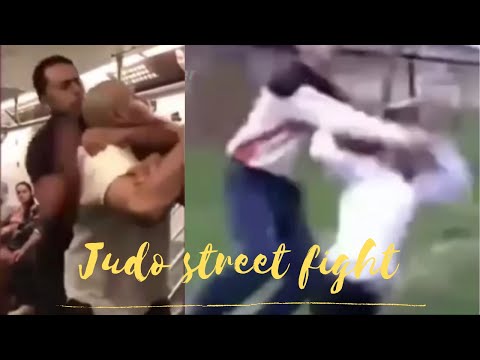
Judo in the Streets: A Technical Dissection of Real-World Application

The roar of the crowd, the polished tatami, the meticulously choreographed kata – these are the hallmarks of Judo as we know it. But what happens when the principles of the Gentle Way are tested not in the controlled environment of a dojo, but in the chaotic crucible of a street fight? This is the question that gnaws at many martial artists. Is the Judo honed through years of dedicated training a formidable tool for self-defense in uncontrolled encounters, or merely a beautiful, yet impractical, dance? Today, we pull back the curtain, dissecting real-world footage to see if Kodokan Judo truly holds water when the stakes are highest.

The Gentle Way Meets the Pavement

Many practitioners, myself included, have spent countless hours perfecting the intricacies of Judo. We bow, we learn the etiquette, we strive for the perfect seoi nage or ippon seoi nage. But the raw, unscripted reality of a street altercation is a stark contrast to the dojo. This analysis isn't about glory or sensationalism; it's about brutal honesty. We will examine footage, not to celebrate violence, but to understand the efficacy of Judo principles when applied under duress, by individuals who may not be trained Judoka, in environments far removed from the safety of the Kodokan.

The intention here is to move beyond the idealism of Budo and confront the pragmatic demands of survival. Are the throws and grappling techniques of Judo transferable? Can the fundamental concept of using an opponent's energy against them translate into practical self-defense? Let us embark on this critical dissection.

From Kodokan to the Concrete Jungle

Founded by Jigoro Kano, Judo emerged from the older martial arts of Japan, primarily Jujutsu, with a distinct emphasis on both physical education and moral development. Kano Shogoin, the revered founder, aimed to create a system that was not only effective for combat but also conducive to character building. The Kodokan, established in 1882, became the spiritual and physical heart of this new art. Its principles, such as maximum efficiency with minimum effort (Seiryoku Zenyo) and mutual welfare and benefit (Jita Kyoei), are cornerstones of the practice.

However, translating these noble ideals from the controlled dojo to the unpredictable street presents a significant challenge. Street fights are often characterized by their brutality, lack of rules, and the presence of multiple attackers or weapons. The controlled throws and grappling exchanges of Judo, while powerful, rely on specific conditions: an opponent engaging in a manner conducive to throwing, the availability of space, and often, the presence of a uniform (a gi or kimono) to grip. In the street, these conditions are rarely met.

"Judo is not merely a method of attack and defense, but a principle of life." - Jigoro Kano

This raises a fundamental question: Does the sophisticated technique of Judo offer a genuine advantage, or does it become a liability when confronted with a wild, untrained assailant or a situation where a clean throw is impossible?

Deconstructing the Techniques: What Works, What Doesn't

When we observe footage of alleged Judo practitioners in street fights, several patterns emerge, often highlighting a divergence between trained technique and practical application. Grip fighting, a cornerstone of Judo, is often absent or rudimentary in street encounters. Without a proper kozushi (off-balancing) and a firm grip on the lapel and sleeve, the efficacy of many throws is severely diminished. A wild swing or a desperate grab is not the same as a controlled approach for a tai otoshi.

Effective Applications:

  • Leveraging Body Weight and Momentum: Even without perfect grips, the principle of using an opponent's forward momentum against them can be effective. A simple push at the right moment, combined with a step, can still lead to an off-balance and a fall.
  • Close-Range Control: When a Judo practitioner can establish a strong body lock or clinch, the techniques learned for close-quarters grappling in Judo can be highly effective. This is where the transition to groundwork or the application of knees and elbows becomes relevant, bridging Judo with elements of MMA and combat sports.
  • Guard Retention/Passing (Limited): While not the primary focus of Judo, the foundational understanding of body positioning and hip movement can aid in surviving on the ground, preventing an opponent from achieving dominant positions, and potentially transitioning to a more advantageous situation.

Challenges and Ineffective Applications:

  • The Impossibility of Traditional Throws: Executing a clean uchi mata or osoto gari requires significant space, a stable base, and the ability to get under or around an opponent to execute the mechanics. In a confined space, or against a resisting, flailing opponent, these techniques become incredibly difficult, if not impossible, to apply safely and effectively. Attempting them can leave the practitioner exposed.
  • The Gi as a Crutch: Many Judo techniques are significantly enhanced by the ability to grip the opponent's gi. Without this, the leverage and control points are drastically reduced. Relying on gripping clothing that might be loose, torn, or non-existent severely hampers the Judo arsenal.
  • Transition to Ground: While Judo has a ground fighting component (Ne-waza), it is often focused on submissions and positional control within a competitive framework. Street fights can quickly devolve into chaotic brawls on the ground, where untrained aggression and striking can negate the technical advantages of a Judoka. Furthermore, the danger of being overwhelmed by multiple attackers on the ground is a significant concern that Judo's competitive format does not fully address.

The key takeaway from technical analysis of street footage is that while raw Judo principles can be adapted, the pure techniques of competition Judo often require significant modification or are simply not applicable. The ability to seamlessly transition from standing grappling to striking, and to maintain awareness of multiple threats, becomes paramount.

Beyond the Throw: The Spirit of Judo

It is easy to get lost in the mechanics of throws and pins, but Judo is more than just physical technique. It is a Budo, a way of the warrior, emphasizing discipline, resilience, respect, and the continuous pursuit of self-improvement. These philosophical underpinnings, when truly internalized, can transcend the physical realm and offer profound advantages in any conflict, including a street confrontation.

"The essence of Judo lies in the mind, not the technique." - Anonymous Master

A practitioner who embodies the spirit of Judo will possess:

  • Calm Under Pressure (Heijoshin): The ability to remain composed and think clearly in a stressful situation is perhaps Judo's greatest contribution to street self-defense. Where an untrained individual might panic, a disciplined Judoka can access their training and make rational decisions.
  • Adaptability: Judo's core principle of using an opponent's energy requires adaptability. This translates to being able to adjust to unexpected movements, environments, and threats.
  • Resilience and Perseverance: The willingness to get back up after being thrown, to continue striving even when facing a formidable opponent, is a testament to the mental fortitude cultivated in Judo. This can be crucial in a fight where one might be knocked down but not out.
  • Awareness: The training to constantly sense an opponent's balance and intention can be heightened into a general awareness of one's surroundings, crucial for avoiding conflict or recognizing threats before they materialize.

These intangible qualities are, in many ways, more valuable in a street fight than any specific throw. They are the invisible weapons that empower the Judoka.

Veredicto del Sensei: ¿Resiste el Judo el Embate Callejero?

My assessment, forged from decades of training, teaching, and observing the martial arts landscape, is that pure, competition-focused Judo, while an incredible art, is **not inherently a complete solution for street self-defense**. However, its underlying principles and the character it forges are invaluable.

The effectiveness hinges on the individual. A highly experienced Judoka who has cross-trained in striking and realistic self-defense scenarios will be far more effective than someone who only knows contest Judo. The throws, while difficult to execute cleanly, can still be devastating if the opportunity arises. The ground fighting, if adapted for the chaos of the street, can be a powerful equalizer. But relying solely on competitive Judo techniques in an untrained, unscripted encounter is akin to bringing a knife to a gunfight – it might work, but the odds are stacked against you.

En resumen:

  • Strengths: Excellent for developing balance, coordination, close-range control, resilience, discipline, and situational awareness. Principles of leverage and momentum are universally applicable.
  • Weaknesses: Reliance on the gi, difficulty of executing throws in confined spaces, limited striking integrated into competitive Judo, vulnerability to multiple attackers or weapons.

Calificación del Sensei: Cinturón Negro en Principios, Cinturón Blanco en Aplicación Directa sin Adaptación.

Entrenamiento para la Calle: Adaptando el Judo

For the dedicated Judoka aspiring to translate their art to the realities of self-defense, a strategic adaptation of training is necessary. This is not about abandoning Judo, but about augmenting it.

  1. Focus on Clinch Work: Dedicate significant time to mastering the clinch. Practice controlling your opponent's posture and balance, and learn to deliver strikes (knees, elbows) from this position. Judo's kumi-kata (grip fighting) is the foundation, but the goal shifts from setting up a throw to controlling and incapacitating.
  2. Sparring with Striking Integration: Incorporate sparring sessions where striking is allowed. This forces you to defend against punches and kicks while maintaining your Judo-based control. Consider cross-training in disciplines like Kickboxing or Muay Thai.
  3. Groundwork for Survival: While Judo groundwork is effective, focus your Ne-waza training on escaping bad positions, surviving against multiple opponents, and transitioning to your feet safely, rather than solely on submission hunting.
  4. De-escalation and Awareness Training: Understand that the best fight is the one you avoid. Practice situational awareness drills and learn de-escalation techniques. True self-defense begins with not being there.
  5. Unconventional Grips and Environment Training: Train in varied environments (uneven surfaces, confined spaces) and practice techniques that don't rely on a perfect gi grip.

Equipo Esencial para tu Entrenamiento

While Judo is often practiced with minimal equipment, specific gear can enhance your training, particularly when adapting for self-defense scenarios:

  • High-Quality Judo Gi: A durable, double-weave gi is essential for withstand the rigors of training and learning proper gripping. Look for brands known for their robustness.
  • Mouthguard: Absolutely critical if you are incorporating striking into your sparring. Protect your teeth and jaw.
  • Groin Protector: Essential for any sparring that involves full contact, especially when incorporating leg techniques or grappling.
  • Sparring Gloves (Optional but Recommended): If you're adding striking elements, light sparring gloves (12-16 oz) can protect your hands and your training partners.
  • Training Mats (Dojo or Home): For practicing throws and groundwork safely, good quality mats are non-negotiable.

Preguntas Frecuentes

¿Es el Judo efectivo para defensa personal?

Los principios del Judo, como el uso de la fuerza del oponente y el equilibrio, son muy efectivos. Sin embargo, las técnicas de competición pura requieren adaptación para el entorno no controlado de la calle, especialmente si no se lleva un gi o si hay múltiples atacantes.

¿Qué arte marcial es mejor para la calle: Judo, BJJ o Karate?

No hay un "mejor" arte marcial absoluto. El BJJ es excelente para el combate terrestre. El Karate tradicional puede ser muy efectivo para el combate de pie si está enfocado en defensa personal. El Judo ofrece un gran equilibrio y potencial de derribo. La clave es la adaptación realista y, a menudo, la combinación de disciplinas.

¿Puedo usar mis lanzamientos de Judo en una pelea real?

Sí, pero con cautela. Un seoi nage o tai otoshi exitoso requiere que el oponente esté preparado para ser lanzado y que haya espacio. A menudo, los lanzamientos en la calle son más caóticos y menos técnicos, utilizando la fuerza bruta y el desequilibrio repentino.

¿Es el Judo demasiado enfocado en el "juego limpio" para la autodefensa?

El Judo competitivo se basa en el respeto y el juego limpio. Sin embargo, los principios de control y eficiencia son aplicables a la autodefensa. Un practicante experimentado puede adaptar estas técnicas para ser más contundentes cuando la situación lo requiere, sin perder la disciplina.

¿Qué importancia tiene el entrenamiento de suelo (Ne-waza) en Judo para la calle?

El Ne-waza es crucial. Saber cómo controlar a un oponente en el suelo, defenderse de ataques y defenderse de múltiples atacantes es vital. El enfoque de Judo en el control posicional y las sumisiones es una base sólida, pero debe complementarse con estrategias para peleas caóticas en el suelo.

Para Profundizar en tu Camino

Reflexión del Sensei: Tu Próximo Paso

We have dissected the application of Judo in the unforgiving arena of street conflict. The question remains: Has this analysis solidified your understanding, or merely introduced more doubt? If you believe Judo, in its pure form, is sufficient for street defense, I challenge you: Go train with someone who has actively competed in MMA or worked in security and ask them how your competition Judo fares against their real-world experience. If, conversely, you dismiss Judo entirely, I dare you to find a more effective system for developing balance, resilience, and controlled power in a single martial art. The truth, as always, lies in the diligent, honest application and adaptation of principles. The path to mastery is never static; it demands constant evolution.

Now, I ask you directly: After this dissection, are you prepared to adapt your Judo, or are you content to remain a master of the tatami, ill-equipped for the pavement? What is the single most significant adaptation you will make to your training starting *today* based on this analysis? Your answer, and your commitment, will speak volumes.


Equipo Esencial para tu Entrenamiento

  • Guantes de 16oz para sparring
  • Kimono de doble tejido para Judo
  • Protectores bucal y inguinal
  • Esterillas de entrenamiento de alta densidad

Preguntas Frecuentes

Is Judo effective for self-defense?

Judo's principles like using an opponent's force and balance are highly effective. However, pure competition techniques require adaptation for uncontrolled street environments, especially without a gi or against multiple attackers.

Which martial art is best for the street: Judo, BJJ, or Karate?

There is no single "best" martial art. BJJ excels in ground fighting. Traditional Karate can be very effective for standing combat if focused on self-defense. Judo offers excellent balance and takedown potential. The key is realistic adaptation and often, cross-training.

Can I use my Judo throws in a real fight?

Yes, but with caution. Successful Judo throws require an opponent prepared to be thrown and adequate space. Street throws are often more chaotic, utilizing brute force and sudden imbalance.

Is Judo too focused on "fair play" for self-defense?

Competitive Judo emphasizes respect and fair play. However, its principles of control and efficiency are applicable to self-defense. Experienced practitioners can adapt techniques to be more decisive when the situation demands it, without losing discipline.

How important is ground fighting (Ne-waza) in Judo for the street?

Ne-waza is crucial. Knowing how to control an opponent on the ground, defend against attacks, and survive against multiple attackers is vital. Judo's focus on positional control and submissions is a strong foundation but needs to be supplemented with strategies for chaotic ground fights.


Para Profundizar en tu Camino

``` GEMINI_METADESC: Analyze Judo's effectiveness in street fights. Sensei Budo & AM dissects real footage, comparing Kodokan principles to uncontrolled combat, offering technical insights and adaptation strategies.

Vladimir Putin's Judo Mastery: A Study in Budo and Geopolitical Influence

The world of martial arts often intersects with figures of global prominence, and few present a more compelling intersection than Vladimir Putin and his deep engagement with Judo. This isn't merely a hobby for a political leader; it's a testament to the enduring principles of Budo and a fascinating case study in how mastery in one domain can influence another. Today, we delve beyond the headlines to explore the martial arts journey of Vladimir Putin, examining his technical proficiency, the philosophy underpinning his practice, and the undeniable impact of Judo on his public persona and leadership.

Table of Contents

Introduction: Beyond the Political Persona

Many leaders across history have found solace, discipline, or strategic advantage in martial pursuits. However, Vladimir Putin's relationship with Judo transcends simple physical activity. It speaks to a deeper understanding of its core tenets: discipline, respect, strategic positioning, and the leverage of an opponent's energy. For those seeking to understand the man behind the political machinations, examining his dedication to Judo offers a unique, albeit often controversial, lens. This exploration is not about endorsing political actions, but about dissecting the martial artist within the statesman, understanding how the principles of Ju-jutsu (the parent art of Judo) and its modern codified form, Judo, might shape his strategic thinking and public presentation.

The Judoka in Power: Putin's Martial Arts Journey

Putin began his Judo training in his youth, a common entry point into the discipline for many in Russia and the former Soviet Union. Under the tutelage of coaches like Anatoly Rakhlin, he progressed through the ranks, eventually earning a black belt. His consistent practice, even as his political career ascended, is noteworthy. In a world where public image is paramount, choosing to visibly engage in a demanding martial art like Judo suggests a genuine commitment. This isn't the superficial dabbling of a celebrity; it's the sustained effort of a dedicated practitioner. He has been seen demonstrating techniques, participating in training sessions, and even engaging in light sparring, often with younger, highly skilled athletes. These appearances, while curated, offer glimpses into his technical foundation and his respect for the art.
"Judo is more than a sport, it is a way of life. It teaches us not only to overcome others, but to overcome ourselves. It demands discipline, respect, and a profound understanding of balance and leverage." - Adapted from principles often attributed to Jigoro Kano.

Technical Analysis: The Fundamentals of Putin's Judo

While detailed, in-depth analysis of a head of state's sparring sessions is challenging, observed footage and expert commentary provide insights into Putin's Judo. His movements often demonstrate a solid understanding of foundational principles. * **Grip (Kumi-kata):** Putin typically employs a standard right-sided grip, often securing a strong sleeve and lapel grip. This allows for control of his opponent's posture and provides a base for initiating throws. The strength and stability of his grip are evident, crucial for unbalancing an opponent. * **Posture and Balance (Shisei and Kuzushi):** A key element of Judo is breaking the opponent's balance (Kuzushi). Putin often demonstrates good posture, staying low and centered, which provides him with a stable base while simultaneously enabling him to apply force to his opponent's structure. He doesn't rely on sheer brute strength but rather on applying force at opportune moments, leveraging his opponent's forward momentum or instability. * **Footwork (Ashi Sabaki):** His footwork appears economical and purposeful. He moves with a deliberate pace, setting up entries for techniques rather than rushing them. This measured approach allows him to maintain his own balance while disrupting his opponent's. * **Common Techniques:** While he hasn't showcased highly complex or flashy techniques in public demonstrations, his practice often involves fundamental throws like *O-goshi* (major hip throw) and *Seoi-nage* (shoulder throw), executed with competent form. These are staple techniques in Judo, requiring precise timing and body mechanics. His focus on these foundational elements suggests a deep respect for the core of the art. It's important to note that these observations are based on limited public viewings. Professional Judoka engage in rigorous training for years, developing nuanced skills. However, for a leader in his political position, Putin's demonstrated proficiency and continued practice are significant.

The Philosophy of Judo: Applied to Leadership and Strategy

Jigoro Kano, the founder of Judo, envisioned it as more than just a combat system. He promoted principles that extend far beyond the dojo: * **Seiryoku Zenyo (Maximum Efficiency, Minimum Effort):** This is the cornerstone of Judo. It teaches practitioners to use their opponent's strength and momentum against them, rather than relying solely on their own power. In a geopolitical context, this translates to strategic maneuvering, understanding an opponent's weaknesses, and applying pressure where it is most effective, rather than engaging in costly, direct confrontations. * **Jita Kyoei (Mutual Welfare and Benefit):** While seemingly paradoxical in a competitive context, this principle emphasizes harmonious coexistence and mutual prosperity. In leadership, it can be interpreted as the pursuit of national interests while also fostering international cooperation where beneficial. However, the application of this principle in international relations is, of course, subject to interpretation and often debated. * **Discipline and Respect:** Judo instills a deep sense of discipline and respect for training partners, instructors, and the art itself. This can foster a disciplined approach to problem-solving and a calculated demeanor in high-stakes negotiations. The structured nature of Judo, its emphasis on analyzing situations, anticipating moves, and executing with precision, mirrors strategic thinking required in both combat and high-level politics. A leader who understands these principles might approach international relations with a calculated, strategic mindset, seeking to gain advantages through leverage and foresight.

Impact on Geopolitics and Perception

Putin's Judo background has been strategically employed to shape his public image. It portrays him as physically capable, disciplined, authoritative, and possessing a strong connection to Russian national pride, as Judo is a highly respected sport in Russia. This cultivated image can lend him an aura of strength and control on the international stage. * **Soft Power and Propaganda:** Demonstrations of his Judo prowess, often shared through state-controlled media, serve as a form of soft power. They project an image of vigor and resilience, reinforcing his leadership narrative within Russia and influencing perceptions abroad. * **Psychological Warfare:** In a competitive arena, projecting confidence and a mastery of one's discipline can be a psychological advantage. This can translate to diplomatic or strategic negotiations, where a perceived strength and calculated demeanor can influence an opponent's decision-making. * **Symbolism:** The mat (tatami) is a space of focused combat where rules and principles dictate interaction. By regularly engaging in Judo, Putin aligns himself with these disciplined values, potentially seeking to associate his political actions with the perceived orderliness and strategic depth of the martial art. However, this projection is not without critique. Critics often point to the discrepancy between the principles of mutual benefit (Jita Kyoei) and certain aggressive foreign policy actions. This highlights the complex relationship between martial arts philosophy and the realities of global politics, where ideals can be selectively applied or reinterpreted to serve national interests.

Veredicto del Sensei: Putin's Judo Legacy

From a martial arts perspective, Vladimir Putin's dedication to Judo is undeniable and commendable. His consistent practice, even amidst immense political responsibilities, speaks to a genuine appreciation for the discipline. His technique, while perhaps not that of an Olympic champion, demonstrates a solid grasp of Judo's fundamental principles – leverage, balance, and strategic application of force. He embodies the ideal of a practitioner who applies the art's teachings beyond the dojo. However, when we consider the broader context of his public image and leadership, the interpretation becomes more complex. The way his Judo mastery is presented and perceived is heavily influenced by political agendas. It serves as a powerful tool for image cultivation, projecting strength, discipline, and national pride. **Cinturón Negro en Dedicación, Marrón en Aplicación Política.** Putin has certainly achieved a high level of technical proficiency and philosophical understanding in Judo. His continued engagement indicates a deep personal connection. Yet, the "Jita Kyoei" principle of mutual welfare and benefit appears to be selectively applied, if at all, in his geopolitical strategies. Therefore, while his mastery of Judo as a martial art is evident, its genuine translation into universally beneficial principles on the global stage remains a subject of intense debate and scrutiny.

Essential Equipment for Your Judo Training

Embarking on your own Judo journey requires proper gear to ensure safety, comfort, and adherence to tradition.
  • Judo Gi (Kimono): The most critical piece of equipment. Look for a durable, double-woven cotton gi specifically designed for Judo. Brands like Adidas, Mizuno, and Fuji are reputable choices. A well-fitting gi is essential for grip fighting and for your safety and your partner's.
  • Belt (Obi): Your rank is denoted by your belt. Start with a white belt and progress through the ranks as you train.
  • Footwear for Training Area: While you'll typically train barefoot on the mat (tatami), comfortable athletic shoes are needed for moving around the dojo and for any off-mat conditioning exercises.
  • Mouthguard (Optional but Recommended): Especially during randori (sparring), a mouthguard can protect your teeth and gums.
  • Shin Guards/Knee Pads (Optional): For specific drills or individuals with sensitive joints, light padding might be beneficial, though not standard for most Judo training.
When purchasing a Judo Gi, ensure it meets IJF (International Judo Federation) standards if you plan to compete, or a robust, pre-shrunk model for general training. Investing in quality gear is an investment in your training longevity and safety.

Training Guide: Mastering Basic Judo Principles

To truly internalize Judo, focus on these fundamental drills and concepts. Consistency is key, just as it is for any high-level practitioner.
  1. Grip Practice (Kumi-kata Drills):
    • Start by simply holding a partner. Practice establishing dominant grips (e.g., right lapel, right sleeve).
    • Work on breaking your partner's grips while maintaining your own. This is a constant battle of wills and leverage.
    • Practice transitioning between different grips smoothly.
  2. Ukemi (Breakfalls):
    • Mastering breakfalls is paramount for safety. Begin with basic forward and backward rolls.
    • Progress to side breakfalls and then more complex falling techniques.
    • Practice falling correctly from various positions and at different speeds.
  3. Balance Breaking (Kuzushi Exercises):
    • Stand facing a partner and practice lifting and pulling motions to disrupt their balance without actually throwing them.
    • Focus on moving their center of gravity forward, backward, or to the side.
    • Use minimal effort, applying force in the direction of their intended movement.
  4. Footwork (Ashi Sabaki):
    • Practice the basic Judo steps: Tsugi-ashi (following step) and Ayumi-ashi (natural walking step).
    • Drill moving forwards, backwards, and sideways while maintaining a stable, low posture.
    • Integrate footwork with grip fighting to create opportunities.
  5. Basic Throws (Nage-waza):
    • Once grips and balance breaking are solid, begin practicing fundamental throws like O-goshi (Major Hip Throw) and Seoi-nage (Shoulder Throw) with a resisting partner.
    • Focus on the coordinated movement of hips, arms, and legs.
    • Emphasize the Kuzushi (breaking balance) before the actual throw (Tsukuri - entry and Kake - execution).
Remember, each of these steps requires patience and repetition. Like Putin, strive for mastery of the fundamentals before attempting advanced techniques.

Frequently Asked Questions

  • Is Vladimir Putin a black belt in Judo? Yes, Vladimir Putin holds a black belt (Dan rank) in Judo. He began training in his youth and has continued to practice throughout his career.
  • What is the meaning of "Budo"? Budo is a Japanese term meaning "martial way." It encompasses not only the technical aspects of martial arts but also the philosophical and spiritual development of the practitioner, emphasizing discipline, self-mastery, and ethical conduct.
  • How does Judo philosophy influence leadership? Judo's core principles like "Maximum Efficiency, Minimum Effort" (Seiryoku Zenyo) and "Mutual Welfare and Benefit" (Jita Kyoei) can be metaphorically applied to strategic thinking, resource management, and diplomatic relations, emphasizing calculated action and the pursuit of mutually beneficial outcomes.
  • Is Judo a sport or a martial art? Judo is both. It originated as a martial art focused on self-defense and discipline but evolved into a highly competitive Olympic sport that tests physical and mental prowess under strict rules.
  • Can Judo be used for self-defense effectively? Yes, Judo's grappling techniques, throws, and groundwork are highly effective for self-defense, especially in close-quarters situations. Its emphasis on leverage makes it applicable regardless of size or strength differences.

For Deeper Learning on Your Journey

To continue your exploration of the martial arts world, I highly recommend delving into these related topics:

Reflexión del Sensei: Tu Próximo Paso

Does the application of martial principles in leadership truly reflect the art's core values, or does it merely serve as a convenient facade? When a powerful figure like Putin wields the symbolism of Judo, is it to inspire a better world, or to legitimize actions that contradict the very essence of mutual welfare? Contemplate this: if true mastery lies in applying principles consistently, then where does the line between the Judoka and the Geopolitician blur, and who truly benefits from this intersection? GEMINI_METADESC: Explore Vladimir Putin's journey with Judo, analyzing his technical skills, the philosophy of Budo, and its impact on his leadership and global perception. A deep dive into the martial artist behind the statesman.

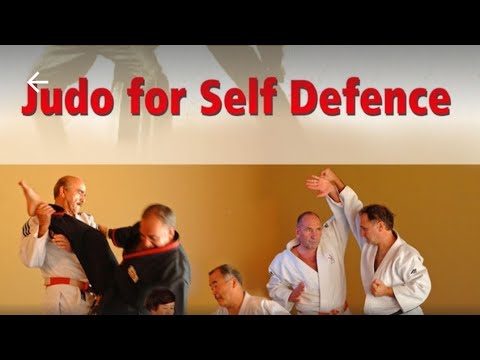
Judo's Practicality: Beyond the Olympic Mat for Self-Defense

The world of martial arts is often romanticized, filled with tales of ancient masters and esoteric techniques. However, beneath the surface of tradition lies a pragmatic core: the ability to protect oneself. Today, we delve into a production by Fighting Films, a documentary that promises to explore just that – the real-world application of Judo for self-defense. Is Judo, an art synonymous with Olympic glory, truly a viable tool when faced with genuine threat? This is not merely a review; it's an examination of purpose, technique, and the enduring spirit of the warrior.

Unveiling the Martial Philosophy: Judo's Core Tenets

Before dissecting the specific content of the Fighting Films production, it's crucial to understand the foundational principles of Judo. Founded by Jigoro Kano, Judo (meaning "the gentle way") was conceived not just as a sport but as a system for physical, intellectual, and moral development. Kano famously emphasized Seiryoku Zenyo (maximum efficiency, minimum effort) and Jita Kyoei (mutual welfare and benefit). While the latter might seem counterintuitive in a self-defense context, understanding it is key: Judo teaches control and de-escalation when possible, but its inherent principles of leverage and balance are devastatingly effective when force is unavoidable.

Many practitioners, especially those only exposed to the Olympic version of Judo, might question its effectiveness against a surprise attack or a larger, untrained assailant. The rules of competition, with their emphasis on throws and submissions within a controlled environment, can sometimes obscure the raw, unadulterated combat effectiveness Judo offers. This production, by focusing on self-defense, aims to bridge that gap.

"Victory is never permanent, for it is temporary. Defeat is never permanent, for it is temporary. However, the spirit of perseverance can be permanent." - Jigoro Kano

The Critical Lens: Analyzing Judo for Real-World Application

When we talk about self-defense, we're not talking about performing an ippon seoi nage (shoulder throw) with perfect form on a compliant partner. We're talking about surviving unpredictable situations. Does the Fighting Films production illustrate techniques that address:

  • Unexpected Attacks: How does Judo deal with punches or grabs from blind spots?
  • Multiple Assailants: While no art is a magic bullet against overwhelming odds, what Judo principles can help create space or opportunities?
  • Ground Fighting: Judo's groundwork (Ne-Waza) is extensive. How does it translate to escaping bad positions or controlling an opponent on the ground?
  • Against Larger Opponents: This is where Judo's core philosophy of using an attacker's weight and momentum truly shines.

The essence of self-defense lies in adaptability. A true martial artist doesn't rely on a single technique but on a fluid application of principles. Judo, with its emphasis on kuzushi (off-balancing), tsukuri (entry), and kake (completion), provides a robust framework for this adaptability. The kinetic energy generated in a successful throw is immense, capable of incapacitating an attacker without necessarily causing grievous harm – a crucial distinction in self-defense where legal ramifications are a serious consideration.

Beyond the Throw: Essential Judo Principles for Survival

While spectacular throws are the hallmark of Judo, its self-defense utility extends far beyond them. Consider these aspects:

  • Grips (Kumi Kata): Mastering grips is paramount. In self-defense, controlling your opponent's posture and balance starts with dominant hand control. A strong grip can dictate the entire engagement.
  • Footwork and Movement (Tai Sabaki): The ability to evade, pivot, and move efficiently is critical. Judo’s intricate footwork teaches you to control distance and angle, turning an opponent's attack into an opportunity for you.
  • Balance: Understanding your own balance and how to disrupt your opponent's is Judo's most fundamental lesson. Applied to self-defense, this means staying on your feet while making your attacker lose theirs.
  • Falling Safely (Ukemi): While seemingly defensive, the ability to fall safely allows you to attempt throws or escapes without injuring yourself, a vital skill when the ground becomes a battlefield.

The debate often arises: is sport Judo diluted? My take, honed over years of observing and practicing, is that the core principles remain. What changes is the *application*. A competitor seeks a win under specific rules. A self-defender seeks survival. The techniques might look similar, but the intent, the target, and the environmental awareness are vastly different. This Fighting Films production likely aims to highlight this distinction, showcasing how the foundational skills of Judo can be adapted when the mat disappears and the stakes are infinitely higher.

Veredicto del Sensei: ¿Merece la pena?

If this Fighting Films production successfully demonstrates the practical application of Judo principles in realistic self-defense scenarios, then it is absolutely worthwhile. It serves as a vital reminder that martial arts are not just about sport or performance; they are about capability. Judo offers a rich arsenal of techniques and, more importantly, a profound understanding of body mechanics that can be incredibly empowering for self-protection. However, the true test of any self-defense system lies not in theory, but in rigorous, realistic training. I will reserve my final judgment until I've seen the full scope of the production, but the potential for this to be a valuable resource is high.

Equipo Esencial para tu Entrenamiento

While Judo for self-defense emphasizes body mechanics over specialized gear, certain equipment can enhance your training and understanding. For dedicated Judo training, especially if you plan to engage in randori (sparring):

  • Judogi: A durable Judo uniform is essential. Look for double-weave or reinforced cotton gis that can withstand the rigors of grappling. Brands like Adidas, Mizuno, and Fuji offer excellent options. For those looking for high-quality martial arts uniforms, exploring options that emphasize durability is key.
  • Matting (Tatami): For any serious practice at home or in a dojo, proper matting is crucial for safety during throws and groundwork.
  • Training Partners: The most important "equipment" is a consistent training partner or, ideally, a qualified instructor.

For those interested in exploring related grappling arts or foundational strength, consider resources for Brazilian Jiu-Jitsu or general fitness equipment that can supplement your conditioning.

Guía de Entrenamiento: Principios de Judo para la Defensa Personal

While this production is a viewing experience, here's a foundational drill you can practice, focusing on movement and balance, crucial for self-defense Judo:

  1. Stance and Balance Check: Stand with feet shoulder-width apart, knees slightly bent, maintaining a stable base. Practice shifting your weight from foot to foot without losing balance. Imagine your opponent trying to push you off-kilter; feel how your body adjusts.
  2. Circular Footwork (Ashi Sabaki): Practice walking in small circles, both clockwise and counter-clockwise, always maintaining your base and keeping your opponent in front of you. This teaches evasion and maintaining position.
  3. Basic Kuzushi Practice: With a partner (or even a sturdy object like a pole), practice applying forward, backward, and sideways pressure to break their balance. Feel the moment their base weakens. This is the first step to executing a throw or gaining control.
  4. Grip Breaking Drills: Practice breaking various grips your imaginary opponent might apply. Focus on using leverage and body movement rather than brute strength.

Remember, consistency is key. Even 15 minutes a day dedicated to these fundamental movements will build a strong foundation for applying Judo principles in a self-defense context. For those looking for effective at-home workouts that build core strength and balance, Judo principles offer a fantastic, albeit demanding, approach.

Preguntas Frecuentes

What is the primary difference between competitive Judo and Judo for self-defense?

Competitive Judo focuses on scoring points within a regulated framework, emphasizing clean throws and submissions. Self-defense Judo prioritizes survival, adapting techniques for unexpected situations, ground control, and dealing with untrained aggression, often without the constraints of rules.

Can Judo techniques be used effectively against multiple attackers?

While Judo is not designed for multi-attacker scenarios, its principles of balance disruption, creating space through movement (Tai Sabaki), and controlling an opponent can provide opportunities to escape or neutralize one attacker, allowing you to disengage or prepare for the next. It's about creating advantages, not winning every engagement.

Is Judo suitable for smaller individuals defending themselves against larger attackers?

Absolutely. Judo's core philosophy of using an opponent's weight and momentum against them makes it exceptionally effective for smaller individuals. The emphasis on leverage and technique over brute strength is a cornerstone of its practical application.

How important is ground fighting (Ne-Waza) in Judo for self-defense?

Extremely important. Many self-defense situations can end up on the ground. Judo's groundwork teaches pinning, submission, and escape techniques that are vital for controlling an attacker or improving your position when unable to stand.

Does Judo training make you more confident?

Yes. The process of learning and mastering techniques, understanding your own physical capabilities, and experiencing controlled sparring builds immense confidence and self-assurance, which are powerful deterrents in themselves.

Para Profundizar en tu Camino


Reflexión del Sensei: Tu Próximo Paso

This Fighting Films production is more than just footage; it's a testament to Judo's enduring relevance. But viewing is only the first step. The true lesson lies in the dojo, in the sweat, in the controlled friction with a partner. Ask yourself: are you training with purpose? Are your techniques honed for the unexpected, or merely for applause? The true warrior doesn't seek the spotlight; they seek preparedness. The question is, are you truly prepared?

``` GEMINI_METADESC: Analyze Judo's self-defense practicality beyond the Olympics. Explore techniques, principles, and effectiveness against threats in this in-depth martial arts review.