Showing posts sorted by relevance for query biomechanics. Sort by date Show all posts

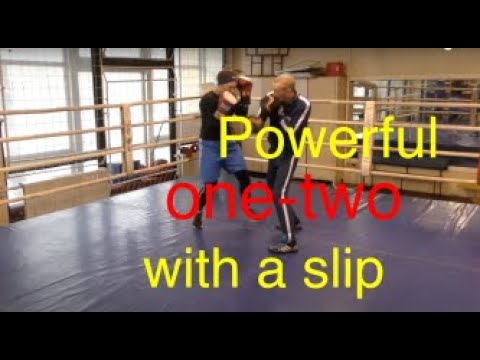
The Master's Punch: Deconstructing the Powerful 1-2 with a Slip

The Art of Evasion: More Than Just a Block

As a Sensei who has dedicated his life to the rigorous study and practice of Budo and the combat arts, I often observe practitioners focusing solely on the offensive aspect of combat. The fist, the kick, the takedown – these are the tools we wield. But what about the art of *not* being hit? The great masters understood that true mastery lies not just in delivering a devastating blow, but in possessing the skill to evade, to redirect, and to control the space between oneself and the adversary. Today, we delve into a fundamental combination that epitomizes this principle: the powerful 1-2 punch, seamlessly integrated with a defensive slip. This isn't just about throwing punches; it's about understanding the biomechanics, the timing, and the mind-set of a true warrior.

The 1-2: A Foundation of Striking

The "1-2" is the bedrock of striking, particularly in boxing and its many derivatives. It's a seemingly simple sequence:
  1. **The Jab (The "1"):** This is your lead hand punch. It's quick, straight, and primarily used for range-finding, setting up power shots, disrupting your opponent's rhythm, or scoring quick points. A good jab is crucial; it's the messenger that prepares the battlefield for its more potent companion.
  2. **The Cross (The "2"):** Thrown with your rear hand, the cross is your power punch. It travels in a straight line, originating from hip rotation and shoulder torque. The transition from the jab to the cross should be fluid, almost instantaneous, creating a powerful, connected strike.
In the heat of a combat, few sequences are as effective and aesthetically pleasing as a well-executed 1-2. However, its effectiveness is amplified exponentially when coupled with intelligent defense.

The Slip: The Dance of Evasion

Many beginners mistakenly believe that defense is solely about blocking or parrying. While these are vital, the slip is a more sophisticated form of evasion, utilizing subtle head movement to avoid incoming strikes.
"The supreme art of war is to subdue the enemy without fighting." - Sun Tzu, The Art of War
This ancient wisdom perfectly encapsulates the essence of defensive martial arts. The slip allows you to:
  • **Evade the strike:** By moving your head slightly off the line of attack, you cause the opponent's punch to miss its intended target.
  • **Create counter-punching opportunities:** As your opponent's punch sails past, they are often left slightly off-balance, opening them up for a devastating counter.
  • **Conserve energy:** Unlike blocking, which absorbs impact, or parrying, which requires muscular exertion, a well-timed slip is economical. It's a testament to timing and movement, not brute force.
The slip can be executed in two primary ways:
  • **Lateral Slip:** Moving your head to the side, typically in the direction of the opponent's rear hand or lead hand depending on the punch being thrown.
  • **Bob and Weave:** A combination of bending the knees and moving the head in a circular motion.

Integrating the 1-2 with the Slip: The Warrior's Strategy

Now, let's fuse these elements. The most common and effective integration is to slip *after* throwing the 1-2.
  1. Execute the Jab (1): Throw your lead hand punch.
  2. Transition to the Cross (2): As your jab retracts, immediately launch your rear hand cross.
  3. Slip the Counter: Crucially, as your cross travels forward, anticipate your opponent's likely response – often a hook or a straight counter. Immediately after releasing your cross, *slip* your head to the side, away from the anticipated incoming punch.
This sequence is more than just a combination; it's a tactical maneuver. You've just attacked, and in the same fluid motion, you've evaded the most probable counter-attack. This leaves you in a superior position to launch another offensive or transition to a defensive stance.

Biomechanics and Training: The Soviet Circuit Workout

The effectiveness of this technique relies heavily on understanding the biomechanics involved – the coordinated movement of the entire body to generate power and maintain balance. This is where specialized training comes into play. The discipline and rigorous conditioning of Soviet boxers are legendary. Their circuit workout sessions were designed to build unparalleled strength, speed, and stamina, essential for executing complex combinations like the 1-2 with a slip under duress. «Biomechanics of boxing», Alexey Frolov's online course - https://is.gd/OHfrvZ This program offers a rare glimpse into the methods that forged some of the most formidable fighters in history. Now available in English, this Soviet circuit workout session for boxers is a testament to practical, results-driven training. It's meticulously crafted to enhance your punching technique and develop superior body coordination – the very foundation upon which combinations like the 1-2 with a slip are built. The session comprises 9 rounds, each lasting 3 minutes, punctuated by essential warm-up, cardio, and stretching phases. This structured approach ensures that every aspect of a fighter's physical conditioning is addressed, preparing them not just for the gym, but for the unforgiving reality of combat. Follow the link to participate in this master class and elevate your understanding of striking and defense: https://bit.ly/3sxAzJw

The Mental Game: Mushin and the Slip

The ability to slip effectively under fire requires more than just physical conditioning; it demands a heightened mental state. This is where the concept of *Mushin* (無心), often translated as "no mind" or "mind without mind," becomes paramount.
"When you are not thinking, you are not feeling. You are not afraid. You are not angry. You are not afraid of dying. You are not afraid of anything." - Bruce Lee
Achieving Mushin means acting instinctively, without conscious thought or hesitation. In the context of the 1-2 with a slip, this means your body reacts to the opponent's movement *before* your conscious mind can process fear or doubt. This requires countless hours of training, drilling the combination and the defensive movement until they become muscle memory, a part of your very being. It’s about moving from a state of conscious control to one of subconscious mastery, where technique flows as naturally as breathing.

Veredicto del Sensei: ¿Merece la pena?

The 1-2 combination with a slip is not merely a flashy boxing technique; it is a fundamental principle of effective striking and evasion applicable across numerous martial arts, from MMA to Karate and even Kickboxing. Its power lies in its simplicity, its versatility, and its inherent defensive advantage. This sequence, when honed through dedicated practice and an understanding of biomechanics – like that offered by the Soviet circuit workout – transforms a basic offensive maneuver into a strategic masterstroke. It allows a fighter to attack and immediately neutralize the most common retaliatory threats, creating openings for further offense or a transition to a dominant defensive position. My verdict? This combination, and the training methodologies that refine it, are essential for any serious practitioner. It’s a cornerstone of effective combat, a true testament to the blend of offense and defense that defines mastery. It’s not just about throwing punches; it’s about creating opportunities and minimizing risk, the hallmarks of a true warrior. Calificación: Cinturón Negro en Fundamentos Ofensivos y Defensivos.

Equipo Esencial para tu Entrenamiento

While the 1-2 with a slip is largely about body mechanics and timing, proper equipment can significantly enhance your training and safety.
  • Boxing Gloves: Essential for protecting your hands and your training partner. For general training and sparring, 14-16 oz gloves are recommended.
  • Hand Wraps: Always wear hand wraps under your gloves to provide crucial wrist and knuckle support, preventing injuries.
  • Heavy Bag: For developing power and practicing combinations.
  • Speed Bag: Excellent for improving hand speed, rhythm, and shoulder endurance.
  • Jump Rope: A classic tool for improving footwork, coordination, and cardiovascular conditioning – vital for the mobility required for slips and weaves.
  • Headgear (for sparring): When engaging in full-contact sparring, headgear is crucial for mitigating the risk of concussions and facial injuries.
For those looking to invest in quality gear, consider brands known for their durability and support, especially when it comes to Karate gis or MMA fight shorts. Investing in good Judo equipment, for instance, can make all the difference in your grappling sessions.

Guía de Entrenamiento: Practicando el 1-2 con Slip

Let's break down how to drill this vital combination safely and effectively.
  1. Warm-up: Begin with light cardio, dynamic stretching, and shadow boxing to prepare your body.
  2. Shadow Boxing (Focus on Technique):
    • Practice the jab (1) repeatedly, focusing on snapping it out and retracting it quickly.
    • Practice the cross (2), ensuring full hip rotation and shoulder engagement.
    • Combine the 1-2, focusing on a smooth, unbroken transition.
    • Introduce the slip: After throwing the 1-2, practice slipping your head to the left and right. Imagine an incoming punch and react by moving your head offline.
    • Integrate: Now, combine all three. Throw the 1-2 and immediately slip to the side as you retract your cross. Repeat this sequence on both sides.
  3. Heavy Bag Drills:
    • Throw 1-2s, then slip. Work on landing the punches and immediately evading.
    • Vary the timing: Sometimes slip immediately after the cross, other times, let a brief pause create a more realistic scenario.
    • Move after the slip: Don't just stand still. After slipping, step to the side or pivot, maintaining offensive or defensive advantage.
  4. Partner Drills (with controlled resistance):
    • Your partner throws slow, predictable punches (e.g., a straight right). You practice the 1-2 and slip their punch.
    • Gradually increase the speed and complexity of your partner's attacks.
    • Focus on defense: Have your partner jab, then you slip. Then they throw a cross, and you slip.
    • Combine: Partner throws a jab, you block or parry. As they follow with a cross, you slip. Then, launch your own 1-2.
  5. Cool-down: Static stretching and deep breathing to aid recovery.
Remember, consistency is key. Short, frequent practice sessions are more effective than infrequent marathon training. The path to mastery is paved with persistent repetition.

Preguntas Frecuentes

¿Qué arte marcial utiliza más el 1-2 con slip?

Aunque es un pilar del boxeo moderno, el 1-2 con slip es fundamental en muchas disciplinas de combate de pie, incluyendo el kickboxing, el Muay Thai y el MMA. Los principios de la biomecánica y la evasión son universales.

¿Cómo puedo mejorar mi capacidad para anticipar un golpe y ejecutar el slip?

La anticipación se desarrolla con la experiencia y el estudio. Observa a tus oponentes, estudia sus patrones de movimiento, y entrena la reacción instintiva a través de ejercicios específicos. El entrenamiento con un buen coach y una gran cantidad de sparring controlado son cruciales.

¿Es el slip una técnica segura para principiantes?

Como cualquier técnica, requiere práctica. Un slip mal ejecutado puede dejarte expuesto. Es vital aprender la técnica bajo la supervisión de un instructor cualificado que pueda corregir errores y asegurar que se practica de forma segura.

¿Puede el slip ser utilizado contra patadas?

Sí, aunque el movimiento puede variar. Un "shell" o "parada de tortuga" (agacharse y proteger la cabeza) puede ser efectivo contra patadas bajas, y un movimiento lateral puede ayudar a evadir patadas altas. La evasión es un principio, no una técnica única.

¿Qué tan importante es la rotación de cadera en el 1-2 con slip?

Extremadamente importante. La rotación de cadera es la fuente principal de poder para el "2" (cross). Además, una cadera bien rotada te ayuda a mantener el equilibrio y a moverte eficientemente para ejecutar el slip después del golpe.

Para Profundizar en tu Camino

  • BUDO: Explorando los principios filosóficos detrás de las artes marciales.
  • Entrenamiento de MMA: Cómo los atletas modernos combinan disciplinas para una eficacia total.
  • Defensa Personal: Aplicando principios marciales a situaciones de la vida real.
Reflexión del Sensei: Tu Próximo Paso

Has aprendido sobre la potencia del 1-2 y la sutileza del slip. Ahora, la pregunta es: ¿Te conformarás con conocer la técnica, o te levantarás y la pondrás en práctica? ¿Cuántas veces has lanzado un golpe y te has expuesto innecesariamente? Este conocimiento, sin la acción que lo valida, es solo información vacía. La próxima vez que entrenes, no pienses solo en lanzar el puño. Piensa en cómo vas a *no* ser golpeado mientras lo haces. ``` GEMINI_METADESC: Master the boxing 1-2 punch with a defensive slip. Learn biomechanics, training drills, and the philosophy behind this essential combat technique.

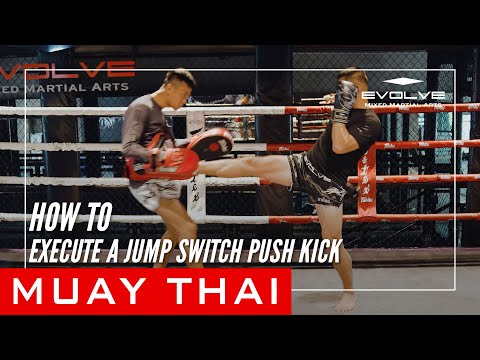
Muay Thai's Apex: Mastering the Jump Switch Push Kick

Hello and welcome, warriors. Today, we delve into a technique that embodies the explosive power and deceptive grace of Muay Thai: the Jump Switch Push Kick. This isn't merely a strike; it's a statement of dominance, a tool to control distance, break an opponent's rhythm, and set up devastating follow-ups. But how many of you truly understand its nuances, its tactical application, or its place within the broader spectrum of striking arts? Many see it as a flashy move, an unnecessary flourish. I am here to tell you that in the hands of a master, it is a scalpel, precise and lethal. Let us dissect it.

We are witnessing a demonstration from the hallowed halls of Evolve MMA, featuring the peerless Nong-O Gaiyanghadao and the formidable Panpayak Jitmuangnon. These aren't just fighters; they are living embodiments of Muay Thai's highest ideals. Their ability to execute the Jump Switch Push Kick is not a matter of brute force, but of refined technique, perfect timing, and a profound understanding of body mechanics—principles that echo across countless disciplines, from the sweeping arcs of a Karate kata to the grounded stability of Judo. This mastery can be yours, through dedicated study. Evolve University offers a Muay Thai Fundamentals online master course that delves deep into these unique moves, providing a pathway to understanding the art at its core. You can explore this knowledge here: Evolve University Muay Thai Fundamentals.

The Essence of the Jump Switch Push Kick

At its heart, the Jump Switch Push Kick (often called a Teep Jad in Muay Thai when executed with a switch stance) is a dynamic variation of the fundamental push kick. The standard push kick is a powerful tool for controlling distance, checking an opponent's advance, and creating openings. By incorporating a jump and a stance switch, we amplify its offensive potential and its psychological impact. It's a move that says, "I am here, I am in control, and you will not advance unopposed." It requires a level of agility and coordination that separates the novice from the seasoned warrior.

Why the Jump Switch Push Kick is a Game Changer

In the brutal ballet of combat, rhythm is paramount. Disrupting an opponent's rhythm is as crucial as landing a solid blow. The Jump Switch Push Kick excels at this. Imagine an opponent charging, their offensive momentum building. A conventional push kick might halt them. But a *jump* switch push kick? It's an unexpected explosion. It forces the opponent to re-evaluate instantly, their attack stalling, their footing compromised. It’s a spectacular way to bridge the gap between ranges, to pivot from defense to offense in a single, breathtaking motion. It’s also a superb way to change your own offensive angles, making you a more unpredictable and dangerous adversary. This principle of disrupting the opponent’s flow is universal; consider how a well-timed throw in Judo can shatter an attacker's balance and initiative.

"The ultimate aim of martial arts is not victory or defeat, but the perfection of the character of its adherents." - Gichin Funakoshi

While this quote speaks to the philosophical depth of martial arts, it’s also true that the *application* of techniques, like the Jump Switch Push Kick, demands perfection not just of movement, but of mind and spirit. It requires discipline and focus cultivated over countless hours of practice. This is where the true martial art lies—not just in the strike, but in the training that makes it possible.

The Biomechanics: Unleashing Explosive Power

The power of the Jump Switch Push Kick stems from a kinetic chain that flows from the ground up. It's not just about extending the leg. It involves:

  • Core Engagement: A powerful twist and brace of the core muscles provides the rotational force needed for the jump and the stability for the kick.
  • Hip Hinge and Drive: The hips explosively extend, driving the knee forward and then snapping the leg into the push. This is similar to the hip drive used in a powerful Karate punch or a Muay Thai roundhouse.
  • Leg Extension and Foot Placement: The leg extends with a stiff, piston-like motion, landing with the ball of the foot or heel aimed at the opponent’s center mass or legs. The switch in stance means you’re landing on a different foot, ready for immediate follow-up.
  • Arm Counterbalance: The arms are used to help generate momentum for the jump and maintain balance, often sweeping downwards or outwards as the kick extends.

Mastering these mechanics turns a simple kick into a force multiplier. It’s about generating maximum velocity and impact with minimal wasted effort—a core principle in BUDO.

Training Guide: Executing the Jump Switch Push Kick

Let us break down the execution. This is not something to be attempted at full power on your first try. Focus on precision and control. Remember, quality of movement over quantity.

  1. Stance: Begin in a standard Muay Thai fighting stance (e.g., orthodox, lead leg forward).
  2. The Setup: Slightly bend your knees. You can feint with your hands or body to draw your opponent's reaction.
  3. The Switch: The crucial first step is the switch of your feet. This is a quick, explosive hop where your lead foot moves to where your rear foot was, and your rear foot moves forward to where your lead foot was. This happens almost simultaneously as you initiate the upward motion.
  4. The Jump: As your feet switch, drive upwards. This jump is not for height, but for creating a moment of airborne separation and power generation. Think of it as a controlled explosion upwards.
  5. The Kick: While in the air, bring your new lead knee (which was your rear leg before the switch) forward explosively. Extend your leg with a stiff push, aiming to strike with the ball of your foot or your heel. Keep your hips engaged for maximum power. Your arms should counterbalance your movement.
  6. The Landing: Land with your feet switched from your starting position, ready to defend or attack. Your body should be stable, your weight distributed correctly. Your new lead leg is now forward, primed for further action.
  7. Follow-up: Immediately assess the situation. You might follow with punches, another kick, or clinch. The Jump Switch Push Kick often leaves an opponent momentarily stunned or off-balance, creating a perfect opportunity.

Practice this slowly, focusing on the fluidity of the switch and the power of the kick. Gradually increase speed and power as your coordination improves. Consider incorporating plyometrics for explosive power, similar to drills used in MMA conditioning.

Tactical Applications on the Battlefield (or Ring)

The Jump Switch Push Kick is far more than a flashy technique. Its strategic value is immense:

  • Distance Control: Its primary function. It can keep heavy hitters at bay, preventing them from closing the distance to land powerful strikes.
  • Rhythm Disruption: As mentioned, it shatters an opponent’s offensive rhythm. It’s like dropping a pebble into a still pond; the ripples of disorientation can be profound.
  • Opening Combinations: After a successful push kick, an opponent might be off-balance or their guard lowered. This is your cue to unleash a flurry of punches, elbows, or knees. Think of a Kickboxing bout where a perfectly timed teep can set up a devastating hook.
  • Changing Angles: The switch stance allows you to immediately change your angle of attack, making you harder to predict. You can follow up with a cross, an uppercut, or even transition to a low kick on the opposite side.
  • Psychological Warfare: The sheer unexpectedness and power of this kick can demoralize an opponent. It instills doubt and forces them to play your game, not theirs.

Common Mistakes to Avoid

Even with skilled practitioners, errors can creep in. Be mindful of these pitfalls:

  • Lack of Core Engagement: A weak core leads to a weak kick and poor balance. You must brace and twist effectively.
  • Jumping Too High or Too Low: The jump is for momentum, not for acrobatics. Too high, and you lose power on the kick and stability on the landing. Too low, and you lose the explosive element.
  • Telegraphing the Move: A wild wind-up or an obvious body shift will alert your opponent. The switch and jump should be as fluid and unexpected as possible.
  • Poor Footwork on the Switch: If the switch is clumsy, the entire technique falls apart. It must be a seamless, quick transition.
  • Not Committing to the Kick: Hesitation kills power. Once you initiate the jump, commit fully to extending the leg with force.
  • Forgetting the Landing: The kick is only half the battle. Landing stable and ready for what's next is paramount. A wobbly landing can be exploited.

These are the kinds of details that separate mere practitioners from true martial artists. The discipline of Karate, with its emphasis on precise form and efficiency, teaches us the value of such meticulous attention to detail.

Sensei's Verdict: More Than Just a Kick?

Is the Jump Switch Push Kick merely a flashy addition to Muay Thai's arsenal, or is it a fundamental tool for the discerning warrior? My verdict is unequivocal: it is a sophisticated technique that, when mastered, elevates a fighter's tactical prowess significantly. It demands discipline, coordination, and a deep understanding of biomechanics and timing—qualities that define excellence in any martial arts discipline. It's not just about throwing a kick; it's about controlling the fight. It’s a testament to how striking arts can evolve and innovate while retaining their core principles of power and efficiency.

Equipment Essentials for Your Training

To truly hone techniques like the Jump Switch Push Kick, proper equipment is vital. While the kick itself requires no equipment, your training regimen does:

  • Durable Training Mat: Essential for shock absorption during jumps and landings, protecting your joints. Look for high-density foam mats suitable for combat sports.
  • Muay Thai Shorts: Lightweight and designed for maximum range of motion, allowing for fluid hip movement and high kicks.
  • Hand Wraps and Gloves: For sparring or heavy bag work. Even when focusing on kicks, hand protection is crucial for overall conditioning and defense. Consider 14-16oz gloves for bag work and sparring.
  • Shin Guards: For sparring and pad work, protecting your shins from impact and allowing you to practice leg kicks safely.
  • Jump Rope: For conditioning, agility, and cardiovascular endurance. A weighted jump rope can add an extra challenge.
  • Resistance Bands: Excellent for core strengthening and explosive power development, mimicking the hip drive needed for the kick.

Investing in quality Karate or Muay Thai gear is an investment in your longevity and progress in the martial arts.

Frequently Asked Questions

  • Can I use the Jump Switch Push Kick in a Karate or Taekwondo context? While the fundamental push kick exists in these arts, the 'jump switch' element is more characteristic of Muay Thai. However, the principles of coordination and explosive power are universal. Adapting it might require significant stylistic adjustments.
  • Is this move effective against larger opponents? Absolutely. Its power lies in disruption and control rather than brute force. By catching a larger opponent off-guard and off-balance, you can neutralize their size advantage.
  • How long does it take to master this technique? Mastery is a lifelong pursuit. However, with consistent, focused practice (2-3 times a week), a competent practitioner can learn to execute it effectively within a few months. True mastery, however, implies seamless integration into combat scenarios.
  • What is the difference between a Jump Push Kick and a Jump Switch Push Kick? A Jump Push Kick is performed from your natural stance, jumping and kicking with your lead leg. A Jump Switch Push Kick involves switching your feet mid-air *before* extending the kick with your new lead leg, fundamentally changing your position and angle.

Further Study in Your Journey

The quest for martial knowledge is unending. To deepen your understanding, I urge you to explore:

  • Muay Thai Fundamentals: Dive deeper into the art of eight limbs.
  • Kickboxing Techniques: Explore the broader world of stand-up striking.
  • MMA Conditioning: Learn how to build the explosive power needed for advanced techniques.
  • The Philosophy of BUDO: Understand the underlying principles that connect all martial paths.

Reflexión del Sensei: Tu Próximo Paso

Now, I ask you: Do you see the Jump Switch Push Kick as a mere spectacle, or as a tactical weapon? Have you witnessed its power firsthand, or perhaps tried to implement it yourself? Reflect on the principles of explosive power, deception, and rhythmic disruption. How can these abstract concepts be translated into the specific techniques and strategies you employ in your own training? Share your insights, your struggles, and your triumphs in the comments below. Let us forge understanding through shared experience and vigorous debate. Do not be silent; your voice adds weight to the lessons learned. Do you believe this technique is overrated, or the pinnacle of Muay Thai’s offensive capability? Prove your point.

``` GEMINI_METADESC: Master the Muay Thai Jump Switch Push Kick! Learn the biomechanics, tactics, and training from world champions Nong-O & Panpayak. Elevate your striking game!

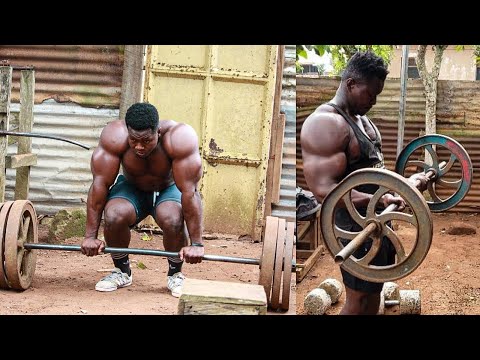
The Illusion of "Poor African/Chinese Physique": Mastering At-Home Training

The very notion of a "poor physique" tied to any continent is a fallacy, a dangerous generalization that martial artists and fitness enthusiasts alike must dismantle. What truly defines our physical prowess isn't our geographical origin or economic status, but our discipline, our understanding of biomechanics, and the consistent application of effort. Today, we delve into what it means to train at home *correctly*, transcending superficial labels and unlocking genuine physical development. This isn't about chasing trends or mimicking the aesthetics of fleeting online fame. It's about building a foundation rooted in functional strength, resilience, and the enduring spirit of the martial path. Whether you're a seasoned practitioner or just beginning your journey, the principles of effective home training remain constant. We will explore the essential equipment, the philosophical underpinnings, and the practical application that separates true progress from mere activity.

Table of Contents

The Strategic Advantage of At-Home Training

Many mistakenly believe that optimal training requires expensive gyms and specialized facilities. This perspective is flawed. The true dojo is not defined by its walls, but by the intent and dedication of the practitioner. At-home training, when approached with the right mindset, offers unparalleled benefits: **convenience, customization, and cost-effectiveness**. It removes the barriers of time and travel, allowing for more frequent and consistent practice. This consistency is the bedrock of all martial arts progress. Furthermore, training at home fosters a deeper connection with your own body and mind. Without the distractions of a crowded gym, you can focus on the nuances of movement, the subtle shifts in balance, and the internal generation of power (Ki). This intimate understanding is crucial for developing true martial skill.

Beyond "Poor Physique": The Martial Artist's Perspective

The very premise of categorizing physiques based on ethnicity or economic status is a superficial distraction. In the realm of martial arts, we are taught to look beyond appearances. A true master can emerge from any background. What matters is the **internal fortitude, the unwavering spirit (Seishin)**, and the **dedication to the path (Michi)**. Instead of focusing on perceived limitations, a martial artist seeks to *transform* their current state. This is the essence of the journey: using whatever resources are available to build a stronger, more capable self. The "poor African or Chinese physique" is a myth perpetuated by those who fail to understand the transformative power of consistent, intelligent training and the universal principles of biomechanics and conditioning. The true challenge lies not in one's origin, but in one's own commitment to overcoming perceived limitations.
"The martial way is nothing else but the application of all efforts for the perfection of self." - Mas Oyama

The Core Principles of Budo At-Home

To train effectively at home, we must first embrace the core tenets of Budo (the martial way):
  • Seiryoku Zenyo (精力善用) - Maximum Efficiency, Minimum Effort: This principle, central to Judo, emphasizes using an opponent's (or gravity's) force to your advantage. Applied to home training, it means performing exercises with proper form and technique to maximize muscle activation and minimize wasted energy.
  • Jita Kyoei (自他共栄) - Mutual Welfare and Benefit: While training alone at home, this translates to self-improvement for the benefit of others. A stronger, more disciplined you is better equipped to help your family, community, and society.
  • Mushin (無心) - No Mind: Cultivating a state of mental clarity and spontaneity. In training, this means reacting instinctively to movements, rather than overthinking.
  • Zanshin (残心) - Lingering Spirit/Awareness: Maintaining awareness even after an action is completed. In home workouts, this means staying focused throughout the entire session and being mindful of your body's recovery.

Essential Equipment for Your Training

While bodyweight exercises form the foundation, a few strategic pieces of equipment can significantly enhance your training capabilities and accelerate progress.
  • Pull-up Bar (Xà đơn gắn cửa treo tường): Absolutely essential for developing upper body pulling strength, crucial for many martial arts techniques.
  • Dumbbells (Tạ Đơn): Versatile for a wide range of exercises, allowing for progressive overload and targeted muscle development. Look for adjustable ones if space is a concern.
  • Push-up Handles (Dụng cụ hít đất đa năng): These reduce wrist strain and allow for a greater range of motion during push-ups, deepening the stretch and increasing the challenge.
  • Exercise Mat (Thảm Tập): Provides cushioning for floor exercises, protecting your joints and providing a stable surface.
  • Resistance Bands: Inexpensive and highly versatile, offering variable resistance for a full-body workout and excellent for dynamic warm-ups and mobility drills.
Investing in quality, durable equipment is a wise decision for long-term martial arts and fitness development. It's not about accumulating gear, but about acquiring tools that facilitate meaningful progress.

Training Guide: Building a Functional Body at Home

This routine is designed to be adaptable. Adjust repetitions and sets based on your current fitness level. Focus on **controlled movements and proper form** above all else.
  1. Warm-up (5-10 minutes):
    • Light Cardio: Jumping jacks, high knees, butt kicks (2 minutes).
    • Dynamic Stretching: Arm circles, leg swings, torso twists, hip circles (3 minutes).
    • Joint Rotations: Wrists, elbows, shoulders, neck, hips, knees, ankles (2 minutes).
  2. Workout Circuit (Perform 3-4 rounds with 60-90 seconds rest between rounds):
    • Bodyweight Squats: 15-20 repetitions. Focus on depth, keeping your chest up and back straight.
    • Push-ups: 10-15 repetitions (modify on knees if needed). Aim for a full range of motion, touching your chest to the floor.
    • Pull-ups (or assisted pull-ups/negatives): As many repetitions as possible (AMRAP). If you cannot do pull-ups yet, focus on negatives (jumping to the top and slowly lowering yourself down) or use resistance bands for assistance.
    • Lunges (Alternating legs): 10-12 repetitions per leg. Maintain balance and a stable core.
    • Plank: Hold for 30-60 seconds. Keep your body in a straight line from head to heels, engaging your core.
    • Dumbbell Rows (if available): 10-12 repetitions per arm. Hinge at the hips, maintaining a flat back, and pull the dumbbell towards your chest.
  3. Cool-down (5-10 minutes):
    • Static Stretching: Hold each stretch for 20-30 seconds. Focus on major muscle groups worked (quads, hamstrings, chest, back, shoulders).
    • Deep Breathing: Focus on diaphragmatic breathing to aid recovery.
This is a foundational circuit. Remember, consistency is key. Aim to perform this routine 3-4 times per week, allowing for rest days in between.

Variations and Progression for Long-Term Growth

To prevent plateaus and continue challenging your body, incorporate variations and progressions:
  • Increase Repetitions/Sets: Gradually add more reps to each exercise or add another round to your circuit.
  • Decrease Rest Times: Shorten the rest periods between exercises and rounds to increase intensity.
  • Tempo Training: Slow down the eccentric (lowering) phase of movements (e.g., 3-5 seconds to lower during a squat or push-up).
  • Explosive Movements: Incorporate plyometric variations like jump squats, clap push-ups, or jump pull-ups for power development.
  • Add Weight: If bodyweight becomes too easy, use dumbbells, resistance bands, or even household items to add resistance.
  • Change Exercise Variations: Move from standard push-ups to diamond push-ups, incline push-ups, or decline push-ups. For squats, try Bulgarian split squats or pistol squat progressions.
The goal is to constantly seek new stimuli for your body and mind. This mirrors the martial artist's continuous pursuit of improvement, learning new techniques and refining existing ones.

Integrating Martial Philosophy into Your Routine

Training at home is not merely a physical exercise; it's an opportunity to cultivate mental discipline and philosophical understanding.
"The greatest victory is the victory over oneself." - Unknown
Approach each workout with the same seriousness and intention as you would a session in a formal dojo.
  • Mindfulness: Be fully present during each repetition. Feel the muscles working, focus on your breath, and let go of external distractions.
  • Grit and Perseverance: When an exercise feels difficult, push through. This mental toughness developed during training will translate to all areas of your life.
  • Respect for Your Body: Listen to your body. Understand the difference between pushing your limits and risking injury. Proper recovery is as important as the training itself.
  • Continuous Learning: Always seek to improve your form, understand the biomechanics behind each movement, and explore new training methods.
This holistic approach transforms physical training into a path of self-mastery, aligning with the deeper principles of Budo.

Veredicto del Sensei: Mastering Your Environment

The concept of a "physique" dictated by geography is a shallow analysis, easily refuted by the principles of dedicated training. True strength and conditioning are cultivated through discipline, intelligence, and consistent effort, regardless of one's surroundings. At-home training, when executed with the spirit of a martial artist, is not a compromise; it is a powerful, adaptable, and accessible path to physical and mental excellence. **Cinturón Negro en Adaptabilidad y Disciplina.**

Preguntas Frecuentes

  • Q: How often should I train at home?
    A: Aim for 3-5 sessions per week, allowing for adequate rest and recovery between sessions. Listen to your body.
  • Q: What if I have very limited space?
    A: Focus on bodyweight exercises that require minimal space. Resistance bands and a jump rope are also excellent for small spaces.
  • Q: How do I ensure I'm performing exercises correctly without a trainer?
    A: Watch reputable online tutorials, record yourself to check form, and start with simpler variations before progressing. Prioritize slow, controlled movements.
  • Q: Can I really build muscle and strength with just bodyweight and minimal equipment?
    A: Absolutely. Progressive overload through variations, increased reps/sets, and tempo training can build significant muscle and strength.

Para Profundizar en tu Camino

GEMINI_METADESC: Master at-home martial arts training, debunking 'poor physique' myths. Learn discipline, essential gear, and effective routines for functional strength & self-mastery.

The Most Terrifying Spinning Knockouts in MMA: A Martial Arts Perspective

Intention: To analyze the phenomenon of spinning knockouts in MMA from a martial arts standpoint, discussing technique, impact, and the underlying principles, while also engaging MMA fans with exciting content and subtle commercial integration.

Introduction: The Art of the Spin

MMA fans, prepare yourselves. Today, we delve into a spectacle that ignures the conventional and embraces the extraordinary: the spinning knockout. We’re not just talking about punches that land; we're discussing strikes that defy physics, where a fighter's entire body becomes a whirling dervish of destruction. These aren't merely violent endings; they are vivid displays of athletic prowess, often rooted in ancient martial principles, tragically twisted into instruments of rapid defeat.

Many casual observers see only the spectacular KO. But as practitioners and students of the martial arts, we must look deeper. What biomechanics are at play? What martial traditions, however diluted, inform these devastating maneuvers? And, crucially, what does this raw display of power tell us about the evolution of combat sports? We will dissect the terrifying beauty of these spinning knockouts, drawing parallels between the cage and the dojo, and questioning the true essence of martial skill when confronted with such overwhelming force.

Analysis of Spinning Techniques in MMA

The spinning strike in MMA is a high-risk, high-reward maneuver. It’s a testament to a fighter’s conditioning, spatial awareness, and, often, their background in arts that emphasize rotational power. Think of the spinning back kick, the spinning elbow, or the devastating spinning back fist. These techniques leverage the rotational momentum of the entire body, transferring it into a single, focused point of impact.

From a physics perspective, the power generated is immense. The torque created by pivoting on the lead foot (or by a full body rotation for kicks) multiplies the force applied. However, this is where the martial artist’s mind must engage. A poorly executed spin leaves a fighter vulnerable, off-balance, and wide open for a counter-attack. It requires impeccable timing, immense core strength, and a deep understanding of distance and opponent positioning.

Many of these techniques find their roots in traditional martial arts. The devastating hook kicks and roundhouse kicks, when delivered with a full body turn, are ancient weapons. Karate, Taekwondo, and even some Kung Fu styles have long utilized rotational power. MMA, in its relentless pursuit of effectiveness, has taken these techniques and adapted them for the chaotic, multi-disciplinary environment of the cage. The danger isn't just in landing the strike, but in the mastery required to do so without self-destructing.

Biomechanics of the Spin

  • Momentum Transfer: The core principle is converting linear motion into angular momentum, which is then redirected back into linear force upon impact.
  • Core Engagement: A strong, flexible core is paramount for generating rotational power and maintaining balance.
  • Hip Rotation: The hips are the engine of the spin. Unlocking and controlling hip rotation is key to power and efficiency.
  • Footwork: Pivoting on the ball of the foot or the heel allows for a controlled rotation, preventing injury and maximizing force.
  • Targeting: Despite the chaotic nature of the spin, precise targeting is crucial for a knockout blow.

It's this blend of raw athleticism and refined technique that makes watching a perfectly timed spinning strike so captivating. It’s a dance of destruction, a moment where tradition meets the brutal reality of modern combat.

"The spirit of the warrior is not about being unafraid, but about facing fear and acting despite it. The spin is a calculated risk, a moment where fear must be overcome by precise action."

The Philosophy of Impact: Beyond the KO

While the spinning knockout is often the highlight reel material, as students of the martial arts, we must consider the deeper implications. What does it truly mean to end a fight with such sudden finality? Is it the ultimate expression of skill, or a brutal, almost accidental, consequence of specialized training?

In traditional Budo, the concept of "Mushin" (no-mind) is paramount. It's a state of effortless action, where technique flows instinctively without conscious thought. A spinning knockout, when executed from this state, can be a terrifying demonstration of martial purity. However, when it’s a desperate, flailing attempt, it reveals a lack of fundamental control and a reliance on brute force over cultivated skill.

The question we must ask is: does the pursuit of such flashy, fight-ending techniques detract from the core principles of martial arts, such as self-discipline, respect, and the development of character? The answer, as always, lies in the intention and the context. A spinning strike used in self-defense to immediately neutralize a threat is one thing. A fighter who trains solely to land spectacular KO’s, seeking fame over genuine mastery, treads a more dangerous philosophical path.

Consider the principle of "Sen no Sen" (initiating before the opponent initiates). A well-timed spinning counter-attack can embody this, catching an opponent completely off guard and disrupting their offensive flow. But the line between brilliant preemptive strike and reckless abandon is razor-thin.

Case Studies: Warriors Who Mastered the Spin

The UFC and other MMA promotions have been graced by fighters who have made the spinning strike a signature weapon. These individuals didn’t just land a lucky shot; they integrated these dynamic techniques into their arsenal through rigorous training and a deep understanding of combat.

  • Lyoto Machida: The "Dragon" famously incorporated karate principles, including devastating spinning kicks and counter-attacks, into his elusive fighting style. His ability to remain poised and execute these techniques with precision was legendary.
  • Stephen Thompson: A former world-class kickboxer, "Wonderboy" is a master of creative striking. His use of spinning techniques, often set up with deceptive footwork, has led to spectacular finishes.
  • Edson Barboza: Known for his Muay Thai background and incredible kicking power, Barboza has delivered some of the most brutal spinning kicks seen in the octagon, including vicious spinning back kicks and devastating knees.
  • Amanda Nunes: The greatest female fighter of all time, Nunes possesses the power and technical acumen to utilize spinning attacks effectively, often catching opponents off guard with her power and speed.

These fighters exemplify the dedication required. They didn't simply stumble upon these techniques; they honed them through countless hours of practice, often drawing from diverse martial backgrounds. The ability to generate that much power while maintaining balance and accuracy is a testament to years of disciplined training. It’s this dedication that separates a mere highlight reel from true martial artistry.

Training for Precision: Honing the Spinning Strike

For those aspiring to incorporate such dynamic techniques into their repertoire, the path is arduous but rewarding. It begins with a solid foundation in the basics of striking and a deep understanding of body mechanics. Here's a simplified guide to developing the spinning strike:

  1. Build a Strong Base: Focus on core strength, leg power, and flexibility. Exercises like squats, deadlifts, plyometrics, and extensive stretching are non-negotiable.
  2. Master Basic Rotations: Practice pivoting on your feet and rotating your hips independently. This is the foundation for all spinning techniques.
  3. Shadow Boxing with Focus: Begin with slow, controlled spinning motions without strikes. Focus on balance and smooth transitions. Gradually increase speed.
  4. Introduce Strikes Gradually: Start with spinning back fists, then move to spinning elbows and kicks. Ensure you can execute them safely before adding power.
  5. Use Training Partners (Safely): With a trusted training partner and appropriate protective gear, drill these techniques. Start with light contact and focus on accuracy and timing.
  6. Film Yourself: Analyzing your own technique is crucial. Identify flaws in your balance, rotation, or power generation.
  7. Integrate into Drills: Practice spinning strikes as counters to specific attacks or as part of combinations. This moves them from a novelty to a functional tool.

Remember, the goal is not just to spin and hit hard, but to do so with control and purpose. A spinning strike that misses its mark can leave you vulnerable. Therefore, precision and balance must always precede power.

Veredict of the Sensei: Raw Power or Refined Skill?

These spinning knockouts are, undeniably, some of the most captivating moments in MMA. They showcase incredible athleticism and, at times, the devastating effectiveness of certain martial techniques. However, as a critique from the perspective of a lifelong martial artist, I must offer a nuanced view.

Cinturón Negro en Espectáculo, Cinta Negra en Fundamentos. The spectacle of a fighter spinning through the air to deliver a knockout blow is breathtaking. It garnishes headlines and fuels fan passion. This earns it a high mark in terms of entertainment value and the sheer athletic achievement required. However, the true martial artist understands that efficiency, control, and purposeful application are the hallmarks of mastery. When these spinning techniques are executed with the fluidity, precision, and minimal wasted motion characteristic of deep Budo training, they are a testament to refined skill.

But too often, what we see in MMA is a fighter relying on the sheer velocity and surprise of the spin, rather than a deeply ingrained understanding of its application. The potential for self-inflicted damage, the wide openings created for counters, and the risk of an uncontrolled fall all indicate that these are not techniques for the novice or the undisciplined. They are advanced maneuvers that, when performed flawlessly, are indeed a pinnacle of martial expression. When performed poorly, they are simply dangerous recklessness.

Therefore, while the Spinning KO is a thrilling element of MMA, its true martial merit is determined by the discipline and understanding behind it. It can be both a spectacular display of honed skill and a desperate gamble. The best practitioners master both the technique and the wisdom to know when and how to employ it.

Essential Equipment for Your Training

To develop the power, precision, and resilience needed for dynamic striking, the right equipment is crucial. While some spinning techniques can be practiced with minimal gear, maximizing your potential and ensuring safety requires thoughtful investment.

  • High-Quality Training Shoes: Essential for footwork and balance. Look for shoes with good grip and ankle support, suitable for agility drills and pivoting. Brands like Nike, Adidas, or specialized martial arts footwear are recommended.
  • Protective Gear: For sparring or drilling with impact, you'll need sparring gloves (16oz for general sparring, lighter for specific drills), shin guards, mouthguards, and groin protectors.
  • Jump Rope: An indispensable tool for developing coordination, cardiovascular endurance, and the explosive leg power needed for spinning kicks.
  • Resistance Bands: Excellent for building core strength and rotational power. They can simulate the tension and release required for spinning movements.
  • Heavy Bag or Makiwara: For developing striking power and endurance. A heavy bag allows for full-body rotation drills, while a makiwara provides focused feedback on impact.
  • Training Mats: Crucial for safety when drilling techniques that might lead to falls, especially spinning kicks and throws.

Investing in quality gear is not just about comfort; it’s about enhancing your training effectiveness and minimizing the risk of injury as you push your limits. Remember, proper preparation is a hallmark of any serious martial artist.

Further Reading on Martial Arts Mastery

To truly understand the depth behind the spinning strike and the broader principles of martial arts, delve into these essential topics:

Frequently Asked Questions

What are the most common spinning techniques in MMA?

The most common include the spinning back kick, spinning back fist, spinning elbow, and occasionally spinning hook kicks or sweeps.

Are spinning knockouts easy to execute?

No. They require immense training, balance, timing, and power. They are high-risk maneuvers that leave the practitioner vulnerable if not executed perfectly.

Do these techniques originate from traditional martial arts?

Yes, many spinning techniques have roots in traditional arts like Karate, Taekwondo, and Kung Fu, which emphasize rotational power.

Is it advisable for beginners to practice spinning strikes?

It is generally not advisable for beginners to practice high-impact spinning techniques without expert supervision. A solid foundation in basic striking and balance is essential first.

What is the primary danger of a spinning strike in MMA?

The primary danger is losing balance and becoming vulnerable to a counter-attack or takedown. A missed strike can easily lead to a disadvantageous position.

Final Reflection: Your Next Step

We’ve witnessed the raw power, the calculated risk, and the undeniable spectacle of the spinning knockout in MMA. These moments serve as stark reminders that martial arts, in their modern combat sport evolution, continue to push the boundaries of human physical potential. Yet, beneath the roar of the crowd and the flash of the lights, lies a deeper truth:

The spinning strike, like any technique, is merely a tool. Its effectiveness, its artistry, and its martial value are not inherent to the movement itself, but are defined by the practitioner’s intention, discipline, and depth of understanding. A flashy KO can be the result of pure luck, or it can be the culmination of years of dedicated, mindful practice.

Reflection of the Sensei: Your Next Step

Consider this: If the spinning strike is a whirlwind of destructive potential, what is the unwavering stillness at its core? Is it the precision of the technique, the strength of the body, or the clarity of the mind? In your next training session, don't just practice to hit harder, but to understand *why* you hit, and with what spirit. How will you find that stillness within your own personal whirlwind?

Now, let the debate begin. Do you believe these spinning knockouts represent the peak of martial effectiveness in MMA, or a deviation from true martial principles? I await your insights in the comments below. Demonstrate your understanding!

``` GEMINI_METADESC: Explore the most terrifying spinning knockouts in MMA. A martial arts analysis of technique, philosophy, and the warrior's spirit behind these powerful strikes.

Ernesto Hoost's Low Kicks: A Masterclass in Martial Efficiency

The debate echoes through dojos and sparring rings: what constitutes the "perfect" technique? Many chase ephemeral beauty, sacrificing efficacy for a visually pleasing, yet ultimately flawed, execution. But then, there are those rare individuals who embody pure, unadulterated function. Ernesto "The Hurricane" Hoost is one such legend. His low kicks, often cited as a benchmark of devastating effectiveness, are not merely strikes; they are lessons in applied physics, strategy, and the unyielding spirit of the warrior. This analysis, which you might recall gained traction thanks to a certain prominent podcaster tweeting about it, is a deep dive into the mechanics and philosophy behind why Hoost's low kicks were, and remain, a masterclass in martial efficiency. We owe a debt of gratitude to the nearly 400,000 fight fans who have supported this journey into the heart of combat sports. Your engagement fuels our exploration of the martial world.

Understanding the Low Kick: More Than Just a Strike

Before dissecting Hoost's brilliance, we must first grasp the fundamental principles of the low kick itself. In arts like Muay Thai, Kickboxing, and even in certain applications derived from Karate, the low kick targets the opponent's thigh. Its primary objectives are:

  • To impede mobility: Damaging the quadriceps and hamstrings makes it difficult for an opponent to stand, deliver their own kicks, or maintain a stable base.
  • To drain stamina: Repeated low kicks accumulate damage, leading to fatigue and reduced power in the opponent's legs.
  • To create openings: A well-placed low kick can force an opponent to shift their weight, expose their head, or become unbalanced, creating opportunities for follow-up strikes.

However, the execution is critical. A poorly thrown low kick can be easily checked, blocked, or even lead to the attacker losing balance. This is where true masters differentiate themselves.

Hoost's Methodology: The Art of Precision and Power

What set Ernesto Hoost apart was not just raw power, but an almost surgical precision. His low kicks were characterized by:

  • The Shin, Not the Foot: Hoost consistently emphasized using the hard part of his shin bone, not the top of his foot, to strike the opponent's thigh. This maximizes bone-on-bone impact, delivering maximum shock and minimizing the risk of injury to himself.
  • Rotation and Hip Drive: His kicks were not arm-swinging affairs. The power originated from the ground up, with a powerful rotation of the hips and a driving motion of the leg. This generated immense torque and transferred kinetic energy efficiently.
  • Targeting Specific Areas: Hoost was adept at targeting the vastus medialis (inner thigh) and the muscles of the outer thigh. These areas are particularly vulnerable and their damage has a significant impact on an opponent's stability.
  • Seismic Power Generation: Even when not throwing with full force, his kicks carried a weight and impact that felt disproportionate to the movement. This is the hallmark of a fighter who understands how to generate power from their core and transfer it through the entire kinetic chain.
  • Economy of Motion: There was no wasted movement. The setup was minimal, the chambering of the leg efficient, and the follow-through was precise. This made his kicks faster and harder to anticipate.
"The martial way is a thing of practical application. Beauty is a distraction. Power, delivered with intent, that is the true path." - A distillation of principles observed in many legendary fighters.

Biomechanics of Devastation: The Science Behind the Kick

From a biomechanical standpoint, Hoost's low kicks were a masterclass in leveraging physics. Key elements include:

  • Leverage: The leg acts as a lever. By rotating the hips and extending the leg with maximum velocity, Hoost effectively increased the force applied to the target.
  • Momentum Transfer: The weight of his body, combined with the speed of his leg, allowed for a significant transfer of momentum upon impact. Think of a wrecking ball – the mass and velocity combine for devastating effect.
  • Striking Surface: Using the shin, the hardest part of the leg, ensures that the force is concentrated and delivered effectively. Striking with the foot often dissipates energy or can result in the foot being injured on a blocked kick.
  • Core Engagement: A strong, engaged core is the engine of any powerful strike. Hoost's core strength allowed him to generate rotational force and maintain balance even while delivering a powerful kick.

The combination of these factors resulted in kicks that were not only painful but could literally stop a fighter in their tracks, rendering them incapable of continuing.

Strategic Application: When and Why to Deploy the Low Kick

Hoost was not a fighter who threw techniques indiscriminately. His low kicks were deployed with strategic intent:

  • Against Aggressive Strikers: When an opponent pressed forward, Hoost would often meet them with sharp low kicks to the lead leg. This instantly halted their momentum and punished their forward pressure.
  • To Neutralize Power Leg: Against opponents known for their powerful kicks, Hoost would systematically break down their support leg, diminishing the threat they posed.
  • As a Range Control Tool: The low kick is an excellent tool for managing distance. It keeps the opponent at bay and discourages them from closing the gap for wild exchanges.
  • To Set Up Other Strikes: A damaged lead leg can cause an opponent to drop their guard or shift their weight, opening up opportunities for head kicks, punches, or body shots.

His fight IQ was as impressive as his physical prowess, making him a truly formidable opponent.

Training the Perfect Low Kick: A Practical Guide

Developing a low kick with Hoost's level of effectiveness requires dedicated, intelligent training. Here's a breakdown:

  1. Develop Hip Mobility and Flexibility:
    • Focus on dynamic stretching for the hips, groin, and hamstrings.
    • Incorporate exercises like Cossack squats, leg swings (forward, backward, and side-to-side), and hip circles.
  2. Build Core Strength:
    • Essential for power generation and stability.
    • Exercises: Planks, Russian twists, leg raises, and medicine ball throws.
  3. Condition Your Shin:
    • This is crucial and must be done progressively to avoid injury.
    • Start by gently tapping your shin against a heavy bag or a conditioning tool. Gradually increase the intensity and duration.
    • Consider exercises like shin-rolling with a bottle or specialized conditioning tools.
  4. Practice the Mechanics:
    • Stance: Maintain a balanced, athletic stance. Keep your hands up to protect your head.
    • Chambering: Bring your kicking leg's knee up, not necessarily high, but enough to allow for proper hip rotation.
    • Rotation: Pivot on your standing foot. The power comes from the hip's rotation, not just the leg's extension.
    • Impact: Strike with the hard part of your shin. Aim for the muscle of the thigh.
    • Follow-through: Allow your leg to swing through the target naturally, then recover to your stance quickly.
    • Practice on a Heavy Bag: Start with controlled kicks, focusing on technique. Gradually increase power as you build conditioning and confidence.
    • Sparring: Gradually introduce low kicks into sparring sessions, starting with light contact and focusing on timing and accuracy. Always communicate with your sparring partners and ensure safety.
  5. Develop Speed and Precision:
    • Practice kicking drills at varying speeds.
    • Work on combinations, integrating low kicks with punches and other techniques.
    • Visualize your target and execute with intent.

Equipment Essentials for Your Training

To effectively train and condition yourself for powerful low kicks, consider the following equipment:

  • Heavy Bag: Essential for practicing power, speed, and combinations. Look for a well-constructed bag that can withstand significant impact.
  • Shin Guards: Crucial for protecting your shins during sparring and high-intensity bag work, especially as you condition them. Look for durable, well-padded options.
  • Groin Protector: A non-negotiable item for any sparring, especially when kicks are involved.
  • Training Partner: For learning timing, defensive checks, and applying techniques in a dynamic environment.
  • Optional: Conditioning Tools: Specialized tools for shin conditioning can be beneficial but should be used with caution and progression.

For those serious about their training, investing in a good pair of kickboxing gloves and a durable Thai pad set will also greatly enhance your practice sessions.

Veredict of the Sensei: The Hurricane's Legacy

Ernesto Hoost's low kicks were more than just strikes; they were a testament to the martial principle of "Kake" – the principle of efficient, applied force. They were devastatingly effective, strategically deployed, and executed with a precision that bordered on art. While many strive for flash, Hoost embodied substance. His low kicks were a perfect fusion of power, technique, and fight IQ, earning him the respect of peers and the awe of fans worldwide.

Cinturón Negro en Eficiencia Marcial. His technique stands as a benchmark for any aspiring kickboxer or martial artist looking to understand the true meaning of a devastatingly effective strike.

Frequently Asked Questions

  • Can I use my foot to kick low? While possible, it's far more effective and safer to use your shin. Striking with the foot risks injury and delivers less concentrated force.
  • How long does it take to develop strong low kicks? This varies greatly depending on your training frequency, intensity, and individual aptitude. Consistent, dedicated training over months and years is typically required.
  • Are low kicks effective in self-defense? Yes, low kicks can be highly effective in self-defense for their ability to incapacitate an attacker by impairing their mobility and causing significant pain.
  • What's the difference between a Muay Thai low kick and a Karate low kick? While both target the leg, Muay Thai kicks often involve more hip rotation and a sweeping motion, while Karate low kicks might be more linear and focused on snapping the leg. Hoost's style borrowed heavily from the explosive, rotational power seen in Muay Thai.

Deepen Your Path

Reflection of the Sensei: Your Next Step

Hoost's mastery wasn't born overnight; it was forged through relentless dedication to fundamentals and a deep understanding of application. As you contemplate these mechanics, ask yourself: Are you training for show, or are you training for effect? When you step onto the mat, are you embodying efficiency, or are you simply going through the motions? The true martial artist seeks not applause, but efficacy. How will you refine your own "low kick" – whether literal or metaphorical – to carry the weight of genuine power?

``` GEMINI_METADESC: Explore Ernesto Hoost's legendary low kicks: a masterclass in martial efficiency, biomechanics, strategy, and training. Learn from the best.

The Divine Techniques of Morihei Ueshiba: Aikido's Pinnacle or a Philosopher's Dream?

The Enigma of Aikido's Founder

Aikido. The very name conjures images of graceful, seemingly effortless movements that neutralize aggression without inflicting unnecessary harm. It's a martial art that has captivated practitioners worldwide, promising not just self-defense, but a path toward inner peace and universal harmony. But how much of this ideal is rooted in practical application, and how much is a philosophical construct? At its heart stands its founder, O Sensei Morihei Ueshiba, a man whose martial journey spanned decades, culminating in what many consider the zenith of his art: the "divine techniques." But were these techniques truly divine in their efficacy, or merely the sublime expressions of a martial philosopher in his twilight years? Let's dissect this, for the path of Budo is rarely as simple as it appears.
Born in 1883 and passing in 1969, Ueshiba's life was a crucible where the fire of myriad martial arts—including Daito-ryu Aiki-jujutsu, Yagyu Shinkage-ryu, and even tenets from Shintoism and Omoto-kyo—were forged into the unique art of Aikido. His vision transcended mere combat; he aimed to create an art that could protect both oneself and one's attacker, fostering a spirit of reconciliation. This lofty goal, however, inevitably raises questions. Can an art so focused on peace truly stand against the brutal realities of conflict? And what of these celebrated "divine techniques"?

The Twilight Years: Crafting Divine Techniques (1962-1969)

It is during the final seven years of his life, from 1962 to 1969, that O Sensei Morihei Ueshiba is said to have perfected what are now termed the "divine techniques." This period is often viewed as the culmination of his life's work, a time when his understanding of Aikido reached its most profound level. These weren't new styles, but rather refinements and deeper expressions of existing principles, imbued with an almost ethereal quality. These techniques are characterized by their exceptional fluidity, a seamless integration of movement and intention that appears almost magical to the untrained eye. The practitioner seems to flow around an attack, redirecting the aggressor's force with minimal physical exertion. It’s easy to see why the term "divine" was applied. It suggests a level of mastery that transcends the ordinary, a harmony between spirit, mind, and body that few martial artists ever achieve. But let us not be swayed solely by the poetic descriptions. Every martial technique, divine or otherwise, must possess a foundation in practical mechanics. These late-stage techniques, while beautiful, demand an extraordinary level of internalized principles. They are the result of decades of relentless training, a deep understanding of biomechanics, and, crucially, a profound connection to the attacker's intent and energy.

The Essence of Blending: Beyond Mere Self-Defense

At the core of Aikido, and particularly within these "divine techniques," lies the principle of *aiki*—often translated as "joining energy" or "harmony of spirit." This is not about brute force against brute force. Instead, it's about understanding the attacker's momentum, intention, and center of gravity, then subtly guiding them to their own detriment. Ueshiba's genius was in systematizing this into a practical art form. The divine techniques elevate this concept. They are not simply counters; they are demonstrations of how to become one with the attacker's movement. Imagine water flowing around a rock, or wind bending a reed—the Aikidoka, through these techniques, becomes an extension of the attacker's force, not an obstacle. This requires an almost predictive quality, an ability to sense the incoming attack before it fully materializes and to position oneself to redirect it. This is where the philosophical and the practical converge. To achieve this seamless redirection, the practitioner must cultivate a state of *mushin*—a "no-mind" or mind free from ego, fear, and distraction. Without this mental clarity, the subtle adjustments and precise timing required for these techniques become impossible. The divine techniques, therefore, are not just physical movements; they are exercises in mindfulness and spiritual development.
"The Art of Peace is not a weapon or an engine of destruction. It is a means of bringing about reconciliation and harmony, a way to achieve unity with the universe." - Morihei Ueshiba

More Than Movement: Aikido as a Martial Philosophy

O Sensei Ueshiba himself referred to Aikido as a "martial philosophy." This isn't hyperbole; it's central to understanding his creation. While many martial arts focus on the objective of defeating an opponent, Ueshiba's aim was broader: to cultivate a spirit that could resolve conflict without violence, or at least with minimal harm. The ultimate goal was not to win a fight, but to win the peace. The "divine techniques" embody this philosophy. They are designed to neutralize an opponent's aggression by unbalancing them, controlling them, or guiding them to the ground, often leaving them unharmed but incapacitated. This requires an immense amount of control and understanding—control over one's own body and mind, and an understanding of the attacker's biomechanics and psychology. Is this idealism? Perhaps. In the heat of a life-or-death struggle, the refined principles of Aikido might seem like a distant dream. However, the practice itself cultivates attributes that are invaluable in any situation: discipline, awareness, composure under pressure, and a respect for oneself and others. These are the true "divine" aspects of the art, transcending any specific physical movement.

The Question of Effectiveness: Divine Techniques in the Crucible

This is where the debate often ignites. Critics, particularly from the realm of more direct combat sports like MMA or traditional Karate, question the practical applicability of Aikido's higher forms, especially against determined, uncooperative attackers. "Can these flowing movements truly stop a punch or a kick from someone who isn't blending?" they ask. It’s a fair question, and one that O Sensei Ueshiba himself grappled with, albeit from a different perspective. His focus was on creating a *better* way, a way that reflected a more evolved human spirit. The effectiveness of the divine techniques hinges on several factors: the practitioner's skill level, the attacker's compliance (or lack thereof), and the context of the encounter. In a dojo setting, with a willing *uke* (attacker) practicing techniques, the divine movements are undeniably beautiful and effective. They demonstrate profound principles of leverage, timing, and body mechanics. However, translating this into a chaotic street fight is another matter entirely. The sheer commitment to peaceful resolution might be a disadvantage against an adversary intent on causing harm.
"Aikido is not about fighting. It is about resolving conflict without unnecessary harm. It is a path of peace." - Morihei Ueshiba (paraphrased)
Some argue that the core principles of unbalancing and redirecting can be adapted, but the exquisite fluidity of the "divine" forms is most potent when there's a degree of synergy with the attacker. This doesn't negate their value; it simply places them within a specific context. The true test lies not just in execution, but in understanding *when* and *how* to apply these principles.

Mastering the Flow: What it Takes to Execute Ueshiba's Vision

Executing Ueshiba's divine techniques is not a matter of simply memorizing movements. It requires a deep integration of mind, body, and spirit. Here's a breakdown of the essential elements:
  1. Centering and Grounding: The practitioner must establish a stable center (hara) and maintain a strong connection to the ground. This provides the base from which to absorb and redirect force.
  2. Body Structure and Movement: Learn to move as a single unit, utilizing the entire body's power rather than isolated limbs. This involves proper posture, hip rotation, and footwork (*taisabaki*).
  3. Sensing the Attack: Develop the ability to perceive the attacker's intention, energy, and timing. This often comes through extensive practice and sensitivity drills.
  4. Blending and Redirection: Rather than meeting force with force, learn to blend with the attacker's line of movement, becoming an extension of their energy. This allows for effortless redirection.
  5. Timing and Kuzushi: Mastering the art of unbalancing the attacker (*kuzushi*) at the precise moment is critical. This often involves subtle shifts in weight or posture.
  6. Spirit and Intention: Cultivate a calm, focused mind (*mushin*). The intention should always be to neutralize the threat, not to dominate or harm.
  7. Breath Control: Synchronizing breath with movement enhances power, fluidity, and mental clarity.
These are not steps to be ticked off a list; they are principles to be embodied through years of dedicated training. The path to mastering these techniques is long, demanding patience, perseverance, and a willingness to constantly learn and refine.

BYAM Budo & Artes Marciales: Equipping the Aikidoka

Understanding the philosophy and mechanics of Aikido is one thing; training effectively is another. At BYAM Budo & Artes Marciales, we recognize the dedication required to walk the path of Budo. Whether you are delving into the intricacies of O Sensei's divine techniques or just beginning your journey, the right equipment can make a significant difference. We are committed to providing practitioners with high-quality gear that supports their training. From durable kimonos designed to withstand the rigors of grappling and throws, to essential accessories that aid in practice and conditioning, our selection aims to empower your martial arts journey. We believe that quality training tools should be accessible, enabling more individuals to pursue the transformative benefits of martial arts like Aikido.

Veredicto del Sensei: ¿Un Arte Sagrado o un Sueño Filosófico?

The "divine techniques" of Morihei Ueshiba are undeniably a beautiful and profound expression of martial art principles. They represent a pinnacle of Aikido's development, emphasizing harmony, control, and the resolution of conflict. However, to label them purely "divine" without acknowledging the rigorous physical and mental discipline required, or to ignore the perennial debate about their practical efficacy in extreme situations, would be a disservice to critical analysis. Are they a practical self-defense system for every scenario? Perhaps not in their purest, most flowing form against a wholly aggressive opponent. But as a method of cultivating awareness, control, and a philosophy of peace, they are unparalleled. Ueshiba’s legacy is not just in the techniques, but in the ethical and spiritual framework he built around them. **Calificación:** ⭐ ⭐ ⭐ ⭐ (4 de 5 Estrellas) - Un Arte Sublime con Profundas Implicaciones Filosóficas, Requiere Contexto para la Aplicación Práctica.

Frequently Asked Questions

What makes Aikido's "divine techniques" so special?

These techniques, developed in the later years of O Sensei Morihei Ueshiba's life, are characterized by exceptional fluidity, grace, and efficiency, seemingly neutralizing an attacker's energy with minimal effort by blending movements.

Are these techniques practical for self-defense in real-world situations?

Their effectiveness is debated. While they demonstrate profound principles of leverage and timing, their fluid nature is often most potent against attackers who offer some degree of cooperation or predictability. In chaotic, high-aggression scenarios, adaptation might be necessary.

What is the role of philosophy in Aikido's divine techniques?

Aikido is fundamentally a martial philosophy. The divine techniques embody O Sensei's vision of peace and harmony, aiming to resolve conflict without unnecessary harm, promoting self-mastery and respect for the attacker.

How does one train to perform these techniques?

Mastering them requires years of dedicated practice focused on centering, precise body movement, sensitivity to the attacker's energy, effective blending and redirection (*kuzushi*), and cultivating a calm, focused mind (*mushin*).

What kind of equipment is recommended for Aikido training?

A high-quality, durable kimono (gi) is essential. Training shoes or bare feet are common. Some practitioners also use wooden weapons like the *bokken* (sword) and *jo* (staff) for supplementary training, as they help develop principles applicable to empty-hand techniques.

Further Exploration

``` ```json { "@context": "http://schema.org", "@type": "FAQPage", "mainEntity": [ { "@type": "Question", "name": "What makes Aikido's 'divine techniques' so special?", "acceptedAnswer": { "@type": "Answer", "text": "These techniques, developed in the later years of O Sensei Morihei Ueshiba's life, are characterized by exceptional fluidity, grace, and efficiency, seemingly neutralizing an attacker's energy with minimal effort by blending movements." } }, { "@type": "Question", "name": "Are these techniques practical for self-defense in real-world situations?", "acceptedAnswer": { "@type": "Answer", "text": "Their effectiveness is debated. While they demonstrate profound principles of leverage and timing, their fluid nature is often most potent against attackers who offer some degree of cooperation or predictability. In chaotic, high-aggression scenarios, adaptation might be necessary." } }, { "@type": "Question", "name": "What is the role of philosophy in Aikido's divine techniques?", "acceptedAnswer": { "@type": "Answer", "text": "Aikido is fundamentally a martial philosophy. The divine techniques embody O Sensei's vision of peace and harmony, aiming to resolve conflict without unnecessary harm, promoting self-mastery and respect for the attacker." } }, { "@type": "Question", "name": "How does one train to perform these techniques?", "acceptedAnswer": { "@type": "Answer", "text": "Mastering them requires years of dedicated practice focused on centering, precise body movement, sensitivity to the attacker's energy, effective blending and redirection (kuzushi), and cultivating a calm, focused mind (mushin)." } }, { "@type": "Question", "name": "What kind of equipment is recommended for Aikido training?", "acceptedAnswer": { "@type": "Answer", "text": "A high-quality, durable kimono (gi) is essential. Training shoes or bare feet are common. Some practitioners also use wooden weapons like the bokken (sword) and jo (staff) for supplementary training, as they help develop principles applicable to empty-hand techniques." } } ] }