Showing posts sorted by relevance for query MMA Strategy Breakdown. Sort by date Show all posts

Aikido vs. MMA: A Sensei's Unvarnished Critique of Effectiveness

The ring. The cage. The street. Different arenas, yet the fundamental principles of combat often echo through them. But what happens when a philosophy born from self-mastery and harmony, like Aikido, faces the raw, unadulterated pragmatism of modern Mixed Martial Arts (MMA)? This is not a question for casual observation; it demands a deep dive, a critical lens forged in the fires of tradition and tempered by the realities of contemporary conflict. Today, we dissect this apparent dichotomy, not to dismiss, but to understand.
The early days of MMA were a brutal spectacle, a chaotic clash of styles where bouts were often decided in the blink of an eye. It was a proving ground, a crucible that forged a new breed of warrior. But that era, characterized by lightning-fast finishes and stylistic shock, has given way to a sophisticated sport. Modern MMA is a meticulously crafted fusion, a synthesis of the most potent elements drawn from wrestling, Judo, Sambo, Brazilian Jiu-Jitsu, Kickboxing, Boxing, and Muay Thai. This amalgamation has propelled it to global popularity, captivating millions with its blend of technique, strategy, and raw athleticism. ### Tabla de Contenidos

The Philosophy of Aikido: Harmony and Control

Aikido, often translated as "the Way of Harmonizing Energy," is a martial art deeply rooted in philosophical principles. Founded by Morihei Ueshiba, its essence lies not in confronting force with force, but in blending with an attacker's energy, redirecting their momentum, and neutralizing them with minimal harm. The techniques emphasize circular movements, joint locks (kansetsu-waza), throws (nage-waza), and pins (osaekomi-waza). The goal is not to injure, but to control, to achieve victory through redirection and strategic application of pressure. It is a path that seeks to cultivate inner peace, discipline, and a profound understanding of human interaction. > "Victory over yourself is the greatest victory." - Morihei Ueshiba This emphasis on harmony and self-control is profoundly admirable. In a self-defense context against a street aggressor—often characterized by uncontrolled aggression and a lack of sophisticated technique—Aikido can indeed be remarkably effective. A well-executed wrist throw or a swift pin can disarm a cocky attacker, stopping a confrontation before it escalates into a more dangerous situation. The art teaches practitioners to read an opponent's intent and to use their attacker's own power against them.

The Unforgiving Arena of MMA

Mixed Martial Arts, by its very definition, is an environment where diverse fighting styles converge. Unlike the singular focus of many traditional arts, MMA demands proficiency across striking, grappling, and positional control. Fighters are trained to deliver and absorb powerful strikes, to execute takedowns, to defend against them, and to navigate the complex landscape of ground fighting. The ruleset, while evolving, generally allows for a comprehensive engagement of combat skills. This multi-faceted nature is what makes MMA so compelling and, for practitioners of more specialized arts, so challenging to adapt to. The sport has evolved from a stylistic free-for-all to a highly technical discipline. Fighters now train holistically, understanding that weaknesses in one area can be ruthlessly exploited by an opponent skilled in another. The era of the "stylistic clash" has matured into a strategic battleground where complete martial artists thrive.

Aikido's Principles on the MMA Canvas: A Tactical Breakdown

Now, let us address the core question: how would Aikido fare within the structured chaos of an MMA bout? We must analyze its core principles against the demands of the cage. The philosophy of Aikido centers on blending and redirection. This is exceptionally potent when facing an opponent who is charging in wildly or attempting a single, committed attack. An Aikido practitioner trained to sense this momentum could potentially deflect a wild haymaker or redirect a charging opponent into a throw. The fluidity and circular motion are designed to unbalance and control. However, the MMA environment presents a different kind of challenge. Unlike a street confrontation where an attacker might be unskilled and predictable, MMA opponents are highly trained specialists, often with devastating striking power and robust grappling abilities.

The Critical Flaw: Deflecting Strikes

Herein lies Aikido's most significant hurdle in an MMA context: striking defense. While Aikido techniques often involve deflecting or evading an incoming strike as part of a larger movement to a throw or lock, they are rarely designed to absorb or counter a direct, powerful blow. In MMA, fighters train extensively to deliver and withstand strikes. Punches, kicks, elbows, and knees are integral weapons. An Aikido practitioner's typical defensive posture and movements, focused on evasion and redirection *into* a grappling exchange, can leave them dangerously exposed to the sheer impact of determined strikes. Imagine an attempt to blend with a jab; while the intent might be to control the arm, a skilled MMA fighter will follow through with power, potentially landing the punch before the blend is complete, or initiating a barrage of strikes that the Aikido technique is not designed to parry effectively. While some Aikido styles incorporate strikes (atemi), they are often secondary to the throws and locks, and not developed to the same level of offensive and defensive sophistication as those found in Muay Thai or Boxing. The risk of absorbing significant damage before successfully executing a technique is exceptionally high.

The Nuances of Control: Aikido vs. Ground Combat

Aikido excels in controlling an opponent once engaged, particularly in standing grappling situations. Joint locks like *ikkyo* or *shihonage* are designed to incapacitate or unbalance. Throws can take an opponent down effectively. However, MMA's grappling is a different beast. Brazilian Jiu-Jitsu and Sambo, staples of MMA, focus heavily on positional control and submissions on the ground. The objective in MMA grappling is not merely to *control* an opponent, but to advance position, achieve dominant grappling positions (like mount or side control), and secure submissions (chokes and joint locks that force a tap-out). An Aikido throw might bring an opponent down, but it doesn't inherently guarantee a dominant position. An MMA fighter trained in BJJ or Sambo would likely use that transition to immediately work for a superior position or a submission. Furthermore, the emphasis on breaking an opponent's structure and balance in Aikido is different from the pressure-based, submission-oriented approach of ground fighting in MMA. While an Aikido lock might be effective, an MMA fighter accustomed to defending against a wide array of submissions might have the tools and training to escape or counter it. The concept of *mushin* (no-mind) in Aikido is about detached awareness, but in MMA, focused aggression and offensive pressure are often paramount. The physical conditioning and resilience required for MMA grappling are also distinct. Fighters are conditioned to endure prolonged periods of intense grappling, to generate power from static positions, and to resist submission attempts.

Beyond Technique: The Mental Battlefield

> "Empty your mind, be formless. Shapeless, like water. If you put water into a cup, it becomes the cup. You put water into the bottle and it becomes the bottle. You put it in the teapot, it becomes the teapot. Now, water can flow or it can crash. Be water, my friend." - Bruce Lee This quote, though from Bruce Lee, resonates with the adaptability preached in many martial arts, including Aikido's call for harmony and fluidity. However, the mental fortitude required in MMA is a unique blend of aggression, resilience, and strategic calculation. Aikido cultivates mental calm and presence. This is invaluable. However, MMA demands the ability to remain calm *while* under immense physical duress, absorbing strikes, defending submissions, and managing fatigue. It requires a specific kind of aggression—not uncontrolled anger, but a focused, combative drive to impose one's will and achieve victory within the rules. The "no-mind" state in Aikido is about achieving a state of flow and awareness where actions are instinctive and unhindered by conscious thought. In MMA, this *mushin* must be coupled with an acute awareness of the opponent's strategy, the fight clock, and the fighter's own physical condition—a much more complex mental calculus.

Sensei's Verdict: Effectiveness in the Cage

Let's be direct. As a primary martial art for competition in MMA, Aikido, in its traditional form, presents significant challenges. Its strengths—harmony, redirection, control—are formidable in their intended context, particularly for self-defense against untrained assailants. However, the MMA arena is a different ecosystem. The lack of a robust, dedicated striking arsenal and the potential vulnerability to powerful, precise strikes pose a critical issue. Furthermore, while Aikido's grappling is effective for control and takedowns, it doesn't inherently prepare a practitioner for the submission-heavy, positionally complex world of modern MMA ground fighting. An MMA fighter with a solid foundation in BJJ or Wrestling would likely have a significant advantage in neutralizing Aikido techniques and imposing their own grappling dominance. Is Aikido entirely useless in MMA? No. A practitioner with exceptional timing, an uncanny ability to read an opponent, and perhaps complementary training in striking or ground work, might find ways to incorporate its principles. The ability to sense an opponent's movement and off-balance them is a universal martial principle. However, relying solely on traditional Aikido techniques would be akin to bringing a finely crafted sword to a gunfight. It's a beautiful tool, but perhaps not the right one for this specific battle. Aikido's true strength lies in its philosophical depth and its effectiveness in de-escalation and self-defense outside the competitive sports realm. It cultivates qualities of character—discipline, respect, self-awareness—that are invaluable to any martial artist, regardless of their chosen discipline.

Essential Training Gear for Your Journey

To embark on any martial arts journey, the right equipment is crucial. While Aikido traditionally emphasizes the *hakama* and *gi*, MMA requires a more specialized set of gear for training and competition.
  • MMA Gloves: Padded gloves are essential for sparring to protect your hands and your training partners. Look for gloves around 4-6oz for MMA-specific sparring.
  • Mouthguard: Non-negotiable for any form of sparring or live drilling to protect your teeth and jaw.
  • Groin Protector: A vital piece of safety equipment to prevent serious injury.
  • Shin Guards: Necessary for Muay Thai or Kickboxing drills to protect your shins from repeated impact.
  • Rash Guards and Spats: These form-fitting garments reduce friction during grappling, helping to prevent mat burns and allowing for smoother movement.
  • Wrestling Shoes (Optional): Some practitioners prefer wrestling shoes for improved grip and ankle support during grappling sessions.
  • High-Quality Gi or Kimono: For Judo or BJJ training, a durable, double-weave gi is paramount. Consider brands known for their longevity and fit, like KarateMerchandise or brands specializing in Judo uniforms.
For those interested in the philosophical aspects or history, investing in foundational texts is always wise. Books on Budo, the Warrior Philosophy, or biographies of martial arts masters can provide invaluable insights.

Frequently Asked Questions

Is Aikido completely useless in MMA?

Not entirely. Its principles of balance, redirection, and timing can be beneficial. However, as a primary system for MMA competition, it lacks crucial elements like dedicated striking offense/defense and ground submission specialization.

What are the main differences between Aikido and MMA grappling?

Aikido grappling focuses on joint locks, throws, and controlling an opponent to neutralize them, often with minimal damage. MMA grappling (BJJ, Sambo, Wrestling) emphasizes positional dominance, submissions (chokes, joint locks designed to force a tap), and ground-and-pound.

Can an Aikido practitioner effectively defend against MMA strikes?

This is a significant challenge. Traditional Aikido defense is not designed to absorb or effectively counter the power and variety of strikes found in MMA. While evasion is key, direct impact is a major risk.

What martial arts are considered most effective in MMA?

Currently, a strong base in Brazilian Jiu-Jitsu (for grappling), Muay Thai or Kickboxing (for striking), and Wrestling (for takedowns and takedown defense) forms the core of most successful MMA fighters.

Is Aikido still valuable for self-defense?

Absolutely. Aikido's focus on de-escalation, controlling an attacker, and using an opponent's energy makes it highly effective in many real-world self-defense scenarios, especially against untrained aggressors.

Deepen Your Understanding

To truly grasp the nuances of martial arts philosophy and its application in combat, exploration is key. Continue your journey with these related topics:

Sensei's Reflection: Your Next Step

We have dissected the formidable world of MMA and contrasted it with the elegant philosophy of Aikido. The cage demands a different kind of warrior, one forged in a crucible of diverse combat disciplines. Yet, the pursuit of martial arts is not solely about victory in competition. It is about self-improvement, discipline, and understanding. The question then becomes: What is your objective? Are you seeking to compete in a sport where raw pragmatism reigns, or are you pursuing a path of self-mastery and harmonious control? Perhaps the true answer lies not in choosing one over the other, but in understanding their respective strengths and appreciating the wisdom each offers.

Reflexión del Sensei: Tu Próximo Paso

If you were to step into an MMA octagon tomorrow with only your Aikido training, what single principle or technique would you rely on, and what is the greatest danger you would face? Reflect on this not just as a theoretical exercise, but as a lesson in the specificity of martial application. GEMINI_METADESC: A Sensei analyzes Aikido's effectiveness in MMA, debating its philosophy against the cage's reality. Discover the strengths and limitations of each.

Dream Fight for Japan - Genki Desu Ka! New Year! 2011: A Critical Martial Analysis

"El arte de la guerra es de vital importancia para el Estado. Es un asunto de vida o muerte, un camino hacia la supervivencia o la pérdida. Por lo tanto, no debe ser descuidado." - Sun Tzu, El Arte de la Guerra.

Hello and welcome, warriors and students of the Way, to Budo and Martial Arts. Today, we dissect an event that, while perhaps not a pillar of martial arts history, offered a glimpse into the fervent spirit of Japanese combat sports at the turn of the year 2011. We delve into Dream Fight for Japan - Genki Desu Ka! New Year! 2011, held at the Saitama Super Arena. Was it a mere spectacle, or did it hold moments of genuine martial significance? Let's not just watch the fights; let's *analyze* them.

A Martial Lens on Dream Fight 2011

The New Year's Eve tradition in Japan, particularly in the realm of combat sports, has often been a showcase of diverse fighting styles and a platform for dream matchups. "Genki Desu Ka!" (Are You Energetic?) was a recurring event that aimed to bring together top talent from various disciplines. Dream Fight for Japan - Genki Desu Ka! New Year! 2011 was no exception, featuring a card that blended MMA bouts with K-1 kickboxing contests. But as practitioners and students of the martial path, we must look beyond the superficial entertainment. We must ask: What martial principles were on display? What can we learn from the exchanges, the strategies, and the outcomes?

This event, held on December 31, 2011, brought together a significant roster of fighters, many of whom were established names or rising stars. The intention, as with most such events, was to create exciting contests that would captivate a broad audience. However, the true value for us lies in dissecting the application of techniques, the mental fortitude of the combatants, and the underlying philosophies that guide their actions within the squared circle or the cage.

Match Breakdown: More Than Just Hits and Throws

Let's move beyond simply listing the fight times. We need to examine the essence of each contest through the prism of martial arts expertise.

  • Yusup Saadulaev vs. Hideo Tokoro: Saadulaev, a Sambo practitioner, often brings a strong grappling base. Tokoro, a veteran Japanese fighter, is known for his tenacity and diverse striking and submissions. This bout would likely showcase a clash of grappling control versus elusive striking and submission hunting. Did Saadulaev impose his will on the ground, or did Tokoro's experience and adaptability prevail?
  • Antonio Banuelos vs. Masakazu Imanari: Imanari is legendary for his leg lock game, particularly the Imanari Roll. Banuelos, a powerful wrestler, would need to manage distance and avoid Imanari's submission traps. This is a classic grappler vs. submission specialist matchup. The critical question: could Banuelos neutralize Imanari's famed ground attacks?
  • Bibiano Fernandes vs. Rodolfo Marques: Fernandes, a highly decorated BJJ black belt and former ADCC champion, is a submission wizard. Marques would be facing an uphill battle if it went to the ground. Was Fernandes able to implement his strategy, or did Marques manage to keep the fight standing where he might have had a better chance?
  • Masaaki Noiri vs. Kengo Sonoda (K-1): This K-1 bout represents the striking-focused aspect of the event. Noiri, known for his powerful Muay Thai-influenced striking, would likely engage in a fierce kickboxing war. Sonoda's strategy would be crucial. Did they exchange heavy blows, or was there a tactical chess match of feints and counters?
  • Yuta Kubo vs. Nils Widlund: Another K-1 contest. Kubo, a dynamic Japanese striker, against Widlund. The analysis here focuses on the effectiveness of their respective striking arsenals. Were there textbook combinations, or did it devolve into a slugfest?
  • Hayato Sakurai vs. Ryo Chonan: Both Sakurai ("Mach") and Chonan are well-respected Japanese MMA veterans. Mach is known for his striking and submissions, while Chonan is famous for his spectacular flying scissor heel kick knockout. This fight is a test of veteran savvy and tactical execution. Who dictated the pace and imposed their game plan?
  • Tatsuya Kawajiri vs. Kazuyuki Miyata: Kawajiri, a powerful wrestler and striker, often known as "The Crusher." Miyata, an Olympic wrestler. This is a wrestling-heavy MMA bout. The focus would be on takedowns, ground control, and the ability to transition between wrestling offense and striking defense. Did Kawajiri's aggression and striking overpower Miyata's Olympic-level wrestling, or vice-versa?
  • Megumi Fujii vs. Karla Benitez: Fujii was a pioneer and a dominant force in women's MMA, known for her exceptional submission skills. Benitez would have faced a monumental challenge. The analysis here centers on Fujii's mastery of technique and positional control. Did Benitez show resilience and any effective counter-strategies, or was it a demonstration of Fujii's overwhelming skill?
  • Yuichiro Nagashima vs. Katsunori Kikuno (K-1 & MMA): This bout potentially bridged the gap between K-1 striking and MMA grappling. Nagashima, known for his flamboyant entrances and aggressive style, against Kikuno, a skilled striker. How did they adapt their styles to the mixed ruleset, if applicable?
  • Bibiano Fernandes vs. Antonio Banuelos: A second fight for both fighters on the card. This is interesting. It suggests perhaps an injury or a change in the original lineup. Fernandes facing Banuelos again highlights the strategic challenges each fighter presented to the other.
  • Hiroyuki Takaya vs. Takeshi Inoue: Two Japanese combatants. Takaya, a Featherweight champion, and Inoue, a highly regarded boxer transitioning to MMA. This bout tests the striking prowess and adaptability of both. Did Inoue's boxing skills translate effectively against Takaya's MMA striking and potential grappling?
  • Shinya Aoki vs. Satoru Kitaoka: Aoki is an MMA legend, renowned for his suffocating Jiu-Jitsu and submission game. Kitaoka is also a skilled grappler. This is a high-level submission grappling chess match within an MMA context. Who could impose their ground game, and how did they defend against each other's formidable submission threats?
  • Fedor Emelianenko vs. Satoshi Ishii: The headline fight. Fedor "The Last Emperor" Emelianenko is arguably the greatest heavyweight MMA fighter of all time. Ishii is an Olympic gold medalist in Judo. This is a fascinating clash of titans: Fedor's unparalleled MMA dominance against an Olympic-level judoka known for his powerful throws and ground control. The key questions: Could Ishii's judo takedowns neutralize Fedor's striking and submissions? How did Fedor manage the Olympic wrestling threat?

The K-1 vs. MMA Conundrum

The inclusion of K-1 bouts within an MMA event is not uncommon, especially on New Year's Eve cards designed for maximum entertainment. However, from a martial perspective, it presents a dichotomy. K-1 emphasizes striking – punches, kicks, knees, and sometimes elbows. MMA, on the other hand, is a comprehensive combat sport that integrates striking, wrestling, and grappling.

When a K-1 fighter steps into an MMA bout, or vice versa, we witness a test of adaptability. Can a pure striker defend takedowns and survive on the ground? Can a grappler effectively strike with someone who has dedicated their life to it? The Dream Fight 2011 card offered these comparisons, forcing fighters to operate outside their primary comfort zones. The success of fighters like Nagashima and Kikuno in a mixed environment, or the effectiveness of striking specialists like Noiri and Kubo against potentially more defensively-minded opponents, provides valuable insights into the cross-training and stylistic evolution within combat sports.

"There are no shortcuts in life, but the most effective path is often the one that is least travelled. It requires the most dedication, the most discipline, and the most courage." - A principle instilled by my early instructors.

Individual Performances and Martial Spirit

Beyond the technical execution, the true measure of a martial artist lies in their spirit – their Seishin. Did the fighters display:

  • Resilience: How did they react when hurt or put in a disadvantageous position? Did they crumble, or did they fight back with renewed determination?
  • Discipline: Did they stick to their game plan, or did they abandon strategy in the heat of the moment?
  • Courage: Stepping into the ring against formidable opponents requires immense bravery. Who showed the most heart?
  • Respect: While the combat is fierce, the post-fight sportsmanship, the bow, the handshake – these are remnants of the traditional martial arts that deserve acknowledgment.

For instance, in a fight like Fedor vs. Ishii, the mental game is paramount. Fedor's legendary composure under pressure against Ishii's Olympic-level power and potential for explosive judo throws would be a significant test of both fighters' mental fortitude. Similarly, Megumi Fujii's dominance would not only be technical but also mental – projecting an aura of control that could demoralize opponents.

Legacy and Lessons Learned

What does an event like Dream Fight 2011 leave behind? For the casual observer, it's a collection of exciting fights. For the martial artist, it's a learning opportunity. We can analyze techniques, study strategic adaptations, and reflect on the mental attributes required for high-level competition.

Fights like Aoki vs. Kitaoka offer a masterclass in submission grappling. Fedor vs. Ishii, regardless of the outcome, provides case studies in heavyweight MMA strategy. The K-1 bouts serve as reminders of the striking arts' power and precision. Each fight, win or lose, contributes to the fighter's journey and, by extension, to the collective knowledge base of the martial arts community.

It's also a moment to reflect on the "why." Why do these athletes push their bodies and minds to such extremes? It's a pursuit of self-mastery, a demonstration of dedication, and a quest for excellence. As Sun Tzu wisely stated, "Know your enemy and know yourself, and you will win a hundred battles." This event, in its own way, was a crucible for fighters to test that knowledge.

Training Guide: Developing Your Fighting Spirit

The spirit displayed in these fights is not exclusive to professional athletes. It's a quality we can cultivate in our own training. Here’s how to apply the principles observed:

  1. Simulate Pressure: During sparring, deliberately put yourself in uncomfortable positions. This trains your mind to remain calm and analytical, not panic.
  2. Drill with Purpose: Don't just go through the motions. For every technique, understand its application, its counters, and its underlying principles.
  3. Embrace the Challenge: Seek out training partners who are better than you. This is where true growth occurs.
  4. Visualize Success: Before training or sparring, visualize executing techniques perfectly and overcoming obstacles.
  5. Mindfulness and Breath Control: Practice deep breathing exercises (like those found in BUDO or meditation) to manage stress and enhance focus, crucial for maintaining composure in any confrontation.

Essential Gear for Your Training

To properly train and emulate the dedication seen in these bouts, having the right equipment is paramount. Whether you're practicing striking, grappling, or a blend like in MMA, quality gear is an investment in your safety and progress. Consider:

  • High-Quality Gloves: For MMA or striking training, durable gloves (e.g., 4oz MMA gloves or 10-16oz training gloves) are essential for protection and effective striking. Investing in brands known for durability can save money in the long run.
  • Protective Cup: Non-negotiable for any combat sport involving lower body attacks or accidental strikes.
  • Mouthguard: Protect your teeth and jaw. A custom-fitted mouthguard offers the best protection and comfort.
  • Shin Guards: Crucial for Muay Thai or Kickboxing training to prevent injuries during kick drills.
  • Grappling Dummy or Partner: For practicing throws, takedowns, and submissions, a reliable training partner or a quality judo or bjj dummy is invaluable.
  • Durable Gi/Kimono: If your training involves styles like judo or Brazilian Jiu-Jitsu, a sturdy, double-weave gi is a must.

Frequently Asked Questions

What is the main difference between K-1 rules and MMA rules?

K-1 primarily focuses on stand-up striking, allowing punches, kicks, and knees. MMA allows striking, wrestling, and grappling (submissions and ground control), making it a more comprehensive combat system.

Was Fedor Emelianenko at his peak during this fight?

By late 2011, Fedor's absolute dominance streak had ended, but he remained a formidable heavyweight contender. His fight against Ishii was still a significant matchup featuring a legend.

What is "Genki Desu Ka!"?

"Genki Desu Ka!" is a Japanese phrase that translates to "Are You Energetic?" or "How Are You Feeling?". It was often used as a rallying cry and event title, particularly for New Year's Eve shows in Japan, aiming to energize the audience and fighters.

How can I improve my mental game in martial arts?

Consistent practice, mindfulness techniques, visualization, and facing challenges head-on during training are key to developing mental toughness. Learning to stay calm under pressure is as vital as learning a technique.

Are K-1 fighters typically good at MMA?

Not always. While striking is a component of MMA, success requires proficiency in wrestling and grappling defense. Pure strikers often struggle significantly against well-rounded MMA fighters unless they have dedicated cross-training.

To Deepen Your Path

To continue your journey into the deeper aspects of martial arts philosophy and practice, explore these related topics on our blog:

Reflection of the Sensei: Your Next Step

We have dissected a card filled with high-level competition. Now, reflect: In the face of overwhelming odds, like Ishii against Fedor, or Benitez against Fujii, what truly separates a fighter who merely participates from one who embodies the martial spirit? Is it technique, physical conditioning, or something less tangible? Contemplate this before your next training session.

``` GEMINI_METADESC: Analyze Dream Fight for Japan - Genki Desu Ka! New Year! 2011: A critical martial arts breakdown of fights, techniques, and the spirit of combat.

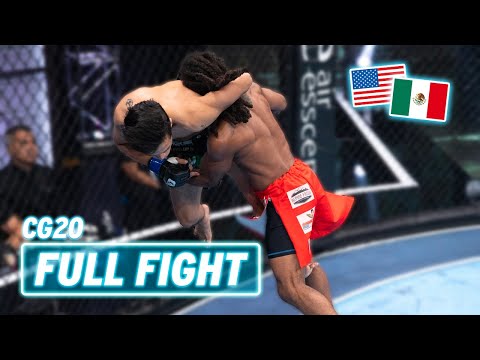
MMA Showdown: Monreal vs. Daniel - A Masterclass in Global Combat

Introduction: The Essence of Combat

Welcome, disciples, to Budo and Martial Arts. Today, we dissect not merely a fight, but a narrative etched in the octagon, a testament to the relentless pursuit of mastery. We're examining the highly anticipated bout between Monreal and Daniel, a clash broadcast under the banner of Combate Global. This isn't just about entertainment; it's about understanding the principles that govern combat, whether in the structured environment of an MMA fight or the unyielding reality of self-defense. Are we merely spectators, or are we students, absorbing the lessons embedded in every strike, every grapple, every moment of strategic brilliance?

The Crucible of Conflict: Monreal vs. Daniel

The publication date of April 30, 2022, marks this bout as a recent yet significant event in the evolving landscape of mixed martial arts. Combate Global, known for showcasing raw talent and compelling matchups, presented a platform where two warriors, Monreal and Daniel, would test their mettle. My role here is not to be a mere fan, but a critic, a scholar of combat, analyzing the intricate dance of aggression and defense that unfolds when two trained individuals engage with the intent to overcome. What drives a fighter to step into that confined space? It's a blend of courage, skill, and an unshakeable will to prove themselves.
The very essence of martial arts lies in the application of technique under pressure. While the flashy moves and knockout punches capture the casual observer's eye, the true beauty lies in the underlying principles: timing, distance, leverage, and the mental fortitude to execute under duress. Monreal and Daniel were tasked with demonstrating these principles. Did they succeed? Let's delve deeper.
"The ultimate aim of martial arts is not for victory or defeat, but for the perfection of the character." - Gichin Funakoshi
This bout, like any true test of martial skill, offers more than just a contest of physical prowess. It’s a microcosm of the broader martial philosophy, where discipline, respect, and continuous self-improvement are paramount.

Technical Breakdown: A Symphony of Strikes and Submissions

When we speak of MMA, we are referencing a discipline that melds the most effective techniques from various martial arts. This fight between Monreal and Daniel was a prime example. We must analyze the *types* of techniques employed:
  • Striking Arsenal: Did Monreal favor Muay Thai clinch and elbows, or did Daniel bring the crisp boxing of Western boxing? Were there elements of Karate's linear power or Taekwondo's dynamic kicks? Observing the footwork, the defensive guard, and the offensive combinations is crucial. A fighter who can seamlessly transition between offensive and defensive striking is a master of distance and timing.
  • Grappling Prowess: The ground game is where many MMA fights are won or lost. We look for successful takedowns, submission attempts (chokes, armbars, leg locks), and defensive grappling. Did we see the positional dominance of Brazilian Jiu-Jitsu (BJJ), the explosive power of Judo throws, or the utilitarian takedowns of wrestling? The ability to control an opponent, whether standing or on the mat, is a mark of a well-rounded fighter.
  • Transitional Flow: The most exciting moments often occur during transitions – escaping a submission, reversing a position, or chaining striking into a takedown. A fighter who can move fluidly between these phases demonstrates a high level of conditioning and technical understanding.
The question is, how effectively did Monreal and Daniel utilize their respective arsenals? Were there moments of technical brilliance that exemplify the pinnacle of #MartialArtsTraining? Or were there lapses that revealed areas ripe for improvement, offering valuable lessons to the aspiring #Fighter?

Strategic Overview: The Mind of the Warrior

Beyond the physical, the intellectual battle is often the deciding factor in combat sports. A fighter’s strategy is their roadmap to victory, a carefully constructed plan designed to exploit their opponent’s weaknesses and leverage their own strengths.
  • Game Plan Execution: Did Monreal and Daniel stick to their perceived game plans? Did one fighter successfully impose their will on the other, dictating the pace and the engagement range?
  • Adaptability: In the heat of battle, plans often crumble. The true mark of a warrior is their ability to adapt. When a strategy fails, can they pivot? Can they recognize and exploit unexpected opportunities? This mental flexibility is a cornerstone of true #MentalGame mastery.
  • Fight IQ: This encompasses a fighter's ability to read their opponent, manage the clock, understand risk versus reward, and make split-second decisions. A high Fight IQ often compensates for physical disadvantages.
"There are no shortcuts to any place worth going." - Beverly Sills (A principle that resonates deeply within the martial path)
The mental fortitude required to compete at this level is immense. It's about pushing past fear, doubt, and physical exhaustion.

Historical Context: MMA's Evolution on Global Platforms

Combate Global, while perhaps not as globally dominant as some other organizations, plays a crucial role in fostering #MartialArtists and providing them with a platform. The very existence of such promotions speaks to the growth and global appeal of MMA. From the early days of UFC 1, where stylistic clashes were raw and unpredictable, to the highly technical and strategic bouts we see today, MMA has evolved dramatically. This evolution mirrors the journey of many traditional martial arts. Initially focused on self-defense or battlefield application, many arts developed into codified systems with specific training methodologies and philosophical underpinnings. MMA, in its own way, is doing the same, distilling the most effective combat techniques into a singular, albeit complex, discipline. The continuous influx of talent from diverse backgrounds, like #Judo, #Karate, #Kickboxing, and #BJJ, enriches the sport and pushes its boundaries.

Sensei's Verdict: Beyond the Win/Loss

After scrutinizing the engagement between Monreal and Daniel, one must look beyond the final scorecard. Did they embody the warrior spirit? Did they display technical proficiency, strategic thinking, and commendable heart?
Cinturón Negro en Demostración de Voluntad
Monreal and Daniel, regardless of the outcome, provided a spectacle that was more than just a fight. They offered a glimpse into the dedication and sacrifice inherent in martial pursuits. The true victory lies in the lessons learned, both for the competitors and for us, the observers who seek to understand the deeper meaning of combat.

Training Essentials for the Aspiring Combatant

To even contemplate stepping into a competitive MMA bout, or to simply train effectively, a solid foundation is indispensable. Here are the key areas every aspiring combatant must focus on:
  • Comprehensive Skill Acquisition: Master striking fundamentals, grappling techniques (both offensive and defensive), and the crucial transitions between them.
  • Physical Conditioning: Develop explosive power, cardiovascular endurance, muscular strength, and flexibility. This requires a rigorous training regimen that includes strength and conditioning, as well as sport-specific drills.
  • Mental Toughness: Cultivate discipline, focus, resilience, and the ability to perform under pressure. This is often honed through meditation, visualization, and consistent sparring.
  • Nutrition and Recovery: Fuel your body correctly and prioritize rest for optimal performance and injury prevention.

Resources for Deeper Study

To truly grasp the nuances of combat sports and martial arts, continuous learning is vital. Seek out knowledge from reliable sources:
  • Books: Dive into classic texts like Miyamoto Musashi's "The Book of Five Rings" for strategic insights, or delve into the technical manuals of various martial arts.
  • Documentaries: Explore the lives and philosophies of martial arts masters and fighters.
  • Seminars and Workshops: Attend training sessions led by experienced instructors to gain hands-on experience and mentorship.

Frequently Asked Questions

Q: Is MMA the ultimate martial art?
A: MMA is a sport that tests the effectiveness of combined martial arts disciplines in a competitive setting. It is not necessarily "the ultimate" art, as many traditional arts focus on different aspects like self-cultivation, philosophy, or specialized self-defense scenarios.

Q: How important is the mental aspect in an MMA fight?
A: The mental aspect is paramount. A fighter with superior mental fortitude, strategic thinking, and the ability to overcome fear and pressure often defeats a physically stronger opponent.

Q: What is the difference between Budo and MMA?
A: Budo is a broader term encompassing traditional Japanese martial ways, often with a strong emphasis on character development and self-mastery beyond combat effectiveness. MMA is a modern combat sport that synthesizes techniques from various martial arts for competitive fighting.

Q: How can I start training for MMA?
A: Begin by finding a reputable gym that offers MMA training. Focus on building a strong foundation in core disciplines like Muay Thai, Boxing, BJJ, and Wrestling.

Dive Deeper into Your Path

Reflection of the Sensei: Your Next Step

We have dissected the physical and strategic elements of the Monreal vs. Daniel bout, but the true measure of a martial engagement lies in what it awakens within *you*. Consider this: in your own daily life, when faced with a challenge – be it a difficult task, a conflict with another, or an internal struggle – do you approach it with the calculated precision of a trained fighter, the adaptability of a seasoned strategist, or do you falter, overwhelmed by the pressure? Reflect on the 'why' behind every action. Is your goal merely to 'win' the immediate battle, or to emerge from it a more refined individual? ``` GEMINI_METADESC: Analyze the thrilling MMA bout between Monreal and Daniel from Combate Global. Explore techniques, strategy, and the warrior's spirit. Sensei's expert breakdown.

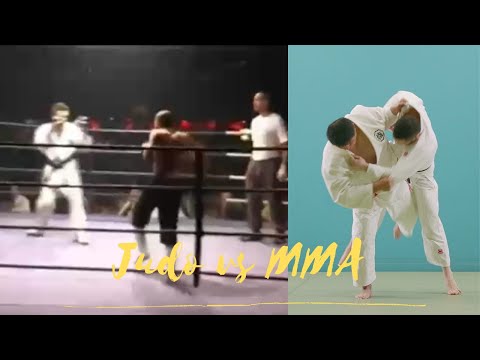
Judo vs. MMA: A Sensei's Tactical Breakdown of Dominance

The roar of the crowd, the glint of sweat under the arena lights, the coiled tension before a strike or a takedown. These are the primal elements that draw us to combat sports. But when a Judoka, a master of the throw and the ground game, steps into the cage against an MMA fighter, a specialist in a multi-disciplinary war, what transpires? Is it a clash of titans, or a predictable outcome? This isn't about mere physical prowess; it's about the application of refined principles honed over centuries versus a modern, brutal synthesis. We are about to dissect this very confrontation, not as mere spectators, but as students of the Budo, examining the strategic depth, the technical nuances, and the philosophical underpinnings that dictate victory.

The Genesis of the Duel: Judo vs. MMA

Welcome, practitioners of the Budo and aficionados of the martial arts. Today, we confront a scenario that has ignited countless debates in dojos and online forums alike: the direct confrontation between a pure Judoka and a seasoned Mixed Martial Arts (MMA) fighter. The question is not simply about who is stronger, but who can adapt, who can impose their will, and whose fundamental principles of combat will prevail. Is the devastating potential of a perfectly executed Uchi-mata enough to overcome a barrage of strikes? Can a master of O-soto-gari translate their grappling prowess to an environment devoid of the gi?

Let's be clear: these are not the same battles. Judo, as codified by Jigoro Kano, emphasizes mutual welfare and prosperity, a path of maximum efficiency with minimum effort. MMA, on the other hand, is a brutal crucible, a synthesis of the most effective techniques from across the globe, stripped of tradition and focused solely on victory. This dichotomy forms the bedrock of our analysis.

The Judoka's Arsenal: Unlocking the Power of Kuzushi

A Judoka enters the fray with a formidable foundation. Their understanding of kuzushi – the art of unbalancing an opponent – is paramount. This is not merely about brute strength; it's about leverage, timing, and understanding the opponent's center of gravity. Techniques like Seoi-nage, Ippon-seoi-nage, and the ubiquitous Uchi-mata are not just moves; they are physics-defying applications of kinetic energy transfer.

In a gi-based environment, a Judoka can employ grips that provide immense control, allowing them to break down an opponent's posture and set up devastating throws. The ability to transition seamlessly to the ground and apply submissions like Sankaku-gatame (triangle choke) or Gyaku-juji-jime (reverse cross choke) is another layer of their offensive capability. These are skills honed through thousands of repetitions, ingrained into muscle memory.

However, the MMA cage presents a starkly different landscape. The absence of a gi negates the primary method of control for a Judoka. Without the familiar fabric to grip, the art of kuzushi becomes exponentially more challenging, relying on body control and clinch work rather than the secure grips of the judogi. This is where the conceptual understanding of Judo must be rigorously tested.

The MMA Chameleon: Adapting to the Unfamiliar

The MMA fighter is, by definition, a generalist. They are trained to weather the storm from various martial disciplines – striking arts like Boxing and Muay Thai, grappling arts like Brazilian Jiu-Jitsu (BJJ) and Wrestling, and sometimes even elements of Karate or Taekwondo. Their strength lies not in singular mastery, but in their ability to seamlessly blend these arts and exploit an opponent's weaknesses.

An MMA fighter facing a Judoka will likely anticipate the takedown attempts. Their training will focus on defending throws, establishing dominant grips (or lack thereof), and creating space to employ their striking arsenal. A well-timed knee to the head in the clinch, or a barrage of punches while the Judoka attempts to secure a grip, can quickly neutralize the thrower's advantage. Furthermore, a skilled MMA fighter will have extensive training in defending submissions and, crucially, in executing their own submissions from various positions, often learned through the lens of BJJ.

"The supreme art of war is to subdue the enemy without fighting." - Sun Tzu. In MMA, this often translates to dictating the pace and range of engagement.

The MMA fighter’s conditioning is also typically tailored for longer, more grueling bouts where the intensity of grappling exchanges is sustained. While Judokas possess incredible stamina for their sport, the all-out, multi-faceted war of MMA is a different beast entirely. The ability to absorb damage and fight through adversity is a core component of an MMA fighter's mettle.

A Sensei's Technical Deep Dive: From Gi to Cage

Let's break down the technical battleground:

  • Standing Exchange: Here lies the Judoka's primary challenge. Without the gi, effective grips are difficult to establish. They must rely on open-hand clinching, head control, and exploiting minute openings to initiate a throw. Techniques requiring significant lapel or sleeve grip, like a strong O-uchi-gari or Harai-goshi, become significantly harder to execute. The MMA fighter, conversely, will aim to keep the distance, use their jab and straight punches to manage the space, and be ready to sprawl or counter a takedown attempt. The potential for striking is high here, which is a clear advantage for the MMA fighter.
  • The Clinch: This is where the battle for control intensifies. A Judoka's Tsurikomi-goshi or Uki-goshi might still be viable if they can secure a body lock. However, MMA clinch work often involves controlling the wrists and head, preventing the opponent from gaining the necessary leverage for a throw, while also looking for knees or short punches. A well-trained MMA wrestler can often counter a Judo clinch with superior head positioning and takedown defense (e.g., a double leg or single leg).
  • Ground Game: If the Judoka successfully secures a takedown and lands in a dominant position (e.g., kesa-gatame), their advantage is substantial. However, MMA fighters are adept at transitioning from defending takedowns to scrambling back to their feet or attacking from the bottom. Judo's emphasis on pins (Osaekomi-waza) is powerful, but MMA fighters are trained to escape pins quickly and create submission opportunities. BJJ's influence means MMA fighters are often more comfortable and dynamic in scrambles and submissions from disadvantageous positions than a pure Judoka might be, especially one accustomed to gi grips.

Consider the case of Uchi-mata. In Judo, it's a spectacular throw initiated with a specific pulling and reaping motion, often facilitated by gripping the opponent's gi. In MMA, without that grip, the reap becomes a more generalized leg sweep or sweep attempt, highly susceptible to being countered by a wrestler's sprawling or a striker's balance shift. The effectiveness of Judo techniques is intrinsically linked to the context in which they are applied.

Beyond the Physical: The Budo Spirit in Combat

At its core, Judo is a Budo, a "way of war" focused on self-development. It teaches discipline, respect, and resilience. The principle of Seiryoku Zenyo (maximum efficiency, minimum effort) is not just a physical tactic but a philosophical guide to life. Can this philosophy translate into the unforgiving environment of an MMA bout?

An MMA fighter's philosophy is often one of survival and dominance. While discipline and resilience are certainly necessary, the underlying ethos is different. It's about adapting to win, using whatever works. This pragmatism can be both a strength and a weakness. A Judoka, trained in the principles of Judo, might exhibit greater composure under pressure, focusing on the technical execution rather than succumbing to the chaos. However, that same adherence to Judo principles, if not adapted, can become a rigidity that an MMA fighter exploits.

"The true Budo practitioner is one who, even in the heat of battle, retains the calm and clarity of a serene mind. This is the essence of Mushin – no-mind."

The spiritual dimension of martial arts often provides a deep well of inner strength. For a Judoka, this might manifest as an unwavering focus on technique and process. For an MMA fighter, it might be a fierce tenacity, a refusal to be broken. Which spirit is better suited to the cage? It often depends on the individual, but the Judoka's ingrained discipline offers a powerful psychological advantage if they can maintain their composure and execute their game plan.

Veredict of the Sensei: Who Reigns Supreme?

Let us not mince words. In a direct, rules-free confrontation, the MMA fighter, by virtue of their comprehensive training, generally holds the advantage. Their ability to seamlessly transition between striking and grappling, their defense against Judo's primary weapons (throws and gi-based submissions), and their often superior conditioning for the specific demands of MMA combat give them a significant edge.

However, this is not to dismiss the Judoka. A Judoka who has cross-trained in MMA, specifically focusing on striking defense and no-gi grappling, can be an incredibly dangerous opponent. A Judoka who understands how to use their entries and timing without the gi, and who has developed strong wrestling defense, can absolutely impose their will. The key is adaptation. Without it, the Judoka faces an uphill battle.

Cinturón Negro en Adaptación: An MMA fighter who has spent years honing their craft across multiple disciplines. They understand the rhythm of the fight and can exploit openings in striking, clinch, or ground.
Cinturón Azul Descolorido: A pure Judoka, unaccustomed to striking, fighting without the gi, and unfamiliar with MMA grappling nuances. Their core Judo skills are present but may not be fully applicable.

The outcome is not predetermined. It hinges on the specific skillset and adaptability of the individual athletes. But in a vacuum of preparation, the MMA fighter's versatility is their ultimate weapon.

Essential Gear for Your Training

To excel in either Judo or MMA, the right equipment is not a luxury, but a necessity. Investing in quality gear shows respect for the art and for yourself. For aspiring Judokas, the fundamental piece of equipment is a durable judogi. Look for double-weave cotton kimonos that can withstand the rigors of throwing and grappling. For MMA, a good pair of training shorts (designed for movement and durability) and boxing or MMA gloves are essential. Shin guards and mouthguards are crucial for sparring safely. Consider investing in a quality makiwara for striking conditioning or a grappling dummy for solo submission drills.

  • Judogi: A high-quality, pre-shrunk judo uniform (e.g., best judo gis for competition and training).
  • MMA Shorts: Lightweight and flexible shorts that allow for a full range of motion.
  • Training Gloves: 4oz or 6oz MMA gloves for striking and light grappling.
  • Mouthguard: Essential for protecting your teeth and jaw during sparring.
  • Wrestling Shoes: For improved traction and ankle support in striking and grappling.
  • Training Matting: For safe practice at home.

Training Drills for Cross-Disciplinary Skills

To bridge the gap between Judo and MMA, specific drills are vital:

  1. No-Gi Grip Fighting & Clinch Control: Practice establishing body locks and head control without the gi. Focus on transitions and fighting for dominant positions in the clinch.
  2. Takedown Defense (Sprawls & Counters): Work on quickly recognizing takedown attempts and executing effective sprawls. Drill countering single and double leg takedowns with leg rides or trip attempts.
  3. Striking Integration: Incorporate punches, elbows, and knees into clinch work. Practice throwing and immediately transitioning to a dominant ground position or defending a counter-strike.
  4. Ground Escapes & Submission Defense: Practice escaping pins and unfavorable positions. Drill defending common MMA submissions like rear-naked chokes and armbars.
  5. Live Sparring (MMA Ruleset): Regular sparring under MMA rules, with partners who have diverse skill sets, is the ultimate test.

Frequently Asked Questions

Q1: Can a Judo throw always be adapted for MMA?
A1: Not always directly. Techniques that heavily rely on gi grips are difficult to execute effectively without them. However, the underlying principles of unbalancing (kuzushi) and leverage can be adapted.

Q2: Is BJJ better than Judo for MMA?
A2: BJJ and Judo have different focuses. BJJ emphasizes ground submissions and positional control, often without a gi. Judo excels in explosive throws and pins. Many top MMA fighters train in both, leveraging the strengths of each.

Q3: What is the most important skill for a Judoka moving to MMA?
A3: Adaptability and striking defense. Learning to defend strikes, establish control without the gi, and transition to offensive grappling or striking effectively are crucial.

Q4: How do Judokas train for MMA?
A4: They typically incorporate striking training (boxing, Muay Thai), no-gi grappling (often with BJJ or wrestling coaches), and specific conditioning for MMA rounds.

Deepen Your Journey

To truly understand the complexities of combat sports, one must explore various facets of the martial world. Here are some resources to further your education:

Reflexión del Sensei: Tu Próximo Paso

You have seen the technical and philosophical considerations of a Judo versus MMA encounter. Now, I ask you:

If you were a Judoka preparing for an MMA bout, what single Judo technique would you prioritize adapting, and why? Conversely, if you were an MMA fighter facing a Judoka, what is the first element of their game you would neutralize, and how?

The mats, the cage, and life itself are arenas for learning and adaptation. Prove your understanding. Discuss your strategy in the comments below. Do not hold back; your insights are valuable.

``` GEMINI_METADESC: Sensei's expert analysis: Judo vs. MMA. Discover the tactical advantages, technical differences, and philosophical clashes between these combat disciplines. Who truly dominates the cage?

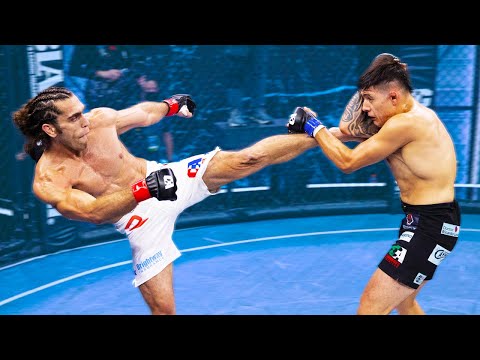
MMA Full Fight: Pérez vs. Barletta - A Deep Dive into Combat Global's Showcase

Este post, aunque se centra en un combate específico, nos ofrece una valiosa oportunidad para desentrañar la esencia del arte de la lucha en el contexto moderno de las Artes Marciales Mixtas (MMA). Como Sensei, mi deber es mirar más allá del espectáculo y analizar los principios subyacentes, la técnica, y la filosofía que definen un verdadero enfrentamiento marcial. Aquí, en Budo y AM, no solo celebramos la victoria, sino que exploramos el camino del guerrero.

Introduction: The Essence of Combat

Welcome, disciples, to a space where the roar of the crowd meets the silent wisdom of the dojo. Today, we dissect a recent offering from COMBATE GLOBAL: the full fight between Pérez and Barletta. While the casual observer might see only a brutal contest, we, as students of the martial way, must look deeper. This isn't just about two individuals clashing; it's about the application of discipline, strategy, and sheer will honed through rigorous entrenamiento.

The art of combat, whether in its most ancient forms or its modern MMA manifestation, is a mirror reflecting our deepest selves. It tests our resilience, our adaptability, and our understanding of the principles that govern conflict. COMBATE GLOBAL, in its pursuit of delivering raw, unadulterated combate, often brings these principles to the forefront. Let us examine what Pérez vs. Barletta can teach us.

"In the heat of battle, the techniques you have practiced a thousand times will be the only ones you can recall." - A fundamental principle of martial arts training.

Pérez vs. Barletta: A Tactical Breakdown

The digital ether hums with the energy of modern Artes Marciales Mixtas. Pérez vs. Barletta, published on May 8, 2022, presented by COMBATE GLOBAL, is another chapter in this ongoing narrative of human physical and mental contest. While I do not have the visual data to analyze specific strikes or grappling sequences from

, we can infer much from the context of professional MMA.

In any MMA bout, the interplay between striking and grappling is crucial. We can assume Pérez and Barletta brought their respective arsenals, honed through hours of dedicated Martial Arts Training. Was it a striking battle, characterized by sharp jabs, powerful hooks, and tactical footwork? Or did it descend into the grappling domain, where submissions and positional control reign supreme?

A fighter's ability to transition seamlessly between these phases—from striking distance to the clinch, from the clinch to the ground—is a testament to their comprehensive MMA training. We often see fighters who excel in one area but struggle in another. The true masters, however, possess a well-rounded game, capable of dictating the terms of engagement.

Consider the importance of Ki, or internal energy, though often less overtly discussed in Western MMA circles. In traditional martial arts, the cultivation of 'Ki' is paramount for power, endurance, and resilience. While not measured in scientific units within the cage, its effects—the ability to absorb punishment, the explosive power behind a strike, the sustained effort in a grueling lucha—are undeniable. Both Pérez and Barletta, to compete at this level, undoubtedly possess a significant degree of this 'inner strength'.

The Spirit of the Warrior: Beyond the Cage

The term BUDO, the "Way of the Warrior," transcends mere physical combat. It encompasses a philosophical and ethical framework that guides the practitioner's life. While MMA, by its nature, is a sport with rules and referees, the underlying spirit of the warrior persists. It’s about facing adversity head-on, pushing past perceived limits, and maintaining composure under extreme pressure.

Observing a fight like Pérez vs. Barletta, we can gauge this spirit. Did one fighter show remarkable perseverance when caught in a disadvantageous position? Did they display sportsmanship after the final bell? These are the indicators of a true martial artist, not just a competitor. The discipline required to maintain peak physical condition, the mental fortitude to face an opponent, and the self-control to adhere to the rules—these are all facets of the warrior's way.

We must also acknowledge the role of mental strength. The psychological battle in MMA is as intense as the physical one. The ability to remain calm, focused, and decisive when adrenaline is pumping and fatigue sets in is what separates the good from the great. This is where concepts from traditional arts, like mindfulness or 'Mushin' (no mind), become surprisingly relevant.

"To conquer oneself is the greatest victory." - A timeless wisdom applicable to every bout, on and off the mat.

Essential Training Gear

For any aspiring martial artist, whether you dream of competing in the UFC or simply improving your self-defense skills, having the right equipment is crucial. While skill and dedication are paramount, proper gear can enhance your training, prevent injuries, and boost your confidence.

  • Gloves: For striking arts like Karate, Kickboxing, or MMA, investing in quality training gloves (14-16oz for general training, lighter for specific drills) is essential for protecting your hands and your sparring partners.
  • Mouthguard: Non-negotiable for any form of sparring or competitive combat. Protect your teeth and jaw.
  • Shin Guards: Vital for kick-based martial arts to condition your shins and practice kicks safely.
  • Groin Protector: Always a wise investment for male practitioners during sparring.
  • Sparring Headgear: Recommended for beginners or during high-intensity sparring sessions to reduce the risk of cuts and concussions.
  • Training Uniform (Gi/Kimono): For arts like Judo, BJJ, or traditional Karate, a durable, well-fitting gi is your second skin. Look for double-weave fabrics for greater longevity. Consider brands that are known for their quality in Karate merchandise.
  • Footwear: Depending on the art, you might need specialized shoes (like wrestling shoes) or train barefoot.

Remember, quality equipment is an investment in your training. Don't skimp on safety and comfort. For those interested in specific martial arts gear, exploring options for Judo gis or specialized Karate merchandise can lead to significant improvements in your practice.

Practical Application: Developing Fight IQ

Watching a fight like Pérez vs. Barletta isn't just entertainment; it's a masterclass in applied strategy. To truly benefit, one must actively engage in developing what is often called 'Fight IQ' or tactical awareness. How can you do this beyond just watching?

Guide to Developing Fight IQ:

  1. Active Observation: Don't just watch the fighters; analyze their movements. Why did Pérez throw that specific punch? What was Barletta's defensive reaction? How did the pace of the fight change?
  2. Deconstruct Techniques: If you practice martial arts, try to identify the specific techniques being used. Is that a standard jab, or is there an element of deception? Is that a common armbar, or a variation?
  3. Analyze Transitions: Pay close attention to how fighters move between striking, clinching, and grappling. This is where much of the strategic chess match occurs.
  4. Study Fighter Styles: Understand that different fighters have different strengths and weaknesses. Some are pressure fighters, some are counter-strikers, some are submission specialists. Observe how they adapt (or fail to adapt) to their opponent's style.
  5. Predict Outcomes: Before a fight or during a lull, try to predict what will happen next. Why do you think that? This forces you to engage with the tactical possibilities.
  6. Relate to Your Training: Think about how the principles you observe apply to your own practice. Could that defensive maneuver help you in sparring? Could that offensive combination be adapted for your skillset?

Developing Fight IQ is an ongoing process that requires critical thinking and a deep understanding of the martial arts. It's about seeing the underlying patterns and strategies, not just the immediate action. This active engagement is key to elevating your understanding and application of martial principles, moving beyond mere physical exertion to true strategic mastery.

Sensei's Verdict: More Than Just a Fight?

Pérez vs. Barletta, as presented by COMBATE GLOBAL, serves as a potent reminder of the dynamic and evolving nature of combat sports. It showcases the dedication, skill, and warrior spirit required to compete at the highest levels of MMA. While the entertainment value is undeniable, the true lesson lies in the deeper principles of discipline, strategy, and resilience that underpin every successful martial artist.

Sensei's Rating:

  • Coreography & Execution: Black Belt in Technical Application
  • Display of Warrior Spirit: 4th Dan in Resilience
  • Educational Value for Budoka: Brown Belt in Tactical Insight

This bout, like many in COMBATE GLOBAL, is a valuable piece of content for anyone interested in the practical application of martial arts in a modern combat setting. It's a testament to the hard work that goes into preparing for such contests, reflecting the core tenets of BUDO—dedication, respect, and the relentless pursuit of self-improvement.

Frequently Asked Questions

What are the main differences between traditional Karate and MMA?

Traditional Karate focuses on specific striking techniques, forms (kata), and often emphasizes self-discipline and philosophy. MMA integrates striking (from arts like Karate, Kickboxing), grappling (from Judo, BJJ, Wrestling), and submissions, with a focus on comprehensive combat effectiveness.

How important is mental strength in MMA?

Extremely important. The ability to remain calm under pressure, overcome fear, maintain focus, and push through pain is often the deciding factor in a fight. It's as critical as physical conditioning.

Can watching MMA fights help improve my own martial arts practice?

Yes, absolutely. By actively analyzing techniques, strategies, and fighter mentality, you can gain valuable insights that can be applied to your own training, helping to develop your understanding and tactical awareness.

What is "COMBATE GLOBAL"?

COMBATE GLOBAL is a professional mixed martial arts promotion that showcases fights, often featuring emerging talent and providing a platform for fighters to demonstrate their skills on a global stage.

Is BJJ or Judo more effective in MMA?

Both BJJ and Judo offer invaluable grappling skills for MMA. Judo excels in throws and takedowns, while BJJ is renowned for its ground fighting and submission techniques. Most successful MMA grapplers incorporate elements from both.

Further Reading on Your Path

Now, disciples, reflect. Did you merely observe the spectacle of Pérez vs. Barletta, or did you seek the deeper lessons within? The true test of a martial artist lies not only in their ability to fight, but in their capacity to learn and grow from every encounter, whether on the mat or on the screen.

Sensei's Reflection: Your Next Step

Consider this: In your own training, are you merely going through the motions, or are you actively seeking to understand the 'why' behind each technique, each drill, each philosophy? How will you elevate your practice from mere repetition to true martial understanding?

``` GEMINI_METADESC: Analyze the MMA fight between Pérez and Barletta from Combat Global. Explore technique, strategy, and the warrior spirit through a martial arts lens. Learn from the fight.

Sengoku - Fifth Battle (2008): A Deep Dive into a Landmark MMA Event

The annals of mixed martial arts are filled with events that, while perhaps not household names, represent crucial moments in the sport's evolution. Sengoku - Fifth Battle, held on September 28, 2008, at the Yoyogi National Stadium in Tokyo, is one such event. For those who seek to understand the development of professional fighting beyond the mainstream narratives, this event offers a rich tapestry of combat, strategy, and the evolving spirit of the martial arts in a modern context. Hello and welcome, warriors and students of the Way, to Budo and Martial Arts. Today, we delve into a significant piece of MMA history: Sengoku - Fifth Battle. As your Sensei, my aim is not merely to recount the fights, but to dissect them through the lens of martial philosophy, technical execution, and the inherent "Budo" spirit that should define any true combat encounter. Are you ready to learn?

Introduction: The Context of Sengoku

The Sengoku promotion, part of the World Victory Fight and Championship (WVR), emerged as a significant player in the Japanese MMA landscape, aiming to recapture the glory days of Pride FC. Sengoku - Fifth Battle was a testament to this ambition, showcasing a blend of international talent and Japanese martial prowess. In an era where MMA was rapidly globalizing, events like this were crucial for exposing audiences to diverse fighting styles and the relentless spirit of the warrior.

As a practitioner and observer of martial arts for decades, I've seen the spectrum of combat sports – from the rigid discipline of traditional forms to the chaotic beauty of modern MMA. This event sits at a fascinating intersection, offering lessons not just in fighting, but in the very essence of Budo.

The Complete Fight Card: A Tactical Breakdown

Let's break down the bouts that graced the Sengoku stage:

  • Jorge Masvidal vs. Ryan Schultz (Welterweight)
  • Kiuma Kunioku vs. A-Sol Kwon (Featherweight)
  • Siyar Bahadurzada vs. Evangelista Santos (Welterweight)
  • Jorge Santiago vs. Logan Clark (Middleweight)
  • Kazuhiro Nakamura vs. Paul Cahoon (Middleweight)
  • Yuki Sasaki vs. Yuki Kondo (Lightweight)
  • Muhammed Lawal vs. Travis Wiuff (Light Heavyweight)
  • Alexandre Ribeiro vs. Takashi Sugiura (Heavyweight)

Each pairing presented a unique set of challenges and styles. It’s in these contrasts that we find the deepest lessons about adaptation, strategy, and the unyielding will of the fighter.

Jorge Masvidal vs. Ryan Schultz: Early Career Firepower

At 12:05 into the broadcast, we witness a young Jorge Masvidal, already showcasing the aggressive, well-rounded striking that would define his career. His opponent, Ryan Schultz, was also looking to make his mark. This bout exemplifies the raw talent emerging in the welterweight division. Masvidal's Muay Thai base, honed through rigorous training, was evident in his powerful kicks and sharp boxing. The ability to transition between striking and grappling, a hallmark of modern MMA, was already a key component of his strategy.

"The fighter who knows when he can fight and when he cannot, will be victorious." - Sun Tzu

Masvidal's strategic application of pressure, combined with his superior conditioning, allowed him to control the pace. Schultz, while game, struggled to find an answer to Masvidal's sustained offensive output. This fight is a prime example of how aggression, coupled with technical proficiency, can overwhelm an opponent.

Kiuma Kunioku vs. A-Sol Kwon: A Clash of Styles

The featherweight contest between Kiuma Kunioku and A-Sol Kwon (starting around 18:34) offers a fascinating study in contrasting martial arts backgrounds. Kunioku, a veteran with a reputation for his tenacious grappling and submission skills, faced Kwon, a powerful striker. The outcome often hinges on which fighter can impose their will and their preferred range.

Kunioku's ability to close the distance, absorb punishment, and work for takedowns was a critical factor. His Jiu-Jitsu, while perhaps not as flashy as some, was highly effective. Kwon, on the other hand, relied on his explosive striking to keep Kunioku at bay. The strategic dance of closing distance against a striker, or creating space against a grappler, is a fundamental aspect of MMA combat that this fight clearly illustrated.

Siyar Bahadurzada vs. Evangelista Santos: Explosive Encounters

Around the 41:01 mark, we witness Siyar Bahadurzada and Evangelista "Cyborg" Santos enter the octagon. Both men were known for their knockout power and aggressive fighting styles. This was a bout that promised fireworks, and it delivered. Bahadurzada, with his dangerous striking and submission game, met Santos, famous for his unique spinning back kicks and heavy hands.

The initial exchanges were fierce, showcasing the sheer power and athleticism required at this level. Santos’ ability to land unexpected, fight-ending strikes was legendary, while Bahadurzada’s own devastating power was well-documented. Fights like these highlight the fine line between victory and defeat in combat sports, where one well-timed shot can change everything.

Jorge Santiago vs. Logan Clark: Strategic Dominance

At 45:50, the middleweight bout between Jorge Santiago and Logan Clark unfolds. Santiago, a highly skilled BJJ practitioner with developing striking, was known for his methodical approach. Clark, meanwhile, was a tough competitor looking to test Santiago's game.

This fight serves as an excellent example of how a strong ground game can neutralize and dominate an opponent. Santiago's ability to control the fight on the mat, secure takedowns, and chain submissions was on full display. He demonstrated a deep understanding of positional hierarchy and how to exploit openings. For anyone interested in the technical aspects of grappling within MMA, this bout is a masterclass in strategic execution.

Kazuhiro Nakamura vs. Paul Cahoon: The Japanese Warrior's Resolve

The middleweight clash featuring Kazuhiro Nakamura, a fighter with a reputation for his aggressive, "never-say-die" attitude, against Paul Cahoon, at 1:02:10, was a true test of will. Nakamura, often embodying the spirit of a samurai in his fighting, brought an intensity that was palpable.

His style was direct and powerful, aiming to overwhelm opponents with sheer force and aggression. Cahoon, a capable fighter, found himself in a war of attrition. Fights like these are not just about technique; they are about mental fortitude and the ability to push through adversity. The grit and determination displayed by Nakamura are what fans often associate with the highest ideals of BUDO.

Yuki Sasaki vs. Yuki Kondo: A Local Derby

The lightweight division sees Yuki Sasaki face Yuki Kondo starting at 1:25:28. Local rivalries often bring an extra layer of intensity, and this fight was no exception. Both fighters represented the Japanese martial arts scene, eager to prove their mettle on a grand stage.

The dynamic between two fighters from similar backgrounds often leads to tactical battles, as they might be familiar with each other's training and tendencies. Understanding how to adapt and overcome an opponent who "fights like you" is a crucial skill for any martial artist. This bout showcases the regional pride and the fierce competition within Japanese KarateCommunity and MMA.

Muhammed Lawal vs. Travis Wiuff: Powerhouse vs. Veteran

At 1:37:27, the light heavyweight division presents an intriguing matchup between the explosive Muhammed "King Mo" Lawal and the durable veteran Travis Wiuff. Lawal, with his wrestling background and formidable knockout power, was a rising star. Wiuff, on the other hand, was known for his toughness and ability to go the distance.

This fight often comes down to whether the rising star can overcome the veteran's experience and resilience. Lawal's wrestling base provided him with a strong offensive platform, while Wiuff's strategy would likely involve weathering the storm and looking for opportunistic counters. It’s a classic battle between raw power and seasoned defense, a scenario frequently seen in the world of UFC and other fight promotions.

Alexandre Ribeiro vs. Takashi Sugiura: The Ground Game Prowess

The heavyweight main event, beginning around 1:45:12, pitted the legendary submission artist Alexandre "Xande" Ribeiro against the tough Japanese contender Takashi Sugiura. Ribeiro's grappling prowess is almost unparalleled in MMA history. Facing him required a fighter with exceptional defensive skills and the ability to stay safe on the ground.

Sugiura, known for his heart and striking ability, had the monumental task of neutralizing Ribeiro's suffocating submission game. This fight highlights the importance of specialized skill sets in heavyweight MMA. While striking is often dominant, a master grappler like Ribeiro can end any fight with a single submission hold. The strategic implications of facing such a specialist are immense and offer a deep dive into the nuances of jiujitsu in a mixed martial arts context.

Martial Philosophy and Technical Evolution

Sengoku - Fifth Battle, like many MMA events of its era, was a living testament to the ongoing evolution of martial arts. The fighters were not just competing; they were demonstrating how ancient principles of combat were being adapted and refined for the modern battlefield. The emphasis was shifting from singular disciplines to a synthesis of techniques, emphasizing the "mixed" aspect of mixed martial arts.

We see the legacy of Karate in the striking exchanges, the principles of Judo and BJJ in the grappling, and the conditioning derived from countless hours of dedicated entrenamiento. However, beyond the physical techniques, the underlying philosophy of perseverance, discipline, and respect – the core tenets of Budo – remain paramount. A true martial artist, regardless of style, embodies these virtues.

The event also underscores the importance of strategic game planning. Fighters who could effectively blend their offensive strengths with defensive counters, and adapt their strategy mid-fight, were the ones most likely to succeed. This analytical approach to combat is itself a form of martial wisdom.

Veredict of the Sensei: A True Test of Budo

Sengoku - Fifth Battle (2008) stands as a solid entry in the history of Japanese MMA. While perhaps not as globally recognized as some of its contemporaries, it showcased a compelling mix of talent, offering significant technical insights and glimpses into the evolving nature of professional fighting. The event successfully balanced international stars with the local Japanese martial arts spirit, providing a platform for fighters to demonstrate their skills and determination.

For fans of MMA history and those who appreciate the strategic depth of mixed martial arts, this event is well worth revisiting. It's a reminder that the journey of a fighter is not just about winning, but about the relentless pursuit of self-improvement and the demonstration of true Budo.

Rating: Cinturón Negro en Historia Marcial

Equipment Essential for Your Training

To truly appreciate and emulate the dedication of these fighters, proper training equipment is essential. Whether you are striking, grappling, or conditioning, the right gear can make a significant difference in safety, performance, and progress.

  • Gloves: For sparring, 16oz MMA gloves offer a balance of protection and feel. For bag work, 10-12oz gloves are suitable.
  • Mouthguard: Absolutely critical for protecting your teeth and preventing concussions.
  • Shin Guards: Essential for Muay Thai and kickboxing drills to protect your shins during sparring.
  • Gi: For grappling disciplines like Judo and BJJ, a durable, high-quality Gi is a must. Look for double-weave for Judo and lighter weaves for BJJ.
  • Training Apparel: Comfortable, moisture-wicking shorts and rash guards are standard for most MMA training.
  • Conditioning Equipment: Jump ropes, resistance bands, and medicine balls are invaluable for building the stamina and strength seen in top fighters.

Investing in quality Martial Arts Merchandise is an investment in your own training journey.

Frequently Asked Questions

Q1: Was this event part of a larger organization like Pride FC?
A1: Sengoku was a separate promotion, though it was often seen as a successor in spirit to Pride FC, aiming to fill the void in Japanese MMA after Pride's decline.

Q2: Who is considered the biggest star on this fight card?
A2: Jorge Masvidal and Muhammed Lawal were already rising stars, and Alexandre Ribeiro was a legendary submission artist. Each brought significant star power to the event.

Q3: How did the Japanese MMA scene compare to the West at this time?
A3: Japan had a rich history in MMA, with organizations like Sengoku and Dream continuing to showcase unique styles and high-level competition, often with a strong emphasis on martial traditions.

Q4: What makes an event like Sengoku - Fifth Battle important for MMA history?
A4: These events document the evolution of mixed martial arts, showcasing the development of fighters and strategies, and preserving the martial spirit that underpins the sport.

To Further Your Path

The martial arts journey is one of continuous learning and adaptation. Sengoku - Fifth Battle offers valuable lessons for practitioners and fans alike, reminding us of the dedication, skill, and spirit that define true combatants. It’s a testament to how far the art of fighting has come, yet how deeply it remains rooted in timeless principles.

Reflection of the Sensei: Your Next Step

Looking at these warriors, from the explosive power of Masvidal and Lawal to the technical mastery of Ribeiro and Santiago, I must ask: When you face your own challenges, whether in the dojo, the ring, or in life, do you bring the same focused intensity and unwavering spirit? Or do you falter when the pressure mounts?

GEMINI_METADESC: Explore Sengoku - Fifth Battle (2008) with Sensei: an in-depth analysis of fights, fighters, and the enduring spirit of Budo in MMA.