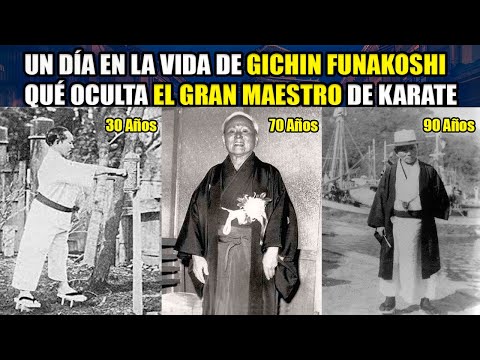
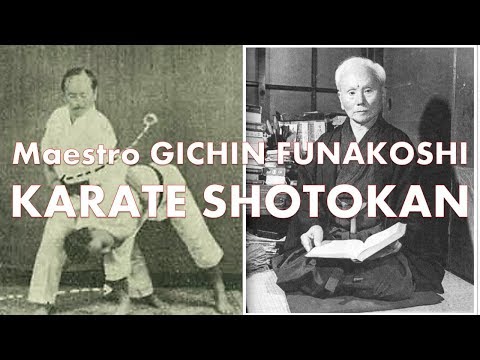
¿Alguna vez te has preguntado cómo vivía realmente uno de los pilares de las artes marciales modernas? No me refiero a las leyendas o a los mitos tejidos alrededor de su figura, sino a la vida diaria, a la rutina, a los pequeños detalles que forjaron al hombre detrás del mito: Gichin Funakoshi, el venerable padre del Karate Shotokan. Hoy, en Budo y AM, nos adentraremos en los secretos mejor guardados de su existencia, desentrañando cómo era un día para el hombre que sentó las bases del karate tal como lo conocemos. Prepárate, porque lo que descubrirás podría cambiar tu percepción de la disciplina y el compromiso marcial.
Gichin Funakoshi: El Hombre Detrás del Legado
Gichin Funakoshi (1868-1957) no fue solo un practicante excepcional, sino un visionario que trascendió las fronteras de Okinawa para llevar el Karate-do a Japón continental y, eventualmente, al mundo. Nació en una época de profundos cambios para las islas Ryukyu, un periodo de transición entre el Reino de Ryukyu y su incorporación a Japón. Esta coyuntura histórica sin duda moldeó su perspectiva, obligándolo a navegar entre tradiciones y modernidad.
Se dice que comenzó su entrenamiento en Karate a una edad relativamente tardía para los estándares de la época, influenciado por la necesidad de mantener viva una práctica ancestral que corría el riesgo de desaparecer. Su dedicación fue tal que muchos de sus contemporáneos lo veían no solo como un artista marcial, sino como un guardián de la cultura y la filosofía Okinawense.
"El Karate es una disciplina que busca perfeccionar tanto el cuerpo como la mente. No es solo un método de combate, sino un camino hacia la automejora." - Gichin Funakoshi (atribuido)
Su viaje no estuvo exento de obstáculos. Tuvo que enfrentarse al escepticismo de algunos círculos que veían el Karate como una práctica "primitiva" o "peligrosa". Sin embargo, la perseverancia de Funakoshi, su profundo conocimiento técnico y, sobre todo, su carisma y capacidad para explicar la esencia del Karate-do, le permitieron ganar adeptos y el respeto de figuras influyentes. La presentación formal del Karate ante el público japonés en 1922, impulsada por Jigoro Kano, fundador del Judo, marcó un punto de inflexión crucial en su vida y en la historia de esta arte marcial.
La Rutina del Maestro: Disciplina y Devoción
¿Cómo se forja un legado tan imponente? No es fruto de la casualidad, sino de una disciplina férrea que se manifestaba en cada aspecto de la vida de Gichin Funakoshi. Aunque los detalles precisos de su día a día son difíciles de reconstruir con exactitud absoluta, los relatos de sus alumnos y las crónicas de la época nos permiten perfilar una imagen de su rutina:
* **El Despertar Temprano**: Como muchos maestros de artes marciales, Funakoshi se levantaba antes del amanecer. Este era un tiempo dedicado a la introspección, a la meditación y a la preparación mental para las exigencias del día. Los primeros rayos de sol marcaban el inicio de una jornada regida por el orden y la reflexión.
* **Práctica Personal (Jiko-geiko)**: Antes de enseñar a otros, el maestro practicaba. Se dice que dedicaba horas a su propio entrenamiento, repasando katas, perfeccionando posturas y trabajando la conexión mente-cuerpo. Esta práctica personal no era solo un ejercicio físico, sino un acto de devoción a su arte, una forma de mantener su propio "Ki" (energía vital) en su punto más álgido.
* **La Enseñanza en el Dojo**: Las horas centrales del día solían estar dedicadas a la enseñanza. Funakoshi era conocido por su método metódico y su paciencia, adaptando su instrucción a las capacidades de sus alumnos. No se trataba solo de transmitir técnicas, sino de inculcar los principios éticos y filosóficos del Karate. Sus alumnos aprendían no solo a golpear, sino a pensar, a sentir y a ser.
* **Estudio y Reflexión**: Lejos del tatami, Funakoshi era un ávido lector y estudioso. Pasaba tiempo investigando textos clásicos sobre artes marciales, filosofía y budismo zen. Creía firmemente que el conocimiento intelectual era tan importante como la habilidad física para alcanzar la maestría marcial.
* **Vida Familiar y Social**: A pesar de su dedicación al Karate, Funakoshi también llevaba una vida familiar. Aunque la prioridad era su arte, se esforzaba por mantener un equilibrio, dedicando tiempo a su esposa e hijos y participando en la vida social de su comunidad. Sin embargo, la sombra del Karate siempre estaba presente, influyendo en sus interacciones y en su forma de ver el mundo.
* **El "Shudokan"**: Su dojo personal, el Shudokan, no era solo un lugar de entrenamiento, sino un santuario. Allí, la disciplina y el respeto eran la norma, y cada movimiento, cada palabra, estaba imbuido de la filosofía del Karate-do.
Filosofía en Acción: El Bushido en la Vida Diaria
La vida de Gichin Funakoshi era la encarnación del Bushido, el código ético del samurái que, si bien es más conocido por su asociación con los guerreros marciales, trasciende la mera habilidad de combate. Principios como la lealtad, el honor, la rectitud, la cortesía y la autodisciplina no eran solo conceptos abstractos para Funakoshi, sino pilares sobre los que construyó su existencia.
Su enfoque en el **"Karate ni sente nashi"** (En Karate, no hay primer ataque) es la máxima expresión de esta filosofía. Demostraba que la verdadera maestría no reside en la agresividad, sino en el control, en la capacidad de disuadir el conflicto antes de que comience. Esto se traducía en su trato con los demás: siempre respetuoso, cortés y digno, incluso frente a la adversidad.
La humildad era otro rasgo distintivo. A pesar de su inmensa habilidad y reconocimiento, Funakoshi mantenía una actitud de aprendiz constante. Creía que la verdadera sabiduría residía en reconocer la propia ignorancia y en estar siempre abierto a aprender y mejorar. Esta es una lección fundamental que todo practicante de artes marciales, sin importar su nivel, debería interiorizar.
"El arte del Karate es para el beneficio de la vida y no para la de sus rivales o enemigos." - Gichin Funakoshi
El Eco de sus Pasos: Un Legado Inmortal
El impacto de Gichin Funakoshi en el mundo de las artes marciales es incalculable. No solo codificó el Karate Shotokan, sino que también lo despojó de muchos de sus elementos más "peligrosos" y lo adaptó para su enseñanza en escuelas y universidades, democratizando su acceso. Su visión transformó el Karate de una disciplina de defensa personal regional a un arte marcial global practicado por millones.
Su legado se manifiesta en:
* **El Estilo Shotokan**: Con su énfasis en posturas profundas, desplazamientos potentes y técnicas directas, el Shotokan es uno de los estilos de Karate más practicados en el mundo.
* **La Filosofía del Karate-do**: Funakoshi no solo enseñó técnicas, sino el "Do", el Camino. Inculcó la importancia del respeto, la disciplina, la perseverancia y la búsqueda de la perfección moral.
* **La Expansión Global**: Gracias a su labor y a la de sus sucesores, el Karate cruzó océanos, llegando a todos los rincones del planeta, influyendo en otros estilos y en el desarrollo de las artes marciales mixtas.
Equipo Esencial para tu Entrenamiento
Si aspiras a seguir el camino de la disciplina que Funakoshi promovió, contar con el equipo adecuado puede marcar una diferencia significativa en tu progreso y seguridad. Aquí te presento una lista de elementos clave:
Kimono (Gi) de Karate: Busca un gi de buena calidad, preferiblemente de algodón denso, que resista los rigores del entrenamiento y ofrezca libertad de movimiento. Un kimono de doble tejido es ideal para practicantes avanzados que buscan mayor durabilidad.
Protecciones: Para el sparring y el entrenamiento de contacto, es fundamental contar con guantes de 16oz para sparring, protectores bucales, coquillas y espinilleras. La seguridad es primordial.
Calzado: Aunque tradicionalmente se entrena descalzo, algunos entornos de entrenamiento o fases del mismo pueden beneficiarse de un calzado específico para artes marciales o zapatillas deportivas ligeras con buena sujeción.
Esterillas o Tatami: Para ejercicios de suelo, caídas (ukemi) o meditación, un espacio con una superficie adecuada es crucial para prevenir lesiones.
Taller Práctico: Cultivando la Paciencia del Maestro
La vida de Funakoshi nos enseña que la paciencia es una virtud marcial. Aquí tienes un ejercicio para cultivar esa cualidad, aplicable tanto en el dojo como en tu vida diaria:
Elige una tarea que requiera concentración y paciencia: Puede ser una kata de Karate, un ejercicio de meditación Zazen, la escritura de un texto o incluso una tarea doméstica repetitiva.
Establece un tiempo mínimo: Comprométete a realizar esta tarea durante al menos 15-20 minutos sin interrupciones.
Enfócate en la respiración: Si tu mente divaga, regresa suavemente tu atención a tu respiración. Siente cómo el aire entra y sale de tus pulmones.
Observa tus pensamientos sin juzgar: Es natural que surjan distracciones. Reconócelas y déjalas pasar, volviendo tu atención a la tarea en curso. No te frustres contigo mismo.
Acepta la imperfección: No esperes la perfección en el primer intento. El objetivo es la práctica continuada, el esfuerzo consciente por mantener la atención.
Reflexiona al finalizar: Al terminar, dedica un minuto a reflexionar sobre tu experiencia. ¿Qué sensaciones tuviste? ¿Cómo gestionaste las distracciones? ¿Qué aprendiste sobre tu propia paciencia?
Este ejercicio, repetido consistentemente, te ayudará a desarrollar la fortaleza mental que caracterizaba a maestros como Funakoshi.
Veredicto del Sensei: ¿Un Ícono o un Mito?
Gichin Funakoshi es, sin lugar a dudas, una figura monumental en la historia de las artes marciales. Su visión de un Karate más accesible y filosófico, despojado de tintes puramente bélicos y enfocado en el desarrollo integral del individuo, sentó las bases de lo que hoy conocemos como Karate-do. Analizando su vida y obra, queda claro que no fue solo un gran técnico, sino un maestro del espíritu. Su dedicación, su humildad y su capacidad para transmitir una filosofía profunda a través de la práctica física lo elevan al panteón de los grandes maestros.
Calificación: ¡Cinturón Negro Honorífico en Legado y Filosofía!
Preguntas Frecuentes
¿Cuál fue el mayor logro de Gichin Funakoshi? Su mayor logro fue la introducción y popularización del Karate en Japón y, posteriormente, en el mundo, sentando las bases del estilo Shotokan y promoviendo la filosofía del Karate-do.
¿Por qué Gichin Funakoshi es considerado el "padre del Karate moderno"? Porque sistematizó las técnicas, adaptó la práctica para su enseñanza en instituciones educativas y enfatizó el aspecto filosófico ("Do") sobre la mera técnica de combate.
¿Se practicaba Karate antes de Funakoshi? Sí, el Karate existía en Okinawa, pero era un arte más diverso y menos estandarizado. Funakoshi fue clave en su unificación y difusión.
¿Qué relación tuvo Funakoshi con Jigoro Kano? Jigoro Kano, el fundador del Judo, fue fundamental en la presentación oficial del Karate ante el público japonés en 1922, apoyando la visión de Funakoshi.
Para Profundizar en tu Camino
Si la vida y la filosofía de Gichin Funakoshi han despertado tu interés, te animo a explorar estos recursos para seguir nutriendo tu conocimiento marcial:
Hemos vislumbrado la vida de un titán. Pero, ¿qué significa todo esto para tu propio camino? ¿Es suficiente con admirar a los maestros del pasado, o debemos imitar su disciplina en nuestro presente? Si Funakoshi dedicaba horas a su práctica personal, ¿cuántas de esas horas estás tú realmente invirtiendo en tu propio desarrollo, más allá de las clases formales? Reflexiona sobre esta pregunta, pues en tu respuesta yace la clave para honrar verdaderamente su legado.
```
GEMINI_METADESC: Descubre la vida secreta de Gichin Funakoshi, el padre del Karate moderno. Analizamos su rutina, filosofía y legado en un documental marcial imperdible.
¿Qué impulsa a un hombre a dedicar su vida a la difusión de un arte marcial, a cruzar océanos y a enfrentarse al escepticismo de una nueva era? Hoy no hablamos de cualquier artista marcial; hablamos de **Sensei Gichin Funakoshi**, el titán de Okinawa, el arquitecto del karate Shotokan. En este dojo virtual, vamos a desmantelar mitos, a honrar la trayectoria de un verdadero budoka y a entender por qué su legado sigue latiendo con fuerza en cada `kihon` (fundamento) y `kata` (forma) que se practica en el mundo. Prepárense, porque la historia de Funakoshi no es solo la historia del karate, es una lección de perseverancia, disciplina y la búsqueda incansable de la perfección. ¿Estamos listos para aprender?
Los Primeros Pasos de un Guerrero Okinawense
La historia de Sensei Gichin Funakoshi comienza en la vibrante prefectura de Okinawa, Japón, en 1868. En una época donde las artes marciales locales, o "Te" (mano), eran una parte integral de la vida, Funakoshi emergió como un ávido estudiante. No se conformó con un solo camino; exploró las sendas del `kendo` (esgrima japonesa) y el `judo` (camino suave), artes que sin duda moldearon su comprensión de la estrategia, el equilibrio y la fuerza. Pero fue el `To-de` (mano de China), precursor del karate, el que capturó su alma marcial. Bajo la tutela de maestros legendarios como Yasutsune Azato y Anko Itosu, Funakoshi refinó su técnica, absorbiendo no solo los movimientos sino también la profunda filosofía que subyacía a cada golpe y parada.
"El karate-do es una disciplina que se aprende con la vida entera. No es un mero deporte de combate, sino un camino para la automejora." - Sensei Gichin Funakoshi
Su juventud en Okinawa fue el crisol donde se forjó su carácter y se sentaron las bases de lo que llegaría a ser el Shotokan. Imaginen a un joven Funakoshi, absorbiendo las enseñanzas, comprendiendo que la verdadera fuerza no reside solo en la potencia física, sino en la conexión mente-cuerpo y en un espíritu indomable.
La Travesía a Tokio: El Nacimiento de Shotokan
A la considerable edad de 54 años, en 1922, Funakoshi dio un paso audaz que cambiaría el panorama de las artes marciales para siempre. Se trasladó a Tokio, la metrópolis japonesa, con una misión: introducir y enseñar el arte del karate. Su elección de la Universidad de Takushoku como primer escenario no fue casual. Buscaba un entorno intelectual donde el karate pudiera ser estudiado no solo como una técnica de combate, sino como un método de desarrollo integral.
En este nuevo entorno, lejos de su Okinawa natal, Funakoshi comenzó a adaptar y estilizar el `To-de`. Se dio cuenta de que para una audiencia más amplia, era necesario simplificar algunos aspectos y enfatizar otros, siempre manteniendo la esencia. Así nació el **Shotokan**, un nombre que evoca la serenidad y la profundidad de su dojo de origen en Okinawa, "Shoto" (olas de pino) y "kan" (casa). El nombre mismo, "Casa de las Olas de Pino", es una metáfora de la fuerza, la resiliencia y la constancia que buscaba inculcar en sus estudiantes.
Filosofía y el "Karate-do Kyohan": Más Allá del Combate
El karate de Funakoshi trascendía la mera contienda. Su filosofía se centraba en el `Karate-do` (el camino del karate), una disciplina de vida que buscaba no solo la maestría técnica, sino la forja del carácter. Principios como la `humildad`, la `disciplina`, el `respeto` y la `perseverancia` eran tan importantes como un `gyaku-tsuki` (puño inverso) bien ejecutado.
Fue esta filosofía la que plasmó en su obra cumbre, el libro **"Karate-do Kyohan"** (El Libro Maestro del Karate-do), publicado en 1935. Este no es un simple manual de técnicas; es un compendio de la cosmovisión de Funakoshi, un tratado sobre cómo el karate puede ser un vehículo para el crecimiento personal y espiritual. El "Kyohan" se convirtió en la biblia del karate Shotokan, una obra de referencia que ha guiado a incontables practicantes a través de los años.
"El karate-do es una disciplina que se aprende con la vida entera. No es un mero deporte de combate, sino un camino para la automejora." - Sensei Gichin Funakoshi (Republicación del Kyohan)
Este libro, junto con sus enseñanzas, inculcó la idea de que el karate es un viaje de por vida, un `do` (camino) en el que el practicante busca constantemente la superación. El `ki` (energía vital) que se cultiva en el dojo no es solo para el combate, sino para afrontar los desafíos de la vida con serenidad y determinación.
La Organización Que Trascendió Generaciones
La visión de Funakoshi no se detuvo en la enseñanza individual. En 1949, fundó la **Asociación Japonesa de Karate (JKA)**, que se convertiría en el epicentro del desarrollo y la difusión del karate Shotokan a nivel mundial. La JKA no era solo una estructura administrativa; era un motor para estandarizar las técnicas, mantener la pureza del estilo y, crucialmente, formar a la próxima generación de maestros.
A través de la JKA, estudiantes de la talla de Masatoshi Nakayama, Isao Obata y Katsuaki Sato, entre otros, recibieron la formación directa de Sensei Funakoshi. Estos discípulos, imbuidos de su filosofía y maestría técnica, se convirtieron en embajadores del Shotokan, llevando el arte a todos los rincones del planeta. Es gracias a su labor que hoy el karate Shotokan es uno de los estilos de karate más practicados y reconocidos internacionalmente.
Legado y Reconocimiento: Un Maestro Inmortalizado
El impacto de Gichin Funakoshi fue monumental, y el gobierno japonés reconoció su contribución. En 1935, fue honrado con el título de "Meijin" (maestro consumado), un reconocimiento otorgado por el Emperador Hirohito. Posteriormente, en 1957, recibió la Orden del Tesoro Sagrado, una distinción reservada para aquellos que han servido excepcionalmente a la nación.
Estos honores, si bien significativos, palidecen ante el verdadero reconocimiento que Funakoshi recibió en el corazón de los practicantes de karate. Su legado vive en la disciplina de millones, en la claridad de sus enseñanzas y en la perdurable influencia del estilo Shotokan. Él no solo fundó un estilo; redefinió lo que significaba ser un artista marcial en el siglo XX.
Veredicto del Sensei: El Espíritu Inquebrantable de Funakoshi
Sensei Gichin Funakoshi no fue solo un instructor de karate; fue un filósofo, un visionario y un guardián de la tradición que supo adaptarla a los nuevos tiempos sin perder su esencia. Su obra "Karate-do Kyohan" es una piedra angular para entender el **Budo** más allá del aspecto físico. Demostró que la verdadera fuerza reside en la constancia (`Shisei`), en la disciplina (`Kihon`) y en un `espíritu` inquebrantable.
"El karate es una disciplina de vida. La fuerza del golpe reside en la velocidad y el cuerpo, pero la potencia del espíritu reside en la mente. El karate es el camino para cultivar la mente y el cuerpo." - Sensei Gichin Funakoshi.
El Shotokan, bajo su guía, se convirtió en sinónimo de rigor técnico y profundidad filosófica. Su legado es innegable, su influencia, vasta. Es un ejemplo paradigmático de cómo un arte marcial puede ser una herramienta para la mejora personal y el desarrollo de una sociedad más fuerte y disciplinada. ¡Un verdadero Cinturón Negro en Sabiduría y Liderazgo Marcial!
Equipo Esencial para tu Entrenamiento
Para aquellos que desean seguir los pasos de Funakoshi y adentrarse en el camino del karate Shotokan, el equipo adecuado es fundamental para un entrenamiento seguro y efectivo. Aunque el karate enfatiza el uso del cuerpo como arma, ciertos elementos mejoran la práctica:
Kimono de Karate (Gi): Busque un Gi de alta calidad, preferiblemente de algodón grueso (doble tejido o "heavyweight") para mayor durabilidad y presencia durante las técnicas de barrido y los `kata`.
Cinturón de Karate (Obi): Asegúrese de tener un cinturón resistente que refleje su rango actual. Los cinturones de alta gama están diseñados para soportar la tensión de los nudos durante entrenamientos intensos.
Protecciones (Opcional pero Recomendado para Sparring): Guantes de boxeo o MMA de 10-12oz y protectores bucales son esenciales para sesiones de sparring, garantizando la seguridad. Para entrenamientos de `kumite` (combate), protectores de espinillas y empeines pueden ser necesarios.
Documentación y Libros: Adquiera una copia de "Karate-do Kyohan" o libros sobre los principios del Shotokan. El conocimiento teórico es tan vital como la práctica física.
Guía de Entrenamiento: Introducción a los Fundamentos del Karate Shotokan
El Shotokan se basa en principios sólidos de `kihon` (técnicas básicas) y `kata` (formas preestablecidas). Aquí presentamos una rutina introductoria para quienes comienzan su camino:
Calentamiento (5-10 minutos): Realice estiramientos dinámicos, movilidad articular (círculos de brazos, muñecas, tobillos) y un trote ligero para elevar la temperatura corporal.
Posición Fundamental (Heiko-dachi): Practique mantener una postura equilibrada con los pies paralelos, ancho de hombros, rodillas ligeramente flexionadas y el abdomen contraído.
Golpe de Puño Directo (Choku-zuki): Desde la posición `Heiko-dachi`, ejecute un `tsuki` (golpe de puño) hacia adelante con la mano derecha, asegurando la rotación de la cadera y el `hikite` (mano trasera que se retrae al costado). Repita con la mano izquierda.
Bloqueo Bajo (Gedan-barai): Desde la posición `Heiko-dachi`, avance con la pierna izquierda y ejecute un bloqueo bajo `gedan-barai` barriendo con el antebrazo hacia abajo y ligeramente hacia afuera para defender de un ataque a la parte inferior del cuerpo. Repita hacia el otro lado.
Patada Frontal (Mae-geri): Desde la posición `Heiko-dachi`, eleve la rodilla de la pierna delantera hasta la altura de la cintura, manteniendo el equilibrio. Luego, extienda la pierna hacia adelante con el talón como punto de impacto, recogiendo la rodilla inmediatamente después del golpe.
Enfriamiento (5 minutos): Realice estiramientos estáticos suaves, manteniendo cada posición durante 20-30 segundos.
Practique cada ejercicio con concentración, buscando la forma correcta y la máxima eficiencia de movimiento. ¡La repetición consciente es clave en el camino del karate!
Preguntas Frecuentes
¿Qué significa Shotokan? Shotokan significa "Casa de las Olas de Pino", un nombre poético elegido por Sensei Funakoshi para su dojo, en referencia a su apodo de juventud, "Shoto".
¿Cuál fue la mayor contribución de Funakoshi al karate? Su mayor contribución fue la difusión del karate fuera de Okinawa, su estandarización técnica y la profunda integración de la filosofía del Budo, transformándolo en un camino de autodesarrollo.
¿Es el karate Shotokan un arte marcial efectivo para la defensa personal? Sí, los principios básicos de `kihon` y `kata` del Shotokan proporcionan una base sólida para la defensa personal, enfocándose en la distancia, el timing, el uso del cuerpo y la potencia. Sin embargo, el sparring realista y la aplicación práctica son cruciales.
¿Por qué el libro "Karate-do Kyohan" es tan importante? Es considerado la obra maestra de Funakoshi, detallando no solo las técnicas sino también la filosofía, la historia y los principios morales del karate, sirviendo como una guía vital para los practicantes.
Para Profundizar en tu Camino
Sumérgete aún más en el fascinante mundo de las artes marciales con estos artículos relacionados:
Sensei Funakoshi nos enseñó que el camino del karate es un camino de por vida, una senda de constante aprendizaje y superación. Hemos explorado su vida, su filosofía y el nacimiento del Shotokan. Ahora, la pregunta para ti es: ¿Cómo integrarás esta sabiduría en tu propio entrenamiento? ¿Continuarás buscando la perfección técnica o te enfocarás en cultivar el `espíritu` que Funakoshi tanto valoraba? El dojo es un espejo del alma. ¿Qué verás reflejado hoy?
---
**
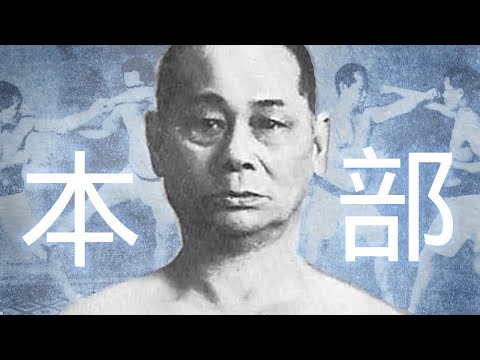
Did a pint-sized Okinawan actually defeat Gichin Funakoshi, the man widely credited as the father of modern Japanese karate? The answer, according to many who lived through that era and the enduring legacy of the fighter himself, is a resounding yes. Prepare yourselves, budding budokas and seasoned martial artists, for a deep dive into the life and legend of **Motobu Choki** (本部 朝基), a man whose approach to kumite (sparring) was as unconventional as it was effective. If your interest lies in the raw, practical application of karate, the evolution of its historical forms, and the sheer grit of its practitioners, then this narrative of challenge and triumph will resonate deeply within your warrior spirit.
The Infamous Confrontation: Motobu Choki vs. Gichin Funakoshi
The annals of karate history are filled with tales of legendary duels and philosophical divides, but few stories capture the imagination quite like the alleged confrontation between Motobu Choki and Gichin Funakoshi. Funakoshi, the esteemed disseminator of Okinawan karate to mainland Japan, established Shotokan, a style known for its emphasis on deep stances, linear movements, and pre-arranged forms (kata). Motobu, on the other hand, hailed from a different lineage, one that perhaps retained more of the fluid, combat-oriented essence of ancient Okinawan fighting arts. The narrative suggests a direct challenge, a test of skill and philosophy that pitted the established order against a more pragmatic, street-tested approach. This isn't just a historical anecdote; it's a potent symbol of the ongoing debate within martial arts: the tension between tradition and practicality, form and function.
A Life Forged in Okinawa: Motobu's Early Years
Born in 1869 in Akata, Shuri, Okinawa, Motobu Choki was not born into privilege in the way one might expect. He was the third son of a noble family, but he was small in stature. This physical disadvantage, however, seemed to fuel his inner fire. Unlike many of his peers who focused on the aesthetic and philosophical aspects of karate, Motobu was drawn to the practical combat applications. His early training was diverse. He is said to have learned from various masters, including Kyan Chotoku and Gusukuma Doyu, but crucially, he spent a great deal of time honing his skills through **kumite** and real-world confrontations. He was known for his daring and his willingness to test his abilities against anyone, regardless of size or reputation. This direct, often brutal, engagement with combat set him apart from many who were content with mastering kata and theoretical knowledge. His approach to **karate** was that of a warrior, not just a scholar.
"In combat, if you freeze for even a second, you might lose your life. You must be able to react instantly." - A sentiment often attributed to Motobu Choki, reflecting his pragmatic view of martial arts.
From Island Roots to Urban Sparring Grounds
As a young man, Motobu felt the confines of Okinawan society and sought broader horizons. Around 1921, he moved to Osaka, a bustling industrial city on mainland Japan. This transition was pivotal. In Okinawa, while combat existed, it was often within a more localized context. Osaka, however, was a melting pot of cultures and a place where one's martial prowess could be tested against a wider array of opponents, including practitioners of other **combat sports** and martial arts. Motobu quickly established himself in the martial arts scene there, not through formal affiliations, but through sheer skill and effectiveness in **sparring**. He eschewed the slow, deliberate movements and deep stances often taught in mainland Japanese dojos, favoring a more agile, grounded style. His **karate** was direct, powerful, and focused on close-range engagements, a stark contrast to the more formalized styles gaining prominence. He demonstrated time and again that his Okinawan **kumite** methods were effective against various opponents.
The Tokyo Challenge: A Clash of Styles and Philosophies
The most storied encounter, though details remain debated among historians, is Motobu's confrontation with Gichin Funakoshi. When Funakoshi visited Osaka, Motobu, already a respected figure in the Okinawan martial arts community, saw an opportunity to settle a perceived discrepancy in how karate was being presented. Funakoshi's style, while influential, was seen by some, including Motobu, as having lost some of its practical combat edge in its adaptation for Japanese audiences. Motobu reportedly challenged Funakoshi, and the encounter, whether a formal match or a more spontaneous exchange, is said to have ended with Motobu's victory. The legend states that Motobu, using his characteristic close-range techniques and powerful **strikes**, overwhelmed Funakoshi, proving the efficacy of his more traditional, combat-focused Okinawan **kumite**. This event, if accurate, would have sent shockwaves through the martial arts world, challenging the notion that Funakoshi's style was the ultimate evolution of karate. It highlighted the fundamental differences in their approaches: Funakoshi’s emphasis on **kata** and discipline versus Motobu’s relentless pursuit of effective **fighting**.
"Karate is a martial art, not a sport. Its purpose is to defeat an opponent, not to score points. The techniques must be practical and effective in real combat." - Motobu Choki's philosophy, as understood through his actions.
Echoes in the Dojo: Motobu's Lasting Impact
While Funakoshi went on to establish Shotokan as one of the most widespread karate styles globally, Motobu Choki's influence, though less overtly recognized in mainstream **karate**, remained profound. He continued to teach and demonstrate his unique brand of **karate**, emphasizing natural movement, powerful **kicks** and punches, and the ability to adapt to any situation. His fame in Japan was such that he was often referred to as "Motobu the Strong." He inspired a generation of martial artists who sought a more realistic and potent form of **self-defense**. His approach reinforced the idea that size is not the ultimate determinant of fighting ability, and that dedication to practical **training** and a deep understanding of combat dynamics are paramount. While Shotokan dominated the global stage, Motobu's legacy serves as a vital reminder of karate's roots as a true **martial art**, forged in the crucible of real conflict. His teachings continue to resonate with those who believe that the ultimate test of any martial art lies not in competition points, but in its effectiveness when facing a genuine threat.
Sensei's Verdict: The Enduring Spirit of Motobu Choki
Motobu Choki stands as a testament to the warrior spirit that often gets diluted in the pursuit of sport or rigid tradition. His life story challenges us to question the prevailing narratives and to seek authenticity in our **martial arts training**. While Gichin Funakoshi’s contribution to karate's global reach is undeniable, Motobu Choki represents the unyielding pragmatism of a fighter who prioritized effectiveness above all else. His alleged victory over Funakoshi, more than a personal triumph, signifies the enduring power of practical application over purely academic mastery. In a world increasingly focused on the superficial, Motobu’s legacy is a crucial reminder of the substance that lies beneath.
Cinturón Negro en Coraje y Pragmatismo.
Equipment Essential for Your Training
While Motobu Choki emphasized natural ability and minimal equipment, a dedicated practitioner today can benefit from certain training aids that complement their development. For those looking to emulate the spirit of rigorous kumite and practical application:
Durable Karate Gi: Look for a double-weave or heavyweight gi that can withstand intense sparring and training. Brands like Seishin International (as mentioned in the original content's promotional material) are known for their quality.
Training Mitts/Pads: Essential for developing punching power and accuracy without risking injury during partner drills.
Focus Mitts: Crucial for improving reaction time, speed, and precision, mirroring the dynamic exchanges Motobu would have engaged in.
Makiwara (Optional): A traditional Okinawan striking post. Used sparingly and with proper technique, it can help develop power and conditioning for striking.
Training Guide: Embracing Motobu's Kumite Philosophy
Motobu Choki's approach to kumite was centered on practicality, natural movement, and decisive action. While we cannot replicate his exact training methods, we can distill his philosophy into actionable principles for your own practice:
Prioritize Natural Movement: Focus on fluid transitions between stances and techniques. Avoid being overly rigid. Practice moving as if you were simply walking or running, but with the intention of striking or defending.
Develop Close-Range Combat Skills: Motobu was known for his effectiveness at close range. Incorporate drills that focus on clinch work, elbow and knee strikes, and short, powerful punches.
Emphasize Reaction and Adaptability: Sparring is key. Engage in **sparring** with varied partners and styles. The goal is not just to win, but to learn to react instinctively to an opponent's movements. Practice drills where the attack is unexpected.
Train for Power and Conditioning: While size wasn't Motobu's advantage, his power was legendary. Incorporate **strength training** and **conditioning** exercises that build explosive power and endurance.
Understand the "Why" Behind the Technique: Motobu didn't just perform techniques; he understood their combat application. When practicing **kata**, always consider the practical **self-defense** applications (**bunkai**).
Frequently Asked Questions
Q1: Was Motobu Choki actually shorter than Funakoshi?
A1: While accounts vary, Motobu was generally described as being of smaller stature, often emphasizing that his effectiveness was due to skill and technique, not brute size.
Q2: Did Motobu Choki teach a specific karate style?
A2: Motobu did not formally establish a distinct style in the way Funakoshi did with Shotokan. He taught his own approach, often referred to as "Motobu-ryu," which was characterized by its practical, combat-oriented **kumite**.
Q3: How did Motobu's karate differ from Shotokan?
A3: Motobu's karate emphasized natural, fluid movement, close-range fighting, and direct application. Shotokan, as developed by Funakoshi, often featured deeper stances, more linear movements, and a strong focus on **kata** and formal discipline.
Q4: Is the story of Motobu defeating Funakoshi true?
A4: The exact details are debated among historians, and some argue it may have been a different Funakoshi or a less formal encounter. However, the narrative persists due to Motobu's well-documented reputation as a formidable and effective fighter who often challenged established norms.
Q5: Can Motobu's techniques be applied in modern martial arts like MMA?
A5: Absolutely. Motobu's emphasis on natural movement, close-range fighting, and decisive action are highly relevant in modern **Artes Marciales Mixtas (MMA)** and **combatsports**. His philosophy transcends specific styles and speaks to the core principles of effective fighting.
Further Exploration
To deepen your understanding of the warrior's path and the rich tapestry of martial arts history, consider exploring these related topics:
Motobu Choki reminds us that the true measure of a martial art is not its historical lineage or its aesthetic beauty, but its efficacy when the chips are down. In your training, do you chase the applause of the crowd with elaborate forms, or do you seek the quiet certainty of knowing you can defend yourself and overcome adversity? Where does your current practice truly lie on this spectrum?
GEMINI_METADESC: Explore the legendary life of Motobu Choki, the Okinawan karateka famed for his practical kumite and legendary confrontation with Gichin Funakoshi. Discover his unique fighting philosophy and enduring legacy.
The air in the dojo crackles with a silent intensity. It's the hum of discipline, the echo of countless hours spent honing the body and mind. Shotokan Karate, a name synonymous with power, precision, and an unbroken lineage stretching back to the dawn of modern martial arts, is more than just a fighting style; it's a philosophy etched in motion. But who are the titans, the individuals whose very names evoke awe and respect within the hallowed halls of Budo? Who are the fighters who didn't just practice Shotokan, but embodied its spirit, pushing its boundaries and leaving an indelible mark on the world of martial arts? This is not merely a list; it is an investigation into the soul of a discipline that has shaped warriors and fostered self-mastery for generations.
Shotokan Karate, a cornerstone of modern martial arts, didn't spring into existence fully formed. It was forged in the crucible of Okinawa, refined by visionary masters, and disseminated across the globe by dedicated practitioners. Its very name, "Shoto," meaning "waving pine," reflects the serene yet powerful nature that its founder, Gichin Funakoshi, sought to instill. When we speak of the "greatest fighters," we're not just referring to those who dominated competitions, but to individuals who exemplified the highest ideals of Shotokan: technical brilliance, unwavering spirit, and a profound commitment to the principles of Budo.
But let's cut through the polite introductions. Are we talking about pure sport Karate, or does the definition of "fighter" encompass those who preserved the art's combative integrity? The line can blur, and it's precisely this tension that makes dissecting Shotokan's legacy so compelling. In this deep dive, we will not shy away from controversy, but rather embrace it, for it is through rigorous debate that true understanding is born.
The Pillars: Funakoshi and Nakayama
No discussion of Shotokan greatness can begin without acknowledging its spiritual and practical architects. Gichin Funakoshi (1868-1957) is, without question, the linchpin. His journey from Okinawa to mainland Japan, introducing *Te* (hand techniques) as Karate, fundamentally altered the martial landscape. Funakoshi wasn't just a fighter; he was a philosopher-warrior who translated the raw effectiveness of Okinawan fighting into a structured system, emphasizing the moral and ethical dimensions alongside the physical.
"Karate is not a copy of other arts, just as the pine is not a copy of the willow. Its strength is not merely in its execution, but in its perfection." - Gichin Funakoshi
His student, Masatoshi Nakayama (1913-1987), inherited this monumental task. Nakayama was the organizational genius and the driving force behind the Japan Karate Association (JKA). He not only codified the techniques and katas, ensuring a degree of standardization that allowed Shotokan to spread universally, but he also championed the competitive aspect, recognizing its power in testing and refining techniques under pressure. Nakayama's vision was pragmatic: to ensure Shotokan's relevance and effectiveness in a changing world. His influence on competitive Karate is undeniable.
Masters of the Golden Age
The decades following Funakoshi and Nakayama's foundational work saw an explosion of talent. These were the men who took the established framework and infused it with their unique fire, forging careers that would inspire generations. The late 20th century, in particular, was a fertile period for Shotokan fighters who excelled not only in kata but in the intense, high-speed combat of kumite.
We speak of:
Hirokazu Kanazawa (b. 1931): A student of Nakayama, Kanazawa is a legend for his technical prowess and dynamic energy. His mastery of both kata and kumite, coupled with his extensive international teaching, solidified his place in history. His influence transcends mere fighting; he is an educator of Budo.
Taiji Kase (1935-2004): Known for his powerful techniques and dynamic stances, Kase was another prominent figure within the JKA. He later developed his own style, encouraging innovation while staying true to Shotokan principles. His approach to the art was often described as forceful and direct, reflecting a deep understanding of combat application.
Hidetaka Nishiyama (1928-2008): A student of Funakoshi, Nishiyama was instrumental in establishing Karate in the United States and was a key figure in the formation of the International Traditional Karate Federation (ITKF). He advocated for Karate as a path to self-development, not just a fighting sport.
Keinosuke Enoeda (1935-1993): Often dubbed the "Tiger of Shotokan," Enoeda was renowned for his incredible speed, powerful techniques, and fierce fighting spirit. His presence on the mat was electrifying, a true testament to the combative potential of Shotokan.
These names, and many others like Tetsuhiko Asai, Takashi Mikami, and Yoshiaki Ushiro, represent a golden era where the theoretical principles of Shotokan were put to the ultimate test in live combat scenarios, both in dojo sparring and international tournaments. Their dedication to rigorous training, often involving punishing physical conditioning and repetitive drilling, is a lesson in itself. Are you putting in that level of commitment, or are you content with superficial understanding?
Contemporary Icons and Their Legacies
While the "golden age" produced many legends, the evolution of Shotokan has continued. Modern fighters, often competing in highly specialized sport Karate circuits, continue to push the envelope. Names like Antonio Oliva, Shinji Nagaki, and Toru Shimizu have carved out significant legacies. Their ability to adapt Shotokan's principles to the demands of modern competition, where milliseconds matter and strategy is paramount, is a testament to the art's enduring viability.
However, a word of caution: does the intense focus on sport Karate sometimes dilute the deeper philosophical aspects that Funakoshi emphasized? This is a question that sparks heated debate in martial arts circles. Some argue that the scoring system and rulesets can inadvertently encourage techniques that are less effective in a real self-defense scenario, while others contend that competitive pressure refines techniques to their most efficient form. Where do you stand on this crucial distinction?
The Philosophical Underpinnings of Mastery
To truly understand the "greatest" Shotokan fighters, one must look beyond their physical prowess. At its heart, Shotokan is a discipline rooted in the principles of Budo – the Way of the Warrior. This path emphasizes not only the combat skills but also moral development, mental fortitude, and spiritual growth. Concepts like Mushin (no mind), Zanshin (continuous awareness), and Fudoshin (immovable mind) are not mere buzzwords; they are the guiding principles that separate a mere fighter from a true martial artist.
"The ultimate aim of Karate is not winning or losing, but the perfection of the human character." - Gichin Funakoshi
The dedication required to achieve mastery in Shotokan is immense. It demands not only physical training but also deep introspection and an unwavering commitment to self-improvement. This is where the true "fighting" occurs – the internal battle against one's own limitations, fears, and ego. It is this internal struggle that, when conquered, allows the external techniques to flow with true power and purpose. Think of the discipline required for Kyokushin Karate's legendary conditioning; Shotokan, while different in its expression, demands a similar internal fortitude.
Sharpening Your Own Blade: Training for Excellence
The path to becoming a formidable Shotokan practitioner, whether for competition or personal development, is paved with consistent and intelligent training. While the specific techniques and approaches of the masters differ, certain core principles remain universal:
Master the Fundamentals: Do not underestimate the power of the basics. Perfect your stances (dachi), punches (tsuki), blocks (uke), and kicks (geri). This is the bedrock upon which all advanced techniques are built.
Kata as a Blueprint: Treat each kata not as a dance, but as a detailed combat simulation. Understand the bunkai (applications) behind every movement. Practice it repeatedly until the techniques become instinctive.
Kumite Dynamics: Engage in sparring (kumite) with a focus on strategy, timing, and control. Seek partners who challenge you, forcing you to adapt and think on your feet. Learn from both your successes and your failures.
Physical Conditioning is Non-Negotiable: Develop explosive power, endurance, and flexibility. Incorporate cardiovascular training, strength conditioning, and flexibility exercises into your routine. The body is the weapon; it must be honed.
Mental Fortitude is Key: Cultivate focus, discipline, and resilience. Practice meditation or mindfulness techniques to enhance your awareness and composure under pressure.
Remember, the journey is as important as the destination. The greatest fighters weren't born; they were made through relentless dedication. Are you willing to make that commitment?
Essential Gear for the Dedicated Budoka
While Shotokan Karate can be practiced with minimal equipment, certain items can significantly enhance your training experience and help you emulate the dedication of the masters.
Karategi (Uniform): A high-quality, durable Karategi is essential. Look for one made from heavy-duty cotton that can withstand the rigors of intense training and frequent washing. Brands like Karate Merchandise or specific Kyokushin Gi manufacturers often offer excellent options.
Karate Belt: As you progress, your belt signifies your level of dedication and understanding. Ensure it's securely tied – a loose belt is a sign of a loose mind.
Mouthguard: For sparring (kumite), a properly fitting mouthguard is non-negotiable for protecting your teeth and jaw.
Groin Protector: Essential for protecting against accidental strikes during sparring.
Training Mats (optional): If you're practicing at home, especially dynamic techniques or falling drills, padded mats can provide a safer training environment and reduce the risk of injury.
Sensei's Verdict: The Enduring Impact
The concept of a definitive "Top 20" is inherently subjective, a testament to the diverse interpretations and expressions of Shotokan Karate throughout history. What unites these masters, from the foundational figures like Funakoshi and Nakayama to the titans of competition like Enoeda and Kanazawa, is their unwavering commitment to the art. They didn't just perform techniques; they lived the philosophy. They demonstrated that Shotokan Karate is a powerful combative system, a rigorous physical discipline, and a profound path to personal growth. Their legacies are not merely in the records they set, but in the countless practitioners they have inspired to take up the mantle of Budo.
Score: Black Belt in Legacy and Influence
Frequently Asked Questions
Who is considered the founder of Shotokan Karate?
Gichin Funakoshi is widely regarded as the founder of Shotokan Karate. He introduced the style from Okinawa to mainland Japan.
What is the difference between Shotokan and other Karate styles?
Shotokan is characterized by its deep stances, powerful linear techniques, and emphasis on strong fundamental movements. While all Karate styles share common roots, Shotokan's specific approach to stances, kihon (basics), and kata differentiates it.
Is Shotokan Karate effective for self-defense?
Yes, Shotokan Karate, when practiced with a focus on practical application and combative principles, can be highly effective for self-defense. However, like any art, its effectiveness depends on the practitioner's training, intent, and understanding of real-world situations.
What does "Budo" mean in the context of Shotokan?
Budo translates to "the Way of the Warrior." In Shotokan, it signifies that the practice of Karate extends beyond physical techniques to encompass discipline, respect, mental fortitude, and personal development.
Deeper Dives into the Budo Path
The journey into the world of Shotokan and the broader martial arts landscape is continuous. For those seeking to deepen their understanding and connect with a vibrant community, the following resources are invaluable:
Explore the foundational principles of martial philosophy in our article on BUDO.
Understand the physical demands and strategic nuances of modern combat in our analysis of Artes Marciales Mixtas.
Discover the importance of mental resilience and self-mastery in our guide to Self Improvement.
In conclusion, Shotokan Karate stands as a monumental pillar in the edifice of martial arts. The fighters we have highlighted are not just practitioners; they are custodians of a legacy, warriors who have not only mastered technique but have also illuminated the profound philosophical depths of this ancient art form. Their dedication serves as a perpetual challenge to us all: to pursue not just strength, but wisdom; not just victory, but character.
Reflexión del Sensei: Tu Próximo Paso
You have walked through the hallowed halls, glimpsed the faces of legends. But true understanding does not come from observation alone. It is forged in sweat, in frustration, in the relentless pursuit of perfection. Now, tell me: which of these masters' spirits resonates most deeply with your own martial aspirations? And more importantly, what single, concrete action will you take today to embody a fraction of their dedication in your own training? The path is yours to walk, but the first step must be taken with intention.
Is Shotokan Karate merely a series of powerful techniques, or is it a profound path to self-mastery? Many practitioners chase the perfect punch, the crispest block, or the most dynamic kick, yet often miss the deeper currents that flow beneath the surface of this venerable martial art. Are we truly living the Budo spirit, or are we just performing movements? Today, we delve into the very heart of Shotokan, not just by dissecting its techniques, but by honoring the titans who shaped it, challenged its evolution, and ensured its survival through sheer dedication. Prepare to confront the legacy of the masters.
Introduction: The Unwavering Spirit of Shotokan
Karate, a discipline born on the shores of Okinawa, Japan, has transcended its origins to become a global phenomenon. Among its myriad styles, Shotokan stands as a colossus, a testament to the vision of its founder, Gichin Funakoshi. Forged in the early 20th century, Shotokan is characterized by its thunderous strikes, acrobatic kicks, and an almost monastic devotion to rigorous training and unwavering discipline. But what truly elevates Shotokan beyond mere physical combat? It's the philosophy, the character development, the Budo spirit that these masters embodied and transmitted.
In this exposé, we move beyond a simple list. We dissect the contributions of five titans whose influence reverberates through every dojo today. These are not just names in a history book; they are the architects of a martial art that continues to shape minds and bodies worldwide. Are they truly the "best," or were they simply the most *influential*? That's a debate for the ages, one we'll certainly ignite.
1. Gichin Funakoshi: The Father of Modern Karate
To speak of Shotokan is to speak of Gichin Funakoshi. Born in Okinawa in 1868, this visionary is not merely the founder; he is the very bedrock upon which modern Karate is built. Often hailed as the "father of modern Karate," Funakoshi dedicated his life to refining and popularizing this art form. His journey began at a young age, immersed in the traditional Okinawan fighting arts. Yet, it was his move to Tokyo in 1922 that proved pivotal, introducing Karate to mainland Japan and setting the stage for its global ascent.
Funakoshi’s approach transcended mere physical prowess. He stressed the paramount importance of character development, believing that the true essence of Karate lay not in defeating an opponent, but in perfecting oneself. His teachings are encapsulated in his immortal words:
"The ultimate aim of Karate lies not in victory or defeat, but in the perfection of the character of its participants."
This philosophical anchor is what separates true Budo from mere fighting. His legacy is not just in the techniques, but in the enduring spirit of self-improvement that defines Shotokan.
2. Masatoshi Nakayama: Architect of the JKA System
Emerging from the shadow of Funakoshi, Masatoshi Nakayama stands as one of the most crucial figures in shaping Shotokan into the structured, globally recognized art it is today. Born in 1913, Nakayama was not just a student; he was an innovator, a strategist, and the driving force behind the establishment of the Japan Karate Association (JKA) in 1949. As its chief instructor for many years, he meticulously codified training methodologies, ensuring a consistent and effective transmission of Funakoshi's teachings.
Nakayama’s contribution extends beyond organizational prowess. He authored several seminal books on Karate, delving deep into the technical nuances and practical application of Shotokan techniques. His work in developing the JKA's comprehensive training program was instrumental in standardizing Karate instruction, making it accessible and replicable across different regions. He understood that for an art to truly flourish, it needs a robust system. Did he achieve that system, or did he inadvertently create rigidity? The debate rages, but his impact is undeniable.
3. Hidetaka Nishiyama: The American Pioneer
While Funakoshi laid the foundation and Nakayama built the structure, Hidetaka Nishiyama carried the torch across the Pacific, becoming a pivotal figure in the development of Karate in the United States. Born in 1928, Nishiyama made his significant move to the U.S. in 1960, armed with a profound understanding of Shotokan and a burning desire to share it.
His entrepreneurial spirit led him to found the All American Karate Federation (AAKF) in 1969. Through relentless promotion via tournaments, demonstrations, and educational initiatives, Nishiyama was instrumental in igniting the Karate boom in America. He wasn't just teaching techniques; he was cultivating a community. Like Nakayama, he authored several influential books, but his particular genius lay in his meticulous focus on the technical intricacies of the martial art, ensuring that the purity of Shotokan remained intact amidst its rapid expansion. How much of the American Karate scene owes its existence to his direct efforts?
"Karate is a martial art that originated in Okinawa, Japan... One of the most popular styles of Karate is Shotokan Karate..."
4. Taiji Kase: The Technical Virtuoso and Spiritual Seeker
Taiji Kase, born in 1929, represents a different facet of Shotokan mastery – a deep technical prowess interwoven with a profound spiritual understanding. While many focused on the competitive aspects or the organizational structures, Kase delved into the *essence* of Karate, exploring its spiritual dimensions alongside its physical manifestations. His understanding of Ki (life force) and its application in martial arts was legendary.
Relocating to Europe in the 1960s, Kase became a crucial catalyst for Karate's growth on the continent. His founding of the European Shotokan Karate Association (ESKA) in 1975 and his long tenure as its chief instructor cemented his influence. Kase’s teachings often emphasized subtle yet powerful principles, encouraging practitioners to look beyond brute force and discover the efficiency and fluidity inherent in well-executed technique. He embodied the idea that true power comes not just from muscle, but from cultivated energy and precise intent.
5. Hirokazu Kanazawa: The Living Legacy
In the pantheon of Shotokan masters, Hirokazu Kanazawa (born 1931) stands as a living embodiment of the art’s technical brilliance and its traditional roots. A top student under Masatoshi Nakayama, Kanazawa honed his skills within the prestigious Japan Karate Association (JKA), serving as an instructor and further refining his understanding of the style.
However, his vision extended beyond the JKA. In 1977, he founded the Shotokan Karate International Federation (SKIF), an organization that has grown to encompass millions of practitioners worldwide. Kanazawa is renowned for his exceptional technique, his dynamic demonstrations, and his unwavering commitment to preserving the traditional spirit of Karate while adapting it for the modern practitioner. He represents continuity and evolution, a master who has not only mastered Shotokan but has also become its global ambassador.
Veredict of the Sensei: Acknowledging the Pillars
To definitively rank these masters as "best" is a fool's errand, akin to asking if a sword is better than a spear – it depends entirely on the wielder and the context. What is undeniable is their collective impact. Funakoshi ignited the flame, Nakayama built the engine, Nishiyama spread the fuel across continents, Kase explored its deeper energies, and Kanazawa continues to fan the flames with unparalleled technical mastery. They are the indispensable pillars upon which modern Shotokan rests. Without them, the landscape of martial arts would be drastically different. They represent different facets of mastery: the visionary founder, the systematic organizer, the international pioneer, the technical-spiritual synthesist, and the living repository of tradition. Each deserves profound respect.
Essential Equipment for Your Training
While the mind and spirit are the ultimate tools in Karate, the right equipment can significantly enhance your training, safety, and progression. For Shotokan practitioners, focusing on durability and proper fit is key:
Karate Gi: Look for a double-woven or heavyweight gi (kimono) for sparring and advanced training. A 10-12 oz gi offers good durability and a satisfying snap during technique execution. Brands like Adidas, Mizuno, and Shureido are highly regarded.
Belts (Obi): Ensure your belt is strong enough to withstand the rigors of training, especially during grappling or intense kata practice. A multi-layered cotton belt is recommended.
Mouthguard: Essential for sparring. A custom-fitted mouthguard offers the best protection and comfort.
Groin Protector (for males): A non-negotiable piece of safety gear for any full-contact sparring.
Shin and Instep Guards: Increasingly common and recommended for sparring, especially for practitioners focusing on dynamic kicks, to prevent injuries.
Training Mats (optional): For practicing falls (ukemi) and some solo drills, especially if training at home.
Training Guide: Mastering the Fundamentals
The essence of Shotokan lies in its foundational techniques. Mastery doesn't come from complexity, but from perfecting the simple. Here’s a basic framework for practicing key elements:
Stances (Dachi):
Zenkutsu-dachi (Forward Stance): Focus on a deep, stable base, ensuring the front knee is aligned over the toes and the back leg is straight and firm. Practice transitioning smoothly into and out of this stance.
Kiba-dachi (Horse Stance): Maintain a wide, low stance with knees pushed outwards. Ensure the back is straight and the core is engaged. Practice holding this stance for extended periods to build leg strength and stability.
Kokutsu-dachi (Backward Stance): Shift weight predominantly to the rear leg, keeping the front leg light for quick retraction or extension. Ensure the back is straight and the hips are relatively square to the front.
Basic Strikes (Tsuki):
Choku-zuki (Middle Punch): Practice with a straight, linear motion, focusing on hip rotation and exhaling sharply at the point of impact. Ensure a clean retraction of the fist.
Gedan-barai (Downward Block): Execute with power from the shoulder, drawing a straight line downwards to deflect an incoming attack. Maintain a strong, stable stance throughout.
Basic Blocks (Uke):
Age-uke (Rising Block): Practice deflecting attacks aimed at the head. Ensure the block travels in a clear upward path, using the forearm as the primary defensive surface.
Soto-uke (Outside Block): Visualize deflecting a blow coming from the outside (e.g., across the face). Focus on a circular motion originating from the elbow.
Kata Practice:
Begin with the fundamental kata like Taigyoku (if taught in your dojo) or Heian Shodan. Focus on precise movements, correct stances, breathing, and the underlying Budo principles within each sequence.
Record yourself practicing kata and analyze your form, looking for improvements in posture, power generation, and fluidity.
Conditioning:
Incorporate basic conditioning exercises like push-ups, squats, and core work daily.
Practice dynamic stretching before training and static stretching afterwards to improve flexibility and prevent injuries.
Frequently Asked Questions
What is the difference between Shotokan and other Karate styles?
Shotokan, founded by Gichin Funakoshi, is known for its deep, long stances (like Zenkutsu-dachi), powerful linear movements, and strong emphasis on basic techniques (kihon) and kata. Other styles might emphasize different stances, faster or more circular movements, or different philosophical underpinnings.
Is Shotokan Karate effective for self-defense?
Yes, when taught and practiced with the correct intent. While its primary focus is on character development and discipline, the powerful techniques, effective blocking strategies, and physical conditioning inherent in Shotokan provide a solid foundation for self-defense. However, practical application often requires specific training in close-quarters combat and realistic scenarios.
How important is the philosophical aspect of Shotokan?
The philosophical aspect, encapsulated in Funakoshi's quote about character perfection, is arguably the most important element. It elevates Karate from a mere fighting system to a path of personal growth (Do). Without this understanding, one risks practicing only the physical shell without the true Budo spirit.
What is "Ki" in the context of Shotokan?
Ki (or Qi) refers to life force or energy. In Shotokan, understanding and harnessing Ki is crucial for generating power efficiently, moving fluidly, and developing presence. Masters like Taiji Kase specifically emphasized this aspect, showing how focused intent and breath control can amplify physical techniques.
Are Shotokan masters still actively teaching today?
While the foundational masters mentioned have passed on, their students and grand-students continue to teach and lead organizations worldwide. Masters like Hirokazu Kanazawa have been active for decades, preserving and propagating the art. New generations of skilled instructors are also emerging globally.
Veredict of the Sensei: Acknowledging the Pillars
To definitively rank these masters as "best" is a fool's errand, akin to asking if a sword is better than a spear – it depends entirely on the wielder and the context. What is undeniable is their collective impact. Funakoshi ignited the flame, Nakayama built the engine, Nishiyama spread the fuel across continents, Kase explored its deeper energies, and Kanazawa continues to fan the flames with unparalleled technical mastery. They are the indispensable pillars upon which modern Shotokan rests. Without them, the landscape of martial arts would be drastically different. They represent different facets of mastery: the visionary founder, the systematic organizer, the international pioneer, the technical-spiritual synthesist, and the living repository of tradition. Each deserves profound respect.
Essential Equipment for Your Training
While the mind and spirit are the ultimate tools in Karate, the right equipment can significantly enhance your training, safety, and progression. For Shotokan practitioners, focusing on durability and proper fit is key:
Karate Gi: Look for a double-woven or heavyweight gi (kimono) for sparring and advanced training. A 10-12 oz gi offers good durability and a satisfying snap during technique execution. Brands like Adidas, Mizuno, and Shureido are highly regarded.
Belts (Obi): Ensure your belt is strong enough to withstand the rigors of training, especially during grappling or intense kata practice. A multi-layered cotton belt is recommended.
Mouthguard: Essential for sparring. A custom-fitted mouthguard offers the best protection and comfort.
Groin Protector (for males): A non-negotiable piece of safety gear for any full-contact sparring.
Shin and Instep Guards: Increasingly common and recommended for sparring, especially for practitioners focusing on dynamic kicks, to prevent injuries.
Training Mats (optional): For practicing falls (ukemi) and some solo drills, especially if training at home.
Training Guide: Mastering the Fundamentals
The essence of Shotokan lies in its foundational techniques. Mastery doesn't come from complexity, but from perfecting the simple. Here’s a basic framework for practicing key elements:
Stances (Dachi):
Zenkutsu-dachi (Forward Stance): Focus on a deep, stable base, ensuring the front knee is aligned over the toes and the back leg is straight and firm. Practice transitioning smoothly into and out of this stance.
Kiba-dachi (Horse Stance): Maintain a wide, low stance with knees pushed outwards. Ensure the back is straight and the core is engaged. Practice holding this stance for extended periods to build leg strength and stability.
Kokutsu-dachi (Backward Stance): Shift weight predominantly to the rear leg, keeping the front leg light for quick retraction or extension. Ensure the back is straight and the hips are relatively square to the front.
Basic Strikes (Tsuki):
Choku-zuki (Middle Punch): Practice with a straight, linear motion, focusing on hip rotation and exhaling sharply at the point of impact. Ensure a clean retraction of the fist.
Gedan-barai (Downward Block): Execute with power from the shoulder, drawing a straight line downwards to deflect an incoming attack. Maintain a strong, stable stance throughout.
Basic Blocks (Uke):
Age-uke (Rising Block): Practice deflecting attacks aimed at the head. Ensure the block travels in a clear upward path, using the forearm as the primary defensive surface.
Soto-uke (Outside Block): Visualize deflecting a blow coming from the outside (e.g., across the face). Focus on a circular motion originating from the elbow.
Kata Practice:
Begin with the fundamental kata like Taigyoku (if taught in your dojo) or Heian Shodan. Focus on precise movements, correct stances, breathing, and the underlying Budo principles within each sequence.
Record yourself practicing kata and analyze your form, looking for improvements in posture, power generation, and fluidity.
Conditioning:
Incorporate basic conditioning exercises like push-ups, squats, and core work daily.
Practice dynamic stretching before training and static stretching afterwards to improve flexibility and prevent injuries.
Frequently Asked Questions
What is the difference between Shotokan and other Karate styles?
Shotokan, founded by Gichin Funakoshi, is known for its deep, long stances (like Zenkutsu-dachi), powerful linear movements, and strong emphasis on basic techniques (kihon) and kata. Other styles might emphasize different stances, faster or more circular movements, or different philosophical underpinnings.
Is Shotokan Karate effective for self-defense?
Yes, when taught and practiced with the correct intent. While its primary focus is on character development and discipline, the powerful techniques, effective blocking strategies, and physical conditioning inherent in Shotokan provide a solid foundation for self-defense. However, practical application often requires specific training in close-quarters combat and realistic scenarios.
How important is the philosophical aspect of Shotokan?
The philosophical aspect, encapsulated in Funakoshi's quote about character perfection, is arguably the most important element. It elevates Karate from a mere fighting system to a path of personal growth (Do). Without this understanding, one risks practicing only the physical shell without the true Budo spirit.
What is "Ki" in the context of Shotokan?
Ki (or Qi) refers to life force or energy. In Shotokan, understanding and harnessing Ki is crucial for generating power efficiently, moving fluidly, and developing presence. Masters like Taiji Kase specifically emphasized this aspect, showing how focused intent and breath control can amplify physical techniques.
Are Shotokan masters still actively teaching today?
While the foundational masters mentioned have passed on, their students and grand-students continue to teach and lead organizations worldwide. Masters like Hirokazu Kanazawa have been active for decades, preserving and propagating the art. New generations of skilled instructors are also emerging globally.
We have examined the giants upon whose shoulders the edifice of Shotokan Karate stands. Their dedication, their vision, their relentless pursuit of perfection are undeniable. But knowledge without application is like a powerful technique without proper execution – it lacks true meaning.
The question that lingers is not merely about their greatness, but about yours. Are you merely practicing Karate, or are you *living* Budo? How will you honor these masters not just with your fists and feet, but with the cultivation of your character? What single principle learned from these titans will you strive to embody this week, both on and off the mat?
The true warrior is a craftsman, a master of his art. To understand Karate, we must understand its origin, its very soul. This isn't just about punches and kicks; it's about history, philosophy, and a lineage that stretches back through time.
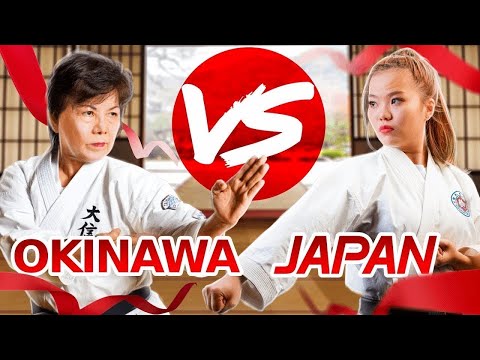
The world knows Karate. It’s a global phenomenon, a martial art that has graced Olympic stages and countless dojos from Tokyo to Toronto. Yet, how many truly grasp the profound chasm that separates the Karate born on the subtropical islands of Okinawa from the Karate that evolved on mainland Japan? This isn't a mere stylistic nuance; it’s a divergence rooted in history, culture, and the very purpose for which the art was honed. To truly appreciate Karate, one must delve into its genesis, and that journey begins in Okinawa. Here, I will illuminate ten critical distinctions that define the Karate of its birthplace versus its mainland evolution, offering you, the dedicated practitioner, a deeper, more critical understanding.
Karate's journey from the shores of Okinawa to the global stage is a testament to its efficacy and enduring appeal. Yet, in this global dissemination, certain core principles and distinctions have become diluted, misunderstood, or even lost. Understanding the differences between Okinawan Karate and Japanese Karate is not about declaring one superior, but about appreciating the distinct evolutionary paths each has taken. Okinawa, the cradle of Karate, developed an art forged in the crucible of survival and oppression. Japan, upon its introduction, adapted and transformed it, often for different societal roles and eventually, as a modern sport. This distinction is crucial for any serious martial artist seeking to connect with the art's historical integrity and profound depth.
Difference 1: Origins and Purpose - Survival vs. Modern Sport
The fundamental divergence lies in the initial *raison d'être*. Okinawan Karate, or 'Tōde' (Chinese Hand), emerged from a need for effective self-defense under the Satsuma domain's ban on weapons. Its primary objective was **survival**. Techniques were direct, brutal, and designed to incapacitate quickly. This ethos permeates the older Okinawan styles like Naha-te, Shuri-te, and Tomari-te.
Conversely, when Karate was introduced to mainland Japan by masters like Gichin Funakoshi (who, it's crucial to remember, was Okinawan himself), it was systematically reorganized and formalized. Funakoshi sought to integrate Karate into the Japanese educational system, emphasizing its character-building aspects and moving it away from its overtly combative roots. This led to the development of styles like Shotokan, which, while still powerful, often prioritized aesthetics, formalized sparring (kumite), and competitive sport aspects.
"The purpose of martial arts is not to defeat an enemy, but to defeat oneself." - Gichin Funakoshi
This quote, while profound, highlights the shift. Okinawan Karate's "self-defeat" was often literal: overcoming the enemy before they overcame you. Japanese Karate's "self-defeat" evolved towards overcoming personal limitations, ego, and developing discipline within a structured framework.
Difference 2: Kobudō Integration - Weapons as an Extension of the Body
In Okinawa, Karate and Kobudō (the art of weapon-based self-defense) are inextricably linked. Masters of Karate were often masters of weapons. The movements, principles, and body mechanics learned in empty-hand forms (kata) directly translated to the use of weapons like the *bō* (staff), *sai* (truncheon), *tonfa* (nightstick), and *kama* (sickle). Kobudō wasn't an add-on; it was an integral part of the complete martial education.
On mainland Japan, while Kobudō exists, it is often taught as a separate discipline from Karate. The focus shifted predominantly to empty-hand techniques, and the weapon arts, while respected, did not always retain the same symbiotic relationship with Karate training.
Difference 3: Bunkai Methodology - Practical Application vs. Abstract Forms
Bunkai, the practical application and analysis of Karate kata, is where the Okinawan emphasis on survival truly shines. In traditional Okinawan Karate, bunkai is dissected with ruthless practicality. Each movement, each block, each strike is analyzed for its most direct and effective application in a life-or-death scenario. The aim is to understand how to neutralize an opponent efficiently, often with joint locks, throws, or debilitating strikes to vital points.
While Japanese Karate styles also practice bunkai, the interpretation can become more abstract or focused on pre-arranged drills for sport kumite. The sheer number of potential applications and the nuanced interpretations sometimes overshadow the raw, unadorned effectiveness demanded by Okinawan masters. Think of it as the difference between studying a surgeon's scalpel for its precise function versus studying a warrior's blade for its decisive cut.
Difference 4: Hojō Undo - The Foundation of Functional Strength
Hojō Undo, meaning "supplementary training," is a cornerstone of Okinawan Karate. This involves the use of weighted tools like the *chi'ishi* (stone weights), *nigiri game* (gripping jars), and *makiwara* (striking posts). The purpose is to develop a deep, functional strength, power generation from the ground up, and resilience in the hands and body. The *makiwara*, in particular, is a training tool designed to condition the striking surfaces and develop powerful, accurate impact.
In many Japanese Karate dojos, Hojō Undo is less emphasized. Strength and conditioning often rely more on calisthenics, modern weight training, or sparring itself. While effective, it can lack the specific, hard-conditioning focus that Hojō Undo imparts, which directly correlates to the power needed for devastating strikes.
Difference 5: Iaijutsu Influence - The Art of the Quick Draw
While not a direct part of all Okinawan Karate, there’s a discernible influence of Japanese sword arts, particularly Iaijutsu, on some Okinawan Karate katas. This influence is seen in techniques that mimic drawing a sword, the rapid draw and cut motions, and the understanding of striking from a state of readiness. Masters like Miyamoto Musashi, though primarily a swordsman, embodied a holistic approach to combat that resonated beyond the sword.
The introduction of Karate to Japan coincided with a period when swordsmanship was being formally codified. This environment meant that Karate, when adapted, naturally incorporated some of the elegance and precision associated with these established Japanese martial traditions.
Difference 6: Emphasis on Kata - Purity of Form vs. Interpretation
Kata, the pre-arranged forms, are central to all Karate. However, the *approach* to kata can differ significantly. In Okinawan Karate, there's often a strong emphasis on preserving the kata's original form and understanding the myriad implied applications. The kata is viewed as a living repository of techniques and principles.
In Japan, particularly in styles that have embraced sport Karate, kata can sometimes be judged based on athletic performance, speed, power, and precision within a competitive framework. While this fosters discipline and performance, there's a risk that the deeper, more subtle applications and the original intent of the movements might be de-emphasized in favor of a visually impressive, yet potentially less practical, execution.
Difference 7: Self-Defense Realities - The 'Gegō' Principle
One of the most stark contrasts lies in the approach to self-defense. Okinawan Karate, born from necessity, often embodies the principle of *Gegō* – the concept of "attack to counterattack" or "strike before being struck." It embraces efficiency and decisiveness. The goal is to end the confrontation as quickly as possible.
Japanese Karate, in its more formalized and sport-oriented expressions, often trains in controlled sparring environments (kumite) where points are scored, and direct incapacitation is not the immediate goal. While this develops skill and reflexes, it may not fully prepare a practitioner for the chaotic, no-holds-barred nature of a genuine street encounter, where the Okinawan approach of decisive action might be more crucial.
"In the heat of battle, the clear mind of the warrior discerns the shortest path to victory. Hesitation is death." - Anonymous Okinawan Master
Difference 8: Teaching Methodology - Direct Transmission vs. Formalization
Historically, Okinawan Karate was often taught through direct, one-on-one transmission from master to student (a *Sensei-deshi* relationship). The teaching was highly personalized, adapting to the individual's strengths and weaknesses, and emphasizing practical application above all else. The curriculum was often fluid, guided by the master's experience and the student's progress.
Mainland Japan saw the formalization of Karate into a structured curriculum, with standardized syllabi, belt rankings, and uniform grading systems. This approach democratized Karate, making it accessible to a wider audience. However, it could also lead to a more generalized teaching style, where the nuanced, personalized instruction of the Okinawan *Sensei* might be less prevalent.
Difference 9: Spiritual and Philosophical Depth - 'Miyagi Chojun' and 'Gichin Funakoshi'
Both Okinawan and Japanese Karate are rich in philosophy, but the flavor differs. Okinawan masters like Chojun Miyagi (founder of Goju-ryu) emphasized the integration of mind, body, and spirit, often drawing from Chinese philosophical concepts, including Taoism and Buddhism, to develop inner strength and resilience. Their philosophy was deeply intertwined with the practicalities of survival and personal growth.
Gichin Funakoshi, while deeply spiritual, introduced Karate to a Japan steeped in its own warrior traditions (Bushido). His teachings, while rooted in Okinawan principles, also resonated with the Japanese ideals of discipline, respect, and self-cultivation within a hierarchical society. The emphasis on *Dō* (the Way) became more pronounced, transforming Karate into a path of lifelong personal development.
Difference 10: Cultural Nuances and the 'Okinawan Spirit'
Okinawa has a unique cultural identity, distinct from mainland Japan, shaped by centuries of trade, isolation, and a history of both resilience and subjugation. This unique environment imbued Okinawan Karate with a particular spirit – one of pragmatism, resilience, and a deep respect for tradition, often expressed with understated intensity.
As Karate integrated into Japanese culture, it absorbed elements of Japanese societal norms, such as emphasis on politeness, formal etiquette, and group harmony within the dojo. While these are valuable, they represent a cultural adaptation that subtly alters the original Okinawan expression of the art.
Veredict of the Sensei: Which Karate Reigns Supreme?
To ask which is "supreme" is to misunderstand the martial path. Both Okinawan and Japanese Karate have immense value, but they serve different purposes and offer different lessons.
Okinawan Karate, with its direct lineage to the art's origins, offers a profound understanding of practical application, survival, and the raw, unadulterated principles of combat. It is the **foundation**.
Japanese Karate, particularly its sport-oriented manifestations, offers structure, accessibility, and a pathway to athletic excellence and character development on a global scale. It is the **evolution and dissemination**.
A true martial artist respects both. The ideal practitioner seeks to understand the roots in Okinawa to inform and deepen their practice, regardless of the style they train in Japan or elsewhere. My advice? Seek out the purest form of your chosen style, understand its historical context, and always strive for practicality.
Essential Equipment for Your Training
While Karate is adaptable, certain equipment can significantly enhance your training, particularly if you wish to explore the Okinawan approach.
Makiwara: Essential for developing striking power and conditioning. Look for a well-constructed striking post that allows for adjustable tension.
Chi'ishi and Nigiri Game: While often homemade, these traditional Okinawan tools are crucial for developing grip strength and dynamic power. Seek out resources or communities that can guide you in their use or creation.
Kobudō Weapons: If your dojo teaches Kobudō, invest in quality training weapons such as a Bō, Sai, or Tonfa. Ensure they are appropriately weighted and balanced for your size and skill level.
Quality Gi: A durable, well-fitting Karate gi is paramount. For intense training, consider a double-weave gi that can withstand rigorous practice, especially if you delve into Hojō Undo or controlled impact drills.
Training Mats (optional): If exploring throws or groundwork, consider appropriate mats for safety.
For those looking to invest in quality martial arts gear, exploring brands that focus on authentic designs and durability is key. Many online retailers offer a wide range of traditional Okinawan and Japanese Karate merchandise.
Training Guide: Developing Your Own Bunkai
Understanding bunkai is crucial, but it requires active engagement. Here's a guide to developing your own practical analysis:
Choose a Kata: Start with a foundational kata that you know well.
Isolate a Movement: Select a single block, strike, or stance from the kata.
Consider the Context: What movements precede and follow it? What is the overall direction of the kata at that point?
Brainstorm Applications:
How can this block defend against common attacks (punch, grab, strike)?
What kind of strike is this? Is it for distance, close range, or a follow-up?
Could this stance be used for balance, evasion, or transitioning to a throw/sweep?
Imagine different scenarios: a single attacker, multiple attackers, confined spaces.
Incorporate Principles: Think about body mechanics, hip rotation, connection, and breath. How do these contribute to the technique's effectiveness?
Sparring (Controlled): With a trusted training partner, test potential bunkai applications in a safe, controlled manner. Focus on understanding the principle, not necessarily landing a full-power blow.
Seek Guidance: Discuss your interpretations with your Sensei. Their experience is invaluable in refining your understanding.
Remember, bunkai is not just about replicating movements; it's about understanding the *why* and *how* behind them.
Frequently Asked Questions
What is 'Tōde'?
'Tōde' (meaning "Chinese Hand") is the original name for Karate as it was practiced in Okinawa before its formalization and introduction to mainland Japan. It reflects its Chinese martial arts origins.
Is Okinawan Karate more effective for self-defense?
Generally, Okinawan Karate, with its emphasis on practical application, directness, and historical context of survival, is often considered more directly applicable to self-defense scenarios. However, the effectiveness of any martial art ultimately depends on the practitioner, their training, and the specific style.
Should I switch styles if I train Japanese Karate?
Not necessarily. The goal is to understand the principles. A skilled practitioner of a Japanese style can still learn and apply the core concepts of Okinawan Karate. The key is to seek depth and practical understanding within your existing training.
How did Karate become an Olympic sport?
Karate was introduced to the Olympics in Tokyo 2020. This was a significant step, reflecting its global popularity. However, it primarily featured competitive aspects like Kata and Kumite, which some argue further emphasize the sport over the traditional martial art.
What is the significance of the 'makiwara'?
The makiwara is a vital training tool in traditional Okinawan Karate for developing striking power, proper technique, and conditioning the striking surface of the hand or foot. It is designed to provide tactile feedback and build resilience.
To Deepen Your Path
The journey into the depths of Karate is a lifelong commitment. To further enrich your understanding and practice, I recommend exploring these related subjects:
We have journeyed through the essence of Karate's origins, discerning the vital distinctions between its Okinawan cradle and its Japanese evolution. These are not mere academic points; they are keys to unlocking deeper understanding and more effective practice. Now, I pose this question:
When you stand on the dojo floor, practicing your kata, hitting your makiwara, or sparring, do you feel the weight of history, the echo of survival, and the practical intention behind every movement? Or do you merely execute a series of forms and techniques?
**The true test is not in knowing the differences, but in feeling their truth in your own body and spirit. What will you *do* with this knowledge?**
GEMINI_METADESC: Explore the 10 critical differences between Okinawan and Japanese Karate. Understand the roots, purpose, and evolution of Karate from its survivalist origins to its modern forms.