Showing posts sorted by date for query workout. Sort by relevance Show all posts

Karate Fitness Training at Home: The Unspoken Discipline and Physical Prowess You're Missing

Are you truly satisfied with your current fitness regimen? Do you feel a void, a lack of something more profound than mere physical exertion? Many of us chase the ephemeral gains of conventional exercise, only to find ourselves adrift, lacking the mental fortitude and disciplined spirit that true martial arts cultivate. This article isn't just about getting a sweat on; it's about forging an unyielding spirit, enhancing your physical capabilities, and tapping into a millennia-old tradition of combat and self-mastery, all from the sanctuary of your own home.

The Dual Edged Sword: Mind and Body in Karate Training

Karate, at its core, is far more than a series of punches and kicks. It's a rigorous discipline, a path known as Budo, that systematically sculpts both the physical form and the inner spirit. Many contemporary fitness trends offer fleeting aesthetic results, but they often neglect the cultivation of mental resilience, strategic thinking, and the unwavering discipline that are hallmarks of traditional martial arts. Karate fitness training at home, when approached with the right mindset, offers a potent combination of these elements.

The benefits are tangible and profound. Regular practice doesn't just build muscle; it hones your **strength**, sharpens your **flexibility**, and elevates your **cardiovascular fitness** to levels rarely achieved with generic routines. But the true power lies in the unseen: the enhancement of **focus**, the instillation of **discipline**, and the cultivation of **mental resilience**. In times of uncertainty, when the external world feels chaotic, these internal strengths become your anchor. This is why martial arts, and Karate specifically, offer a uniquely holistic approach to fitness.

"The object of the training is not to win, but to improve oneself." - Mas Oyama

Forging Your Home Dojo: Essential Gear and Space

Transforming your living space into a functional training ground requires minimal, yet crucial, elements. You don't need a specialized gymnasium, but thoughtful preparation is key. The core of your home dojo setup revolves around safety and functionality.

  • A Yoga Mat: Essential for cushioning your joints during floor exercises, stretching, and practicing stances. It defines your training space and provides a clean surface.
  • Resistance Bands: These versatile tools allow for dynamic warm-ups, strength building, and simulating the tension of striking techniques without heavy weights. They are excellent for developing explosive power.
  • Light Dumbbells: While not essential for every karate drill, a light set can be incorporated for supplementary strength training, enhancing punching power and core stability.

Beyond equipment, the spatial aspect is critical. You need enough room to move freely – to extend your limbs in punches and kicks without collision. Ensure your area is clear of obstacles. A cleared space isn't just about physical safety; it's about psychological preparation, signaling to your mind that it's time for focused training.

The Warrior's Warm-up: Preparing for Combat (and Fitness)

Before launching into the more demanding aspects of Karate fitness, a thorough warm-up is non-negotiable. This phase prepares your body for the intensity ahead, reducing the risk of injury and maximizing performance. Think of it as the strategic reconnaissance before a battle.

  1. Dynamic Stretching: Focus on movements that actively take your joints through their range of motion. Arm circles, leg swings, torso twists, and hip rotations are vital. This is about movement, not static holding.
  2. Light Cardio: A few minutes of jogging in place, jumping jacks, or high knees will elevate your heart rate, increase blood flow to your muscles, and prepare your cardiovascular system.

Striking the Right Balance: Core Karate Techniques for Fitness

Once you're warmed up, it's time to engage with the fundamental building blocks of Karate. These aren't just fighting techniques; they are powerful kinetic chains that, when practiced repeatedly and with intent, become potent fitness exercises. Focus on precision and control, not just speed or power, especially in the beginning.

  • Punches (Tsuki): Practice fundamental strikes like Chudan-tsuki (middle punch) and Jodan-tsuki (upper punch) from a stable stance like Zenkutsu-dachi (front stance). Focus on hip rotation and extending the fist with a proper snap. Aim for controlled repetitions, perhaps 10-15 per arm, focusing on form.
  • Kicks (Geri): Begin with basic kicks like Mae-geri (front kick) and Mawashi-geri (roundhouse kick). Practice them slowly at first, focusing on balance, hip alignment, and chambering the knee before extension. Perform sets of 10-15 kicks per leg.
  • Blocks (Uke): Essential for defense, blocks like Gedan-barai (downward sweep) and Age-uke (rising block) engage the core and upper body. Practice them with a crisp motion, imagining deflecting an incoming strike.

Structure these drills into sets or timed intervals. For instance, 30 seconds of intense punching, followed by 30 seconds of Mawashi-geri, then 30 seconds of Gedan-barai, with a brief rest in between. This interval training is exceptionally effective for cardiovascular conditioning.

The Ascent: Advancing Your Karate Fitness

As your body adapts and your technique refines, the path forward involves complexity and intensity. This is where the true transformative power of Karate fitness begins to manifest. Don't rush this stage; mastery of the basics is the bedrock of advanced skill.

  • Combinations: Link fundamental techniques together. A classic sequence might be: Punch, Block, Kick. Experiment with various combinations, focusing on fluid transitions and maintaining balance.
  • Kata Practice: While a full Kata (prearranged form) can be demanding, breaking down sections and practicing them repeatedly builds endurance, coordination, and a deeper understanding of movement principles.
  • Increased Intensity: Gradually increase the duration of your intervals, reduce rest periods, or add more repetitions. Explore plyometric variations of kicks and punches for explosive power development.

The key is consistent progression. Aim for incremental improvements. Perhaps one week you focus on increasing the speed of your Mae-geri, the next on adding a block before your punch, or extending the duration of your training session by five minutes. This gradual increase, known in training circles as progressive overload, is fundamental to continuous improvement.

Fueling the Flame: Motivation and Consistency in Your Journey

The greatest challenge in any home-based training program is maintaining motivation. Without the external structure of a dojo or a class, self-discipline becomes paramount. How do you keep the fire burning?

  • Set SMART Goals: Specific, Measurable, Achievable, Relevant, Time-bound goals are your compass. Instead of "get fitter," aim for "perform 50 consecutive Chudan-tsuki with good form by the end of the month" or "complete 3 rounds of my kick/punch interval routine without faltering."
  • Track Your Progress: A training log is invaluable. Record your workouts, noting the exercises, repetitions, durations, and how you felt. Seeing tangible evidence of your improvement is a powerful motivator.
  • Find Your Tribe: The digital age offers unprecedented access to martial arts communities. Joining online forums, following instructors on social media, or even finding a virtual training partner can provide accountability and shared experience. Platforms like YouTube offer a wealth of free instruction, but remember to seek out reputable sources with clear instruction.

Remember, consistency trumps intensity. A 20-minute workout done daily is far more effective than a grueling 2-hour session once a week that leaves you drained and demotivated.

Beyond the Physical: The Philosophical Heart of Budo

Karate fitness training is a gateway. As you engage more deeply with the art, you inevitably encounter the profound philosophy that underpins it – the way of the warrior, Budo. This is where the training transcends mere physical conditioning and becomes a path to holistic self-development.

"Karate is a lifelong pursuit. Its true meaning is not in winning or losing, but in the perfection of character." - Gichin Funakoshi

Principles like discipline (Jiketsu), respect (Rei), and humility (Kenkyo) are not abstract concepts; they are practiced with every bow, every controlled movement, every moment of focus. These virtues are transferable. Applying self-control learned in your Karate drills to your daily life, showing respect to those around you, and maintaining humility in success and failure – these are the enduring legacies of martial arts training. This cultivation of inner peace and well-being is a benefit that extends far beyond the physical, permeating every facet of your existence.

Elevating Your Practice: Quality Gear and Apparel

While you can begin Karate fitness training with minimal equipment, investing in quality martial arts gear can significantly enhance your practice, foster a sense of dedication, and improve comfort and safety. Whether it's a durable gi (uniform), proper training shoes, or specialized equipment, the right apparel shows commitment to the art.

For those seeking authentic and high-quality martial arts and Budo merchandise, reputable online retailers are your best allies. Exploring options like BYAM Budo y Artes Marciales can provide access to a wide array of uniforms, protective gear, and training tools that meet the standards of serious practitioners.

The Sensei's Verdict: Is Karate Fitness Truly Transformative?

In conclusion, transforming your fitness routine with Karate at home is not just a trend; it's an opportunity for profound personal growth. It offers a comprehensive approach that builds a strong body and an even stronger mind. The discipline, focus, and resilience cultivated through practicing these ancient techniques are invaluable in our fast-paced, often chaotic world. By integrating fundamental Karate movements, maintaining consistency, and embracing the underlying philosophy, you can unlock a level of fitness and self-mastery that conventional workouts often fail to provide. So, embrace the challenge. Step onto your mat, focus your mind, and begin your journey. The transformative power of Karate fitness awaits.

Veredicto del Sensei: ¿Merece la pena?

¡Absolutamente! Karate fitness training at home is not merely a substitute for gym workouts; it's a fundamental upgrade. It imbues physical training with purpose, discipline, and a deep philosophical underpinning. The benefits – physical conditioning, mental fortitude, and character development – are immense. If you are seeking a fitness regimen that builds more than just muscle, one that forges an unyielding spirit and enhances your life far beyond the training mat, then this path is unequivocally recommended. It’s not just a workout; it’s an investment in your complete self.

Calificación: Cinturón Negro en Entrenamiento Holístico.

Equipo Esencial para tu Entrenamiento

Para maximizar tu entrenamiento de Karate fitness en casa, considera los siguientes elementos. Cada uno juega un papel crucial en la seguridad, la efectividad y el fomento de la disciplina:

  • Kimono de Karate (Gi): Un gi de buena calidad, preferiblemente de algodón resistente, es esencial para la práctica de técnicas y katas. Busca uno que permita libertad de movimiento pero que mantenga su forma. Para entrenamientos más intensos, un gi más ligero puede ser ideal.
  • Protección Bucal: Si practicas movimientos que implican intensidad o simulación de combate, una protección bucal es una inversión prudente para proteger tu dentadura.
  • Esterilla de Entrenamiento Antideslizante: Si bien una esterilla de yoga es un buen comienzo, una esterilla de entrenamiento más gruesa y antideslizante ofrece mejor amortiguación y estabilidad para ejercicios de suelo y katas.
  • Guantes de Entrenamiento Ligeros: Útiles para simular golpes y proteger tus manos si realizas ejercicios de repetición de puñetazos contra objetivos blandos (nunca paredes duras).
  • Makiwara (Opcional): Un makiwara tradicional es una herramienta de entrenamiento de impacto que ayuda a desarrollar potencia y técnica de golpeo, pero requiere una instalación adecuada y conocimiento para su uso seguro.

Guía de Entrenamiento: Combinaciones Básicas de Karate

Aquí tienes una rutina de entrenamiento de 3 rondas para mejorar tu coordinación y resistencia. Descansa 60-90 segundos entre rondas. Enfócate en la forma correcta y la conexión mente-cuerpo.

  1. Ronda 1: Potencia y Defensa
    • 10x Zenkutsu-dachi (stance) a Chudan-tsuki (punch) por lado.
    • 10x Mae-geri (front kick) con control, por pierna.
    • 5x Gedan-barai (downward block) a cada lado, con énfasis en la rotación del cuerpo.
    • 30 segundos de Kiai (shouting) al ritmo de tus golpes.
  2. Ronda 2: Fluidez y Movimiento
    • 8x Kiba-dachi (horse stance) con Gedan-barai.
    • 8x Kiba-dachi con Jodan-uke (rising block) a cada lado.
    • 10x Mawashi-geri (roundhouse kick) con control de la rodilla, por pierna.
    • 30 segundos de movimientos circulares continuos con los brazos.
  3. Ronda 3: Combinación y Resistencia
    • Combinación: Zenkutsu-dachi -> Chudan-tsuki -> Age-uke -> Mae-geri (5 repeticiones por lado).
    • 20x Jumping Jacks para elevar el ritmo cardíaco.
    • Mantén una postura Fudo-dachi (rooted stance) durante 30 segundos, sintiendo la conexión con el suelo.
    • 10x Shuto-uchi (knife hand strike) simulado por lado.

Preguntas Frecuentes

¿Necesito un instructor para entrenar Karate en casa?
Si bien un instructor es ideal para correcciones de forma y seguridad, puedes comenzar con recursos en línea de alta calidad. Sin embargo, ten en cuenta las limitaciones y busca la corrección profesional tan pronto como sea posible para evitar malos hábitos.

¿Cuánto tiempo debo entrenar al día?
Para beneficios consistentes, apunta a sesiones de 30 a 60 minutos, 3-5 veces por semana. La clave es la regularidad. La calidad de tu entrenamiento (enfoque, intensidad, forma) es más importante que la duración.

¿Es el Karate fitness adecuado para principiantes sin experiencia marcial?
Absolutamente. Este enfoque está diseñado para ser accesible. Empieza con los fundamentos, enfócate en la forma correcta y progresa gradualmente. La disciplina inherente al Karate ayuda a los principiantes a construir una base sólida.

¿Qué diferencia hay entre Karate fitness y un entrenamiento de MMA?
Karate fitness se centra en las técnicas y principios específicos del Karate para el acondicionamiento físico y el desarrollo personal. MMA (Artes Marciales Mixtas) combina diversas disciplinas de combate (incluyendo Karate, boxeo, lucha, etc.) con un enfoque en la competición deportiva.

Para Profundizar en tu Camino

  • Descubre los secretos de la Disciplina y Autodisciplina en tu práctica marcial. #Autodisciplina
  • Explora cómo el Budo puede transformar tu vida más allá del dojo. #BUDO
  • Aprende sobre la Filosofía Marcial y su aplicación práctica. #philosophy

Taekwondo at Home: A 20-Minute Beginner's Blueprint for Fitness and Flexibility

Have you ever watched the lightning-fast kicks and disciplined stances of Taekwondo masters and thought, "I could never do that"? Or perhaps you believe true martial arts training demands a formal dojo and expensive equipment. I stand before you today to shatter that illusion. The essence of Budo, the Way of the Warrior, isn't confined by walls or limited by what you own. It resides within, waiting to be awakened.

Taekwondo, a Korean martial art renowned for its spectacular kicks and rigorous discipline, is often perceived as inaccessible to the beginner. But I tell you, the seeds of mastery are sown in the simplest of movements. This isn't just about physical prowess; it's about forging mental fortitude, unwavering self-discipline, and a keen awareness of your own capabilities. Are you truly seeking to improve your fitness, unlock your flexibility, and build the foundational agility that underpins all effective combat skills? Then prepare yourself. Today, we embark on a journey – a 20-minute Taekwondo-inspired workout you can perform in your own living space, requiring nothing but your will and your body. This is your first step, but it is a step taken with the precision of a *Dollyo Chagi* and the power of a focused punch.

The Prelude: Warming Up the Warrior's Body

Before the first strike, before the first block, comes the most crucial element of any training session: the warm-up. Neglect this, and you invite weakness, inefficiency, and potentially, injury – the ultimate saboteur of a martial artist's journey. We are not machines; we are living, breathing vessels of energy, and energy must be channeled, not forced. Think of this as preparing your battlefield, ensuring every muscle fiber, every joint, is ready for the controlled explosion of movement.

  1. Jogging in Place (2-3 minutes): Elevate your heart rate. Feel the blood begin to flow, carrying oxygen to your extremities. This isn't a sprint; it's a gentle awakening, a steady increase in tempo.
  2. Dynamic Stretches:
    • Toe Touches: Standing or seated, reach for your toes. Feel the stretch in your hamstrings. This isn't about touching your toes; it's about engaging the posterior chain.
    • Arm Circles: Forward and backward, small and large. Loosen the shoulders, the core of your striking power.
    • Lunges: Step forward, bending both knees to 90 degrees. Feel the stretch in your hip flexors and quads. This prepares your legs for the power generation needed in kicks.

This phase is your mental preparation as much as your physical one. As you move, visualize the techniques to come. Clear your mind of distractions. You are in the dojo now.

The Core of the Practice: Essential Taekwondo Movements

Many believe Taekwondo is solely about elaborate kicks. While they are its hallmark, the foundation lies in precise stances, powerful punches, and intelligent blocking. This workout focuses on the fundamental movements that form the bedrock of any Taekwondo practitioner's skillset. We will refine your ability to generate power, maintain balance, and protect yourself, all without needing a heavy bag or a sparring partner. Remember, the true opponent is often within – complacency, doubt, and lack of technique.

1. The Swift Front Kick (Ap Chagi)

The Ap Chagi is the quintessential Taekwondo kick. It is direct, fast, and can be used for both offense and defense. Its power comes not just from leg extension, but from the full-body engagement that drives it forward. Imagine striking a vital point with the ball of your foot.

  1. Assume a natural stance, feet shoulder-width apart, a slight bend in your knees. Maintain a strong core.
  2. Lift your right knee towards your chest, chambering the kick. Keep your body balanced.
  3. Extend your right leg forward with a snapping motion, striking with the ball of your foot (or heel, depending on the target and purpose). Aim for a specific point.
  4. Retract your leg quickly, bringing your knee back towards your chest.
  5. Return your foot to the starting position.
  6. Repeat with the left leg.
  7. Perform 10 repetitions on each leg. Focus on control and form over speed.

2. The Devastating Roundhouse Kick (Dollyo Chagi)

The Dollyo Chagi is perhaps the most recognized Taekwondo kick, known for its power and versatility. It requires hip rotation and a precise trajectory to maximize impact. This isn't just a leg swing; it's a transfer of energy originating from your core.

  1. Start in the same natural stance.
  2. Lift your right knee, chambering the kick as you would for a front kick.
  3. As you begin to extend your leg, pivot on your left foot (the supporting leg). Rotate your hips explosively.
  4. Bring your right leg around in a circular, horizontal path, striking with the instep or the ball of your foot. Your heel should lead the motion initially.
  5. Bring your leg back along the same path, retracting your knee.
  6. Return your foot to the ground.
  7. Repeat with the left leg.
  8. Perform 10 repetitions on each leg. Feel the hip rotation; it's the engine of this kick.

3. The Piercing Side Kick (Yeop Chagi)

The Yeop Chagi is a linear, powerful kick that travels horizontally. It's known for its destructive potential, often used to break through an opponent's guard or impart significant force. Control is paramount here, as the trajectory is unforgiving.

  1. From your natural stance, lift your right knee, turning it outwards so your thigh is parallel to the ground.
  2. Pivot on your left foot, turning your body slightly sideways.
  3. Extend your right leg straight out to the side with a powerful, slicing motion. Strike with the edge of your foot (your blade).
  4. Retract your leg along the same path, bringing your knee back.
  5. Return your foot to the ground.
  6. Repeat with the left leg.
  7. Perform 10 repetitions on each leg. Focus on keeping your supporting leg firm and your chamber controlled.

4. The Focused Punch (Jireugi)

While Taekwondo emphasizes kicks, the punch remains a critical tool. A well-placed Jireugi can create openings, disrupt an opponent, or deliver a finishing blow. The power comes from your hips and core, channeled through a straight fist.

  1. Assume a natural fighting stance, slightly staggered.
  2. Form a tight fist with your right hand, thumb outside.
  3. Twist your hips and shoulders as you extend your right arm forward in a straight line, aiming for a target at chest or face level. Your fist should rotate as it extends, ending palm down.
  4. Bring your arm back to its starting position with control.
  5. Repeat with your left hand.
  6. Perform 10 repetitions with each hand. Visualize striking through your target, not just at it.

5. The Steadfast Block (Makgi)

Defense is not passive; it is an active engagement designed to neutralize an incoming threat. Taekwondo blocks, or Makgi, are designed to deflect, parry, or absorb strikes. This simple block trains basic defensive mechanics.

  1. Adopt a stable stance.
  2. Raise your right arm to shoulder height, forearm vertical, creating a barrier. Your elbow should be slightly bent.
  3. Simultaneously, bring your left arm across your body, elbow bent, ready to defend the other side.
  4. Lower your arms slowly to the starting position.
  5. Switch sides: Raise your left arm to shoulder height, bringing your right arm across your body.
  6. Perform 10 repetitions with each arm. Focus on the solidity of the block and maintaining your balance.

The Respite: Cooling Down and Recovery

The battle is over, but the warrior's work is not. Just as a blacksmith cools a freshly forged blade to temper its strength, so too must you cool your body to aid recovery and prevent stiffness. This is where flexibility truly begins to blossom, where the body repairs and grows stronger.

  1. Walking in Place (2-3 minutes): Gradually decrease your heart rate. Let your breathing return to normal.
  2. Static Stretches: Hold each stretch for 20-30 seconds.
    • Hamstring Stretches: Lie on your back and pull one knee towards your chest, then extend your leg upwards.
    • Quad Stretches: Stand and pull your heel towards your glutes, keeping your knees together.
    • Shoulder Stretches: Cross one arm across your body, gently pulling it closer with the other.

This cool-down is not an afterthought; it is integral to your progress, fostering resilience and preparing you for the next session.

Your First Victory: Embracing the Path

You have completed your first 20-minute Taekwondo-inspired workout. This is not merely exercise; it is the foundational practice of a martial art that has shaped warriors for centuries. You’ve done it at home, with no equipment, proving that dedication and a willingness to learn are the most potent tools in any practitioner's arsenal. This routine is designed to ignite your fitness, enhance your flexibility, and build the agility vital for dynamic movement.

The path of the martial artist is one of continuous learning. Master these fundamental movements, and you will find yourself ready to explore the deeper complexities of Taekwondo and its underlying philosophy. Always remember the golden rules: warm up diligently, cool down thoroughly, and practice with intent.

Consider this your initial *Dan Bon* – your first rank. It signifies not an end, but a beginning. The real challenge lies not in completing this single workout, but in the consistency of your practice.

Reflection of the Sensei: Your Next Step

This workout is but a single strike in a lifetime of practice. Do you believe that mastering these basic techniques is sufficient for actual self-defense? Or does the true art of Taekwondo, in your eyes, lie solely in its competitive aspects? I challenge you to contemplate this: Where does the true power of a martial art reside – in its flashy displays, or in its practical application and the character it builds? Your answer, and how you choose to train, will define your journey.

Frequently Asked Questions

1. Can I really get fit doing this workout at home?

Absolutely. Consistency is key. While this 20-minute routine is a fantastic starting point, performing it regularly will significantly improve your cardiovascular health, muscular endurance, and overall fitness. For advanced training, you might eventually consider equipment like a kicking shield or training dummies, but the foundation is built here.

2. I'm not flexible at all. Is Taekwondo suitable for me?

Taekwondo is excellent for improving flexibility. The dynamic warm-up and static cool-down stretches are specifically designed to increase your range of motion over time. Don't be discouraged by initial limitations; the practice itself is the solution. Many beginner workouts focus on gradual improvement.

3. How often should I do this workout?

For beginners, aiming for 3-4 times a week is a good starting point. Allow for rest days to let your body recover and adapt. As you progress, you can increase the frequency or duration, or incorporate more advanced martial arts training routines.

4. What's the difference between Taekwondo and Karate?

While both are striking martial arts, Taekwondo is renowned for its high, acrobatic kicks and emphasis on leg techniques, whereas Karate often features more powerful, linear hand strikes and lower stances. Both arts build discipline and physical conditioning, but their technical focus differs. Exploring resources on Kyokushin Karate versus Taekwondo can highlight these distinctions.

5. How do I progress from here?

Once you're comfortable with these basic movements, focus on perfecting your form, increasing repetitions, and exploring variations. Seek out a qualified instructor if possible. You can also delve into resources like Budo philosophy or specific technique breakdowns available through channels dedicated to martial arts community content.

``` ```json { "@context": "https://schema.org", "@type": "FAQPage", "mainEntity": [ { "@type": "Question", "name": "Can I really get fit doing this workout at home?", "acceptedAnswer": { "@type": "Answer", "text": "Absolutely. Consistency is key. While this 20-minute routine is a fantastic starting point, performing it regularly will significantly improve your cardiovascular health, muscular endurance, and overall fitness. For advanced training, you might eventually consider equipment like a kicking shield or training dummies, but the foundation is built here." } }, { "@type": "Question", "name": "I'm not flexible at all. Is Taekwondo suitable for me?", "acceptedAnswer": { "@type": "Answer", "text": "Taekwondo is excellent for improving flexibility. The dynamic warm-up and static cool-down stretches are specifically designed to increase your range of motion over time. Don't be discouraged by initial limitations; the practice itself is the solution. Many beginner workouts focus on gradual improvement." } }, { "@type": "Question", "name": "How often should I do this workout?", "acceptedAnswer": { "@type": "Answer", "text": "For beginners, aiming for 3-4 times a week is a good starting point. Allow for rest days to let your body recover and adapt. As you progress, you can increase the frequency or duration, or incorporate more advanced martial arts training routines." } }, { "@type": "Question", "name": "What's the difference between Taekwondo and Karate?", "acceptedAnswer": { "@type": "Answer", "text": "While both are striking martial arts, Taekwondo is renowned for its high, acrobatic kicks and emphasis on leg techniques, whereas Karate often features more powerful, linear hand strikes and lower stances. Both arts build discipline and physical conditioning, but their technical focus differs. Exploring resources on Kyokushin Karate versus Taekwondo can highlight these distinctions." } }, { "@type": "Question", "name": "How do I progress from here?", "acceptedAnswer": { "@type": "Answer", "text": "Once you're comfortable with these basic movements, focus on perfecting your form, increasing repetitions, and exploring variations. Seek out a qualified instructor if possible. You can also delve into resources like Budo philosophy or specific technique breakdowns available through channels dedicated to martial arts community content." } } ] }

¿Machete vs. Katana? El Filo de la Verdad en el Campo de Batalla y en la Vida

¡Atención, budokas y guerreros de teclado! Hoy desempolvamos una vieja discusión, esa que resurge cada vez que un meme de "abuelo luchando contra el diablo con su machete oxidado" inunda las redes. Nos adentramos en un terreno polémico: ¿Es el humilde machete, esa herramienta de labranza que muchos subestiman, realmente superior a la mítica katana? En BYAM Budo y Artes Marciales, no tememos desafiar las leyendas. Prepárense, porque vamos a desmantelar el mito de la katana y a reivindicar el poder multifacético del machete.

El Mito de la Katana y la Realidad del Machete

La katana, ese sable curvo de hoja única, ha sido elevada a la categoría de arma casi mística en la cultura popular. Su silueta elegante, su asociación con los samuráis, y su supuesta precisión letal la han cimentado en el imaginario colectivo como el pináculo de las armas blancas. Pero, ¿cuánto de esto es mito y cuánto de verdad?

Hoy, desde el corazón de BYAM Budo y Artes Marciales, nos proponemos descorrer el velo. No negamos la historia y el arte de la katana, pero sí cuestionamos su supuesta supremacía. Vamos a confrontarla con un arma a menudo relegada a la categoría de herramienta agrícola o de combate de baja estofa: el machete. Su linaje, su funcionalidad en el mundo real y su impacto histórico merecen un análisis tan riguroso como el de cualquier arte marcial tradicional.

La pregunta que planea es clara: ¿El machete, ese fiel compañero de tantos en Latinoamérica y otras regiones, eclipsa a la katana en eficacia y relevancia práctica? La respuesta podría sorprender a muchos puristas y aficionados a las katanas de museo.

Un Arma de Raíces Profundas: La Historia del Machete

El machete no es una invención moderna ni un capricho latinoamericano. Su diseño, optimizado para cortar vegetación densa, tiene raíces que se hunden profundamente en la historia de las herramientas y las armas primitivas. Si bien los memes lo asocian con "abuelos luchando contra el diablo", su verdadera historia es la de la supervivencia, la expansión y la lucha diaria.

"La herramienta que separa el grano de la paja es la que marca la diferencia entre el éxito y el fracaso en la vida." - Una máxima de la sabiduría campesina.

Su popularidad global se disparó con la colonización española, que introdujo variantes y fomentó su uso masivo en las plantaciones. Desde entonces, el machete ha sido una constante en la historia de América Latina. Fue el arma del campesino rebelde, del jornalero explotado y, sí, también del combatiente en guerras de independencia y conflictos civiles. Su presencia es tan ubicua que es difícil imaginar la historia de la región sin él.

A diferencia de la katana, cuya evolución está intrínsecamente ligada a la clase guerrera samurái y a un contexto cultural específico, el machete es un arma del pueblo. Nació de la necesidad, se perfeccionó por la utilidad y se adoptó por su eficacia en infinidad de escenarios, desde el campo de batalla hasta la defensa personal en el entorno rural.

Más que un Arma: El Machete como Herramienta y Símbolo Cultural

Aquí es donde la comparación se vuelve realmente interesante y donde el machete comienza a mostrar su verdadera envergadura. La katana, en su concepción más pura, es un arma de combate de alta precisión. Requiere entrenamiento específico, una mentalidad particular y un contexto de duelo o guerra. El machete, en cambio, es multifacético. Es una herramienta de trabajo indispensable para millones de personas.

En muchas zonas rurales de Latinoamérica, el manejo del machete no es solo una habilidad de combate, es una competencia vital. Abre caminos en la selva, cosecha alimentos, construye refugios y, por supuesto, defiende el hogar y la vida ante depredadores o amenazas humanas. Esta integración diaria en la vida de las personas le otorga una versatilidad que la katana, por su naturaleza y finalidad, simplemente no posee.

Su importancia cultural es innegable. Se ha incrustado en danzas folclóricas, ceremonias y rituales, convirtiéndose en un símbolo de identidad, resistencia y laboriosidad. Piensen en esto: ¿cuántas danzas folclóricas incorporan la katana de manera orgánica? El machete no es solo un vestigio histórico; es una parte viva de la cultura.

Cara a Cara: ¿Cuál Filo es Más Letal y Versátil?

Analicemos la hoja, el alma de cada arma. La katana, con su curvatura y filo extremadamente agudo, está diseñada para cortes rápidos y profundos, buscando incapacitar al oponente con la mínima exposición. Es el arma del espadachín, donde la técnica y la precisión son primordiales.

El machete, por otro lado, presenta una hoja generalmente más ancha y con una curvatura diferente, a menudo optimizada para cortes más contundentes y con mayor peso detrás del impacto. Esta configuración le permite:

  • Mayor Potencia de Corte: La masa y el diseño del machete facilitan cortes más potentes, capaces de atravesar no solo carne sino también madera o incluso hueso con la fuerza adecuada.
  • Versatilidad de Agarre: Su mango, usualmente más robusto, permite una variedad mayor de agarres y palancas, lo que lo hace útil en situaciones de lucha cuerpo a cuerpo más "sucias" y menos formales que el duelo de samuráis.
  • Uso como Palanca o Maza: En un apuro, un machete robusto puede ser usado para bloquear, desviar o incluso golpear con el plano de la hoja o el dorso, algo impensable con la delicada katana.

Si bien la katana puede ser superior en un duelo uno contra uno bajo reglas específicas, en la anarquía del combate real, donde la improvisación y la contundencia son clave, el machete ofrece una gama de aplicaciones mucho más amplia y efectiva. Su capacidad para realizar cortes devastadores y su resistencia lo convierten en un adversario formidable.

Democratizando el Acero: La Economía del Machete

Aquí tocamos un punto crucial que a menudo se pasa por alto en las comparaciones románticas de armas históricas. El mercado y la accesibilidad de un arma son factores determinantes en su relevancia y su impacto a lo largo del tiempo.

Las katanas, especialmente las de alta calidad forjadas con técnicas tradicionales, son objetos de lujo. Su producción es costosa y su adquisición está, en muchos casos, reservada a coleccionistas o practicantes adinerados. Son armas que adornan paredes tanto como empuñan manos.

El machete, en cambio, es un arma de masas. Se produce en volúmenes industriales, se vende en ferreterías, mercados locales y tiendas de agricultura. Su precio es accesible para la gran mayoría de la población mundial. Esto no solo significa que más personas tienen acceso a él para defensa o trabajo, sino que su presencia histórica y su impacto en la vida cotidiana son exponencialmente mayores.

Este factor de accesibilidad es fundamental. Un arma que está al alcance de todos, que se usa a diario y que está integrada en la sociedad, tiene una relevancia práctica mucho mayor que un objeto de élite, por muy hermoso o históricamente significativo que sea.

Veredicto del Sensei: ¿Cinturón Negro o Falla en los Fundamentos?

He sido testigo de innumerables debates sobre la eficacia de armas y estilos, y he entrenado con practicantes que empuñan tanto el acero pulido como el acero rústico. La katana es un arte en sí misma, un testamento a la habilidad y la estética del guerrero japonés. Su legado es innegable.

Sin embargo, desde una perspectiva pragmática, de utilidad en el mundo real y de impacto histórico-social, el machete emerge como el vencedor indiscutible en esta comparativa. Su versatilidad como herramienta, su potencia en el combate improvisado, su accesibilidad y su arraigo cultural lo elevan por encima de la katana como un arma de mayor relevancia práctica.

La katana es un símbolo de una era pasada, una obra de arte funcional. El machete es un compañero constante, una herramienta de supervivencia y un arma democrática. Si buscamos eficacia cruda y aplicabilidad en el amplio espectro de la vida y el combate, mi veredicto es claro: El machete, en su humilde pero efectiva gloria, supera a la mítica katana.

Equipo Esencial para tu Entrenamiento

Si bien este análisis compara armas históricas y herramientas, la disciplina marcial se nutre del entrenamiento y la mejora constante. Para aquellos que buscan perfeccionar su técnica y condición física, contar con el equipo adecuado es fundamental. Aquí les dejo una lista de elementos que considero esenciales para un entrenamiento integral:

  • Kimono de Judo o Jiu Jitsu Resistente: Ideal para trabajar agarres, proyecciones y resistencia. Un buen kimono de doble tejido (#judoskills) te permitirá entrenar sin preocuparte por desgarros.
  • Guantes de MMA de 16oz: Si bien hablamos de armas blancas, la preparación física para el combate es universal. Estos guantes son perfectos para el sparring, permitiendo tanto golpeo como agarre.
  • Protector Bucal: La seguridad es primordial, incluso en entrenamientos simulados.
  • Esterilla de Entrenamiento: Para ejercicios de suelo, caídas y rutinas de acondicionamiento físico en casa (#AtHomeWorkout).
  • Cuerda de Saltar de Alta Resistencia: Un clásico para mejorar la agilidad (#Agility), la resistencia cardiovascular y la coordinación.

Recuerden, la herramienta no hace al maestro, pero el maestro se asegura de tener las mejores herramientas para su arte.

Taller Práctico: Simulación de Movimientos Básicos

Aunque no trabajemos con machetes o katanas en un dojo tradicional, los principios de corte, bloqueo y movimiento son transferibles. Aquí les presento un ejercicio de simulación para trabajar la conciencia corporal y la potencia de movimiento, adaptable a cualquier practicante de artes marciales:

  1. Calentamiento Dinámico (5-10 minutos): Movilidad articular completa, rotaciones de torso, círculos de brazos y piernas.
  2. Posición Fundamental ( Kamae): Adopta una postura estable, similar a una guardia de combate o de trabajo. Pies separados al ancho de hombros, rodillas ligeramente flexionadas, peso centrado.
  3. Simulación de Corte Descendente: Imagina que empuñas un machete. Eleva tus brazos por encima de la cabeza, como si sostuvieras el arma con ambas manos. Con un movimiento fluido y coordinado, desciende el "arma" hacia un objetivo imaginario frente a ti, girando el torso para generar potencia. Siente la tensión en tus músculos oblicuos y la transferencia de peso.
  4. Simulación de Corte Horizontal: Desde la posición fundamental, lleva tus manos a un lado del cuerpo, simulando empuñar el arma. Realiza un corte potente hacia el frente, a la altura de la cintura o el pecho, usando la rotación del torso y la cadera.
  5. Bloqueo Circular: Imagina un ataque inminente. Con un movimiento amplio y controlado de tus brazos, simula un bloqueo circular descendente o ascendente, como si desviaras un golpe.
  6. Movimientos de Desplazamiento: Integra los cortes y bloqueos con pasos fluidos hacia adelante, atrás y laterales. Mantén siempre una base estable y la conciencia de tu centro.
  7. Resistencia y Repetición: Realiza cada movimiento de 10 a 15 repeticiones, enfocándote en la calidad y la potencia. Descansa brevemente y repite el ciclo 3-4 veces.

Este ejercicio, al igual que el entrenamiento con pesas (#Fuerza) o ejercicios de agilidad (#Workout), ayuda a desarrollar la potencia, la coordinación y la disciplina necesarias en cualquier disciplina marcial.

Preguntas Frecuentes

1. ¿Es seguro entrenar con machetes reales?

Absolutamente NO. El entrenamiento con armas reales requiere supervisión experta en entornos controlados y con equipo de protección adecuado. Lo que hemos discutido aquí es la concepción teórica y la aplicabilidad, no la práctica sin precauciones.

2. ¿Entonces, el Aikido es inútil contra un machete?

Frente a un arma contundente como un machete, la eficacia de cualquier arte marcial dependerá enormemente de la habilidad del practicante, la distancia y la sorpresa. Las técnicas de Aikido que involucran desarme o control del oponente son teóricamente aplicables, pero el riesgo de ser alcanzado por el arma es extremadamente alto.

3. ¿Qué diferencia hay entre un machete y un cuchillo grande?

Aunque comparten similitudes, el machete suele ser más largo, más pesado y con una hoja más ancha, diseñado para un corte más potente y para abrirse paso entre vegetación. Un cuchillo grande (o "kukri", por ejemplo) puede tener un diseño más especializado para el combate o para tareas específicas.

4. ¿Dónde puedo aprender sobre la historia de armas como la katana o el machete?

Recomiendo consultar museos de armas, bibliotecas especializadas en historia militar y cultural, y libros escritos por historiadores reconocidos en el campo de las armas blancas y la historia latinoamericana. También existen documentales rigurosos que abordan estos temas.

5. ¿Se pueden usar memes para analizar la superioridad de un arma?

Los memes son una forma de humor y comentario social, no un método de análisis riguroso. Sin embargo, a veces, un meme pegadizo puede reflejar una creencia popular o iniciar una discusión interesante, como en este caso. ¡Pero que no se nos olvide la seriedad de las artes marciales!

Para Profundizar en tu Camino

La fascinación por las armas blancas y la historia marcial es profunda. Si este análisis te ha picado la curiosidad, te invito a explorar estos recursos dentro de nuestro blog:

Reflexión del Sensei: Tu Próximo Paso

Hemos deconstruido la imagen idealizada de la katana y honrado la practicidad y la profundidad histórica del machete. Pero, más allá de la herramienta, ¿qué nos dice esta comparación sobre cómo abordamos la vida? ¿Nos dejamos llevar por la apariencia y el mito, o buscamos la sustancia y la utilidad real en nuestras decisiones, en nuestro entrenamiento, en nuestras relaciones? La próxima vez que empuñes una herramienta, una pesa, o incluso tu propio intelecto, pregúntate: ¿estoy eligiendo el arma del espectáculo o la del guerrero pragmático?

BJJ Crash Course: Mastering the Art of Ground Combat for Absolute Beginners

Ah, Brazilian Jiu-Jitsu. A realm where the earth itself becomes your adversary and your ally. Many approach the mats with a thirst for knowledge, a desire to conquer, yet they are often met with a deluge of jargon and complexity that can feel like an impassable tidal wave. You seek to understand BJJ, to navigate its intricate dance of leverage and control, but the sheer volume of information threatens to drown you before you even tie your white belt. Fear not, fledgling warrior. Today, we embark on a journey, not through endless videos or conflicting forums, but into the very heart of what makes BJJ a martial art unlike any other. This is not merely a guide; it is a foundational lesson from a Sensei who has seen countless beginners falter and, more importantly, flourish.

Table of Contents

What Exactly is Brazilian Jiu-Jitsu?

At its core, Brazilian Jiu-Jitsu is a martial art and combat sport system that emphasizes ground fighting and grappling. Its genesis lies in Judo, meticulously refined by the Gracie family in Brazil. Unlike striking-focused martial arts where distance and impact are paramount, BJJ shifts the battlefield to the ground. Here, strength and size become secondary to the art of leverage, technique, and understanding the human body's mechanics. It is a profound discipline that cultivates not only physical prowess but also acute mental fortitude, strategic thinking, and a deep sense of self-awareness. Many dismiss it as mere "wrestling," a superficial understanding that misses the intricate chess match unfolding on the mats. BJJ is about control, about suffocating an opponent's options until submission is the only recourse. It is the ultimate test of who understands the human form better, who can manipulate it more effectively.

"The BJJ practitioner's goal is not to inflict damage, but to control and neutralize their opponent through submission holds."

The beauty of BJJ lies in its democratic nature. As Helio Gracie famously stated, it was developed so that a smaller, weaker individual could defend themselves against a larger, stronger attacker. This principle holds true today. Regardless of your age, gender, or initial physical condition, with consistent dedication and intelligent training, proficiency is an achievable goal. It is a testament to the power of applied knowledge over brute force, a concept often forgotten in the modern pursuit of physical dominance.

Laying the Foundation: Your First Steps on the Mat

Embarking on your BJJ journey requires more than just enthusiasm; it demands prudence. The first, and perhaps most critical, step is finding a reputable academy. Do not be swayed by flashy advertising or the allure of a famous name alone. Seek out schools with experienced instructors who prioritize safety and proper technique. A good gym will offer beginner-friendly classes – often called "intro" or " Fundamentals" classes – where the curriculum is designed to introduce you to the core concepts without overwhelming you. Observe a class if possible. Is the atmosphere welcoming? Do students seem to be learning and supporting each other, or is it a cutthroat environment from day one? Remember, BJJ is a physical sport, and the risk of injury is real. A wise instructor will emphasize control, technique, and a gradual progression to prevent unnecessary harm. Inquire about their approach to injury prevention and their mat etiquette.

Consider the lineage and philosophy of the instructors. Are they promoting a balanced approach to BJJ, one that encompasses self-defense, sport grappling, and personal development? This is crucial for long-term growth.

Essential Gear: The Warrior's Uniform

Once you've found your training home, the next step is acquiring the necessary equipment. The cornerstone of traditional BJJ training is the gi (pronounced "gee"). This is not merely a uniform; it is an integral part of the art. Crafted from durable cotton weaves, the gi provides grips for both attacker and defender, influencing the dynamics of the fight. For beginners, a standard single-weave or lightweight double-weave gi is usually sufficient. As you progress, you might explore heavier weaves for durability or specific cuts for mobility. Attached to the gi is the belt, a visible representation of your journey. Starting at white, the belt system (white, blue, purple, brown, black) signifies mastery and experience. But before you even step onto the mats for your first roll, consider other protective gear. A mouthguard is non-negotiable for protecting your teeth and jaw. Similarly, a jockstrap with a cup offers vital protection for male practitioners. Some academies may also recommend shin guards or knee pads for specific drills. Investing in quality gear is an investment in your safety and longevity in the sport.

The Core Principles: Leverage Over Raw Power

This is where the magic of BJJ truly unfolds. The entire system is built upon the principle that a smaller, weaker person can successfully defend against a larger, stronger opponent by using proper technique and leverage. Think of a simple lever: a small amount of force applied at the correct point can move a much larger object. BJJ applies this to the human body. Instead of muscling through a position, you learn to use your hips, your base, and your opponent's own weight and momentum against them. This is why a wiry blue belt can often submit a powerful, untrained larger individual.

Key concepts to grasp early on include:

  • Hip Movement (Hips are Key): Your hips are your primary tool for creating angles, generating power, and escaping bad positions. Learning to shrimp, bridge, and swivel your hips is fundamental.
  • Base and Posture: In grappling, "base" refers to your stable structure, making it difficult for your opponent to unbalance you. "Posture" is maintaining an upright, strong frame, especially when on the bottom.
  • Connection: Maintaining a close connection with your opponent is vital for control and for preventing them from creating space to execute their own techniques.
"In BJJ, the difference between winning and losing often comes down to who understands leverage and body mechanics better, not who can lift more."

Understanding these principles will fundamentally change how you perceive combat. It's not about overpowering; it's about outsmarting, outmaneuvering, and out-understanding your opponent.

Understanding the Battlefield: Guard, Mount, and Back

BJJ strategy revolves around achieving and maintaining dominant positions while avoiding disadvantageous ones. There are three primary dominant positions that beginners must understand:

  • Guard: When you are on your back and your opponent is between your legs, you are in the guard position. This is a defensive position, but a skilled practitioner can use the guard offensively to sweep (reverse position) or submit their opponent. There are many variations, such as closed guard, open guard, and spider guard.
  • Mount: This is perhaps the most dominant position. You are on top of your opponent, sitting on their torso, facing their head. From mount, you have excellent control and numerous options for attacks like chokes and armbars. Maintaining good base is crucial to prevent your opponent from escaping.
  • Back Mount (Control of the Back): Having your opponent's back is considered the most dominant position in BJJ. You are behind them, with hooks (your legs) wrapped around their hips, controlling their posture and limiting their movement. From here, the Rear Naked Choke (RNC) is a highly effective submission.

Conversely, positions like being "stacked" in guard, being flattened out underneath side control, or being exposed in the turtle position are ones you'll want to escape as quickly as possible. Learning to transition between these positions efficiently is the essence of BJJ strategy.

Building Blocks: Essential BJJ Maneuvers

As mentioned, BJJ techniques can be broadly categorized. For a beginner, mastering the fundamentals is paramount. Trying to learn advanced techniques before you have a solid grasp of the basics is like trying to build a skyscraper on a foundation of sand – it will inevitably collapse.

Key Fundamental Techniques Include:

  • Takedowns: Safely bringing your opponent from a standing position to the ground. This could include basic Judo throws like O Goshi or Seoi Nage, or wrestling-style shots. The focus here is on control and not exposing yourself to danger.
  • Guard Passes: Techniques used to move from being controlled in your opponent's guard to a dominant position like side control or mount. Examples include the knee slice pass and the toreando pass.
  • Sweeps: Techniques used from the guard position to reverse your opponent and end up in a dominant position yourself. A basic scissor sweep or hip bump sweep are essential early learns.
  • Submissions: Techniques designed to force an opponent to tap out due to pain or the threat of injury. Fundamental submissions include the armbar (hyperextending the elbow), the kimura (a shoulder lock), and the triangle choke (using your legs to constrict blood flow to the brain). From the mount and back control, the cross-collar choke and Rear Naked Choke (RNC) are foundational.

Focus on understanding the setup, the execution, and the control principles behind each fundamental technique. Don't just memorize the movements; understand why they work.

The Dojo's Crucible: Drills, Sparring, and Growth

Your BJJ training will primarily consist of three components:

  • Drills: These are repetitive exercises designed to ingrain specific movements and techniques into your muscle memory. You might drill a guard pass 50 times with a partner, focusing on the precise footwork and body positioning. Drills build efficiency and technical accuracy.
  • Positional Sparring (Situational Sparring): Instead of a full, free-flowing roll, positional sparring focuses on specific scenarios. For example, you might start in mount and the defender's goal is to escape, while the attacker's goal is to maintain mount or advance to another dominant position. This allows for focused practice on specific situations without the pressure of a full match.
  • Live Sparring (Rolling): This is the application of all your learned techniques in a dynamic, unpredictable environment against resisting opponents. It's where you test your skills, discover your weaknesses, and learn to adapt. It’s crucial to roll with people of different sizes, skill levels, and styles. This is where true progress is made, but it must be done with control and respect. Remember the goal is to learn, not to "win" at all costs.

Consistency is the bedrock of progress in BJJ. Attending classes regularly, listening to your instructors, and approaching each session with a growth mindset are essential. BJJ is a marathon, not a sprint. Embrace the challenges, celebrate the small victories, and never stop learning.

Sensei's Verdict: Is BJJ for You?

Brazilian Jiu-Jitsu is a demanding yet profoundly rewarding martial art. It tests your physical limits, your strategic mind, and your resilience. If you seek a discipline that offers unparalleled self-defense capabilities, a comprehensive physical workout that builds functional strength and flexibility, and a mental challenge that fosters discipline, patience, and problem-solving skills, then BJJ is undoubtedly for you.

However, be prepared for the initial learning curve. You will be uncomfortable, you will get tangled, and you will be submitted – frequently. This is part of the process. The true value lies not in avoiding submission, but in learning from each instance, refining your technique, and developing the mental toughness to persevere. If you are willing to embrace the struggle, the growth potential is immense. It is a martial art that truly transforms individuals from the inside out.

"The mats do not lie. Your ego will be checked at the door. What remains is the honest pursuit of skill and understanding."

Essential Equipment for Your Training

To begin your BJJ journey effectively and safely, consider investing in the following:

  • A quality BJJ Gi: Look for durability and a comfortable fit. Brands like Fuji, Hayabusa, and Tatami offer excellent options for beginners and experienced practitioners alike.
  • Mouthguard: Essential for protecting your teeth and jaw during sparring. Custom-fitted mouthguards offer the best protection and comfort.
  • Protective Cup (for men): Crucial for safeguarding sensitive areas during grappling.
  • Flip-flops or sandals: For wearing outside the mats to maintain hygiene.
  • Gym Bag: To carry your gear.
  • Water Bottle: Staying hydrated is key during intense training sessions.

For those interested in no-gi grappling, which often uses shorts and a rashguard instead of a gi, consider investing in good grappling shorts and a compression rashguard for optimal fit and mobility.

Frequently Asked Questions

Is BJJ suitable for women?

Absolutely. BJJ was developed with the principle of a smaller person defending against a larger one, making it exceptionally well-suited for women. Many academies have a strong female presence, and women often excel due to their focus on technique and leverage.

How long does it take to get a blue belt?

This varies significantly by academy and individual progress, but typically ranges from 1 to 3 years of consistent training. Your instructor will promote you when they feel you have demonstrated sufficient technical knowledge and skill.

Do I need to be strong to start BJJ?

No. BJJ emphasizes technique and leverage over brute strength. While strength can be an advantage, it's the skillful application of techniques that truly determines success, especially against larger opponents.

What is the difference between BJJ and Judo?

While BJJ originated from Judo, it has evolved significantly. Judo focuses heavily on takedowns and standing throws, with limited ground fighting. BJJ places a much greater emphasis on ground grappling, positional control, and submission holds.

Is BJJ dangerous?

Like any physical combat sport, BJJ carries risks of injury. However, with proper instruction, a focus on safety, controlled sparring, and good mat etiquette, the risks can be significantly minimized. Most injuries occur due to ego-driven actions or lack of technical understanding.

Deepen Your Understanding

To continue your exploration of martial arts and combat, consider these related topics:

Sensei's Final Challenge

You now possess the foundational knowledge to step onto the mats with clarity. But knowledge without application is mere theory. The true learning begins when you face resistance, when you apply these principles under pressure.

My question to you is this: Will you be a practitioner who merely goes through the motions, or will you be a student who relentlessly seeks understanding? When faced with the discomfort of a submission or the frustration of a failed technique, will you crumble, or will you analyze, adapt, and rise stronger? The path of the martial artist is paved with these choices. Choose wisely, and demonstrate your commitment not with words, but with sweat and perseverance on the mats.

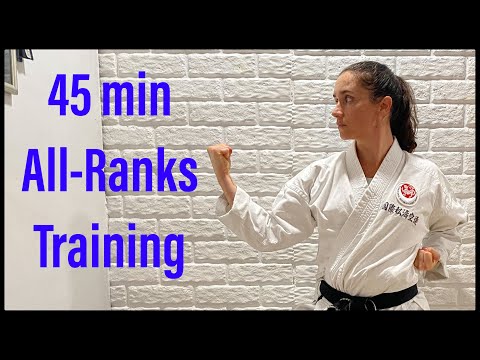
Unleash Your Inner Warrior: The BYAM 45-Minute Karate Workout for All Ranks

Welcome, warriors, to the hallowed grounds of BYAM, where the spirit of BUDO and artes marciales is not just discussed, but forged. Forget your fleeting fitness trends; today, we delve into a training regimen that harks back to the essence of martial discipline. Are you truly prepared to test your mettle? Our signature "Karate Workout: 45-Minute All Ranks Class" is not merely a session; it's a crucible designed to temper your body and sharpen your mind. Whether you're a fresh-faced beginner stepping onto the dojo floor for the first time, or a seasoned practitioner seeking to refine your edge, this workout promises to sculpt strength, hone agility, and build a resilience that transcends the mat. Prepare yourselves, for we are about to unlock the secrets of a training method that demands every ounce of your commitment.

The Forge of Readiness: Dynamic Warm-up

Before the true engagement, every warrior must prepare. Our session ignites with a dynamic warm-up, a calculated sequence designed not just to elevate your heart rate, but to awaken every fiber of your being. We begin with light, rhythmic movements – the gentle hum of a generator before the storm. This transitions seamlessly into a series of targeted stretches, focusing on the pillars of power: the legs, hips, and back. But this is no mere calisthenics. We weave in fundamental Karate techniques – the decisive tsuki (punch), the piercing geri (kick), and the resolute uke (block). Each motion is a whisper of the combat to come, a priming of the mind and body for the trials ahead. This isn't just about physical readiness; it's about entering the mental zone.

Heart of the Battle: Cardio & Strength Fusion

With the forge of readiness stoked, we plunge into the heart of the workout: a potent blend of cardiovascular exertion and muscular conditioning. This is where raw power meets enduring stamina. We employ a diverse arsenal of exercises, each selected to assault different muscle groups while maintaining an elevated heart rate. Imagine the explosive power of jumping jacks, the all-encompassing challenge of burpees, the foundation-building strength of lunges, the primal force of squats, and the unyielding resolve of push-ups.

But we are martial artists, not mere athletes. We infuse these fundamental movements with the spirit of combat. Engage in furious shadowboxing, envisioning your opponent, channeling your ki. Execute rigorous kicking drills, each strike a testament to your power and precision. This isn't just about burning calories; it's about cultivating the explosive power and relentless spirit required in any fight.

"The true warrior is not one who fears the fight, but one who understands its necessity and prepares with unwavering dedication."

The Calm After the Storm: Cool-down & Stretching

Victory, or even a hard-fought session, demands respect for recovery. The brutal intensity must yield to deliberate calm. Our cool-down is not an afterthought; it is a crucial phase of restoration, designed to mitigate injury and accelerate muscle repair. We transition to gentle, restorative exercises, focusing once again on the critical posterior chain – legs, hips, and back. This period also incorporates mindful breathing techniques, drawing inspiration from the Zen principles of meditation. Breathe deeply, release tension, and allow your mind to return from the battlefield of exertion to a state of focused tranquility. This is where true mastery begins – understanding the balance between exertion and recovery.

The Sensei's Edge: What Sets This Workout Apart

In a world saturated with generic fitness routines, the BYAM 45-Minute Karate Workout stands as a beacon of authentic martial training. What differentiates it? It is built on the foundational principle of inclusivity. Regardless of whether you hold a white belt or a black belt, this workout respects your journey. Beginners will discover a challenging yet achievable path, while seasoned practitioners will find ample opportunity for refinement and pushing their limits.

Furthermore, our focus transcends mere physical conditioning. We cultivate holistic fitness. You will emerge not just stronger, faster, and more enduring, but with a heightened sense of overall well-being. This is the power of integrating BJJ, Judo, Aikido, and Taekwondo principles into your regimen.

Crucially, we imbue this workout with the profound philosophy of Budo. Martial arts, in their purest form, are not solely about combat; they are about sculpting character. Discipline, unwavering focus, and profound respect – for oneself, for the art, and for fellow practitioners – are the cornerstones of this discipline. This workout is your path to not only superior physical condition but to becoming a more refined, resilient, and principled individual.

Training Guide: Executing the BYAM 45-Minute Karate Workout

To truly internalize this discipline, one must practice with precision. Follow these steps rigorously:

  1. Dynamic Warm-up (10 minutes):
    • Light Jogging/Skipping: 3 minutes
    • Leg/Hip/Back Dynamic Stretches (e.g., leg swings, hip circles, torso twists): 3 minutes
    • Basic Karate Punches (Tsuki), Blocks (Uke), and Stances (Dachi) practice: 4 minutes
  2. Cardio & Strength Circuit (25 minutes):

    Perform each exercise for 45 seconds, followed by 15 seconds of rest. Complete 4 rounds.

    • Jumping Jacks
    • Burpees
    • Forward Lunges (alternating legs)
    • Squats
    • Push-ups (modify on knees if needed)
    • Shadowboxing with fluid combinations
    • High Kicks (alternating legs, focus on form and power)
  3. Cool-down & Stretching (10 minutes):
    • Gentle static stretching focusing on major muscle groups (hold each stretch for 30 seconds): Hamstrings, quadriceps, hip flexors, glutes, back, shoulders.
    • Deep Diaphragmatic Breathing exercises: Practice slow, controlled inhales and exhales to calm the nervous system.

Essential Gear for Your Training

While this workout emphasizes minimal equipment, certain items can enhance your experience and support your progress. For the dedicated martial artist, investing in quality gear is a testament to your commitment.

  • Comfortable Training Attire: Opt for breathable fabrics that allow for a full range of motion. For Karate, a traditional Karate gi is ideal, but for general fitness, athletic shorts and a t-shirt suffice.
  • Training Mat: A good quality workout mat provides cushioning for ground exercises and stretches, protecting your joints.
  • Water Bottle: Hydration is paramount. Keep a reusable water bottle handy to replenish fluids throughout your session.
  • Optional: Training Gloves: For shadowboxing and kicking drills, light training gloves can offer a bit of protection and help build hand conditioning.

Frequently Asked Questions

Q1: I'm a complete beginner. Can I really do this workout?
Absolutely. The workout is structured to be scalable. Modify exercises as needed (e.g., knee push-ups, fewer repetitions) and focus on proper form over speed. The goal is consistent progress, not immediate perfection.

Q2: How often should I perform this workout?
For optimal results and recovery, aim to perform this workout 2-3 times per week, allowing at least one day of rest or lighter activity in between sessions.

Q3: Does this workout replace actual Karate training?
This workout is designed as a supplementary training tool to enhance your physical conditioning, agility, and stamina. It is not a substitute for instruction under a qualified Martial Arts Master who teaches technique, strategy, and the deeper philosophical aspects of Karate.

Q4: What if I don't have 45 minutes? Can I shorten it?
Yes, you can adapt. Focus on completing at least one full round of the Cardio & Strength Circuit and a brief cool-down. Prioritize consistency over duration. Even 20-30 minutes of focused training is immensely beneficial.

Deepen Your Path

The journey of martial arts is one of continuous learning and refinement. To further enrich your understanding and practice, explore these related topics:

"The way of the warrior is to train and prepare, not for one battle, but for all battles." - Miyamoto Musashi

Reflexión del Sensei: Tu Próximo Paso

This 45-minute Karate workout is a microcosm of the martial journey: demanding, rewarding, and transformative. It challenges your physical limits while demanding mental fortitude. But the true test lies not in completing the workout itself, but in how you integrate its lessons into your life. Does the discipline you cultivate on the mat carry over into your daily endeavors? Does the resilience you build when pushing through fatigue empower you to face life’s unexpected challenges? Or is this merely another session to be checked off a list?

Consider this: If a 45-minute workout requires such focused effort and discipline, what level of commitment do the grander battles of life demand? Where will you find your reserves of strength and perseverance when the real stakes are on the line? The answer lies not in a gym, but within you. Now, prove it.

```json { "@context": "https://schema.org", "@type": "FAQPage", "mainEntity": [ { "@type": "Question", "name": "I'm a complete beginner. Can I really do this workout?", "acceptedAnswer": { "@type": "Answer", "text": "Absolutely. The workout is structured to be scalable. Modify exercises as needed (e.g., knee push-ups, fewer repetitions) and focus on proper form over speed. The goal is consistent progress, not immediate perfection." } }, { "@type": "Question", "name": "How often should I perform this workout?", "acceptedAnswer": { "@type": "Answer", "text": "For optimal results and recovery, aim to perform this workout 2-3 times per week, allowing at least one day of rest or lighter activity in between sessions." } }, { "@type": "Question", "name": "Does this workout replace actual Karate training?", "acceptedAnswer": { "@type": "Answer", "text": "This workout is designed as a supplementary training tool to enhance your physical conditioning, agility, and stamina. It is not a substitute for instruction under a qualified Martial Arts Master who teaches technique, strategy, and the deeper philosophical aspects of Karate." } }, { "@type": "Question", "name": "What if I don't have 45 minutes? Can I shorten it?", "acceptedAnswer": { "@type": "Answer", "text": "Yes, you can adapt. Focus on completing at least one full round of the Cardio & Strength Circuit and a brief cool-down. Prioritize consistency over duration. Even 20-30 minutes of focused training is immensely beneficial." } } ] }