Showing posts sorted by date for query japanese weaponry. Sort by relevance Show all posts

Samurai's Edge: Beyond the Katana - An In-Depth Look at Ancient Warrior Weapons and Philosophy

The allure of the samurai is undeniable, a potent blend of martial prowess, disciplined spirit, and iconic weaponry. But to truly grasp their essence, we must look beyond the romanticized image of the katana and delve into the intricate world of their tools and the philosophy that guided their use. This exploration isn't merely an academic exercise in history; it's a profound lesson in strategy, self-mastery, and the enduring principles that shape effective combat.

The Samurai's Arsenal: More Than Just Swords

While the katana, with its elegant curve and legendary sharpness, often steals the spotlight, the samurai's arsenal was far more diverse and strategically employed. Understanding these weapons reveals not just their tactical needs but also the adaptability and foresight required on the battlefield.
  • Yumi (Bow): The primary ranged weapon of the samurai, the yumi, was a powerful composite bow, often asymmetrical, requiring immense strength and skill to master. Its effectiveness in early samurai warfare cannot be overstated, allowing warriors to engage from a distance, disrupt enemy formations, and provide crucial support. The discipline required to become proficient with the yumi mirrors the patience and focus demanded in other aspects of samurai training.
  • Yari (Spear): A versatile polearm, the yari came in various lengths and configurations. It was instrumental in close-quarters combat, particularly for foot soldiers forming defensive lines against cavalry charges. Its reach provided a significant advantage, and its straightforward design emphasized direct, powerful thrusts.
  • Naginata: This polearm, featuring a curved blade at the end of a pole, was particularly favored by warrior monks and women of samurai families. It offered a balance of reach and cutting power, effective against both armed and unarmed opponents. The graceful, sweeping motions of the naginata demand a fluid, coordinated body movement, much like certain katas in Karate or empty-hand techniques in Kung Fu.
  • Tanto: A dagger or knife, the tanto served as a backup weapon, used for close-in fighting when other weapons were lost or impractical. It also played a significant role in ritual suicide (seppuku), underscoring its deep cultural and symbolic importance.
  • Kusarigama: A truly unique weapon, the kusarigama consisted of a sickle attached to a chain with a weight at the end. This allowed for a devastating combination of entangling and striking. The user could swing the weighted chain to distract or disable an opponent, then follow up with the sickle. Mastering this weapon requires exceptional dexterity and a sophisticated understanding of timing and distance.
The choice of weapon was rarely arbitrary. It depended on the battlefield, the opponent, and the samurai's role within the larger conflict. This pragmatic approach to warfare is a lesson for all martial artists: understand your tools, your environment, and your limitations.

The Philosophy of the Sword: Bushido and the Way of the Warrior

The samurai's commitment to their weapons was deeply intertwined with the ethical and spiritual code of Bushido (武士道), the Way of the Warrior. This unwritten code emphasized virtues such as loyalty, self-discipline, courage, honor, and compassion. The sword, as the soul of the samurai, was not merely a tool of destruction but an extension of the warrior's moral compass.
"The sword is the soul of the samurai." - A common Japanese proverb.
This proverb encapsulates the profound connection between the warrior and his primary weapon. The way a samurai wielded his sword reflected his inner state, his training, and his adherence to Bushido. A skilled swordsman was not just technically proficient; he was also morally upright, his actions guided by a sense of duty and righteousness. This concept resonates deeply within various martial traditions. Consider the principle of Mushin (無心), "no mind," a state of mental clarity and spontaneity crucial in combat. A samurai in Mushin reacted instinctively, without hesitation or fear, his actions pure and efficient. This state is cultivated through rigorous training and deep philosophical understanding, not just physical repetition.

Katsu Jin Ken vs. Setsu Jin Ken: The Sword for Life vs. the Sword for Death

A critical distinction within the philosophy of swordsmanship is the concept of Katsu Jin Ken (活人剣), the "life-giving sword," and Setsu Jin Ken (殺人剣), the "life-taking sword."
  • Setsu Jin Ken: This is the sword used with the intent to kill, to destroy an enemy on the battlefield. It is direct, brutal, and focused on incapacitation or death.
  • Katsu Jin Ken: This is a more advanced concept, where the sword is used with the intent to subdue, to neutralize without necessarily killing, or even to guide an opponent toward better conduct. It requires immense control and a higher level of spiritual development. A true master of the sword, it is said, can win a battle without drawing blood.
This duality teaches us that true martial skill is not solely about aggression. It's about understanding the full spectrum of combat – from necessary force to ultimate restraint. It’s about wielding power responsibly, a lesson applicable far beyond the battlefield, in everyday life and personal growth.

Training and Discipline: The Path to Mastery

Becoming a samurai was a lifelong commitment to rigorous training and unwavering discipline. The physical conditioning was intense, but the mental and spiritual development was paramount.

The Daily Grind: Beyond the Flashy Techniques

The daily training of a samurai involved:
  1. Kenjutsu (剣術 - Sword Art): Practicing forms (kata), sparring, and honing the muscle memory and reflexes necessary for effective swordsmanship.
  2. Sojutsu (槍術 - Spear Art): Mastering the use of the spear in various combat scenarios.
  3. Kyujutsu (弓術 - Archery Art): Developing accuracy, power, and consistency with the bow.
  4. Physical Conditioning: Strength training, endurance exercises, and agility drills to ensure peak physical readiness.
  5. Mental Fortitude: Meditation (often Zen Buddhism influenced), strategic study, and cultivating a calm, resolute mindset.
The emphasis was always on repetition, refinement, and the relentless pursuit of perfection. A single sloppy movement, a moment of lost focus, could be fatal. This dedication to practice is a cornerstone of all high-level martial arts training.
"I fear not the man who has practiced 10,000 kicks once, but I fear the man who has practiced 10,000 kicks, 10,000 times." - Bruce Lee (though not a samurai, this quote embodies the spirit of relentless practice).
The samurai understood that true skill is forged through thousands of hours of dedicated practice, often in conditions that would break the uncommitted.

The Samurai in Modern Martial Arts: Echoes of the Past

While the samurai era has long passed, their legacy endures. The principles of Bushido, the emphasis on discipline, respect, and self-improvement, are fundamental to many modern martial arts, including Karate, Judo, and Kendo.
  • Kendo (剣道): Directly translates to "The Way of the Sword" and is a direct descendant of samurai swordsmanship. Practitioners use bamboo swords (shinai) and protective armor (bogu) to engage in simulated combat, emphasizing discipline, spirit, and precise technique.
  • Karate: While originating in Okinawa and evolving through various influences, Karate shares many philosophical underpinnings with Bushido, particularly in its emphasis on discipline (Kihon, Kata), respect for the sensei and training partners, and the pursuit of self-perfection. The concept of "Karate ni sente nashi" (There is no first attack in Karate) reflects a defensive and principled approach akin to the samurai's code.
  • Iaido (居合道): The art of drawing the sword, cutting, and re-sheathing, Iaido focuses on the precise and controlled movements of drawing the katana, often performed as solo forms (kata). It emphasizes mental focus, grace, and the readiness to defend.
The spirit of the samurai, with its blend of martial excellence and ethical conduct, continues to inspire and guide practitioners seeking not just to fight, but to grow as individuals.

Veredicto del Sensei: ¿Merece la pena el estudio del Samurai?

Absolutely. Studying the samurai and their weaponry is far more than a historical curiosity. It's a masterclass in martial philosophy, strategic thinking, and the cultivation of character. The samurai's arsenal, their adherence to Bushido, and their rigorous training methods offer invaluable lessons for any practitioner of martial arts today. They teach us that true strength lies not just in physical power, but in discipline, integrity, and a profound understanding of oneself and one's purpose.

Equipo Esencial para tu Entrenamiento

While direct samurai weaponry is not practical for most modern dojos, certain training tools and apparel are essential for dedicated practice in arts influenced by this warrior tradition.
  • Shinai (Bamboo Sword): Crucial for Kendo practice, allowing for safe, full-contact sparring.
  • Bokken (Wooden Sword): Used in Karate, Aikido, and other arts for practicing sword techniques and forms without live blades.
  • Iaido/Aikido Uniforms: Traditional uniforms provide the necessary freedom of movement and respect for practice.
  • Protective Gear (Bogu): For Kendo practitioners, essential for safe engagement.
  • Dojo Subscription/Membership: Access to qualified instruction is paramount. Consider looking for local Kendo, Iaido, or Karate dojos.
  • Books on Bushido and Samurai History: For understanding the philosophical underpinnings, I highly recommend works by Miyamoto Musashi and Nitobe Inazo.

Guía de Entrenamiento: Cultivando la Concentración del Guerrero

This exercise aims to build the mental focus and calm required by a samurai.
  1. Find a Quiet Space: Locate an area free from distractions. This could be your training mat, a quiet room at home, or even a peaceful spot outdoors.
  2. Assume a Stable Posture: Sit or stand in a natural, relaxed, yet upright posture. For seated meditation, the seiza (kneeling) position is traditional, but any comfortable, stable position will suffice.
  3. Focus on Your Breath: Close your eyes gently and bring your attention to your breath. Notice the sensation of air entering and leaving your nostrils or the rise and fall of your abdomen. Do not force your breathing; simply observe it.
  4. Acknowledge Wandering Thoughts: Your mind will inevitably wander. When you notice your thoughts drifting (to tomorrow's training, a disagreement, or a pleasant memory), acknowledge the thought without judgment and gently guide your attention back to your breath.
  5. Practice Patience and Consistency: This is not about achieving a completely blank mind, but about developing the ability to refocus repeatedly. Aim for 5-10 minutes daily, gradually increasing the duration as you become more comfortable.
  6. Integrate with Movement (Optional): After meditation, practice a few basic movements from your martial art (e.g., a simple stance, a basic strike, or a drawing motion with an imaginary sword). Try to maintain the same level of present-moment awareness.

Preguntas Frecuentes

  • What was the primary role of the samurai in Japanese society?
    Samurai were the military nobility and officer caste of medieval and early-modern Japan. They served as warriors, administrators, and protectors of their lords (daimyo).
  • Is Bushido still relevant today?
    Yes, the principles of Bushido – loyalty, honor, self-discipline, courage, and compassion – remain highly relevant and are often integrated into the philosophies of modern martial arts and leadership training.
  • Besides the katana, what other weapons were commonly used by samurai?
    Samurai commonly used the yumi (bow), yari (spear), naginata (polearm), and tanto (dagger), among others, depending on the context of the battle.
  • How did Zen Buddhism influence samurai philosophy?
    Zen Buddhism heavily influenced samurai by teaching principles of mindfulness, detachment from worldly desires and fears, and the importance of living fully in the present moment – crucial for combat effectiveness and mental fortitude.
  • Are there any modern martial arts directly descended from samurai fighting styles?
    Yes, Kendo (the Way of the Sword) and Iaido (the art of sword drawing) are direct descendants. Many principles and philosophies from samurai traditions are also deeply embedded in arts like Karate and Aikido.

Para Profundizar en tu Camino

The samurai were more than just warriors; they were embodiments of discipline, philosophy, and a profound connection to their craft. Their legacy serves as a powerful reminder that true mastery is a journey of the mind, body, and spirit.

Reflexión del Sensei: Tu Próximo Paso

If a samurai’s life was a constant negotiation between the blade’s edge and the spirit’s depth, what is your daily practice teaching you about the edge of your own potential and the depth of your character? Are you merely training your body, or are you forging your soul?

``` ```json { "@context": "https://schema.org", "@type": "FAQPage", "mainEntity": [ { "@type": "Question", "name": "What was the primary role of the samurai in Japanese society?", "acceptedAnswer": { "@type": "Answer", "text": "Samurai were the military nobility and officer caste of medieval and early-modern Japan. They served as warriors, administrators, and protectors of their lords (daimyo)." } }, { "@type": "Question", "name": "Is Bushido still relevant today?", "acceptedAnswer": { "@type": "Answer", "text": "Yes, the principles of Bushido – loyalty, honor, self-discipline, courage, and compassion – remain highly relevant and are often integrated into the philosophies of modern martial arts and leadership training." } }, { "@type": "Question", "name": "Besides the katana, what other weapons were commonly used by samurai?", "acceptedAnswer": { "@type": "Answer", "text": "Samurai commonly used the yumi (bow), yari (spear), naginata (polearm), and tanto (dagger), among others, depending on the context of the battle." } }, { "@type": "Question", "name": "How did Zen Buddhism influence samurai philosophy?", "acceptedAnswer": { "@type": "Answer", "text": "Zen Buddhism heavily influenced samurai by teaching principles of mindfulness, detachment from worldly desires and fears, and the importance of living fully in the present moment – crucial for combat effectiveness and mental fortitude." } }, { "@type": "Question", "name": "Are there any modern martial arts directly descended from samurai fighting styles?", "acceptedAnswer": { "@type": "Answer", "text": "Yes, Kendo (the Way of the Sword) and Iaido (the art of sword drawing) are direct descendants. Many principles and philosophies from samurai traditions are also deeply embedded in arts like Karate and Aikido." } } ] }
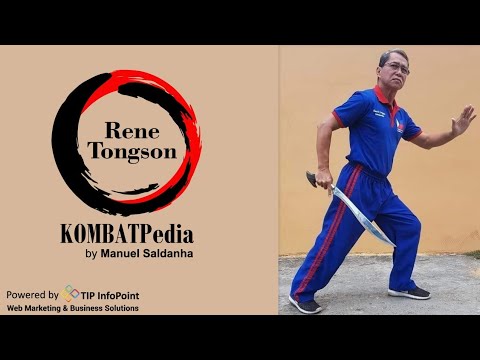
Rene Tongson: A Deep Dive into Kali, Eskrima, and Arnis - The Pinnacle of Filipino Martial Arts

Hello and welcome, warriors! Today, we delve into the heart of the Filipino Martial Arts (FMA) through the lens of a master, Rene Tongson. Many of you seek to understand the essence of these formidable arts, often confused by their intertwined names: Kali, Eskrima, and Arnis. Is it merely a linguistic difference, or is there a deeper dichotomy? This is the question that echoes in the minds of practitioners worldwide, a question we will dissect with the precision of a Sinawali. The intention of our exploration today is to go beyond superficial definitions. We aim to uncover the *why* behind the nomenclature, to grasp the historical and practical distinctions, and to understand the philosophical underpinnings that make FMA a truly unique and potent system. This isn't just about learning names; it's about understanding the lineage, the fighting principles, and the spirit that has been passed down through generations of great masters.

Unraveling the Nomenclature: Kali, Eskrima, Arnis

The first hurdle for any aspiring student of FMA is the seemingly interchangeable use of the terms Kali, Eskrima, and Arnis. While often used interchangeably today, particularly in the West, their historical context and regional prevalence offer crucial insights. * **Arnis**: This term is believed to derive from the Spanish word "arnés," meaning armor. Historically, it referred to the defensive aspects of the art, emphasizing parries, blocks, and the manipulation of an opponent's weapon, much like a knight would use their armor defensively. It's a name that evokes the very essence of protection and strategic engagement. * **Eskrima**: This word originates from the Spanish "esgrima," meaning fencing. It highlights the bladed aspect of the art, focusing on the intricate footwork, angles of attack, and deceptive maneuvers characteristic of sword fighting. Think of the elegant yet deadly dance of blades, a testament to the art's evolution from close-quarters combat. * **Kali**: The origin of "Kali" is more debated, with theories ranging from a connection to the Indian sword goddess Kali, to a contraction of "Kalisong" (a type of native dagger), or even a descriptive term for the art's flowing, rhythmic movements. Regardless of its etymology, "Kali" often signifies the broader, more indigenous, and perhaps older aspects of the FMA, encompassing empty-hand techniques and grappling alongside weapon-based combat. It's a name that whispers of ancient traditions and primal power. Rene Tongson, a revered figure in the FMA community, embodies the mastery that transcends these labels. His teaching and practice often serve as a bridge, demonstrating how these distinct names represent different facets of a unified, dynamic system. To truly appreciate FMA, one must look past the nomenclature and embrace the comprehensive philosophy and practical application that masters like Tongson exemplify.

The Legacy of Rene Tongson: A Beacon of FMA Mastery

Rene Tongson is not merely a practitioner; he is a living repository of the Filipino Martial Arts. His dedication to preserving and propagating the rich heritage of Kali, Eskrima, and Arnis has left an indelible mark on the global martial arts landscape. His approach is characterized by a deep respect for tradition, combined with an astute understanding of practical combat application. Tongson often emphasizes the principles that underpin all FMA systems: * **Flow and Adaptability**: The ability to seamlessly transition between different ranges of combat, from long-range strikes to close-quarters grappling, is a hallmark of FMA. Master Tongson's teachings illustrate this fluid nature, where movements are not static but responsive, adapting to the opponent's actions. * **Economy of Motion**: In true martial arts, every movement serves a purpose. FMA, as taught by Tongson, exemplifies efficiency, with techniques designed to achieve maximum effect with minimum effort, conserving energy for sustained combat. * **Weaponization of Everything**: While renowned for his mastery of bladed weapons and sticks, Tongson also highlights the FMA principle of seeing any object as a potential weapon – from a pen to a magazine. This pervasive mindset is a crucial aspect of its self-defense efficacy. His influence extends beyond mere technical instruction; he imparts the *budo* spirit – the warrior's code, discipline, and ethical framework. This holistic approach is what truly elevates him to the status of a "Great Master."

Core Principles of Filipino Martial Arts

To truly grasp the depth of Kali, Eskrima, and Arnis, we must understand the fundamental principles that guide their practice. These are not just techniques; they are philosophies woven into movement.

The Concept of "Angles of Attack"

One of the most distinctive features of FMA is the systematic approach to understanding and defending against attacks. The traditional "angles of attack" – often numbering 5, 7, 9, or 12 depending on the style – provide a framework for learning defensive maneuvers and offensive counter-strikes. * **Angle 1**: Thrust to the sternum. * **Angle 2**: Thrust to the left or right side of the torso. * **Angle 3**: Thrust to the left or right side of the head. * **Angle 4**: Thrust to the right or left leg. * **Angle 5**: Thrust to the right or left arm. Mastering these angles allows a practitioner to anticipate an opponent's moves and develop instinctive defensive reactions. This is not rote memorization, but a deep understanding of trajectories and vulnerabilities.

The Sinawali: Weaving a Defensive Fabric

The "Sinawali" is a characteristic training method in FMA, involving the intricate crossing and weaving of two sticks. This drill is far more than a simple exercise; it develops: * **Coordination and Balance**: The simultaneous manipulation of two weapons enhances proprioception and body awareness. * **Rhythm and Timing**: The continuous flow of the Sinawali teaches the practitioner to maintain a steady rhythm, crucial for effective engagement. * **Defensive and Offensive Integration**: The weaving motion itself mimics deflecting incoming strikes while simultaneously creating openings for counter-attacks. It’s a beautiful metaphor for the FMA's philosophy of active defense.
The practice of Sinawali, as demonstrated by masters like Rene Tongson, is a visual representation of how FMA integrates offense and defense into a single, continuous motion. It embodies the concept of "flow like water, strike like thunder."

Empty Hand Techniques: The "Panantukan" and "Dumbbell"

While often associated with weaponry, FMA possesses a highly sophisticated empty-hand combat system. This includes: * **Panantukan**: Often referred to as "Filipino Boxing" or "Dirty Boxing," it incorporates the angles of attack, trapping, elbow strikes, knee strikes, and a strong emphasis on close-range combat. It is the natural extension of weapon techniques to unarmed fighting. * **Trapping and Flowing**: FMA empty-hand techniques often involve "trapping" an opponent's limbs to control their structure and create openings for strikes or joint manipulation. This mirrors the principles of weapon disarms and control. The seamless transition from weapon to empty-hand combat, and vice versa, is a testament to the holistic design of FMA. A practitioner trained in FMA can, in theory, engage effectively with or without a weapon, as the underlying principles remain consistent.

The Philosophical Core: Bushido and the Warrior's Mindset

While Bushido is famously associated with Japanese Samurai, its core tenets of discipline, honor, self-control, and loyalty resonate deeply within the Filipino Martial Arts tradition as well. The pursuit of mastery in Kali, Eskrima, or Arnis is not merely about physical prowess; it is a path to spiritual and mental development.
"The supreme art of war is to subdue the enemy without fighting." - Sun Tzu, The Art of War
This ancient wisdom is echoed in FMA. The ultimate goal of any martial art is not to seek conflict, but to develop the wisdom and self-mastery to avoid it, or to resolve it decisively when necessary. Masters like Rene Tongson embody this ideal, demonstrating that true strength lies not in aggression, but in control and understanding. The "Budo" aspect, the way of the warrior, is paramount.

Training Methodology: Beyond the Basics

The training for Kali, Eskrima, and Arnis is rigorous and multifaceted. It demands not only physical conditioning but also mental acuity and unwavering commitment.

Intelligence Gathering and Analysis

Before any physical engagement, the martial artist must develop the ability to observe and analyze. This includes understanding an opponent's stance, their likely intentions, and the environment. This principle, often highlighted in advanced FMA training, is critical for survival. It’s about using your senses and intellect as much as your body.
"By knowing the enemy and knowing yourself, you need not fear the result of a hundred battles." - Sun Tzu, The Art of War

The Role of Conditioning

FMA demands a high level of physical fitness. Training often includes: * **Strength and Power Development**: Essential for delivering effective strikes and controlling an opponent. * **Endurance Training**: To maintain intensity throughout a prolonged engagement. * **Flexibility and Agility**: To execute fluid movements, evasions, and dynamic techniques. Proper conditioning ensures that the techniques learned can be executed effectively under pressure. Without a robust physical foundation, even the most sophisticated techniques can fail.

Veredicto del Sensei: A Testament to FMA's Enduring Power

Rene Tongson's contribution to the world of Kali, Eskrima, and Arnis is immeasurable. He represents the pinnacle of what these arts offer: a comprehensive system of combat, a profound philosophical path, and a living link to a rich cultural heritage. His ability to distill complex principles into understandable teachings makes him an invaluable asset to the martial arts community. For anyone seeking to understand the practical applications, the historical depth, and the philosophical nuances of FMA, studying Rene Tongson's work is not just recommended; it is essential. He embodies the spirit of the warrior, a continuous learner and a dedicated teacher. **Rating:** Cinturón Negro en Transmisión de Conocimiento y Maestría Marcial.

Equipo Esencial para tu Entrenamiento

To truly immerse yourself in the practice of Kali, Eskrima, or Arnis, certain training tools are indispensable. While the art teaches you to use anything as a weapon, dedicated equipment allows for safe and effective skill development.
  • Bastones de Entrenamiento (Escrima Sticks): Standard hardwood or rattan sticks are crucial for practicing drills like Sinawali and various combat scenarios.
  • Daga de Entrenamiento (Training Dagger): Wooden or rubber training knives are essential for practicing disarms, close-quarters blade work, and realistic scenarios.
  • Equipo de Protección: When sparring, especially with bladed training weapons, protective gear such as headgear, mouthguards, and padded gloves is vital to prevent injury.
  • Guantes de MMA/Sparring: For the Panantukan (Filipino Boxing) aspect, standard MMA or sparring gloves are recommended.
  • Makiwara o Bolsa de Boxeo: For developing power and conditioning striking techniques.
Investing in quality training gear is an investment in your martial journey. It allows for progressive training, ensuring that you can build skill safely and effectively. For those serious about mastering FMA, consider exploring options for durable and authentic training implements.

Recursos para Profundizar

To truly understand the lineage and depth of Filipino Martial Arts, delve into the following resources:

Guía de Entrenamiento: Dominando los Ángulos Básicos

Let's break down a fundamental FMA training exercise focusing on defensive angles. This is best practiced with a training partner and ideally with training sticks.
  1. Posición Inicial: Assume a neutral fighting stance, feet shoulder-width apart, knees slightly bent, and a comfortable guard. Your training partner will start with a basic overhead strike (Angle 1).
  2. Recepción del Ataque (Ángulo 1): As the strike comes down, use your stick to deflect it upwards and to the side. This is a simple upward parry.
  3. Contraataque Inmediato: Immediately after deflecting, use the momentum to deliver a counter-strike, often a thrust or a horizontal strike to the opponent's head or body.
  4. Transición a Ángulo 3: Your partner transitions to a horizontal strike towards your head (Angle 3). Use a downward or diagonal block to deflect.
  5. Follow-up Strike: Counter with an appropriate follow-up strike, perhaps a sweep of their arm or a thrust to their body.
  6. Rotación y Repetición: Continue this drill, cycling through the primary angles of attack. Focus on smooth transitions, maintaining your balance, and keeping your movements economical.
  7. Práctica con Mano Vacía: Once comfortable with sticks, adapt these parries and counter-strikes to empty-hand techniques, visualizing where your arms and body would be in relation to the incoming strike.
Remember, the key here is not just blocking, but redirecting and immediately counter-attacking. This drill teaches proactive defense and offensive integration.

Preguntas Frecuentes

What are the main differences between Kali, Eskrima, and Arnis?

While often used interchangeably, "Arnis" historically refers to the defensive aspects ("armor"), "Eskrima" to the fencing/bladed combat aspect, and "Kali" to the broader, more indigenous, and perhaps older roots of the art, encompassing many facets.

Is Filipino Martial Arts effective for self-defense?

Absolutely. FMA is renowned for its practical and adaptable self-defense applications, emphasizing weapon-based combat, but seamlessly integrating effective empty-hand techniques and a mindset of environmental awareness.

What is the role of "Ki" or "Chi" in FMA?

While not always explicitly labeled as "Ki" or "Chi" in the same way as some East Asian arts, FMA emphasizes internal energy, focus, and intention. The concept of "flow," coordination, and the unified application of power in techniques is akin to the practical application of internal energy principles.

How does FMA compare to other martial arts like Karate or Taekwondo?

FMA is primarily a weapon-based art that incorporates empty-hand techniques, focusing on angles, disarms, and close-quarters combat. Arts like Karate and Taekwondo are predominantly striking-focused, kicking-heavy, and developed primarily for unarmed combat. The approaches to combat, range, and typical engagement differ significantly.

Can someone start learning FMA without prior martial arts experience?

Yes, FMA is accessible to beginners. While it can be complex, dedicated instructors like Rene Tongson break down the learning process systematically, starting with foundational movements and principles before progressing to more advanced techniques. GEMINI_METADESC: Explore Kali, Eskrima, and Arnis with Master Rene Tongson. Uncover the history, principles, and combat effectiveness of Filipino Martial Arts.

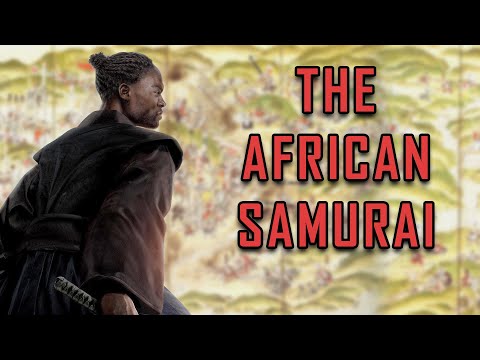
The Warrior's Unyielding Spirit: Yasuke, the Black Samurai of Feudal Japan

Greetings, warriors and scholars! Today, we embark on a journey not merely through history, but into the very essence of the Budo spirit, tracing the extraordinary path of Yasuke, a man of African descent who rose to the rank of samurai in feudal Japan. This is a tale that shatters preconceptions and underscores a timeless truth: the warrior's heart knows no color, only dedication, skill, and an unyielding will. Have you ever considered how profoundly the warrior ethos transcends cultural and racial boundaries? Many envision the samurai as an archetype intrinsically tied to Japanese lineage. Yet, history, in its often-surprising grandeur, presents us with Yasuke – a figure whose legend challenges that very notion. Our exploration today is not just about a historical anecdote; it's about understanding the universal principles of mastery, perseverance, and the martial path that connect all true practitioners, regardless of their origin. We are indebted to the meticulous research of Thomas Lockley, whose work, "African Samurai: The True Story of Yasuke, A Legendary Black Warrior in Feudal Japan," provides the bedrock for our understanding. This narrative compels us to look beyond the superficial and delve into the character and combat prowess that earned Yasuke his place among Japan's elite warriors.

The Unfolding Narrative: From Foreign Land to Feudal Court

Yasuke's journey began far from the shores of Japan. While the exact details of his early life remain shrouded in the mists of time, it is widely believed he was brought to Japan in the service of Alessandro Valignano, a Portuguese Jesuit missionary, around 1579. His imposing stature and physical presence immediately set him apart in a land where such features were uncommon. It was this very presence that first caught the attention of Oda Nobunaga, the powerful daimyo who was unifying Japan under his rule. Nobunaga, a patron of the arts and a keen observer of men, was not only intrigued by Yasuke's foreignness but also by his evident strength and martial bearing. In a period rife with conflict, where military skill was paramount, Nobunaga saw potential. This was not a mere curiosity; it was an astute recognition of capability. The world of the samurai was one of rigorous training, strategic acumen, and brutal efficiency. For a foreigner to even be considered, let alone accepted, spoke volumes about Yasuke's inherent qualities. The conversion of Yasuke into a samurai was a monumental event. He was granted land, a stipend, and, most significantly, the honor of bearing a sword and serving directly under Nobunaga. This was an unprecedented honor, a testament to Nobunaga's willingness to break with tradition for merit.
"The way of the warrior is to be resolute. It is to be decisive. It is to be unwavering in the face of any storm." - A principle echoed in Yasuke's ascent.

The Crucible of Combat: Yasuke's Martial Prowess

While detailed accounts of Yasuke's specific combat techniques are scarce, the very fact of his samurai status implies a mastery of the martial arts expected of the era. Samurai were not just swordsmen; they were skilled in archery, horsemanship, and often unarmed combat. Given Yasuke's physical power, it is logical to assume he excelled in these disciplines. The narrative often highlights his involvement in the Battle of Tennoji, where he reportedly fought with great bravery against the forces of Akechi Mitsuhide, one of Nobunaga's betrayers. Though Nobunaga ultimately met his end, Yasuke's participation in such a pivotal conflict solidified his reputation as a warrior of substance. He didn't just survive; he fought. The authenticity of his skill is not in question when we consider the context of feudal Japan. To gain and retain the favor of a leader like Nobunaga, especially in a military capacity, one had to be demonstrably competent. This wasn't a ceremonial position; it was a life on the battlefield. His ability to integrate into a society with deeply ingrained traditions and then earn a place in its most esteemed military class speaks volumes about his martial capabilities and his character.

The Philosophy of the Sword: Bushido Beyond Birthright

The concept of Bushido, the "way of the warrior," is often perceived as exclusive. However, Yasuke's story suggests that its core tenets—loyalty, honor, courage, and self-discipline—are universal. He embodied these principles not by birth, but by his actions and choices. His story challenges us to consider if the true spirit of Budo can be acquired through dedication and training, rather than inherited. The meticulous katas of Karate, the precise throws of Judo, the fluid movements of Aikido – all these are expressions of physical and mental discipline. Yasuke, by embracing the samurai code, demonstrated that these qualities could flourish in anyone willing to dedicate themselves to the path.

Veredicto del Sensei: Is Yasuke's Story a True Masterpiece of Martial History?

Yasuke's narrative is a powerful testament to the enduring appeal of the martial path. While the embellishments of legend may color certain details, the core truth remains: an African man became a samurai, a feat that speaks to his exceptional character and abilities. His story is not just a historical curiosity; it is an inspiration. In terms of historical accuracy and the profound impact of his life, Yasuke's story earns a resounding "Cinturón Negro en Legado." His presence in feudal Japan, his service under Nobunaga, and his participation in key conflicts are well-documented enough to cement his place in history. His life serves as a crucial reminder that the warrior spirit is a universal language, understood and manifested across all cultures.

Equipo Esencial para tu Entrenamiento

To truly embody the discipline of a warrior, the right equipment is crucial. Whether you are practicing Karate, Judo, or simply seeking to improve your physical conditioning, investing in quality gear is a step towards seriousness and respect for your training. * **Kimono (Gi)**: A durable, well-fitting gi is essential for Judo and Karate. Look for double-weave fabrics for increased longevity, especially for intensive sparring. A good gi is your second skin in the dojo. * **Training Mats (Tatami/Judo Mats)**: For grappling arts like Judo and BJJ, or for practicing falls and throws in any martial art, proper mats are non-negotiable for safety and effective training. * **Sparring Gear**: Depending on your art, this can include headgear, mouthguards, fist protectors, and shin guards. Ensure they meet safety standards for your discipline. * **Training Weapons**: For arts that incorporate them, such as Karate with its kobudo weapons or Kendo, authentic yet safe training implements are vital. * **Makiwara (Karate)**: A traditional striking post used to condition the hands and develop power. Building your own can be a rewarding project. For those inspired by the resilience and dedication of warriors like Yasuke, consider these resources to deepen your understanding and training: * **"African Samurai: The True Story of Yasuke, A Legendary Black Warrior in Feudal Japan" by Thomas Lockley**: The definitive account of Yasuke's life. * **Osprey Publishing**: Known for their detailed historical accounts and illustrations of warfare and warriors across eras.

Guía de Entrenamiento: El Principio de la Simplicidad en el Combate

One of the most powerful lessons from martial history, exemplified by warriors like Yasuke who thrived in intense combat, is the principle of simplicity. In the heat of battle, complex techniques often fail. The most effective moves are direct, efficient, and born from pure intent. 1. **Comprende tu Cuerpo y el del Oponente**: Antes de la técnica, entiende la biomecánica. ¿Dónde están los puntos de menor resistencia? ¿Cómo puedes utilizar tu peso y el de tu oponente? 2. **Domina los Fundamentos**: Un golpe recto (Choku-zuki en Karate), una entrada básica (Irimi en Aikido), o un barrido simple (Ashi-barai en Judo) son infinitamente más efectivos cuando se ejecutan con potencia, precisión y el momento adecuado. 3. **Entrenamiento de la Reacción**: Practica el `makiwara` para desarrollar la fuerza y la precisión de tus golpes rectos. Realiza `randori` (Judo/BJJ) o `kumite` (Karate) enfocado en la ejecución de tus técnicas básicas bajo presión. 4. **Elimina el Movimiento Innecesario**: Cada movimiento debe tener un propósito. El exceso de movimiento te expone, consume energía y diluye tu intención. Piensa en la economía de movimiento: la máxima eficacia con el mínimo esfuerzo. 5. **Cultiva el `Mushin` (Mente sin Mente)**: La capacidad de actuar instintivamente, sin la interferencia del pensamiento consciente, es la cúspide de la simplicidad. Esto se logra a través de la repetición constante hasta que la técnica se vuelve parte de ti. Meditación `Zazen` puede ayudar a cultivar esta cualidad.

Preguntas Frecuentes

What is known about Yasuke's martial arts training?

While specific formal training details are scarce, Yasuke's samurai status and participation in battles imply proficiency in swordsmanship, archery, and likely unarmed combat, honed through rigorous practice and the demands of warfare.

Did Yasuke use a katana?

As a samurai, it is highly probable that Yasuke was permitted to carry and use a katana, the iconic sword of the samurai class, along with other traditional samurai weaponry.

How did Yasuke learn Japanese?

He likely learned Japanese through immersion, aided by his association with Jesuit missionaries who were learning the language themselves for their work. His ability to communicate would have been crucial for his integration into Japanese society.

What happened to Yasuke after Oda Nobunaga's death?

Following Nobunaga's demise, Yasuke was captured by Akechi Mitsuhide's forces but was ultimately released. His later life is less documented, with some accounts suggesting he returned to missionary work or even founded his own church.

Is Yasuke's story considered authentic history?

Yes, Yasuke's existence and his role as a samurai under Oda Nobunaga are supported by historical documents from the period, including Japanese chronicles and Jesuit letters, though the finer details of his life are subject to historical interpretation and legend.

Para Profundizar en tu Camino

  • Historia: Descubre otras figuras fascinantes que moldearon el mundo marcial.
  • BUDO: Explora los principios filosóficos que sustentan las artes marciales.
  • Karate: Sumérgete en las técnicas y la tradición de este arte marcial icónico.

Reflexión del Sensei: Tu Próximo Paso

Yasuke's life is a stark reminder that greatness is forged, not inherited. He faced a world vastly different from his own, armed with courage and a willingness to learn and adapt. My question to you is this: What "foreign land" are you currently navigating in your own martial journey? What preconceived notions or personal limitations are you allowing to define your potential? How will you, like Yasuke, demonstrate that true mastery is a testament to the spirit, not the origin? GEMINI_METADESC: Explore the incredible life of Yasuke, the African samurai who defied all odds in feudal Japan. Discover his journey, martial spirit, and enduring legacy.

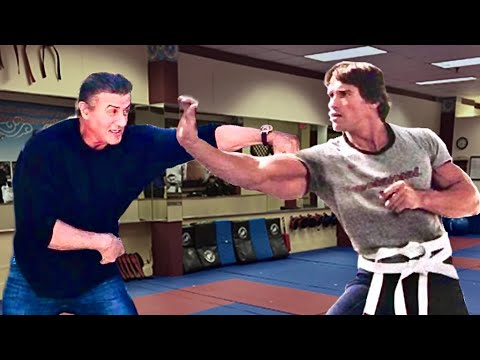
Sylvester Stallone vs. Arnold Schwarzenegger: A Cinematic Martial Clash

Hello and welcome, seekers of the Way! Today, we step not onto the padded mat or into the disciplined dojo, but onto the silver screen. We delve into a hypothetical, yet exhilarating, confrontation that has long captivated the imaginations of action film aficionados: Sylvester Stallone versus Arnold Schwarzenegger. These aren't just actors; they are titans of the action genre, architects of cinematic brawn who have defined an era. But beyond the sculpted physiques and the explosive dialogue, what martial prowess, if any, lies beneath the surface of their iconic characters? Can their on-screen personas truly stand against each other in a test of combat skill, or is it merely a spectacle of Hollywood might?

Table of Contents

The Titans of Action: Defining an Era

Sylvester Stallone and Arnold Schwarzenegger are more than just actors; they are cultural touchstones. Their names are synonymous with the high-octane action films that dominated cinemas from the 1980s onwards. Stallone, the embodiment of the underdog grit in his portrayal of Rocky Balboa and the relentless survivalist John Rambo. Schwarzenegger, the stoic, seemingly unstoppable force of nature as the Terminator and the elite commando John Matrix. Both have cultivated an image of indomitable physical prowess, projecting an aura of strength that resonates deeply with audiences.
"Action movies are not about realism. They are about the fantasy of overcoming impossible odds through sheer will and physical power." - A common sentiment in action cinema critique.
The very premise of pitting them against each other in their prime is inherently compelling precisely because their on-screen personas are built on a foundation of perceived combat effectiveness. We flock to see them because we believe, on some level, that they *could* win any fight. But how much of that is genuine martial insight, and how much is Hollywood spectacle? This is where the critical eye of the martial artist must engage.

The Rocky and Rambo Legacy: Stallone's Fights

Sylvester Stallone's career is built on characters who endure and overcome through relentless physical punishment. Rocky Balboa, the quintessential underdog boxer, is a masterclass in heart and resilience. His boxing technique, while often portrayed with a raw, unpolished intensity, adheres to fundamental principles: jabs, hooks, uppercuts, the importance of footwork, and, crucially, an iron chin. The training montages are legendary, showcasing the dedication required for peak physical conditioning essential for any combative sport.
Rambo, on the other hand, is a testament to survival and guerrilla warfare. His "fighting style" is less about formal technique and more about pragmatic, brutal efficiency. He utilizes his environment, improvised weaponry, and a deep understanding of combat kinetics born from his military background. While not a traditional martial art, Rambo's approach embodies the **Bushido** principle of **Shōbu** (victory) at all costs, adapted to a modern, violent context. His ability to withstand pain and continue fighting, a hallmark of both Rocky and Rambo, speaks to a profound mental fortitude, a key component of any true martial path.

The Terminator and Commando: Schwarzenegger's Battles

Arnold Schwarzenegger's characters often represent a different facet of combat: overwhelming power and stoic, unstoppable advance. The Terminator, a cybernetic organism, is the apex of synthetic combat. Its movements are precise, economical, and deadly. While not a "martial art" in the human sense, the Terminator's combat programming reflects an efficiency that many martial systems strive for – maximum impact with minimum wasted motion. Think of the calculated precision of a **Wing Chun** master, amplified to a terrifying degree. His human characters, like John Matrix in *Commando* or Dutch in *Predator*, are portrayed as elite soldiers, highly trained in firearms, hand-to-hand combat, and tactical infiltration. Their fighting style is often depicted as direct, powerful, and brutally effective. Schwarzenegger’s imposing physique lends itself to roles requiring raw strength and an intimidating presence. His combat scenes often involve overwhelming opponents with sheer force and tactical advantage, a style that might be loosely compared to **Sambo's** emphasis on powerful throws and controlling an opponent through physical dominance.

Screen Combat vs. The Martial Way

Here lies the crucial distinction. The "fights" we see in films like *Rocky*, *Rambo*, *The Terminator*, and *Commando* are choreographed spectacles. They are designed for maximum visual impact, narrative progression, and audience engagement. While they may draw inspiration from real martial arts and combat sports, they are fundamentally performances, not authentic duels. The **Martial Way (Budo)**, however, is about self-improvement, discipline, and the cultivation of character through rigorous training. Authenticity in martial arts lies not just in the execution of techniques, but in the underlying principles: respect, humility, perseverance, and the understanding of **Ki** (life force) and its application. A true martial artist seeks not just to win a fight, but to achieve a state of **Mushin** (no mind), where actions flow naturally and instinctively.
"In martial arts, the opponent is one's own self." - A fundamental principle that elevates training beyond mere combat.
Stallone's characters often embody the struggle and heart of a fighter, the journey of self-discovery through adversity. Schwarzenegger's characters represent the ideal of the unstoppable force, the perfect warrior machine. Both are compelling archetypes, but they serve different narrative purposes than the introspective and ethical development at the core of traditional **Budo**.

Comparing On-Screen Styles

If we were to hypothetically pit their cinematic personas against each other, considering their most iconic roles, the analysis becomes a fascinating exercise in comparing archetypes: * **Stallone (Rocky vs. Terminator/Commando):** Rocky's boxing prowess versus the Terminator's calculated, brutal efficiency. Rocky would need to use his speed, agility, and heart to overcome the Terminator's superior strength and durability. It's a David vs. Goliath scenario, but with Rocky's resilience as his slingshot. Against John Matrix, it becomes a battle of a fighter against a soldier. Rocky's raw boxing skills would be challenged by Matrix's tactical combat and military training. * **Schwarzenegger (Terminator vs. Rambo):** This is perhaps the most compelling clash of pure cinematic power. The Terminator's relentless, programmed assault against Rambo's cunning, survivalist brutality. Rambo's knowledge of traps, improvised weapons, and environmental combat would be his greatest asset against the Terminator's physical superiority. Could Rambo outthink and outmaneuver a machine designed for destruction? * **Schwarzenegger (Commando/Predator vs. Rambo):** Here we see two highly skilled, physically imposing operatives. Both are masters of their respective domains – military commando versus special forces survivalist. This would likely be a tactical battle, a war of attrition, where superior strategy, environmental awareness, and sheer willpower would determine the victor. The outcome, of course, is entirely dependent on the script!

Veredicto del Sensei: ¿Quién Ganaría?

Let's be brutally honest, as any true Sensei must be. When we strip away the Hollywood narrative and focus purely on their *cinematic representations* as combatants: * **As Rocky Balboa vs. as The Terminator:** Rocky has heart, but the Terminator has programming, superhuman strength, and durability. The Terminator wins, not through skill, but through its nature as an unstoppable force. * **As John Rambo vs. as John Matrix:** This is a far closer contest. Both are highly trained, resourceful operatives. However, Rambo's expertise in guerrilla warfare and survival against indigenous threats gives him an edge in adaptability. He's used to fighting in hostile environments with limited resources. Matrix is a superior soldier in a conventional sense, but Rambo is the ultimate survivor. I'd give a slight edge to Rambo due to his sheer tenacity and unconventional approach. * **As The Terminator vs. as John Rambo:** This is where it gets interesting. The Terminator is the ultimate weapon. Rambo is the ultimate survivor. Could Rambo's improvisation and understanding of the environment disable or destroy the Terminator? It's possible, but the Terminator's sheer power and resilience are almost insurmountable. The odds favor the machine. Ultimately, these are fictional characters designed to embody specific heroic archetypes. Their "fights" are dictated by narrative needs, not by the principles of **Kime** (decisive finishing).
"The martial artist does not fight to win. The martial artist fights because he must. The victory is secondary to the principle." - A philosophical approach often missed in cinematic battles.

Equipo Esencial para tu Entrenamiento

While you may not be facing cybernetic assassins or jungle predators, proper training equipment is crucial for honing your skills. Whether you are developing the resilience of Rocky or the tactical awareness of Rambo, consider these items:
  • Guantes de Boxeo y Mitones de MMA: Essential for striking practice, sparring, and developing hand conditioning. Look for brands known for durability and wrist support.
  • Kimono de Judo o Jiu-Jitsu: For grappling arts, a sturdy, well-fitting gi is paramount. Consider a double-weave gi for increased durability, akin to the resilience you'd need in intense combat.
  • Equipo de Protección: Headgear, shin guards, and groin protectors are vital for safe sparring.
  • Sacos de Boxeo y Makiwara: For developing punching power and conditioning your hands and feet. A properly weighted heavy bag is a staple for any striking training.
  • Bandas de Resistencia: Versatile for strength and conditioning, mimicking the demands of intense physical exertion without heavy weights.
For those interested in replicating the tactical, survivalist aspects seen in characters like Rambo, consider investing in quality outdoor gear and survival training resources. The mental fortitude required for such scenarios is as important as any physical skill.

Guía de Entrenamiento: Desarrollando tu "Presencia" en Pantalla

To capture the essence of these cinematic warriors, focus on training that builds both physical prowess and mental fortitude. This isn't about learning specific movie moves, but cultivating the underlying attributes:
  1. Construye una Base Sólida: Dedicate time to foundational training. For striking, this means consistent boxing or Karate practice focusing on fundamentals like stance, footwork, and basic combinations. For grappling, dedicate yourself to Judo or Brazilian Jiu-Jitsu, mastering basic throws, pins, and submissions.
  2. Desarrolla Poder y Resistencia: Incorporate strength and conditioning. Bodyweight exercises like push-ups, pull-ups, squats, and lunges are excellent. Hill sprints or interval training can build the cardiovascular endurance needed for prolonged engagements.
  3. Entrena la Resiliencia Mental: Practice techniques that push your comfort zone. This could be extended sparring sessions, endurance challenges, or even mindfulness exercises to build focus under pressure. The ability to remain calm and determined when facing adversity is key.
  4. Estudia Movimiento y Cinética: Observe how martial artists and fighters move. Analyze the efficiency of their techniques. While cinematic combat is often exaggerated, understanding the principles of leverage, balance, and force transfer will inform your own practice.
  5. Improvisa y Adapta: Like Rambo using his environment, practice problem-solving within your training. Can you use available objects for training? Can you adapt a technique to a slightly different situation? This fosters the creativity needed for unpredictable encounters.
Remember, the goal is not to mimic cinematic fights, but to embody the dedication, strength, and spirit of these iconic characters in your own martial journey.

Preguntas Frecuentes

  • Are Stallone and Schwarzenegger actual martial artists?
    While both actors are known for their physical conditioning and have trained in various disciplines for their roles, neither is a formally ranked master in a specific traditional martial art. Their expertise lies in their dedication to fitness and their ability to portray fighters convincingly on screen. Schwarzenegger holds a black belt in Karate.
  • Which of their characters would have the best chance in a real fight?
    Considering raw attributes, characters like the Terminator or John Rambo, due to their implied training, strength, and tactical acumen, would likely have a higher probability of success in a real combat scenario compared to Rocky, whose skills are specific to boxing.
  • How much of their on-screen fighting is real?
    The vast majority of their on-screen combat is heavily choreographed and performed by stunt professionals. While actors train diligently, the fights are designed for cinematic effect, not for practical self-defense or authentic martial application.
  • What martial arts influence are visible in their films?
    Rocky draws heavily from the world of boxing. Rambo incorporates elements of military close-quarters combat and survival techniques. Schwarzenegger's characters often display elements of power-based striking and military close combat, sometimes with influences from Karate or Judo.

Para Profundizar en tu Camino

The cinematic battle between Sylvester Stallone and Arnold Schwarzenegger is a testament to the power of physical presence and the enduring appeal of the action hero. While their on-screen clashes are thrilling performances, they offer a glimpse into archetypes of combat that resonate with us. They remind us of the physical and mental dedication required to embody strength, resilience, and the will to overcome.

Reflexión del Sensei: Tu Próximo Paso

As you leave this analysis of cinematic titans, I ask you: Does the power of the screen inspire you, or does it merely distract from the true path of martial development? Is your desire for strength rooted in the spectacle of Hollywood, or in the disciplined pursuit of self-mastery that defines true **Budo**? Reflect on what motivates your training. Are you seeking the roar of the crowd, or the quiet satisfaction of progress within yourself? The answer will determine the true nature of your martial journey.

Narrator: Tysmithvoice
Researcher/Writer: Emekaekwuribe
Video Editor: Mark
Music: https://artlist.io
Stock Media Footage: https://ift.tt/lJ1Aykn
More Stock footage: https://ift.tt/hmoOw09

Support the channel with links below!
Twitter: https://twitter.com/ChrisVisionz
Subscribe to Brutal TV for more videos.

Channel Description: This channel is dedicated to all different types of Martial Arts. We make anything from Traditional Japanese martial arts to boxing. I hope you enjoy the video. Please leave a like so we can continue to create more videos.

Published on May 14, 2022 at 09:53AM

Follow us on social networks and do not forget to visit our main page: https://ift.tt/8Twutja

``` GEMINI_METADESC: A critical analysis of Sylvester Stallone and Arnold Schwarzenegger's iconic action roles from a martial arts perspective. Who would win in a cinematic showdown?

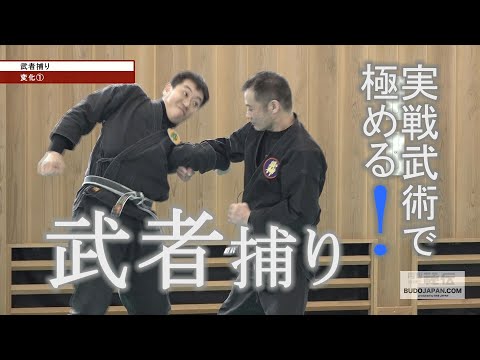
Unveiling Bujinkan's Secrets: A Deep Dive into Hatsumi Masaaki's Throws and Joint Locks

Welcome, students, to a discussion that delves into the very soul of martial arts. Today, we move beyond mere techniques and explore the profound philosophy and practical application of systems that have shaped warriors for centuries. We're not just talking about punches and kicks; we're dissecting the art of control, the science of leverage, and the warrior's mindset. The DVD "初見良昭の秘技継承【武神館の武術】第二巻 投げ・関節技編" (Hatsumi Masaaki's Secret Techniques: Bujinkan Martial Arts Vol. 2 - Throws & Joint Locks) presents a cornerstone of the Bujinkan system. But what does it truly represent? Is it merely a collection of physical movements, or does it offer a deeper insight into the nature of combat and self-mastery? Let us begin this examination.

The Legacy of Takamatsu and Hatsumi: A Bridge to Ancient Warriors

The foundation of Bujinkan Budo Taijutsu is steeped in history, tracing its lineage back to figures like Takamatsu Toshitsugu, often referred to as the "Last Ninja" and "Tiger of Mongolia." His vast knowledge, passed down through rigorous training and dedication, forms the bedrock upon which Hatsumi Masaaki, his successor and renowned Grandmaster, built the Bujinkan. This lineage isn't just a historical footnote; it's a living testament to the enduring principles of combat and survival that transcend time. The transmission of these arts, particularly through figures like Takamatsu and Hatsumi, serves as a vital bridge, connecting us to the strategies and philosophies of ancient warriors, including the legendary ninja.

The phrase "All martial arts ultimately lead to Ninpo," attributed to Takamatsu, is not a casual statement. It suggests a universal convergence of martial principles, a common root from which diverse techniques spring. This DVD, by focusing on foundational grappling techniques within the Bujinkan system, invites us to explore this very convergence. It’s about understanding the underlying mechanics that make seemingly disparate arts effective.

Understanding Bujinkan Budo Taijutsu: More Than Just Ninjutsu

Bujinkan Budo Taijutsu is often simplified to "ninjutsu," a term that conjures images of shadowy assassins and covert operations. While ninja arts are indeed a significant component, Bujinkan encompasses far more. It is a comprehensive martial system derived from nine distinct traditional Japanese schools (ryū), each with its own unique history, focus, and methodology. This encyclopedic scope means Bujinkan practitioners are exposed to a wide array of techniques and principles, from striking and weaponry to grappling and stealth.

This particular volume, focusing on throws and joint locks, highlights the "Koshu Kihon Gata Goho" (Five Fundamental Forms of Grappling). This isn't just about throwing an opponent; it's about understanding control, leverage, and the vital points of the human body. The fact that the Bujinkan system has garnered attention from global institutions like the FBI and CIA, and boasts a reported worldwide following of 500,000 disciples, speaks volumes about its practical efficacy and the depth of its training.

"The true warrior is a craftsman of his own destiny." - A principle echoing through the halls of martial history.

Koshu Kihon Gata Goho: The Five Fundamental Forms of Grappling

At the heart of this DVD's technical content lies the "Koshu Kihon Gata Goho." These five fundamental forms are not merely static postures or pre-arranged sequences; they are dynamic blueprints for understanding fundamental principles of control and manipulation. They represent the distilled essence of older grappling arts, simplified and refined for practical application. These forms teach practitioners how to:

  • Control an opponent's balance.
  • Apply pressure to vulnerable joints.
  • Execute throws with minimal effort.
  • Understand the flow of combat.
  • Adapt techniques based on the opponent's reaction.

Mastering these basic forms is crucial for any Bujinkan student. They provide the scaffolding upon which more complex techniques and strategies are built. Without a solid grasp of these fundamentals, advanced movements can become ineffective or even dangerous.

Musha-gori: Capturing and Controlling the Warrior

"Musha-gori" translates roughly to "warrior capture" or "warrior binding." This section of the DVD explores techniques designed to subdue and control an opponent, focusing on methods that minimize damage while ensuring complete compliance. This is where the philosophical underpinnings of Bujinkan become evident. The goal is not gratuitous violence, but effective neutralization.

The "transformations" mentioned in the DVD title are key. Grappling is not a rigid, one-size-fits-all endeavor. An opponent's resistance, their body type, their stance – all these factors necessitate adaptation. "Musha-gori" teaches the practitioner to read these variables and apply the appropriate technique, or a series of techniques, to achieve the desired outcome. This involves understanding leverage points, nerve strikes, and how to exploit an opponent's momentum against them. It’s a subtle art, far removed from brute force.

What separates a true martial artist from a mere fighter? It's the ability to adapt and overcome. Consider the principles of Agility and Flexibility. Without them, even the strongest technique can be nullified. This is where the depth of systems like Bujinkan truly shines.

Throws and Joint Locks: The Essence of Volume 2

This second volume specifically delves into the arts of nage-waza (throwing techniques) and kansetsu-waza (joint locking techniques). It also covers hawatari (breakaway techniques) and mutō-dori (unarmed capture of an armed attacker), further emphasizing the practical, self-defense oriented nature of Bujinkan.

Throws: The throws presented are not the high-amplitude, spectacle-driven throws often seen in modern combat sports. Instead, they are efficient, leverage-based movements designed to unbalance and takedown an opponent with minimal expenditure of energy. This aligns with the principle of ju (yielding) often found in Japanese martial arts, where one uses an opponent's force against them.

Joint Locks: The joint locks taught are precise and debilitating. They target the vulnerable joints of the human body – wrists, elbows, shoulders, fingers, knees, and ankles. The focus is on applying pressure in a way that either forces submission or incapacitates the opponent. Understanding the anatomy and the direction of force is paramount here. A poorly applied lock can be ineffective or even lead to the practitioner being countered.

The inclusion of hawatari and mutō-dori is particularly noteworthy. These techniques address critical self-defense scenarios: escaping holds and disarming an armed assailant. This demonstrates that Bujinkan Budo Taijutsu is not just a theoretical study but a practical system designed for real-world application, a concept central to the philosophy of Self Defense and Street Combat.

The Role of Sakai Norio Sensei: A Master Instructor

The instruction and supervision by Sakai Norio Shihan are crucial to the value of this DVD. As a highly respected master within the Bujinkan, Sakai Sensei brings decades of experience and profound understanding to the demonstration of these techniques. His ability to convey the intricacies of these ancient arts is invaluable. In martial arts, the quality of the instructor is paramount. A skilled teacher can illuminate the path to mastery, while a poor one can lead students astray.

Sakai Sensei's detailed explanations and precise movements ensure that viewers can grasp the nuances of each technique. This is not a superficial display; it is a meticulously curated lesson from a lineage holder. The accompanying introduction video also provides a glimpse into the depth and scope of the Bujinkan teachings, further solidifying the authority of this resource.

"The greatest victory is that which requires no battle." - Sun Tzu. This might seem counterintuitive for a martial arts DVD, but it speaks to the ultimate goal: control and de-escalation, achieved through superior understanding and technique, not brute force.

Veredicto del Sensei: Is This a Must-Have for Practitioners?

From a martial arts perspective, this DVD is an invaluable resource for anyone serious about understanding the practical application of grappling within a historical and philosophical context. It’s not just about learning a few throws or joint locks; it’s about understanding the principles that underpin them. For Bujinkan practitioners, it’s an essential piece of training material, offering detailed instruction on foundational forms that are critical to their progression. For martial artists from other disciplines, it offers a window into a different, yet equally potent, approach to combat and self-mastery.

The emphasis on efficiency, leverage, and adaptability makes the techniques presented relevant even in the context of modern martial arts. While the cultural and historical context is unique, the underlying mechanics of control and movement are universal.

Rating: Shodan in Practicality - This DVD provides a solid foundation and clear instruction on critical grappling techniques within the Bujinkan system. It’s a testament to the enduring power of traditional martial arts.

Essential Training Gear for Your Journey

While Bujinkan Budo Taijutsu emphasizes adapting to your environment and using what's available, certain equipment can enhance your training, especially when practicing throws and joint locks:

  • Durable Training Uniform (Gi): A robust gi, like a double-weave Judo or Aikido gi, is essential for practicing throws and holds safely. Look for reinforced stitching and comfortable, breathable fabric. This allows for proper grip and prevents tearing during dynamic movements. Consider brands known for their durability for practices involving intense grappling.
  • Training Mats (Tatami/Roll-out Mats): For practicing throws and falls (ukemi), investing in quality training mats is crucial to prevent injuries. Ensure they offer sufficient cushioning and stability.
  • Partner: The most crucial piece of "equipment" is a dedicated and knowledgeable training partner. Consistency is key in martial arts.
  • Reference Materials: While this DVD is excellent, supplementary books on anatomy, joint manipulation, and the history of Japanese martial arts can deepen your understanding. For example, exploring texts on Karate Spirit or the philosophy of BUDO can provide a broader context.

Training Guide: Applying Bujinkan Principles

To truly internalize the teachings from this DVD, consistent and mindful practice is required. Here's a breakdown of how to approach your training:

  1. Understand the Core Concepts: Before executing techniques, spend time meditating on the principles behind them. What is the goal of this particular throw or lock? How does it exploit the opponent's structure? Reflect on the idea of Inner Strength and how it translates to physical control.
  2. Master the Fundamentals (Koshu Kihon Gata Goho): Dedicate significant time to practicing the five fundamental grappling forms. Break them down step-by-step, ensuring each movement is precise and efficient. Focus on balance, posture, and movement, not just the final application.
  3. Practice Ukemi (Breakfalls): Safe and effective throwing requires a solid understanding of how to fall without injury. Practice forward rolls, backward rolls, and side falls consistently. This is fundamental to Martial Arts Training.
  4. Isolate Techniques: Work on individual throws and joint locks. Practice them slowly with a compliant partner, focusing on the correct mechanics. Gradually increase speed and resistance as your understanding and your partner's comfort level grow.
  5. Introduce Resistance: Once comfortable with isolated techniques, begin practicing with a partner who offers mild resistance. This is where you learn to adapt and feel the flow of combat. This is also where Adaptability becomes a key skill.
  6. Sparring (Kumite/Randori - Adapted): While Bujinkan doesn't typically involve free-sparring in the same way as Judo or Artes Marciales Mixtas, controlled sparring drills that focus on takedowns, controls, and escapes can be beneficial. Think of it as applying the principles in a fluid, less predictable manner.
  7. Study "Musha-gori" and "Mutō-dori": Focus on the application of these techniques in controlling an opponent and, crucially, in disarming an armed attacker. Understand the principles of distance, timing, and deception. This is where the practical self-defense aspect is most pronounced.
  8. Cross-Reference and Seek Guidance: Always seek qualified instruction. If possible, attend seminars or classes taught by experienced Bujinkan instructors. Use this DVD as a reference to reinforce what you learn directly. The principles here also echo in concepts like Kyokushin Karate's emphasis on practical power.

Frequently Asked Questions

What is the primary difference between Bujinkan grappling and Judo or BJJ?

While all involve throws and submissions, Bujinkan's grappling is often characterized by its emphasis on natural movement, evasion, striking integration, and targeting vital points or structural weaknesses, rather than solely focusing on pinning or submission as the primary goal. It's more about controlling the entire body and mind of the opponent within a broader combat context.

Are these techniques effective against larger, stronger opponents?

Yes, the core principles of Bujinkan grappling, such as leverage, timing, and understanding body mechanics, are designed to overcome size and strength disparities. The "Koshu Kihon Gata Goho" and "Musha-gori" techniques specifically focus on exploiting an opponent's structure and balance, making them effective regardless of physical strength.

How does this relate to the "ninja arts" often associated with Bujinkan?

Historically, ninja arts often incorporated elements from various martial schools, including those focused on unarmed combat, throws, and joint locks. Bujinkan preserves these older systems, which were practical tools for survival and conflict resolution in their time. This DVD showcases the foundational unarmed combat skills that would have been essential.

Can I learn these techniques solely from this DVD?

While this DVD is an excellent instructional resource, it is best used as a supplement to hands-on training under a qualified instructor. Martial arts are inherently practical and involve physical interaction; nuances are best learned through direct feedback and practice with a live partner.

What does "Mutō-dori" specifically mean in practice?

Mutō-dori means "unarmed capture of a sword-wielder" or, more broadly, unarmed techniques against an armed opponent. It involves closing distance, neutralizing the weapon's effectiveness, and applying control techniques to disarm and subdue the attacker, often incorporating strikes, joint locks, and throws.

For Further Deepening Your Path

  • BUDO Philosophy: Understanding the underlying principles of discipline, respect, and self-improvement.
  • MMA Training: Comparing and contrasting grappling techniques with modern mixed martial arts.
  • Self-Improvement Through Martial Arts: Exploring the broader psychological benefits of consistent training.

Reflexión del Sensei: Tu Próximo Paso

This DVD offers a profound look into the Bujinkan system, a legacy of ancient warrior arts. But knowledge without application is like a sharp sword left to rust in its scabbard. The question for you, the dedicated practitioner, is not merely "Do I understand these techniques?" but rather, "How will I integrate this understanding into my own path?" Will you see these forms as mere movements to be mimicked, or as keys to unlocking a deeper understanding of movement, control, and conflict resolution? The true test lies not in watching the DVD, but in stepping onto the mat, facing a partner, and applying the principles with intent and respect. Remember, the greatest lessons are often learned in the struggle. What is the first, small step you will take today to embody this knowledge?

``` GEMINI_METADESC: Explore Bujinkan's core grappling techniques with Hatsumi Masaaki's Vol. 2 DVD. Learn about Koshu Kihon Gata Goho, Musha-gori, throws & joint locks from a martial arts expert.

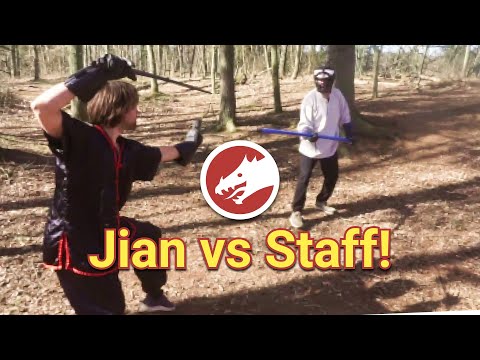
Bo vs. Jian: A Traditional Martial Arts Crucible - Pressure Tested and Critiqued

The air crackles not with the electricity of the digital marketplace, but with the focused intent of true martial engagement. Today, we delve into a scenario that ignites the curiosity of practitioners worldwide: the clash of vastly different yet intrinsically linked weapon systems. This isn't about flashy choreography for the screen; it's about the raw, unadulterated pressure-testing of traditions. The question isn't *if* these arts can stand against each other, but *how* they manifest their inherent principles when forced into proximity. Prepare for a deep dive into a Bo staff versus Jian (straight sword) sparring session that promises to be more than just a demonstration. It’s a crucible.

Introduction: The Genesis of Conflict

Welcome, devoted practitioners, to Budo and Martial Arts, the definitive source for dissecting the soul of combat. We are not merely observers; we are analysts of the highest order, dissecting every movement, every principle, every failure and success. Today's subject, a sparring match between the long reach of the Bo staff and the close-quarters agility of the Jian, is a highly requested examination. Many of you have asked to see traditional martial arts principles pushed to their limit. You seek validation, understanding, and perhaps, the spark of inspiration for your own training.

This bout is a testament to the enduring power of ancient combat methodologies. It challenges the notion that certain weapons are obsolete, or that one system inherently dominates another. Instead, it highlights the universal truths of distance, timing, strategy, and the unwavering spirit required to face a determined opponent. We will dissect this encounter not just as a fight, but as a living, breathing martial arts lesson.

The Art of Engagement: Analyzing the Bo vs. Jian Sparring

The dynamic between a Bo staff and a Jian is a fascinating study in contrasts. The Bo, a weapon of significant reach, thrives on controlling space. Its strikes are often sweeping, linear, and designed to keep an opponent at bay. The Jian, on the other hand, is an intimate weapon. It excels in the close-range, with rapid thrusts, precise cuts, and the ability to parry and deflect with agility. When these two meet, the Bo user's primary objective is to maintain that distance, utilizing the staff's length to dictate the engagement. The Jian user’s task is to overcome that reach, to penetrate the Bo's guard and find an opening for their shorter, quicker strikes.

What we often see in such encounters is a strategic dance. The Bo user will employ circular blocks and sweeping motions to intercept incoming Jian attacks, aiming to create a moment of vulnerability. Conversely, the Jian practitioner must be constantly moving, feinting, and looking for opportunities to close the distance. A common mistake for the Jian user is to rush in headlong, only to be met by the full force of a Bo strike. A common pitfall for the Bo wielder is becoming too predictable with their long-range attacks, allowing the Jian to slip inside their guard.

This sparring session, as requested by many of you, is designed to showcase the "pressure testing" of these traditional arts. It's not about winning or losing in a tournament sense, but about seeing how the fundamental principles of each weapon system fare when confronted with a skilled practitioner of another. It’s a rare opportunity to observe the raw application of technique outside of staged demonstrations.

Principles in Motion: Philosophy Embodied

Beyond the physical exchange, every martial encounter is a manifestation of underlying philosophy. The Bo staff, in many traditions, embodies principles of flow, adaptability, and the power of extension. It represents the ability to influence from a distance, to create momentum, and to strike decisively. The Jian, conversely, often speaks to the precision of intent, the economy of motion, and the devastating power of a focused attack. It is the embodiment of *'Shen'* (spirit) and *'Qi'* (energy) channeled through a sharp edge.

"The sword is the soul of the samurai." - Ancient Japanese Proverb

In this Bo vs. Jian encounter, we can observe these philosophies at play. The Bo user might demonstrate the principle of *'Ju'* (yielding) by redirecting an opponent's force, while the Jian user might embody *'Go'* (hardness) with a direct, unyielding thrust. It’s a dialogue between two different interpretations of combat effectiveness. The fluidity of the Bo can be seen as a representation of the Taoist concept of *'Wu Wei'* (effortless action), while the Jian's precision speaks to the Confucian ideal of meticulousness and order.

Furthermore, the psychological aspect is paramount. The Bo's reach can instill a sense of intimidation, forcing the Jian user to confront their own apprehension. The Jian's quickness and proximity can create a feeling of being cornered for the Bo practitioner. This sparring match is a testament to the mental fortitude required to overcome such challenges. As Miyamoto Musashi famously wrote in his Book of Five Rings:

"When you are on the way, you must continually pursue study. ... You must not stop learning. ... When you have attained a certain level, you must not be content with it, but always seek to improve yourself."

This commitment to continuous improvement is precisely what we seek to highlight.

Technical Breakdown: Unpacking the Strategies

Let's dissect some of the crucial tactical elements at play. The Bo user's defense will likely involve blocking and deflecting techniques. A common block against a Jian thrust might be a downward sweep of the Bo, intercepting the blade and pushing it away. Conversely, a Jian user might employ a "trap block," where the sword is caught momentarily between the Bo and the Jian's guard, creating an opening for a quick counter-thrust or cut.

One of the most critical skills for the Jian user in this scenario is footwork. They must be able to step in and out of range rapidly, using evasive movements to avoid the Bo's sweeping attacks while simultaneously advancing. Techniques like the "zig-zag" run or rapid lateral steps are invaluable. For the Bo user, maintaining a strong stance and employing powerful, large-arc movements are key to covering the space and disrupting the Jian's advance. A well-timed spin or a sweeping horizontal strike can effectively reset the engagement distance.

Consider the opening,

. Notice how the Bo practitioner attempts to establish dominance through sweeping motions. Observe the Jian's response: is it immediate evasion and a counter, or a defensive parry? Each choice reveals a different strategic mindset. The interaction between the two channels exemplifies the dynamic interplay of reach versus speed, power versus precision. It’s a chess match played with lethal intent, where a single misstep can be costly.

My sparring partner's channel, MFC Monkeyfist Channel, provides further insight into the practical application of these weapon systems. Their dedication to exploring these traditional engagements is commendable and offers a valuable resource for anyone seeking deeper understanding.

This interaction between disciplines is what fuels true martial growth.

Veredicto del Sensei: More Than Just a Fight

This sparring session between Bo staff and Jian is more than just a display of weapon proficiency; it is a profound illustration of martial arts principles in action. It demonstrates that despite the evolution of weaponry and combat sports, the foundational concepts of distance, timing, strategy, and mental fortitude remain timeless. The Bo user’s ability to control space and the Jian’s capacity for agile, precise strikes are both tested, revealing the strengths and weaknesses inherent in each.

Cinturón Negro en Autenticidad. This is not about spectacle; it's about the rigorous application of traditional martial arts. It’s a rare glimpse into the *real* meaning of pressure testing. The dedication of both practitioners to engage in such a challenging scenario, embracing the inherent risks and potential for discovery, is truly commendable. This bout serves as an invaluable educational tool, proving that when honed with dedication, traditional weapons can still deliver devastating effectiveness.

Guía de Entrenamiento: Integrating Weaponry into Your Practice

For those inspired to explore the world of martial arts weaponry, here's a basic framework to begin your journey. Remember, safety and proper instruction are paramount. Always seek guidance from a qualified instructor.

  1. Foundation First: Empty Hand Proficiency. Before picking up any weapon, ensure a solid foundation in empty-hand techniques. Understand basic stances, footwork, striking, and blocking principles. This provides the fundamental movement patterns that weapons will later augment.
  2. Select Your Weapon Wisely. Research the weapon that resonates with you. For those interested in reach and sweeping motions, the Bo is a classic. For those drawn to precision and agility, the Jian offers a unique challenge.
  3. Safety Training (Mandatory). If practicing with a partner, always use **padded or training-grade weapons**. Start with slow, controlled movements. Focus on form and distance before speed or power.
  4. Drill the Basics. Practice fundamental strikes, blocks, and stances specific to your chosen weapon. For the Bo, this might include simple thrusts, horizontal sweeps, and defensive blocks. For the Jian, it's thrusts, cuts, and parries.
  5. Sparring with Controlled Intent. Once you have a grasp of basic techniques, engage in light, controlled sparring. The goal is not to injure, but to apply techniques, test distance, and refine timing. Always communicate with your partner and set clear rules for engagement.
  6. Cross-Training (Advanced). As you progress, consider sparring with practitioners of different weapon systems, like what is shown in the video. This is where true understanding of martial principles is forged.

Equipo Esencial para tu Entrenamiento

To truly immerse yourself in the practice of martial arts weaponry, having the right equipment is crucial. It not only enhances safety but also improves the learning experience.

  • Training Weapons:
    • Bo Staffs: Look for sturdy but lightweight options, often made from rattan, oak, or synthetic materials for durability.
    • Jian (Straight Swords): Opt for unsharpened, blunt training Jian, typically made of stainless steel or aluminum alloy, designed for sparring.
  • Protective Gear:
    • Sparring Gloves: Essential for protecting hands during weapon sparring, especially when deflecting.
    • Headgear: A padded headguard is vital to protect against accidental strikes.
    • Body Armor: A padded sparring vest can offer additional protection against body shots.
    • Forearm Guards: Crucial for protecting against accidental blade contact or forceful weapon impacts.
  • Traditional Uniform (Gi/Dobok): While not always mandatory for weapon training, a comfortable and durable uniform allows for freedom of movement and embodies the spirit of practice.

Preguntas Frecuentes

Q1: Is Bo vs. Jian sparring practical for self-defense?

While these weapon systems have historical roots in combat, their direct application in modern self-defense scenarios is limited due to legal restrictions on carrying weapons and the rarity of such encounters. However, the principles of distance management, timing, and strategic thinking learned from such sparring are highly transferable to empty-hand defense.

Q2: Which weapon is inherently superior, the Bo or the Jian?

Neither weapon is inherently superior; their effectiveness depends entirely on the skill of the practitioner, the environment, and the specific tactics employed. The Bo excels at controlling distance, while the Jian thrives in close-quarters combat. The "superiority" lies in the individual's mastery and strategic application.

Q3: How can I train Bo vs. Jian techniques safely on my own?

Solo training should focus on mastering the fundamental movements, strikes, and blocks of each weapon individually. Practice drills for footwork, coordination, and form. If you wish to simulate sparring, use training weapons and focus on flow and timing without applying full force. Always prioritize safety and seek qualified instruction for partner drills.

Q4: What is the historical context of Bo and Jian combat?

The Bo staff has a long history across Asia, utilized by various martial traditions for self-defense and warfare. The Jian, or straight sword, is a quintessential weapon in Chinese martial arts, prized for its versatility in both offense and defense, and often associated with scholarly warriors and martial elites.

Para Profundizar en tu Camino

Reflexión del Sensei: Tu Próximo Paso

This examination of Bo vs. Jian sparring is a microcosm of the martial arts journey. It’s a constant push and pull, a testing of limits, and a continuous quest for deeper understanding. The practitioners in this bout are not just wielding weapons; they are embodying centuries of martial tradition, challenging themselves and, by extension, us, to think critically about what constitutes effective combat. The principles they display are universal, applicable whether you wield a staff, a sword, or only your own two hands.

Reflexión del Sensei: Tu Próximo Paso

Having witnessed this exchange, consider this: If your art were to be "pressure tested" against an entirely different discipline, what fundamental principles would you rely on? Are you truly grounded in them, or merely performing movements? Examine your training. Where is your own crucible? What challenge will you willingly undertake next to forge your spirit and sharpen your blade?

``` GEMINI_METADESC: An in-depth analysis and critique of a Bo staff vs. Jian sparring session, exploring traditional martial arts principles, techniques, and philosophies under pressure.