Showing posts sorted by relevance for query The Philosophy of Karate. Sort by date Show all posts

The Karate Edge in MMA: 15 Fighters Who Prove Its Lethal Potential

The Striking Art Meets the Octagon

Is Karate just a traditional art form, a relic of the past? Many outside the dojo might think so. But for those who understand the profound principles and devastating techniques forged over centuries, the answer is a resounding no. Karate, at its core, is about the unification of mind and body, about discipline, and about developing an unshakeable inner strength. It's an art where age is but a number, and continuous practice refines not just physical prowess but mental acuity. As we witness the relentless evolution of Mixed Martial Arts (MMA), a crucial question emerges: how does this ancient striking art fare against the modern, multifaceted combat sports landscape? This is not merely an academic exercise; it's about understanding the practical application of lethal techniques under the brightest lights of the modern combat arena. My journey through the dojo and the fight analytics has shown me time and again that the principles of Karate are not only relevant but foundational. Today, we delve into the heart of this intersection, exploring 15 fighters who have masterfully integrated Karate into their MMA arsenals, proving its efficacy and power.

Why Karate Translates to MMA Success

Karate, in its purest form, is a striking discipline. It emphasizes powerful punches, swift kicks, precise elbow and knee strikes, and the devastating efficiency of open-hand techniques like knife-hands and palm-heels. However, to dismiss it as *just* striking is a grave error. Historically, and in many contemporary styles, Karate also encompasses grappling, throws, joint locks, restraints, and the critical application of pressure to vital points. This comprehensive foundation is precisely why Karate practitioners can adapt so effectively to the demands of MMA. The explosive power generated from Karate stances and movements, the footwork that allows for rapid entry and exit, and the strategic use of distance are invaluable assets. Moreover, the mental fortitude cultivated through Karate training – composure, strategic thinking, and an unyielding confidence – are the bedrock of any successful fighter. It's about more than just throwing a punch; it's about timing, precision, and understanding the opponent's intent. The philosophy of Budo, the warrior's path, imbues Karateka with a resilience that transcends the physical. This is the essence that makes Karate not just viable, but often dominant, in the MMA cage.

"Karate practice strengthens the mind, develops composure, a clearer thought process, deeper insight into one's mental capabilities, and more self-confidence."

The "striking art" label often conjures images of stand-up exchanges, but the principles of Karate extend far beyond this. The ability to maintain distance, to react instantaneously to an incoming threat, and to deliver precise, fight-ending strikes are skills that resonate deeply in MMA. Fighters who possess a strong Karate background often exhibit a unique rhythm and flow in their exchanges, an almost predatory awareness that allows them to exploit openings before their opponents even perceive them. This isn't about adhering strictly to kata; it's about internalizing the principles and applying them dynamically in the chaos of a fight. Many top contenders, while their primary discipline might be grappling or Muay Thai, often possess Karate as a significant secondary or even primary influence, demonstrating its versatility.

The Elite 15: Karate's MMA Vanguard

The integration of Karate into MMA is not theoretical; it's demonstrably present in the performances of numerous elite athletes. These individuals have not only adopted Karate techniques but have internalized its spirit, using it as a weapon to achieve victory. Their success serves as a testament to the enduring power and adaptability of this ancient art. Here are 15 fighters who embody the lethal effectiveness of Karate in the MMA landscape:

  • 1. Lyoto Machida: The undisputed "Dragon," renowned for his traditional Karate approach, exceptional timing, and elusive movement.
  • 2. Georges St-Pierre (GSP): While a master of all disciplines, GSP’s Karate background provided him with exceptional distance control and precise striking.
  • 3. Chuck Liddell: "The Iceman" utilized powerful Karate-based striking, blending it with his wrestling for a dominant era.
  • 4. Gunnar Nelson: A submission specialist with a strong Karate foundation, showcasing effective Karate striking in his grappling setups.
  • 5. Uriah Hall: Known for his spectacular spinning attacks and devastating knockout power, heavily influenced by his Karate training.
  • 6. Seth Petruzelli: A powerful striker whose Karate background led to quick, decisive victories.
  • 7. Kyoji Horiguchi: A dynamic fighter with lightning-fast Karate striking and excellent counter-punching ability.
  • 8. Robert Whittaker: "The Reaper" combines devastating striking power with a solid Karate base, making him a threat from anywhere.
  • 9. Guy Mezger: A pioneer in MMA, Mezger showcased effective Karate striking in his early career.
  • 10. Bas Rutten: While known for his Muay Thai and Pancrase background, Rutten incorporated elements of Karate striking into his aggressive style.
  • 11. Katsunori Kikuno: An elegant striker whose Karate techniques were often breathtaking to watch.
  • 12. Ryo Chonan: Famous for his spinning heel kick knockout, demonstrating the spectacular possibilities of Karate in MMA.
  • 13. Justin Scoggins: A Karateka with dynamic kicking ability and fluid striking.
  • 14. Michelle Waterson: "The Karate Hottie" uses her Karate background effectively, blending it with her Muay Thai and BJJ.
  • 15. Shonie Carter: A veteran who often utilized Karate-based techniques and unique striking approaches.

Spotlight on Lyoto Machida: The Karate Master

When discussing Karate in MMA, Lyoto Machida is the first name that often comes to mind. His fighting style was a direct embodiment of traditional Karate principles, specifically Shotokan Karate. Machida employed a highly defensive, counter-striking strategy, utilizing exceptional footwork and timing to evade attacks and land precise, powerful blows. He masterfully controlled the distance, making his opponents uncomfortable and forcing them to commit to attacks, thereby opening themselves up for devastating counter-strikes. His signature move, the Uraken (reverse punch), delivered with pinpoint accuracy, often ended fights decisively. Machida’s approach proved that a pure Karate style, when executed with discipline and strategic brilliance, could overcome brute force and overwhelming grappling. He taught the world that intelligence and technique, honed through dedicated Karate practice, are formidable weapons in the MMA arena. His career is a masterclass in the philosophy of 'Sen' – initiative and preemptive action – a core concept in martial arts.

Spotlight on Georges St-Pierre: The Versatile Champion

Georges St-Pierre (GSP), often considered one of the greatest MMA fighters of all time, represents a different facet of Karate's integration. While GSP developed a well-rounded game encompassing elite wrestling, Brazilian Jiu-Jitsu, and Muay Thai, his foundation in Karate provided him with a significant advantage in striking. His jab was renowned for its speed and accuracy, his movement was fluid, and his ability to mix up strikes with takedowns was unparalleled. GSP's Karate background allowed him to maintain excellent distance control, keeping opponents where he wanted them and dictating the pace of the fight. He demonstrated how Karate's principles of explosive power, precise targeting, and efficient movement could be seamlessly integrated into a comprehensive MMA strategy, elevating his overall fighting prowess and contributing to his legendary status. His career highlights the versatility of Karate – not just as a standalone style, but as a critical component in a larger combat system.

Spotlight on Michelle Waterson: The "Karate Hottie"

Michelle Waterson, affectionately known as "The Karate Hottie," brings a vibrant Karate influence to the women's atomweight and strawweight divisions. Her style is characterized by fluidity, agility, and a keen sense of timing. Waterson leverages her Karate background to deliver sharp, precise strikes, often utilizing quick combinations and evasive maneuvers. She has a knack for finding angles and creating openings with her Karate-based striking, which she then skillfully blends with her Muay Thai and Brazilian Jiu-Jitsu. Her ability to transition between striking and grappling, all while maintaining the core principles of Karate’s dynamic movement and striking efficiency, makes her a compelling and dangerous opponent. Waterson’s success underscores the fact that Karate is not limited to male fighters or heavyweights; its principles are universally applicable, empowering athletes across all divisions and genders. Her dedication to her martial arts journey is an inspiration to many.

Equipment Essentials for Your Training

To truly harness the power and discipline of Karate, the right equipment can make a significant difference. While the art emphasizes mind and body, proper gear enhances safety, improves technique, and instills a sense of seriousness in your training. For striking practice, investing in quality sparring gloves (16oz is standard for MMA sparring) is paramount for protecting your hands and your training partners. A durable, well-fitting Karate gi or a versatile MMA uniform is essential for drills that involve movement, grips, and throws. For those looking to develop powerful strikes, consider investing in a makiwara or a similar striking pad for home practice. Additionally, a good pair of training shoes that offer support and grip can be beneficial for footwork drills. For conditioning, basic items like a jump rope can dramatically improve cardiovascular fitness and coordination, key elements in Karate.

Frequently Asked Questions

  • Can Karate be effective in a real street fight?

    Yes, Karate can be very effective in self-defense situations. Its focus on powerful strikes, defensive maneuvers, and developing situational awareness are invaluable. However, effectiveness depends heavily on the practitioner's training, adaptability, and the specific context of the confrontation.

  • Is Karate better than other martial arts for MMA?

    There is no single "best" martial art for MMA. Karate offers significant advantages in striking, distance management, and mental discipline. Elite MMA fighters often combine techniques from various arts, including Karate, Judo, BJJ, and Muay Thai, to create a well-rounded skillset.

  • Do I need a traditional Karate gi for MMA training?

    While a traditional Karate gi is excellent for Karate-specific training, for MMA, a more robust gi designed for grappling (like a Judo or BJJ gi) or a dedicated MMA uniform might be more practical for incorporating throws and ground transitions. However, the fundamental principles of Karate can be practiced in any suitable attire.

  • How can Karate improve my mental strength?

    Karate training emphasizes discipline, focus, perseverance, and overcoming challenges. The practice of kata, sparring, and the philosophy behind the art cultivate mental resilience, composure under pressure, and a stronger sense of self-confidence.

Deepen Your Martial Path

Sensei's Final Reflection: Your Next Step

The evidence is clear: Karate is not merely an art of tradition; it is a potent force that has carved its path through the brutal landscape of MMA. The fighters we've highlighted are living proof that the principles of unified mind and body, precision striking, and unyielding spirit are timeless. They have taken the essence of Karate and applied it with devastating success in the modern arena. But this is not just about fighting; it's about the application of disciplined movement and focused intent in all aspects of life. The path of Karate, like the path of any true martial art, is a continuous journey of self-discovery and mastery.

Sensei's Final Reflection: Your Next Step

Now, consider this: Are you merely a spectator of these martial feats, or are you actively engaged in your own journey of refinement? If you train Karate, or any martial art, what one principle have you learned that transcends the dojo and impacts your daily life? And if you don't train, what is stopping you from embracing this transformative path?

``` GEMINI_METADESC: Discover the lethal potential of Karate in MMA. Explore 15 elite fighters who masterfully blend Karate's striking power and discipline into their combat strategies.
Lyoto Machida's Fighting Philosophy: A Masterclass in Karate's Application in MMA

Introduction: The Brazilian Samurai

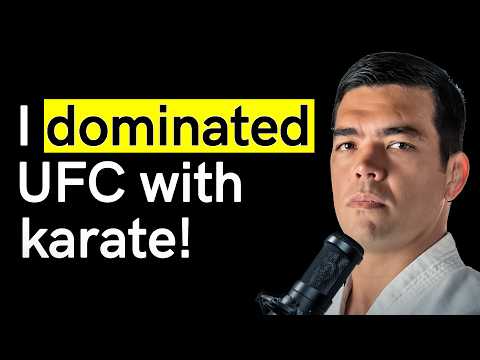
Hello, warriors, and welcome to Budo and Martial Arts. Today, we dissect a phenomenon: Lyoto Machida. The "Dragon" of MMA, a man who has consistently proven that the ancient principles of Karate are not only relevant but devastatingly effective in the modern, brutal arena of mixed martial arts. Forget the flashy, often impractical interpretations of Karate seen in some circles. Machida embodies the warrior's spirit – disciplined, strategic, and lethal. He doesn't just fight; he moves with a calculated grace, a testament to his deep understanding of his craft. This is not merely about knockouts; it's about the philosophy, the training, and the unwavering dedication that transforms a martial artist into a legend.

The question often arises: Can traditional martial arts truly stand against the hybridized onslaught of MMA? Machida's career, particularly the explosive moments we're about to analyze, offers a resounding "yes." But the true lesson lies not just in his victories, but in the 'how' and 'why' behind them. This is a deep dive into the mind and methods of a fighter who bridges the gap between tradition and the cage.

Lyoto Machida's Highlight Reel: A Study in Precision

Let's not mince words. Lyoto Machida's career is a highlight reel of tactical brilliance and devastating finishing power. He moves like a ghost, appearing when least expected, and striking with the precision of a surgeon. His ability to transition seamlessly between defensive postures and explosive offensive maneuvers is a masterclass in timing and distance management.

Consider his front kick knockout of Vitor Belfort. This wasn't a wild, desperate strike. It was a perfectly timed counter, exploiting Belfort's forward momentum. The technique was pure Karate, delivered with the force and accuracy honed through years of dedicated practice. This single strike encapsulates Machida's fighting style: patience, observation, and explosive execution.

"The ultimate aim of martial arts is not victory or defeat, but the perfection of the character of its practitioners." - Gichin Funakoshi

His leg trip knockout of Thiago Silva showcased another layer of his strategy. While often lauded for his striking, Machida's understanding of grappling and takedowns, particularly those that flow organically from striking exchanges, is often underestimated. This wasn't just about power; it was about understanding angles and leverage, a critical component of any effective martial art.

The knockout of Rashad Evans demonstrated his uncanny ability to exploit openings with his hands. While Karate is primarily known for its kicks, Machida's proficiency with punches, particularly the counter-punch, is undeniable. He doesn't waste movement. Every feint, every jab, every cross is designed to set up the next, more significant strike or to create an opening.

We see this pattern repeated: Vitor Belfort's front kick KO, Thiago Silva's leg trip, Rashad Evans' punch KO, Randy Couture's crane kick KO, Ryan Bader's Gyaku Zuki KO, Mark Munoz's high kick KO, CB Dollaway's liver kick KO, and Chael Sonnen's jump knee KO. Each of these moments is a testament to his adaptability and his deep well of knowledge drawn from Karate.

The Infamous Crane Kick: More Than Just Spectacle

Ah, the crane kick. Immortalized in pop culture, but brought to a brutal, high-stakes reality by Lyoto Machida against Randy Couture. Many dismiss it as a showy technique. But in Machida's hands, it's a calculated weapon. The effectiveness of such a kick in an MMA context relies on impeccable timing and the ability to create the necessary distance and balance.

The visual element of the crane kick – balancing on one leg with the other raised – is deceiving. It requires immense core strength, balance, and leg control, all cultivated through rigorous Karate training. Machida's application of this kick wasn't gratuitous; it was a strategic strike aimed at a vulnerable target, exploiting Couture's defensive posture and the moment of transition in the fight. It's a prime example of how a seemingly esoteric technique from traditional Karate can be adapted for devastating effect in a modern combat sport.

The legend of Daniel LaRusso's crane kick in "The Karate Kid" might have planted the seed in the public imagination, but Machida actualized its potential in the professional fighting world, proving its efficacy beyond the silver screen.

The Philosophy Behind the Technique: Karate Meets Combat

Machida's success is not just about physical prowess; it's deeply rooted in the philosophy of Budo. He embodies the concept of 'Mushin' – a mind free from distraction, fear, or anger, allowing for natural, instinctive action. This is the essence of a true warrior's mindset. His serene demeanor in the face of intense pressure is not apathy; it is the embodiment of calm focus.

Karate, at its core, is about efficient movement and maximum impact with minimal effort. Machida translates this principle into the cage. He doesn't engage in prolonged, energy-draining exchanges. Instead, he waits, observes, and strikes with devastating precision when the opportunity arises. This is the strategic application of Karate's principles: distance, timing, and focus.

The Karate he practices is not merely a collection of techniques; it's a way of life, a path to self-improvement. This philosophical underpinning is what elevates his fighting from mere athleticism to an art form. It’s why he’s often referred to as the "Brazilian Samurai," a modern warrior carrying the torch of ancient traditions.

Training Regimen: Honing the Warrior's Edge

The spectacular finishes we see from Lyoto Machida are the product of an extraordinary training regimen. While the specifics are often guarded, his career trajectory points to a dedication that transcends the typical MMA fighter's routine. He emphasizes conditioning, flexibility, and, crucially, the repetition of fundamental Karate techniques until they become instinctual.

This involves extensive drills focused on balance, footwork, and striking precision. The body must be conditioned to execute complex movements under duress. His training likely incorporates:

  • Kihon (Fundamentals): Endless repetition of basic punches, kicks, blocks, and stances to perfect form and power.
  • Kata: Practicing choreographed forms not just for technique, but for developing flow, rhythm, and mental focus. This is where the 'spirit' of Karate is truly cultivated.
  • Sparring: Applying techniques in a controlled, yet realistic, combat scenario.
  • Conditioning: A rigorous approach to cardiovascular health, muscular endurance, and explosive power.
  • Flexibility and Mobility: Essential for executing high kicks and maintaining a low, stable base.

His discipline in maintaining this rigorous schedule, even into the later stages of his career, is a testament to his warrior's commitment. It underscores the idea that true martial arts mastery is a lifelong pursuit.

Veredicto del Sensei: Is Machida's Karate the Future?

Lyoto Machida is not just a fighter; he is a living embodiment of how traditional martial arts, when understood and applied correctly, can thrive in the modern combat landscape. His ability to integrate Karate principles with the demands of MMA is nothing short of masterful. He proves that technique, discipline, and strategic application of fundamentals can overcome brute force and volume striking.

While some might argue that pure Karate rarely features in today's top-tier MMA, Machida demonstrates that the core principles – timing, distance, economy of motion, and decisive striking – are universally applicable. He doesn't force Karate into MMA; he allows MMA to be enhanced by his Karate.

Cinturón Negro en Filosofía Marcial y Aplicación Táctica. Machida's legacy is a powerful argument for the enduring relevance of traditional martial arts training, emphasizing that the journey of perfection of self is as crucial as any victory in the ring.

Equipment Essentials for Your Training

To emulate the dedication and precision of a fighter like Lyoto Machida, you need the right tools. Whether you're training Karate, MMA, or any combat sport, investing in quality gear is crucial for both performance and safety.

  • Karate Gi: A durable, high-quality Karate Gi is essential for traditional training. Look for double-weave options for intense sparring or single-weave for kata.
  • MMA Gloves: For sparring and when transitioning to MMA-specific drills, well-padded MMA gloves are a must to protect your hands and your training partners.
  • Shin Guards: Crucial for protecting your shins during kicking drills and sparring.
  • Mouthguard: Non-negotiable for any combat sport training involving contact.
  • Training Mats: For safe execution of ground techniques and falls.

Resources to Deepen Your Understanding

To truly grasp the depth of Lyoto Machida's approach and the philosophy of Budo, further study is essential. Here are some resources that can illuminate your path:

Frequently Asked Questions

Q1: Is Lyoto Machida still fighting?
A1: Lyoto Machida has competed in professional MMA for many years and, while his active career has seen fewer bouts, he remains a respected figure in the sport. His last fight was in 2023.

Q2: Can I learn effective fighting techniques solely from Karate?
A2: Karate provides a strong foundation in striking, discipline, and conditioning. For a comprehensive MMA skillset, integrating grappling and wrestling techniques is crucial. Machida himself incorporates elements beyond traditional Karate.

Q3: What is the "Karate Nerd" brand?
A3: "The Karate Nerd" is the persona and brand of Jesse Enkamp, an author and martial artist who focuses on promoting Karate lifestyle and its practical applications, often through educational content and merchandise.

Q4: What does "Gyaku Zuki" mean?
A4: Gyaku Zuki (逆突き) is a Japanese term for a reverse punch, a fundamental offensive technique in Karate, where the fist strikes from the rear hand relative to the stance.

Sensei's Reflection: Your Next Step

Lyoto Machida's journey is a powerful reminder that the essence of martial arts lies not in the spectacle of the fight, but in the discipline of the training and the depth of the philosophy. He shows us that ancient wisdom can indeed carve a path through modern challenges.

Now, I pose a question to you: In your own training, are you merely practicing techniques, or are you striving to embody the principles behind them? Are you seeking victory in the ring, or are you seeking the perfection of your own character? The true battle is within. What will you do to cultivate your inner warrior this week?

GEMINI_METADESC: Explore Lyoto Machida's fighting philosophy, from Karate origins to MMA dominance. Analyze his signature techniques, including the crane kick, and understand the Budo principles behind his success.

The Philosophy of the Empty Hand: Decoding the Essence of Karate-Do

The Unseen Battlefield

The clang of weapons, the thud of leather on a heavy bag, the roar of a crowd – these are the external manifestations of combat. But what of the battlefield within? The true martial artist understands that the most significant struggles are often fought in the silent arena of the mind. This is especially true in the contemplative yet explosive world of Karate-Do, an art that, at its core, transcends mere physical confrontation. Today, we embark on a journey not to simply dissect punches and kicks, but to delve into the profound philosophy that makes Karate-Do a lifelong pursuit.

Beyond the Punch: The True Meaning of Karate-Do

The term "Karate-Do" itself offers our first clue: "Kara" (empty), "Te" (hand), and "Do" (way). So, the "Way of the Empty Hand." But what does this "emptiness" signify? Is it a literal absence of weapons, or something far more profound? I have seen countless practitioners, their hands laden with technique, yet their minds cluttered with ego and distraction. True Karate-Do, as taught by the masters of old, begins when the practitioner's hands are literally and metaphorically empty – devoid of malice, anger, and selfish desire. It is in this state of "Mushin" (no-mind) that the practitioner can react with unparalleled clarity and effectiveness.

"Karate is a lifetime study. The goal is not to win, but to perfect one's character." - Gichin Funakoshi

Many modern interpretations, unfortunately, focus solely on the "Te" – the physical techniques. They pursue knockout power and competitive victory, often at the expense of the "Do," the spiritual and ethical development. This is a critical misunderstanding, a common pitfall for those seeking superficial gains. The true intent of Karate-Do lies in self-improvement, in cultivating discipline, respect, and humility. The techniques are merely the vehicle, the tools to achieve a higher state of being.

The Pillars of the Empty Hand

Karate-Do is built upon a foundation of interconnected principles, each vital to the practitioner's growth. These aren't just abstract concepts; they are guiding forces that shape the very execution of a technique. Let us examine them:

  • Seiryoku Zenyo (Maximum Efficiency, Minimum Effort): This principle, famously associated with Jigoro Kano of Judo but deeply ingrained in Karate, emphasizes using an opponent's force against them, and achieving the desired outcome with the least amount of energy expenditure. It’s about leverage, timing, and understanding physics – not brute strength alone.
  • Jita Kyoei (Mutual Welfare and Benefit): This tenet underscores the importance of harmonious relationships and contributing to the well-being of society. In the dojo, it translates to respecting your training partners, helping them grow, and understanding that your progress is intertwined with theirs. It’s the antithesis of cutthroat competition detached from ethical considerations.
  • Zanshin (Remaining Mind/Awareness): After a technique is executed, the fight is not necessarily over. Zanshin is the state of continued awareness, a readiness to react to any subsequent threat. It’s about maintaining focus and vigilance, even in moments of perceived victory. Think of the boxer who has landed a blow but remains defensively aware of their opponent's counter.
  • Mushin (No Mind): As mentioned earlier, this is the state of being free from distracting thoughts – fear, anger, doubt, or even the thought of victory. It is a state of pure presence, allowing for instinctive, uninhibited action. It is the ultimate goal, a state of flowing with the moment.
  • Fudoshin (Immovable Mind): While Mushin is about an absence of thought, Fudoshin is about an unwavering mental fortitude. It is the calm, centered mind that cannot be shaken by adversity, fear, or surprise. A practitioner with Fudoshin stands firm, mentally and physically, regardless of the circumstances.

Kata: The Moving Meditation

For those unfamiliar with Karate, kata can appear as a series of stylized, almost dance-like movements. But to the seasoned practitioner, kata are intricate maps of combat, repositories of ancient wisdom passed down through generations. Each sequence, each block, each strike, and each stance within a kata tells a story of self-defense against imaginary opponents.

The practice of kata is a profound form of moving meditation. It demands meticulous attention to detail: precise footwork, correct breathing (Ibuki or Nogare), balance, and power generation (Kime). Performing a kata with mindfulness, focusing on the intent behind each movement, purifies the mind. It trains the body to execute techniques instinctively, preparing it for the sudden demands of a real confrontation. The repetition, the rigor, the deep concentration required – these elements strip away mental clutter, fostering the very principles of Zanshin and Mushin we discussed.

Consider the famous kata Bassai Dai. It's not just a series of movements; it's a simulated battle against multiple attackers, a test of evasion, parrying, striking, and maintaining composure under pressure. When practiced correctly, with the spirit of a true warrior, it becomes a powerful tool for self-discovery.

Bushido's Echo: The Warrior's Heart

Karate-Do, while originating in Okinawa with Chinese influences, shares a profound lineage with the samurai code of Bushido. The "Way of the Warrior" is not merely about fighting prowess; it is about integrity, loyalty, courage, and self-control. The ethical framework of Bushido is intrinsically linked to the philosophy of Karate-Do.

"There are no winners in Karate, only learners." - Mas Oyama

The emphasis on respect for the sensei and training partners, the strict etiquette within the dojo, the dedication to constant self-improvement – these are all echoes of the samurai spirit. A true martial artist, like a true samurai, understands that strength without character is a dangerous, ultimately destructive force. The pursuit of martial perfection is, therefore, inseparable from the pursuit of moral perfection. This ethical dimension is what elevates Karate-Do from a mere combat system to a path of life-long character development.

Mastering the Fundamentals: A Practical Approach

To embody the philosophy of Karate-Do, diligent practice of the fundamentals is paramount. Forget the flashy techniques seen in movies for a moment; true mastery lies in perfecting the basics. Here’s a structured approach:

  1. Stances (Dachi): Begin with a solid foundation. Practice Zenkutsu-dachi (forward stance), Kokutsu-dachi (back stance), Kiba-dachi (horse stance), and Nekoashi-dachi (cat stance). Focus on weight distribution, hip rotation, and maintaining a low center of gravity. Ensure your stances are stable and balanced.
  2. Basic Strikes (Tsuki/Uchi): Master the straight punch (Choku-zuki), reverse punch (Gyaku-zuki), and punches from various stances. Practice circular strikes (Mawashi-uchi) and hammer fists (Oroshi gan). Emphasize hip rotation for power and retraction of the supporting hand (Hikite) for balance and speed.
  3. Blocks (Uke): Develop strong defensive techniques. Practice Gedan-barai (down block), Jodan-uke (upper block), Soto-uke (outside block), and Uchi-uke (inside block). Focus on the sharpness of the block, the transition from readiness to execution, and maintaining a strong structure.
  4. Kicks (Keri): Start with foundational kicks like Mae-geri (front kick), Mawashi-geri (roundhouse kick), and Yoko-geri (side kick). Prioritize proper chambering of the knee, hip rotation, and extending the kick with control. Speed and precision are key, not just power.
  5. Kata Practice: Regularly practice your assigned kata, focusing on understanding the application (Bunkai) of each movement. Don't just go through the motions; visualize the opponent, feel the intent behind each action.
  6. Sparring (Kumite): Gradually engage in controlled sparring. This is where theory meets practice. Focus on timing, distance, recognizing opportunities, and applying techniques learned. Remember Jita Kyoei – spar with respect for your partner.

Consistency is the bedrock of progress. Aim for focused, quality training sessions over sporadic, intense bursts. Even 20-30 minutes of dedicated practice daily can yield significant results.

Essential Gear for Your Training Journey

While Karate-Do is an art of the "empty hand," proper equipment can significantly enhance your training safety and effectiveness. Investing in quality gear is a commitment to your practice.

  • Karategi (Uniform): A durable, well-fitting Karategi is essential. For beginners, a standard cotton uniform is sufficient. As you progress, consider a heavier, double-weave fabric for enhanced durability and presence during kata and kumite. Brands known for quality include Warrior Gear and Budo Supply.
  • Belt (Obi): Your belt signifies your rank and dedication. Ensure it is securely tied and appropriately colored for your level.
  • Protective Gear (for Kumite): For sparring, essential protective gear includes:
    • Mouthguard: Absolutely critical for preventing dental injuries.
    • Groin Protector: A non-negotiable item for male practitioners.
    • Hand Mitts (Kumite Gloves): Lightly padded gloves designed for kumite to protect knuckles and reduce impact.
    • Foot Protectors: Optional but recommended for added foot safety.
    • Chest Protector (WKF Approved): Mandatory for official competitions and highly recommended for intense sparring sessions.
  • Training Mats (Optional): If you are training at home, especially for grappling or falling techniques, consider investing in interlocking foam mats for safety.

Remember to always consult your dojo's specific requirements regarding equipment.

Sensei's Verdict: Is Karate-Do Still Relevant?

In an era dominated by MMA, where brute force and explosive athleticism often steal the spotlight, one might question the relevance of traditional Karate-Do. My answer is an emphatic **yes**. While the competitive landscape has evolved, the core principles of Karate-Do – discipline, self-control, respect, and the pursuit of character perfection – are more critical than ever. The ability to remain calm under pressure (Fudoshin), to act with presence and awareness (Zanshin and Mushin), and to employ efficiency over brute force (Seiryoku Zenyo) are universally applicable skills, far beyond the confines of a dojo.

Karate-Do, when practiced with the right intention, is not about fighting; it is about forging the self. It teaches you to overcome your own limitations, to face adversity with grace, and to contribute positively to the world. The techniques are a means to an end: the cultivation of a strong, ethical, and resilient individual. Therefore, Karate-Do is not just relevant; it is essential for navigating the complexities of modern life.

Cinturón Negro en Sabiduría Marcial.

Frequently Asked Questions

  • What is the main difference between Karate and other martial arts like Judo or Taekwondo?
    While all martial arts share common goals of self-improvement, Karate-Do primarily focuses on striking techniques using hands and feet, emphasizing linear movements and strong stances. Judo focuses on throws and grappling, while Taekwondo is renowned for its dynamic kicking techniques. The underlying philosophy, however, often converges on discipline and respect.
  • Do I need to be naturally athletic to start Karate?
    Absolutely not. Karate-Do is designed for individuals of all ages and physical conditions. The training process builds strength, flexibility, and coordination over time. The journey begins with the fundamentals, not with pre-existing athletic prowess.
  • Is Karate-Do useful for self-defense?
    Yes, but with an important caveat. Traditional Karate-Do teaches effective striking and defensive principles. However, real-world self-defense requires adapting these techniques to unpredictable situations and often involves de-escalation and awareness, aspects that are honed through consistent practice and the development of Zanshin and Fudoshin.
  • How long does it take to become a black belt?
    The time frame varies significantly depending on the style, the school, the individual's dedication, and the frequency of training. Typically, reaching the Shodan (first-degree black belt) level takes anywhere from 3 to 5 years of consistent, dedicated practice.

Deepen Your Understanding

The journey of martial arts is one of continuous learning. To further enrich your understanding of these profound disciplines, explore these related topics:

Reflexión del Sensei: Tu Próximo Paso

Have you truly emptied your hands, or are they still grasping at ego, at perceived victory, at the fleeting recognition of others? The essence of Karate-Do is not found in the perfection of a technique, but in the perfection of the self. This path is relentless, demanding honesty, perseverance, and a willingness to confront your own weaknesses with the same courage you would face an opponent. So, I ask you:

When you bow at the end of your next training session, will it be an empty gesture, or a sincere acknowledgment of the lessons learned and the commitment to continue your evolution?

``` GEMINI_METADESC: Explore the philosophical depth of Karate-Do, from the 'empty hand' meaning to principles like Mushin, Zanshin, and the ethical warrior code. Master fundamentals for self-improvement.

The Karate Edge: 10 MMA Warriors Who Bring the Spirit of the Empty Hand

The echo of a sharp kiai, the precision of a devastating roundhouse kick, the unwavering focus of a fighter staring down their opponent. These are the hallmarks of Karate, an art steeped in tradition and honed through relentless discipline. But what happens when this ancient warrior spirit clashes with the modern, brutal arena of Mixed Martial Arts? Does the philosophy of the empty hand translate to the cage? Many scoff, dismissing Karate as a "sport" divorced from real combat. I say they are blind. Today, we dissect this notion, not with platitudes, but with the cold, hard reality of combat performance. We will explore the fighters who have transcended their Karate roots to become formidable forces in MMA, proving that the principles of Karate are not just alive, but lethal.

Table of Contents

Introduction: The Karate Kata in the Cage

The common misconception is that Karate, with its emphasis on form (kata) and controlled sparring (kumite), is ill-suited for the chaotic, multi-faceted nature of MMA. Critics argue that it lacks the grappling, the ground game, the sheer brutality required to succeed. But this view overlooks the fundamental principles Karate instills: discipline, resilience, explosive power, and an understanding of distance and timing. These are not mere 'sporting' attributes; they are the very essence of effective combat. Today, we celebrate ten warriors who embody this fusion, proving that the spirit of Karate, when applied with the right mindset and adaptability, can indeed conquer.

1. Andy Hug: The Kickboxing King with a Karate Soul

Andy Hug was more than just a fighter; he was an artist of destruction. His Kyokushin Karate background, particularly his devastating spinning back kicks and his signature "Hug Kick" (a horizontal spinning kick to the head), set him apart. While he achieved legendary status in kickboxing promotions like K-1, his roots in full-contact Karate were undeniable. Hug demonstrated how Karate's emphasis on conditioning, powerful hip rotation, and precise striking could translate into a terrifying arsenal in any combat sport. His legacy is a testament to the raw power and adaptability of Karate's striking principles. He showed the world that a fighter with deep Karate fundamentals could stand toe-to-toe with anyone.

"The ultimate aim of Karate is not victory or defeat, but the perfection of the character of its participants." - Gichin Funakoshi. Andy Hug embodied this, bringing honor and respect even in the fiercest battles.

2. Stephen "Wonderboy" Thompson: The Striking Maestro

Stephen "Wonderboy" Thompson is perhaps the most prominent modern example of Karate's direct influence on MMA striking. With a background in Tetsushin-ryū Kempo and a decorated kickboxing career, Thompson’s style is characterized by its fluidity, unorthodox angles, and pinpoint accuracy. His Karate training instilled in him exceptional footwork, a keen sense of distance, and the ability to generate tremendous power from seemingly simple movements. In the UFC, he has consistently baffled opponents with his diverse kicking arsenal, deceptive head movement, and the ability to switch stances seamlessly. He proves that Karate's foundational striking techniques are not only relevant but can be elevated to an art form in the modern MMA landscape.

3. Ewerton Teixeira: The Kyokushin Powerhouse

Ewerton Teixeira is a formidable force who brought the uncompromising power of Kyokushin Karate directly into the MMA cage. As a multiple-time World Champion in Kyokushin, Teixeira's raw power, devastating low kicks, and relentless pressure were well-documented. His transition to MMA saw him apply these skills effectively, showcasing the effectiveness of full-contact Karate in stand-up exchanges. While his MMA career may not have reached the stratospheric heights of some others on this list, his presence alone served as a powerful reminder of the fighting spirit forged in the crucible of Kyokushin. He is living proof that the discipline of Karate translates directly into fight-ending power.

4. Frank Mir: The Unconventional Karateka Grappler

While Frank Mir is primarily known for his exceptional Brazilian Jiu-Jitsu and devastating boxing, his martial arts journey began with Kempo Karate. This early foundation provided him with a unique blend of striking knowledge and agility that complemented his formidable grappling. Mir’s ability to transition between striking and submissions, often catching opponents off guard with a sudden offensive surge, hints at the underlying Karate principles of fluid movement and opportunistic striking. His career, marked by numerous championship reigns and iconic knockouts and submissions, demonstrates how a Karate base can provide an unexpected edge in a multi-disciplinary sport.

5. Sam Greco: The Seidokaikan Warrior

Sam Greco is a name synonymous with hard-hitting Karate and kickboxing. With a background in Kyokushin and Seidokaikan Karate, Greco brought an aggressive, all-action style to MMA. His power punches and relentless forward pressure, honed through rigorous Karate training, made him a dangerous opponent. He fought with the tenacity and spirit that is the hallmark of these Karate organizations, never backing down and always looking to impose his will. Greco's contributions highlight how the intense sparring and conditioning of Karate can forge fighters ready for the demands of MMA.

6. Gerard Gordeau: The Pioneer of Full-Contact Karate in MMA

Gerard Gordeau is a significant figure in the early history of MMA, and a testament to the fighting prowess developed through full-contact Karate. A world champion in Savate and a decorated Karateka, Gordeau competed in the very first UFC event, UFC 1. His notorious eye-poke during his bout with Telia Tuli showcased a brutal pragmatism that, while controversial, underlined the effectiveness of his Karate-derived striking power and aggression. Gordeau proved that Karate practitioners, even with older rulesets, possessed the tools to compete and dominate in the nascent world of MMA.

7. Harold Howard: A Blend of Styles from Karate's Depth

Harold Howard entered the UFC octagon with a unique blend of martial arts, including Gōjū-ryū and Shito-ryū Karate, alongside Jujutsu. His approach was marked by powerful Karate strikes and an aggressive, unpredictable style that surprised many. Howard's performance at UFC 3, where he famously knocked out Ken Shamrock with a powerful punch, is etched in MMA history. It demonstrated that a fighter with a solid Karate foundation, combined with other arts, could possess the explosive power and tactical awareness to defeat highly regarded opponents.

8. Sage Northcutt: The Dynamic Fusion

Sage Northcutt, often dubbed "Super Sage," represents a new wave of fighters who have incorporated Karate from a young age into a modern MMA skillset. With a background in Shuri-ryū Karate and Taekwondo, combined with Brazilian Jiu-Jitsu and Muay Thai, Northcutt’s style is incredibly dynamic. His Karate foundation provides him with excellent kicking technique, agility, and hand speed, which he seamlessly integrates into his MMA strategy. While still developing, his speed and diverse striking arsenal are clear testaments to the power of a well-rounded Karate education in MMA.

9. Semmy Schilt: The Giant of Ashihara and Kyokushin Budokai

Semmy Schilt is a colossal figure in combat sports, and his martial arts journey is deeply rooted in Karate. With a background in Ashihara Karate and Kyokushin Budokai, Schilt developed an imposing presence, powerful striking, and a strategic approach to combat. Standing at over 6'11", he utilized his reach and power to devastating effect, particularly in kickboxing promotions like K-1, where he became a legendary champion. His success demonstrates how the discipline, power, and strategic striking taught in these Karate systems can be leveraged to dominate opponents, even in weight classes where opponents are often much smaller.

10. Adam Khaliev: The Kudo Prodigy

Adam Khaliev is a highly skilled fighter with a background in Kudo, a hybrid martial art that evolved from Kyokushin Karate. Kudo emphasizes full contact, realistic techniques, and even includes some grappling and headbutting, making it a natural stepping stone for MMA. Khaliev’s Karate heritage is evident in his powerful strikes, aggressive combinations, and impressive conditioning. His performances showcase the brutal effectiveness and adaptability of the Karate principles instilled by Kudo, proving that this art continues to produce formidable competitors ready for the challenges of the cage.

Veredicto del Sensei: ¿Karate vs. MMA? La Verdadera Lucha

The notion that Karate is irrelevant in MMA is, frankly, ignorant. What these ten fighters demonstrate is not merely the application of kicks and punches, but the transfer of core principles: discipline, resilience, the ability to withstand pain, explosive power generation, and strategic thinking. Karate, in its truest form, teaches a complete combat system, not just a series of movements. The kata are not just dances; they are pre-arranged combat scenarios that develop muscle memory, timing, and tactical awareness. The kumite, when trained with a focus on realistic application, hones the ability to react, adapt, and overcome an unpredictable opponent. The issue isn't whether Karate *can* succeed in MMA, but whether the fighter has truly internalized its lessons and adapted them. These ten individuals have not only adapted but thrived, proving that the empty hand, wielded with the spirit of Karate, remains a potent weapon.

Calificación: ¡Cinturón Negro en Adaptabilidad!

Equipo Esencial para tu Entrenamiento

While Karate is an art of the "empty hand," effective training and competition, especially when bridging to MMA, require specific gear. Here’s what you should consider:

  • Karate Gi: Look for a durable, double-weave gi that can withstand intense sparring. Brands like Blitz or Fuji offer good quality.
  • Sparring Gear: For safety during sparring, especially when simulating MMA scenarios, invest in padded gloves (10-16 oz), shin guards, and a mouthguard.
  • Training Mats: If you're working on takedowns or groundwork inspired by your Karate base, puzzle mats or tatami mats are crucial for safe practice.
  • Focus Mitts and Punching Bags: Essential for developing power, speed, and accuracy in your striking.
  • Hand Wraps: Always use hand wraps under your sparring gloves to protect your wrists and knuckles.

Preguntas Frecuentes

Can Karate fighters really compete in MMA?
Absolutely. As demonstrated by the fighters listed, a strong Karate background provides excellent striking, discipline, and conditioning that are highly transferable to MMA. The key is adaptability and cross-training.
What are the main Karate principles that help in MMA?
Core principles include discipline, perseverance, explosive power generation, efficient movement, strategic distance management, and mental fortitude. These are universal to effective combat.
Is it important for Karate practitioners to learn grappling?
For MMA, yes. While striking is a core Karate strength, a well-rounded MMA fighter needs to be proficient in grappling (wrestling, BJJ) to be truly effective. Karate training can provide a strong base for takedown defense and offensive striking that sets up grappling exchanges.
What is the difference between Kyokushin Karate and other styles in MMA?
Kyokushin is known for its full-contact, bare-knuckle sparring and conditioning, which creates fighters with immense toughness and powerful, conditioned strikes. This raw power and resilience are highly valued in MMA.

Para Profundizar en tu Camino

Reflexión del Sensei: Tu Próximo Paso

We have seen how warriors from the Karate lineage have carved their names into the annals of MMA. But this is not just about listing names; it's about understanding the underlying principles. Do you believe the philosophy of the empty hand is truly a complete system for modern combat, or merely a foundation? When you step onto the mat, are you just practicing techniques, or are you embodying the spirit that allowed these fighters to conquer?

Now, I pose this to you: If Karate's essence is about self-mastery and overcoming challenges, how can you better integrate this philosophy into your own training, whether you compete in MMA, practice traditional Karate, or simply seek a more disciplined life? Discuss.

``` GEMINI_METADESC: Descubre cómo 10 guerreros de MMA, inspirados por el Karate, demuestran la potencia y disciplina del arte marcial en la jaula. Análisis de sus estilos y legados.

Okinawa Karate: The Lethal Edge of Ancient Mastery

Are we truly honest about the martial arts we practice? Do we pursue the path of self-improvement and true combat effectiveness, or are we merely performing a dance for an audience? The echoes of Okinawa Karate carry a weight of history, a legacy forged in survival, not sport. It’s a lineage that whispers of techniques so potent, so refined, that they were once considered too dangerous for widespread dissemination. Today, we peel back the layers of tradition to confront the raw, unadulterated power of this ancient discipline.

The Okinawan Secret: More Than Just Kata

When we speak of Okinawa Karate, we often conjure images of rigorous kata, precise movements passed down through generations. But to relegate this art to mere physical conditioning or a series of choreographed forms is to miss its very soul. The true Okinawan Karate master doesn't just perform kata; they embody them. Each movement, each breath, is imbued with a purpose that transcends aesthetic appeal. It’s about cultivating kime – a explosive, focused power that can incapacitate an opponent in a single, decisive blow. This is not about winning points in a competition; this is about ending conflict decisively. The emphasis is on efficiency, on economy of motion, delivering maximum impact with minimum effort.

The history of Okinawa Karate is deeply intertwined with the island's unique socio-political climate, periods of prohibition on weapons forcing its populace to develop highly effective unarmed combat systems for self-preservation. This context is crucial. It explains the development of techniques that target vital points, leverage body mechanics for maximum force generation, and employ deceptive strategies. Unlike arts that evolved in more peaceful eras, Okinawa Karate retained a primal edge, a directness born of necessity.

"The ultimate aim of martial arts is not victory or defeat, but the perfection of one's character." - Gichin Funakoshi

The Philosophy of Kesshu: The Root of Lethality

Lethality in Okinawa Karate isn't just about physical strength; it's deeply rooted in mental and spiritual discipline. The concept of Kesshu (in some contexts, relating to the root of the technique or the flow of energy) is paramount. Masters train not just their bodies, but their minds to achieve a state of unwavering focus. This means developing Mushin – "no mind" – a state where the practitioner reacts instinctively, without conscious thought, to the threat.

The training often involves developing what we might call "internal power," but this is not mystical energy in the sense often portrayed in popular cinema. It's about the synergistic application of breath control, precise body alignment, and the ability to generate explosive power from the core through the limbs. Consider the development of a powerful punch. It’s not just arm strength; it's the rotation of the hips, the stability of the stance, the coiling and uncoiling of the torso, and the final, focused impact at the moment of contact.

The philosophy extends beyond the dojo. True martial artists cultivate humility, respect, and an understanding that power should only be used as a last resort. However, when that resort is reached, the ability to defend oneself and one's loved ones must be absolute. This is the paradox: the pursuit of peace through the mastery of conflict.

Combative Principles in Practice

Let's talk about practicality. What makes Okinawa Karate techniques so effective in a real confrontation?

  • Directness: Techniques are designed to strike vital areas with power and precision. There are no wasted movements.
  • Economy of Motion: A single, powerful strike can end a confrontation. This is the essence of kime.
  • Rootedness and Stability: Strong stances (dachi) provide a stable base, allowing for the generation of immense power and resistance to throws or takedowns.
  • Leverage and Body Mechanics: Masters understand how to use their entire body as a weapon, maximizing force without relying solely on brute strength.
  • Adaptability: While kata appear rigid, they contain principles that can be adapted to fluid, unpredictable combat situations.

Consider a basic punch. In many modern interpretations, it might be a quick jab. In traditional Okinawa Karate, a punch is often delivered with the full body, sinking the hips, rotating the core, and snapping the fist into the target with maximum impact. This is the difference between a tap and a knockout blow.

The Role of the Makiwara

No discussion of Okinawa Karate's lethal edge is complete without mentioning the makiwara. This seemingly simple striking post is not just for building calluses; it's a tool for developing the specific type of power and focus required for effective striking. Striking the makiwara correctly teaches:

  • Correct form and hip rotation: It forces you to use your whole body to generate power.
  • Impact conditioning: It hardens the hands and forearms, preparing them for the rigors of combat.
  • Developing Kime: The recoil of the makiwara teaches you to snap your fist back quickly after impact, essential for rapid follow-up strikes and true concussive power.
  • Mental Fortitude: Consistent, disciplined training with the makiwara builds mental toughness and resilience.

The sound of a well-struck makiwara is a testament to focused power. It's a sound that resonates with generations of masters who understood that true strength comes from disciplined, repeated practice.

Okinawa Karate vs. Modern Combat: Relevance or Relic?

This is where the controversy often ignites. Some argue that traditional arts like Okinawa Karate are relics, ill-suited for the dynamic, multi-disciplinary nature of modern Artes Marciales Mixtas (MMA). They point to the lack of ground fighting or grappling in many traditional styles.

However, to dismiss Okinawa Karate is to misunderstand its core principles. The *effectiveness* of its techniques – the ability to deliver debilitating strikes, to create distance, and to maintain structural integrity – remains incredibly relevant. While MMA incorporates grappling, the ability to strike with devastating power from a standing position is still a fight-ending skill. Many MMA fighters incorporate elements of Karate into their striking arsenals. The question is not whether Karate can beat MMA, but rather, do the principles of Okinawa Karate – the focus, the power, the efficiency – still hold weight? My answer is a resounding yes. The key is how one trains and interprets these ancient principles in the modern era.

A master of Okinawa Karate, trained in the application of its techniques for self-defense, can be a formidable opponent. The techniques are not designed for points; they are designed to end a threat.

Veredicto del Sensei: Is Okinawa Karate Still a True Lethal Art?

The "lethal skills" of Okinawa Karate are not a secret formula hidden away; they are the result of decades, even centuries, of focused, disciplined, and often brutal training. The danger lies not in the art itself, but in the mastery of its principles. A practitioner who understands kime, who has honed their strikes on the makiwara, and who embodies the philosophy of decisive action, possesses a potent skill set.

The question of "lethality" is always contextual. In a life-or-death situation, any art that effectively neutralizes a threat can be considered lethal. Okinawa Karate, with its emphasis on powerful strikes to vital areas and efficient application of force, certainly qualifies. It’s an art where less is often more, and a single, perfectly executed technique can have devastating consequences. It requires rigorous training, deep understanding, and a respect for the power it imparts.

Cinturón Negro en Potencia de Impacto.

Equipo Esencial para tu Entrenamiento

While many aspects of Okinawa Karate can be trained with minimal equipment, certain items are crucial for developing the full potential of the art, especially its combative elements. Investing in quality gear not only enhances your training but also protects you.

  • Makiwara: An absolute essential for developing striking power and conditioning. Look for adjustable or traditional styles based on your preference and available space.
  • Karate Gi: A durable, high-quality gi is vital. For traditional Okinawa Karate, a heavier, double-weave cotton gi provides better durability and allows for more dynamic movement. Brands known for traditional martial arts uniforms are recommended.
  • Hand Wraps and Training Gloves: Essential for protecting your hands when using the makiwara or engaging in sparring sessions, even those focused on striking.
  • Focus Mitts and Thai Pads: Useful for partner drills to practice combinations, power generation, and accuracy.
  • Wooden Dummy (Mokuso): While not strictly Okinawan, a wooden dummy can be an excellent tool for practicing close-range techniques, transitions, and body mechanics.

Consider exploring Karate Merchandise that reflects the tradition and quality you seek.

Guía de Entrenamiento: Kihon no Kime (The Principle of Focus)

Mastering Kime is a journey, not a destination. This exercise focuses on developing that explosive, unified power.

  1. Stance and Rooting: Begin in a stable, grounded stance like a sankaku-dachi or zenkutsu-dachi. Feel your connection to the ground. Your weight should be balanced, allowing for power generation from your lower body.
  2. Body Coil: As you prepare to strike, subtly coil your torso. This involves rotating your hips and shoulders slightly in the opposite direction of your strike, storing potential energy. Imagine winding a spring.
  3. Breath Control: Coordinate your breath with the movement. A sharp exhalation, often a "kiai" (shout), should coincide with the moment of impact. This sharp breath helps to tighten the core and focus energy.
  4. The Strike: Extend your chosen technique (e.g., a straight punch, a reverse punch) with speed and intention. The power originates from the ground, travels through your hips and torso, and is delivered explosively through your striking limb.
  5. The "Snap" at Impact: This is the essence of Kime. At the precise moment of impact, your body should feel like it's "snapping" into the target. The strike is delivered with full commitment, but then immediately retracted. This is not a push; it's a focused, penetrating strike.
  6. Retraction and Recovery: Immediately after impact, snap your limb back to a guarded position. This rapid retraction is crucial for maintaining balance and preparing for follow-up techniques.
  7. Repetition and Refinement: Practice this motion hundreds, even thousands, of times. Focus on feeling the power build from your feet up to your fist. Record yourself to check your form, hip rotation, and the explosive quality of your strike.

This fundamental practice, applied across all striking techniques, is the bedrock of Okinawa Karate's effectiveness.

Preguntas Frecuentes (FAQ)

Q: Is Okinawa Karate dangerous for beginners?
A: Like any potent martial art, it requires proper instruction and respect. While techniques can be lethal, training is typically progressive, focusing on safety and gradual skill development under a qualified instructor.

Q: Can Okinawa Karate be used for self-defense today?
A: Absolutely. Its principles of directness, efficiency, and powerful striking are highly relevant for real-world self-defense scenarios.

Q: What is the difference between Okinawa Karate and mainland Japanese Karate?
A: Okinawa Karate is the root, often retaining more traditional methods, emphasis on combat application, and specific training tools like the makiwara. Mainland Karate evolved, incorporating different emphases and competitive structures.

Q: Do I need to be strong to practice Okinawa Karate?
A: While strength is beneficial, Okinawa Karate emphasizes leverage, body mechanics, and technique over brute force. Proper training allows practitioners of all sizes to develop formidable power.

Para Profundizar en tu Camino

  • Karate Kyokushin: Explore another potent Karate style known for its full-contact approach.
  • Artes Marciales: Broaden your understanding of the martial landscape.
  • Defensa Personal: Understand the practical applications of martial skills.

Reflexión del Sensei: Tu Próximo Paso

The power of Okinawa Karate is not a mystical secret; it is forged in discipline, intention, and the relentless pursuit of perfection. The question is not whether these skills are still relevant, but whether YOU have the dedication to pursue them with the same spirit as the ancient masters. Are you training to impress, or are you training to survive? Are your techniques sharp enough to be decisive, or are they merely motions?

Now, go to your training space. Pick up a striking implement, or simply stand in your foundational stance. Breathe. Focus. And ask yourself: what is the true purpose of my practice? What is the 'kime' in your every movement?

``` GEMINI_METADESC: Explore the devastating effectiveness and ancient mastery of Okinawa Karate. Discover the lethal techniques, philosophy, and rigorous training that make it a true martial art.

Mikio Yahara: The Unyielding Spirit of Shotokan Karate and the Rediscovery of Budo

The Uncompromising Fighter

Welcome, students of the martial path. Today, we delve into the life and legacy of a man whose name resonates with the very essence of dynamic Shotokan Karate: Mikio Yahara. Born in 1947, Yahara Sensei is not merely a practitioner; he is a force of nature within the dojo and a living testament to the power of unwavering spirit. Masatoshi Nakayama, a titan of Karate himself, recognized this when he declared Yahara "the best fighter of his generation." This is not hyperbole; it is a pronouncement earned through sweat, discipline, and an unshakeable commitment to the principles of martial combat.

But what truly sets Yahara Sensei apart, and what we will explore today, is his profound dedication to reintroducing Karate to its ancient Budo roots. In an era where Karate often drifts towards sport or mere physical exercise, Yahara Sensei stands as a beacon, reminding us of the deeper, combative, and spiritual dimensions of our art. Prepare yourselves for a lesson not just in Karate, but in the enduring philosophy of the warrior.

Forged in the Crucible of the JKA

Mikio Yahara emerged from the prestigious Japan Karate Association (JKA) dojo, an institution synonymous with the standardization and global dissemination of Shotokan Karate. This was no easy environment. The JKA of Yahara's formative years was a breeding ground for exceptional talent, a place where only the strongest, most dedicated, and most skilled could thrive. To be recognized within this elite group, let alone singled out for praise, speaks volumes about Yahara's innate abilities and relentless work ethic.

His achievements within the JKA are legendary. Winning the JKA Grand Championship is not a minor feat; it signifies conquering the highest echelon of competitive Karate. This victory was more than just a trophy; it was a declaration of dominance, a validation of his physical prowess and tactical acumen. He proved himself on the most demanding stage, a feat that solidified his reputation as a formidable competitor.

"The JKA was a proving ground. Every session, every kumite, was a test. Yahara didn't just pass these tests; he redefined them."

His early success wasn't accidental. It was the direct result of countless hours spent honing his techniques, perfecting his timing, and cultivating an indomitable spirit. The intensity of training within the JKA under masters like Nakayama instilled a level of discipline and combat readiness that few could match.

A Style Born of Necessity

What made Mikio Yahara a fan favorite and a feared opponent was his truly unique fighting style. It wasn't simply about executing perfect techniques; it was about a raw, energetic, and often unpredictable approach to kumite. This dynamism wasn't just for show; it was a product of his deep understanding of combat and his commitment to effectiveness.

In the world of martial arts, especially in competition, styles often evolve. Some become more reliant on speed, others on power, and some on strategic point-scoring. Yahara Sensei, however, embodied a style that was both explosive and deeply rooted. He attacked with a ferocity that belied his technical precision, making him a captivating figure to watch. His movements were not just movements; they were manifestations of focused intent, designed to overwhelm and disable an opponent.

This fighting style, described as "energetic" and "dynamic," is a hallmark of true martial artists who understand that combat is not static. It requires adaptability, a willingness to press the advantage, and the courage to face adversity head-on. His approach was a stark contrast to more conservative styles, making him a standout performer and an inspiration to many who sought a more aggressive, yet still principled, way to fight.

The impact of such a style on the perception of Shotokan Karate cannot be overstated. It demonstrated that the art, while possessing a rich tradition, could also be expressed through powerful, modern combat applications. This versatility is key to the longevity of any martial art, and Yahara Sensei was a living embodiment of this principle.

The Path Back to Budo

While his prowess in competition is undeniable, it is Yahara Sensei's later focus on the philosophical underpinnings of Karate that has cemented his status as a modern master. He is a fervent advocate for reintroducing Karate to its original Budo roots. This is a critical distinction and one that resonates deeply with those who believe Karate is more than just a sport.

Budo, the "way of warfare" or "martial way," encompasses not just technical proficiency but also the spiritual, ethical, and mental cultivation of the practitioner. It emphasizes discipline, respect, self-control, and the development of character. In its purest form, Budo is a lifelong path of self-improvement, where combat is a means to an end—the perfection of self—rather than the ultimate goal.

"Karate, in its original Budo context, was not merely about striking. It was about understanding the totality of conflict, both external and internal."

Yahara Sensei's commitment to this philosophy is not just theoretical; it's a guiding principle in his teachings and his personal practice. He believes that by returning to these core principles, Karate can regain its profound depth and continue to be a transformative force in practitioners' lives. This perspective challenges many modern interpretations of Karate, which may focus heavily on sport Karate or self-defense without fully embracing the holistic development inherent in traditional Budo.

His exploration of Budo Karate has made him a pivotal figure today, guiding Karateka toward a more complete understanding of their art. This is crucial in a world that often separates physical training from mental and spiritual growth. Yahara Sensei bridges this gap, reminding us that the strongest fighter is not just the one with the most powerful technique, but the one with the most disciplined and enlightened mind.

The journey back to Budo is a call to arms for martial artists worldwide. It is an invitation to look beyond the immediate rewards of competition or self-defense and to embrace the lifelong pursuit of wisdom and character development that martial arts, at their best, offer.

Enduring Influence and the Future of Karate

Mikio Yahara's influence extends far beyond his competitive achievements. His dedication to the Budo aspect of Karate ensures that his teachings will continue to shape the art for generations to come. He represents a vital bridge between the historical roots of Karate and its future potential.

As Karate continues to evolve, with its inclusion in the Olympic Games and its diverse manifestations across the globe, voices like Yahara Sensei's are essential. They serve as a reminder of the art's origins and its potential for profound personal development. His legacy is not just in the techniques he performed, but in the philosophical direction he champions for Karate.

The question for practitioners today is: How do we integrate the dynamism and competitive spirit, for which Yahara Sensei is renowned, with the depth and wisdom of Budo? It is a challenge that requires careful consideration, dedication, and a willingness to look beyond superficial achievements. The path forward for Karate, as championed by masters like Yahara, involves a holistic approach that nourishes both the body and the spirit.

Sensei's Verdict: A Champion's Legacy

Mikio Yahara is more than just a decorated Karateka; he is a living embodiment of the martial spirit. His career exemplifies the peak of Shotokan competition, earning him accolades and the respect of his peers. Yet, it is his unwavering commitment to the deeper principles of Budo that truly elevates his status. He reminds us that true mastery lies not only in victory but in the continuous pursuit of self-perfection and the preservation of an art's soul.

Rating: 10th Dan in Legacy & Philosophy

Essential Training Gear for Karateka

To emulate the dedication of masters like Mikio Yahara, having the right equipment is fundamental. Quality training gear not only enhances performance but also ensures safety and respect for the dojo.

  • High-Quality Karate Gi: Look for a double-weave or heavyweight gi for durability during intense kumite and kata. Brands offering a good balance of tradition and modern fit are ideal.
  • Protective Gear: For sparring (kumite), ensure you have proper sparring gear including mitts, foot protectors, and a chest protector. Safety is paramount.
  • Training Mats (if applicable): For home practice or specific dojo drills, consider mats that offer good cushioning and grip.
  • Bokken or Bo Staff (for related disciplines): While not always central to Shotokan, if exploring weapons-based Budo, a wooden sword (bokken) or staff (bo) is essential.
  • Books on Budo and Karate History: Supplement your physical training with knowledge. Understanding the philosophy and history deepens your practice.

Investing in quality Karate merchandise is an investment in your own development.

Frequently Asked Questions

Who is Mikio Yahara?
Mikio Yahara is a highly respected 10th Dan Shotokan Karate practitioner, renowned for his dynamic fighting style and his advocacy for returning Karate to its Budo roots.
What is Budo Karate?
Budo Karate emphasizes the martial way, focusing not only on combat techniques but also on the spiritual, ethical, and mental development of the practitioner, akin to traditional samurai disciplines.
What was Yahara's significance in the JKA?
Yahara was considered "the best fighter of his generation" by Masatoshi Nakayama and won the prestigious JKA Grand Championship, showcasing exceptional skill and competitive spirit.
Why is his focus on Budo important today?
In a landscape where Karate can sometimes lean heavily towards sport or self-defense without deeper philosophical engagement, Yahara Sensei's emphasis on Budo reminds practitioners of the art's holistic potential for character development and spiritual growth.

To Dive Deeper Into Your Journey

The path of the martial artist is one of continuous learning. To further enrich your understanding and practice, explore these related topics:

Reflexión del Sensei: Tu Próximo Paso

Yahara Sensei's life is a testament to the idea that true martial arts mastery is a blend of fierce combat effectiveness and profound philosophical depth. He urges us to look beyond the immediate victory and seek the enduring lessons of the path. Now, I ask you:

Can the fierce warrior and the contemplative sage truly coexist within a single martial artist? And if so, how does one cultivate both without sacrificing the essence of the other?

Share your thoughts, your doubts, and your insights. Let us engage in a discussion that honors the spirit of Budo and the legacy of masters like Mikio Yahara.

``` GEMINI_METADESC: Explore the dynamic fighting style and profound Budo philosophy of 10th Dan Shotokan Karate master Mikio Yahara, hailed as the best fighter of his generation.