Showing posts sorted by relevance for query The Philosophy of Budo. Sort by date Show all posts

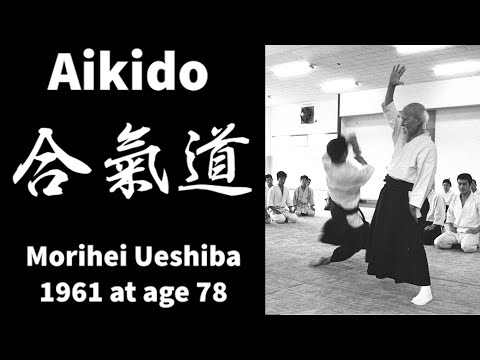
Aikido's Essence: Analyzing O'Sensei Ueshiba's 1961 Masterclass

Introduction: A Glimpse into the Soul of Budo

This rare 1961 footage, capturing a 78-year-old Morihei Ueshiba, the revered founder of Aikido, is far more than just a martial arts demonstration. It's a profound window into the very essence of Budo, a concept that transcends mere physical combat. Many today, particularly those drawn to the explosive dynamism of MMA or the brutal efficiency of Kyokushin Karate, might question the relevance of Aikido's fluid movements. Does its emphasis on blending and redirection hold water in a world that often values brute force? Let me tell you, this video is the answer. It's a masterclass in principles that are eternally valid, not just for the dojo, but for life itself. We will dissect this gem, exploring Ueshiba's techniques, his philosophy, and the enduring legacy of Budo.

Ueshiba in Action: The Art of Blending and Redirecting

Watching Ueshiba Sensei at this advanced age is awe-inspiring. His movements, while perhaps not possessing the raw power of a younger man, are imbued with an almost supernatural grace and precision. The documentary showcases his mastery of Aikido techniques – the effortless throws, the seemingly gentle yet devastating joint locks. He doesn't meet force with force; instead, he becomes one with his attacker's energy, subtly redirecting their momentum. This is the core of Aikido, and it's a principle that many arts, even the fiercely competitive BJJ or Judo, can learn from. The seemingly passive nature of his defense is, in reality, a highly active and intelligent application of physics and timing. He demonstrates that true strength lies not in overpowering an opponent, but in understanding and harmonizing with their movements. Have you ever sparred with someone who just seems to *flow* with your attacks, nullifying them before they even land? That's the echo of Ueshiba Sensei's teaching.
"The true meaning of martial arts is to unify the world." - Morihei Ueshiba

The Philosophy of Aikido: Harmony, Compassion, and Unity

Beyond the physical application, Ueshiba Sensei's words in this documentary reveal a philosophy that is both deeply spiritual and remarkably practical. He speaks of Aikido not as a means of destruction, but as a path to reconciliation. Harmony, balance, and compassion are not mere buzzwords here; they are the foundational pillars of his art. This stands in stark contrast to some of the more combative depictions of martial arts in popular culture, where violence is often glorified without consequence. Ueshiba's vision is one of connection, of resolving conflict not through aggression, but through understanding and empathy. It’s a message that resonates even more powerfully today, in our often fragmented and contentious world. This philosophy is the very heart of BUDO, the "Way of the Warrior," which demands not just martial prowess but moral integrity.

Budo: More Than Just Fighting

The term Budo itself is crucial here. It's not simply "martial arts" in the Western sense. It encompasses the entire way of life, the philosophy of the warrior, drawing heavily from principles like Bushido. This means more than just mastering techniques for a fight. It's about self-cultivation, rigorous discipline, and unwavering honor. Ueshiba Sensei embodies this perfectly. His practice was a lifelong dedication to refining not just his body, but his mind and spirit. The documentary offers a fleeting glimpse, but it's enough to understand that for masters like him, the training never truly ends. It's a constant pursuit of self-improvement, a journey that shapes one's character in profound ways.
"The martial way is a thing of daily practice. It is a continuous process of refinement. The master is simply a student who never quit." - Attributed to various martial arts masters

Training and Self-Cultivation: The Path to Inner Peace

The practice of martial arts, as exemplified by Ueshiba's Aikido, is a powerful tool for inner growth. It offers a structured path to control one's ego, to confront and overcome fear and anger, and to cultivate a deep sense of inner peace. This isn't just about learning to defend yourself physically; it's about building mental resilience. The physical demands – improving fitness, flexibility, and coordination – are significant, but the mental benefits are arguably even greater. In a world rife with stress and anxiety, the discipline and focus required in martial arts training provide an invaluable sanctuary. It's a lifelong pursuit, a journey of personal development that extends far beyond the dojo mats. The principles learned in Karate, Judo, or Aikido can positively impact every facet of life.

Veredicto del Sensei: A Timeless Testament

This 1961 documentary is not just a historical artifact; it's a living testament to the enduring power of Budo. Ueshiba Sensei, even at 78, displays a level of mastery that transcends time and style. While the martial arts landscape has evolved dramatically, with hyper-realistic sports like MMA and UFC capturing global attention, the core principles demonstrated here remain vital. The emphasis on harmony, respect, and self-cultivation is a counterbalance to the often aggressive narratives surrounding combat sports. This film is essential viewing for anyone who seeks a deeper understanding of martial arts, not just as a means of fighting, but as a path to becoming a better human being. Rating: 10/10 Cinturones Negros en Sabiduría y Maestría.

Essential Equipment for Your Training

To embark on your own martial arts journey, whether it's Aikido, Karate, Judo, or any other discipline, the right equipment is essential. At BYAM Budo y Artes Marciales, we understand the needs of practitioners at all levels.
  • Gi (Uniforme): A durable, comfortable Gi is fundamental. For arts like Judo and Aikido, a heavier weave might be preferred for grip resistance.
  • Protective Gear: Depending on your style, consider sparring headgear, mouthguards, and shin guards for safe combat training.
  • Training Mats (Tatami): Essential for safe practice of throws and falls, especially in arts like Judo and Aikido.
  • Training Weapons: For specific disciplines, wooden bokken (swords) or jo (staffs) are necessary.
Investing in quality gear enhances your training experience and ensures safety. Explore our range of Martial Arts Merchandise to find what you need.

Frequently Asked Questions

  • What is Budo? Budo is a Japanese term that refers to the systematic practice of martial arts, emphasizing not only combat techniques but also spiritual and moral development.
  • Is Aikido effective for self-defense? Yes, Aikido's principles of blending, redirection, and using an attacker's momentum can be highly effective for self-defense, though its effectiveness in highly aggressive scenarios is a subject of ongoing debate.
  • What is the difference between Budo and Bushido? Bushido is the code of honor and conduct of the samurai warrior class, while Budo is the broader term encompassing the practices and philosophies of martial arts derived from that warrior tradition.
  • How can martial arts training improve mental health? Through discipline, focus, stress reduction techniques, and the cultivation of inner peace and self-control.

For a Deeper Dive into Your Path

Reflexión del Sensei: Tu Próximo Paso

Ueshiba Sensei demonstrated that true mastery lies in harmonization, not domination. In a world that often rewards aggression and competition, can you find the strength in yielding? Can you apply the principles of blending and redirecting not just against a physical opponent, but against the challenges and conflicts of your daily life? The video is a lesson; your response to its message is the application. ```json { "@context": "https://schema.org", "@type": "FAQPage", "mainEntity": [ { "@type": "Question", "name": "What is Budo?", "acceptedAnswer": { "@type": "Answer", "text": "Budo is a Japanese term that refers to the systematic practice of martial arts, emphasizing not only combat techniques but also spiritual and moral development." } }, { "@type": "Question", "name": "Is Aikido effective for self-defense?", "acceptedAnswer": { "@type": "Answer", "text": "Yes, Aikido's principles of blending, redirection, and using an attacker's momentum can be highly effective for self-defense, though its effectiveness in highly aggressive scenarios is a subject of ongoing debate." } }, { "@type": "Question", "name": "What is the difference between Budo and Bushido?", "acceptedAnswer": { "@type": "Answer", "text": "Bushido is the code of honor and conduct of the samurai warrior class, while Budo is the broader term encompassing the practices and philosophies of martial arts derived from that warrior tradition." } }, { "@type": "Question", "name": "How can martial arts training improve mental health?", "acceptedAnswer": { "@type": "Answer", "text": "Through discipline, focus, stress reduction techniques, and the cultivation of inner peace and self-control." } } ] }

Mikio Yahara: The Unyielding Spirit of Shotokan Karate and the Rediscovery of Budo

The Uncompromising Fighter

Welcome, students of the martial path. Today, we delve into the life and legacy of a man whose name resonates with the very essence of dynamic Shotokan Karate: Mikio Yahara. Born in 1947, Yahara Sensei is not merely a practitioner; he is a force of nature within the dojo and a living testament to the power of unwavering spirit. Masatoshi Nakayama, a titan of Karate himself, recognized this when he declared Yahara "the best fighter of his generation." This is not hyperbole; it is a pronouncement earned through sweat, discipline, and an unshakeable commitment to the principles of martial combat.

But what truly sets Yahara Sensei apart, and what we will explore today, is his profound dedication to reintroducing Karate to its ancient Budo roots. In an era where Karate often drifts towards sport or mere physical exercise, Yahara Sensei stands as a beacon, reminding us of the deeper, combative, and spiritual dimensions of our art. Prepare yourselves for a lesson not just in Karate, but in the enduring philosophy of the warrior.

Forged in the Crucible of the JKA

Mikio Yahara emerged from the prestigious Japan Karate Association (JKA) dojo, an institution synonymous with the standardization and global dissemination of Shotokan Karate. This was no easy environment. The JKA of Yahara's formative years was a breeding ground for exceptional talent, a place where only the strongest, most dedicated, and most skilled could thrive. To be recognized within this elite group, let alone singled out for praise, speaks volumes about Yahara's innate abilities and relentless work ethic.

His achievements within the JKA are legendary. Winning the JKA Grand Championship is not a minor feat; it signifies conquering the highest echelon of competitive Karate. This victory was more than just a trophy; it was a declaration of dominance, a validation of his physical prowess and tactical acumen. He proved himself on the most demanding stage, a feat that solidified his reputation as a formidable competitor.

"The JKA was a proving ground. Every session, every kumite, was a test. Yahara didn't just pass these tests; he redefined them."

His early success wasn't accidental. It was the direct result of countless hours spent honing his techniques, perfecting his timing, and cultivating an indomitable spirit. The intensity of training within the JKA under masters like Nakayama instilled a level of discipline and combat readiness that few could match.

A Style Born of Necessity

What made Mikio Yahara a fan favorite and a feared opponent was his truly unique fighting style. It wasn't simply about executing perfect techniques; it was about a raw, energetic, and often unpredictable approach to kumite. This dynamism wasn't just for show; it was a product of his deep understanding of combat and his commitment to effectiveness.

In the world of martial arts, especially in competition, styles often evolve. Some become more reliant on speed, others on power, and some on strategic point-scoring. Yahara Sensei, however, embodied a style that was both explosive and deeply rooted. He attacked with a ferocity that belied his technical precision, making him a captivating figure to watch. His movements were not just movements; they were manifestations of focused intent, designed to overwhelm and disable an opponent.

This fighting style, described as "energetic" and "dynamic," is a hallmark of true martial artists who understand that combat is not static. It requires adaptability, a willingness to press the advantage, and the courage to face adversity head-on. His approach was a stark contrast to more conservative styles, making him a standout performer and an inspiration to many who sought a more aggressive, yet still principled, way to fight.

The impact of such a style on the perception of Shotokan Karate cannot be overstated. It demonstrated that the art, while possessing a rich tradition, could also be expressed through powerful, modern combat applications. This versatility is key to the longevity of any martial art, and Yahara Sensei was a living embodiment of this principle.

The Path Back to Budo

While his prowess in competition is undeniable, it is Yahara Sensei's later focus on the philosophical underpinnings of Karate that has cemented his status as a modern master. He is a fervent advocate for reintroducing Karate to its original Budo roots. This is a critical distinction and one that resonates deeply with those who believe Karate is more than just a sport.

Budo, the "way of warfare" or "martial way," encompasses not just technical proficiency but also the spiritual, ethical, and mental cultivation of the practitioner. It emphasizes discipline, respect, self-control, and the development of character. In its purest form, Budo is a lifelong path of self-improvement, where combat is a means to an end—the perfection of self—rather than the ultimate goal.

"Karate, in its original Budo context, was not merely about striking. It was about understanding the totality of conflict, both external and internal."

Yahara Sensei's commitment to this philosophy is not just theoretical; it's a guiding principle in his teachings and his personal practice. He believes that by returning to these core principles, Karate can regain its profound depth and continue to be a transformative force in practitioners' lives. This perspective challenges many modern interpretations of Karate, which may focus heavily on sport Karate or self-defense without fully embracing the holistic development inherent in traditional Budo.

His exploration of Budo Karate has made him a pivotal figure today, guiding Karateka toward a more complete understanding of their art. This is crucial in a world that often separates physical training from mental and spiritual growth. Yahara Sensei bridges this gap, reminding us that the strongest fighter is not just the one with the most powerful technique, but the one with the most disciplined and enlightened mind.

The journey back to Budo is a call to arms for martial artists worldwide. It is an invitation to look beyond the immediate rewards of competition or self-defense and to embrace the lifelong pursuit of wisdom and character development that martial arts, at their best, offer.

Enduring Influence and the Future of Karate

Mikio Yahara's influence extends far beyond his competitive achievements. His dedication to the Budo aspect of Karate ensures that his teachings will continue to shape the art for generations to come. He represents a vital bridge between the historical roots of Karate and its future potential.

As Karate continues to evolve, with its inclusion in the Olympic Games and its diverse manifestations across the globe, voices like Yahara Sensei's are essential. They serve as a reminder of the art's origins and its potential for profound personal development. His legacy is not just in the techniques he performed, but in the philosophical direction he champions for Karate.

The question for practitioners today is: How do we integrate the dynamism and competitive spirit, for which Yahara Sensei is renowned, with the depth and wisdom of Budo? It is a challenge that requires careful consideration, dedication, and a willingness to look beyond superficial achievements. The path forward for Karate, as championed by masters like Yahara, involves a holistic approach that nourishes both the body and the spirit.

Sensei's Verdict: A Champion's Legacy

Mikio Yahara is more than just a decorated Karateka; he is a living embodiment of the martial spirit. His career exemplifies the peak of Shotokan competition, earning him accolades and the respect of his peers. Yet, it is his unwavering commitment to the deeper principles of Budo that truly elevates his status. He reminds us that true mastery lies not only in victory but in the continuous pursuit of self-perfection and the preservation of an art's soul.

Rating: 10th Dan in Legacy & Philosophy

Essential Training Gear for Karateka

To emulate the dedication of masters like Mikio Yahara, having the right equipment is fundamental. Quality training gear not only enhances performance but also ensures safety and respect for the dojo.

  • High-Quality Karate Gi: Look for a double-weave or heavyweight gi for durability during intense kumite and kata. Brands offering a good balance of tradition and modern fit are ideal.
  • Protective Gear: For sparring (kumite), ensure you have proper sparring gear including mitts, foot protectors, and a chest protector. Safety is paramount.
  • Training Mats (if applicable): For home practice or specific dojo drills, consider mats that offer good cushioning and grip.
  • Bokken or Bo Staff (for related disciplines): While not always central to Shotokan, if exploring weapons-based Budo, a wooden sword (bokken) or staff (bo) is essential.
  • Books on Budo and Karate History: Supplement your physical training with knowledge. Understanding the philosophy and history deepens your practice.

Investing in quality Karate merchandise is an investment in your own development.

Frequently Asked Questions

Who is Mikio Yahara?
Mikio Yahara is a highly respected 10th Dan Shotokan Karate practitioner, renowned for his dynamic fighting style and his advocacy for returning Karate to its Budo roots.
What is Budo Karate?
Budo Karate emphasizes the martial way, focusing not only on combat techniques but also on the spiritual, ethical, and mental development of the practitioner, akin to traditional samurai disciplines.
What was Yahara's significance in the JKA?
Yahara was considered "the best fighter of his generation" by Masatoshi Nakayama and won the prestigious JKA Grand Championship, showcasing exceptional skill and competitive spirit.
Why is his focus on Budo important today?
In a landscape where Karate can sometimes lean heavily towards sport or self-defense without deeper philosophical engagement, Yahara Sensei's emphasis on Budo reminds practitioners of the art's holistic potential for character development and spiritual growth.

To Dive Deeper Into Your Journey

The path of the martial artist is one of continuous learning. To further enrich your understanding and practice, explore these related topics:

Reflexión del Sensei: Tu Próximo Paso

Yahara Sensei's life is a testament to the idea that true martial arts mastery is a blend of fierce combat effectiveness and profound philosophical depth. He urges us to look beyond the immediate victory and seek the enduring lessons of the path. Now, I ask you:

Can the fierce warrior and the contemplative sage truly coexist within a single martial artist? And if so, how does one cultivate both without sacrificing the essence of the other?

Share your thoughts, your doubts, and your insights. Let us engage in a discussion that honors the spirit of Budo and the legacy of masters like Mikio Yahara.

``` GEMINI_METADESC: Explore the dynamic fighting style and profound Budo philosophy of 10th Dan Shotokan Karate master Mikio Yahara, hailed as the best fighter of his generation.

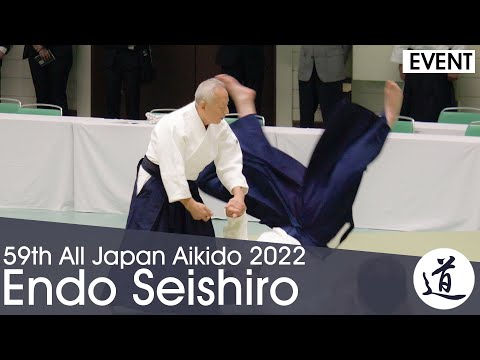
Endo Seishiro Shihan at the 59th All Japan Aikido Demonstration: A Master's Flow in Motion

The Essence of Aikido: Beyond Technique

Welcome, students of the Way. Today, we delve into a realm where motion becomes poetry and technique transforms into philosophy. We dissect the performance of Endo Seishiro Shihan at the 59th All Japan Aikido Demonstration in 2022. For many, Aikido is seen as a defensive art, a series of elegant locks and throws. But to truly grasp its essence, one must look beyond the physical execution and perceive the underlying principles of harmony, control, and the redirection of energy – a concept deeply ingrained in the philosophy of BUDO.

Analyzing Endo Seishiro Shihan's Performance

Endo Seishiro Shihan, an 8th Dan instructor at the venerable Aikikai Hombu Dojo, presents a masterclass in Aikido. His movements at the 59th All Japan Aikido Demonstration are not merely physical acts; they are manifestations of decades of rigorous training, deep understanding, and a profound connection to the art's foundational principles. When observing Shihan Endo, one witnesses a fluidity that belies the inherent power of the techniques. This is not the explosive, often aggressive, nature seen in some MMA or Karate contexts, but rather a controlled redirection, a seamless blending with the opponent's force. This exemplifies a core tenet of Aikido – to harmonize and control, not to overcome through brute strength.

The precision of his stances, the economy of motion, and the intent behind each gesture speak volumes. It's easy to get lost in the spectacle of a demonstration, especially one held at a prestigious venue like the Nippon Budokan. However, a true martial artist looks for the underlying mechanics and philosophy. The 60fps footage allows for an unprecedented clarity, revealing the subtle shifts in weight, the precise angle of entry, and the controlled application of pressure that make Endo Shihan's Aikido so effective and aesthetically profound.

"The Art of Peace is not a religion, nor an ideology. It is the art of the possible, the art of reconciliation, the art of harmonizing the great opposing forces of our inner and outer lives." - Morihei Ueshiba, Founder of Aikido.

This quote by O-Sensei encapsulates the spirit that Endo Seishiro Shihan embodies. His demonstration is a visual testament to this philosophy, showcasing how conflict can be resolved through understanding and control rather than confrontation.

The Spirit of Nippon Budokan

The Nippon Budokan, a sacred ground for Japanese martial arts, adds an aura of gravitas to any event. Hosting the 59th All Japan Aikido Demonstration here signifies the continuity and respect for tradition within BUDO. It's a place where history breathes and where the lineage of masters, from founders to current high-dan practitioners like Endo Seishiro Shihan, is palpable. This venue elevates the demonstration from a mere display of skill to a ceremonial reaffirmation of martial heritage. The energy of such a space demands respect and a profound commitment to the principles being showcased, which Shihan Endo clearly delivers.

Principles in Motion

Let us break down what we observe. The fundamental principle of Aikido is the blending (awase) with the attacker's movement and energy. Shihan Endo demonstrates this masterfully. When an attacker strikes, he doesn't meet force with force. Instead, he seamlessly moves off the line of attack, using the attacker's momentum against them. Techniques like ikkyo (first teaching), shiho nage (four-direction throw), and various wrist manipulations (kote gaeshi, nikyo) are executed with a deceptive simplicity. Deceptive, because the ease of execution in the video masks the immense amount of internal power and precise timing required.

Observe the centering (kokyu) and the extension of Ki. This is not about muscular strength. It's about generating power from the center of gravity and extending it through the body, much like the concept of Ki found in many martial arts, or the concept of "intent" that is crucial in Karate or Judo. Shihan Endo's movements are economical and direct, illustrating that true mastery lies in efficiency, not in extraneous effort. The way he manipulates his opponent's balance is a lesson in leverage and body mechanics that transcends any single fight.

"Aikido is the principle of the strong helping the weak, of one's own technique neutralizing the opponent's spirit." - Morihei Ueshiba

This sentiment is crucial when analyzing demonstrations. While it might appear aggressive to an untrained eye, the goal is always neutralization and harmony. The demonstration is a controlled environment to showcase these principles, distinct from a real-life confrontation which requires a different set of tactical considerations, as one might find in discussions about Combate en la Calle or Self Defense.

Continuity and Evolution in Aikido

The 59th All Japan Aikido Demonstration highlights how Aikido, while rooted in tradition, continues to evolve. The presence of high-dan instructors like Endo Seishiro Shihan, alongside practitioners of various ranks, showcases the unbroken lineage and the ongoing transmission of knowledge. It's a vibrant ecosystem where the foundational teachings of Morihei Ueshiba are preserved and propagated. This demonstration serves as a vital link in the chain, connecting past masters to future generations of Aikido practitioners.

The very fact that this event is recorded and shared, as evidenced by the YouTube link and the detailed credits provided, speaks to the modern approach to disseminating martial arts knowledge. This allows practitioners worldwide, regardless of their location or Dojo affiliation, to learn from such esteemed masters. It’s a far cry from the secretive traditions of old, embodying a more open philosophy of shared learning, a principle we champion on this blog dedicated to BUDO and Martial Arts.

Veredicto del Sensei: Does This Demonstration Resonate?

Cinturón Negro en Claridad y Armonía. The 59th All Japan Aikido Demonstration featuring Endo Seishiro Shihan is a profound exhibition of the art of Aikido. It transcends mere physical display to offer a glimpse into the philosophical underpinnings of harmonious movement and energy control. While not a direct comparison to the combative nature of MMA or the striking power of Karate, the demonstration serves its purpose admirably: to showcase the principles and refined techniques of Aikido at the highest level. For practitioners of Aikido, it's an invaluable resource. For others, it's an education in a different philosophy of combat and self-mastery.

Resources for Deeper Study

To truly appreciate and integrate the principles demonstrated, proper training and resources are essential. While observing is valuable, direct instruction is paramount.

  • Kimono de Aikido: A well-fitting and durable Aikido gi is crucial for training. Look for reinforced seams and a comfortable fabric that allows for unrestricted movement.
  • Libros sobre Filosofía Marcial: Explore texts on BUDO philosophy and the teachings of Morihei Ueshiba to deepen your understanding of the principles behind the movements.
  • Clases Directas: The most effective way to learn is under the guidance of a qualified instructor. Seek out a reputable Aikido dojo in your area.
  • Equipo de Entrenamiento Básico: While Aikido is often hands-on, basic conditioning equipment like jump ropes for cardiovascular fitness or resistance bands for strength training can be beneficial.

Continuity and Evolution in Aikido

The 59th All Japan Aikido Demonstration highlights how Aikido, while rooted in tradition, continues to evolve. The presence of high-dan instructors like Endo Seishiro Shihan, alongside practitioners of various ranks, showcases the unbroken lineage and the ongoing transmission of knowledge. It's a vibrant ecosystem where the foundational teachings of Morihei Ueshiba are preserved and propagated. This demonstration serves as a vital link in the chain, connecting past masters to future generations of Aikido practitioners.

The very fact that this event is recorded and shared, as evidenced by the YouTube link and the detailed credits provided, speaks to the modern approach to disseminating martial arts knowledge. This allows practitioners worldwide, regardless of their location or Dojo affiliation, to learn from such esteemed masters. It’s a far cry from the secretive traditions of old, embodying a more open philosophy of shared learning, a principle we champion on this blog dedicated to BUDO and Martial Arts.

Training Focus: Achieving Harmony in Motion

While this demonstration is a high-level display, beginners can cultivate foundational Aikido principles through focused practice:

  1. Centering (Hara): Practice deep abdominal breathing. Sit or stand tall, focus your attention on your lower abdomen, and breathe slowly and deeply, exhaling completely. This builds your internal foundation.
  2. Movement (Tai Sabaki): Practice moving your body in circular patterns, staying low and balanced. Imagine an attacker's force and practice stepping offline, allowing the imaginary force to pass harmlessly. Think of the footwork in Judo or Karate – balance is key in all combat sports.
  3. Connection: If training with a partner, focus on maintaining a light yet connected grip. Practice feeling their weight shift and intention, and respond by blending, not resisting. This is the essence of awase.
  4. Relaxation: Cultivate the ability to remain relaxed under pressure. Tension hinders flow and power. Practice releasing unnecessary muscular tension throughout your body.

Remember, the goal in Aikido is not to exert force, but to harmonize with it. This requires patience and persistent training, a journey shared by all practitioners of BUDO.

Frequently Asked Questions

What is the significance of Endo Seishiro Shihan's rank?

Endo Seishiro Shihan holds the 8th Dan, a very high rank in Aikido, signifying mastery and extensive experience. It places him among the senior instructors of the art.

Is Aikido effective for self-defense?

Aikido principles of blending and redirecting energy can be highly effective for self-defense, particularly against larger or stronger attackers. However, its application in real-world scenarios often requires adaptation and dedicated training beyond standard demonstrations, which focus on principles rather than combat tactics.

What is the Nippon Budokan?

The Nippon Budokan is a renowned indoor arena in Tokyo, Japan, primarily used for martial arts events and concerts. It is considered a prestigious venue for demonstrations of traditional Japanese martial arts.

How does Aikido differ from other martial arts like Karate or Judo?

While Karate focuses on striking and Judo on throws and grappling, Aikido emphasizes joint locks, pins, and throws achieved by blending with an opponent's motion and redirecting their energy. The philosophical goal of Aikido is often to neutralize conflict without causing undue harm.

What does "Shihan" mean in Aikido?

"Shihan" is an honorific title used for senior instructors in Japanese martial arts, indicating a high level of mastery, teaching experience, and typically a senior rank.

Reflection of the Sensei: Your Next Step

We have observed the elegant flow, the controlled power, and the deep philosophical underpinnings demonstrated by Endo Seishiro Shihan. This is not merely about executing techniques; it is about embodying a way of life – one of harmony, respect, and continuous self-improvement. The path of BUDO is a lifelong journey, and each demonstration, each training session, is a step further along that path.

Now, I pose this to you: Can you see the stillness within the movement? Can you perceive the redirection of force as a metaphor for navigating life's challenges? Do you recognize that true strength lies not in opposition, but in understanding and adaptation? Consider these questions as you move through your day. Do not just watch the techniques; seek the underlying principles. That is the true lesson.

For Deeper Understanding

  • Aikido: The Philosophy and Practice
  • BUDO: More Than Just Combat
  • The Importance of Ki in Martial Arts
``` GEMINI_METADESC: Explore the mastery of Endo Seishiro Shihan at the 59th All Japan Aikido Demonstration. Analyze the principles, philosophy, and artistry of Aikido in this in-depth Sensei review.

Aikido O Sensei in 1954: A Timeless Warrior's Legacy in Modern Combat Sports

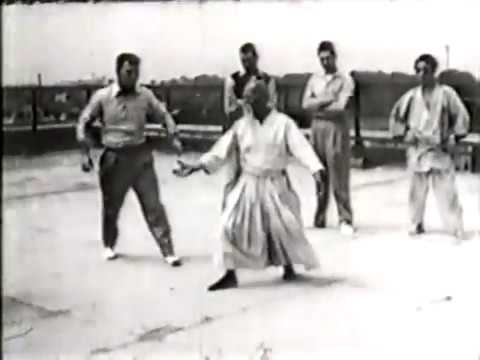
The year 1954 gifted us a rare glimpse into the profound capabilities of Aikido O Sensei through a rediscovered video. This artifact, showcasing his mastery, serves as a potent reminder of the enduring power of traditional martial arts. Today, the echoes of such legends resonate powerfully, not only in dedicated dojos but also within the electrifying arenas of modern martial arts and combat sports. These disciplines, with their rich histories and timeless teachings, continue to captivate us, offering lessons that transcend mere physical prowess.

But what is the true essence of martial arts and Budo? Far beyond the technicalities of striking and grappling, they represent a holistic philosophy, a rigorous discipline, and ultimately, a pathway to self-development. The pursuit of perfection, a core tenet of Budo – the "way of the warrior" – is a journey of constant refinement, both physically and mentally.

The True Essence of Martial Arts and Budo

Martial arts are not merely a collection of techniques designed for conflict. They are a profound system for cultivating the individual. The ultimate aim is to forge a stronger self – physically resilient, mentally sharp, and spiritually grounded. This holistic development is what sets true martial arts apart.

Budo: More Than Just a Fighting Style

"Budo" translates directly to "the way of the warrior." This term encapsulates the spirit that underpins these disciplines. It's about the relentless pursuit of excellence, the mastery of oneself through rigorous training, and the application of these principles in all facets of life. It is a lifelong pursuit, not a destination.

"The ultimate aim of martial arts is not victory or defeat, but the perfection of the character of its practitioners." - A principle echoed across many martial traditions.

The Multifaceted Benefits of Martial Arts Training

The benefits of consistent training in martial arts are vast and touch every aspect of a practitioner's life. Beyond the obvious enhancement of self-defense skills, individuals develop:

  • Improved Physical Health: Increased strength, flexibility, cardiovascular endurance, and coordination.
  • Enhanced Mental Fortitude: Greater focus, discipline, patience, and stress management.
  • Unshakeable Self-Discipline: The ability to set goals and work towards them consistently, overcoming obstacles.
  • A Strong Sense of Community: The shared passion within the martial arts community fosters deep bonds, camaraderie, and mutual respect. This sense of belonging is invaluable.

This supportive environment is crucial. The shared struggles and triumphs in the dojo create a unique connection that strengthens the collective spirit.

Combat Sports: The Arena of Modern Competition

Contrast this with combat sports. While they share the roots of physical confrontation, their primary focus is often on competition and the quantifiable outcome of victory. Disciplines like MMA, boxing, and Judo demand extraordinary levels of physical conditioning, strategic thinking, and mental toughness. They are a testament to the human spirit's capacity to perform under immense pressure.

The athletes in these fields are modern warriors, pushing the boundaries of human potential. Their dedication, sacrifice, and ability to execute under the bright lights are truly inspiring. It is undeniable that these sports showcase incredible athleticism and tactical brilliance.

Showcasing Your Passion: Martial Arts and Combat Sports Merchandise

For enthusiasts and practitioners alike, the passion for martial arts and combat sports often extends beyond the training mat or the ring. This is where merchandise plays a role. From specialized Karate gis and durable Judo uniforms to training equipment and casual apparel, these items allow individuals to express their identity and support their chosen disciplines.

High-quality training equipment, such as punching bags, focus mitts, and protective gear, is essential for effective practice. Wearing apparel that represents your art or sport is a way to connect with the wider community and serve as a constant reminder of your commitment. These items also make fantastic gifts for fellow martial artists or combat sports fans.

Our Commitment at BYAM Budo y Artes Marciales

At BYAM Budo y Artes Marciales, we understand this passion. We are dedicated to providing a wide array of high-quality merchandise tailored for both martial arts practitioners and combat sports aficionados. Our selection is curated to meet the needs of everyone, from the absolute beginner taking their first steps in Aikido or Karate, to the seasoned expert honing their skills. Functionality and durability are paramount in our product design, ensuring that what you choose supports your journey.

We firmly believe that martial arts and combat sports are more than just physical activities; they are transformative life experiences. Our blog serves as a platform to share invaluable insights, including practical training tips, detailed technique breakdowns, and the philosophical underpinnings that make these arts so profound.

Deepen Your Journey: Recommended Resources

To further enrich your understanding and practice, I highly recommend exploring these resources:

Frequently Asked Questions

  • Q: Is Aikido still relevant in modern combat sports?
    A: While Aikido's direct application in MMA is debated, its principles of blending, redirection, and control offer invaluable lessons in balance, spatial awareness, and joint manipulation, which are transferable skills.
  • Q: What is the difference between Budo and just training martial arts?
    A: Budo emphasizes the spiritual and philosophical development of the individual, viewing training as a lifelong path to self-perfection. Simply training martial arts may focus more on the technical or competitive aspects without the deeper philosophical commitment.
  • Q: How can I start training martial arts if I'm a complete beginner?
    A: The best approach is to research local dojos or gyms offering styles that interest you. Many offer introductory classes. Focus on finding qualified instructors and a welcoming community, like those found in martial arts communities globally.

Sensei's Verdict: Is the Legacy Alive?

Looking back at O Sensei’s demonstration in 1954, and observing the dedication in today's dojos and the fierce competition in UFC bouts, one undeniable truth emerges: the warrior spirit, the essence of Budo, is very much alive. The methods evolve, the arenas change, but the fundamental principles of discipline, perseverance, and the quest for self-mastery remain constant.

Whether you are drawn to the intricate flows of Aikido, the powerful stances of Karate, or the dynamic exchanges in MMA, the path of martial arts offers a profound opportunity for growth. It is a journey that builds not just a fighter, but a better human being.

Sensei's Reflection: Your Next Step

O Sensei's movements in that 1954 film were not just physical actions; they were expressions of deep understanding and embodiment. The question for you, the dedicated practitioner and student of the Way, is this: How can you embody the principles you learn on the mat in the unpredictable dojo of your daily life? Do you merely mimic techniques, or do you strive to internalize the philosophy?

```

For Deeper Exploration on Your Path

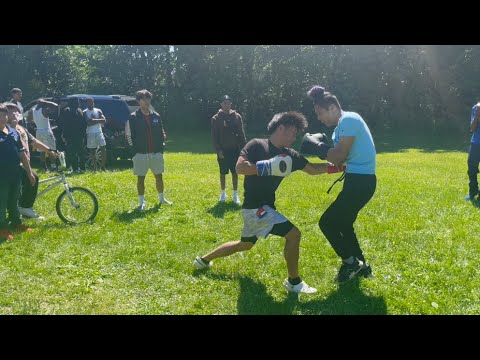
The Raw Heart of Combat: Deconstructing Public Street Boxing (Reemoo vs. Zam)

The Unvarnished Arena

The title itself – "PUBLIC STREET BOXING (REEMOO VS ZAM) 003" – evokes a raw, primal energy. It promises unfiltered conflict, a departure from the controlled environment of a ring or dojo. But what are we truly witnessing when we click play on such a video? Are we observing a genuine expression of martial spirit, a desperate act of self-preservation, or simply a spectacle for the voyeuristic masses? As a lifelong student and teacher of the martial arts, my instinct is to dissect, to understand the intent, the skill, and the underlying philosophy, or lack thereof. This isn't just a fight; it's a window into the human condition when pushed to its limits. Welcome, students, to a lesson far removed from the pristine mats of a dojo, but no less instructive.

Beyond the Brawl: What We're Truly Watching

The initial instinct might be to dismiss "Public Street Boxing" as mere barbarism, devoid of any martial merit. However, to do so would be to miss a crucial aspect of human conflict. While the training, discipline, and ethical framework of traditional martial arts are absent, the fundamental drive to survive, to overcome an opponent, remains. We are presented with individuals who, for reasons unknown – perhaps a dispute, perhaps a challenge, perhaps a sheer lack of better options – engage in physical combat. The context is critical: this is not a sport, nor a demonstration of a refined art. It is a visceral, often chaotic, confrontation where the stakes are immediate and potentially severe.

This raw display forces us to confront uncomfortable truths about combat. Unlike the carefully choreographed bouts in films or even the regulated spars in a gym, street altercations are unpredictable. There are no referees, no weight classes, and rarely any regard for rules. The participants are often driven by emotion – anger, fear, pride – more than by technique. Yet, even in this chaotic arena, we can observe rudimentary tactics, the instinctual use of leverage, and the primal urge to land a decisive blow. It's a stark reminder that the origins of many martial arts were born out of necessity, not leisure.

"The supreme art of war is to subdue the enemy without fighting." - Sun Tzu, The Art of War. This quote, while a cornerstone of strategic thinking, highlights by contrast the raw, unstrategic nature of street conflict.

A Sensei's Eye on the "Technique"

Let's be blunt: the term "technique" here is used loosely, almost ironically. We are not witnessing the elegant precision of a Karate kata, the dynamic sweeps of Judo, or the intricate joint locks of Jiu-Jitsu. What we see are rudimentary boxing movements, often wild and unrefined. Punches are thrown with force, but often lack proper form, leaving the attacker vulnerable. There's a reliance on brute strength and aggression rather than calculated angles and timing. Hip rotation might be present, but it's often a desperate lunge rather than a controlled power transfer. Defense is largely reactive – blocking with arms, or simply absorbing blows.

The effectiveness, if any, stems from sheer will and the ability to inflict pain. We might observe an occasional well-placed jab or a powerful haymaker, but these are often the exceptions rather than the rule. The footwork is rudimentary, a shuffling motion rather than the agile movement of a trained boxer or martial artist. There's a distinct lack of proper guard, leaving the chin exposed. This is combat stripped of artifice, a brutal exchange of kinetic energy. It's important to analyze this not to emulate it, but to understand what separates true martial skill from desperate brawling. The absence of proper training is glaringly obvious in the exposed weaknesses and the often inefficient application of force.

A key observation is the reliance on simple, powerful attacks. When a fighter can land a solid blow, it can end the confrontation quickly. However, this often comes at the cost of defensive posture. Compare this to the principles of Karate, where an attack is often paired with a simultaneous block, or the defensive strategies in Judo, where an opponent's momentum is used against them. Here, we see little of that integrated defense and offense. It's a stark illustration of why dedicated training is paramount.

The Philosophy of Necessity

If we are to extract any philosophical lesson from this, it lies in the concept of "necessity." Traditional martial arts often espouse philosophies of peace, self-mastery, and using force only as a last resort. Street altercations, however, can arise from a place where these refined philosophies have been abandoned, or perhaps never learned. The driving force is often survival or dominance in a chaotic environment. This is the antithesis of the Budo path, which emphasizes character development and spiritual growth through martial practice.

"The warrior does not just fight. He understands the terrain, the opponent, and, most importantly, himself. In the street, this understanding is often tragically absent."

The participants in such a video may believe they are demonstrating toughness or resolve, but from a martial perspective, they are often showcasing a lack of control. The inability to de-escalate, to find a non-violent resolution, points to a deeper deficiency. It’s a philosophy born of desperation, not wisdom. While we can acknowledge the raw courage or desperation on display, we must also recognize it as a failure of higher principles. True strength, as taught in the martial arts, lies not only in the ability to fight, but in the wisdom to choose not to, or to fight with absolute precision and economy of motion when unavoidable.

Is This Budo? A Provocation

This is the question that should burn in the mind of every martial artist: Is this Budo? The answer, unequivocally, is no. Budo, meaning "the way of the warrior," is a path of discipline, respect, and self-improvement. It encompasses not just physical techniques but also mental fortitude, ethical conduct, and a lifelong pursuit of perfection. The chaos, the lack of control, the potential for severe, unintended harm in street fighting stand in direct opposition to the core tenets of Budo.

Where is the respect for the opponent? Where is the honor? Where is the pursuit of self-mastery that defines the martial way? This is simply a fight, raw and untamed. While it might contain elements of combat and fighting, it lacks the "Do" – the way, the path – that elevates martial arts from mere physical confrontation to a spiritual discipline. To equate this with Budo is a profound misunderstanding of what martial arts truly represent. It is a dangerous confusion that can lead practitioners down a misguided path, mistaking aggression for skill, and violence for a solution.

Some may argue that the "spirit" of fighting is what matters, that the raw courage is a form of martial spirit. I challenge this notion vehemently. The spirit of Budo is refined, controlled, and directed towards constructive growth. It is about pushing one's limits in a safe, structured environment to build character. Street fighting is often an uncontrolled explosion of primal instinct, frequently fueled by ego and a lack of discipline. The outcome is rarely self-improvement, but often injury, legal trouble, or further conflict. This is not the spirit we cultivate in the dojo.

Gear Up for Your Own Journey (Even if it's Not the Street)

While "Public Street Boxing" is a stark reminder of unrefined conflict, dedicated martial artists understand the importance of proper equipment for safe and effective training. Investing in the right gear is not just about performance; it's about protecting yourself and your training partners. Whether you practice Karate, Judo, BJJ, or MMA, the right apparel and protection are essential.

  • Training Uniforms (Gi/Kimono): For arts like Judo and BJJ, a durable, double-weave Gi is crucial. For Karate, a lighter, reinforced uniform allows for freedom of movement. Look for brands known for their quality and longevity.
  • Sparring Gear: Headguards, mouthguards, groin protectors, and padded gloves (like 16oz for heavy sparring) are non-negotiable for any combat sport training. Ensure they meet safety standards.
  • Training Mats: For floor-based arts or conditioning, quality interlocking mats provide essential cushioning and reduce the risk of injury.
  • Focus Mitts and Punching Bags: These are fundamental tools for developing striking power, accuracy, and speed.
  • Weight Training Equipment: Free weights, resistance bands, and other conditioning tools are vital for building the strength and power required in combat sports.

Remember, using appropriate gear demonstrates respect for the art and for your training partners. It's a commitment to your own development and the safety of everyone in the dojo. Brands like Killer Instinct Boxing Gear, as hinted at in the original post, are examples of specialized equipment designed for striking disciplines.

Frequently Asked Questions

What is the primary difference between street fighting and martial arts training?
The core difference lies in intent, structure, and philosophy. Martial arts training emphasizes discipline, self-control, respect, and technique refinement in a safe environment. Street fighting is typically chaotic, uncontrolled, and often driven by uncontrolled emotions, lacking any ethical framework or focus on self-improvement.
Can street fighting teach you anything about self-defense?
While it might teach you about immediate survival instincts, it's a dangerous and unreliable teacher. True self-defense training focuses on de-escalation, awareness, and techniques that are effective and legally justifiable, unlike the often excessive and unpredictable violence seen in street altercations.
Is it ever justifiable to engage in a public fight?
From a martial arts perspective, engaging in a fight outside of regulated competition or immediate, unavoidable self-defense is generally considered a failure. The emphasis is on de-escalation and avoiding conflict whenever possible. The consequences of public fighting are severe and rarely lead to positive outcomes.
What makes a technique "martial" versus just a brawl?
"Martial" implies a systematized approach, developed over time, emphasizing efficiency, control, and often a philosophical underpinning. A brawl is typically a chaotic, instinctual outburst lacking such refinement. Even simple strikes become "martial" when honed through consistent practice, understanding of biomechanics, and integration into a larger system.

To Further Your Journey

Sensei's Reflection: Your Next Step

We have dissected a raw display of conflict. It serves as a potent, if brutal, reminder of what happens when discipline, control, and the principles of the martial way are absent. It is easy to be drawn to the raw energy, but a true student of the martial arts looks deeper. We seek not just to fight, but to understand. We strive not just for victory, but for self-mastery. The path of Budo is long and demanding, but it leads to growth, not just combat.

Sensei's Reflection: Your Next Step

The video shows a fight. Your dojo teaches a path. Is the courage displayed in the street a pale imitation of the courage needed to face your own weaknesses on the mat, day after day? Or is it merely an echo of a primal instinct that true mastery seeks to transcend?

Now, reflect: When faced with conflict, whether on the street or within yourself, what is your true instinct? Is it to lash out, or to find a more profound, controlled, and ultimately more powerful way? Discuss amongst yourselves. Your answer reveals much about your journey.

``` GEMINI_METADESC: An in-depth martial arts analysis of 'Public Street Boxing (Reemoo vs. Zam) 003', exploring the raw nature of combat versus the disciplined philosophy of Budo.

The Unseen Foundations: A Critical Look at the Wudang Kung Fu Documentary

Introduction: The Allure of Wudang

The misty peaks of Wudang Mountain have long been shrouded in mystique, a sanctuary where Taoist philosophy intertwines with martial prowess. For decades, documentaries have attempted to peel back these layers, seeking to capture the essence of Wudang Kung Fu. But in the quest for visual spectacle, how often is the true spirit of this ancient art truly conveyed? As practitioners and admirers of the martial path, we must ask ourselves: are we merely observing movements, or are we witnessing the manifestation of profound principles? This exploration delves into a particular documentary, dissecting its claims, its presentations, and ultimately, its resonance with the living tradition of Wudang.

Analysis of Intention: What Does the Viewer Seek?

When a martial artist, or indeed any curious soul, clicks on a title like "OLD WUDANG KUNG FU DOCUMENTARY," what is the underlying intent? Is it a superficial curiosity for exotic fighting styles? Or is it a deeper yearning to understand the philosophies that have shaped Wudang Kung Fu into a recognized pillar of Chinese martial arts? I suspect it's a blend of both. The searcher likely seeks visual confirmation of the legendary techniques, perhaps hoping to glean insights that can elevate their own training. They might be looking for the connection between the Taoist principles of yin and yang, the five elements, and the fluid, circular movements often associated with Wudang. Ultimately, the intention is to find authenticity, to separate the performance from the practice, and to understand the historical and philosophical weight that Wudang Kung Fu carries. This documentary, like many others, is vying for attention in a crowded digital space, and its success hinges on satisfying this multifaceted viewer intent. The original creator's mention of exclusive NFTs, while unconventional, highlights a modern attempt to engage with this desire for ownership and exclusivity within a martial arts context. However, it begs the question: does such a commercial endeavor truly align with the 'TRUE martial arts' it purports to support?

Wudang Kung Fu: A Historical and Philosophical Tapestry

Wudang Kung Fu is not merely a collection of fighting techniques; it is a sophisticated system deeply rooted in Taoist philosophy. Legend attributes its founding to the Taoist sage Zhang Sanfeng, who, after observing the combat between a snake and a crane, is said to have synthesized these natural movements into a new martial art. This origin story, while perhaps apocryphal, perfectly encapsulates the Wudang ethos: the emulation of natural forms, the principle of yielding to overcome force, and the integration of inner cultivation with outer expression. The Wudang system encompasses a wide array of styles, including Tai Chi (Taijiquan), Xingyi Quan, and Bagua Zhang, each with its unique characteristics but all sharing a common philosophical foundation. These styles emphasize soft, flowing movements, circularity, and the generation of power from the dantian. The goal is not to meet force with brute force, but to redirect, absorb, and return an opponent's energy, often with minimal effort. This philosophy extends beyond combat, influencing health practices, meditation, and the overall approach to life, aligning it closely with the broader concept of BUDO and the pursuit of self-mastery.

"The supreme art of war is to subdue the enemy without fighting." - Sun Tzu, The Art of War. This ancient wisdom is the bedrock upon which much of Wudang Kung Fu is built.

Documentary Critique: Choreography, Authenticity, and the Spirit of Wudang

Documentaries on martial arts are often a double-edged sword. They can illuminate a path for the uninitiated, but they can also perpetuate misconceptions. When examining a film like the "OLD WUDANG KUNG FU DOCUMENTARY," critical appraisal from a martial arts perspective is paramount. We must look beyond the polished cinematography and dramatic narratives to assess the authenticity of the movements presented. Are the practitioners demonstrating true Wudang principles, or are they performing a stylized, almost theatrical rendition for the camera?

Choreography vs. Combat Application: A key distinction lies between martial arts choreography and practical combat application. While Wudang forms can be breathtakingly beautiful and fluid, their effectiveness in a real confrontation hinges on their underlying principles. A well-executed documentary should ideally showcase not only the forms but also their functional application. Does the film illustrate how the circular deflections of Bagua Zhang translate into evading an attack? Does it demonstrate how the soft yielding of Tai Chi can destabilize a stronger opponent? Without this contextualization, the movements risk appearing as mere dance.

The Role of the 'Sifu': The credibility of any martial arts documentary rests heavily on the lineage and expertise of the instructors featured. Is the 'Sifu' presented a genuine custodian of the Wudang tradition, with a verifiable lineage and a deep understanding of its philosophical underpinnings? Or are they a performer, skilled in exhibition but perhaps lacking the depth of practical experience? A truly authoritative portrayal would feature a recognized master, not just a demonstrator.

Spiritual Depth: Wudang Kung Fu is intrinsically linked to Taoism. A documentary that truly captures its essence must touch upon this spiritual dimension. It should explore the principles of 'Wu Wei' (non-action or effortless action), the balance of 'Yin' and 'Yang', and the cultivation of internal energy ('Qi'). If the film focuses solely on the physical techniques, it misses a fundamental aspect of what makes Wudang unique. The fleeting mention of NFTs by the original creator, while an interesting modern twist, highlights a potential divergence from this deep spiritual core, raising questions about where the ultimate focus lies: in the transmission of timeless wisdom or in ephemeral digital assets.

Visual Storytelling: The visual elements are crucial. The setting – the Wudang Mountains themselves – plays a significant role. Showing practitioners training amidst the natural beauty and historical sites can enhance the sense of tradition and connection to the earth. However, the framing and editing can also mislead. Quick cuts and dramatic music can mask a lack of substance, making a mediocre demonstration appear profound. We must be discerning viewers, questioning what is shown and why.

The Spirit of Budo: Beyond Technique

The term BUDO, often translated as "The Way of the Warrior," encompasses far more than mere fighting skills. It is a path of self-cultivation, discipline, and spiritual development. Wudang Kung Fu, when practiced in its truest form, embodies this spirit. The emphasis on fluidity, yielding, and redirecting energy mirrors the philosophical tenets of Taoism, promoting harmony between mind, body, and spirit. This internal focus is what separates a true martial artist from a mere combatant. The journey involves not just mastering physical techniques like kicks and punches, but also cultivating mental fortitude, emotional control, and a profound understanding of oneself and the universe. This is why debates around the practicality of certain traditional styles in modern Artes Marciales Mixtas (MMA) often miss the point; their value lies not solely in their efficacy in a ring, but in their ability to shape character and foster a more balanced life. Authenticity in martial arts, therefore, is not just about the physical execution, but the integration of these deeper principles.

"True martial arts is not about being the best fighter, but about becoming the best version of yourself." - A common sentiment echoed across many martial traditions.

Veredict of the Sensei: Does it Capture the Essence?

Evaluating a documentary without viewing it presents a unique challenge, akin to judging a fight based solely on a ringside description. However, based on the context provided – a title suggesting an older documentary, a focus on Wudang Kung Fu, and the original creator's emphasis on supporting "TRUE martial arts" alongside an unusual mention of NFTs – I must approach this with a critical lens.

If this documentary primarily showcases aesthetically pleasing forms without delving into their practical applications or the philosophical underpinnings of Taoism and the spirit of BUDO, then its claim to represent "TRUE martial arts" is questionable. The allure of Wudang lies not just in its visual grace but in its profound connection to nature, strategy, and inner cultivation.

Cinturón Negro en Potencial Visual, Cinturón Blanco en Profundidad Filosófica. The "OLD WUDANG KUNG FU DOCUMENTARY" likely offers a visually engaging experience, potentially showcasing beautiful forms that are historically significant. For a casual viewer, it might serve as an engaging introduction. However, for the dedicated martial artist seeking genuine insight into the Wudang system's practical application and philosophical depth, it may fall short. The mention of NFTs, while a novel attempt at engagement, risks diluting the message of 'true martial arts' by introducing a commercial element that seems at odds with the traditional ethos. It suggests a potential disconnect between the content's presentation and the deep, self-cultivating path of martial tradition. My verdict is one of cautious optimism for visual learners, but a call for deeper scrutiny for those seeking substantive martial knowledge.

Essential Training Considerations

While Wudang Kung Fu is often practiced with minimal equipment, focusing on body mechanics and internal energy, certain elements can enhance your training and understanding. The pursuit of authenticity in martial arts training is paramount.

  • Comfortable Training Attire: Loose-fitting clothing that allows for a full range of motion is essential. Traditional martial arts uniforms, or 'gis', are ideal. For styles emphasizing fluidity and circular movements, ensuring your attire doesn't restrict movement is key. Consider investing in a quality Karate Merchandise or Budo uniform that can withstand rigorous practice.
  • Barefoot Training: Many Wudang styles, particularly Tai Chi, are best practiced barefoot. This allows for a direct connection with the ground, improving balance and sensitivity.
  • Training Mats: For drills involving falling or ground work, especially if exploring related arts like BJJ or Judo, a good quality training mat provides cushioning and safety.
  • Books and Resources: To truly understand the philosophical depth of Wudang, delving into Taoist classics and authoritative texts on martial arts is crucial. Look for foundational works on Tai Chi, Xingyi, and Bagua, as well as broader texts on BUDO and martial philosophy.

Frequently Asked Questions

  • What is the main philosophy behind Wudang Kung Fu?
    The core philosophy is rooted in Taoism, emphasizing naturalness, balance (Yin and Yang), yielding to overcome force, and the cultivation of internal energy (Qi). It's about achieving harmony within oneself and with the environment.
  • Is Wudang Kung Fu effective for self-defense?
    Yes, when practiced with the correct understanding of its principles. While its movements may appear soft, they are designed to redirect an opponent's force, create openings, and neutralize threats efficiently, often without direct confrontation.
  • What is the difference between Wudang Kung Fu and other Chinese martial arts like Shaolin?
    While both are rich martial traditions, Wudang is heavily influenced by Taoist philosophy and often emphasizes softer, circular, and internal energy cultivation (like Tai Chi and Bagua), whereas Shaolin is historically associated with Buddhist traditions and often features more external, dynamic, and acrobatic techniques.
  • Are Wudang Kung Fu techniques practical in modern MMA?
    Some principles, like yielding and redirecting force, are indirectly present in high-level MMA. However, the direct application of traditional Wudang forms in a cage is rare due to different rulesets and objectives. The value of Wudang often lies more in self-cultivation and health than in competitive sport for sport's sake.

Deepen Your Understanding

The exploration of martial arts is a lifelong journey. To continue your quest for knowledge and authentic practice, consider these resources:

Reflection of the Sensei: Your Next Step

We have dissected the allure and potential pitfalls of documenting ancient martial arts. This documentary, however old, serves as a catalyst for a deeper inquiry. In your own practice, whether it's Wudang, Karate, Judo, or any other discipline, ask yourself: Are you merely going through the motions, or are you truly embodying the principles? Are you seeking superficial display, or profound self-mastery? The true martial path is not found in flashy NFTs or dramatic cinematography, but in the persistent, humble dedication to understanding and integrating the lessons of the art into your very being.

Now, I pose this to you: If the essence of a martial art lies in its philosophy as much as its technique, how can we, as modern practitioners, ensure that this philosophical depth is not lost in the pursuit of spectacle or commercial gain? Discuss.

```

The Unseen Foundations: A Critical Look at the Wudang Kung Fu Documentary

Introduction: The Allure of Wudang

The misty peaks of Wudang Mountain have long been shrouded in mystique, a sanctuary where Taoist philosophy intertwines with martial prowess. For decades, documentaries have attempted to peel back these layers, seeking to capture the essence of Wudang Kung Fu. But in the quest for visual spectacle, how often is the true spirit of this ancient art truly conveyed? As practitioners and admirers of the martial path, we must ask ourselves: are we merely observing movements, or are we witnessing the manifestation of profound principles? This exploration delves into a particular documentary, dissecting its claims, its presentations, and ultimately, its resonance with the living tradition of Wudang.

Analysis of Intention: What Does the Viewer Seek?

When a martial artist, or indeed any curious soul, clicks on a title like "OLD WUDANG KUNG FU DOCUMENTARY," what is the underlying intent? Is it a superficial curiosity for exotic fighting styles? Or is it a deeper yearning to understand the philosophies that have shaped Wudang Kung Fu into a recognized pillar of Chinese martial arts? I suspect it's a blend of both. The searcher likely seeks visual confirmation of the legendary techniques, perhaps hoping to glean insights that can elevate their own training. They might be looking for the connection between the Taoist principles of yin and yang, the five elements, and the fluid, circular movements often associated with Wudang. Ultimately, the intention is to find authenticity, to separate the performance from the practice, and to understand the historical and philosophical weight that Wudang Kung Fu carries. This documentary, like many others, is vying for attention in a crowded digital space, and its success hinges on satisfying this multifaceted viewer intent. The original creator's mention of exclusive NFTs, while unconventional, highlights a modern attempt to engage with this desire for ownership and exclusivity within a martial arts context. However, it begs the question: does such a commercial endeavor truly align with the 'TRUE martial arts' it purports to support?

Wudang Kung Fu: A Historical and Philosophical Tapestry

Wudang Kung Fu is not merely a collection of fighting techniques; it is a sophisticated system deeply rooted in Taoist philosophy. Legend attributes its founding to the Taoist sage Zhang Sanfeng, who, after observing the combat between a snake and a crane, is said to have synthesized these natural movements into a new martial art. This origin story, while perhaps apocryphal, perfectly encapsulates the Wudang ethos: the emulation of natural forms, the principle of yielding to overcome force, and the integration of inner cultivation with outer expression. The Wudang system encompasses a wide array of styles, including Tai Chi (Taijiquan), Xingyi Quan, and Bagua Zhang, each with its unique characteristics but all sharing a common philosophical foundation. These styles emphasize soft, flowing movements, circularity, and the generation of power from the dantian. The goal is not to meet force with brute force, but to redirect, absorb, and return an opponent's energy, often with minimal effort. This philosophy extends beyond combat, influencing health practices, meditation, and the overall approach to life, aligning it closely with the broader concept of BUDO and the pursuit of self-mastery.

"The supreme art of war is to subdue the enemy without fighting." - Sun Tzu, The Art of War. This ancient wisdom is the bedrock upon which much of Wudang Kung Fu is built.

Documentary Critique: Choreography, Authenticity, and the Spirit of Wudang

Documentaries on martial arts are often a double-edged sword. They can illuminate a path for the uninitiated, but they can also perpetuate misconceptions. When examining a film like the "OLD WUDANG KUNG FU DOCUMENTARY," critical appraisal from a martial arts perspective is paramount. We must look beyond the polished cinematography and dramatic narratives to assess the authenticity of the movements presented. Are the practitioners demonstrating true Wudang principles, or are they performing a stylized, almost theatrical rendition for the camera?

Choreography vs. Combat Application: A key distinction lies between martial arts choreography and practical combat application. While Wudang forms can be breathtakingly beautiful and fluid, their effectiveness in a real confrontation hinges on their underlying principles. A well-executed documentary should ideally showcase not only the forms but also their functional application. Does the film illustrate how the circular deflections of Bagua Zhang translate into evading an attack? Does it demonstrate how the soft yielding of Tai Chi can destabilize a stronger opponent? Without this contextualization, the movements risk appearing as mere dance.

The Role of the 'Sifu': The credibility of any martial arts documentary rests heavily on the lineage and expertise of the instructors featured. Is the 'Sifu' presented a genuine custodian of the Wudang tradition, with a verifiable lineage and a deep understanding of its philosophical underpinnings? Or are they a performer, skilled in exhibition but perhaps lacking the depth of practical experience? A truly authoritative portrayal would feature a recognized master, not just a demonstrator.

Spiritual Depth: Wudang Kung Fu is intrinsically linked to Taoism. A documentary that truly captures its essence must touch upon this spiritual dimension. It should explore the principles of 'Wu Wei' (non-action or effortless action), the balance of 'Yin' and 'Yang', and the cultivation of internal energy ('Qi'). If the film focuses solely on the physical techniques, it misses a fundamental aspect of what makes Wudang unique. The fleeting mention of NFTs by the original creator, while an interesting modern twist, highlights a potential divergence from this deep spiritual core, raising questions about where the ultimate focus lies: in the transmission of timeless wisdom or in ephemeral digital assets.

Visual Storytelling: The visual elements are crucial. The setting – the Wudang Mountains themselves – plays a significant role. Showing practitioners training amidst the natural beauty and historical sites can enhance the sense of tradition and connection to the earth. However, the framing and editing can also mislead. Quick cuts and dramatic music can mask a lack of substance, making a mediocre demonstration appear profound. We must be discerning viewers, questioning what is shown and why.

The Spirit of Budo: Beyond Technique

The term BUDO, often translated as "The Way of the Warrior," encompasses far more than mere fighting skills. It is a path of self-cultivation, discipline, and spiritual development. Wudang Kung Fu, when practiced in its truest form, embodies this spirit. The emphasis on fluidity, yielding, and redirecting energy mirrors the philosophical tenets of Taoism, promoting harmony between mind, body, and spirit. This internal focus is what separates a true martial artist from a mere combatant. The journey involves not just mastering physical techniques like kicks and punches, but also cultivating mental fortitude, emotional control, and a profound understanding of oneself and the universe. This is why debates around the practicality of certain traditional styles in modern Artes Marciales Mixtas (MMA) often miss the point; their value lies not solely in their efficacy in a ring, but in their ability to shape character and foster a more balanced life. Authenticity in martial arts, therefore, is not just about the physical execution, but the integration of these deeper principles.

"True martial arts is not about being the best fighter, but about becoming the best version of yourself." - A common sentiment echoed across many martial traditions.

Veredict of the Sensei: Does it Capture the Essence?

Evaluating a documentary without viewing it presents a unique challenge, akin to judging a fight based solely on a ringside description. However, based on the context provided – a title suggesting an older documentary, a focus on Wudang Kung Fu, and the original creator's emphasis on supporting "TRUE martial arts" alongside an unusual mention of NFTs – I must approach this with a critical lens.

If this documentary primarily showcases aesthetically pleasing forms without delving into their practical applications or the philosophical underpinnings of Taoism and the spirit of BUDO, then its claim to represent "TRUE martial arts" is questionable. The allure of Wudang lies not just in its visual grace but in its profound connection to nature, strategy, and inner cultivation.

Cinturón Negro en Potencial Visual, Cinturón Blanco en Profundidad Filosófica. The "OLD WUDANG KUNG FU DOCUMENTARY" likely offers a visually engaging experience, potentially showcasing beautiful forms that are historically significant. For a casual viewer, it might serve as an engaging introduction. However, for the dedicated martial artist seeking genuine insight into the Wudang system's practical application and philosophical depth, it may fall short. The mention of NFTs, while a novel attempt at engagement, risks diluting the message of 'true martial arts' by introducing a commercial element that seems at odds with the traditional ethos. It suggests a potential disconnect between the content's presentation and the deep, self-cultivating path of martial tradition. My verdict is one of cautious optimism for visual learners, but a call for deeper scrutiny for those seeking substantive martial knowledge.

Essential Training Considerations

While Wudang Kung Fu is often practiced with minimal equipment, focusing on body mechanics and internal energy, certain elements can enhance your training and understanding. The pursuit of authenticity in martial arts training is paramount.

  • Comfortable Training Attire: Loose-fitting clothing that allows for a full range of motion is essential. Traditional martial arts uniforms, or 'gis', are ideal. For styles emphasizing fluidity and circular movements, ensuring your attire doesn't restrict movement is key. Consider investing in a quality Karate Merchandise or Budo uniform that can withstand rigorous practice.
  • Barefoot Training: Many Wudang styles, particularly Tai Chi, are best practiced barefoot. This allows for a direct connection with the ground, improving balance and sensitivity.
  • Training Mats: For drills involving falling or ground work, especially if exploring related arts like BJJ or Judo, a good quality training mat provides cushioning and safety.
  • Books and Resources: To truly understand the philosophical depth of Wudang, delving into Taoist classics and authoritative texts on martial arts is crucial. Look for foundational works on Tai Chi, Xingyi, and Bagua, as well as broader texts on BUDO and martial philosophy.

Frequently Asked Questions

  • What is the main philosophy behind Wudang Kung Fu?
    The core philosophy is rooted in Taoism, emphasizing naturalness, balance (Yin and Yang), yielding to overcome force, and the cultivation of internal energy (Qi). It's about achieving harmony within oneself and with the environment.
  • Is Wudang Kung Fu effective for self-defense?
    Yes, when practiced with the correct understanding of its principles. While its movements may appear soft, they are designed to redirect an opponent's force, create openings, and neutralize threats efficiently, often without direct confrontation.
  • What is the difference between Wudang Kung Fu and other Chinese martial arts like Shaolin?
    While both are rich martial traditions, Wudang is heavily influenced by Taoist philosophy and often emphasizes softer, circular, and internal energy cultivation (like Tai Chi and Bagua), whereas Shaolin is historically associated with Buddhist traditions and often features more external, dynamic, and acrobatic techniques.
  • Are Wudang Kung Fu techniques practical in modern MMA?
    Some principles, like yielding and redirecting force, are indirectly present in high-level MMA. However, the direct application of traditional Wudang forms in a cage is rare due to different rulesets and objectives. The value of Wudang often lies more in self-cultivation and health than in competitive sport for sport's sake.

Deepen Your Understanding

The exploration of martial arts is a lifelong journey. To continue your quest for knowledge and authentic practice, consider these resources:

Reflection of the Sensei: Your Next Step

We have dissected the allure and potential pitfalls of documenting ancient martial arts. This documentary, however old, serves as a catalyst for a deeper inquiry. In your own practice, whether it's Wudang, Karate, Judo, or any other discipline, ask yourself: Are you merely going through the motions, or are you truly embodying the principles? Are you seeking superficial display, or profound self-mastery? The true martial path is not found in flashy NFTs or dramatic cinematography, but in the persistent, humble dedication to understanding and integrating the lessons of the art into your very being.

Now, I pose this to you: If the essence of a martial art lies in its philosophy as much as its technique, how can we, as modern practitioners, ensure that this philosophical depth is not lost in the pursuit of spectacle or commercial gain? Discuss.

``` GEMINI_METADESC: Critically analyze the "OLD WUDANG KUNG FU DOCUMENTARY" from a martial arts perspective. Explore authenticity, philosophy, and the spirit of Budo beyond mere technique.