Showing posts sorted by relevance for query sensei. Sort by date Show all posts

Budo Karate: A Deep Dive into the 61st JKA All Japan Championship Kumite Quarter-Final**

A Clash of Titans: The Essence of Kumite

Welcome, aspiring warriors, to Budo and Martial Arts! Today, we delve into the heart of traditional Karate with a gripping quarter-final match from the 61st JKA All Japan Championship in 2018. This wasn't just a fight; it was an 11-minute exhibition of skill, strategy, and the unwavering spirit of Budo between Daisuke Ueda Sensei and Yusuke Haga Sensei. In the realm of martial arts, especially Karate, *kumite* is where theory meets ferocious reality. It's the ultimate test of one's training, a dynamic interplay of offense and defense, a philosophical debate waged with physical prowess. But is this high-level competition truly reflective of what a practitioner needs for real-world application? Or is it a highly stylized art form, beautiful yet detached from the grit of self-defense? Let us dissect this encounter and uncover the lessons embedded within.

Daisuke Ueda Sensei: The Unyielding Spirit

Daisuke Ueda Sensei, a formidable 4th DAN JKA Karateka, embodies the principle of perseverance. His motto, "Never Give Up," is not merely a slogan but a testament to his dedication and the demanding path of traditional Karate training. In this quarter-final, his approach is characterized by relentless pressure and a refusal to yield, a true reflection of the *Bushido* code, even if not explicitly a samurai. We see this commitment in every exchange, every evaded strike, and every counter-attack. His stance is rooted, his movements economical, demonstrating years of disciplined practice. The sheer stamina required to maintain this level of intensity for 11 minutes is a marvel in itself, showcasing a conditioning level that many aspiring fighters overlook in their pursuit of flashy techniques.

Yusuke Haga Sensei: A Glimpse into Precision

Opposing Ueda Sensei is Yusuke Haga Sensei, whose presence in this elite tournament speaks volumes about his technical prowess. While less information is given about his personal philosophy in the original prompt, his performance in the ring showcases a fighter who relies on sharp technique, calculated movements, and strategic timing. The fluid transitions between offensive bursts and defensive postures highlight a deep understanding of *Sen* (initiative) and *Go no Sen* (counter-initiative). His ability to adapt to Ueda Sensei's relentless assault speaks to a well-rounded training regimen, likely incorporating elements of strategy and tactical awareness that are crucial in any form of combat, be it sport or self-defense.
"The ultimate aim of martial arts is not to be the best, but to be better than your former self." - A principle echoed in the dedication of both Ueda Sensei and Haga Sensei.

The Dance of Combat: Analyzing the 11-Minute Battle

This 11-minute *kumite* match is far more than a mere sporting contest; it's a living testament to the effectiveness of the JKA's Karate curriculum. Observe the economy of movement. There are no wasted gestures, no unnecessary flourishes. Every step, every block, every strike is imbued with purpose and power. This is the hallmark of *Chūō-tai* (centralized body) and efficient power generation. Notice how Ueda Sensei pressures forward, seeking to overwhelm Haga Sensei with consistent attacks. This is a classic offensive strategy, designed to break down the opponent's defense and create openings. His *gyaku-zuki* (reverse punch) and *mae-geri* (front kick) are delivered with significant force, demonstrating the explosive power that is a cornerstone of Karate. On the other hand, Haga Sensei’s defense is not passive. He employs sophisticated evasion techniques, *nagashi-uke* (flowing blocks), and timely counters. His ability to absorb Ueda Sensei's onslaught without breaking his stance or composure is a testament to his conditioning and mental fortitude. The speed of his counter-attacks, often exploiting the momentary imbalance of his opponent, is particularly noteworthy. Consider the nuances: a slight shift in weight, a subtle change in breathing, the flicker of an eye – these are the micro-battles within the larger war. A seasoned martial artist can often predict an opponent's next move by observing these minute details. This match offers a masterclass in reading an opponent. However, we must ask the provocative question: How much of this highly refined, point-scoring *kumite* translates to the chaotic reality of a street encounter? While the conditioning, discipline, and mental toughness are invaluable, the rules of sport Karate, with its focus on clean, decisive strikes and limited contact in many styles, differ vastly from a life-or-death situation. The techniques are pure, but the context is different. This is a debate that has raged for decades in martial arts circles, and this match, while inspiring, fuels it further.

Dojo Kun: The Guiding Principles of Karate

Beyond the physical confrontation, the true essence of Karate lies in its philosophical underpinnings. The "Dojo Kun," a set of principles recited at the end of training, encapsulates this spirit. While the video highlights "Full Match Highlights," it also includes "Dojo Kuns." These are not mere words; they are the ethical compass guiding the practitioner: * Seek perfection of character. * Be faithful. * Cultivate the spirit of effort. * Respect others. * Refrain from violent behavior. These tenets are what elevate Karate from a mere fighting style to a path of self-improvement, or *Do*. The dedication shown by both athletes in this match is a direct manifestation of cultivating the spirit of effort. Their respect for each other, even in fierce competition, exemplifies the principle of respecting others. The ultimate goal isn't merely to win, but to grow as a person through the rigorous discipline of training.

Training Guide: Sharpening Your Kumite Skills

To emulate the dedication and skill displayed by Ueda Sensei and Haga Sensei, structured training is paramount. Here’s a guide to sharpening your *kumite* abilities:
  1. Master the Fundamentals: Ensure your basic stances (tachi-kata), punches (tsuki), blocks (uke), and kicks (geri) are technically sound and powerful. Practice them daily.
  2. Develop Footwork: Agility and balance are key. Practice footwork drills (ashi-sabaki) to improve your ability to move in and out of range, evade attacks, and maintain a strong base. Incorporate exercises for Agility and Flexibility.
  3. Conditioning is King: Stamina is non-negotiable. Engage in cardiovascular training such as running (consider running tips for beginners) and interval training. Strength training, focusing on core power and explosive movements, is also vital. Look into no-equipment workouts for home.
  4. Sparring Practice (Kumite): Regularly engage in controlled sparring sessions. Start with light, technical sparring focusing on specific techniques and timing. Gradually increase intensity as your skill and confidence grow. Ensure your sparring partners are equally committed to safety and learning.
  5. Develop Tactical Awareness: Study matches, analyze fighters' strategies, and learn to anticipate your opponent's moves. Understand concepts like initiative (Sen) and counter-initiative (Go no Sen).
  6. Mental Fortitude: Practice mindfulness and meditation techniques to improve focus, control emotions, and develop resilience. The mental game is as crucial as the physical.
  7. Study Budo Principles: Understand the philosophy behind Karate. The Dojo Kun and principles of self-mastery will guide your journey.

Essential Equipment for Your Training

While traditional Karate emphasizes minimal equipment, certain items are crucial for safe and effective training, especially as you progress towards sparring. Investing in quality gear is an investment in your training longevity and safety.
  • Karate Gi (Kimono): A durable, high-quality Karate Gi is essential. For intense training and sparring, look for a thicker, heavier weave that can withstand rigorous movements and frequent washing. Brands offering a good double-weave fabric are ideal for more advanced practitioners. Consider searching for "best karate gi for kumite" to find suitable options.
  • Protective Gear: For sparring, safety equipment is non-negotiable. This includes:
    • Mouthguard: Protects your teeth and jaw.
    • Groin Protector: Essential for male practitioners.
    • Hand Mitts (Kumite Gloves): Specifically designed for Karate kumite, offering protection while allowing dexterity.
    • Shin Guards: Protect against accidental kicks.
    • Headgear: Recommended for full-contact sparring to prevent concussions and facial injuries.
  • Training Mats (Optional but Recommended): If you are practicing floor techniques or *kata* at home, padded mats can provide comfort and reduce the risk of injury.
  • Focus Mitts and Punching Pads: Useful for partner drills to improve accuracy, speed, and power.
  • Body Protector (Waza-ari Vest): Used in some competition rulesets to clearly define scoring areas.

Frequently Asked Questions

What is JKA Karate?

JKA stands for Japan Karate Association. It is one of the world's leading organizations for traditional Shotokan Karate, emphasizing a strong focus on fundamentals, discipline, and the philosophical aspects of Budo.

Is this match representative of self-defense?

While the discipline, conditioning, and mental strength developed in JKA Karate are highly beneficial for self-defense, the specific rules and scoring of sport kumite differ from real-world situations. Sport kumite trains reflexes and technique within a defined framework, whereas self-defense requires adaptability to unpredictable scenarios.

How long should a kumite training session last?

The duration can vary, but an effective kumite session might range from 30 minutes to over an hour, depending on the intensity and the practitioner's fitness level. It's crucial to include warm-ups, technical drills, sparring, and cool-downs.

What does "4th DAN" signify?

A 4th Degree Black Belt (Dan) indicates a high level of technical proficiency and experience. It signifies mastery of fundamental techniques and a deep understanding of the art, but it is by no means the end of the learning journey in Budo.

How can I improve my stamina for kumite?

Consistent cardiovascular training is key. Incorporate activities like running, swimming, cycling, and high-intensity interval training (HIIT). Specific Karate conditioning drills, such as repeated stances, dynamic movements, and bag work, are also vital.

Deepen Your Journey

To further your understanding of the martial way and the fierce beauty of combat:
  • Fight Analysis: Breaking down techniques and strategies in combat sports.
  • Martial Arts Mastery: The path to excellence in various disciplines.
  • BUDO: Exploring the philosophical and spiritual dimensions of martial ways.

Sensei's Reflection: Your Next Step

This battle between Daisuke Ueda Sensei and Yusuke Haga Sensei is a stark reminder of the dedication, discipline, and raw courage that defines traditional Karate. It showcases a level of technical execution and mental fortitude that is awe-inspiring. Yet, it also prompts a critical question: are we chasing the perfection of a sport, or the evolution of the warrior within? Are the techniques honed for the dojo truly forged for the crucible of life?

Sensei's Reflection: Your Next Step

Now, I pose this to you: Beyond the exhilaration of watching such a skilled display, how does this match ignite the fire within your own training? Do you see the application of these principles in your daily life, or do they remain confined to the padded mats? Consider this: **If your training is solely for the competition, what are you training for when the competition ends?** Reflect on this, and share your thoughts – and your disagreements – in the comments below. Let the debate commence! ``` GEMINI_METADESC: Analyze the intense 11-minute JKA All Japan Championship kumite match between Daisuke Ueda and Yusuke Haga. Explore techniques, Budo philosophy, and training insights.

Mastering "Gyaku-te Goshin-do": The Lost Art of Showa-Era Self-Defense for the Modern Warrior

Introduction: The Echoes of Self-Defense in a New Era

Have you ever felt a pang of unease walking alone at night? Do you wonder if the martial arts you practice truly equip you for the harsh realities of unexpected confrontation? In an age saturated with flashy techniques and sport-centric combat, the fundamental art of self-preservation often gets lost. Yet, the need for effective, accessible self-defense remains as critical as ever. This is where we revisit a powerful system, born from the pragmatic needs of a post-war Japan, and re-examine its relevance for the "Reiwa" era. Get ready to uncover the practical wisdom of "Gyaku-te Goshin-do," a system championed by those who understand the brutal ballet of survival.

Unveiling Gyaku-te Goshin-do: More Than Just Techniques

"Gyaku-te Goshin-do" translates roughly to "Reverse Hand Self-Defense Way." But this name hints at a deeper philosophy. It's not about brute force or complex acrobatics. It's about utilizing leverage, timing, and an understanding of an attacker's movements—often using the "reverse hand" or counter-intuitive approach to overcome aggression. This is a system designed for the average person, emphasizing principles that, once grasped—the *kotsu* (コツ)—can be applied by anyone, regardless of size or strength. It’s a testament to the idea that true self-defense is rooted in intelligence and practical application, not just physical prowess.

The Historical Crucible: Nihon Goshin-do and its Legacy

The genesis of "Nihon Goshin-do" (日本護身道) is intrinsically linked to the socio-political landscape of post-World War II Japan. In a time of upheaval and uncertainty, the need for personal security became paramount. Kenichiro Shimizu, the founder, recognized this void and established "Nihon Goshin-do" not merely as a collection of fighting techniques, but as a comprehensive system of self-preservation taught through correspondence. This innovative approach, a precursor to modern online courses, allowed individuals across Japan to learn vital self-defense skills without needing to travel to a central dojo. The curriculum was rich, drawing upon the deep wellsprings of classical Japanese martial arts, or *Kobudo* (古武術). These ancient disciplines, honed on the battlefields and in the dojos of feudal Japan, provided the foundational principles. Shimizu ingeniously adapted these potent techniques into accessible methods for civilian self-defense. The result was a system that was not only effective for personal safety but also offered invaluable lessons for practitioners of other martial arts, enhancing their understanding of body mechanics, strategy, and the spirit of *Budo*.
The true warrior is not one who wins every battle, but one who knows when and how to avoid the fight, and is prepared if avoidance fails.

The magazine that started it all

The video and this article are directly linked to the May 2022 issue of Gekkan Hiden (月刊秘伝), a venerable magazine dedicated to the transmission of martial wisdom. This publication has been a cornerstone for enthusiasts of Japanese martial arts, covering everything from the esoteric aspects of *Kobudo* to the practicalities of modern self-defense. For those seeking to delve deeper, the May 2022 issue offers an even more detailed exploration of these techniques.

The Wisdom of a Combat Veteran: Sensei Yoshifumi Hayasaka

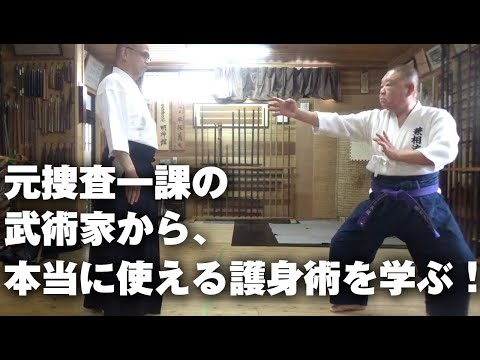
In today's climate, where crime statistics often paint a grim picture, the need for practical self-defense is undeniable. Fortunately, we have a guide who embodies the living spirit of these arts: Sensei Yoshifumi Hayasaka. With a background that includes service in the former Investigation Division 1 and as a forensic coroner, Sensei Hayasaka brings a unique perspective forged in the crucible of real-world investigation and confrontation. His expertise as a *Kobudo-ka* (古武術家) means he understands not just the techniques, but the psychology and the raw, unvarnished reality of violent encounters. Sensei Hayasaka is affiliated with the Nitto Bujutsu Kenkyukai Joshinkan (日東武術研究会 常心館), a testament to his dedication to preserving and propagating these invaluable martial traditions. Through his guidance, he aims to illuminate the principles of "Gyaku-te Goshin-do" for the modern era, integrating the timeless wisdom of *Kobudo* with contemporary insights into personal safety. This isn't just about learning moves; it's about understanding the predator's mindset and developing the *mental fortitude* and practical skills to neutralize threats effectively.

The Core Principles: Applying the "Kotsu"

The true power of "Gyaku-te Goshin-do" lies in its emphasis on the *kotsu* (コツ)—the crucial knack, the essential point, the secret to making a technique work. This is not about memorizing a series of movements in isolation. It's about understanding the underlying principles that make each technique effective, regardless of the attacker's specifics. Sensei Hayasaka, through his demonstrations, breaks down these principles, showing how a seemingly simple movement can become a devastating counter. The techniques presented in the video, drawn from the First Dan curriculum of "Gyaku-te Goshin-do," are carefully selected for their practicality. They focus on: * **Leverage over Strength**: Utilizing the attacker's momentum and body structure against them. * **Economy of Motion**: Employing direct, efficient movements that conserve energy and maximize impact. * **Timing and Distance**: Understanding the critical windows of opportunity and maintaining optimal positioning. * **Simplicity**: Prioritizing clear, easy-to-execute actions that can be performed under stress.
"In fighting, simplicity is the ultimate sophistication." - A principle echoed across many martial traditions.

Training Guide: Mastering the First Dan Techniques

While a full curriculum requires dedicated instruction, we can outline the path to understanding the core techniques presented. The First Dan of "Gyaku-te Goshin-do" typically introduces thirteen fundamental skills. Here, we'll illustrate the approach to a few, emphasizing Sensei Hayasaka's key points.
  1. Basic Wrist Grab Defense (e.g., Right Wrist Grab by Attacker):

    Concept: The attacker grabs your wrist with their right hand. The goal is not to resist the pull directly, but to use your own wrist and body to pivot into a position of advantage.

    Execution (Sensei's Point): Instead of pulling back, step slightly offline and use your elbow to drive your grabbed arm downwards and inwards. Simultaneously, rotate your body and free your hand. The *kotsu* here is not in the strength of your pull, but in the coordinated movement of your entire body, using the attacker's own grip against them.

  2. Choke Defense (e.g., Front Choke):

    Concept: Attacker attempts to choke you from the front. This requires immediate, decisive action to break their posture and create space.

    Execution (Sensei's Point): Trap the attacker's arms with yours, creating a wedge. Use your hips and lower body to drive forward and down, breaking their balance. A quick strike or sweep can follow. The *kotsu* is in disrupting their base and posture before they can fully apply pressure. Imagine trying to unbalance a tower; you don't push the top, you disrupt the foundation.

  3. Bear Hug Defense (e.g., Arms Pinned):

    Concept: Attacker grabs you from the front, arms wrapped around your torso, pinning yours.

    Execution (Sensei's Point): The initial reaction is panic. However, the key is to immediately lower your center of gravity and create space to breathe. Use your head to strike upwards into their face or nose, and simultaneously work to free one arm. Once an arm is free, you can employ joint locks or strikes. The *kotsu* is in the immediate, aggressive response to create breathing room and an offensive opportunity.

Remember, these are simplified explanations. The true efficacy comes from dedicated practice under qualified instruction, focusing on the nuances Sensei Hayasaka imparts.

Training Guide: Mastering the First Dan Techniques

While a full curriculum requires dedicated instruction, we can outline the path to understanding the core techniques presented. The First Dan of "Gyaku-te Goshin-do" typically introduces thirteen fundamental skills. Here, we'll illustrate the approach to a few, emphasizing Sensei Hayasaka's key points.
  1. Basic Wrist Grab Defense (e.g., Right Wrist Grab by Attacker):

    Concept: The attacker grabs your wrist with their right hand. The goal is not to resist the pull directly, but to use your own wrist and body to pivot into a position of advantage.

    Execution (Sensei's Point): Instead of pulling back, step slightly offline and use your elbow to drive your grabbed arm downwards and inwards. Simultaneously, rotate your body and free your hand. The *kotsu* here is not in the strength of your pull, but in the coordinated movement of your entire body, using the attacker's own grip against them.

  2. Choke Defense (e.g., Front Choke):

    Concept: Attacker attempts to choke you from the front. This requires immediate, decisive action to break their posture and create space.

    Execution (Sensei's Point): Trap the attacker's arms with yours, creating a wedge. Use your hips and lower body to drive forward and down, breaking their balance. A quick strike or sweep can follow. The *kotsu* is in disrupting their base and posture before they can fully apply pressure. Imagine trying to unbalance a tower; you don't push the top, you disrupt the foundation.

  3. Bear Hug Defense (e.g., Arms Pinned):

    Concept: Attacker grabs you from the front, arms wrapped around your torso, pinning yours.

    Execution (Sensei's Point): The initial reaction is panic. However, the key is to immediately lower your center of gravity and create space to breathe. Use your head to strike upwards into their face or nose, and simultaneously work to free one arm. Once an arm is free, you can employ joint locks or strikes. The *kotsu* is in the immediate, aggressive response to create breathing room and an offensive opportunity.

Remember, these are simplified explanations. The true efficacy comes from dedicated practice under qualified instruction, focusing on the nuances Sensei Hayasaka imparts.

Training Guide: Mastering the First Dan Techniques

While a full curriculum requires dedicated instruction, we can outline the path to understanding the core techniques presented. The First Dan of "Gyaku-te Goshin-do" typically introduces thirteen fundamental skills. Here, we'll illustrate the approach to a few, emphasizing Sensei Hayasaka's key points.
  1. Basic Wrist Grab Defense (e.g., Right Wrist Grab by Attacker):

    Concept: The attacker grabs your wrist with their right hand. The goal is not to resist the pull directly, but to use your own wrist and body to pivot into a position of advantage.

    Execution (Sensei's Point): Instead of pulling back, step slightly offline and use your elbow to drive your grabbed arm downwards and inwards. Simultaneously, rotate your body and free your hand. The *kotsu* here is not in the strength of your pull, but in the coordinated movement of your entire body, using the attacker's own grip against them.

  2. Choke Defense (e.g., Front Choke):

    Concept: Attacker attempts to choke you from the front. This requires immediate, decisive action to break their posture and create space.

    Execution (Sensei's Point): Trap the attacker's arms with yours, creating a wedge. Use your hips and lower body to drive forward and down, breaking their balance. A quick strike or sweep can follow. The *kotsu* is in disrupting their base and posture before they can fully apply pressure. Imagine trying to unbalance a tower; you don't push the top, you disrupt the foundation.

  3. Bear Hug Defense (e.g., Arms Pinned):

    Concept: Attacker grabs you from the front, arms wrapped around your torso, pinning yours.

    Execution (Sensei's Point): The initial reaction is panic. However, the key is to immediately lower your center of gravity and create space to breathe. Use your head to strike upwards into their face or nose, and simultaneously work to free one arm. Once an arm is free, you can employ joint locks or strikes. The *kotsu* is in the immediate, aggressive response to create breathing room and an offensive opportunity.

Remember, these are simplified explanations. The true efficacy comes from dedicated practice under qualified instruction, focusing on the nuances Sensei Hayasaka imparts.

Essential Equipment for Your Training

While "Gyaku-te Goshin-do" is designed to be accessible without specialized gear, consistent training is key. For those practicing these self-defense methods, especially when simulating realistic scenarios or training with a partner, consider the following:
  • Durable Training Uniform (Gi): A robust uniform, similar to a Judo or Karate gi, can withstand the rigors of grappling and close-quarters techniques. Look for double-weave cotton for enhanced durability.
  • Protective Padding: For partner training, padded gloves, headgear, and body protectors can help mitigate injuries during drills.
  • Training Mats (Tatami/Yoga Mats): Essential for practicing throws, takedowns, and groundwork safely.
  • Focus Mitts and Strike Shields: Useful for solo practice and developing striking power and accuracy, complementing the defensive techniques.
  • Books on Classical Martial Arts: Deepen your understanding of the roots of "Gyaku-te Goshin-do" by studying texts on *Kobudo* and historical Japanese martial arts.
Investing in quality training gear not only enhances safety but also fosters a more serious training environment, signaling respect for the art and your training partners.

Sensei's Verdict: Is Gyaku-te Goshin-do Relevant Today?

In an era dominated by high-octane mixed martial arts and the digital realm, the question arises: Does a system born from the practical needs of Showa-era Japan still hold water? My verdict is unequivocal: **Yes, emphatically so.** "Gyaku-te Goshin-do," as taught by Sensei Hayasaka, is a potent reminder that the core principles of self-preservation transcend time and trends. Its focus on accessibility—the *kotsu* that makes it usable by anyone—is its greatest strength. In a world where true self-defense is often obscured by sport and entertainment, this art cuts through the noise. It doesn't rely on athletic superiority but on strategic application of leverage, timing, and psychological understanding. Sensei Hayasaka’s background adds an undeniable layer of authenticity. His understanding of the darker aspects of human interaction, honed through years in law enforcement, ensures that these techniques are grounded in grim reality. This isn't theoretical combat; it's practical survival. For the modern warrior, whether you practice Karate, Judo, Jiu-Jitsu, or simply seek personal security, the lessons of "Gyaku-te Goshin-do" offer invaluable insights. It’s a masterclass in the philosophy of effective defense: simple, direct, and built on a profound understanding of conflict. Rating: Black Belt in Practicality

Frequently Asked Questions

Q1: Is "Gyaku-te Goshin-do" difficult to learn? A1: The system is designed so that once you grasp the core principles (*kotsu*), the techniques become accessible. However, like any martial art, mastery requires consistent practice and dedication, ideally under qualified instruction. Q2: Can women learn and use these techniques effectively? A2: Absolutely. "Gyaku-te Goshin-do" emphasizes leverage and timing over brute strength, making it highly effective for individuals of smaller stature or lesser physical strength to defend themselves against larger or stronger attackers. Q3: How does "Gyaku-te Goshin-do" differ from modern self-defense systems or MMA? A3: Unlike MMA, which is a sport with rules, "Gyaku-te Goshin-do" is purely for self-preservation in real-world confrontations. It focuses on de-escalation, evasion, and disabling an attacker efficiently, often in situations where rules do not apply. It also draws heavily from older *Kobudo* principles, offering a different tactical approach than many contemporary systems. Q4: Where can I find qualified instruction for "Gyaku-te Goshin-do"? A4: Direct instruction from Sensei Yoshifumi Hayasaka or his designated instructors is the ideal path. Resources like the Gekkan Hiden magazine and associated websites are also excellent starting points for understanding the system's philosophy and techniques.

To Deepen Your Journey

* Explore the BUDO principles inherent in classical Japanese martial arts. * Understand the critical differences between Combate Cuerpo a Cuerpo and sport combat. * Discover the philosophical underpinnings of Defensa Personal through the lens of historical martial arts.

Sensei's Reflection: Your Next Step

We have explored the profound practicalities of "Gyaku-te Goshin-do," a system that bridges the gap between historical martial wisdom and contemporary self-preservation needs. You've seen how understanding the *kotsu*—the core principle—can unlock techniques that seem formidable. But knowledge without application is like a sword left to rust. The true test lies not in understanding these techniques, but in integrating their spirit into your life. Do you merely observe, or do you strive to embody the resilience, the adaptability, and the calm preparedness that define a true warrior? Consider this: In your daily life, are you truly present? Are you observing the dynamics around you with the same keen eye a defender must possess? Or are you lost in the noise, unprepared for the unexpected? The principles of "Gyaku-te Goshin-do" extend far beyond physical confrontation; they are a blueprint for navigating life's challenges with awareness and efficacy. Now, I ask you: What is the *kotsu*—the essential point—you will take away from this lesson, and how will you apply it not just on the training floor, but in the arena of your everyday existence? Prove your understanding. ``` GEMINI_METADESC: Discover the practical self-defense system of \"Gyaku-te Goshin-do\" by Sensei Yoshifumi Hayasaka. Learn timeless techniques rooted in Japanese martial arts for modern-day application.

Morio Higaonna: The Undisputed Apex of Goju-Ryu Karate and a Warrior's Testament

The name Morio Higaonna echoes through the annals of traditional martial arts, a beacon of authentic Okinawan Goju-ryu Karate. Born on December 25, 1938, Higaonna-sensei is not merely a practitioner; he is a living legend, the founder and former Chief Instructor of the International Okinawan Goju-ryu Karate-do Federation (IOGKF). His mastery is recognized by the highest possible honor: the 10th dan in Goju-ryu. But what truly sets Higaonna-sensei apart is not just his rank, but the profound depth of his knowledge and the practical application of his art. Martial arts scholar Donn Draeger, a figure of immense authority in his own right, reportedly described him as "the most dangerous man in Japan in a real fight." This is not hyperbole; it's a testament to a lifetime dedicated to honing a martial system into a razor-sharp instrument of self-defense and personal development.

Who is Morio Higaonna? The Living Legend of Goju-Ryu

Morio Higaonna's journey began in Naha City, Okinawa, the birthplace of Karate. From a young age, he was drawn to the martial arts, a path that would define his existence. He trained under the tutelage of some of the most revered masters, most notably Seko Higa and later, the legendary Chojun Miyagi, the founder of Goju-ryu. Higaonna-sensei’s dedication was absolute, absorbing every nuance of Miyagi’s teachings. He didn't just learn the movements; he internalized the spirit, the history, and the underlying principles of this powerful Okinawan art. His understanding of Goju-ryu (剛柔流) – literally "hard-soft style" – goes beyond the superficial interpretation of punches and blocks; it’s a comprehensive system of combat and self-cultivation.

His influence extends far beyond Okinawa. Through the establishment of the IOGKF, Higaonna-sensei has brought authentic Goju-ryu to practitioners across the globe, ensuring that the art remains true to its roots, preserving its integrity against the tide of commercialization and dilution that plagues many other martial disciplines. This commitment to authenticity is what makes him a pivotal figure, not just a master, but a guardian of a cultural and martial heritage.

The Philosophy of Goju-Ryu: Hardness and Softness in Perfect Harmony

The essence of Goju-ryu lies in its name: Go (hard) and Ju (soft). This isn't a simple dichotomy of brute force versus yielding defense. It represents a sophisticated understanding of combat where these seemingly opposing principles are integrated. The "hard" aspects involve direct, powerful techniques – strong stances, forceful strikes, and solid blocks – designed to overwhelm an opponent. Conversely, the "soft" elements teach us to flow, to redirect an attacker's energy, to use their momentum against them, and to evade or absorb impact.

"The Way of Karate-do is like boiling water. If you stop heating it, it becomes cold." - Chojun Miyagi

Higaonna-sensei embodies this philosophy. His movements can be explosively powerful, capable of generating immense force, yet they also possess a fluid grace, adapting to any situation. This duality is key to Goju-ryu's effectiveness. It teaches practitioners to be adaptable, to sense the rhythm of the fight, and to apply the appropriate response – hard or soft – precisely when needed. This is not merely about fighting; it's a metaphor for life, teaching resilience and flexibility in the face of adversity.

Higaonna-Sensei's Teachings: Beyond Technique

What makes Higaonna-sensei's instruction so invaluable is his emphasis on the deeper aspects of martial arts training. While he meticulously teaches the techniques of Goju-ryu – the kata (forms), the hoshu waza (supplementary techniques), and the combat applications – he consistently stresses the importance of cultivating inner qualities. These include discipline, perseverance, humility, and a strong ethical foundation. He understands that true martial arts mastery is not just about defeating an opponent, but about defeating one's own limitations.

His training methods, while demanding, are designed to build not only physical prowess but also mental fortitude. Practitioners under his tutelage learn to push their boundaries, to develop a keen awareness of their surroundings, and to cultivate a spirit of respect for their art and their fellow practitioners. The concept of Ki (気) – often translated as energy or spirit – is central. Higaonna-sensei teaches how to harness and direct this internal energy, adding a layer of power and presence to every movement. This is a crucial element that often gets overlooked in less traditional training environments.

The IOGKF: A Global Legacy

Founded in 1979, the IOGKF is Higaonna-sensei's most significant contribution to the martial world. Its mission is to preserve and promote authentic Okinawan Goju-ryu Karate-do worldwide. Under his guidance, the federation has grown into a vast international network of dojos and dedicated practitioners. This structure ensures that the teachings of Chojun Miyagi, passed down through Seko Higa and then to Morio Higaonna, are transmitted with fidelity and consistency across generations and continents.

The IOGKF is more than just an organization; it's a community bound by a shared passion for authentic Goju-ryu. Regular international seminars, training camps, and gradings, all overseen by Higaonna-sensei or his senior students, ensure a high standard of training and a strong sense of camaraderie. This global reach allows practitioners from diverse backgrounds to connect and learn from one another, all under the unifying banner of Higaonna-sensei's leadership. If you are interested in finding a reputable Karate Community, the IOGKF is a prime example of a well-structured and dedicated martial arts organization.

Donn Draeger's Endorsement: The Measure of a True Warrior

The statement by Donn Draeger – "the most dangerous man in Japan in a real fight" – is a powerful endorsement. Draeger himself was a formidable martial artist, a 9th dan in Judo and a significant figure in the study and promotion of martial arts. For him to single out Higaonna-sensei in such a way speaks volumes. It implies that Higaonna-sensei possesses not just technical skill, but the practical, combative edge that separates mere practitioners from true warriors.

In an era where many martial arts have become diluted, focusing more on sport or performance than on practical self-defense, such an endorsement is crucial. It validates the effectiveness and lethality of Goju-ryu as taught by Higaonna-sensei. It reminds us that these arts were forged in a context of real conflict, and their core principles should always reflect that reality. This is the kind of insight that seasoned martial artists seek, understanding that behind the flashy techniques often lies a much deeper, more dangerous truth. For those looking to understand the practical applications of Combat, Higaonna-sensei's approach is a masterclass.

Key Publications: Preserving the Legacy

Morio Higaonna has dedicated a significant portion of his life to documenting and sharing the rich history and techniques of Goju-ryu. His books are considered essential reading for any serious student of the art. Among his most influential works are:

  • Traditional Karate-do: Okinawa Goju Ryu (1985): This seminal work provides an in-depth look at the philosophy, techniques, and history of Goju-ryu. It's a foundational text for understanding the art.
  • The History of Karate: Okinawan Goju Ryu (2001): Delving deeper into the historical context, this book traces the lineage and evolution of Goju-ryu, connecting its Okinawan roots to its global dissemination.

These publications are not just instructional manuals; they are historical documents that preserve the integrity of Goju-ryu for future generations. They serve as a critical resource for anyone seeking to understand the art beyond mere physical movements, offering insights into its cultural significance and philosophical underpinnings. For those looking to expand their knowledge base, exploring authoritative texts like these is paramount. Consider adding these to your reading list if you are interested in titles related to BUDO or Martial Philosophy.

Essential Equipment for Your Training

While Goju-ryu is fundamentally about the practitioner's own body and mind, having the right equipment can significantly enhance your training experience and safety. For serious students aiming for authenticity, consider the following:

  • Karate Gi (Kimono): A durable, traditional Karate Gi is essential. For Goju-ryu, a slightly heavier-weight cotton gi is often preferred for its durability during rigorous training, especially for techniques involving grappling or close-range combat. Look for a traditional cut that allows for freedom of movement while maintaining a strong aesthetic. Brands offering Karate Merchandise often have suitable options.
  • Training Mats (Tatami or similar): For practicing falls, throws, and groundwork techniques that are part of a comprehensive Goju-ryu curriculum, a good quality training mat is vital for safety and comfort.
  • Protective Gear (Sparring): When engaging in controlled sparring (kumite), especially with the intensity that Higaonna-sensei's teachings imply, safety gear such as mouthguards, hand pads, and foot pads are crucial to prevent injuries.
  • Makiwara/Pads: For developing striking power and conditioning the hands and forearms, a makiwara or various striking pads can be beneficial. However, these should always be used under the guidance of a qualified instructor to prevent injury.

Investing in quality equipment not only supports your practice but also shows respect for the art and your training environment. It's a practical step that complements the mental and spiritual development inherent in the martial journey.

Training Guide: Mastering Basic Goju-Ryu Stances

The foundation of any effective martial art lies in its stances. In Goju-ryu, strong, stable stances are crucial for generating power, maintaining balance, and executing techniques effectively. Higaonna-sensei emphasizes precision in these fundamental movements. Here’s a guide to practicing two essential stances:

  1. Sanchin Dachi (三戦立ち - Three-Battles Stance):
    1. Stand with your feet shoulder-width apart.
    2. Turn your feet inward slightly, so your toes point towards each other.
    3. Bend your knees deeply, sliding your feet closer together until they are about one foot-width apart (or slightly less).
    4. Tuck your pelvis slightly under.
    5. Keep your back straight and your chest lifted.
    6. Your arms are typically held in a "soft" guarding position in front of your chest, palms facing inwards.
    7. Focus on breathing deeply and evenly from your diaphragm, coordinating your breath with the tension and relaxation of your muscles. This stance is the core of Goju-ryu conditioning, developing strength, balance, and focus.
  2. Heiko Dachi (平行立ち - Parallel Stance):
    1. Stand with your feet shoulder-width apart, toes pointing straight forward.
    2. Keep your knees slightly bent but not locked.
    3. Maintain an upright posture with your pelvis neutral.
    4. This is a more natural, ready stance used for transitions, quick movements, and as a base for strikes and blocks. It allows for greater mobility compared to Sanchin Dachi.

Practice Tips:

  • Hold each stance for at least 1-2 minutes, focusing on maintaining proper form and breathing.
  • Gradually increase the duration as your strength and endurance improve.
  • Visualize the purpose of each stance: Sanchin for power generation and mental fortitude, Heiko for readiness and mobility.
  • Regular practice of these basic stances is fundamental for developing the necessary physical and mental attributes for Goju-ryu. It's a key aspect of effective Martial Arts Training that builds the base for all other techniques.

Frequently Asked Questions

Q1: What is the primary difference between Goju-ryu and other Karate styles?
A: Goju-ryu is characterized by its synthesis of hard (Go) and soft (Ju) techniques, emphasizing close-range combat, breathing methods, and a strong focus on conditioning and practical application, differentiating it from styles that might focus more heavily on long-range techniques or sport aspects.

Q2: Is Morio Higaonna still teaching actively?
A: While Higaonna-sensei has stepped down from the chief instructor role of IOGKF, he remains a highly respected figure and continues to influence the art through his writings and occasional demonstrations. His senior students carry on his direct lineage of teaching.

Q3: How does Goju-ryu translate to self-defense in real-world situations?
A: Goju-ryu's emphasis on practical techniques, close-range fighting, redirection of force, and powerful strikes makes it exceptionally effective for self-defense. The "dangerous man" reputation stems directly from its focus on efficacy under pressure.

Q4: What are the main kata in Goju-ryu?
A: Key kata include Sanchin (the foundation), Tensho (the soft counterpart to Sanchin), Gekisai Dai Ichi & Ni, Saiha, Shisochin, Seienchin, Sanseru, Suparinpei, and others, each developing different aspects of the art.

Sensei's Reflection: Your Next Step

Morio Higaonna embodies the ideal of a martial artist: a lifelong student, a dedicated practitioner, and a generous teacher. His legacy is not just in the techniques he perfected, but in the unwavering commitment to authenticity and the deep philosophical understanding he imparts. He reminds us that the martial path is a continuous journey of refinement, a constant striving for perfection in both body and spirit.

"The dojo is a place where you train your mind and body. It is a place of learning, discipline, and respect. It is not a place for ego or arrogance."

Your next step is to consider what "dangerous" truly means in the context of your own practice. Is it about intimidation, or is it about possessing the quiet confidence of absolute preparedness? Is your training focused solely on physical techniques, or are you cultivating the inner resilience, the Ki, the unwavering spirit that defines a true martial artist? Reflect on this: When the moment of truth arrives, will your techniques flow naturally from deep-seated principles, or will they falter under pressure like a poorly built structure? The answer lies not just in your punches, but in your commitment to the Way.

For Deeper Exploration in Your Journey

``` GEMINI_METADESC: Explore the profound legacy of Morio Higaonna, the 10th dan master of Goju-Ryu Karate. Discover his philosophy, teachings, the IOGKF, and why he was called "the most dangerous man in Japan."

Steven Seagal's 1990 Aikido Seminar: A Critical Look Beyond the Hype

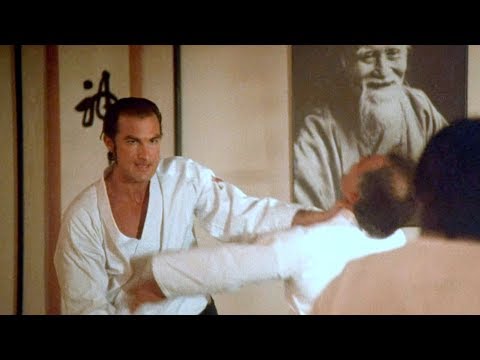
A pivotal moment in the public perception of Aikido, particularly in the West, often conjures images of its most famous, and perhaps most controversial, practitioner: Steven Seagal. The seminar held on July 7, 1990, in San Jose, California, presented an opportunity for many to witness Aikido firsthand, guided by a figure who had already achieved considerable cinematic fame. This event, assisted by the skilled Haruo Matsuoka Sensei, aimed to showcase the art's principles. But as a seasoned martial artist and critic, I must ask: beyond the celebrity aura, what did this demonstration truly impart about the essence of Aikido? Was it a genuine lesson in budo, or merely a performance for an eager audience?

Table of Contents

A Master's Shadow: Seagal and Aikido

The name Steven Seagal is inextricably linked with Aikido in the popular consciousness. His early career as an actor, often portraying stoic, supremely capable martial artists, introduced millions to the art. However, his personal journey and the authenticity of his Aikido practice have been subjects of considerable debate within martial arts circles. This 1990 seminar in San Jose provides a tangible point of reference to examine his demonstrated skill and teaching methodology at that time. While the original video, captured from Aikido of San Jose, offers a glimpse into the event, understanding its true martial value requires a critical eye, unclouded by the glamour of Hollywood.
"The true warrior is not afraid of criticism; they welcome it as a path to refinement." - Anonymous Budo Maxim

Aikido in the West: The 1990 Landscape

By 1990, Aikido had a solid, albeit niche, presence in the Western world. Established dojos were spreading O-Sensei Morihei Ueshiba's art, focusing on its philosophical underpinnings and flowing, circular movements. However, the emergence of figures like Seagal, who blended cinematic action with martial arts, created a dual perception: Aikido as a profound spiritual discipline and Aikido as a visually impressive, potentially combative art. This seminar, therefore, took place at a crucial juncture, where the art's traditional teaching was beginning to intersect with its more popularized, often dramatized, image.

Deconstructing the San Jose Seminar: Technique and Philosophy

Witnessing Seagal Sensei demonstrate Aikido, with Haruo Matsuoka Sensei serving as uke, offers insights into the technical execution and the underlying principles being conveyed. The core of Aikido lies in blending with an attacker's motion, redirecting their force, and applying joint locks or throws. A critical analysis would focus on:
  • Ukemi (Receiving Technique): How effectively did Matsuoka Sensei perform his rolls and falls? This is crucial for the safety and realism of the demonstration.
  • Nage Waza (Throwing Techniques): Were the throws fluid and efficient, demonstrating the principles of leverage and momentum, or did they appear forced?
  • Kansetsu Waza (Joint Locking Techniques): Were the locks applied with precision and control, emphasizing the disabling aspect without causing unnecessary injury?
  • Maai (Distance and Timing): Was there a clear understanding and demonstration of appropriate distance and split-second timing in the execution of techniques?
  • Zanshin (Awareness): Did Seagal Sensei exhibit continuous awareness and readiness, even after the completion of a technique?
It's vital to assess whether the techniques shown were applied with the groundedness and intentionality characteristic of traditional Aikido, or if they leaned towards a more performative, almost theatrical, execution. The transfer of energy, the subtle body mechanics, and the philosophical message of harmonizing with an opponent's aggression are often where the true depth of Aikido lies.

The Sensei's Scrutiny: Authenticity vs. Spectacle

The challenge with demonstrations by high-profile martial artists, especially those who have achieved fame through acting, is distinguishing between genuine martial skill and cinematic presentation. Seagal's presence in Hollywood inevitably brings a certain expectation of dynamism and visual impact. However, in a true martial arts seminar, the focus should be on clarity, precision, and the practical application of principles. Does the demonstration showcase techniques that would be effective against a resisting opponent, or are they modified for visual appeal? Is the emphasis on the philosophical aspects of Aikido – non-violence, harmony, and self-mastery – or is it on demonstrating power and dominance? These are the questions that separate a mere demonstration from a profound teaching moment.
"The Way of the Warrior is to be master of all things, not just of strength, but of skill, intelligence, and spirit." - Miyamoto Musashi, The Book of Five Rings

A Note on Ki: The Elusive Energy

The concept of 'Ki' (or 'Qi') is fundamental to many East Asian martial arts, including Aikido. It refers to a vital life force or energy that practitioners aim to cultivate and channel. In demonstrations, the manipulation of Ki can appear almost supernatural. While its existence and practical application are debated, true Aikido seeks to harness this internal energy for effective movement and technique. A discerning observer would look for signs of this internal cultivation in the practitioner's posture, breath control, and the seamless flow of movement, rather than just the external force applied.

Embodying Aikido Principles: Essential Drills

While we can analyze the seminar, the true spirit of Aikido is learned through practice. Here are fundamental drills to help you grasp core principles:
  1. Tai Sabaki Practice: Focus on footwork and body shifting. Practice moving your body as a whole unit, maintaining balance while evading imaginary attacks.
  2. Ukemi Training: Learn to fall safely. Start with simple forward and backward rolls, focusing on relaxation and dispersing impact.
  3. Suburi (Repetitive Practice): With a wooden sword (bokken), practice basic cuts and thrusts. This builds muscle memory and understanding of distance and timing.
  4. Aiki Taiso (Warm-up Exercises): These exercises are designed to loosen the body and develop coordination, preparing you for more complex techniques.
  5. Basic Blending: With a partner, practice gentle movements of blending and redirection. One person initiates a forward motion, and the other practices stepping offline and guiding that motion.

Essential Gear for Aikido Training

To properly engage with Aikido training, certain equipment is essential. While the art emphasizes minimal reliance on external tools, specific items facilitate learning and safety:
  • Aikidogi (Uniform): A sturdy, double-weave uniform is necessary for practice, especially for techniques involving grappling and throws. Look for reinforced stitching for durability.
  • Hakama: The traditional pleated trousers worn over the Aikidogi, often by senior students and instructors. They allow for greater freedom of movement during leg sweeps and add to the aesthetic of the art.
  • Bokken (Wooden Sword): Essential for practicing suburi and paired sword forms (Kendo-related training within Aikido).
  • Jo (Wooden Staff): Used for practicing staff techniques and blending drills.
  • Suburito: A heavier wooden sword for advanced strength and conditioning.

Veredicto del Sensei: Does Seagal's Aikido Hold Up?

Looking back at Seagal's 1990 seminar, it's clear he possessed a demonstrable knowledge of Aikido techniques. He showcased powerful throws and joint locks, often with his signature intensity. However, the question of authenticity in the context of budo is multifaceted. While he may have had the technical capability, the debate often centers on whether his approach prioritized the spiritual and philosophical dimensions of Aikido, or if it leaned more towards a combative, showman-like execution amplified by his cinematic persona. The depth of connection with his uke, the subtlety of energy transfer, and the embodiment of Aikido's principles of harmony are points of contention for many traditional practitioners. **Cinturón Negro en Ejecución, Cinturón Blanco en Filosofía.**

Frequently Asked Questions

What is the main difference between Seagal's Aikido and traditional Aikido?

The primary debate revolves around the emphasis. Traditional Aikido often stresses the philosophical aspects, harmony, and subtle energy. Seagal's public demonstrations sometimes appear more focused on raw power and definitive techniques, influenced by his cinematic career.

Was Haruo Matsuoka Sensei a legitimate instructor?

Yes, Haruo Matsuoka Sensei was a highly respected Aikido instructor and student of the renowned Koichi Tohei Sensei. His role as uke (receiver of techniques) in the seminar lent significant credibility to the event.

Can Aikido be used for self-defense?

Yes, Aikido techniques, particularly joint locks and throws, are designed for self-defense. However, their effectiveness in a real-world, uncooperative situation often depends on the practitioner's level of training, timing, and ability to apply principles under duress, which can be a challenge for many students.

Is Steven Seagal still practicing Aikido?

While Seagal was once a prominent figure in Aikido, his public involvement and teaching have significantly diminished over the years, with much of his focus shifting to his film career and other interests.

For Deeper Exploration

To truly understand the art, delve into its roots and variations:

Sensei's Reflection: Your Next Step

This seminar from 1990, while a glimpse into a specific moment in time, raises a timeless question for all martial artists: what defines genuine mastery? Is it the flawless execution of a technique, the authority of a famous name, or the embodiment of an art's deepest philosophical principles? When you watch demonstrations, whether of Aikido, Karate, or any other art, do you see the technique, or do you see the spirit? Now, the question is for you: Having considered the context and the critical perspective, what aspect of this seminar do you find most revealing about the true nature of martial arts instruction? Do you believe celebrity practitioners enhance or detract from the art they represent? Prove your point in the comments. ``` GEMINI_METADESC: Critically analyze Steven Seagal's 1990 Aikido seminar in San Jose. Examine technique, authenticity, and budo principles beyond the Hollywood persona.

Mikio Yahara: The Unyielding Spirit of Shotokan Karate and the Rediscovery of Budo

The Uncompromising Fighter

Welcome, students of the martial path. Today, we delve into the life and legacy of a man whose name resonates with the very essence of dynamic Shotokan Karate: Mikio Yahara. Born in 1947, Yahara Sensei is not merely a practitioner; he is a force of nature within the dojo and a living testament to the power of unwavering spirit. Masatoshi Nakayama, a titan of Karate himself, recognized this when he declared Yahara "the best fighter of his generation." This is not hyperbole; it is a pronouncement earned through sweat, discipline, and an unshakeable commitment to the principles of martial combat.

But what truly sets Yahara Sensei apart, and what we will explore today, is his profound dedication to reintroducing Karate to its ancient Budo roots. In an era where Karate often drifts towards sport or mere physical exercise, Yahara Sensei stands as a beacon, reminding us of the deeper, combative, and spiritual dimensions of our art. Prepare yourselves for a lesson not just in Karate, but in the enduring philosophy of the warrior.

Forged in the Crucible of the JKA

Mikio Yahara emerged from the prestigious Japan Karate Association (JKA) dojo, an institution synonymous with the standardization and global dissemination of Shotokan Karate. This was no easy environment. The JKA of Yahara's formative years was a breeding ground for exceptional talent, a place where only the strongest, most dedicated, and most skilled could thrive. To be recognized within this elite group, let alone singled out for praise, speaks volumes about Yahara's innate abilities and relentless work ethic.

His achievements within the JKA are legendary. Winning the JKA Grand Championship is not a minor feat; it signifies conquering the highest echelon of competitive Karate. This victory was more than just a trophy; it was a declaration of dominance, a validation of his physical prowess and tactical acumen. He proved himself on the most demanding stage, a feat that solidified his reputation as a formidable competitor.

"The JKA was a proving ground. Every session, every kumite, was a test. Yahara didn't just pass these tests; he redefined them."

His early success wasn't accidental. It was the direct result of countless hours spent honing his techniques, perfecting his timing, and cultivating an indomitable spirit. The intensity of training within the JKA under masters like Nakayama instilled a level of discipline and combat readiness that few could match.

A Style Born of Necessity

What made Mikio Yahara a fan favorite and a feared opponent was his truly unique fighting style. It wasn't simply about executing perfect techniques; it was about a raw, energetic, and often unpredictable approach to kumite. This dynamism wasn't just for show; it was a product of his deep understanding of combat and his commitment to effectiveness.

In the world of martial arts, especially in competition, styles often evolve. Some become more reliant on speed, others on power, and some on strategic point-scoring. Yahara Sensei, however, embodied a style that was both explosive and deeply rooted. He attacked with a ferocity that belied his technical precision, making him a captivating figure to watch. His movements were not just movements; they were manifestations of focused intent, designed to overwhelm and disable an opponent.

This fighting style, described as "energetic" and "dynamic," is a hallmark of true martial artists who understand that combat is not static. It requires adaptability, a willingness to press the advantage, and the courage to face adversity head-on. His approach was a stark contrast to more conservative styles, making him a standout performer and an inspiration to many who sought a more aggressive, yet still principled, way to fight.

The impact of such a style on the perception of Shotokan Karate cannot be overstated. It demonstrated that the art, while possessing a rich tradition, could also be expressed through powerful, modern combat applications. This versatility is key to the longevity of any martial art, and Yahara Sensei was a living embodiment of this principle.

The Path Back to Budo

While his prowess in competition is undeniable, it is Yahara Sensei's later focus on the philosophical underpinnings of Karate that has cemented his status as a modern master. He is a fervent advocate for reintroducing Karate to its original Budo roots. This is a critical distinction and one that resonates deeply with those who believe Karate is more than just a sport.

Budo, the "way of warfare" or "martial way," encompasses not just technical proficiency but also the spiritual, ethical, and mental cultivation of the practitioner. It emphasizes discipline, respect, self-control, and the development of character. In its purest form, Budo is a lifelong path of self-improvement, where combat is a means to an end—the perfection of self—rather than the ultimate goal.

"Karate, in its original Budo context, was not merely about striking. It was about understanding the totality of conflict, both external and internal."

Yahara Sensei's commitment to this philosophy is not just theoretical; it's a guiding principle in his teachings and his personal practice. He believes that by returning to these core principles, Karate can regain its profound depth and continue to be a transformative force in practitioners' lives. This perspective challenges many modern interpretations of Karate, which may focus heavily on sport Karate or self-defense without fully embracing the holistic development inherent in traditional Budo.

His exploration of Budo Karate has made him a pivotal figure today, guiding Karateka toward a more complete understanding of their art. This is crucial in a world that often separates physical training from mental and spiritual growth. Yahara Sensei bridges this gap, reminding us that the strongest fighter is not just the one with the most powerful technique, but the one with the most disciplined and enlightened mind.

The journey back to Budo is a call to arms for martial artists worldwide. It is an invitation to look beyond the immediate rewards of competition or self-defense and to embrace the lifelong pursuit of wisdom and character development that martial arts, at their best, offer.

Enduring Influence and the Future of Karate

Mikio Yahara's influence extends far beyond his competitive achievements. His dedication to the Budo aspect of Karate ensures that his teachings will continue to shape the art for generations to come. He represents a vital bridge between the historical roots of Karate and its future potential.

As Karate continues to evolve, with its inclusion in the Olympic Games and its diverse manifestations across the globe, voices like Yahara Sensei's are essential. They serve as a reminder of the art's origins and its potential for profound personal development. His legacy is not just in the techniques he performed, but in the philosophical direction he champions for Karate.

The question for practitioners today is: How do we integrate the dynamism and competitive spirit, for which Yahara Sensei is renowned, with the depth and wisdom of Budo? It is a challenge that requires careful consideration, dedication, and a willingness to look beyond superficial achievements. The path forward for Karate, as championed by masters like Yahara, involves a holistic approach that nourishes both the body and the spirit.

Sensei's Verdict: A Champion's Legacy

Mikio Yahara is more than just a decorated Karateka; he is a living embodiment of the martial spirit. His career exemplifies the peak of Shotokan competition, earning him accolades and the respect of his peers. Yet, it is his unwavering commitment to the deeper principles of Budo that truly elevates his status. He reminds us that true mastery lies not only in victory but in the continuous pursuit of self-perfection and the preservation of an art's soul.

Rating: 10th Dan in Legacy & Philosophy

Essential Training Gear for Karateka

To emulate the dedication of masters like Mikio Yahara, having the right equipment is fundamental. Quality training gear not only enhances performance but also ensures safety and respect for the dojo.

  • High-Quality Karate Gi: Look for a double-weave or heavyweight gi for durability during intense kumite and kata. Brands offering a good balance of tradition and modern fit are ideal.
  • Protective Gear: For sparring (kumite), ensure you have proper sparring gear including mitts, foot protectors, and a chest protector. Safety is paramount.
  • Training Mats (if applicable): For home practice or specific dojo drills, consider mats that offer good cushioning and grip.
  • Bokken or Bo Staff (for related disciplines): While not always central to Shotokan, if exploring weapons-based Budo, a wooden sword (bokken) or staff (bo) is essential.
  • Books on Budo and Karate History: Supplement your physical training with knowledge. Understanding the philosophy and history deepens your practice.

Investing in quality Karate merchandise is an investment in your own development.

Frequently Asked Questions

Who is Mikio Yahara?
Mikio Yahara is a highly respected 10th Dan Shotokan Karate practitioner, renowned for his dynamic fighting style and his advocacy for returning Karate to its Budo roots.
What is Budo Karate?
Budo Karate emphasizes the martial way, focusing not only on combat techniques but also on the spiritual, ethical, and mental development of the practitioner, akin to traditional samurai disciplines.
What was Yahara's significance in the JKA?
Yahara was considered "the best fighter of his generation" by Masatoshi Nakayama and won the prestigious JKA Grand Championship, showcasing exceptional skill and competitive spirit.
Why is his focus on Budo important today?
In a landscape where Karate can sometimes lean heavily towards sport or self-defense without deeper philosophical engagement, Yahara Sensei's emphasis on Budo reminds practitioners of the art's holistic potential for character development and spiritual growth.

To Dive Deeper Into Your Journey

The path of the martial artist is one of continuous learning. To further enrich your understanding and practice, explore these related topics:

Reflexión del Sensei: Tu Próximo Paso

Yahara Sensei's life is a testament to the idea that true martial arts mastery is a blend of fierce combat effectiveness and profound philosophical depth. He urges us to look beyond the immediate victory and seek the enduring lessons of the path. Now, I ask you:

Can the fierce warrior and the contemplative sage truly coexist within a single martial artist? And if so, how does one cultivate both without sacrificing the essence of the other?

Share your thoughts, your doubts, and your insights. Let us engage in a discussion that honors the spirit of Budo and the legacy of masters like Mikio Yahara.

``` GEMINI_METADESC: Explore the dynamic fighting style and profound Budo philosophy of 10th Dan Shotokan Karate master Mikio Yahara, hailed as the best fighter of his generation.

Morihei Ueshiba O Sensei's 1957 Aikido Demonstration: A Masterclass in Harmony and Unseen Power

The Founder's Legacy

For centuries, the intricate tapestry of martial arts has woven itself into the fabric of human culture, offering not just combat prowess but profound philosophical insights. These disciplines, honed through generations, continue to inspire and shape individuals worldwide. Among the most revered is Aikido, a uniquely Japanese martial art born from the vision and mastery of Morihei Ueshiba, revered by practitioners as O Sensei.

Today, we delve into a rare treasure: a 1957 demonstration video featuring the founder himself. This is not merely a historical artifact; it's a living lesson. We will dissect the art of Aikido, its core philosophy of harmony, and the transformative benefits that await those who dedicate themselves to its practice. Prepare to witness the embodiment of principles that transcend mere physical conflict.

A Glimpse into the Past: The 1957 Demonstration

The video from 1957 is an invaluable window into the very soul of Aikido, as expressed through the founder's movements. It showcases Morihei Ueshiba O Sensei demonstrating techniques that define the art's essence. Observe the fluidity, the economy of motion, and the palpable control. This is not about brute force; it's about redirecting an opponent's power with precision and minimal effort. The demonstration stands as a powerful testament to the beauty, effectiveness, and spiritual depth of Aikido.

In this rare footage, O Sensei doesn't just perform techniques; he embodies them. You'll see the principles of blending, evasion, and redirection executed with a mastery that few have achieved since. It’s a visual symphony of conflict resolution, demonstrating how to neutralize an attack not by meeting force with force, but by becoming one with the attacker's energy.

The Essence of Aikido: Beyond Conflict

At its heart, Aikido is a martial art dedicated to the principle of harmony – Wa (和). Practitioners strive not to dominate or destroy an opponent, but to harmonize with their energy and movements. The objective is to neutralize an attack by skillfully guiding the attacker's force, often leading them into a state of imbalance from which they can be controlled or subdued without causing undue harm.

This philosophy extends far beyond the dojo. The ultimate aim of Aikido is to achieve harmony not only with oneself and one's opponent but with the universe itself. It's a path of self-discovery and mutual respect, where conflict is resolved not through violence, but through understanding and integration. O Sensei often spoke of protecting oneself while simultaneously safeguarding the attacker's well-being, a concept that radically redefines the nature of martial engagement.

"The Art of Peace is a game that changes the way you see the world. It is an endeavor to achieve harmony with the world." - Morihei Ueshiba O Sensei

Deconstructing O Sensei's Art

Examining O Sensei's movements in the 1957 video reveals techniques rooted in deep understanding of biomechanics and energy dynamics. Notice the subtle shifts in weight, the precise angles of entry, and the circular motions that absorb and redirect an attacker's momentum. Techniques like Irimi (entering) and Tenkan (turning/pivoting) are executed with seamless grace, demonstrating how to move *with* the attack rather than against it.

The effectiveness lies in the principle of Aiki (合気) – literally, "joining energy" or "harmony energy." This is not simply about physical leverage; it's about understanding and manipulating the attacker's intention and kinetic energy. Observe how O Sensei uses minimal physical force, often relying on timing, positioning, and the attacker's own commitment to their movement to achieve a decisive outcome. This mastery is what distinguishes true Aikido from mere physical combat.

More Than Just Movement: The Holistic Gains

The practice of Aikido offers a profound spectrum of benefits, extending far beyond the physical realm. Physically, it enhances flexibility, improves balance, and builds overall conditioning, engaging the entire body in a coordinated and dynamic manner. It sharpens coordination and reaction times, essential for both self-defense and daily life.

Mentally and spiritually, Aikido is a powerful tool for personal development. It cultivates discipline, sharpens focus, and instills a sense of calmness under pressure. Practitioners learn to manage their emotions, channeling their energy constructively. This journey fosters inner peace, boosts confidence, and builds mental resilience, equipping individuals to face life's challenges with greater equanimity.

Cultivating Harmony: Essential Aikido Drills

To truly internalize the principles demonstrated by O Sensei, consistent practice is key. Here are fundamental exercises to develop your Aikido foundation:

  1. Basic Body Movement Drills: Practice Tai Sabaki (body movement) in isolation. Focus on natural, efficient footwork, maintaining a stable yet relaxed posture. Execute forward, backward, and lateral movements, as well as pivoting actions (Tenkan), ensuring your center remains grounded.
  2. Ukemi Practice: Learning to receive techniques safely is paramount. Practice Uke Nagashi (receiving and deflecting) and basic rolls (Mawari Ukemi). Focus on dissipating energy upon impact and recovering quickly.
  3. Irimi & Tenkan Combinations: Practice entering (Irimi) and turning (Tenkan) motions in response to imaginary attacks or with a training partner. Focus on the seamless transition between these core movements.
  4. Ki Breathing Exercises: Engage in Kokyu Ho (breathing methods). These exercises, often done seated, teach breath control and the development of internal energy (Ki), which is fundamental to Aikido's power.
  5. Solo Weapon Practice (if applicable): For styles that incorporate Jo (staff) or Bokken (wooden sword), practice basic strikes, blocks, and forms (Kata) to refine timing, distance, and precision.

Remember, the essence is not just performing the movements but understanding the principles behind them. Seek qualified instruction to ensure proper technique and safety.

Equipping Your Journey: Essential Aikido Gear

At BYAM Budo y Artes Marciales, we understand that the right equipment can significantly enhance your training experience. We are passionate about supporting practitioners on their journey towards inner harmony and physical excellence.

  • Aikido Uniforms (Gi): A durable, well-fitting uniform is essential for comfort and freedom of movement. Look for reinforced stitching for longevity, especially in the pants and collar.
  • Training Weapons: For styles that practice with them, a quality Bokken (wooden sword), Jo (staff), or Tanto (knife) is crucial. Ensure they are balanced and free of splinters.
  • Zori or Martial Arts Footwear: Appropriate footwear for the dojo floor aids in footwork and hygiene.
  • Practice Mats (if training at home): Interlocking mats can provide cushioning and safety for solo practice of falling techniques.

We carefully select our merchandise, working only with trusted suppliers who share our commitment to quality and the spirit of martial arts. Enhance your practice with gear designed for performance and durability.

Frequently Asked Questions

What is the fundamental principle of Aikido?

The fundamental principle is harmony (Wa), which involves blending with an opponent's energy and movements to neutralize an attack without causing unnecessary harm.

Is Aikido effective for self-defense?

Yes, Aikido provides practical self-defense skills by teaching practitioners to control an attacker's balance and momentum, often using joint locks and throws derived from the attacker's own force.

Do I need to be strong to practice Aikido?

No, Aikido emphasizes technique, timing, and leverage over brute strength. This makes it accessible and effective for individuals of all ages and physical builds.

What are the main differences between Aikido and Judo?

While both are Japanese martial arts that involve throws, Aikido focuses on redirecting an opponent's energy and blending, often with minimal physical contact until the final technique. Judo traditionally involves more direct gripping and emphasizes takedowns and grappling on the ground.

Deepen Your Understanding

To continue your exploration into the profound world of martial arts and the philosophy of Budo, we recommend the following resources:

"True victory is victory over oneself." - Morihei Ueshiba O Sensei

The 1957 demonstration by Morihei Ueshiba O Sensei is more than just footage; it's a blueprint for a way of life. Aikido offers a path to self-mastery, conflict resolution, and profound inner peace. Its techniques are elegant, its philosophy is deep, and its benefits are transformative.

At BYAM Budo y Artes Marciales, we are dedicated to fostering this journey. We believe in providing practitioners with the highest quality tools to support their training and growth. Visit our website to explore our curated selection of Aikido merchandise and join a community dedicated to the pursuit of martial excellence.

Sensei's Reflection: Your Next Step

O Sensei’s art embodies the ultimate principle: finding strength in yielding, power in harmony. When faced with an unyielding force, do you meet it head-on, or do you learn to flow around it, redirecting its energy with masterful subtlety? Consider this: In moments of personal conflict or challenge, are you an unbending oak, or a bamboo swaying in the wind? How can you apply the principle of Aiki – blending and harmonizing – not just in physical combat, but in the everyday battles of life?

``` ```json { "@context": "https://schema.org", "@type": "FAQPage", "mainEntity": [ { "@type": "Question", "name": "What is the fundamental principle of Aikido?", "acceptedAnswer": { "@type": "Answer", "text": "The fundamental principle is harmony (Wa), which involves blending with an opponent's energy and movements to neutralize an attack without causing unnecessary harm." } }, { "@type": "Question", "name": "Is Aikido effective for self-defense?", "acceptedAnswer": { "@type": "Answer", "text": "Yes, Aikido provides practical self-defense skills by teaching practitioners to control an attacker's balance and momentum, often using joint locks and throws derived from the attacker's own force." } }, { "@type": "Question", "name": "Do I need to be strong to practice Aikido?", "acceptedAnswer": { "@type": "Answer", "text": "No, Aikido emphasizes technique, timing, and leverage over brute strength. This makes it accessible and effective for individuals of all ages and physical builds." } }, { "@type": "Question", "name": "What are the main differences between Aikido and Judo?", "acceptedAnswer": { "@type": "Answer", "text": "While both are Japanese martial arts that involve throws, Aikido focuses on redirecting an opponent's energy and blending, often with minimal physical contact until the final technique. Judo traditionally involves more direct gripping and emphasizes takedowns and grappling on the ground." } } ] }