Showing posts sorted by relevance for query kata. Sort by date Show all posts

The "Unsu" Kata: A Storm of Technique at Kagami Biraki 2022 – A Sensei's Critical Analysis

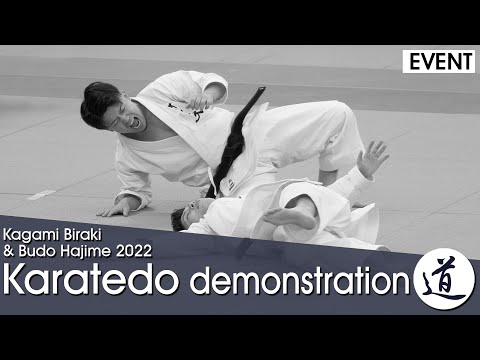
In the hallowed halls of martial tradition, certain events stand as beacons, illuminating the path of Budo for practitioners worldwide. The Kagami Biraki, a ceremony steeped in history and meaning, culminating in the Budo Hajime, or "first practice of the year," is precisely such an occasion. In 2022, the Nippon Budokan played host to this revered event, and amidst the solemnity and tradition, a breathtaking demonstration of Karate-Do unfolded – the *Unsu* Kata, performed by Kikuchi Ryonosuke, Okamoto Ken, and Kitazawa Ishin, all 3rd Dan practitioners. But does this visual spectacle translate into a true masterclass of martial principle, or is it merely a dance of advanced movements? As your Sensei, I am here to dissect this performance, not just to admire it, but to understand the depth of its Budo spirit.
## Unveiling the "Unsu": More Than Just Pushing Clouds The *Unsu* Kata, a cornerstone of Shotokan-Ryu Karate-Do, is often described through poetic imagery, such as "pushing aside clouds." This evocative language hints at the fluidity and dynamic nature of the techniques within. The initial block, a powerful union of the fists along the edge of the hand, is designed to deflect an incoming assault with an almost effortless grace. Yet, this apparent simplicity belies the storm of action that follows. The *Unsu* is a relentless exchange of offense and defense, where techniques evolve like the tempestuous gathering of storm clouds. The practitioners demonstrated a level of technical mastery that is, frankly, astounding. The free adaptation and novel creation of techniques – a dynamic *Mawashi-Geri* (roundhouse kick) to unbalance an opponent, a rotational follow-up after a *Mikatsuki-Geri* (crescent kick), and the piercing precision of an *Ippon-Nukite* (one-finger strike) and *Keitou-Uke* (cock's comb block) – showcase an understanding of combat application far beyond mere rote memorization. The use of feints, the explosive application of speed and strength, all contribute to the kata's reputation as a complex, challenging, and utterly captivating performance. The aerial maneuvers and intricate footwork inherent in *Unsu* demand not only physical prowess but also a deep well of mental fortitude. ### The Kagami Biraki: A Mirror to Budo's Soul To truly appreciate the significance of this demonstration, one must understand the context of the Kagami Biraki. Translating to "opening the mirror," this traditional ceremony, with roots tracing back to the Shogunate era, is intrinsically linked to the practice of Budo. It symbolizes renewal and clarity, a fresh start for the year ahead. Held at the beginning of January at the iconic Nippon Budokan, it’s a multi-faceted event: * **The Kagami Biraki Ceremony**: Often includes a historical reconstruction, complete with armored samurai, to honor the past. * **Budo Demonstrations**: Showcasing the excellence of the nine "official Budo" recognized in Japan. This is where the *Unsu* performance found its stage. * **Budo Hajime**: The "first practice of the year," where all present practitioners engage in training, reinforcing the spirit of collective growth and shared commitment. * **The Oshiruko Kai**: A traditional gathering for a sweet azuki bean soup with mochi. Symbolically, it represents the sharing of prosperity and unity, though unfortunately, this part was canceled in 2022 due to pandemic safety measures. This rich tapestry of tradition elevates the *Unsu* demonstration from a mere athletic display to a profound expression of martial heritage.

The "Unsu" Kata: A Deeper Dive into its Technical Virtuosity

While the performance was undoubtedly impressive, a true martial artist always probes deeper. The *Unsu* Kata is renowned for its complexity and the advanced nature of its applications. Let's break down some key elements that a practitioner of *Karatedo* would observe and analyze: * **Transition and Flow**: The seamless transition between blocking, striking, and evasive movements is crucial. In the *Unsu*, the shift from a defensive posture to an offensive onslaught must be fluid, reflecting the unpredictability of combat. The "pushing aside clouds" analogy is apt here; the movement should be deliberate yet appear natural, masking the underlying power. * **Kicking Techniques**: The inclusion of *Mawashi-Geri* and *Mikatsuki-Geri* is significant. These are not simple kicks; they are tools for disruption and control. The rotational kick following the *Mikatsuki-Geri* demonstrates an understanding of leverage and momentum, allowing a practitioner to pivot and exploit an opponent's imbalance. * **Hand Techniques**: The *Ippon-Nukite* and *Keitou-Uke* are precision instruments. The *Ippon-Nukite* targets vital areas with focused intent, while the *Keitou-Uke* is a sophisticated block that can transition into a strike or a control technique. The mastery of these requires exceptional control and awareness of an opponent's structure. * **Complexity and Aerials**: The jumps and acrobatic elements in *Unsu* are not for show. They serve tactical purposes – gaining distance, evading attacks, or setting up subsequent techniques. However, such techniques demand a high level of conditioning and coordination, making *Unsu* a kata that separates the novice from the seasoned practitioner.

The Martial Philosophy Behind the Movement

Beyond the physical execution, the *Unsu* Kata embodies several core principles of *Karatedo* and Budo: * **Sen no Sen (Preemptive Initiative)**: While the *Unsu* contains elements of defense, its aggressive follow-through suggests a mastery of *Sen no Sen*, anticipating an opponent's move and striking first. * **Mushin (No Mind)**: The ability to execute complex sequences without conscious thought, reacting instinctively, is paramount. The fluidity displayed by the practitioners suggests a high degree of *Mushin*. * **Zanshin (Lingering Spirit)**: After the final technique, the practitioner must maintain a state of awareness. This is the essence of *Zanshin*, ensuring readiness for any further threat.
"The ultimate aim of Karate is not winning or losing, but the perfection of the character of its adherents." - Gichin Funakoshi
This quote from the father of modern Karate is a vital reminder. While the *Unsu* demonstration was a display of technical brilliance, its true value lies in the discipline, focus, and character development it represents for the performers and observers alike.

Veredicto del Sensei: ¿Merece la pena?

The demonstration of the *Unsu* Kata at Kagami Biraki 2022, as presented by Kikuchi Ryonosuke, Okamoto Ken, and Kitazawa Ishin, is a **Cinturón Negro en Ejecución Técnica y Tradición**. The practitioners exhibited exceptional skill, precision, and a clear understanding of the *Unsu*'s complex sequences. Their ability to weave advanced techniques, feints, and dynamic movements into a cohesive and powerful performance is commendable. The context of the Kagami Biraki and Budo Hajime adds a layer of cultural and spiritual significance that enhances the viewing experience. However, it's crucial to remember that a kata demonstration, while impressive, is a stylized representation. Its effectiveness in a real combat scenario is a perpetual debate within the martial arts community. This performance showcased the *art* of Karate-Do at its finest, a testament to years of dedicated *entrenamiento*.
"Karate is a work of love. It is a physical and spiritual discipline that demands the utmost of its practitioners. It is a lifelong pursuit of self-improvement." - Unknown Master

Equipo Esencial para tu Entrenamiento

To truly embody the principles seen in the *Unsu* Kata, consistent and dedicated *entrenamiento* is paramount. While the kata itself is performed with bare hands and feet, the journey to mastery often involves specific gear that supports progression.
  • Kimono de Karate de Alta Calidad: For superior freedom of movement and durability during rigorous training sessions. Look for a double-weave fabric for advanced practitioners of Shotokan.
  • Guantes de Entrenamiento (Opcional): For certain conditioning drills or sparring sessions to protect hands.
  • Protector Bucal: Essential for any sparring or contact drills to ensure safety.
  • Zori o Sandalias de Entrenamiento: For transitioning between indoor and outdoor training spaces, and for specific drills where footwear is required.
  • Esterilla de Entrenamiento (Tatami o similar): Crucial for safely executing dynamic movements and falls, especially for advanced katas like Unsu.
Investing in quality gear is a subtle but important step in showing respect for your chosen art and supporting your own commitment to progress. For those serious about their Karate journey, exploring **artes marciales merchandise** can also provide inspiration and necessary training aids.

Guía de Entrenamiento: Practicando Principios del "Unsu"

While mastering the entire *Unsu* Kata requires expert instruction, you can begin to internalize its principles through focused drills. Here’s a simplified approach to practicing elements reminiscent of the kata's spirit:
  1. Bloqueo Dinámico y Transición: Practice a strong, sharp outward block (like *Gedan Barai* or *Uchi Uke*). Immediately after the block, transition into a sharp hand strike (e.g., *Gyaku Tsuki* or *Shuto Tsuki*). Focus on maintaining your balance and transferring hip power into the strike. Repeat this sequence rapidly, simulating the defensive-offensive flow.
  2. Acondicionamiento de Piernas con Patadas Rotacionales: Practice *Mikatsuki-Geri* slowly, focusing on hip rotation and control. Once comfortable, add a simple follow-up kick, like a controlled *Mae Geri* (front kick), simulating the chain of techniques.
  3. Salto y Aterrizaje Seguro: Practice small, controlled jumps, focusing on landing softly and maintaining your posture. This builds the foundational strength and coordination for the more complex aerial techniques.
  4. Postura y Conciencia Corporal: Spend time in stable Karate stances (e.g., *Zenkutsu Dachi*, *Kiba Dachi*). Practice shifting weight smoothly and maintaining a low center of gravity. This grounds the dynamic movements and prepares you for powerful applications.
Remember, consistency is key. Even short, focused sessions can yield significant improvements.

Para Profundizar en tu Camino

The spirit of Budo is a vast ocean, and Karate-Do is but one of its many magnificent currents. To truly understand the depth of martial philosophy and practice, I encourage you to explore related disciplines and concepts:

Preguntas Frecuentes

¿Qué significa "Unsu" en Karate?

"Unsu" (雲手) translates from Japanese as "Cloud Hands." This name reflects the kata's fluid, evasive movements that are likened to pushing clouds aside.

¿Por qué es importante el Kagami Biraki en las artes marciales?

Kagami Biraki is a New Year's ceremony symbolizing renewal and a fresh start. It's deeply connected to Budo, marking the first training session of the year and reinforcing the martial community's commitment and traditions.

¿Es el "Unsu" Kata adecuado para principiantes?

No, the "Unsu" Kata is considered an advanced kata due to its complexity, dynamic techniques, and aerial movements. It requires a strong foundation in Karate basics and significant training experience.

¿Cuál es la diferencia entre una demostración de kata y un combate real?

A kata demonstration is a refined, stylized performance of pre-arranged techniques designed to cultivate skill, form, and spirit. A real combat scenario is dynamic, unpredictable, and driven by survival instincts. While kata principles can be applied, their execution and purpose differ significantly.

¿Qué Budo se practican en el Kagami Biraki?

The Kagami Biraki typically features demonstrations from the nine "official Budo" recognized in Japan, which include various forms of Karate, Judo, Aikido, Kendo, Kyudo, Sumo, Shorinji Kempo, Naginatajutsu, and Jujutsu.
Reflexión del Sensei: Tu Próximo Paso

Is the pursuit of perfect form in kata an end in itself, or merely a stepping stone to true combat effectiveness? Reflect on where the "art" of Karate ends and the "warrior" begins in your own practice. GEMINI_METADESC: Sensei analyzes the Unsu Kata demonstration from Kagami Biraki 2022. Explore its technicality, Budo philosophy, and the importance of tradition.

Kendo's Hidden Sword: Unveiling the Kodachi no Kata's Secrets at Kagami Biraki

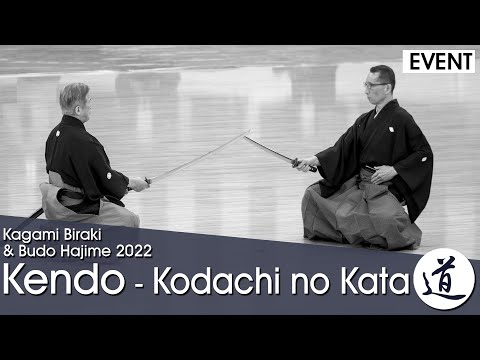
The path of Budo is a journey of constant refinement, a relentless pursuit of perfection etched into the very soul of the practitioner. Yet, how often do we truly delve beyond the familiar, the obvious, to unearth the profound nuances that lie dormant within the established forms? Today, we confront a demonstration that offers precisely this opportunity: the Kodachi no Kata presented at the 2022 Kagami Biraki and Budo Hajime. While the grandeur of the event at the Nippon Budokan is undeniable, the true essence lies not just in the spectacle, but in the philosophical underpinnings and the practical application of these ancient sword techniques. Are you prepared to look beyond the shine of the steel and understand the warrior's intent?

Table of Contents

The Legacy of Kagami Biraki: More Than Just a Ceremony

The Kagami Biraki, a ceremony whose name translates literally to "opening the mirror," is steeped in tradition, its origins tracing back to the Shogunate era. This is no mere historical reenactment; it is a living testament to the enduring spirit of Budo. When held at the revered Nippon Budokan in early January, it signifies more than the start of a new calendar year. It marks the Budo Hajime, the inaugural practice of the year, a symbolic cleansing and recommitment to the path of martial discipline.

The event itself is a multi-faceted affair:

  • Kagami Biraki: A historical reconstruction, often performed in full armor, bringing the past to life.
  • Budo Demonstrations: Showcasing the prowess and intricacies of the "nine official Budo," a curated selection of Japan's most respected martial disciplines.
  • Budo Hajime: The collective first practice of the year, where all attendees are invited to partake, fostering a sense of unity and shared endeavor.
  • Oshiruko kai: A traditional post-ceremony gathering, involving a sweet azuki bean soup with mochi. This symbolizes the sharing and breaking of the mochi used earlier in the ceremony.

It's noteworthy that, due to the exigencies of global health concerns, the Oshiruko kai was suspended. This highlights a crucial aspect of martial arts philosophy: adaptability. Even in tradition, there must be a pragmatic response to changing circumstances. However, the core demonstrations and the spirit of Budo Hajime endure, reminding us that the mirror we open reflects not just the past, but our commitment to the future of martial practice.

Deconstructing Kodachi no Kata: The Dual Sword Dance

The true subject of our focus today is the Kodachi no Kata, a two-person kata featuring a long sword (Tachi) against a short sword (Kodachi). In a world increasingly dominated by the straightforwardness of single-weapon combat or the brutal efficiency of modern combat sports like MMA, the concept of two distinct sword lengths being utilized against each other might seem archaic. Yet, this kata is a masterclass in strategy, timing, and understanding the inherent advantages and disadvantages of each weapon.

The dynamic of Tachi versus Kodachi is not merely about reach. It's a sophisticated interplay of:

  • Distance Management: The Kodachi user must close the distance to negate the reach of the Tachi, while the Tachi user must maintain distance to exploit their advantage.
  • Rhythm and Timing: A single mistimed movement, a hesitation, can be fatal. The kata teaches the practitioner to read their opponent's rhythm and strike at the opportune moment.
  • Adaptability: The Kodachi fighter must be agile and precise, often employing evasive maneuvers and rapid counter-attacks. The Tachi fighter needs power, control, and the ability to anticipate and block.

This isn't a simple exchange of blows; it's a complex dance of strategy and execution. The Kodachi no Kata forces a deeper consideration of weapon dynamics than many modern combat scenarios, demanding a level of nuanced understanding that is often overlooked.

"Every technique, every movement, should be a deliberate act, born from a clear mind and an unwavering spirit. Hesitation is the precursor to defeat."

Masters of the Blade: Toyomura Azumori & Kurita Waichiro

The skill displayed in the demonstration is amplified by the credentials of its performers. Toyomura Azumori, Hanshi 8th Dan, and Kurita Waichiro, also Hanshi 8th Dan, are not merely practitioners; they are custodians of Kendo's legacy. Their mastery of the blade, particularly in the intricate Kodachi no Kata, is a testament to decades of dedicated Martial Arts Training and a deep understanding of BUDO principles.

To witness a Hanshi 8th Dan perform is to see Budo in its purest form. Their movements are not just technically perfect; they are imbued with a spirit, a presence that transcends mere physical action. This is where the true depth of the Kendo art form is revealed. It’s about the Ki, the life force, channeled through the sword and directed with intention.

Budo Hajime: Forging the New Year's Spirit

The Budo Hajime, as part of the Kagami Biraki, is a crucial ritual. It’s an opportunity to shed the inertia of the year's end and embrace the fresh start with invigorated purpose. For practitioners of any artes marciales, the first practice of the year sets the tone. It’s a chance to recommit to:

  • Discipline: Reaffirming the commitment to regular training and self-control.
  • Focus: Sharpening the mind and preparing for the challenges ahead.
  • Community: Connecting with fellow practitioners and reinforcing the bonds of the Martial Arts Community.

The participation of all present in the Budo Hajime emphasizes that Budo is a shared path, not an individual pursuit. It fosters a sense of collective growth and mutual respect, essential components of any true Warrior Philosophy.

Symbolism and Philosophy: The Mirror and the Sword

The "opening of the mirror" is a powerful metaphor. The mirror, in many cultures, represents truth, self-reflection, and clarity. By opening it, we symbolically invite introspection and honest appraisal of our progress. In the context of Budo, this means critically examining our techniques, our mindset, and our adherence to the principles of the art.

The Kodachi no Kata itself adds layers to this symbolism. The contrast between the long and short sword can represent:

  • Opposing Forces: Yin and Yang, aggression and defense, offense and counter-offense.
  • Adaptability: The ability to transition between different strategies based on the opponent and the situation.
  • Inner Conflict: The internal struggle to balance different aspects of one's character or approach to conflict.

This kata, therefore, is not just a physical exercise; it's a philosophical dialogue conducted through movement and steel. It challenges the practitioner to find harmony within apparent opposition, a core tenet of many martial traditions.

Practical Application: Beyond the Dojo's Walls

While Kendo is a sport and an art form with its own specific rules and contexts, the principles embedded within the Kodachi no Kata hold relevance far beyond the practice of swordsmanship. Consider the world of Combat Sports or even Self Defense scenarios.

The ability to manage distance, to exploit an opponent's reach disadvantage, to time attacks with split-second precision, and to adapt one’s strategy on the fly are universally applicable skills. Even in non-physical confrontations, such as business negotiations or interpersonal conflicts, the underlying principles of reading the situation, managing emotional distance, and timing your response are critical for success.

The Kodachi no Kata, in its intricate portrayal of weapon dynamics, serves as a microcosm for strategic thinking in any competitive or challenging environment. It teaches us to be aware of not just our own strengths, but also the strengths and weaknesses of our perceived opposition, and how to leverage these factors to our advantage.

Equipment Essential for Your Training

To truly appreciate and engage with disciplines like Kendo, proper equipment is paramount. It not only ensures safety but also facilitates correct technique and immersion into the art.

  • Kendo Shinai: The bamboo sword used for practice. Essential for learning striking techniques and timing. Look for well-balanced shinai, suitable for your level. For Kodachi practice, specific smaller shinai might be used to simulate the short sword.
  • Kendo Bogu (Armor): This protective gear includes the men (helmet), kote (gloves), do (chest protector), and tare (hip protector). It is crucial for safe sparring and full-contact practice.
  • Kendo Gi and Hakama: Traditional martial arts attire providing freedom of movement and embodying the aesthetic of Budo. A sturdy, double-weave Karate gi can also serve for general martial arts conditioning and even some forms of unarmed combat training if a dedicated gi isn't available.
  • Kendo Tenugui: A towel worn under the men to absorb sweat and provide a cushion.

Investing in quality Martial Arts Merchandise is not an extravagance; it is a commitment to your training and safety. For those interested in exploring sword arts beyond Kendo, books on historical swordsmanship or even high-quality bokken (wooden swords) for unarmored kata practice can be invaluable.

Veredict of the Sensei: A Testament to Depth

The Kagami Biraki demonstration of the Kodachi no Kata, performed by Toyomura Azumori and Kurita Waichiro, is a powerful reminder that martial arts are living traditions, rich with layers of meaning and application. It is not merely about executing movements; it is about embodying principles.

This demonstration, though specific to Kendo, offers profound lessons for practitioners of all disciplines, from Judo and Aikido to Karate Kyokushin and MMA. The understanding of weapon dynamics, distance, timing, and adaptability showcased here is timeless.

Rating: 5 out of 5 Katanas. A must-watch for anyone seeking to understand the deeper currents of Budo.

Frequently Asked Questions

What is the main difference between Tachi and Kodachi in Kendo?
The Tachi is the longer, standard length sword, offering greater reach and power. The Kodachi is a shorter sword, designed for closer combat, rapid strikes, and defensive maneuvers when space is limited.
Is Kodachi no Kata a form of self-defense?
While originating from samurai combat, the Kodachi no Kata is a pre-arranged sequence (kata) designed for training specific principles and techniques. Its underlying principles of timing, distance, and adaptation are highly relevant to self-defense.
What does "Hanshi 8th Dan" signify?
Hanshi is an honorific title awarded to highly skilled and experienced martial artists, typically 8th Dan or higher. It signifies a master level, acknowledging not just technical proficiency but also deep understanding and contribution to the art.
Can I practice Kodachi without a formal Kendo dojo?
Practicing the kata's movements can be done with practice swords (shinai or bokken). However, for safety and correct instruction, learning from a qualified Kendo instructor is highly recommended, especially when incorporating armor and full-speed drills.

Deepen Your Path

The journey into the heart of martial arts is a lifelong endeavor. The Kodachi no Kata demonstration is but one facet of this vast world. To continue your exploration and refine your understanding, consider delving into these related topics:

Reflexión del Sensei: Tu Próximo Paso

You have witnessed a demonstration of profound skill and ancient wisdom. Now, the mirror is open. Does the clash of the long sword against the short sword echo a conflict within your own training? Are you too focused on one aspect, neglecting the complementary strengths that could make you a more complete warrior? Or do you, like the Kodachi, find yourself needing to close the distance to truly understand and overcome your challenges?

Reflect on this: When faced with a seemingly superior force or technique, do you instinctively retreat, or do you seek the angle, the timing, the closing of distance that will turn their strength into your advantage? The answer lies not in the sword you wield, but in the mind that guides it. Now, I ask you: What is the "Kodachi" in your own life, and how will you use it to master the "Tachi" of your greatest challenges?

``` GEMINI_METADESC: Uncover the secrets of Kendo's Kodachi no Kata at Kagami Biraki 2022. Explore Budo traditions, masterful techniques, and practical applications for martial artists.

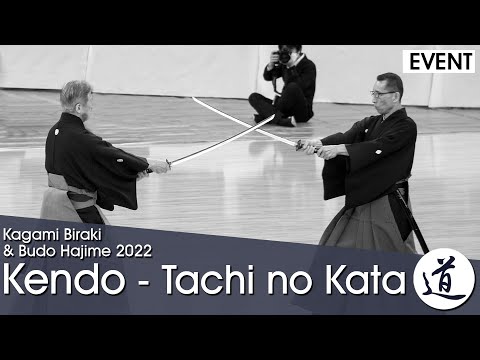
Kendo's Silent Blade: Deconstructing the Tachi no Kata Kagami Biraki 2022

As a Sensei, I’ve witnessed countless demonstrations, each a fleeting glimpse into the profound depth of martial traditions. Yet, some moments resonate with an intensity that demands deeper analysis. The Kagami Biraki 2022 Kendo demonstration at the Nippon Budokan, featuring Toyomura Azumori and Kurita Waichiro, is one such moment. It’s not merely a display of swordsmanship; it’s a philosophical dialogue executed with steel, a testament to the enduring spirit of Budo. This isn't about flashy moves designed to entertain the masses, but about the meticulous execution of form, the embodiment of principles forged over centuries. Today, we delve into the essence of this demonstration, dissecting its technical brilliance and its spiritual significance, going far beyond what a casual viewer might perceive.

Table of Contents

The Sacred Dance: Kagami Biraki and Budo Hajime

The Kagami Biraki, or "opening the mirror," is far more than a simple New Year's tradition. It symbolizes a renewed clarity, a shedding of the old to embrace the new with a purified spirit. When this ceremony is intrinsically linked with Budo Hajime, the "first practice of the year," it elevates the act of training from a mere physical pursuit to a spiritual undertaking. The Nippon Budokan, a hallowed ground for Japanese martial arts, serves as the perfect stage for this convergence. Here, amidst the echoes of history, masters Toyomura Azumori and Kurita Waichiro, both Hanshi 8th Dan – the pinnacle of their respective arts – present the Tachi no Kata. This isn't just a demonstration; it's a living testament to the tradition, a visual sermon on the principles of Kendo. The absence of Oshiruko, the traditional sweet soup, due to sanitary concerns, highlights the adaptability of Budo in the face of modern challenges, a testament to its resilience and its focus on what truly matters.

Echoes of the Shogunate: The Genesis of Kagami Biraki

To truly appreciate the Kagami Biraki, one must understand its historical roots, deeply entwined with the feudal era of Japan. The Shogunate era was a time when martial prowess was not just a skill but a way of life, a defining characteristic of the samurai class. The "opening of the mirror" held symbolic significance, often tied to rituals that cleansed and renewed the spirit before embarking on new endeavors, much like a warrior preparing for battle or a leader for a new campaign. This historical context imbues the Budo Hajime with a weight that transcends mere physical exertion. It’s a recommitment to the warrior's path, a reaffirmation of the discipline, honor, and self-mastery that are the cornerstones of any true martial art. The reconstruction in armor during the ceremony is not a theatrical flourish; it’s a visceral reminder of the martial heritage that Budo seeks to preserve and perpetuate.

Tachi no Kata: A Masterclass in Long Sword Dynamics

The Tachi no Kata, demonstrating the use of the long sword (tachi), is a foundational element within Kendo. It's not about sparring; it's about the perfection of fundamental techniques, the embodiment of correct posture, movement, and striking. Toyomura Azumori and Kurita Waichiro, with their 8th Dan ranks, showcase a level of precision and control that is breathtaking. Observe their footwork: the *ashi sabaki*. It's not just about moving from point A to point B. Each step is economical, powerful, and balanced, generating momentum that flows seamlessly into the strike. Their posture is erect yet relaxed, a testament to years of dedicated training. The sword itself is an extension of their will. The cuts – *suburi* and the specific forms within the kata – are executed with a clear intent, a decisive spirit. One can discern the principles of *maai* (distance), *metsuke* (gaze), and *kiai* (spirit's cry, though often subtle in kata). The interaction between the two masters is a silent conversation, a dance of mutual respect and understanding. One advances, the other retreats or blocks, not out of fear, but out of a deep comprehension of the forms and the energy flow. This kata is a blueprint, a teaching tool that distills the essence of swordsmanship into its purest form. It's in these seemingly simple movements that the complexity and beauty of Kendo lie.
"The true swordsman does not fear the sword; he *is* the sword." - A principle often passed down through generations of Kendo masters.

The Spirit of the Sword: Mushin and Zanshin in Motion

Beyond the physical execution, the Tachi no Kata embodies profound philosophical concepts central to Budo. The concept of *Mushin* – "no mind" – is paramount. It's a state of un-self-consciousness, where the mind is free from distracting thoughts and emotions, allowing instinct and training to take over. In the flawless movements of Toyomura and Kurita, we see *Mushin* in action. Their actions are pure, unadulterated by doubt or hesitation. Equally crucial is *Zanshin*, the state of continuous awareness and readiness. Even after a strike is completed, the Kenshi must maintain their focus, aware of their surroundings and prepared for any eventuality. This is not just about the end of a sequence; it's about the perpetual state of alertness. In the demonstration, even as the swords are lowered, the masters' posture, their gaze, speaks volumes about their unwavering *Zanshin*. It’s a reminder that in the martial path, the learning and the vigilance never truly cease. This demonstration is a powerful argument against the notion that traditional martial arts are obsolete. The principles of focus, discipline, and spiritual development cultivated through forms like the Tachi no Kata are timeless and transferable to any arena of life, be it a modern MMA bout or the challenges of daily existence.

Veredict of the Sensei: More Than Just a Sword Fight

The Kagami Biraki 2022 Kendo demonstration by Toyomura Azumori and Kurita Waichiro is a profound exhibition of martial artistry. It’s a masterclass in the execution of the Tachi no Kata, showcasing not only technical perfection but also the deep philosophical underpinnings of Kendo. **Technical Proficiency**: 10/10 – The precision, balance, and power displayed by both Hanshi are exemplary. Every movement is deliberate and imbued with intent. **Philosophical Embodiment**: 10/10 – The demonstration is a living embodiment of Mushin and Zanshin, demonstrating the spiritual core of Budo. **Educational Value**: 9/10 – While a beginner might find it hard to grasp the nuances without guidance, for anyone with a foundation in martial arts, this is an invaluable lesson. **Overall Impact**: 9.5/10 – A powerful reminder of the beauty, discipline, and depth inherent in traditional martial arts. This demonstration isn't just about swords; it's about the cultivation of the self through rigorous practice. It underscores the fact that even in an era dominated by Artes Marciales Mixtas and rapid combat, the slow, deliberate refinement of form holds immense value. It teaches patience, control, and a deep respect for tradition – lessons that are as vital today as they were centuries ago.

Essential Equipment for the Aspiring Kenshi

To embark on the path of Kendo, specific equipment is necessary to train safely and effectively. Investing in quality gear is crucial for both performance and injury prevention.
  • Shinai (Bamboo Sword): The primary training tool. Beginners typically start with a standard size and weight.
  • Bokken (Wooden Sword): Used for practicing basic forms (kata) and for more forceful striking drills where the shinai might break.
  • Kendo Gi (Uniform): A specialized, durable cotton uniform consisting of a jacket and trousers, designed to withstand the rigors of training.
  • Hakama: The traditional pleated skirt-like trousers worn over the gi, signifying a more advanced level of practice or for specific ceremonies.
  • Men (Helmet): The protective headgear, including a metal grille, padded forehead, and throat protector.
  • Do (Chest Protector): A hard, lacquered protector for the torso.
  • Kote (Gloves): Padded gloves providing protection for the hands and wrists.
  • Tare (Waist Protector): A padded apron-like protector worn around the waist and hips, often with decorative cords.
For those serious about Kendo, consider exploring specialized KarateMerchandise sites that often carry Kendo equipment, or look for reputable Kendo equipment suppliers. A good quality Kendo set is an investment in your martial journey.

Resources to Deepen Your Kendo Journey

The path of the sword is long and requires continuous learning. To truly understand the depths of Kendo, beyond what a single demonstration can offer, explore these resources:
  • BUDO & Kendo History: Delve into the historical context and evolution of Japanese martial arts.
  • Technique Breakdowns: Seek out detailed analyses of specific Kendo techniques and katas.
  • Martial Arts Philosophy: Explore texts and discussions on principles like Mushin, Zanshin, and the broader Warrior Philosophy.

Frequently Asked Questions

Q1: What is the main difference between Tachi no Kata and sparring in Kendo? A1: Tachi no Kata focuses on the precise execution of fundamental forms and techniques with a partner, emphasizing correct posture, movement, and spirit. Sparring (Ji-geiko) is about applying these techniques in a dynamic, unscripted exchange with an opponent, aiming to score valid points. Q2: Is Kendo dangerous given the use of swords? A2: While "swords" (shinai and bokken) are used, Kendo is practiced with extensive protective gear (Men, Do, Kote, Tare) and under strict supervision. The emphasis is on controlled strikes to specific target areas, making it a safe martial art when practiced correctly. Q3: How long does it take to become proficient in Kendo? A3: Proficiency in Kendo is a lifelong pursuit. Basic competency and understanding of forms can be achieved within a few years of consistent training, but mastery, as exemplified by Hanshi 8th Dan practitioners, takes decades of dedicated practice. Q4: What does "Hanshi 8th Dan" signify in Kendo? A4: Hanshi is an honorific title denoting a high level of mastery and significant contribution to the art. 8th Dan is typically the highest dan rank in many Kendo organizations, signifying an exceptional level of skill, knowledge, and embodiment of Kendo principles.

Sensei's Reflection: Your Next Step

The Kagami Biraki demonstration offers a profound glimpse into the heart of Kendo. It’s a testament to the power of tradition, the discipline of form, and the enduring pursuit of self-mastery through the way of the sword. We’ve dissected the techniques, explored the philosophy, and understood the context. But knowledge without application is like a sword without an edge.

Reflexión del Sensei: Tu Próximo Paso

As you contemplate the elegant, powerful movements of Toyomura Azumori and Kurita Waichiro, I ask you this: When you face your own "mirror" – your challenges, your training, your daily life – do you see clarity and readiness, or do you see hesitation and distraction? How will you cultivate your own *Mushin* and *Zanshin* not just on the training floor, but in every moment? The answer lies not in contemplation alone, but in committed action. What single, deliberate step will you take today to sharpen your own blade? --- CREDITS: Footage by Seido Co., Ltd.: https://ift.tt/41pfg73 (en) https://ift.tt/Fn93JL7 (fr) https://ift.tt/1zVBxJ7 (jp) https://ift.tt/AqNd0hT (en) https://ift.tt/RNEi1Pl (fr) MUSIC: Future Gladiator by Kevin MacLeod Link: https://ift.tt/5mjg6yi License: https://ift.tt/tAp96Ks Original source: [Original Source Link/Information - if available] GEMINI_METADESC: Explore the profound Kendo Tachi no Kata demonstration at Kagami Biraki 2022. Sensei analyzes technique, history, and philosophy.

The Philosophy of the Empty Hand: Decoding the Essence of Karate-Do

The Unseen Battlefield

The clang of weapons, the thud of leather on a heavy bag, the roar of a crowd – these are the external manifestations of combat. But what of the battlefield within? The true martial artist understands that the most significant struggles are often fought in the silent arena of the mind. This is especially true in the contemplative yet explosive world of Karate-Do, an art that, at its core, transcends mere physical confrontation. Today, we embark on a journey not to simply dissect punches and kicks, but to delve into the profound philosophy that makes Karate-Do a lifelong pursuit.

Beyond the Punch: The True Meaning of Karate-Do

The term "Karate-Do" itself offers our first clue: "Kara" (empty), "Te" (hand), and "Do" (way). So, the "Way of the Empty Hand." But what does this "emptiness" signify? Is it a literal absence of weapons, or something far more profound? I have seen countless practitioners, their hands laden with technique, yet their minds cluttered with ego and distraction. True Karate-Do, as taught by the masters of old, begins when the practitioner's hands are literally and metaphorically empty – devoid of malice, anger, and selfish desire. It is in this state of "Mushin" (no-mind) that the practitioner can react with unparalleled clarity and effectiveness.

"Karate is a lifetime study. The goal is not to win, but to perfect one's character." - Gichin Funakoshi

Many modern interpretations, unfortunately, focus solely on the "Te" – the physical techniques. They pursue knockout power and competitive victory, often at the expense of the "Do," the spiritual and ethical development. This is a critical misunderstanding, a common pitfall for those seeking superficial gains. The true intent of Karate-Do lies in self-improvement, in cultivating discipline, respect, and humility. The techniques are merely the vehicle, the tools to achieve a higher state of being.

The Pillars of the Empty Hand

Karate-Do is built upon a foundation of interconnected principles, each vital to the practitioner's growth. These aren't just abstract concepts; they are guiding forces that shape the very execution of a technique. Let us examine them:

  • Seiryoku Zenyo (Maximum Efficiency, Minimum Effort): This principle, famously associated with Jigoro Kano of Judo but deeply ingrained in Karate, emphasizes using an opponent's force against them, and achieving the desired outcome with the least amount of energy expenditure. It’s about leverage, timing, and understanding physics – not brute strength alone.
  • Jita Kyoei (Mutual Welfare and Benefit): This tenet underscores the importance of harmonious relationships and contributing to the well-being of society. In the dojo, it translates to respecting your training partners, helping them grow, and understanding that your progress is intertwined with theirs. It’s the antithesis of cutthroat competition detached from ethical considerations.
  • Zanshin (Remaining Mind/Awareness): After a technique is executed, the fight is not necessarily over. Zanshin is the state of continued awareness, a readiness to react to any subsequent threat. It’s about maintaining focus and vigilance, even in moments of perceived victory. Think of the boxer who has landed a blow but remains defensively aware of their opponent's counter.
  • Mushin (No Mind): As mentioned earlier, this is the state of being free from distracting thoughts – fear, anger, doubt, or even the thought of victory. It is a state of pure presence, allowing for instinctive, uninhibited action. It is the ultimate goal, a state of flowing with the moment.
  • Fudoshin (Immovable Mind): While Mushin is about an absence of thought, Fudoshin is about an unwavering mental fortitude. It is the calm, centered mind that cannot be shaken by adversity, fear, or surprise. A practitioner with Fudoshin stands firm, mentally and physically, regardless of the circumstances.

Kata: The Moving Meditation

For those unfamiliar with Karate, kata can appear as a series of stylized, almost dance-like movements. But to the seasoned practitioner, kata are intricate maps of combat, repositories of ancient wisdom passed down through generations. Each sequence, each block, each strike, and each stance within a kata tells a story of self-defense against imaginary opponents.

The practice of kata is a profound form of moving meditation. It demands meticulous attention to detail: precise footwork, correct breathing (Ibuki or Nogare), balance, and power generation (Kime). Performing a kata with mindfulness, focusing on the intent behind each movement, purifies the mind. It trains the body to execute techniques instinctively, preparing it for the sudden demands of a real confrontation. The repetition, the rigor, the deep concentration required – these elements strip away mental clutter, fostering the very principles of Zanshin and Mushin we discussed.

Consider the famous kata Bassai Dai. It's not just a series of movements; it's a simulated battle against multiple attackers, a test of evasion, parrying, striking, and maintaining composure under pressure. When practiced correctly, with the spirit of a true warrior, it becomes a powerful tool for self-discovery.

Bushido's Echo: The Warrior's Heart

Karate-Do, while originating in Okinawa with Chinese influences, shares a profound lineage with the samurai code of Bushido. The "Way of the Warrior" is not merely about fighting prowess; it is about integrity, loyalty, courage, and self-control. The ethical framework of Bushido is intrinsically linked to the philosophy of Karate-Do.

"There are no winners in Karate, only learners." - Mas Oyama

The emphasis on respect for the sensei and training partners, the strict etiquette within the dojo, the dedication to constant self-improvement – these are all echoes of the samurai spirit. A true martial artist, like a true samurai, understands that strength without character is a dangerous, ultimately destructive force. The pursuit of martial perfection is, therefore, inseparable from the pursuit of moral perfection. This ethical dimension is what elevates Karate-Do from a mere combat system to a path of life-long character development.

Mastering the Fundamentals: A Practical Approach

To embody the philosophy of Karate-Do, diligent practice of the fundamentals is paramount. Forget the flashy techniques seen in movies for a moment; true mastery lies in perfecting the basics. Here’s a structured approach:

  1. Stances (Dachi): Begin with a solid foundation. Practice Zenkutsu-dachi (forward stance), Kokutsu-dachi (back stance), Kiba-dachi (horse stance), and Nekoashi-dachi (cat stance). Focus on weight distribution, hip rotation, and maintaining a low center of gravity. Ensure your stances are stable and balanced.
  2. Basic Strikes (Tsuki/Uchi): Master the straight punch (Choku-zuki), reverse punch (Gyaku-zuki), and punches from various stances. Practice circular strikes (Mawashi-uchi) and hammer fists (Oroshi gan). Emphasize hip rotation for power and retraction of the supporting hand (Hikite) for balance and speed.
  3. Blocks (Uke): Develop strong defensive techniques. Practice Gedan-barai (down block), Jodan-uke (upper block), Soto-uke (outside block), and Uchi-uke (inside block). Focus on the sharpness of the block, the transition from readiness to execution, and maintaining a strong structure.
  4. Kicks (Keri): Start with foundational kicks like Mae-geri (front kick), Mawashi-geri (roundhouse kick), and Yoko-geri (side kick). Prioritize proper chambering of the knee, hip rotation, and extending the kick with control. Speed and precision are key, not just power.
  5. Kata Practice: Regularly practice your assigned kata, focusing on understanding the application (Bunkai) of each movement. Don't just go through the motions; visualize the opponent, feel the intent behind each action.
  6. Sparring (Kumite): Gradually engage in controlled sparring. This is where theory meets practice. Focus on timing, distance, recognizing opportunities, and applying techniques learned. Remember Jita Kyoei – spar with respect for your partner.

Consistency is the bedrock of progress. Aim for focused, quality training sessions over sporadic, intense bursts. Even 20-30 minutes of dedicated practice daily can yield significant results.

Essential Gear for Your Training Journey

While Karate-Do is an art of the "empty hand," proper equipment can significantly enhance your training safety and effectiveness. Investing in quality gear is a commitment to your practice.

  • Karategi (Uniform): A durable, well-fitting Karategi is essential. For beginners, a standard cotton uniform is sufficient. As you progress, consider a heavier, double-weave fabric for enhanced durability and presence during kata and kumite. Brands known for quality include Warrior Gear and Budo Supply.
  • Belt (Obi): Your belt signifies your rank and dedication. Ensure it is securely tied and appropriately colored for your level.
  • Protective Gear (for Kumite): For sparring, essential protective gear includes:
    • Mouthguard: Absolutely critical for preventing dental injuries.
    • Groin Protector: A non-negotiable item for male practitioners.
    • Hand Mitts (Kumite Gloves): Lightly padded gloves designed for kumite to protect knuckles and reduce impact.
    • Foot Protectors: Optional but recommended for added foot safety.
    • Chest Protector (WKF Approved): Mandatory for official competitions and highly recommended for intense sparring sessions.
  • Training Mats (Optional): If you are training at home, especially for grappling or falling techniques, consider investing in interlocking foam mats for safety.

Remember to always consult your dojo's specific requirements regarding equipment.

Sensei's Verdict: Is Karate-Do Still Relevant?

In an era dominated by MMA, where brute force and explosive athleticism often steal the spotlight, one might question the relevance of traditional Karate-Do. My answer is an emphatic **yes**. While the competitive landscape has evolved, the core principles of Karate-Do – discipline, self-control, respect, and the pursuit of character perfection – are more critical than ever. The ability to remain calm under pressure (Fudoshin), to act with presence and awareness (Zanshin and Mushin), and to employ efficiency over brute force (Seiryoku Zenyo) are universally applicable skills, far beyond the confines of a dojo.

Karate-Do, when practiced with the right intention, is not about fighting; it is about forging the self. It teaches you to overcome your own limitations, to face adversity with grace, and to contribute positively to the world. The techniques are a means to an end: the cultivation of a strong, ethical, and resilient individual. Therefore, Karate-Do is not just relevant; it is essential for navigating the complexities of modern life.

Cinturón Negro en Sabiduría Marcial.

Frequently Asked Questions

  • What is the main difference between Karate and other martial arts like Judo or Taekwondo?
    While all martial arts share common goals of self-improvement, Karate-Do primarily focuses on striking techniques using hands and feet, emphasizing linear movements and strong stances. Judo focuses on throws and grappling, while Taekwondo is renowned for its dynamic kicking techniques. The underlying philosophy, however, often converges on discipline and respect.
  • Do I need to be naturally athletic to start Karate?
    Absolutely not. Karate-Do is designed for individuals of all ages and physical conditions. The training process builds strength, flexibility, and coordination over time. The journey begins with the fundamentals, not with pre-existing athletic prowess.
  • Is Karate-Do useful for self-defense?
    Yes, but with an important caveat. Traditional Karate-Do teaches effective striking and defensive principles. However, real-world self-defense requires adapting these techniques to unpredictable situations and often involves de-escalation and awareness, aspects that are honed through consistent practice and the development of Zanshin and Fudoshin.
  • How long does it take to become a black belt?
    The time frame varies significantly depending on the style, the school, the individual's dedication, and the frequency of training. Typically, reaching the Shodan (first-degree black belt) level takes anywhere from 3 to 5 years of consistent, dedicated practice.

Deepen Your Understanding

The journey of martial arts is one of continuous learning. To further enrich your understanding of these profound disciplines, explore these related topics:

Reflexión del Sensei: Tu Próximo Paso

Have you truly emptied your hands, or are they still grasping at ego, at perceived victory, at the fleeting recognition of others? The essence of Karate-Do is not found in the perfection of a technique, but in the perfection of the self. This path is relentless, demanding honesty, perseverance, and a willingness to confront your own weaknesses with the same courage you would face an opponent. So, I ask you:

When you bow at the end of your next training session, will it be an empty gesture, or a sincere acknowledgment of the lessons learned and the commitment to continue your evolution?

``` GEMINI_METADESC: Explore the philosophical depth of Karate-Do, from the 'empty hand' meaning to principles like Mushin, Zanshin, and the ethical warrior code. Master fundamentals for self-improvement.

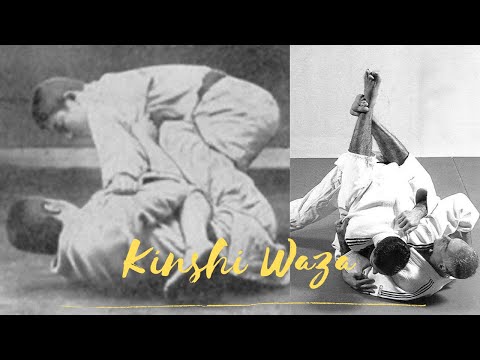
The Forbidden Techniques of Judo: Kinshi Waza - A Martial Master's Critique

Introduction: The Shadow Side of Kodokan

Ah, Judo. The Gentle Way. A path of discipline, respect, and physical prowess that has captivated minds and bodies for over a century. But like any martial art with a deep, complex history, Judo also possesses a hidden dimension, a set of techniques so potent, so dangerous, that the very founders of Kodokan deemed them too perilous for regular practice. These are the Kinshi Waza (禁止技), the forbidden techniques. Today, we delve into this controversial aspect, not merely to catalog them, but to understand the *why* behind their prohibition and what they teach us about the very essence of Budo. Do you truly understand Judo if you ignore its shadows?

Unveiling the Four Kinshi Waza

The Kodokan officially recognizes four categories of forbidden techniques, often presented as a list that sparks both curiosity and unease among practitioners. These are:

  • Kansetsu-waza (関節技): Joint locks, specifically those that hyperextend or twist joints beyond their natural range of motion. While some basic joint locks are part of Judo's Nage-waza (throwing techniques) and Katame-waza (grappling techniques), the Kinshi versions often involve extreme leverage or target critical points of structural integrity in the limbs.
  • Shime-waza (絞技): Strangles and chokeholds. Again, Judo incorporates various chokeholds (e.g., Hadaka-jime, Okuri-eri-jime). The forbidden ones, however, are those that apply pressure to arteries and nerves in ways that can lead to rapid unconsciousness or even permanent damage if not released instantaneously.
  • Atemi-waza (当身技): Striking techniques. This is perhaps the most glaring omission from modern Judo competition. While striking is the core of many martial arts like Karate or Taekwondo, it is largely absent from standard Judo practice. The forbidden Atemi-waza would include kicks, punches, elbow strikes, and knee strikes aimed at vital areas, meant to incapacitate an opponent before or during a throw.
  • Kuzushi-waza (崩し技) and Kakari-geiko (掛稽古) variations: This category is more nuanced. It refers to certain extreme off-balancing techniques or continuous attacking drills that, when combined with the other forbidden methods, become extraordinarily dangerous. Think of techniques designed to violently break an opponent's posture in a way that guarantees injury upon falling, or persistent, aggressive attacks that leave no room for the opponent to defend themselves safely.

The distinction is crucial: Judo contains dangerous techniques, but the Kinshi Waza are those deemed too inherently destructive for safe, widespread learning and application within the dojo setting.

Mechanical Mastery: Why These Techniques Are Forbidden

Let's dissect the mechanics. What makes these techniques so much more hazardous? It's about leverage, speed, and anatomical vulnerability.

Consider Kansetsu-waza. A standard Judo armbar, the Ude-garami, relies on breaking the opponent's posture and isolating an arm. However, a forbidden variation might involve applying torque directly to the elbow joint in a way that bypasses the natural resistance and forces a painful tear of the ligaments. It's the difference between a controlled submission and a violent rupture.

"In the pursuit of efficiency, we must never sacrifice safety. A technique that guarantees injury is not a technique of enlightenment, but one of destruction." - A quote attributed to Kano Jigoro's disciples, reflecting the spirit of prohibition.

Regarding Shime-waza, the danger lies in the speed of effect. Certain chokes can cut off blood flow to the brain almost instantly, leading to unconsciousness in seconds. While this can be a decisive element in a submission, the margin for error is minuscule. A slight over-application, a delayed tap, or an opponent's inability to react can lead to severe brain damage or death. The forbidden techniques often achieve this effect through methods that are harder to control once applied.

And then there's Atemi-waza. This is where Judo diverges most sharply from many other martial arts. The philosophy of Kodokan, as initially conceived by Kano, was to promote physical and moral development through safe practice. Incorporating strikes, especially those aimed at vulnerable targets like the eyes, throat, or groin, fundamentally changes the nature of the practice. Such techniques are inherently designed to inflict harm and can easily lead to career-ending injuries or worse, making sparring extremely hazardous and shifting the focus from control and technique to brute force and pain.

Historical Echoes: The Roots of Prohibition

The prohibition of these techniques wasn't arbitrary. It was a deliberate act by Kano Jigoro, the founder of Judo, to shape the art into a path for physical, intellectual, and moral development (Seiryoku Zenyo - maximum efficiency, minimum effort; Jita Kyoei - mutual welfare and benefit). Kano studied various Koryu (old schools of Japanese martial arts), including Jujutsu styles that were often battlefield-oriented and included lethal techniques. He recognized that to create a martial art suitable for modern education and sport, these elements had to be excised.

Judo was intended to be practiced by people of all ages and backgrounds. Techniques that could easily cause permanent injury or death were incompatible with this vision. The goal was to create a system that taught effective self-defense and combat principles while minimizing the risk of severe harm, thereby allowing for more frequent and intense practice, leading to greater skill development and character building.

It’s a testament to Kano’s foresight. He understood that a martial art that *can* kill can also easily maim. By removing the most destructive elements, he made Judo accessible and fostered its growth into a global Olympic sport. This decision, however, is often misunderstood by those who see Judo solely as a sport, failing to appreciate its roots as a combative system.

The Dojo's Dilemma: Training and Application

So, what does this mean for the modern Judo practitioner? Are we to simply ignore these techniques? Not entirely. The Kinshi Waza are preserved in the Koryu no Kata (forms of the old school), such as the Kime no Kata (Forms for Deciding Life and Death) and the Juno Kata (Gentle Kata). These kata serve as a historical record and a way to understand the full spectrum of Judo's combative applications without endangering students in regular randori (free practice).

"To understand the root, one must sometimes examine the soil from which it grew, even if that soil was littered with thorns." - A martial aphorism on historical context.

Practicing these kata provides invaluable insight into balance breaking, kuzushi, and the underlying principles of Judo. It teaches the practitioner about the critical points of the body and the devastating potential of certain movements. However, this is typically done under the strict guidance of a highly experienced instructor, emphasizing control and understanding over aggressive execution.

The debate often arises: should some of these techniques, particularly joint locks and controlled striking (like Renraku Waza – combination techniques), be reintroduced into Judo competition? Proponents argue it would make Judo more complete, resembling systems like MMA. Critics counter that it would fundamentally alter the art, increase injury rates, and move away from Kano’s original intent. This is where the polemic lies.

Veredicto del Sensei: ¿Merece la pena?

The study of Kinshi Waza is absolutely essential for any serious Judo practitioner aiming for true mastery. It's not about learning to execute forbidden techniques to harm your opponents outside the dojo; it's about understanding the *complete* art of Judo, its historical context, and the profound philosophical decisions made by its founder. These techniques, when studied through kata and theoretical understanding, illuminate the principles of balance, leverage, and anatomical vulnerability in ways that standard randori cannot. They are a stark reminder of the responsibility that comes with martial skill.

Coreografía y Autenticidad: Cinturón Negro en Conocimiento Histórico. La representación de las Kinshi Waza se encuentra en los Kata, que son la esencia de la aplicación marcial más allá del deporte. Entenderlas es entender la profundidad marcial completa del Judo.

Filosofía Marcial: Maestro de Budo. El estudio de las Kinshi Waza es un ejercicio de discernimiento filosófico: cuándo aplicar la fuerza, cuándo la contención, y la responsabilidad inherente a cada acción.

Impacto y Legado: Legado de Kano. La decisión de prohibir estas técnicas no debilitó al Judo, sino que lo fortaleció como herramienta educativa y deporte global, demostrando la visión a largo plazo de Kano Jigoro.

Guía de Entrenamiento: The Spirit of Kinshi Waza

While direct practice of Kinshi Waza is restricted, we can train their underlying principles safely:

  1. Deepen Your Kata Practice: Focus intensely on the Koryu no Kata. Pay attention to the precise angles, the timing, and the intended outcome of each movement. Visualize the application without physically executing the dangerous aspects.
  2. Study Anatomy and Biomechanics: Understanding how the human body works – its strengths and weaknesses – is crucial. Learn about joint structure, muscle groups, and nerve pathways. This knowledge, gained from reputable sources, will enhance your understanding of why certain techniques are dangerous.
  3. Refine Your Fundamentals (Kihon): Master the basic throws (Nage-waza) and grappling techniques (Katame-waza). Strong fundamentals provide the foundation upon which more complex and potentially dangerous applications are built. This includes perfecting your kuzushi (off-balancing) and tsukuri (entry).
  4. Sparring with Intent (Randori): Engage in randori with a focus on control and learning, not just winning. Practice applying techniques with precision and awareness of your partner's safety. Emphasize smooth transitions and understanding your opponent's reactions.
  5. Mindfulness and Control: Cultivate mental discipline. Before executing any technique, especially in sparring, ask yourself: "What is my intention? What is the safest way to achieve this outcome? What is my partner's physical state?" This mental check is the essence of responsible martial practice.

Equipo Esencial para tu Entrenamiento de Judo

While direct training of Kinshi Waza is limited, a solid foundation in Judo requires proper equipment. Investing in good quality gear not only enhances your training experience but also contributes to safety.

  • Judogi: A high-quality Judo uniform (gi) is paramount. Look for uniforms made from durable, double-woven cotton, often referred to as heavyweight or competition-grade. Brands like Mizuno or Adidas offer excellent options. Ensure it fits properly – not too loose to give opponents easy grips, and not too tight to restrict movement. For advanced practitioners and those focusing on grappling, a gi with excellent fabric weight and reinforced stitching is ideal.
  • Belts (Obi): A sturdy belt that stays tied is crucial. Higher ranks often use belts with red stripes to signify advanced status.
  • Matting (Tatami): While not something you typically buy for personal use (usually provided by the dojo), understanding the importance of proper judo mats is key. They are designed to absorb impact and prevent injuries from falls.
  • Mouthguard: For sparring (randori), especially if you're exploring more dynamic scenarios or have reached a level where controlled application of certain techniques is practiced, a custom-fitted mouthguard is a wise investment to protect your teeth and jaw.
  • First-Aid Kit: Always have a well-stocked first-aid kit readily available at the dojo for minor injuries.

When looking for the best kimonos de judo or judo equipment, always prioritize durability and safety. Remember, your gear is an extension of your training.

Preguntas Frecuentes

What are the four forbidden techniques in Judo?

The four categories are specific forms of joint locks (Kansetsu-waza), strangles/chokes (Shime-waza), striking techniques (Atemi-waza), and certain extreme off-balancing or continuous attack variations that are deemed too dangerous for regular practice.

Are Kinshi Waza still practiced?

Yes, but primarily within the context of historical kata (forms), such as the Koryu no Kata, under strict supervision. They are not part of standard Judo competition or randori.

Why were these techniques forbidden in Judo?

Judo's founder, Kano Jigoro, aimed to create a martial art for education and moral development. Forbidden techniques were removed to minimize the risk of severe injury or death, allowing for safer, more widespread practice and the art's evolution into a sport.

Can studying forbidden techniques make me a better Judoka?

Studying the principles behind them through kata and theoretical understanding can deepen your comprehension of Judo's combative applications and the importance of control and responsibility, thus making you a more well-rounded and knowledgeable practitioner.

Is Judo dangerous?

Like all martial arts and contact sports, Judo carries inherent risks. However, by prohibiting the most dangerous techniques and emphasizing safety, control, and respect, Kano Jigoro significantly mitigated these risks, making Judo one of the safer martial arts for regular practice.

Para Profundizar en tu Camino

Reflexión del Sensei: Tu Próximo Paso

The study of Kinshi Waza is not about embracing danger, but about understanding the full spectrum of a martial art and the wisdom behind its evolution. It’s a lesson in responsibility, control, and the philosophical choices that shape discipline. Now, I ask you:

If Judo, in its quest for safety and inclusivity, removed its most dangerous elements, does it lose a part of its soul? Or does it find a truer, more profound strength in its restraint?

Debate. Reflect. And demonstrate your understanding in the comments below.

``` GEMINI_METADESC: Explora las técnicas prohibidas (Kinshi Waza) del Judo, su historia, mecánica y por qué son cruciales para entender la profundidad del Budo, desde la perspectiva de un Sensei.

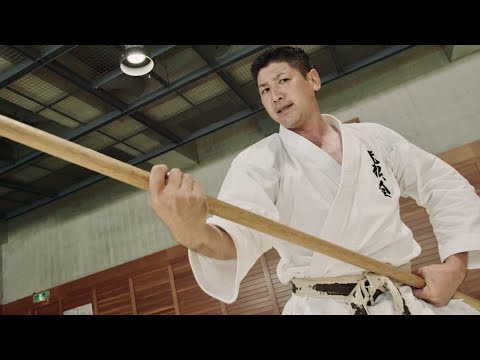
Master the Bo Staff: An Okinawa Bo-Jutsu Masterclass

Why do we, practitioners of the martial arts, dedicate ourselves to the seemingly archaic study of weapons like the bo staff? Is it merely a nostalgic echo of ancient battles, or does it hold a deeper, more relevant significance for the modern warrior? Many dismiss these traditional weapon arts as relics, unfit for the brutal realities of contemporary conflict. They ask, "Can a simple stick truly defeat a modern adversary?" I say to you: the answer lies not in the weapon itself, but in the mastery of principles that transcend its physical form.

The Bo Staff: More Than Just Wood

Welcome, fellow travelers on the path of Budo. Today, we delve into the heart of Ryukyu Kobudo, specifically the art of Bo-Jutsu, the mastery of the six-foot staff. Many view the bo as a primitive tool, a relic of feudal warfare. But to do so is to miss the profound essence of its practice. The bo is not merely a long stick; it is an extension of the practitioner's will, a conduit for principles that are eternal. Its movements are not just physical strikes, but a dance of strategy, timing, and unwavering focus.

In this lesson, we will dissect the art of Bo-Jutsu, not just as a series of techniques, but as a philosophy of combat and self-mastery. We will explore its historical roots, its core principles, and why, even in an age of firearms and modern weaponry, the wisdom of the bo staff remains remarkably relevant. Prepare to have your perceptions challenged, for the bo demands a rigor that extends far beyond mere physical strength.

Whispers from the Ryukyu Islands: The Genesis of Bo-Jutsu

The story of Bo-Jutsu is inextricably linked to the history of the Ryukyu Islands, the homeland of Okinawan martial arts. Under the oppressive rule of various feudal lords and later, the Satsuma clan of Japan, the populace was often disarmed. In this environment, everyday objects were ingeniously transformed into instruments of self-defense. The humble farming tool – the bo staff – became a primary weapon. Imagine the scene: peasants, stripped of their swords, wielding their long poles with a ferocity born of necessity. This wasn't a staged performance; it was survival.

Early forms of Bo-Jutsu were likely rudimentary, focusing on powerful thrusts, sweeps, and blocks. Over centuries, as Okinawan martial arts, like Karate, evolved in secret, so too did the art of the staff. Masters began to codify techniques, develop elaborate forms (kata), and imbue the practice with a deeper philosophical understanding. Figures like Mitsutada Iha Sensei, a prominent figure in Ryukyukobudo Ryukonkai, represent the lineage of masters who have dedicated their lives to preserving and propagating this ancient art. His teachings, passed down through generations, ensure that the essence of Bo-Jutsu continues to resonate.

"The bo is an extension of your arm, your mind, and your spirit. It is a teacher of distance, timing, and the power of indirect force." - attributed to a nameless Okinawan master.

The development of Bo-Jutsu was a testament to human adaptability and the indomitable spirit. It is a martial art born not in palaces or training grounds, but in the fields and villages, forged by the need to protect oneself and one's community when all other means were forbidden. This origin story imbues Bo-Jutsu with a raw authenticity that is often lost in more formalized systems.

The Philosophy of the Flowing Staff

What separates a true martial art from mere combat technique? It is the underlying philosophy. Bo-Jutsu is rich with principles that extend far beyond striking with a wooden pole. At its core, it emphasizes:

  • Distance Management (Maai): The bo, by its very length, dictates a careful understanding of range. A practitioner learns to control the space between themselves and their opponent, striking from a distance that is safe yet effective. This teaches patience and strategic positioning – skills invaluable in any conflict.
  • Timing (Chōwa): The effectiveness of a bo strike often depends on perfect timing. It's about intercepting an opponent's movement, countering their attack at the precise moment of vulnerability. This cultivates an acute awareness of rhythm and flow.
  • Unity of Body and Weapon (Tsukuri): The bo must become one with the user. This involves seamless coordination, where the body's rotation, weight transfer, and limb movements all contribute to the staff's action. It's a physical manifestation of 'Mushin' (no mind), where actions are instinctive and uninhibited.
  • Adaptability and Flow (Nagare): Like water, the bo practitioner should flow around obstacles and adapt to changing circumstances. Techniques are not rigid; they transition fluidly from one to the next, responding dynamically to the opponent's actions. This is where the term "Ryukyu Kobudo" – "ancient martial way of Okinawa" – finds its meaning, emphasizing a holistic approach.

The bo also teaches the concept of indirect force. A direct strike can be blocked, but a sweeping motion that redirects an opponent's balance, or a swift thrust that exploits an opening, can be far more devastating. This emphasis on strategy over brute force is a hallmark of sophisticated martial traditions.

The Building Blocks of Bo Mastery

Before one can wield the bo with devastating effect, a solid foundation in fundamental techniques is paramount. These are the building blocks upon which all complex maneuvers are constructed. We can categorize them broadly:

  • Strikes (Uchi): These are not just simple swings. We have vertical chops, horizontal cuts, upward upward strikes, and downward downward strikes. Each motion is powered by the body's rotation and weight shift, not just arm strength. The goal is maximum impact with minimal wasted movement.
  • Thrusts (Tsuki): The bo can be used for powerful thrusts, aiming for vital points. These require precise body mechanics to generate explosive power and control. The tip of the bo becomes a deadly extension of the practitioner's core.
  • Blocks (Uke): The length of the bo provides a significant defensive advantage. Practitioners learn to intercept attacks with various blocking techniques, using the staff to deflect, parry, or even bind an opponent's weapon.
  • Sweeps and Wraps (Harai/Makimi): The bo excels at controlling an opponent's lower body, sweeping their legs to disrupt balance, or wrapping around limbs to control their movement.
  • Footwork (Ashi Sabaki): Effective use of the bo is impossible without agile and precise footwork. Moving in and out of range, maintaining balance, and repositioning oneself are critical.

Many beginners make the mistake of trying to muscle their way through these techniques. But true Bo-Jutsu is about leveraging leverage, body mechanics, and kinetic energy. It is a delicate balance of power and precision.

From Form to Function: The Art of Bo Kata

The traditional kata of Bo-Jutsu are far more than just choreographed routines. They are intricate maps of combat strategy, encapsulating generations of practical knowledge. Each movement, each transition, each breath is imbued with purpose. A single kata might contain dozens of applications, from defending against multiple attackers to disarming an armed opponent.

For example, a seemingly simple sweeping motion might be designed to:

  • Knock an opponent off balance.
  • Disarm a sword-wielding attacker.
  • Deflect a low kick.
  • Control an opponent's movement to set up a subsequent strike.

The true mastery of kata lies in understanding these bunkai – the practical applications of each movement. Without understanding the bunkai, the kata remains a dance, not a combat system. This is where the instruction of masters like Mitsutada Iha Sensei is invaluable, as they illuminate the hidden meanings within the traditional forms.

"The kata is the lifeblood of the art. If you understand the kata, you understand the martial way." - paraphrased from various Okinawan masters.

Practicing kata with intensity and a mind focused on application transforms it from rote memorization into a dynamic training tool. It refines technique, builds endurance, and hones the mind's ability to perceive and react.

Does the Bo Staff Still Matter?

This is the question that often sparks debate. In a world where conflict can escalate with the press of a button, is the art of the bo staff still relevant? I maintain, with absolute certainty, that it is. While its direct application in large-scale warfare may have diminished, the principles it teaches are timeless and universally applicable.

Consider the modern context:

  • Self-Defense: In close-quarters situations, the ability to control distance and use leverage, honed through Bo-Jutsu, can be a decisive advantage. Even without a physical bo, the body mechanics and strategic thinking transfer.
  • Situational Awareness: The bo trains you to be constantly aware of your surroundings, to perceive threats, and to understand the dynamics of engagement. This heightened awareness is crucial in any scenario.
  • Physical and Mental Conditioning: The rigorous training required for Bo-Jutsu builds incredible physical conditioning – strength, flexibility, stamina, and coordination. Mentally, it cultivates discipline, focus, resilience, and patience. These are qualities that serve one in all aspects of life, not just combat.
  • Understanding of Weaponry: For those who train in modern combat or martial arts that incorporate weapons, understanding the fundamental principles of reach, leverage, and control taught by the bo provides a significant advantage. It offers a foundational understanding of kinetic energy and weapon dynamics that is often overlooked.

The argument that traditional weapons are obsolete is a superficial one. It ignores the fact that the most effective martial artists, whether in MMA like Jon Jones or legendary boxers, embody principles of timing, distance, and efficient movement that are mirrored in the study of the bo. The bo is a teacher, and its lessons are profound.

Your Path to Bo Mastery: A Training Blueprint

Embarking on the journey of Bo-Jutsu requires dedication and a structured approach. Here’s a guide to get you started:

  1. Find a Qualified Instructor: This is non-negotiable. Seek out a dojo that teaches authentic Ryukyu Kobudo and has instructors with genuine lineage and experience, such as those associated with Ryukonkai.
  2. Master the Basics: Focus on correct grip, stance, and basic movement. Practice the fundamental strikes, blocks, and thrusts repetitively until they become second nature.
  3. Develop Body Mechanics: Learn to generate power from your hips and core, not just your arms. Understand the transfer of weight and rotation.
  4. Practice Footwork: Integrate agile footwork with every technique. Practice stepping, sliding, and pivoting while maintaining balance and control of the bo.
  5. Learn Basic Kata: Start with introductory kata. Focus on executing each movement with intent and understanding its potential application.
  6. Sparring (with Caution): Under supervision, engage in controlled sparring (if your dojo offers it). This teaches timing, distance, and defensive reactions against a live opponent. Use protective gear!
  7. Consistency is Key: Train regularly. Short, frequent sessions are often more effective than infrequent marathon sessions.

Remember, progress in martial arts is rarely linear. There will be plateaus and moments of frustration. It is during these times that your discipline and perseverance will be truly tested.

Essential Equipment for Your Training

While the bo itself is the primary tool, a few items can enhance your training experience and safety:

  • The Bo Staff: For beginners, a lightweight, durable wooden bo is recommended. Avoid overly heavy or brittle staffs. Common lengths are around 5-6 feet, depending on your height. Oak or Ash are good materials.
  • Protective Gear: When engaging in sparring or drills that involve contact, hand wraps, mouthguards, and possibly headgear are essential for safety.
  • Comfortable Training Attire: Wear loose-fitting clothing that allows for a full range of motion, such as a traditional Karate gi or comfortable workout pants and a t-shirt.
  • Training Mats (optional): For certain drills, particularly those involving groundwork or falls, interlocking training mats can provide cushioning and prevent injury.

Investing in quality equipment, especially your bo staff, can make a significant difference in your training. For those looking to explore further, consider browsing for authentic Okinawan Karate uniforms, as the disciplines are closely related.

Sensei's Verdict: The Enduring Spirit of Bo-Jutsu

Bo-Jutsu, as taught in the tradition of Ryukyu Kobudo, is far from obsolete. It is a profound system that teaches not just how to wield a weapon, but how to cultivate the mind, body, and spirit. Its principles of distance, timing, adaptability, and the unity of body and weapon are lessons that resonate through all martial arts and, indeed, through life itself.

While the bo may not be the most common weapon in today's world, the warrior's spirit it fosters is indispensable. It demands respect, discipline, and a continuous pursuit of mastery. For those willing to embrace its teachings, the bo staff offers a path to unparalleled physical and mental development.

Cinturón Negro en Sabiduría Marcial.

Frequently Asked Questions

  • Is Bo-Jutsu dangerous for beginners? Like any martial art, it carries risks if not practiced properly. However, with qualified instruction and a focus on safety, beginners can learn safely and effectively.
  • How long does it take to become proficient in Bo-Jutsu? Proficiency is a lifelong journey. Basic competence can be achieved in a few years of dedicated training, but true mastery takes a lifetime.
  • Can Bo-Jutsu be used for self-defense against multiple attackers? The principles learned, such as controlling distance and using sweeping motions, can be highly effective against multiple opponents, especially when combined with sound strategy.
  • What is the difference between Bo-Jutsu and other stick fighting arts? Bo-Jutsu specifically refers to the Okinawan art of the long staff, with its unique historical context, techniques, and philosophical underpinnings derived from Ryukyu Kobudo.

Deepen Your Journey

To continue your exploration of the martial way, I highly recommend delving into these related topics:

Sensei's Reflection: Your Next Step

We have explored the essence of Bo-Jutsu, its roots, its principles, and its enduring relevance. But knowledge without application is like a sword without a whetstone – it remains dull. The true test of a martial artist is not what they know, but what they do with that knowledge.

So, I ask you: When faced with an insurmountable obstacle, do you see a wall, or do you see an opportunity to pivot, to flow, to strike with the unexpected grace and power of the bo? Consider this: How can you apply the principle of 'distance management' not just in physical combat, but in your daily interactions and your approach to challenges?

``` GEMINI_METADESC: Master Bo-Jutsu with this comprehensive guide to Okinawan staff fighting. Explore techniques, philosophy, historical roots, and its enduring relevance in martial arts training.