Showing posts sorted by relevance for query boxing combos. Sort by date Show all posts

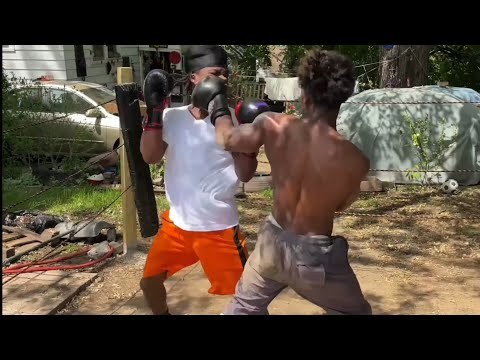
Street Fighter vs. Elite Boxer: A Clash of Worlds or Just a Spectacle?

Introduction: The Provocative Premise

We've all seen it – the digital gladiator stepping out of the screen, the pixelated warrior facing a flesh-and-blood titan. The premise of a "Street Fighter vs. Elite Boxer" is, on the surface, a tantalizing thought experiment. It begs the question: can the stylized, often exaggerated techniques of a video game character truly stand against the honed, scientific precision of a world-class pugilist? Here at Budo and Martial Arts, we don't shy away from such potent inquiries. We dissect, we analyze, and we aim to separate the myth from the reality. Is this merely a fantastical matchup for the entertainment of the masses, or is there a deeper conversation to be had about the nature of combat itself? This is not just about a fictional bout; it's about understanding the fundamental differences between entertainment and efficacy, between the legend and the legend-maker.

The digital realm has gifted us iconic warriors, their moves etched into our collective consciousness. Yet, when these digital specters are pitted against the disciplined reality of a sport like boxing, a sport built on generations of refinement and brutal practicality, the lines blur. We are here to draw them, with the clarity of a perfectly executed jab and the unyielding force of a well-placed counter.

Street Fighter: Reality Check on Fictional Prowess

Let's first address the "Street Fighter." This isn't a specific individual, but rather a archetype born from one of the most influential fighting game franchises in history. These characters – Ryu, Ken, Chun-Li – possess abilities that defy the laws of physics. We're talking about Hadokens that manifest as energy projectiles, hurricane kicks that allow for sustained aerial assaults, and spins that can shatter concrete. Their training regimens, as depicted, are often mystical, involving journeys to remote mountains, ancient scrolls, and perhaps a dash of divine intervention.

The very essence of a "Street Fighter" is rooted in hyperbole. Their techniques are designed for visual spectacle and to create unique gameplay mechanics. A Shoryuken, while visually impressive, is a powerful uppercut. But can Ryu's version, with its glowing aura and seemingly superhuman lift, truly replicate the devastating impact of a Mike Tyson uppercut, delivered with the full force of a trained human body and the strategic advantage of proper boxing stance and weight transfer? The answer, from a practical martial arts perspective, is a resounding no. The fictional "Street Fighter" operates on a different plane of existence, one where physics is a suggestion, not a rule. Their "fighting style" is a blend of various martial arts, amplified to cinematic levels, making direct comparison with a pure, rule-bound sport like boxing inherently flawed.

"The difference between a warrior and a casual fighter is not just in their technique, but in their understanding of consequence." - A lesson learned on countless mats.

The "Street Fighter" universe operates on a logic designed to entertain. The "Elite Boxer," however, operates within the unforgiving laboratory of reality. This crucial distinction is the bedrock of our analysis. It's the difference between a dragon punch that lights up the screen and an uppercut that sends a fighter to the canvas.

The Elite Boxer: Science and Discipline Embodied

Now, let's turn our gaze to the "Elite Boxer." This is not a character of myth or legend, but a testament to human potential honed through relentless dedication. Boxing, as a sport and an art form, is a masterclass in efficiency, power generation, and strategic defense. Every punch, every movement, is a result of countless hours of training, scientific biomechanics, and an intimate understanding of the human body's capabilities and limitations.

An elite boxer's training focuses on:

  • Footwork: Mastering distance, angles, and balance.
  • Punching Technique: Generating maximum power from the ground up, with precise hip rotation and shoulder extension.
  • Defense: Slipping, bobbing, weaving, and blocking with efficiency and minimal energy expenditure.
  • Stamina: Developing cardiovascular endurance to maintain high performance for extended periods.
  • Ring IQ: Reading an opponent, adapting strategies, and capitalizing on weaknesses.

Unlike the fantastical abilities of a "Street Fighter," boxing techniques are grounded in tangible principles. A straight right hand thrown by a champion boxer carries the weight of their entire body behind it, channeled through a perfectly aligned kinetic chain. Their defense is not about magical shields, but about anticipating an opponent's move and evading it with minimal motion. This is the essence of BUDO and true martial discipline: the pursuit of perfection within the constraints of reality.

Core Principles: Where Do They Truly Clash?

The fundamental clash between a "Street Fighter" and an "Elite Boxer" lies in their foundational principles. The former often employs techniques that are visually dynamic but practically impossible or contextually irrelevant in a real-world confrontation. Think of jumping spinning kicks to a boxer's guard, or projectile energy blasts. These are entertaining plot devices, not combat strategies.

Boxing, conversely, is a distilled martial art, stripped of anything deemed extraneous to the art of striking with fists. It's a ruthless pursuit of effectiveness within a specific set of rules. The elite boxer's arsenal is limited to punches, but the mastery of those punches, combined with footwork and defense, creates a complete combat system. The "Street Fighter's" arsenal might be broader, but its practical application is often questionable when faced with the grounded reality of a boxer's relentless pressure and precise counters.

"In the heat of battle, simplicity and directness often prove to be the most potent weapons." - Miyamoto Musashi, reflecting on the Way of Strategy.

The concept of Budo Life, the life dedicated to the martial way, emphasizes not just technique, but the mental and spiritual fortitude required to apply it under duress. An elite boxer embodies this through their rigorous discipline and unwavering focus. A "Street Fighter," by nature, is a character designed for narrative progression, not necessarily for the nuanced realities of life-or-death combat.

Choreography vs. Combat: The Cinematic Illusion

This is where the analysis of film and media becomes paramount. Movies and video games thrive on spectacle. The fight scenes in "Street Fighter" films, for example, are meticulously choreographed to look visually stunning. They are designed to elicit gasps, cheers, and awe, not to represent a realistic depiction of combat. The "combos" are designed for gameplay, and the "special moves" are cinematic embellishments.

An elite boxer's fight, on the other hand, is a raw display of human athleticism and will. While there is an inherent artistry to boxing, it is an artistry born from practicality and efficiency, not from a script or a game engine. The "choreography" of a boxing match is the emergent behavior of two highly skilled individuals testing each other's limits, adapting in real-time, and reacting to unforeseen circumstances. It's unscripted, unpredictable, and far more dangerous.

The appeal of pitting a "Street Fighter" against an "Elite Boxer" is precisely this tension between the hyper-real and the hyper-stylized. It forces us to confront what we value in combat: the thrilling, impossible spectacle, or the disciplined, grounded reality of human effort. This is why we create content around Fight Analysis; to understand these distinctions.

The Spirit of Budo in the Ring

While the techniques may differ vastly, the underlying spirit of true martial arts, the BUDO, can be found in both realms, albeit in different forms. For the "Street Fighter" character, it's often a narrative quest for self-improvement and the pursuit of justice, albeit with fantastical powers. For the elite boxer, it's the unwavering discipline, the respect for the opponent, the perseverance through pain, and the constant striving for self-mastery.

The boxer's journey is a path of continuous Self Improvement and Self Mastery, honed through sweat and sacrifice. They face their fears, push their physical and mental limits, and learn from every victory and defeat. This mirrors the core tenets of Spiritual Development found in many traditional martial arts. The ring, in this sense, becomes a modern-day dojo for the pugilist.

Sensei's Verdict: The Spectacle and the Substance

So, who wins in a hypothetical Street Fighter vs. Elite Boxer matchup? If we are talking about a realistic, no-holds-barred confrontation governed by the laws of physics and human physiology, the Elite Boxer, by an overwhelming margin. Their techniques are proven, their conditioning is absolute, and their understanding of combat is grounded in reality.

The "Street Fighter" exists in a realm of fantasy. Their abilities are a product of game design and narrative requirement. To pit them against a real-world athlete is to compare apples and, well, energy orbs. However, the *idea* of such a fight is compelling because it taps into our fascination with both hyper-competence and the ultimate test of skill. It's a brilliant concept for entertainment, but when it comes to efficacy, the science and discipline of boxing are undeniable.

Sensei's Verdict:

Cinturón Negro en Espectáculo Cinematográfico (Street Fighter)

Cinturón Negro en Eficacia Real y Disciplina (Elite Boxer)

The former is a legend; the latter is a warrior whose legend is forged in the fires of reality. The true martial artist respects both the dream and the discipline, but understands where the lines of reality lie.

Essential Equipment for Your Training

To train effectively, whether you're inspired by the discipline of boxing or the spirit of martial arts, the right gear is crucial. While a "Street Fighter" might not need much beyond their gi, a real practitioner benefits immensely from quality equipment.
  • Boxing Gloves: For sparring, invest in a good pair of 16oz or 14oz gloves. They offer protection for your hands and your training partner's safety. Brands like Everlast, Title Boxing, and Grant are reputable.
  • Hand Wraps: Essential for supporting your wrists and metacarpals during any striking activity.
  • Mouthguard: Non-negotiable for any form of sparring to protect your teeth and jaw.
  • Training Shoes: Lightweight, supportive shoes with good grip are vital for footwork.
  • Jump Rope: An indispensable tool for cardiovascular conditioning and footwork drills.
  • Protective Gear (for broader martial arts): Depending on your practice, consider Karate headguards, shin guards, and groin protection.

For those leaning towards the broader spectrum of martial arts beyond just boxing, exploring Martial Arts Merchandise can offer specialized uniforms, training weapons, and other tools that enhance your practice.

Training Guide: Sparring Drills for Realists

If you aim to bridge the gap between fictional combat and practical application, or simply wish to improve your conditioning and tactical thinking, focusing on drills inspired by reality is key. The following drills can be adapted for various striking arts, emphasizing the principles of boxing for their directness and effectiveness.
  1. The "Peek-a-Boo" Drill (Defensive Focus):
    1. Start in your fighting stance.
    2. Hold your hands in a high guard, similar to the "Peek-a-Boo" style popularized by Mike Tyson. Keep your elbows tucked in, protecting your body and head.
    3. Have a partner lightly tap or throw slow punches towards your head and body.
    4. Practice slipping punches by moving your head and upper body off the line of attack.
    5. Practice blocking with your forearms and shoulders.
    6. The goal is to minimize movement while maximizing defense, conserving energy.
  2. The "Mirror" Drill (Footwork and Reaction):
    1. Face your partner in a fighting stance, about an arm's length apart.
    2. One person acts as the leader, moving forwards, backwards, laterally, and executing small feints or movements (e.g., a small bob and weave).
    3. The other person, the mirror, must replicate these movements exactly and simultaneously.
    4. Focus on maintaining balance and a consistent distance. This builds coordination and responsiveness.
    5. Switch roles every 1-2 minutes.
  3. The "Counter Punch" Drill (Offensive Timing):
    1. Start in a fighting stance.
    2. Partner A throws a single, predictable punch (e.g., a straight jab).
    3. Partner B (you) practices evading the punch (slip or block) and immediately throwing a counter-punch (e.g., a straight right hand).
    4. Focus on smooth transitions from defense to offense. Don't wind up your counter; make it a natural extension of the evasion.
    5. Vary the punch thrown by Partner A (e.g., cross, hook to the body).
    6. Maintain control and safety – this is about timing, not power.
  4. The "Endurance Jab" Drill (Stamina and Control):
    1. In sparring gear, begin lightly jabbing your partner’s gloves or pads.
    2. The goal is to maintain a constant, controlled jab for a set duration (e.g., 1 minute).
    3. Focus on proper form: hip rotation, maintaining guard, stepping into the jab.
    4. This builds shoulder endurance, cardiovascular fitness, and helps maintain offensive pressure.

Remember, the essence of BUDO is continuous improvement. These drills, when practiced with focus and intent, will enhance your Agility, Fuerza, and overall Resistencia.

Frequently Asked Questions

Q1: Can a real martial artist defeat a fictional character like Ryu from Street Fighter?
A: In a realistic context governed by physics, yes. The fictional character's abilities are beyond human capability. A real martial artist's skills are grounded in reality.

Q2: Is boxing considered a "true" martial art?
A: Absolutely. While its scope is focused on punches, boxing embodies the core principles of many martial arts: discipline, dedication, strategy, efficiency, and self-mastery. It is a highly refined system of combat.

Q3: What is the biggest difference between video game fights and real fights?
A: The biggest difference is consequence and physics. Video game fights are designed for entertainment, often defying physics and consequence. Real fights have tangible, immediate, and potentially severe consequences, and are bound by the laws of nature.

Q4: How does the "Street Fighter" archetype influence popular culture's perception of martial arts?
A: It often sensationalizes and exaggerates martial arts, making them seem more about flashy moves and less about the discipline, hard work, and underlying philosophy. However, it also introduces millions to the excitement of combat sports and arts.

For a Deeper Dive into Your Journey

To truly understand the martial path, explore related topics that delve into the philosophy and practice:

Sensei's Reflection: Your Next Step

The "Street Fighter" represents a dream of ultimate power, a wish-fulfillment for many. The "Elite Boxer" represents the pinnacle of human achievement through dedication and understanding of reality. Both hold a certain allure. But as practitioners of the martial way, our pursuit is not just about winning fantastical battles, but about forging ourselves into better individuals. The discipline, the resilience, and the constant quest for self-improvement – these are the true prizes.

Sensei's Reflection: Your Next Step

If you could embody one principle from the disciplined world of boxing and apply it to your chosen martial art, what would it be and how would you integrate it into your training starting tomorrow? Do you believe the fantastical elements of characters like Ryu serve a purpose in inspiring new generations, or do they solely create unrealistic expectations?

Now, the floor is yours. Does the power of fantasy hold a place in martial arts discourse, or should we remain strictly tethered to reality? Voice your thoughts, challenge my perspective, and let us engage in a debate worthy of the dojo!

``` GEMINI_METADESC: Explore the intriguing matchup between a fictional Street Fighter and a real Elite Boxer. Discover the differences in technique, discipline, and reality.
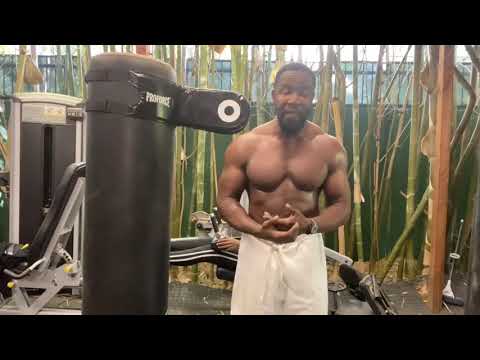

Mastering the Art of Evasion: Michael Jai White's Essential Head Movement Drills

Posted on November 12, 2021

Welcome, warriors, to the hallowed halls of Budo and Martial Arts. Today, we dissect a fundamental, yet often overlooked, aspect of combat: head movement. Many aspiring fighters fixate on powerful strikes or impenetrable blocks, forgetting that the most effective defense is often simply not being there when the blow lands. And who better to learn from than the formidable Michael Jai White? His mastery of movement, both in film and in real-world application, is legendary.

You might be asking yourself, "Why is head movement so crucial?" In the heat of battle, the head is a prime target, and a well-timed strike can end the fight. The ability to slip, weave, and roll not only evades punishment but also creates openings for devastating counter-attacks. This isn't just about agility; it's about understanding distance, timing, and the very flow of combat.

The Unseen Advantage: Why Head Movement Matters

In the grand tapestry of martial arts, striking and grappling often steal the spotlight. Yet, the subtle art of head movement forms the bedrock of survivability and offensive opportunity. Think of it as the dance that precedes the devastating punch, the feint that sets up the knockout. Ignoring it is akin to a swordsman leaving their entire torso exposed. A fighter who can effectively move their head is not just defending; they are dictating the rhythm of the fight. They are a ghost, elusive and dangerous.

The ability to subtly shift your weight and pivot your head can mean the difference between absorbing a fight-ending blow and leaving your opponent swinging at air. This principle is universal, found in the intricate footwork of Boxing, the evasive stances of Karate, and the fluid motion of Capoeira. It's a language spoken by all great strikers.

Michael Jai White's Philosophy on Movement

Michael Jai White, a man who embodies martial prowess, doesn't just execute moves; he *lives* them. His approach to head movement is rooted in efficiency and practicality. He emphasizes fluidity, making evasion look effortless, almost as if gravity itself bends to his will. This isn't born of chance; it's the result of relentless training and a deep understanding of combat dynamics.

White often speaks of the 'flow state,' a mental and physical synchronicity where reactions become instinctual. For him, head movement is a key component of this state. It's about anticipating the opponent's intentions and reacting *before* the strike is even fully committed. This level of mastery requires more than just physical conditioning; it demands mental acuity and profound discipline.

"The greatest weapon you have is your mind. The second greatest is your body. Head movement links them both." - Adapted from principles observed in MJW's training philosophy.

His techniques are rarely flashy for the sake of it. Instead, they are direct, economical, and designed for maximum impact with minimum expenditure of energy. This is the true essence of Budo – efficiency and effectiveness.

Essential Head Movement Drills for Every Practitioner

To cultivate this crucial skill, consistent practice is paramount. These drills, inspired by the principles Michael Jai White embodies, will sharpen your reflexes and improve your defensive capabilities. Remember, repetition is the mother of skill.

1. The Slip Rope Drill

This classic drill builds the spatial awareness and reactive movement needed to evade punches. Hang a rope at head height. Stand facing it, then practice slipping your head from side to side, making sure your head doesn't touch the rope. Gradually increase the speed and imagine punches coming at you from different angles.

2. The Weave and Under Drill

This drill simulates evading hooks and overhand punches. Imagine a boxer throwing a punch. As it approaches, bend your knees and torso, weaving under the punch. Then, as you straighten up, pivot your body to face your imaginary opponent again. The key is to keep your core engaged and your movements smooth.

3. The Mirror Drill

Find a training partner and face each other. One person acts as the attacker, throwing light, controlled punches (no power!). The defender's sole job is to use head movement – slips, rolls, pivots – to evade every punch without blocking. This builds critical reaction time and forces you to read your opponent's intentions.

4. Shadow Boxing with Movement Emphasis

During your shadow boxing sessions, dedicate rounds specifically to head movement. Focus on slipping punches you imagine being thrown, weaving under imaginary hooks, and pivoting out of imaginary combos. Make your head movement as important as your strikes.

Training Guidance: Perfecting Your Evasion

Integrating these drills into your routine requires a structured approach. Consider this your practical lesson plan.

  1. Warm-up (5-10 minutes): Begin with light cardio to increase blood flow and dynamic stretching focusing on the neck, shoulders, and core. Neck rolls, shoulder rotations, and torso twists are essential.
  2. Drill Practice (15-20 minutes): Dedicate a significant portion of your training to the drills outlined above. Start slowly, focusing on perfect form. Speed will come with consistency.
  3. Integration into Combos (10-15 minutes): Once comfortable with the individual drills, begin incorporating head movement into your striking combinations. Practice slipping a jab, then throwing a counter cross. Weave under a hook, then deliver an uppercut.
  4. Sparring Application (Variable): During sparring sessions, make a conscious effort to utilize your head movement. Even if you get tagged, acknowledge the attempt and analyze what went wrong. This is where real learning occurs.
  5. Cool-down (5-10 minutes): Static stretching to improve flexibility and aid recovery. Focus on the muscles used during evasion.

Remember, the goal is not just to move your head, but to do so with purpose, creating opportunities and defending effectively. It’s about becoming a harder target and a more dangerous offensive threat.

Veredicto del Sensei: Is Head Movement King?

Is head movement the *only* king in the realm of martial arts? No. A complete fighter needs a holistic skillset. However, can it be considered the most *critical* component of effective defense and intelligent offense? Absolutely. In the brutal, unforgiving arena of combat, the ability to evade, to simply *not be there*, provides an unparalleled advantage. Michael Jai White's consistent emphasis on this principle, from his on-screen performances to his apparent real-world training, underscores its profound importance. It's the silent guardian, the unseen weapon that elevates a good fighter to a great one. It separates those who merely trade blows from those who master the art of the fight.

Core Competency: If a martial artist neglects head movement, their defensive capabilities are fundamentally compromised, regardless of their strength or striking power. It's the foundation upon which true evasion is built.

Equipo Esencial para tu Entrenamiento

While head movement itself requires no specialized equipment, certain tools can significantly enhance your training:

  • Speed Bag: Excellent for developing timing, rhythm, and shoulder conditioning, which are all indirectly beneficial for fluid head movement.
  • Heavy Bag: Useful for practicing slipping and weaving techniques in response to simulated punches.
  • Training Partner: Absolutely essential for realistic reaction drills and sparring.
  • Jump Rope: Improves coordination, stamina, and timing, crucial for maintaining fluidity during complex movements.
  • Mirror: For self-correction and ensuring proper form during solo drills.

Preguntas Frecuentes

¿Qué arte marcial pone más énfasis en el movimiento de cabeza?
While present in many styles, Boxing and Savate are renowned for their sophisticated head movement techniques due to the nature of their striking. However, its principle is universal.

¿Cómo puedo evitar marearme al practicar movimientos circulares de cabeza?
Start slowly, keeping your core engaged and movements controlled rather than wild. Focus on a single point before you to maintain your orientation. Gradually increase speed and duration.

¿Es el movimiento de cabeza útil en la autodefensa?
Absolutely. In a street confrontation, not being hit is paramount. Head movement can help you evade spontaneous attacks and create opportunities to escape or counter.

¿Debo mover mi cabeza incluso si estoy bloqueando?
Ideally, yes. Combining subtle head movement with a block makes you a much harder target to hit cleanly. It ensures that even if the block isn't perfect, the impact is significantly reduced.

Para Profundizar en tu Camino

"The hand can say 'stop,' but the eye can say 'go.' The foot can say 'move,' but the head can say 'understand.' All parts must work together." - Ancient Martial Wisdom

The ability to move your head effectively is not a mere trick; it's a fundamental pillar of martial competence. It's the silent language of evasion that speaks volumes in the face of aggression. Michael Jai White, through his exemplary demonstrations, reminds us that true mastery lies not just in delivering power, but in skillfully avoiding it while positioning ourselves for the decisive counter.

Reflexión del Sensei: Tu Próximo Paso

Consider this: If your opponent sees your head move, have you truly succeeded? Or have you merely telegraphed your defense? True mastery of evasion becomes so ingrained that it appears as if the punch never came at all, simply passing through empty space. How can you integrate this subconscious prediction and evasion into your own practice, making your movement less about reaction and more about preemption?

"The warrior moves not to evade the blow, but to be where the blow is not." - Adapted from Zen principles applied to combat.

The journey continues. Keep training, keep questioning, and keep evolving.

``` GEMINI_METADESC: Master evasive head movement inspired by Michael Jai White. Learn essential drills, training tips, and the philosophy behind effective defense and offense in martial arts.

The Art of the Finish: Analyzing MMA's Most Devastating Knockouts

Hello, warriors, and welcome to Budo and Martial Arts. Today, we're not dissecting a historical technique or philosophizing about Mushin. We're diving headfirst into the brutal, exhilarating world of MMA knockouts. The question that echoes in many minds, from the casual observer to the seasoned practitioner, is: what separates a good stoppage from a truly *devastating* finish? This isn't just about brute force; it's about timing, precision, and the culmination of years of dedicated entrenamiento. We've all seen them – those moments frozen in time where a perfectly placed strike renders an opponent unconscious, leaving the crowd breathless and the referee scrambling. But what truly makes these knockouts "cold"? Is it the sheer power, the unexpectedness, or the perfect execution of a technique honed in countless hours of sparring? Let's explore the elements that define these unforgettable moments in the octagon.

The Science Behind the Silence: What Constitutes a "Cold" Knockout?

The term "cold" implies an almost surgical precision, a lack of unnecessary flourish, and an undeniable finality. In MMA, this often translates to: * Perfect Timing: Catching an opponent as they move in, recover from a previous strike, or are transitioning. This exploits their momentary vulnerability. * Precision Placement: Targeting vital areas like the chin (jaw hinge), the temple, or even a well-timed liver shot that incapacitates from the core. A less skilled strike might daze; a precise one ends the contest. * Explosive Power (When Necessary): While technique is paramount, raw power amplifies its effect. A fighter with immense strength can turn a good punch into a fight-ending one. * The Element of Surprise: A counter-punch, a sudden blitz, or a deceptive movement can catch an opponent completely off guard, leaving them unable to defend. This isn't simply about "throwing bombs." It's a sophisticated application of martial principles within a combat sports context. It’s the difference between a wild swing and a calculated strike, much like the difference between a chaotic brawl and a disciplined display of BUDO.

The Philosophy of the Finish: Beyond Brute Force

Many dismiss MMA knockouts as mere violence. However, for those who understand the martial arts, they represent the ultimate demonstration of skill and preparedness. A fighter who delivers a knockout is not just physically superior; they are often mentally dominant. This mental aspect is crucial, embodying principles found in classical martial arts: * Mushin (No Mind): The ability to act without conscious thought, relying on instinct and training. The truly devastating knockout often happens when a fighter is in this state, reacting perfectly to the situation. * Zanshin (Remaining Mind/Awareness): While the opponent falls, the successful fighter maintains awareness. This ensures safety, prevents follow-up attacks, and demonstrates control. * Ma'ai (Distance and Timing): Mastering the distance and timing is key. A perfectly timed strike, delivered from the optimal distance, is a testament to a fighter's understanding of Ma'ai. Consider the legend of Miyamoto Musashi, who emphasized the importance of striking with decisive intent. His "furu-shii" (shaking-off) technique, or the concept of striking as if shaking water from a hand, highlights the need for efficiency and power in a single, well-placed blow. The MMA knockout is the modern embodiment of this principle.

Case Studies: Analyzing Iconic Knockouts

While this post focuses on the *concept* of devastating knockouts, remembering specific instances helps illustrate the points. Think of fighters like **Anderson Silva**, whose timing and creativity were legendary. His front kick knockout of Vitor Belfort is a masterclass in deception and precision. Or **Conor McGregor**, whose perfectly timed left hand has ended many fights with brutal efficiency. These fighters didn't just punch; they understood the strategic elements of striking. These moments aren't accidental. They are the result of: * Rigorous Training: Daily drills focusing on power generation, striking accuracy, and defensive reactions. * Strategic Game Planning: Analyzing opponents to identify weaknesses and exploit them with specific techniques. * Mental Fortitude: The ability to perform under immense pressure, to remain calm and focused when the outcome hangs in the balance. For practitioners of arts like Karate or Taekwondo, these MMA knockouts offer a glimpse into the devastating potential of well-applied striking principles. The differences lie in the ruleset, the range of techniques, and the gloves, but the core concepts of precision, timing, and intent remain universal across martial disciplines.

The Unseen Battles: Training for the Knockout

What does it take to deliver such a finish? It's not just about powerlifting.

Guía de Entrenamiento: Desarrollando tu Poder de KO

  1. Fundamentos Sólidos: Domina las bases de tu arte marcial (stance, movimiento, formas de golpear). La potencia nace de una base estable.
  2. Golpes de Sombra (Shadow Boxing): Practica tus combinaciones con velocidad y potencia, visualizando los puntos de impacto y la transición fluida entre golpes.
  3. Sacrificio de Bolsa Pesada (Heavy Bag Work): Enfócate en la explosividad. Cada golpe debe ser lanzado con la intención de terminar la pelea. Varía entre ráfagas cortas y potentes y combos más largos.
  4. Sparring con Intención: En sesiones de sparring controladas, practica la aplicación de golpes potentes y la búsqueda de aperturas. Aprende a leer a tu oponente y a capitalizar sus errores.
  5. Entrenamiento de Fuerza y Potencia: Incorpora ejercicios como levantamiento de pesas (sentadillas, peso muerto), lanzamientos de balón medicinal, y pliometría para desarrollar la fuerza explosiva.
  6. Resistencia Cardiovascular: Un KO a menudo ocurre en momentos de fatiga. Mantener tu resistencia te permite ejecutar golpes potentes incluso en las rondas finales.
  7. Conciencia Mental: Practica técnicas de meditación o mindfulness para mejorar tu concentración y tu capacidad de reaccionar instintivamente.
Remember, the goal is not to become a brawler, but a disciplined martial artist who understands the devastating potential of their techniques when applied with precision and intent. This is where the true spirit of Martial Arts training lies.

Equipo Esencial para tu Entrenamiento

To hone your striking and power, consider the following:
  • Guantes de Boxeo/MMA: Indispensables para proteger tus manos y para el entrenamiento con bolsa y sparring. Considera guantes de 14-16 oz para saco y 4-6 oz para sparring de MMA.
  • Vendajes para las Manos: Cruciales para prevenir lesiones en las muñecas y nudillos.
  • Bolsa Pesada: Una herramienta fundamental para desarrollar potencia y resistencia en tus golpes.
  • Esterillas de Entrenamiento: Para ejercicios de fuerza y recuperación, especialmente si incluyes entrenamiento en el suelo.
  • Guantes de Entrenamiento de MMA: Para simular condiciones de combate más cercanas a la realidad.
  • Protector Bucal: Absolutamente esencial para cualquier tipo de sparring o combate.
Investing in the right Martial Arts Merchandise is not vanity; it's a commitment to safe and effective training.

Veredicto del Sensei: ¿Un Arte o un Espectáculo?

The debate often rages: is MMA purely spectacle, or a legitimate evolution of martial arts? The devastating knockout, when executed with skill and precision, leans heavily towards the latter. It’s a stark reminder that the principles of combat honed over centuries – timing, distance, precision, and decisive action – remain relevant and incredibly effective. While the spectacle is undeniable, the underlying martial discipline is what elevates these moments from mere violence to a demonstration of peak human performance.
"El arte de la guerra enseña que si conoces al enemigo y te conoces a ti mismo, no debes temer el resultado de cien batallas." - Sun Tzu. En MMA, conocer a tu oponente y dominar tus propias herramientas es la clave para un KO decisivo.

Reflexión del Sensei: Tu Próximo Paso

When you witness a knockout, do you see only the immediate impact, or do you perceive the years of dedication, the intricate technique, and the mental fortitude that led to that singular moment? How can you integrate the pursuit of decisive action into your own training, not just for combat, but for overcoming challenges in all aspects of your life?

Preguntas Frecuentes

  • ¿Qué hace que un golpe de KO sea tan efectivo? La combinación de potencia, precisión en el punto de impacto (como la mandíbula o las sienes), y el momento oportuno, a menudo explotando una apertura o movimiento del oponente.
  • ¿Es el KO una demostración de "Ki" (energía vital)? Si bien algunos practicantes podrían interpretarlo así, desde una perspectiva científica y marcial más ortodoxa, se debe a la transmisión eficiente de energía cinética a través de una técnica correcta y potencia física.
  • ¿Son los KO's en MMA diferentes de los de artes marciales tradicionales? Sí, debido a las reglas (guantes, golpes permitidos, tiempo de combate) y al enfoque específico en el combate cuerpo a cuerpo y de pie. Sin embargo, los principios de golpeo y la aplicación de fuerza son universales.
  • ¿Se puede entrenar para dar un KO sin ser excesivamente agresivo? Absolutamente. El entrenamiento se centra en la eficiencia y la precisión de los golpes, no en la mera agresión. Un KO bien aplicado es un acto de habilidad técnica.
  • ¿Deberían los practicantes de artes marciales enfocarse en los KO's? El objetivo principal de la mayoría de las artes marciales es el desarrollo personal, la disciplina y la defensa. Los KO's son una posible consecuencia del entrenamiento enfocado en el combate, pero no deben ser el único objetivo.

Para Profundizar en tu Camino

``` GEMINI_METADESC: Analyze the art of the devastating MMA knockout. Explore the blend of martial philosophy, precise technique, and strategic training that leads to a fighter's decisive finish.

Leon Edwards vs. Belal Muhammad 2: A Budoka's Analysis of UFC 4 Simulation

Greetings, students of the martial path, and welcome back to the hallowed halls of Budo and Martial Arts. Today, we embark on a journey not through the dusty scrolls of ancient dojos, nor the blood-soaked sands of historical duels, but into the digital arena of UFC 4. We dissect the simulated clash between Leon Edwards and Belal Muhammad 2, a virtual echo of a real-world contest. But do not mistake pixels for platitudes; even in simulation, the principles of combat, strategy, and the warrior's spirit can be observed, analyzed, and learned from.
Many of you come here seeking the raw mechanics of combat, the "how-to" of a devastating strike or an unbreakable hold. Others are drawn by the philosophical underpinnings, the "why" behind the dedication and discipline. Today, we bridge these worlds. We will examine this simulation not just as a game, but as a lens through which to view the application of martial principles, the mental fortitude required, and the strategic dance that defines elite combat sports. Is there true "BUDO" to be found in a simulated octagon? Let us find out.

Table of Contents

The Simulated Crucible: Understanding UFC 4 Mechanics

Before we delve into the specifics of Edwards versus Muhammad, it's crucial to understand the nature of this simulation. UFC 4, while sophisticated, is a digital representation. It attempts to model the physical attributes and fight IQ of real athletes, but it is ultimately governed by algorithms and player input (even in CPU vs. CPU scenarios). The "Realistic Stats" are designed to reflect real-world capabilities, influencing punch power, defense, stamina, and submission defense. The CPU behavior, therefore, becomes a crucial element to analyze: does it exhibit intelligent fight strategy, or merely predictable patterns? In a real martial encounter, unpredictability is a weapon. A fighter can feint, change levels, and exploit micro-opportunities born from an opponent's fleeting reaction. A simulation, no matter how advanced, can struggle to perfectly replicate this organic, often chaotic, element of human combat. We must approach this analysis with a critical eye, asking: how well does this simulation capture the essence of these fighters' real-world styles and strategic approaches?

Striking Dynamics: The Art of the Stand-Up

Leon Edwards, known for his composed striking, precise jabs, and powerful kicks, typically employs a measured, defensive-minded offense. Belal Muhammad, conversely, is a relentless pressure fighter, often utilizing a high volume of strikes and strong wrestling to dictate the pace. How does UFC 4 translate these distinct styles? Observe the simulation closely: * **Range Management:** Does Edwards maintain his preferred distance, peppering Muhammad with jabs and body kicks? Or does Muhammad's pressure force him into unfavorable exchanges? In real combat, understanding distance is paramount. A fighter who cannot control the range is a fighter in peril. * **Punch Selection and Combinations:** Are the simulated strikes diverse? Do they reflect Edwards' accuracy and Muhammad's volume? Watch for the common pitfalls of simulations: repetitive combos, unrealistic power, or an over-reliance on specific moves. The beauty of true striking lies in its adaptability. * **Head Movement and Defense:** Edwards is renowned for his elusive head movement, a testament to his defensive mastery. Does the simulation portray this effectively? Or does Muhammad's aggression lead to him absorbing too much damage due to a simplified defensive model? * **Kicking Game:** Edwards' kicks, particularly to the body and legs, are significant weapons. Does the simulation give these the appropriate weight and impact, or are they merely secondary to punches? A true master of stand-up combat understands that striking is not merely throwing punches; it is a sophisticated interplay of timing, distance, deception, and power. We look to see if the simulation respects these nuances.
"The ultimate aim of the martial arts is not victory or defeat, but the perfection of the character." - Gichin Funakoshi
This quote, while philosophical, has practical implications. A fighter with "perfected character" exhibits discipline, patience, and adaptability – qualities we hope to see reflected in intelligent simulation.

Grappling Depth: The Ground Game Revealed

While both fighters are capable strikers, their grappling abilities often play a significant role in their fights. Muhammad, with his strong wrestling background, frequently seeks takedowns to control his opponents. Edwards, while a capable defender, can find himself in grappling exchanges where his defensive skills are tested. In the simulation, observe: * **Takedown Offense and Defense:** How effective are the simulated takedown attempts? Does the CPU intelligently chain wrestling moves or does it rely on single, predictable entries? Conversely, how adept is the defender at sprawling and stuffing takedowns? * **Ground Control and Transitions:** Once on the ground, does the simulation reflect the strategic jockeying for position? Or is it a chaotic scramble? The ability to transition between dominant positions is key in real grappling. * **Submission Game:** Are submissions a genuine threat, or are they rarely attempted or easily escaped? The complexity of submission defense and offense in a game context is often a challenge. The true art of grappling is about leverage, pressure, and the relentless pursuit of dominant position. It is a chess match played with the body. If the simulation simplifies this to mere button-mashing or predetermined outcomes, it fails to capture the depth of this critical aspect of martial arts.

The Strategic Mindset: Beyond the Buttons

The most compelling aspect of elite combat sports is not just the physical execution, but the mental battle. Fighters like Edwards and Muhammad possess a profound understanding of strategy. They analyze their opponent, adapt their game plan on the fly, and manage their energy and composure throughout the fight. In this simulation: * **Pacing and Stamina Management:** Does the simulation accurately reflect fighter fatigue? Do fighters slow down after intense exchanges? A common failing in older fighting games was a linear stamina bar that didn't account for the dynamic energy expenditure of a real fight. * **Adaptability:** If one fighter is dominating a certain aspect, does the other adjust? For instance, if Muhammad's takedowns are being stuffed repeatedly, does he change his approach, or does he continue to force the same failing strategy? * **Fight IQ:** Does the CPU exhibit an understanding of win conditions? Does it press for a finish when an opponent is hurt, or does it play it safe? A true warrior's mindset is one of constant assessment and intelligent adaptation. The simulation's ability to replicate this "fight IQ" is a critical determinant of its realism and educational value.
"There are no shortcuts to any place worth going." - Beverly Sills (A principle applicable to any discipline, including the martial path)
This holds true for training, for life, and for the intricate strategies employed by fighters. Shortcuts in a simulation might lead to a quick win, but they bypass the learning process.

The Spirit of the Warrior: What Simulation Can't Replicate

While UFC 4 can simulate techniques, strategies, and even some aspects of fighter personality, it fundamentally cannot replicate the true "spirit of the warrior" – the intangible essence of Budo. * **The Will to Endure:** The raw, visceral determination to push through pain, exhaustion, and adversity when every fiber of your being screams to quit. This is forged in countless hours of grueling physical and mental training, in real-world sparring where the consequences are genuine. * **The Emotional Landscape:** The fear before a fight, the adrenaline surge, the frustration of being dominated, the elation of victory, and the humility of defeat – these are profound human experiences that shape a fighter's character. A simulation can only offer a pale imitation. * **The Ethical Framework:** Real martial arts often carry with them a code of conduct, a respect for the opponent, and a commitment to self-improvement that extends beyond the arena. These ethical dimensions are absent in a purely competitive, simulated environment. The simulation can show us *how* a fight might look, but it cannot convey the feeling of *being* in that fight, nor the deeper purpose that drives many to pursue martial arts.

Veredicto del Sensei: ¿Merece la pena?

As a tool for analyzing fighting styles and basic strategic interactions, this UFC 4 simulation of Leon Edwards vs. Belal Muhammad 2 offers some value. It can highlight the fundamental differences in their striking approaches and the potential effectiveness of Muhammad's wrestling. However, it is crucial to remember its limitations. The simulation provides a simplified, albeit sophisticated, representation. It can spark discussion about fight strategy and martial principles, but it can never replace the depth, nuance, and profound personal growth that comes from training in and experiencing authentic martial arts. **Cinturón Negro en Simulación Mecánica, Cinturón Blanco en Espíritu Marcial.**

Equipo Esencial para tu Entrenamiento

While this simulation focuses on digital combat, authentic martial arts training requires proper gear. Investing in the right equipment not only enhances your training but also ensures safety.
  • Kimono/Gi: For Judo, Karate, BJJ, Aikido. Look for durable, double-weave fabrics for higher-level training.
  • Boxing Gloves: Essential for striking arts like Karate, Kickboxing, and MMA. Choose weights (10oz-16oz) appropriate for sparring or bag work.
  • Shin Guards: Crucial for protecting your shins during kickboxing or Muay Thai training.
  • Mouthguard: Non-negotiable for any contact sport to protect your teeth and jaw.
  • Hand Wraps: Worn under gloves to provide extra wrist and hand support.
  • Headgear: Recommended for intense sparring sessions to mitigate head impact.
For those interested in specific striking disciplines like Karate or Kickboxing, ensure your gear aligns with the techniques you are practicing.

Preguntas Frecuentes

  • Q: Can a UFC simulation truly teach me martial arts?
    A: No, it cannot teach you the physical techniques, discipline, or spirit of martial arts. However, it can offer insights into fighting styles and strategic concepts that may complement your real-world training.
  • Q: What are the main differences between simulated and real combat?
    A: Real combat involves genuine physical and emotional stakes, unpredictable human reactions, and a depth of experience that a simulation cannot replicate. Simulations are governed by algorithms and programmed behaviors.
  • Q: How realistic are the "Realistic Stats" in UFC 4?
    A: While designed for realism, these stats are interpretations and simplifications of an athlete's capabilities. They are influenced by game balance and design choices.
  • Q: Is it important to learn about MMA if I practice traditional martial arts?
    A: Understanding MMA can provide valuable context for modern combat applications, evolutionary martial arts strategies, and the effectiveness of different skill sets. It can broaden your perspective.

Para Profundizar en tu Camino

To further your understanding of the martial path, explore these related topics:

Reflexión del Sensei: Tu Próximo Paso

This simulation, while entertaining, is a mere shadow of the true martial journey. It is a tool, a digital mirror that reflects aspects of combat. But the real work, the true cultivation of skill, character, and spirit, happens not on a screen, but within you, under the guidance of a dedicated Sensei, through sweat, perseverance, and a relentless pursuit of self-mastery. Now, I pose this to you: When faced with a challenge – be it in the dojo, in your training, or in life – do you seek the path of least resistance, the simulated shortcut? Or do you embrace the arduous, yet ultimately rewarding, path of genuine growth and understanding? Reflect on this. Your answer will define your journey.