Showing posts sorted by relevance for query Kali. Sort by date Show all posts

Rene Tongson: A Deep Dive into Kali, Eskrima, and Arnis - The Pinnacle of Filipino Martial Arts

Hello and welcome, warriors! Today, we delve into the heart of the Filipino Martial Arts (FMA) through the lens of a master, Rene Tongson. Many of you seek to understand the essence of these formidable arts, often confused by their intertwined names: Kali, Eskrima, and Arnis. Is it merely a linguistic difference, or is there a deeper dichotomy? This is the question that echoes in the minds of practitioners worldwide, a question we will dissect with the precision of a Sinawali. The intention of our exploration today is to go beyond superficial definitions. We aim to uncover the *why* behind the nomenclature, to grasp the historical and practical distinctions, and to understand the philosophical underpinnings that make FMA a truly unique and potent system. This isn't just about learning names; it's about understanding the lineage, the fighting principles, and the spirit that has been passed down through generations of great masters.

Unraveling the Nomenclature: Kali, Eskrima, Arnis

The first hurdle for any aspiring student of FMA is the seemingly interchangeable use of the terms Kali, Eskrima, and Arnis. While often used interchangeably today, particularly in the West, their historical context and regional prevalence offer crucial insights. * **Arnis**: This term is believed to derive from the Spanish word "arnés," meaning armor. Historically, it referred to the defensive aspects of the art, emphasizing parries, blocks, and the manipulation of an opponent's weapon, much like a knight would use their armor defensively. It's a name that evokes the very essence of protection and strategic engagement. * **Eskrima**: This word originates from the Spanish "esgrima," meaning fencing. It highlights the bladed aspect of the art, focusing on the intricate footwork, angles of attack, and deceptive maneuvers characteristic of sword fighting. Think of the elegant yet deadly dance of blades, a testament to the art's evolution from close-quarters combat. * **Kali**: The origin of "Kali" is more debated, with theories ranging from a connection to the Indian sword goddess Kali, to a contraction of "Kalisong" (a type of native dagger), or even a descriptive term for the art's flowing, rhythmic movements. Regardless of its etymology, "Kali" often signifies the broader, more indigenous, and perhaps older aspects of the FMA, encompassing empty-hand techniques and grappling alongside weapon-based combat. It's a name that whispers of ancient traditions and primal power. Rene Tongson, a revered figure in the FMA community, embodies the mastery that transcends these labels. His teaching and practice often serve as a bridge, demonstrating how these distinct names represent different facets of a unified, dynamic system. To truly appreciate FMA, one must look past the nomenclature and embrace the comprehensive philosophy and practical application that masters like Tongson exemplify.

The Legacy of Rene Tongson: A Beacon of FMA Mastery

Rene Tongson is not merely a practitioner; he is a living repository of the Filipino Martial Arts. His dedication to preserving and propagating the rich heritage of Kali, Eskrima, and Arnis has left an indelible mark on the global martial arts landscape. His approach is characterized by a deep respect for tradition, combined with an astute understanding of practical combat application. Tongson often emphasizes the principles that underpin all FMA systems: * **Flow and Adaptability**: The ability to seamlessly transition between different ranges of combat, from long-range strikes to close-quarters grappling, is a hallmark of FMA. Master Tongson's teachings illustrate this fluid nature, where movements are not static but responsive, adapting to the opponent's actions. * **Economy of Motion**: In true martial arts, every movement serves a purpose. FMA, as taught by Tongson, exemplifies efficiency, with techniques designed to achieve maximum effect with minimum effort, conserving energy for sustained combat. * **Weaponization of Everything**: While renowned for his mastery of bladed weapons and sticks, Tongson also highlights the FMA principle of seeing any object as a potential weapon – from a pen to a magazine. This pervasive mindset is a crucial aspect of its self-defense efficacy. His influence extends beyond mere technical instruction; he imparts the *budo* spirit – the warrior's code, discipline, and ethical framework. This holistic approach is what truly elevates him to the status of a "Great Master."

Core Principles of Filipino Martial Arts

To truly grasp the depth of Kali, Eskrima, and Arnis, we must understand the fundamental principles that guide their practice. These are not just techniques; they are philosophies woven into movement.

The Concept of "Angles of Attack"

One of the most distinctive features of FMA is the systematic approach to understanding and defending against attacks. The traditional "angles of attack" – often numbering 5, 7, 9, or 12 depending on the style – provide a framework for learning defensive maneuvers and offensive counter-strikes. * **Angle 1**: Thrust to the sternum. * **Angle 2**: Thrust to the left or right side of the torso. * **Angle 3**: Thrust to the left or right side of the head. * **Angle 4**: Thrust to the right or left leg. * **Angle 5**: Thrust to the right or left arm. Mastering these angles allows a practitioner to anticipate an opponent's moves and develop instinctive defensive reactions. This is not rote memorization, but a deep understanding of trajectories and vulnerabilities.

The Sinawali: Weaving a Defensive Fabric

The "Sinawali" is a characteristic training method in FMA, involving the intricate crossing and weaving of two sticks. This drill is far more than a simple exercise; it develops: * **Coordination and Balance**: The simultaneous manipulation of two weapons enhances proprioception and body awareness. * **Rhythm and Timing**: The continuous flow of the Sinawali teaches the practitioner to maintain a steady rhythm, crucial for effective engagement. * **Defensive and Offensive Integration**: The weaving motion itself mimics deflecting incoming strikes while simultaneously creating openings for counter-attacks. It’s a beautiful metaphor for the FMA's philosophy of active defense.
The practice of Sinawali, as demonstrated by masters like Rene Tongson, is a visual representation of how FMA integrates offense and defense into a single, continuous motion. It embodies the concept of "flow like water, strike like thunder."

Empty Hand Techniques: The "Panantukan" and "Dumbbell"

While often associated with weaponry, FMA possesses a highly sophisticated empty-hand combat system. This includes: * **Panantukan**: Often referred to as "Filipino Boxing" or "Dirty Boxing," it incorporates the angles of attack, trapping, elbow strikes, knee strikes, and a strong emphasis on close-range combat. It is the natural extension of weapon techniques to unarmed fighting. * **Trapping and Flowing**: FMA empty-hand techniques often involve "trapping" an opponent's limbs to control their structure and create openings for strikes or joint manipulation. This mirrors the principles of weapon disarms and control. The seamless transition from weapon to empty-hand combat, and vice versa, is a testament to the holistic design of FMA. A practitioner trained in FMA can, in theory, engage effectively with or without a weapon, as the underlying principles remain consistent.

The Philosophical Core: Bushido and the Warrior's Mindset

While Bushido is famously associated with Japanese Samurai, its core tenets of discipline, honor, self-control, and loyalty resonate deeply within the Filipino Martial Arts tradition as well. The pursuit of mastery in Kali, Eskrima, or Arnis is not merely about physical prowess; it is a path to spiritual and mental development.
"The supreme art of war is to subdue the enemy without fighting." - Sun Tzu, The Art of War
This ancient wisdom is echoed in FMA. The ultimate goal of any martial art is not to seek conflict, but to develop the wisdom and self-mastery to avoid it, or to resolve it decisively when necessary. Masters like Rene Tongson embody this ideal, demonstrating that true strength lies not in aggression, but in control and understanding. The "Budo" aspect, the way of the warrior, is paramount.

Training Methodology: Beyond the Basics

The training for Kali, Eskrima, and Arnis is rigorous and multifaceted. It demands not only physical conditioning but also mental acuity and unwavering commitment.

Intelligence Gathering and Analysis

Before any physical engagement, the martial artist must develop the ability to observe and analyze. This includes understanding an opponent's stance, their likely intentions, and the environment. This principle, often highlighted in advanced FMA training, is critical for survival. It’s about using your senses and intellect as much as your body.
"By knowing the enemy and knowing yourself, you need not fear the result of a hundred battles." - Sun Tzu, The Art of War

The Role of Conditioning

FMA demands a high level of physical fitness. Training often includes: * **Strength and Power Development**: Essential for delivering effective strikes and controlling an opponent. * **Endurance Training**: To maintain intensity throughout a prolonged engagement. * **Flexibility and Agility**: To execute fluid movements, evasions, and dynamic techniques. Proper conditioning ensures that the techniques learned can be executed effectively under pressure. Without a robust physical foundation, even the most sophisticated techniques can fail.

Veredicto del Sensei: A Testament to FMA's Enduring Power

Rene Tongson's contribution to the world of Kali, Eskrima, and Arnis is immeasurable. He represents the pinnacle of what these arts offer: a comprehensive system of combat, a profound philosophical path, and a living link to a rich cultural heritage. His ability to distill complex principles into understandable teachings makes him an invaluable asset to the martial arts community. For anyone seeking to understand the practical applications, the historical depth, and the philosophical nuances of FMA, studying Rene Tongson's work is not just recommended; it is essential. He embodies the spirit of the warrior, a continuous learner and a dedicated teacher. **Rating:** Cinturón Negro en Transmisión de Conocimiento y Maestría Marcial.

Equipo Esencial para tu Entrenamiento

To truly immerse yourself in the practice of Kali, Eskrima, or Arnis, certain training tools are indispensable. While the art teaches you to use anything as a weapon, dedicated equipment allows for safe and effective skill development.
  • Bastones de Entrenamiento (Escrima Sticks): Standard hardwood or rattan sticks are crucial for practicing drills like Sinawali and various combat scenarios.
  • Daga de Entrenamiento (Training Dagger): Wooden or rubber training knives are essential for practicing disarms, close-quarters blade work, and realistic scenarios.
  • Equipo de Protección: When sparring, especially with bladed training weapons, protective gear such as headgear, mouthguards, and padded gloves is vital to prevent injury.
  • Guantes de MMA/Sparring: For the Panantukan (Filipino Boxing) aspect, standard MMA or sparring gloves are recommended.
  • Makiwara o Bolsa de Boxeo: For developing power and conditioning striking techniques.
Investing in quality training gear is an investment in your martial journey. It allows for progressive training, ensuring that you can build skill safely and effectively. For those serious about mastering FMA, consider exploring options for durable and authentic training implements.

Recursos para Profundizar

To truly understand the lineage and depth of Filipino Martial Arts, delve into the following resources:

Guía de Entrenamiento: Dominando los Ángulos Básicos

Let's break down a fundamental FMA training exercise focusing on defensive angles. This is best practiced with a training partner and ideally with training sticks.
  1. Posición Inicial: Assume a neutral fighting stance, feet shoulder-width apart, knees slightly bent, and a comfortable guard. Your training partner will start with a basic overhead strike (Angle 1).
  2. Recepción del Ataque (Ángulo 1): As the strike comes down, use your stick to deflect it upwards and to the side. This is a simple upward parry.
  3. Contraataque Inmediato: Immediately after deflecting, use the momentum to deliver a counter-strike, often a thrust or a horizontal strike to the opponent's head or body.
  4. Transición a Ángulo 3: Your partner transitions to a horizontal strike towards your head (Angle 3). Use a downward or diagonal block to deflect.
  5. Follow-up Strike: Counter with an appropriate follow-up strike, perhaps a sweep of their arm or a thrust to their body.
  6. Rotación y Repetición: Continue this drill, cycling through the primary angles of attack. Focus on smooth transitions, maintaining your balance, and keeping your movements economical.
  7. Práctica con Mano Vacía: Once comfortable with sticks, adapt these parries and counter-strikes to empty-hand techniques, visualizing where your arms and body would be in relation to the incoming strike.
Remember, the key here is not just blocking, but redirecting and immediately counter-attacking. This drill teaches proactive defense and offensive integration.

Preguntas Frecuentes

What are the main differences between Kali, Eskrima, and Arnis?

While often used interchangeably, "Arnis" historically refers to the defensive aspects ("armor"), "Eskrima" to the fencing/bladed combat aspect, and "Kali" to the broader, more indigenous, and perhaps older roots of the art, encompassing many facets.

Is Filipino Martial Arts effective for self-defense?

Absolutely. FMA is renowned for its practical and adaptable self-defense applications, emphasizing weapon-based combat, but seamlessly integrating effective empty-hand techniques and a mindset of environmental awareness.

What is the role of "Ki" or "Chi" in FMA?

While not always explicitly labeled as "Ki" or "Chi" in the same way as some East Asian arts, FMA emphasizes internal energy, focus, and intention. The concept of "flow," coordination, and the unified application of power in techniques is akin to the practical application of internal energy principles.

How does FMA compare to other martial arts like Karate or Taekwondo?

FMA is primarily a weapon-based art that incorporates empty-hand techniques, focusing on angles, disarms, and close-quarters combat. Arts like Karate and Taekwondo are predominantly striking-focused, kicking-heavy, and developed primarily for unarmed combat. The approaches to combat, range, and typical engagement differ significantly.

Can someone start learning FMA without prior martial arts experience?

Yes, FMA is accessible to beginners. While it can be complex, dedicated instructors like Rene Tongson break down the learning process systematically, starting with foundational movements and principles before progressing to more advanced techniques. GEMINI_METADESC: Explore Kali, Eskrima, and Arnis with Master Rene Tongson. Uncover the history, principles, and combat effectiveness of Filipino Martial Arts.

Antonio Ilustrisimo Tatang: The Undisputed Grandmaster of Kali-Eskrima

The world of martial arts is vast, teeming with legends whose legacies echo through generations. Yet, few figures loom as large and command as much reverence within their specific domain as Tatang Antonio Ilustrisimo. If your search query began with "Antonio Ilustrisimo Tatang Kali Eskrima Arnis Great Masters," then you are, without doubt, seeking to understand the profound impact of a true martial titan. This isn't merely a biographical sketch; it's a deep dive into the principles, the history, and the indomitable spirit that defined Tatang, and by extension, the very essence of Filipino martial arts (FMA). Prepare to be educated, challenged, and perhaps, to question everything you thought you knew about combatives.

Table of Contents

The Genesis of a Legend: Tatang's Early Life and the Crucible of Combat

Born in the Philippines, a nation forged in the fires of conflict and resistance, Antonio Ilustrisimo's upbringing was steeped in the practical application of indigenous fighting systems. Unlike many who later codified and popularized their arts in controlled environments, Tatang's knowledge was honed through genuine, often brutal, necessity. The streets and shores of his homeland were his dojo, and life itself was the ultimate test. He didn't just *learn* Kali, Eskrima, or Arnis; he *lived* them. This raw, unvarnished experience is what separates a mere practitioner from a true master, a distinction Tatang embodied. He witnessed firsthand the efficacy of these arts in real-world confrontations, forging a pragmatic approach that eschewed ornamentation for ruthless efficiency.
"The true art of combat is that which is necessary, nothing more, nothing less." - A principle embodied by Tatang Ilustrisimo.
His journey wasn't one of academic study in a quiet library; it was a visceral immersion into the heart of survival. This formative period instilled in him a profound understanding of timing, distance, and the psychology of conflict, principles that would later define his teachings and his formidable reputation.

Deconstructing the Arsenal: Kali, Eskrima, Arnis, and Beyond

Often, the terms Kali, Eskrima, and Arnis are used interchangeably, and for good reason – they represent facets of the same rich tapestry of Filipino martial arts. However, understanding their nuances, and Tatang's role in their preservation and evolution, is crucial. * **Kali:** Often considered the root or oldest form, Kali is characterized by its emphasis on flowing, circular movements and its sophisticated understanding of angles of attack. Tatang was a staunch advocate for the preservation of Kali's pure form. * **Eskrima:** This term, derived from the Spanish "esgrima" (fencing), highlights the art's sophisticated use of weaponry, particularly sticks, knives, and swords. Tatang's mastery of the "dos manos" (two-handed) and "un mano" (one-handed) stick fighting, as well as his dagger techniques, were legendary. * **Arnis:** While also referring to stick fighting, Arnis often encompasses a broader spectrum, including empty-hand applications derived from weapon movements. Tatang, while primarily known for his weapon prowess, understood that the principles of weapon combat were directly transferable to the human body. Tatang Ilustrisimo was not merely a proponent of one of these labels; he was a living embodiment of the entire spectrum. He taught not just the techniques but the underlying principles that made them effective across various tools and ranges. He stressed that the stick was merely an extension of the hand, and the hand, when trained correctly, could strike with the same precision and power. This holistic view is a cornerstone of his legacy.

The Philosophical Underpinnings: Beyond Mere Techniques

A true martial master teaches more than just physical movements. Tatang Ilustrisimo imparted a philosophy that transcended the battlefield, touching upon self-mastery, awareness, and adaptability. * **Flow and Adaptability:** Tatang's art emphasized fluid transitions between different ranges and techniques. He taught practitioners to adapt to their opponent's movements, to become like water, yielding when necessary but possessing immense power when striking. This is a concept echoed in arts like Aikido, but rooted in the Filipino context of close-quarters combat. * **Mindset of the Warrior:** Central to Tatang's teachings was the concept of "Mindset." This wasn't about aggression, but about mental preparedness, emotional control, and an unwavering focus on the objective. He understood that in a life-or-death situation, the mental game often dictates the physical outcome. This resonates deeply with the principles of Budo and the Warrior Philosophy. * **Simplicity and Effectiveness:** In his teachings, Tatang relentlessly pursued simplicity. He believed that complex techniques were prone to failure under pressure. His methods focused on direct, economical movements that maximized impact with minimal effort. This is a fundamental tenet found across many effective Combat arts, from Karate to MMA.
"The simplest technique, performed with perfect timing and intent, is the most dangerous." - A distillation of Tatang's pragmatic genius.
His approach was a testament to the idea that true mastery lies not in the accumulation of techniques, but in the profound understanding and application of fundamental principles.

Tatang's Enduring Influence: Shaping Modern Filipino Martial Arts

Tatang Ilustrisimo's influence extends far beyond the students he personally trained. He is credited with refining and preserving the Lema Pao ("Stick Fighting") system, a core component of many FMA styles. His lineage, particularly through his son Christopher Ilustrisimo and his many senior students, has disseminated his teachings globally. He played a pivotal role in bringing FMA to the international stage, challenging misconceptions and demonstrating the art's sophisticated depth. Many renowned FMA practitioners and instructors today owe a significant debt to Tatang's foundational work. His legacy is visible in the evolution of styles and the continuous exploration of FMA's potential within Martial Arts and Combat Sports. You can see echoes of his emphasis on fluid transitions and practical application in the training methodologies of modern Artes Marciales Mixtas.

Mastering the Flow: Tatang's Approach to Practice

Tatang's training methods were as demanding as they were insightful. He believed in repetition, not for rote memorization, but for the internalization of principles.

Guía de Entrenamiento: El Principio de la Adaptabilidad

  1. Calentamiento Dinámico: Comienza con movimientos articulares amplios, enfocándote en muñecas, codos y hombros. Simula los movimientos circulares de Kali.
  2. Práctica de "Drills" Básicos: Dedica tiempo a los movimientos fundamentales de palo (ej. 12 angles of attack). Realiza cada movimiento lentamente al principio, prestando atención a la transferencia de peso y la alineación corporal.
  3. Transiciones Fluidas: Una vez que domines los movimientos básicos, enfócate en conectar uno con otro sin pausas innecesarias. Piensa en ello como una danza letal.
  4. Sparring Controlado (If Applicable): Si entrenas con un compañero, introduce el "sparring" con bastones de rattan o polipropileno. El objetivo no es ganar, sino aplicar los principios de flujo y defensa. Utiliza equipo de protección adecuado.
  5. Aplicación a Manos Vacías: Intenta replicar los movimientos y ángulos del combate con armas a tu propio cuerpo. ¿Cómo atacarías con un puño o una patada si tuvieras un palo en la mano?
  6. Meditación y Visualización: Termina tu sesión con unos minutos de meditación para asimilar los conceptos y visualizar la aplicación de las técnicas en diversas situaciones.
His emphasis on consistent, mindful practice is a universal lesson applicable to any discipline, from Karate Kyokushin to Judo.

Tatang in Popular Culture: A Glimpse Through the Lens

While Tatang himself was not a prolific movie star in the vein of Bruce Lee or Jackie Chan, his influence is undeniable in the portrayal of Filipino martial arts on screen. Films that accurately depict the intricate footwork, the rapid stick exchanges, and the brutal effectiveness of Kali-Eskrima are often a testament to masters like him. When you see characters wielding twin sticks with fluid grace or employing devastating knife techniques, you are witnessing the legacy of pioneers like Tatang Ilustrisimo. The challenge for filmmakers is to capture not just the *look* of the art, but its underlying principles of economy of motion and overwhelming tactical advantage.

Veredicto del Sensei: ¿Merece la pena?

Tatang Antonio Ilustrisimo represents more than just a master of specific weapon systems; he is a pillar of Filipino martial culture. His dedication to preserving the authentic, practical application of Kali-Eskrima-Arnis in a world increasingly drawn to flashy but less effective methods, earns him the highest respect. For anyone serious about understanding the roots and the most effective forms of FMA, studying Tatang's teachings, his lineage, and his philosophy is not just recommended, it is essential. Cinturón Negro en Filosofía Marcial y Maestría de Armas.

Equipo Esencial para tu Entrenamiento

While Tatang's art can be practiced with minimal equipment, certain items can significantly enhance your training and safety:
  • Palos de Entrenamiento (Bastones): Busca palos de rattan o polipropileno de alta calidad. El rattan ofrece un peso y agarre natural, mientras que el polipropileno es más duradero para entrenamientos intensos.
  • Guantes de Protección: Indispensables para el sparring con armas. Protegen tus manos y permiten una mayor intensidad en la práctica.
  • Máscara Facial de Protección: Crucial para el sparring con bastones para proteger la cara.
  • Equipo de Protección Corporal: Para niveles más avanzados de sparring, considera protectores de pecho y rodillas.
  • Libros y Videos sobre FMA: Busca recursos que documenten el trabajo de Tatang Ilustrisimo y sus alumnos.
Investir en equipo de calidad es una inversión en tu seguridad y en la efectividad de tu entrenamiento. Si buscas empezar con el pie derecho, considera una revisión de los mejores kimonos de judo si tu interés se inclina hacia las artes de agarre, o busca equipo de entrenamiento recomendado para FMA.

Preguntas Frecuentes

  • ¿Cuál era el enfoque principal de Tatang Antonio Ilustrisimo?

    Tatang se centró en la preservación y enseñanza de las formas más auténticas y combativamente efectivas de Kali, Eskrima y Arnis, enfatizando la adaptabilidad, la fluidez y la simplicidad de movimientos.
  • ¿Es Kali, Eskrima y Arnis lo mismo?

    Estos términos se refieren a las artes marciales filipinas, a menudo compartiendo raíces y principios, pero pueden tener enfoques o énfasis ligeramente diferentes en la terminología y la historia. Tatang dominaba y enseñaba el espectro completo.
  • ¿Cómo puedo empezar a entrenar el arte de Tatang Ilustrisimo?

    La mejor manera es buscar instructores calificados que enseñen bajo la línea directa de Tatang o sus alumnos directos. Busca escuelas de Artes Marciales filipinas en tu área.
  • ¿Son efectivas las enseñanzas de Tatang en la defensa personal moderna?

    Absolutamente. Los principios de control de distancia, ángulos de ataque, y la transición fluida entre armas y manos vacías son altamente efectivos para la defensa personal, ya que se basan en la economía de movimiento y la aplicación táctica.

Para Profundizar en tu Camino

Aprovecha estos recursos para expandir tu conocimiento en el vasto mundo de las artes marciales y el combate:
  • Explora la profundidad de las técnicas de lucha en nuestro artículo sobre Lucha y su rol en el combate moderno.
  • Descubre los principios de disciplina y autodisciplina que guían a todo practicante verdadero en BUDO: El Camino Marcial.
  • Entiende la mentalidad de un guerrero a través de la Warrior Philosophy y cómo aplicarla en tu vida.

Reflexión del Sensei: Tu Próximo Paso

Hemos desentrañado la figura monumental de Tatang Antonio Ilustrisimo. Hemos visto cómo su arte, forjado en la adversidad, trasciende el mero combate para tocar la esencia de la adaptabilidad y la maestría. Pero el conocimiento, sin aplicación, es como un arma sin filo.

Reflexión del Sensei: Tu Próximo Paso

¿Has sido un mero observador de las leyendas, o estás dispuesto a forjar la tuya? Si Tatang te ha inspirado, ¿cuál es el primer paso que darás HOY para honrar su legado en tu propio entrenamiento? ¿Será la búsqueda de un instructor cualificado? ¿Será la profunda reflexión sobre la fluidez en tu práctica actual? ¿O te atreverás a cuestionar tus propias técnicas con la misma ferocidad pragmática que caracterizó a Tatang? Ahora te toca a ti. El conocimiento está a tu alcance; la maestría, solo a través de la acción.

``` GEMINI_METADESC: Explore the profound legacy of Grandmaster Antonio Ilustrisimo Tatang, a titan of Kali, Eskrima, and Arnis. Discover his philosophy, techniques, and enduring impact on Filipino martial arts.

Johan Skalberg: A Deep Dive into Kali, Eskrima, and Arnis - Beyond the Surface

Greetings, warriors and seekers of martial wisdom. Today, we embark on a journey not merely to discuss a practitioner, but to dissect the essence of Filipino Martial Arts (FMA) as exemplified by a figure like Johan Skalberg. Many approach these arts – Kali, Eskrima, Arnis – as mere systems of stick fighting, a simplistic view that belies their profound depth and lethality. Are you, like so many, content with superficial knowledge, or are you ready to delve into the true spirit of these warrior traditions? Prepare yourselves, for we are about to expose the intricate layers of combat philosophy that define FMA, and how masters like Skalberg embody them.

Table of Contents

The Art of Kali, Eskrima, Arnis: More Than Meets the Eye

The names Kali, Eskrima, and Arnis are often used interchangeably, a testament to the interconnectedness of the Filipino Martial Arts. However, to dismiss them as mere "stick fighting" is an insult to centuries of combat evolution. These arts are a sophisticated symphony of empty-hand techniques, weapon mastery (from the ubiquitous stick to bladed weapons and improvised tools), and strategic thinking. They are born from necessity, honed in conflict, and passed down through generations of warriors defending their homeland and way of life. This is not about flashy moves for show. This is about efficient, devastating application of force. It’s about understanding angles, timing, and distance with a clarity that few other martial disciplines can match. The **combat** practitioner who truly grasps FMA understands that the principles of weapon fighting translate seamlessly to unarmed combat, and vice versa. It's a holistic approach to survival and victory.

Historical Roots and Evolution: Forged in Conflict

The history of Kali, Eskrima, and Arnis is as rich and complex as the archipelago from which it hails. These arts did not spring into existence in sterile dojos; they were forged in the crucible of invasion and internal conflict. From the indigenous tribal warfare and duels of honor to the brutal clashes with Spanish colonizers, the Moros, and later, other foreign powers, the Filipino people developed highly effective methods of self-preservation. Spanish colonial records often spoke of the Filipinos' ferocity and skill with their bladed weapons. The Spanish missionaries, in their efforts to quell what they perceived as violent native customs, often banned public displays of these martial practices. This forced the arts underground, where they were disguised as traditional dances and rituals, preserving their essence through generations. This clandestine transmission is why many styles exist, each with its unique nuances, but all sharing a common lineage and core principles. The term "Arnis" itself is believed to derive from the Spanish "arnes," meaning armor, suggesting the art was practiced for protection. "Eskrima" comes from the Spanish "esgrima," meaning fencing, highlighting the emphasis on weapon-based combat. "Kali" is a more debated term, with some tracing it to "kalis," a type of sword, or to ancient Sanskrit terms related to "energy" or "spirit." Regardless of the etymology, the fighting effectiveness remained paramount.
"The Filipino Martial Artist is one of the most dangerous in the world. He is trained from boyhood to use his body as a weapon. He is trained to use anything as a weapon." - Dan Inosanto
The legacy of these arts is undeniable, influencing systems worldwide and finding modern expression in the techniques of countless **fighters** and **martial artists**.

Johan Skalberg: A Modern Exponent

Johan Skalberg represents a contemporary embodiment of the warrior spirit inherent in Kali, Eskrima, and Arnis. In a world increasingly dominated by specialized combat sports like **MMA** and **kickboxing**, practitioners like Skalberg remind us of the pragmatic and often brutal efficiency that FMA offers. He showcases not just the technical proficiency, but the underlying philosophy that makes these arts so enduring. His dedication to preserving and propagating these traditions, often through demonstrations and teaching, is crucial. In an era where authenticity can be diluted, understanding the lineage and principles championed by such individuals is vital. He stands as a bridge, connecting the ancient wisdom of the islands to the modern global **martial arts** community.

Core Principles and Methodologies

The true genius of Kali, Eskrima, and Arnis lies in its fundamental principles, which are deceptively simple yet profoundly effective. These are not arbitrary movements; they are logical responses to the dynamics of combat. * **Flow and Continuous Motion**: FMA emphasizes seamless transitions between offensive and defensive actions. There is no wasted movement. A block often flows into a strike, a parry into a takedown. This creates an overwhelming offensive pressure that is difficult to counter. * **Angles of Attack**: Understanding and exploiting the "lines" or angles of attack is paramount. FMA teaches you to attack from angles your opponent doesn't anticipate and to defend by moving along these lines rather than directly against force. This is crucial when dealing with **combat** scenarios where multiple threats or weapons might be involved. * **Economy of Motion**: Efficiency is key. Every movement serves a purpose – to defend, to attack, to control distance, or to create an opening. This principle is directly applicable to any form of **fight** or **training**. * **Footwork (Mano-Mano)**: While often associated with weapons, the footwork in FMA is sophisticated and integral. It dictates distance, angle, and power generation. It allows practitioners to evade, advance, and control the engagement space. * **Weaponization of the Body and Environment**: FMA teaches that the hands, feet, elbows, knees, and even the head are weapons. Furthermore, any object can become a lethal tool. This mindset transforms a practitioner into a formidable force, not reliant on specialized **equipment** but adaptable to any situation. The systematic training often begins with **Arnis** sticks, but this is merely a training tool to develop the body's mechanics, coordination, and sensitivity. The principles learned with the stick are directly applied to knives, swords, and unarmed techniques.

Practical Application and Philosophy

The philosophy underpinning Kali, Eskrima, and Arnis is one of pragmatism and resilience. It’s about understanding the brutal realities of **combat**, not romanticizing it. The goal is not to win a tournament or impress an audience; it is to survive. This means understanding how to neutralize a threat quickly and efficiently. It involves a mindset that is alert, adaptable, and willing to act decisively. This is where the concept of **Ki** or vital energy, while not always explicitly named in the same way as in some East Asian arts, is implicitly present. The flow, the intention, the focused energy – these are all manifestations of internal power directed outwards. This pragmatic approach extends to **self-defense**. In a real-world encounter, the opponent is unlikely to adhere to rules or announce their intentions. FMA prepares practitioners for unpredictable threats, including multiple attackers and weapons. It teaches not just how to defend, but how to control the encounter and de-escalate if possible, or end it decisively if necessary. The **CommunityOfWarriors** that embraces FMA understands that true martial skill lies in adaptability and unwavering resolve.

Equipment Essential for Your Training

While FMA can be practiced with improvised tools, structured **training** requires specific gear to build proper technique and safety. For those looking to delve deeper, consider these essentials:
  • Training Sticks (Baston/Bastón): Typically made of rattan or synthetic materials, these are the cornerstone of FMA training. Opt for sizes and weights that feel comfortable and allow for rapid movement. Ensure they are durable enough for impact training.
  • Training Knives (Daga): Blunt or rubber training knives are crucial for practicing with bladed weapons. Safety is paramount when training with sharp implements, so always use marked training blades for drills.
  • Protective Gear: Depending on the intensity of sparring, consider a fencing mask, padded gloves, and perhaps a chest protector. This allows for safer, more realistic application of techniques.
  • Partner: The most essential "equipment" is a dedicated training partner. Finding a qualified instructor and a supportive training group is vital for progress.
Investing in quality **Martial Arts Merchandise** not only aids your learning but also shows respect for the art form.

Training Guide: Essential FMA Drills

Mastering FMA requires consistent and focused practice. Here's a fundamental drill that builds the core principles:
  1. The 12 Basic Angles of Attack: Start by learning to strike in the standard 12 angles. Practice each angle repeatedly with your training stick, focusing on generating power from your hips and core, not just your arm. Visualize these angles as pathways to disarm or incapacitate an opponent.
  2. Block and Counter (Orchestra Drill): With a partner, one person performs the 12 angles of attack. The other person practices blocking these angles and immediately counter-attacking. This is the "orchestra" – the flow of defense into offense. Focus on smooth transitions rather than stiff blocks.
  3. Footwork Integration: As you practice angles and blocks, consciously incorporate your footwork. Move into and out of range, circle your opponent, and maintain proper distance. Your footwork should support your strikes and defenses, not be an afterthought.
  4. Weapon Transition: Once comfortable with the stick, begin practicing the same angles and counters with training knives. Understand how the grip, reach, and dynamics change, but how the fundamental principles remain the same.
  5. Empty Hand Application: This is where the true depth is revealed. Practice translating stick and knife techniques into unarmed strikes, blocks, joint locks, and throws. For example, a stick block can become an arm-bar, or a knife slash can be countered with an elbow strike.
Remember, **BUDO** and FMA are about constant refinement. Consistency in **training** is more important than sporadic, intense sessions.

Veredict of the Sensei: Is FMA Still Relevant?

The question of relevance is a constant echo in the halls of martial arts. For Kali, Eskrima, and Arnis, the answer is a resounding YES, but with a crucial caveat. Their relevance hinges entirely on the practitioner's commitment to understanding their core principles, not just memorizing techniques. FMA is not a sport; it is a survival system. In the chaotic landscape of **combat sports**, where rules often dictate engagement, FMA provides a framework for understanding conflict in its rawest form. The ability to seamlessly transition between armed and unarmed states, the sophisticated understanding of angles, and the emphasis on efficiency make it incredibly potent. Is it a "Cinturón Negro" in realism? Absolutely. Does it require a discerning instructor and dedicated student to unlock its full potential? Without a doubt. The danger lies not in the art itself, but in the superficial understanding that leads to a false sense of security. Those who truly train FMA understand that the stick is merely a tool to teach a deeper combat logic.

Frequently Asked Questions

  • What is the main difference between Kali, Eskrima, and Arnis?
  • These are largely regional names for the same family of Filipino Martial Arts. While different styles may emphasize certain aspects or have unique historical origins, the core principles of weapon-based combat, empty-hand techniques, and fluid transitions are shared across them.
  • Is FMA dangerous to train?
  • Like any martial art involving weapons and close-contact combat, FMA carries inherent risks. However, with proper instruction, safety equipment, and a focus on controlled progression, the risks can be significantly mitigated. The primary goal of training is to learn to *avoid* danger, not to seek it out recklessly.
  • Can I learn FMA online?
  • While online resources can supplement your learning, they cannot replace the vital feedback and practical application gained from training with a qualified instructor and a training partner. Visualizing techniques is one thing; executing them safely and effectively under pressure is another.
  • Does FMA have a belt system?
  • The belt system is not as standardized in FMA as it is in arts like Karate or Taekwondo. Many styles use sashes, rank patches, or simply recognize progression through demonstrated proficiency and experience. The focus is often on practical skill rather than formal ranking.

To Deepen Your Path

The journey into the intricacies of martial arts is a lifelong pursuit. For those captivated by the raw effectiveness and profound history of FMA, further exploration is encouraged. Consider these paths:

Reflection of the Sensei: Your Next Step

You've glimpsed the surface of Kali, Eskrima, and Arnis. But are you content with mere observation? Or will you embrace the challenge of true understanding, where the weapon becomes an extension of your will and your body a symphony of destructive grace? **When the stick falls, what will rise?** ``` GEMINI_METADESC: Explore the profound depths of Kali, Eskrima, and Arnis with Johan Skalberg. Uncover historical roots, core principles, and practical training for these lethal Filipino Martial Arts.

El Filo Letal del Kali Filipino: Dominando el Baraw-Baraw en la Supervivencia

El Grito Silencioso del Cuchillo

¿Alguna vez has sentido el frío acero en tu cuello en una pesadilla? El cuchillo. Un arma tan antigua como la civilización, capaz de desatar el infierno en las manos equivocadas. Hoy no hablaremos de fantasías hollywoodenses, sino de la cruda realidad del Kali Filipino y su disciplina más emblemática: el Baraw-Baraw. ¿Por qué un arte marcial que nació en las islas del sudeste asiático sigue siendo relevante en la defensa personal moderna? Prepárate, budoka, porque vamos a desgranar las verdades incómodas de un combate a cuchillo.

Muchos acuden a las artes marciales buscando un escudo. Otros, por el contrario, ansían la espada. Y es precisamente en la confrontación donde el verdadero carácter se forja. El manejo del cuchillo, lejos de ser un mero espectáculo, es una lección brutal de conciencia situacional y de la fragilidad de la existencia. No es para los débiles de espíritu, ni para aquellos que creen en la "superfuerza" de las películas. Es para quienes buscan comprender el peligro real y, quizás, una forma de evitarlo o, en el peor de los casos, de sobrevivir a él.

Baraw-Baraw: Más Allá de un Golpe

El término Baraw-Baraw, aunque a menudo se traduce simplemente como "cuchillo", engloba mucho más que el arma en sí. Representa un sistema completo de combate, una filosofía de supervivencia donde el individuo aprende a usar el cuchillo como una extensión de su propio cuerpo, un depredador consciente de su entorno. No se trata de atacar como un loco; se trata de entender la distancia, el ángulo, la intención. Se trata de estrategia letal aplicada con una precisión escalofriante.

En el Kali Filipino, la improvisación y la adaptación son claves. Un practicante de Baraw-Baraw no se limita a un solo tipo de cuchillo. Puede ser un pequeño balisong (navaja mariposa), un karambit con su distintiva forma de garra, o incluso un simple trozo de vidrio roto. La filosofía subyacente es la plasticidad del guerrero: ser como el agua, adaptable a cualquier recipiente, letal en cualquier forma.

"La verdadera maestría no está en poseer un arma, sino en comprender su esencia y su conexión contigo." - Proverbio Filipino

La peligrosidad intrínseca de una situación de pelea real con cuchillo no puede ser exagerada. A diferencia de otros combates, aquí la velocidad y la letalidad son exponenciales. Un solo error, un solo segundo de duda, puede ser la diferencia entre la vida y la muerte. Por eso, el entrenamiento en Baraw-Baraw se enfoca no solo en la técnica, sino en la mentalidad del guerrero, en esa capacidad de mantener la calma bajo fuego, de pensar con claridad cuando el pánico amenaza con paralizarte.

Los Pilares del Filo: Principios Esenciales del Baraw-Baraw

El manejo del cuchillo en el Kali no es aleatorio. Se cimienta sobre principios estratégicos que garantizan la máxima efectividad con el mínimo riesgo. Aquí reside la sutileza del Baraw-Baraw, a menudo malinterpretada por quienes solo ven la violencia explícita.

  • Distancia de Combate (Range): Comprender y controlar la distancia es fundamental. ¿Estás lo suficientemente cerca para atacar sin ser alcanzado? ¿Estás demasiado expuesto? El Kali enseña a operar en múltiples rangos, desde el combate a distancia media con movimientos amplios, hasta el abrazo letal en la corta distancia donde el cuchillo se vuelve una extensión del puño.
  • Ángulos de Ataque: No todos los cortes son iguales. El Baraw-Baraw enfatiza el uso de diferentes ángulos (verticales, horizontales, diagonales) para explotar las aperturas del oponente y evitar sus defensas. El conocimiento de la anatomía humana es crucial aquí, pues los puntos de corte más efectivos suelen ser arterias o nervios principales.
  • Movimiento y Desplazamiento: Un guerrero estático es un blanco fácil. El desplazamiento lateral, los pasos hacia adelante y atrás, las fintas y los cambios de dirección son tan importantes como el manejo del arma. Se busca crear confusión en el oponente mientras se mantiene una postura ofensiva o defensiva óptima.
  • Seguridad del Practicante: ¡Fundamental! El entrenamiento con cuchillos reales es una locura. Por ello, el Kali utiliza réplicas de madera, goma o plástico (training knives) y, en niveles avanzados, cuchillos de goma con pintura para simular heridas. La seguridad del compañero es primordial. Se enseña a cortar "en el aire" o sobre objetivos estáticos antes de pasar a sparring controlado.
  • Conciencia Situacional: ¿Cuántos atacantes hay? ¿Tienen armas? ¿Cuál es el entorno? El Baraw-Baraw no te enseña solo a empuñar un cuchillo, sino a evaluar el peligro antes de que la confrontación sea inevitable. El mejor combate es el que se evita.

Estos principios, aplicados con disciplina y entrenamiento constante, transforman al practicante de alguien que "lucha con un cuchillo" a alguien que "combate estratégicamente con un cuchillo". La diferencia es la supervivencia.

El Duelo Cinematográfico: ¿Realidad o Fantasía?

Hollywood nos ha inundado con escenas de duelos a cuchillo. Desde el espectacular combate de Jet Li en "Érase una vez en China" hasta las brutales reyertas de películas de gangsters. Pero, ¿qué tan real es esta representación? Como crítico de cine marcial, debo ser implacable.

La mayoría de las películas fallan estrepitosamente al representar el combate con cuchillo. La coreografía, si bien puede ser estéticamente impresionante, rara vez refleja la brutalidad y la velocidad de un enfrentamiento real. Los luchadores parecen tener tiempo para admirar el filo, para realizar movimientos acrobáticos que en la vida real serían imposibles. La sangre, a menudo, se derrama de forma casi decorativa, sin reflejar el shock, el dolor y el pánico que acompañan a una herida real.

Pensemos en el concepto de "Tap Out", común en el BJJ o en MMA. En un combate a cuchillo, no hay tiempo para rendirse. La primera herida grave suele ser la última. Las películas rara vez muestran esta inmediatez letal. Se enfocan en el drama, en el duelo de voluntades, olvidando que el objetivo principal en un combate real con arma blanca es neutralizar al oponente lo más rápido posible, y eso implica golpear, cortar y controlar, a menudo de forma contundente.

Sin embargo, hay honrosas excepciones. Películas como "The Raid" o "Ip Man" (con algunas licencias artísticas) han logrado capturar una mayor sensación de urgencia y brutalidad en sus secuencias de combate cuerpo a cuerpo, aunque no siempre se centran exclusivamente en el cuchillo. El desafío para los cineastas es equilibrar la necesidad de espectáculo con la fidelidad a la cruda realidad del combate real. En general, el cine ofrece más fantasía que verdad sobre el arte del cuchillo.

Equipo Esencial para tu Entrenamiento

Entrenar con cuchillos requiere precauciones. No te atrevas a empezar sin el equipo adecuado. Tu seguridad y la de tus compañeros dependen de ello. Para un entrenamiento efectivo y seguro de Baraw-Baraw, considera lo siguiente:

  • Réplicas de Entrenamiento (Training Knives): Indispensables. Busca cuchillos de goma dura, madera o plástico de alta calidad. Deben tener un peso y tamaño similar a un cuchillo real, pero sin filo. El Kali tradicionalmente usa cuchillos de madera (dulo).
  • Guantes de Protección: Incluso con réplicas, un golpe en la mano puede ser doloroso. Utiliza guantes de sparring ligeros o guantes específicos de artes marciales.
  • Gafas de Protección: Siempre es una buena idea, especialmente si hay sparring. Un golpe accidental al ojo puede ser devastador.
  • Protección Corporal (Opcional pero Recomendable): Para sparring más intenso, un peto o chaleco ligero puede proteger el torso.
  • Cuchillos de Goma con Pintura (Para Sparring Avanzado): Para simular heridas reales de forma segura, estos cuchillos liberan pintura no tóxica al contacto, marcando las "lesiones".

Recuerda: la calidad del equipo es importante. Invertir en buenas réplicas no solo es una cuestión de seguridad, sino que también mejora la sensación y el realismo del entrenamiento. Busca distribuidores especializados en MMA o artes marciales. Un buen karateka sabe que el equipo adecuado es parte de la disciplina.

Guía de Entrenamiento: Fundamentos del Baraw-Baraw

Este es un ejercicio introductorio. ¡La maestría requiere años bajo la tutela de un Sensei calificado! Pero para empezar a sentir el filo:

  1. Postura Básica (Stance): Adopta una postura de combate equilibrada, con las rodillas flexionadas y el peso centrado. El pie dominante va ligeramente atrás. Mantén una estructura sólida pero móvil.
  2. Empuñadura (Grip): Experimenta con diferentes agarres. El agarre estándar es con el pulgar sobre el índice, firmemente cerrado. La empuñadura invertida (reverse grip) también es común en el Kali. Encuentra la que te resulte más natural y segura.
  3. Movimiento del Cuchillo (Slash/Cut): Practica cortes básicos en el aire. Empieza con movimientos amplios y controlados: cortes horizontales, verticales y diagonales. Siente la trayectoria del filo imaginario.
  4. Desplazamiento con el Arma: Combina los cortes con movimientos de pies. Da un paso adelante mientras cortas, retrocede mientras te defiendes. El objetivo es mantener una línea de ataque y defensa fluida.
  5. Simulación de Defensa: Siéntate frente a una pared o usa un objeto estático. Imagina que es un oponente. Practica tus ángulos de ataque, buscando puntos vulnerables. Recuerda, el objetivo no es "atravesar" sino "cortar".
  6. Drill de Doble Cuchillo (Opcional): Si tienes dos réplicas, practica la coordinación. Una mano defiende mientras la otra ataca. Esto aumenta exponencialmente la complejidad y la eficacia.

Realiza estos ejercicios durante 10-15 minutos al día. Enfócate en la fluidez, la precisión y la seguridad. No te apresures. La prisa en el entrenamiento con armas es un camino directo a la lesión.

Preguntas Frecuentes

¿Es el Baraw-Baraw aplicable en defensa personal real?

Absolutamente. Si bien el combate a cuchillo es extremadamente peligroso y siempre debe evitarse, el Baraw-Baraw enseña principios de control de distancia, ángulos y movimiento que son vitales en cualquier escenario de defensa personal, no solo con cuchillos. Sin embargo, la letalidad del arma exige un respeto y una precaución máximos.

¿Es peligroso entrenar Kali sin un instructor?

Extremadamente. El manejo de armas, incluso réplicas, conlleva riesgos inherentes. Un instructor cualificado te guiará en la técnica, la seguridad y la mentalidad necesaria. El autodidactismo en esta área es desaconsejable y potencialmente catastrófico.

¿Qué diferencia hay entre el Baraw-Baraw y otras artes de cuchillo como el Silat?

Si bien comparten principios de combate con armas blancas, el Kali Filipino (y su vertiente Baraw-Baraw) a menudo se distingue por su enfoque en la velocidad, la variedad de ángulos, el uso de múltiples armas (incluyendo dobles cuchillos) y su integración con el combate sin armas. El Silat, aunque igualmente letal, puede tener variaciones regionales y énfasis distintos, a menudo incluyendo movimientos más fluidos y circulares.

¿Cuánto tiempo se tarda en ser competente en Baraw-Baraw?

La competencia es un objetivo que nunca se alcanza del todo en las artes marciales. Para adquirir una competencia básica que te permita defenderte en un escenario simulado y comprender los principios, se requieren años de entrenamiento constante y dedicado bajo un instructor experto. La maestría es un camino de por vida.

Para Profundizar en tu Camino

  • Artes Marciales: Descubre otros estilos y sus filosofías.
  • Defensa Personal: Aprende técnicas aplicables en tu día a día.
  • BUDO: Explora el camino filosófico y espiritual de las artes marciales.

Reflexión del Sensei: Tu Próximo Paso

Hemos desvelado la cruda realidad del Baraw-Baraw, un arte que te enfrenta cara a cara con la naturaleza efímera de la vida. No se trata de ser un asesino, sino de comprender la vulnerabilidad para poder protegerte, y más importante aún, para valorar la paz que te permite entrenar sin miedo.

El manejo del cuchillo es una habilidad que, en el peor de los escenarios, podría salvar tu vida. Pero recuerda, el conocimiento de la espada sin la sabiduría del corazón es un camino peligroso. La verdadera fuerza no reside solo en el filo, sino en la capacidad de discernir cuándo blandirlo y, sobre todo, cuándo guardarlo.

"El hombre que domina su propia mente es más formidable que el que domina mil hombres en el campo de batalla." - Proverbio Marcial

Reflexión del Sensei: Tu Próximo Paso

Ahora, dime tú. Tras conocer la brutalidad y la estrategia del Baraw-Baraw, ¿te sientes atraído por el filo o te replanteas la importancia de la prevención y la desescalada? ¿Tu camino marcial te lleva hacia la confrontación o hacia la autodisciplina para evitarla? ¿Te atreves a debatir la necesidad de estas habilidades en un mundo cada vez más impredecible? Deja tu verdad en los comentarios. El conocimiento fluye cuando se comparte, y el debate es el fuego que afila el espíritu.

``` GEMINI_METADESC: Domina el letal arte del Baraw-Baraw en Kali Filipino. Análisis crítico, peligros reales y guía de entrenamiento para defensa personal. ¡No te pierdas esta lección marcial!

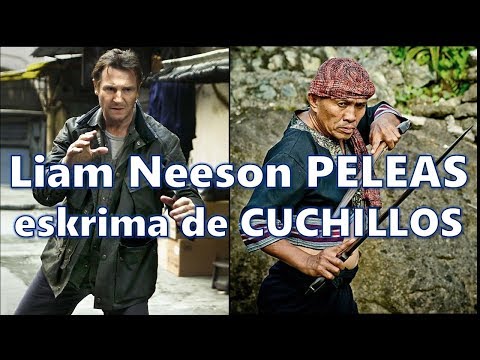
Liam Neeson en BUSQUEDA IMPLACABLE: ¿Eskrima Filipina o Coreografía de Hollywood?

Introducción: El Gancho del Guerrero

¿Alguna vez has visto a Liam Neeson en acción, desatando una furia controlada con un par de bastones o un cuchillo, y te has preguntado: "Esto es arte marcial real"? En películas como BUSQUEDA IMPLACABLE (Taken), Neeson encarna al arquetipo del protector implacable, un hombre con un pasado letal que recurre a habilidades marciales sorprendentemente efectivas. Pero, ¿es lo que vemos en pantalla una representación fiel de las artes marciales filipinas, específicamente el Eskrima? ¿O es simplemente una coreografía hollywoodiense diseñada para el espectáculo? En este análisis, desentrañaremos las técnicas, la filosofía y la autenticidad de lo que se nos presenta, invitándote a reflexionar sobre el verdadero espíritu del Budo y su manifestación cinematográfica. Prepárate, porque vamos a examinar de cerca la danza de la violencia y a cuestionar si Hollywood realmente entiende el arte de pelear.

Análisis Cinematográfico: La Danza de la Violencia

Liam Neeson, con su imponente presencia física, se ha consolidado como un icono del cine de acción moderno. En la saga BUSQUEDA IMPLACABLE, su personaje, Bryan Mills, se mueve con una eficiencia brutal que a menudo se atribuye al Eskrima, también conocido como Kali o Arnis. Las escenas de combate son rápidas, viscerales y, a primera vista, parecen auténticas. Vemos a Mills utilizar objetos cotidianos como armas improvisadas, una característica distintiva de las artes marciales filipinas. Sin embargo, como crítico de cine marcial y practicante, debo advertir: el cine es una ilusión. La coreografía de las peleas en Hollywood, aunque a menudo inspirada en artes marciales reales, está diseñada para el impacto visual y la narrativa. La velocidad con la que Neeson ejecuta los movimientos, la fluidez en el manejo del cuchillo o los bastones, y la aparente improvisación en el uso de su entorno, son el resultado de un cuidadoso entrenamiento coreográfico. Los directores y los coordinadores de especialistas buscan crear un espectáculo que mantenga al espectador al borde de su asiento.
"La auténtica fuerza no reside en la violencia explosiva, sino en la serenidad que la precede y la calma que deja tras de sí." - Principio del Budo
Si bien es innegable que hay una influencia del Eskrima, especialmente en el uso de armas y el juego de pies, debemos distinguir entre la representación cinematográfica y la práctica real. El Eskrima es un arte complejo, con múltiples sistemas, katas (aunque menos formalizadas que en otros estilos) y un profundo componente filosófico que va más allá de la simple aplicación de técnicas. La "eficiencia brutal" de Mills es, en gran medida, una construcción narrativa. Las peleas reales son a menudo más desordenadas, caóticas y menos estéticas.

Eskrima Filipina: Más Allá de la Pantalla

El Eskrima es un término general que abarca una amplia gama de sistemas de combate originarios de Filipinas. Históricamente, se desarrolló como un método de defensa contra invasores y disputas internas, lo que lo convirtió en un arte marcial eminentemente práctico y centrado en la supervivencia. A diferencia de muchos estilos asiáticos que enfatizan el combate desarmado, el Eskrima pone un gran énfasis en el uso de armas, siendo el bastón (tanto solo como doble) y el cuchillo (daga) sus herramientas más emblemáticas. La filosofía subyacente del Eskrima es la adaptabilidad y la fluidez. Se enseña a utilizar el cuerpo como un todo, coordinando movimientos de pies, manos y cuerpo para generar potencia y evadir ataques. El concepto de "flujo" es crucial: un practicante de Eskrima no solo reacciona a un ataque, sino que lo intercepta, redirige o utiliza la energía del oponente en su contra. La idea de utilizar objetos cotidianos como armas (improvisada weapon) es una consecuencia natural de su desarrollo histórico; un sombrero, un periódico enrollado, una silla, todo puede convertirse en un instrumento de defensa. El problema con la representación cinematográfica es que a menudo simplifica este arte. La complejidad de los ángulos de ataque, las distintas distancias de combate, la importancia del footwork y las estrategias de desarme se reducen a secuencias de acción visualmente impactantes pero superficiales. Ver a Liam Neeson "luchar" con un cuchillo es emocionante, pero no nos enseña la sutileza de un desarme o la precisión de un corte defensivo que son el pan de cada día de un verdadero maestro de Eskrima.

Los Principios del Kali: Un Legado Vivo

El término Kali, a menudo usado indistintamente con Eskrima o Arnis, nos remite a la esencia de estas disciplinas marciales filipinas. Uno de los principios fundamentales es el movimiento perpetuo y la economía de movimiento. El cuerpo debe ser una unidad, y cada acción debe tener un propósito. No hay movimientos superfluos; cada guardia, cada bloqueo, cada golpe está diseñado para defender, atacar o controlar la distancia. Otro principio clave es la importancia de la mano vacía como extensión de las armas, y viceversa. Un practicante de Eskrima entrenado puede pasar sin problemas de un combate con bastones a uno con cuchillos, e incluso a combate desarmado, manteniendo la misma lógica de movimiento y estrategia. La mano que no porta el arma no está inactiva; se utiliza para controlar la muñeca del oponente, bloquear ataques, o incluso atacar.
"El arte de la espada no es más que el arte de la vida. Si puedes dominar el arte de la espada, puedes dominar el arte de la vida." - Miyamoto Musashi (Aunque Musashi es de otra tradición, la filosofía de la disciplina total es universal en las artes marciales).
En BUSQUEDA IMPLACABLE, vemos a Neeson utilizar una combinación de golpes de mano abierta, agarres y uso de armas. La eficacia aparente reside en la contundencia de sus golpes y la rapidez de sus transiciones. Sin embargo, la profundidad del Kali, que incluye conceptos como la tangle (enredo, combate cercano y desordenado) o la defanging the snake (desarmar al oponente antes de que pueda atacar), rara vez se explora en detalle en la pantalla.

Guía de Entrenamiento: Introducción a Movimientos Básicos de Eskrima

Aunque el Eskrima es un arte profundo que requiere años de instrucción de un maestro calificado, podemos introducir algunos conceptos básicos para empezar a comprender su dinámica. La clave es la conexión entre la mente, el cuerpo y el arma.
  1. Postura Fundamental (Stance): Comienza con una postura estable pero móvil, con las rodillas ligeramente flexionadas y el peso centrado. Una postura común es la de "arco y flecha" (Ready Stance), pero con la posibilidad de movilidad y pivote.
  2. Movimiento de Pies (Footwork): El desplazamiento es vital. Practica pasos laterales, pasos cruzados y pivotes. El objetivo es mantener una base sólida mientras se cambia de posición rápidamente para evadir o cerrar la distancia.
  3. Movimientos de Mano Básicos (Hand Strikes): El Eskrima utiliza una variedad de cortes y estocadas. Los "12 ángulos de ataque" son un concepto introductorio común. Practica movimientos fluidos y continuos, no golpes aislados. Imagina que estás dibujando líneas en el aire con el bastón o el cuchillo.
    • Ejemplo de Golpe 1: Corte descendente desde la cabeza hacia el hombro opuesto.
    • Ejemplo de Golpe 2: Corte horizontal a la altura del torso.
    • Ejemplo de Golpe 3: Estocada frontal.
  4. Bloqueos (Blocks): Los bloqueos en Eskrima a menudo son fluidos y se convierten en ataques. Un bloqueo puede ser simplemente mover el arma para desviar el golpe del oponente, utilizando la fuerza de su propio ataque en su contra.
  5. Coordinación Arma-Cuerpo: No se trata solo de mover el brazo. Involucra la rotación del torso, el movimiento de las caderas y el uso del peso corporal para generar potencia en cada movimiento.
Para un entrenamiento más profundo, recomiendo buscar instructores cualificados. La práctica segura es primordial, especialmente con armas.

Equipo Esencial para tu Entrenamiento

Aunque el Eskrima se caracteriza por el uso de armas, su principio de adaptabilidad significa que se puede entrenar con elementos simples.
  • Bastones de Entrenamiento (Eskrima Sticks): Idealmente de rattan o materiales sintéticos resistentes. La longitud y el grosor pueden variar, pero un par de bastones de aproximadamente 26-30 pulgadas es un buen punto de partida.
  • Manoplas de Protección (Pads): Para entrenamiento de contacto controlado con un compañero.
  • Guantes de Sparring Ligeros: Si se combina el entrenamiento de Eskrima con otras disciplinas de combate.
  • Cuchillo de Entrenamiento (Training Knife): Hecho de goma o plástico para simular un cuchillo real sin el peligro.
  • Ropa Cómoda y Resistente: Que permita libertad de movimiento. Un kimono de judo o un conjunto de entrenamiento de MMA pueden servir para empezar.

Veredicto del Sensei: ¿Merece la Pena?

BUSQUEDA IMPLACABLE y sus secuelas son un entretenimiento de primer nivel, y Liam Neeson ofrece una actuación memorable como un guerrero en busca de justicia. La representación del Eskrima en estas películas es **visualmente impactante y sirve como una excelente introducción a la idea de que las artes marciales filipinas son letales y eficientes**. Sin embargo, como obra de arte marcial en sí misma, **se queda corta en autenticidad profunda**. Es un espectáculo de Hollywood que toma inspiración de un arte marcial real para crear secuencias de acción emocionantes. Si buscas aprender Eskrima, estas películas son un punto de partida inspirador, pero no un sustituto de la instrucción formal. **Calificación: Cinturón Negro en Espectáculo, Cinturón Blanco en Autenticidad Profunda.**

Preguntas Frecuentes

  1. ¿Es el Eskrima de Liam Neeson en TAKEN realista?

    Es una representación estilizada y coreografiada. Si bien se basa en los principios del Eskrima, la velocidad y la fluidez de las secuencias de acción están diseñadas para el cine, no para reflejar la crudeza y complejidad del combate real.

  2. ¿Qué arte marcial es el Eskrima?

    Es un término general para una familia de artes marciales filipinas centradas en el combate con armas (bastón, cuchillo) y el combate desarmado.

  3. ¿Cómo puedo aprender Eskrima de forma segura?

    Busca un instructor cualificado y un dojo reconocido. La práctica segura, especialmente con armas, es fundamental. Empieza con bastones de entrenamiento y sigue las instrucciones de tu maestro.

  4. ¿Se usan cuchillos en las artes marciales modernas como el MMA?

    Directamente, no, ya que las competiciones de MMA tienen reglas específicas. Sin embargo, los principios de manejo de armas, ángulos de ataque y defensa aprendidos en artes como el Eskrima pueden traducirse en habilidades de combate desarmado, como la gestión de la distancia y la anticipación de movimientos.

Para Profundizar en tu Camino

Si la disciplina y la filosofía de las artes marciales te cautivan, te invito a explorar estos recursos dentro de nuestro propio dojo digital:

Reflexión del Sensei: Tu Próximo Paso

Las películas nos entretienen y, a veces, nos inspiran a explorar disciplinas más profundas. Liam Neeson en BUSQUEDA IMPLACABLE nos ofrece una fantasía de eficacia marcial, un recordatorio de la potencia que puede emanar de un entrenamiento riguroso. Pero la verdadera lección no está en imitar sus movimientos en la pantalla, sino en entender el camino que lleva a esa destreza. El Eskrima, como cualquier arte marcial auténtico, es un viaje de autodescubrimiento, disciplina y respeto. No se trata solo de pelear, sino de vivir con un propósito marcial.

Reflexión del Sensei: Tu Próximo Paso

Liam Neeson utiliza su "pasado" para justificar su presente. Pero, ¿es la necesidad de actuar y defenderse siempre una consecuencia de un pasado oscuro, o puede ser una elección consciente para vivir una vida de preparación constante? ¿Está tu entrenamiento actual preparándote para reaccionar ante una crisis, o para vivir de manera más plena y consciente día a día? Reflexiona sobre la diferencia entre la "furia de película" y la "serenidad del guerrero". ``` GEMINI_METADESC: Analizamos el Eskrima filipino en BUSQUEDA IMPLACABLE de Liam Neeson. ¿Auténtico o Hollywood? Descubre la verdad y cómo iniciarte en este arte marcial letal.

7 Martial Arts That Truly Deliver in Self-Defense

As a seasoned practitioner and observer of the martial way, I've witnessed countless individuals drawn to the dojo for a singular, primal purpose: survival. While the pursuit of physical fitness, mental discipline, or spiritual enlightenment are noble aims, the core of martial arts for many, especially the uninitiated, often boils down to a more visceral question: "Will this actually protect me when things get dangerous?" It's a valid concern, a fundamental inquiry that separates the philosophical from the practical. Not all styles are created equal when the rubber meets the road – or rather, when fists fly. My own journey, marked by countless hours on the tatami, in the ring, and observing the brutal ballet of combat, has shown me that while *any* martial art can be a deterrent, some are inherently designed with a more direct, no-nonsense application for self-defense. Today, we delve into not just seven disciplines, but seven philosophies of combat that have proven their mettle in situations where mere technique isn't enough; where survival is the only prize. This isn't about flashy moves or theatrical katas; it's about efficacy, about principles that translate from the training floor to the unforgiving reality of street confrontation.

Table of Contents

Introduction: The Pragmatic Warrior

The question of survival is as old as humanity itself. For centuries, martial arts have evolved not just as forms of combat, but as systems of self-preservation. In today's world, where threats can manifest in unexpected ways, the ability to defend oneself is not a luxury; it's a fundamental requirement for peace of mind. But with a dizzying array of styles available, how does one choose the martial art that will best equip them for real-world confrontations? This exploration aims to cut through the noise and highlight disciplines that prioritize practical application, brutal efficiency, and proven effectiveness. Forget the mystical aura; we're talking about survival tools honed through rigorous training and tested under pressure.

What Makes a Martial Art Truly Effective for Self-Defense?

Before we dive into specific styles, let's establish the bedrock principles that define a martial art's efficacy in a self-defense scenario. It's not about how many forms you can perform or how high you can kick. It's about:
  • Directness and Simplicity: Complex techniques often fail under duress. Effective self-defense relies on simple, decisive actions.
  • Realism in Training: Sparring should simulate actual threats, not choreographed performances. Resistance is key.
  • Adaptability: The ability to handle various situations, ranges of combat (standing, ground, weapons), and types of opponents.
  • Focus on Vulnerable Targets: Understanding anatomy and knowing where to strike for maximum effect.
  • Mindset and Aggression Control: The psychological preparation to act decisively and the discipline to avoid excessive force.
These are the lenses through which we will examine our chosen disciplines. A martial art that checks these boxes is one that truly prepares you for the unexpected.

1. Krav Maga: The Uncompromising Israeli System

Originating from the streets of Israel, Krav Maga is less a traditional martial art and more a combat system. It was developed for the Israel Defense Forces (IDF) and focuses on practical, real-world situations.
  • Core Principles: Simultaneous defense and attack, aggression, and exploiting an attacker's weaknesses.
  • Effectiveness: It teaches how to defend against common attacks, including multiple assailants, armed assaults, and brutal grabs. The emphasis is on quick neutralization of the threat.
  • Training Style: Highly intense, stress-induced drills designed to replicate the adrenaline and chaos of a real fight.
  • Philosophical Take: "The best defense is to end the fight as quickly as possible." There's no room for honor or etiquette when your life is on the line.
"In Krav Maga, there are no rules. Only survival."
For those seeking a no-holds-barred approach to self-defense that prioritizes immediate threat cessation, Krav Maga stands as a formidable choice. You won't find graceful katas here, but you will find a direct path to protecting yourself.

2. Muay Thai: The Art of Eight Limbs

The national sport of Thailand, Muay Thai, is renowned for its devastating power and comprehensive striking. It utilizes fists, elbows, knees, and shins, making it a complete arsenal for stand-up combat.
  • Core Principles: Utilizing all eight limbs for offense and defense, strong clinch work, and devastating kicks and knee strikes.
  • Effectiveness: Its conditioning and power generation make it incredibly effective in close-range combat. The clinch allows for control and the delivery of painful knee and elbow strikes.
  • Training Style: Intense physical conditioning, heavy bag work, pad drills, and sparring that emphasizes power and resilience.
  • Philosophical Take: Muay Thai embodies resilience and relentless pressure. It teaches practitioners to endure and to strike with full commitment.
"The body is your weapon. Every part of it is capable of inflicting damage. Use them all."
While primarily a striking art, the conditioning and close-quarters fighting prowess gained from Muay Thai are invaluable for self-defense. If you're looking to develop power and the ability to control an opponent at close range, Muay Thai is unparalleled.

3. Brazilian Jiu-Jitsu (BJJ): The Ground Game Dominator

Developed from Judo and traditional Japanese Jiu-Jitsu, BJJ focuses on grappling and ground fighting. Its effectiveness lies in its ability to allow a smaller, weaker person to overcome a larger, stronger attacker through leverage and technique.
  • Core Principles: Taking the fight to the ground, controlling the opponent, and applying submissions (chokes and joint locks).
  • Effectiveness: In a street fight, the confrontation often ends up on the ground. BJJ provides the skills to control, dominate, and submit an opponent in this scenario, even if they are significantly larger.
  • Training Style: Live rolling (sparring) is a cornerstone, teaching practitioners to apply techniques under pressure and develop a high level of grappling proficiency.
  • Philosophical Take: Jiu-Jitsu teaches humility and problem-solving under extreme physical and mental stress. It's often said, "If you don't know Jiu-Jitsu, you'd better hope you win the lottery."
The importance of grappling in self-defense cannot be overstated. BJJ offers a systematic approach to controlling the most common fight scenario. For anyone concerned about facing a larger aggressor, BJJ is a critical skill.

4. Kali/Eskrima/Arnis: The Weaponized Art

Hailing from the Philippines, Kali (also known as Eskrima or Arnis) is a comprehensive martial art that emphasizes weapon-based combat – sticks, knives, and empty hands.
  • Core Principles: Flowing, continuous movements, transition between empty-hand combat and weapon usage, and devastatingly effective strikes aimed at vital points.
  • Effectiveness: Its practical application against armed assailants makes it a top choice for self-defense. Training with weapons translates surprisingly well to empty-hand techniques.
  • Training Style: Repetitive drills focusing on angles of attack, footwork, and integration of weapon and empty-hand skills.
  • Philosophical Take: Adaptability and preparedness. Kali teaches you to use whatever is at hand as a tool for defense, emphasizing flow and responsiveness.
"In the Philippines, we don't distinguish between armed and unarmed combat. They are one and the same."
If you want to be prepared for the grim reality of weapon-based threats, Kali provides a direct and brutal curriculum. Its focus on angles and flow makes it incredibly practical.

5. Wing Chun: The Efficient Southern Chinese Art

Wing Chun is a concept-based martial art originating from Southern China, famously associated with Ip Man, Bruce Lee's teacher. It emphasizes efficiency, directness, and simultaneous blocking and striking.
  • Core Principles: Centerline theory, economy of motion, simultaneous block-and-strike, and sensitivity (sticking hands).
  • Effectiveness: Its focus on close-range combat, trapping, and rapid-fire strikes makes it highly effective in confined spaces and against aggressive opponents. It teaches practitioners to generate power from structure rather than brute force.
  • Training Style: Forms (Siu Nim Tao, Chum Kiu, Biu Jee), sticky hands drills (Chi Sao), and controlled sparring.
  • Philosophical Take: "Directness is the path. Stick to the center." Wing Chun teaches you to be economical with your movements and to exploit the opponent's structure.
Wing Chun's emphasis on practicality and efficiency makes it a strong contender for self-defense, particularly for those who may not possess overwhelming physical strength.

6. Judo: The Gentle Way of Leverage and Control

Founded by Jigoro Kano, Judo is a grappling-based martial art derived from Japanese Jiu-Jitsu. While often seen as a sport, its core principles are deeply rooted in self-defense.
  • Core Principles: Maximum efficiency, mutual welfare and benefit, using an opponent's force and momentum against them.
  • Effectiveness: Judo excels at throws and takedowns, but also teaches crucial groundwork (pins, chokes, and joint locks). It develops balance, coordination, and the ability to control an opponent's body.
  • Training Style: Randori (free practice/sparring) is central, simulating real combat scenarios, alongside specific technique practice and falling skills (Ukemi).
  • Philosophical Take: "Jitsu is the way of yielding, of gentleness. By softness, you can overcome hardness." Judo teaches you to use an attacker's energy and aggression against them.
The ability to unbalance and throw an opponent can neutralize a threat instantly. Judo's focus on leverage and control makes it a powerful tool for self-defense, especially when facing larger opponents.

7. Mixed Martial Arts (MMA): The Ultimate Synthesis

MMA is not a single martial art but a combat sport that allows a wide variety of striking and grappling techniques. Practitioners often cross-train in multiple disciplines to become well-rounded fighters.
  • Core Principles: Combining striking (like Muay Thai, Boxing, Karate) with grappling (like BJJ, Wrestling, Judo) to be effective in all ranges of combat.
  • Effectiveness: MMA fighters are trained to handle virtually any situation that arises in a fight, making them highly adaptable and dangerous. The comprehensive training addresses striking, clinching, takedowns, and ground fighting.
  • Training Style: Cross-training across disciplines, heavy sparring, conditioning, and strategic fight preparation.
  • Philosophical Take: "There are no rules in a street fight, but there are rules for survival." MMA fighters learn to adapt and overcome, drawing from the strengths of multiple arts.
While MMA is a sport, the skills developed by MMA athletes are incredibly applicable to self-defense. Their ability to transition between striking and grappling, combined with rigorous conditioning, makes them formidable. For a practical, all-around self-defense system, training in an MMA environment is hard to beat.

Essential Gear for Your Training

To truly maximize your progress in any martial art, having the right equipment is crucial. Investing in quality gear not only enhances your training experience but also provides necessary protection.
  • Protective Gear: Mouthguards are non-negotiable for any sparring. Headgear and shin guards are essential for striking arts like Muay Thai or Karate to prevent injuries.
  • Training Uniforms (Gi/Kimono): For Judo and BJJ, a durable gi is paramount. Look for double-weave for BJJ for longevity. For striking arts, comfortable shorts and t-shirts are usually sufficient, though some Karate styles require specific gis.
  • Sparring Gloves: If you're engaging in striking, quality sparring gloves (14-16 oz recommended for training) are vital for hand protection.
  • Training Partners: Perhaps the most crucial "gear" is a dedicated training partner or a good gym with a supportive community. Consistent resistance is key to developing real-world skills.
  • Optional: A training dummy for solo practice or a makiwara if your art incorporates it can be beneficial.
Remember, quality equipment is an investment in your safety and development as a martial artist. Consider looking into specific Karate merchandise or MMA gear tailored to your chosen discipline.

Frequently Asked Questions

Do I need to be in great shape to start?

No, absolutely not. Most martial arts schools are equipped to take beginners and help them build their fitness as they learn. The training itself will improve your conditioning.

Which art is best for women's self-defense?

All martial arts can be effective for women. However, styles like Krav Maga, BJJ, and Judo are often highlighted for their emphasis on leverage and neutralizing larger opponents, making them particularly well-suited.

How long does it take to become proficient in self-defense?

Proficiency varies, but with consistent training (2-3 times a week) in a practical art like Krav Maga or BJJ, you can expect to develop a solid foundation for self-defense within 6-12 months. True mastery takes a lifetime.

What if I'm afraid of getting hurt?

It's natural to have reservations. Good instructors prioritize safety and teach progressively. The goal is to learn to control your fear and react effectively, not to embrace unnecessary injury.

Is striking or grappling more important for self-defense?

Both are crucial. A comprehensive system like MMA or cross-training combines the best of both worlds, allowing you to defend yourself effectively whether the fight stays standing or goes to the ground.

For Profundizar en tu Camino

Sensei's Reflection: Your Next Step

The path to effective self-defense is paved with dedication and the right choices. These seven martial arts offer proven methodologies, but remember, the effectiveness of any art is ultimately determined by the practitioner and their commitment to realistic training. A flashy technique practiced in isolation is useless; a simple principle drilled relentlessly becomes a powerful tool. Now, consider this: Is your current training regimen truly preparing you for the chaos of a real-world encounter, or are you merely going through the motions? Have you tested your skills against willing, resisting opponents? The dojo is a laboratory, but the real world is the ultimate test. What fears hold you back from engaging in more realistic training? And more importantly, what are you willing to do to overcome them? Answer me this: If your life depended on it, could you defend yourself right now? The time to truly prepare is always before the storm, not during it. GEMINI_METADESC: Explore 7 highly effective martial arts for self-defense: Krav Maga, Muay Thai, BJJ, Kali, Wing Chun, Judo, and MMA. Learn what makes them practical for real-world threats.