Showing posts sorted by date for query Don King. Sort by relevance Show all posts

Henry Cejudo vs. Marlon Moraes: A Masterclass in Combat Strategy at UFC 238

The Unseen War: Beyond the Octagon's Roar

The clash between Henry Cejudo and Marlon Moraes at UFC 238 wasn't just a fight; it was a high-stakes chess match played out with fists, feet, and the formidable power of **wrestling** and **striking**. While the result saw Cejudo victorious, emerging as the new UFC Bantamweight Champion, the true lesson lies not just in the knockout, but in the strategic evolution and the philosophical underpinnings of combat that were on full display. Many fans see only the flash and the fury, the **knockout power** and the **grappling** exchanges, but a true student of the martial way, a **budoka**, looks deeper. They analyze the **mental game**, the **discipline**, and the subtle shifts in momentum that dictate the outcome of such intense **battles**. This wasn't merely a **fight**; it was a testament to decades of rigorous **training** and the relentless pursuit of mastery.

Cejudo's Legacy: From Olympic Gold to MMA King

Henry Cejudo's journey is a saga of dedication that transcends mere athletic achievement. As an Olympic gold medalist in freestyle wrestling, Cejudo brought an unparalleled level of mat control and **explosive takedowns** to the **MMA** arena. His record, a formidable 16-2-0, speaks volumes, but it's his fight IQ and adaptability that truly set him apart. He’s not just a wrestler; Cejudo honed his **striking** skills to a lethal degree, weaving together a potent arsenal of punches, kicks, and knees. He embodies the principle that mastery in one domain can be powerfully amplified when integrated with another. This synergy is the hallmark of a true martial artist, constantly evolving and integrating new knowledge. For those aspiring to excel, consider the importance of a well-rounded **training** regimen. A solid foundation in **wrestling** or **judo**, combined with dynamic **kickboxing** or **Karate** techniques, can create an unstoppable force.

Moraes: The Striking Maestro's Challenge

Marlon Moraes, a Brazilian warrior with a professional record of 22-6-1, arrived at UFC 238 as a seasoned contender, a former WSOF Bantamweight Champion renowned for his exceptional **striking skills**. With 17 wins by KO/TKO, Moraes possessed the kind of fight-ending power that kept opponents constantly on edge. His **defensive skills** were equally impressive, a testament to meticulous **training** designed to nullify an opponent's attack. He made it incredibly difficult for fighters to land clean shots, a crucial aspect of survival and victory in any **combat sport**. The dynamic between Cejudo's wrestling prowess and Moraes's striking excellence set the stage for a classic confrontation, a true test of different martial philosophies.

The Strategic Dance: Deconstructing Cejudo vs. Moraes

The initial exchanges were a strategic dance, a palpable tension filling the arena. Cejudo, true to his roots, immediately sought to close the distance, aiming for the clinch and the inevitable takedown that has defined much of his career. However, Moraes, with his keen understanding of range and timing, displayed superb **takedown defense**. He managed to keep the **fight** standing, a critical objective against a renowned wrestler. The first round saw Moraes utilize his powerful leg kicks, which visibly seemed to impact Cejudo's mobility. This was a smart tactic, aiming to blunt the wrestler's offensive capabilities. Yet, the hallmark of a champion isn't just skill, but the ability to adapt. In the second round, Cejudo made the crucial adjustments. He began to time his entries more effectively, finally breaching Moraes's defenses and securing a takedown. Once on the ground, the dynamic shifted dramatically. Cejudo's control was absolute, his **ground-and-pound** relentlessly targeting Moraes. This phase of the fight underscored a fundamental principle in **Budo**: once you have your opponent where you want them, exploit the advantage with decisive action. The third round saw Cejudo continuing his dominance, blending his wrestling with effective striking. Moraes, though resilient, appeared to be tiring, a common consequence of defending relentless takedowns and absorbing ground strikes. The **ki** flow seemed to be with Cejudo. The decisive moment arrived in the fourth round. Cejudo landed a powerful knee strike that sent Moraes crashing to the canvas. This was the **knockout** that fans craved, the definitive punctuation to a masterful performance. The follow-up ground strikes led to the referee's stoppage, crowning Cejudo the new champion. This victory wasn't just about raw power; it was about strategic evolution, demonstrating that even a fighter known for one discipline can conquer another with dedication and intelligent application of skills.

Veredicto del Sensei: ¿Merece la pena?

This **fight** is a prime example of how a well-rounded martial artist, who understands the interplay between different disciplines, can overcome specialized talent. Cejudo's victory over Moraes is a **lesson in strategy**, showcasing the importance of adaptability and the integration of **wrestling** and **striking**. For any **martial arts** enthusiast, this bout is a must-watch, not just for the excitement, but for the deep tactical insights it offers. It’s a clear demonstration that while **specialization** has its merits, true mastery lies in the ability to blend and adapt. Cejudo earned his **Cinturón Negro en Combate Estratégico**.

Equipo Esencial para tu Entrenamiento

To emulate the dedication and skill displayed by these warriors, the right **equipment** is paramount. Whether you're focusing on **wrestling**, **striking**, or a blend of disciplines, investing in quality gear is an investment in your own **training** and safety.
  • Guantes de MMA: Look for gloves that offer a good balance of protection for striking and dexterity for **grappling**. 16oz gloves are generally recommended for sparring sessions to ensure adequate padding.
  • Kimono de Judo o Jiu-Jitsu: For those focusing on ground **fighting** and **wrestling**, a durable, double-weave kimono (gi) is essential. It needs to withstand the rigors of constant pulling and grappling.
  • Protector Bucal: Non-negotiable for any form of sparring or intense **training**. Protect your teeth and jaw.
  • Espinilleras y Guantes de Kickboxing/Karate: If your **training** leans more towards **striking**, invest in proper shin guards and sparring gloves to prevent injuries.
  • Protector Genital: A vital piece of **equipment** for all male practitioners involved in any combat sport.
For those looking to deepen their understanding of martial principles, consider exploring foundational texts. The wisdom within books like "The Book of Five Rings" by Miyamoto Musashi offers insights that are as relevant to the **Octagon** as they are to any **battlefield**.

Guía de Entrenamiento: Integrando Wrestling y Striking

Aspiring fighters often struggle to bridge the gap between **wrestling** and **striking**. This exercise, inspired by the strategic shifts seen in Cejudo's performance, aims to improve your transitions and overall combat effectiveness.
  1. Warm-up (15 mins): Begin with dynamic stretching and light cardio. Focus on movements that simulate both striking and wrestling actions – hip rotations, leg swings, arm circles, torso twists.
  2. Striking Drills (10 mins): Practice combinations like jab-cross-hook, followed by a low kick. Focus on footwork and maintaining a balanced stance. Alternate between offensive drills and defensive drills (e.g., slipping punches, blocking kicks).
  3. Wrestling Entries (10 mins): Practice level changes and shooting for double-leg or single-leg takedowns. Focus on explosiveness and driving through the takedown. Imagine you are attacking a stationary opponent.
  4. Transition Drills (15 mins): This is the core of the drill.
    • Start in a striking stance. Throw a combination (e.g., jab-cross). As your opponent (or a partner) attempts to defend or counter, immediately transition into a takedown attempt.
    • If the takedown is defended, immediately pop back up to your striking stance and prepare to strike.
    • Alternatively, if you are taken down, practice effective get-ups (e.g., technical stand-up) while defending against ground-and-pound or submissions.
    • Work on clinching from striking range, transitioning to knees or elbows, and then potentially to a takedown if the opportunity arises.
  5. Sparring (10 mins): Engage in light, controlled sparring, focusing specifically on making these transitions. Don't worry about winning; focus on executing the *transition* from striking to wrestling and back.
  6. Cool-down and Stretching (5 mins): Static stretching, holding each stretch for 30 seconds.
Remember, consistency is key. Integrating these phases smoothly takes time and dedicated practice. The goal is to make these transitions second nature, a fluid response rather than a conscious decision.

Future Fights: What Lies Ahead?

Cejudo's victory was a crowning achievement, leading him to announce his retirement – a decision that, while understandable, left fans yearning for more. Yet, his hints at a potential return keep the flame of possibility alive. The UFC landscape is always shifting, and a fighter of Cejudo’s caliber can never truly be counted out. His legacy is secure, but the allure of one more **fight** often calls to the warrior’s spirit. For Marlon Moraes, this loss represents not an end, but a challenging crossroads. He remains a formidable force in the Bantamweight division, possessing the skills and the heart to bounce back. His journey will be watched closely, as he seeks to re-establish himself against the division's top contenders. Who will be his next opponent? This uncertainty is part of the thrill of **combat sports**. The path to redemption is often harder than the initial climb, but it yields a far greater reward.

Preguntas Frecuentes

What is Henry Cejudo's primary martial arts background?

Henry Cejudo is an Olympic gold medalist in freestyle **wrestling**. This background heavily influences his **MMA** style, focusing on takedowns and control.

How did Marlon Moraes typically win his fights?

Marlon Moraes is known for his exceptional **striking skills**, with a significant number of his wins coming by KO/TKO.

Was the fight between Cejudo and Moraes a close contest?

While Moraes displayed resilience and dangerous striking, Cejudo's strategic adjustments and **wrestling** advantage allowed him to gain control, ultimately leading to a TKO victory in the fourth round.

What does "TKO" mean in MMA?

TKO stands for Technical Knockout. It occurs when the referee stops the **fight** because one fighter is deemed unable to safely continue, even if they are not fully unconscious.

Does Cejudo's retirement mean he will never fight again?

While Cejudo has announced retirement, he has also hinted at a possible return. The world of **martial arts** often sees champions make comebacks.

Para Profundizar en tu Camino

  • BUDO: Explore the broader philosophy and principles behind martial disciplines.
  • MMA: Dive deeper into the world of Mixed Martial Arts, its history, and its stars.
  • DefensaPersonal: Understand how techniques learned in sports translate to real-world self-defense scenarios.

Reflexión del Sensei: Tu Próximo Paso

Cejudo conquered the **Octagon** by blending his wrestling dominance with sharpened striking. He didn't just fight; he strategized, he adapted, he overcame. This is the essence of true martial artistry. It is not merely about possessing skills, but about knowing *when* and *how* to apply them, and importantly, how to evolve when faced with adversity. So I ask you, my students, and all who seek mastery: When you face your own challenges – be it on the mat, in the ring, or in the complex arenas of life – do you adapt, or do you crumble? Do you possess the foresight to shift your strategy when your initial approach falters, or do you cling to a failing method with the stubbornness of a novice? The true warrior doesn't just throw punches; they understand the rhythm of the battle, the ebb and flow of power, and can transition seamlessly from attack to defense, from strategy to instinct. Consider this your **koan** for the week. ``` ```json { "@context": "https://schema.org", "@type": "FAQPage", "mainEntity": [ { "@type": "Question", "name": "What is Henry Cejudo's primary martial arts background?", "acceptedAnswer": { "@type": "Answer", "text": "Henry Cejudo is an Olympic gold medalist in freestyle wrestling. This background heavily influences his MMA style, focusing on takedowns and control." } }, { "@type": "Question", "name": "How did Marlon Moraes typically win his fights?", "acceptedAnswer": { "@type": "Answer", "text": "Marlon Moraes is known for his exceptional striking skills, with a significant number of his wins coming by KO/TKO." } }, { "@type": "Question", "name": "Was the fight between Cejudo and Moraes a close contest?", "acceptedAnswer": { "@type": "Answer", "text": "While Moraes displayed resilience and dangerous striking, Cejudo's strategic adjustments and wrestling advantage allowed him to gain control, ultimately leading to a TKO victory in the fourth round." } }, { "@type": "Question", "name": "What does \"TKO\" mean in MMA?", "acceptedAnswer": { "@type": "Answer", "text": "TKO stands for Technical Knockout. It occurs when the referee stops the fight because one fighter is deemed unable to safely continue, even if they are not fully unconscious." } }, { "@type": "Question", "name": "Does Cejudo's retirement mean he will never fight again?", "acceptedAnswer": { "@type": "Answer", "text": "While Cejudo has announced retirement, he has also hinted at a possible return. The world of martial arts often sees champions make comebacks." } } ] }

UFC 284: Makhachev vs. Volkanovski - A True Warrior's Reckoning

As practitioners of the martial path, we often seek to understand the pinnacle of combat. We study the ancient texts, debate the philosophical underpinnings, and, yes, we dissect the contests of modern warriors. UFC 284, featuring the clash between Islam Makhachev and Alexander Volkanovski, was not merely a fight; it was a crucible where skill, strategy, and sheer willpower were tested under the brightest lights. This bout, published on February 13, 2023, presented a fascinating intersection of styles and legacies, a topic that demands our rigorous analysis.

The Intrigue of the Champion vs. Champion Bout

When two champions from different divisions, each at the zenith of their respective careers, step into the cage, it's more than just a fight; it's a philosophical statement. UFC 284 posed the question: can the pound-for-pound king of striking, Alexander Volkanovski, overcome the dominant lightweight champion, Islam Makhachev, whose wrestling is considered among the best in the sport? This wasn't just about who would win; it was about what styles would prevail and what lessons could be gleaned by martial artists worldwide.

The intention of this analysis is to dissect this monumental bout not merely as a sporting event, but as a demonstration of martial principles, strategic application, and the indomitable spirit that defines true fighters. We will delve into the technicalities, the mental fortitude, and the broader implications for the world of combat sports and martial arts.

Clash of Styles: Dagestani Wrestling vs. Australian Striking Prowess

Islam Makhachev, a protégé of the legendary Khabib Nurmagomedov, embodies the relentless pressure and suffocating control of the Dagestani wrestling school. His ability to dictate where the fight takes place, his powerful takedowns, and his suffocating ground-and-pound are hallmarks of his game. He operates with a clear objective: to neutralize his opponent's strengths and exploit their weaknesses through a suffocating grappling attack.

Conversely, Alexander Volkanovski, a former rugby player, possesses a uniquely dynamic striking game. His footwork is exceptional, his volume high, and his ability to land significant strikes while maintaining composure is world-class. Volkanovski is known for his fight IQ, his adaptability, and his incredible conditioning, allowing him to maintain a high pace throughout grueling contests.

The fundamental question entering UFC 284 was whether Volkanovski's superior striking and movement could keep Makhachev at bay, or if Makhachev's relentless grappling would eventually drag the featherweight king into his domain. This is a classic "wrestler vs. striker" narrative, but one elevated by the caliber of the combatants.

Round-by-Round Analysis: A Masterclass in Combat Strategy

The fight unfolded as a strategic chess match, with both fighters demonstrating an incredible ability to adapt and execute.

  • Round 1: The Feeling Out Process & Takedown Defense. Both fighters respected each other’s power. Makhachev initiated takedown attempts, showcasing his power, but Volkanovski’s takedown defense proved robust. Volkanovski utilized his movement and striking to keep Makhachev guessing, landing effectively and controlling the distance. This round was crucial for Volkanovski to establish his striking advantage and test Makhachev's defensive capabilities.
  • Round 2: Makhachev's Adjustments & Ground Game. Makhachev began to find more success with his takedowns, leveraging his strength and timing. Once on the ground, his positional control and ground-and-pound were evident, though Volkanovski’s defensive jiu-jitsu and ability to scramble back to his feet were remarkable. This round highlighted Makhachev's persistence and his capacity to grind out an advantage.
  • Round 3: The Championship Rounds - Endurance and Heart. As the fight wore on, the conditioning of both fighters was put to the ultimate test. Makhachev continued to press for takedowns, while Volkanovski defended stoutly and looked for openings to land counters. The back-and-forth nature of this round, with momentum swings and moments of danger for both, encapsulated the spirit of a true championship fight.
  • Round 4: Volkanovski's Resurgence & Striking Dominance. Volkanovski found a second wind, perhaps digging deeper than ever before. His striking volume increased, and he began to land with more significant impact. He showcased championship mettle by weathering Makhachev's offensive surges and finding his own rhythm, even hurting Makhachev at times. This round was a testament to his resilience and superior striking acumen.
  • Round 5: The Final Push for Supremacy. The final round was a desperate, yet controlled, battle. Both men understood the stakes. Makhachev, perhaps sensing he was behind, went for broke with takedowns, while Volkanovski continued to defend and land, seeking the knockout blow or enough points to secure the round. The sheer will displayed by both warriors in these closing moments was inspiring.

The fight ultimately went to a decision, with Makhachev securing a hard-fought victory. However, Volkanovski's performance was lauded as one of the greatest "almost" victories in UFC history, demonstrating that he belonged at the very top of the lightweight division as well.

Key Techniques and Tactical Nuances

Beyond the raw power and grit, UFC 284 offered a masterclass in specific martial techniques:

  • Takedown Entries: Makhachev’s double-leg and single-leg takedowns were textbook, utilizing level changes and powerful drives. His ability to chain takedowns after failed attempts was particularly impressive.
  • Takedown Defense: Volkanovski’s sprawl was effective, and his ability to create space and shrimp out of bad positions was crucial. His hip mobility and low base made him a difficult target.
  • Ground Control: When Makhachev secured top position, his ride was suffocating. He used his weight distribution and body positioning to prevent Volkanovski from escaping or effectively using his guard.
  • Striking Combinations: Volkanovski's jab and cross were potent, and he effectively mixed in leg kicks and body shots to keep Makhachev honest. His ability to slip punches and counter was a key element of his striking success.
  • Pacing and Conditioning: Both fighters displayed elite conditioning, but the ability to maintain output in rounds 4 and 5, especially after intense grappling exchanges, speaks volumes about their physical and mental preparation.
"The difference between a good fighter and a great fighter is not just talent, but the ability to adapt and overcome when things don't go as planned. Both Makhachev and Volkanovski showcased this in spades." - Sensei's Observation

The Spirit of Budo in the Octagon

While the UFC is a modern sport, the principles of Budo—the "way of the warrior"—are undeniably present. This bout exemplified several core tenets:

  • Resilience (Gaman): Both fighters demonstrated immense resilience, absorbing heavy shots and continuing to fight with determination. Volkanovski's performance after being knocked down in previous fights, and Makhachev's persistence in securing takedowns against a formidable opponent, highlight this.
  • Adaptability (Henka): The ability to adjust strategies mid-fight is crucial. Makhachev altered his approach to secure takedowns, and Volkanovski found success with his striking in later rounds.
  • Courage (Yūki): Stepping into the Octagon against another champion, especially when moving up in weight, requires immense courage. The willingness to face the unknown and push beyond perceived limits is a hallmark of the martial spirit.
  • Mastery (Shu-Ha-Ri): Both fighters embody different aspects of mastery. Makhachev represents the 'Shu' (following tradition and strict rules) and 'Ha' (breaking tradition to innovate within a style) of Dagestani wrestling. Volkanovski showcases the 'Ri' (transcending the style) through his unique blend of striking and combat intelligence.

This fight is a modern interpretation of ancient martial ideals, proving that the essence of the warrior path transcends time and discipline. It challenges the notion that only traditional martial arts can teach valuable lessons; the modern combat arena, when approached with the right mindset, offers profound insights.

Veredicto del Sensei: ¿Merece la pena?

Absolutely. UFC 284: Makhachev vs. Volkanovski was an instant classic and a must-watch for any serious student of combat. It was a rare opportunity to see two pound-for-pound best fighters in the world go head-to-head in a fiercely contested bout. The strategic depth, the display of elite skills, and the sheer heart shown by both Islam Makhachev and Alexander Volkanovski make this fight a valuable learning experience. It delivered on all fronts – technical, physical, and mental.

Cinturón Negro en Combate Estratégico.

Training for Dominance: Lessons from UFC 284

The fight between Makhachev and Volkanovski offers actionable insights for any martial artist looking to improve their training:

  1. Develop a Strong Base: Makhachev's wrestling base is foundational to his success. Focus on developing your takedown defense, sprawl, and understanding of body mechanics. Practice BUDO principles of stability and rootedness.
  2. Sharpen Your Striking Defense: Volkanovski’s ability to defend takedowns and slip punches kept him in the fight. Incorporate defensive drills, footwork, and head movement into your routine.
  3. Conditioning is King: Both fighters pushed an incredible pace for five rounds. Ensure your cardiovascular endurance and muscular strength are at elite levels. High-intensity interval training (HIIT) and circuit training are excellent methods.
  4. Master Positional Control: Whether you're a striker or a grappler, understanding how to maintain dominant positions and transition efficiently is key. Study grappling exchanges for positional awareness.
  5. Cultivate Mental Fortitude: The ability to remain calm under pressure, adapt to adversity, and push through fatigue is what separates champions. Practice mindfulness and visualization techniques.

Equipo Esencial para tu Entrenamiento

To emulate the dedication of these athletes, consider investing in quality training gear. For striking, especially if you are working on power and speed like Volkanovski, good quality kickboxing gloves and mitts are essential for partner drills. If your focus leans towards grappling, like Makhachev, a durable Judo or BJJ gi is indispensable for drills and sparring. For general conditioning and resistance training, resistance bands and a jump rope are versatile tools that require minimal space and can be used anywhere.

Preguntas Frecuentes

Was this fight a true test of pound-for-pound skill?
Yes, it was widely considered one of the biggest pound-for-pound showdowns in recent UFC history, pitting the reigning lightweight champion against the reigning featherweight champion.
Who won the UFC 284 main event?
Islam Makhachev won via unanimous decision against Alexander Volkanovski.
Did Volkanovski look outmatched?
No, Volkanovski put on an exceptional performance, particularly in the later rounds, showcasing his heart and skills and many felt he did enough to win.
What martial arts styles were most prominent?
Dagestani wrestling (Makhachev) and a dynamic, pressure-based striking game with strong grappling defense (Volkanovski).

Para Profundizar en tu Camino

  • MMA: The Art of Striking and Grappling Synergy
  • BUDO Philosophy: Cultivating the Warrior's Spirit
  • Entrenamiento de Alta Intensidad para Luchadores

Reflexión del Sensei: Tu Próximo Paso

Makhachev and Volkanovski fought with the heart of true warriors, pushing each other to their absolute limits. They demonstrated that in combat, strategy, skill, and sheer willpower are inseparable. Now, I ask you: when faced with an opponent whose strengths seem insurmountable, and your own plan begins to falter, do you crumble, or do you dig deeper? How will you find that extra gear, that reserve of strength, not just in the cage, but in the daily battles of life? Consider this.

``` ```json { "@context": "https://schema.org", "@type": "FAQPage", "mainEntity": [ { "@type": "Question", "name": "Was this fight a true test of pound-for-pound skill?", "acceptedAnswer": { "@type": "Answer", "text": "Yes, it was widely considered one of the biggest pound-for-pound showdowns in recent UFC history, pitting the reigning lightweight champion against the reigning featherweight champion." } }, { "@type": "Question", "name": "Who won the UFC 284 main event?", "acceptedAnswer": { "@type": "Answer", "text": "Islam Makhachev won via unanimous decision against Alexander Volkanovski." } }, { "@type": "Question", "name": "Did Volkanovski look outmatched?", "acceptedAnswer": { "@type": "Answer", "text": "No, Volkanovski put on an exceptional performance, particularly in the later rounds, showcasing his heart and skills and many felt he did enough to win." } }, { "@type": "Question", "name": "What martial arts styles were most prominent?", "acceptedAnswer": { "@type": "Answer", "text": "Dagestani wrestling (Makhachev) and a dynamic, pressure-based striking game with strong grappling defense (Volkanovski)." } } ] }

Crawford vs. Robinson: A Virtual Clash of Titans - Is This Undisputed Simulation the Real Deal?

The roar of the virtual crowd, the perfectly rendered sweat glistening on muscular frames, the echo of gloves meeting flesh – these are the sounds and sights that draw us into the world of combat sports simulations. But when a digital battle pits a modern maestro like Terence Crawford against the undisputed welterweight king of yesteryear, Sugar Ray Robinson, the question isn't just about entertainment; it's about legacy, skill, and the very essence of what makes a fighter legendary. Is this "Undisputed Boxing Simulation" merely a technological marvel, or does it offer a genuine glimpse into the heart of a pugilistic contest? Welcome, warriors and scholars of the martial path, to Budo and Martial Arts.

Table of Contents

The Spectacle of Digital Combat

The digital arena has become a fascinating battleground for martial arts enthusiasts. It allows us to explore hypothetical matchups that the strict timeline of history would never permit. When "Undisputed Boxing Simulation" presents a bout between Terence Crawford, a man who has conquered multiple weight classes with clinical precision, and Sugar Ray Robinson, a name synonymous with boxing greatness, it taps into a primal curiosity: who would win? This simulation, published on February 5, 2023, at 01:00 PM, promises "Realistic Stats CPU vs CPU." But as any seasoned martial artist knows, stats are merely numbers. The true measure of a fighter lies in their spirit, their strategy, their **ki**, and their ability to adapt under pressure. Can a simulation truly capture these intangible elements? We delve into the mechanics and the potential philosophical implications of such a digital clash.

Crawford vs. Robinson: A Hypothetical Showdown

Terence Crawford, "Bud," is known for his masterful boxing IQ, his ability to switch stances seamlessly, and his devastating power, particularly his left hand. He's a modern strategist, a patient hunter who dissects his opponents. On the other side, Sugar Ray Robinson, often hailed as the greatest pound-for-pound boxer of all time, possessed a blend of raw power, incredible speed, graceful movement, and an iron chin. His repertoire included brutal combinations and an almost animalistic will to win. pitting these two titans, even in a virtual space, forces us to consider what truly defines dominance. Is it the refined technique and strategic patience of Crawford, or the raw, explosive dynamism of Robinson? The simulation attempts to answer this, but the true debate, the kind that fuels endless hours of discussion in dojos and gyms, lies in the interpretation of their hypothetical engagement.
"Boxing is like jazz. I don't care how flashy it is, if it doesn't have soul, it's boring." - Sugar Ray Robinson. Does a simulation possess soul?

Deconstructing the "Undisputed" Engine

The premise of "Realistic Stats CPU vs CPU" is the core of this simulation's appeal. It suggests an engine that attempts to translate the real-world attributes of these legendary fighters into predictable in-game behaviors. This involves:
  • Offensive Prowess: How does the simulation model Crawford's jab accuracy versus Robinson's devastating hooks?
  • Defensive Capabilities: Does it replicate Crawford's elusive head movement or Robinson's ability to absorb punishment?
  • Stamina and Power: How is the legendary stamina of both fighters represented? Does the simulation account for Robinson's known ability to maintain power deep into a fight?
  • AI Adaptability: Does the CPU learn and adapt, or does it follow predictable patterns? True martial arts combat, whether in the ring or on the street, demands constant adaptation.
The success of this simulation hinges on how accurately its algorithms can mimic these critical elements. A simulation that merely relies on generic fighting animations will fail to capture the nuance that separates great fighters from the rest.

When Pixels Meet Pugilism: The Art of Virtual Fighting

As martial artists, we understand that technique, timing, and intent are paramount. A fight, whether in a dojo, an octagon, or a street confrontation, is not merely a series of programmed movements. It's a dynamic interplay of strategy, emotion, and an almost spiritual connection between combatants. This simulation, while visually impressive, faces the inherent limitation of its medium. Can it truly replicate the **ki** flowing between fighters, the subtle shifts in weight that telegraph an attack, or the sheer mental fortitude required to overcome adversity? While it can approximate the physical actions, the deeper psychological and physiological battle remains an abstraction. It's akin to studying a **kata** without ever internalizing its practical application; you see the form, but miss the substance. The "Don't forget to leave a thumbs up and comment what fight's you want too" plea from the creators highlights the audience's engagement with these hypothetical matchups. It fuels the desire to see different eras and styles collide, a common pastime for fans of **BUDO** and combat sports.

Veredicto del Sensei: ¿Merece la pena?

This "Undisputed Boxing Simulation" of Crawford vs. Sugar Ray Robinson is an entertaining technological exercise and a testament to the enduring appeal of these iconic fighters. It offers a visually engaging hypothetical battle that can spark discussion among fans. However, as a representation of true martial combat, it falls short. It can mimic the choreography, but it cannot replicate the soul, the **ki**, or the unpredictable, life-altering pressure of a real fight. It's a digital echo, not the genuine reverberation of a legend's power. Calificación: Cinturón Blanco en Autenticidad Marcial, Cinturón Negro en Entretenimiento Visual.

Equipo Esencial para tu Entrenamiento

While a simulation can't replace real training, having the right gear can significantly enhance your practice. For boxers and martial artists focusing on stand-up striking, consider the following:
  • Guantes de Boxeo de Calidad: Look for 16oz gloves for sparring to offer adequate protection for both you and your partner. Brands like Everlast, Cleto Reyes, or Title offer excellent options.
  • Vendas para Manos: Crucial for protecting your wrists and knuckles during intense sessions.
  • Sujetador de Boxeo o Pantalones Cortos: Comfortable and allowing for a full range of motion.
  • Protector Bucal: Non-negotiable for sparring and any form of competitive combat training.
  • Comba (Cuerda de Saltar): An indispensable tool for developing footwork, stamina, and coordination.

Taller Práctico: Desarrollando tu Propia Defensa Personal

Simulations can't teach you how to defend yourself. Real training is essential. Here’s a foundational drill to improve your defensive awareness and reflexes, applicable to many combat scenarios:
  1. Shadow Boxing with Defensive Focus: Start with basic shadow boxing. Imagine an opponent.
  2. Initiate a Simulated Attack: Have a training partner (or mentally simulate) throwing a common punch (e.g., a jab or cross).
  3. Execute a Basic Block/Parry: React to the incoming "attack" with a fundamental defensive maneuver (e.g., a high parry for a jab, a cross arm block for a cross). Focus on the body mechanics – turning the hips, using your forearms.
  4. Immediate Counter-Attack (Optional): If your partner is willing, follow your block with a simple, direct counter-punch (e.g., a straight right after blocking a jab).
  5. Vary the Attacks: Gradually increase the complexity. Have your partner throw combinations or feint.
  6. Footwork Integration: Ensure you are moving your feet to maintain distance, angle yourself, or evade. Don't just stand and block.
  7. Repetition is Key: Practice this drill consistently, focusing on fluidity, speed, and proper technique. Aim for 5-10 minute rounds.
Remember, real-world self-defense requires more than just blocking; it involves awareness, de-escalation, and decisive action. This drill builds the foundation.

Preguntas Frecuentes

Q1: Can boxing simulations accurately predict the outcome of real fights?

A1: No. Simulations are based on algorithms and data, which can approximate fighter attributes. However, they cannot account for the psychological factors, unpredictable moments, injuries, or sheer will that define actual combat.

Q2: What is the significance of "ki" in martial arts?

A2: "Ki" (or "chi") is a fundamental concept in many East Asian martial arts, referring to vital life energy or spirit. It's believed to be crucial for power generation, focus, and overall effectiveness. While difficult to quantify, its importance is recognized by practitioners as a driving force beyond mere physical technique.

Q3: Is Sugar Ray Robinson considered the greatest boxer of all time?

A3: Sugar Ray Robinson is consistently ranked among the greatest, if not *the* greatest, pound-for-pound boxers in history by many experts and historians due to his dominance, skill set, and longevity.

Q4: How does the "CPU vs CPU" format differ from player-controlled fights?

A4: CPU vs CPU allows the simulation's AI to dictate all actions based on its programming and the fighters' stats. Player-controlled fights involve human strategy and reaction, which often deviates from algorithmic prediction.

Para Profundizar en tu Camino

Reflexión del Sensei: Tu Próximo Paso

This digital exhibition, while entertaining, serves as a stark reminder: the true essence of martial arts—the dedication, the sweat, the growth through adversity—cannot be simulated. The debate over who would win between Crawford and Robinson is a valuable thought experiment, but the real work happens when you step onto the mats yourself.

Reflexión del Sensei: Tu Próximo Paso

If a simulated fight can ignite your passion for martial arts, what will you do with that energy? Will you let it dissipate, or will you channel it into your own practice? The legend of Sugar Ray Robinson is not just in his wins, but in the dedication that forged him. The brilliance of Crawford is not just in his technique, but in the discipline that hones it. The question for you is not: *Who won the virtual fight?* but rather: **When will you truly step into your own ring and fight your own battles for mastery?** ```

Strikeforce Nashville (2010): A Tactical Dissection of Brutal Combat

Hello and welcome, warriors and seekers of truth, to the hallowed digital dojo of Budo y AM. Today, we turn our analytical gaze not to the ancient scrolls of forgotten masters, but to the raw, visceral theater of modern combat: Strikeforce Nashville, which descended upon the Bridgestone Arena on April 17, 2010. Forget the mere spectacle; we are here to dissect the heart, the technique, and the undeniable spirit that courses through these battles. Are you ready to learn? ### Table of Contents

The Canvas of Combat

Strikeforce Nashville wasn't just another fight card; it was a crucible where diverse martial disciplines collided. We witnessed the raw power of wrestling meeting the cerebral artistry of striking, the relentless pressure of grappling tested against elusive submission specialists. For the discerning practitioner, these aren't just fights; they are living textbooks, demonstrating principles of strategy, adaptability, and the sheer indomitable will required to succeed under pressure. The question isn't *if* these events hold lessons, but *how deeply* we are willing to look.
"The supreme art of war is to subdue the enemy without fighting." - Sun Tzu, The Art of War. While these fighters engaged in combat, the true victory often lay in their strategic preparation and execution.
The timings provided hint at the duration of the main bouts:
  • Muhammed Lawal vs Gegard Mousasi: 5:58
  • Gilbert Melendez vs Shinya Aoki: 38:58
  • Jake Shields vs Dan Henderson: Implied after highlights of Miller vs. Stout
These durations offer initial clues about the flow of the fights. A quick finish, like Lawal vs. Mousasi, often speaks to overwhelming dominance or a perfectly timed counter. A longer war, as suggested for Melendez vs. Aoki, points to a strategic battle, possibly involving significant grappling exchanges or a test of endurance.

Lawal vs. Mousasi: A Clash of Titans

This bout pitted "King Mo" Lawal, an explosive NCAA Division I wrestling champion, against Gegard Mousasi, a seasoned and technically gifted mixed martial artist with a background in Judo and striking. Lawal's game plan was clear: close the distance, utilize his formidable wrestling to secure takedowns, and impose his will on the ground. Mousasi, conversely, aimed to keep the fight standing, utilizing his superior reach and striking precision to outmaneuver the powerful wrestler. The raw intensity of Lawal's attack was palpable. His entries were explosive, his takedowns heavy. However, Mousasi displayed the characteristic defensive grappling and positional awareness that has defined his career. The ability to defend takedowns, to shrimp effectively, and to fight for grips is paramount when facing a high-level wrestler. In this bout, we saw the constant chess match: Lawal's pursuit of the takedown versus Mousasi's determined defense and attempts to create space. Even a brief moment of vulnerability or a failed escape can be the turning point.

Melendez vs. Aoki: The Jiu-Jitsu Specialist's Challenge

Gilbert Melendez, the former Strikeforce Lightweight Champion, is known for his relentless pressure fighting, powerful boxing, and strong wrestling base. Shinya Aoki, on the other hand, is a submission savant, a black belt in Brazilian Jiu-Jitsu with a reputation for his suffocating guard and dangerous chokes, particularly the armbar and triangle choke. This matchup was a classic "striker vs. grappler" or, more accurately, "wrestler-boxer vs. submission artist." Aoki's strategy would invariably involve getting the fight to the ground, where he could initiate his submission offense. Melendez's objective would be to keep the fight standing, use his striking to wear Aoki down, and if taken down, to survive and escape back to his feet. The sheer number of transitions and scrambles in such a fight is a testament to the fluidity of modern martial arts. A key element here is the ability to recognize submission threats and defend them instinctively. Many fighters falter simply because they are too focused on their own offensive ideas and neglect the defensive awareness required to survive a submission specialist's attack. This fight was a masterclass in transition control and submission defense.

HIGHLIGHTS - Jason Miller vs Tim Stout: A Glimpse of Ferocity

While the full bout timings for Miller vs. Stout weren't explicitly listed, the mention of "HIGHLIGHTS" implies a memorable performance, likely filled with decisive moments. Jason "Mayhem" Miller was a charismatic fighter known for his aggressive style and his ability to generate excitement. Tim Stout was a durable fighter who wasn't afraid to stand and trade. When watching highlights, it's crucial to look beyond the flashy knockouts. Analyze the setups. What strikes led to the finish? Was it a perfectly timed counter-punch, a well-executed combination, or a powerful leg kick that compromised the opponent? In moments of high action, fighters often revert to their most basic, yet most effective, techniques. The ability to remain calm and execute under duress is a hallmark of true martial prowess.

Shields vs. Henderson: The Grappler's Gambit

Jake Shields, a champion in both Strikeforce and EliteXC, is renowned for his suffocating top control and relentless pressure wrestling. His background in Brazilian Jiu-Jitsu and wrestling made him one of the most difficult fighters to deal with on the ground. Dan Henderson, a two-time Olympian in Greco-Roman wrestling and a powerful striker with legendary knockout power, presented a different kind of threat. This bout was likely a strategic war of attrition. Shields would seek to close the distance, secure takedowns, and control Henderson on the mat, chipping away with ground and pound or looking for submission opportunities. Henderson's path to victory would be to keep the fight standing, utilize his explosive power, and land his signature overhand right or powerful strikes. The ability to defend takedowns against a high-level wrestler like Shields is critical, as is the ability to create space and land damaging strikes against a relentless grappler like Henderson.

Veredict of the Sensei

Strikeforce Nashville was more than just a collection of fights; it was a vibrant exhibition of the evolution of martial arts. While MMA, by its nature, can sometimes be perceived as a brute force contest, this event showcased the intricate technicality, strategic depth, and mental fortitude that are the true hallmarks of any respected martial discipline. The diverse styles and the outcomes underscore a vital principle: dominance comes not just from power, but from intelligent application of technique, adaptability, and an unbreakable spirit. This event deserves a high mark for showcasing the dynamic interplay of modern combat sports. **Rating:** A Masterclass in Combat Strategy.

Essential Training for the Modern Warrior

To truly glean lessons from events like Strikeforce Nashville, your training must be comprehensive. Here are drills to sharpen your skills:
  1. Takedown Defense Drills: Practice sprawling and shrimping against a partner who is attempting takedowns. Focus on explosiveness and maintaining a low base.
  2. Submission Escape Drills: Work with a partner on escaping common submissions like armbars and guillotines from various positions (guard, mount, side control). Emphasize hip movement and creating space.
  3. Striking Combinations under Pressure: With mitts or focus shields, practice throwing combinations while your partner applies light pressure or attempts to clinch. This simulates fighting against a relentless opponent.
  4. Positional Sparring: Instead of full sparring, focus on specific positions. For example, start in a side-control situation and work to escape or maintain dominance for a set time.
  5. Wrestling Takedowns and Counters: If you have access to a wrestling mat and partners, practice fundamental wrestling techniques and, crucially, defending those techniques.
To support your training and enhance your performance, consider the following:
  • High-Quality Training Gloves: For striking drills and light sparring, invest in durable, well-padded gloves (14-16oz is often recommended).
  • MMA Grappling Gloves: For ground work and live sparring that involves both striking and grappling, specialized MMA gloves offer protection while allowing for submission grips.
  • Durable Mouthguard: Essential for protecting your teeth and jaw during any form of sparring or intense training.
  • Shin Guards: Crucial for Muay Thai or kickboxing training to protect your shins during kicks and to condition them.
  • Wrestling Shoes: If you're incorporating wrestling into your routine, these provide excellent grip and ankle support.

Frequently Asked Questions

  • What makes MMA different from traditional martial arts? MMA integrates techniques from various disciplines, focusing on practical application in a full-contact environment, whereas many traditional arts emphasize kata, specific forms, and philosophical development.
  • How can I improve my takedown defense if I don't have a wrestling partner? You can practice sprawl drills against a heavy bag or use resistance bands to simulate the pull of a takedown.
  • Is it important to learn submissions if I'm a striker? Yes, understanding submission threats is vital for defense and for creating opportunities if the fight goes to the ground.
  • What is the significance of the different fight durations? Fight durations can indicate the pacing and strategy employed – quick finishes often show decisive skill or power, while longer fights suggest strategic battles and endurance tests.

For Deeper Insight

To continue your journey in understanding the martial world, explore these related topics:

Sensei's Final Reflection: Your Next Move

Strikeforce Nashville, like any major combat sports event, presents a microcosm of the martial path. It highlights the constant struggle for dominance, the necessity of adaptation, and the profound impact of mental fortitude. We see the power of dedicated training in wrestling, the intricate danger of Jiu-Jitsu, and the decisive impact of striking. But these are not merely techniques to be replicated; they are principles to be understood and integrated into your own practice. The true essence of Budo transcends the arena. It is about applying these lessons of discipline, resilience, and strategic thinking to every facet of your existence.

Reflection of the Sensei: Your Next Step

Look back at the fighters we discussed. Did their primary art form dictate their victory, or was it their ability to adapt and blend with others? Reflect on your own training. Are you a specialist, or are you a generalist? Where are your blind spots, and how can you strategically shore them up to face any "opponent" life throws at you? The mat is not the only battlefield. ```json { "@context": "http://schema.org", "@type": "FAQPage", "mainEntity": [ { "@type": "Question", "name": "What makes MMA different from traditional martial arts?", "acceptedAnswer": { "@type": "Answer", "text": "MMA integrates techniques from various disciplines, focusing on practical application in a full-contact environment, whereas many traditional arts emphasize kata, specific forms, and philosophical development." } }, { "@type": "Question", "name": "How can I improve my takedown defense if I don't have a wrestling partner?", "acceptedAnswer": { "@type": "Answer", "text": "You can practice sprawl drills against a heavy bag or use resistance bands to simulate the pull of a takedown." } }, { "@type": "Question", "name": "Is it important to learn submissions if I'm a striker?", "acceptedAnswer": { "@type": "Answer", "text": "Yes, understanding submission threats is vital for defense and for creating opportunities if the fight goes to the ground." } }, { "@type": "Question", "name": "What is the significance of the different fight durations?", "acceptedAnswer": { "@type": "Answer", "text": "Fight durations can indicate the pacing and strategy employed – quick finishes often show decisive skill or power, while longer fights suggest strategic battles and endurance tests." } } ] }

Reece "New Gen Hooligan" vs. "Maengpong" Streetfighter: A Critical Look at "King of the Streets 97"

Introduction: The Allure of the Underground

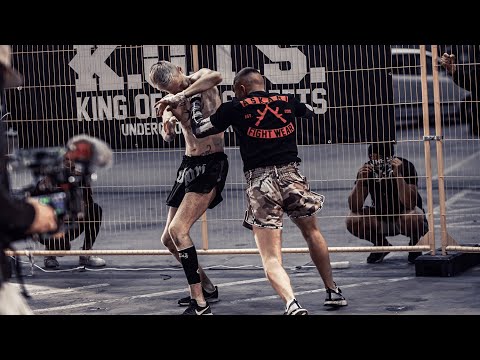
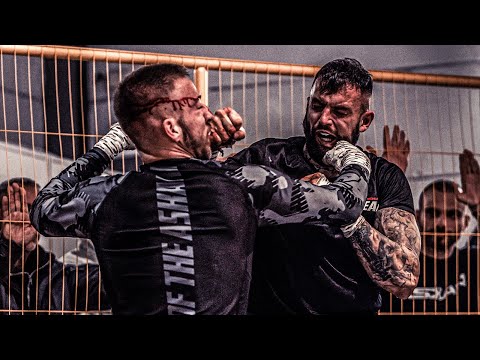
Welcome, disciples of the Budo. Today, we cast our gaze upon a spectacle that, while far removed from the disciplined halls of traditional dojos, stirs a primal curiosity within the martial soul: Reece "New Gen Hooligan" vs. "Maengpong" Streetfighter, from the event "King of the Streets 97: Blood Money."

The very title screams of raw, unfiltered combat. "King of the Streets" implies a realm where the rules of polite society are shed, and only the most potent, the most visceral, survive. But as martial artists, we must ask: what separates this from mere brawling? Is there any art, any principle, any genuine martial spirit to be found in such an arena?

You are watching Reece [New Gen Hooligan 𝕳] VS "Maengpong" [Streetfighter] - King of the Streets: 97 [BLOOD MONEY]. Published on March 1, 2022. We are here to dissect not just the fight itself, but the context, the rules, and the underlying philosophy that draws individuals to such brutal contests. Prepare yourselves; this is not for the faint of heart, but it is essential for understanding the full spectrum of human conflict.

Dissecting the Spectacle: "King of the Streets 97"

The event, "King of the Streets," presents itself as a raw, underground fight club where prize money fuels the conflict. This immediately signals a departure from the regulated environment of professional sports. Here, the stakes are personal, the audience craves visceral action, and the fighters are often driven by motivations far more immediate than championship belts.

The very name, "Blood Money," underscores the harsh reality. It suggests that the reward is directly tied to the violence, a concept that, while undeniably potent, raises ethical questions for those who practice martial arts for self-improvement and discipline.

"In the pursuit of martial perfection, one must question the purity of a system that rewards only bloodshed. Is it strength, or is it savagery?"

This event promises a raw, unadulterated form of combat, stripped of the safety nets and formalized procedures that govern most modern combat sports. It's a testing ground, yes, but for what? Survival? Dominance? The sheer thrill of the fight?

The Brutal Parameters: "K.O. ONLY" and "NO RULES"

The core of "King of the Streets" lies in its uncompromising rulesets: "K.O. ONLY" and "NO RULES." Let us break down what this truly means from a martial perspective.

  • "K.O. ONLY": This format allows for a wide array of techniques – strikes, grappling, even elbows and knees – but crucially, submissions are out. The victory must be definitive, a knockout. This elevates the importance of striking power, precision, and the ability to inflict incapacitating damage. It discourages protracted grappling exchanges that don't lead to a decisive blow.
  • "NO RULES": This is where the term "streetfighter" truly finds its meaning. Here, *everything* is permitted. Submissions are back on the table, alongside any striking technique imaginable. The fight continues until a knockout or submission is achieved. This is the closest approximation to a truly no-holds-barred encounter outside of extreme situations.

The absence of rounds or time limits is another critical factor. Fights persist until a winner emerges. This demands an extraordinary level of stamina, mental fortitude, and adaptability. There are no breaks, no strategic retreats to a corner to gather oneself. The pressure is constant, relentless.

This format is a stark contrast to the structured rounds of boxing, kickboxing, or MMA. It tests a fighter's raw conditioning and their ability to push through exhaustion and pain for an indeterminate period. It’s a test of pure will as much as technique.

A Glimpse at the Combatants: Hooligan vs. Streetfighter

The match-up itself pits Reece, described as "New Gen Hooligan" from Alpha Brøndby, Denmark/England, with a Muay Thai background, against "Maengpong," a Swedish Streetfighter, also with a Muay Thai base.

The designation "New Gen Hooligan" is intriguing. It suggests a modern, perhaps aggressive, and certainly unconventional approach to fighting, likely rooted in a subculture that embraces conflict. Muay Thai is a brutal and effective striking art, known for its powerful kicks, knees, elbows, and clinching. This suggests Reece possesses significant striking capabilities.

On the other side, "Maengpong" is simply labeled a "Streetfighter." This is a broad term. Does it imply a lack of formal training, relying instead on raw aggression and instinct? Or does it signify a fighter who has honed their skills in the very crucible that "King of the Streets" emulates? The "Muay Thai" tag hints that Maengpong is not without technical skill, but the "Streetfighter" moniker implies an unpredictable element, a willingness to engage in the less-than-savory aspects of combat.

This clash of designations promises a fascinating dynamic. Will the disciplined aggression of Muay Thai (Reece) overcome the unpredictable ferocity of the self-proclaimed streetfighter (Maengpong)? Or will Maengpong's street-honed instincts prove more effective in this ruleset?

Beyond the Blood: What Do These Fights Mean?

For the martial artist, observing these underground contests is a complex exercise. On one hand, there is the undeniable spectacle of human beings pushing their physical and mental limits. There’s a raw courage involved in stepping into such an arena, knowing the potential for severe injury.

However, the emphasis on "K.O. ONLY" and "NO RULES" without a strong philosophical underpinning can easily devolve into mere violence. True Budo, the Way of the Warrior, is not solely about defeating an opponent; it is about self-mastery, discipline, respect, and the refinement of character. It’s about understanding the spirit of combat, not just the mechanics of inflicting harm.

Could these fighters, in their own way, be seeking a form of truth through conflict? Perhaps. But the lack of formal structure, the profit motive of "Blood Money," and the "streetfighter" label raise questions about whether true martial development is occurring. Is this a celebration of combat, or a descent into barbarism?

"The true measure of a fighter is not only their ability to win, but their conduct in victory and defeat. Does this arena foster honor, or simply amplify aggression?"

These events highlight a primal human drive for competition and dominance, but they also serve as a potent reminder of what separates refined martial arts from mere fighting. The intention behind the training, the philosophy guiding the practice, and the respect shown to the art and the opponent are paramount.

Essential Gear for the Unsanctioned Warrior (Hypothetical)

While "King of the Streets" operates outside formal regulations, the nature of the combat suggests certain gear would be paramount for survival and effectiveness, should one find themselves in such an arena. This is purely hypothetical, as the spirit of unsanctioned fighting often means minimal protection.

  • Hand Wraps and Gloves: Essential for protecting the hands during powerful strikes and preventing fractures. Given the "K.O. ONLY" and "NO RULES" format, sturdy, possibly 16oz gloves, would be preferable for both offense and defense, though smaller gloves might be used for a more "street" feel.
  • Mouthguard: Non-negotiable. The risk of dental damage is incredibly high in fights with no rounds and no rules.
  • Groin Protector (Cup): Absolutely vital given the potential for strikes to the groin in "NO RULES" scenarios.
  • Shin Guards (Optional but Recommended): For Muay Thai practitioners, shin guards offer protection during hard kicks and can help condition the shins for powerful exchanges. In a "K.O. ONLY" format, they could also be used offensively.
  • Appropriate Footwear: Minimalist shoes or even barefoot might be preferred by some for better grip and connection to the ground, especially if grappling is anticipated.

It's crucial to remember that the appeal of such events often lies in their rawness, which might extend to minimal or no protective gear. However, for longevity and safety, even in a bare-knuckle context, protecting the hands and mouth is paramount.

Frequently Asked Questions

What is "King of the Streets"?

"King of the Streets" is presented as an underground fight club where participants can compete for prize money under "K.O. ONLY" or "NO RULES" formats, with no rounds or time limits.

What is the difference between "K.O. ONLY" and "NO RULES"?

"K.O. ONLY" requires victory by knockout, disallowing submissions. "NO RULES" permits both knockouts and submissions, with virtually all techniques allowed.

Are these fights sanctioned?

No, the context suggests these are unsanctioned, underground fights operating outside of official sporting regulations.

What martial arts are involved?

The featured fighters have a Muay Thai background, though the term "Streetfighter" implies a broader, less formalized skill set.

Deepen Your Martial Path

To truly understand the spectrum of combat and the philosophy that guides the warrior's path, delve deeper into related discussions:

The world of combat is vast, ranging from the disciplined practice of traditional martial arts to the raw, unvarnished contests seen in events like "King of the Streets." While such spectacles can be captivating for their intensity, they offer a limited perspective on the true essence of Budo.

True martial arts are a journey of self-discovery, discipline, and ethical development. They are about far more than just winning a fight; they are about becoming a better person through the rigorous training of mind, body, and spirit. Events like "Blood Money" may showcase raw courage and effective striking, but they often lack the depth, respect, and philosophical grounding that define the martial way.

Reflexión del Sensei: Tu Próximo Paso

After witnessing the raw intensity of an event like "King of the Streets," the question lingers: Does the pursuit of combat mastery necessitate such extreme conditions, or is the truest battlefield the one within yourself? What principles do you carry from the dojo into the arena of life, and how would you defend them?

"The supreme art of war is to subdue the enemy without fighting." - Sun Tzu, The Art of War

Contemplate this. If the ultimate victory is achieved without conflict, what does that say about the value of a fight fought solely for "Blood Money"?

GEMINI_METADESC: A Sensei's critical analysis of King of the Streets 97, examining the brutal rules, fighter profiles, and philosophical questions raised by underground combat.

King of the Streets: 105 - A Raw Look at Unsanctioned Combat

The Underground Rises: Is This the True Spirit of Combat?

Welcome, warriors, to Budo and Martial Arts. Today, we delve into the raw, unadulterated world of "King of the Streets," a promotion that strips away the gloss and embraces the primal urge to compete. Forget the sanitized arenas and regulated bouts; this is a peek behind the curtain of unsanctioned combat, a place where rules are bent, and the line between sport and survival blurs. But is this the true essence of martial engagement, or a dangerous descent into chaos?

Table of Contents

The Event: Mass Hypnosis and the Call to Arms

The backdrop for this particular clash is "Mass Hypnosis," an event title that already hints at the psychological warfare at play. In the realm of unsanctioned combat, the mental game is often as crucial as the physical. The promotion itself proclaims it's a "REAL UNDERGROUND FIGHT CLUB," a statement designed to attract those seeking something beyond the regulated sport. This taps into a deep-seated human fascination with raw, unscripted conflict.

Securing Your Seat in the Arena

For those who wish to witness these raw displays, the message is clear: get PPV ACCESS for the next event NOW. This isn't a sport for the faint of heart, and the promotion makes it clear that access is not guaranteed or passive. It's a deliberate choice to engage with this form of combat.
"KING OF THE STREETS IS A REAL UNDERGROUND FIGHT CLUB WHERE YOU CAN FIGHT FOR PRIZE MONEY."
This statement is pivotal. It frames the event not just as entertainment, but as an opportunity for participants to test themselves and potentially earn. The emphasis on "real" and "underground" is a marketing tactic, but it also speaks to a yearning for authenticity that many feel is lost in modern professional sports.

The Rules of Engagement: KO Only vs. No Rules

"King of the Streets" offers two distinct formats, each with its own brutal appeal:
  • “K.O. ONLY”: Here, everything is permitted except submissions. The victory must be achieved through a knockout. This format emphasizes striking power and the decisive, often violent, conclusion of a fight. It’s a direct test of a fighter's ability to land a fight-ending blow.
  • “NO RULES”: This is the ultimate test. Everything is allowed, including submissions, with victory by KO or submission. This format reflects the grittier, more dangerous aspects of unarmed combat, where fighters must possess a wider range of skills and a higher tolerance for risk.
A critical point is the absence of rounds or time limits. Fights continue until a conclusion is reached. This "war of attrition" mentality is a hallmark of older, more unforgiving combat systems and adds another layer of intensity. There's no respite, no break to regroup strategy; only the fight itself. This lack of structure can lead to spectacular finishes but also carries significant risks for the participants.

Meet the Combatants: Paci vs. Banan

This specific bout pits "Paci" from the Czech Republic against "Banan" from Poland.
  • "PACI"
    • Nationality: Czech Republic
    • Weight: 85 KG / 187 CM
    • Age: 27 Years
    • Affiliation: Brigade Renegade Hooligan 𝕳
  • "BANAN"
    • Nationality: Poland / Warszawa
    • Weight: 83 KG / 185 CM
    • Age: 19 Years
    • Affiliation: Mszczonów Hooligan 𝕳
The fight is under the "K.O. ONLY" format. We see a significant age difference, with the 19-year-old Banan facing the 27-year-old Paci. While Paci has the advantage of experience and potentially physical maturity, Banan's youth could signify untapped aggression and a burning desire to prove himself. The affiliations – "Brigade Renegade Hooligan" and "Mszczonów Hooligan" – suggest a background rooted in more than just sport, adding a layer of socio-cultural context to the fight. This isn't just two individuals; it's representatives of a particular subculture.

The Soundtrack of War: HeroicMonk's Score

The accompanying song is "HeroicMonk." In martial contexts, music plays a crucial role in setting the mood and enhancing the dramatic tension. A heroic or intense track like this aims to elevate the fighters' adrenaline and prepare the audience for the spectacle. It's a common tactic in combat sports, but in an underground setting, it can feel even more potent, less manufactured.

The Digital Dojo: Websites and Social Channels

King of the Streets maintains a presence across various digital platforms:
  • Website: https://ift.tt/iwIezPQ
  • Facebook: https://ift.tt/6Vi5W39
  • Instagram: https://ift.tt/jGvnwtP...
  • Twitter: https://twitter.com/KOTS_FIGHT_CLUB
  • Email: contact@kotsfights.com
  • Telegram: KOTS_HC
This multi-channel approach is essential for any promotion aiming to build a following, even in the underground. It allows them to communicate fight details, promote upcoming events, and engage with their audience.

Joining the Ranks: The Fight Application

For aspiring fighters, the application process is clearly outlined via Telegram. The instructions on how to message the application bot, including the workaround for non-mutual contacts, show a structured approach to managing potentially volatile participants. This attention to detail, even in an underground setting, is vital for the promotion's organization and safety, however relative that may be.
"If you want to participate in the fight club, download APP named TELEGRAM and send us a message."
This direct instruction further emphasizes the raw, unfiltered nature of the event. No fancy forms, just a direct line to the organizers.

MMA Context and the Broader Martial Landscape

The mention of UFC, MMA, and MIXED MARTIAL ARTS places "King of the Streets" within the broader ecosystem of modern combat sports. While it operates outside the official structures, its existence highlights a persistent demand for less regulated, more "real" fighting experiences. This raises questions: what is the fundamental appeal of MMA? Is it the skill, the strategy, the raw aggression, or a combination? Promotions like "King of the Streets" tap into the latter, often to a more extreme degree.

Veredicto del Sensei: ¿Merece la pena?

"King of the Streets" presents a fascinating paradox. On one hand, it offers a glimpse into a more visceral form of combat, appealing to a primal instinct that resonates with many martial arts practitioners. The "K.O. Only" and "No Rules" formats, devoid of time limits, strip away the conventional trappings of sport and return to a more fundamental test of will and skill. The raw, unfiltered nature of the promotion is its undeniable draw. However, the lack of regulation, the potential for severe injury, and the "hooligan" affiliations raise significant concerns. Is this truly the evolution of martial arts, or a dangerous regression? While it undeniably offers a unique spectacle, it’s crucial to understand the inherent risks. Cinturón Negro en Espectáculo Crudo, Cinturón Blanco en Seguridad y Deporte. This is not a regulated sport; it's a gladiatorial exhibition. Approach with extreme caution, both as a viewer and, if you are so inclined, as a participant. The spirit of combat is present, but the principles of martial arts – discipline, respect, refinement – are severely tested, and perhaps, compromised.

Equipo Esencial para tu Entrenamiento

While "King of the Streets" might eschew some traditional equipment for its "no rules" approach, foundational training requires proper gear. Investing in quality equipment not only enhances your training but is crucial for safety.
  • Guantes de Boxeo/MMA: Essential for any striking training. For general conditioning and light sparring, 14-16oz gloves are recommended. For more intense sparring or specific MMA training, 4-6oz MMA gloves might be more appropriate, but always with caution and supervision.
  • Protector Bucal: Non-negotiable for any form of sparring or high-intensity training to protect your teeth and jaw.
  • Espinilleras: Crucial for Muay Thai or Kickboxing drills involving kicks to protect your shins and your partner's.
  • Kimono (Gi): If your training involves grappling arts like Judo or BJJ, a durable Gi is indispensable. Look for double-weave for Judo or lightweight for BJJ, depending on your preference.
  • Casco de Entrenamiento: For more intense sparring sessions, a protective headgear can significantly reduce the risk of cuts and concussions.
Remember, proper training in a safe environment is paramount. Don't let the allure of "no rules" combat tempt you into neglecting fundamental safety practices.

Guía de Entrenamiento: The Mindset of a Street Fighter

Participating in or even understanding a format like "King of the Streets" requires a mental fortitude that transcends typical athletic preparation. This isn't about winning a belt; it's about enduring.
  1. Embrace the Unknown: Accept that the fight may not conform to predictable patterns. Train with an open mind, expecting the unexpected.
  2. Develop Resilience: Practice drills that push your physical and mental limits. Conditioning is key, but so is the mental ability to push through pain and fatigue. Think of grueling at-home workouts or long-distance running sessions that build endurance.
  3. Master the Fundamentals: While the rules are loose, the foundational techniques of striking and grappling remain your best assets. A solid grasp of Karate, Judo, or BJJ can provide a critical edge.
  4. Cultivate Situational Awareness: Understand your surroundings and your opponent's intentions. This is crucial for both offense and defense.
  5. Control Your Adrenaline: High adrenaline can lead to recklessness. Learn to channel it into focused aggression rather than panic. Meditation and breathing exercises, like those practiced in Budo, can be invaluable here.
  6. Accept the Outcome: Whether it's a KO, a submission, or simply enduring, be prepared to accept the result with a degree of stoicism. This is the hallmark of a true warrior.
This mindset is not easily acquired. It requires dedicated training, introspection, and a willingness to confront your own limitations.

Preguntas Frecuentes

  • Is "King of the Streets" a legitimate sport?
    "King of the Streets" operates as an unsanctioned fight club, emphasizing raw combat over regulated sport. It is not recognized by major sporting bodies.
  • What is the age requirement to fight?
    While specific age verification isn't detailed, the example shows a 19-year-old fighter, suggesting a minimum age of 18 is likely implied.
  • How are fighters matched?
    Matches appear to be based on availability and possibly weight class, with an emphasis on creating compelling, raw matchups.
  • What are the risks involved in "No Rules" fights?
    The risks are extremely high, including severe injuries, concussions, and other long-term health consequences due to the lack of protective gear, time limits, and comprehensive medical supervision.

Para Profundizar en tu Camino

Reflexión del Sensei: Tu Próximo Paso

This event, "King of the Streets," forces us to confront the raw, untamed aspect of human combat. It exists because a segment of humanity craves it, both to watch and to participate. But does this raw aggression represent the pinnacle of martial skill, or a dangerous deviation? If a fighter enters such an arena, are they seeking true mastery, or simply the thrill of danger? Consider this: In the controlled environment of a dojo, we hone our skills to build character. In the chaos of "King of the Streets," does character get built, or broken? Now, it is your turn. Do you believe these "underground" fights hold a valuable, albeit brutal, place in the martial landscape, or are they a dangerous spectacle that detracts from the true spirit of the arts? Let your opinions be known in the comments below. Prove your conviction. GEMINI_METADESC: Explore the gritty world of 'King of the Streets 105' with Paci vs. Banan. Analyze unsanctioned combat, KO Only rules, and the mindset of underground fighters.

King of the Streets 54: A Raw Examination of "333" vs. "Highlander" - Beyond the Hype

Introduction: The Gritty Reality of Underground Combat

The allure of the underground fight club is a potent one, drawing us into a world where raw skill, primal instinct, and sheer will collide. "King of the Streets: 54," featuring the bout between "333" [Köln Hooligan 𝕳] and "Highlander" [Streetfighter], is a prime example of this raw, unfiltered combat. As practitioners of the martial arts, we often dissect techniques, analyze strategies, and ponder the philosophical underpinnings of our chosen paths. But what happens when we strip away the rules, the point systems, and the sanctioned arenas? What do we find when we venture into the heart of a "K.O. Only" or "No Rules" environment? This is not merely a contest of physical prowess; it is a test of character, a crucible forged in the fires of necessity. Welcome to Budo and Martial Arts, where we don't just report – we dissect. Today, we delve into the brutal ballet of "King of the Streets: 54," exploring not just the fighters, but the very essence of combat itself.

The "King of the Streets" Format: Brutality Redefined

"King of the Streets" presents a stark departure from the controlled environments of most martial arts competitions. This is not about points or judges' decisions; it's about a definitive conclusion. The two primary formats, "K.O. ONLY" and "NO RULES," strip away much of what can dilute a fight in more conventional settings.

In "K.O. ONLY," the objective is clear: incapacitate your opponent through strikes. Submissions are explicitly forbidden, forcing combatants to rely on their striking acumen. This format amplifies the pressure to land a decisive blow, transforming every exchange into a potential fight-ender. It’s a return to a more fundamental aspect of combat: the knockout.

Then there's "NO RULES," a designation that chills the blood of many a traditional martial artist. Here, all techniques are permitted, including submissions. The only requirement is a decisive victory, either by knockout or submission. This format represents the closest you'll get to a real-world confrontation, albeit still within a controlled (though brutally so) setting. There are no rounds, no time limits; the fight continues until one warrior can no longer continue. This is where the true mettle is tested, where strategy must adapt to the ever-changing, unforgiving nature of the contest.

The implications of these formats are profound. They demand a different kind of preparation, a different mindset. The focus shifts from accumulating points to delivering a fight-ending impact. This inherently elevates the stakes and the visceral nature of each bout. It begs the question: how do martial arts, with their diverse philosophies and techniques, fare when placed under such extreme conditions?

Fighter Profiles: "333" vs. "Highlander" - A Clash of Disciplines

On one side, we have "333," known as the "Köln Hooligan" from Germany. Weighing in at 85 kg and standing 180 cm tall, "333" comes from a background that blends Boxing & MMA. This dual discipline suggests a fighter comfortable both in the stand-up striking exchange and potentially in clinching and grappling scenarios, though the emphasis on "K.O. ONLY" suggests his primary weapon will be his fists and kicks.

The "K.O. ONLY" format suits a boxer's mentality, where headshots and body blows are the currency of victory. However, his MMA background hints at a well-rounded ability to manage distance and perhaps integrate some offensive grappling if the opportunity arises, though without the intention of submission.

Opposing him is Damian "Highlander" Górski, a "Streetfighter" from Opole, Poland. Also weighing 85 kg but standing slightly taller at 182 cm, "Highlander" enters the fray with an MMA discipline. The label "Streetfighter" is intriguing. Does it imply a more eclectic, perhaps less refined, but more aggressive and adaptable style honed in less formal combat scenarios? Or is it merely a moniker? Given the "K.O. ONLY" format for this particular bout, "Highlander" will need to leverage his MMA skills to land effective strikes that can incapacitate "333".

The disparity in "disciplines" – Boxing & MMA versus MMA – is subtle yet significant. "333" might possess a more specialized striking arsenal derived from boxing, while "Highlander" might have a broader, more adaptable MMA skillset. The question is, which approach will prevail when the gloves come off and the primal fight for survival begins?

Martial Analysis: Beyond the Hype – What Did We Really See?

As analysts of the martial way, we must look beyond the spectacle and examine the technical and tactical execution. While the exact details of the fight's progression are not provided in the original material, we can infer potential dynamics based on the fighters' backgrounds and the "K.O. ONLY" format.

The "Köln Hooligan," with his Boxing & MMA background, likely came out with a strong offensive, using jabs, crosses, and perhaps hooks to establish dominance. His boxing pedigree would have emphasized head movement, footwork, and the power generated from the torso rotation. In an MMA context, he might also have utilized low kicks or knee strikes to maintain distance or punish "Highlander's" approach.

Conversely, "Highlander," as an MMA fighter labeled a "Streetfighter," might have adopted a more varied offensive strategy. His toolkit could have included punches, kicks from various angles (roundhouse, side kicks, oblique kicks), and potentially even knee strikes in the clinch if the fight devolved into that range. The "Streetfighter" moniker could suggest a willingness to employ less conventional tactics, perhaps feints, unorthodox entries, or a more aggressive, forward-marching style.

In the heat of battle, the difference between victory and defeat often lies not in the complexity of the technique, but in its effective application under duress.

The "K.O. ONLY" rule amplifies the importance of power and accuracy. A single well-placed strike—a solid hook to the jaw, a powerful head kick, or a sharp knee to the temple—can end the contest instantly. This format rewards fighters who can consistently land damaging blows and those who possess the physical and mental fortitude to withstand their opponent's offense.

The absence of rounds means that stamina becomes a critical factor. Unlike a boxing match with defined breaks, a "K.O. ONLY" fight can become a grueling endurance test. A fighter who starts too fast or expends too much energy early might find themselves vulnerable in the later stages, making strategic pacing as crucial as offensive output.

Without specific fight footage, a definitive technical breakdown is speculative. However, understanding the core principles of Boxing and MMA, and the extreme nature of the "K.O. ONLY" rule, allows us to appreciate the challenges and strategies involved. It's a raw test of striking prowess where every second counts and every landed blow could be the last.

Philosophical Undertones: The Warrior's Spirit in the Crucible

Beyond the visceral exchange of blows, these underground bouts offer a stark philosophical lesson. The "King of the Streets" format, particularly "NO RULES," strips away the pretense and reveals the primal core of combat. It's a testing ground for the warrior's spirit, a concept deeply ingrained in many traditional martial arts.

Consider the principle of BUDO, the Japanese martial way. While often associated with discipline, respect, and self-improvement, its ultimate purpose is to forge individuals capable of facing adversity head-on. In a "NO RULES" fight, the stakes are immeasurably high, demanding not just physical conditioning but also immense mental fortitude. The ability to maintain composure under extreme pressure, to think clearly when adrenaline floods the system, and to persevere when the body screams in pain—these are the hallmarks of a true warrior.

"Do not be concerned with the victory or defeat. Focus on the perfection of your technique and the spirit with which you engage." - Unknown Master

The "K.O. ONLY" format, while less encompassing than "NO RULES," still serves as a potent metaphor. It highlights the decisive nature of true conflict. In life, as in combat, there are moments when a single action, a singular commitment, can change everything. It's about delivering your best, your most potent effort, with the understanding that compromise is not an option.

Furthermore, the underground nature of "King of the Streets" raises questions about the nature of competition and the pursuit of excellence. While sanctioned events provide a framework for growth, the raw, unadulterated challenge of an underground fight club can forge a unique kind of resilience. It forces combatants to confront their limitations, their fears, and their true capabilities in a way that few other environments can.

The question we must ask ourselves as martial artists is: what do these extreme forms of combat teach us about our own training and philosophy? Are we truly prepared for the "no rules" reality of life's challenges, or are we merely comfortable within the protective boundaries of our dojos and gyms?

Equipment Essential for Your Training

While "King of the Streets" operates on the fringes, the principles of effective martial arts training remain universal. To truly prepare yourself for any confrontation, whether sanctioned or not, having the right equipment is crucial. Here's what I recommend for any serious practitioner looking to hone their skills:

  • High-Quality Training Gloves: For striking-based martial arts like Boxing or MMA, a good pair of 14-16 oz sparring gloves is essential to protect both your hands and your training partners. Brands like Martial Arts Merchandise often carry durable and protective options.
  • Durable Training Uniform (Gi/Kimono): If your training involves grappling arts like Judo or Brazilian Jiu-Jitsu, a robust Gi is a must. Look for double-weave or heavy-weave kimonos that can withstand constant pulling and stress. For Karate or Taekwondo, a crisp, durable uniform is key for proper movement and tradition.
  • Protective Gear for Sparring: Beyond gloves, consider headgear and shin guards for MMA or kickboxing sparring. Mouthguards are non-negotiable for any form of full-contact training.
  • Training Mats or Flooring: For grappling or dynamic movements, investing in proper mats can prevent injuries and allow for safer practice of throws and groundwork.
  • Jump Rope or Conditioning Equipment: Building stamina and explosive power is paramount. A good jump rope, resistance bands, or even kettlebells can significantly enhance your conditioning for AtHomeWorkout sessions.

Remember, the best equipment is an investment in your safety and your progress. Don't cut corners when it comes to protecting yourself while pushing your limits.

Veredict of the Sensei: More Than Just a Fight?

"King of the Streets: 54" showcasing "333" vs. "Highlander" is precisely what it claims to be: raw, underground combat. The promotion's clear definitions of "K.O. ONLY" and "NO RULES" formats strip away ambiguities, presenting a brutal and straightforward test of a fighter's ability to inflict and absorb damage. From a martial arts perspective, it serves as a fascinating, albeit extreme, case study. It highlights the fundamental importance of striking effectiveness and the mental toughness required when the safety nets of point systems and rounds are removed.

However, one must question the ultimate value of such contests beyond pure spectacle. While they undeniably test a fighter's mettle, the lack of comprehensive judging criteria or a broader scope of martial application (like submissions in "K.O. ONLY") limits its educational value for the average martial artist. It's a raw display of aggression and skill, but perhaps not a true testament to the depth and philosophy of the martial arts as a whole.

Does it earn a high rank? As a spectacle of unfiltered combat, it delivers. As a deep exploration of martial arts principles, it falls short. It's a raw, visceral event that appeals to the primal instinct for competition, but it lacks the refined artistry and philosophical depth we often seek in the martial way.

Cinturón Negro en Crudeness, Cinturón Blanco en Filosofía.

Frequently Asked Questions

What is the main difference between "K.O. ONLY" and "NO RULES" in King of the Streets?

In "K.O. ONLY," the fight must end by knockout, and submissions are forbidden. In "NO RULES," fights can end by knockout or submission, and all techniques are permitted.

Are there rounds or time limits in King of the Streets fights?

No, fights can continue indefinitely until a decisive victory (K.O. or submission, depending on the format) is achieved.

How does a boxer's mentality differ from an MMA fighter's in a "K.O. ONLY" format?

A boxer typically focuses solely on striking, refining punch combinations and defensive head movement. An MMA fighter, while still aiming for a KO in this format, may integrate kicks, knees, and clinch work, and has a broader tactical awareness derived from grappling.

Is "King of the Streets" a legitimate martial arts competition?

It is a legitimate underground fight club focusing on raw combat and prize money, rather than a traditional or sanctioned martial arts competition with established governing bodies and standardized rulesets.

For Deeper Study on Your Path

  • For an exploration of disciplined striking, delve into the intricacies of KarateCommunity training.
  • Understand the foundations of grappling and submission within BJJ or Judo.
  • Explore the philosophy behind combat through the lens of WarriorPhilosophy.

Final Reflection: Your Next Step

We've peeled back the layers of "King of the Streets: 54," examining the raw nature of the combat, the disciplines involved, and the philosophical questions it raises. This event, while brutal, serves as a mirror. It reflects the spectrum of human aggression and the innate drive to test oneself against adversity. But the true test for a martial artist isn't just in surviving the ring; it's in understanding how the lessons learned—resilience, discipline, tactical thinking, and the courage to face challenge—translate into every aspect of life. It's about embodying the principles of the BUDO, not just the techniques of combat.

Reflexión del Sensei: Tu Próximo Paso

This event showcased fighters pushing their limits in a high-stakes, high-consequence environment. But what is the ultimate consequence? Is it the physical victory, the prize money, or the indelible mark left on the spirit? Consider this: if you were to face a "no rules" scenario in life—an insurmountable obstacle, a devastating loss, a moment of profound uncertainty—would you fight with the raw, unrefined aggression of the underground, or with the focused, disciplined, and adaptable spirit forged through years of dedicated martial training? What truly defines the warrior: the capacity to inflict damage, or the strength to endure and grow?

``` GEMINI_METADESC: Analyze the brutal underground fight \"333\" vs. \"Highlander\" from King of the Streets 54. Sensei dissects the \"K.O. ONLY\" format, fighter skills, and the philosophy behind raw combat.